US guidelines now give two different answers on when to start statins, and which one applies depends on your age and your estimated risk of a heart attack or stroke. The 2022 USPSTF rule starts at age 40, while the 2026 ACC/AHA guideline starts the conversation at 30 and runs to 79.
Table of Contents
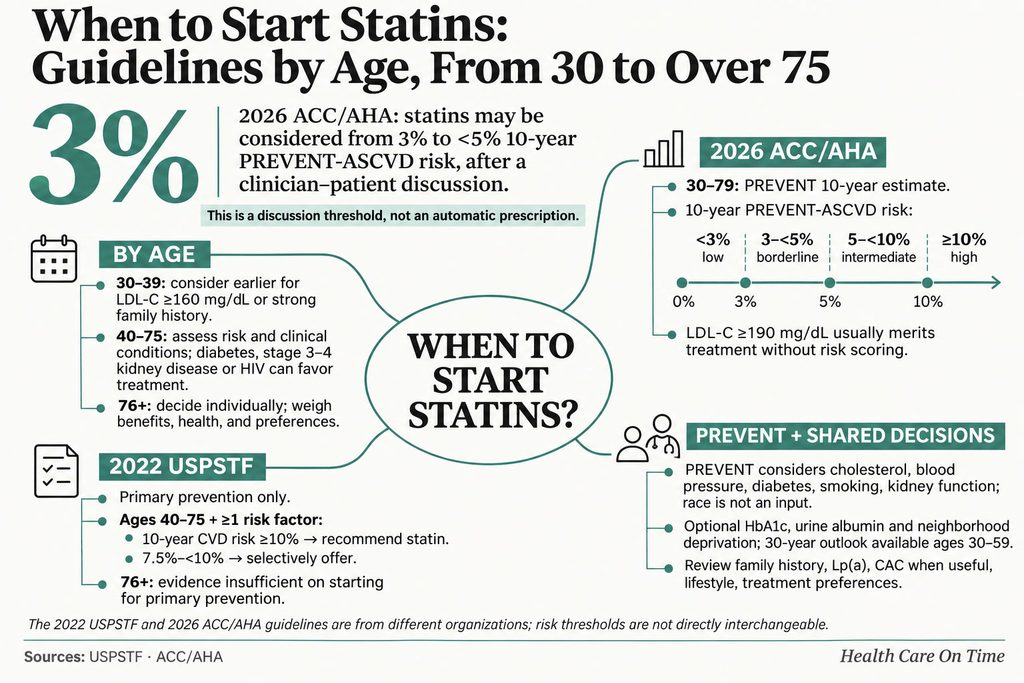
Quick answer: The USPSTF recommends a statin for adults 40 to 75 with at least one risk factor (high cholesterol, diabetes, high blood pressure or smoking) and a 10-year risk of 10% or more, and suggests offering one selectively at 7.5% to under 10%. The 2026 ACC/AHA guideline uses the PREVENT calculator for ages 30 to 79: a statin is reasonable at 3% to under 5% and recommended at 5% or higher. After 75, it’s an individual decision.
Who writes the statin guidelines
Most US doctors work from one of two documents. The U.S. Preventive Services Task Force (USPSTF) is an independent panel that wants outcome data from randomized trials before it recommends anything, and its statin recommendation dates from August 23, 2022. The American College of Cardiology and American Heart Association (ACC/AHA) write a larger clinical guideline with other specialty groups; the March 2026 version was signed by 11 organizations in all.
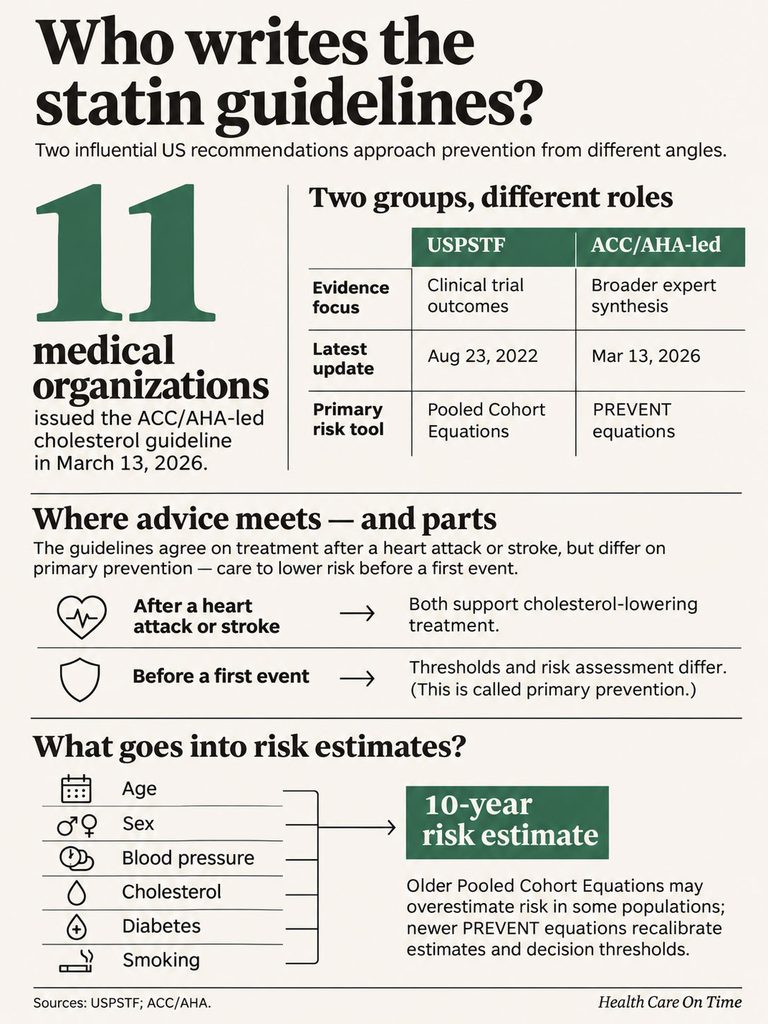
They agree that anyone who has already had a heart attack or stroke needs cholesterol treatment. Where they part ways is primary prevention, meaning healthy people who have never had a cardiac event, and that’s a big group in a country where cardiovascular disease causes more than 1 in 4 deaths (an estimated 558,000 coronary heart disease deaths and 109,000 ischemic stroke deaths in 2019).
Both guidelines start from a risk estimate rather than from your cholesterol number alone. A calculator takes your age, sex, blood pressure, cholesterol, diabetes status and smoking status and returns the chance of a heart attack or stroke over the next 10 years. The USPSTF still uses the older Pooled Cohort Equations, which tend to overpredict risk in many validation studies, by the Task Force’s own account. The 2026 guideline moved to the newer PREVENT equations, lowered its cutoffs to match, and starts counting a decade earlier.
So a 52-year-old with a 6% 10-year risk can hear “no statin needed yet” under one rule and “a statin is recommended” under the other.
The gap comes from evidence standards: the Task Force waits for trial outcomes in people at that level of risk, and the cardiology groups are willing to extrapolate from higher-risk trials.
Statin guidelines by age: the side-by-side chart
“Risk” in this chart means the 10-year estimate from the calculator each guideline uses, so the same person can land in different rows depending on which tool the clinic runs.
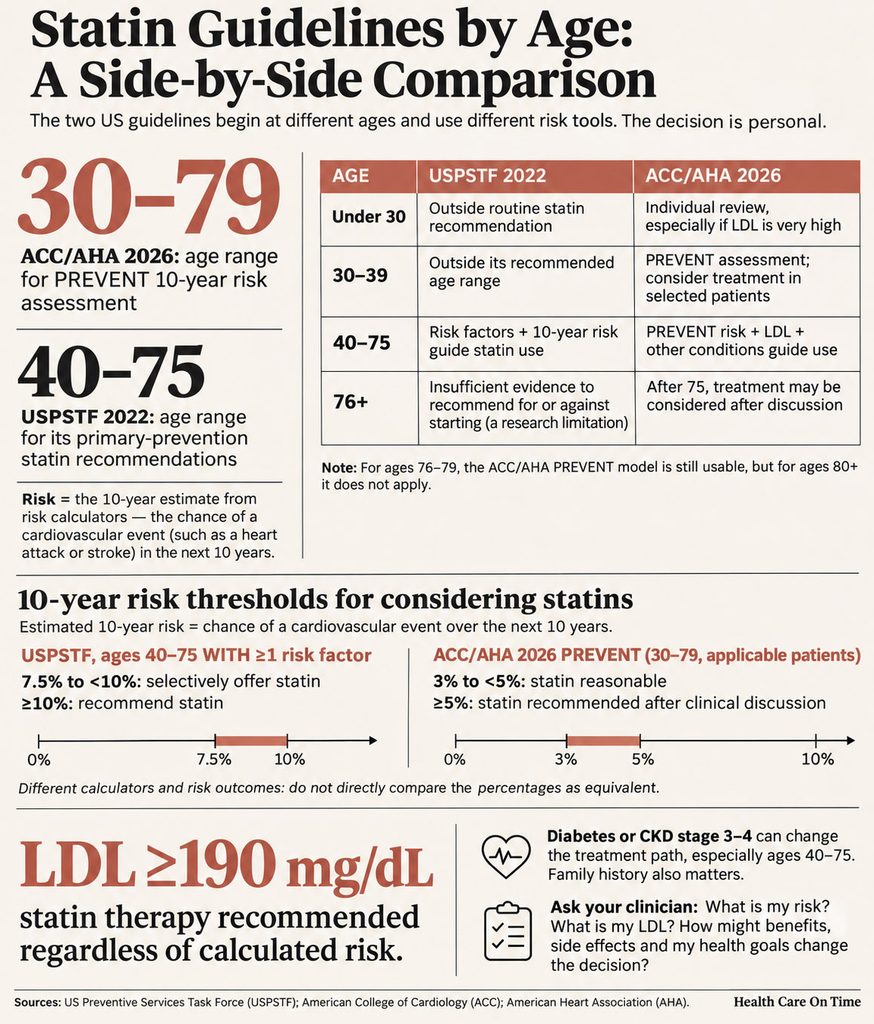
| Age band | USPSTF (2022) | ACC/AHA guideline (2026) | Question to ask |
| Under 30 | No statin recommendation; adults under 40 are outside its scope | Lipid panel every 5 years from age 19; early drug treatment considered if LDL is 160 mg/dL or higher or there is a strong family history of early heart disease | “With an early heart attack in the family, should we test for familial hypercholesterolemia?” |
| 30 to 39 | No recommendation | PREVENT 10-year and 30-year risk; moderate-intensity statin reasonable if 10-year risk is under 3% but LDL is 160 to 189 mg/dL or 30-year risk is 10% or more | “What does the 30-year number look like?” |
| 40 to 75 | Grade B: prescribe a statin if 1 or more risk factors and 10-year risk is 10% or more. Grade C: offer selectively at 7.5% to under 10% | Statin reasonable at 3% to under 5%; at least moderate intensity recommended at 5% to under 10%; high intensity at 10% or more | “Which calculator did you use, and would a calcium scan help?” |
| 76 to 79 | Insufficient evidence to recommend for or against starting | PREVENT still applies to 79; at 65 to 79, consider treatment at 5% or higher after a discussion | “How much time does a statin need to pay off?” |
| 80 and older | Insufficient evidence | Over 75 with life expectancy of at least 2.5 years, a moderate-intensity statin may be reasonable | “Could a calcium score of 0 or 1 to 10 let us skip it?” |
| Any age, LDL 190 mg/dL or higher | Outside scope (very high risk) | Maximally tolerated statin regardless of estimated risk; genetic testing if no secondary cause | “Who else in the family needs a cholesterol test?” |
| 40 and older with diabetes, CKD stage 3+ or HIV | Diabetes counts as a risk factor; still needs 7.5% or 10% risk | Lipid-lowering therapy recommended even at lower absolute risk | “How strong a dose fits this PREVENT number?” |
Two rows cause most of the confusion. In your 30s the USPSTF has nothing to say, while the 2026 guideline gives a specific path, and after 75 the Task Force stays neutral while the ACC/AHA guideline allows a moderate statin when life expectancy and personal priorities support it.
What changed in the 2026 guideline
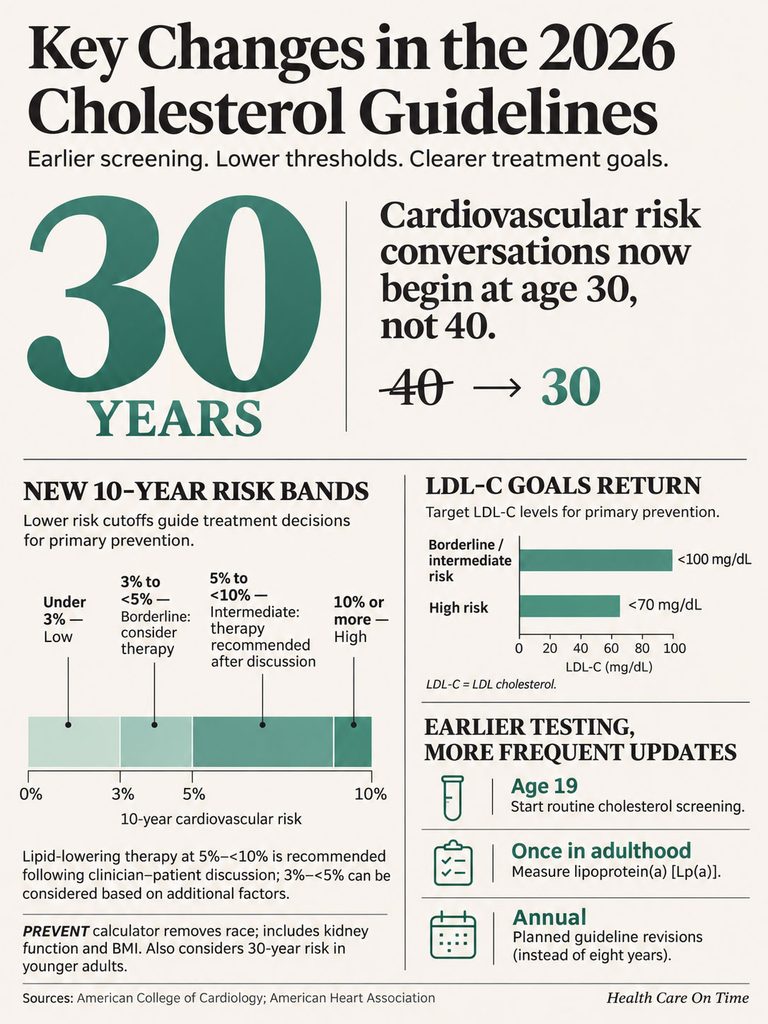
Published on March 13, 2026, the new guideline moves the start of prevention talks from 40 down to 30. At 123 pages, it replaces the 2018 cholesterol guideline, and its authors plan to revise it every year rather than wait another eight.
A new risk calculator
The old Pooled Cohort Equations start at age 40 and include race as an input. The PREVENT equations, released by the American Heart Association in 2023, cover adults 30 to 79 without known heart disease, leave race out, and add kidney function (eGFR) and body mass index, with optional fields for urine albumin, hemoglobin A1c and a US ZIP code. They return 10-year and 30-year estimates for heart attack and stroke, for heart failure, and for both combined.
For many people PREVENT gives lower numbers than the old tool. Plugging those numbers into the old cutoffs could have cut statin eligibility by as much as 40%, which is a large part of why the cutoffs moved.
Lower risk cutoffs, and a 30-year view
Ten-year PREVENT risk now falls into four bands: low (under 3%), borderline (3% to under 5%), intermediate (5% to under 10%) and high (10% or more). Under the 2018 guideline, borderline meant 5% to under 7.5% and intermediate ran from 7.5% to under 20%, so the same labels now cover much lower numbers.
Lipid-lowering therapy is recommended at 5% or higher, reasonable after a discussion at 3% to under 5%, and reasonable in some people under 3% if they’re 30 to 59 and have either an LDL of 160 to 189 mg/dL or a 30-year risk of 10% or more. An LDL of 190 mg/dL or higher calls for the strongest statin dose a person can tolerate, whatever the calculator shows.
The 30-year number matters most for younger adults. A 35-year-old nonsmoker with an LDL of 165 mg/dL will almost always have a 10-year risk well under 3%, because few people that age have heart attacks within a decade, yet the same person’s 30-year estimate may be high enough to count.
LDL goals came back
For about a decade, statin intensity rather than a numeric LDL target guided most treatment. The 2026 version brings absolute goals back for primary prevention: under 100 mg/dL with a non-HDL cholesterol under 130 mg/dL at borderline or intermediate risk, and under 70 mg/dL with non-HDL under 100 mg/dL at high risk. People who already have heart disease and are at very high risk aim for under 55 mg/dL.
Other additions include checking lipoprotein(a) at least once in adulthood (lifestyle barely affects it, so repeat testing generally isn’t needed), wider use of coronary artery calcium (CAC) scans, and universal cholesterol screening every 5 years from age 19, with a one-time check for children between 9 and 11.
How your risk number is built
A PREVENT estimate needs age, sex, systolic blood pressure, whether you take blood pressure medicine, total and HDL cholesterol, diabetes status, current smoking, eGFR from a kidney blood test, BMI and whether you take a statin. Nearly all of that comes from a routine physical and a standard lipid panel, so the calculation can usually happen at the same visit.
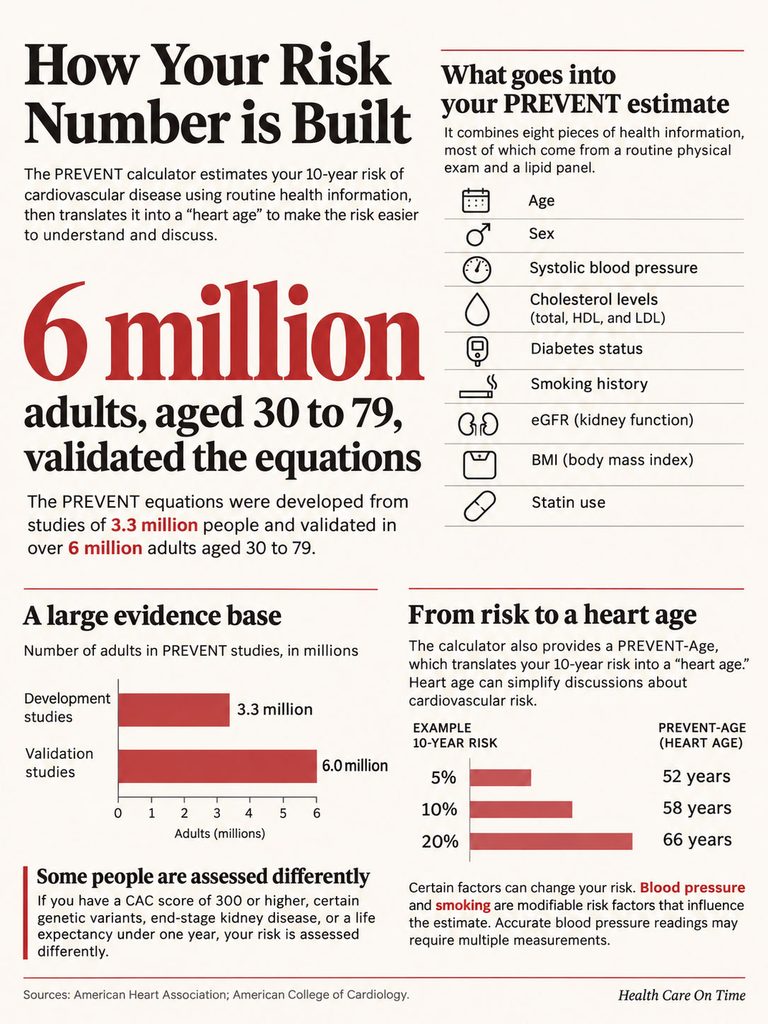
The equations were derived from about 3.3 million people and validated in more than 6 million adults aged 30 to 79 with an LDL between 70 and 189 mg/dL. People with a CAC score of 300 or more, a known inherited high-risk gene variant, end-stage kidney disease or a life expectancy under 1 year are outside its range and get assessed another way.
The calculator can also report a “PREVENT-Age,” which turns the 10-year result into a heart age, and a 30-year percentile that compares you with people of the same age and sex nationwide. A heart age well above your real age is often an easier number to talk about than a small percentage.
Blood pressure and smoking are the two inputs most people can change, and both move the estimate. If your systolic reading is high on the day of the visit, repeat or home readings may give a fairer picture, and getting high blood pressure under control lowers the score along with the real risk.
Starting a statin before 40
Most people in their 30s won’t be told to take a statin. A JAMA analysis of the new guideline estimated that about 10% of Americans in their 30s now meet the criteria, so 9 in 10 do not.
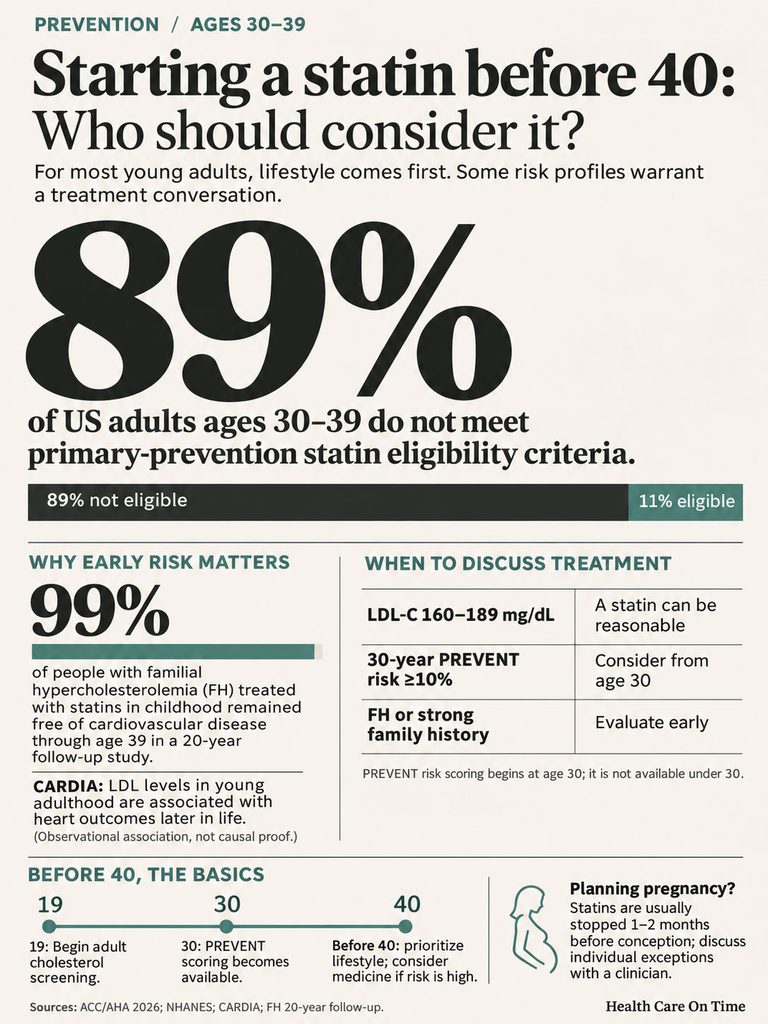
Those who do usually have an LDL of 160 to 189 mg/dL that diet and exercise haven’t brought down, or a 30-year PREVENT risk of 10% or more from some mix of high blood pressure, smoking, diabetes or obesity. An LDL of 190 mg/dL or higher points toward familial hypercholesterolemia (FH), an inherited condition that keeps LDL high from birth, and that changes the picture entirely.
For FH, the case for starting early is strong. A 20-year follow-up of 214 children with heterozygous FH who began statins in adolescence found that 99% were free of cardiovascular disease at age 39, against 74% of their affected parents, who started treatment as adults. Evidence for the wider population is thinner and comes mostly from observation; the CARDIA study, which enrolled young adults aged 18 to 30, linked even modest LDL reductions early in adulthood to fewer heart events 16 to 20 years later.
For most people under 40, lifestyle comes first, and statins or other drugs enter when there’s a strong family history of early heart disease or an elevated 30-year risk, and for someone with LDL near 160 mg/dL, a few months of eating more cholesterol-lowering foods can be enough to change which row of the chart applies.
For women, pregnancy plans change the timing. Most lipid-lowering drugs are deferred during conception, pregnancy and breastfeeding, and statins should generally be stopped before trying to conceive, so a woman in her early 30s planning a pregnancy in the next year or two may reasonably wait.
Under 30, there’s no calculator at all, because PREVENT isn’t validated below that age. Screening starts at 19, and drug treatment before 30 is mostly considered for people with an LDL of 160 mg/dL or higher, FH, or a strong family history of early heart disease.
Ages 40 to 75: where the rules overlap
Both guidelines cover this age band, and for many people they give the same answer. Someone at 10% or higher 10-year risk with at least one risk factor gets a statin recommendation from the USPSTF (grade B) and a high-intensity statin recommendation from the ACC/AHA guideline.
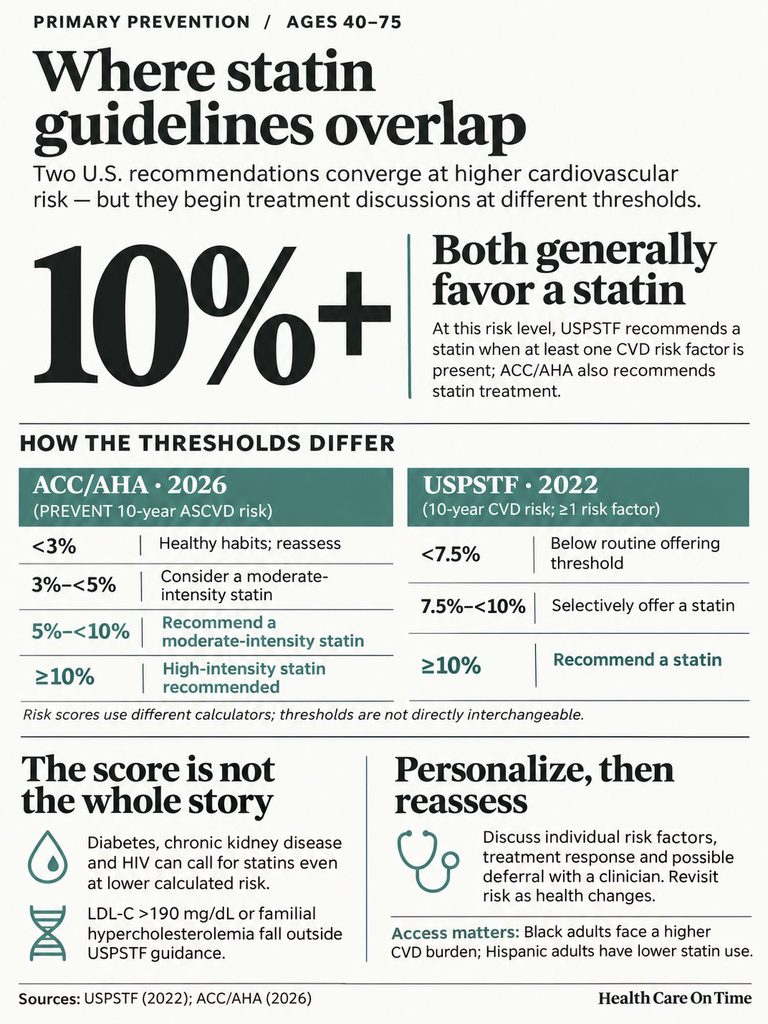
The differences show up at lower risk. The USPSTF only suggests selectively offering a statin from 7.5% to under 10% (grade C) and recommends nothing below 7.5%. The 2026 guideline recommends at least a moderate-intensity statin from 5% and calls one reasonable from 3%. And since the two use different calculators, even the same percentage doesn’t mean exactly the same thing.
Diabetes, kidney disease and HIV pull treatment earlier. Adults 40 and older with type 1 or type 2 diabetes, chronic kidney disease stage 3 or higher, or HIV benefit from lipid-lowering therapy even at lower absolute risk, and those with higher PREVENT scores are more likely to benefit from a stronger dose. Under the USPSTF rule, diabetes counts as one risk factor, but the 10-year risk still has to reach 7.5% or 10%. That split predates 2026: a 2022 analysis of the earlier rules found every participant with diabetes qualified under the 2018 ACC/AHA guideline, while only those at 10% or more qualified under the USPSTF.
Access to statins is uneven, too. Black adults have the highest prevalence of cardiovascular disease in the US and Hispanic adults the lowest statin use, gaps the Task Force singles out, while men tend to have events earlier in life and women have higher death rates from certain events.
The USPSTF rule doesn’t cover anyone with an LDL above 190 mg/dL (4.92 mmol/L) or known familial hypercholesterolemia, since those people are considered very high risk and are treated under the specialty guideline.
For people with no prior heart attack, stroke or known artery plaque, the 2026 rules work out like this:
| If your situation is | What the 2026 guideline says | A good question to bring |
| 10-year risk under 3% and LDL under 160 mg/dL, 30-year risk under 10% | Focus on health habits; no statin | “When should we recheck the numbers?” |
| Age 30 to 59, 10-year risk under 3%, but LDL 160 to 189 mg/dL or 30-year risk 10% or more | Moderate-intensity statin is reasonable | “Would diet changes for 3 to 6 months be enough first?” |
| 10-year risk 3% to under 5% (borderline) | Moderate-intensity statin reasonable after a discussion; aim for a 30% to 49% LDL drop and LDL under 100 mg/dL | “Do any risk enhancers apply, or would a calcium scan help decide?” |
| 10-year risk 5% to under 10% (intermediate) | Start at least a moderate-intensity statin; high intensity may help near 10%; LDL under 100 mg/dL | “Is the risk near 5% or near 10%, and does that change the dose?” |
| 10-year risk 10% or more (high) | High-intensity statin for a 50% or greater LDL drop; LDL under 70 mg/dL | “If the statin alone doesn’t reach the goal, what’s next?” |
| LDL 190 mg/dL or higher, any risk score | Maximally tolerated statin; genetic testing if no clear secondary cause | “Should parents, siblings or children get tested too?” |
| Borderline or intermediate risk with a CAC score of 0 and no high-risk conditions | Medication may be deferred; repeat the scan in 3 to 7 years | “When would a repeat scan make sense?” |
Starting a statin after 75
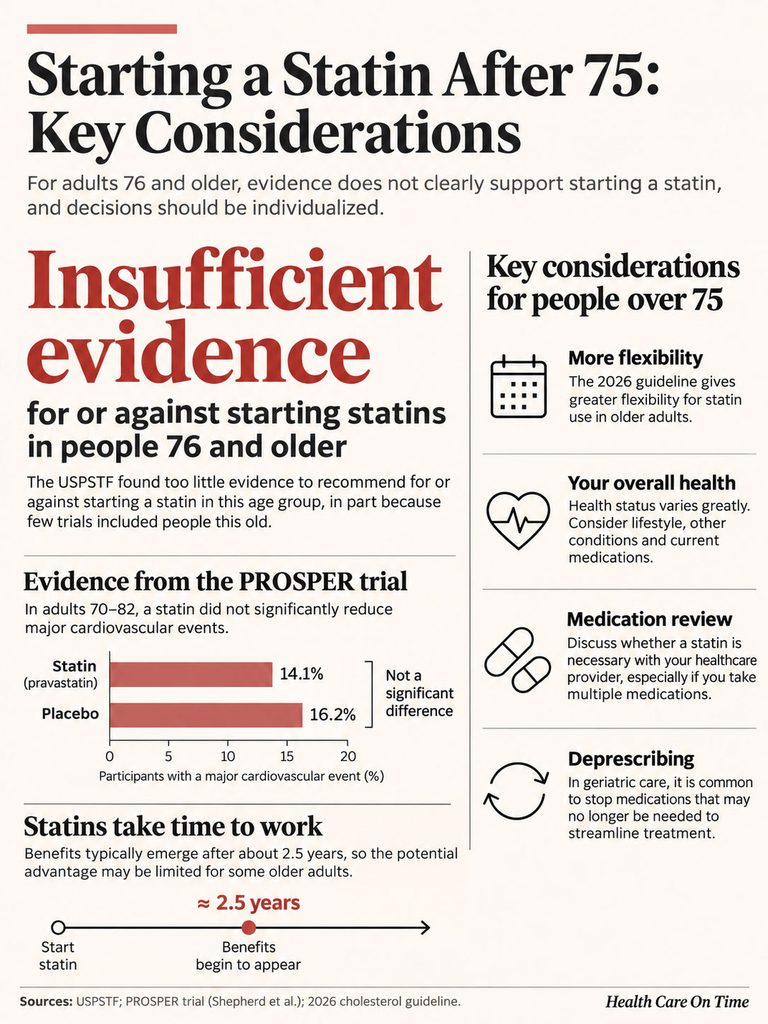
The USPSTF found the evidence insufficient to recommend for or against starting a statin at 76 or older; very few trials included this age group, and the one primary prevention trial in its review, PROSPER, found no significant benefit. No primary prevention trial has started therapy in people over 75, so anything said about this group rests on extrapolation and observational data.
The 2026 guideline is more open, and its advice for older adults answers the questions families tend to ask:
- Is 70 or 78 too old to start? From 65 to 79, treatment can be considered after a discussion when the 10-year PREVENT risk is 5% to under 10% or 10% or higher.
- What about after 75? If life expectancy is at least 2.5 years, starting a moderate-intensity statin may be reasonable.
- Can a scan help an older adult decide? A CAC scan may be reasonable over 75 when the decision is unclear, and a score of 0 or 1 to 10 may justify treating the person as lower risk and skipping the drug.
- Should a parent stop at a certain age? Not on age alone. Frailty, other illnesses, the number of medicines and personal goals all count, and if life expectancy is under 1 year, stopping may be reasonable to avoid side effects and pill burden.
That 2.5-year figure is a useful anchor, because a statin takes time to pay off. A healthy 78-year-old who walks every day and takes two medicines is a very different case from an 85-year-old with advanced heart failure and a long medication list. And turning 76 is no reason by itself to stop a statin someone already takes and tolerates.
For a parent who already takes a handful of daily pills, it’s fair to ask the prescriber how the statin ranks against the others, and whether a calcium scan could avoid adding it at all. Deprescribing, or trimming medicines that no longer earn their place, is a routine part of geriatric care.
How the rules play out
The three people below are made up, and their risk figures are examples rather than real calculator outputs.
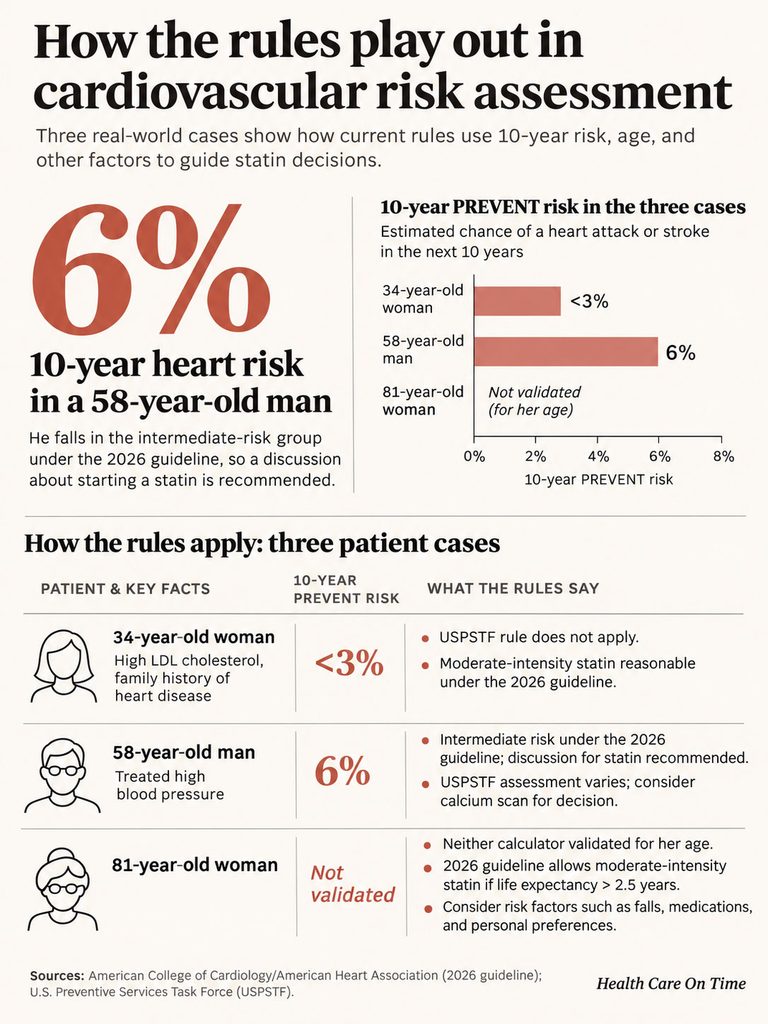
A 34-year-old with high LDL and a father who had a heart attack at 50
Her 10-year PREVENT risk is under 3%, so the USPSTF rule doesn’t apply and the 10-year number alone wouldn’t trigger anything. Her LDL of 172 mg/dL falls in the 160 to 189 mg/dL band, though, and an early family history of heart disease is a risk enhancer, so under the 2026 guideline a moderate-intensity statin is reasonable. Her doctor may still suggest a few months of diet and exercise first. A pregnancy planned for next year would push the start date back.
A 58-year-old man with treated high blood pressure
Say his PREVENT 10-year risk comes back at 6%. That’s intermediate risk under the 2026 guideline, where at least a moderate-intensity statin is recommended after a discussion. Under the USPSTF, the answer depends on the older calculator, which often gives a higher number; if that result is 10% or more, the Task Force also recommends a statin, and at 7.5% to under 10% it supports offering one selectively. If he’s reluctant, a calcium scan makes a sensible tiebreaker, because a score of 0 would let him defer the pill and rescan in 3 to 7 years.
An 81-year-old woman who still drives and gardens
Neither calculator is validated at her age, and the USPSTF has no recommendation either way. The 2026 guideline would let her start a moderate-intensity statin if her life expectancy is at least 2.5 years and she wants the added protection, while a calcium score of 0 or 1 to 10 could support skipping it. Her risk of falls, her other prescriptions and what she cares about most matter as much as her cholesterol.
How many US adults qualify now
A JAMA analysis used national survey data (NHANES, 2017 to 2023) from 4,366 participants, representing about 154.5 million US adults without heart disease, to estimate who meets the 2026 criteria. Most of the newly eligible group has a 10-year risk under 3% but a 30-year risk above 10%.
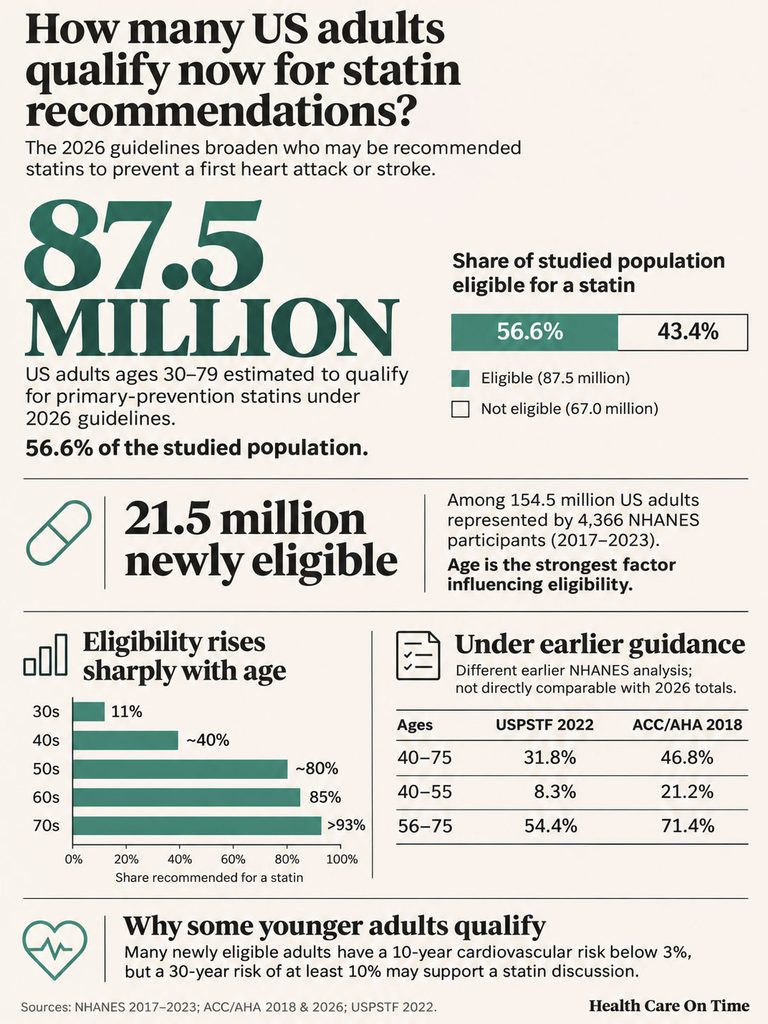
| Group | Share or number recommended a statin | Data source |
| Adults in their 30s | About 10% (2026 guideline) | NHANES 2017 to 2023, JAMA 2026 |
| Adults in their 40s | About 40% | Same JAMA analysis |
| Adults in their 50s | Around 80% | Same JAMA analysis |
| Adults in their 60s | 85% | Same JAMA analysis |
| Adults in their 70s | Over 90% | Same JAMA analysis |
| All adults 30 to 79 | About 87.5 million, just under 57%; 21.5 million newly eligible | Same JAMA analysis |
| Adults 40 to 75, earlier rules | 31.8% (33.7 million) under USPSTF 2022 vs 46.8% (49.7 million) under ACC/AHA 2018 | Gupta et al., via ACC review (2022) |
| Ages 40 to 55, earlier rules | 8.3% under USPSTF vs 21.2% under ACC/AHA 2018 | Gupta et al. |
| Ages 56 to 75, earlier rules | 54.4% under USPSTF vs 71.4% under ACC/AHA 2018 | Gupta et al. |
The jump between the 40s and 50s comes mainly from age itself, the strongest single input in every risk calculator. The earlier comparison used a 7.5% cutoff to stand in for ACC/AHA eligibility, so its figures aren’t a perfect match for the 2026 numbers, but the pattern holds: the cardiology guideline has always reached more people than the USPSTF.
The debate over treating lower-risk adults
LDL does its damage over decades, so cardiologists who back the 2026 guideline argue that lowering it sooner prevents more plaque than lowering it later. Roger Blumenthal of Johns Hopkins, who chaired the guideline, has said cholesterol drugs work better the longer people take them. At about $40 a year, a generic statin costs less than most prescriptions, and in the USPSTF’s pooled trials they reduced heart attacks (relative risk 0.67) and strokes (relative risk 0.78) and slightly lowered death from any cause (relative risk 0.92) over a mean follow-up of 3.3 years.
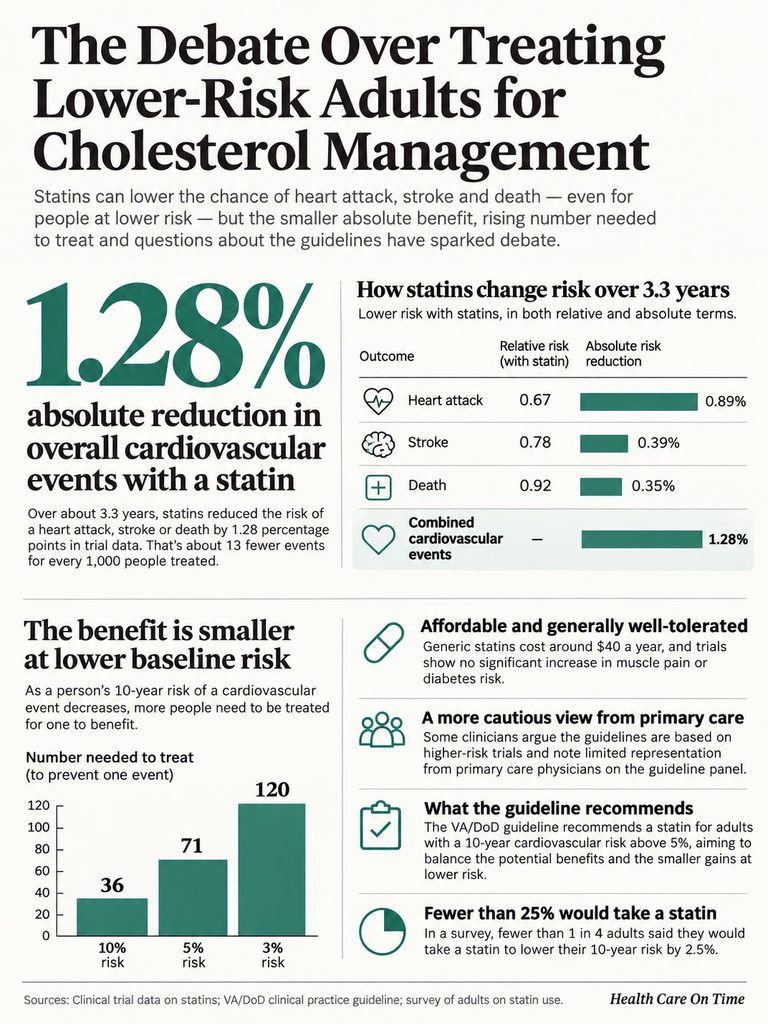
The absolute gains were smaller than those ratios suggest. Over that period, the risk of a heart attack fell by 0.89 percentage points, stroke by 0.39 points and death from any cause by 0.35 points, with a 1.28-point drop for the combined cardiovascular outcome. Supporters point out that those gains keep building when a drug is taken for 30 years instead of 3.
Side effects were less common in trials than many people expect. Across 9 trials and 46,388 people, statins didn’t raise muscle pain compared with placebo, and pooled data from 6 trials showed no significant rise in diabetes, though other studies put the absolute increase in type 2 diabetes risk at 0.1% to 0.5%.
Most of the pushback comes from primary care. In a November 2026 editorial in American Family Physician, Alex Krist and Mark Ebell argued that the lower-risk recommendations borrow from trials in higher-risk people, since no primary prevention trial has enrolled adults under 40. The number needed to treat rises as baseline risk falls, from 36 at 10% risk to 71 at 5% and 120 at 3%. They added that the 33-member panel had no primary care physicians; separately, 9 of the authors reported relevant financial ties to industry.
Whether people want the pill is a separate question. In a 2026 survey, fewer than one in four adults said they would take a statin if it cut their 10-year risk from 10% to 7.5%. Many at-risk people also stop cholesterol medicine within two years. A benefit that builds over decades can feel invisible day to day, and Jeremy Sussman of the VA Ann Arbor faulted the guideline for offering doctors little help with that kind of shared decision.
Gregg Fonarow, a UCLA cardiologist outside the writing group, saw the change differently, calling it an important move toward finding higher-risk people earlier, before events that could have been prevented.
The VA/DoD guideline used in veterans’ and military care, updated in December 2025, sits between the two camps and recommends statins when 10-year risk exceeds 5%.
High-risk adults, people with LDL of 190 mg/dL or higher and people with diabetes in midlife get treated under every one of these approaches. The disagreement is about the 3% to 10% zone, and for someone in that zone, an extra test is often more useful than an immediate yes or no.
Tests that can settle a borderline case
- Coronary artery calcium scan. A low-dose CT that counts calcified plaque in the heart arteries, suggested for men 40 and older and women 45 and older at borderline or intermediate risk. A score of 0 can justify waiting, while any score above 0 generally favors a statin, and 100 or more (or the 75th percentile for age and sex) supports high intensity. Up to 40% of intermediate-risk patients score 0, and about 25% score 100 or more, so the scan really does move a lot of people one way or the other, and knowing what calcium score requires a statin makes the result easier to act on.
- Lipoprotein(a). A one-time blood test. About 1 in 5 people worldwide have a high level, and a result of 50 mg/dL (125 nmol/L) or more is tied to roughly 40% higher long-term risk of heart attack or stroke. Diet and exercise barely change it.
- hs-CRP. High-sensitivity CRP of 2 mg/L or more, found on more than two occasions with no other explanation, can prompt a stronger statin at borderline risk.
- ApoB. Mostly a later test, useful once LDL goals are met in people with diabetes, high triglycerides or cardiometabolic disease.
A family history of early heart disease, chronic inflammatory conditions such as lupus or rheumatoid arthritis, persistently high triglycerides, and South Asian or Filipino ancestry all count as risk enhancers, and none of them needs a lab test. Women usually develop artery disease about 10 years later than men, but early menopause, preeclampsia, gestational diabetes or high blood pressure in pregnancy can erase that head start.
After the first prescription
Under the USPSTF approach, the usual choice is a moderate-intensity statin, started once the reasons have been discussed and the patient agrees, with no LDL target attached. The 2026 guideline adds a lipid profile within 12 weeks of starting and then about once a year, which shows whether the LDL drop matches the target: roughly 30% to 49% for a moderate-intensity statin and 50% or more for high intensity.
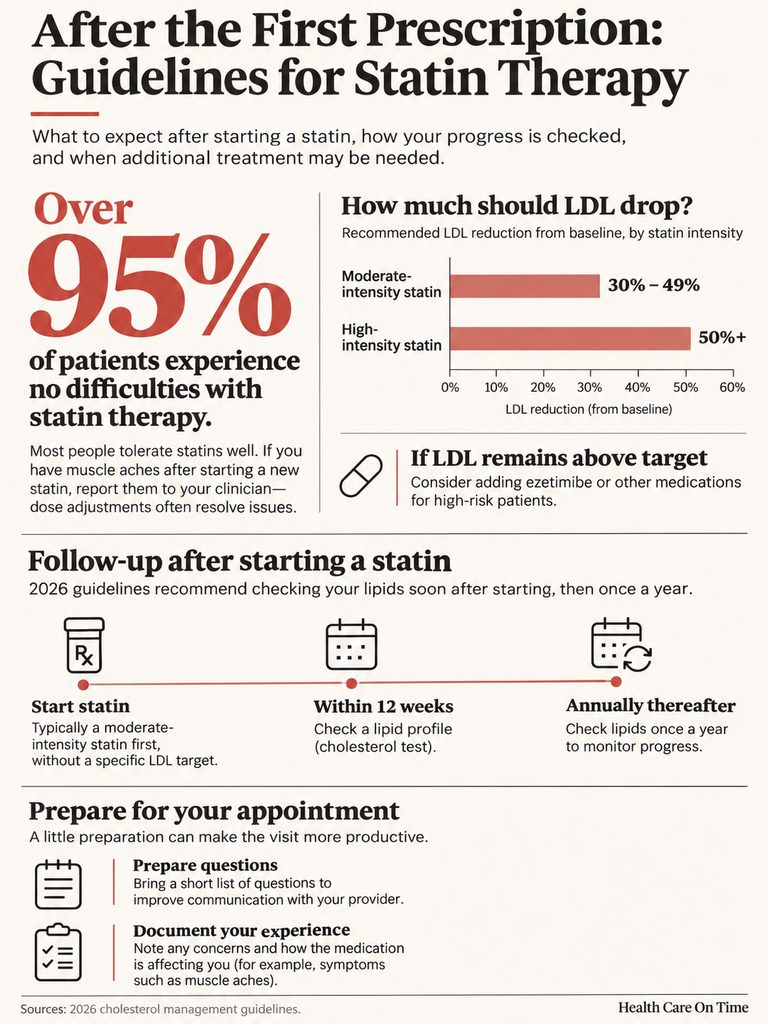
When LDL stays above goal on the strongest statin a person tolerates, high-risk patients can reasonably add ezetimibe, a cheap generic pill that lowers LDL by a different route, and, when appropriate, a PCSK9 inhibitor or bempedoic acid. Muscle aches that start after a new prescription are worth reporting, since switching statins or lowering the dose often solves the problem. The guideline chair estimates that 95% or more of patients have no difficulties.
Questions to bring to the visit
Write these down before the appointment:
- “What’s the 10-year PREVENT number, and what’s the 30-year number?”
- “Did the clinic use the old calculator or PREVENT?”
- “If we wait 6 months and work on diet and blood pressure, would the answer change?”
- “Would a calcium scan or an Lp(a) test help us decide?”
- “What LDL are we aiming for, and when do we recheck it?”
- “Does a pregnancy in the next year or two change the plan?”
- “At 78, with these other medicines, is a statin still worth starting?”
- “If muscle aches show up, do we switch statins or lower the dose first?”
When to see a doctor sooner
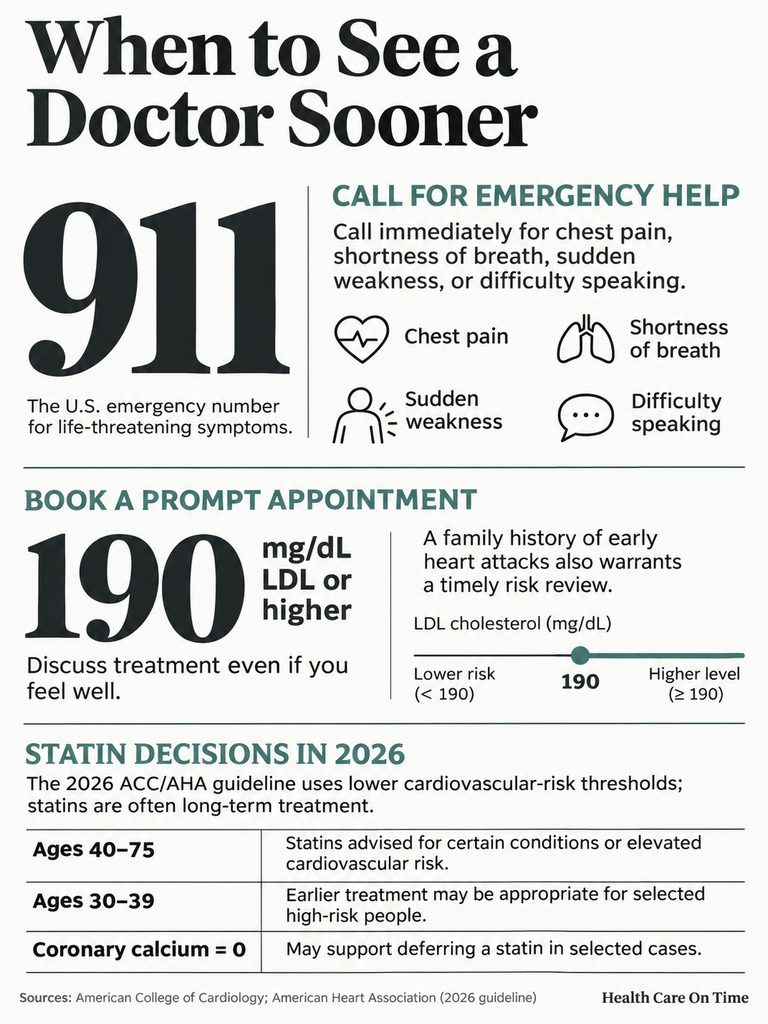
A statin decision can usually wait for a routine visit. Call 911 for chest pain or pressure, shortness of breath, sudden weakness on one side, trouble speaking or a drooping face, which can be signs of a heart attack or stroke. Book a prompt appointment if an LDL result comes back at 190 mg/dL or higher, if a parent or sibling had a heart attack at a young age, or if severe muscle pain, weakness or dark urine starts after a statin.
Frequently Asked Questions
When should statin therapy start under current guidelines?
Under the USPSTF, a statin is advised at 40 to 75 with at least one risk factor and a 10-year risk of 10% or more, and offered selectively at 7.5% to under 10%. The 2026 ACC/AHA guideline starts the risk talk at 30 with PREVENT: a statin is reasonable at 3% to under 5% and recommended at 5% or higher. LDL of 190 mg/dL or higher calls for treatment at any score, as do diabetes, CKD stage 3 or higher, or HIV from age 40.
What are the new 2026 guidelines for statins?
The ACC/AHA and nine other groups replaced the 2018 cholesterol guideline in March 2026. The headline changes are the PREVENT calculator for ages 30 to 79, lower risk cutoffs (3%, 5% and 10%), a 30-year estimate for ages 30 to 59, LDL goals of under 100 or under 70 mg/dL depending on risk, a once-in-adulthood Lp(a) test, and calcium scans for more people, starting at 40 for men and 45 for women.
Is it safe to start a statin after age 75?
For many healthy older adults, yes. A moderate-intensity statin may be reasonable over 75 if life expectancy is at least 2.5 years, though the USPSTF calls the evidence insufficient. Frailty, other medicines and personal goals should shape the choice.
Is a statin recommended at age 30?
Usually not. About 10% of Americans in their 30s meet the 2026 criteria, mainly those with LDL of 160 mg/dL or higher, a 30-year risk of 10% or more, or familial hypercholesterolemia.
Does a high LDL alone mean a statin is needed?
It depends on how high. At 190 mg/dL or higher, the strongest tolerated statin is recommended regardless of the risk score. Between 160 and 189 mg/dL with a low 10-year risk, a moderate statin is reasonable for adults 30 to 59, though lifestyle changes usually come first.
Why might a doctor’s advice differ from the USPSTF?
A doctor may follow the ACC/AHA guideline, which uses the PREVENT calculator and lower cutoffs, while the USPSTF still relies on the older Pooled Cohort Equations and its 7.5% and 10% thresholds. Clinics in the VA system may use the VA/DoD guideline, which recommends statins when 10-year risk exceeds 5%. Each weighs the evidence differently for people at moderate risk, so asking which rule and which calculator the clinic uses explains most of the gap.
Can a calcium score of zero mean skipping a statin?
Often, yes, at borderline or intermediate risk with no high-risk conditions. Medication can be deferred and the scan repeated in 3 to 7 years.
Is a statin a lifelong medicine once started?
For most people, yes, since the benefit builds over years of use. Stopping shouldn’t be decided by age alone, but it may be reasonable when life expectancy is under 1 year, and statins are generally stopped before a planned pregnancy. Any change should go through the prescriber.
Medical disclaimer: This article is for general information and isn’t a substitute for advice from your own doctor or pharmacist. Statin decisions depend on your full health history, test results and preferences. Don’t start, stop or change any medicine without talking with a licensed clinician. If you have chest pain or stroke symptoms, call 911.
References
- U.S. Preventive Services Task Force. Statin Use for the Primary Prevention of Cardiovascular Disease in Adults: Preventive Medication. August 23, 2022.
- American Family Physician. Statin Use for the Primary Prevention of Cardiovascular Disease in Adults (USPSTF summary). 2023.
- American Heart Association. Top Take-Home Messages for Clinicians: Using PREVENT-ASCVD Equations for Risk-Based Lipid Management. Adapted from the 2026 ACC/AHA Guideline on the Management of Dyslipidemia.
- American Heart Association. Top Take-Home Messages for Geriatric Clinicians. Adapted from the 2026 ACC/AHA Guideline on the Management of Dyslipidemia.
- American Heart Association. PREVENT Equations Quickstart Guide.
- STAT. New heart disease prevention guideline lowers age to consider statins to 30. March 13, 2026.
- American College of Cardiology. ACC, AHA Release New Clinical Guideline for Managing Dyslipidemia. March 13, 2026.
- White L. Updated Guidelines on the Management of Dyslipidemia. AFP Community Blog, April 6, 2026.
- EBSCO DynaMed. EBM Focus: Top Takeaways From the Updated ACC/AHA Guideline on the Management of Dyslipidemia. 2026.
- Reamy BV. Assessing the 2026 ACC/AHA Guideline on the Management of Dyslipidemia. Am Fam Physician. 2026;114(5):449-452.
- Krist AH, Ebell MH. Comparing Dyslipidemia Recommendations: Evidence Supporting USPSTF vs ACC/AHA Guidelines. Am Fam Physician. November 2026.
- Michigan Medicine Health Lab. More than half of U.S. adults now qualify for statins under new guidelines. Summary of Anderson TS, Sussman J, Wilson LM, JAMA, 2026.
- American College of Cardiology. Comparing Guideline Recommendations of Statin Use for the Primary Prevention of ASCVD. October 4, 2022 (pre-2026 background).