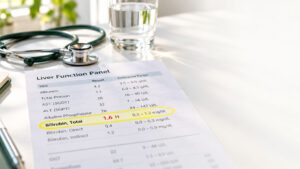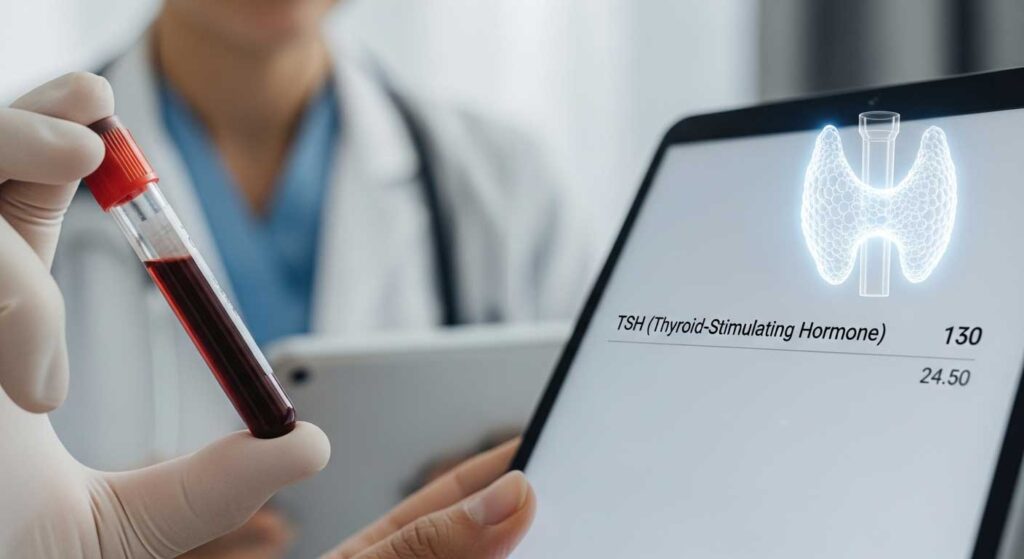
You’ve been feeling “off” for a while—maybe it’s a persistent, bone-deep fatigue that no amount of sleep can fix. Perhaps you’ve been gaining weight despite your best efforts, or maybe you’re feeling anxious and jittery for no apparent reason. Your doctor, suspecting your thyroid might be involved, orders a routine blood test. When the results come in, one three-letter acronym stands out: TSH.
- The Master Regulator: Understanding TSH and the Thyroid Feedback Loop
- Decoding Your Report: The TSH Normal Range and "Optimal" Levels
- High TSH: The Telltale Sign of an Underactive Thyroid (Hypothyroidism)
- Low TSH: The Sign of an Overactive Thyroid (Hyperthyroidism)
- The Complete Picture: Why a Full Thyroid Panel is Best
- How to Get the Most Accurate TSH Test Result
- Conclusion: Your TSH is Your Thyroid's Report Card
- Frequently Asked Questions (FAQ)
So, what is TSH in a blood test, and why is this single marker so incredibly important for your overall health? This comprehensive guide from HealthCareOnTime.com will demystify the TSH test, explaining what it is, what your results mean, and what steps you should take if your levels are outside the normal range. Understanding your TSH levels is the first and most critical step in diagnosing and managing thyroid disorders, which affect millions of Americans and have a profound impact on your metabolism, energy, and mood.
The Master Regulator: Understanding TSH and the Thyroid Feedback Loop
To truly understand your TSH result, you need to understand the elegant communication system that runs your metabolism. It’s a constant conversation between your brain and the thyroid gland in your neck.
What is TSH and Where Does It Come From?
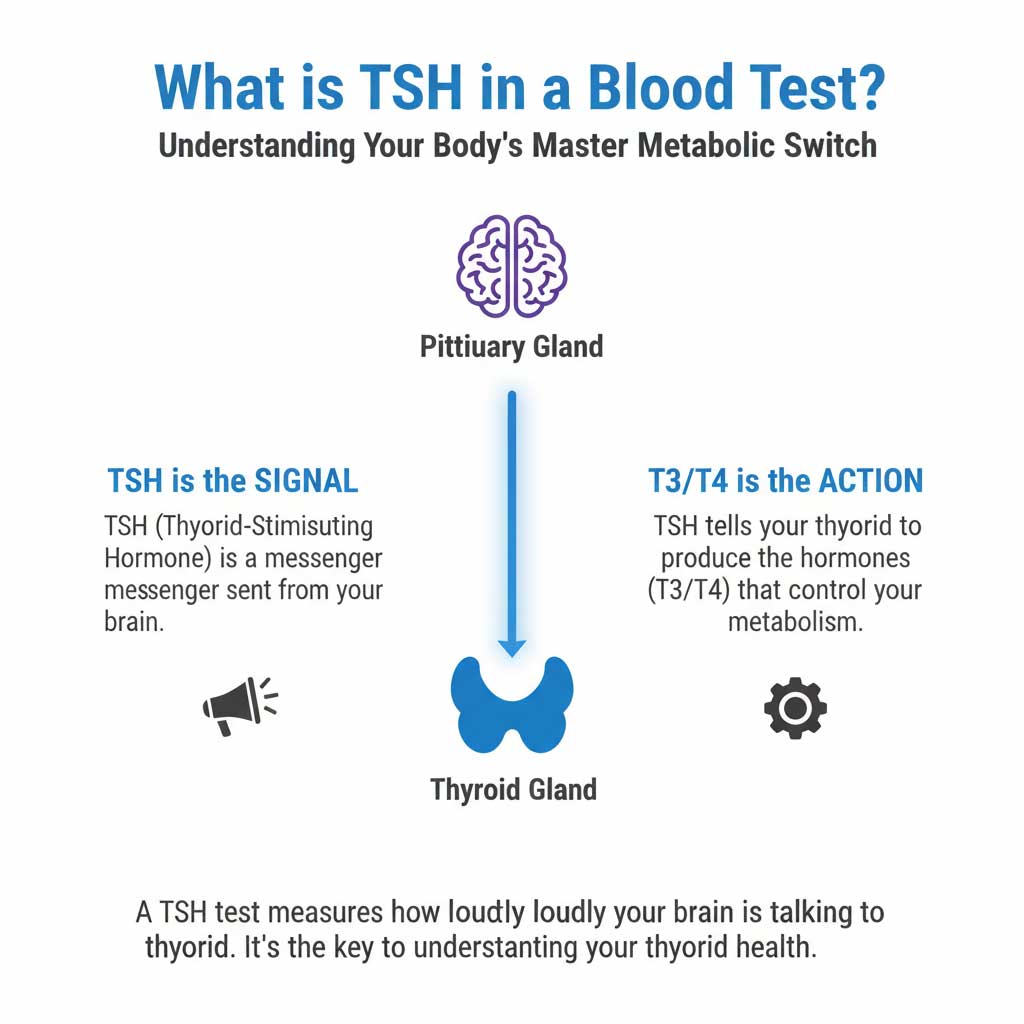
TSH stands for Thyroid-Stimulating Hormone. It is not a thyroid hormone itself. Instead, it’s a messenger hormone produced by the pituitary gland, a small, pea-sized gland located at the base of your brain. Think of your pituitary gland as “mission control” for your entire endocrine system.
The Brain-Thyroid Connection: A Negative Feedback Loop

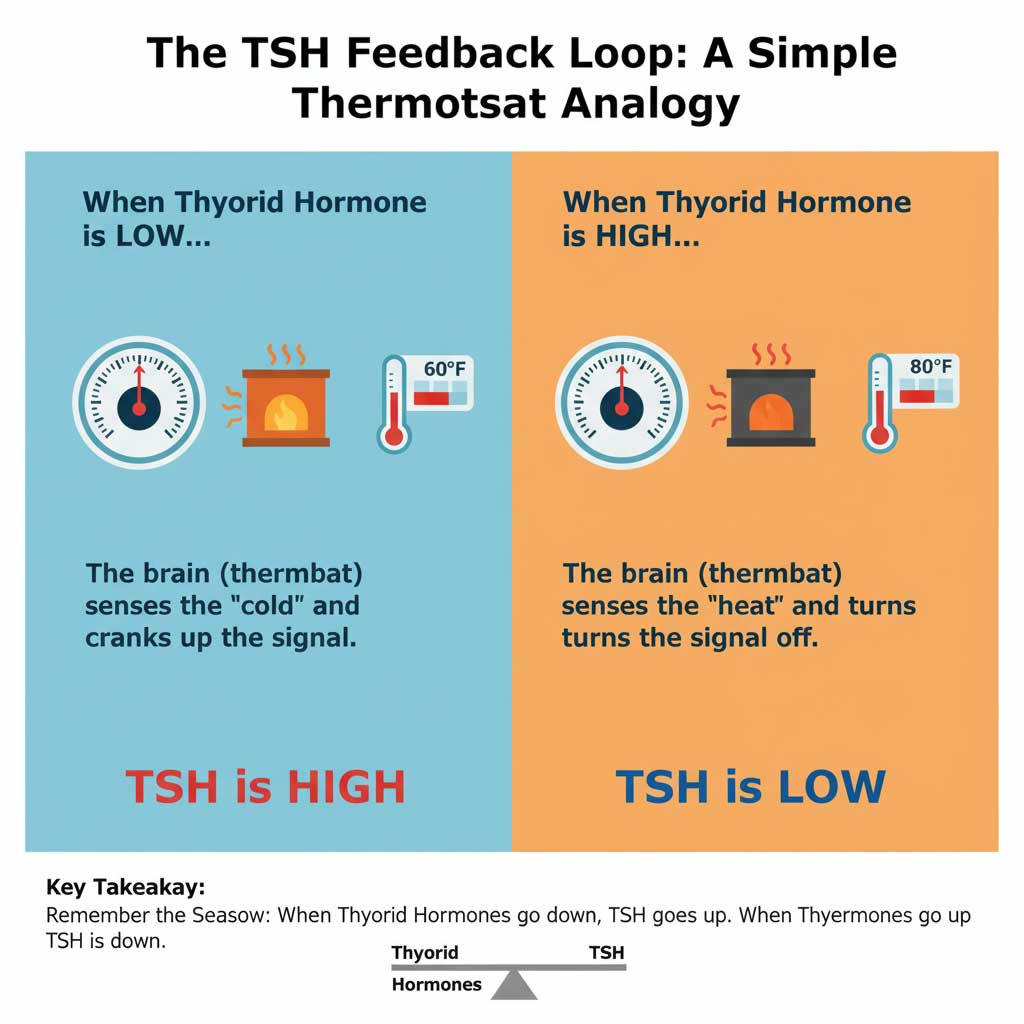
The relationship between your brain and your thyroid is a classic negative feedback loop. The easiest way to understand this is with a simple analogy: think of your pituitary gland as the thermostat on your wall and your thyroid gland as the furnace in your home.
- If the house is too cold (meaning your body has low levels of thyroid hormone): The thermostat (your pituitary) detects the chill and turns up the heat. It does this by releasing MORE TSH into your bloodstream. This high level of TSH “shouts” at the furnace (your thyroid) to kick on and produce more heat (thyroid hormone).
- If the house is too hot (meaning your body has high levels of thyroid hormone): The thermostat (your pituitary) senses the excess heat and shuts off the signal. It does this by releasing LESS TSH. This low level of TSH “whispers” to the furnace (your thyroid) to take a break and stop producing so much heat.
This inverse, “seesaw” relationship is the absolute key to interpreting all TSH levels.
TSH vs T4 Blood Test: The Signal vs. the Action
It’s crucial to understand this difference. The TSH test measures the signal coming from the brain. The T4 and T3 tests measure the actual hormones being produced by your thyroid gland. T4 (Thyroxine) and T3 (Triiodothyronine) are the “action hormones” that travel throughout your body and control the speed of your metabolism.
Decoding Your Report: The TSH Normal Range and “Optimal” Levels
When you get your lab report, you’ll see your TSH result next to a reference range. Understanding this range is the first step in decoding your results.
The Standard Laboratory TSH Normal Range
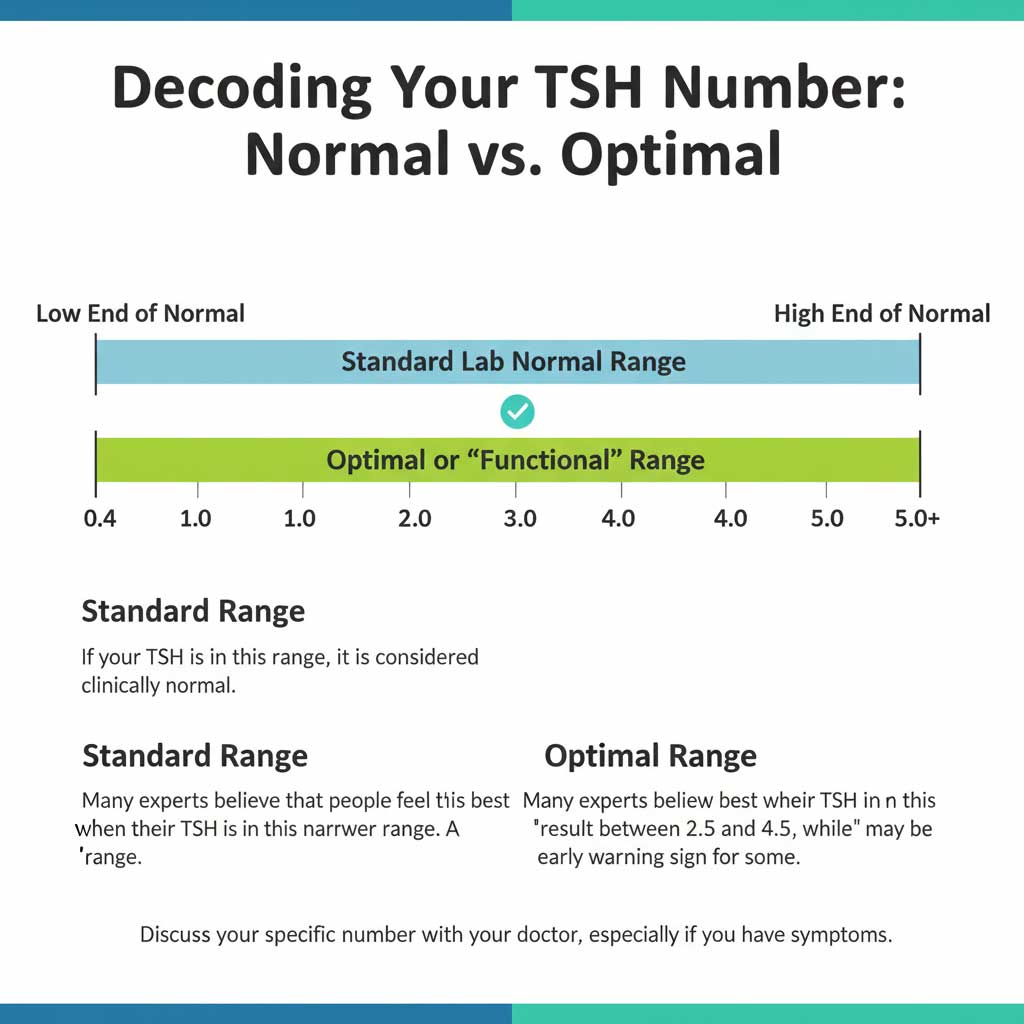
While the exact numbers can vary slightly from one lab to another, the standard reference TSH normal range used by most labs in the U.S. for a non-pregnant adult is approximately:
0.4 to 4.5 mIU/L (milli-international units per liter)
If your TSH levels fall within this range, they are considered clinically “normal.”
The Debate: Standard vs. Optimal TSH Levels
This is a crucial point of discussion in modern endocrinology. While the official lab range may go up to 4.5 mIU/L, many endocrinologists and most functional medicine doctors believe that the truly “optimal” range for feeling your best is much narrower.
Many experts now consider an optimal TSH levels to be somewhere between 1.0 and 2.5 mIU/L. A TSH level above 2.5 mIU/L, even if it’s technically within the “normal” lab range, may be an early warning sign of thyroid stress or developing hypothyroidism for many individuals, especially if they are already experiencing symptoms.
TSH Normal Range by Age
It’s also important to know that TSH levels naturally change as we age. The upper limit of the TSH normal range tends to increase over time. For example, a TSH of 6.0 mIU/L might be considered perfectly acceptable for a healthy 80-year-old, but it would be a significant red flag for a 30-year-old.
High TSH: The Telltale Sign of an Underactive Thyroid (Hypothyroidism)
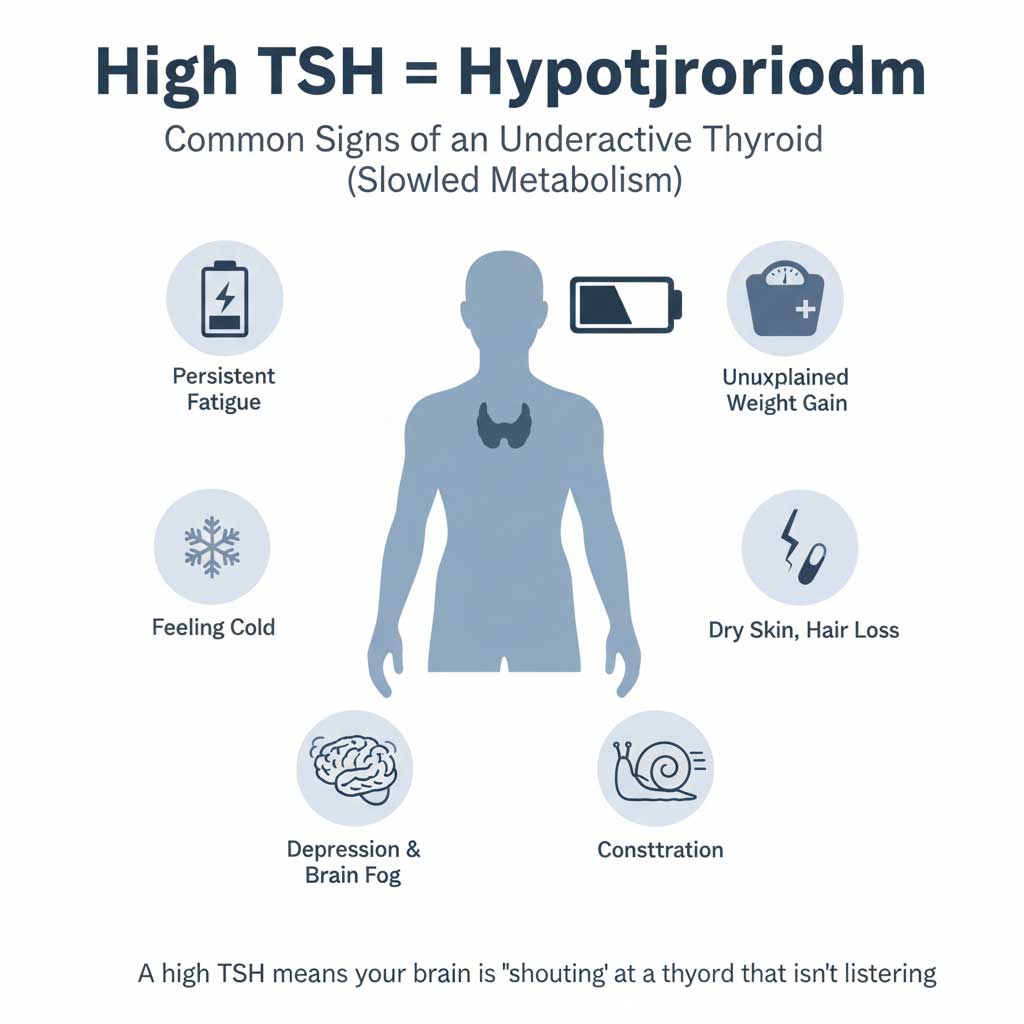
If your lab report comes back with a high TSH, it’s a clear signal from your body that requires attention.
What Does a High TSH Mean?
Let’s go back to our analogy. A high TSH (typically above 4.5 mIU/L) means the thermostat is cranked up high because the house is cold. Your brain is shouting at your thyroid, trying desperately to get it to produce more thyroid hormone, but the thyroid gland isn’t responding adequately. This is the clinical definition of primary hypothyroidism (an underactive thyroid).
Symptoms of High TSH (Hypothyroidism)
The symptoms of a high TSH are the classic symptoms of a slowed-down metabolism. You may experience one or many of the following:
- Persistent, profound fatigue and lethargy
- Unexplained weight gain or an inability to lose weight
- Feeling cold all the time, especially in your hands and feet
- Dry skin, brittle nails, and excessive hair loss
- Constipation
- Depression, “brain fog,” and poor memory or concentration
- Muscle aches and joint stiffness
What Causes High TSH? The Hashimoto’s Connection
While there are several potential causes of an underactive thyroid, one stands out above all others in the United States. The #1 cause of hypothyroidism in the U.S. is Hashimoto’s thyroiditis.
Hashimoto’s thyroiditis is an autoimmune disease. In this condition, your own immune system mistakenly creates antibodies that attack and gradually destroy your thyroid gland, reducing its ability to produce hormones. A doctor confirms a diagnosis of Hashimoto’s when a patient has a high TSH level along with a positive Thyroid Peroxidase (TPO) antibody test.
Understanding Subclinical Hypothyroidism
You may hear your doctor use the term subclinical hypothyroidism. This is an extremely common diagnosis and refers to a specific lab pattern: high TSH with normal T4.
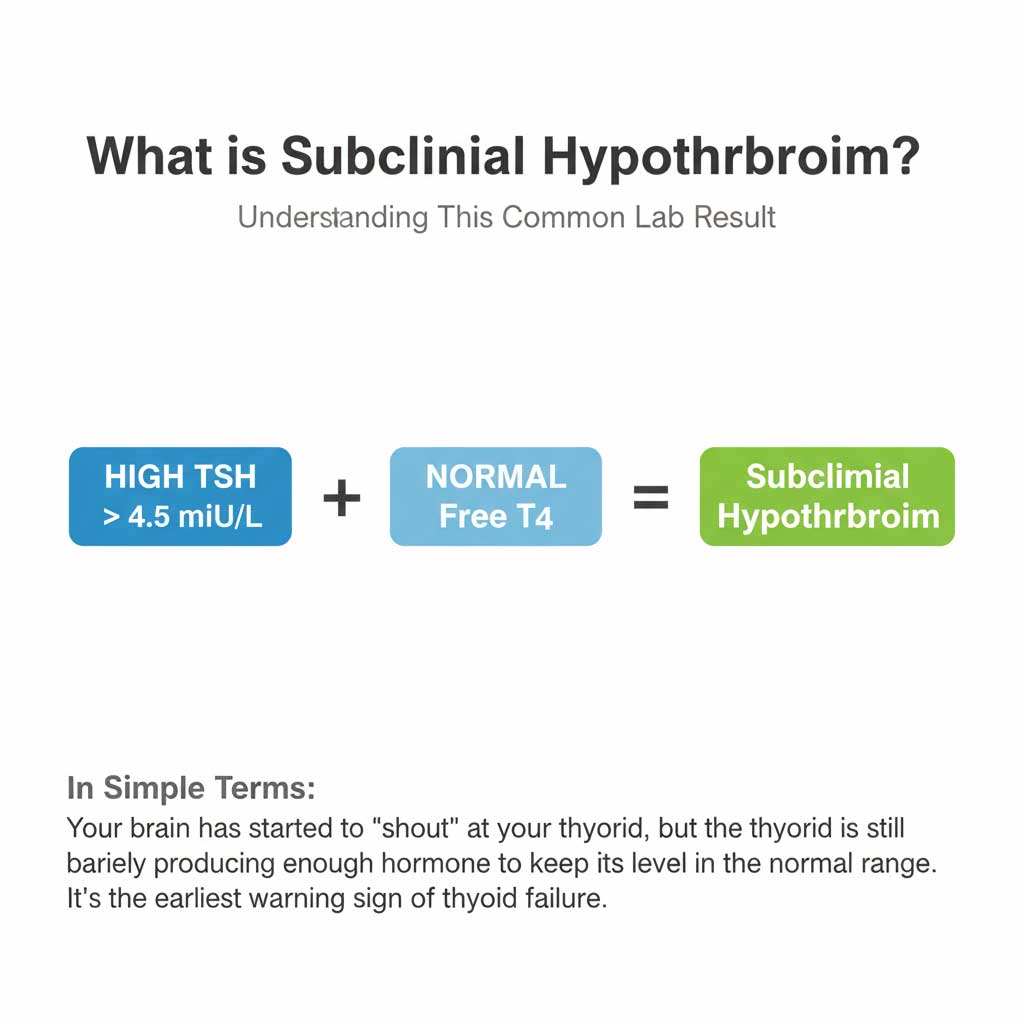
This means your brain has started to “shout” at the thyroid (the TSH is elevated), but your thyroid is still managing to produce just enough T4 hormone to keep that level within the normal range. It is considered the earliest stage of thyroid failure. Whether it is treated with medication depends on how high the TSH is, whether you have symptoms, and if you have positive thyroid antibodies.
Low TSH: The Sign of an Overactive Thyroid (Hyperthyroidism)
On the opposite end of the spectrum is a low TSH, which points to a completely different problem.
What Does a Low TSH Mean?
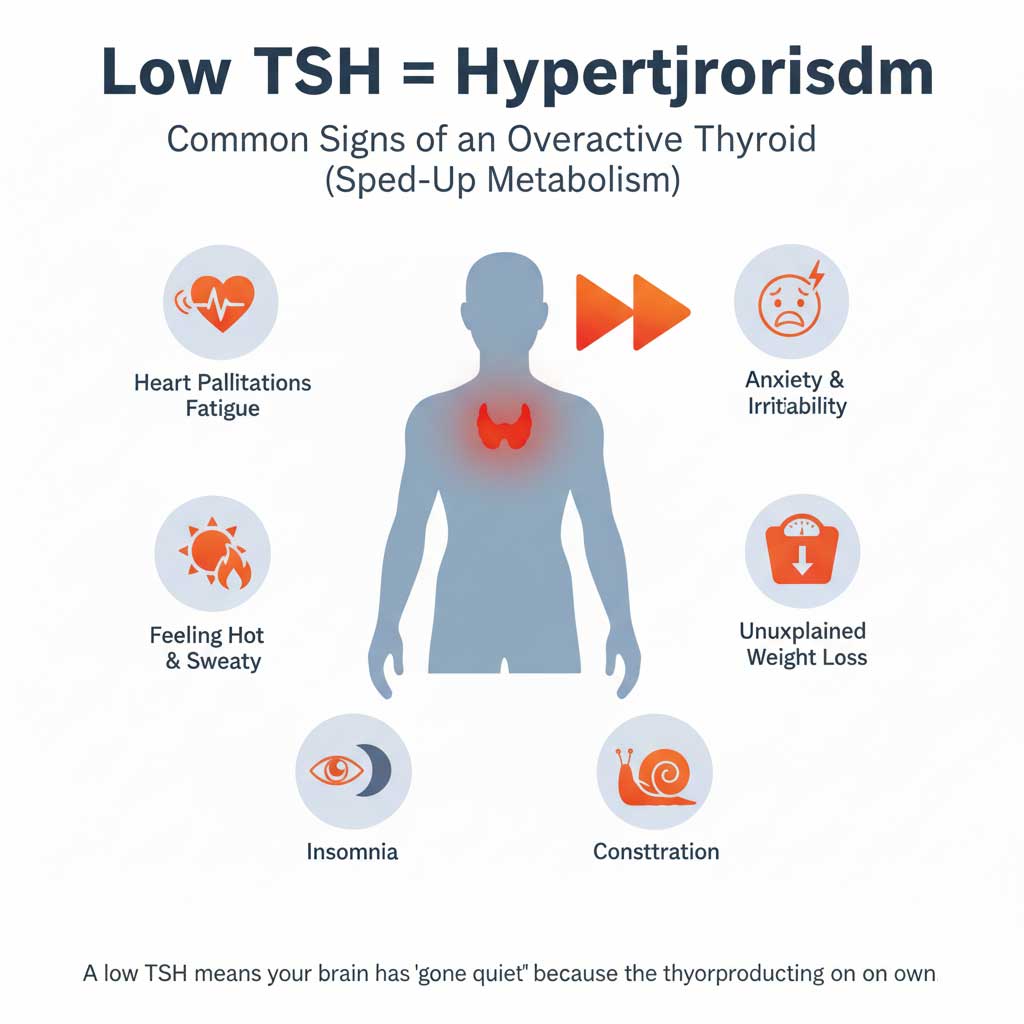
A low TSH (typically below 0.4 mIU/L and often close to zero) means the thermostat has been turned off because the house is already too hot. Your brain senses that there is an excess of thyroid hormone circulating in your blood, so it shuts down the TSH signal to try to get the thyroid to stop. This is the clinical definition of hyperthyroidism (an overactive thyroid).
Symptoms of Low TSH (Hyperthyroidism)
The symptoms of a low TSH are the classic symptoms of a sped-up, overactive metabolism:
- Anxiety, nervousness, and irritability
- Insomnia, racing thoughts, and difficulty sleeping
- Unexplained weight loss, often despite an increased appetite
- Heart palpitations, a rapid heartbeat, or a pounding heart
- Feeling hot and sweating excessively
- Shaky hands or fine tremors
A Critical Warning: The Biotin Interference
There is one crucial factor that everyone getting a thyroid test must know about. High doses of biotin supplements (Vitamin B7), which are extremely popular in “hair, skin, and nails” formulas, can severely interfere with many common thyroid lab assays.
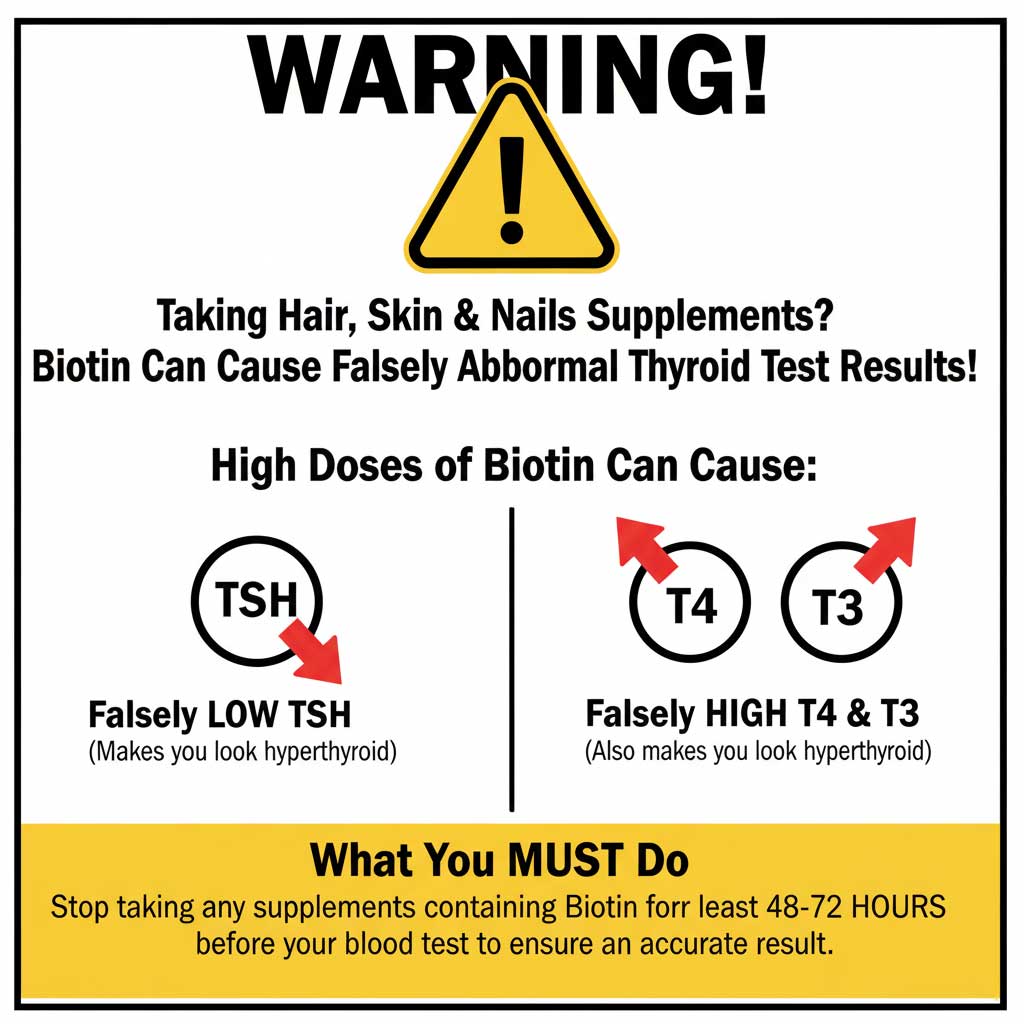
Specifically, biotin and thyroid tests don’t mix well because the supplement can cause a falsely LOW TSH reading and falsely HIGH T4/T3 readings. This can make a perfectly healthy person—or even a person with hypothyroidism—appear to have hyperthyroidism on their lab report. This could potentially lead to a dangerous misdiagnosis and inappropriate treatment.
Actionable Advice: It is recommended by most endocrinology associations to stop taking any supplements containing biotin for at least 48 to 72 hours before having your blood drawn for a thyroid test.
The Complete Picture: Why a Full Thyroid Panel is Best
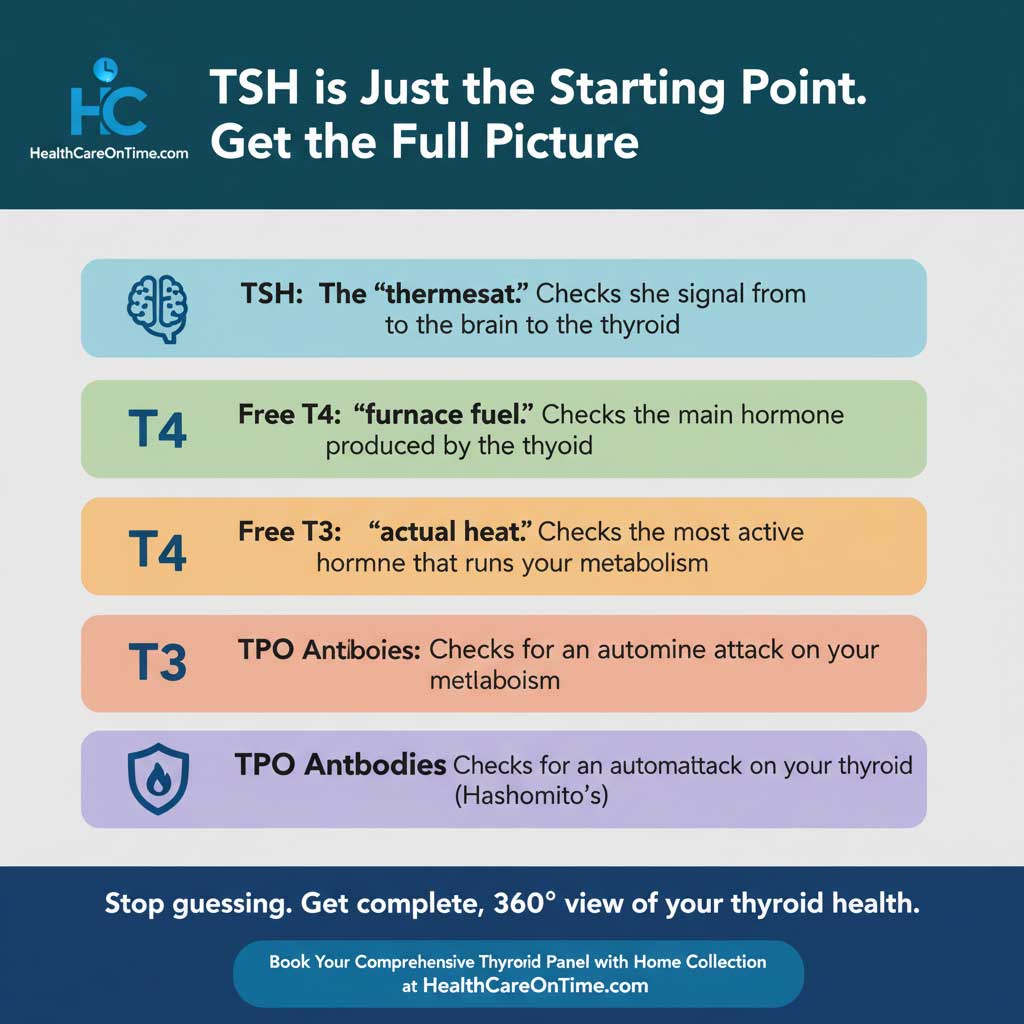
While the TSH test is the best initial screening tool, it doesn’t always tell the whole story. To get a truly comprehensive view of your thyroid health, a full thyroid panel is superior.
Beyond the TSH: Free T4 and Free T3
A full panel measures the “free” or “unbound” thyroid hormones that are available for your body to use.
- Free T4 (FT4): Measures the primary storage form of thyroid hormone.
- Free T3 (FT3): Measures the most potent, active form of thyroid hormone that directly interacts with your cells.
The “TSH Reflex Test” Explained
You may see “TSH with reflex to Free T4” on your lab order. A TSH reflex test is an efficient way to test. The lab will first measure your TSH. If the result is normal, the test stops there. If the TSH comes back as either high or low, the lab will automatically “reflex” and run a Free T4 test on the same blood sample to give your doctor more information immediately.
Get the Full Picture with HealthCareOnTime.com
While a TSH test is a great start, a more complete picture of your health often requires a full panel. At HealthCareOnTime.com, you can easily order a Comprehensive Thyroid Panel, which includes TSH, Free T4, and Free T3, and even Thyroid Antibodies. With our convenient at-home sample collection, you can get the data you and your doctor need to make the best and most informed decisions for your health.
| Test Name | What It Measures | What a High Level May Indicate | What a Low Level May Indicate |
| TSH (Thyroid-Stimulating Hormone) | The pituitary’s signal TO the thyroid. The “thermostat.” | Hypothyroidism (Thyroid is underactive). | Hyperthyroidism (Thyroid is overactive). |
| Free T4 (Free Thyroxine) | The primary inactive thyroid hormone available for use by the body. The “furnace fuel.” | Hyperthyroidism. | Hypothyroidism. |
| Free T3 (Free Triiodothyronine) | The most potent, active thyroid hormone that directly affects your cells. The “actual heat.” | Hyperthyroidism. | Hypothyroidism or poor T4-to-T3 conversion. |
| TPO Antibodies (Thyroid Peroxidase Ab) | The presence of antibodies attacking the thyroid gland. | Hashimoto’s Thyroiditis. | Normal (No autoimmune attack). |
How to Get the Most Accurate TSH Test Result
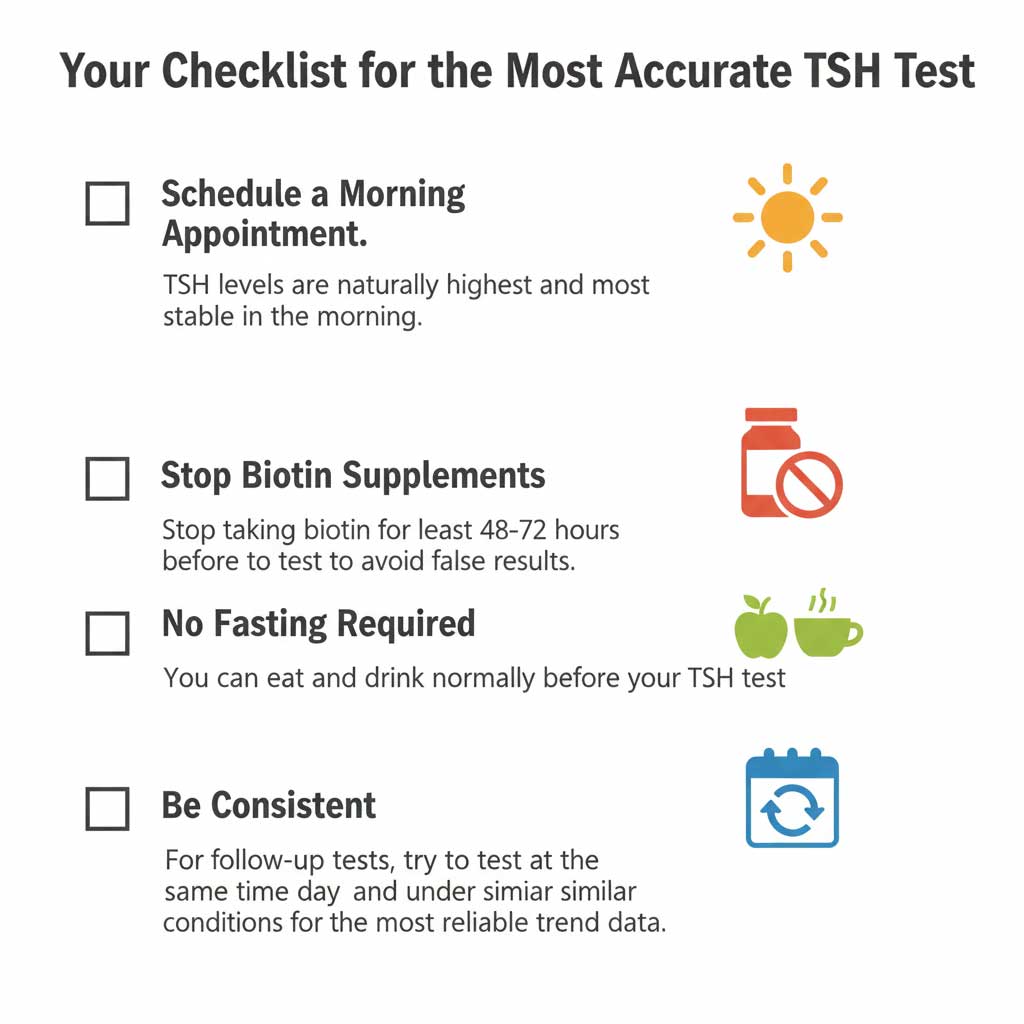
To ensure your TSH levels are measured accurately, follow these simple but important guidelines.
Do You Need to Fast?
No, in general, fasting is not required to get an accurate TSH test. You can eat and drink normally before your blood draw.
Timing is Everything: The Best Time of Day to Test
Your TSH hormone follows a natural 24-hour rhythm, where it is highest during the night while you sleep and gradually falls throughout the day, reaching its lowest point in the late afternoon. For this reason, for the most accurate and consistent results, it is always recommended to get your what time of day to test TSH in the early morning. An afternoon test could show a falsely lower TSH level, potentially masking a case of mild or subclinical hypothyroidism.
Avoid Biotin
To reiterate the most critical point: stop all supplements containing biotin for at least 2-3 days prior to your blood test to avoid a falsely low TSH result.
Conclusion: Your TSH is Your Thyroid’s Report Card
So, what is TSH in a blood test? It’s a measure of the conversation between your brain and your thyroid, and it’s your thyroid’s primary report card. A high TSH suggests your thyroid is struggling (hypothyroidism), while a low TSH suggests it’s in overdrive (hyperthyroidism). While the standard TSH normal range is a useful guide, your personal optimal level may be narrower.
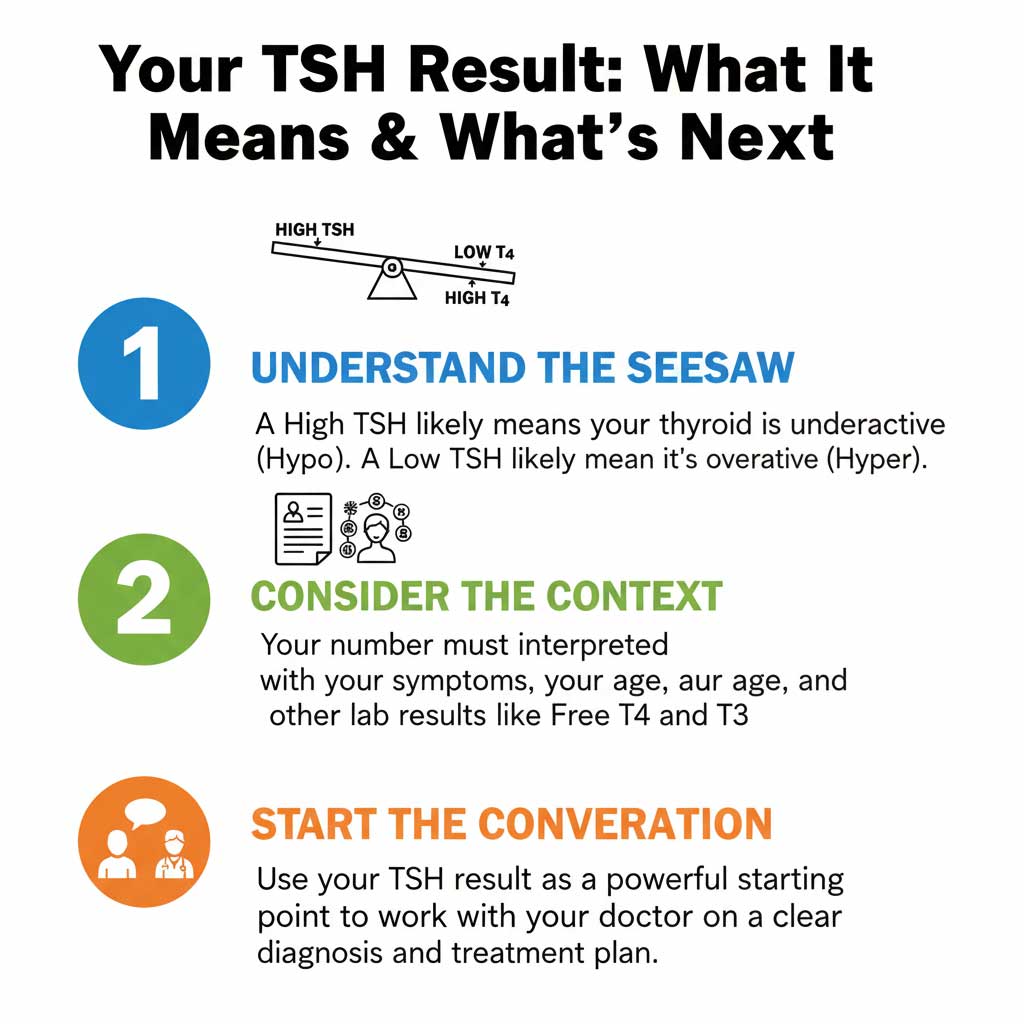
Your TSH levels are not just numbers on a page; they are powerful insights into your metabolic health. Understanding them is the first step toward addressing the root cause of many common but frustrating health complaints. Don’t let unexplained fatigue, weight changes, or anxiety go unanswered. Take the first step toward clarity by ordering your TSH test or a full Thyroid Panel from HealthCareOnTime.com today. Get the data you need to start an informed conversation with your doctor and get back to feeling your best.