
You wake up on the morning of your annual physical with a throbbing headache. Your first instinct is to reach for an Advil or Motrin to get some relief, but then you pause, remembering you have a blood test scheduled in a few hours. Can you take it? It’s a common dilemma and a question millions of Americans ask: Can I take Advil before a blood test? You can read our full breakdown of How Long Does Ibuprofen Stay in Your System?
- How Ibuprofen Works: The Science of Prostaglandins
- The Definitive Guide: Which Blood Tests Can Ibuprofen Affect?
- A Deeper Look at the Key Interactions
- Practical Guide: How to Prepare for Your Blood Test
- High-Risk Populations: When to Be Extra Cautious
- Simplify Your Lab Work with HealthCareOnTime.com
- Conclusion: Honesty is the Best Policy
- Frequently Asked Questions (FAQ)
The short answer is comforting. For most healthy individuals taking a single, standard dose of ibuprofen for a minor ache, it is highly unlikely to significantly affect common, routine blood tests like a Complete Blood Count (CBC) or a cholesterol panel. However, the answer becomes more complex and requires more caution for specific tests—particularly those for kidney and liver function—and for individuals with certain health conditions or those who use ibuprofen regularly.
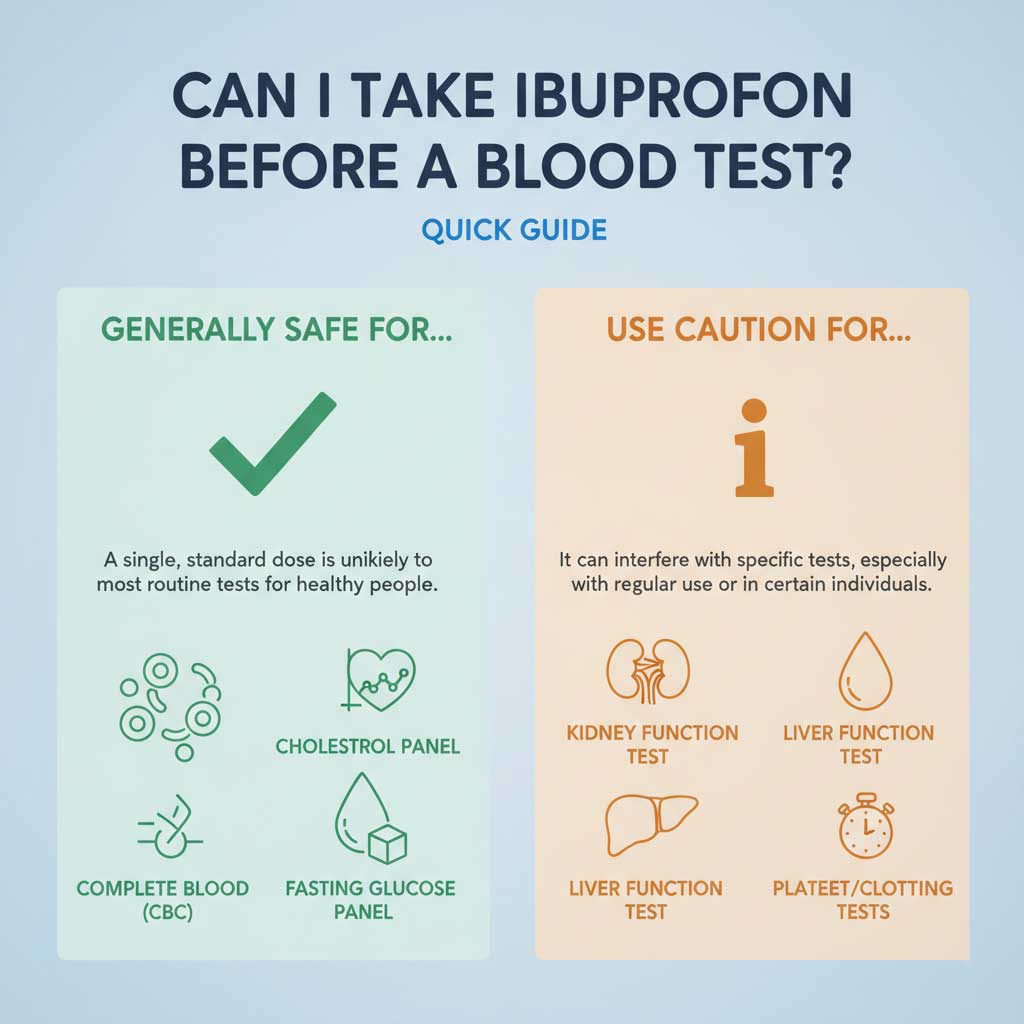
Navigating the rules of what not to do before a blood test can be confusing. This complete guide will demystify the topic. We will cover the science of how ibuprofen works, provide a detailed chart of which tests it can and cannot affect, give clear preparation advice, and help you understand when you need to be cautious about taking an ibuprofen before blood test.
How Ibuprofen Works: The Science of Prostaglandins
To understand why a simple painkiller might impact your lab work, we first need to look at how it functions inside your body. This will help clarify why the relationship between NSAIDs and blood test results is an important topic.
Why a Simple Painkiller Can Impact Your Body’s Chemistry
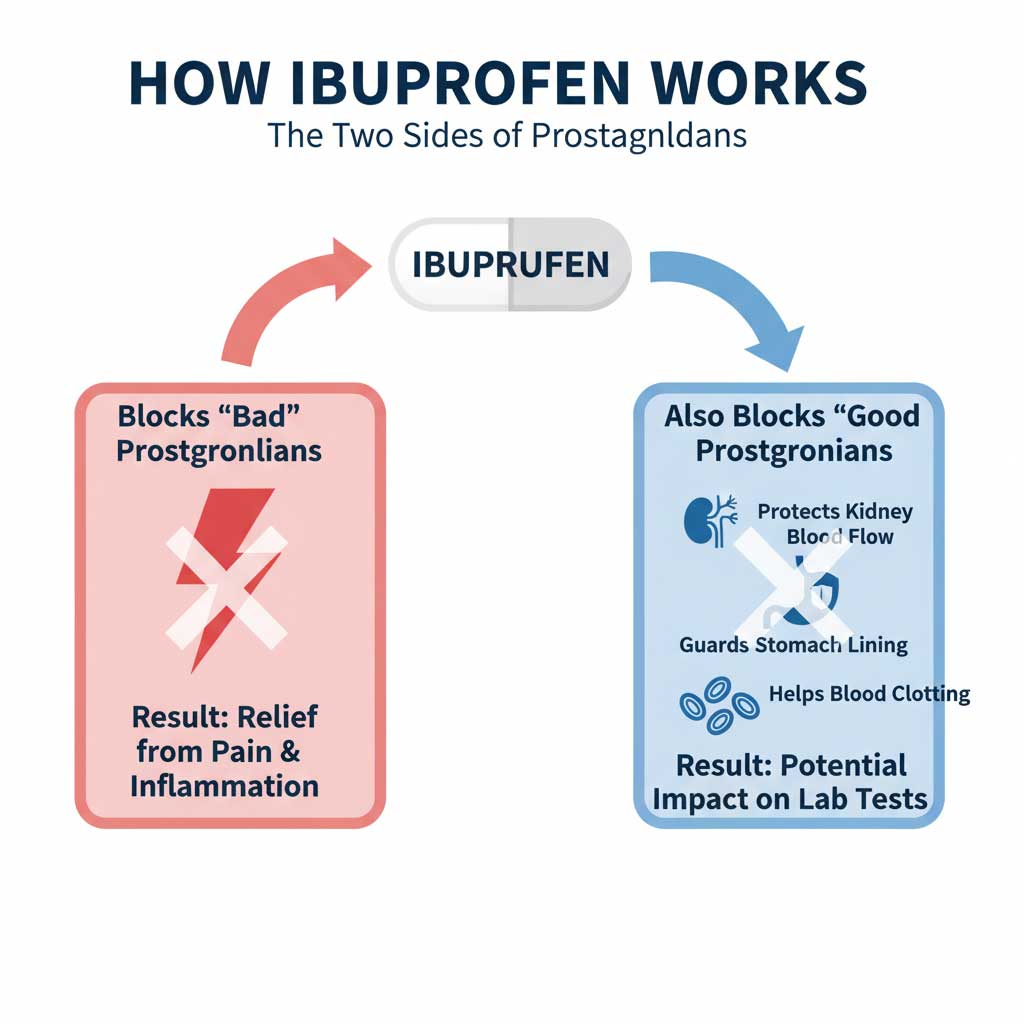
Ibuprofen, sold under popular brand names like Advil and Motrin, belongs to a class of drugs called Nonsteroidal Anti-Inflammatory Drugs (NSAIDs). Its primary job is to reduce pain, fever, and inflammation. It accomplishes this by blocking enzymes in your body called COX-1 and COX-2.
Medication Blood Test Checker
Enter the name of your medication below to check if it's safe before blood tests.
* None of this is medical advice; users must follow their doctor/lab instructions.
These enzymes are responsible for producing substances called prostaglandins. When you have an injury or illness, your body releases prostaglandins, which create the sensations of pain and inflammation. By blocking their production, ibuprofen effectively turns down the volume on your pain signals, making you feel better.

The “Good” Prostaglandins and Their Protective Roles
Here’s the crucial part: not all prostaglandins are “bad.” Your body also uses certain prostaglandins for essential, protective functions around the clock. These “good” prostaglandins play a vital role in:
- Protecting Your Kidneys: They help keep the small arteries that supply blood to your kidneys wide open, ensuring they get the steady blood flow needed to filter waste from your body effectively.
- Guarding Your Stomach Lining: They help maintain the protective mucus layer in your stomach, shielding it from its own acid.
- Assisting in Blood Clotting: They help your blood platelets—tiny cell fragments—become sticky so they can clump together to form a clot and stop bleeding when you get a cut.
The connection to your lab work is this: by temporarily reducing these protective prostaglandins, taking an ibuprofen before blood test can cause subtle (or sometimes significant) changes in organ function. These changes can then be reflected in your blood test results, which is why it’s a key example of how medications that interfere with blood tests can work.
The Definitive Guide: Which Blood Tests Can Ibuprofen Affect?
Now for the most important question: which specific tests are at risk? The impact of taking an ibuprofen before blood test varies dramatically depending on what your doctor is measuring. Some tests are highly sensitive to its effects, while others are not affected at all.
Here is a detailed breakdown to help you understand the potential interactions.
| Test Category | Potential for Interference by Ibuprofen | Explanation & Recommendation |
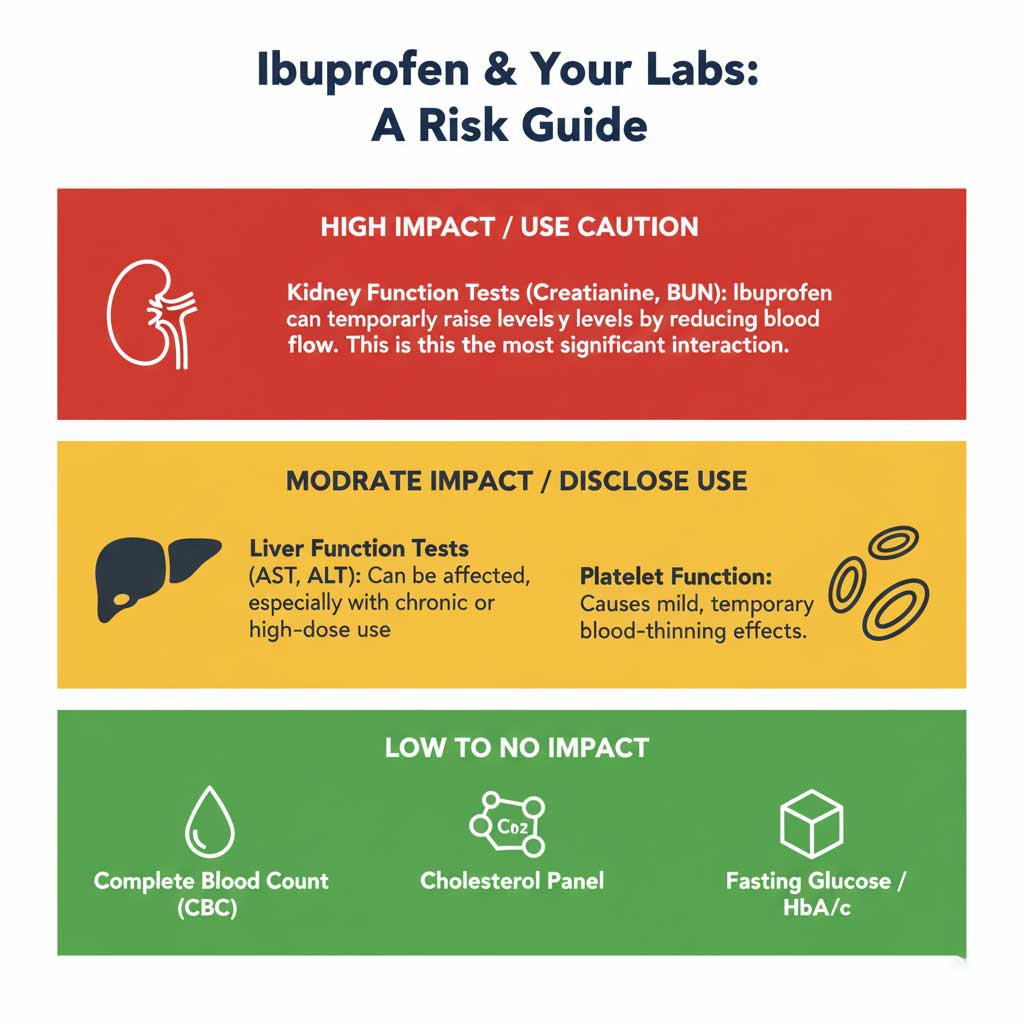
| Kidney Function Panel (Creatinine, BUN) | HIGH POTENTIAL | Ibuprofen can temporarily reduce blood flow to the kidneys, causing a slight, temporary increase in creatinine and BUN levels. This can mimic early signs of kidney distress. This is the most significant and well-documented interaction. Recommendation: Avoid ibuprofen for at least 24-48 hours before a scheduled ibuprofen and kidney function test. This is one of the most important medications to avoid before kidney test. |
| Liver Function Panel (LFT/CMP – AST, ALT) | MODERATE POTENTIAL | While uncommon with single doses, regular or high-dose ibuprofen use can sometimes cause a mild elevation in liver enzymes (AST, ALT). This can be a sign of liver inflammation or stress. Recommendation: For a routine ibuprofen and liver function test, a single dose is likely fine, but avoiding it for 24 hours is the safest bet for an accurate baseline. |
| Platelet Function / Coagulation Tests | MODERATE POTENTIAL | Ibuprofen has a mild, reversible “blood-thinning” effect by making platelets less sticky. It can slightly prolong bleeding time but is much less potent than aspirin. Recommendation: If you are having a specific test for platelet function or a pre-surgical screening, you will be instructed to stop all NSAIDs. For a routine CBC, the ibuprofen and platelet count is not a concern. |
| Urine Drug Screens | MODERATE POTENTIAL | Some laboratory methods have shown that high doses of ibuprofen can cause a false-positive result for cannabinoids, benzodiazepines, or barbiturates on certain types of urine drug screens. Recommendation: Always disclose ibuprofen use before any workplace or clinical drug screening. |
| Complete Blood Count (CBC) | VERY LOW POTENTIAL | A standard dose of ibuprofen will not affect your red blood cell count, white blood cell count, or hemoglobin. The platelet number itself is not affected, only its function (stickiness). Recommendation: No special precautions are needed when taking ibuprofen before blood test for a CBC. |
| Cholesterol Panel (Lipid Panel) | VERY LOW POTENTIAL | There is no significant evidence that acute ibuprofen use affects the measurement of total cholesterol, LDL, HDL, or triglycerides. Recommendation: No special precautions are needed for your Advil and fasting blood test for cholesterol. |
| Fasting Glucose / HbA1c | VERY LOW POTENTIAL | Ibuprofen does not interfere with the body’s glucose metabolism or the measurement of blood sugar. Recommendation: No special precautions are needed for these diabetes-related tests. |
| Thyroid Panel (TSH, T4) | NO POTENTIAL | Ibuprofen does not affect the function of the thyroid or pituitary glands and will not interfere with these tests. Recommendation: No special precautions are needed. |
A Deeper Look at the Key Interactions
Understanding that ibuprofen can affect certain tests is the first step. The next is understanding why these interactions happen. This knowledge can help you appreciate the importance of proper test preparation.
Ibuprofen and Your Kidneys: The Prostaglandin Effect
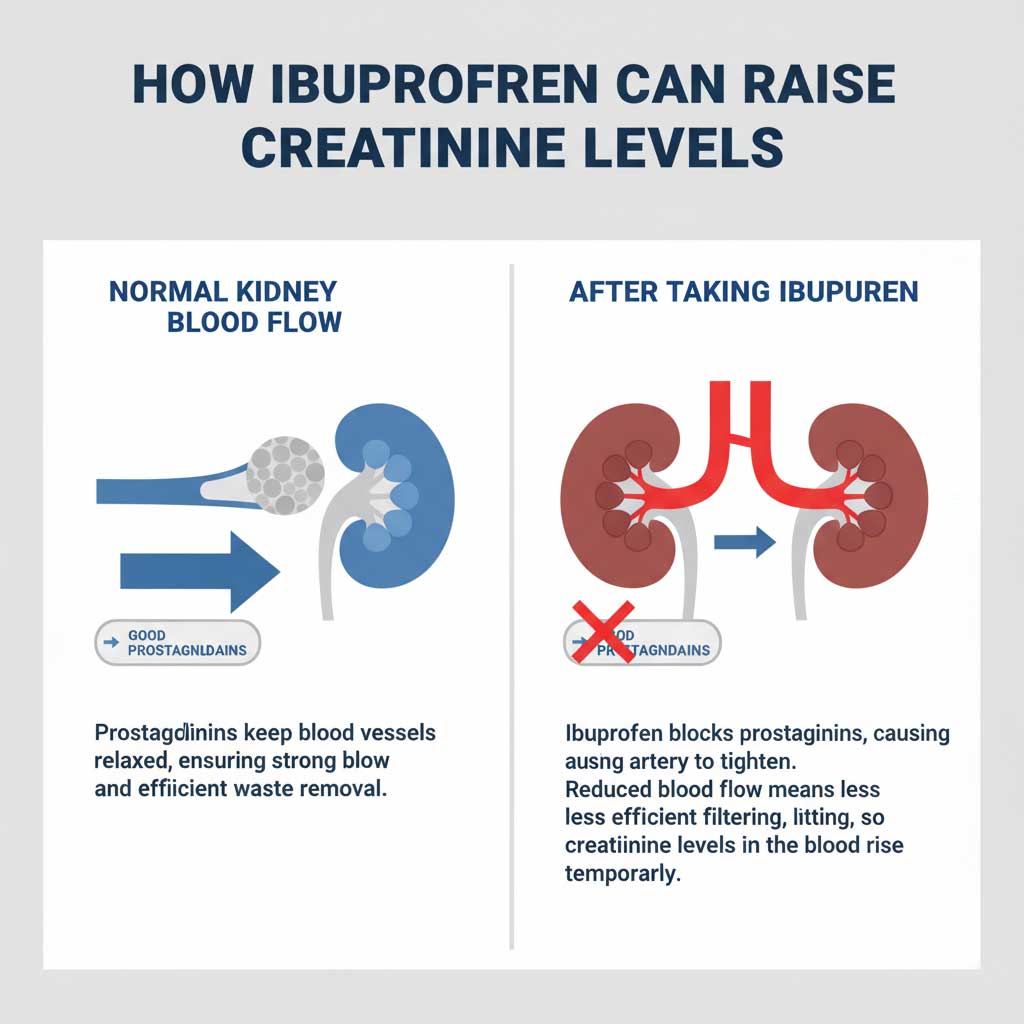
The interaction between an ibuprofen and kidney function test is the most critical one to understand. Your kidneys are packed with tiny filters called glomeruli, and they require a strong, steady stream of blood to work efficiently.
Prostaglandins act as messengers that tell the small arteries feeding these filters (the afferent arterioles) to stay open and relaxed. When you take an ibuprofen before blood test, you block those prostaglandins. This can cause those arteries to tighten slightly, reducing blood flow to the filters.
When this happens, the kidneys can’t clear waste products as effectively. This causes the levels of waste products like creatinine and urea (measured as BUN) to rise temporarily in the blood. So, does ibuprofen affect creatinine levels? Yes, it can, by temporarily impairing the kidney’s filtering ability. This is why it’s at the top of the list of medications to avoid before kidney test.
Ibuprofen and Your Liver: Acute vs. Chronic Use
The question of whether can ibuprofen raise liver enzymes is primarily a concern related to dosage and duration of use. For the vast majority of people, taking a single, standard dose of ibuprofen is highly unlikely to cause any change in a liver function test.
The concern arises with chronic, long-term use at high doses (typically prescription strength). In these situations, the liver, which is responsible for breaking down the drug, can come under stress. This stress can sometimes lead to liver cell inflammation, causing enzymes like AST and ALT to leak into the bloodstream, where they are measured. This is why a proper ibuprofen and liver function test requires an honest conversation with your doctor about your usage habits.
Does Ibuprofen Thin Your Blood? The Platelet Question
Many people have heard that they shouldn’t take ibuprofen before blood test because it “thins the blood.” This is true, but it’s important to understand the nuance. The question “does ibuprofen thin your blood?” is best answered by looking at its effect on platelets.
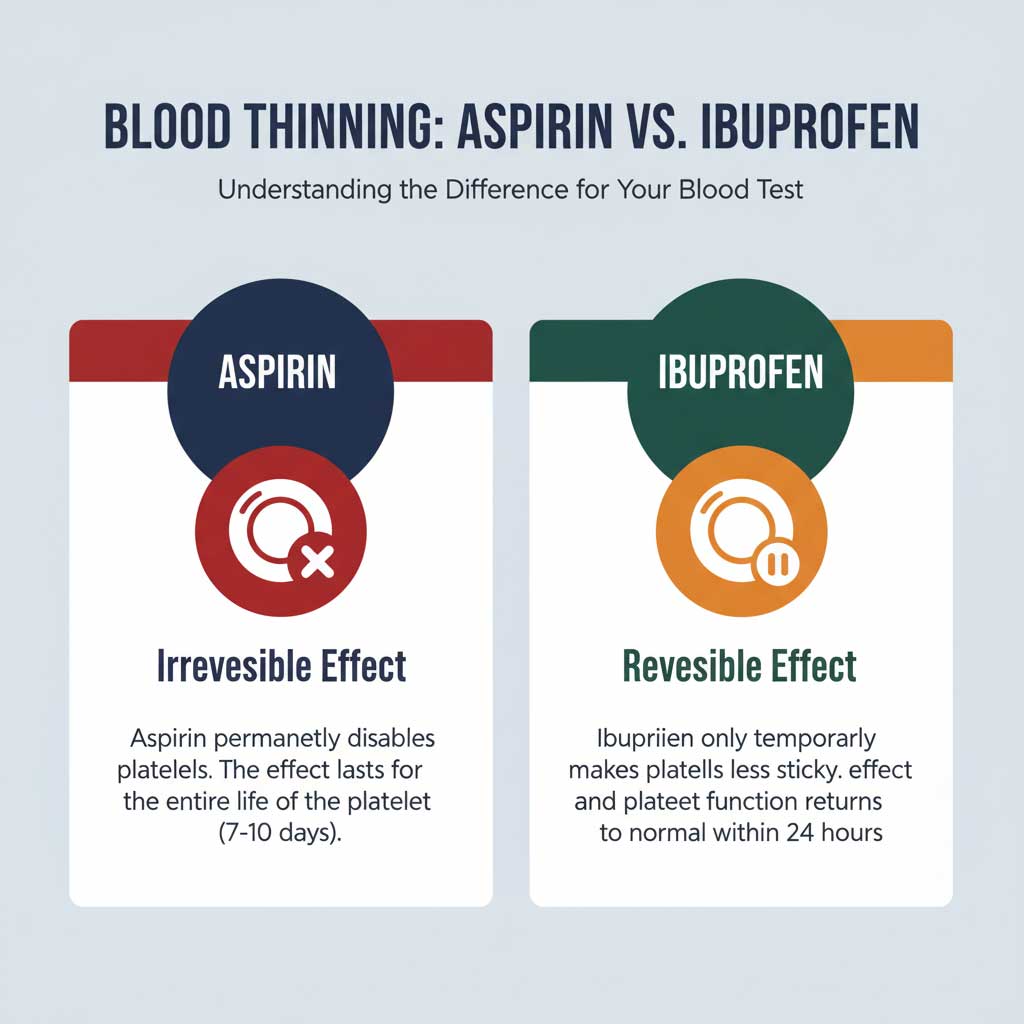
Ibuprofen makes platelets less sticky, which makes it harder for them to clump together to form a clot. However, this effect is:
- Mild: It’s much less potent than the effect of a daily aspirin.
- Reversible: Once you stop taking ibuprofen and the drug clears your system, your platelets return to their normal level of stickiness.
This is a key difference from aspirin, whose effect is irreversible and lasts for the entire life of the platelet (about 7-10 days). The effect of ibuprofen on platelets is temporary, which is why understanding how long to stop ibuprofen before blood work is so important.
Practical Guide: How to Prepare for Your Blood Test
Knowing the science is helpful, but what you really need is a clear, practical plan. Here is a simple checklist to follow when you have upcoming lab work.
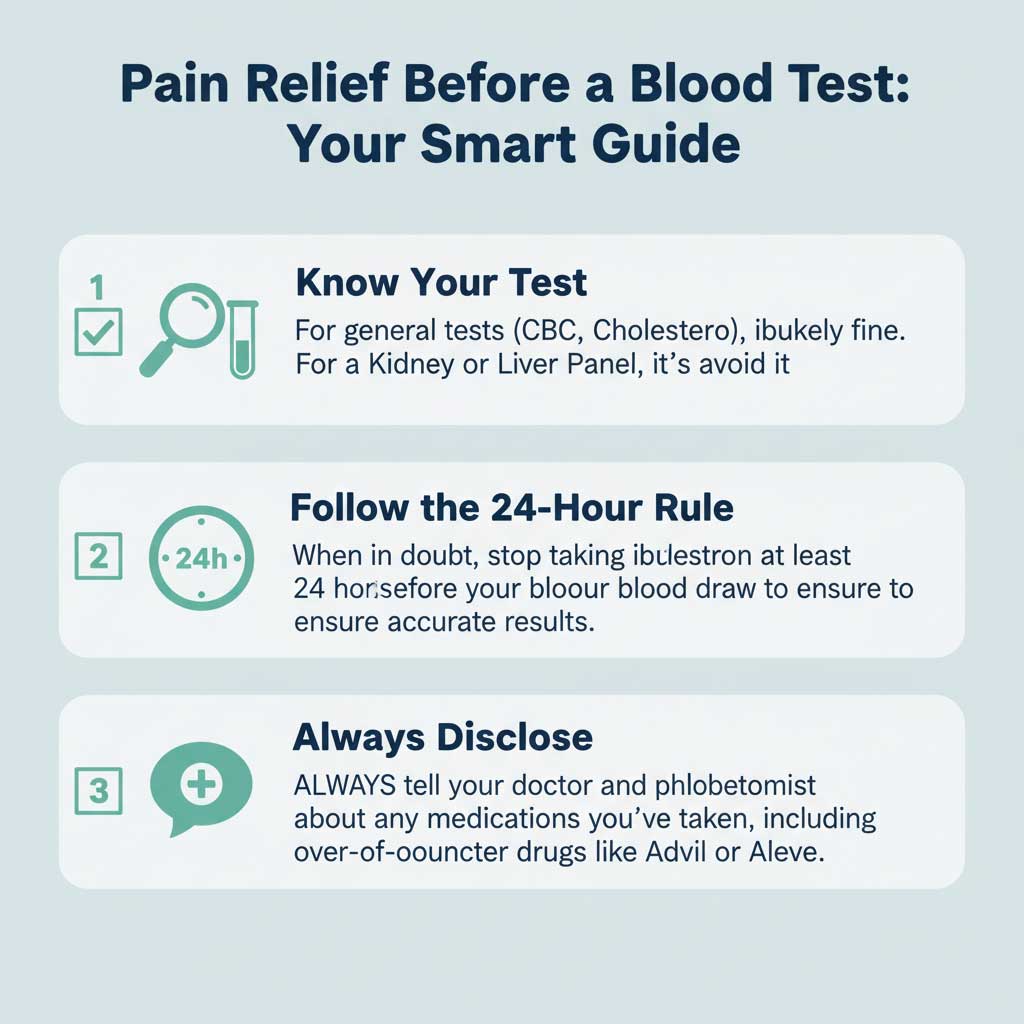
How Long to Stop Ibuprofen Before Blood Work?
This is one of the most common questions. The answer depends on the test, but a good general rule is based on the drug’s short life in your body.
The 24-Hour Rule: For non-urgent tests, the safest and most effective approach is to avoid taking any ibuprofen before blood test for at least 24 hours. Ibuprofen has a short half-life, meaning your body clears about half of the drug every two hours. After 24 hours, its effects on your kidneys and platelets will have completely resolved, ensuring your lab results reflect your true baseline health.
What If I Took Advil by Accident?
It happens. You take a pill out of habit and then remember your appointment. Don’t panic.
The Golden Rule: Be Honest. The most important thing you can do is communicate. When you arrive for your blood draw, tell the phlebotomist that you took ibuprofen and what time you took it. For many routine tests, they will likely proceed. For a critical ibuprofen and kidney function test, your doctor may be contacted, and they might recommend rescheduling to ensure perfect accuracy. Honesty prevents misinterpretation of your results.
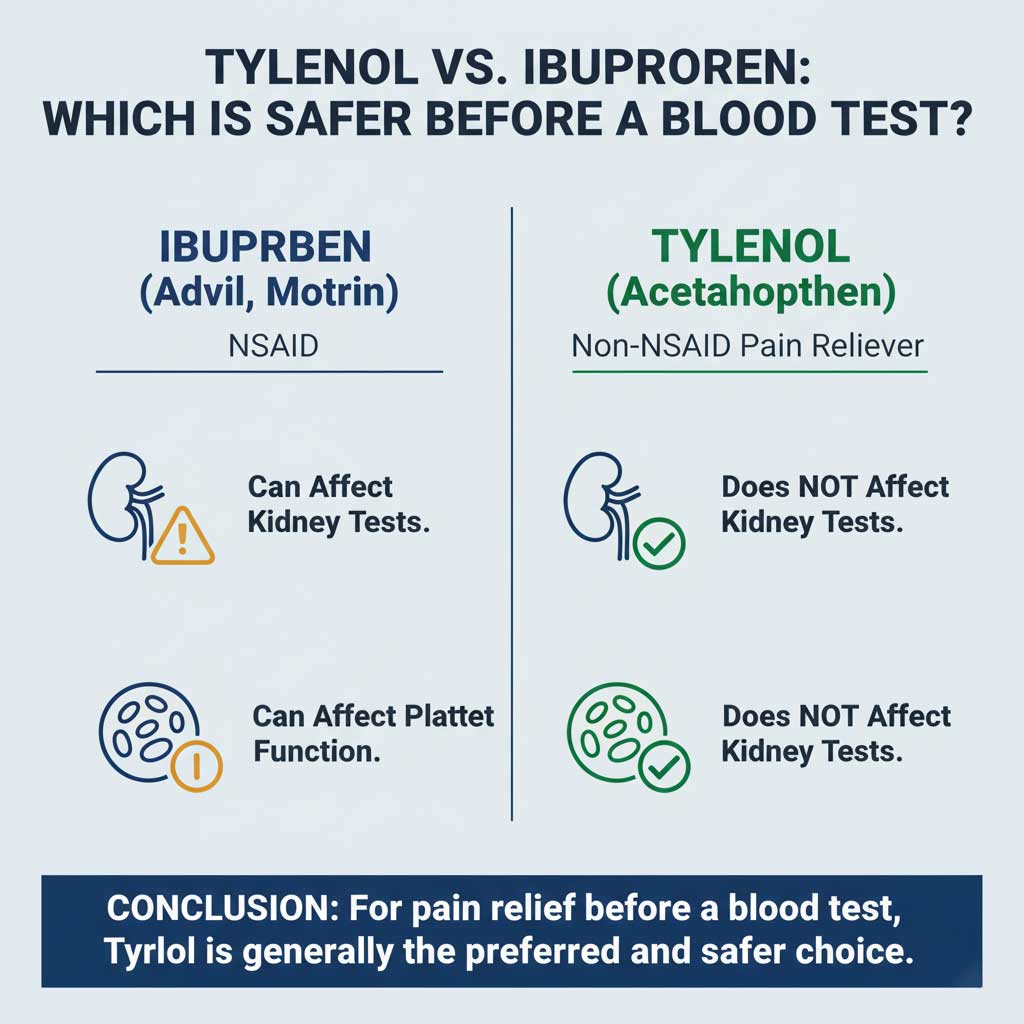
A Safer Alternative? The Tylenol Question
So, if you have a headache, can I take Tylenol before a blood test?
Yes, in most cases, acetaminophen (Tylenol) is a much safer alternative for pain relief before lab work. Tylenol is not an NSAID and works through a different pathway in the brain. It does not block the protective prostaglandins in your kidneys or stomach and does not affect platelet function. For this reason, it is the preferred pain reliever before lab work for most people.
High-Risk Populations: When to Be Extra Cautious
While a single dose of ibuprofen is safe for most, the potential for NSAIDs and blood test results to be affected is much greater in certain individuals. You need to be extra cautious if you fall into one of these groups:
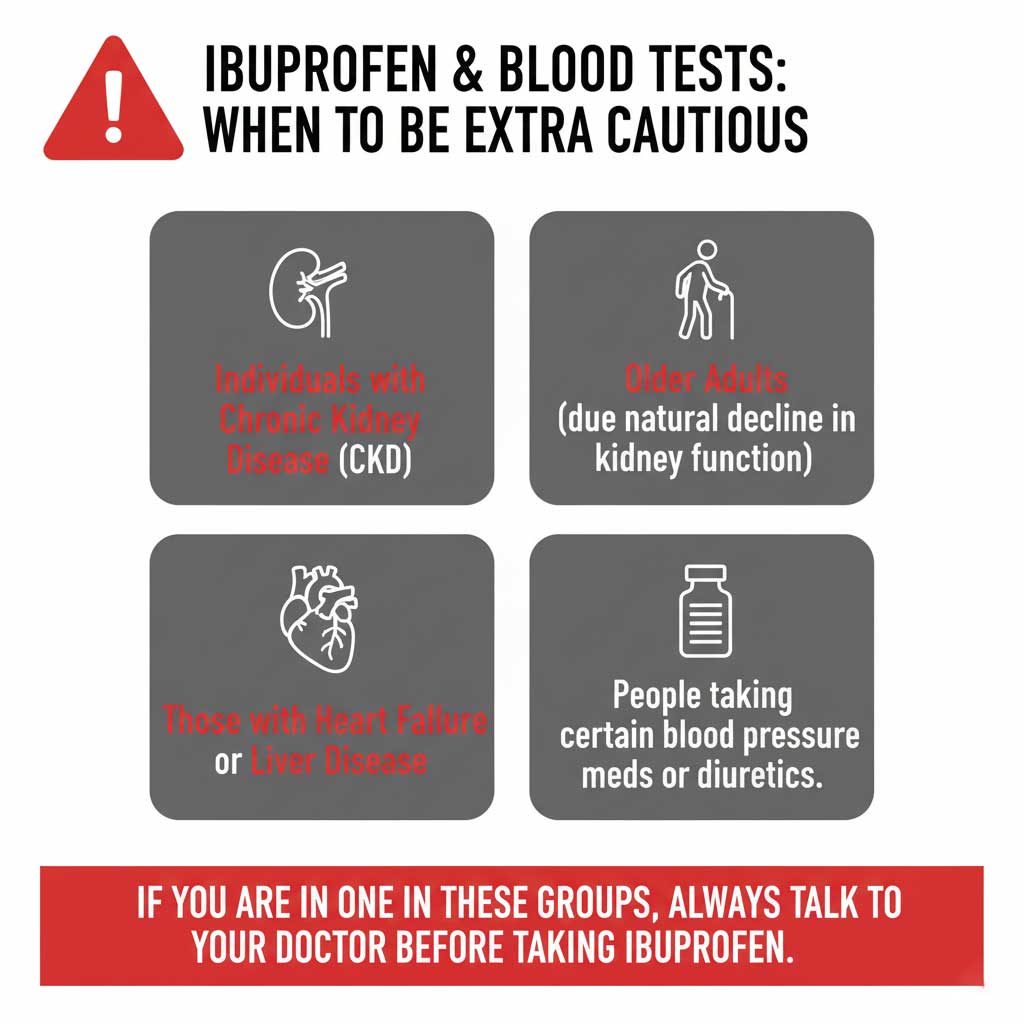
- People with Chronic Kidney Disease (CKD): If your kidneys are already compromised, they are highly sensitive to the blood-flow-reducing effects of NSAIDs.
- Older Adults: Kidney function naturally declines with age, increasing sensitivity to these medications.
- Individuals with Heart Failure or Liver Cirrhosis: These conditions rely on a delicate balance of bodily fluids and blood flow, which NSAIDs can easily disrupt.
- Those on Certain Medications: If you take diuretics (“water pills”), ACE inhibitors (like lisinopril), or ARBs (like losartan) for high blood pressure, combining them with ibuprofen significantly increases the risk of temporary kidney injury.
For people in these groups, it is critical to speak with a doctor before taking any ibuprofen before blood test.
Simplify Your Lab Work with HealthCareOnTime.com
Understanding how medications can affect your health is a key part of wellness, and regular monitoring is the best way to track your body’s function over time. Waiting for an annual physical isn’t always enough. HealthCareOnTime.com makes it easy to access and monitor your key health markers on your own schedule.
Get Clear Answers About Your Health, On Your Schedule
We believe that managing your health should be convenient and transparent. Our direct-to-consumer lab testing panels allow you to take control.
Comprehensive Kidney Function Panel
Are you a regular user of NSAIDs or have concerns about your kidney health? Our Kidney Function Panel provides a clear and accurate baseline, measuring key markers like creatinine and BUN. Book your test today to get the answers and peace of mind you need.
Liver Function Test (LFT)
Our LFT panel is an essential tool for anyone wanting to monitor their liver health proactively. It measures critical enzymes like AST and ALT, giving you and your doctor valuable data to ensure your liver is functioning optimally.
Annual Wellness Panel
Our most popular panel is a fantastic way to track your health year over year. It includes a CBC, Cholesterol Panel, and a comprehensive metabolic panel that screens both kidney and liver function. It’s the easiest way to get a complete picture of your health.
Conclusion: Honesty is the Best Policy
So, let’s return to our original question: Can I take Advil before a blood test? As we’ve seen, the answer is nuanced. For most healthy people and most routine tests, a single dose is not a major concern. The primary areas where caution is warranted are for tests of kidney and liver function, where even a temporary effect from the medication could alter the results.
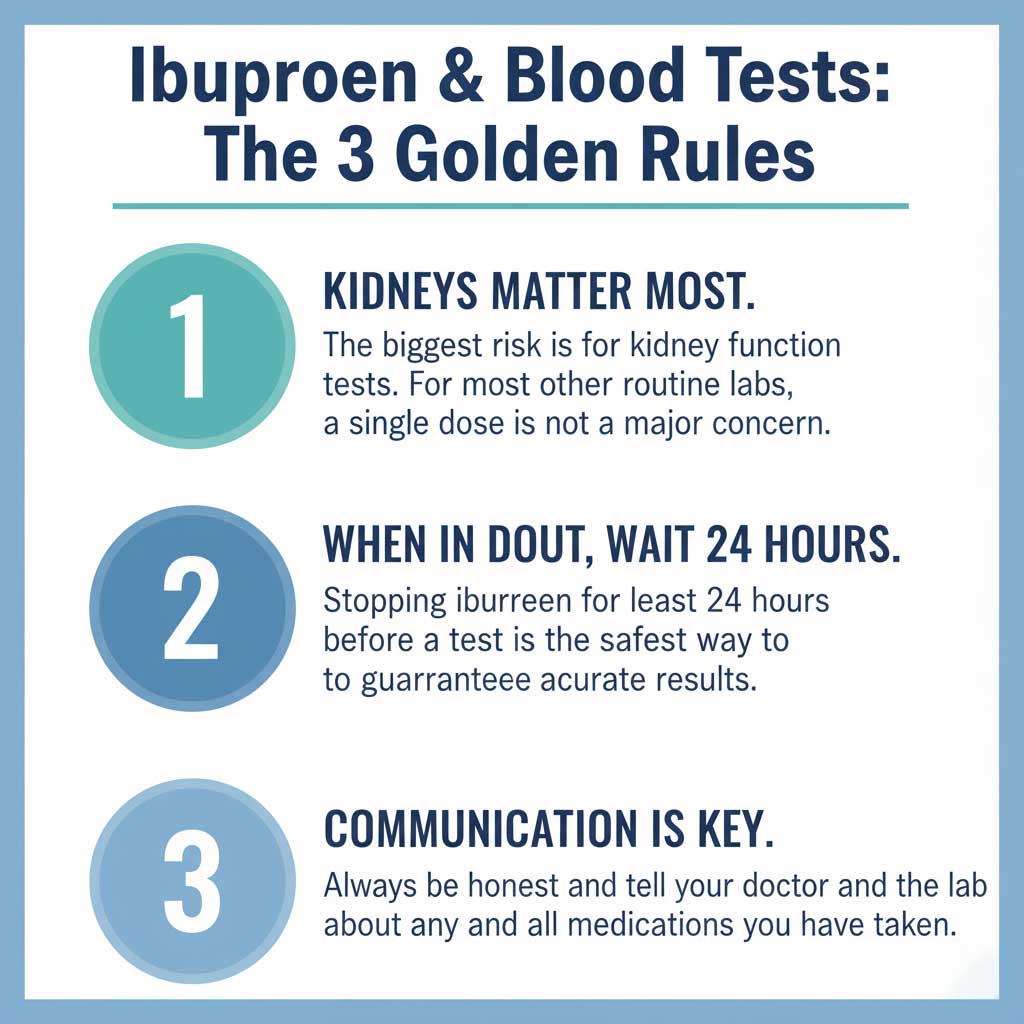
The most critical piece of advice is simple: communication. The best way to ensure your doctor gets the truest possible picture of your health is to provide them with a complete list of all the medications that interfere with blood tests you have taken—and that includes everything, both prescription and over-the-counter. Taking an ibuprofen before blood test isn’t a mistake if you disclose it. Honesty ensures your results are interpreted accurately, which is the entire goal of getting your blood drawn in the first place.