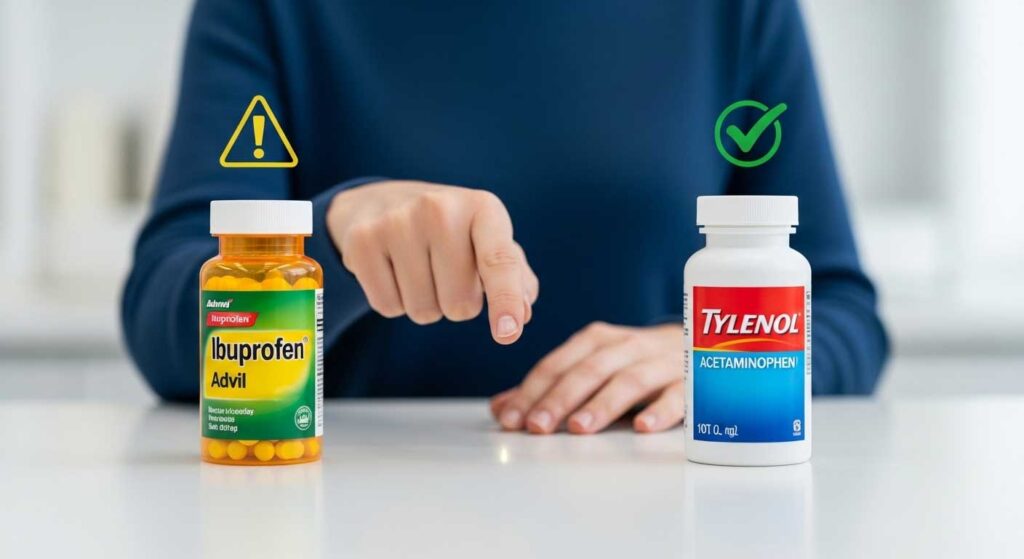
It’s a universal dilemma. You wake up on the morning of your scheduled blood draw, and a headache strikes. You open your medicine cabinet and see two familiar bottles sitting side-by-side: Advil and Tylenol. You know that some medications can interfere with lab results, leaving you with a critical and time-sensitive question: In the Ibuprofen vs Tylenol before blood test showdown, which is the right choice?
Making the correct decision is crucial for ensuring the accuracy of your results. The answer isn’t always simple, as neither option is entirely without potential effects. For most common situations, however, Tylenol (acetaminophen) is generally the safest pain reliever before blood work. But the truly correct answer depends entirely on which specific tests you’re having done and your personal health history.
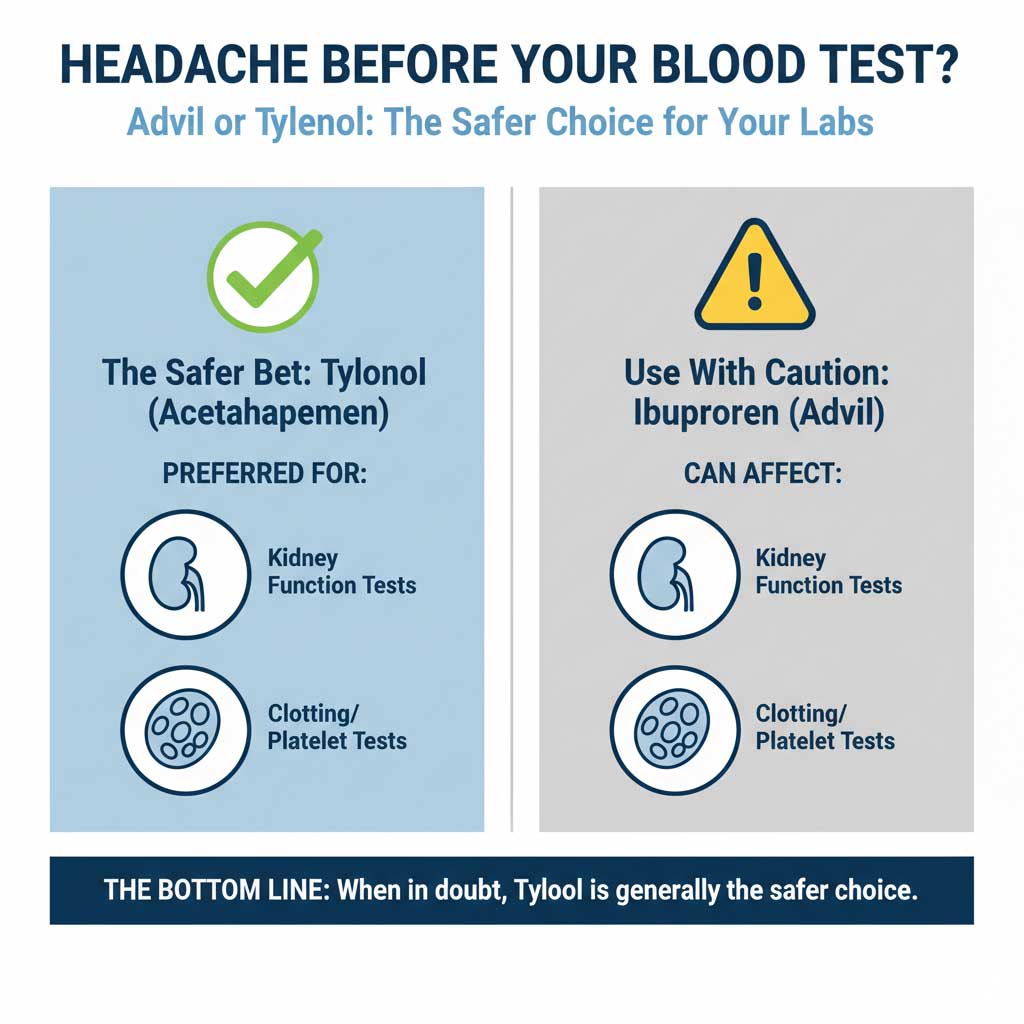
This comprehensive guide will provide a definitive, head-to-head comparison of Advil or Tylenol before labs. We will break down precisely how each drug works, detail which tests they are known to impact, and provide a clear ‘winner’ for different medical scenarios, so you can make the most informed and confident choice for your health.
A Tale of Two Mechanisms: Why They Aren’t the Same
To settle the Ibuprofen vs Tylenol before blood test debate, we first need to understand that these two drugs are fundamentally different. They belong to different classes of medication and work in very different ways. This difference in their mechanism of action is the primary reason they have vastly different effects on your lab results.
The Ibuprofen (NSAID) Method: A “System-Wide” Approach
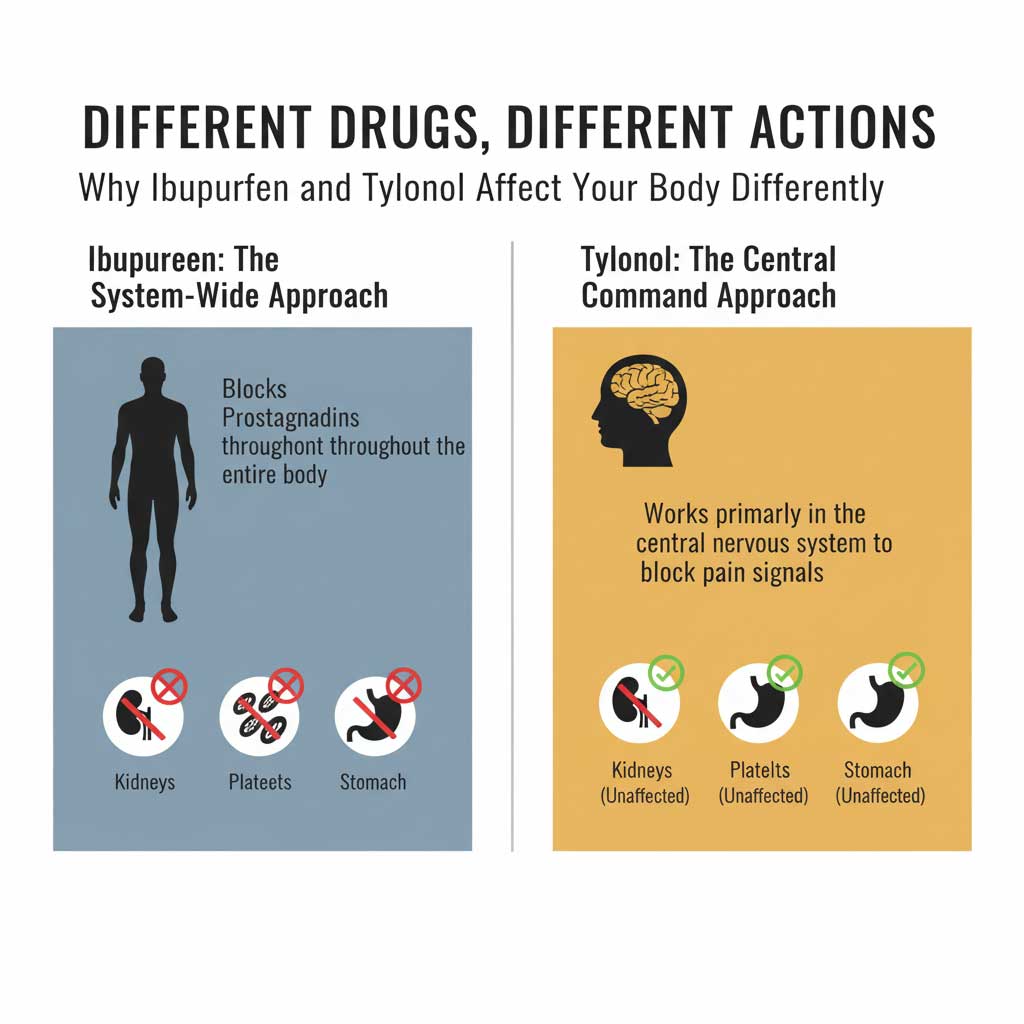
Think of Ibuprofen (Advil, Motrin) as a “System-Wide” solution. It is a Nonsteroidal Anti-Inflammatory Drug (NSAID). Its job is to block the production of enzymes called prostaglandins throughout your entire body. This is highly effective for stopping pain and inflammation at its source, but it also inadvertently shuts down the protective jobs of those same prostaglandins in other areas, such as:
- Maintaining blood flow to your kidneys.
- Helping your blood platelets form clots.
- Protecting your stomach lining.

This systemic effect is why an Ibuprofen and kidney function test can be problematic, and why it can interfere with blood clotting.
The Tylenol (Acetaminophen) Method: A “Central Command” Approach
Now, think of Tylenol (acetaminophen) as a “Central Command” solution. It is not an NSAID. It’s believed to work primarily in your central nervous system (your brain and spinal cord) to block the perception of pain signals. It has very little effect on the prostaglandins circulating in the rest of your body.
This crucial distinction is the entire reason the Ibuprofen vs Tylenol before blood test debate is so important. One is a body-wide drug with broad effects, while the other is more targeted. This makes Tylenol a much better painkiller that won’t affect blood test results in many of the most critical scenarios.
The Ultimate Showdown: Advil vs. Tylenol for Your Blood Test
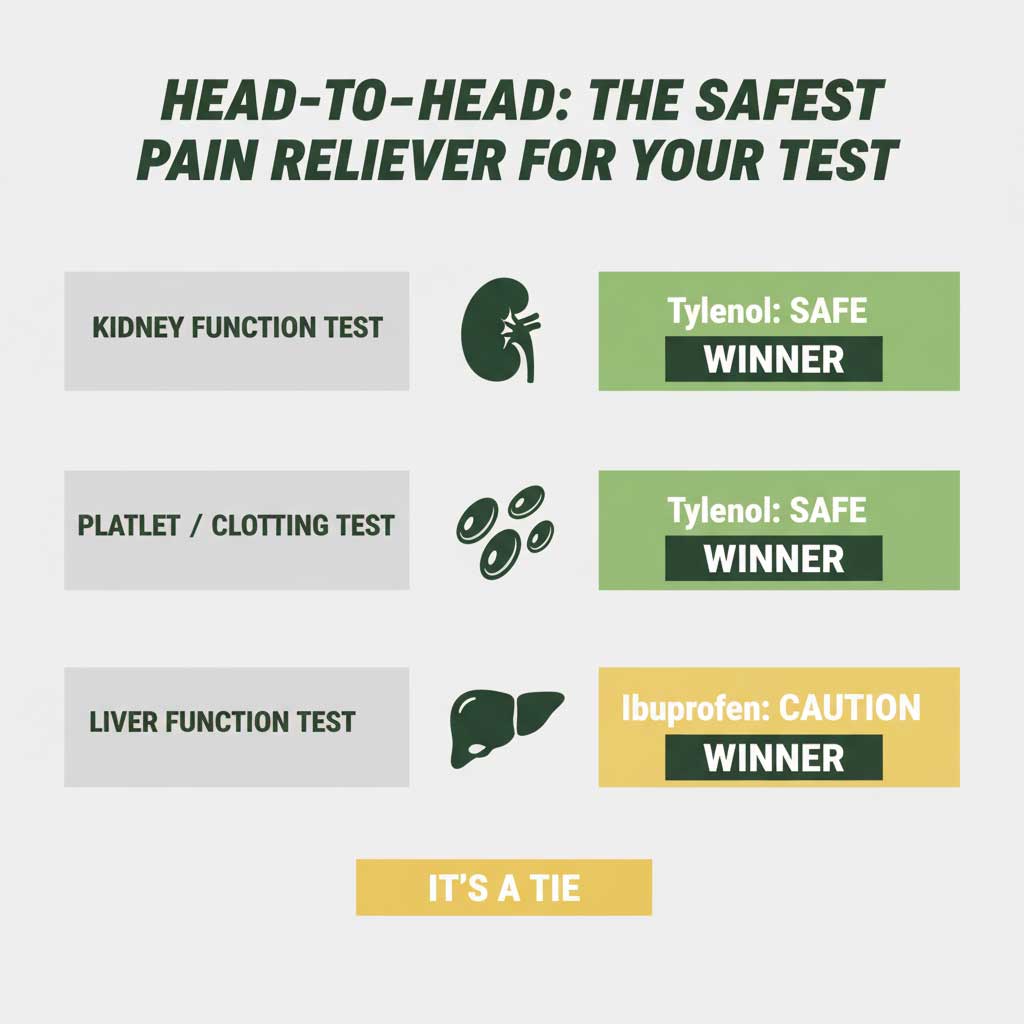
This section provides the direct, at-a-glance comparison that answers the core question: which is better Advil or Tylenol before a blood test? We will analyze the choice for the most common and vital lab panels you’re likely to encounter.
| Test Category | Ibuprofen (Advil, an NSAID) | Tylenol (Acetaminophen) | The Winner Is… |
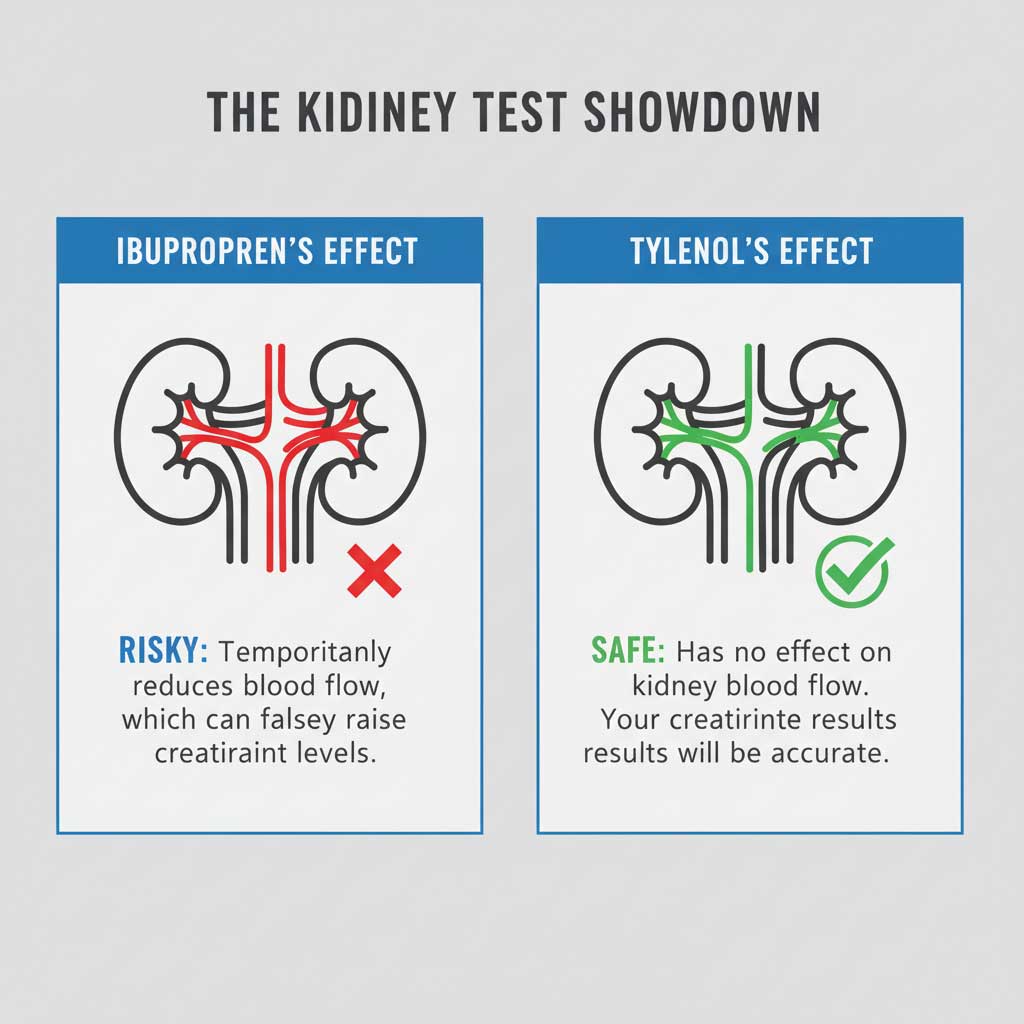
| Kidney Function Test (Creatinine, BUN) | RISKY. Temporarily reduces kidney blood flow, which can falsely elevate creatinine and BUN levels. This is its biggest drawback before a lab test. | SAFE. Has no significant effect on kidney blood flow or function. Will not affect creatinine levels. | Tylenol (by a landslide) |
| Liver Function Test (AST, ALT) | MODERATE RISK. Chronic or high-dose use can cause liver enzyme elevation. A single, low dose is generally low-risk. | MODERATE RISK. The liver is Tylenol’s main area of concern. High or chronic doses can significantly elevate enzymes. A single, low dose is generally low-risk. | It’s a TIE (with caution). For a single dose in a healthy person, both are likely fine. For chronic users, both pose risks. Honesty with your doctor is key. |
| Platelet Function / Blood Clotting | RISKY. Has a temporary, reversible “blood-thinning” effect by making platelets less sticky. Does Advil thin blood? Yes, mildly and temporarily. | SAFE. Has no effect on platelet function. Does Tylenol thin blood? No. | Tylenol |
| INR Test (for Warfarin/Coumadin) | RISKY. Can increase the risk of bleeding when combined with warfarin. | MODERATE RISK. Can increase INR levels, but typically only with regular, high-dose use (>2g/day for several days). | Tylenol (with disclosure). It’s preferred, but your doctor must be aware of its use. |
| Routine Tests (CBC, Cholesterol, etc.) | Generally safe with a single, standard dose. | Generally safe with a single, standard dose. | It’s a TIE. Neither is likely to affect these common tests. |
The Test-by-Test Deep Dive
Understanding the “winner” is great, but understanding the “why” empowers you to make the safest choices for your health. Let’s dive deeper into the nuances of the Ibuprofen vs Tylenol before blood test decision for each major lab panel.
The Kidney Test: A Clear Victory for Tylenol
This is the most clear-cut scenario. When it comes to the acetaminophen vs ibuprofen creatinine debate, Tylenol is the undisputed champion of safety.
As explained, Ibuprofen’s systemic blocking of prostaglandins can temporarily tighten the small arteries that feed your kidneys’ filters. This reduces their efficiency and can cause a temporary, artificial spike in your creatinine and BUN levels. A doctor seeing these results without knowing you took Ibuprofen might be unnecessarily concerned about your kidney health.
Tylenol does not have this effect. It doesn’t interfere with those protective prostaglandins in the kidneys, so your creatinine and BUN levels will reflect your true kidney function. If you are having a Tylenol and kidney function test, you can be confident the results won’t be skewed by the medication.
The Liver Test: A Tie Requiring Honesty
This comparison is the most complex. Many people know that Tylenol carries a famous warning about liver damage in cases of overdose. However, Ibuprofen is not without its own risks to the liver, especially with long-term, high-dose use.
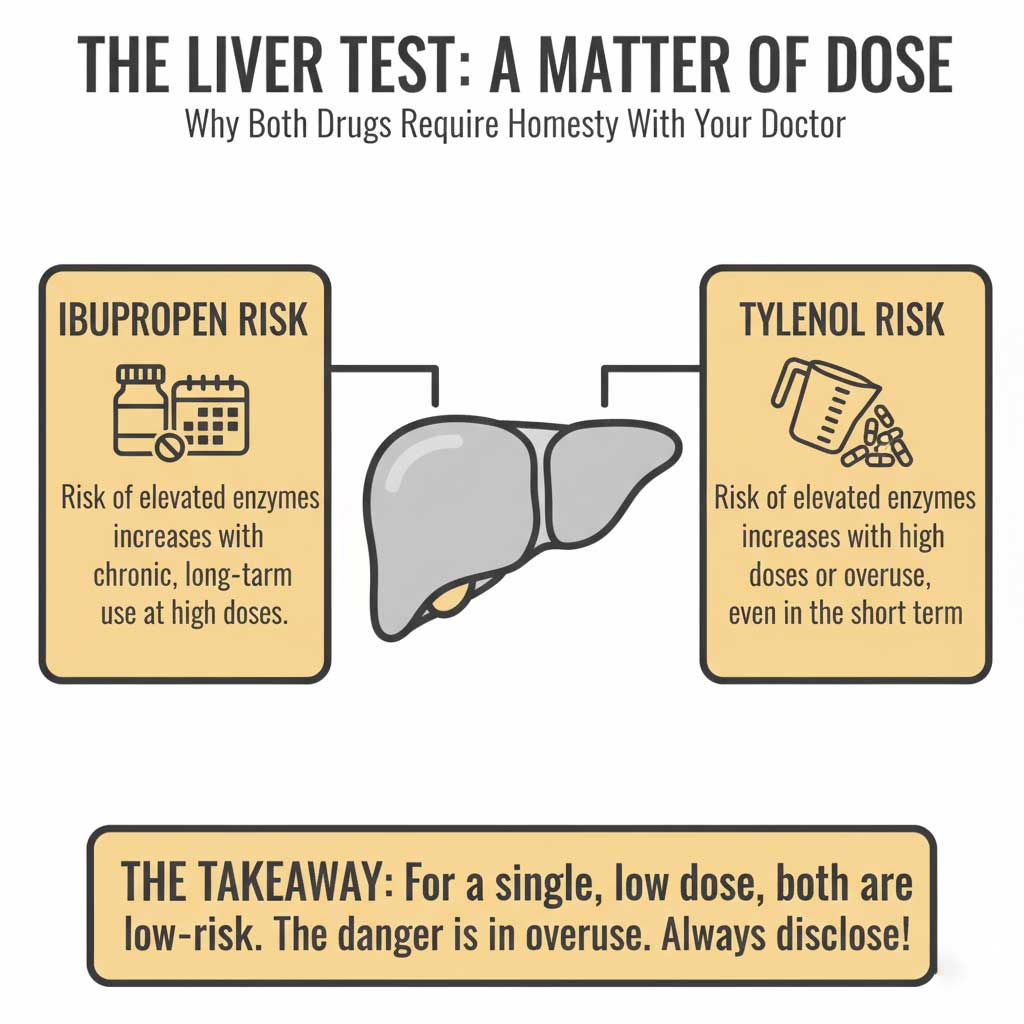
The question of Tylenol and liver enzymes is a matter of dosage and duration. For a single, standard dose of Tylenol, the risk to a healthy liver is extremely low. The concern arises with overuse.
- Critical Data Point: To highlight this, a significant study found that even the maximum recommended daily dose of Tylenol (4 grams) caused notable (but temporary) spikes in liver enzymes in up to 44% of healthy participants.
The Verdict: In the Ibuprofen vs Tylenol before blood test for liver function, it’s a tie. For a single, standard dose in a healthy individual, both are considered low-risk. The most critical factor is not which one you choose, but that you inform your doctor. A slightly elevated liver enzyme can be correctly interpreted as a temporary medication effect rather than a sign of underlying disease.
The Clotting Question: Platelets and INR
Many people ask, “does Advil thin blood?” The answer is yes, mildly and temporarily. It works by making your blood platelets less sticky, which is a concern before any test measuring your blood’s clotting ability.
Conversely, the answer to “does Tylenol thin blood?” is a firm no. It has no effect on platelet function. This makes the Tylenol vs Ibuprofen platelets comparison an easy win for Tylenol.
For patients on blood thinners, the choice of Advil or Tylenol with warfarin and INR test is critical. Advil should be avoided as it increases bleeding risk. Tylenol is preferred, but patients must know that high, regular doses (over 2 grams per day) can affect how warfarin is metabolized and potentially raise their INR, so their doctor must be informed.
Your Pre-Test Action Plan
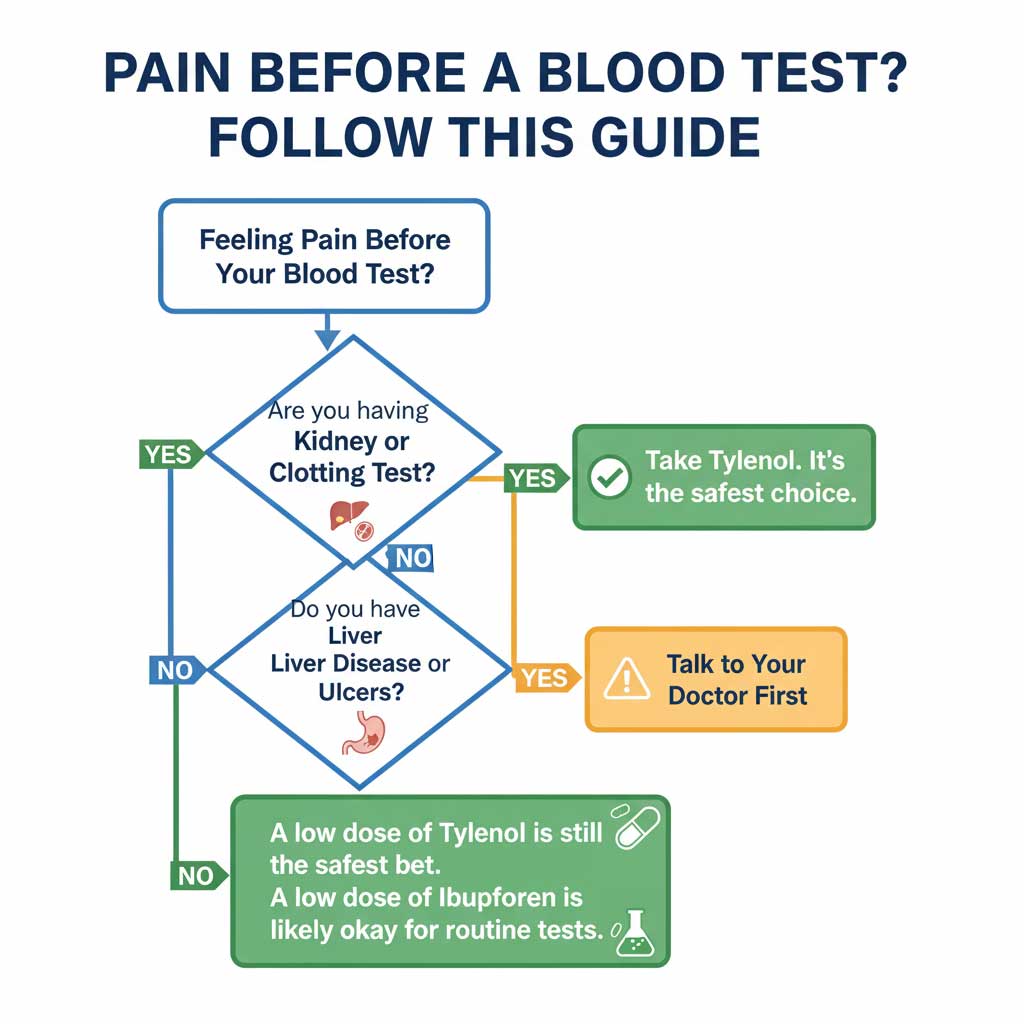
Knowing the science is one thing, but having a clear plan is another. Here is a simple guide to help you make the right choice when you’re in pain before a blood draw.
What to Take for a Headache Before a Fasting Blood Test?
Follow this simple decision-making process:
- What test are you having? If your lab work includes a kidney function panel (often part of a Comprehensive Metabolic Panel) or any clotting tests, the choice is simple: Take Tylenol.
- Are you having a routine physical with just a CBC and cholesterol? In this case, either a single dose of Advil or Tylenol is likely fine, but Tylenol remains the overall safest pain reliever before blood work.
- Do you have any pre-existing health conditions? If you have known kidney disease, a history of stomach ulcers, or are on blood thinners, choose Tylenol. If you have known liver disease, you must speak to your doctor before taking either.
Stopping Medication: The Timeframe You Need to Know
Proper timing is essential for accurate results.
- For Ibuprofen: If you choose to take Ibuprofen and want to be absolutely certain it won’t affect your results, you need to know how long to stop NSAIDs before blood work. The answer is to stop taking it for at least 24 to 48 hours before your blood draw. This allows the drug and its temporary effects to completely clear your system.
- For Tylenol: For most tests, you do not need to stop taking Tylenol beforehand. A single, standard dose taken a few hours before a test is perfectly acceptable. The only exception would be for a heavy, daily user who wants a pure baseline reading of their liver function.
“I Took the Wrong One!” – What to Do
It’s a common and honest mistake. You took an Advil before your kidney test without thinking. Do not panic, and do not simply go to the test and keep quiet.
The Golden Rule: Call the lab or your doctor’s office immediately. Tell them exactly what you took and when. They will provide clear instructions. For a critical test, they will likely have you reschedule. For a routine screening, they may proceed but will add a note to your chart so the results can be interpreted correctly.
Your Health, Your Choice: Proactive Lab Monitoring
Understanding how common medications impact your body is a cornerstone of proactive health management. The only way to truly know your baseline kidney and liver function is to test them. HealthCareOnTime.com puts the power of health data directly in your hands.

Don’t Guess About Your Health—Get the Data
Why wait for your annual physical? Our on-demand lab testing panels allow you to monitor your health on your own terms.
Kidney & Liver Function Panels
Settle the Ibuprofen vs Tylenol before blood test debate for your own body. Our individual Kidney Function and Liver Function panels are perfect for establishing a clear, medication-free baseline of your organ health. This data provides invaluable peace of mind and is essential for anyone who regularly uses over-the-counter pain relievers.
Annual Wellness Panel
Our most comprehensive panel is the easiest way to get a complete picture of your health. It screens your kidneys, liver, cholesterol, blood sugar, and more. It is the perfect tool to track your health over time and see how your lifestyle and medication choices are impacting your results.
Conclusion: The Clearer Choice for Pre-Test Pain
In the direct Ibuprofen vs Tylenol before blood test competition, a clear winner emerges for most common scenarios. Due to its significant and well-documented potential to interfere with kidney function and blood clotting tests, Ibuprofen (Advil) takes a firm second place.
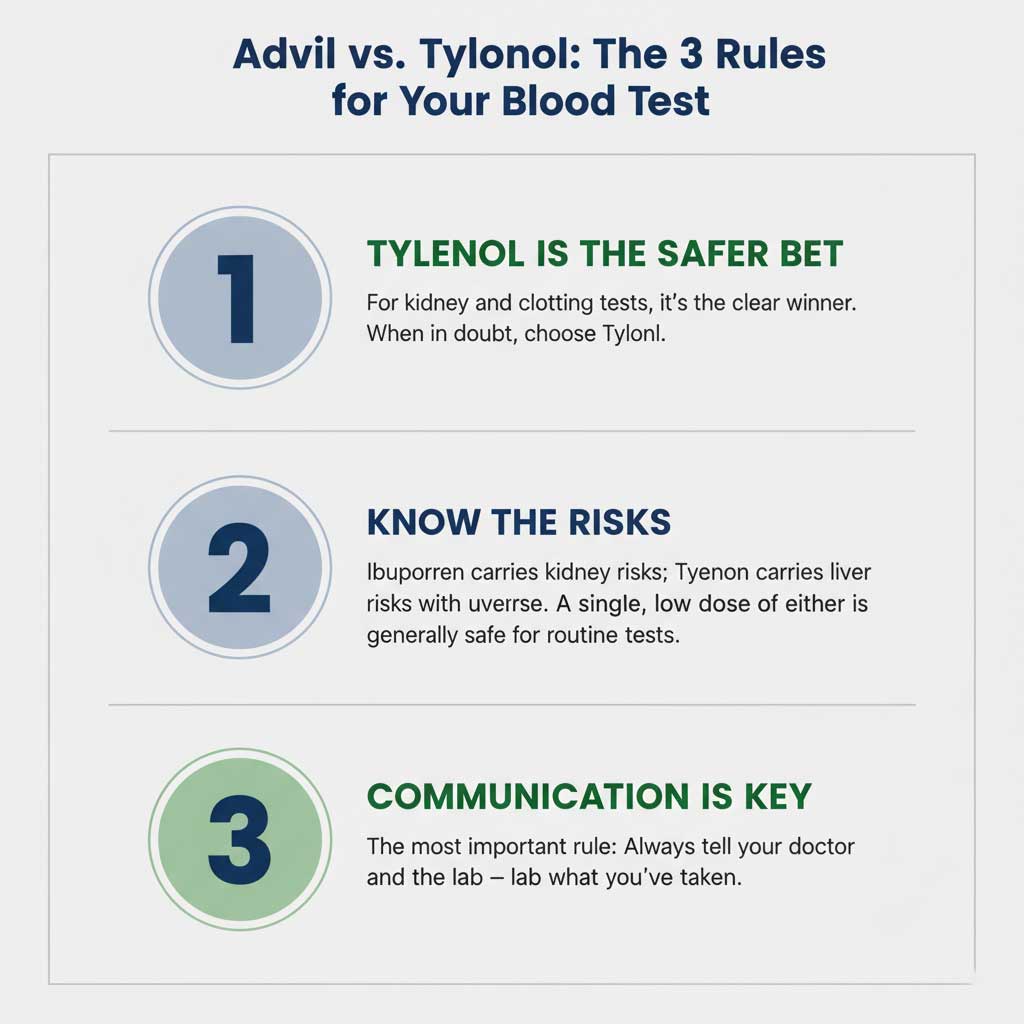
Tylenol (acetaminophen) is definitively the safest pain reliever before blood work. While it requires caution, responsible dosing, and awareness of its effects on the liver, its lack of interference with the most commonly affected and critical tests makes it the superior and recommended choice.
So, when you’re faced with the question of what to take for a headache before a fasting blood test, reaching for the Tylenol is the smarter, safer bet for the accuracy of your results. And as the final step in your preparation, always remember to inform your provider of every medication you’ve taken.