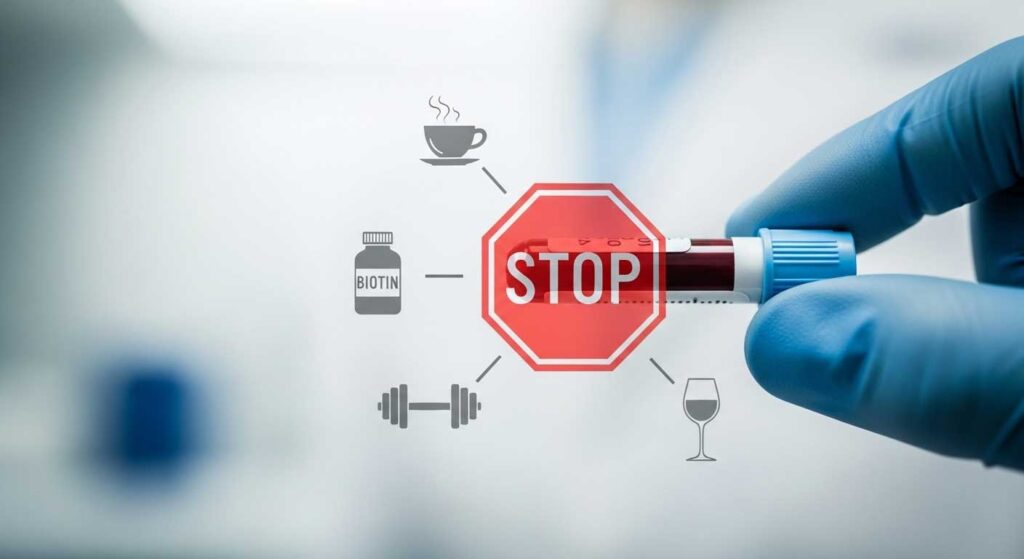
You’ve fasted for 12 hours. You scheduled the appointment. You’re about to walk into the lab to get your blood drawn.
STOP.
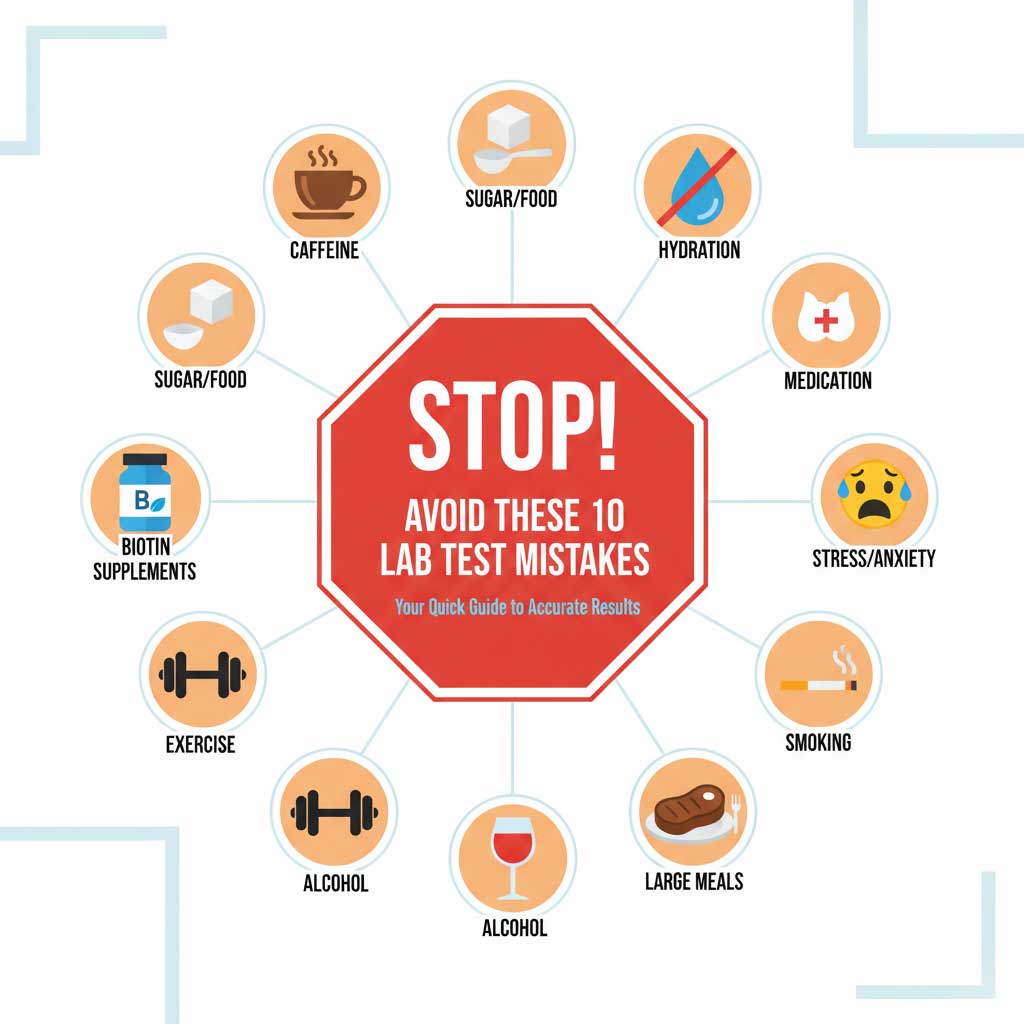
Before you take another step, are you absolutely sure you haven’t already made one of the 10 common mistakes that can completely ruin your results?
- Mistake #1: Drinking Coffee (Yes, Even Black)
- Mistake #2: The "Healthy" Hair, Skin & Nails Supplement
- Mistake #3: The Pre-Test Workout
- Mistake #4: Imperfect Fasting
- Mistake #5: The Nightcap
- Mistake #6: Forgetting to Hydrate
- Mistake #7: The Thyroid Timing Tussle
- Mistake #8: The Pre-Test Jitters
- Mistake #9: The Cigarette Break
- Mistake #10: The "Cheat Day" Meal
- The Ultimate Pre-Test Playbook: Your Authoritative Checklist
- Conclusion: From Anxious Patient to Empowered Health Partner
- Frequently Asked Questions (FAQ)
Getting your blood tested is the single most important data snapshot you can give your doctor. But countless people unknowingly sabotage that data, leading to skewed numbers, false alarms, unnecessary re-tests, and dangerous misinterpretations.
This isn’t a gentle guide. This is a critical pre-flight checklist. We are pulling back the curtain to give you the insider knowledge that clinicians and lab techs wish every patient knew. This is your definitive guide to eliminating the variables, locking in accuracy, and ensuring the results you get back reflect your true health.
At HealthCareOnTime.com, we believe accuracy is everything. Let’s make sure you get it right.
Mistake #1: Drinking Coffee (Yes, Even Black)
The Mistake
You followed the fasting rule perfectly but had a cup of black coffee on your way to the lab. No cream, no sugar. It feels like you followed the rules, but you’ve already skewed the results.

Why It Ruins Your Results
That “harmless” cup of coffee launches a two-pronged attack on your lab work’s accuracy:
- It Dehydrates You: Caffeine is a diuretic. It makes you lose water, which makes your blood more concentrated. Think of a soup that’s been boiled down—the ingredients are all still there, they’re just packed more densely. The lab machine reads this density, which can falsely increase your red blood cell count (CBC) and your kidney function markers (creatinine).
- It Stimulates You: Caffeine triggers a mini “fight or flight” response, releasing hormones that tell your liver to dump a little extra sugar into your bloodstream. It’s not a massive spike, but it’s not your true, resting baseline—and that baseline is the entire reason for the test.

The Fix
The 9-12 hours before your test is a “water only” zone. No coffee (not even decaf), no tea, no exceptions. Drinking plenty of plain water is the only approved liquid to ensure your results are clean.
Mistake #2: The “Healthy” Hair, Skin & Nails Supplement
The Mistake
You’ve been taking a high-dose biotin supplement to improve your hair and nails. You take it the morning of your test, assuming a vitamin can’t possibly cause a problem.
Why It Ruins Your Results
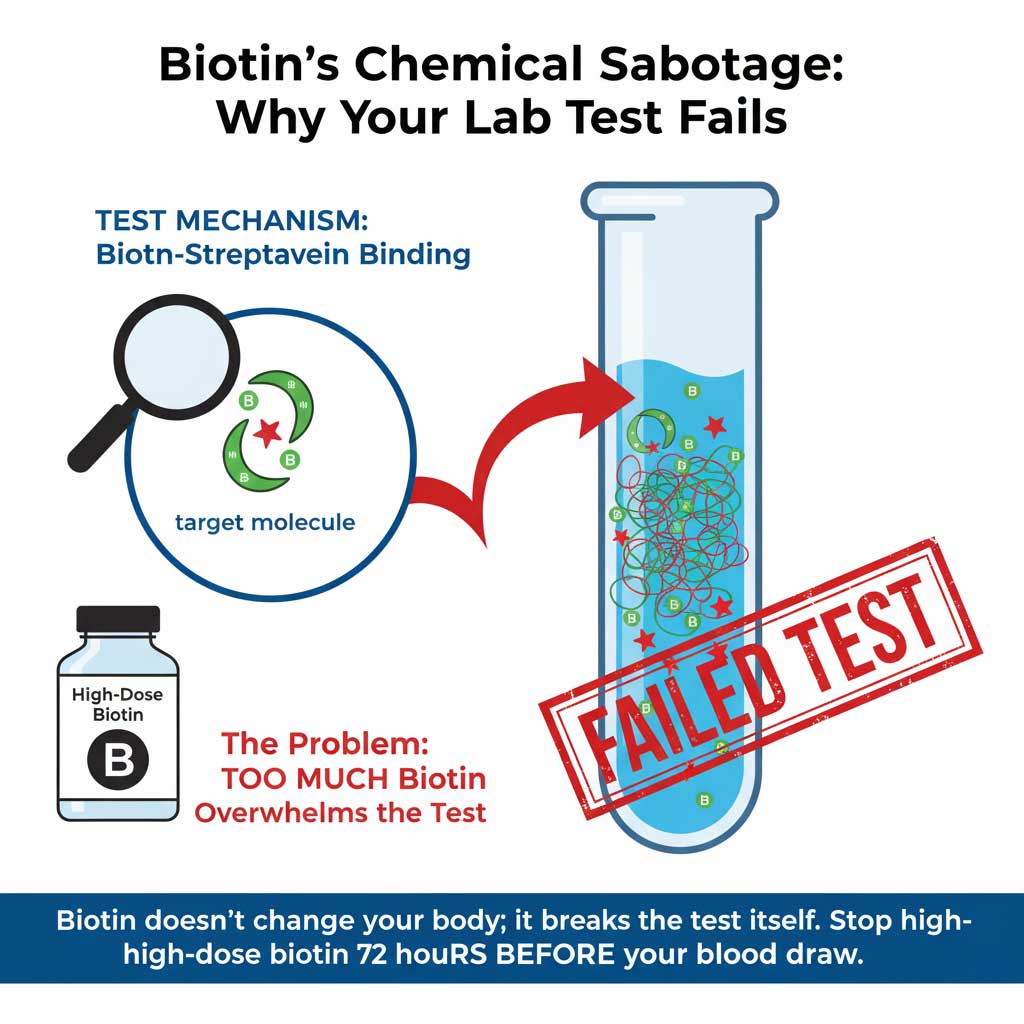
This is the single most dangerous mistake on this list. The problem isn’t what biotin does to your body; the biotin supplement physically breaks the testing machine.
Here’s the expert-level reason: Many modern lab tests, especially for hormones, are “immunoassays” that rely on a powerful bond between a substance called biotin and a protein. Think of it like a specific type of super glue used in the test. When your blood is flooded with massive amounts of biotin from a supplement, it’s like pouring that super glue all over the machine’s sensitive parts. The test completely malfunctions.
This can create a terrifyingly false result that mimics Graves’ disease (severe hyperthyroidism). Even worse, it can cause a false-negative on a troponin test, potentially leading a doctor to miss a heart attack in progress.
The Fix
This is non-negotiable. Stop taking any supplement containing high-dose biotin (over 1,000 mcg) for a minimum of 72 hours before your blood is drawn. When you check in at the lab, tell them verbally, “I normally take high-dose biotin, but I stopped it three days ago.”
Mistake #3: The Pre-Test Workout
The Mistake
You hit the gym for a hard workout the morning of your physical, wanting to be at your best. Instead, your results come back looking like you have kidney and liver problems.
Why It Ruins Your Results
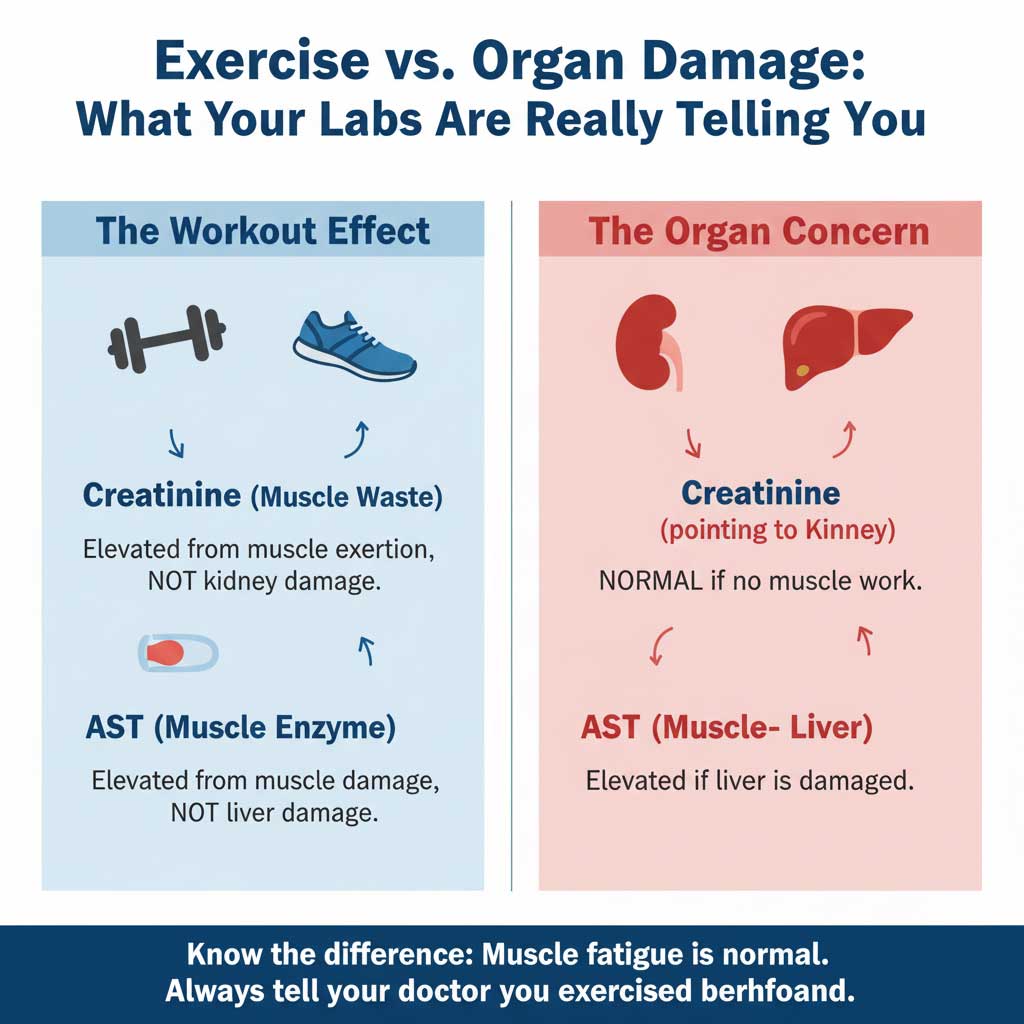
An intense workout is a healthy stress on your muscles, and the evidence of that stress floods your bloodstream.
- Creatinine (Kidney Marker): This is a waste product from muscle use. A tough workout causes micro-tears in your muscles, releasing a wave of creatinine. A high level after a workout is a sign of hard work, not kidney failure.
- AST (“Liver” Enzyme): The AST enzyme is in your liver, but it’s also packed inside your muscles. After a workout, your muscle cells leak AST. Your doctor might see this and worry about your liver, when it’s just a footprint from your leg day.
- PSA (Prostate Marker): For men, intense exercise, particularly cycling, can physically irritate the prostate, causing a temporary rise in PSA levels and a potential false alarm.
The Fix
Avoid all strenuous or vigorous exercise for at least 24-48 hours before a routine blood test. A gentle walk is fine.
Mistake #4: Imperfect Fasting
The Mistake
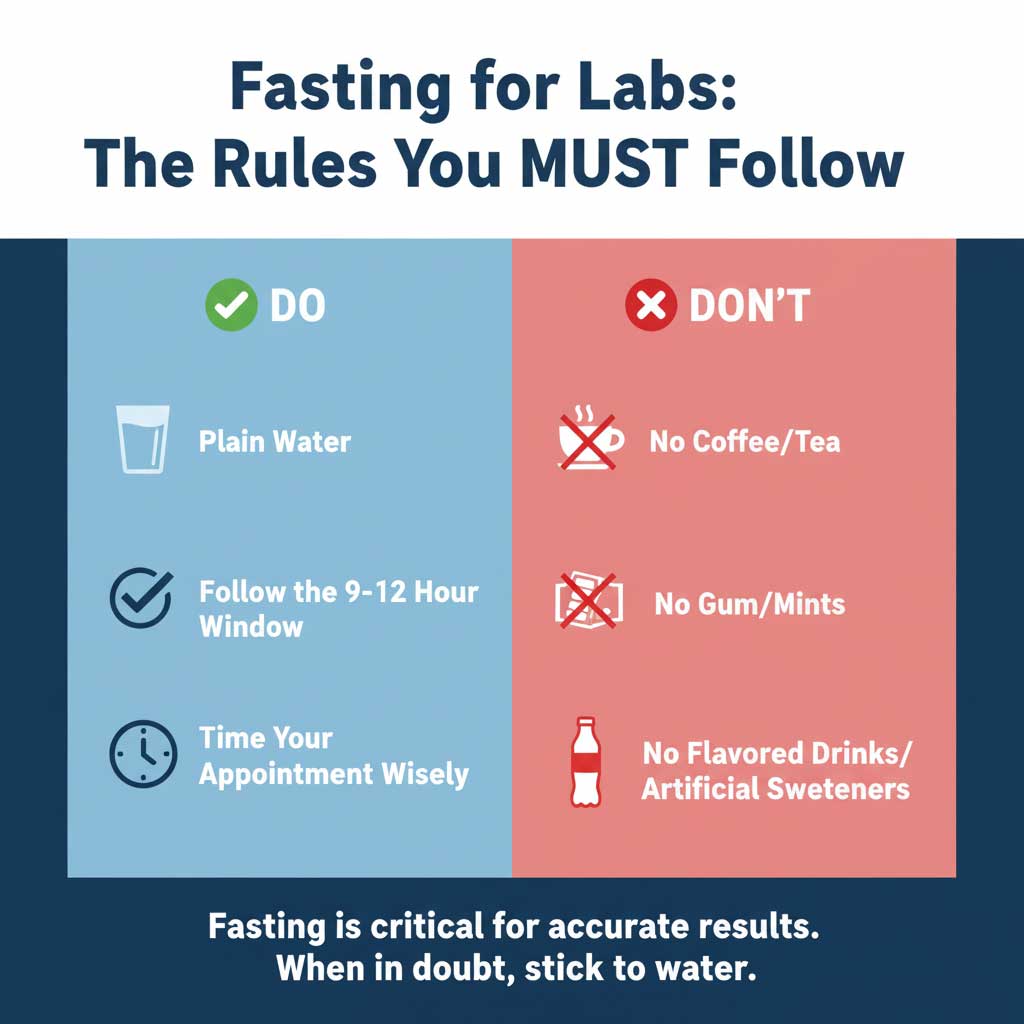
You skipped breakfast but popped a piece of “sugar-free” gum in your mouth on the way to the lab.
Why It Ruins Your Results
Fasting is an on/off switch. There is no middle ground.
- The Insulin Trick: Even the sweet taste of artificial sweeteners can trick your brain into thinking sugar is on the way. This can cause your pancreas to release a small amount of insulin, which can affect the results of sensitive glucose or insulin level tests.
- The Over-Fast: Don’t go to the other extreme. Fasting for more than 16 hours can put your body into a starvation-like state, which can also skew results, particularly for your liver.
The Fix
The clinical gold standard for fasting is a clean 9 to 12 hours. This means nothing enters your mouth except plain water. No food, gum, mints, cough drops, or flavored drinks.
Mistake #5: The Nightcap
The Mistake
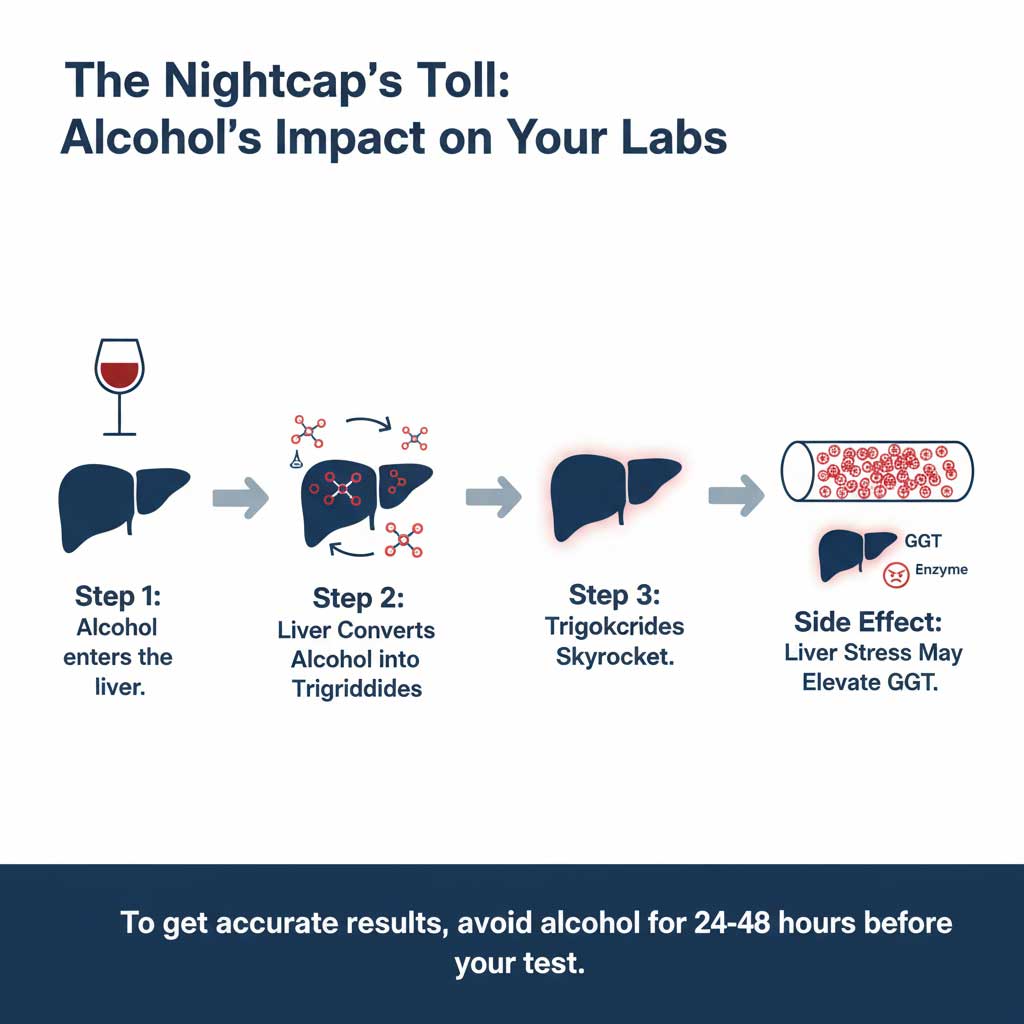
You had a glass of wine or a beer with dinner the night before your test to unwind.
Why It Ruins Your Results
When you drink alcohol, your liver drops everything to get it metabolized and out of your system. A major byproduct of this emergency process is the creation of new triglycerides, which are immediately dumped into your bloodstream. A single drink can cause a huge, temporary spike that gives a completely false picture of your metabolic health.
The Fix
Skip all alcoholic drinks for at least 24 hours, and ideally 48 hours, before your blood test.
Mistake #6: Forgetting to Hydrate
The Mistake
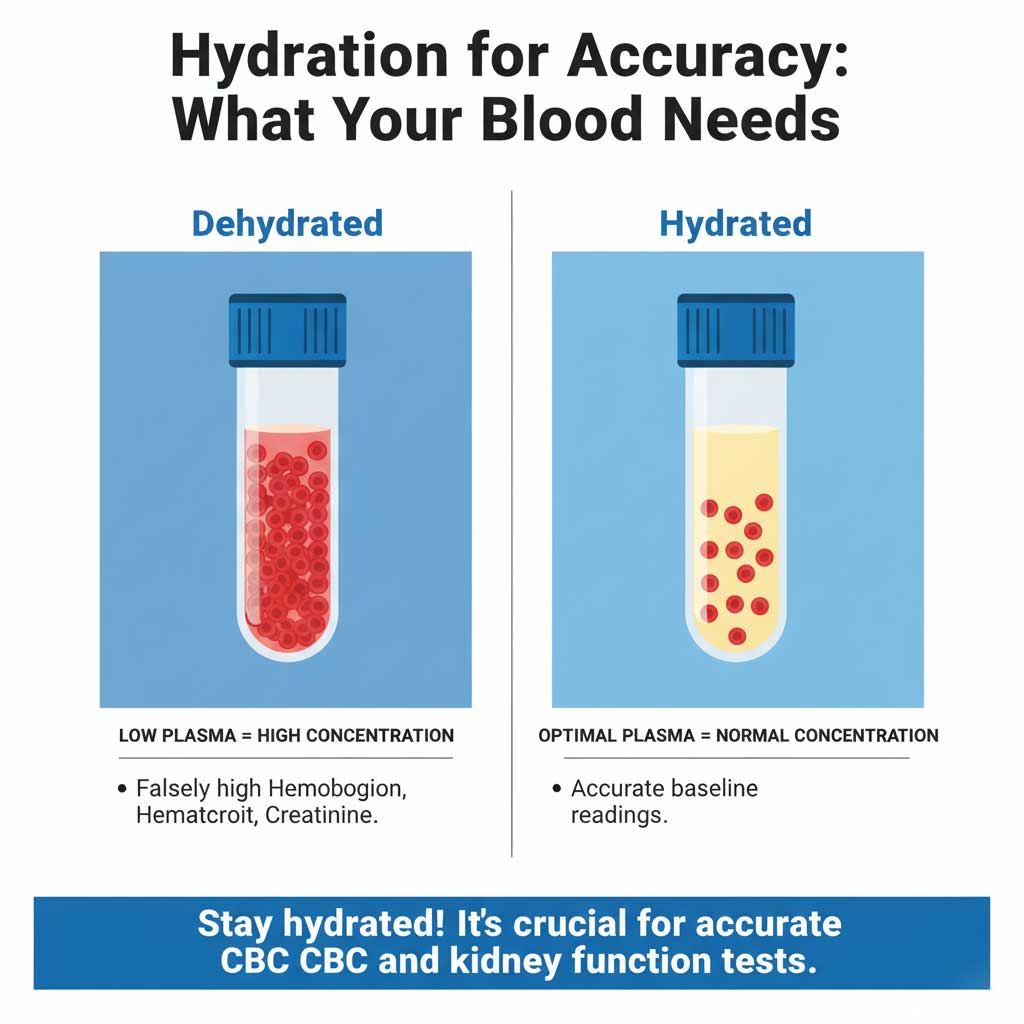
You rushed to your appointment and didn’t drink any water beforehand, thinking it was part of fasting.
Why It Ruins Your Results
Dehydration is the enemy of an accurate blood test. When you’re low on water, the plasma (liquid) in your blood decreases. This makes the solid parts—like red blood cells—more concentrated. This can falsely elevate your hemoglobin and hematocrit on a CBC, making it look like you might have a blood disorder when you’re just thirsty.
The Fix
Drink plenty of plain water the day before and the morning of your test. It prevents skewed results and makes your veins much easier for the phlebotomist to find.
Mistake #7: The Thyroid Timing Tussle
The Mistake
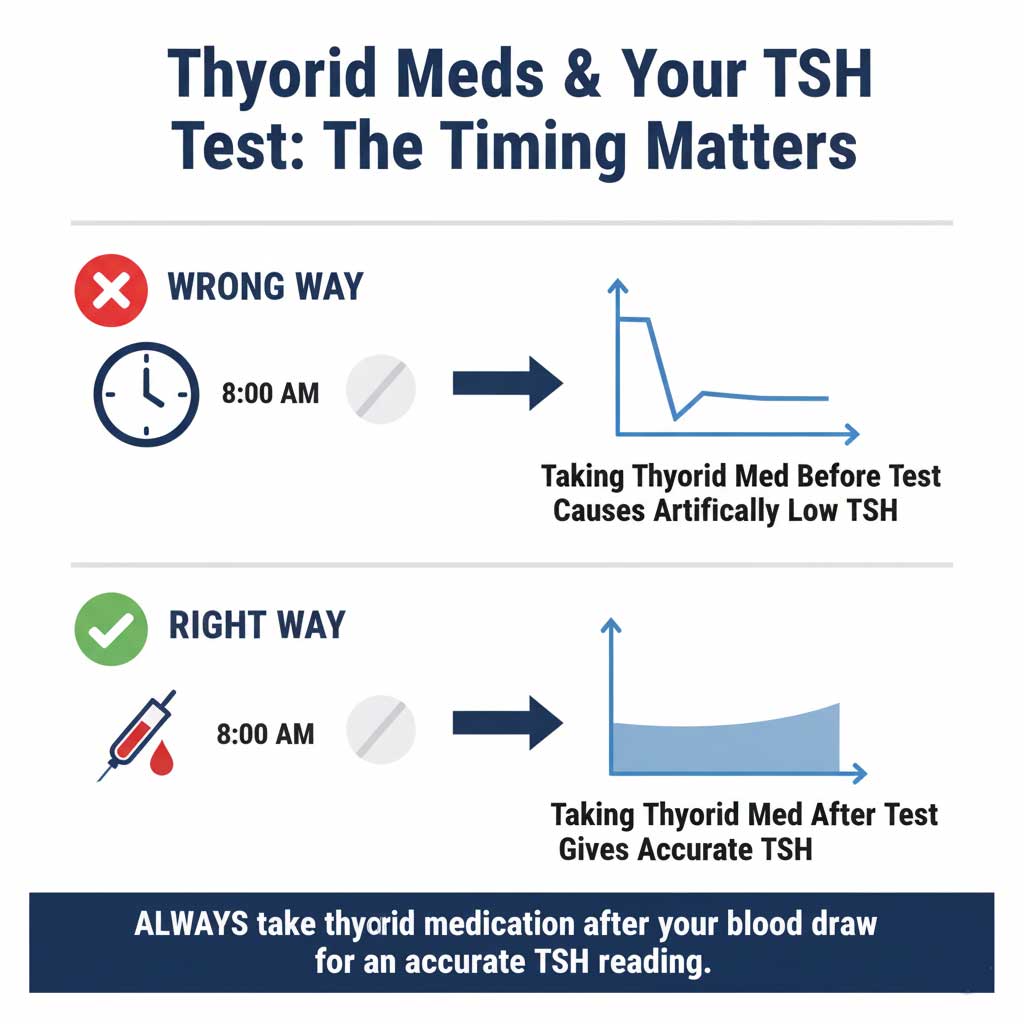
You take your daily levothyroxine (Synthroid) pill right before your blood test, being diligent with your medication schedule.
Why It Ruins Your Results
Your body runs on a smart feedback loop. Your brain makes TSH to tell your thyroid to work. When you take your thyroid pill, you create an artificial surge of thyroid hormone (T4) in your blood. This surge shouts back at your brain, “Hey, we’re good down here, stop shouting!” Your brain then temporarily lowers its TSH signal. If the test catches this artificial low, your doctor might mistakenly think your dose is too high and lower it, leaving you under-medicated.
The Fix
Always ask your doctor, but the clinical standard is to bring your thyroid pill with you and take it after your blood has been drawn.
Mistake #8: The Pre-Test Jitters
The Mistake
You have a fear of needles, and your heart is pounding as you wait for your name to be called.
Why It Ruins Your Results
That anxiety isn’t just in your head; it’s in your blood. Severe stress triggers a “fight or flight” response, flooding your body with cortisol and adrenaline. These hormones instantly tell your liver to release extra sugar for energy, which can slightly elevate your blood glucose reading.
The Fix
Give yourself extra time. Arrive early, sit in a quiet corner, and do some slow, deep breathing exercises. Calming your nervous system can help ensure your results are your true, resting baseline.
Mistake #9: The Cigarette Break
The Mistake
You step outside for a quick cigarette before walking into the lab.
Why It Ruins Your Results
Nicotine is a powerful stimulant. It can cause an immediate, temporary spike in hormones like cortisol and adrenaline, affecting your glucose and white blood cell counts. For long-term smokers, doctors already expect to see a chronically higher red and white blood cell count, but smoking right before the test adds another layer of noise to the data.
The Fix
Do not smoke on the day of your test before your blood is drawn. And always be upfront with your doctor that you’re a smoker; that context is essential for them to interpret your results accurately.
Mistake #10: The “Cheat Day” Meal
The Mistake
The night before your annual labs, you go out for a big, greasy pizza or a giant steak dinner.
Why It Ruins Your Results
The goal of your annual blood test is to get a snapshot of your typical health. A massive, unusual meal creates a snapshot of an event. A huge influx of fat will guarantee a high triglyceride reading. An unusually large protein load will temporarily elevate your BUN (a kidney marker). These numbers don’t reflect your normal health; they reflect your dinner.
The Fix
In the 24 hours before your test, just eat normally. This is not the time for a celebratory feast. Consistency is the key to getting a result that is actually useful.
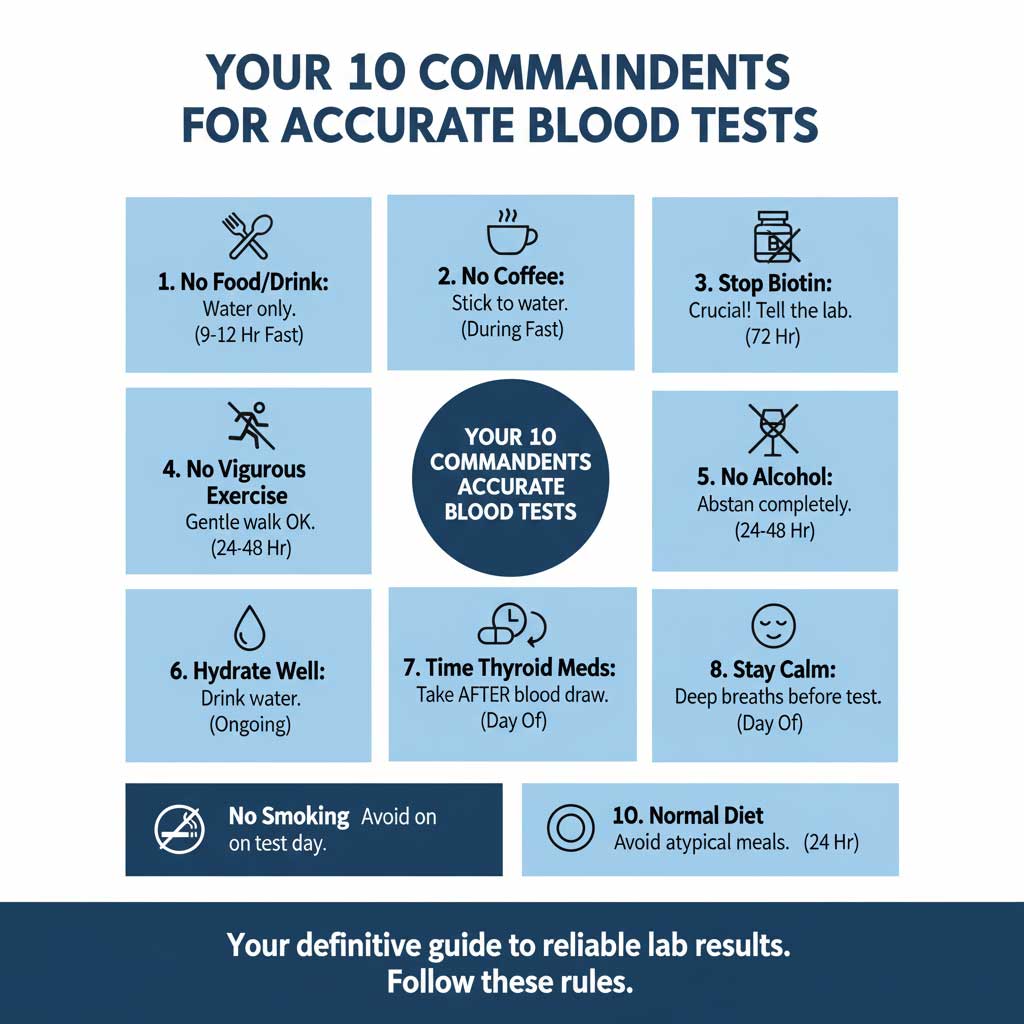
The Ultimate Pre-Test Playbook: Your Authoritative Checklist
| The Mistake | The Clinical Gold Standard: Your Proactive Plan | Timeframe | What Your Doctor is Watching For |
| 1. Improper Fasting | Drink only plain water. No food, coffee, tea, or even sugar-free gum. | 9-12 Hours | Lipid Panel (Triglycerides), Glucose |
| 2. Morning Coffee | Stick to plain water. Even black coffee can cause dehydration and stimulation effects. | During Fast | CBC, Kidney Function (Creatinine), Glucose |
| 3. Biotin Supplements | CRITICAL: Stop all high-dose biotin. Verbally inform the lab staff. | Minimum 72 Hours | Thyroid Panel (TSH, T4), Troponin, Hormones |
| 4. Vigorous Exercise | Avoid intense workouts. A gentle walk is perfectly fine. | 24-48 Hours | Kidney Panel (Creatinine), PSA, Liver Enzymes (AST) |
| 5. Alcohol | Abstain completely from all alcoholic beverages. | 24-48 Hours | Triglycerides, Liver Enzymes (GGT) |
| 6. Dehydration | Hydrate well with plain water the day before and the morning of the test. | Leading Up to Test | CBC (Hemoglobin), CMP (Kidney) |
| 7. Medication Timing | Ask your doctor, but the standard is to delay your thyroid pill until after the draw. | Day of Test | Thyroid Panel (TSH, T4) |
| 8. High Stress | Arrive early, sit quietly, and practice calming deep-breathing exercises. | Day of Test | Glucose, White Blood Cell Count |
| 9. Smoking | Avoid smoking on the day of your test for the most accurate baseline. | Day of Test | White Blood Cell Count, Cortisol |
| 10. Atypical Meals | Eat your normal, average diet to capture a true baseline. | 24 Hours | Triglycerides, Kidney Function (BUN) |
Conclusion: From Anxious Patient to Empowered Health Partner
Remember that sinking feeling of seeing a confusing lab report? Let’s look at it again, but this time with expert eyes. You can now see the high triglycerides not as a disease, but as the echo of a celebratory dinner. You see the high creatinine not as kidney failure, but as the signature of a healthy workout. You have learned to read the context.

This is the essence of modern healthcare. True authority doesn’t just come from a lab machine’s printout; it comes from combining that data with the lived Experience of the patient. By using this Expert guide, you become an Authoritative source of that context, enabling a Trustworthy partnership with your doctor.
You are no longer just a subject of the test; you are now in the driver’s seat of its accuracy. Take this playbook, prepare for your next blood test with confidence, and step into your doctor’s office not just as a patient, but as an invaluable partner.