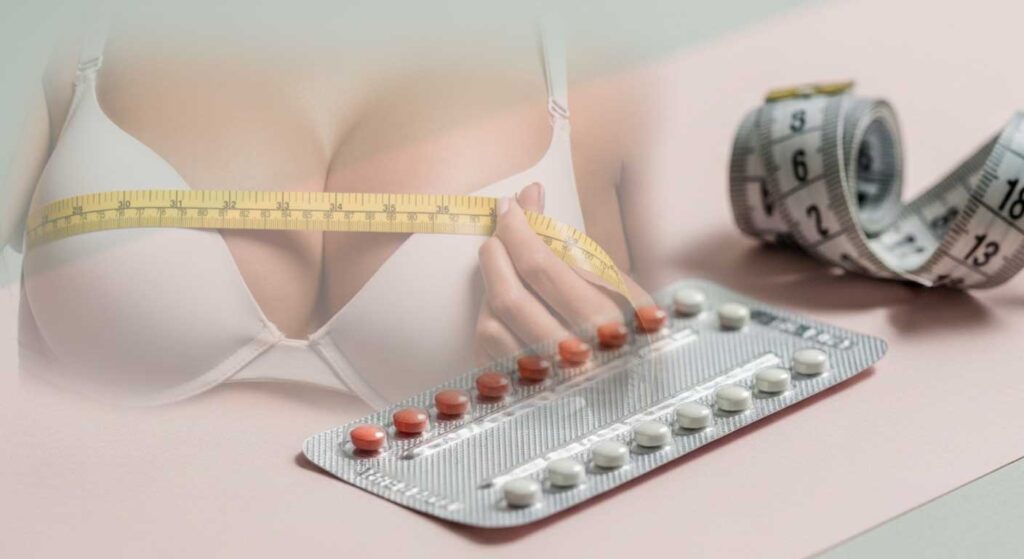
It’s a conversation that has echoed in group chats, college dorm rooms, and doctor’s offices for decades. You start taking hormonal birth control, and within a few weeks, something feels… different. Your favorite bra is suddenly a bit too snug, your breasts feel tender, and you’re left wondering, does birth control make your boobs bigger? The internet is filled with a sea of anecdotes, but finding a truly definitive, expert-backed answer can feel impossible.
Table of Contents
This is not just another article that will give you the same superficial response. We are going to delve deep into the cellular biology, the history of contraception, and the real-world experiences that answer this question comprehensively. The “shocking truth” isn’t a simple yes or no. It’s a fascinating story about hormones, fluid dynamics, and how your unique body responds to modern medicine. Our goal is to provide you with the most in-depth, authoritative guide available, so you can understand precisely what is happening inside your body.
The journey to understanding birth control breast growth is about more than just cup sizes; it’s about body literacy and making empowered health decisions.
The Quick Answer and Key Facts (At a Glance)
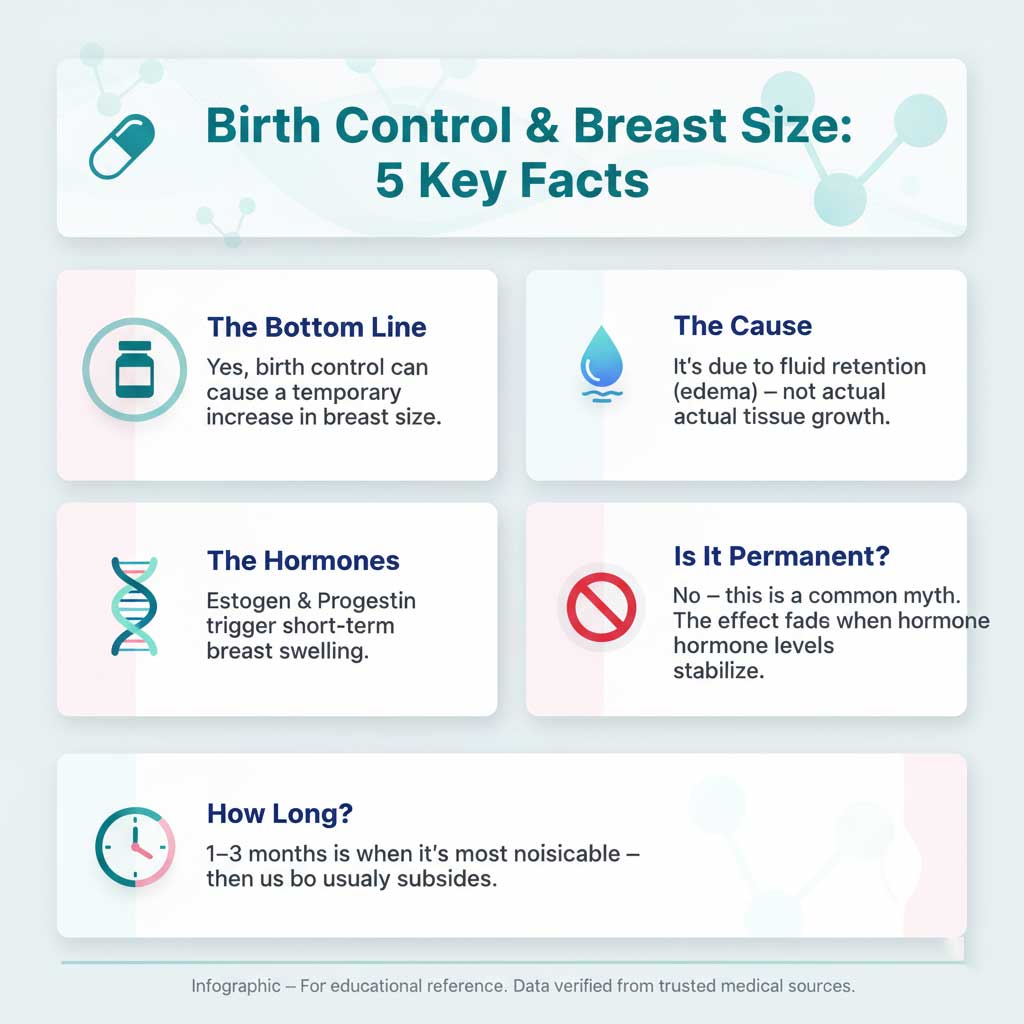
For those who need the essential information upfront, here is the direct answer. We’ll explore the science behind each of these points in greater detail throughout the article.
- The Bottom Line: Yes, hormonal birth control can temporarily make your breasts feel and look bigger.
- The Cause: This is primarily due to fluid retention birth control can cause (edema), driven by the hormone estrogen. It’s not a permanent increase in breast tissue.
- The Hormones: Both estrogen and progestin in contraceptives can cause breast tissue to swell and feel tender, mimicking changes you might feel during a natural menstrual cycle.
- Is It Permanent? No. This is one of the biggest myths. The effect is temporary and your breasts will almost certainly return to their baseline size after you stop taking the contraceptive.
- How Long Does It Last? The swelling is most noticeable in the first 1-3 months. After this adjustment period, the effect usually subsides as your body adapts to the new hormone levels.
The Hormonal Story: A Deeper Dive Than You’ll Find Elsewhere
To say that “hormones” are the cause is accurate but incomplete. It’s like saying “weather” caused a storm. To truly grasp the concept, we need to understand the specific ingredients at play—the synthetic hormones in contraception—and how they interact with your body’s intricate systems.
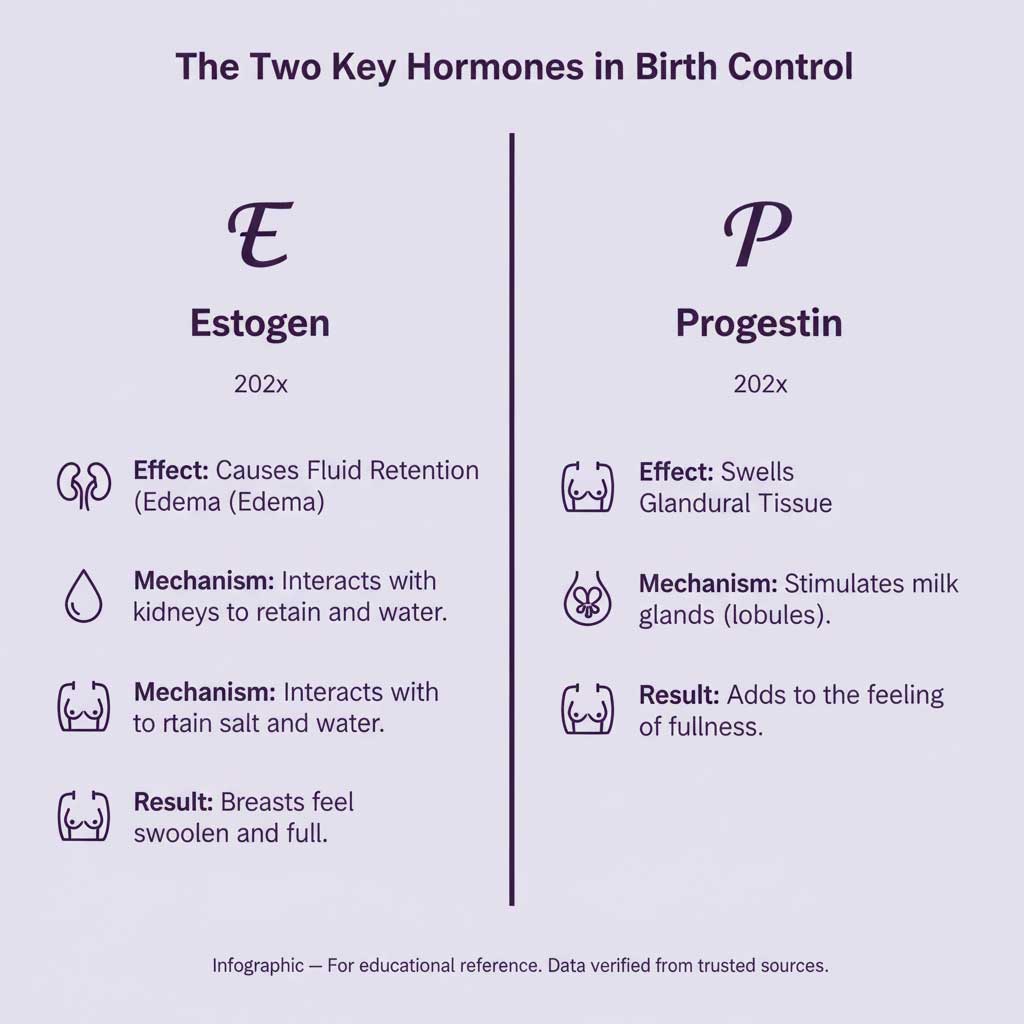
It’s Not Just “Estrogen”: Meet Ethinyl Estradiol
Most combination birth control methods don’t use the same estradiol your body produces. They use a powerful, synthetic version called ethinyl estradiol. This synthetic form is much more potent and has a stronger effect on the body’s fluid balance.
Its primary job in contraception is to stop ovulation, but it also has a significant side effect: it interacts with the renin-angiotensin-aldosterone system (RAAS) in your kidneys. This is a complex system that acts like your body’s thermostat for salt and water. Ethinyl estradiol can turn this thermostat up, telling your kidneys to hold onto more salt, and wherever salt goes, water follows. This systemic fluid retention birth control causes is often most visible in hormonally sensitive tissues like the breasts.
Progestin’s Double Role: From Glandular Swelling to Unique Properties
Progestin is the other key player. It’s a synthetic version of progesterone. Its main contraceptive role is to thicken cervical mucus and thin the uterine lining. However, progestin and breast tissue have a direct relationship. It can cause the milk glands (lobules) inside your breasts to swell slightly.
What makes this even more complex is that there are many different “generations” of progestins, each with a unique personality. For example:
- Drospirenone (found in Yaz, Yasmin): This progestin is unique because it has a mild diuretic effect, meaning it can actually help your body flush out some of that estrogen-caused water retention. Some users report less bloating and breast swelling with this type of pill.
- Levonorgestrel (found in many common pills and hormonal IUDs): This is an older, highly effective progestin known for its reliability but can sometimes have more androgenic (male hormone-like) side effects.
So, when someone says the pill makes boobs bigger, which pill and which progestin they are talking about matters immensely.
Is the Change Real Growth? The Cellular Truth
This is the absolute core of the issue and where most misinformation lies. It is crucial to differentiate between a temporary swell and a permanent increase in tissue.
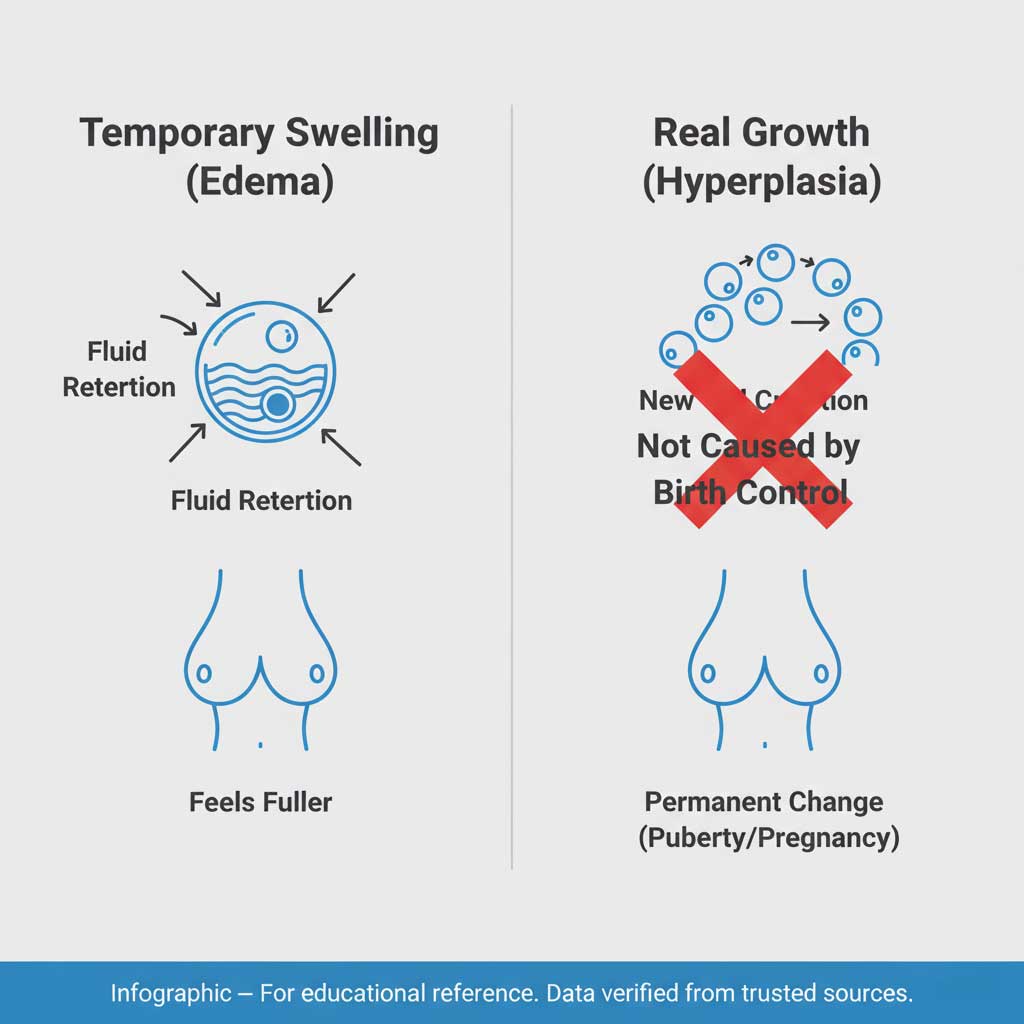
Differentiating Edema vs. Hyperplasia: The Water Balloon vs. The Building
The increase in size you experience from hormonal birth control is overwhelmingly due to edema. Think of your breast tissue cells like tiny water balloons. The hormones send a signal to fill those balloons with a bit more water. They stretch, feel full, and take up more space. But the number and fundamental size of the balloons haven’t changed. When the hormonal signal is removed (when you stop the pill), the balloons release the extra water and go back to their original size.
True breast growth, called hyperplasia, is the creation of new cells. This happens during puberty and pregnancy. It’s like adding a new room to a house. Hormonal contraception does not cause hyperplasia. Answering the question is birth control breast growth permanent with a definitive “no” is medically sound because it’s addressing edema, not tissue creation.
What About Fat Distribution?
Some long-term users of hormonal birth control may notice subtle changes in their overall body composition, which could include very minor shifts in fat distribution. Hormones can influence where your body prefers to store fat. However, this is a much less significant factor than the immediate and noticeable effect of water retention. It does not account for the rapid change in size many people experience in the first few months.
A Journey Through Time: Why Your Mom’s Pill Experience Was Different
To fully appreciate the subtlety of today’s side effects, we have to look back. The birth control pill of the 1960s was a pharmacological sledgehammer compared to today’s refined tools.
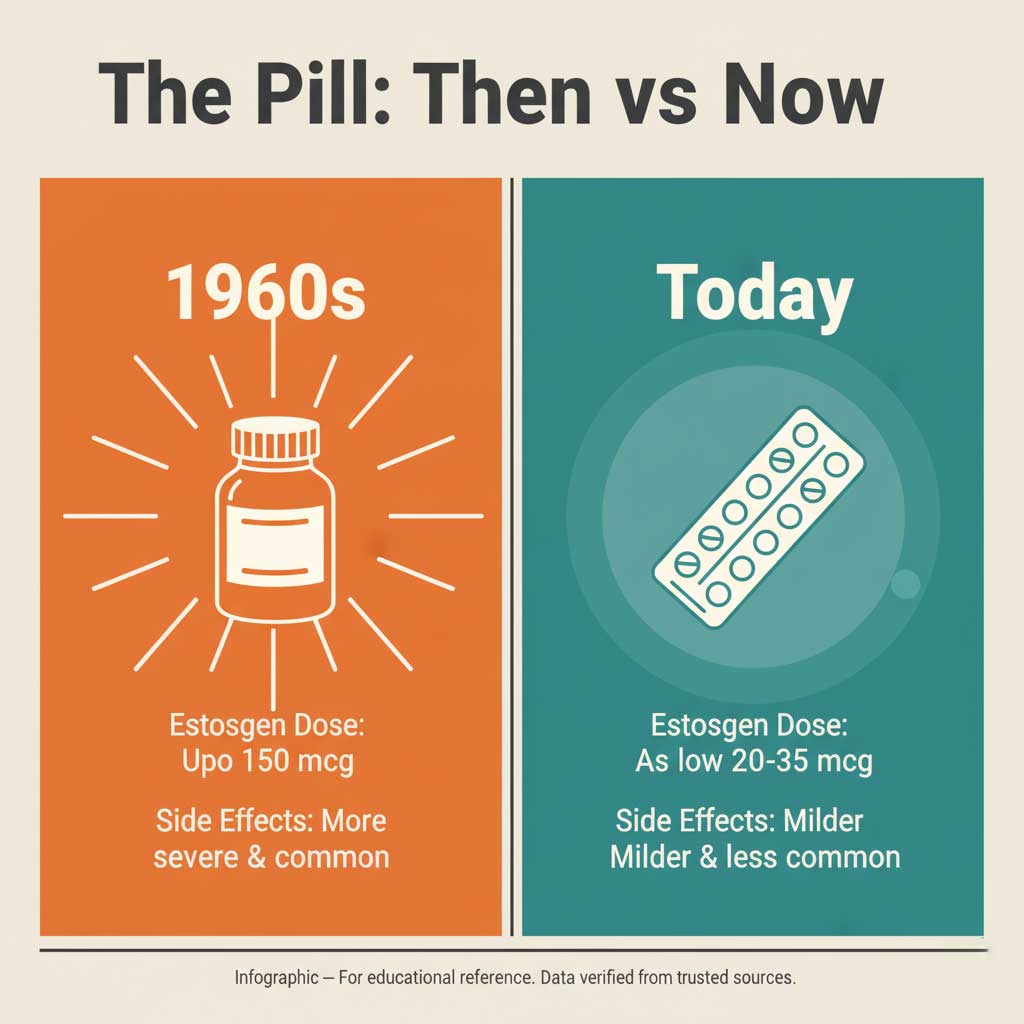
The High-Dose Pills of the 1960s
The first birth control pills contained up to 150 micrograms of estrogen. For comparison, a common low-dose pill today contains just 20 to 35 micrograms. This massive dose of hormones led to much more severe and common side effects. The stories you may have heard from older generations about dramatic weight gain and significant breast enlargement were very real experiences tied to these high-dose formulations.
The Modern Era: Low-Dose and Ultra-Low-Dose Formulations
The entire goal of modern contraceptive pharmacology has been to find the lowest possible dose of hormones that still effectively prevents pregnancy. This “lowest effective dose” principle means that side effects like the hormonal birth control bigger breasts effect are far milder and less common than they used to be. Today, if side effects are persistent or bothersome, the first step a doctor will often take is to prescribe an even lower-dose pill.
A Practical Guide to Every Birth Control Method’s Effect on Breasts
The type of contraceptive you choose will be the single biggest predictor of whether you’ll experience breast changes. Let’s break it down method by method.
The Combination Crew: Pills, Patches, and Rings
These methods all contain a combination of estrogen and progestin and deliver the hormones systemically (throughout your whole body). Therefore, they are the most likely group to cause the temporary breast swelling from pill use.
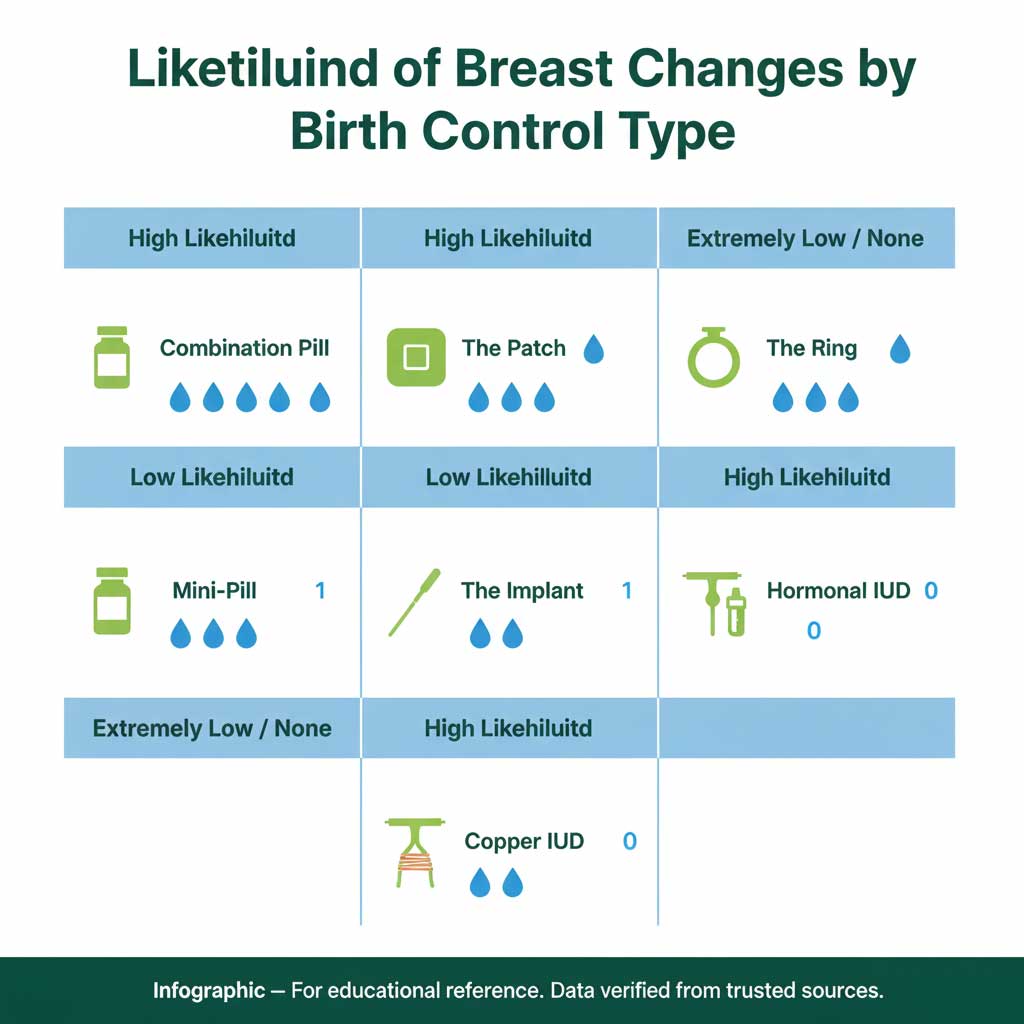
- The Pill: The most classic example. Combination pill breast changes are common, but the severity can depend on the dose and type of progestin.
- The Patch: Delivers a steady stream of hormones through the skin. It can expose the body to slightly higher overall estrogen levels than some pills, so breast changes are possible.
- The Ring: A flexible ring inserted into the vagina that releases hormones locally, but they are still absorbed into the bloodstream systemically. Breast swelling is a known side effect.
The Progestin-Only Party: Mini-Pills, Implants, and Shots
These methods are estrogen-free, which is a game-changer for side effects related to fluid retention.
- Mini-Pill (Progestin-Only Pill): Because it contains no estrogen, significant progestin-only pill breast size increases are very rare. Some mild tenderness is possible, but not the noticeable swelling.
- The Implant (Nexplanon): A small rod inserted in the arm that releases progestin. Since it’s estrogen-free, it’s not associated with fluid retention-based breast growth.
- The Shot (Depo-Provera): An injection of a high dose of progestin every three months. It is not typically linked to breast enlargement, though it is the method most commonly (though not definitively) associated with changes in weight in some users.
The Local Heroes: Hormonal vs. Copper IUDs
The question does the implant or IUD make your breasts bigger is very common. IUDs are in a class of their own.
- Hormonal IUDs (Mirena, Kyleena, etc.): These devices release a tiny amount of progestin (levonorgestrel) directly into the uterus. The amount of hormone that reaches the bloodstream is minuscule. Therefore, it is extremely unlikely to have any noticeable effect on your breasts.
- The Copper IUD (Paragard): This IUD is 100% hormone-free. It has absolutely no effect on your hormones or your breast size.
Comparison Table: A Clear Breakdown of Methods
| Contraceptive Method | Hormones Involved | Likelihood of Breast Size Changes | What to Expect & Why |
| Combination Pill | Estrogen & Progestin | Moderate to High | The “classic” effect. Expect possible swelling in the first 3 months due to estrogen-driven fluid retention. |
| The Patch (Xulane) | Estrogen & Progestin | Moderate to High | Similar to the pill. The steady hormone delivery might make the effect consistent throughout the month. |
| Vaginal Ring (NuvaRing) | Estrogen & Progestin | Moderate | Hormones are absorbed systemically, so breast swelling is a known side effect, similar to the pill. |
| Progestin-Only Pill | Progestin Only | Very Low | Unlikely to cause noticeable swelling as there is no estrogen. Some minor tenderness is possible. |
| The Implant (Nexplanon) | Progestin Only | Very Low | Estrogen-free, so not associated with the fluid-retention effect. Systemic hormone levels are low. |
| Hormonal IUD (Mirena) | Progestin Only | Extremely Low | The hormone action is almost entirely localized to the uterus. Systemic side effects are very rare. |
| Copper IUD (Paragard) | None | None | 100% hormone-free. It will have zero impact on your breast size or hormonal symptoms. |
Beyond Size: Managing Tenderness, Pain, and Body Image
For many, the increase in size is less of an issue than the discomfort that comes with it. Breast tenderness on the pill (clinically known as mastalgia) can range from a minor annoyance to significant pain.
Actionable Steps for Soothing Sore Breasts (Mastalgia)
If you’re struggling with discomfort, here are some evidence-based strategies that can help:

- Invest in a Better Bra: This is non-negotiable. A well-fitting, supportive bra without an underwire can make a world of difference. Consider a professional fitting.
- Reduce Caffeine and Sodium: Both can exacerbate fluid retention and breast tenderness. Try cutting back on coffee, soda, and salty processed foods.
- Use Warm or Cold Compresses: Some find relief from a warm compress, which can soothe muscles, while others prefer a cold pack to reduce swelling. Experiment to see what works for you.
- Try Evening Primrose Oil: Some clinical studies have shown that this supplement, rich in gamma-linolenic acid, can help reduce cyclical breast pain. Always talk to your doctor before starting any supplement.
- Maintain a Healthy Lifestyle: Regular exercise and a balanced diet rich in whole foods can help regulate hormones and reduce overall inflammation and bloating.
The Psychological Impact: When Body Changes Affect Your Mind
We need to acknowledge that this isn’t just a physical issue. For some, unexpected changes in their body can be distressing and impact self-esteem and body image. It is perfectly valid to feel uncomfortable or unlike yourself. If these feelings are causing you significant distress, it’s important to discuss them with your healthcare provider. Sometimes, simply switching to a method with fewer systemic hormonal effects (like an IUD) can make a huge difference to your mental well-being.
The Post-Pill Transition: What Happens When You Stop?
So, you’ve decided to stop taking hormonal birth control. What can you expect? The question do your boobs go back to their original size after stopping the pill is a crucial part of the journey.
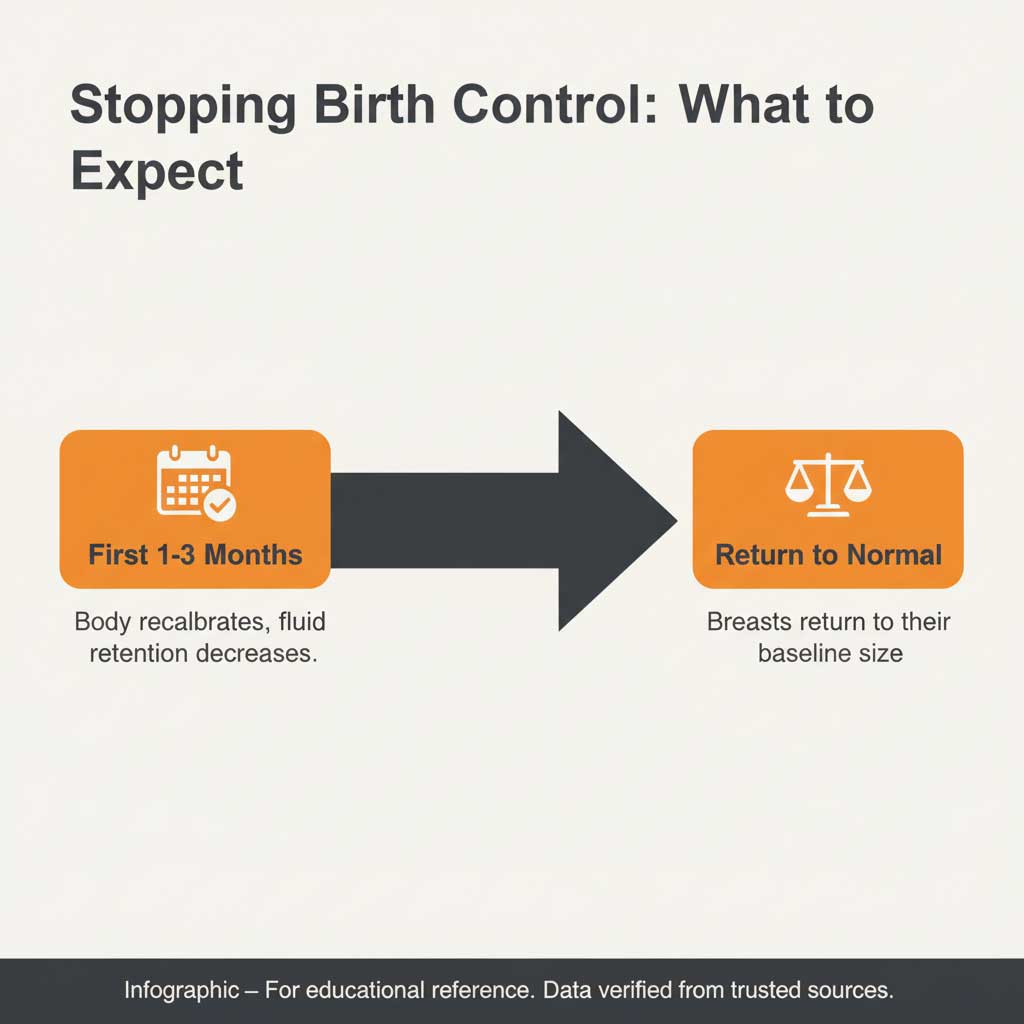
The “Hormonal Rebound”: The First 1-3 Months
Your body will begin a process of recalibration as it restarts its own production of cyclical hormones. During this time, you might experience some irregular cycles or symptoms as things get back online. The fluid retention caused by the synthetic estrogen will begin to dissipate, and you will notice your breasts gradually returning to their baseline size.
Long-Term: A Return to Your Normal
Within a few months, your breasts should have fully returned to their pre-pill state. The temporary swelling will be gone. This confirms that the birth control breast growth you experienced was indeed a temporary side effect of the medication.

FAQs: Frequently Asked Questions
Is there any specific birth control pill that is known for making breasts bigger?
While any combination pill can cause this effect, those with higher doses of estrogen might have a more pronounced impact. However, doctors do not and should not prescribe birth control for the purpose of breast enhancement. Choosing a contraceptive should always be a health-based decision, focusing on the safest and most effective option for you, not on potential cosmetic side effects.
I’m on the placebo week of my pills, why do my breasts still feel big?
During the hormone-free placebo week, your body experiences a withdrawal bleed. The hormonal drop can sometimes trigger PMS-like symptoms, including breast tenderness. While the fluid retention from the active pills may start to decrease, it can take a few days to resolve, so you might still feel some fullness during this week.
Does birth control affect your risk of breast cancer?
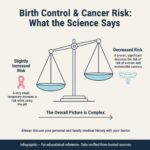
This is a very important and complex topic. According to major health organizations like the National Cancer Institute, using combination hormonal contraceptives is associated with a very slight increase in the risk of breast cancer. However, the risk is small and decreases after you stop taking the pill. Conversely, the pill is known to decrease the risk of ovarian and endometrial cancers. It’s essential to have a detailed discussion about your personal and family medical history with your doctor.
If I gain actual weight on the pill, will my boobs get bigger from that?
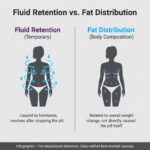
Yes. Breasts are composed of glandular tissue and fatty tissue. If you experience a genuine increase in overall body fat (which is not a guaranteed side effect of the pill, as discussed), some of that fat may be distributed to your breasts, causing a size increase. This would be different from the temporary fluid retention caused by hormones and would be related to your overall change in body composition.