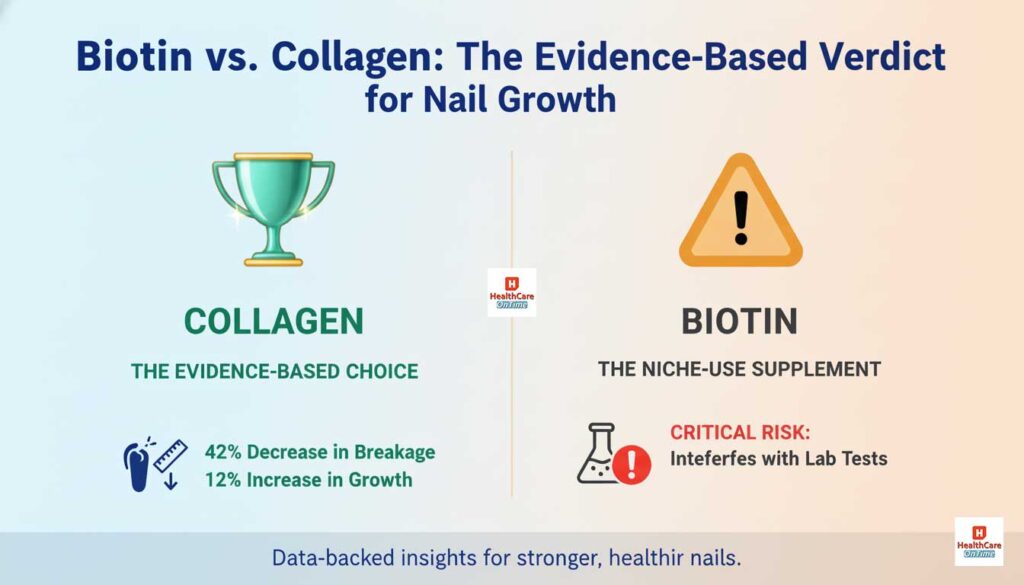
Staring at brittle, peeling, and frustratingly slow-growing nails is a common battle. In the pursuit of achieving strong, healthy, and resilient nails, the beauty supplement aisle presents two dominant contenders: biotin and collagen. This has sparked an ongoing debate over biotin vs collagen for nails, leaving many wondering which one truly delivers on its promises. The answer, however, isn’t a simple one-size-fits-all, but a deep dive into the science reveals a clear frontrunner.
Table of Contents
This comprehensive guide provides a definitive, evidence-based answer, cutting through the marketing noise to deliver a verdict based on clinical studies, expert dermatologist advice on biotin and collagen for nails, and critical real-world safety considerations. While both supplements are popular, current scientific evidence suggests collagen holds a distinct advantage for improving nail strength and growth in the general population.
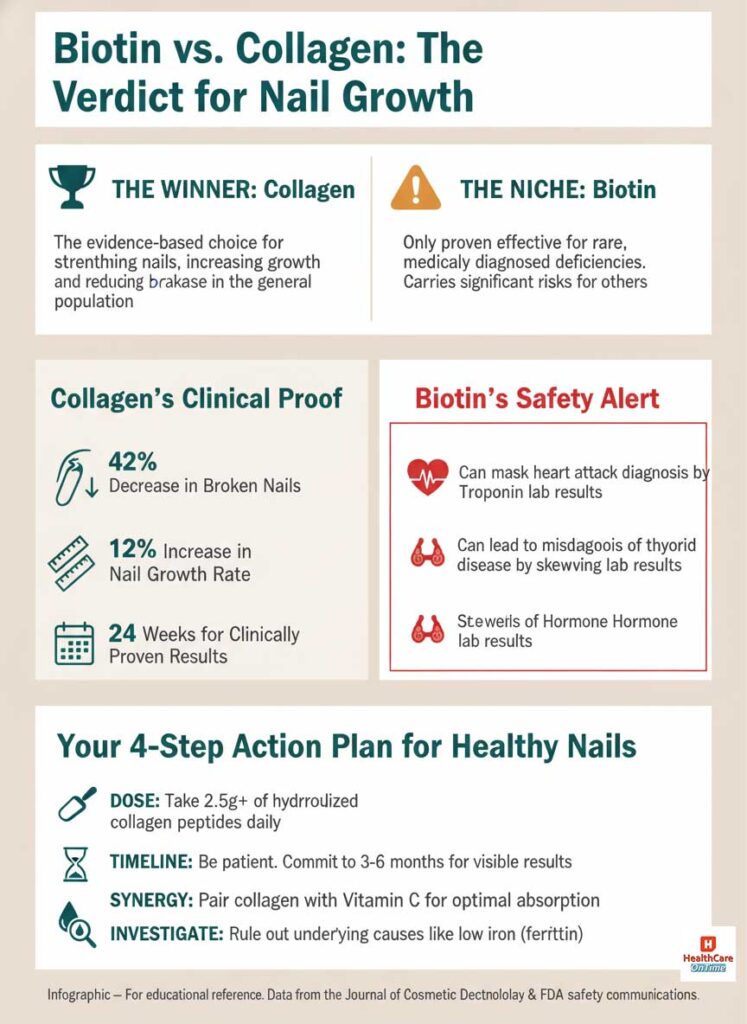
The benefits of biotin, on the other hand, are largely confined to correcting a deficiency, a condition that is surprisingly rare. For those seeking the best supplement for nail growth, understanding this crucial difference is the first step toward achieving visible results.
Understanding the Foundation: The Science of Healthy Nail Growth
Before comparing supplements, it’s essential to understand the biological processes behind nail formation. Your nails are more than just a protective covering; they are a complex structure and a visible indicator of your internal health. Building a foundation of knowledge is key to appreciating why certain nutrients are more effective than others.
Keratin: The Protein Building Block of Your Nails
At its core, the nail plate—the hard, visible part of your nail—is composed almost entirely of a fibrous structural protein called keratin. This is the same protein that makes up your hair and the outer layer of your skin. The strength and resilience of your nails are directly dependent on the density and integrity of these keratin structures.

For your body to produce strong keratin, it requires a steady supply of amino acids, which are the building blocks of all proteins. This is why a diet rich in protein is a non-negotiable prerequisite for healthy nail growth. When considering nail strength vitamins and supplements, the discussion centers on compounds that support or enhance this fundamental keratin production process.
The Role of the Nail Matrix: Where Growth Begins
Healthy nails originate from a small area of living tissue situated under the cuticle called the nail matrix. This is the command center for nail growth. The cells in the nail matrix are constantly dividing and producing new keratin, which then pushes the older, hardened keratin cells forward to form the nail plate.
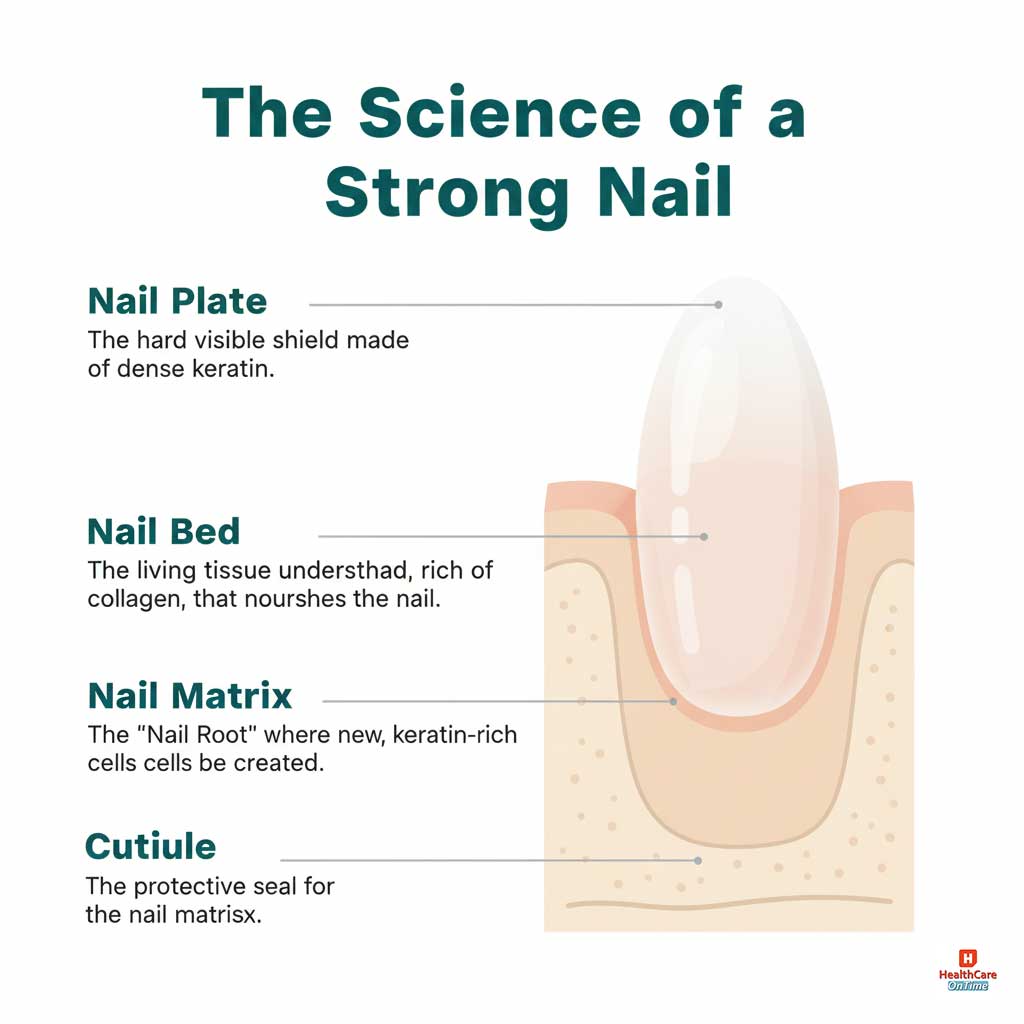
The health and vitality of the nail matrix and the surrounding nail bed are paramount. If the matrix is not properly nourished with the necessary proteins, vitamins, and minerals, the resulting nail plate will be weak, brittle, and prone to breakage. This is precisely where the biotin vs collagen for nails discussion becomes critically important, as each supplement targets this process in a fundamentally different way.
The Case for Collagen: The Body’s Scaffolding for Resilient Nails
Collagen is the most abundant protein in the human body, acting as the primary structural component of our connective tissues. It’s the “glue” that holds everything together, providing strength and elasticity to our skin, bones, tendons, and, crucially, the dermal layer of our nail beds. The theory behind using collagen for brittle nails is that by fortifying the nail bed, you create a healthier environment for the nail matrix to produce stronger nails.
The Scientific Evidence: A Deep Dive into Collagen and Nail Health
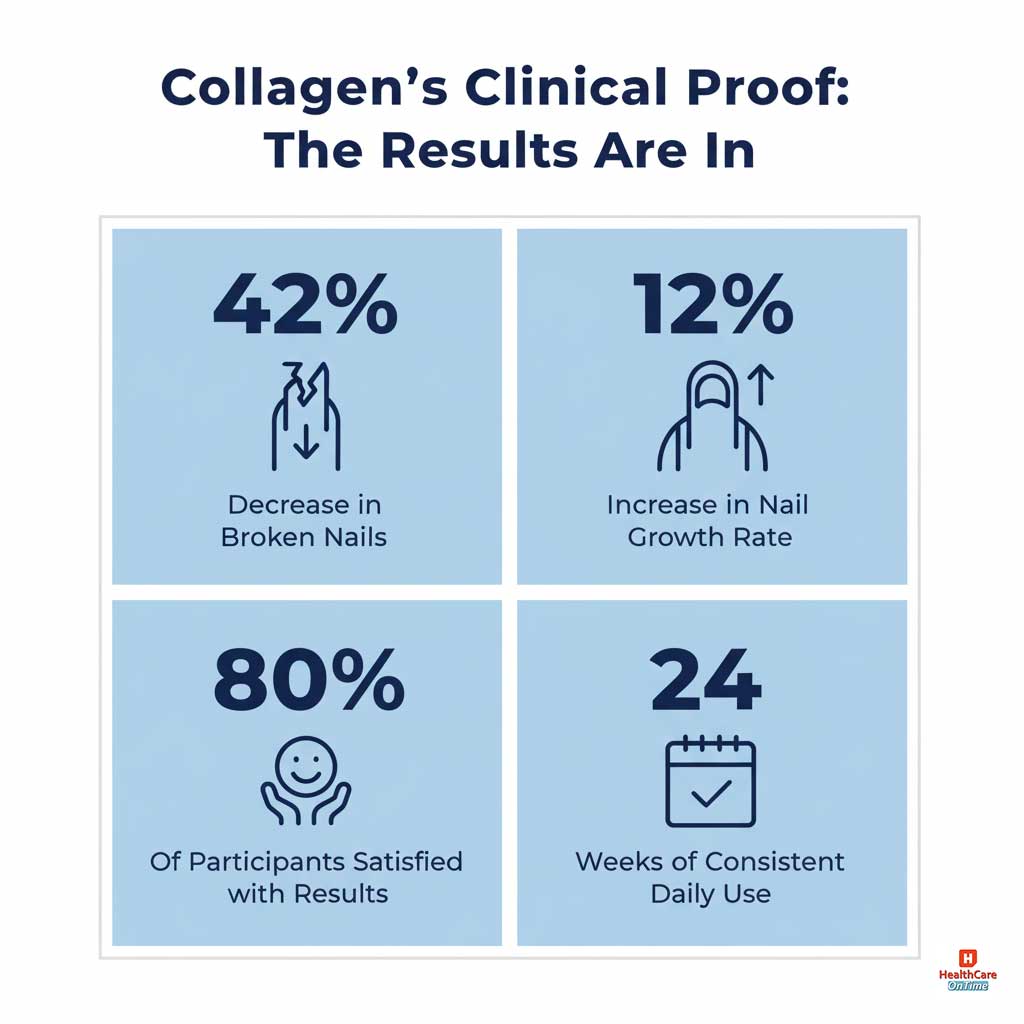
For years, the benefits of collagen for nails were largely anecdotal. However, recent clinical research has provided compelling data, solidifying its position as a leading contender for the best supplement for nail growth. The most significant piece of nail growth supplements evidence comes from a 2017 study published in the Journal of Cosmetic Dermatology.
This study specifically investigated the effects of daily supplementation with bioactive collagen peptides on nails over a period of 24 weeks. The results were both statistically significant and highly encouraging for those struggling with nail health.
Key Study Findings:
- Significant Decrease in Breakage: Participants experienced a remarkable 42% reduction in the frequency of broken nails.
- Accelerated Nail Growth: The rate of nail growth increased by 12%.
- Improved Brittleness Symptoms: An overwhelming 80% of participants agreed that the use of collagen peptides improved their nails’ appearance and were completely satisfied with the performance of the treatment.
- Lasting Effects: Even four weeks after stopping the supplement, the benefits were still apparent, suggesting a lasting improvement in nail structure.
This study provided the first robust clinical proof that a targeted dose of collagen for nails could produce measurable and visible improvements, shifting the conversation from speculation to evidence-based fact.
Bioactive Collagen Peptides: Why Hydrolyzed Matters
Not all collagen is created equal. The collagen used in the successful clinical trial was in a specific form known as hydrolyzed collagen or collagen peptides. In its native form, collagen is a very large molecule that is difficult for the body to digest and absorb.
The process of hydrolysis uses enzymes to break down these large collagen molecules into smaller, more bioavailable chains of amino acids called peptides. This makes it far easier for your body to absorb and transport these building blocks to where they are needed most, such as the nail bed. When searching for a supplement, focusing on collagen peptides type I/III for nails is ideal, as these are the most prevalent types found in skin and connective tissues. Using these specific forms is crucial when seeking the best collagen for brittle nails.
How Long Does Collagen Take to Strengthen Nails? A Realistic Results Timeline
While the clinical data is exciting, it’s important to approach supplementation with patience and realistic expectations. Improving nail health is a marathon, not a sprint, as it takes time for the newly formed, stronger nail to grow out from the matrix. The question of how long does collagen take to strengthen nails has a clear, data-backed answer.
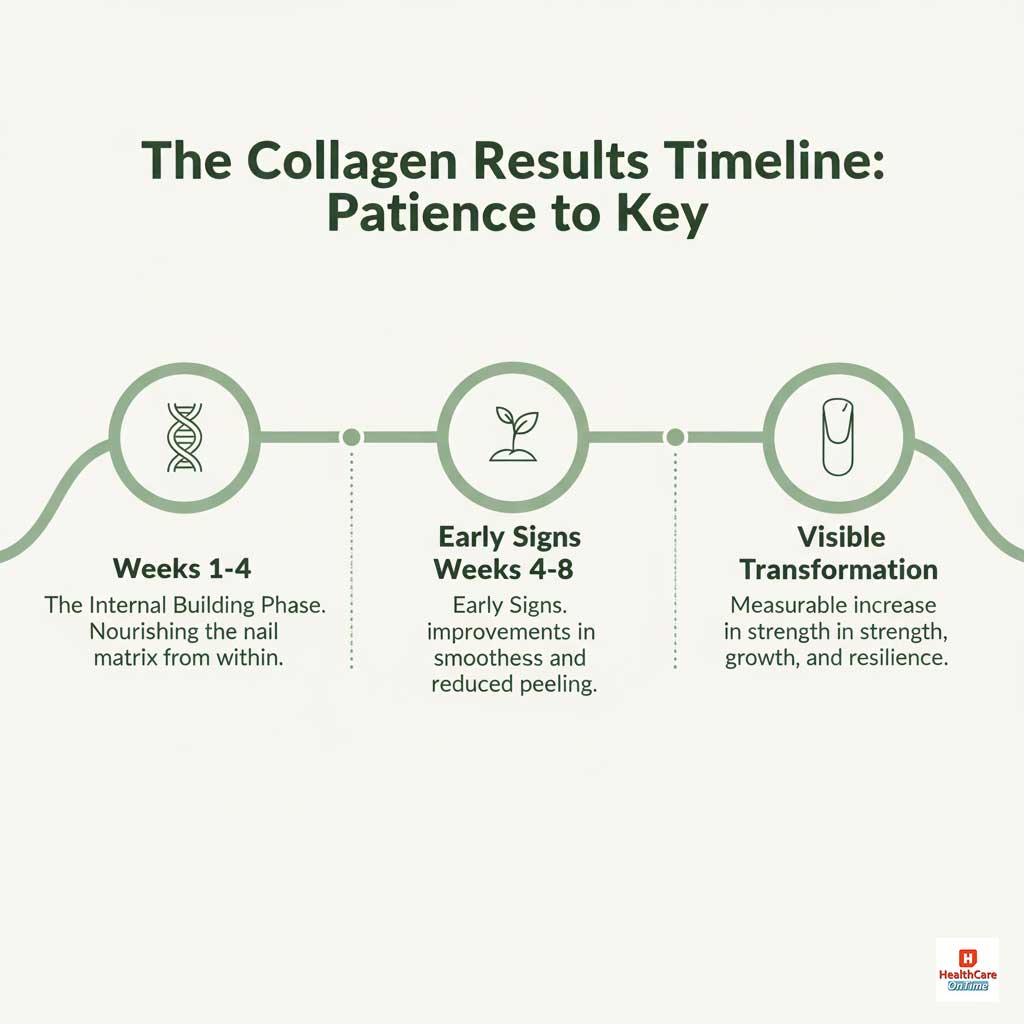
Based on the clinical evidence and user reports, here is a realistic timeline:
- Weeks 1-4: The Internal Building Phase. During the first month, the absorbed collagen peptides are working internally to nourish the nail matrix and dermal layers of the nail bed. You are unlikely to see any visible changes during this period.
- Weeks 4-8: Early Signs of Improvement. Some users may begin to notice subtle improvements, such as a decrease in peeling at the nail tips or a smoother nail texture. The foundation for stronger nails is being laid.
- Weeks 12-24: Measurable, Visible Results. This is the “sweet spot” identified in the clinical study. By this point, the stronger nail produced by the nourished matrix has had time to grow out. You should observe a significant reduction in breakage, improved thickness, and a faster growth rate.
Consistency is paramount. To see these results, a daily dose of collagen for nails of at least 2.5 grams, as used in the study, is recommended.
The Biotin Reality Check: Separating Hype from Clinical Proof
Biotin, also known as vitamin B7, has been marketed for decades as the ultimate solution for hair, skin, and nail health. It plays a vital role as a coenzyme in the body, supporting the metabolism of fatty acids, glucose, and the amino acids that make up keratin. Its reputation is built on this essential function, but the marketing often omits a critical piece of information.
The Evidence Gap: Why Biotin for Brittle Nails Is Not a Silver Bullet
The crucial caveat to biotin’s effectiveness is this: its benefits for nail health are primarily seen only in individuals with a true, clinical biotin deficiency. While the symptoms of a deficiency do include brittle nails, this condition is exceedingly rare in the United States and other developed nations. Most people get more than enough biotin from a balanced diet that includes foods like eggs, salmon, pork, and avocado.
For the vast majority of the population with normal biotin levels, the nail growth supplements evidence for high-dose biotin is weak and largely unconvincing. While some small, older studies suggested a potential benefit, they lacked the rigorous controls of modern clinical trials. The consensus among many dermatologists is that if you are not deficient, taking megadoses of biotin for brittle nails is unlikely to yield any significant improvements. It’s a classic case of more not always being better.
CRITICAL SAFETY ALERT: How High-Dose Biotin Can Invalidate Life-Saving Lab Tests
Beyond its limited efficacy, the widespread use of high-dose biotin supplements presents a serious and often overlooked health risk: biotin interference with lab tests. This is not a minor inconvenience; it can lead to misdiagnoses of life-threatening conditions. The U.S. Food and Drug Administration (FDA) has issued an official safety communication on this topic due to numerous adverse event reports.
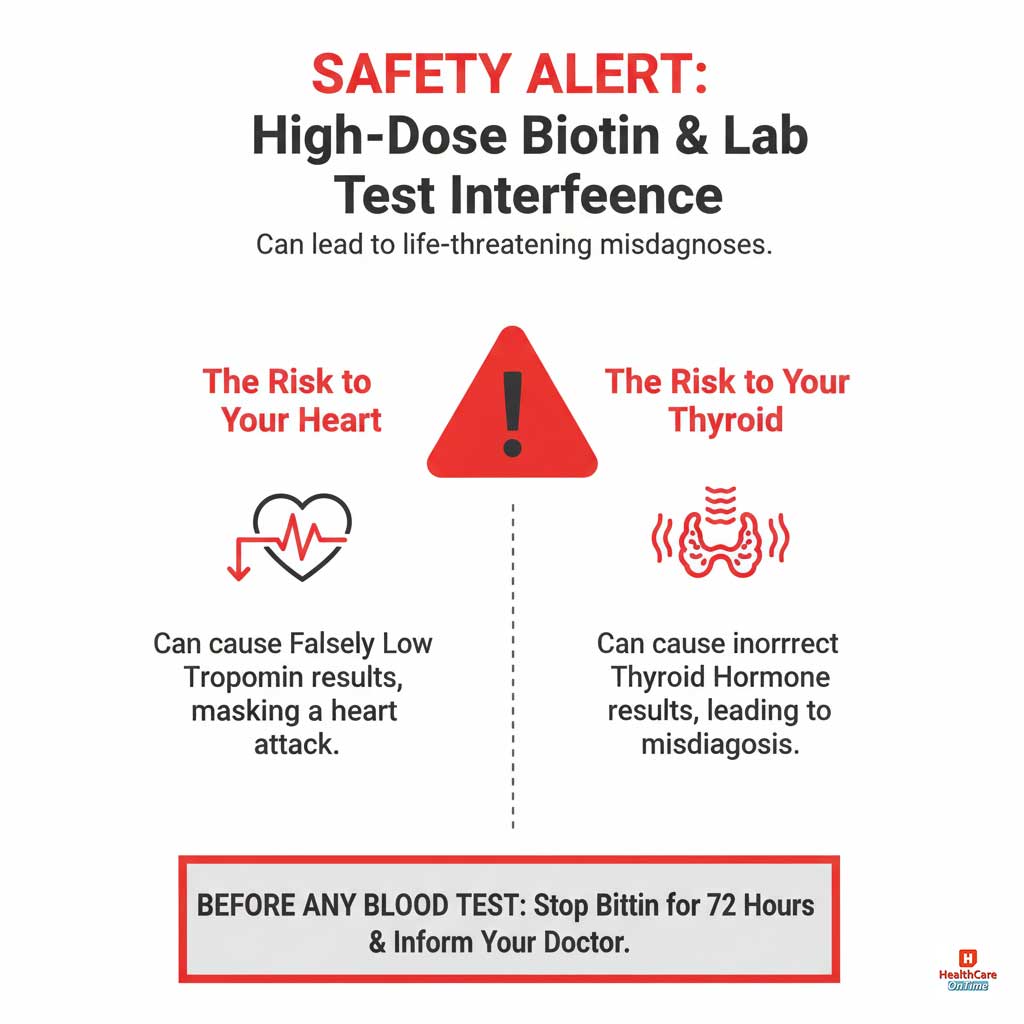
High levels of biotin in the blood can interfere with hormone and protein-based lab tests, causing results to be either falsely high or falsely low.
The Most Dangerous Interactions Include:
- Troponin Levels: Troponin is the key biomarker used to diagnose a heart attack. Biotin can cause a falsely low troponin result, which could lead doctors to mistakenly rule out a heart attack in a patient who is actively having one. This has been linked to at least one reported death.
- Thyroid Hormones: Biotin can significantly skew Thyroid Stimulating Hormone (TSH), T3, and T4 levels, leading to an incorrect diagnosis of Graves’ disease or hypothyroidism. This can result in patients being prescribed improper treatments or undergoing unnecessary procedures.
This significant risk is a major factor in the biotin vs collagen for nails debate. While collagen is generally regarded as safe, the potential for harm from high-dose biotin is real and must be taken seriously.
| Pre-Lab Test Safety Checklist |
| To prevent the dangerous consequences of biotin interference with lab tests, you must follow these steps: |
| 1. Stop All Biotin Supplementation: Cease taking any supplements containing biotin for at least 72 hours (3 days) before any blood work. |
| 2. Read Every Label: Biotin is often a hidden ingredient in multivitamins and “Hair, Skin, & Nails” formulas. Check all your labels. |
| 3. Inform Your Healthcare Team: Always tell your doctor, phlebotomist, and lab technician that you have been taking biotin. |
Biotin vs. Collagen for Nails: The Head-to-Head Verdict
Now that we have examined the science, the evidence, and the safety profiles of both supplements, we can make a direct comparison to determine the best supplement for nail growth. The conclusion becomes clear when the facts are laid out side-by-side, directly addressing the core question of biotin vs collagen for nails.
Comparison Table: Which Supplement Wins for Nail Growth?
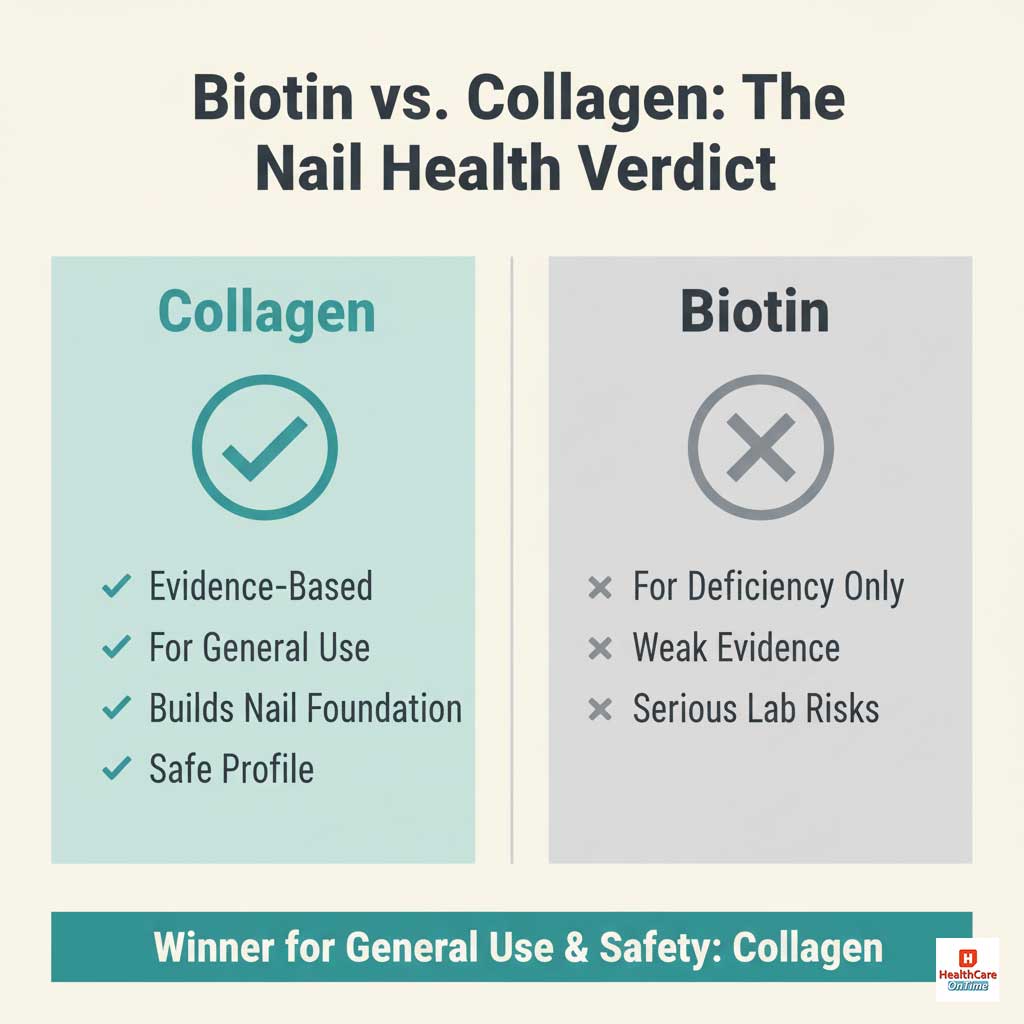
This table provides a clear, concise breakdown of the key differences, helping you make an informed decision based on your goals and health profile.
| Feature | Collagen (Bioactive Peptides) | Biotin (High-Dose Supplements) |
| Primary Mechanism | Provides essential amino acid building blocks to support the nail matrix and bed. | Acts as a coenzyme to help produce keratin; only useful if this process is broken due to deficiency. |
| Best Use Case | General population seeking stronger nails, faster growth, and reduced brittleness. | Individuals with a medically diagnosed, rare biotin deficiency causing brittle nails. |
| Strength of Evidence | Supported by recent, direct clinical trials showing measurable improvements in nail health. | Strong evidence is limited to deficiency states. Weak to non-existent for the general population. |
| Effective Dose | 2.5 grams to 10 grams daily. | 30 mcg is the RDA. Supplements often contain 5,000-10,000 mcg, which pose lab risks. |
| Safety Profile | Generally very safe; rare instances of mild digestive upset. | High doses carry a significant risk of interfering with critical medical lab tests. |
| Verdict | Winner for General Use. Safer and more evidence-based for improving nail health. | Niche and Risky. Only to be used under medical supervision if deficient. |
The analysis clearly shows that collagen for brittle nails is the superior, evidence-based choice for the vast majority of people.
How to Effectively Use Supplements for Nail Growth
Understanding the science is the first step; applying it effectively is the next. This section provides actionable tips and strategies to help you get the most out of your nail health journey, ensuring you are using the right supplements in the right way.
Can I Take Biotin and Collagen Together? The Stacking Strategy
A common question is, can I take biotin and collagen together? The short answer is yes. From a biochemical standpoint, they work through different mechanisms and do not compete for absorption. Taking them together is generally considered safe.
However, the more important question is should you? Given the overwhelming evidence favoring collagen and the significant risks associated with high-dose biotin, a more strategic approach is warranted. For most individuals, focusing your investment and attention on a high-quality collagen supplement is the most logical and effective path. If you are concerned about a potential biotin deficiency, the correct course of action is to get tested by your doctor, not to self-prescribe a megadose.
Optimizing Absorption: Powders vs. Capsules vs. Gummies
The form of your supplement can impact its effectiveness and convenience. When choosing a collagen product, you’ll typically find three main options.
| Form | Absorption Rate | Convenience | Cost-Effectiveness |
| Powder (Hydrolyzed) | Generally highest, as hydrolyzed collagen for nails is readily available for absorption. | High (mixes into coffee, smoothies). Can be messy. | Often the most cost-effective per gram. |
| Capsules | Good, but may be slightly slower as the capsule must dissolve. | Highest (easy to travel with, no taste). | Can be more expensive per gram. |
| Gummies | Variable; often contains less collagen and more sugar/fillers. | High (tasty and easy to take). | Usually the least cost-effective; lowest dose. |
For maximum efficacy, powdered hydrolyzed collagen peptides are often recommended by experts as they offer the best combination of absorption and value.
The Synergy Bonus: Why You Need Vitamin C With Collagen
To truly maximize the benefits of your collagen supplement, you must ensure you have adequate levels of Vitamin C. This essential vitamin is a critical cofactor in collagen synthesis, meaning your body cannot effectively produce or utilize collagen without it.
Think of vitamin C with collagen as the key that unlocks its full potential. It helps link the amino acids together to form strong, stable collagen fibrils. You can achieve this synergy by:
- Taking your collagen powder with a glass of orange juice.
- Blending it into a smoothie with vitamin C-rich fruits like strawberries or kiwi.
- Ensuring your daily diet is rich in sources like bell peppers, broccoli, and citrus fruits.
Beyond Supplements: Identifying the Root Cause of Brittle Nails
While supplements can be highly effective, it’s crucial to view them as part of a holistic approach. True topical authority on nail health means acknowledging that supplements cannot fix an underlying medical issue. If you have persistent nail problems, it’s vital to investigate other potential causes.
The Ferritin Factor: Could Iron Deficiency Be the Culprit?
One of the most common, yet often overlooked, causes of brittle, weak, and peeling nails is iron deficiency. Specifically, a low level of ferritin—the protein that stores iron in your body—is strongly linked to poor nail health. A classic sign of low ferritin and brittle nails is a condition called koilonychia, where the nails become thin and concave, like a spoon.
If your nails are not improving despite your best efforts, ask your doctor for a complete blood count (CBC) and, most importantly, a ferritin test. Correcting an iron deficiency can often resolve nail issues without the need for any other supplements.
The Importance of Diet: Protein Intake for Nail Health
Since nails are made of protein, an inadequate protein intake for nail health can directly lead to weakness. Your body will prioritize sending protein to essential life-sustaining functions before it sends it to your hair and nails. Ensure your diet includes sufficient high-quality protein from sources like lean meats, fish, dairy, legumes, and tofu.
When to See a Doctor: Thyroid Issues and Other Medical Conditions
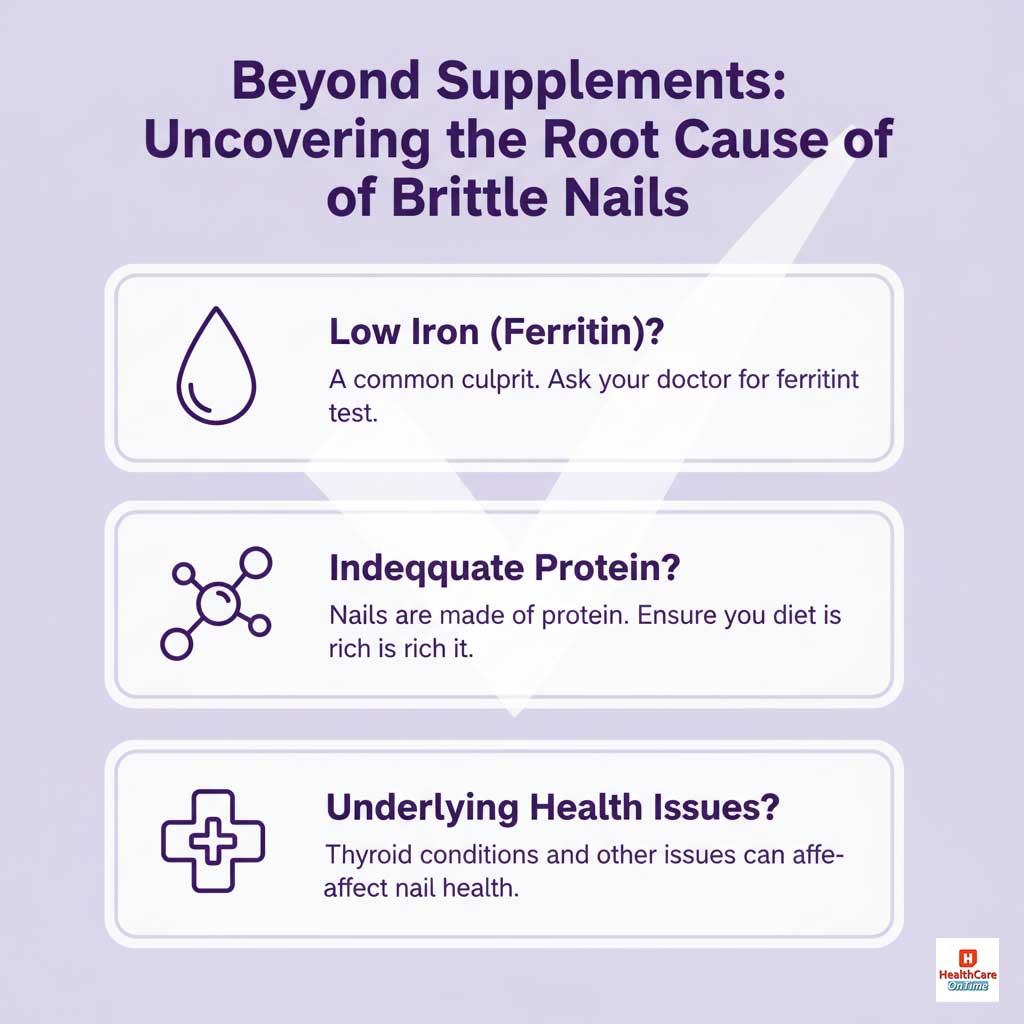
Persistent nail problems can sometimes be a window into your overall health. Conditions like hypothyroidism and hyperthyroidism can cause nails to become brittle, dry, and crumbly. Other autoimmune conditions and skin disorders can also manifest in the nails. If your nail issues are accompanied by other symptoms like fatigue, weight changes, or skin rashes, a medical evaluation is essential.
Summary & Key Takeaways: Your Action Plan for Healthier Nails
Navigating the world of supplements can be complex, but the data on the biotin vs collagen for nails debate provides a clear path forward. For those seeking stronger, longer, and more resilient nails, a targeted and informed approach is the key to success.

Here is your action plan based on the most current nail growth supplements evidence:
- Prioritize Collagen: For the general population, collagen for brittle nails is the more effective, safer, and evidence-backed choice.
- Choose the Right Type and Dose: Look for a supplement containing hydrolyzed collagen peptides type I/III and commit to a daily dose of collagen for nails of at least 2.5 grams.
- Be Cautious with Biotin: Reserve biotin for brittle nails only for cases of confirmed deficiency under medical supervision. Always be aware of the serious risk of biotin interference with lab tests.
- Investigate Underlying Causes: Don’t overlook other potential issues. Rule out low ferritin brittle nails and ensure your protein intake for nail health is adequate.
- Be Patient and Consistent: Remember the realistic timeline. It takes 3-6 months of consistent daily use to see the most significant and lasting results from collagen supplementation.
Ultimately, the most effective strategy for achieving healthier nails is one that combines targeted, evidence-based supplementation with a balanced diet, proper medical care, and a healthy dose of patience.
Frequently Asked Questions (FAQs)
Which is better for nail growth: biotin or collagen?
Collagen is demonstrably better for the majority of people. It has strong clinical evidence showing it can increase nail growth and significantly reduce breakage, while biotin’s effectiveness is primarily limited to individuals with a rare, diagnosed biotin deficiency.
How long does collagen take to strengthen nails?
While some subtle improvements may appear in 4-8 weeks, the clinical studies show that significant, measurable results—such as a 42% reduction in breakage and a 12% increase in growth—typically take 12 to 24 weeks of consistent daily supplementation.
Does biotin help nails if I’m not deficient?
The current scientific evidence suggests it is highly unlikely. Most dermatologists and researchers agree that if your biotin levels are already normal, taking high-dose supplements will provide little to no additional benefit for your nail strength.
What dose of collagen works for brittle nails?
The most frequently studied and effective dose is 2.5 grams of bioactive or hydrolyzed collagen peptides taken daily. Doses up to 10 grams per day are also widely used and considered safe for improving nail health.
What is the best collagen type (I vs. I/III) for nails?
Type I and Type III collagen are the best choices for nail health. These are the most abundant types of collagen found in your skin and the connective tissues of the nail bed, providing the direct structural support needed for strong nails.
Biotin vs. collagen: capsules, powders, or gummies—what absorbs best?
For collagen, powdered hydrolyzed peptides generally offer the best absorption because they are already broken down into small, easily digestible amino acid chains. The form of biotin does not significantly impact its absorption, but the risks remain the same regardless of form.
Can I take collagen and biotin together?
Yes, it is safe to take them together as they function differently and do not interfere with each other’s absorption. However, for most people, the more effective strategy is to focus on a proven collagen supplement and only add biotin if a deficiency is diagnosed by a doctor.
What’s the best time to take collagen for nail growth?
There is no “best” time. The most critical factor is consistency. Whether you take it in your morning coffee, a midday smoothie, or evening tea, the key is to take it every single day to allow the amino acids to accumulate and support the nail matrix.
What are signs your nails need iron or protein instead of biotin?
If your nails are not just brittle but also thin, peeling, or have a concave “spoon” shape (koilonychia), it is a strong indicator of iron deficiency (low ferritin). Similarly, persistent weakness and slow growth can be a sign of inadequate protein intake in your diet.
Pre-blood test: how long should I pause biotin supplements?
It is critically important to stop taking any supplement containing biotin for at least 72 hours (3 days) before undergoing any blood tests. You must also inform your doctor and the lab technician that you have been taking biotin to prevent a potentially life-threatening misdiagnosis.
Does marine collagen work as well as bovine collagen for nails?
Yes, both marine and bovine collagen can be effective as they are both rich in Type I collagen. Marine collagen is absorbed very efficiently, while bovine collagen also contains Type III. The choice between them often comes down to dietary preference or allergies.
Are there any vegan alternatives to collagen for nail growth?
Since collagen is an animal product, there are no direct vegan sources. However, there are “collagen-boosting” supplements that provide the key ingredients the body needs to produce its own collagen, such as vitamin C, zinc, and specific amino acids like glycine and proline.