Standing in the snack aisle of a standard American grocery store often feels like navigating a nutritional minefield, especially when you are actively trying to lose weight. You pick up a bag of trail mix, flip it over to check the nutrition facts, and your heart sinks when you see the calorie count. For decades, the diet industry demonized fat, conditioning us to believe that eating nuts was a guaranteed way to derail a diet. We were told to stick to rice cakes, celery sticks, and fat-free pretzels if we wanted to shed pounds. That advice was not just misleading; it was scientifically flawed and detrimental to long-term metabolic health.
Table of Contents
Finding the best low calorie nuts for weight loss is not about eliminating fat entirely; it is about understanding the nuance of nutrient density, bioaccessibility, and how your body processes different types of food matrices. If you are currently maintaining a calorie deficit, you might think you need to avoid energy-dense foods altogether. However, modern nutritional science and large-scale cohort studies consistently show that incorporating specific low calorie nuts into your daily routine can actually accelerate fat burning. The powerful combination of plant-based protein, dietary fiber, and healthy monounsaturated fats keeps you satiated for hours, preventing the dangerous blood sugar crashes that lead to late-night binge eating.
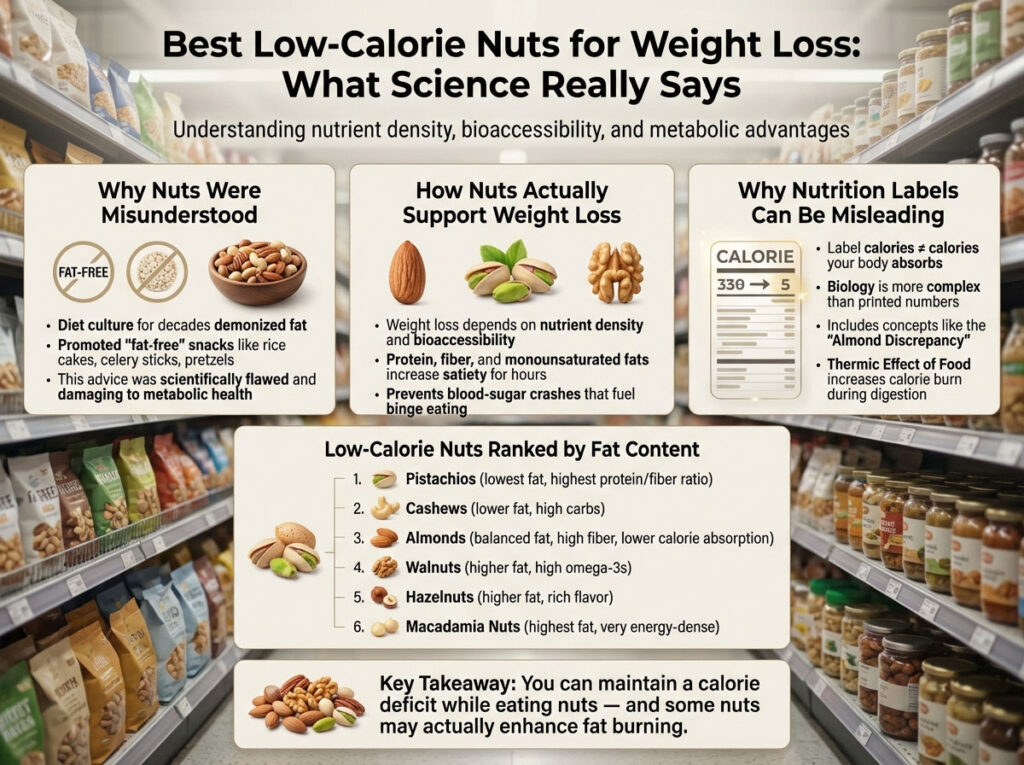
The confusion stems from the oversimplification of the nutrition label. Most people assume that if a label says 170 calories, their body absorbs exactly 170 calories. Biology is rarely that simple. Through concepts like the “Almond Discrepancy” and the thermic effect of food, we now know that some nuts are metabolically superior to others. This comprehensive guide goes far beyond generic advice. We will explore the definitive low calorie nuts list, ranked strictly by fat content, reveal which specific nuts can help you burn belly fat, and explain why your body might be burning more calories digesting nuts than you ever realized.
The Metabolic Science Behind Low Calorie Nuts for Weight Loss
Before we dive into the specific rankings, it is crucial to understand the biological mechanisms at play. How can eating high-fat foods possibly help you lose weight? The answer lies in the complex interaction between the food matrix—the physical structure of the nut—and your digestive system. Nuts for weight loss work because they target the biological mechanisms of hunger regulation and metabolic expenditure rather than just providing empty energy.
The Almond Discrepancy: Why Calories in Nuts Per Ounce Are Often Lower Than Labels Claim
You have likely heard the phrase “calories in, calories out.” While the laws of thermodynamics are true, the human digestive system is not a perfect bomb calorimeter. When you eat highly processed foods like chips or crackers, your body absorbs nearly 100% of the energy because the structure has already been broken down. Low calorie nuts are different. Their cellular structure is rigid, fibrous, and difficult for our digestive enzymes to penetrate completely.
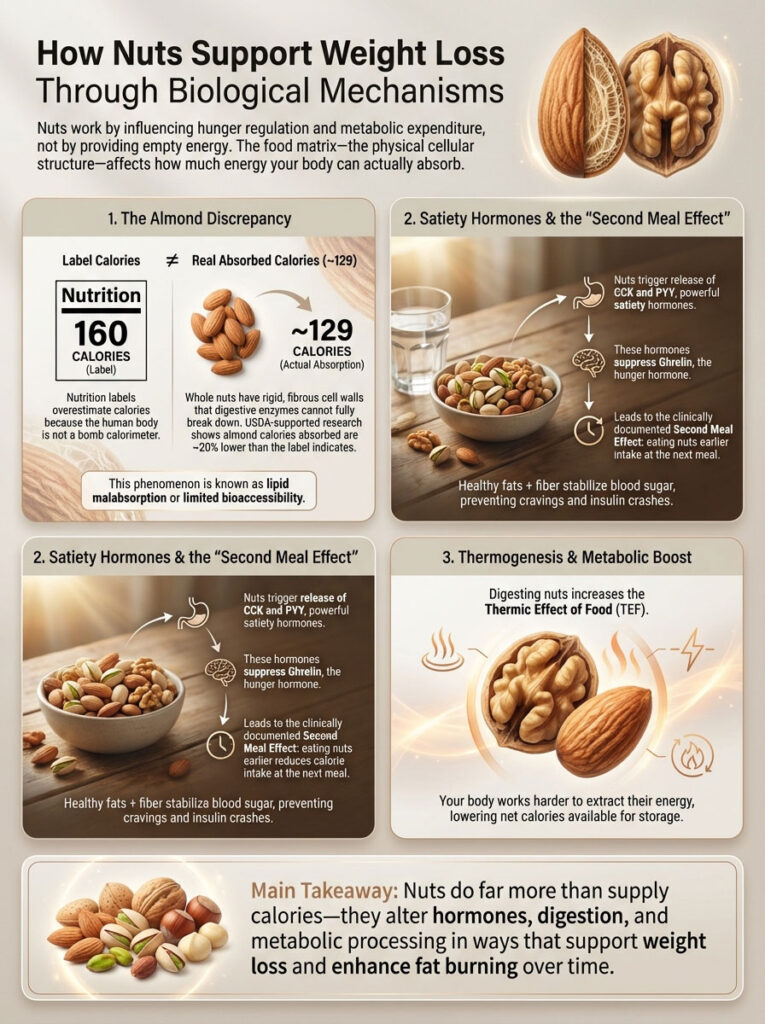
This phenomenon is most rigorously documented regarding almonds for weight loss, leading to what researchers call the “Almond Discrepancy.” Research supported by the USDA has highlighted a massive gap between label claims and biological reality. These studies indicate that because of the fibrous cell walls in whole almonds, we excrete a portion of the fat rather than absorbing it. We absorb approximately 20% fewer calories than the package states. A serving listed as 160 calories might only result in ~129 calories actually entering your bloodstream. This concept, known as “lipid malabsorption” or “limited bioaccessibility,” applies to many whole, raw nuts, making them far friendlier for a calorie deficit than their standard nutrition labels suggest.
Satiety Hormones and the “Second Meal Effect” of High Protein Nuts
One of the primary reasons diets fail is hunger. This is where satiety index foods become your most powerful tool. Consuming nuts triggers the release of potent satiety hormones in the gut, specifically cholecystokinin (CCK) and peptide YY (PYY). These chemical messengers travel to the brain to signal fullness and stop the release of Ghrelin, the hunger hormone.
This hormonal cascade leads to what nutritionists call the “Second Meal Effect.” If you consume a serving of high protein low calorie nuts as a mid-afternoon snack, clinical data shows you are likely to eat significantly less at your subsequent meal (dinner). The blood sugar stabilization provided by the healthy fats and fiber prevents the insulin spikes and subsequent crashes that usually drive evening cravings for sugary carbohydrates. You are not just eating a snack; you are biologically engineering your appetite regulation for the rest of the day.
Thermogenesis and Metabolism Boosting Foods for Fat Burning
Your body requires energy to digest, absorb, and process nutrients. This is called the Thermic Effect of Food (TEF). Protein has the highest thermic effect, followed by complex carbohydrates and fats. Because whole nuts are complex physical structures requiring significant mechanical chewing and enzymatic breakdown, they boost your Resting Energy Expenditure (REE).
When you are searching for metabolism boosting foods, raw nuts should be high on the list. Consuming nuts that burn belly fat, such as walnuts and almonds, increases thermogenesis more than eating the same amount of calories from refined carbohydrates or liquid fats. Your body has to work harder to access the energy in a nut, meaning the “net” calories available for storage are lower. This small metabolic advantage, compounded over weeks and months of consistent dieting, can result in tangible weight loss without reducing food volume.
Comprehensive Low Calorie Nuts List Ranked by Fat Content and Caloric Density
When you are strictly tracking macros, fat grams matter because fat contains 9 calories per gram, whereas protein and carbs contain only 4. To help you make the best choice, we have analyzed data from the USDA FoodData Central database. This is the low calorie nuts list every dieter needs, ranked from the absolute lowest fat nuts to the highest fat options. We are comparing standard 1-ounce (28g) servings.
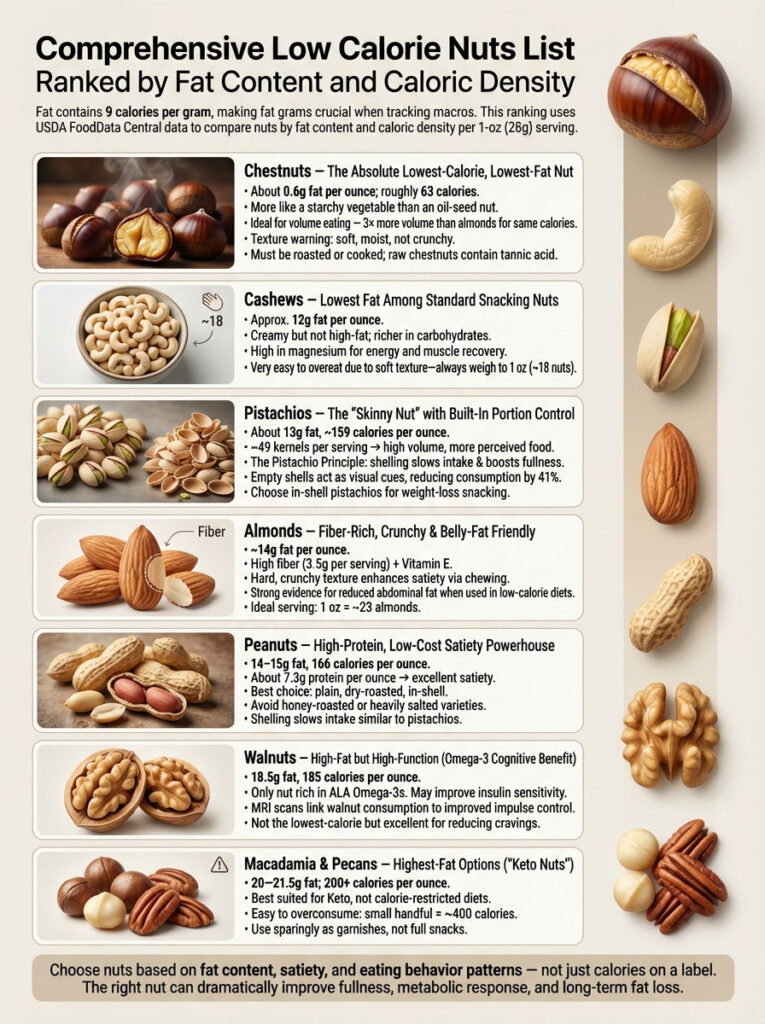
Chestnuts: The Absolute Lowest Calorie Nut and Fat-Free Exception
Chestnuts are the undisputed champion of the lowest calorie nuts category, yet they are often overlooked because they differ significantly from other tree nuts. While most nuts are oil-seeds, chestnuts are starchy. With only about 0.6g of fat per ounce and roughly 63 calories, they are chemically more similar to a brown rice or sweet potato profile than a walnut or pecan profile.
If your primary goal is volume eating—eating as much physical food as possible for the least amount of energy—chestnuts lowest calorie nut status is undeniable. You can eat three times the volume of chestnuts for the same calories as one ounce of almonds.
Texture Warning & Preparation Note:
It is crucial to manage your expectations before buying these. Unlike crunchy snacking nuts like almonds or peanuts that satisfy a craving for chips, chestnuts are soft, moist, and starchy. Do not expect a crunch. Furthermore, they must be roasted or cooked before eating. Raw chestnuts contain high levels of tannic acid, which can cause stomach aches and digestive distress. They are best viewed as a warm, roasted vegetable-like treat or a meal ingredient, rather than a grab-and-go crunchy snack.
Cashews: The Lowest Fat Option Among Standard Creamy Nuts
Cashews surprisingly lead the pack for standard, oil-rich snacking nuts. With approximately 12g of fat per ounce, they are the lowest fat nuts among the popular snacking varieties like almonds and walnuts. Many people assume their rich, buttery texture means they are the fattiest, but this is a misconception.
Cashews nutrition facts reveal they are higher in carbohydrates and lower in fat. They are also rich in magnesium, which is crucial for energy production and muscle recovery. However, a word of caution: their soft texture makes them incredibly easy to overeat. Unlike almonds which require vigorous chewing, cashews break down easily, allowing you to consume 300 calories in minutes if you aren’t careful. Always weigh your cashews for weight loss to exactly 1 ounce (approx. 18 nuts).
Pistachios: The “Skinny Nut” for Volume Eating and Visual Cues
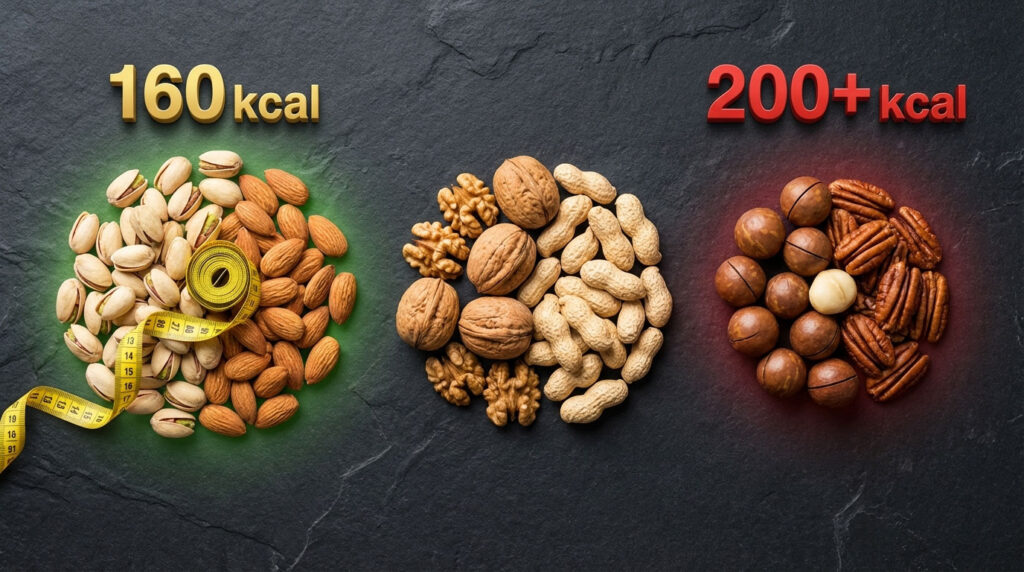
Pistachios are frequently marketed as the “skinny nut,” and for good reason. They contain about 13g of fat per ounce and roughly 159 calories. But the real magic of pistachios for weight loss lies in the volume count. A single one-ounce serving offers roughly 49 kernels. Compare that to just 14 walnut halves or 23 almonds.
This high unit count tricks the brain into thinking you are eating more food. Furthermore, we must consider the “Pistachio Principle.” Behavioral studies suggest that the act of shelling pistachios slows down your eating speed, allowing your brain time to register fullness signals. The pile of empty shells serves as a “visual cue” of consumption. Participants in studies who shelled their own nuts consumed 41% fewer calories compared to those who ate pre-shelled nuts. When looking for lowest calorie nuts to snack on, always buy them in-shell.
Almonds: The Gold Standard for Fiber and Belly Fat Reduction
Almonds sit at the top of the “Skinny Tier” with about 14g of fat. They are arguably the most researched nut regarding metabolic health. Beyond the calorie absorption bonus mentioned earlier, almonds are incredibly high in fiber (3.5g per ounce) and Vitamin E.
Almonds for weight loss are a staple because they are hard and crunchy. This texture requires chewing, which improves satiety signaling. Clinical trials have shown that adding almonds to a low-calorie diet improves weight loss outcomes specifically in the abdominal region. When asking how many almonds should I eat a day to lose weight, the consensus is one ounce, or about 23 almonds. This amount provides enough fat to trigger satiety without overloading your daily caloric intake.
Peanuts: The High Protein Low Calorie Legume Powerhouse
While botanically legumes, peanuts are nutritionally treated as nuts. They generally contain about 14g to 15g of fat per ounce and 166 calories. They are the winner for cost-effective protein, packing nearly 7.3g of protein per ounce.
Peanuts for weight loss are effective because of their high satiety value. However, they are also the most likely to be highly processed. Avoid “honey roasted” or heavily salted varieties. Plain, dry-roasted peanuts in the shell (like those found at baseball games) are excellent because they force you to work for your food, slowing down intake similarly to pistachios.
Walnuts: The Brain-Boosting Omega-3 Rich Option
Walnuts jump up significantly in fat content to about 18.5g per ounce and 185 calories. While higher in calories, they are unique because they are the only tree nut with a significant amount of Alpha-Linolenic Acid (ALA), a plant-based Omega-3 fatty acid.
Walnuts for weight loss work differently than almonds. Research suggests that ALA may improve insulin sensitivity. Furthermore, MRI studies have shown that consuming walnuts activates the insula, a region of the brain involved in impulse control. This means eating walnuts might help you say “no” to cake or junk food later in the day. While they are not the lowest calorie nuts, they are perhaps the most strategic for controlling cravings.
Macadamia Nuts and Pecans: The High Fat “Keto” Options
At the bottom of the ranking are Macadamia Nuts and Pecans. These are delicious but dangerous for a standard calorie-restricted diet. With over 20g to 21.5g of fat and 200+ calories per ounce, they are true calorie bombs.
These are fantastic for the Keto diet where fat is the primary fuel source, but if you are just counting calories, these are technically the worst nuts for weight loss if your portion control is not perfect. A small handful can easily equal 400 calories—the equivalent of a small meal. If you love them, use them as a garnish (chopped on a salad) rather than a snack to eat by the handful.
Detailed Comparison Table of Calories, Fat, and Protein Per Ounce
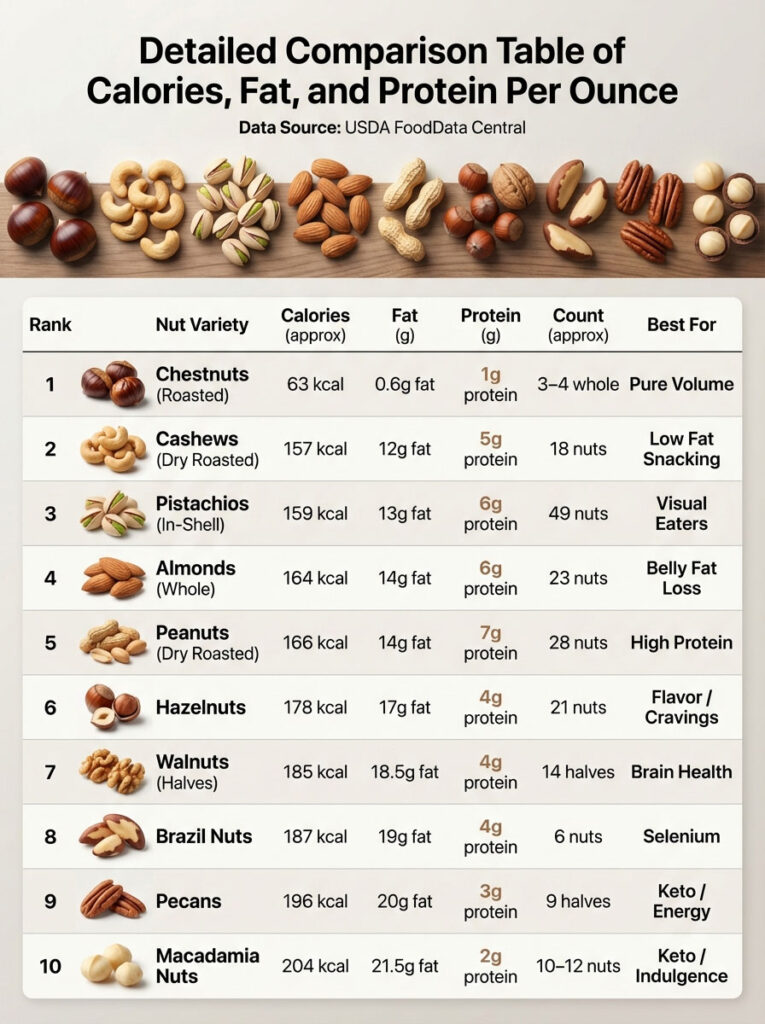
| Rank | Nut Variety | Calories (approx) | Fat (g) | Protein (g) | Count (approx) | Best For |
| 1 | Chestnuts (Roasted) | 63 | 0.6 | 1 | 3-4 whole | Pure Volume |
| 2 | Cashews (Dry Roasted) | 157 | 12 | 5 | 18 nuts | Low Fat Snacking |
| 3 | Pistachios (In-Shell) | 159 | 13 | 6 | 49 nuts | Visual Eaters |
| 4 | Almonds (Whole) | 164 | 14 | 6 | 23 nuts | Belly Fat Loss |
| 5 | Peanuts (Dry Roasted) | 166 | 14 | 7 | 28 nuts | High Protein |
| 6 | Hazelnuts | 178 | 17 | 4 | 21 nuts | Flavor/Cravings |
| 7 | Walnuts (Halves) | 185 | 18.5 | 4 | 14 halves | Brain Health |
| 8 | Brazil Nuts | 187 | 19 | 4 | 6 nuts | Selenium |
| 9 | Pecans | 196 | 20 | 3 | 19 halves | Keto/Energy |
| 10 | Macadamia Nuts | 204 | 21.5 | 2 | 10-12 nuts | Keto/Indulgence |
(Source Data: USDA FoodData Central)
Deep Dive: Specialized Profiles of the Healthiest Low Calorie Nuts
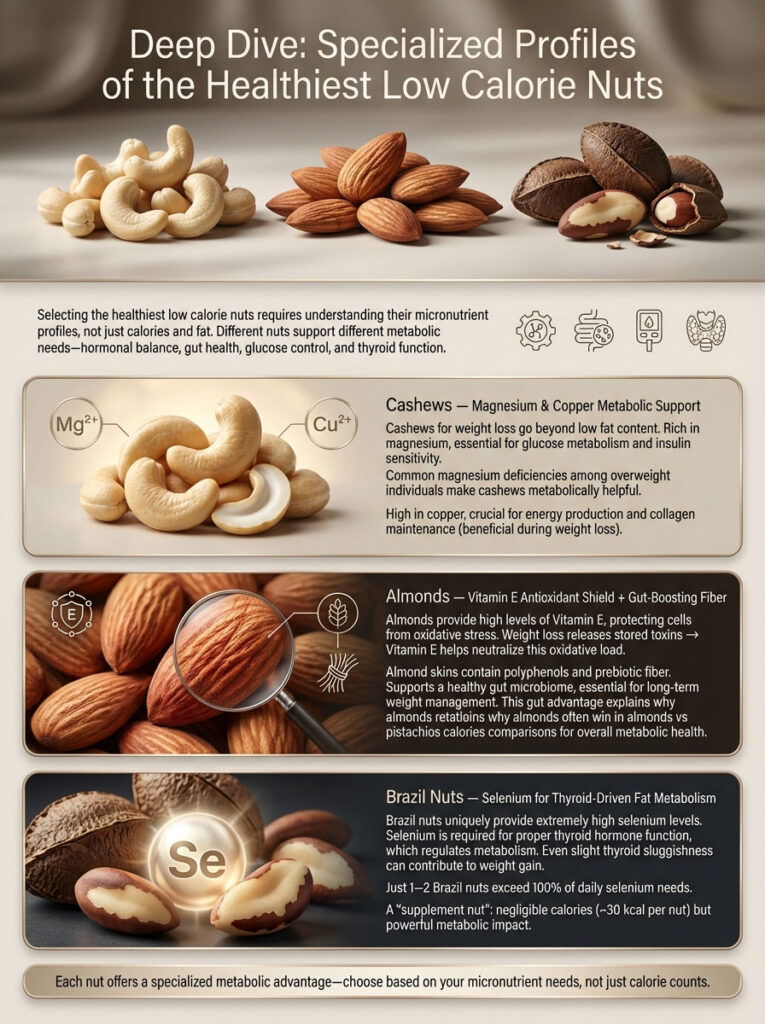
While the ranking above gives you the raw numbers, the nutritional quality extends beyond just calories and fat. To truly optimize your diet, you need to select the healthiest low calorie nuts that align with your specific metabolic needs. Let’s explore the micronutrient profiles of the top contenders.
The Magnesium and Copper Power of Cashews
Cashews for weight loss offer more than just a lower fat count. They are one of the best nut sources of copper and magnesium. Magnesium is essential for glucose metabolism and insulin sensitivity. Many people who are overweight are deficient in magnesium. By restoring magnesium levels, you may help your body process carbohydrates more efficiently. Copper is vital for energy production and maintaining collagen for skin elasticity—a nice bonus when you are losing weight.
The Vitamin E and Fiber Shield of Almonds
Almonds are a powerhouse of Vitamin E, an antioxidant that protects cells from oxidative damage. When you lose weight, your body releases stored toxins from fat cells, increasing oxidative stress. Vitamin E helps combat this. Furthermore, the skin of the almond is rich in polyphenols and fiber. This fiber acts as a prebiotic, feeding the healthy bacteria in your gut. An increasing body of evidence suggests that a healthy gut microbiome is essential for long-term weight management and preventing obesity. This reinforces why almonds vs pistachios calories comparisons often favor almonds for gut health, even if pistachios win on volume.
The Selenium Thyroid Boost of Brazil Nuts
While higher in fat, Brazil Nuts deserve a special mention for weight loss due to Selenium. Your thyroid gland controls your metabolism, and it requires selenium to function correctly. A sluggish thyroid leads to weight gain. Just one or two Brazil nuts provide more than 100% of your daily selenium needs. You don’t need to eat a handful; think of them as a “supplement” nut. Eating just one a day adds negligible calories (~30 kcal) but could significantly support metabolic thyroid function.
Nutrient Density and Satiety Scores: Which Nuts Keep You Fullest?
Not all calories satiate you equally. We can evaluate nuts based on a “Satiety Score” derived from their protein-to-fiber ratio and physical volume. High satiety means you stop eating sooner and stay full longer, which is the ultimate goal of best low calorie nuts for weight loss.
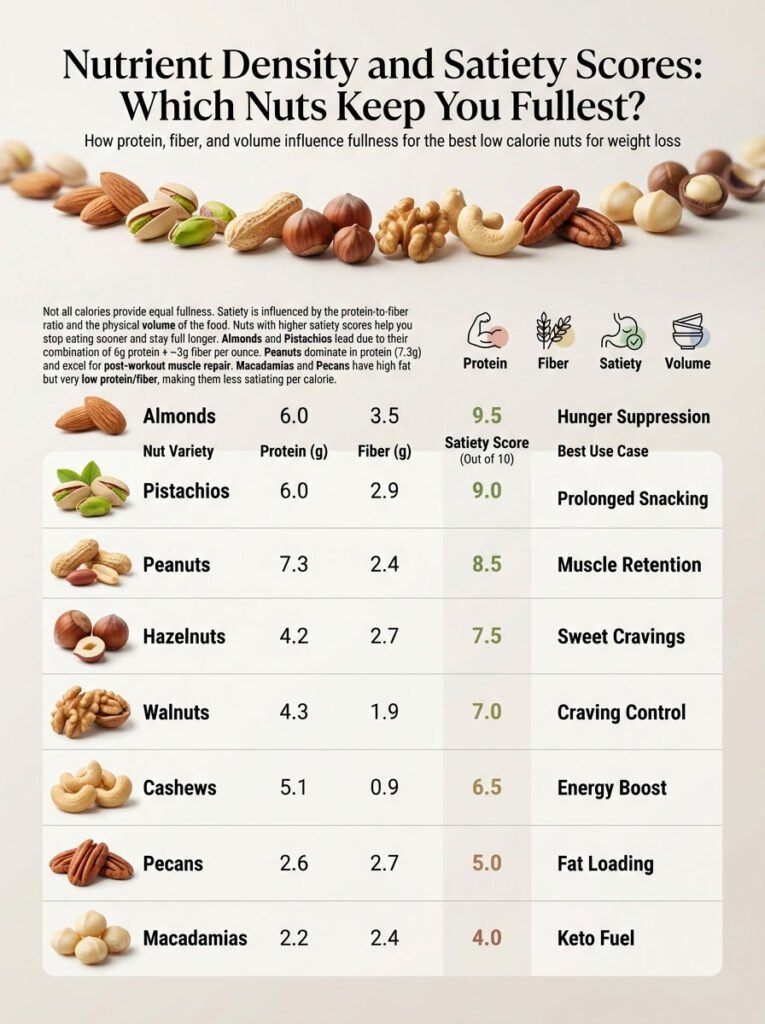
Almonds and Pistachios consistently rank the highest. They offer roughly 6 grams of protein and 3 grams of fiber per ounce. This combination slows gastric emptying. Peanuts are the protein leader (7.3g), making them excellent for post-workout snacks where muscle repair is also a priority. On the other hand, Macadamia nuts and Pecans have high fat but very low protein and fiber. This makes them delicious but biologically less satiating per calorie. You can eat 500 calories of pecans much faster and feel less full than 500 calories of almonds.
Comparison Table of Protein, Fiber, and Satiety Potential
| Nut Variety | Protein (g) | Fiber (g) | Satiety Score (Out of 10) | Best Use Case |
| Almonds | 6.0 | 3.5 | 9.5 | Hunger Suppression |
| Pistachios | 6.0 | 2.9 | 9.0 | Prolonged Snacking |
| Peanuts | 7.3 | 2.4 | 8.5 | Muscle Retention |
| Hazelnuts | 4.2 | 2.7 | 7.5 | Sweet Cravings |
| Walnuts | 4.3 | 1.9 | 7.0 | Craving Control |
| Cashews | 5.1 | 0.9 | 6.5 | Energy Boost |
| Pecans | 2.6 | 2.7 | 5.0 | Fat Loading |
| Macadamias | 2.2 | 2.4 | 4.0 | Keto Fuel |
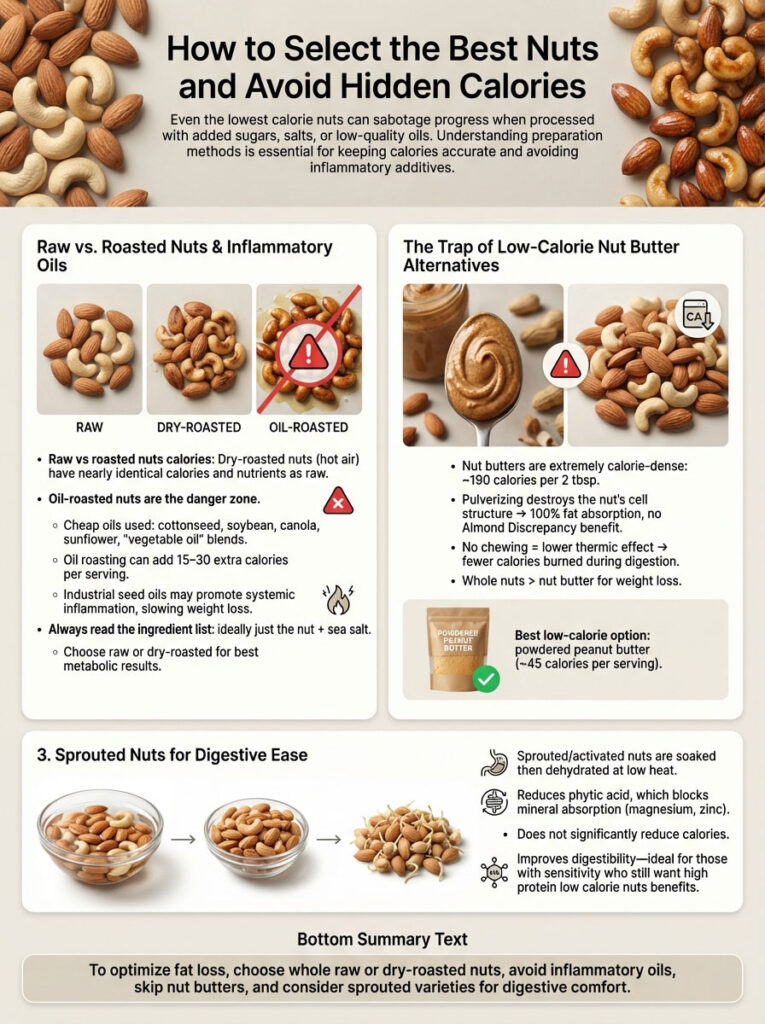
Expert Buying Guide: How to Select the Best Nuts and Avoid Hidden Calories
Even if you choose the lowest calorie nuts, you can sabotage your progress by buying the wrong preparation. The food industry is notorious for taking a healthy product and coating it in sugar, salt, and low-quality oils to increase palatability.
Raw vs. Roasted Nuts Calories and Inflammatory Oils
A common question in the weight loss community is raw vs roasted nuts calories. In terms of the nut itself, dry roasting (using hot air) does not significantly change the calorie count or nutrient profile. Therefore, dry-roasted nuts are perfectly fine.
The danger lies in “oil-roasted” nuts. Many commercial brands roast their nuts in cheap vegetable oils like cottonseed, soybean, or canola oil. This is done to enhance flavor and help salt stick to the nut. This process can add 15 to 30 calories per serving. More importantly, these industrial seed oils can be inflammatory. Systemic inflammation can hinder weight loss and metabolic health. Always read the ingredient label. It should list the nut and perhaps sea salt. If you see “Sunflower Oil,” “Vegetable Oil,” or sugar listed, put it back. For the absolute best results, choose raw or dry-roasted varieties.
The Trap of Low Calorie Nut Butter Alternatives
We often look for low calorie alternatives to nut butter because traditional peanut or almond butter is incredibly calorie-dense. Two tablespoons contain nearly 190 calories, and almost no one stops at exactly two tablespoons. It is a “trigger food” for many.
Furthermore, pulverizing nuts into butter destroys the cellular structure. Remember the “Almond Discrepancy”? It does not apply to butter. When the cell walls are crushed, the fat is fully bioaccessible. Your body absorbs 100% of the calories from nut butter. There is no chewing required, so the thermic effect is significantly lower. For maximum weight loss, whole nuts are always superior to low calorie nut butter. If you must have a spread, look for powdered peanut butters (defatted peanut flour) which offer the taste for a fraction of the calories (roughly 45 calories per serving).
Sprouted Nuts for Enhanced Digestibility
For those who experience bloating or digestive issues with nuts, “sprouted” or “activated” nuts are a growing trend. These are nuts that have been soaked in water to initiate the germination process and then dehydrated at low temperatures. This reduces phytic acid, an “antinutrient” that can bind to minerals like magnesium and zinc, preventing their absorption. While sprouting does not significantly lower calories, it makes the nutrients more available and the nuts easier to digest, which can be beneficial for those with sensitive stomachs who still want the benefits of high protein low calorie nuts.
Practical Strategies for Integrating Low Calorie Nuts into a Weight Loss Diet
Knowing the calories in nuts per ounce is step one. Integrating them into a lifestyle without overeating is step two. Here are actionable strategies to use nuts for weight loss effectively.
Portion Control Tactics and The “No-Bag” Rule
The biggest mistake people make is eating straight from the bag. This is a recipe for disaster. Research shows that people consume significantly more food when it is presented in large packages—a concept known as portion distortion.
To combat this, buy bulk low calorie nuts to save money, but immediately divide them into snack-sized Ziploc bags or small containers. Weigh them out to exactly 1 ounce (28g). You can also buy pre-packaged “100-calorie packs,” though these are often more expensive per ounce. Having a grab-and-go option prevents the mindless “hand-to-mouth” snacking that happens while watching TV or working. If you are eating from a 1lb bag, you have no stopping cue. If you are eating from a small bag, the empty bag is your cue to stop.
Strategic Timing: Eating Nuts Before Bed or Meals
Timing matters. Eating a small portion of nuts before bed can actually support weight loss for some people. If you find yourself waking up hungry or having poor sleep, a small handful of almonds or walnuts (approx 10-12) can provide the fats needed to stabilize blood sugar levels throughout the night. Stable blood sugar leads to better sleep quality, which regulates cortisol and hunger hormones the next day.
Alternatively, consuming nuts 30 minutes before a main meal can induce the “ileal brake.” The fat hits the small intestine and sends a signal to the stomach to slow down emptying. This means you will feel fuller faster when you eat your actual lunch or dinner, leading to a natural reduction in total calories consumed.
Low Calorie Trail Mix Ideas and Macro Pairing
To create the ultimate weight loss snacks, pair your nuts with a high-volume, low-calorie partner. This increases the physical size of the snack without breaking the calorie bank.
- The Fiber Boost: 20 Almonds + 1 Medium Apple. The pectin in the apple and the fiber in almonds create a high satiety matrix.
- The Protein Powerhouse: 10 Walnuts + 1 Cup Non-fat Greek Yogurt. This provides a massive protein boost and probiotics for gut health.
- The Volume Bowl: 30 Pistachios + 1 Cup Strawberries. High antioxidant count, high volume, and keeps your hands busy.
Avoid commercial trail mixes at all costs. They are often loaded with milk chocolate chips, yogurt-covered raisins (which are just sugar), and dried fruit with added sulfites and sugar. These are not low calorie trail mix ideas; they are candy in disguise. Make your own low calorie mixed nuts blend at home using raw ingredients to control the caloric density.
Conclusion and Key Takeaways
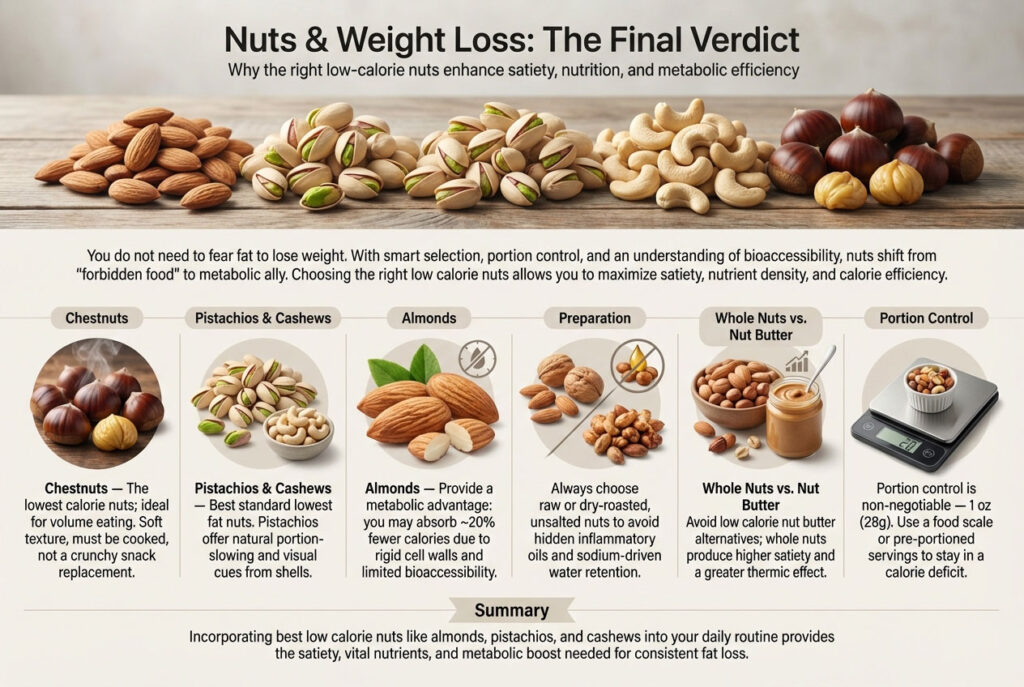
Navigating the world of nutrition can be complex, but the verdict on nuts is clear. You do not need to fear fat to lose weight. By choosing the right low calorie nuts and understanding the science of portion control and bioaccessibility, you can turn a former “forbidden food” into a powerful weight loss tool.
Key Takeaways:
- Chestnuts are the absolute lowest calorie nuts, perfect for volume, but remember they are soft and must be cooked; they do not replace crunchy snacks.
- Pistachios and Cashews are the best “standard” options for lowest fat nuts, with pistachios offering the added benefit of visual cues from shells.
- Almonds offer a metabolic advantage; you likely absorb 20% fewer calories than the label states due to their rigid cell walls.
- Always choose raw or dry-roasted and unsalted to avoid hidden inflammatory oils and water weight gain from sodium.
- Avoid low calorie nut butter in favor of whole nuts to maximize the thermic effect of food and satiety.
- Strict portion control (1 oz/28g) is non-negotiable. Use a food scale or pre-portioned bags to ensure you remain in a deficit.
Incorporating best low calorie nuts like almonds, pistachios, and cashews into your daily routine provides the satiety, vital nutrients, and metabolic boost needed to sustain a calorie deficit long-term, proving that you can indeed eat fat to burn fat.
Frequently Asked Questions (FAQ)
Which nut has the least amount of fat?
The nut with the absolute least amount of fat is the Chestnut, containing only about 0.6g of fat per ounce. Among the more common snacking nuts (tree nuts), Cashews have the lowest fat content at approximately 12g per ounce.
What are the best low calorie nuts to eat everyday?
Almonds and Pistachios are the best choices for daily consumption. They offer the highest protein and fiber counts relative to their calories, ensuring you stay full. Their nutrient profiles support metabolic health and weight management better than higher-fat options like macadamias.
Do nuts break a fast?
Yes, consuming nuts will break a fast. Even a small serving of low calorie nuts contains enough fat and calories to trigger digestive enzymes and raise insulin levels slightly, shifting your body out of the fasted state. It is best to save them for your eating window.
Are cashews good for belly fat?
Cashews can be part of a belly-fat-reducing diet because they are lower in fat than many other nuts and rich in magnesium. However, because they are softer to chew, they are less satiating than almonds. Portion control is essential to ensure they aid in a calorie deficit.
How many almonds is 100 calories?
A 100-calorie serving of almonds is approximately 14 nuts. This is a great number to keep in mind for quick portion control if you do not have a food scale handy.
Are walnuts too high in calories for weight loss?
No, walnuts for weight loss are effective despite being higher in calories (185/oz). Their high content of Omega-3 fatty acids (ALA) helps activate brain regions that control cravings. They are very satiating, meaning you are less likely to snack on junk food later.
Is peanut butter bad for weight loss?
Peanut butter is not “bad,” but it is very calorie-dense and easy to overconsume. It lacks the thermic effect of whole peanuts. For weight loss, whole peanuts are superior to peanut butter because chewing them burns more energy and limits fat absorption.
Can I eat nuts at night?
Yes, a small portion of high protein low calorie nuts like almonds or walnuts before bed can be beneficial. The healthy fats stabilize blood sugar levels overnight, which can improve sleep quality and prevent waking up starving. Just ensure it fits within your daily calorie goals.
What is the lowest calorie nut milk?
Unsweetened almond milk and unsweetened cashew milk are generally the lowest calorie options, often ranging from 25 to 30 calories per cup. They are excellent low calorie alternatives to dairy milk for smoothies and cooking, provided they are free of added sugars.
Why are pistachios called the “skinny nut”?
Pistachios are often called the “skinny nut” because they are one of the lowest calorie nuts per serving and have the lowest fat content next to cashews. Additionally, the need to shell them slows down consumption, leading to reduced calorie intake.
Are roasted nuts less healthy?
Dry-roasted nuts are nutritionally very similar to raw nuts and are healthy. However, nuts roasted in oil contain added inflammatory fats and extra calories. Always check the label for “dry roasted” or stick to raw to ensure they remain healthiest low calorie nuts.
Which nuts are highest in protein?
Peanuts (technically legumes) are the winner with about 7.3g of protein per ounce. Almonds and Pistachios follow closely with about 6g of protein per ounce. These are the best choices for retaining muscle mass while in a calorie deficit.
Disclaimer: The information provided in this article is for educational purposes only and does not constitute medical advice. Always consult with a healthcare professional or registered dietitian before making significant changes to your diet, especially if you have allergies or specific health conditions.
References:
- USDA FoodData Central Database
- Novotny JA, et al. Discrepancy between the Atwater factor predicted and empirically measured energy values of almonds in human diets. Am J Clin Nutr. 2012.
- Painter JE, et al. The effect of pistachio shells as a visual cue in reducing caloric consumption. Appetite. 2011.
- Harvard T.H. Chan School of Public Health – The Nutrition Source: Nuts for the Heart.
- Tan, S.Y., & Dhillon, J. (2014). The effects of increased protein intake on fullness: A meta-analysis and its implications for weight loss. Journal of the Academy of Nutrition and Dietetics.