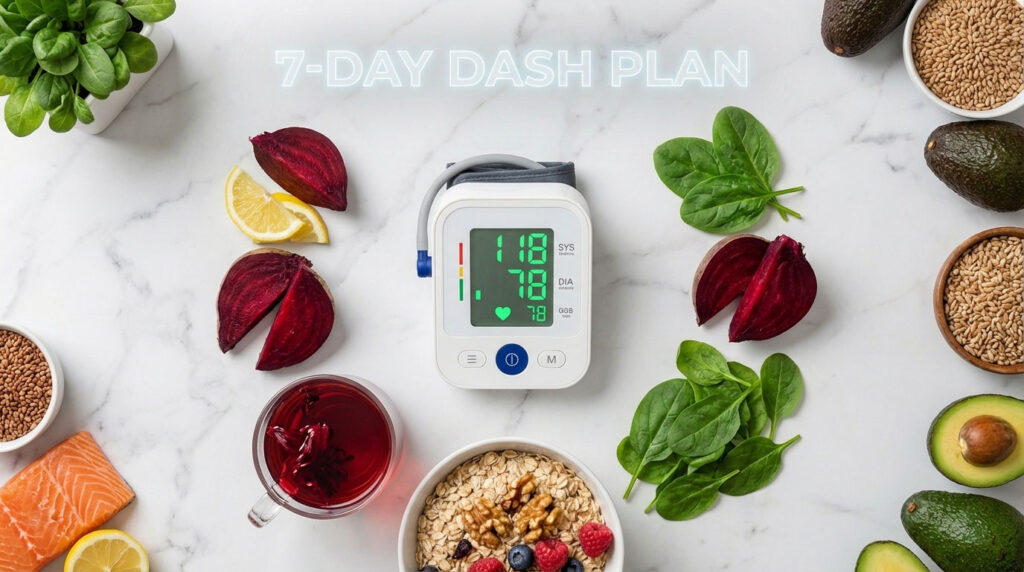
The statistics are sobering, but they do not have to be your destiny. Nearly 47% of adults in the United States are currently living with hypertension, a condition often labeled the “Silent Killer” because it damages arteries for years before symptoms appear. If you are reading this, you or someone you care about is likely part of the 1 in 4 statistic. These are the individuals who are aware of the problem but are struggling to bring their numbers down to a safe range.
Table of Contents
A diagnosis of high blood pressure often feels like a life sentence of bland, boiled food and rigid deprivation. You might be staring at a pamphlet from your doctor while feeling overwhelmed by sodium math and wondering if you will ever enjoy a savory dinner again. The anxiety surrounding food can sometimes raise blood pressure as much as the food itself.
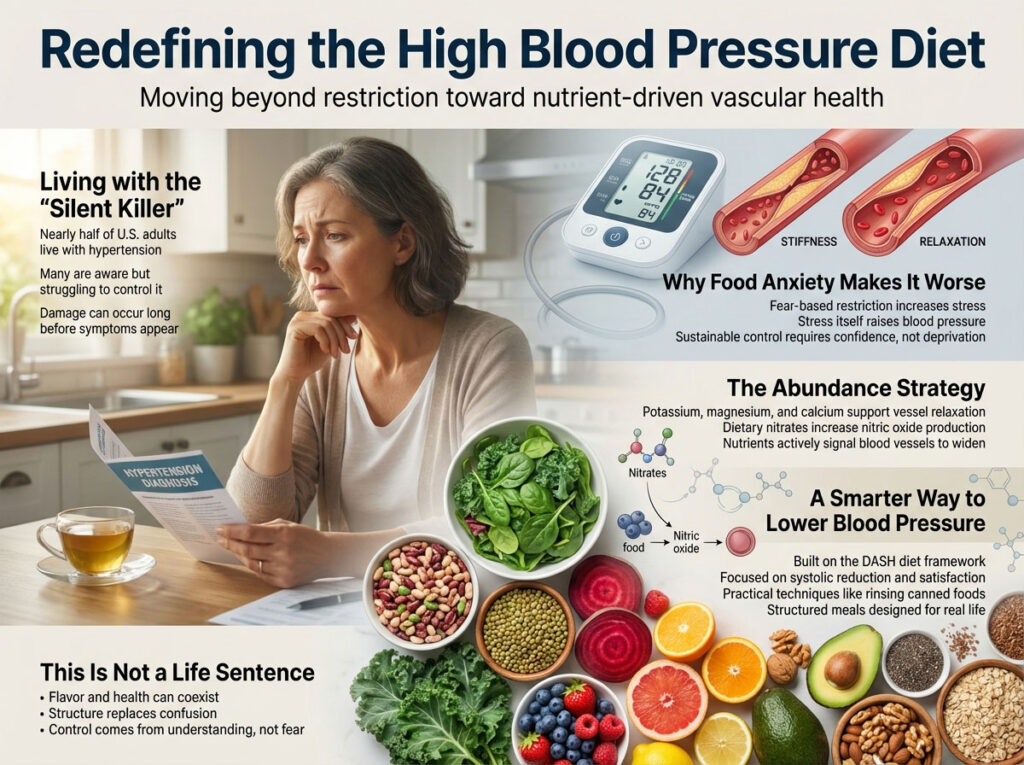
This guide is here to prove otherwise. The most effective strategy to lower blood pressure is not just about restriction. It is about abundance. It is about flooding your system with specific nutrients like potassium, magnesium, calcium, and dietary nitrates that actively signal your blood vessels to relax.
This is your definitive, expert-level guide. We will move beyond basic advice and provide a scientifically structured 7 day meal plan for high blood pressure based on the gold-standard DASH diet meal plan. We will explore the biochemistry of nitric oxide, the “rinse rule” that salvages canned goods, and a comprehensive high blood pressure diet menu designed to lower your systolic reading while satisfying your appetite.
Understanding Hypertension and How the DASH Diet Meal Plan Reverses It
To effectively manage hypertension, you must first understand the mechanics of the pressure building inside your vascular system. It is not just about “stress” or being “tense.” It is about fluid physics and arterial flexibility.
Decoding Systolic vs. Diastolic Numbers: What Your Arteries Are Telling You
Your blood pressure reading provides two distinct pieces of data regarding your heart health. Understanding these numbers is the first step toward controlling them.
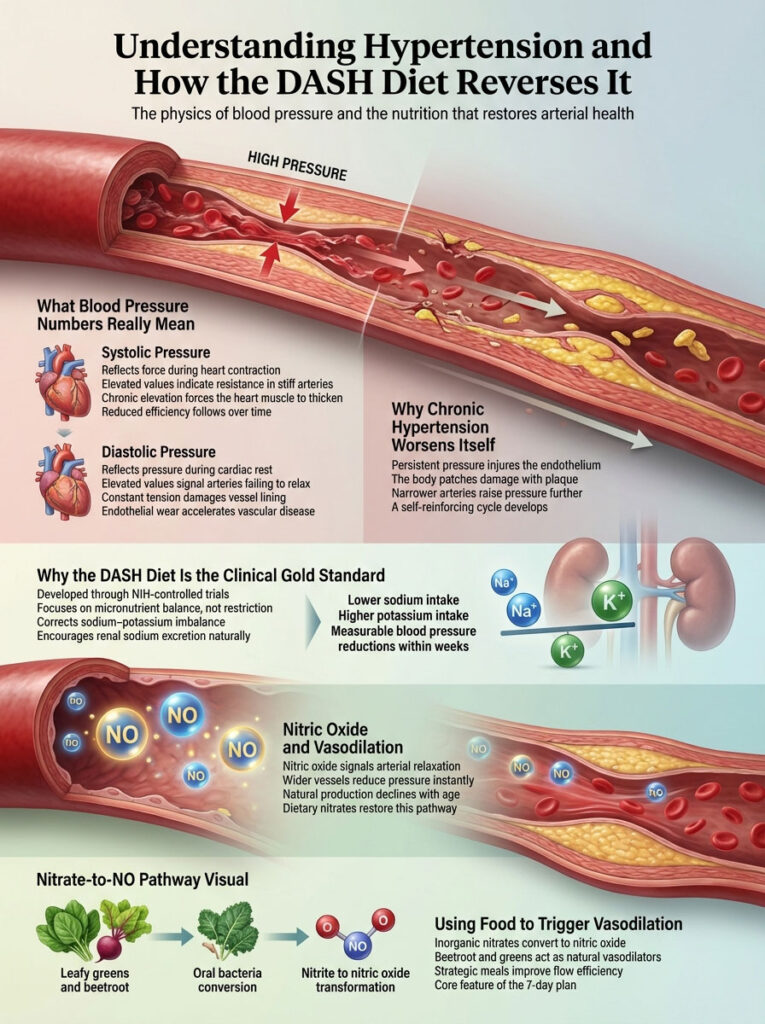
Systolic Pressure (The Top Number): This measures the force exerted against your artery walls when your heart beats and pushes blood out into the system. A reading above 130 mmHg indicates that your heart is working too hard to pump blood against resistance. This resistance usually comes from stiff or narrowed arteries. When this number is high, your heart muscle thickens over time, much like a bicep working out, but this thickening makes the heart less efficient.
Diastolic Pressure (The Bottom Number): This measures the pressure in your arteries when your heart rests between beats. A reading above 80 mmHg suggests that your arteries are staying stiff and not relaxing sufficiently even when the heart is at rest. This constant pressure wears down the inner lining of the blood vessels.
Chronic hypertension (Stage 1 or Stage 2) means your arterial walls are under constant siege. Over time, this pressure causes micro-tears in the endothelial lining of the vessels. Your body patches these tears with cholesterol plaque. This leads to atherosclerosis, or hardening of the arteries, which further raises blood pressure in a vicious cycle.
Why the DASH Diet Meal Plan is the Clinical Gold Standard
The DASH diet meal plan (Dietary Approaches to Stop Hypertension) is not a trend. It was developed through rigorous clinical trials by the National Institutes of Health (NIH). Unlike fad diets that focus on macronutrient manipulation like Keto or Paleo, DASH focuses on micronutrient balance.
The standard American diet is toxic to blood pressure because it disrupts the Sodium-Potassium Pump. This is a cellular mechanism that regulates fluid balance within your body. Sodium acts like a sponge. It holds water in your bloodstream. More water equals more volume. More volume equals higher pressure in the closed system of your veins and arteries. Potassium is the antidote. It forces the kidneys to excrete excess sodium through urine.
Our hypertension diet plan is engineered to flip the typical American ratio. Instead of high sodium (3,400mg+) and low potassium, we aim for low sodium (<1,500mg) and high potassium (>4,700mg). This shift alone can drop blood pressure by several points in as little as 14 days.
The Critical Role of Nitric Oxide and Vasodilation in Hypertension
If you want to lower blood pressure naturally, you must understand Nitric Oxide (NO). This is a gas molecule produced by the endothelium, which is the inner lining of your blood vessels.
Nitric oxide acts as a signaling messenger that tells the smooth muscles around your arteries to relax and widen. This process is called vasodilation. When the vessel widens, blood flows more easily, and pressure drops immediately.
As we age, our natural production of nitric oxide declines. However, we can hack this system using foods that lower blood pressure quickly. Certain vegetables, specifically beetroot and leafy greens, are high in inorganic nitrates. When consumed, bacteria in your mouth convert these nitrates into nitrites, which the stomach then converts into nitric oxide. This is why our 7 day meal plan for high blood pressure includes specific “nitrate-loading” meals.
Advanced Nutritional Strategy: Key Nutrients and Entities for Vascular Health
To succeed with this low sodium meal plan, we need to move beyond generic advice like “eat your veggies” and discuss specific therapeutic foods that act almost like medication.
Magnesium for Blood Pressure: The Natural Relaxant
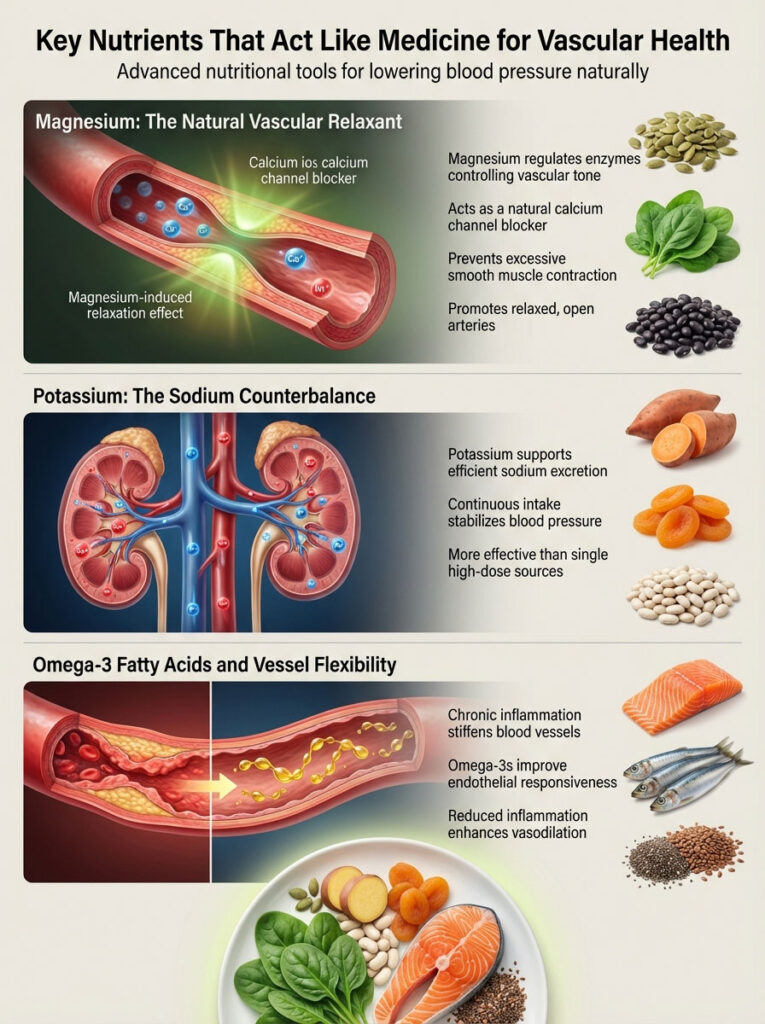
Magnesium is often the missing link in a heart healthy meal plan for beginners. It helps regulate hundreds of enzyme systems, including those that control blood pressure. A deficiency in magnesium tends to increase vascular tone, making arteries tighter.
Magnesium acts as a natural calcium channel blocker. In your body, calcium causes muscles to contract. By blocking calcium from entering the smooth muscle cells of the heart and arteries too quickly, magnesium allows the vessels to stay relaxed and open. We incorporate foods like pumpkin seeds, spinach, and black beans into the menu specifically because they are bioavailable sources of magnesium.
Potassium Rich Foods for Hypertension Management
Potassium is the primary electrolyte for heart health. While bananas are famous, they are not the only source, nor are they the best source. Sweet potatoes, apricots, and white beans actually contain more potassium per serving.
This 7 day meal plan for high blood pressure ensures you are getting potassium at every single meal, not just breakfast. This continuous supply helps your kidneys filter blood efficiently, ensuring that sodium is constantly being removed from your system rather than being reabsorbed.
Omega-3 Fatty Acids and Inflammation Reduction
Chronic low-grade inflammation is a driver of hypertension. When your blood vessels are inflamed, they become stiff and less responsive to the signals that tell them to dilate. The Omega-3 fatty acids found in fatty fish (salmon, sardines, mackerel) and seeds (flax, chia) have anti-inflammatory properties that improve endothelial function. By reducing inflammation, we allow the blood vessels to remain flexible and responsive to changes in blood flow.
Comparative Analysis: DASH Diet vs. Standard American Diet (SAD)
It is vital to visualize the nutritional gap between how most people eat and how you will be eating on this plan. The following table highlights why the Standard American Diet drives hypertension and how the DASH protocol reverses it.
| Nutrient / Metric | Standard American Diet (SAD) | 7-Day DASH Meal Plan | Impact on Blood Pressure Physiology |
| Daily Sodium | > 3,400 mg (Excessive) | < 1,500 – 2,300 mg | Significant Decrease: Reduces blood volume and fluid retention, alleviating pressure on arterial walls. |
| Potassium Intake | Low (< 2,500 mg) | High (> 4,700 mg) | Increase: Stimulates kidneys to filter out sodium; relaxes blood vessel walls directly. |
| Magnesium Levels | Often Deficient | Optimal (500mg+) | Increase: Acts as a natural calcium channel blocker, preventing vessels from constricting. |
| Calcium Sources | High Fat Dairy / Cheese | Low-Fat Dairy / Greens | Maintain: Essential for proper contraction and relaxation signaling in vascular smooth muscle. |
| Dietary Fiber | ~15g (Low) | > 30g (High) | Increase: Binds to cholesterol to prevent plaque buildup; improves gut health which influences BP. |
| Nitric Oxide Precursors | Minimal Intake | High (Beets/Spinach) | Maximize: Triggers rapid vasodilation (widening of arteries) to lower systolic pressure. |
| Processed Food Intake | Primary Calorie Source | Minimal / Zero | Decrease: Eliminates hidden inorganic phosphates and sodium preservatives that stiffen vessels. |
Tactical Execution: How to Eat for Low BP on a Busy Schedule
Implementing a high blood pressure diet menu can feel daunting if you are busy. Most people fail because they think they need to cook gourmet meals from scratch three times a day. You do not. You need smart tactics.
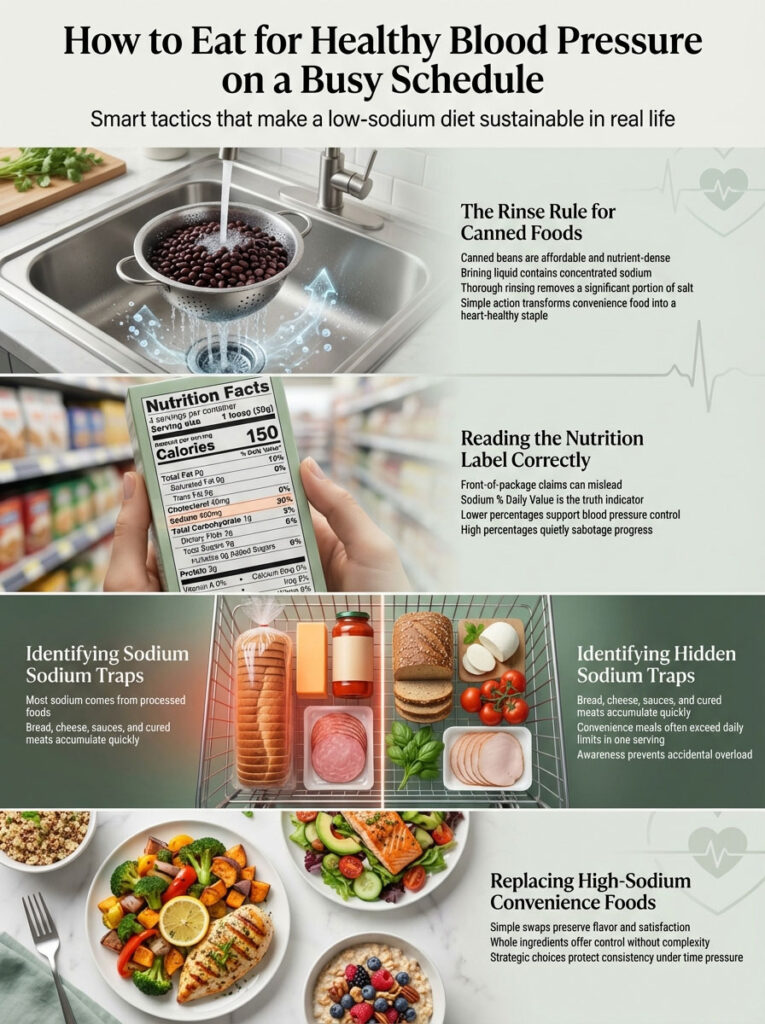
The “Rinse Rule” for Canned Beans and Vegetables
Canned beans are a staple of budget friendly high blood pressure meals. They are inexpensive, shelf-stable, and rich in fiber. However, the liquid they are preserved in is essentially brine.
The Hack: Open the can, pour the beans into a colander, and rinse them thoroughly under cool running water for at least 10 seconds. Research has shown that this simple mechanical action removes approximately 41% of the sodium content. This transforms a high-sodium convenience item into a heart-healthy power food.
Mastering the Nutrition Label: The 5% vs. 20% Rule
Marketing claims on the front of packages (like “Reduced Sodium” or “Heart Healthy”) can be misleading. To truly follow a low sodium meal plan, you must read the Nutrition Facts label on the back.
Look at the % Daily Value (DV) for sodium:
- 5% DV or less is considered low. This is a safe food.
- 20% DV or more is considered high. This is a danger food.
If a frozen dinner contains 35% of your daily sodium, it will derail your progress. Put it back on the shelf.
Avoiding the “Salty Six”
The American Heart Association has identified the top six sources of sodium in the American diet. Surprisingly, the salt shaker is not the main culprit. Processed foods are.
- Breads and Rolls: One slice can have 230mg of sodium.
- Pizza: The cheese, dough, and sauce trifecta.
- Sandwiches: A combination of bread, cured meats, and cheese.
- Cold Cuts and Cured Meats: Preserved with sodium nitrate.
- Soup: Canned soups are often sodium bombs.
- Burritos and Tacos: Seasoning packets and tortillas are loaded with salt.
Our hypertension diet plan provides delicious alternatives for these specific cravings.
The Complete 7 Day Meal Plan for High Blood Pressure Management (Step-by-Step)
This meal plan is designed to provide approximately 1,600 to 1,800 calories per day. If you are active or require more calories, increase the portion sizes of the complex carbohydrates (oats, quinoa, beans).
Hydration Rule: Drink one large glass of water (16oz) immediately upon waking and one glass before every meal. Hydration is crucial for blood volume regulation.
Day 1 Menu: Potassium Loading to Flush Sodium Immediately
We start the week by aggressively increasing potassium to signal the kidneys to start dumping excess sodium.
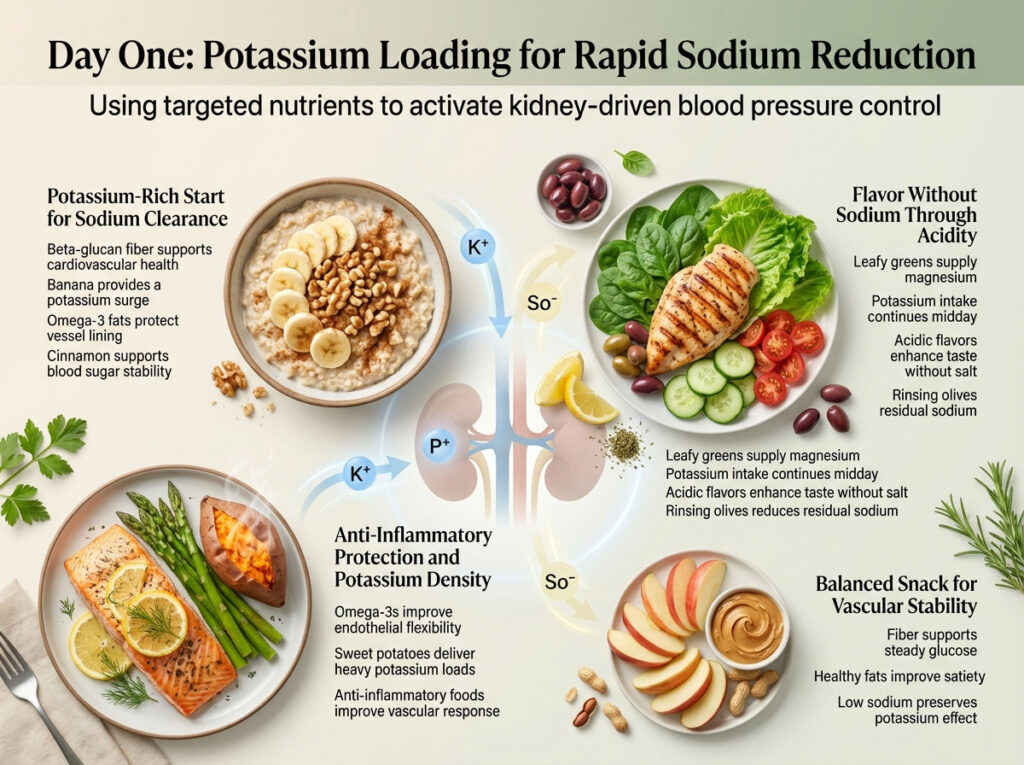
Breakfast: Oatmeal Power Bowl
- The Food: 1/2 cup rolled oats (cooked in water or unsweetened almond milk), topped with one sliced banana and 1 tablespoon of chopped walnuts.
- The Science: Oats contain beta-glucan fiber which improves heart health. The banana provides ~400mg of potassium, and walnuts offer Omega-3s.
- Quick Tip: Sprinkle with cinnamon instead of sugar to help regulate blood sugar, which protects blood vessels.
Lunch: Mediterranean Grilled Chicken Salad
- The Food: 4 oz grilled chicken breast (seasoned with lemon/oregano, no salt) served over a massive bed of spinach and romaine. Add cucumbers, tomatoes, and 5 kalamata olives (rinsed).
- The Science: Spinach adds magnesium. The acidity from the lemon juice mimics the flavor enhancing properties of salt without the sodium.
Dinner: Lemon-Garlic Baked Salmon with Asparagus
- The Food: 6 oz salmon fillet seasoned with garlic powder, onion powder, and fresh dill. Bake at 400°F for 12-15 minutes. Serve with steamed asparagus and a small baked sweet potato.
- The Science: Salmon is the ultimate anti-inflammatory diet recipe component. The sweet potato is a potassium heavyweight, containing more than a banana.
Snack: Apple slices with 1 tablespoon of natural, unsalted peanut butter.
Day 2 Menu: Nitric Oxide Boost for Maximum Vasodilation
Today’s focus is on “vascular relaxation” through nitrate-rich foods.
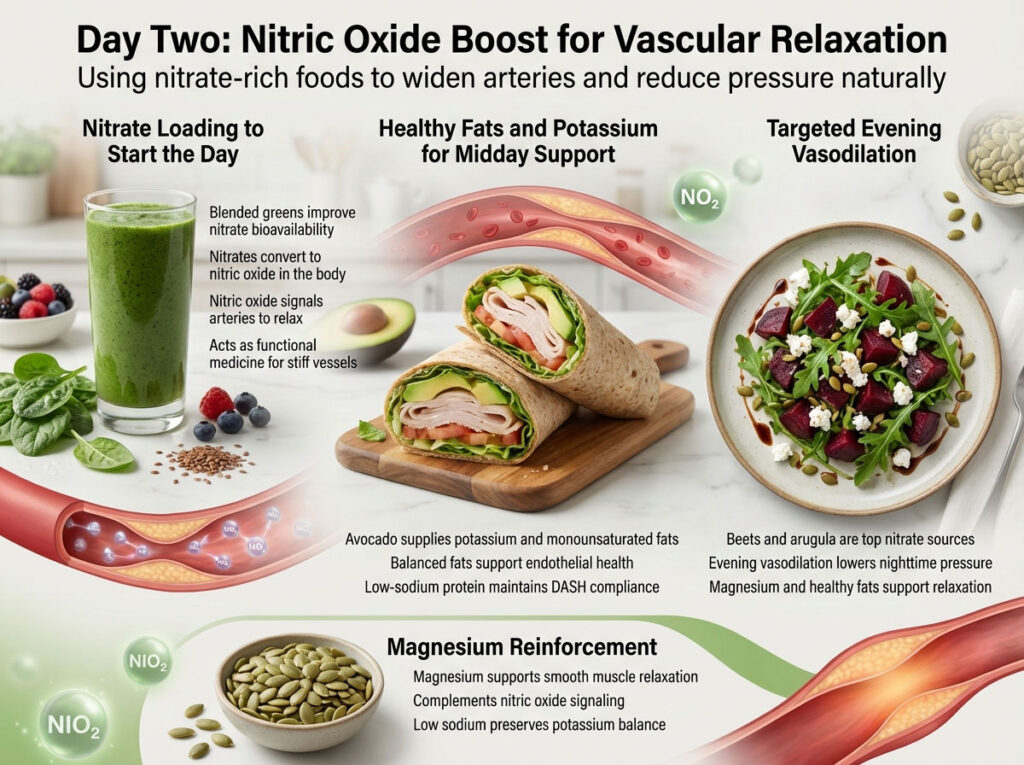
Breakfast: The Green Vasodilation Smoothie
- The Food: Blend 1 cup fresh spinach, 1/2 frozen banana, 1/2 cup frozen berries (blueberries/strawberries), 1 tablespoon flaxseeds, and 1 cup unsweetened almond milk.
- The Science: Blending the spinach breaks down the cell walls, making the nitrates more available for absorption. This drink is a “medicine” for tight arteries.
Lunch: Low-Sodium Turkey & Avocado Wrap
- The Food: Use low-sodium turkey breast (boar’s head or similar low-sodium brand—check labels strictly) wrapped in a whole-wheat tortilla with 1/4 avocado, lettuce, and tomato.
- The Science: Avocado provides healthy monounsaturated fats and potassium.
Dinner: Roasted Beetroot & Goat Cheese Salad
- The Food: Roast 2 medium beets (wrapped in foil, 400°F for 45 mins) or use canned beets (no salt added). Cube them and serve over arugula. Top with 1 tbsp crumbled goat cheese and pumpkin seeds. Dress with balsamic vinegar.
- The Science: Arugula and beets are the top two nitrate sources in nature. This meal is specifically designed to lower evening blood pressure.
Snack: 1/4 cup unsalted pumpkin seeds (Rich in Magnesium).
Day 3 Menu: The 30-Minute Dinner for Busy Evenings
Mid-week is when diets fail due to lack of time. We focus on speed without sacrificing the low sodium meal plan standards.
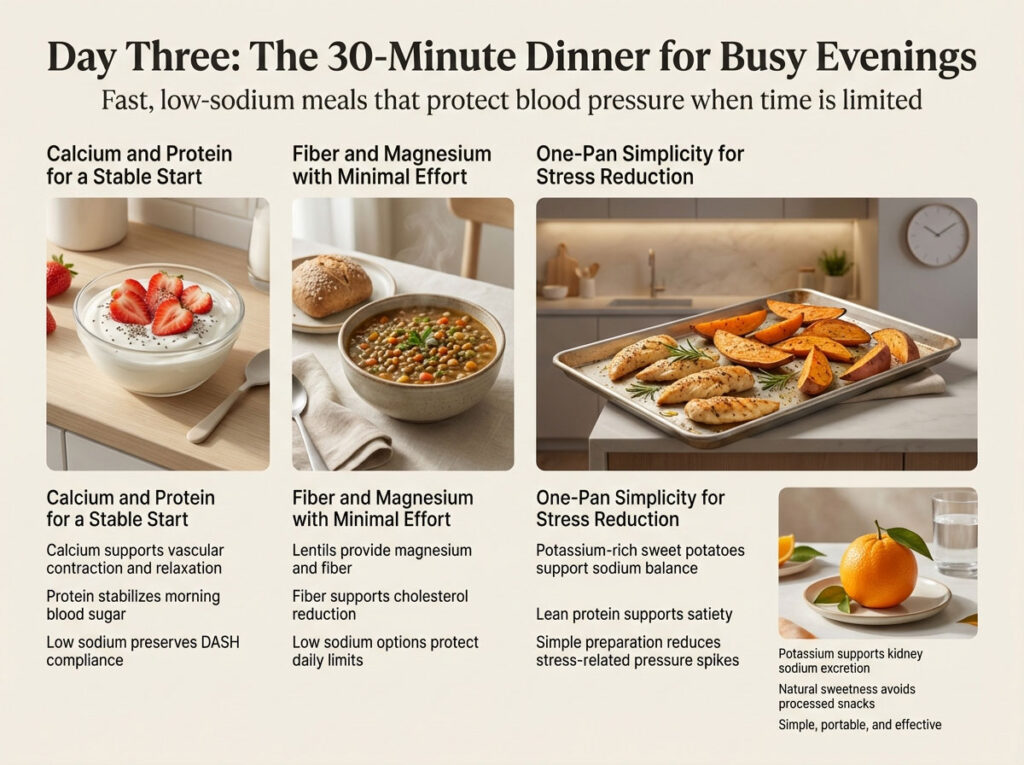
Breakfast: Greek Yogurt Parfait
- The Food: 1 cup non-fat plain Greek yogurt mixed with 1 tsp chia seeds and 1/2 cup sliced strawberries.
- The Science: Greek yogurt provides calcium and protein without the high saturated fat of cheese. Calcium plays a role in the constriction/relaxation mechanism of blood vessels.
Lunch: Low Sodium Lentil Soup (Batch Cook or Canned)
- The Food: If using canned, choose “Amy’s Low Sodium” or similar (<140mg/serving). Pair with a whole grain roll.
- The Science: Lentils are high in fiber and magnesium. Fiber helps reduce cholesterol, which keeps arteries clear.
Dinner: Sheet Pan Chicken & Sweet Potatoes
- The Food: Toss chicken tenders and sweet potato wedges in olive oil, rosemary, and black pepper. Roast on a single sheet pan at 400°F for 20-25 minutes.
- The Science: Easy cleanup prevents stress. Stress raises cortisol, which raises blood pressure. Simplicity is a health strategy.
Snack: 1 medium Orange (Potassium boost).
Day 4 Menu: Vegetarian Reset for Zero Cholesterol
Plant-based meals are naturally devoid of dietary cholesterol, giving your arteries a break.
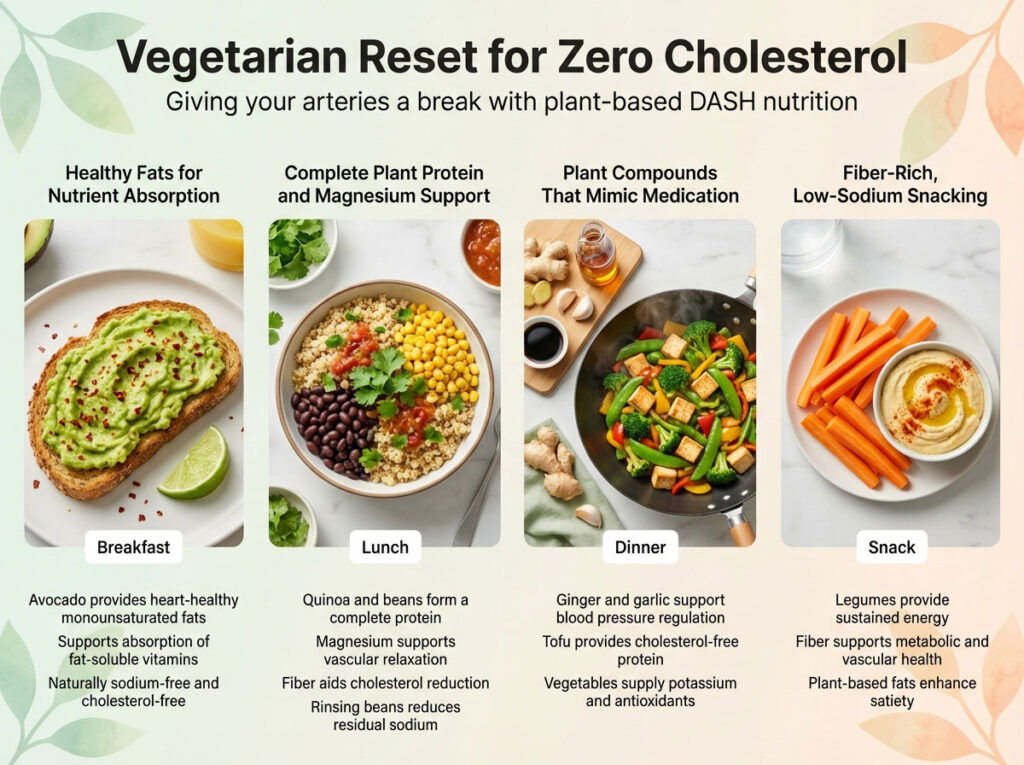
Breakfast: Savory Avocado Toast
- The Food: 1 slice thick whole-grain toast topped with 1/2 mashed avocado. Sprinkle with red pepper flakes and a squeeze of lime juice.
- The Science: The fat in avocado helps you absorb fat-soluble vitamins (A, D, E, K) from your other meals.
Lunch: Quinoa & Black Bean Burrito Bowl
- The Food: 1 cup cooked quinoa mixed with 1/2 cup black beans (rinsed!), corn, fresh cilantro, and a tablespoon of salsa.
- The Science: This provides a complete protein profile. Black beans are dense with magnesium and fiber, essential for DASH diet recipes phase 1.
Dinner: Ginger-Garlic Tofu Stir-Fry
- The Food: Cube firm tofu and sauté with broccoli florets, snap peas, and bell peppers. Sauce: Fresh grated ginger, minced garlic, sesame oil, and a splash of low-sodium soy sauce.
- The Science: Ginger and garlic are ancient remedies for hypertension. They act as mild ACE inhibitors, similar to some blood pressure medications.
Snack: Carrot sticks with 2 tbsp hummus.
Day 5 Menu: Fish Friday for Omega-3 Inflammation Control
We return to fatty fish to combat arterial stiffness.
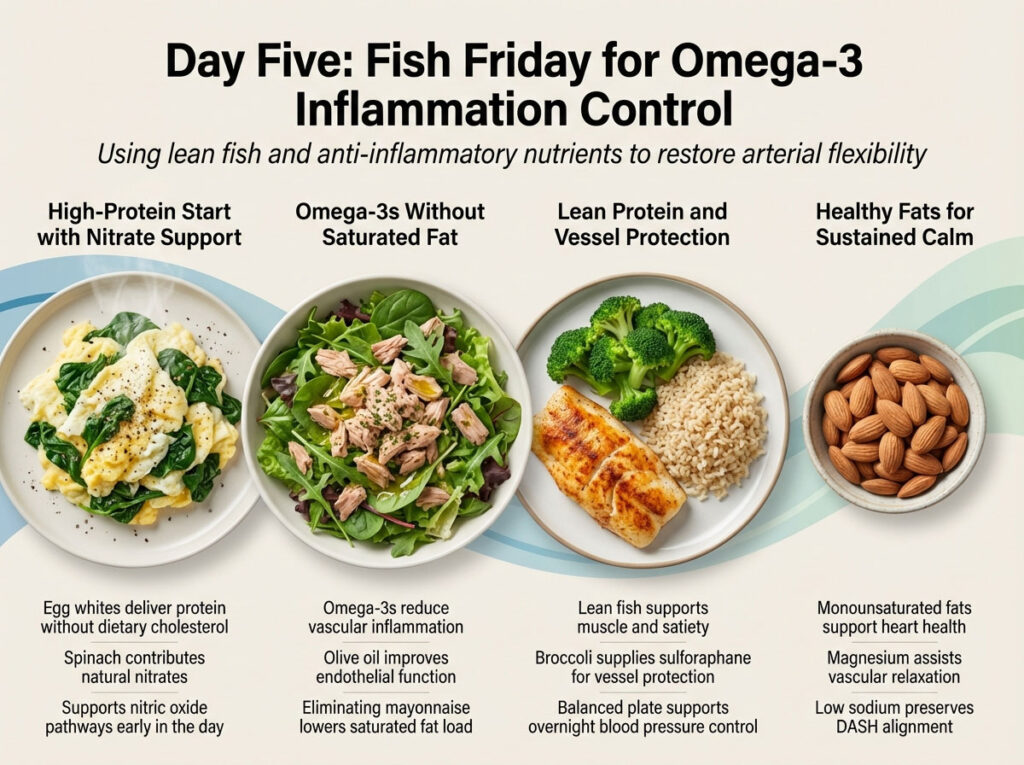
Breakfast: Scrambled Egg Whites with Spinach
- The Food: Sauté a generous handful of spinach in a non-stick pan. Add 3 egg whites (or 1 whole egg + 2 whites) and scramble. Season with black pepper.
- The Science: Egg whites provide high protein with zero cholesterol. Spinach reinforces the nitrate intake.
Lunch: Tuna Salad on Greens (No Mayo)
- The Food: Mix one can of low-sodium tuna with olive oil, lemon juice, and dried parsley. Serve over a bed of mixed greens.
- The Science: Replacing mayonnaise (saturated fat) with olive oil (monounsaturated fat) improves endothelial function.
Dinner: Baked Cod with Steamed Broccoli
- The Food: Season mild white fish (cod/tilapia) with paprika, garlic powder, and onion powder. Bake at 375°F for 15 mins. Serve with 2 cups of steamed broccoli and brown rice.
- The Science: Cod is a very lean protein. Broccoli is a cruciferous vegetable containing sulforaphane, which may prevent blood vessel damage.
Snack: Handful of unsalted almonds.
Day 6 Menu: The Slow Cooker Strategy for Weekends
Leveraging low sodium crockpot meals for high blood pressure ensures you have healthy food ready without active cooking.
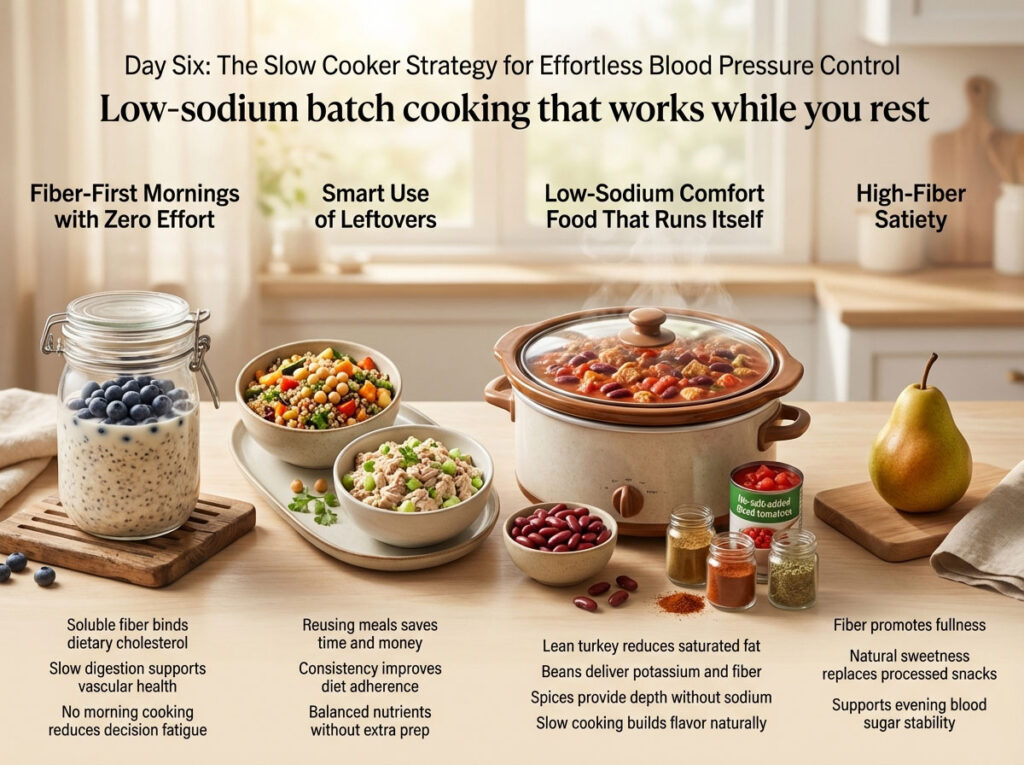
Breakfast: Overnight Oats
- The Food: Combine oats, almond milk, and chia seeds in a jar the night before. Top with blueberries in the morning.
- The Science: Soluble fiber in oats binds to cholesterol in the digestive tract and removes it from the body.
Lunch: Leftover Quinoa Bowl or Tuna Salad
- The Food: Utilize leftovers to save money and time.
Dinner: Low Sodium Crockpot Turkey Chili
- The Food: Brown 1 lb ground turkey with onions. Transfer to slow cooker. Add 2 cans kidney beans (rinsed), 1 can diced tomatoes (no salt added), chili powder, cumin, and oregano. Cook on low for 6 hours.
- The Science: The spices (cumin/chili powder) provide robust flavor, tricking the palate so you don’t miss the salt. Kidney beans are a potassium powerhouse.
Snack: Pear (High fiber, keeps you full).
Day 7 Menu: Sunday Prep and Comfort Food
A meal that feels like a traditional Sunday dinner, stripped of the sodium risks.
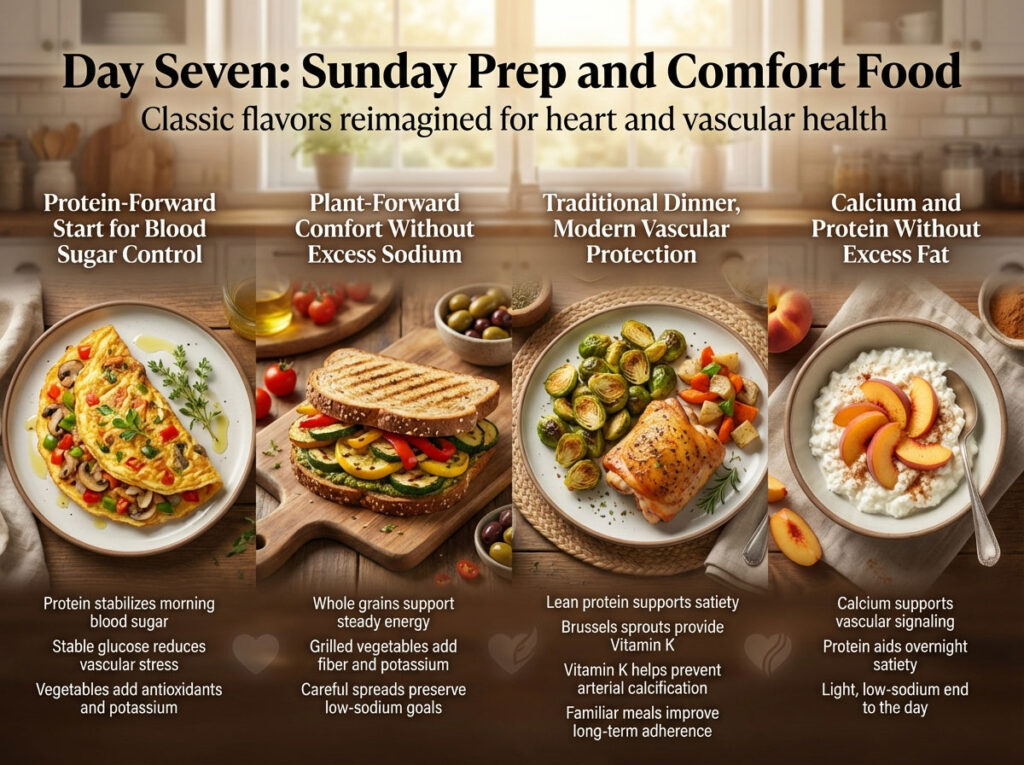
Breakfast: Veggie Omelet
- The Food: 2 eggs beaten with diced bell peppers, onions, and mushrooms. Cook in a touch of olive oil.
- The Science: Starting the day with protein stabilizes blood sugar, preventing insulin spikes that can damage vessels.
Lunch: Grilled Vegetable Sandwich
- The Food: Grill zucchini, yellow squash, and red peppers. Layer on whole-grain bread with a smear of hummus or pesto (check sodium).
Dinner: Roast Chicken Thighs with Brussels Sprouts
- The Food: Use bone-in chicken thighs, but remove the skin (where most saturated fat lives). Rub with herbs de provence and olive oil. Roast alongside Brussels sprouts.
- The Science: Brussels sprouts are rich in Vitamin K, which helps prevent calcium deposits in the arteries.
Snack: Low-fat cottage cheese with sliced peaches.
Smart Swaps for Sustainable Sodium Reduction
The hardest part of a low sodium meal plan is the feeling of missing out on your favorite salty foods. The key is not elimination. It is substitution. We swap the “vehicle” of the salt for a heart-healthy alternative without sacrificing the ritual of eating.
Table 2: High Sodium Foods vs. Heart-Healthy Swaps
| High Sodium Item (The Enemy) | Heart-Healthy Swap (The Solution) | Why This Swap Saves Your Heart |
| Canned Soup (Regular) | Homemade / “Low Sodium” (<140mg) | Regular soup is a “salt bomb” (800mg+). Low-sodium versions prevent fluid retention spikes. |
| Deli Ham / Salami | Roasted Turkey Breast / Rinsed Tuna | Cured meats contain sodium nitrate, which stiffens arteries. Fresh poultry is nitrate-free. |
| Flavor Packets (Taco/Ranch) | DIY Spice Blend (Cumin/Garlic) | Packets are mostly MSG and salt. Real spices offer antioxidants that fight inflammation. |
| Bottled Salad Dressing | Olive Oil + Lemon Juice + Vinegar | Store dressings use sodium as a preservative. Olive oil improves endothelial flexibility. |
| Salted Peanuts / Chips | Unsalted Almonds / Air-Popped Popcorn | You get the “crunch” without the sodium. Almonds add magnesium; popcorn adds fiber. |
| Soy Sauce | Coconut Aminos / Low-Sodium Soy | Coconut aminos have 70% less sodium than soy sauce but provide the same “Umami” flavor. |
| Breakfast Cereal | Rolled Oats / Shredded Wheat | Processed cereals are surprisingly salty. Oats are naturally sodium-free. |
Emergency Protocol: Foods That Lower Blood Pressure Quickly
Sometimes, you may check your pressure and see a number that causes anxiety. While food is never a replacement for emergency medical care during a hypertensive crisis, certain foods have a rapid physiological effect that can help in non-emergency situations.
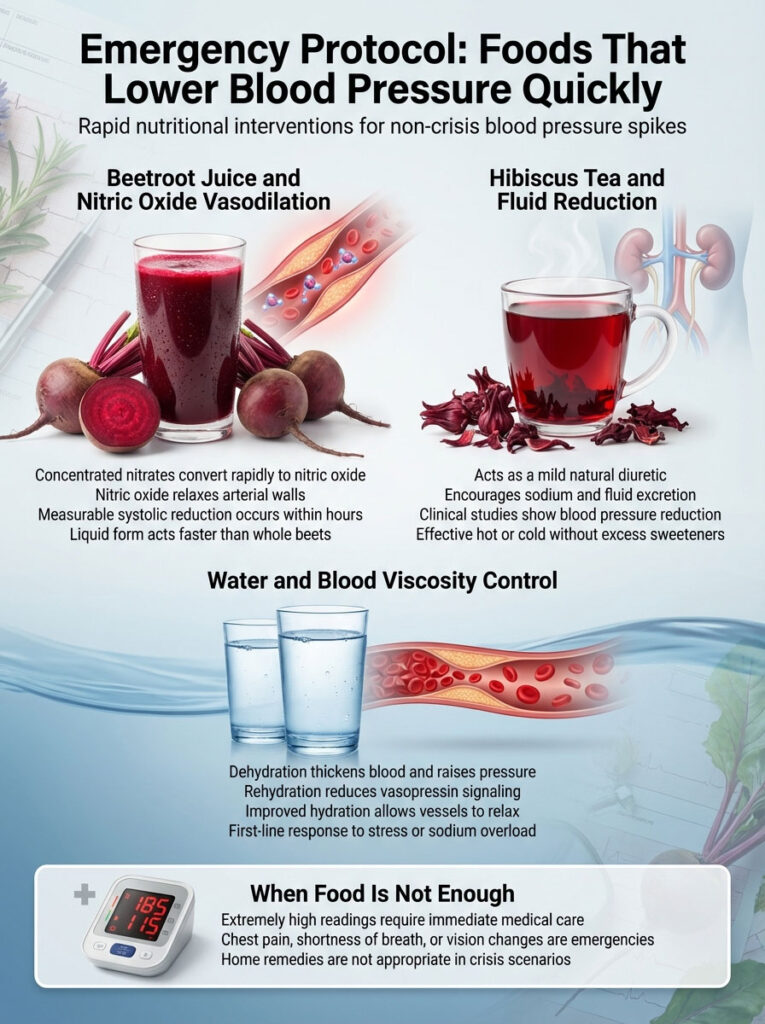
Beetroot Juice: The Vasodilation Shot
Research published in hypertension journals highlights beetroot juice as a potent functional food. Drinking 8 ounces of raw beet juice can lead to a measurable drop in systolic blood pressure within 3 to 6 hours. This is due to the rapid conversion of nitrates to nitric oxide. The effect is dose-dependent. A concentrated shot works faster than eating roasted beets, although both are beneficial.
Hibiscus Tea: The Natural Diuretic
Hibiscus tea, often sold as “Jamaica” in Mexican markets, has been shown in clinical trials to lower blood pressure. It functions similarly to mild diuretic medications, helping the body shed excess sodium and fluid. For a therapeutic effect, steep dried hibiscus flowers for 5 minutes and drink 3 cups daily. It can be consumed hot or cold, but avoid adding excessive sugar.
Water: The Volume Regulator
Dehydration causes the blood to thicken, increasing viscosity. This triggers the release of vasopressin, a hormone that constricts blood vessels to maintain pressure. Drinking two large glasses of water can help restore hydration status and allow blood vessels to relax. If you feel your pressure rising due to stress or sodium intake, start by drinking water immediately.
Disclaimer: If your blood pressure is 180/120 mmHg or higher, or if you are experiencing chest pain, shortness of breath, or blurred vision, call emergency services immediately. Do not rely on home remedies.
Grocery List and Budget Tips for the DASH Diet
Eating for health is often perceived as expensive, but a budget friendly high blood pressure meals strategy is actually cheaper than buying processed foods. Processed foods carry a “convenience tax” that you pay for with both your wallet and your health.
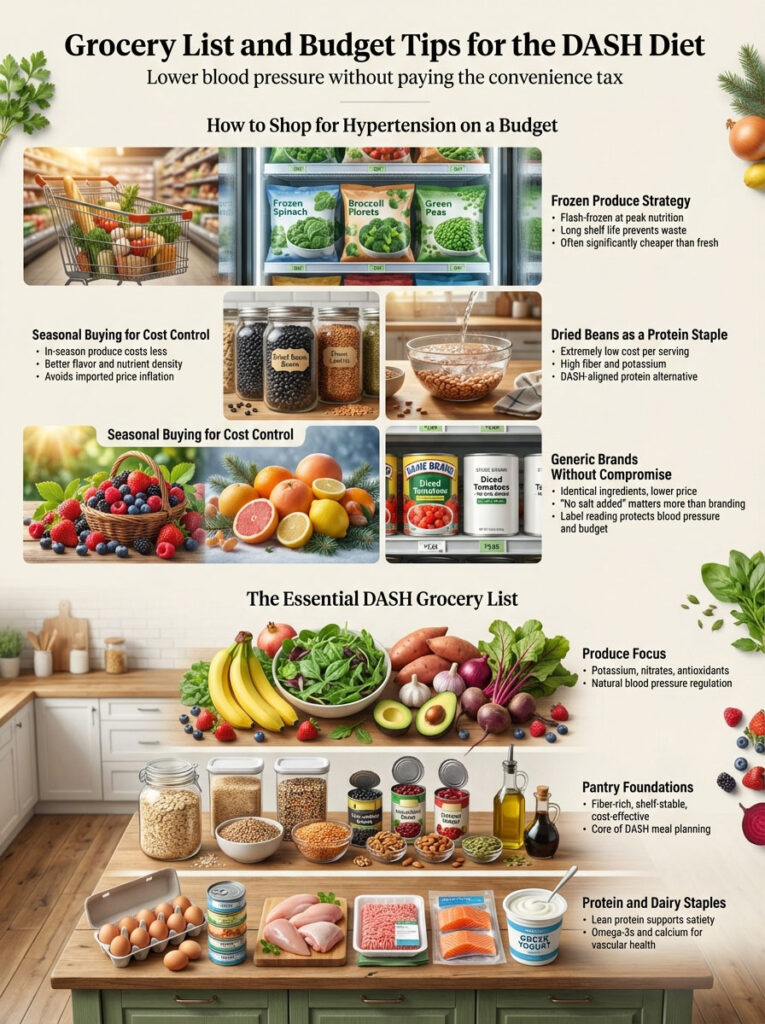
How to Shop for Hypertension on a Budget
1. Frozen is Fine: Frozen vegetables like spinach, broccoli, and peas are flash-frozen at harvest. They retain all their nutrients and are often 50% cheaper than fresh produce. They also do not spoil, preventing food waste.
2. Dried Beans: A bag of dried black beans costs under $2 and provides 10+ servings. This is the cheapest protein source on earth. While they require soaking, the cost savings are massive compared to meat.
3. Buy in Season: Buy berries in summer and citrus in winter. When fruit is in season, it is abundant and cheaper. Out-of-season produce is flown in from halfway across the world, and you pay for that airfare.
4. Generic Brands: The store-brand “No Salt Added” canned tomatoes are chemically identical to the name brand but cost less. Read the ingredients list. If it says “Tomatoes, Water,” it is the same product.
The Essential Hypertension Grocery List
Produce Section:
- Bananas (Potassium)
- Spinach and Arugula (Nitrates/Magnesium)
- Sweet Potatoes (Potassium)
- Garlic and Onions (Flavor base)
- Avocados (Healthy Fats)
- Beets (Nitrates)
- Fresh Berries (Antioxidants)
Pantry Aisle:
- Rolled Oats (Old Fashioned)
- Brown Rice and Quinoa
- Dried Lentils
- Canned Black Beans and Kidney Beans (Low Sodium)
- Unsalted Walnuts, Almonds, Pumpkin Seeds
- Olive Oil (Extra Virgin)
- Balsamic Vinegar
Protein & Dairy:
- Eggs
- Canned Tuna (in water)
- Chicken Breast or Thighs
- Ground Turkey (Lean)
- Salmon Fillets (Check frozen section for deals)
- Non-fat Greek Yogurt
Dining Out and Lifestyle Integration
Managing hypertension requires navigating the real world, which includes restaurants and stress.
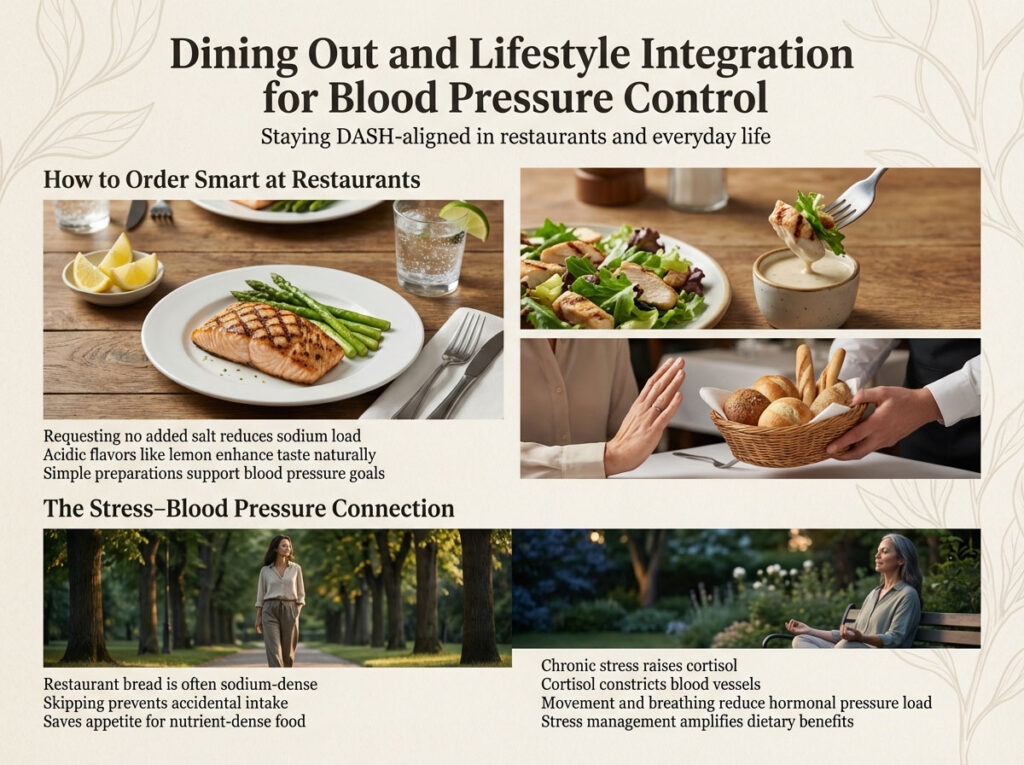
How to Order at Restaurants
Restaurants are notoriously high-sodium zones. Chefs use salt to ensure flavor consistency. When dining out:
- Ask for “No Salt Added”: Ask for your grilled fish or chicken to be prepared without salt. You can squeeze lemon juice on it at the table.
- Sauce on the Side: Sauces and dressings are where the sodium hides. Dip your fork, don’t pour.
- Skip the Bread Basket: A single breadstick can have 300mg of sodium. Send it back.
The Stress Connection
Cortisol is a stress hormone that constricts blood vessels. If you are eating the perfect DASH diet but living in a state of chronic high stress, your blood pressure may remain stubborn. Incorporate deep breathing or a 10-minute walk after meals. This not only aids digestion but lowers cortisol levels.
Frequently Asked Questions (FAQs)
How can I lower my blood pressure in 7 days naturally?
To achieve results in 7 days, strict adherence is required. You must keep sodium under 1,500mg/day, eliminate alcohol, drink 64oz of water, and eat nitrate-rich foods like beets and greens daily. This combination flushes excess fluid and relaxes vessels simultaneously.
What is the number one food to lower blood pressure?
Beetroot and beet juice are widely cited in clinical studies as the most effective single food. Its high dietary nitrate content creates a rapid vasodilation effect that other foods cannot match in speed.
What is the best breakfast for high blood pressure?
Oatmeal topped with berries and walnuts is the gold standard. It addresses three mechanisms: Fiber from oats for cholesterol, Antioxidants from berries for inflammation, and Omega-3s from walnuts for arterial health.
Is peanut butter good for high blood pressure?
Yes, but only if it is “natural” peanut butter containing just peanuts and maybe oil. Avoid brands with added sugar, salt, or hydrogenated oils. Peanuts provide potassium and protein.
Can drinking water lower blood pressure?
Yes. Dehydration triggers the body to hold onto sodium and constrict blood vessels to maintain pressure. Adequate hydration allows the body to excrete sodium and maintain proper blood viscosity.
Are eggs good for high blood pressure?
Eggs are a neutral protein source. They do not raise blood pressure, but they should not be salted. The “danger” usually comes from the bacon or sausage served alongside them.
What snacks are safe for high blood pressure?
The best snacks are whole foods. Try an apple with almond butter, a pear, carrot sticks with hummus, or a handful of unsalted pumpkin seeds. Avoid pretzels, chips, and crackers.
Does lemon water lower blood pressure?
Lemon water is beneficial because the citrus flavonoids improve vascular health, and the hydration is crucial. It is a perfect substitute for sugary sodas or high-sodium energy drinks.
How do I start the DASH diet for beginners?
Do not try to change everything overnight. Start by adding one serving of vegetables to lunch and dinner. Then, stop adding salt at the table. Next, switch to whole grains. Small, sustainable steps lead to long-term success.
Is the Mediterranean diet better than DASH for BP?
They are cousins. The Mediterranean diet is excellent for general heart health and longevity. However, the DASH diet is specifically engineered for sodium reduction and blood pressure control. For Stage 1 or 2 Hypertension, DASH is the specific tool for the job.
Can I use Himalayan salt instead of table salt?
This is a common myth. Himalayan pink salt is chemically 98% sodium chloride, just like table salt. The trace minerals are negligible. It raises blood pressure exactly the same way. You must reduce all salt.
What are the symptoms of high blood pressure?
Most people have zero symptoms. This is why it is dangerous. Occasional headaches, nosebleeds, or blood spots in the eyes can occur, but the only way to know is to measure it.
Disclaimer and Final Thoughts
Medical Disclaimer: The content provided in this article, including the 7 day meal plan for high blood pressure, is for educational and informational purposes only. It is not intended to be a substitute for professional medical advice, diagnosis, or treatment. Hypertension is a serious condition that increases the risk of heart attack and stroke. Always seek the advice of your physician or other qualified health provider with any questions you may have regarding a medical condition. Never disregard professional medical advice or delay in seeking it because of something you have read here. If you are on blood pressure medication, do not stop taking it without consulting your doctor.
Adopting this DASH diet meal plan is a powerful step toward reclaiming your health. By understanding the science of vasodilation, mastering the grocery store, and cooking with intention, you are not just eating. You are healing your arteries one meal at a time.
References
- Centers for Disease Control and Prevention (CDC). Hypertension Prevalence in the US.
- National Heart, Lung, and Blood Institute (NHLBI). DASH Eating Plan Clinical Trials.
- Hypertension (Journal of the American Heart Association). Dietary Nitrate and Blood Pressure.
- American Journal of Clinical Nutrition. Effect of Legume Consumption on Blood Pressure.
- American Heart Association (AHA). Sodium Sources and Guidelines.