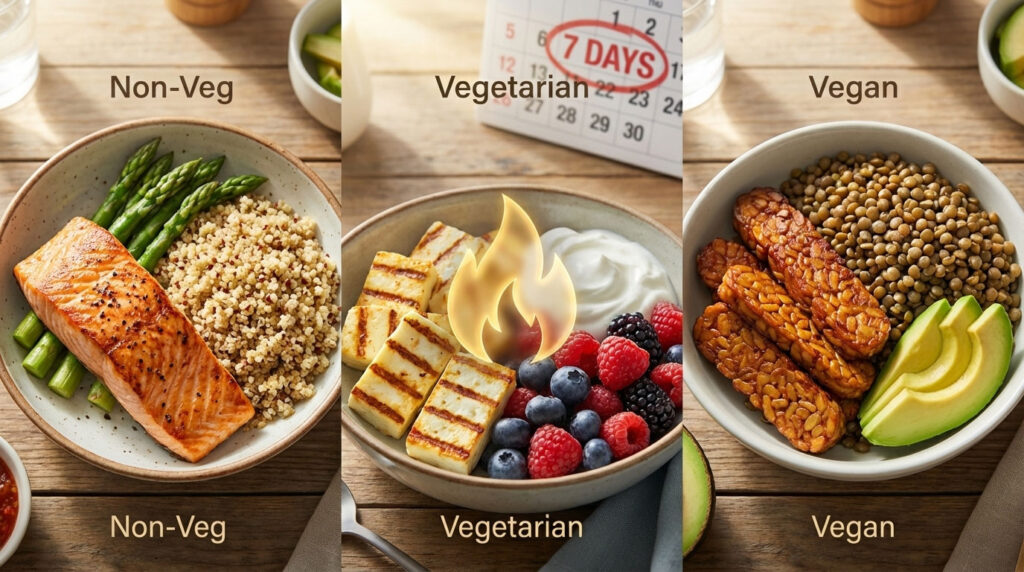
A natural metabolism-boosting meal plan fundamentally relies on the biological principle of the Thermic Effect of Food (TEF), coupled with strategic protein pacing. By prioritizing high-TEF ingredients, such as lean proteins which require 20–30% of their calorie content for digestion, versus fats which require only 0–3%, you can effectively “tax” your caloric intake.
Table of Contents
This guide provides a scientifically structured 7 day meal plan to increase metabolism naturally, featuring distinct protocols for Vegetarian, Non-Vegetarian, and Vegan dietary needs. The protocol targets an increase in Resting Metabolic Rate (RMR) through hydration thermogenesis, insulin stabilization, and the inclusion of bioactive compounds like capsaicin and catechins to stimulate fat oxidation.
You are eating less, counting every calorie, and skipping desserts, yet the scale refuses to budge. It is the most disheartening plateau in the world of health and wellness. The prevailing myth is that you simply have a “slow metabolism” due to genetics or age, and that you are destined to struggle with weight forever. This is scientifically inaccurate. Your metabolism is not a fixed static number; it is a dynamic chemical engine that reacts and adapts to the fuel you provide.
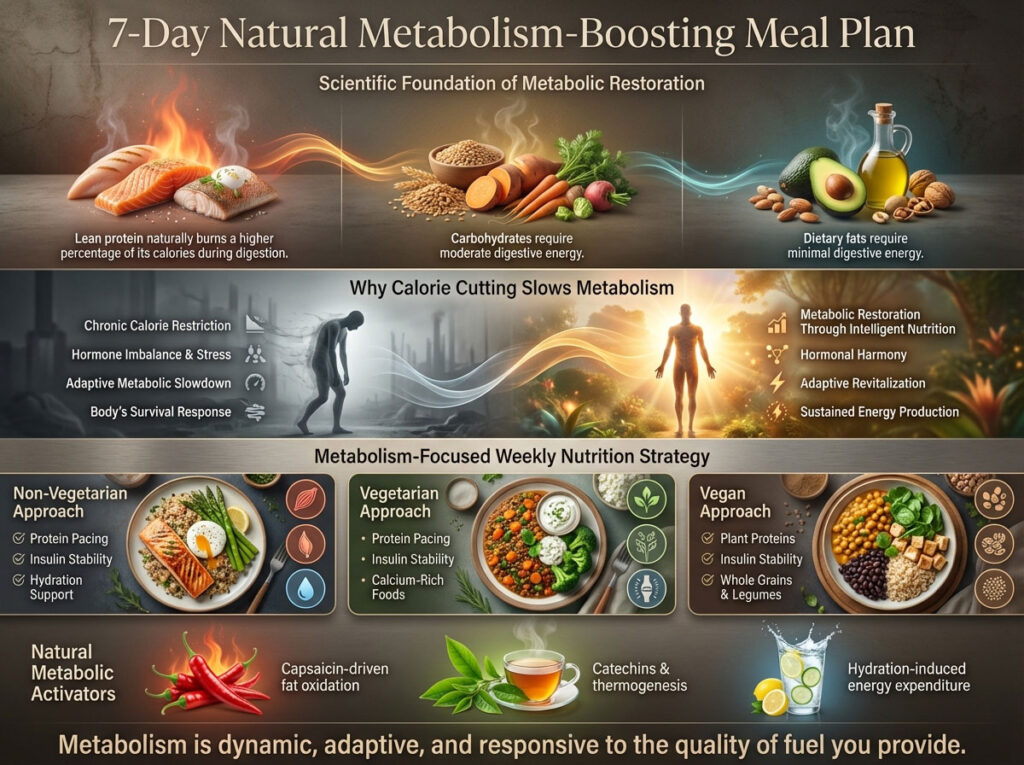
When you drastically cut calories without focusing on nutrient density, your body interprets this as a famine. In response, it down-regulates thyroid function and lowers your daily energy expenditure to keep you alive. This is metabolic adaptation. The solution to breaking this cycle is not to eat less, but to eat foods that force your body to work harder. We call this “metabolic restoration.”
This comprehensive guide is not just a list of recipes. It is a strategic roadmap designed to manipulate your hormones, specifically insulin, leptin, and ghrelin, to favor fat burning over fat storage. Whether you need a high protein non-veg diet, a calcium-rich vegetarian metabolism diet, or a plant-based vegan fat loss meal plan, the strategies below are engineered to reignite your internal furnace.
How Resting Metabolic Rate (RMR) and TEF Burn Fat
To understand why this meal plan works, we must first decode the three pillars of daily calorie burn. Most people obsess over the calories burned during a 30-minute run, but that only accounts for a fraction of your total expenditure. The real magic happens in the other 23 hours of the day.
The Science of Basal and Resting Metabolic Rate
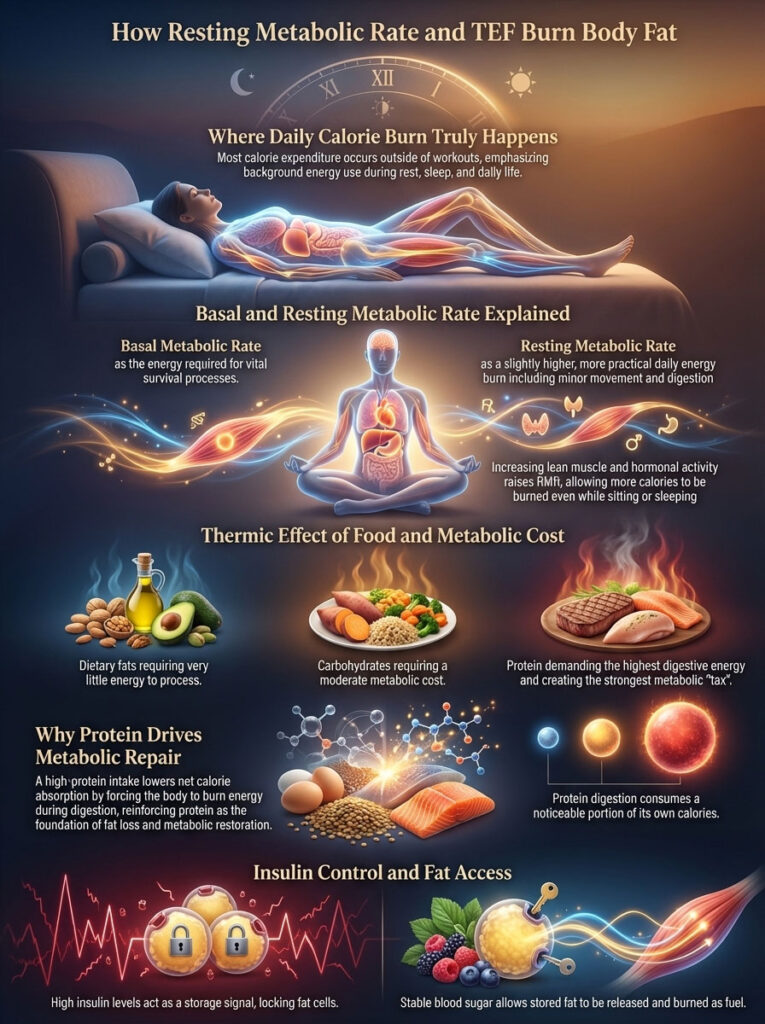
Your Basal Metabolic Rate (BMR) represents the energy required to keep your heart beating, lungs breathing, and brain firing while you are completely at rest. Resting Metabolic Rate (RMR) is slightly higher and includes the energy used for basic movements and digestion. This meal plan is designed to elevate your RMR. By increasing your muscle tissue’s demand for energy and stimulating hormonal activity, we can increase the amount of calories you burn while sitting in traffic or sleeping.
Leveraging the Thermic Effect of Food (TEF) for Weight Loss
The Thermic Effect of Food (TEF) is the energy “cost” of processing what you eat. It is the most underutilized tool in fat loss.
- Fats: These are metabolically “cheap” to digest. The body expends only 0–3% of the calories in fat to digest it.
- Carbohydrates: These are moderate, costing 5–10% of energy to process.
- Protein: This is the metabolic powerhouse. Protein requires 20–30% of its own calories to be digested and assimilated.
This means if you consume 500 calories of lean turkey (protein), your net intake is significantly lower than 500 calories of butter toast (fat/carb) because your body burns 100–150 of those turkey calories just breaking down the peptide bonds. This is why a high protein meal plan is the non-negotiable foundation of metabolic repair.
Regulating Insulin Sensitivity to Unlock Fat Stores
Insulin is the storage hormone. When insulin levels are chronically elevated, usually due to frequent consumption of refined sugars and simple carbs, your fat cells are “locked.” The body cannot access stored body fat for energy because insulin is blocking the enzymatic breakdown of triglycerides. A diet to increase metabolism must be low-glycemic. By keeping blood sugar stable, we lower baseline insulin, essentially unlocking the doors to your fat stores so they can be burned for fuel.
Strategic Pillars for a Natural Metabolism Boost
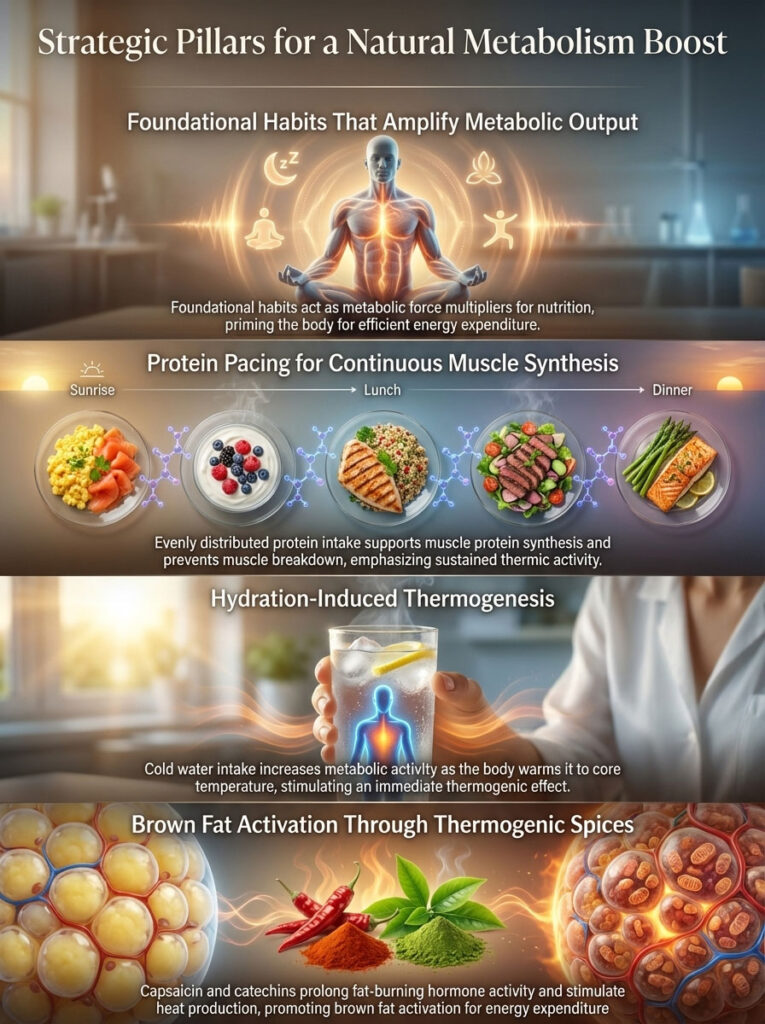
Before you begin the 7-day cycle, you must adopt these three non-negotiable habits. These act as force multipliers for the food you will be eating.
1. The Protein Pacing Strategy for Muscle Synthesis
Most Americans eat a small, carb-heavy breakfast (cereal, bagel), a light lunch, and a massive protein-heavy dinner. This is metabolically inefficient. Research indicates that “protein pacing” spreading your protein intake evenly throughout the day, is superior for stimulating Muscle Protein Synthesis (MPS).
- The Goal: Consume 20g to 35g of high-quality protein every 3 to 4 hours.
- The Result: This constant supply of amino acids prevents muscle breakdown (catabolism) and keeps your TEF elevated all day long, rather than just for a few hours after dinner.
2. Hydration Induced Thermogenesis
Water is a metabolic accelerator. A study published in the Journal of Clinical Endocrinology & Metabolism found that drinking 500ml (approx 17 oz) of cold water increased metabolic rate by 30% for 60 minutes. The mechanism is simple: your body must expend energy to warm the water to core body temperature (98.6°F).
- The Protocol: Drink 16–20 oz of ice-cold water immediately upon waking, before your feet hit the floor. This jumpstarts your system after a night of dehydration.
3. Activation of Brown Adipose Tissue (BAT) via Spice
White fat stores energy; Brown fat (BAT) burns energy to create heat. We can stimulate BAT activity through thermogenic compounds.
- Capsaicin: Found in chili peppers and cayenne, it triggers a “fight or flight” nervous system response that raises body temperature.
- Catechins (EGCG): Found in green tea and matcha, these antioxidants inhibit the enzyme that breaks down norepinephrine, keeping your fat-burning hormones active for longer.
Comparative Analysis of Metabolic Diet Profiles
Selecting the right plan is crucial for adherence. While all three plans below are designed to be a diet to increase metabolism, they utilize different fuel sources to achieve the result.
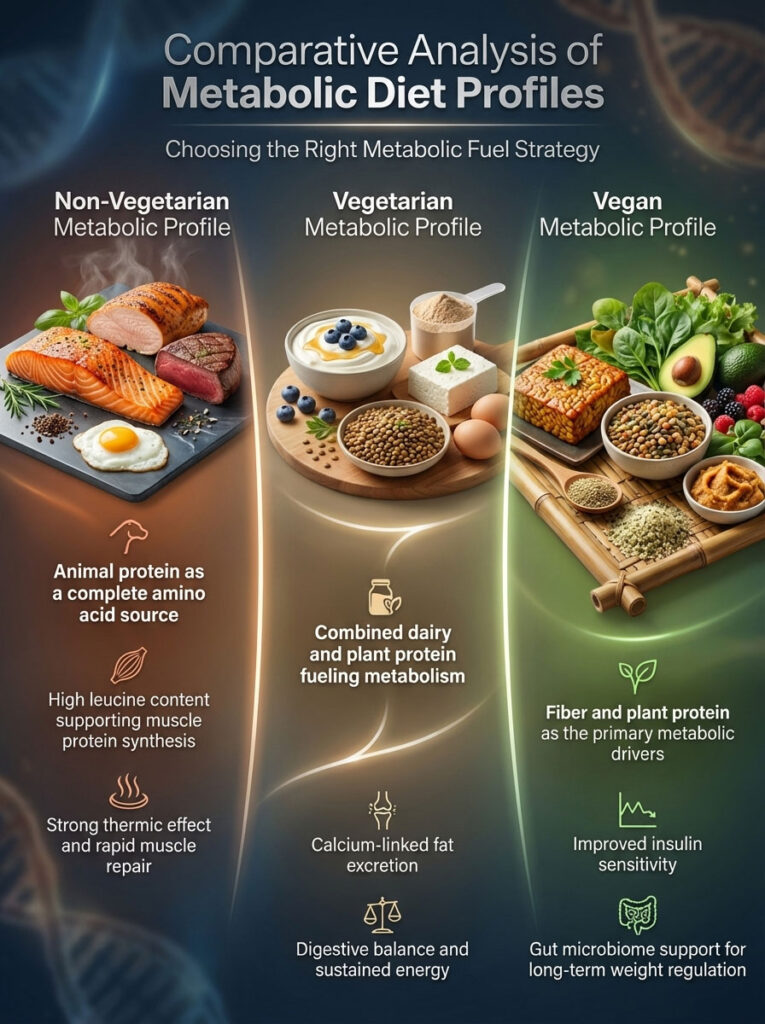
| Diet Type | Primary Metabolic Fuel | Key Thermogenic Sources | Best For |
| Non-Vegetarian | Animal Protein (Complete Amino Acids) | Salmon, Turkey, Bison, Egg Whites | Individuals seeking maximum TEF and rapid muscle repair. Animal proteins are rich in Leucine, the key amino acid for muscle synthesis. |
| Vegetarian | Dairy & Plant Protein Combo | Greek Yogurt, Whey, Cottage Cheese (Paneer) | Lacto-vegetarians looking for gut health balance. The calcium in dairy is linked to increased fat excretion, while eggs provide high choline. |
| Vegan | Fiber & Plant Protein | Tempeh, Lentils, Fermented Soy, Hemp | Those prioritizing inflammation reduction and insulin sensitivity. High fiber intake improves the gut microbiome, which regulates weight naturally. |
Plan 1: 7-Day High Protein Non-Veg Diet Plan for Maximum Thermogenesis
This plan is the “gold standard” for the Thermic Effect of Food. It relies on lean, dense animal proteins to force the body to expend significant energy on digestion. It is also rich in Omega-3 fatty acids to reduce cellular inflammation.
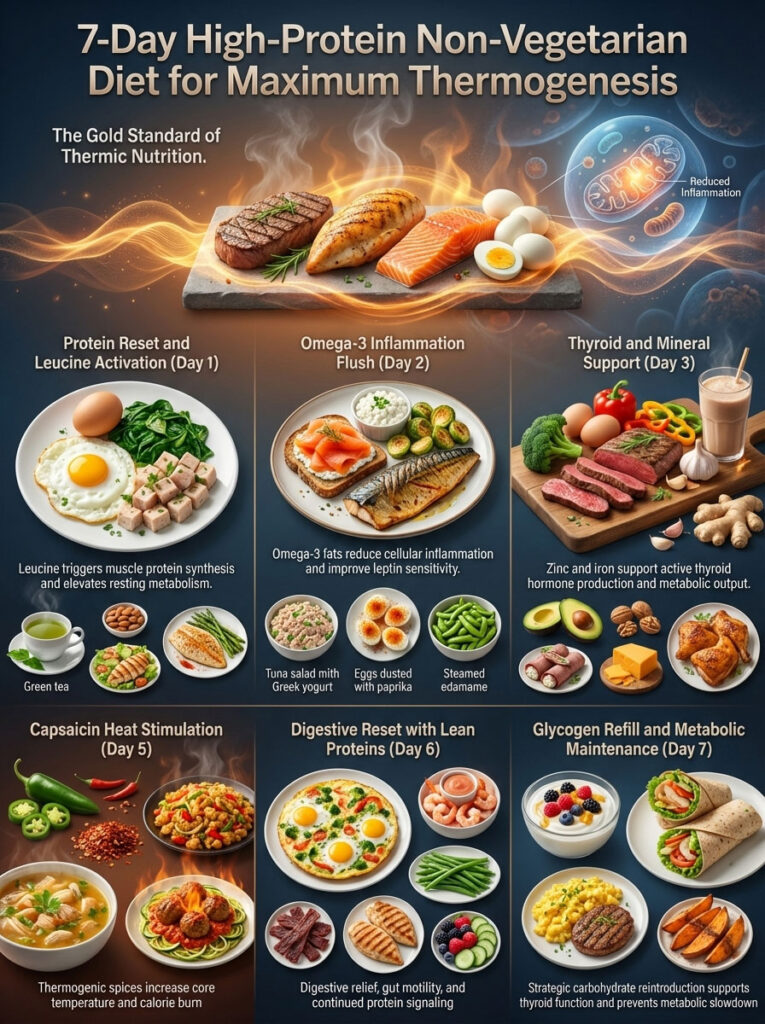
Day 1: The Protein Reset & Leucine Loading
Metabolic Focus: We start with high doses of Leucine (found in eggs and poultry) to trigger muscle protein synthesis immediately.
- Breakfast: Metabolic Omelet. 3 egg whites + 1 whole egg (for the yolk’s nutrients) scrambled with spinach and 3oz of diced lean turkey breast. Season with black pepper.
- Snack: 15 almonds and a cup of Green Tea.
- Lunch: Grilled Chicken & Acid Salad. 5oz grilled chicken breast served over mixed greens, cucumbers, and radishes. Dressing: 1 tbsp Apple Cider Vinegar + 1 tsp Olive Oil (The acid helps blunt blood sugar).
- Snack: 2 slices of low-sodium turkey breast rolled around a pickle spear.
- Dinner: White Fish Thermogenesis. 6oz Baked Cod or Halibut seasoned with cayenne pepper and lemon. Side of steamed asparagus.
Day 2: The Omega-3 Inflammation Flush
Metabolic Focus: Reducing systemic inflammation allows hormones like Leptin (satiety) to function better.
- Breakfast: Smoked Salmon Toast. 1 slice of sprouted grain bread topped with 2 tbsp cottage cheese and 3oz smoked salmon.
- Snack: Hard-boiled egg sprinkled with paprika.
- Lunch: No-Mayo Tuna Salad. 1 can of tuna (in water) mixed with 2 tbsp Greek Yogurt, celery, and dill. Served in large Romaine lettuce boats.
- Snack: 1/2 cup of edamame (pods).
- Dinner: Fatty Fish Feast. 5oz Grilled Mackerel or Salmon. The healthy fats here signal safety to the body. Served with roasted Brussels sprouts.
Day 3: Red Meat, Zinc & Thyroid Support
Metabolic Focus: Zinc and Iron are critical for the conversion of T4 to T3 (active thyroid hormone).
- Breakfast: Scramble. 2 whole eggs scrambled with green bell peppers and onions.
- Snack: Protein Shake (Whey Isolate) mixed with water.
- Lunch: Leftover Salmon cold over a bed of spinach with a squeeze of lemon.
- Snack: 1 sliced bell pepper with 2 tbsp hummus.
- Dinner: Lean Beef Stir-Fry. 5oz Lean Flank Steak or Sirloin strips stir-fried with broccoli florets, ginger, and garlic. Ginger aids digestion while beef provides the zinc.
Day 4: Metabolic Confusion (Low Carb / High Fat)
Metabolic Focus: Depleting glycogen stores slightly to force the body to burn fat for fuel (Metabolic Flexibility).
- Breakfast: The Fat Burner. 2 boiled eggs and 1/2 a sliced avocado. Drizzle with hot sauce.
- Snack: A handful of walnuts (Omega-3s).
- Lunch: Roast Beef Roll-ups. 4oz Roast beef slices smeared with mustard. Side of raw celery sticks.
- Snack: 1 string cheese or 1oz cheddar cheese.
- Dinner: Chicken Thighs. 2 roasted chicken thighs (skin removed to control calories) seasoned with rosemary. Served with cauliflower rice (fiber).
Day 5: Poultry & Capsaicin Heat Spike
Metabolic Focus: Utilizing chemical heat from peppers to raise core temperature.
- Breakfast: Spicy Turkey Scramble. 2 slices of turkey bacon chopped into 3 egg whites with jalapeños.
- Lunch: Metabolic Soup. Chicken broth-based soup with shredded chicken breast, kale, garlic, and a heavy dash of red chili flakes.
- Snack: Celery sticks with almond butter.
- Dinner: Turkey Meatballs. Baked lean turkey meatballs (use almond flour as binder) served over zucchini noodles with a spicy marinara sauce.
Day 6: Light & Lean Detox
Metabolic Focus: Giving the digestive system a break with lighter proteins to improve gut motility.
- Breakfast: Egg White Frittata. 1 cup liquid egg whites baked with mushrooms and tomatoes.
- Snack: A small pear and 10 pecans.
- Lunch: Shrimp Cocktail. 6oz boiled shrimp with sugar-free cocktail sauce and a large side salad (arugula).
- Snack: Beef Jerky (check label for low sugar).
- Dinner: Lemon Herb Chicken. Grilled chicken breast marinated in lemon and oregano. Side of steamed green beans.
Day 7: Glycogen Refuel & Maintenance
Metabolic Focus: Reintroducing complex carbs to support thyroid function and prevent metabolic slowdown from chronic low-carb eating.
- Breakfast: Greek Yogurt Bowl. 1 cup plain non-fat Greek Yogurt with 1/2 cup blueberries (antioxidants) and flaxseeds.
- Lunch: Chicken & Grain. Grilled chicken breast wrap using a whole-wheat tortilla with plenty of lettuce and tomato.
- Snack: A hard-boiled egg.
- Dinner: Burger Night. Lean ground beef patty (90/10 lean) eaten with a knife and fork (no bun). Side of baked sweet potato wedges (vitamin A).
Plan 2: 7-Day Vegetarian Meal Plan to Boost Metabolism
Many vegetarians struggle with metabolism because they rely too heavily on pasta, bread, and sugar for energy. This plan flips the script by focusing on high-biological value proteins from dairy and eggs, creating a vegetarian metabolism diet that rivals any meat-based plan.
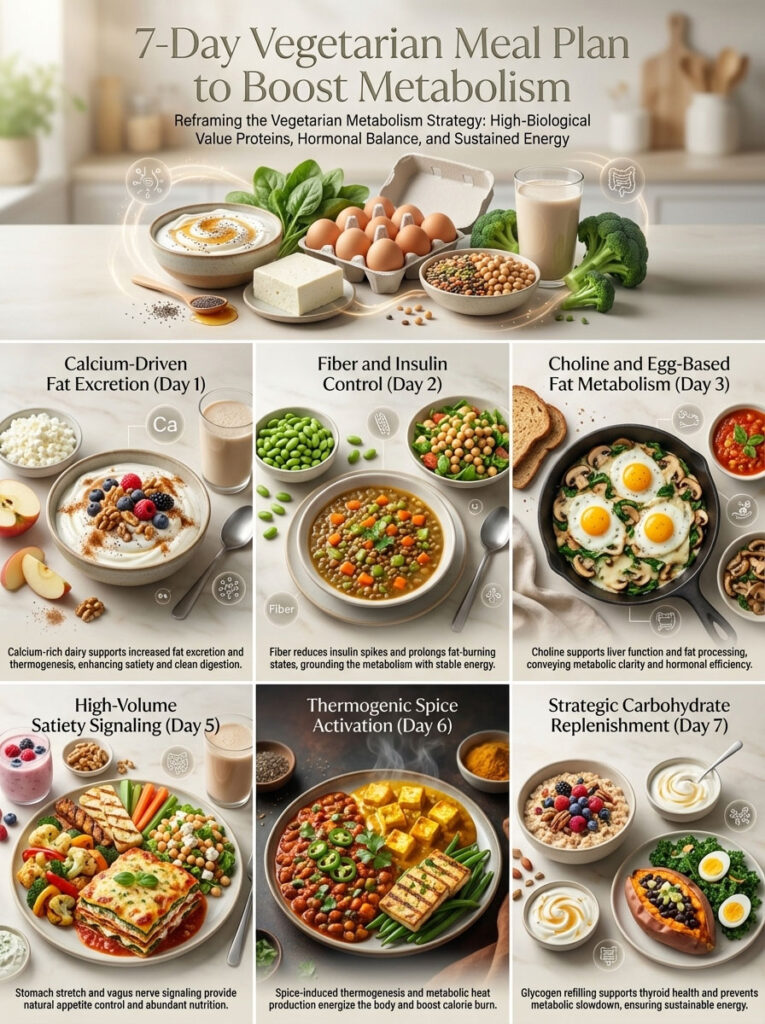
Day 1: Calcium-Rich Fat Burning
Metabolic Focus: Studies suggest that diets high in calcium from dairy can increase fat excretion.
- Breakfast: Protein Yogurt. 1 cup Plain Greek Yogurt mixed with 1 scoop of whey protein powder and chia seeds.
- Snack: A sliced apple with cinnamon (blood sugar stabilizer).
- Lunch: Egg & Avo Salad. 2 hard-boiled eggs chopped with 1/4 avocado, mixed greens, and cherry tomatoes.
- Snack: 1 cup of cottage cheese with black pepper.
- Dinner: Paneer Tikka. 5oz Grilled Paneer (Indian cottage cheese) marinated in yogurt and spices. Served with a large portion of roasted cauliflower.
Day 2: Legume & Fiber Loading
Metabolic Focus: The fiber in lentils reduces the insulin spike of the meal, keeping you in fat-burning mode longer.
- Breakfast: Savory Oats. Oatmeal cooked with water, then stir in 2 egg whites while cooking for volume. Top with nutritional yeast.
- Snack: A handful of roasted chickpeas.
- Lunch: Spicy Lentil Soup. Red lentils cooked with turmeric, cumin, and cayenne pepper.
- Snack: 2 hard-boiled egg whites.
- Dinner: Edamame Stir-Fry. Shelled edamame and firm tofu stir-fried with soy sauce, ginger, and bok choy.
Day 3: The Choline & Egg Protocol
Metabolic Focus: Eggs are high in Choline, which supports liver function and fat metabolism.
- Breakfast: Mushroom Omelet. 2 eggs + 1 egg white folded with sautéed mushrooms and Swiss cheese.
- Snack: A cheese stick and a few almonds.
- Lunch: Open-Faced Sandwich. 2 poached eggs on 1 slice of sprouted grain toast with tomato slices.
- Snack: Greek Yogurt with pumpkin seeds (Zinc source).
- Dinner: Shakshuka. Eggs poached in a spicy tomato and bell pepper sauce. Eat with a spoon or celery sticks, skip the bread.
Day 4: Fermented Gut Health Reset
Metabolic Focus: A healthy microbiome produces short-chain fatty acids that regulate appetite.
- Breakfast: Kefir Smoothie. 1 cup plain Kefir blended with spinach, half a frozen banana, and protein powder.
- Snack: A handful of walnuts.
- Lunch: Halloumi Salad. Grilled Halloumi cheese slices over arugula with a lemon-tahini dressing.
- Snack: Cucumber slices dipped in yogurt-dill sauce.
- Dinner: Tempeh Skewers. Marinated Tempeh (fermented soy) grilled with peppers and onions.
Day 5: High Volume, Low Calorie
Metabolic Focus: Stretching the stomach with low-calorie vegetables to induce satiety signaling via the Vagus nerve.
- Breakfast: Cottage Cheese Bowl. 1 cup cottage cheese topped with savory cucumbers, tomatoes, and sunflower seeds.
- Snack: 1 boiled egg.
- Lunch: The Big Salad. A massive bowl of chopped lettuce, cabbage, feta cheese, chickpeas, and vinaigrette.
- Snack: A protein shake.
- Dinner: Zucchini Lasagna. Sliced zucchini ribbons layered with ricotta cheese, marinara, and spinach. Baked until bubbly.
Day 6: Thermogenic Spice Day
Metabolic Focus: Using heat to boost calorie burn.
- Breakfast: Spicy Tofu Scramble. Crumbled tofu cooked with turmeric, black salt, and diced jalapeños.
- Snack: Sliced pear with 1 tsp almond butter.
- Lunch: Three-Bean Chili. Kidney beans, black beans, and pinto beans simmered with chili powder.
- Snack: A piece of dark chocolate (85% cocoa) – contains metabolic-boosting theobromine.
- Dinner: Spicy Green Beans & Paneer. Stir-fried green beans with garlic, chili oil, and paneer cubes.
Day 7: The Carbohydrate Refuel
Metabolic Focus: Replenishing glycogen carefully.
- Breakfast: Berry & Nut Oats. Rolled oats cooked with milk/water, topped with raspberries and walnuts.
- Snack: Greek Yogurt.
- Lunch: Leftover Chili. The resistant starch in cooled beans aids gut health.
- Snack: Carrot sticks with hummus.
- Dinner: Sweet Potato Hash. Diced sweet potatoes sautéed with kale and topped with 2 fried eggs.
Plan 3: 7-Day Vegan Fat Loss Meal Plan for Insulin Sensitivity
Vegans often have the advantage of higher fiber intake, but the disadvantage of lower protein density. This vegan fat loss meal plan solves that by combining complementary proteins and focusing on fermented soy to ensure a metabolic boost.
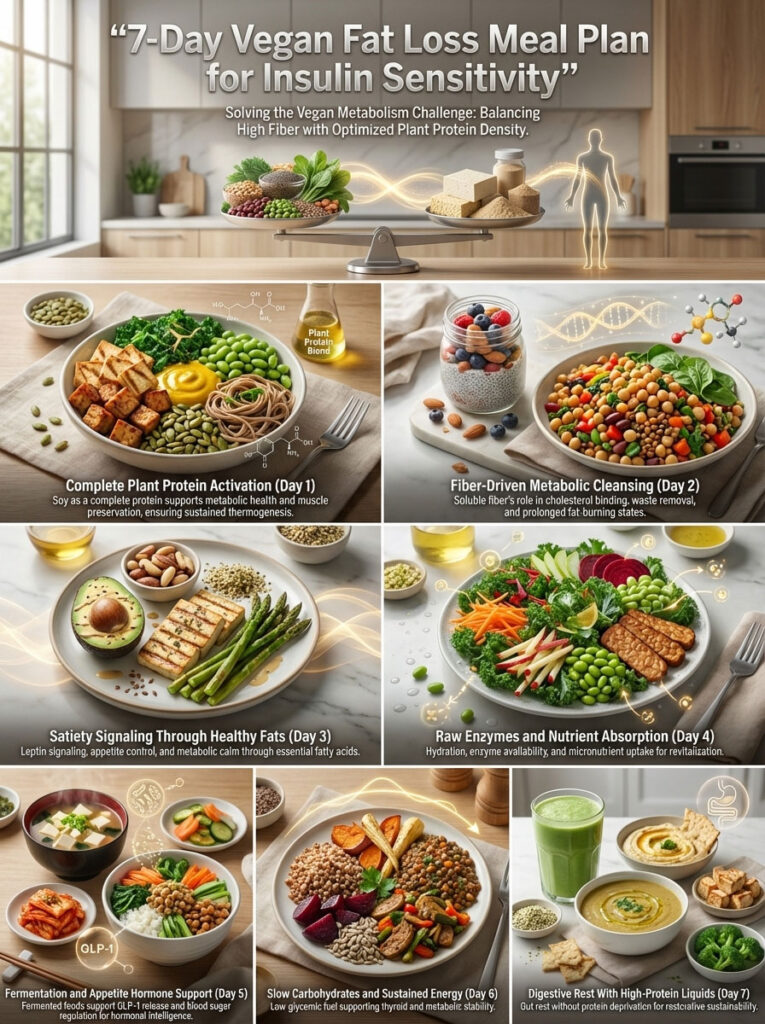
Day 1: Soy Protein & Complete Amino Acids
Metabolic Focus: Soy is a complete plant protein that has been shown to improve metabolic health in post-menopausal women and general populations.
- Breakfast: Turmeric Tofu Scramble. Firm tofu crumbled and sautéed with nutritional yeast (B12 boost), turmeric, and kale.
- Snack: A handful of pumpkin seeds (high in magnesium).
- Lunch: Tempeh BLT Wraps. Smoky marinated Tempeh strips, tomato, and avocado wrapped in large collard green leaves.
- Snack: A vegan protein shake (Pea/Rice blend).
- Dinner: Soba Noodle Stir-Fry. Buckwheat noodles (high protein grain) tossed with edamame and broccoli.
Day 2: The Fiber Flush
Metabolic Focus: Soluble fiber binds to waste and cholesterol, improving metabolic efficiency.
- Breakfast: Chia Seed Pudding. 3 tbsp chia seeds soaked overnight in unsweetened almond milk with vanilla and walnuts.
- Snack: 1/2 cup roasted chickpeas.
- Lunch: Three-Bean Salad. Chickpeas, kidney beans, and cannellini beans tossed with parsley, lemon juice, and olive oil.
- Snack: Sliced bell peppers.
- Dinner: Red Lentil Dahl. A warming stew of red lentils, coconut milk (light), spinach, and curry spices.
Day 3: Healthy Fats & Satiety
Metabolic Focus: Using healthy fats to signal the brain’s satiety centers (Leptin) to prevent overeating.
- Breakfast: Green Protein Smoothie. Spinach, 1 scoop vegan vanilla protein, flaxseeds, and 1/4 avocado for creaminess.
- Snack: A handful of Brazil nuts (Selenium for thyroid).
- Lunch: Quinoa & Tahini Bowl. Quinoa topped with roasted veggies and a dressing made of tahini and lemon.
- Snack: Celery with almond butter.
- Dinner: Hemp Crusted Tofu. Slices of tofu pressed into hemp seeds and baked until crispy. Served with steamed asparagus.
Day 4: Raw Enzyme Rev-Up
Metabolic Focus: Increasing the intake of raw foods to maximize nutrient absorption and hydration.
- Breakfast: Overnight Oats. Oats soaked in soy milk with pumpkin pie spice.
- Snack: A green apple.
- Lunch: Raw Power Salad. A base of massaged kale topped with raw marinated tempeh cubes, shredded carrots, beets, and avocado.
- Snack: Edamame in pods.
- Dinner: Stuffed Peppers. Bell peppers stuffed with a mixture of cooked lentils, mushrooms, and walnuts. Baked until tender.
Day 5: Fermentation for GLP-1 Support
Metabolic Focus: Fermented foods can stimulate the release of GLP-1, a hormone that regulates appetite and blood sugar.
- Breakfast: Savory Miso Soup. Traditional Miso soup with soft tofu cubes and wakame seaweed. (Excellent light start).
- Snack: Rice cake with avocado.
- Lunch: Sushi Bowl. Brown rice, nori strips, cucumber, avocado, and pickled radish (daikon).
- Snack: Kimchi (eat straight from the jar for probiotics).
- Dinner: Kimchi Tofu Stew. A spicy stew made with kimchi, gochugaru (chili powder), and tofu.
Day 6: Root Vegetable & Slow Carbs
Metabolic Focus: Using low-glycemic index root vegetables for sustained energy.
- Breakfast: Buckwheat Porridge. Buckwheat groats cooked like oatmeal, topped with almond butter.
- Snack: A handful of sunflower seeds.
- Lunch: Beet & Lentil Salad. Roasted beets and French lentils served over arugula with a balsamic vinaigrette.
- Snack: A vegan protein bar (low sugar).
- Dinner: Seitan Stir-Fry. Seitan (wheat meat) is incredibly high in protein. Stir-fry with peppers and onions.
Day 7: Liquid Nutrition & Gut Rest
Metabolic Focus: Giving the digestive system a break while keeping protein high.
- Breakfast: Berry Spinach Smoothie. Protein powder, mixed berries, spinach, and water.
- Snack: Cucumber slices with hummus.
- Lunch: Roasted Tomato Soup. A hearty soup made with roasted tomatoes and red lentils blended until smooth.
- Snack: 10 almonds.
- Dinner: The Buddha Bowl. Steamed broccoli, carrots, and sweet potato served with a side of grilled tofu and hemp hearts.
Top Foods That Speed Up Metabolism and Burn Belly Fat Naturally
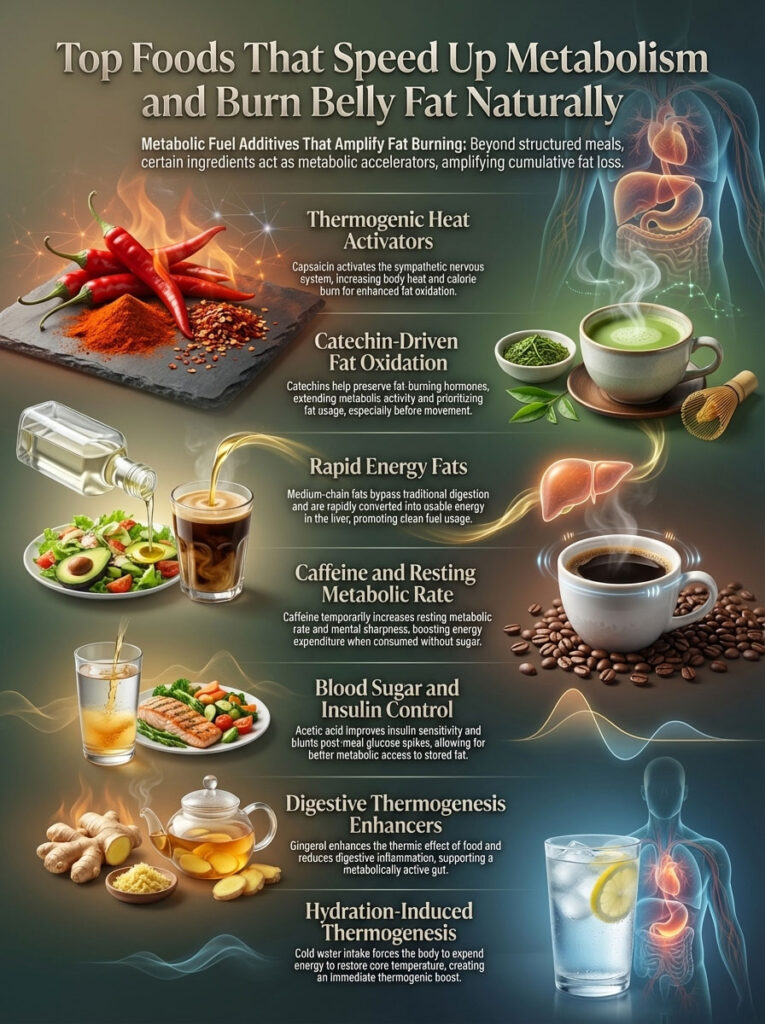
While the meal plans provide the structure, specific ingredients act as the “fuel additives” to make your engine run hotter. Incorporating these foods that speed up metabolism into your daily routine can yield cumulative results over time.
Analysis of Thermogenic Compounds
The table below breaks down the specific active compounds in superfoods that drive metabolic change.
| Superfood Category | Active Ingredient | Metabolic Mechanism | Recommended Dosage |
| Spicy Peppers | Capsaicin | Stimulates the sympathetic nervous system to release catecholamines, increasing body heat. | 1/2 tsp of cayenne or chili flakes daily. |
| Green Tea / Matcha | EGCG (Catechins) | Inhibits the breakdown of norepinephrine, keeping the fat-burning signal active longer. | 2–3 cups daily, preferably before movement. |
| MCT Oil | Medium-Chain Triglycerides | Bypasses normal fat digestion; goes straight to the liver to be burned for energy (ketones). | 1 tsp in coffee or salad dressing. |
| Coffee | Caffeine | Blocks adenosine receptors and increases RMR by 3–11% temporarily. | 1–2 cups black (no sugar). |
| Apple Cider Vinegar | Acetic Acid | Improves insulin sensitivity and reduces blood sugar spikes when taken with meals. | 1 tbsp in water before dinner. |
| Ginger | Gingerol | Enhances the thermic effect of food and reduces digestive inflammation. | 1 inch fresh root grated into tea/food. |
| Cold Water | H2O (Temperature) | Induces water-induced thermogenesis to warm the fluid to body temp. | 500ml ice cold upon waking. |
Essential Lifestyle Integrations for Metabolic Health
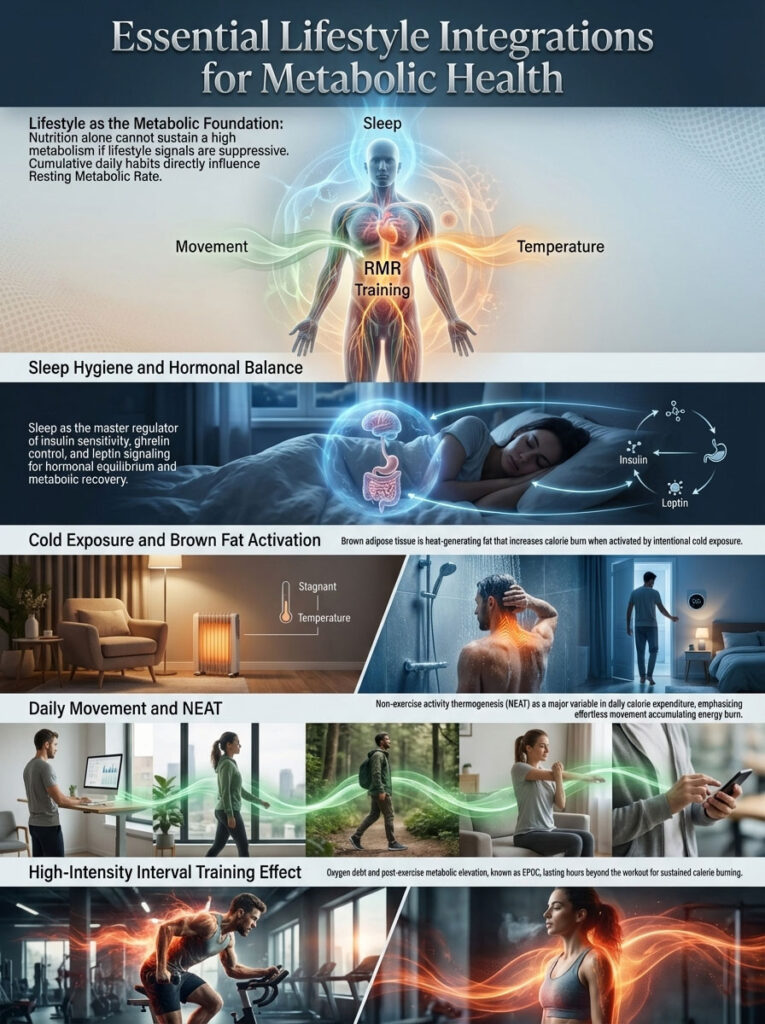
You cannot simply eat your way to a high metabolism if your lifestyle is actively suppressing it. The following factors are just as critical as the 7 day meal plan to increase metabolism naturally.
Sleep Hygiene: The Metabolic Regulator
Sleep is when your body balances its hormones. A single night of sleep deprivation can induce a state of insulin resistance similar to type 2 diabetes. Furthermore, lack of sleep spikes Ghrelin (the hormone that makes you crave carbs) and crushes Leptin (the hormone that tells you you are full). To protect your RMR, aim for 7–8 hours of quality sleep in a cool, dark room.
Cold Exposure and Brown Fat
As mentioned earlier, Brown Adipose Tissue (BAT) is a metabolically active fat that burns energy to create heat. Modern humans live in climate-controlled environments, so our BAT becomes dormant. Re-activate it by:
- Turning your shower to cold for the last 30–60 seconds.
- Keeping your bedroom temperature cooler (around 65°F) at night.
Non-Exercise Activity Thermogenesis (NEAT)
NEAT refers to the calories you burn doing everything except sleeping, eating, or dedicated exercise. This includes walking to the car, typing, fidgeting, and standing.
- The Impact: NEAT can vary by up to 2,000 calories a day between two people of the same size.
- The Fix: If you have a desk job, set a timer to stand up and stretch every 30 minutes. Pacing while on the phone or parking further away at the grocery store effectively boosts your daily calorie burn without “working out.”
High-Intensity Interval Training (HIIT)
While diet is 80% of the equation, the right exercise matters. Long, slow cardio (like jogging) burns calories while you do it, but stops when you stop. HIIT (short bursts of intense effort followed by rest) creates an “Oxygen Debt” or EPOC (Excess Post-Exercise Oxygen Consumption). This keeps your metabolism elevated for hours after you leave the gym.
Frequently Asked Questions
What is the fastest way to increase metabolism naturally?
The fastest physiological method is a combination of a high protein meal plan (to maximize TEF), heavy resistance training (to build metabolically active muscle), and ensuring 7+ hours of sleep. There is no pill that works faster than this trio.
Can I mix and match days from the Veg and Non-Veg plans?
Absolutely. The human body does not know “diet labels.” It only recognizes nutrients. As long as you hit your protein target (approx 20–30g per meal), you can eat Chicken on Monday and Tofu on Tuesday. This is often better for gut diversity.
Does eating frequent small meals really boost metabolism?
The old “stoking the fire” myth is partially true but often exaggerated. It is not the frequency alone that matters, but the protein pacing. Eating protein every 4 hours stimulates muscle synthesis better than eating it all at once. If you eat small, carb-heavy snacks, you will hurt your metabolism by constantly spiking insulin.
Why am I gaining weight despite eating healthy foods?
“Healthy” does not mean “calorie-free.” Foods like avocado, nuts, olive oil, and dark chocolate are excellent for you, but they are incredibly calorie-dense. If you eat them in surplus, you will gain weight. You must still be in an energy balance appropriate for your body.
Is spicy food enough to lose weight on its own?
No. Capsaicin provides a metabolic boost of roughly 1–3% (about 50 calories a day). While this adds up to ~5lbs of fat loss over a year, it will not offset a bad diet. Think of spice as a “bonus,” not the main strategy.
What drinks boost metabolism in the morning?
The trifecta is:
Ice Cold Water: For thermogenesis.
Black Coffee: For caffeine-induced RMR increase.
Green Tea/Matcha: For EGCG fat oxidation.
Avoid sugary juices or “detox” drinks loaded with fruit sugar.
How does age affect metabolism?
Metabolism does slow with age, but recent data suggests this is largely due to sarcopenia (muscle loss) and inactivity, rather than aging itself. If you maintain muscle mass through lifting weights and eating high protein, you can maintain a “youthful” metabolic rate well into your 60s and 70s.
Can vegans get enough protein to boost TEF?
Yes, but it is harder. Plant proteins are often less bioavailable and come wrapped in carbs. Vegans should focus on protein isolates (pea/rice powder), soy (tempeh/tofu), and seitan to hit high protein numbers without excessive calories.
Are cheat meals allowed on this 7-day plan?
For a 7-day reset, we recommend zero cheat meals. You are trying to break the cycle of insulin resistance and sugar addiction. A cheat meal can reset your progress. Once you are in a maintenance phase, an 80/20 approach (80% clean, 20% fun) is sustainable.
How much water should I drink to burn fat?
A good rule of thumb is half your body weight in ounces. If you weigh 160 lbs, aim for 80 oz of water. If you are exercising and sweating, add more. Dehydration stalls liver function, which is critical for burning fat.
Do I need supplements to boost metabolism?
Most “fat burner” supplements sold in stores are ineffective stimulants. The best supplements are Protein Powder (to ensure you hit TEF goals), Creatine (to support muscle energy), and Vitamin D/Zinc (to support thyroid health). Real food is always superior.
What should I do after the 7 days are over?
Do not return to the habits that slowed your metabolism. Use this week as a springboard. You can relax the strictness slightly, but keep the principles of Protein Pacing and High Vegetable intake. Many people cycle this 7-day plan once a month to keep their system sharp.
Disclaimer: This article is for informational purposes only and does not constitute medical advice. Metabolic rates vary significantly based on genetics, current weight, medical history (such as Hypothyroidism, PCOS, or Cushing’s syndrome), and activity levels. Always consult with a physician or registered dietitian before making drastic changes to your diet or exercise routine, especially if you have pre-existing conditions like diabetes or kidney disease.
References:
- American Journal of Clinical Nutrition (Research on Thermic Effect of Food and Protein Pacing).
- Journal of Clinical Endocrinology & Metabolism (Studies regarding Water-Induced Thermogenesis).
- International Journal of Obesity (Meta-analysis of Capsaicin and Energy Expenditure).
- Journal of the American College of Nutrition (Effects of Vegetarian Diets on Metabolic Rate).