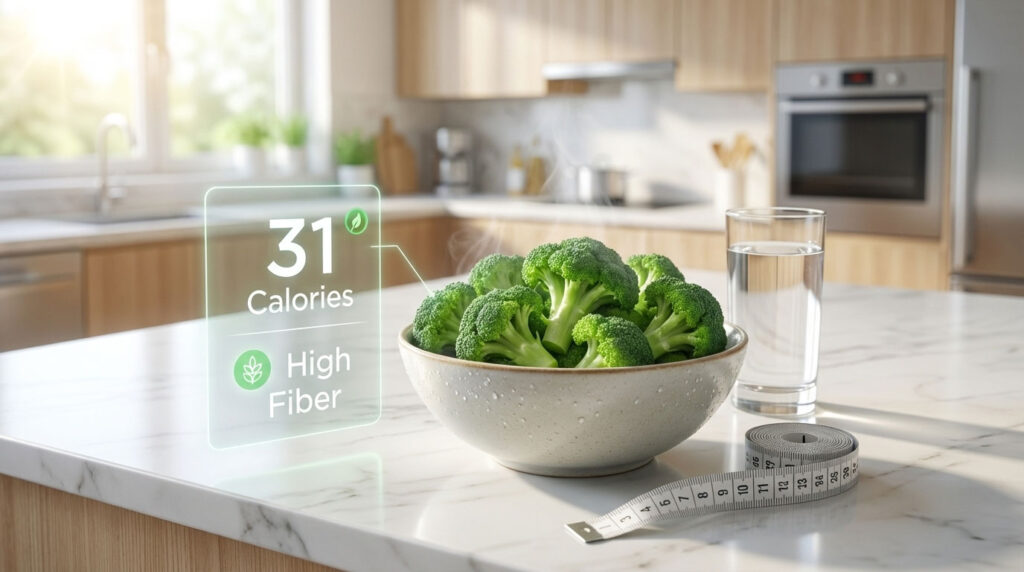
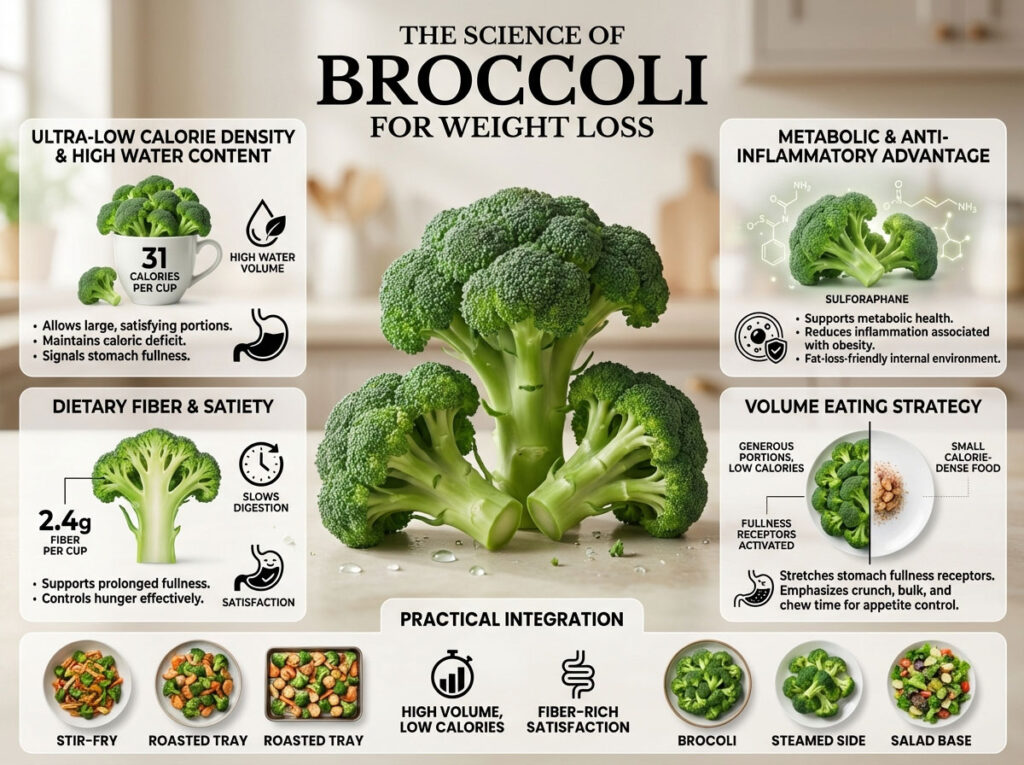
Is broccoli good for weight loss? The short answer is a definitive yes. Broccoli is widely regarded by nutritionists and metabolic researchers as a top-tier food for fat loss. With only 31 calories per cup and high water content, it allows you to eat a satisfying volume of food while maintaining a caloric deficit. Its rich profile of dietary fiber (2.4g per cup) aids in satiety, while unique compounds like sulforaphane may actively support metabolic health and reduce inflammation. For anyone serious about shedding pounds, mastering the use of broccoli for weight loss is a foundational strategy.
Table of Contents
Losing weight in the United States often feels like an uphill battle against hunger and cravings. The standard American diet is full of calorie-dense foods that leave you feeling empty just an hour after eating. You might find yourself caught in a cycle of restricting calories, feeling starving, and then overeating. This is not a failure of willpower. It is often a failure of food density.
The solution lies in “volume eating,” and cruciferous vegetables are the kings of this domain. Broccoli specifically offers a unique combination of bulk, crunch, and metabolic support that other vegetables struggle to match. By integrating broccoli and weight loss strategies into your daily meal plan, you can physically stretch your stomach triggers to signal fullness to your brain without blowing your daily calorie budget. This guide will serve as your comprehensive resource. We will cover the specific science of how does broccoli help with weight loss, provide a detailed broccoli portion guide, and share kitchen-tested broccoli recipes for weight loss that ensure you actually enjoy eating your greens.
How Broccoli Promotes Satiety and Burns Fat Through Metabolic Science
To understand the true potential of broccoli weight loss benefits, we must look at the physiological mechanisms at play. It is not just about “eating your veggies” because you were told to. It is about how the chemical structure of broccoli interacts with your hunger hormones and metabolic rate.
The Volume Eating Mechanism and Caloric Density
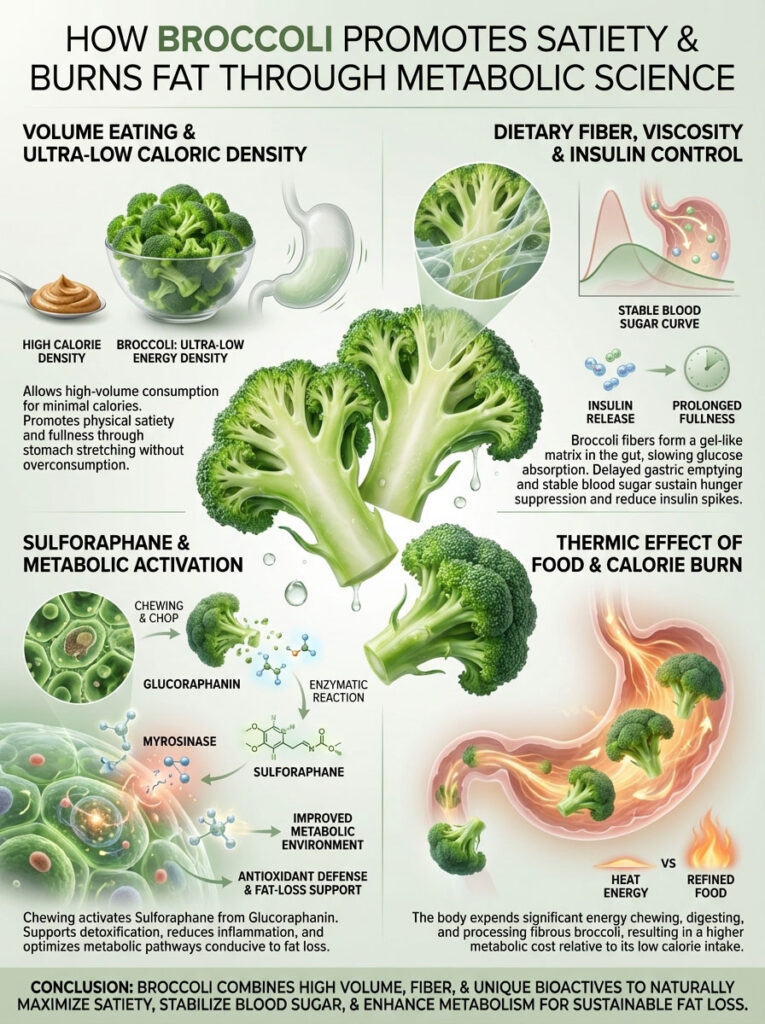
Weight loss comes down to energy balance, but hunger is determined by stomach volume and hormonal signals. Broccoli is good for weight loss because it has incredibly low energy density. You can eat a massive amount of it for very few calories.
Consider this comparison. A standard serving of peanut butter is two tablespoons, which is about 190 calories. That same 190 calories equals nearly six cups of chopped raw broccoli. If you tried to eat six cups of broccoli in one sitting, you would likely fail because your stomach physically cannot hold that much volume comfortably. This is the power of volume eating. By filling your plate with low calorie vegetables for weight loss, you trigger the stretch receptors in your stomach wall (mechanoreceptors). These receptors send a signal via the vagus nerve to your brain stem indicating that you are full. You stop eating because you feel physically satisfied, not because you ran out of points or calories on an app.
Dietary Fiber, Viscosity, and Insulin Regulation
A single cup of raw broccoli delivers approximately 2.4 grams of dietary fiber, while cooked versions can pack nearly double that amount per cup due to shrinkage. This fiber is crucial for regulating insulin.
When you consume simple carbohydrates (like white bread or sugary snacks), your blood sugar spikes rapidly. In response, your pancreas floods your body with insulin to bring those levels down. High levels of circulating insulin can inhibit lipolysis, the process of breaking down fat. Broccoli’s fiber adds viscosity to your digestive contents. It forms a gel-like matrix in the gut that slows down the absorption of glucose into the bloodstream.
This slow release prevents the drastic insulin spikes that signal your body to store fat. By keeping your blood sugar stable, broccoli for fat loss works by keeping your body in a state where it is more willing to burn stored energy. Furthermore, fiber delays gastric emptying. Food sits in your stomach longer, keeping the hunger hormone ghrelin suppressed for hours after your meal.
Sulforaphane and Glucoraphanin: The Metabolic Spark
Broccoli contains a glucosinolate called glucoraphanin. When the plant tissue is damaged (chewed, chopped, or blended), an enzyme called myrosinase is released. This enzyme converts glucoraphanin into sulforaphane.
Sulforaphane is a powerhouse compound in the world of nutritional science. Research indicates that it activates the Nrf2 pathway, which controls the expression of antioxidant proteins that protect against oxidative damage and inflammation. Why does this matter for weight loss? Chronic inflammation in fat tissue (adipose tissue) is a known barrier to weight loss and is linked to insulin resistance. By lowering systemic inflammation, cruciferous vegetables like broccoli help create a biological environment that is more conducive to shedding weight. Some animal studies even suggest sulforaphane may help prevent diet-induced obesity, though human research is still evolving.
The Thermic Effect of Food (TEF) on Metabolism
Every food requires energy to digest. This is known as the Thermic Effect of Food (TEF). Protein has the highest TEF, but fibrous vegetables like broccoli are a close second regarding metabolic cost relative to their calorie count.
Because broccoli is made of tough cellulose and complex fibers, your body has to work hard to break it down. You expend energy chewing it, and your digestive system expends energy processing the fiber. While you won’t burn off a pizza by eating a stalk of broccoli, the high TEF of broccoli and weight loss diets means your net calorie intake is slightly lower than what is listed on the package. You are burning calories simply by digesting your dinner.
Comprehensive Broccoli Nutrition Facts and Calorie Breakdown Per Cup
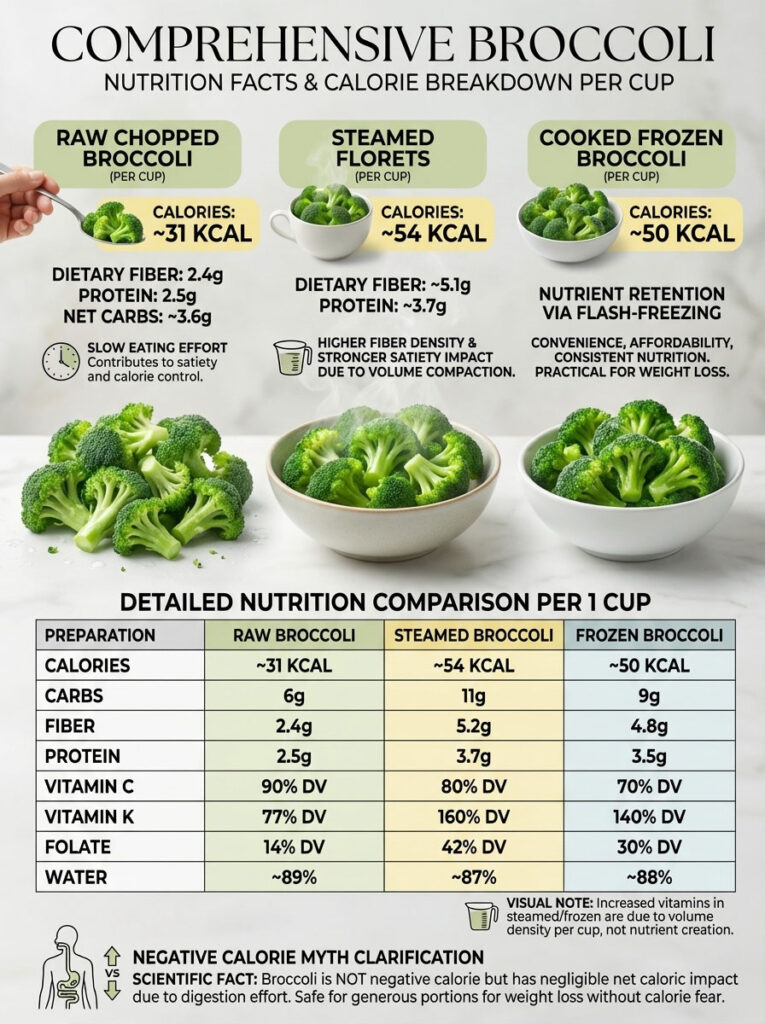
Accurate tracking is essential for weight management. Many dieters ask, “how many calories are in 1 cup of broccoli?” The answer depends entirely on how the broccoli is prepared. Water content changes during cooking, which alters the density and nutrient profile per cup.
Raw Broccoli Nutritional Profile
Raw broccoli is excellent for hydration and crunch. It contains the highest levels of Vitamin C because this vitamin degrades with heat.
- Calories: ~31 kcal per cup (chopped)
- Fiber: 2.4g
- Protein: 2.5g
- Net Carbs: ~3.6g
- Key Insight: Eating it raw requires vigorous chewing, which slows down your eating pace. Studies show that eating slower correlates with lower overall calorie intake because it gives your brain time to register fullness.
Steamed Broccoli Nutritional Profile
Steaming is often considered the optimal cooking method for health. It softens the tough fibers without leaching nutrients into boiling water.
- Calories: ~54 kcal per cup (florets)
- Fiber: ~5.1g
- Protein: ~3.7g
- Key Insight: Notice that the calories and fiber roughly double. This is because steaming collapses the structure of the broccoli. You can fit nearly twice as much actual vegetable matter into a cup of steamed broccoli compared to raw. If your goal is maximizing fiber intake for satiety, steamed broccoli calories 1 cup offer a better return on investment than raw.
Frozen Broccoli Bioavailability and Convenience
There is a myth that fresh is always better. However, regarding “nutrition of 1 cup broccoli” from the freezer aisle, the news is good. Frozen broccoli is harvested at peak ripeness and flash-frozen. This preserves the nutrient profile that often degrades in “fresh” broccoli that sits on a truck for a week.
- Convenience: It is pre-chopped and ready to cook.
- Cost: It is often cheaper per pound than fresh, lowering the barrier to healthy eating.
- Texture: It is softer when cooked, making it ideal for soups and stir-fries but less ideal for roasting if you want a crunch.
Detailed Nutritional Comparison Table Per 1 Cup Serving
The following table breaks down the differences to help you log your meals accurately.
| Nutrient Profile (1 Cup) | Raw Broccoli (Chopped) | Steamed Broccoli (Florets) | Frozen Broccoli (Cooked) |
| Calories | ~31 kcal | ~54 kcal | ~50 kcal |
| Total Carbohydrates | 6g | 11g | 9g |
| Dietary Fiber | 2.4g | 5.2g | 4.8g |
| Protein | 2.5g | 3.7g | 3.5g |
| Vitamin C (% DV) | 90% | 80% | 70% |
| Vitamin K (% DV) | 77% | 160% | 140% |
| Folate (B9) | 14% DV | 42% DV | 30% DV |
| Water Content | ~89% | ~87% | ~88% |
Note: The dramatic increase in Vitamin K and Folate in cooked versions is due to the volume density described above. You are simply eating more vegetable mass per cup.
Is Broccoli a Negative Calorie Food?
You may see claims that broccoli is a “negative calorie food,” implying you burn more calories digesting it than it contains. This is scientifically inaccurate. While the TEF is high, it is not 100%. You will still absorb some calories. However, the net caloric impact is so negligible that for all practical intents of a weight loss plan, you can consider broccoli calories to be “free” food. No one ever stalled their weight loss progress by eating too much plain steamed broccoli.
Comparative Analysis: Broccoli vs. Other Weight Loss Vegetables
Broccoli is often pitted against other greens. While all vegetables are good, broccoli benefits for weight loss often edge out the competition due to the balance of protein, fiber, and volume.
Broccoli vs. Spinach
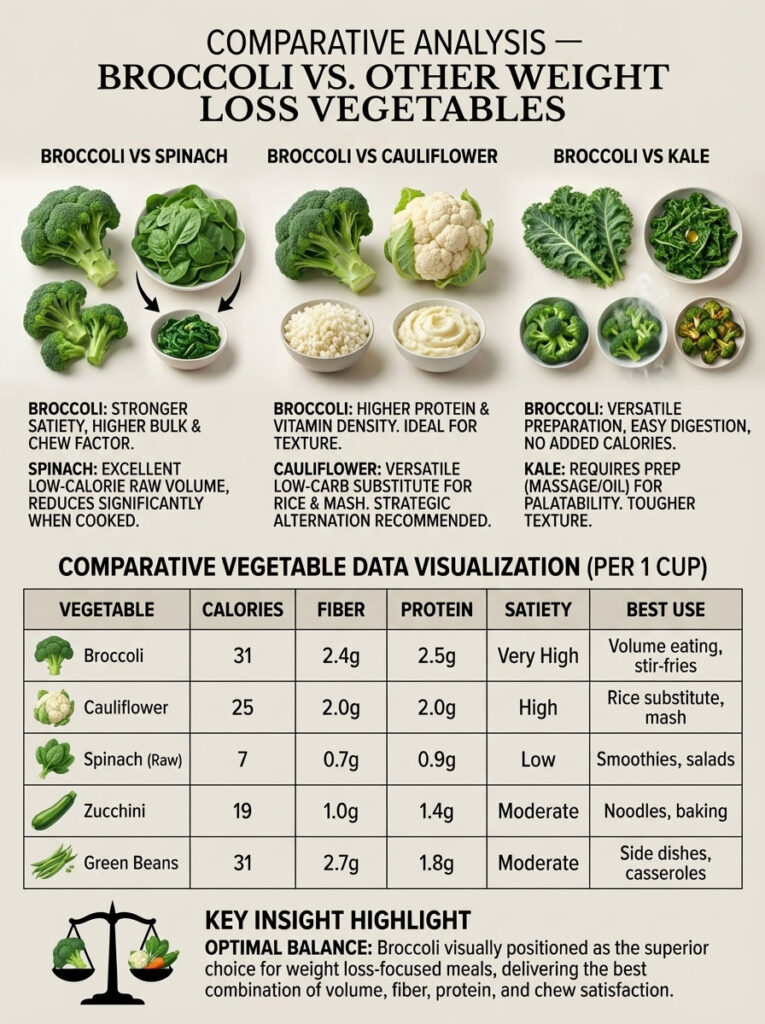
Spinach is lower in calories (7 calories per cup raw), but it shrinks to almost nothing when cooked. You would have to eat a mixing bowl of spinach to get the same satiety signal as a cup of broccoli. Broccoli provides a “chew factor” that spinach lacks, which is psychologically important for feeling like you have eaten a real meal.
Broccoli vs. Cauliflower
These are siblings in the cruciferous family. Cauliflower is slightly lower in calories (27 per cup) and is fantastic for mimicking starches like rice or mashed potatoes. However, broccoli generally contains more protein and Vitamin K. For a balanced diet, alternating between the two is a great strategy.
Broccoli vs. Kale
Kale is nutrient-dense but can be difficult to digest raw due to tough fibers. Massaging kale with oil helps, but adds calories. Broccoli is more versatile as it can be steamed, roasted, or eaten raw without significant preparation effort.
Comparative Vegetable Data Table
Use this to choose the best vegetable for your specific meal goals.
| Vegetable (1 Cup) | Calories | Fiber | Protein | Satiety Score | Best Use Case |
| Broccoli | 31 | 2.4g | 2.5g | Very High | Volume eating, Stir-frys |
| Cauliflower | 25 | 2.0g | 2.0g | High | Rice substitute, Mash |
| Spinach (Raw) | 7 | 0.7g | 0.9g | Low (Low volume) | Smoothies, Salads |
| Zucchini | 19 | 1.0g | 1.4g | Moderate | Noodles, Baking |
| Green Beans | 31 | 2.7g | 1.8g | Moderate | Side Dish, Casserole |
Daily Broccoli Portion Guide: How Much Broccoli Per Day for Weight Loss?
Knowing that broccoli helps with weight loss is step one. Knowing how much to eat is step two. Overeating fiber too quickly can cause distress, while undereating won’t trigger the satiety benefits.
Recommended Daily Intake for Fat Loss
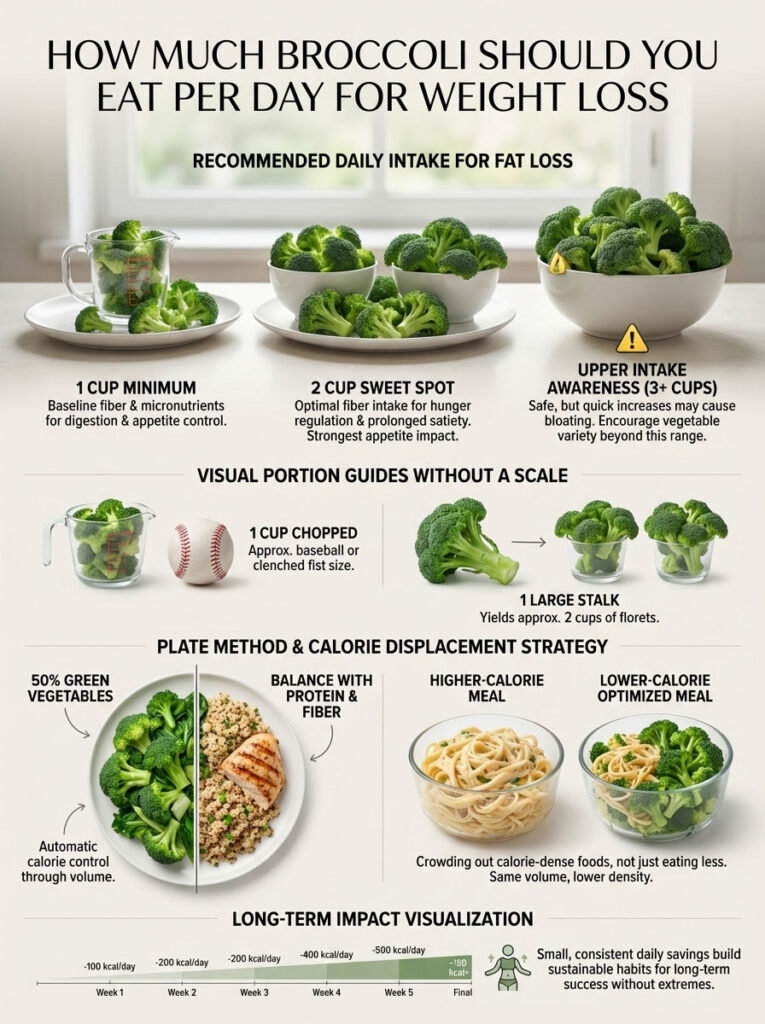
For the average adult in the US aiming for weight loss, the target zone is 1 to 2.5 cups of broccoli per day.
- The 1 Cup Minimum: This ensures you are getting a baseline of nutrients and fiber to aid digestion.
- The 2 Cup Sweet Spot: This provides roughly 5 to 10 grams of fiber (depending on cooking method), which is nearly a third of the recommended daily intake. This level significantly impacts hunger hormones.
- Upper Limits: Eating more than 3 cups a day is generally safe but can lead to “fiber overload,” resulting in bloating or gas. It is better to diversify with other vegetables at that point.
Visualizing Portions Without a Scale
We don’t always carry food scales. Use these visual benchmarks:
- 1 Cup Chopped: About the size of a baseball or a standard clenched fist.
- 1 Large Stalk: Usually yields about 2 cups of florets.
- Plate Method: When dining out or serving yourself, look at your plate. Visualize a line down the center. One entire side (50%) should be covered in green. If that green is broccoli, you are visually assuring a lower-calorie meal.
The Calorie Displacement Method
The most effective way to use how much broccoli per day for weight loss is not by adding it to a bad diet, but by using it to displace calorie-dense foods. This is “crowding out.”
Practical Application:
Imagine you usually eat a bowl of Spaghetti Bolognese for dinner.
- Old Way: 2 cups of pasta (400 cal) + 1 cup sauce/meat (300 cal). Total: 700 calories.
- New Way: 1 cup of pasta (200 cal) mixed with 1 cup of steamed broccoli (50 cal) + 1 cup sauce/meat (300 cal). Total: 550 calories.
You have just saved 150 calories without eating less food. The volume in the bowl is exactly the same. The weight of the food is arguably heavier. But the caloric density has dropped. If you do this for dinner 5 nights a week, you save 750 calories. Over a year, this small habit alone accounts for over 10 pounds of theoretical weight loss.
Best Way to Eat Broccoli for Weight Loss and Preparation Techniques
To sustain a diet, food must taste good. However, bad preparation can ruin the broccoli benefits for weight loss by adding unnecessary fat or destroying nutrients.
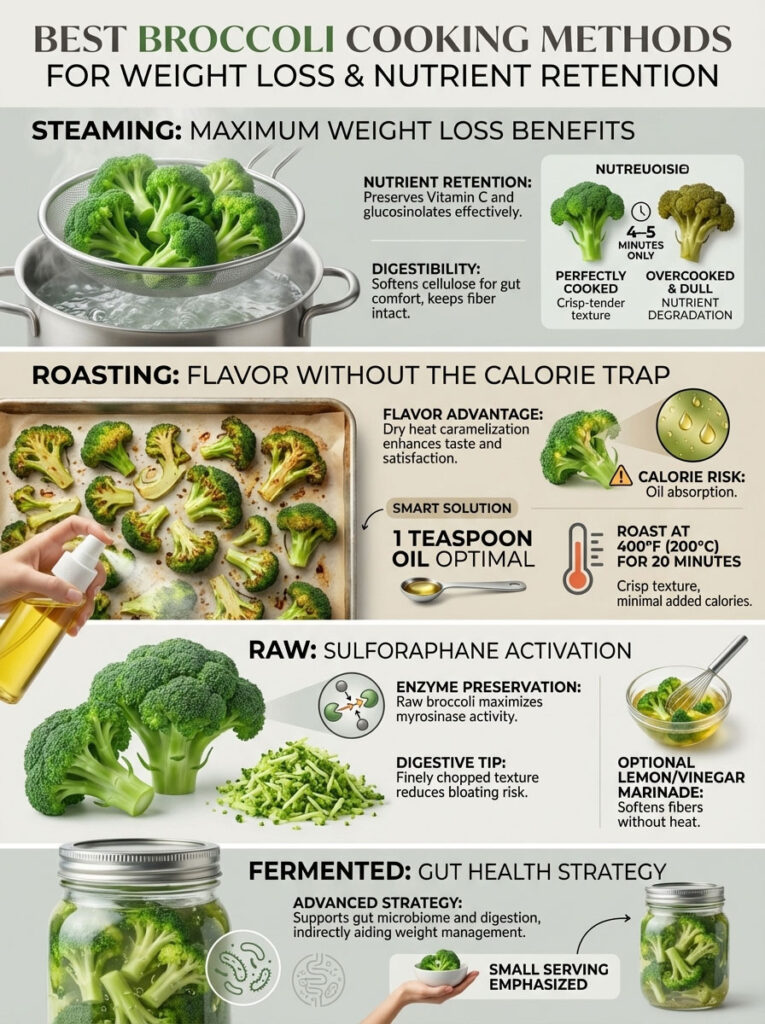
The Science of Steaming
Steaming is arguably the best way to eat broccoli for weight loss. Unlike boiling, where vitamins leach into the water and are poured down the sink, steaming suspends the vegetable above the water.
- Nutrient Retention: Studies show steaming preserves the highest levels of Vitamin C and glucosinolates.
- Digestibility: It breaks down the tough cellulose just enough to make it easy on the gut while keeping the fiber intact.
- Technique: Steam for 4 to 5 minutes max. It should be bright emerald green and crisp-tender. If it turns olive drab and mushy, you have overcooked it and degraded the nutrients.
Roasting Without the Calorie Trap
Roasting is the most flavorful method because dry heat causes caramelization (the Maillard reaction). However, traditional recipes call for drenching the broccoli in olive oil.
- The Risk: Broccoli florets are like sponges. They soak up oil. Two tablespoons of oil add roughly 240 calories.
- The Solution: Use an oil mister or spray. You can coat a whole sheet pan of broccoli with 1 teaspoon of oil (40 calories) if you use a spray bottle. Use parchment paper to prevent sticking. Roast at 400°F (200°C) for 20 minutes for perfect crispiness.
Raw Consumption and Digestion
Eating broccoli raw maximizes the intake of myrosinase, the enzyme that creates sulforaphane.
- Tip: If raw broccoli makes you bloated, try chopping it very finely (like a slaw). This does some of the mechanical breakdown work for your stomach. Marinating raw broccoli in lemon juice or vinegar for 20 minutes can also soften the fibers slightly without heat (“ceviche style”).
Fermented Broccoli (Advanced Gut Health)
Fermenting broccoli (pickling it in salt brine) creates probiotics. A healthy gut microbiome is increasingly linked to easier weight management. Adding a small side of fermented broccoli stems to your meal can aid digestion.
5 Delicious Low-Calorie Broccoli Recipes for Weight Loss and Fat Burning
Boredom is the enemy of consistency. These broccoli recipes for weight loss are designed to be high in flavor, high in volume, and low in calories.
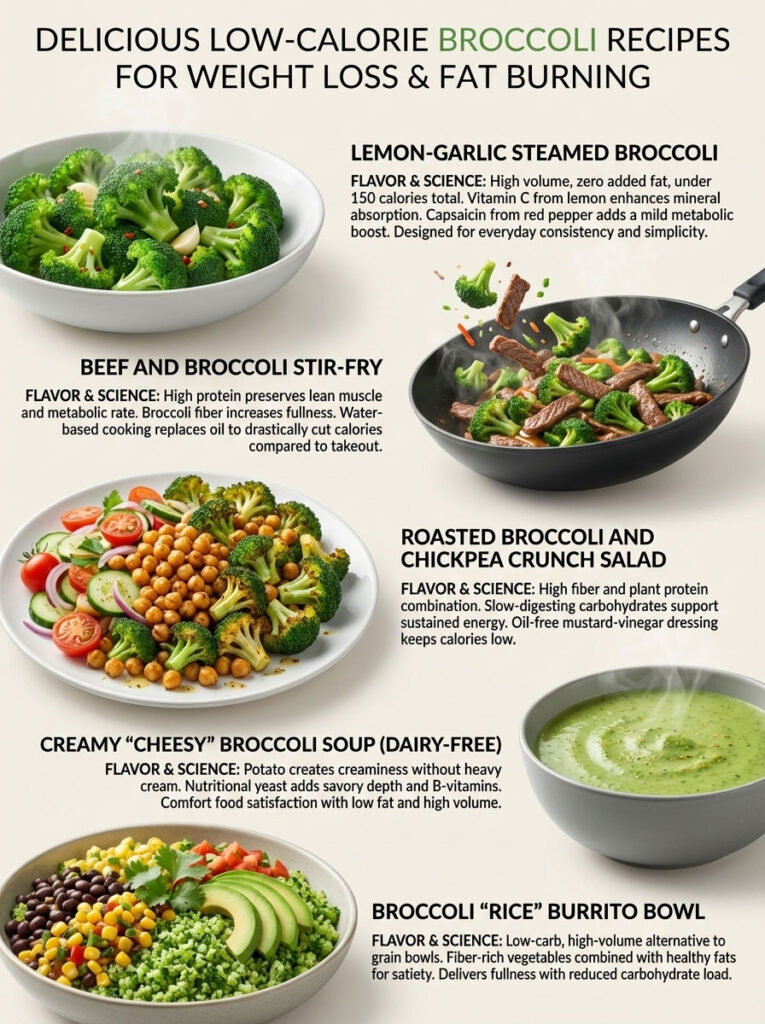
1. Lemon-Garlic Steamed Broccoli (The Everyday Essential)
This dish is fast, impossible to mess up, and goes with everything.
- Ingredients: 4 cups broccoli florets, Juice of 1 fresh lemon, 2 cloves minced garlic, 1/2 tsp red pepper flakes, Salt to taste.
- Instructions: Steam the broccoli for 4 minutes. While hot, toss immediately with the lemon juice, garlic, and spices.
- Why it works: The Vitamin C in the lemon boosts iron absorption. The red pepper flakes contain capsaicin, which gives a tiny, temporary boost to metabolism. Zero added fat means this huge bowl is under 150 calories total.
2. Beef and Broccoli Stir-Fry (The High Protein Builder)
A takeout classic reinvented for broccoli fat loss.
- Ingredients: 1 lb lean flank steak (sliced thin), 4 cups broccoli florets, 1 tbsp fresh ginger (grated), 2 cloves garlic, 1/4 cup low-sodium soy sauce (or Tamari), 1 tbsp rice vinegar, Stevia or Monk fruit drops (optional for sweetness).
- Instructions: Sear the beef in a non-stick pan/wok using cooking spray. Remove beef. Add broccoli and a splash of water, cover to steam for 2 minutes. Return beef to pan. Add sauce ingredients and toss for 1 minute.
- Why it works: Protein preserves lean muscle mass, which drives your metabolic rate. The fiber from the broccoli keeps you full. By using water to sauté instead of oil, you save hundreds of calories compared to the restaurant version.
3. Roasted Broccoli and Chickpea “Crunch” Salad
This is a perfect lunch for meal prepping.
- Ingredients: 2 cups roasted broccoli (cooled), 1/2 cup roasted chickpeas (for crunch), 1/4 red onion (diced), Cherry tomatoes, Dressing: 1 tbsp Dijon mustard mixed with 1 tbsp apple cider vinegar and herbs.
- Instructions: Roast broccoli and chickpeas on a sheet pan until crispy. Let cool. Toss with fresh veggies and the oil-free dressing.
- Why it works: This is a fiber bomb. Chickpeas add plant-based protein and “slow carbs” that provide sustained energy without the sugar crash.
4. Creamy “Cheesy” Broccoli Soup (Dairy-Free)
A comfort food makeover.
- Ingredients: 1 large head of broccoli, 1 small potato (peeled and diced), 1 onion, 4 cups vegetable broth, 3 tbsp nutritional yeast, Salt and pepper.
- Instructions: Simmer onion, potato, and broccoli stems in broth until soft. Add florets for the last 5 minutes. Blend until smooth using an immersion blender. Stir in nutritional yeast.
- Why it works: The potato provides a creamy texture without heavy cream. Nutritional yeast adds a savory, cheesy flavor with extra B-vitamins but no saturated fat.
5. Broccoli “Rice” Burrito Bowl
A low-carb alternative to Chipotle.
- Ingredients: 2 cups riced broccoli (pulse raw florets in a food processor or buy frozen), 1/2 cup black beans, 2 tbsp salsa, 1/4 avocado (sliced), Fresh cilantro.
- Instructions: Sauté the riced broccoli in a dry non-stick pan for 3-4 minutes until tender/dry. Transfer to a bowl. Top with heated beans, salsa, and avocado.
- Why it works: You get the mouthfeel and volume of a rice bowl but with a fraction of the carbohydrates. The black beans and avocado add fiber and healthy fats to keep you satisfied.
Lifestyle Tips: How to Eat Broccoli Everyday Without Getting Bored
To answer “can eating broccoli every day help you lose weight,” the answer is yes, but only if you actually eat it. Consistency requires variety.
Breakfast Integration
Most Americans eat dessert for breakfast (cereals, muffins). Switching to a savory, veggie-packed breakfast is a game changer.
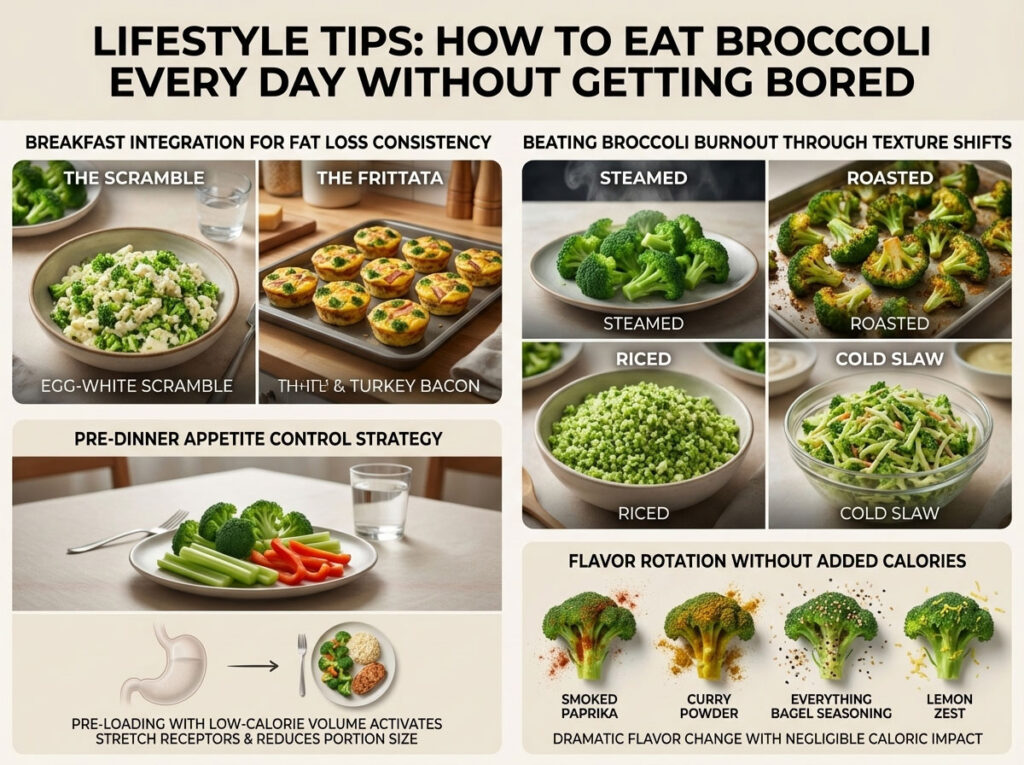
- The Scramble: Add 1/2 cup of finely chopped steamed broccoli to your egg whites. It adds bulk, allowing you to feel full on fewer eggs.
- The Frittata: Make a Sunday batch of egg muffins with broccoli and turkey bacon for grab-and-go mornings.
The “Pre-Dinner” Appetizer Trick
If you struggle with overeating at dinner, eat a cup of raw vegetables (broccoli, celery, peppers) with a glass of water before you touch your main meal. This pre-loading strategy activates the stretch receptors in your stomach. By the time you start your main course, your hunger signals are already quieting down.
Handling “Broccoli Burnout”
If you get tired of the taste, change the texture.
- If you usually steam, try roasting.
- If you usually roast, try ricing it.
- If you usually eat it hot, try a cold broccoli slaw with vinegar dressing.
- Use seasonings: Smoked paprika, curry powder, everything bagel seasoning, and lemon zest completely change the flavor profile without adding calories.
Potential Side Effects and Safety Considerations
While broccoli is good for weight loss, biology is complex. There are valid questions regarding “is too much broccoli bad for you” and specific contraindications.
Thyroid Health and Goitrogens
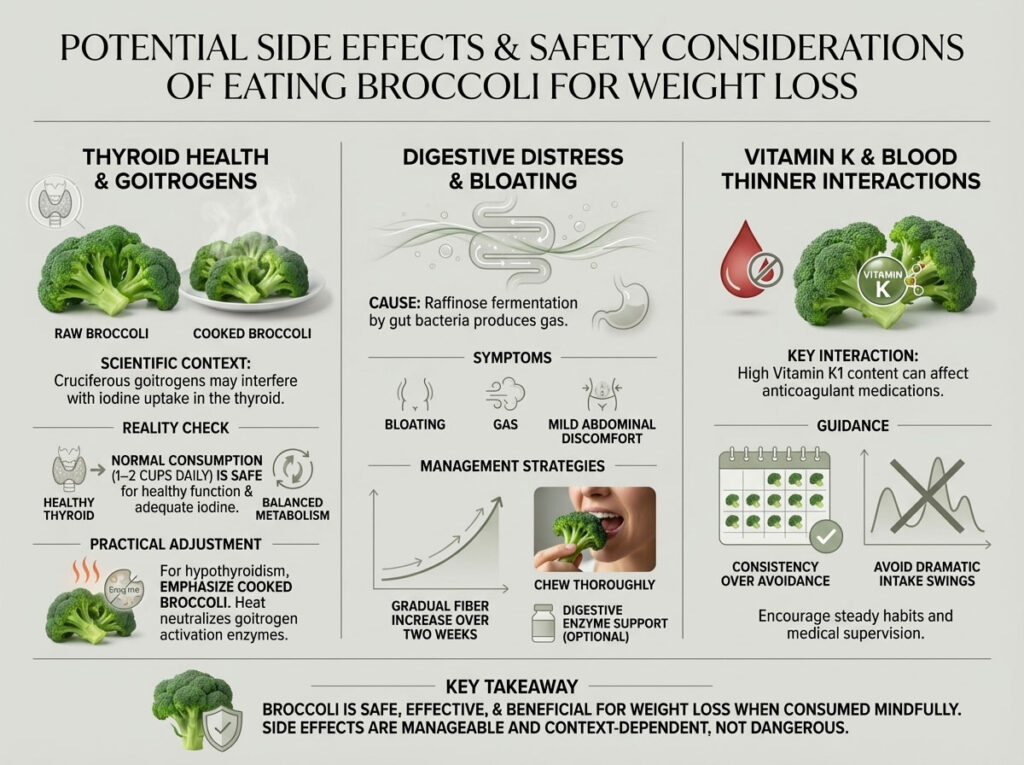
Cruciferous vegetables contain compounds called goitrogens. These can potentially interfere with the thyroid gland’s ability to uptake iodine, which is necessary for creating thyroid hormones.
- The Concern: Since the thyroid regulates metabolism, slowing it down would be counterproductive for weight loss.
- The Reality: For people with healthy thyroid function and adequate iodine intake (from iodized salt), normal broccoli consumption (1-2 cups a day) is perfectly safe.
- The Fix: Cooking destroys the enzyme responsible for activating goitrogens. If you have hypothyroidism, simply prioritize cooked broccoli over raw.
Digestive Distress (The Bloat)
Broccoli contains raffinose, a trisaccharide that humans cannot fully digest in the small intestine. It travels to the large intestine where bacteria ferment it, producing gas.
- Symptoms: Bloating, gas, and abdominal discomfort.
- Management: If you are not used to high fiber, do not jump from 0 to 3 cups a day. Increase your intake gradually over two weeks. Chew your food thoroughly. Over-the-counter enzymes (like Beano) can break down raffinose.
Vitamin K and Blood Thinners
Broccoli is incredibly high in Vitamin K1, which plays a key role in blood clotting.
- Interaction: If you take anticoagulants like Warfarin (Coumadin), sudden changes in Vitamin K intake can affect how the drug works.
- Advice: It is not about avoiding broccoli; it is about consistency. If you eat it, eat the same amount every day so your doctor can dose your medication accordingly. Do not binge on it one week and skip it the next.
Summary & Key Takeaways
We have thoroughly explored the question “Is broccoli good for weight loss?” and the evidence is overwhelming. It is a tool that allows you to hack your hunger, stabilize your blood sugar, and provide your body with the nutrients it needs to metabolize fat efficiently.
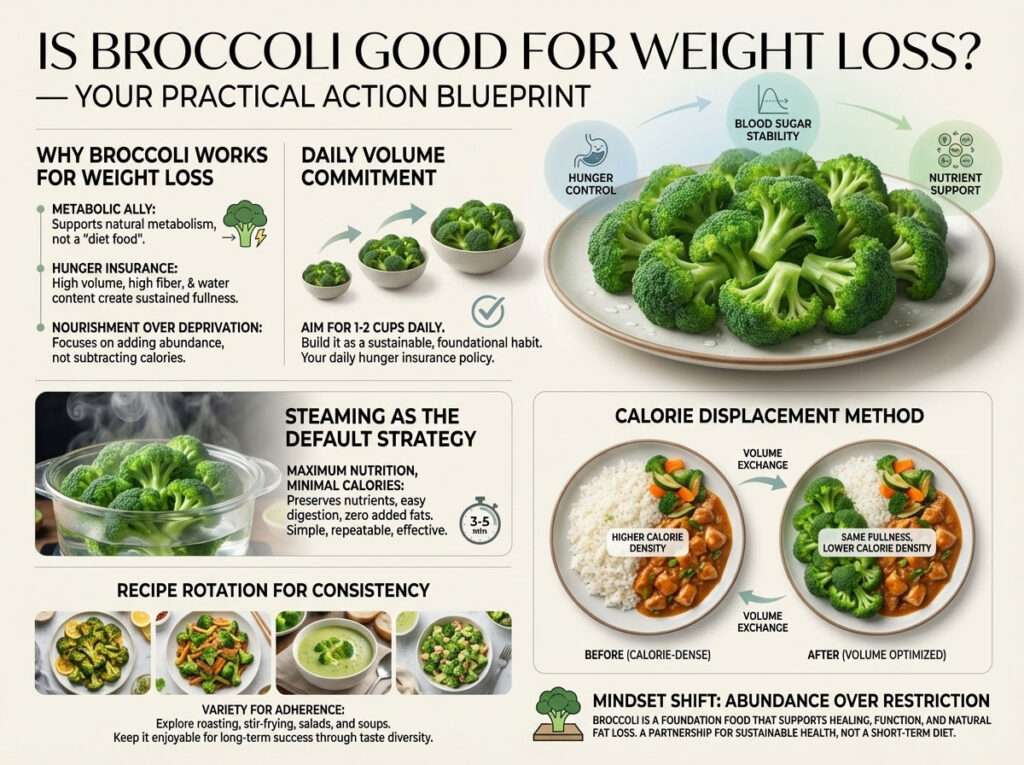
Your “Monday Morning” Action Plan:
- Commit to Volume: Aim for 1 to 2.5 cups of broccoli daily. This is your “insurance policy” against hunger.
- Master the Steam: Use steaming as your default cooking method to maximize broccoli nutrition and minimize added calories.
- Use the Displacement Method: Do not just add broccoli to a full plate. Swap out half your starch (rice, pasta, potatoes) for broccoli. This simple math creates the calorie deficit needed for weight loss.
- Rotate Recipes: Use the broccoli recipes for weight loss like the stir-fry or roasted salad to keep your palate engaged.
By making broccoli and weight loss partners in your journey, you are choosing a path of abundance rather than restriction. You are feeding your body what it needs to heal, function, and shed excess weight naturally.
Frequently Asked Questions (FAQ)
Does broccoli help reduce belly fat specifically?
While you cannot “spot reduce” fat from one specific area, broccoli aids in visceral fat reduction. Its high fiber content improves insulin sensitivity. High insulin is often a driver of belly fat storage. By lowering insulin spikes, broccoli creates a hormonal environment that encourages the body to burn abdominal fat stores.
How many calories are in a large head of broccoli?
A medium-to-large head of broccoli (entire stalk and florets) typically contains between 100 and 135 calories. Considering this amount of food could take 20 minutes to eat and fills a large bowl, it is an incredible bargain for your calorie budget.
Is it better to eat broccoli raw or cooked for weight loss?
Both have merits. Raw requires more chewing and has a lower calorie density per cup. Cooked (steamed) is easier to digest and allows you to eat a higher quantity of fiber without bloating. For sustainable weight loss, a mix of both is ideal, but steaming is generally preferred for digestive comfort.
Can eating broccoli at night help weight loss?
Yes. Broccoli is a complex carbohydrate that digests slowly. Eating it at dinner keeps you full throughout the evening, preventing the late-night snacking urges that often derail diets. It does not spike blood sugar, which is beneficial for sleep quality and overnight fat oxidation.
Why do I feel bloated after eating broccoli?
This is due to raffinose, a complex sugar, and the high fiber content. If your gut bacteria are not used to breaking down this much fiber, they produce gas. Drinking plenty of water and increasing your intake slowly helps your gut microbiome adapt.
Does broccoli contain protein?
Yes, for a vegetable, it is surprisingly high in protein. One bunch of broccoli can contain upwards of 12-15 grams of protein. While it is not a complete protein source like meat, it contributes significantly to your daily protein totals, helping to preserve muscle mass during dieting.
Is broccoli good for a Keto diet?
Yes. Broccoli is low in “net carbs” (Total Carbs minus Fiber). A cup of raw broccoli has about 6g of carbs and 2.4g of fiber, leaving only 3.6g of net carbs. It fits perfectly into Ketogenic and low-carb meal plans.
How does sulforaphane help with weight loss?
Sulforaphane activates the Nrf2 pathway, which regulates antioxidant production. Reduced oxidative stress and inflammation improve cellular metabolism. Some research also suggests sulforaphane may inhibit the differentiation of adipocytes (fat cells), essentially making it harder for the body to create new fat cells.
Can I eat the broccoli stem?
Absolutely. The stem is just as nutritious as the florets but is often sweeter. Peel the tough outer layer of the stalk with a vegetable peeler, then slice the inner “heart” into coins. They are delicious roasted or stir-fried and reduce food waste.
What is the best spice to put on broccoli for weight loss?
Cayenne pepper or red pepper flakes are excellent because capsaicin can slightly boost thermogenesis (calorie burning). Turmeric is another great option due to its anti-inflammatory properties. Avoid pre-mixed seasoning packets that are high in sugar or excessive sodium.
Is frozen broccoli less healthy than fresh?
No. Frozen broccoli is often flash-frozen within hours of picking, retaining more vitamins than “fresh” broccoli that has been in transit for days. It is a highly nutritious, budget-friendly option for weight loss.
Can I live on just chicken and broccoli?
While you would lose weight due to the low calories and high protein, it is not recommended long-term. You would miss out on essential healthy fats, certain micronutrients found in other colors of vegetables, and dietary variety. It is effective for short-term “cutting” phases but not a forever lifestyle.
Disclaimer: The information provided in this article is for educational purposes only and does not constitute medical advice. Individual results may vary. Always consult with a physician or registered dietitian before making drastic changes to your diet, especially if you have a history of thyroid issues or are taking prescription medications.
References:
- USDA FoodData Central. (2023). “Broccoli, raw” and “Broccoli, cooked.”
- National Institutes of Health (NIH). “Dietary Supplement Fact Sheet: Vitamin C.”
- Journal of Nutrition. Studies on the Thermic Effect of Food (TEF) and fiber satiety.
- Clinical Nutrition Journal. Research on Glucoraphanin, Sulforaphane, and inflammation.
- The American Journal of Clinical Nutrition. Epidemiological studies on cruciferous vegetable intake and visceral adiposity.