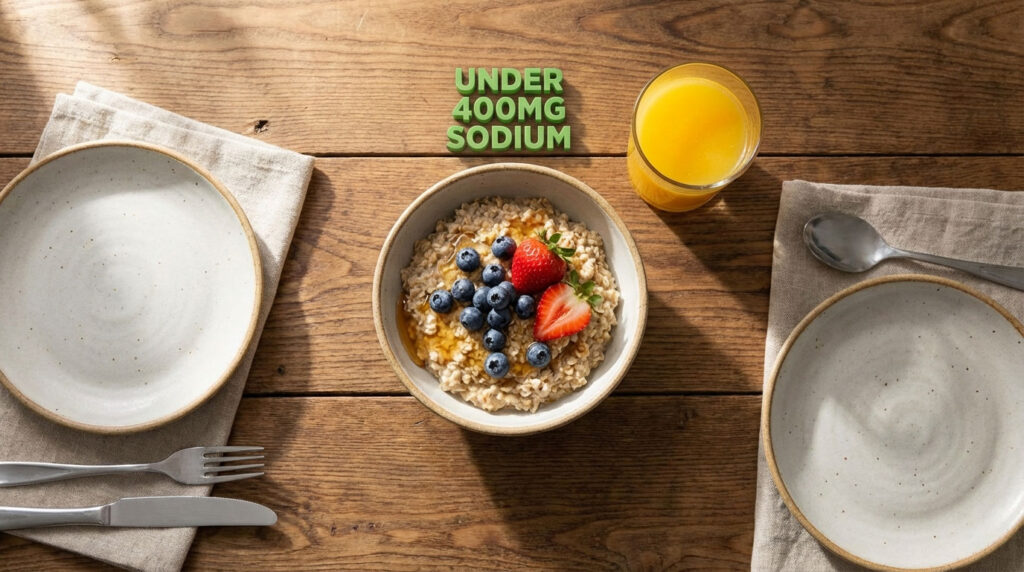
A heart-healthy low-sodium breakfast focuses on unprocessed, whole foods like steel-cut oats, egg whites, and potassium-rich fruits, aiming for less than 400–500 mg of sodium per serving. According to American Heart Association (AHA) guidelines, limiting daily intake to 1,500 mg is ideal for managing hypertension. Key strategies include replacing “Salty Six” items like processed breads and meats with nutrient-dense alternatives like avocado, spinach, and Greek yogurt.
Table of Contents
Nearly half of all adults in the United States currently manage high blood pressure. For many, the battle against hypertension is lost before noon. The standard American morning meal is a minefield of hidden salts. A single bagel with cream cheese can exhaust nearly half of your daily sodium allowance before you even consider lunch. This is not just about putting down the salt shaker. It is about fundamentally rethinking how we fuel our bodies to protect our cardiovascular systems.
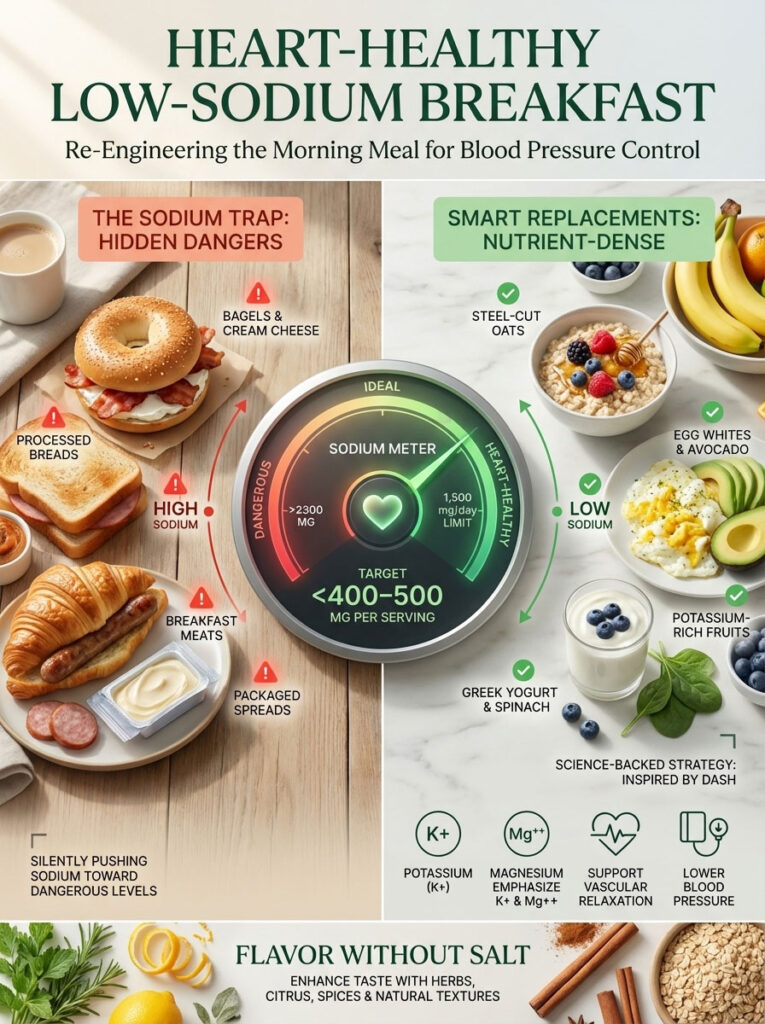
Transitioning to a heart-healthy breakfast routine does not require you to resign yourself to bland, tasteless food. It requires a strategic shift toward the DASH diet (Dietary Approaches to Stop Hypertension). By prioritizing ingredients that are naturally low in sodium chloride and high in magnesium and potassium, you can actively lower your blood pressure while enjoying vibrant, flavorful meals. This comprehensive guide provides 25 actionable low-sodium breakfast ideas, scientific context on sodium intake, and practical culinary hacks to reclaim your health.
The Science of Sodium and Heart Health
Understanding why sodium intake matters is the first step toward lasting change. Sodium is a mineral essential for nerve function and muscle contraction. However, the modern diet provides it in dangerous excess.
Understanding the Sodium-Potassium Pump Mechanism
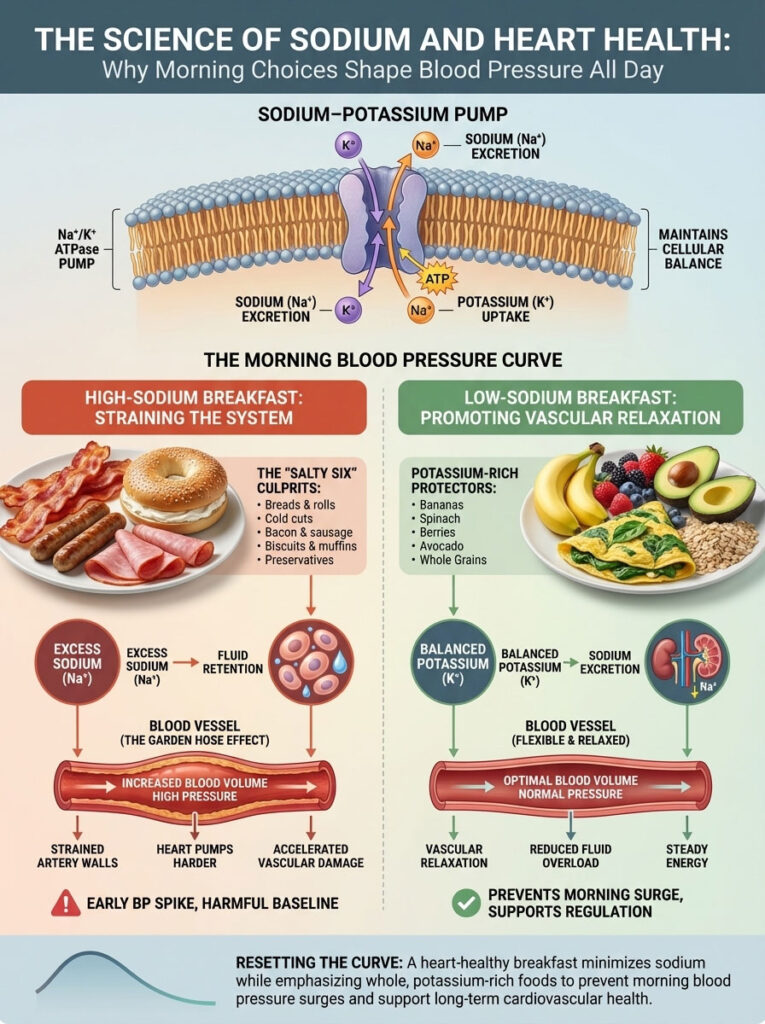
Your body operates a delicate balancing act known as the sodium-potassium pump. Sodium pulls water into your blood vessels. Potassium helps flush it out through the kidneys. When you consume a high blood pressure diet loaded with salty processed foods, your body retains water to dilute the excess sodium. This extra fluid increases the volume of blood flowing through your veins.
Think of it like a garden hose. If you turn up the water volume without widening the hose, the pressure inside rises. This increased pressure strains delicate arterial walls and forces the heart to work harder. By reducing sodium intake and increasing potassium-rich foods like bananas and spinach at breakfast, you help your kidneys excrete excess salt and relax blood vessel walls.
Why Breakfast is the Most Dangerous Meal for Hypertension
Breakfast is uniquely problematic because of the “Salty Six.” The American Heart Association identifies breads and rolls, cold cuts, and cured meats as top sources of sodium. These are breakfast staples. Bacon, sausage, ham, biscuits, and even “healthy” bran muffins are often loaded with sodium-based preservatives and leavening agents like baking soda (sodium bicarbonate).
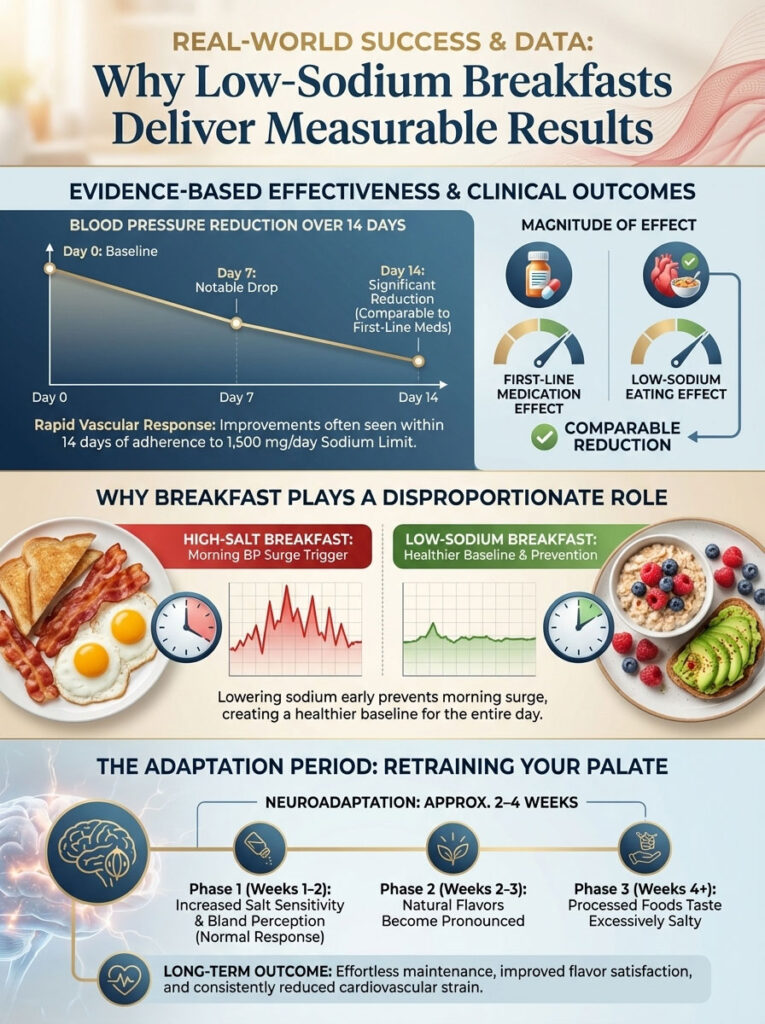
For a patient managing hypertension, starting the day with a 1,000 mg sodium load spikes blood pressure early. This sets a dangerous baseline for the rest of the day. A heart-healthy breakfast resets this dynamic. It keeps sodium low, preventing that morning surge and providing sustained energy without the vascular strain.
Strategic Foundations for a Low-Sodium Meal
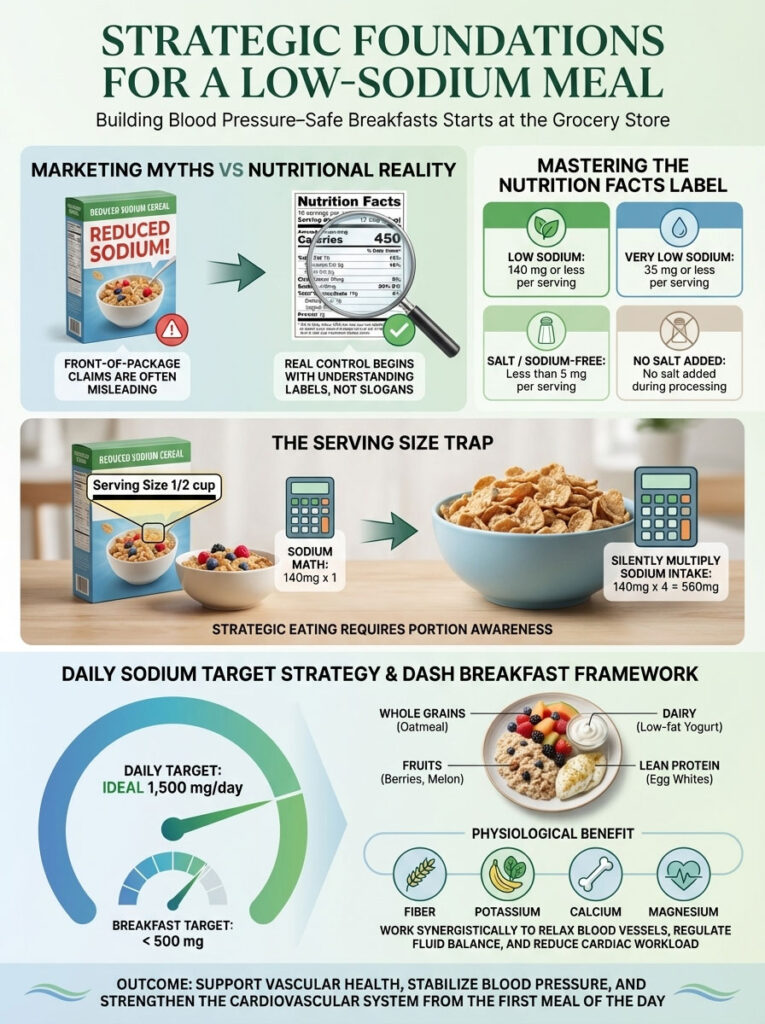
Before cooking, you must learn to navigate the grocery store. Marketing labels can be deceptive. A product labeled “Reduced Sodium” may still be dangerously high in salt if the original version was excessive.
Mastering the Nutrition Label and Percent Daily Value
To find true low-sodium breakfast ideas, you must ignore front-of-package marketing and flip to the Nutrition Facts label. The FDA defines specific claims that strictly regulate these terms.
- Low Sodium: 140 mg of sodium or less per serving.
- Very Low Sodium: 35 mg or less per serving.
- Salt/Sodium-Free: Less than 5 mg per serving.
- No Salt Added: No salt is added during processing, but natural sodium may be present.
Pay close attention to the serving size. A cereal might claim to be low sodium, but if the serving size is half a cup and you eat two cups, you have quadrupled your intake. Your goal is to keep your total breakfast sodium intake under 500 mg. This leaves room for lunch and dinner while staying within the AHA’s 1,500 mg ideal limit.
The Role of the DASH Diet in Breakfast
The DASH diet breakfast approach is scientifically proven to lower blood pressure in as little as two weeks. It is not just about subtraction. It is about addition. You are adding fiber, calcium, and potassium.
- Grains: Whole grains like oatmeal or brown rice.
- Fruits: Citrus, berries, and melons.
- Dairy: Low-fat yogurt or milk (calcium aids blood pressure regulation).
- Lean Protein: Egg whites, tofu, or unseasoned poultry.
Integrating these elements ensures you are not just avoiding harm but actively healing your cardiovascular system.
25 Low-Sodium Breakfast Ideas: The Recipes
We have categorized these low-sodium breakfast ideas by texture and preparation style to help you find exactly what you crave.
Category 1: The Power of Oats and Grains
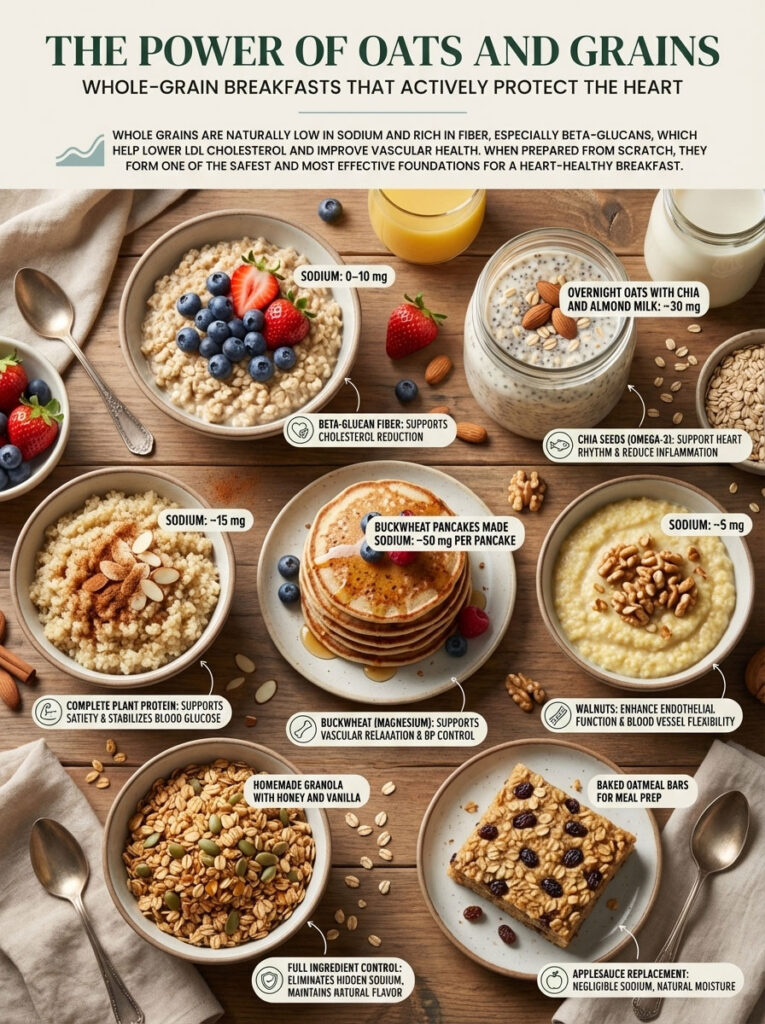
Whole grains are the cornerstone of a heart-healthy breakfast. They are naturally low in sodium and high in fiber, which helps reduce cholesterol.
1. Steel-Cut Oats with Fresh Berries
Steel-cut oats are superior to instant packets. Instant oatmeal often contains added salt and sugar. Cook steel-cut oats in water or unsweetened almond milk. Top with blueberries and strawberries.
- Sodium Count: ~0–10 mg.
- Why it works: Berries add sweetness without sugar; oats provide beta-glucan fiber.
2. Overnight Oats with Chia and Almond Milk
Mix rolled oats with chia seeds and low-sodium almond milk. Let it sit in the fridge overnight. The chia seeds expand to create a pudding-like texture.
- Sodium Count: ~30 mg (depending on milk choice).
- Why it works: Chia seeds are rich in Omega-3 fatty acids which support heart health.
3. Quinoa Breakfast Bowl with Cinnamon
Quinoa is a complete protein. Cook it in water and season generously with cinnamon and nutmeg. Top with sliced almonds for crunch.
- Sodium Count: ~15 mg.
- Why it works: Cinnamon helps regulate blood sugar.
4. Buckwheat Pancakes (From Scratch)
Avoid boxed mixes. Make batter using buckwheat flour, a potassium-based baking powder (available in health food stores), and soy milk.
- Sodium Count: ~50 mg per pancake.
- Why it works: Buckwheat is gluten-free and rich in magnesium.
5. Warm Millet Porridge with Walnuts
Millet is an ancient grain with a nutty flavor. Simmer it until soft and top with toasted walnuts.
- Sodium Count: ~5 mg.
- Why it works: Walnuts improve endothelial function (the lining of the blood vessels).
6. Homemade Granola with Honey and Vanilla
Commercial granola is a hidden salt trap. Bake rolled oats, pumpkin seeds, and honey on a sheet pan. Use pure vanilla extract for flavor.
- Sodium Count: ~10 mg.
- Why it works: You control the ingredients completely.
7. Baked Oatmeal Bars
Mix oats, applesauce (binder), and raisins. Bake in a square pan and slice. Great for meal prep.
- Sodium Count: ~20 mg.
- Why it works: Applesauce replaces oil and eggs, keeping the sodium negligible.
Category 2: Protein-Packed and Egg-Centric
Protein is essential for satiety. However, traditional breakfast meats are the enemy of a low-sodium breakfast.
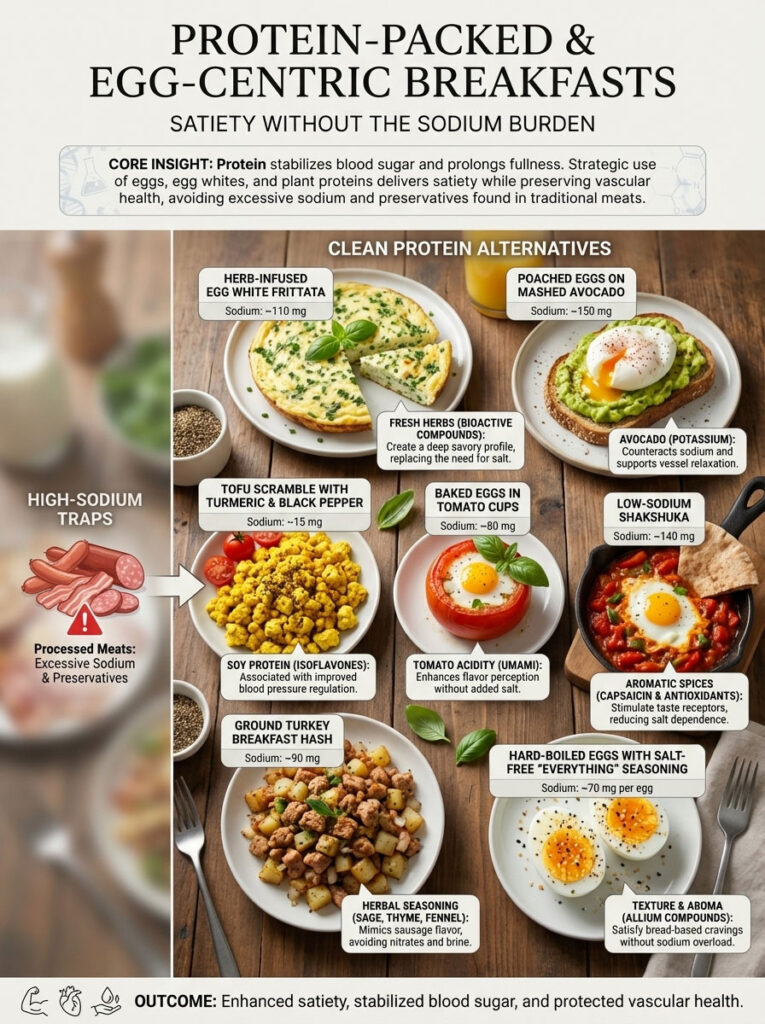
8. Herb-Infused Egg White Frittata
Whisk egg whites with fresh chopped chives, parsley, and basil. Pour into a skillet and cook until set.
- Sodium Count: ~110 mg (naturally occurring in whites).
- Why it works: Fresh herbs provide a savory punch that mimics salt.
9. Poached Eggs on Mashed Avocado
Poach two eggs in plain water. Serve over mashed avocado on a slice of low-sodium sprouted bread.
- Sodium Count: ~150 mg.
- Why it works: Avocado adds creaminess and massive amounts of potassium.
10. Tofu Scramble with Turmeric and Black Pepper
Crumble firm tofu and sauté with turmeric (for color and anti-inflammatory benefits) and nutritional yeast.
- Sodium Count: ~15 mg (if using plain tofu).
- Why it works: Soy protein is linked to lower blood pressure levels.
11. Baked Eggs in Tomato Cups
Hollow out large beefsteak tomatoes. Crack an egg inside. Bake until set.
- Sodium Count: ~80 mg.
- Why it works: The acidity of the tomato highlights the natural savory flavor of the egg.
12. Low-Sodium Shakshuka
Make a sauce using “No Salt Added” canned tomatoes, cumin, paprika, and peppers. Poach eggs directly in the sauce.
- Sodium Count: ~140 mg.
- Why it works: Rich spices distract the palate from the lack of salt.
13. Ground Turkey Breakfast Hash
Sauté lean ground turkey with diced potatoes and onions. Season with sage, thyme, and fennel seeds to mimic sausage flavor.
- Sodium Count: ~90 mg.
- Why it works: You get the comfort of “sausage” without the nitrates and brine.
14. Hard-Boiled Eggs with “Everything Bagel” Seasoning (Salt-Free DIY)
Make a blend of poppy seeds, sesame seeds, dried garlic, and dried onion. Omit the coarse salt found in store-bought versions.
- Sodium Count: ~70 mg per egg.
- Why it works: Crunch and aromatics satisfy the craving for a bagel.
Category 3: Smoothies, Yogurt, and Fruit
Dairy can be tricky. Cheese is salty. Milk contains natural sodium. Choice matters here.
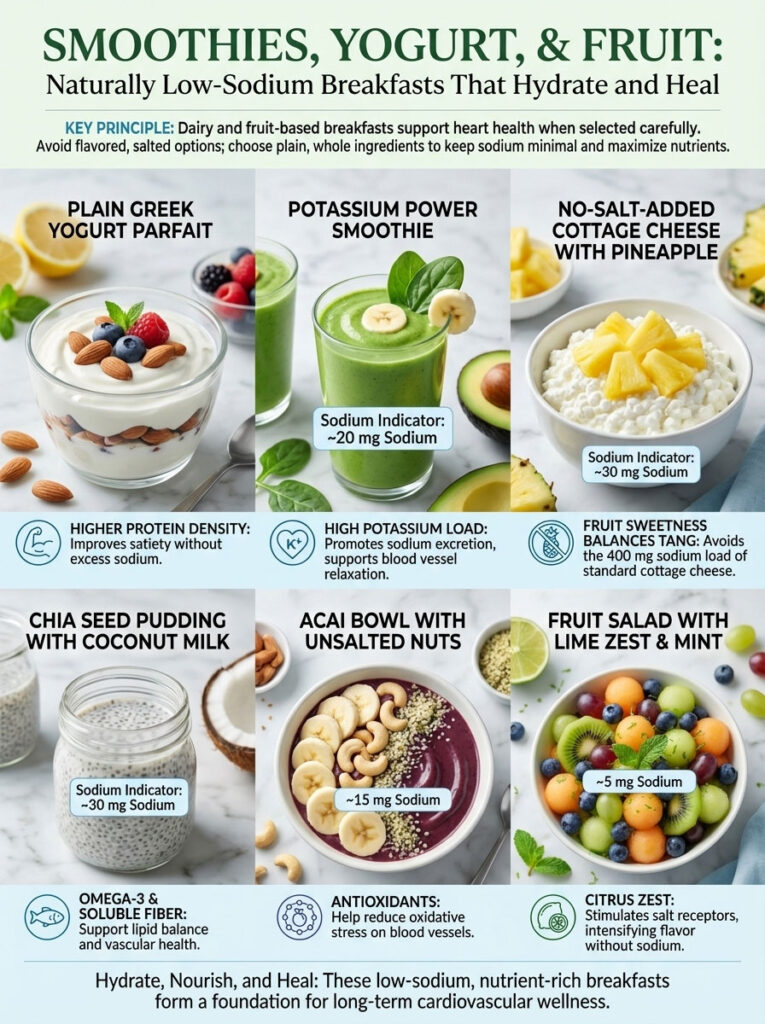
15. Greek Yogurt Parfait (Plain)
Use plain non-fat Greek yogurt. Flavored versions have added sodium-based preservatives. Layer with unsalted almonds.
- Sodium Count: ~70 mg.
- Why it works: Greek yogurt is higher in protein than regular yogurt.
16. Potassium Power Smoothie
Blend one banana, a handful of spinach, half an avocado, and orange juice.
- Sodium Count: ~20 mg.
- Why it works: This is a potassium bomb designed to counteract salt intake.
17. Cottage Cheese (No Salt Added) with Pineapple
You must buy the specific “No Salt Added” tub. Regular cottage cheese is very salty.
- Sodium Count: ~30 mg (vs. 400 mg in regular).
- Why it works: The sweetness of pineapple cuts the tangy cheese.
18. Chia Seed Pudding with Coconut Milk
Mix chia seeds with canned light coconut milk and let set.
- Sodium Count: ~30 mg.
- Why it works: Coconut milk provides a rich, creamy texture without cheese.
19. Acai Bowl with Unsalted Nuts
Blend frozen unsweetened acai pulp with banana. Top with unsalted cashews.
- Sodium Count: ~15 mg.
- Why it works: High antioxidant content supports overall vascular health.
20. Fruit Salad with Lime Zest and Mint
Chop melon, berries, and grapes. Toss with fresh lime zest and chopped mint leaves.
- Sodium Count: ~5 mg.
- Why it works: Lime zest is a powerful flavor enhancer that acts like salt on the tongue.
Category 4: Savory and Creative Alternatives
Sometimes you want savory food without the eggs or oatmeal.
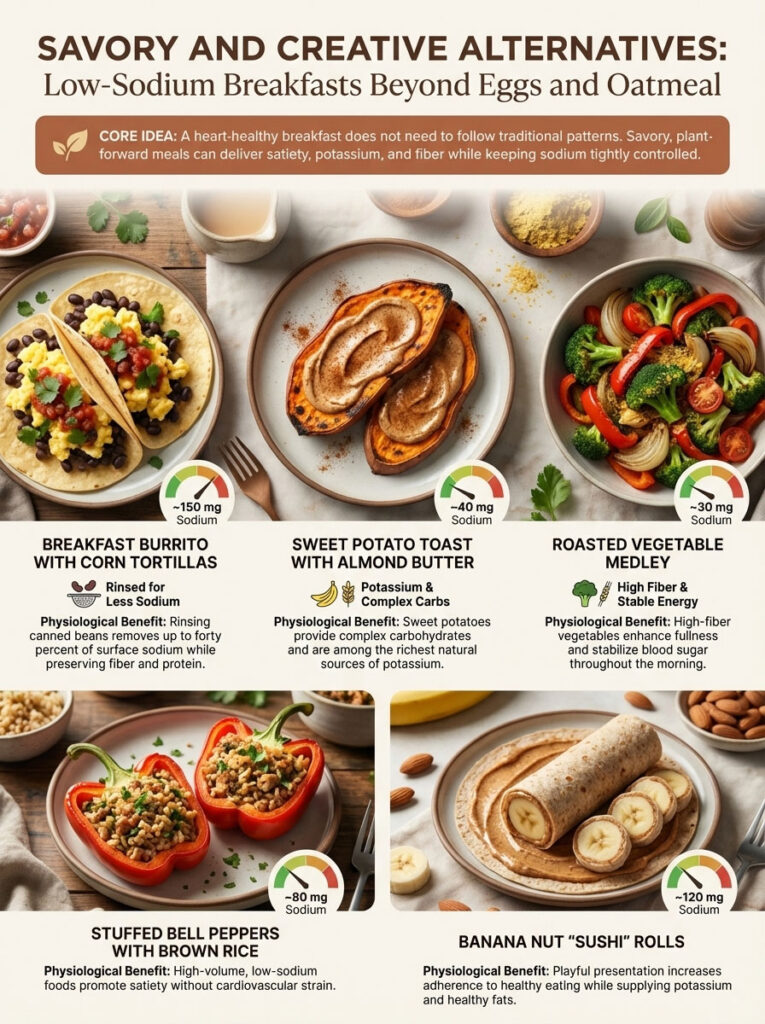
21. Sweet Potato Toast
Slice sweet potatoes lengthwise into planks. Toast them in a toaster until cooked. Top with almond butter.
- Sodium Count: ~40 mg.
- Why it works: Sweet potatoes are a complex carb and a top source of potassium.
22. Breakfast Burrito with Corn Tortillas
Use corn tortillas instead of flour. Flour tortillas are often chemical-laden and salty. Fill with black beans (rinsed) and scrambled eggs.
- Sodium Count: ~150 mg.
- Why it works: Rinsing canned beans removes up to 40% of their sodium.
23. Roasted Vegetable Medley
Use leftover roasted broccoli, peppers, and onions from dinner. Heat them up and top with a sprinkle of nutritional yeast.
- Sodium Count: ~30 mg.
- Why it works: Fiber-rich vegetables keep you full longer.
24. Stuffed Bell Peppers with Brown Rice
Halve a bell pepper. Stuff with a mix of cooked brown rice and lean ground chicken. Bake.
- Sodium Count: ~80 mg.
- Why it works: A high-volume food that feels like a substantial meal.
25. Banana Nut “Sushi”
Spread unsalted almond butter on a whole wheat tortilla (low sodium). Place a whole banana in the center. Roll it up and slice into “sushi” rounds.
- Sodium Count: ~120 mg.
- Why it works: Fun presentation makes healthy eating enjoyable.
Quick Reference: 25 Low-Sodium Breakfast Recipes at a Glance
Navigating a low-sodium diet requires quick decision-making, especially on busy mornings. The following table consolidates all 25 heart-healthy recipes discussed in this guide, categorizing them by sodium content and preparation style. Use this reference to instantly find a meal that fits your specific daily sodium allowance (aiming for <500 mg per meal) and your schedule, whether you need a grab-and-go option or a warm, cooked start to your day.
| Recipe Name | Est. Sodium (per serving) | Key Heart-Healthy Ingredients | Best For… |
| 1. Steel-Cut Oats w/ Berries | 0–10 mg | Soluble fiber (Beta-glucan), Antioxidants | Hot Cereal Lovers |
| 2. Overnight Oats w/ Chia | ~30 mg | Omega-3s, Calcium (Almond Milk) | Meal Prep / Busy Mornings |
| 3. Quinoa Breakfast Bowl | ~15 mg | Complete Protein, Cinnamon | High Protein / Gluten-Free |
| 4. Buckwheat Pancakes | ~50 mg | Magnesium, Potassium-based baking powder | Weekend Brunch |
| 5. Warm Millet Porridge | ~5 mg | Ancient Grains, Walnuts (Healthy Fats) | Warm Comfort Food |
| 6. Homemade Granola | ~10 mg | Oats, Pumpkin Seeds, Honey | Yogurt Topping / Snacking |
| 7. Baked Oatmeal Bars | ~20 mg | Applesauce, Rolled Oats | On-The-Go Energy |
| 8. Herb-Infused Egg White Frittata | ~110 mg | Lean Protein, Fresh Chives/Parsley | High Protein / Low Fat |
| 9. Poached Eggs on Avocado | ~150 mg | Potassium (Avocado), Healthy Fats | Savory Cravings |
| 10. Tofu Scramble | ~15 mg | Soy Protein, Turmeric (Anti-inflammatory) | Vegan / Plant-Based |
| 11. Baked Eggs in Tomato Cups | ~80 mg | Lycopene (Tomato), Egg Protein | Creative Presentation |
| 12. Low-Sodium Shakshuka | ~140 mg | Cumin, Paprika, No-Salt Tomatoes | Spicy / Flavorful |
| 13. Ground Turkey Hash | ~90 mg | Lean Poultry, Sage, Fennel | Sausage Replacement |
| 14. Hard-Boiled Eggs (DIY Seasoning) | ~70 mg | Sesame Seeds, Dried Garlic | Portable Protein |
| 15. Greek Yogurt Parfait (Plain) | ~70 mg | Probiotics, Calcium | Quick & Creamy |
| 16. Potassium Power Smoothie | ~20 mg | Spinach, Banana, Avocado | Liquid Nutrition / Hydration |
| 17. Cottage Cheese & Pineapple | ~30 mg | Casein Protein, Vitamin C | Sweet & Savory Mix |
| 18. Chia Seed Pudding | ~30 mg | Fiber, Coconut Milk | Dessert-like Breakfast |
| 19. Acai Bowl w/ Unsalted Nuts | ~15 mg | Antioxidants, Healthy Fats | Refreshing / Summer |
| 20. Fruit Salad w/ Lime & Mint | ~5 mg | Vitamin C, Natural Electrolytes | Light Start / Side Dish |
| 21. Sweet Potato Toast | ~40 mg | Complex Carbs, Almond Butter | Grain-Free Alternative |
| 22. Breakfast Burrito (Corn) | ~150 mg | Fiber (Black Beans), Corn Tortilla | Filling / Hearty |
| 23. Roasted Vegetable Medley | ~30 mg | Fiber, Vitamins A & K | Utilizing Leftovers |
| 24. Stuffed Bell Peppers | ~80 mg | Brown Rice, Lean Chicken | High Volume / Satiety |
| 25. Banana Nut “Sushi” | ~120 mg | Potassium, Nut Butter | Kids / Fun Snacking |
Flavor Hacking: How to Cook Without Salt
The biggest fear regarding a low-sodium breakfast is that food will taste bland. This is a misconception. Salt is a cheap flavor enhancer. When you remove it, you must use better ingredients and smarter techniques.
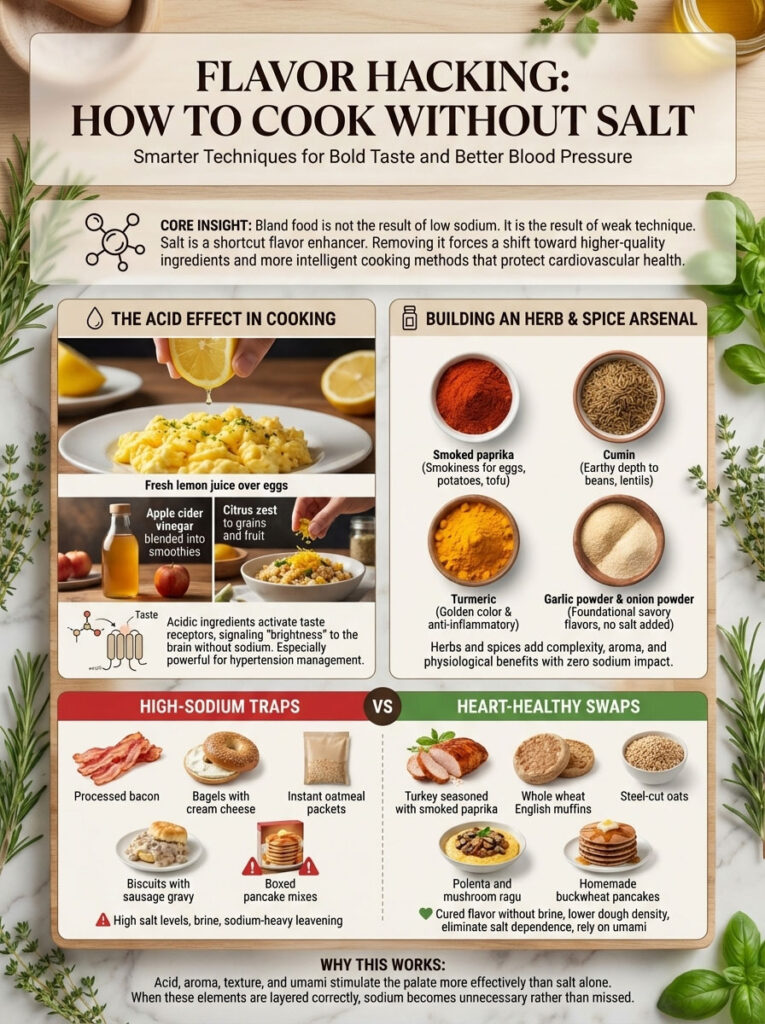
The Acid Effect in Cooking
Acidic ingredients stimulate the salivary glands similarly to salt. Squeezing fresh lemon juice over eggs or adding a splash of apple cider vinegar to a smoothie can “wake up” the flavor. The tongue perceives the “zing” of acid and signals the brain that the food is seasoned. This is a critical technique for hypertension management.
Building an Herb and Spice Arsenal
Spices are your best friends. They add complexity and health benefits without raising blood pressure.
- Smoked Paprika: Gives a bacon-like smokiness to eggs and potatoes.
- Cumin: Adds earthy depth to beans and savory dishes.
- Turmeric: Provides color and anti-inflammatory properties.
- Garlic and Onion Powder: essential for savory dishes. Ensure they are powders, not “salts.”
Comparison Table: High Sodium Traps vs. Heart-Healthy Swaps
| High Sodium Trap (Avoid) | Sodium Avg. (mg) | Heart-Healthy Swap (Choose) | Sodium Avg. (mg) | Why It Works |
| Processed Bacon (2 slices) | 350+ mg | Smoked Paprika Turkey (2 oz) | < 60 mg | Smoked paprika mimics the “cured” flavor without the brine. |
| Bagel with Cream Cheese | 500-700 mg | Whole Wheat English Muffin | 180 mg | Significantly less dough density means less baking soda/salt. |
| Instant Oatmeal Packet | 250-300 mg | Steel-Cut Oats (1 cup cooked) | 0-10 mg | You control the seasoning; instant packets rely on salt for shelf life. |
| Biscuit with Sausage Gravy | 1,000+ mg | Polenta with Mushroom Ragu | < 50 mg | Cornmeal offers a savory base; mushrooms provide umami. |
| Buttermilk Pancakes (Mix) | 400+ mg | Buckwheat Pancakes (DIY) | < 100 mg | Commercial mixes use sodium-heavy leavening agents. |
Navigating Real World Challenges
Eating heart-healthy breakfast meals at home is manageable. The challenge arises when you travel or dine out.
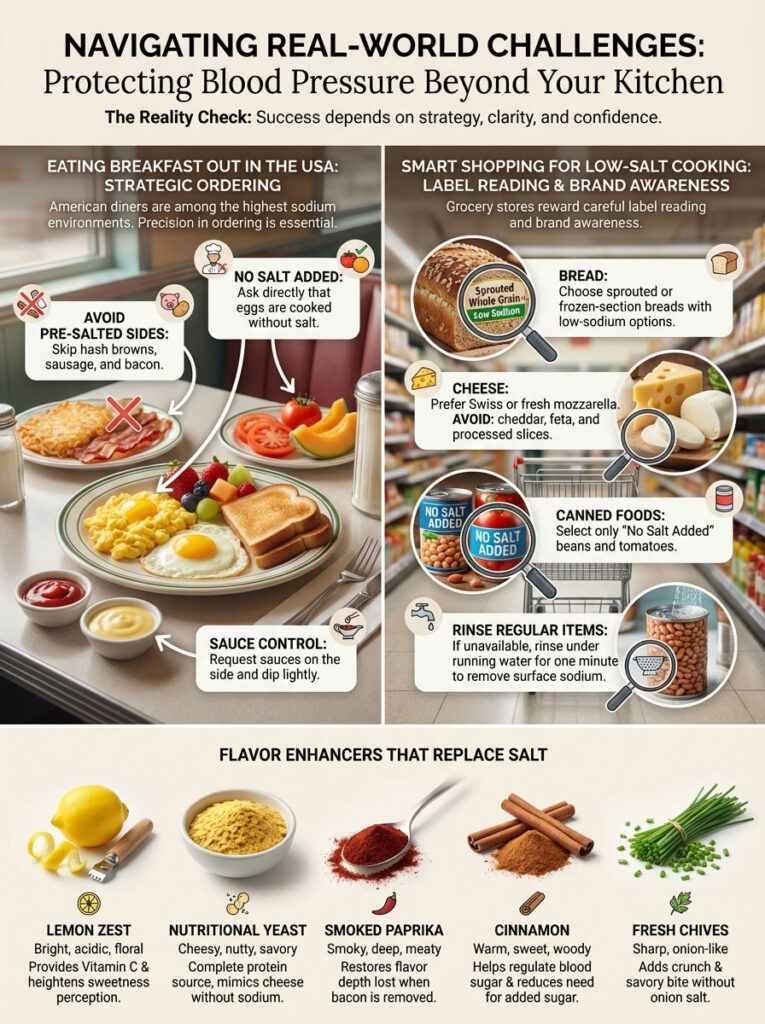
Eating Breakfast Out in the USA
American diners are notorious for sodium. When ordering, you must be vocal and specific.
- Ask for “No Salt Added”: Request that the cook does not salt your eggs while they are in the pan.
- Avoid the Sides: Hash browns, sausage, and bacon are pre-salted. Swap them for sliced tomatoes or a fruit cup.
- Sauce on the Side: Hollandaise sauce, ketchup, and salsas are sodium bombs. Dip your fork rather than pouring the sauce.
Smart Shopping Guide for Low-Salt Recipes
Grocery shopping requires vigilance.
- Bread: Look for “Food for Life” or “Ezekiel” brands found in the freezer section. They often have low-sodium varieties.
- Cheese: Swiss cheese and fresh mozzarella are naturally lower in sodium than cheddar or feta.
- Canned Goods: Only buy beans and tomatoes labeled “No Salt Added.” If you must use regular ones, rinse them thoroughly under water for one minute to wash away some surface sodium.
Flavor Enhancers Profile (Table)
| Flavor Enhancer | Best Used For | Flavor Profile | Health Benefit |
| Lemon Zest | Yogurt, Oats, Fruit Salad | Bright, Acidic, Floral | Contains Vitamin C; enhances perception of sweetness. |
| Nutritional Yeast | Eggs, Tofu Scramble, Grits | Cheesy, Nutty, Savory | Complete protein source; mimics cheese flavor without sodium. |
| Smoked Paprika | Potatoes, Eggs, Hash | Smoky, Deep, Meaty | Adds depth often missing when bacon is removed. |
| Cinnamon | Oatmeal, Toast, Smoothies | Warm, Sweet, Woody | Helps regulate blood sugar; reduces need for added sugar. |
| Fresh Chives | Omelets, Cottage Cheese | Onion-like, Sharp | Adds crunch and savory bite without the sodium of onion salt. |
Real-World Success and Data
The efficacy of low-sodium breakfast ideas is backed by robust data.
Case Studies in Blood Pressure Management
Clinical trials involving the DASH diet consistently show results. In landmark studies, participants who lowered their sodium intake to 1,500 mg per day saw significant drops in systolic blood pressure comparable to the effects of medication. These results were often visible within just 14 days of dietary adherence.
The Adaptation Period
If your first salt-free egg tastes bland, do not give up. This is biology, not failure. Neuroadaptation of the taste buds takes time. Research indicates that it takes approximately 2 to 4 weeks for human taste buds to adjust to lower salt levels. After this period, you will find that processed foods you once enjoyed taste unpleasantly salty/metallic. You are retraining your palate to appreciate the natural flavor of the food itself.
Summary & Key Takeaways
Managing high blood pressure is a marathon, not a sprint. It starts every morning with the choices you put on your plate. By avoiding the “Salty Six” and embracing heart-healthy breakfast options like oats, fruits, and egg whites, you protect your kidneys and heart.
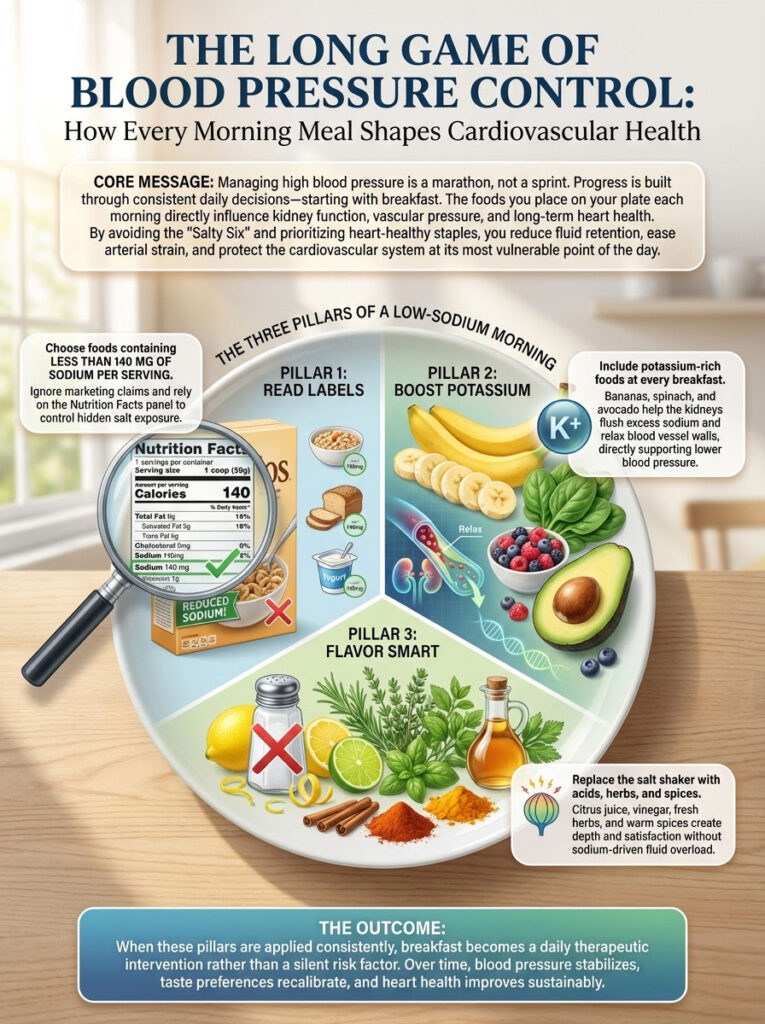
Remember the three pillars of a low-sodium morning:
- Read Labels: Aim for less than 140 mg of sodium per serving.
- Boost Potassium: Add a banana, spinach, or avocado to every meal.
- Flavor Smart: Use acids, herbs, and spices instead of the salt shaker.
Take control of your health tomorrow morning. Try the overnight oats or the herb-infused frittata. Your heart will thank you.
Frequently Asked Questions (FAQs)
How much sodium should I limit myself to at breakfast?
Ideally, you should aim for 400 to 500 mg or less per meal. This keeps you on track to stay within the American Heart Association’s recommended 1,500 mg daily limit for hypertension management.
What is the best bread for a low-sodium diet?
Look for sprouted grain breads or brands specifically labeled “low sodium.” Generally, corn tortillas and English muffins are better options than bagels or biscuits. Always check the label for sodium content under 140 mg per slice.
Are eggs naturally high in sodium?
No, a large egg contains only about 70 mg of sodium. The issue usually lies in how they are prepared. Adding salt, cheese, or butter can quickly spike the sodium content.
Can I use salt substitutes like potassium chloride?
While effective for flavor, you must consult a doctor before using them. Potassium chloride can be dangerous for people with kidney disease or those taking certain blood pressure medications like ACE inhibitors.
What is a good substitute for breakfast sausage?
Homemade ground meat (turkey, chicken, or pork) seasoned with sage, fennel, black pepper, and thyme offers the sausage flavor profile without the nitrates, preservatives, and excessive sodium found in commercial links.
Does oatmeal lower blood pressure?
Yes, oatmeal is rich in soluble fiber and low in sodium. When paired with potassium-rich foods like bananas or berries, it actively supports heart health and helps manage cholesterol levels.
How long does it take to get used to a low-sodium diet?
Most people find their taste buds adapt within 2 to 4 weeks. After this “neuroadaptation” phase, regular processed foods will begin to taste unpleasantly salty to you.
Is cottage cheese high in sodium?
Standard cottage cheese is very high in sodium due to the curdling process. You must specifically look for containers labeled “No Salt Added” to fit it into a heart-healthy breakfast.
What are the “Salty Six” foods?
The AHA designates breads/rolls, pizza, sandwiches, cold cuts/cured meats, soup, and burritos/tacos as the top sources of sodium in the American diet. Many of these appear on the breakfast table.
Can drinking water flush out excess sodium?
Yes, staying well-hydrated helps the kidneys filter excess sodium out of the body through urine. Drinking a glass of water before your meal is a good habit for heart health.
Why is baking powder a problem for low-sodium baking?
Standard baking powder contains sodium bicarbonate. If you bake often, look for “sodium-free” baking powder at health food stores, which usually uses potassium bicarbonate as the leavening agent.
Are smoothies good for high blood pressure?
Yes, if they are made with potassium-rich foods (bananas, mangoes) and leafy greens (spinach, kale). They provide a massive dose of minerals that help counteract sodium without adding any salt.
Disclaimer: The information provided in this article is for educational purposes only and does not constitute medical advice. Always consult with your physician or a registered dietitian before making significant changes to your diet, especially if you have been diagnosed with hypertension or heart disease.
References:
- American Heart Association (AHA) – How much sodium should I eat per day?
- U.S. Food and Drug Administration (FDA) – Sodium in Your Diet.
- National Heart, Lung, and Blood Institute (NHLBI) – DASH Eating Plan.