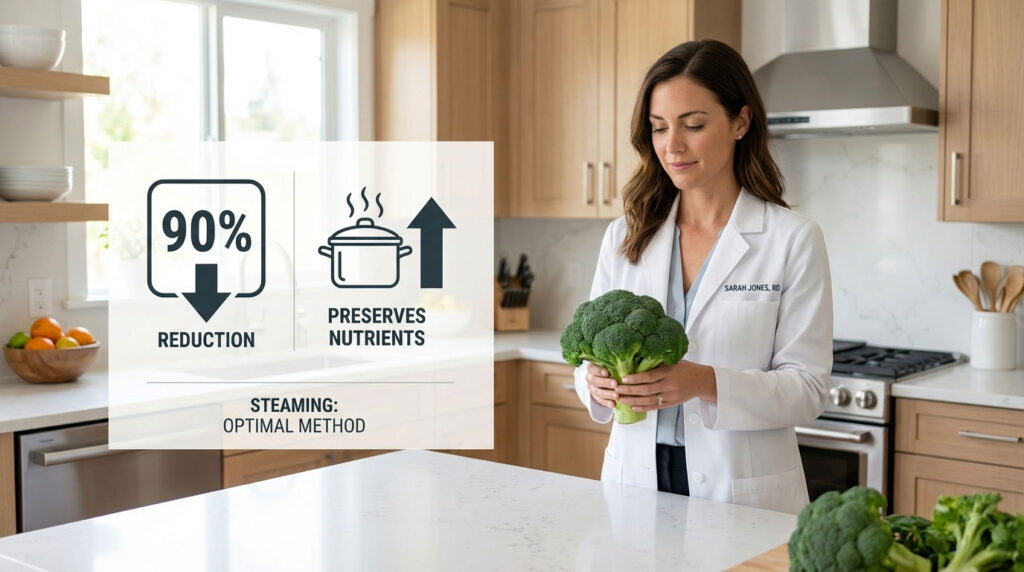
You sit down in my office, clutching a printout from an online forum, and ask the question I hear almost daily. “Do I really have to give up broccoli to save my thyroid?” It is a moment of genuine panic for many. You are trying to eat healthy to manage your fatigue and weight gain. Yet the internet screams that your favorite greens are the enemy. As a Registered Dietitian specializing in thyroid health, I want to set the record straight regarding the complex relationship between Cruciferous Vegetables Thyroid function and your long-term health. The fear surrounding these vegetables is based on outdated science and a lack of context regarding how digestion actually works.
Table of Contents
Can I Eat Broccoli with Hypothyroidism?
Yes. You do not need to eliminate cruciferous vegetables if you have hypothyroidism or Hashimoto’s. The goitrogenic compounds (glucosinolates) are inactive until the plant is damaged. Cooking methods like steaming or boiling reduce these compounds by 90%. The risk only becomes significant if you consume massive amounts of raw brassicas while also suffering from a severe iodine deficiency.
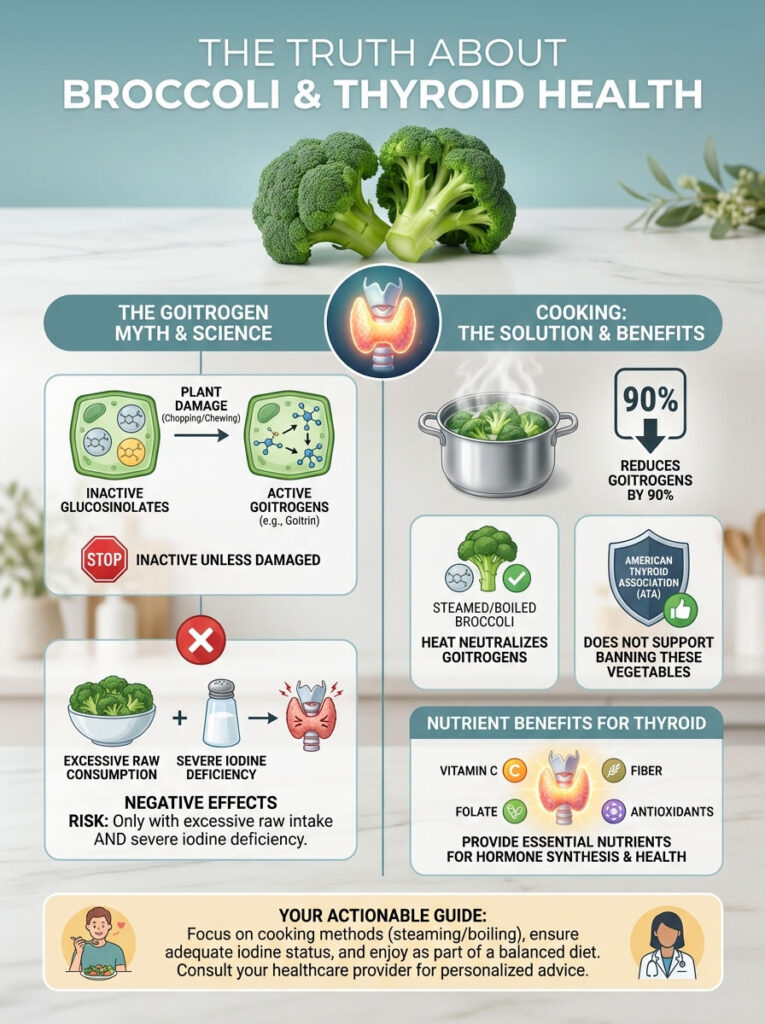
The advice to issue a blanket ban on the Brassica family is not supported by the American Thyroid Association (ATA). In fact, avoiding these foods may deprive your body of the very nutrients required to synthesize thyroid hormones. The real issue is not the vegetable itself but the method of preparation and your personal iodine status. In this guide, we will examine the biochemistry of goitrogens. We will discuss the specific “90% Reduction Rule” for cooking. Finally, we will learn how to safely include these nutrient powerhouses in your diet.
Key Statistics: Thyroid & Diet
- 90% Reduction: The amount of goitrogenic activity removed from broccoli after 30 minutes of boiling.
- 150°F (65°C): The internal temperature required to deactivate the myrosinase enzyme.
- 1.5 kg: The amount of raw bok choy consumed daily in the only major case study linking brassicas to myxedema coma.
- 150 mcg: The Recommended Dietary Allowance (RDA) for iodine in adults to prevent goiter.
- 70-80%: The percentage of the immune system residing in the gut, which cruciferous fibers support.
The Biology of Brassicas and Thyroid Health
To understand why the fear exists, we must look at the plant’s defense system. Cruciferous vegetables do not technically contain goitrogens when they are sitting intact in your refrigerator. Instead, they contain precursors called glucosinolates. These sulfur-containing compounds are physically separated from an enzyme called myrosinase within the plant’s cellular structure.
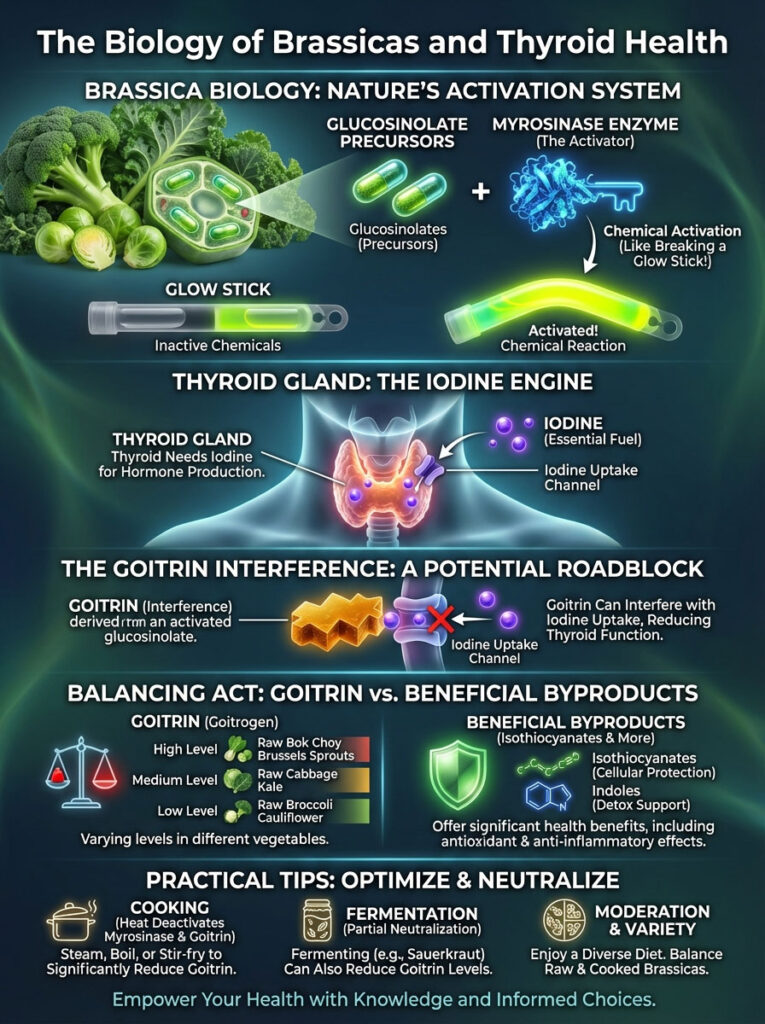
Think of this like a glow stick. The chemical is safe until you snap the stick and mix the inner fluids. When you chew, chop, or blend raw broccoli, you break the cell walls. This allows myrosinase to mix with glucosinolates. This chemical reaction creates the active byproducts: isothiocyanates, thiocyanates, and goitrin.
It is goitrin that has the potential to interfere with thyroid function. Plants evolved this mechanism to stop insects from eating them. It is a brilliant biological defense. However, for humans with thyroid issues, it creates a dietary puzzle. We need to understand how to neutralize this defense mechanism without losing the nutritional value of the food.
Understanding the Thyroid Gland’s Needs
Your thyroid gland is a small, butterfly-shaped organ located at the base of your neck. It has a very specific job. It extracts iodine from your bloodstream and combines it with an amino acid called tyrosine. This combination creates thyroid hormones.
These hormones regulate your metabolism, body temperature, and heart rate. They are the gas pedal for your body’s engine. When you have Hashimoto’s or hypothyroidism, your engine is idling too low. The last thing you want to do is cut the fuel line. That fuel is iodine. This is where the concern about Cruciferous Vegetables Thyroid interaction begins.
The Glucosinolate-Myrosinase Reaction
Let’s dig deeper into the chemistry. Glucosinolates are biologically inactive. They do nothing to your thyroid on their own. They rely entirely on the enzyme myrosinase to transform them. This is the most critical concept for you to grasp.
If you destroy the enzyme, you stop the reaction. Myrosinase is a protein. Like an egg white, it changes structure when it gets hot. Once the protein structure unravels, it can no longer catalyze the reaction. The glucosinolates remain intact and pass through your digestive system without ever becoming thyroid-suppressing goitrin.
Why Goitrin is the Real Culprit
Among the breakdown products, goitrin is the specific compound that causes trouble. Other byproducts, like isothiocyanates, are actually beneficial. They help fight cancer and support liver detox. Goitrin, however, is the “anti-nutrient.”
It specifically targets the machinery your thyroid uses to trap iodine. Not all cruciferous vegetables produce the same amount of goitrin. Some, like kale and Brussels sprouts, have higher potential. Others, like broccoli, have moderate potential. Understanding this hierarchy helps you make better choices at the grocery store.
Analyzing the Goitrogenic Mechanism of Action
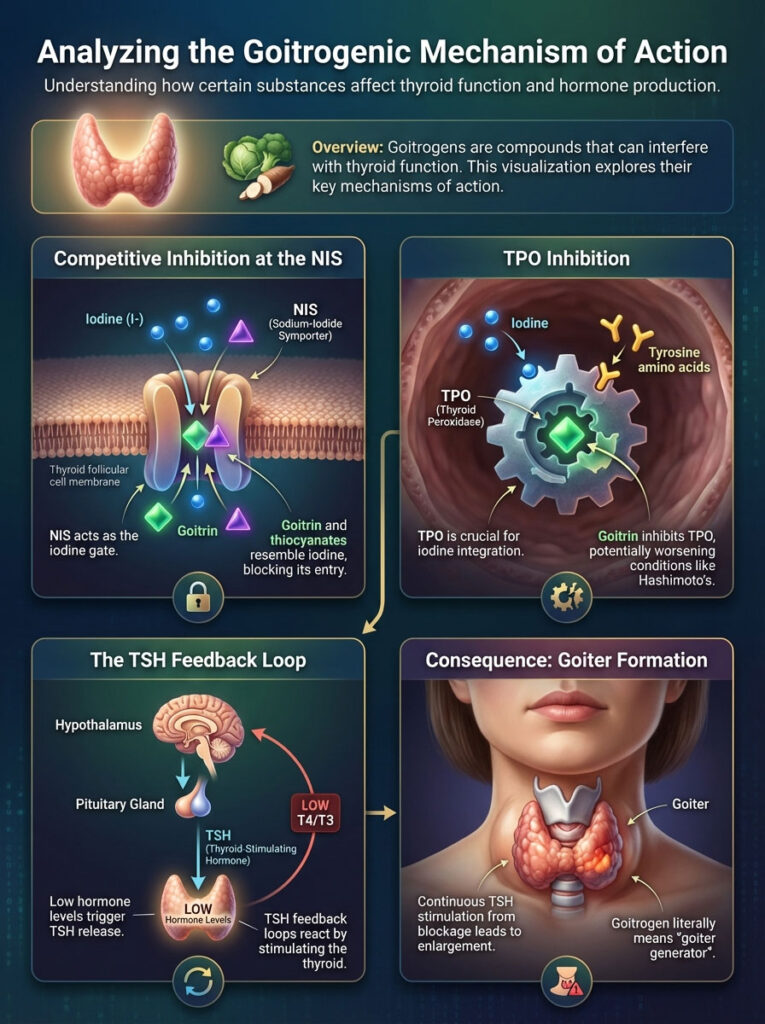
We need to understand exactly how these compounds attack the thyroid. It is not a vague toxicity. It is a specific mechanical blockage. Once goitrin is active in the bloodstream, it impacts the thyroid gland through a process known as competitive inhibition.
Competitive Inhibition at the NIS Symporter
The thyroid gland relies on a specialized door to let iodine in. This door is called the Sodium-Iodide Symporter (NIS). Imagine a parking space that only fits one car. Iodine is the car that is supposed to park there.
Goitrin and thiocyanates are shaped similarly to iodine. They are like other cars trying to steal the parking spot. If goitrin parks in the NIS transporter, iodine cannot get in. The door is blocked. Without iodine entering the cell, hormone production stalls. This is the primary way raw cruciferous vegetables can lower thyroid function.
The Role of Thyroid Peroxidase (TPO)
Inside the thyroid cell, there is another hurdle. An enzyme called Thyroid Peroxidase (TPO) is responsible for welding the iodine onto the tyrosine molecule. Even if iodine manages to get past the NIS door, goitrin can interfere here too.
Goitrin can bind to TPO and stop it from working. This is particularly relevant for patients with Hashimoto’s. In Hashimoto’s, your immune system is already attacking TPO (which is why we test for TPO antibodies). Eating massive amounts of raw goitrogens adds a chemical attack on top of the autoimmune attack. This creates a “double hit” on your thyroid’s ability to produce hormones.
TSH Feedback Loops and Goiter Formation
Your body has a feedback loop to correct low hormone levels. When the brain senses that T4 and T3 levels are dropping, the pituitary gland springs into action. It screams at the thyroid to work harder. It does this by pumping out Thyroid Stimulating Hormone (TSH).
If the blockage continues, the pituitary keeps pumping TSH. This constant stimulation causes the thyroid tissue to physically grow. It is trying to build more factory space to meet demand. This swelling is what we call a goiter. This is the biological origin of the term “goitrogen.” It literally means “goiter generator.”
The “90% Reduction Rule” and Thermal Degradation
As an RDN, my primary goal is to help you eat more vegetables, not fewer. The solution to the Cruciferous Vegetables Thyroid dilemma lies in your kitchen. Heat is the great equalizer. The myrosinase enzyme is highly sensitive to temperature.
Boiling: The Gold Standard for Safety
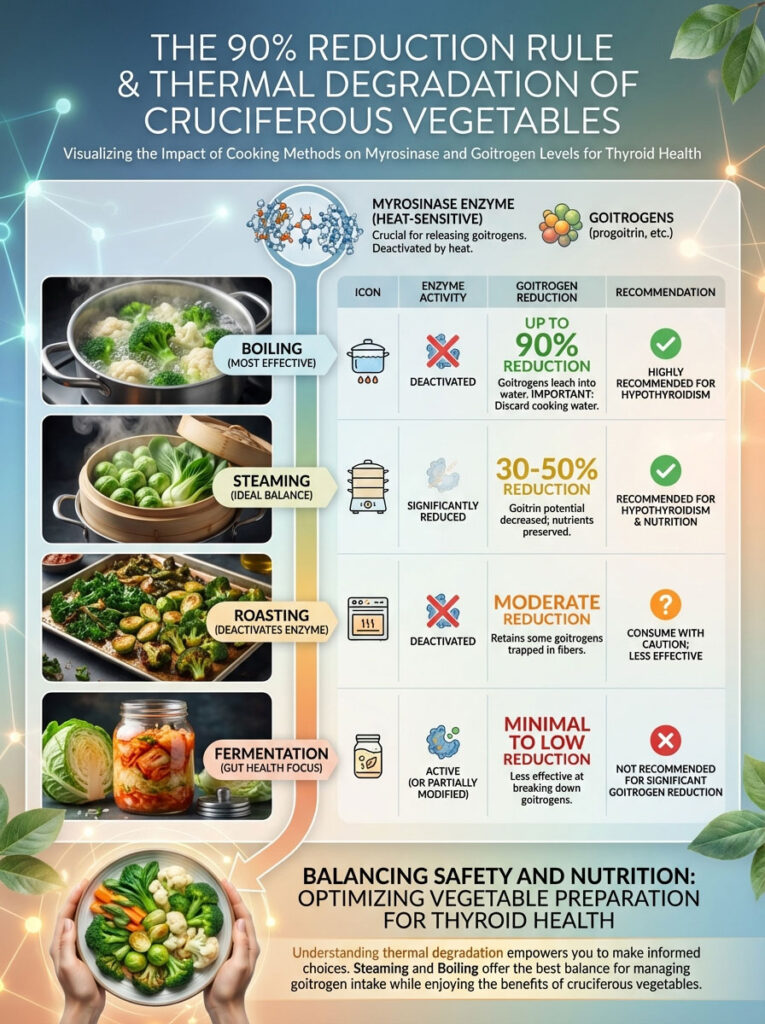
Boiling is the most effective method for reducing goitrogens. It works through two mechanisms. First, the heat destroys the myrosinase enzyme. Second, the water acts as a solvent.
Thiocyanates are water-soluble. When you boil Brussels sprouts for 10 minutes, the compounds leach out of the vegetable and into the water. Studies show boiling can reduce goitrogenic activity by nearly 90%. However, you must discard the water. If you use that water for soup stock, you are consuming the very compounds you tried to remove.
Steaming: Balancing Nutrition and Safety
Steaming is often considered the “Gold Standard” by dietitians. Steaming for 5 to 7 minutes is sufficient to kill the myrosinase enzyme. The internal temperature of the vegetable quickly rises above the safety threshold.
While it does not leach out as many compounds as boiling, it retains significantly more Vitamin C and folate. For a patient with Hashimoto’s who needs nutrient density, steaming offers the best balance. You get a 30-50% reduction in goitrin potential, plus complete enzyme inactivation. This makes the vegetable safe for regular consumption.
Roasting and Baking: Dry Heat Effects
Roasting is a favorite for flavor. The high heat of an oven (usually 350°F to 400°F) easily destroys myrosinase. The enzyme is deactivated within minutes of the vegetable becoming hot.
However, roasting is a dry heat method. The goitrogens do not leach out into water. They remain in the vegetable fibers, but they can no longer be converted by the plant’s enzyme. Your gut bacteria may convert a tiny fraction, but the overall load is significantly reduced. Roasting is considered safe and is a great way to make vegetables palatable.
Fermentation: The Probiotic Trade-off
Fermentation, like in kimchi or sauerkraut, is a different biological process. Fermentation does degrade some glucosinolates, but not as effectively as heat. However, the probiotic benefits of fermented foods for the gut-thyroid axis are profound.
A healthy gut microbiome assists in the conversion of T4 to T3. About 20% of this conversion happens in the gut. Therefore, the net benefit of fermented crucifers is usually positive. We accept a small amount of goitrogenic activity in exchange for a massive boost in gut health.
| Preparation Method | Myrosinase Activity | Goitrogen Reduction | Recommended for Hypothyroidism? |
|---|---|---|---|
| Raw | 100% Active | 0% | Limit intake (Occasional use only) |
| Steaming (5-7 mins) | Inactivated | 30–50% (Goitrin reduced) | Highly Recommended (Best nutrient retention) |
| Boiling (10+ mins) | Inactivated | 60–90% (Leached into water) | Safe (Discard cooking water) |
| Fermenting | Reduced | Variable | Safe in moderation (Supports Gut Health) |
| Roasting | Inactivated | Moderate | Safe |
Iodine and Selenium: The Protective Shield
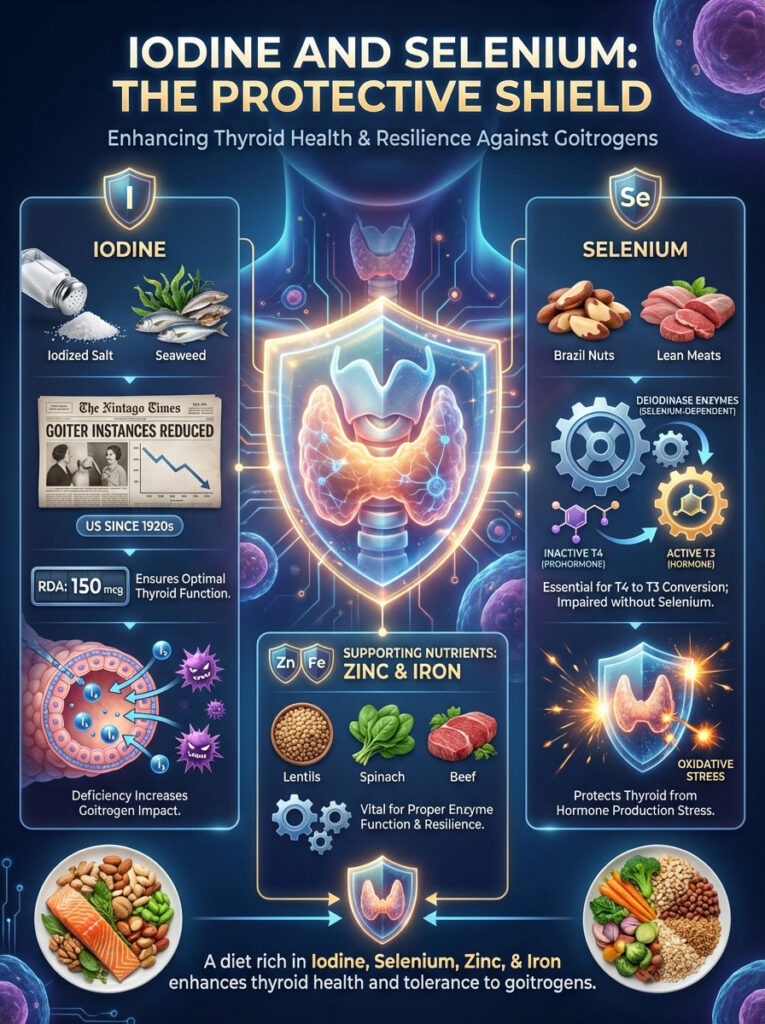
Here is the nuance that most blog posts miss. The competitive inhibition described above is generally only successful if you are already low in iodine. If you have sufficient iodine circulating in your body, the goitrogens lose the competition. Research consistently indicates that goitrogens and thyroid dysfunction are linked primarily in populations with severe iodine deficiency.
The Iodine Deficiency Context
In the United States, we have had iodized salt since the 1920s. This public health initiative effectively eliminated goiter as a common condition. While trends toward sea salt and kosher salt (which are often non-iodized) are changing this landscape slightly, clinical iodine deficiency is still relatively rare compared to developing nations.
For the average American patient with Hashimoto’s, iodine levels are usually sufficient to withstand normal dietary intake of cooked brassicas. The thyroid is robust. It can handle a little competition as long as there is enough iodine to go around. Ensuring you get your RDA of 150 mcg creates a safety buffer against goitrogens.
Selenium’s Role in Deiodinase Enzymes
If you are worried about Hypothyroidism Foods to Avoid, you should focus more on what to include. Selenium is a mineral that acts as a bodyguard for the thyroid. The enzymes that convert inactive thyroid hormone (T4) into the active form (T3) are called deiodinases.
These enzymes are selenium-dependent. Without selenium, they cannot function. Furthermore, selenium protects the thyroid gland from oxidative stress. The process of making thyroid hormones creates hydrogen peroxide, which is damaging. Selenium neutralizes this byproduct. I often recommend patients eat two Brazil nuts per day, which typically provides the daily requirement of selenium.
Zinc and Iron: The Supporting Cast
We cannot overlook zinc and iron. TPO, the enzyme we discussed earlier, is a heme-dependent enzyme. This means it requires iron to function. If you are anemic (which is common in hypothyroid women), your thyroid struggles to use iodine regardless of what vegetables you eat.
Zinc plays a role in the nuclear receptors where T3 actually does its work in your cells. A diet rich in these minerals makes your thyroid system resilient. When your mineral status is optimized, your tolerance for cruciferous vegetables increases significantly. You move from a state of fragility to a state of resilience.
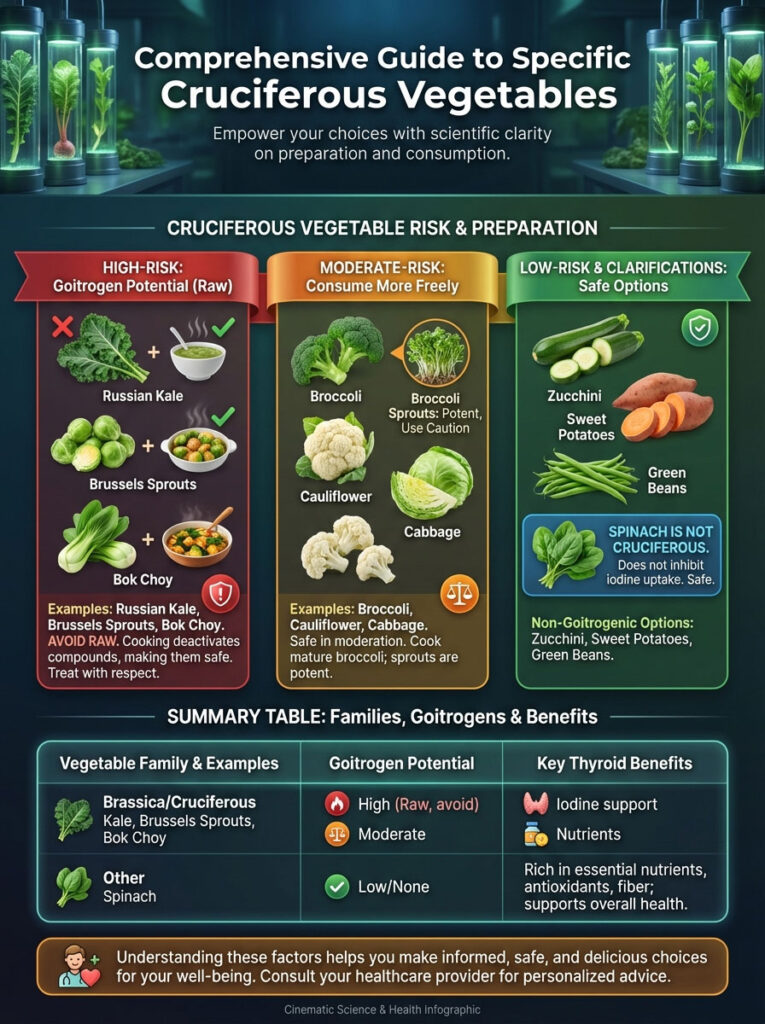
Comprehensive Guide to Specific Cruciferous Vegetables
Not all greens are created equal. When discussing the Cruciferous Vegetables Thyroid connection, patients often lump all green vegetables into the “danger” category. This is incorrect. We need to distinguish between high-potency brassicas and other leafy greens.
High-Risk Vegetables
Some vegetables have naturally higher concentrations of glucosinolates. Russian Kale, Brussels sprouts, and Bok Choy tend to be higher on the spectrum. These are the heavy hitters. If you are going to eat something raw, these are the ones to avoid in their raw state.
Bok choy, in particular, has been singled out in medical literature. However, once cooked, even these high-potency vegetables fall back into the safe category. The key is to treat them with respect. Cook them thoroughly and do not consume them in isolation every single day.
Moderate-Risk Vegetables
Broccoli, cauliflower, and cabbage generally have moderate to low potential compared to the high-risk group. You can enjoy these with more flexibility. Cauliflower, for example, has become a staple in low-carb diets as a rice or potato substitute.
Because cauliflower is almost always cooked (roasted, mashed, or riced and sautéed), it poses very little risk. Broccoli is similar. The florets have different concentrations than the seeds or sprouts. Broccoli sprouts are very potent and should be limited, but the mature vegetable is quite safe when cooked.
Low-Risk and Non-Cruciferous Greens
I frequently have to correct the misconception that spinach is bad for the thyroid. Spinach is not a cruciferous vegetable. It belongs to the Amaranthaceae family. It is related to beets and Swiss chard.
Spinach contains oxalates, which can bind to calcium and iron. However, it does not contain the glucosinolates that inhibit iodine uptake. You do not need to count spinach against your “goitrogen quota.” Zucchini, sweet potatoes, and green beans are also non-goitrogenic vegetables that can fill up your plate safely.
| Vegetable | Botanical Family | Goitrogen Potential (Raw) | Key Thyroid Benefit |
|---|---|---|---|
| Kale | Brassica | High | High Vitamin A & C (Immune support) |
| Brussels Sprouts | Brassica | High | High Fiber (Estrogen detox) |
| Broccoli | Brassica | Moderate | Sulforaphane (Liver detox) |
| Cauliflower | Brassica | Moderate | Versatile low-carb staple |
| Spinach | Amaranthaceae | Negligible | Iron & Magnesium (Energy production) |
| Swiss Chard | Amaranthaceae | Negligible | Magnesium |
The Gut-Thyroid Axis Connection
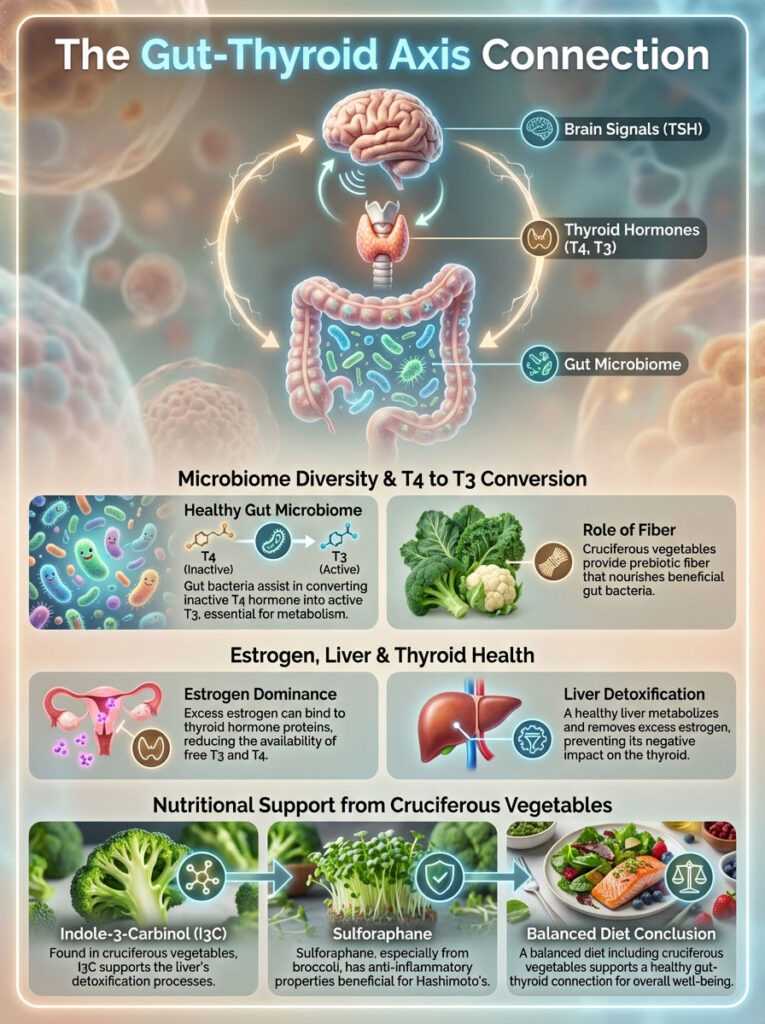
Eliminating cruciferous vegetables can actually backfire on your thyroid health. This seems counterintuitive, but it comes down to the gut. The gut and the thyroid are intimately connected. We call this the Gut-Thyroid Axis.
Microbiome Diversity and T4 Conversion
Your thyroid produces mostly T4, which is the inactive hormone. It must be converted to T3 to give you energy. While the liver does much of this work, about 20% of this conversion happens in your digestive tract. It is performed by healthy gut bacteria.
These bacteria need food to survive. Their preferred food is fiber. Cruciferous vegetables are packed with prebiotic fibers that feed these specific beneficial bacteria. If you cut out these vegetables, you starve the bacteria that help activate your thyroid hormone. It is a delicate balance.
Estrogen Dominance and Liver Detoxification
Many women with Hashimoto’s also suffer from estrogen dominance. Excess estrogen can increase proteins in the blood that bind up thyroid hormone, making it unavailable to your cells. The liver is responsible for clearing this excess estrogen.
Cruciferous vegetables contain Indole-3-Carbinol (I3C). I3C supports the liver’s Phase 1 detoxification pathways. It helps the body metabolize estrogen down the healthy 2-hydroxy pathway rather than the dangerous 16-hydroxy pathway. By eating broccoli, you help your liver clear estrogen, which indirectly frees up more thyroid hormone for your body to use.
Sulforaphane: The Anti-Inflammatory Powerhouse
Hashimoto’s is an inflammatory autoimmune disease. Reducing systemic inflammation is the primary goal of treatment. Sulforaphane, found abundantly in broccoli, is one of the most potent natural anti-inflammatory compounds known to science.
It activates the Nrf2 pathway. This pathway turns on the production of antioxidant proteins that protect your cells from damage. If you avoid broccoli out of fear of goitrogens, you miss out on this incredible anti-inflammatory benefit. The pros of sulforaphane vastly outweigh the cons of trace goitrogens, especially when the vegetable is cooked.
Clinical Guidelines for Safe Consumption
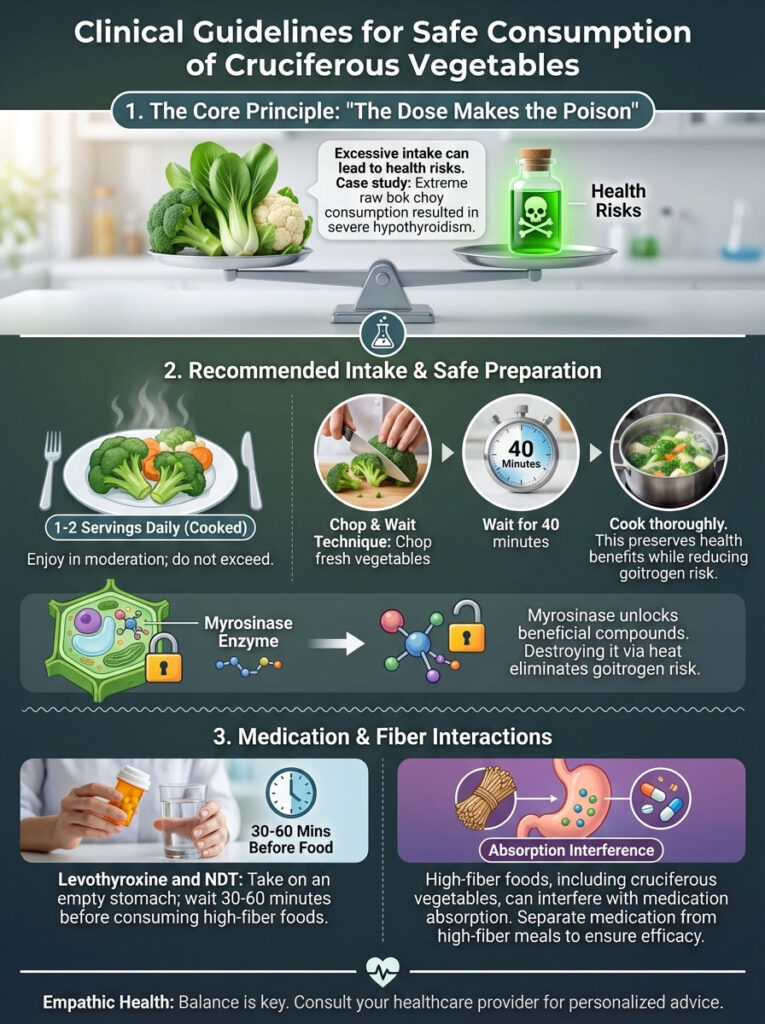
We need to talk about numbers. In the medical world, “the dose makes the poison.” Water is fatal if you drink three gallons in an hour. Yet we do not tell people to avoid hydration. The same logic applies to Cruciferous Vegetables Thyroid interactions.
Defining “Excessive” Intake
There is a famous case study published in the New England Journal of Medicine. It is often cited as proof that bok choy kills thyroids. In this case, an 88-year-old woman arrived at the hospital in a myxedema coma (severe hypothyroidism).
Upon review, doctors discovered she had been consuming 1.0 to 1.5 kilograms of raw bok choy every single day for months. She was doing this to treat her diabetes. To put that in perspective, that is over 3 pounds of raw bok choy daily. That is roughly 15 to 20 cups.
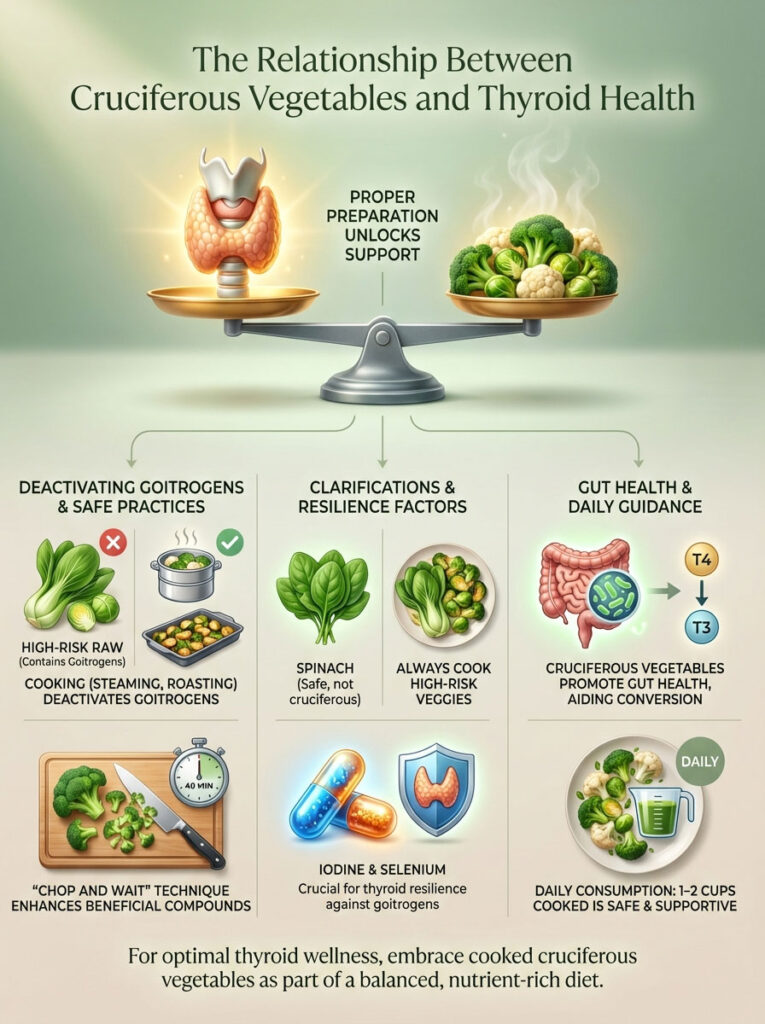
It is physically difficult to eat that much raw vegetable matter. For the average person eating 1 cup of roasted broccoli or a side of coleslaw, this risk is non-existent. A standard serving size is roughly one cup. The rule of thumb I give my patients is 1 to 2 servings of cooked crucifers daily is perfectly safe.
The “Chop and Wait” Technique Explained
Here is a technique I teach in my clinic called “Chop and Wait.” If you want the anti-cancer benefits of sulforaphane but want to cook the vegetable to kill the goitrogens, you have a dilemma. Cooking kills myrosinase, which is needed to make sulforaphane.
The solution is simple. Chop your broccoli or kale and let it sit on the cutting board for 40 minutes before you cook it. During this 40-minute window, the myrosinase (which is still alive because the veggie is raw) converts the glucosinolates into beneficial sulforaphane.
Sulforaphane is heat-stable. After 40 minutes, you can steam or roast the vegetable. The heat will kill the myrosinase (removing the goitrogen risk for the remaining compounds). However, the beneficial sulforaphane you created on the cutting board remains intact. It is the best of both worlds.
Expert Insight: The Enzyme “Key”
Myrosinase is the “key” that unlocks the goitrogenic potential. If you destroy the key (the enzyme) before you eat the vegetable, the door remains locked. The glucosinolates pass through your system without converting into thyroid-suppressing goitrin.
Interactions with Levothyroxine and NDT
Patients often ask if they can eat these vegetables at the same time as their medication. Levothyroxine and Natural Desiccated Thyroid (NDT) should generally be taken on an empty stomach. You should wait at least 30 to 60 minutes before eating anything.
Cruciferous vegetables are high in fiber. Fiber can interfere with the absorption of medication in the gut. This is not a goitrogen issue; it is a fiber issue. It applies to oatmeal just as much as it applies to kale. Always separate your medication from high-fiber meals by at least an hour to ensure you are absorbing your full dose.
Supplements and Concentrated Extracts
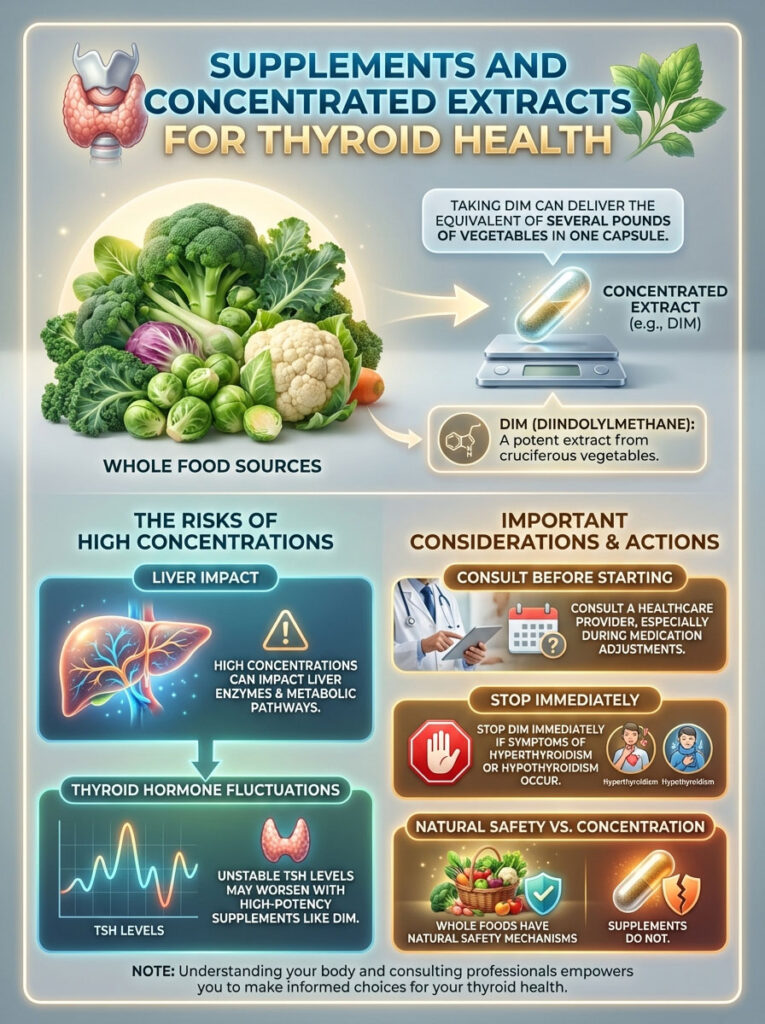
In our quest for health, we often assume that if a little is good, a lot is better. This leads many patients to look for Best vegetables for thyroid health in pill form. Supplements like Diindolylmethane (DIM) are concentrated extracts of cruciferous vegetables.
The Danger of Concentration
While eating broccoli is safe, taking DIM requires caution. A single capsule can contain the equivalent of several pounds of vegetables. This concentrated dose hits the body differently than whole food.
This massive influx can affect liver enzymes aggressively. It can shift metabolic pathways too quickly. For a person with an unstable TSH, introducing a high-potency supplement can cause fluctuations in hormone levels. It is a powerful tool, but it must be respected.
When to Use DIM (and When to Stop)
I advise against starting DIM without consulting your provider. This is especially true if you are currently adjusting your medication. If you notice symptoms of hyperthyroidism (racing heart, anxiety) or hypothyroidism (fatigue, brain fog) after starting DIM, stop immediately.
Whole foods have a built-in safety mechanism: volume. You get full before you can overdose on broccoli. Supplements bypass this safety mechanism. Stick to the produce aisle unless a professional guides you otherwise.
Practical Meal Planning for Hashimoto’s Patients
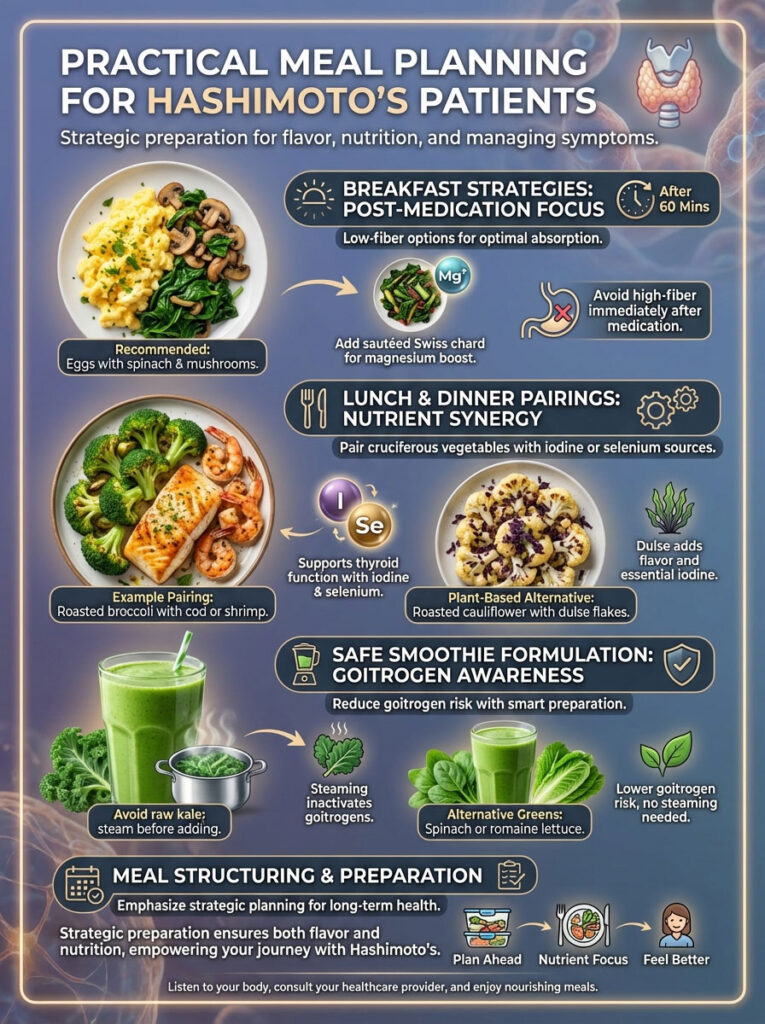
Navigating a Hashimoto’s Diet does not mean eating bland, overcooked food. We can implement strategic preparation techniques that maximize flavor and nutrition while minimizing risk. Here is how to structure your day.
Breakfast Strategies
Breakfast is often the time when patients take their medication. Keep this meal lower in fiber if you eat immediately after your 60-minute wait window. Eggs with spinach (non-cruciferous) and mushrooms are a great choice.
If you want greens, sautéed Swiss chard is excellent. It provides magnesium and is safe for the thyroid. Save the heavy cruciferous vegetables for later in the day when your medication has fully absorbed.
Lunch and Dinner Pairings
Always pair your crucifers with iodine or selenium sources. If you are having roasted broccoli for dinner, serve it alongside a piece of cod or shrimp. Seafood is naturally rich in iodine.
This pairing ensures that even if small amounts of goitrogens remain, your thyroid has plenty of iodine to win the competitive inhibition battle. For a plant-based option, sprinkle dulse flakes (seaweed) on your roasted cauliflower. It adds a savory umami flavor and a protective dose of iodine.
Safe Smoothie Formulation
Green smoothies are where most people get into trouble. Putting raw kale into a blender every morning is the highest risk behavior for this issue. You are consuming a large volume of raw goitrogens in a liquid form that is rapidly absorbed.
Instead, try steaming your kale or cauliflower beforehand. You can freeze steamed cauliflower and add it to smoothies for a creamy texture without the goitrogen risk. Alternatively, use spinach or romaine lettuce as your green base. They provide the color and nutrients without the thyroid-suppressing compounds.
Summary & Key Takeaways
The relationship between Cruciferous Vegetables Thyroid health is one of the most misunderstood topics in nutrition. The fear is largely residual from an era where iodine deficiency was rampant and food science was less nuanced. Today, we know that these vegetables are friends, not foes, for the thyroid patient.
To summarize, you can protect your thyroid with this 3-Step Safety Check:
- Cook your Crucifers: Steaming, boiling, or roasting inactivates the enzyme responsible for goitrogenic activity.
- Monitor Iodine and Selenium: Ensure you are not deficient in these key minerals to help your thyroid resist any potential stress.
- Practice Moderation: Stick to 1 to 2 cups of cooked vegetables daily rather than juicing pounds of raw greens.
Do not let fear rob you of the potent anti-inflammatory and liver-supporting benefits these foods provide. Focus on adding nutrient-dense options to your plate rather than restricting them unnecessarily. Your thyroid is resilient, and with the right preparation, you can enjoy the full spectrum of nature’s bounty.
Frequently Asked Questions
Can I eat broccoli if I have hypothyroidism or Hashimoto’s disease?
Yes, you can safely enjoy broccoli and other brassicas. The goitrogenic compounds in these vegetables only pose a risk if consumed in massive raw quantities alongside a severe iodine deficiency. Cooking methods like steaming or roasting effectively deactivate the enzymes that interfere with thyroid function.
How does cooking affect the goitrogens found in cruciferous vegetables?
Heat is the most effective tool for neutralizing goitrogenic activity by denaturing the myrosinase enzyme. Boiling can reduce these compounds by up to 90% when the water is discarded, while steaming for 5 to 7 minutes provides a perfect balance of safety and nutrient retention. Once the enzyme is inactivated, the glucosinolates cannot convert into thyroid-suppressing goitrin.
Is it safe to put raw kale or cauliflower in my daily green smoothie?
I recommend avoiding daily consumption of large amounts of raw kale or cauliflower in smoothies, as blending releases the highest concentration of active goitrogens. A thyroid-friendly alternative is to lightly steam these vegetables before freezing them for your smoothie, or swap them for non-cruciferous greens like spinach or romaine lettuce. This protects your iodine uptake while still providing essential phytonutrients.
What is the “Chop and Wait” technique for thyroid-safe cooking?
This technique involves chopping your cruciferous vegetables and letting them sit for 40 minutes before applying heat. This window allows the myrosinase enzyme to create beneficial, heat-stable sulforaphane before the cooking process deactivates the enzyme and neutralizes the goitrogenic potential. It is the best clinical strategy to maximize anti-inflammatory benefits while protecting the thyroid gland.
Does spinach contain goitrogens that interfere with thyroid health?
Contrary to popular belief, spinach is not a cruciferous vegetable and does not contain the glucosinolates associated with goiter formation. It belongs to the Amaranthaceae family and is considered a “safe” green for thyroid patients. While it does contain oxalates, it will not competitively inhibit iodine uptake at the Sodium-Iodide Symporter (NIS).
How do iodine and selenium protect the thyroid from dietary goitrogens?
Iodine and selenium act as a protective shield by ensuring the thyroid has the necessary resources to outcompete goitrogenic compounds. Maintaining an RDA of 150 mcg of iodine prevents competitive inhibition at the NIS door, while selenium supports the deiodinase enzymes responsible for converting T4 into active T3. When these mineral levels are optimized, the thyroid becomes much more resilient to dietary stressors.
Can cruciferous vegetables actually improve thyroid function through gut health?
Yes, because approximately 20% of thyroid hormone conversion (T4 to T3) occurs in the digestive tract via healthy gut bacteria. Cruciferous vegetables provide the prebiotic fiber necessary to sustain these beneficial microbes. By supporting the gut-thyroid axis, these vegetables indirectly enhance your metabolic rate and energy production.
What are the high-risk cruciferous vegetables I should avoid eating raw?
Russian kale, Brussels sprouts, and bok choy have the highest naturally occurring concentrations of glucosinolates. These “heavy hitters” should always be cooked—ideally steamed or sautéed—to ensure they don’t interfere with Thyroid Peroxidase (TPO) activity. Moderate-risk options like broccoli and cauliflower are more forgiving but still best consumed cooked.
Does eating broccoli interfere with Levothyroxine or NDT absorption?
The interference is not specific to goitrogens, but rather the high fiber content found in all cruciferous vegetables. Fiber can bind to thyroid medications in the gut, reducing their bioavailability and effectiveness. To avoid this, always take your medication on an empty stomach and wait at least 60 minutes before eating a high-fiber meal.
Should I take DIM supplements if I have a thyroid condition?
You should exercise caution with concentrated extracts like Diindolylmethane (DIM), as they provide a much higher dose than whole foods. These potent supplements can aggressively shift liver detoxification pathways and may cause fluctuations in TSH levels. Always consult with a healthcare provider before introducing concentrated cruciferous extracts into your regimen.
How much bok choy is considered dangerous for thyroid patients?
Clinical case studies suggest that danger only arises at extreme levels of consumption, such as 1.0 to 1.5 kilograms (over 3 pounds) of raw bok choy daily for several months. For the average person, consuming 1 to 2 cups of cooked cruciferous vegetables per day is perfectly safe and provides significant health benefits without any risk of inducing a myxedema coma.
How do cruciferous vegetables help with estrogen dominance in Hashimoto\’s?
Many Hashimoto\’s patients struggle with estrogen dominance, which can increase thyroid-binding globulins and lower active hormone levels. Cruciferous vegetables contain Indole-3-Carbinol (I3C), which assists the liver in metabolizing estrogen through safer pathways. By clearing excess estrogen, these vegetables indirectly help maintain higher levels of free, bioavailable thyroid hormone.
Disclaimer
This article is for informational purposes only and does not constitute medical advice. The information provided here is based on the expertise of a Registered Dietitian but should not replace professional medical consultation. Always speak with your endocrinologist or primary care provider before making significant changes to your diet or supplement regimen, especially if you are taking thyroid medication like Levothyroxine or NDT.
References
- American Thyroid Association (ATA) – thyroid.org – Official guidelines on diet, iodine requirements, and the management of hypothyroidism and goiter.
- The New England Journal of Medicine – nejm.org – Reference to the 2010 case study regarding excessive raw bok choy consumption and myxedema coma.
- Journal of Agricultural and Food Chemistry – ACS Publications – Studies regarding the thermal degradation of glucosinolates and myrosinase during boiling and steaming.
- Nutrients Journal – MDPI – Research on the gut-thyroid axis and the role of prebiotic fibers in T4 to T3 hormone conversion.
- National Institutes of Health (NIH) Office of Dietary Supplements – ods.od.nih.gov – Clinical data on the Recommended Dietary Allowance (RDA) for Iodine and Selenium.
- Endocrine Reviews – Oxford Academic – Comprehensive analysis of the Sodium-Iodide Symporter (NIS) and competitive inhibition by thiocyanates.