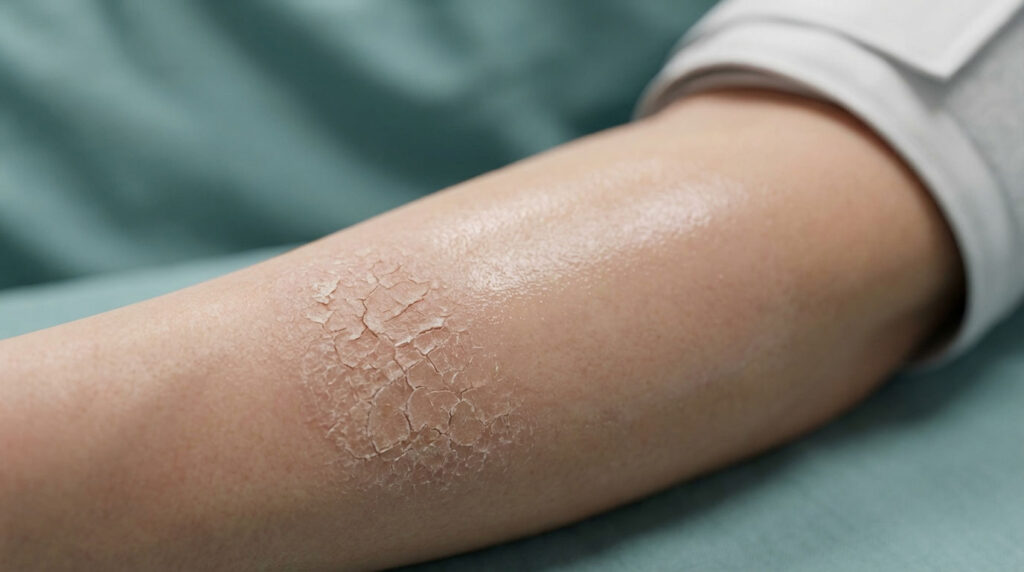
You wake up, glance in the mirror, and barely recognize the swollen stranger staring back. It isn’t fat, and despite what your friends say, it isn’t just water retention from a salty dinner. In my years analyzing metabolic health, Thyroid Skin Problems remain the most overlooked diagnostic tool we possess.
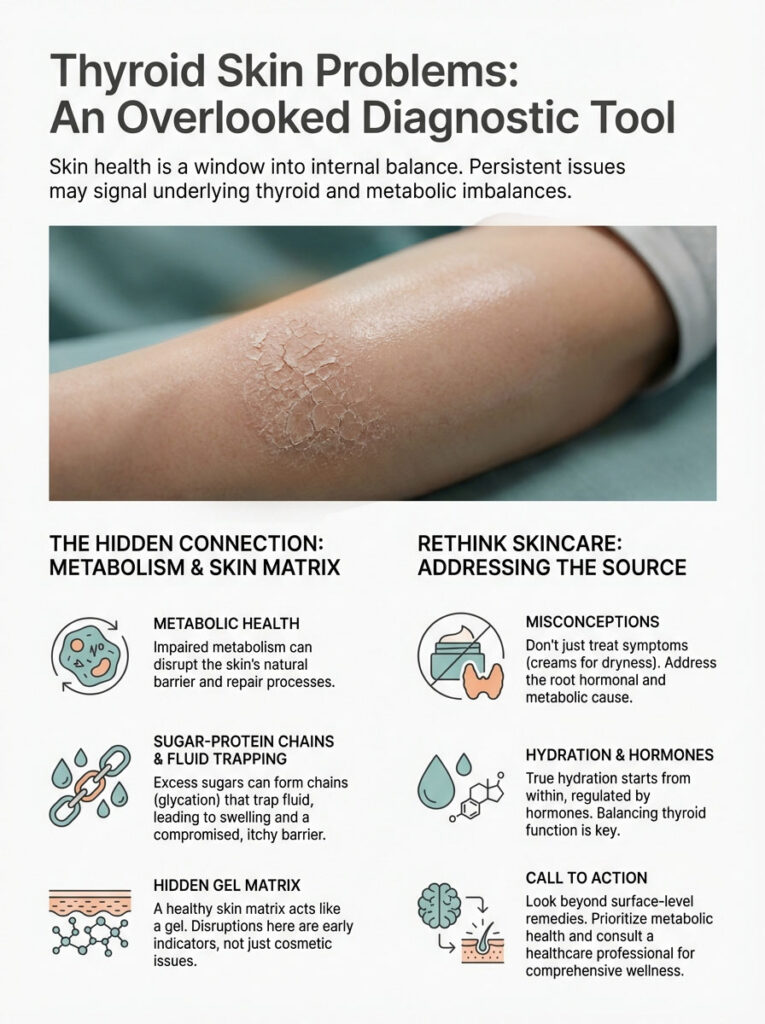
Your skin is screaming that your internal engine has stalled. The insatiable itching that keeps you awake at night and the puffiness that refuses to drain are not cosmetic failures. They are the result of a bizarre accumulation of sugar-protein chains trapping fluid beneath your dermis.
I have seen patients spend thousands on high-end dermatology treatments that fail because they treat the symptom, not the source. The solution requires a radical shift in how you view hydration and hormones. It starts with understanding the hidden gel matrix under your skin.
Want to move beyond the basics? The full breakdown is here: Thyroid Skin Problems: How to Fix Itching and Puffiness?
The Invisible Gel Trapped Beneath Your Surface
Most people assume puffiness is just water. In the world of thyroid dysfunction, the reality is far more shocking. When your thyroid hormones plummet, your body fails to break down mucopolysaccharides, specifically a substance called glycosaminoglycans (GAGs).
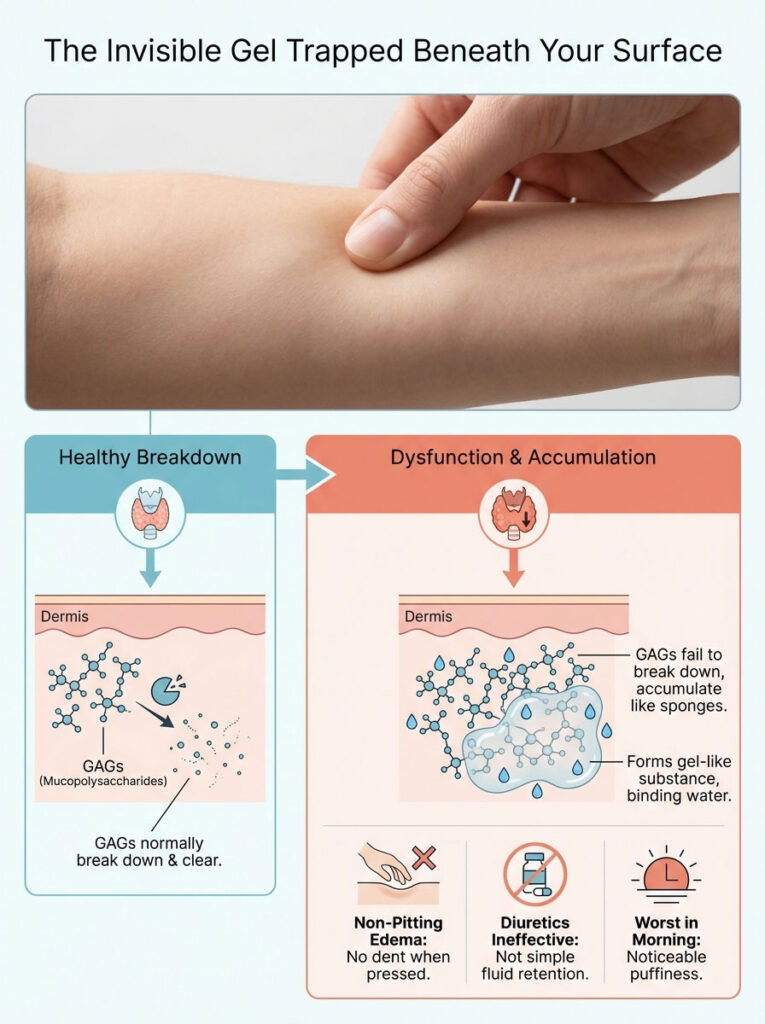
These GAGs are like microscopic sponges. They accumulate in the dermis and bind to water with incredible strength. I found that this creates a thick, gel-like substance under the skin that does not drain like normal fluid.
If you press your thumb into a swollen ankle from heart issues, it leaves a dent. If you press into thyroid puffiness, it bounces back immediately. This is non-pitting edema, and it explains why diuretics (water pills) are useless here.
Why The Morning is The Worst
- Gravity fails you: While you sleep flat, the gel matrix absorbs lymphatic fluid.
- Sluggish drainage: Without thyroid hormone, your lymph pumps slow down.
- The doughy look: You wake up looking swollen because the fluid is literally trapped in a sugar web.
Why Your Fancy Moisturizer is Useless
The itching associated with hypothyroidism is a nightmare for many. It feels deep, persistent, and unscratchable. I realized early on that standard lotions are a waste of money for this specific condition.
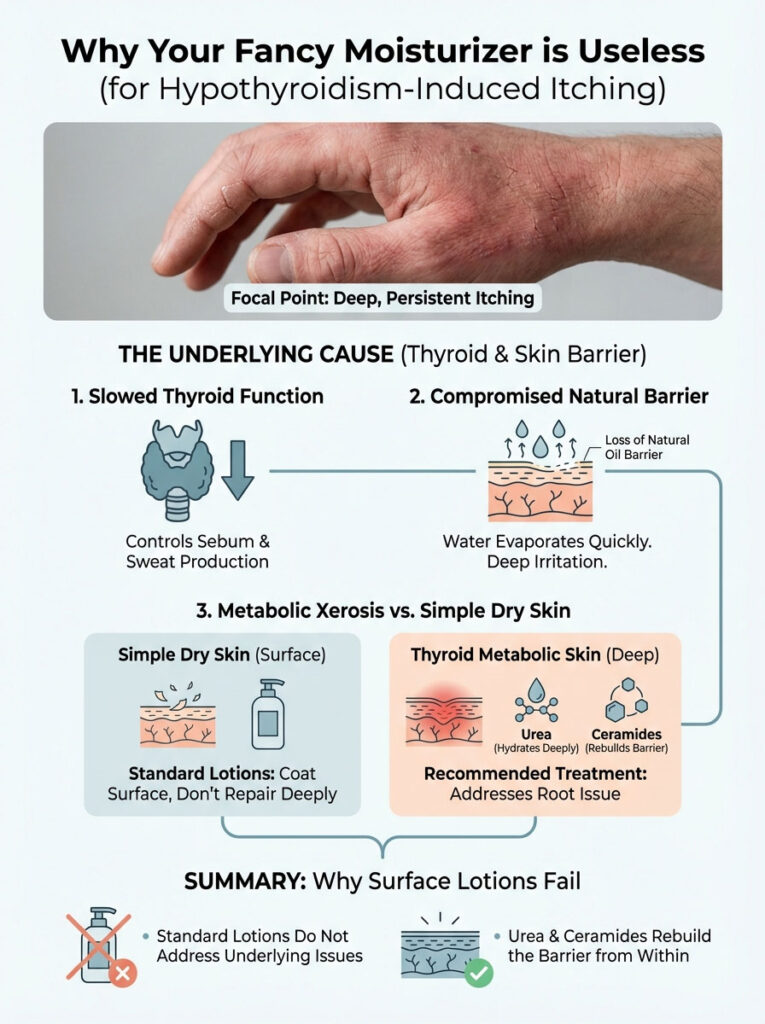
Your thyroid controls sebum (oil) and sweat production. When it slows down, your natural oil barrier vanishes. Without this seal, water in your skin evaporates instantly into the air.
Applying a water-based lotion to this skin is like pouring water into a bucket with no bottom. It feels good for five minutes, then evaporates, leaving you drier than before. You are suffering from metabolic xerosis, not simple dry skin.
Thyroid Skin vs. Normal Dry Skin
| Feature | Normal Dry Skin | Thyroid Metabolic Skin |
|---|---|---|
| Cause | Weather, harsh soap | Hormonal barrier failure |
| Texture | Flaky, tight | Doughy, cool, coarse |
| Sensation | Surface itch | Deep, maddening itch |
| Fix | Standard lotion | Urea & Ceramides |
The “Soak and Seal” Protocol
To fix this, we must artificially reconstruct the barrier your body has stopped building. I developed a strict rule for my clients: never let your skin dry fully after a shower.
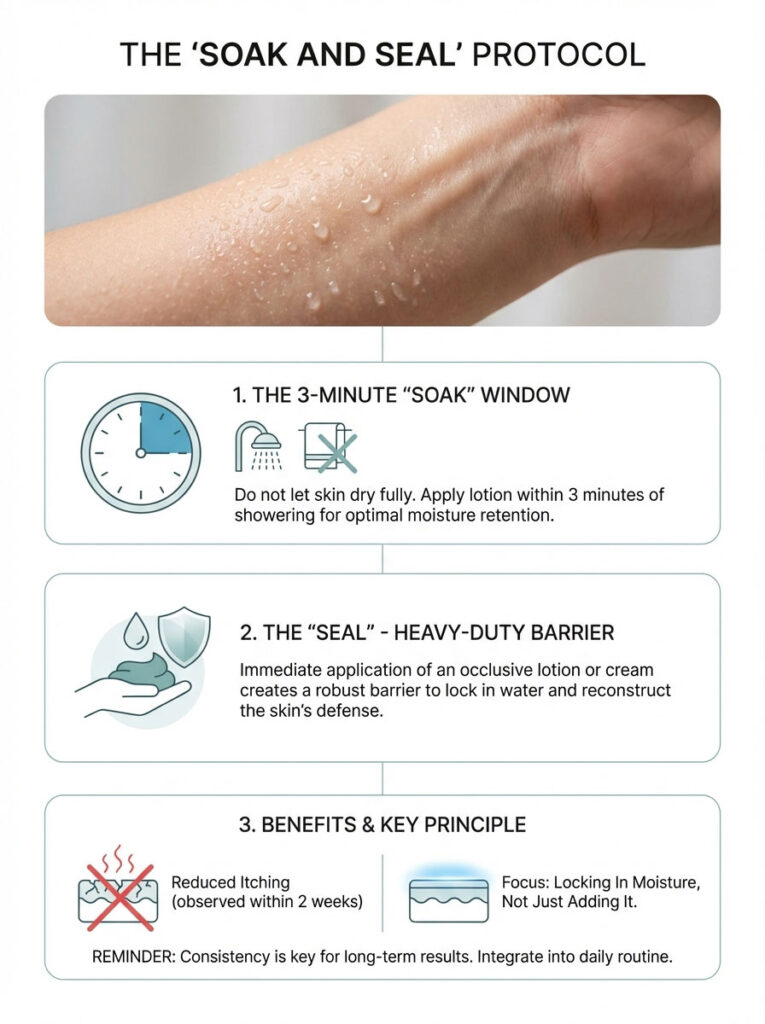
You have a roughly three-minute window after bathing where your skin is saturated with water. You must trap it immediately. If you wait until you are dry to apply lotion, you have missed the opportunity.
The Secret Ingredients
- Urea (10-20%): This is non-negotiable. Urea dissolves the thick, scaly dead skin and binds water to the cells.
- Ceramides: These are the lipid “mortar” that holds your skin cells together.
- Squalane: A biomimetic oil that mimics human sebum perfectly.
I have seen patients resolve years of itching in just two weeks by switching to this heavy-duty protocol. It is not about adding moisture; it is about locking it in.
The Internal Switch: T3 and Gluten
External fixes are just a band-aid if we ignore the internal chemistry. The accumulation of those water-trapping GAGs is directly linked to low T3 levels. T3 is the active hormone that tells your cells to clean up that debris.
Many patients are on T4-only medication (Levothyroxine) but cannot convert it to T3. I often see the puffiness vanish only after a patient adds a small dose of Liothyronine (T3) to their regimen. The “moon face” melts away as the body finally metabolizes the sugar matrix.
The Gluten Connection
Furthermore, we cannot ignore the gut. Gluten proteins look suspiciously like thyroid tissue to your immune system. This causes “molecular mimicry.”
I tell my patients that eating gluten while fighting thyroid issues is like throwing gasoline on a fire. The systemic inflammation manifests as water retention and puffiness. Cutting gluten is often the essential first step to seeing your jawline again.
A Warning on “Carotenemia”
Have you noticed your palms looking orange? This is not a spray tan accident. It is a sign your liver cannot convert beta-carotene from carrots into Vitamin A.
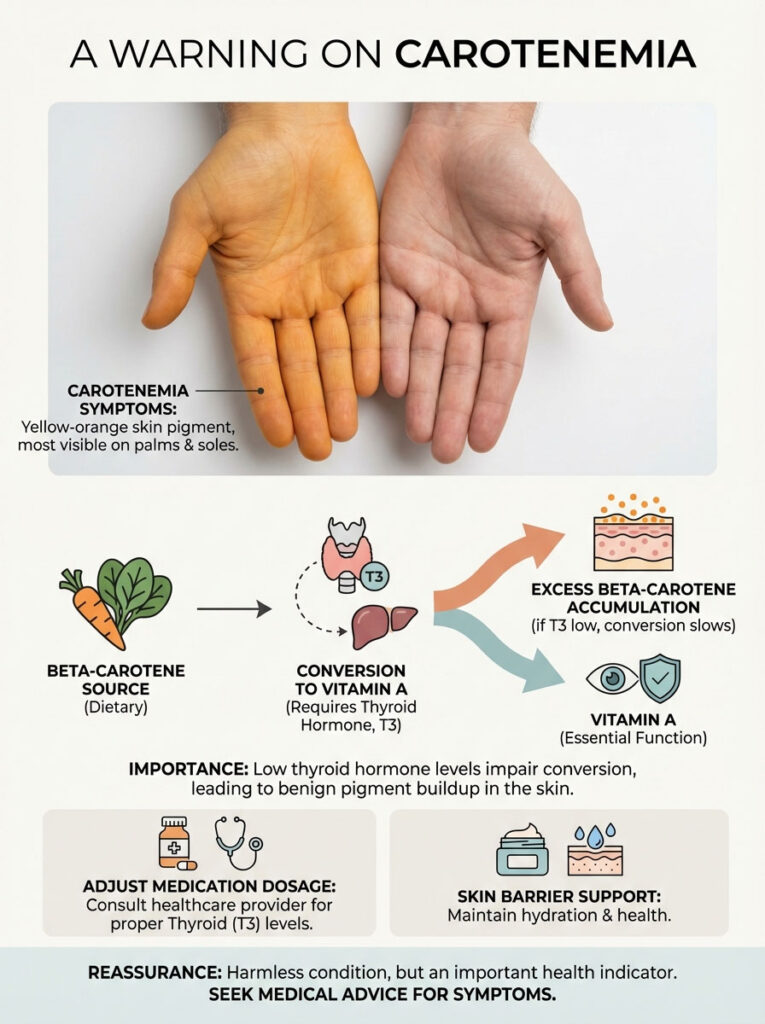
This conversion requires thyroid hormone. When it fails, the orange pigment accumulates in your skin. It is a harmless but stunning visual marker that your medication dosage needs adjustment.
By treating the internal metabolism with proper T3 levels and supporting the external barrier with urea and oils, you can reverse these symptoms. You do not have to live with the mask of myxedema.