
My limbs felt heavy, like I was wading through wet concrete. I had just slept for nine hours, yet I stared at my reflection with eyes that burned from exhaustion. The doctor glanced at my chart and delivered the verdict: “Your labs are perfect.”
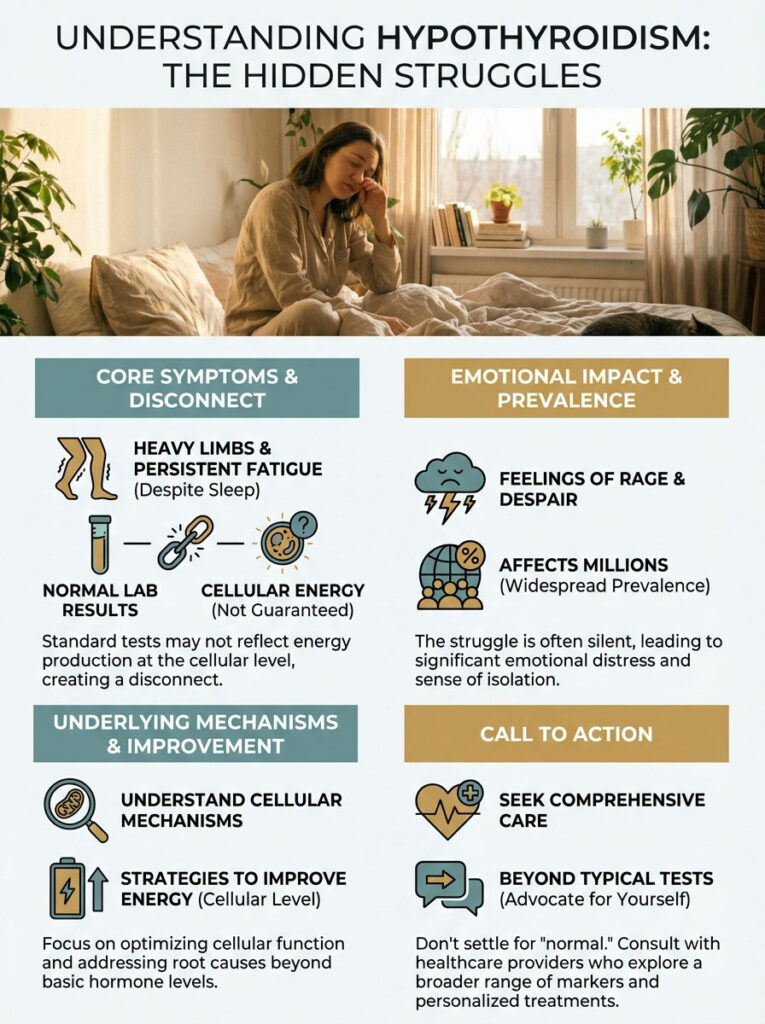
I felt a mix of rage and despair. If my numbers were normal, why did I feel like I was dying? This scenario is a nightmare for millions dealing with hypothyroidism.
The truth is, standard medical care often misses the real problem. I discovered that a “normal” test result doesn’t mean your cells have energy. Here is the secret mechanism keeping you tired and how to fix it.
This is just an overview — the full guide goes much deeper: Why Am I Still Tired? The Ultimate Fatigue and Hypothyroidism Guide
The Great TSH Deception
Most patients believe their blood work tells the whole story. I learned the hard way that this is false. The standard TSH test is merely a pituitary signal, not a fuel gauge.
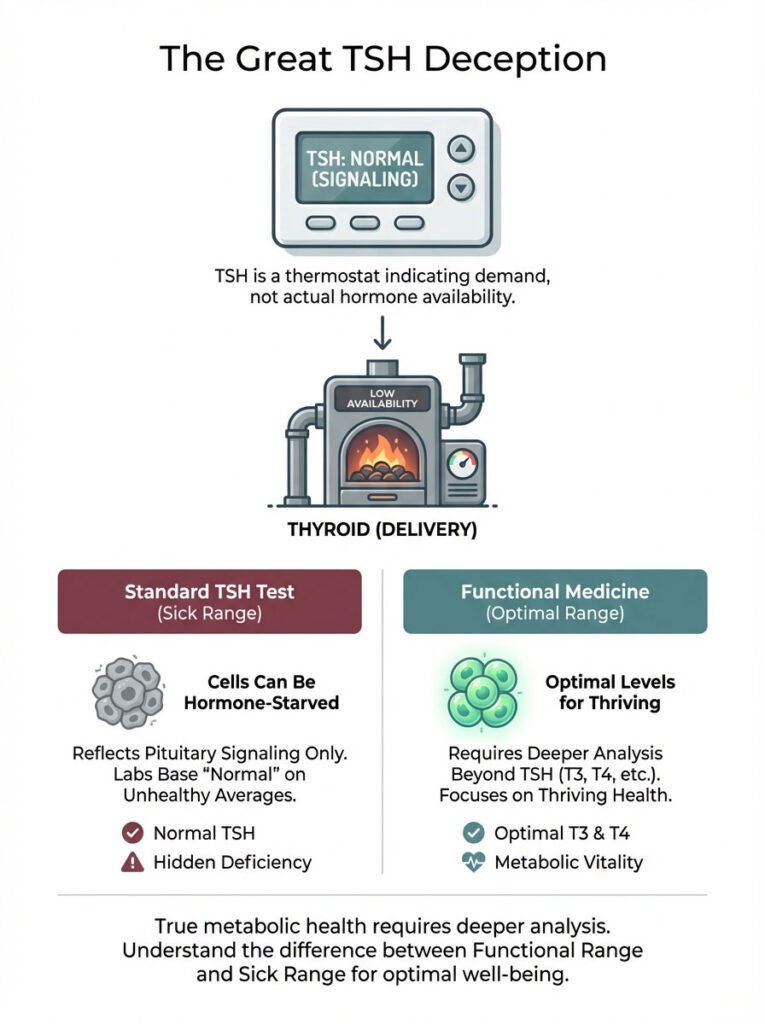
Think of TSH like a thermostat in a hallway. It might read 70 degrees, but the heater in your bedroom could be broken. Your brain asks for hormone, but your cells might be starving.
True metabolic health requires looking deeper. You need to know if the fuel is actually reaching the engine.
The Functional Range vs. The Sick Range
Labs calculate “normal” based on the average sick person. Functional medicine looks for where you thrive.
- TSH: Doctors say up to 4.5 is fine; I felt human only below 2.0.
- Free T3: This is your active energy; it needs to be in the top half of the range.
- Reverse T3: The brake pedal; this must be low.
The Energy Conversion Crisis
Your thyroid gland produces mostly T4. T4 is biologically inactive—it does nothing for your energy.
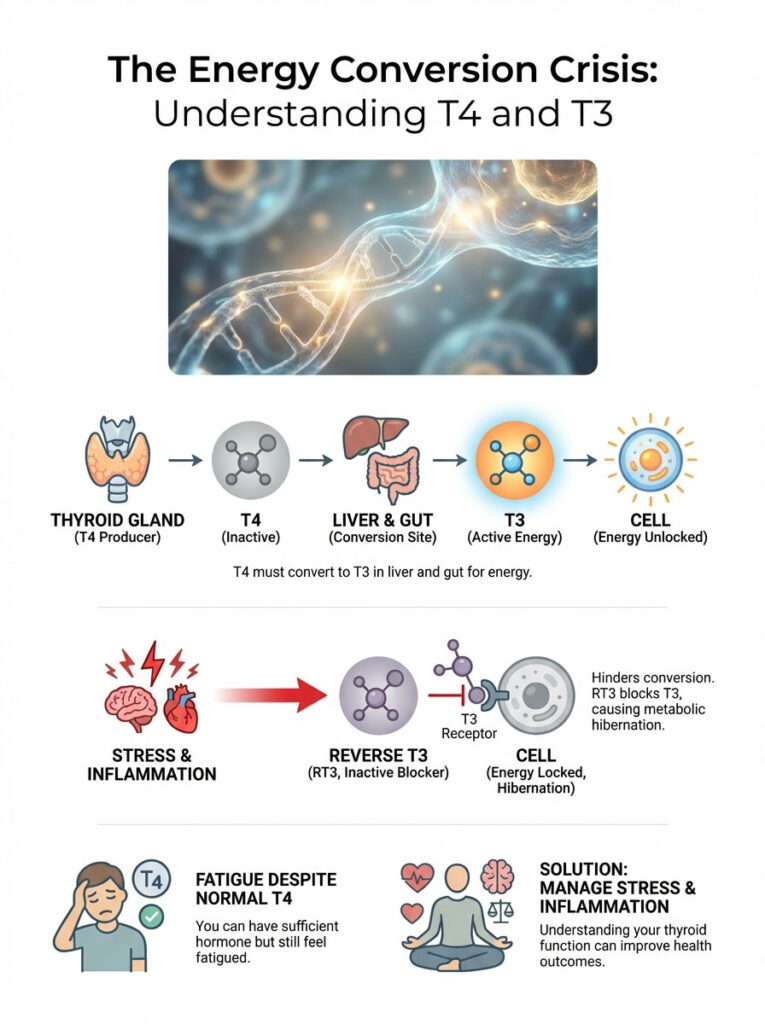
To feel alive, your body must convert T4 into T3. This transformation happens in the liver and gut. If this process fails, you stay exhausted.
I found that stress and inflammation block this conversion. It’s like having a tank full of crude oil but no gas for your car.
Why Your Engine Is Stalling
When you are stressed, your body flips a survival switch. It turns T4 into Reverse T3 instead of Free T3.
Reverse T3 parks in your cell receptors and blocks the door. Active hormone cannot get in. You enter a state of metabolic hibernation.
Key Takeaway: You can have plenty of thyroid hormone in your blood, but if it’s the wrong kind, you will remain tired.
The Nutrient Co-Factors You Are Missing
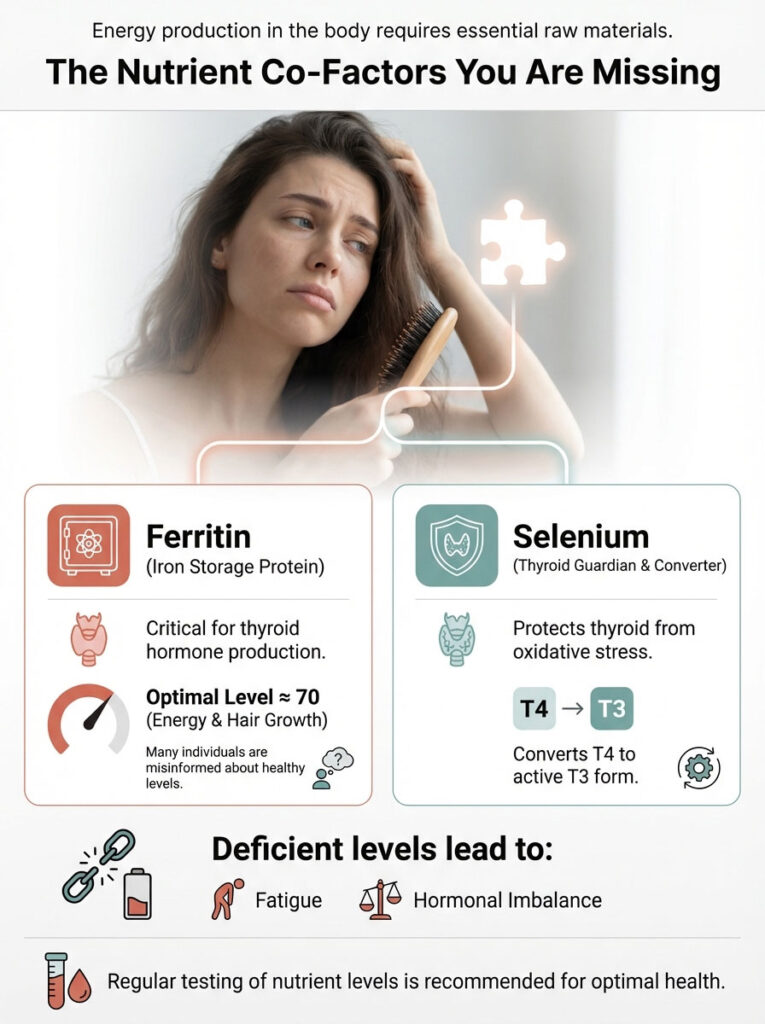
Making energy is chemically expensive. Your body needs raw materials to build hormones and convert them.
My doctor never tested my nutrient levels. I assumed my diet was enough. I was wrong.
The Iron Connection
Ferritin is your iron storage protein. Without it, the enzyme that builds thyroid hormone stops working.
I saw women with Ferritin levels of 20 being told they were healthy. For hair growth and energy, you need a level closer to 70. Iron is the secret backbone of your energy system.
The Selenium Spark
Selenium protects the thyroid gland from damage. It also powers the enzymes that turn T4 into T3.
- Brazil Nuts: Just two a day can provide your daily dose.
- Zinc: Works with selenium to activate hormones.
- Thiamine: Critical for mitochondrial stamina.
The Autoimmune Fire
Most low thyroid cases in the West are Hashimoto’s. This is an immune system attack, not just a gland failure.
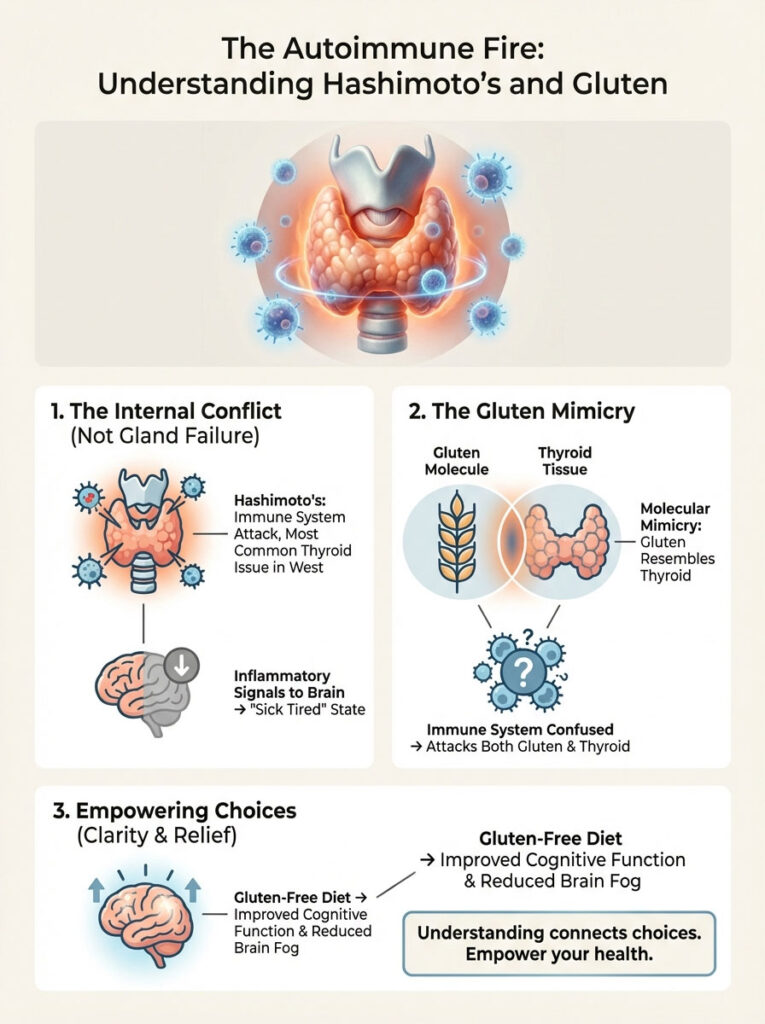
When your immune system attacks, it releases inflammatory chemicals. These chemicals tell your brain to slow down and rest.
This is why you feel “sick tired” rather than just sleepy. The war inside your body drains your battery.
The Gluten Trigger
I resisted giving up bread for years. Then I learned about molecular mimicry.
Gluten looks remarkably similar to thyroid tissue under a microscope. When you eat it, your immune system gets confused.
It attacks the gluten, but it also launches a missile at your thyroid. Going gluten-free was the single most effective change I made for my brain fog.
Gut Health: The Forgotten Link
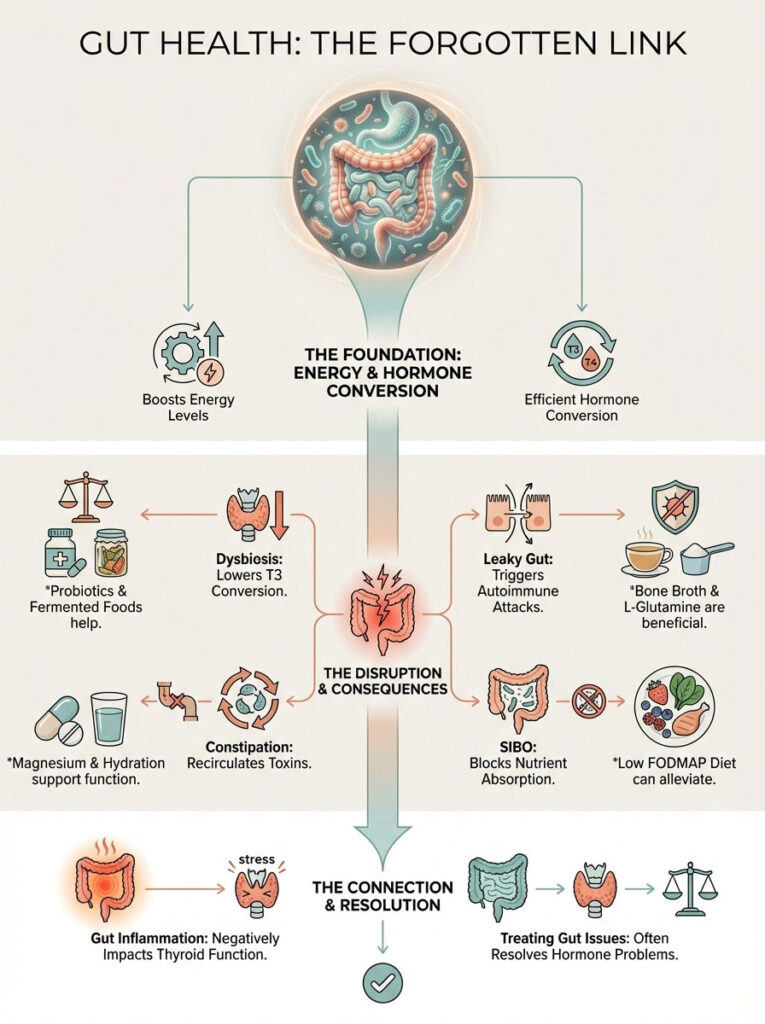
Did you know your gut dictates your energy? A massive portion of hormone conversion happens in your intestines.
Healthy Bacteria Matters
| Condition | Impact on Thyroid | Solution |
|---|---|---|
| Dysbiosis | Lowers T3 conversion | Probiotics & Fermented Foods |
| Leaky Gut | Triggers autoimmune attacks | Bone Broth & L-Glutamine |
| Constipation | Recirculates toxins | Magnesium & Hydration |
| SIBO | Blocks nutrient absorption | Low FODMAP Diet |
If your gut is inflamed, your thyroid suffers. Treating the gut often fixes the hormone issue automatically.
The Adrenal Sabotage
Your adrenal glands handle stress. They pump out cortisol when you are anxious or busy.
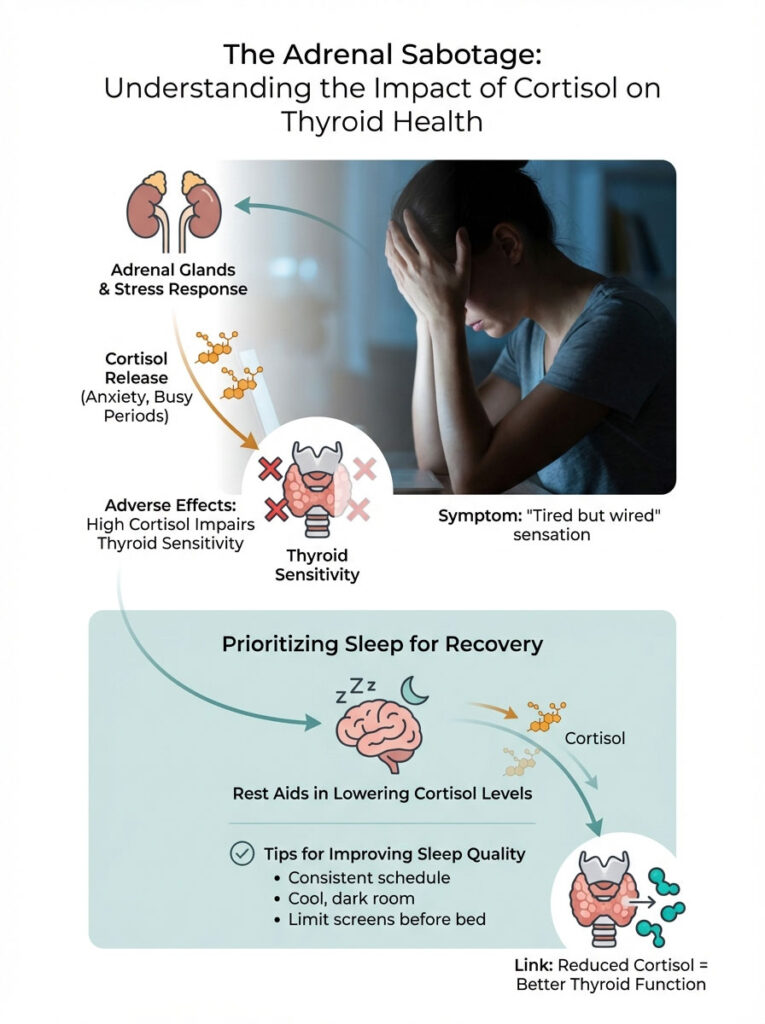
High cortisol is a dangerous enemy of the thyroid. It blunts the sensitivity of your cells to thyroid hormone.
You might experience the “tired but wired” sensation. You are exhausted all day but cannot sleep at night.
Rest is medicine. You must prioritize sleep to lower cortisol and let the thyroid recover.
Toxin Overload
Our environment is filled with invisible threats. Chlorine, fluoride, and bromine are everywhere.
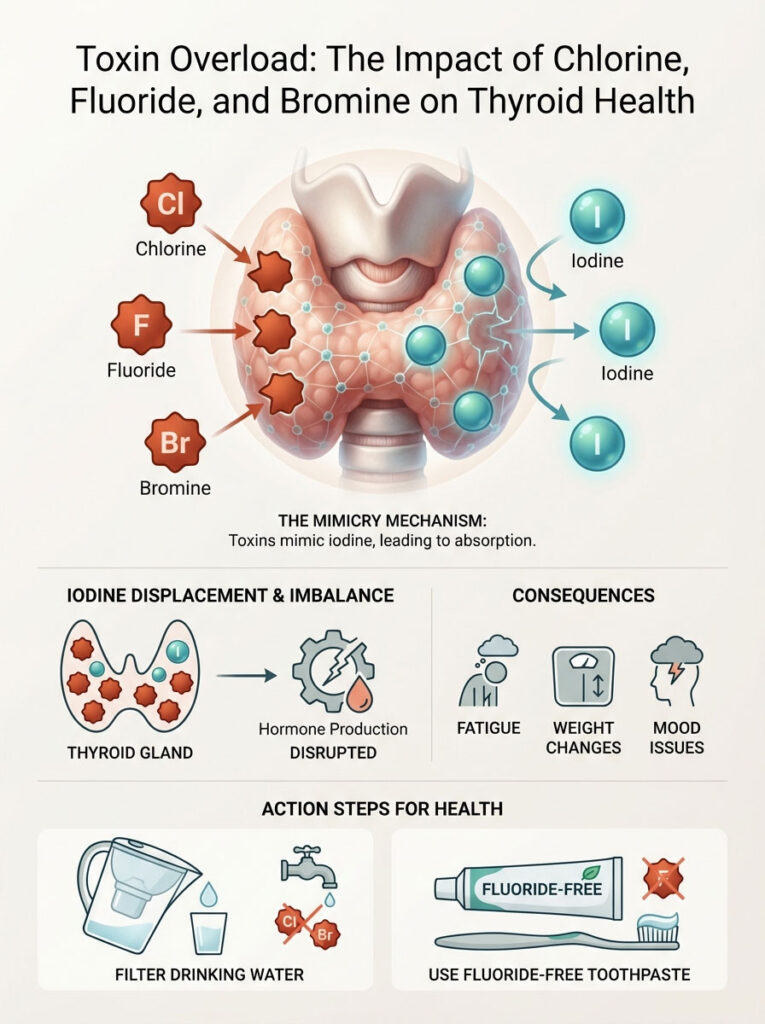
These chemicals look like iodine to your body. Your thyroid sucks them up like a sponge.
Once they are in the gland, they displace iodine. Without iodine, you cannot make hormone molecules.
Action Step: Filter your drinking water and switch to fluoride-free toothpaste to reduce this toxic burden.
When Medication Isn’t Enough
The standard pill is T4-only (Levothyroxine). For many, this works perfectly.
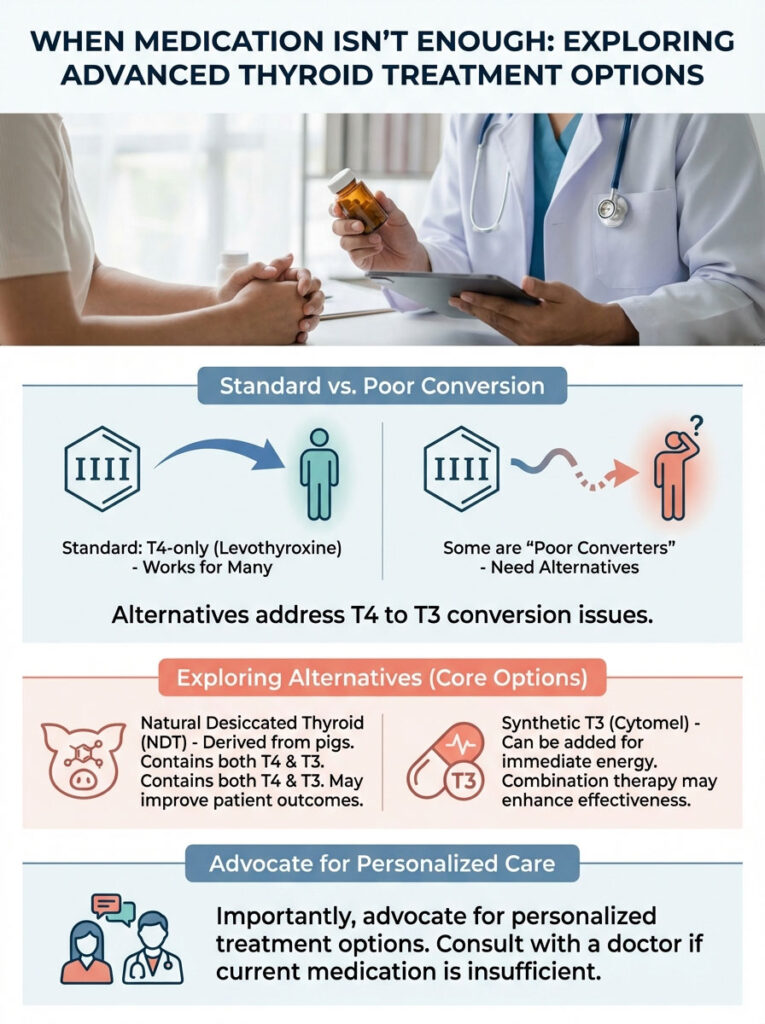
But if you are a “poor converter,” T4 might not be enough. I needed a different approach to wake up my brain.
Advanced Options
Some patients thrive on Natural Desiccated Thyroid (NDT). This comes from pigs and contains both T4 and T3.
Others add a small dose of synthetic T3 (Cytomel) to their regimen. This gives the body immediate fuel.
Advocate for yourself. If your current pill isn’t working, ask your doctor about combination therapy.
The Mitochondria: Your Power Plants
Ultimately, fatigue is a cellular problem. Your mitochondria turn food into energy (ATP).
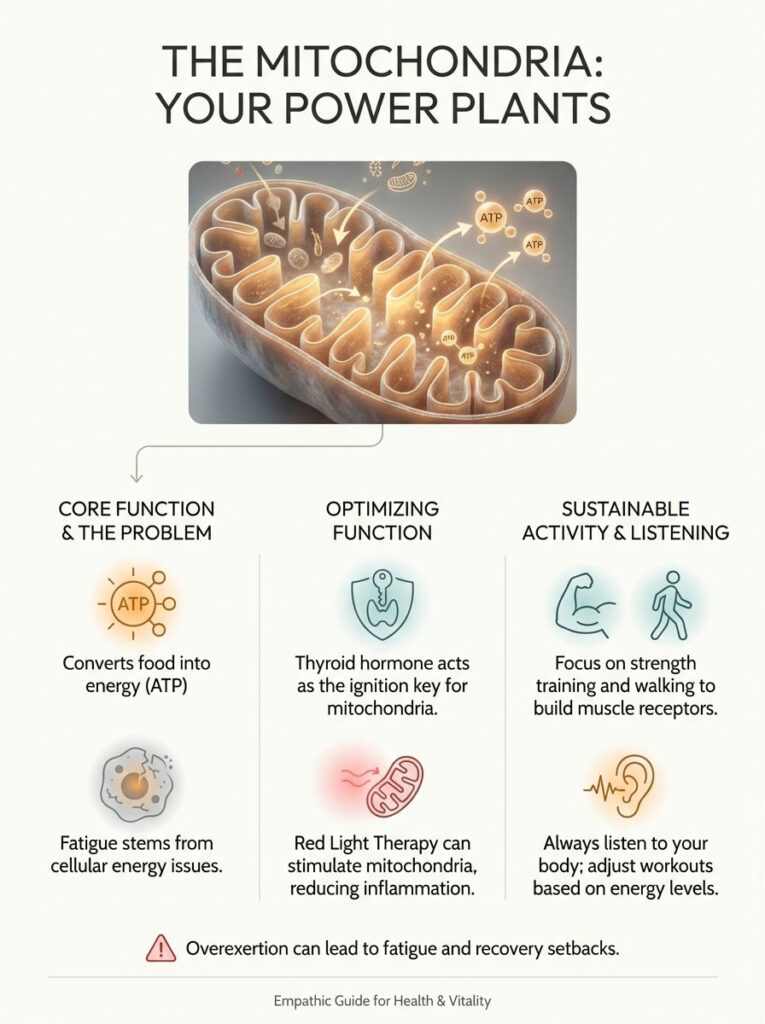
Thyroid hormone is the ignition key for these power plants. Without it, the lights go dim.
I used Red Light Therapy to stimulate my mitochondria. It helped reduce inflammation and boost energy production.
Exercise With Caution
Don’t jump into CrossFit if you are crashing. intense cardio spikes cortisol.
I focused on lifting heavy weights and walking. This builds muscle receptors without draining the battery.
Listen to your body. If a workout leaves you bedridden, it was too much.
Taking Back Control
Recovery is not a straight line. It requires patience and a bit of detective work.
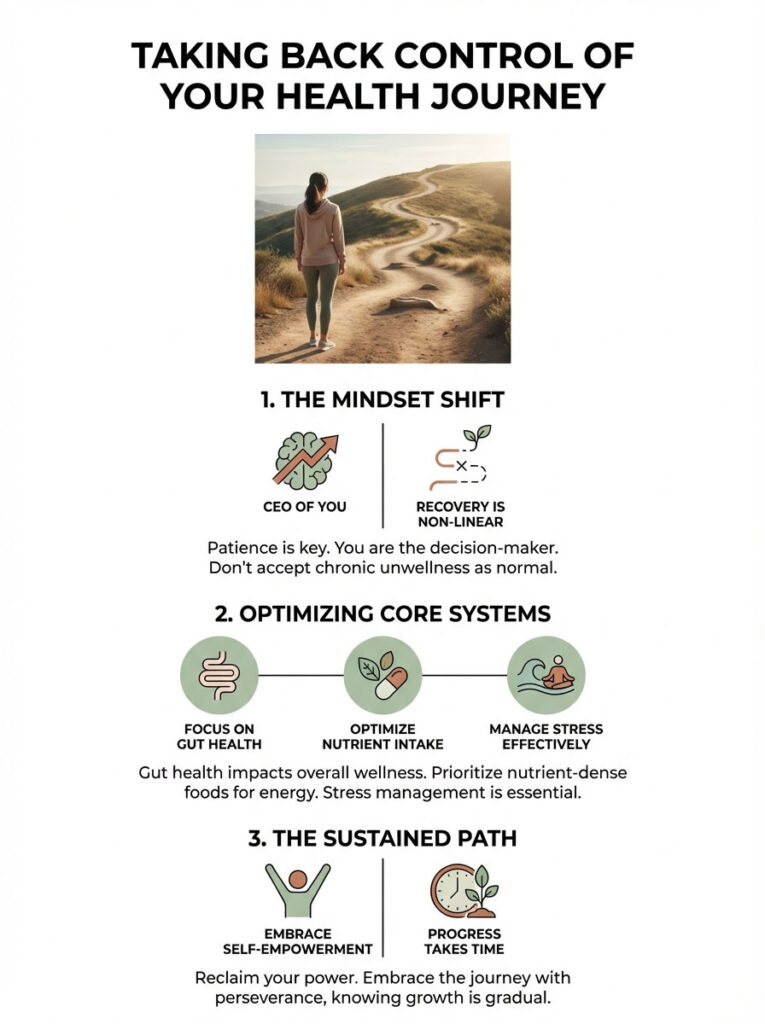
You are the CEO of your own health. Don’t settle for “normal” if you don’t feel normal.
By fixing your gut, optimizing nutrients, and managing stress, you can turn the power back on. The journey is worth it.