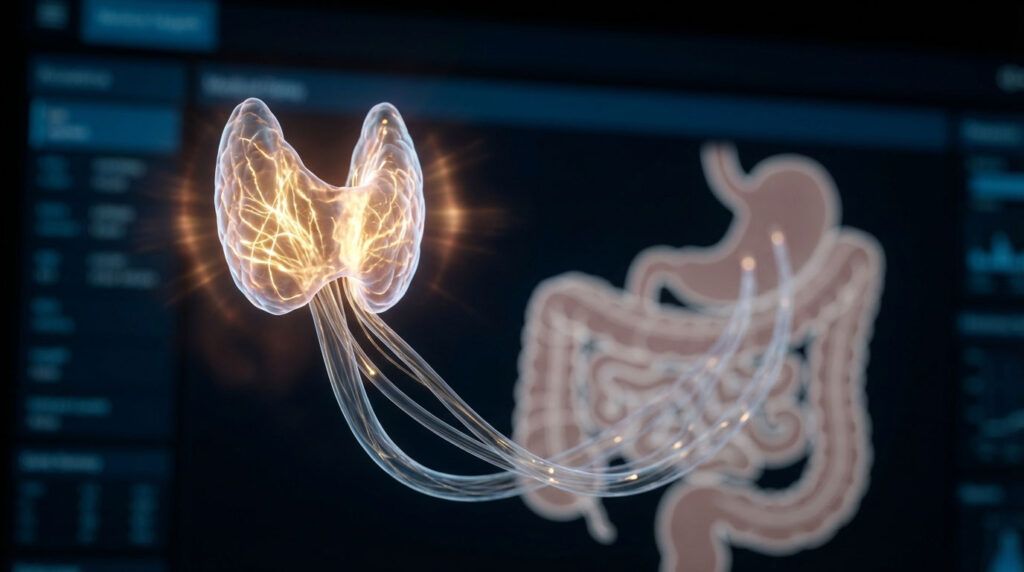
You look six months pregnant, but you haven’t eaten a thing. You drink gallons of water and swallow fiber supplements by the handful. Yet, days go by without a movement. The pressure builds until you feel toxic, heavy, and exhausted. I see this nightmare scenario constantly in my clinic.
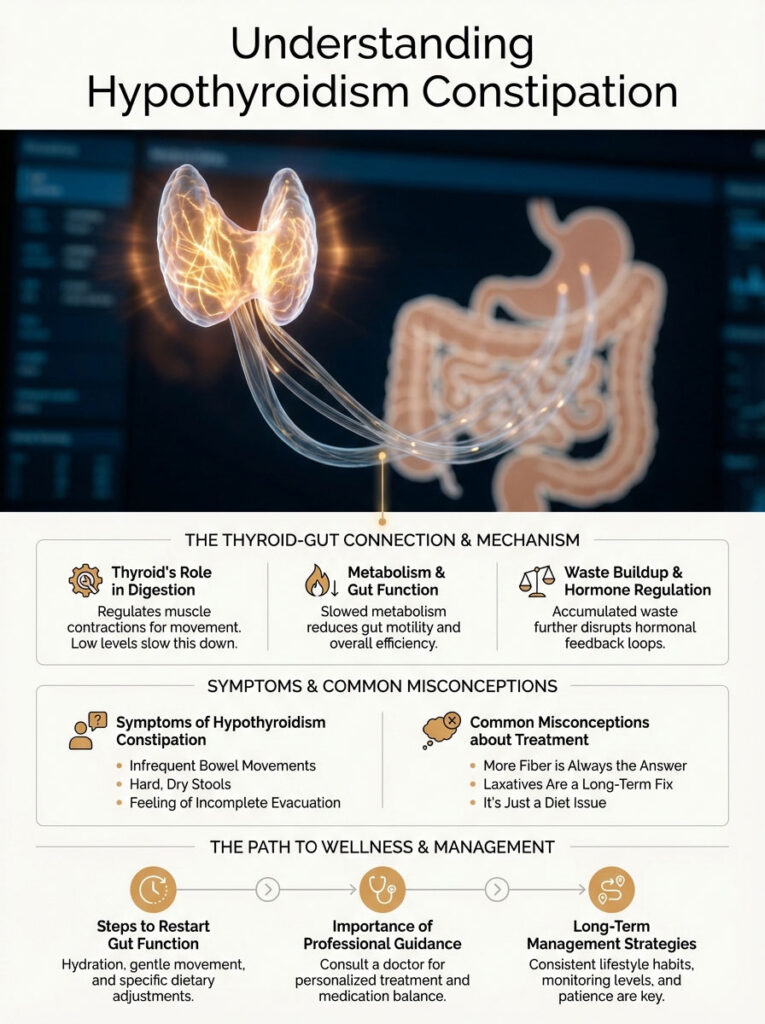
Most doctors will tell you to just “eat more bran.” That is dangerous advice. Hypothyroidism Constipation is not a simple plumbing clog. It is a neurological failure. Your metabolism has hit the brakes, shutting down the electrical signals that tell your gut to move.
When your thyroid slows down, your digestion doesn’t just lag; it hibernates. This creates a terrifying loop where waste rots inside you, blocking the very hormones you need to get better. I’m going to show you exactly how to restart your gut’s engine.
For complete insights and examples, read the full article: Hypothyroidism Constipation: How to Fix a Slow Gut?
The Hidden “Power Failure” in Your Gut
Your digestive system runs on electricity. Every contraction that pushes food forward requires massive amounts of energy. This energy comes from ATP, which is produced by your mitochondria. Here is the shocking truth: your mitochondria cannot work without T3 thyroid hormone.
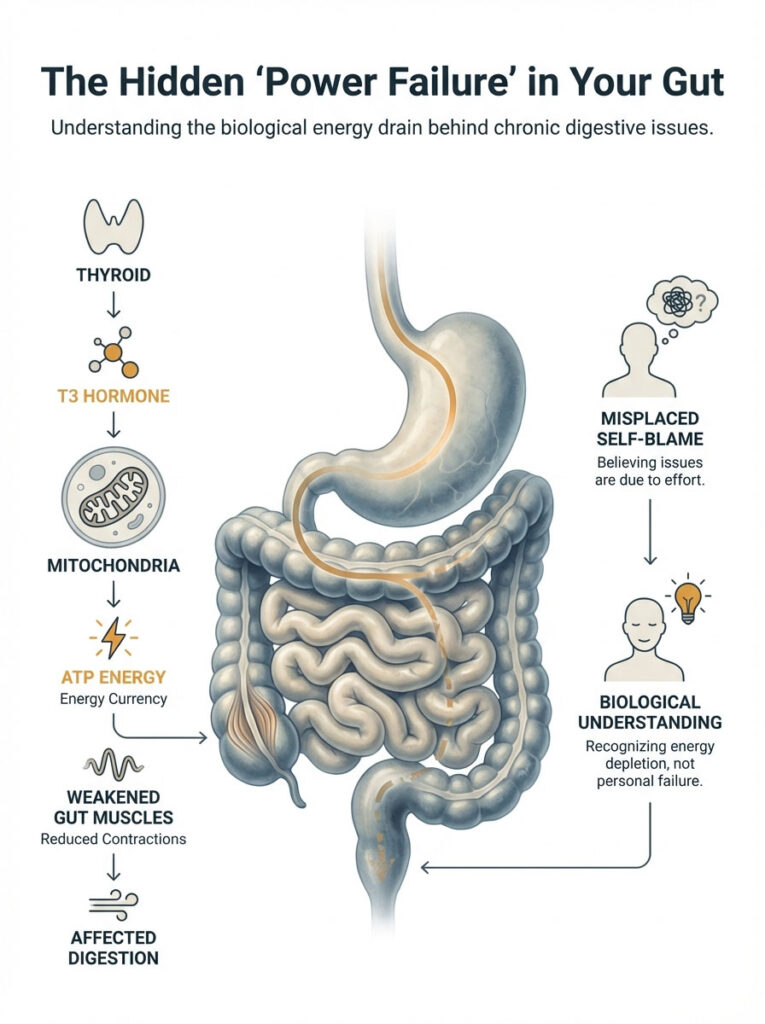
When you have hypothyroidism, your T3 levels drop. Consequently, the cellular batteries in your gut wall die. The muscles that should be squeezing waste out become flaccid and weak. You might feel the urge to go, but nothing happens.
I found that many patients blame themselves for this. They think they are just not trying hard enough. The reality is that your gut lacks the explosive power to perform the job. It is a biological brownout, not a lack of effort.
The “Street Sweeper” That Stopped Working
There is a secret mechanism in your body called the Migrating Motor Complex (MMC). Think of it as a street sweeper. Every 90 minutes, it sends a powerful electric wave through your intestines to sweep away bacteria and debris.
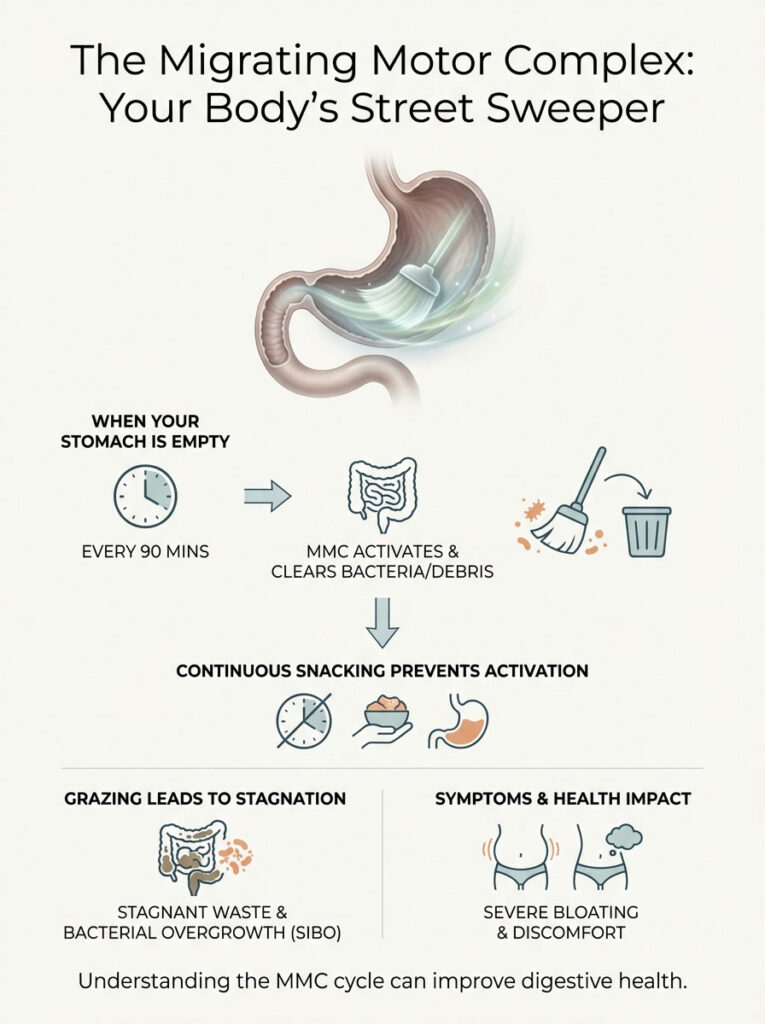
But there is a catch. This sweeper only turns on when your stomach is completely empty. In my practice, I see patients making one critical mistake that destroys this process. They graze.
If you eat small snacks all day, the sweeper never runs. The debris stays put. This stagnant waste becomes a breeding ground for bacteria. This leads to severe bloating and a condition known as SIBO (Small Intestinal Bacterial Overgrowth).
Why Fiber Is Making You Worse
- Fermentation: Bacteria eat fiber and produce methane gas.
- Paralysis: Methane gas acts as a nerve paralytic, freezing your gut.
- Inflammation: Rough bran acts like sandpaper on an inflamed gut lining.
The Vagus Nerve Connection
Your brain talks to your gut through a superhighway called the Vagus nerve. It tells your stomach to make acid and your bowels to move. In thyroid patients, this signal is often weak or silent.
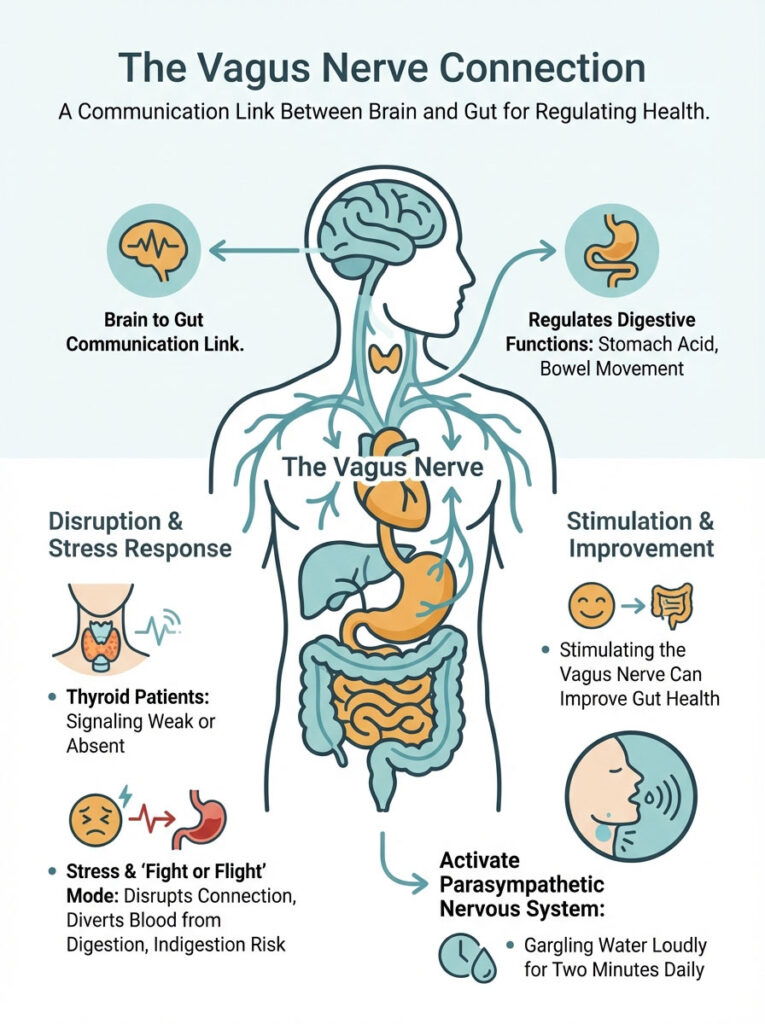
I discovered that stress physically severs this connection. When you are in “fight or flight” mode, your body diverts blood away from digestion. If you eat while stressed, driving, or working, you are guaranteeing indigestion.
You can physically hack this nerve. Since it runs through your vocal cords, vibration stimulates it. I tell my patients to gargle water loudly for two minutes every day. It sounds bizarre, but it jump-starts the parasympathetic nervous system.
The Protocol to Fix It
We need to stop treating the symptom and fix the signal. Laxatives are a band-aid. We need to restore the rhythm. This starts with how you time your meals.
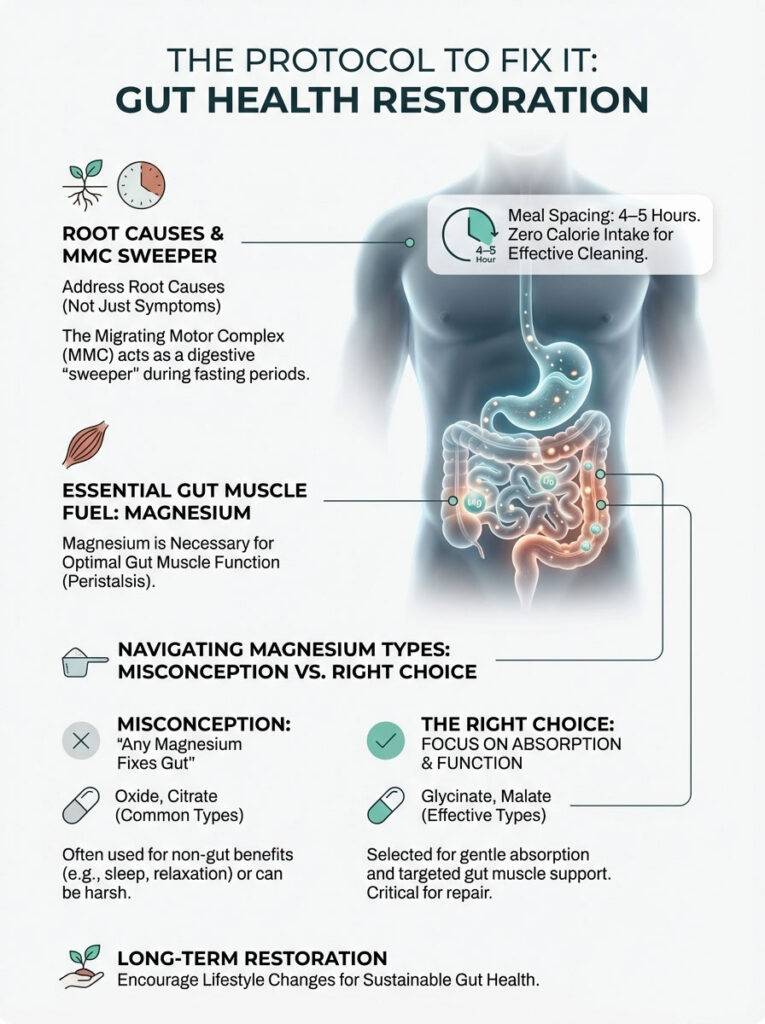
I implemented a strict spacing rule for my toughest cases. You must leave 4 to 5 hours between meals with zero calories. No latte, no almonds, nothing. This allows the MMC sweeper to finally clean your system.
Next, we must address the mineral deficiency. Your gut muscles need magnesium to relax and contract. But not all magnesium is created equal. Most people take the wrong kind.
Magnesium Selection Guide
| Magnesium Type | Primary Function | Effect on Constipation |
|---|---|---|
| Magnesium Citrate | Osmotic Laxative | High (Pulls water into bowel) |
| Magnesium Oxide | Stool Softener | High (Strongest effect) |
| Magnesium Glycinate | Relaxation/Sleep | Low (Best for anxiety, not gut) |
| Magnesium Threonate | Brain Health | None (Does not affect bowel) |
Why Stomach Acid Matters
Digestion is a chain reaction. It starts in the stomach. You need strong acid to trigger the valve that releases food into the intestines. Thyroid issues often lead to low stomach acid.
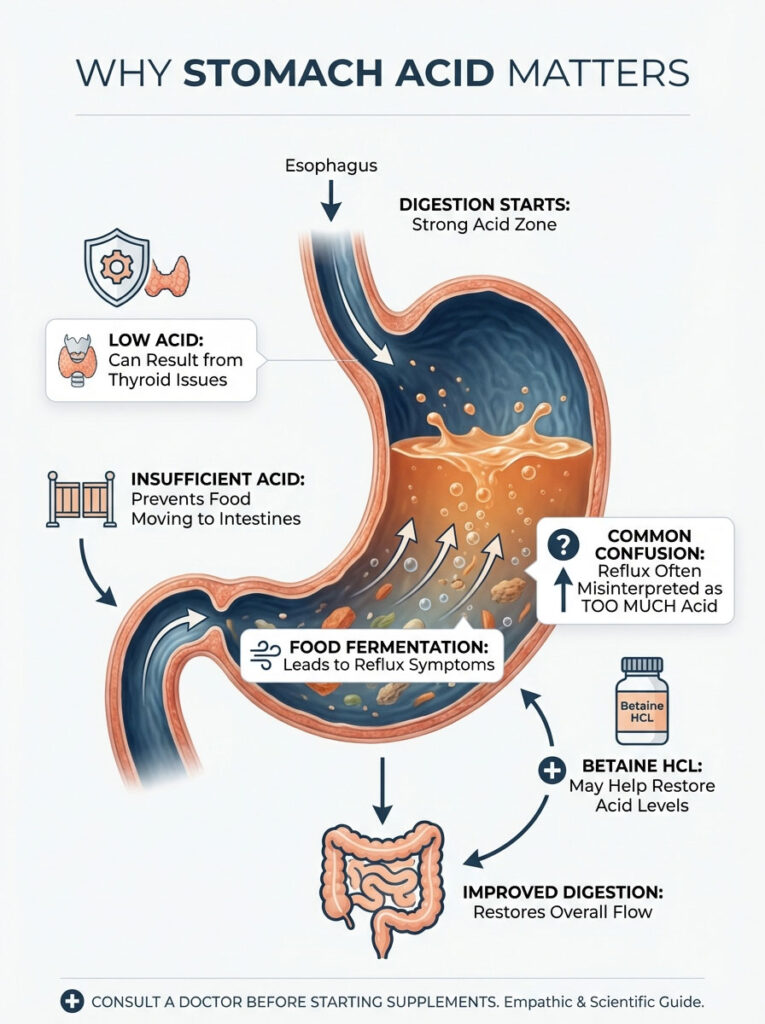
If the acid is low, the door stays shut. Food sits in your stomach and ferments. This causes reflux, which many people mistake for too much acid. It is actually the opposite.
I recommend looking into Betaine HCL supplements with a doctor’s guidance. Restoring acid levels can be the switch that turns the entire conveyor belt back on.
The Methane Trap
If you look pregnant after eating an apple, you likely have methane-dominant bacterial overgrowth. These ancient organisms produce gas that paralyzes the nerves in your colon.
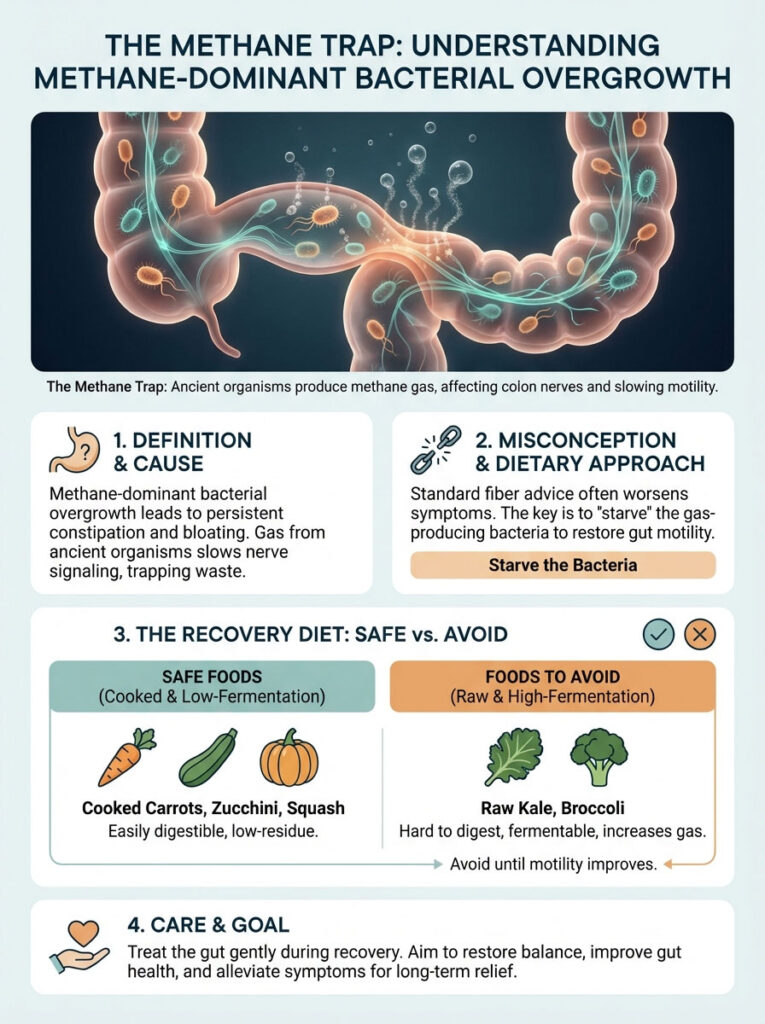
Standard constipation advice fails here. Feeding these bugs prebiotics is like throwing gasoline on a fire. You must starve them first.
Stick to cooked, low-fermentation vegetables. Carrots, zucchini, and squash are safe. Avoid raw kale and broccoli until your motility returns. Your gut is wounded; treat it gently.
Final Takeaway
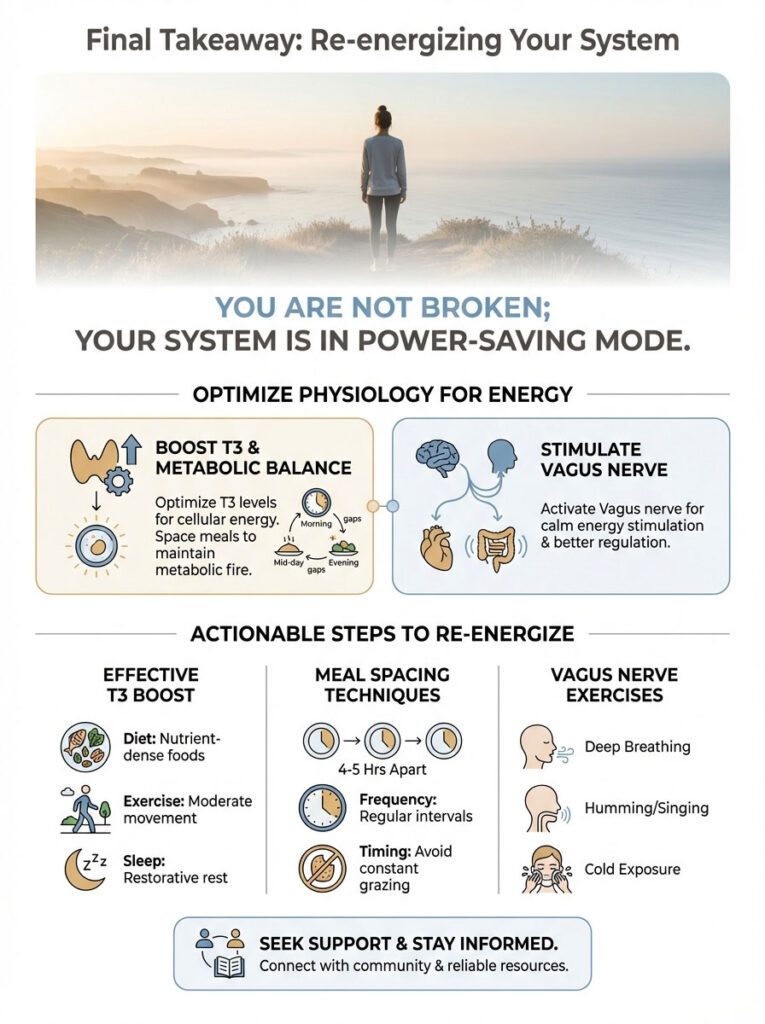
You are not broken. Your system is just stuck in power-saving mode. By optimizing your T3, spacing your meals, and stimulating your Vagus nerve, you can flip the switch back on.