
You are sitting in a room set to seventy-five degrees, yet your teeth are chattering. While your colleagues complain about the heat, you are stealthily pulling on a second sweater. This isn’t just a preference for being cozy; it is a nightmare that I see patients endure daily.
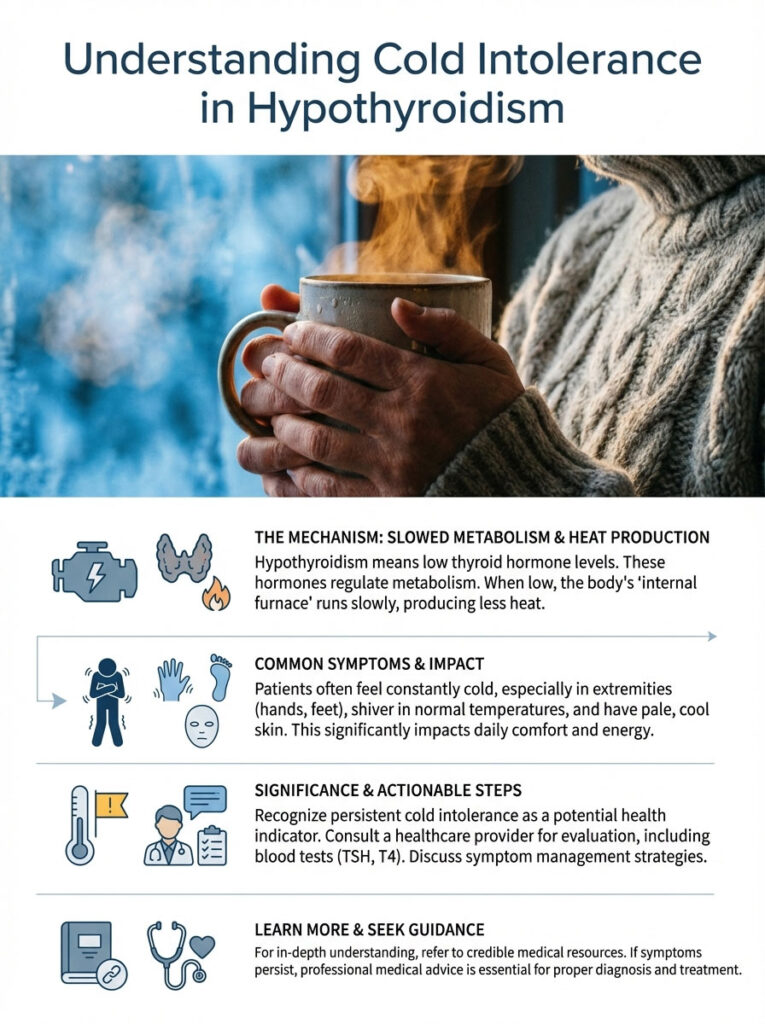
This bone-deep chill feels like ice water replacing your blood. It is constant, exhausting, and often dismissed by friends as being “dramatic.” But I know the truth: your internal thermostat has been smashed.
We call this Cold Intolerance Hypothyroidism, and it is a massive red flag for your metabolic health. Before you buy another electric blanket, you need to understand why your cellular engine has stopped burning fuel.
Want to go deeper on this? Read the full article here: Cold Intolerance Hypothyroidism: Why Are You Always Cold?
The Broken Furnace Inside Your Cells
Most people think metabolism is just about fitting into skinny jeans. I have learned that its true purpose is much more essential: keeping you alive through heat.
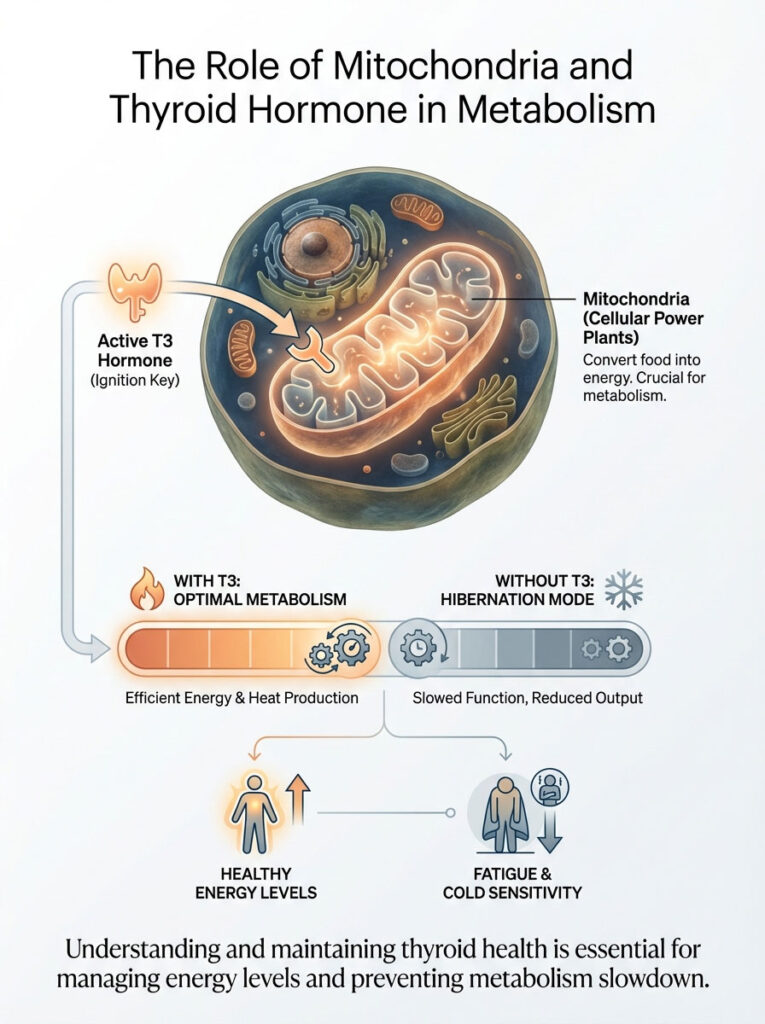
Your body contains trillions of tiny power plants called mitochondria. In a healthy person, these microscopic engines take food and convert it into energy. A massive byproduct of this reaction is warmth.
However, this process requires a specific ignition key. That key is the active thyroid hormone known as T3. Without it, the engines sit silent.
Why You Are Freezing
- No Fuel Burn: Your cells store energy as fat instead of burning it for heat.
- Pump Failure: Critical sodium-potassium pumps shut down, reducing heat output.
- Brown Fat Dormancy: Your body’s natural heating pads refuse to turn on.
I often explain to patients that their body has entered “hibernation mode.” It is trying to save energy to keep you alive. The result is a terrifying drop in daily energy output, sometimes by nearly half.
The Survival Switch: Why Hands Go Numb
Your brain is smart. When it realizes the furnace is broken, it makes a desperate executive decision. It decides to sacrifice your fingers to save your heart.
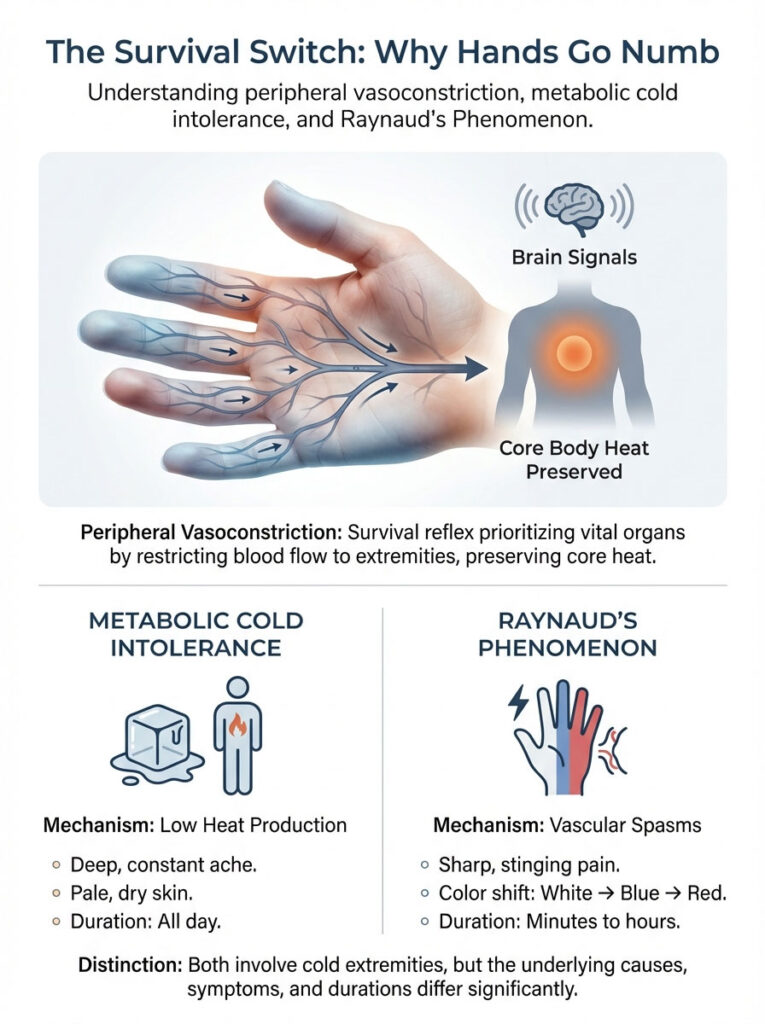
This is a survival reflex called peripheral vasoconstriction. The brain clamps down on the blood vessels in your arms and legs. It shunts all warm blood to your vital organs in the core.
This is why your feet feel like blocks of ice. Your body is hoarding heat like a miser hoards gold. It refuses to “spend” warmth on your extremities.
Is It Thyroid or Raynaud’s?
Many of my patients confuse metabolic coldness with Raynaud’s Phenomenon. While they can overlap, the distinction is vital.
| Feature | Metabolic Cold Intolerance | Raynaud’s Phenomenon |
|---|---|---|
| Sensation | Deep, constant ache | Sharp, stinging pain |
| Trigger | Constant state | Stress or sudden temp drop |
| Visual | Pale, dry skin | White -> Blue -> Red color shift |
| Cause | Low Heat Production | Vascular Spasms |
| Duration | All day, everyday | Minutes to hours |
The “Normal” Lab Test Trap
I cannot tell you how many times a shivering patient has told me, “But my doctor said my labs are normal.” This is the most frustrating part of modern thyroid care. Standard screenings often fail you.
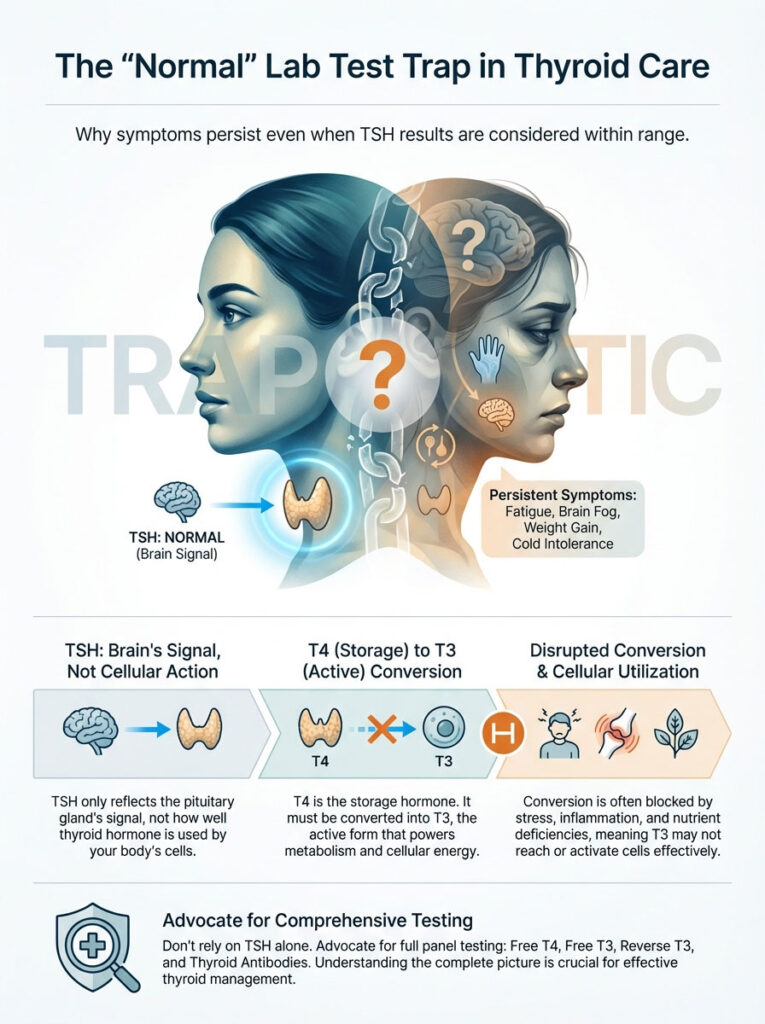
Most doctors only check TSH (Thyroid Stimulating Hormone). This tells us what your brain is asking for, not what your cells are receiving. You can have a “perfect” TSH and still have zero fire in your cells.
The real culprit is often a conversion issue. Your body must turn T4 (storage hormone) into T3 (active gas). Stress, inflammation, and nutrient gaps can block this process entirely.
My Protocol for Reigniting the Fire
I found that simply adding more standard medication rarely works for these “frozen” patients. We have to look at the entire system. Here is the exclusive approach that actually turns the heat back on.
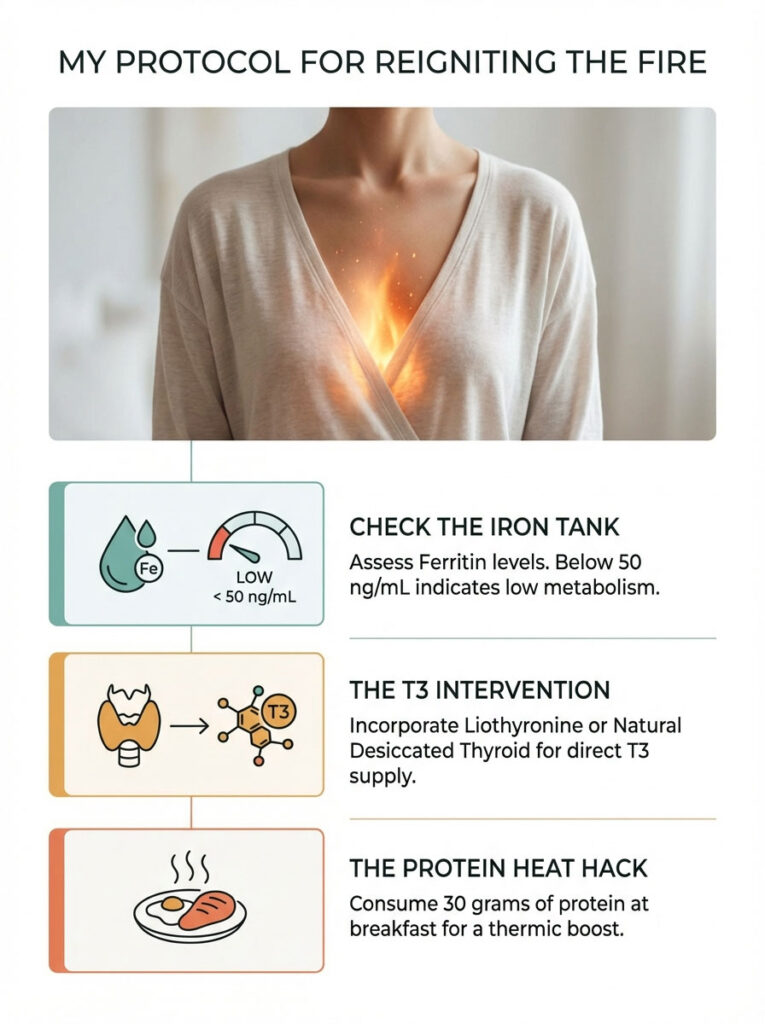
1. Check the Iron Tank
Your thyroid enzymes run on iron. Specifically, we need to look at Ferritin, which is your iron storage bank. If your Ferritin is below 50 ng/mL, your metabolism is suffocating from a lack of oxygen.
2. The T3 Intervention
For many, standard Levothyroxine is like putting gas in a car with no spark plugs. I often advocate for adding Liothyronine (Cytomel) or Natural Desiccated Thyroid. These provide direct T3, bypassing the broken conversion pathway.
3. The Protein Heat Hack
Here is a secret: Protein requires massive energy to digest. It creates a high “Thermic Effect of Food.” Eating 30 grams of protein at breakfast can physically warm you up from the inside.
Tracking Your True Temperature
Forget the blood tests for a moment. The most honest data comes from your bedside table. I recommend the “Barnes Temperature Test” method.
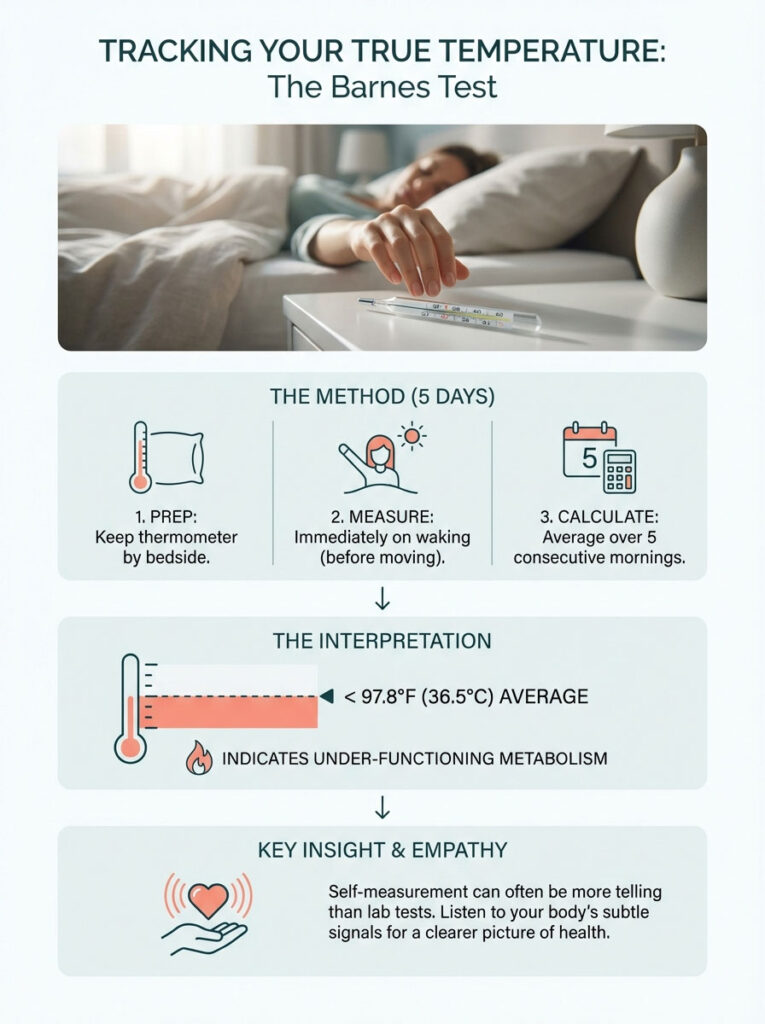
Keep a thermometer by your bed. Before you even sit up in the morning, take your temperature. Do this for five days straight.
If you average below 97.8°F, your metabolism is under-functioning. It does not matter what the lab sheet says. Your body is telling you the truth.
A Final Word on Recovery
Living your life wrapped in blankets is not a personality trait. It is a biological failure that can be fixed. You do not have to accept the chill.
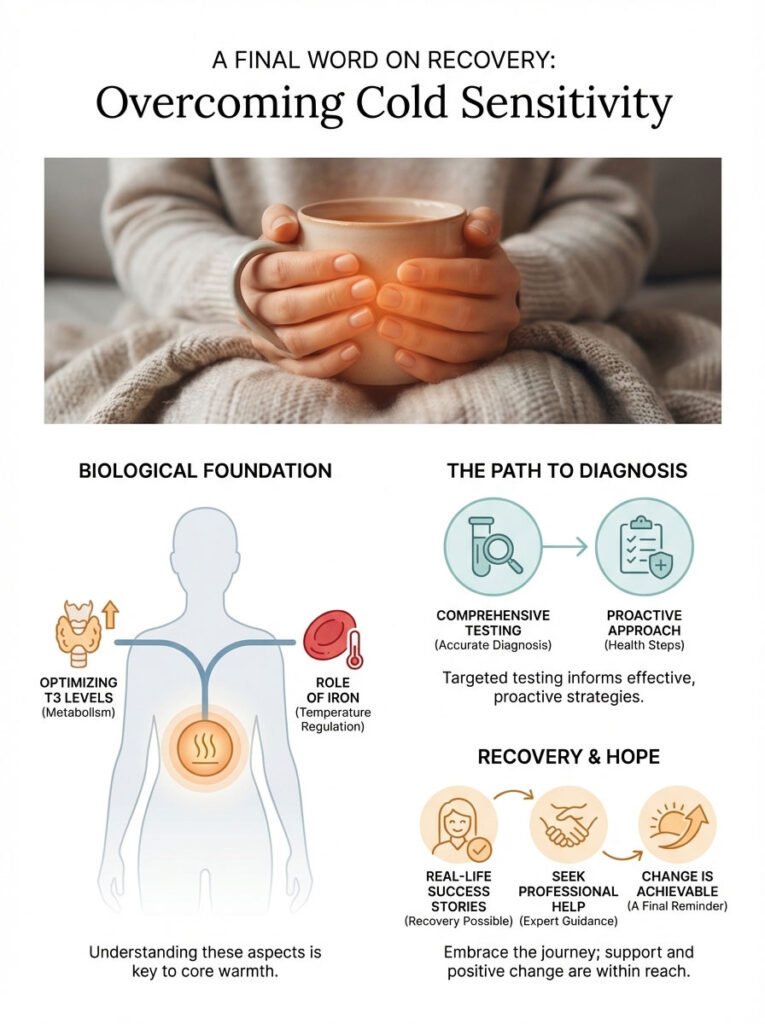
By optimizing your T3, fixing your iron, and demanding better testing, you can restart the engine. I have seen patients ditch their winter coats in mere weeks. It is time to thaw out.