
She sat on the paper-covered table, shivering despite the 75-degree room. “My doctor says I’m just getting old,” she whispered, clutching a lab report that screamed normal. I knew immediately she was a victim of the “Great Mimic.”
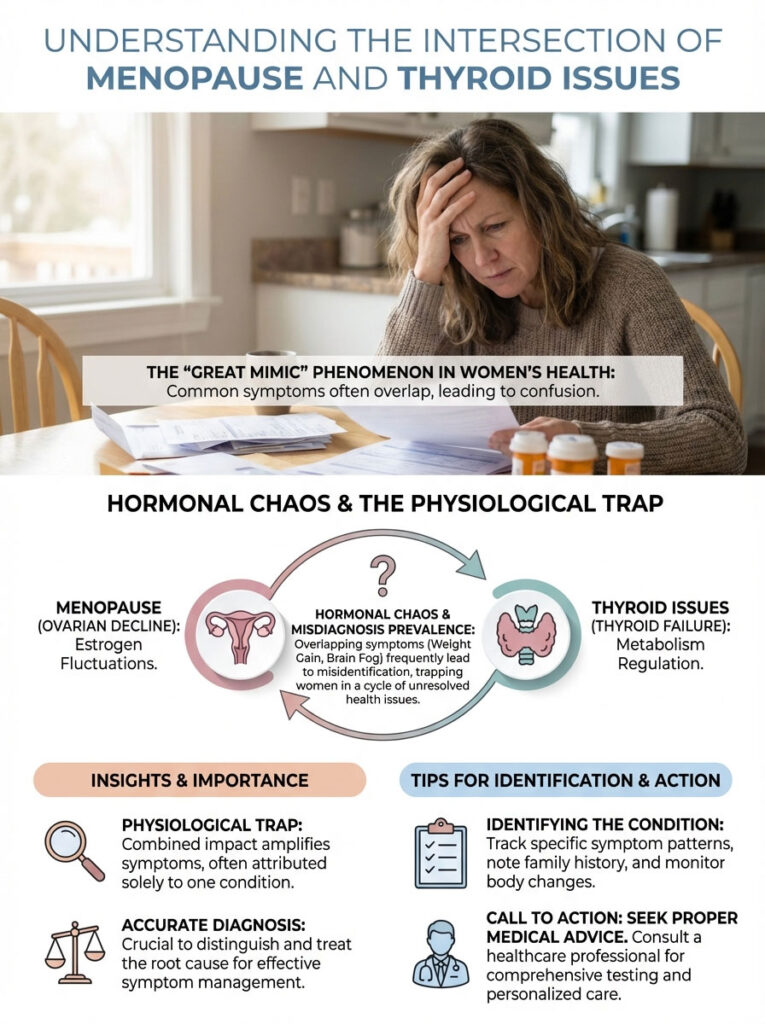
If you are battling sudden weight gain and brain fog, you aren’t crazy, you are likely misdiagnosed. The collision between your ovaries and your thyroid creates a biological storm that ruins lives. Yet, most women are treated for the wrong condition.
I treat this specific hormonal chaos every day. The intersection of menopause and thyroid failure is not bad luck; it is a physiological trap. Here is how to tell which invisible enemy is actually attacking your body.
For complete insights and examples, read the full article: Menopause vs. Hypothyroidism: Which One Is It?
The Biological Collision Course
Your body is not failing; it is confused. During perimenopause, your hormones swing wildly, creating a chaotic signal that your brain struggles to interpret. I often see this trigger a sleeping giant: your thyroid gland.
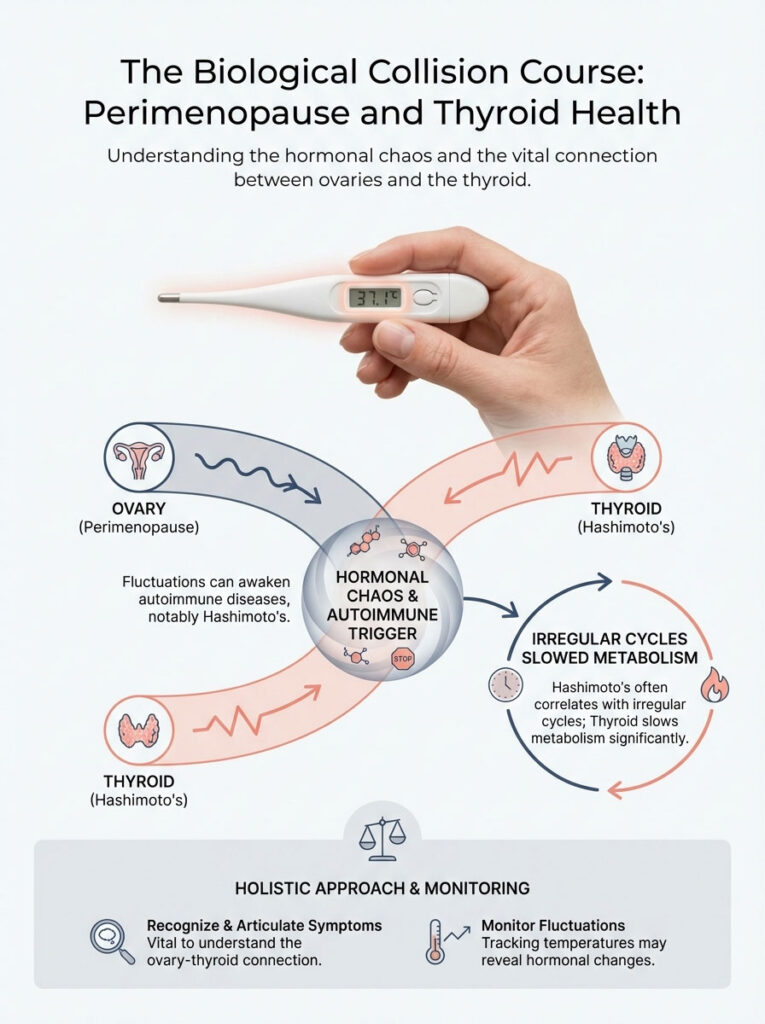
The stress of these shifts can wake up autoimmune diseases. Specifically, a condition called Hashimoto’s often surges exactly when your periods get wonky. It is a cruel double hit to your system.
When your ovaries stop talking to your brain, your thyroid often goes on strike. You end up with a metabolism that moves at a glacial pace. To fix this, we must look at the specific way these symptoms feel in your body.
The Temperature Tell
- The Flash: Menopause feels like internal combustion, a sudden wave of wet heat.
- The Chill: Thyroid issues cause a deep, bone-level freeze that blankets won’t fix.
- The Mix: If you are sweating one minute and freezing the next, you likely have both.
The Weight Gain Nightmare
Stepping on the scale becomes a daily source of anxiety in your 40s. You eat the same greens, yet the number creeps up. I explain to my patients that this is a location game.
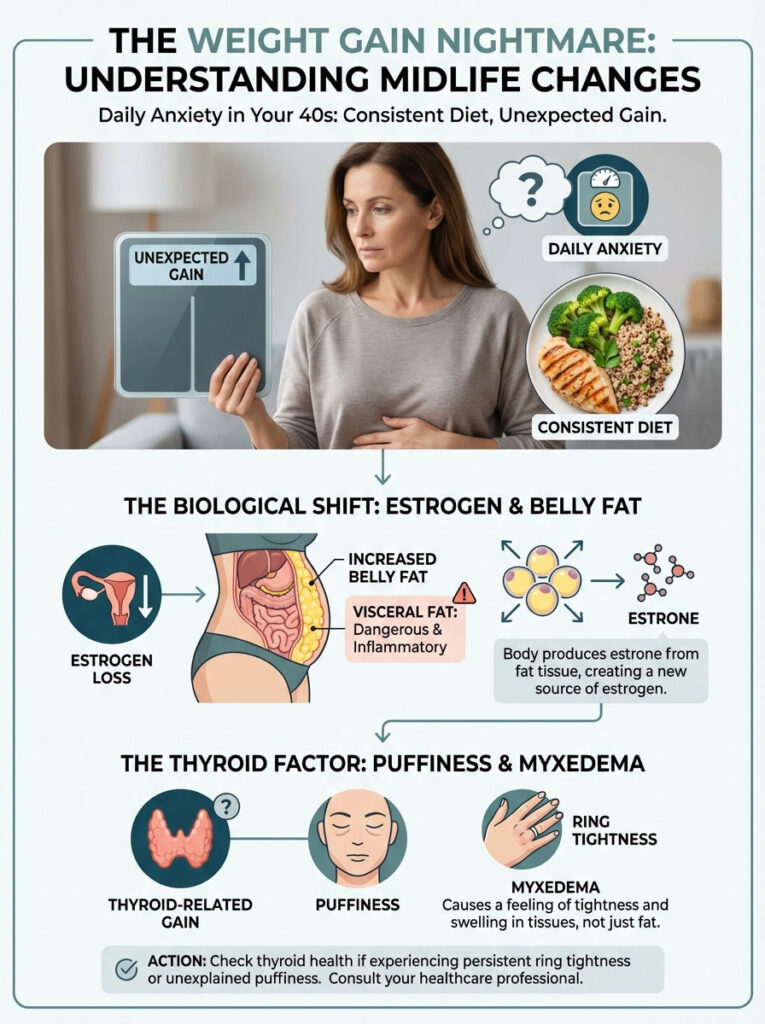
Estrogen loss moves fat directly to your belly. It creates a “spare tire” of visceral fat that is dangerous and inflammatory. Your body is desperately trying to make a weak estrogen called estrone in that fat tissue.
Thyroid weight gain is different. It is a fluid-based puffiness known as myxedema. You feel swollen all over, like you are wearing a wetsuit that is too tight. If your rings don’t fit, check your thyroid.
The “Secret” Medication Interaction
This is the most dangerous oversight in modern gynecology. If you take a thyroid pill (like Levothyroxine) and start an oral estrogen pill, you might crash. I see it happen constantly.
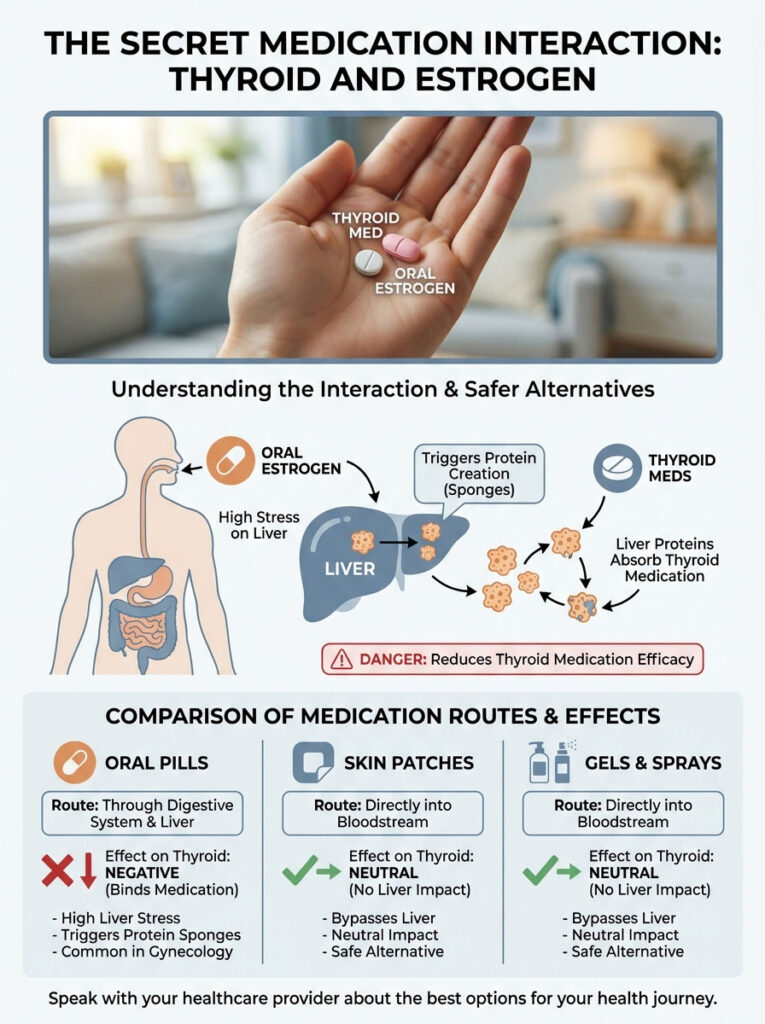
When you swallow estrogen, it passes through your liver. Your liver responds by creating proteins that act like sponges. These sponges soak up your thyroid medication before it can work.
Why The Patch Wins
| Medication Route | Effect on Liver | Thyroid Impact | Risk Level |
|---|---|---|---|
| Oral Pills | High Stress | Binds Medicine | High |
| Skin Patch | Bypasses Liver | Neutral | Low |
| Gels/Sprays | Bypasses Liver | Neutral | Low |
The Hair Loss Clue
Losing your hair is emotional and terrifying. However, the pattern of loss tells me exactly what is wrong. Menopausal thinning hits the temples and widens your part.
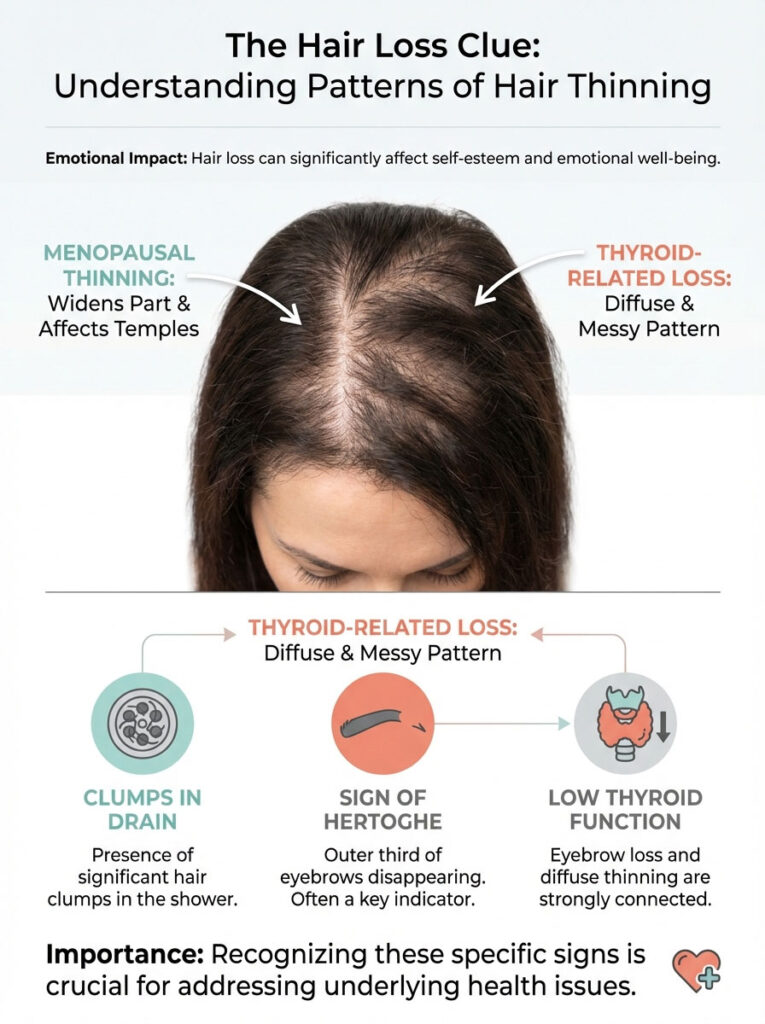
Thyroid loss is diffuse and messy. You find clumps in the shower drain. But the real secret is in your eyebrows.
If the outer third of your eyebrow disappears, that is the “Sign of Hertoghe.” It is a classic red flag for low thyroid function. It has nothing to do with aging and everything to do with your metabolism.
The Brain Fog Distinction
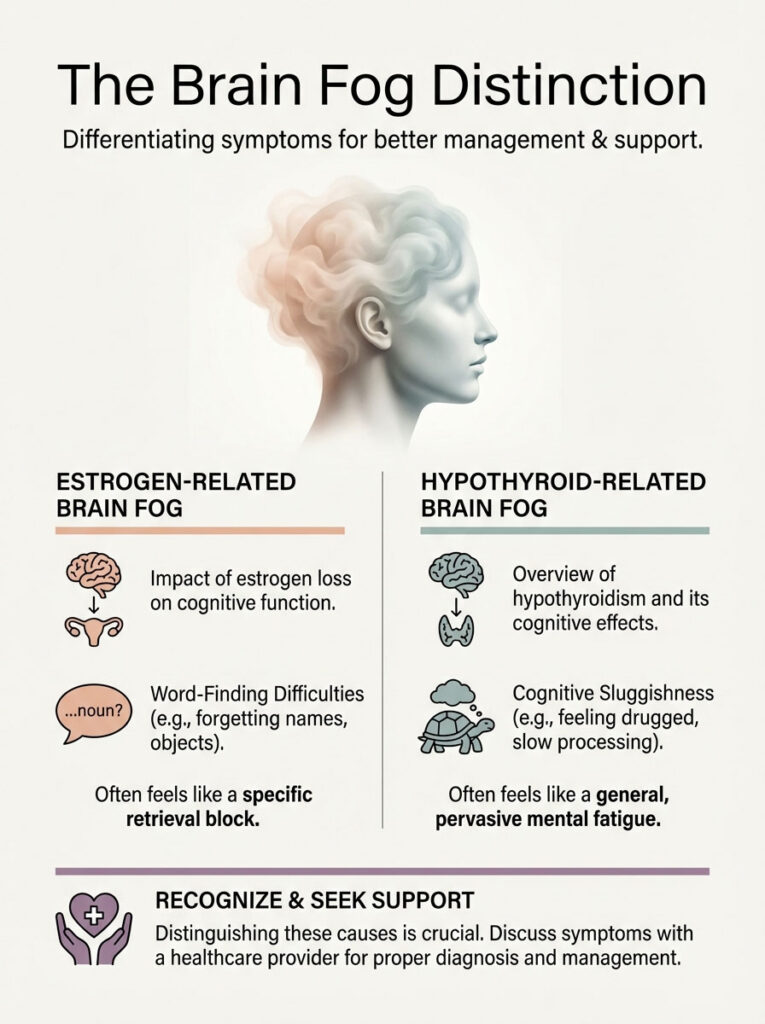
Are you forgetting words or processing slowly? Estrogen loss steals your nouns. You know what a stapler is, but you can’t find the word.
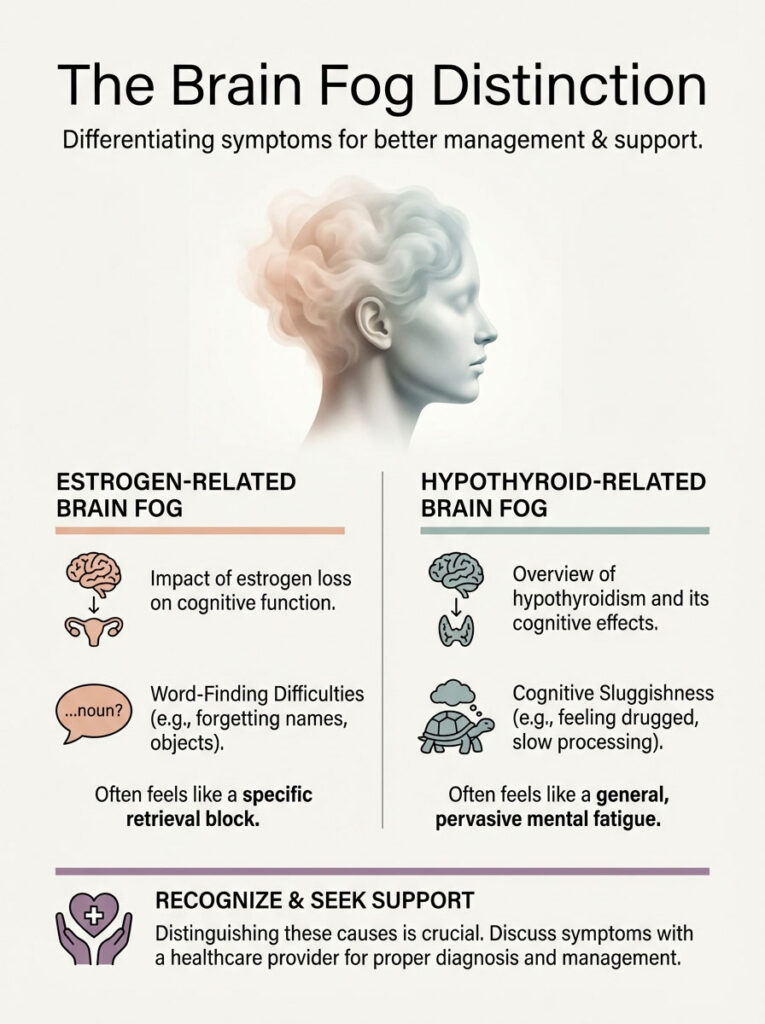
Hypothyroidism is different. It feels like your brain is wading through molasses. It slows down your processing speed. You feel drugged, heavy, and unable to focus on complex tasks.
Action Plan: Get The Right Data
Do not let a doctor dismiss you with a TSH test. That hormone comes from your brain, not your thyroid. It misses the full picture.
I always demand a full panel: Free T3, Free T4, and TPO Antibodies. You need to know if your immune system is attacking your gland. You cannot treat what you do not measure.
Key Takeaways:
- Check your eyebrows for the outer-third loss.
- Switch to patches if you are on thyroid meds.
- Demand full labs, not just the basic screening.