Quick Answer: The secret to a game day spread that satisfies without the caloric overload lies in “nutritional optimization” rather than restriction. Finding healthy Super Bowl recipes that actually taste good requires swapping deep-fried wings for air-fried versions using aluminum-free baking powder for maximum crispiness. Replace heavy sour cream dips with high-protein Greek yogurt bases to boost satiety. Focus on volume eating by pairing “scoopable” vegetables with nutrient-dense dips to stabilize blood sugar and prevent the fourth-quarter energy crash.
Table of Contents
Redefining the Game Day Spread
The statistics regarding game day consumption are staggering. According to the Academy of Nutrition and Dietetics, the average American consumes more than 2,400 calories during the Super Bowl. That is a caloric surplus that takes days, sometimes weeks, to undo. However, nobody wants to eat plain celery sticks while watching the biggest game of the year.
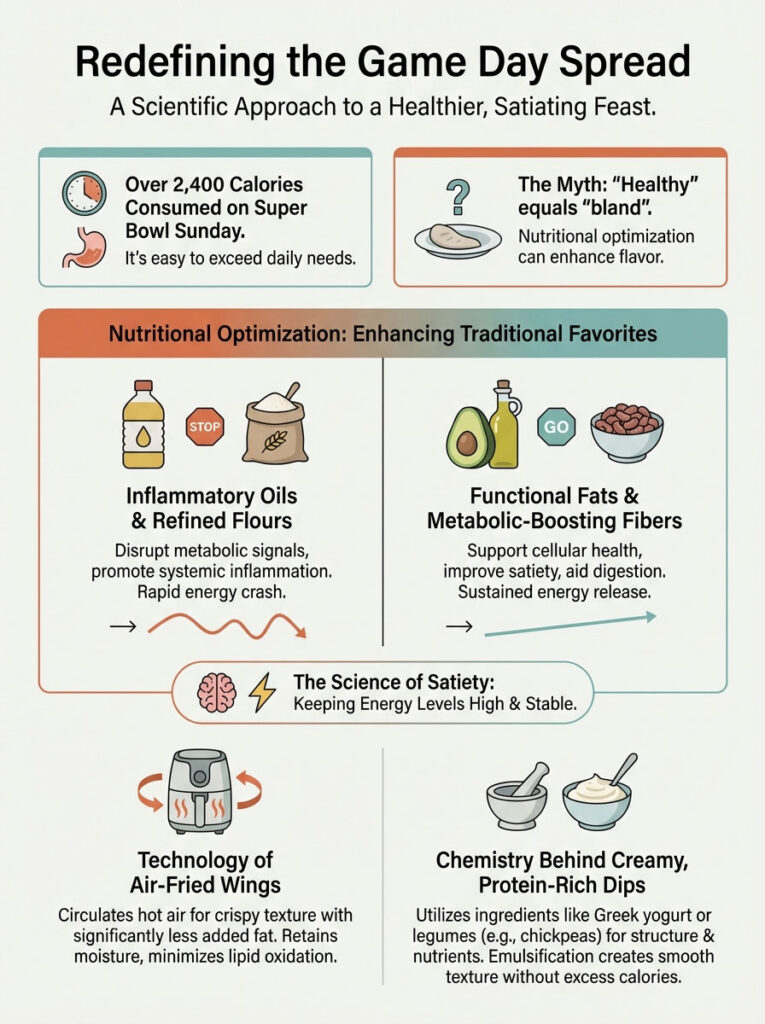
The challenge is finding healthy Super Bowl recipes that actually taste good while maintaining the festive atmosphere. It is about culinary chemistry rather than deprivation. As a Registered Dietitian Nutritionist (RDN) who loves food, my mission is not to banish wings and nachos. My goal is to upgrade them.
We call this “nutritional optimization.” We are swapping inflammatory oils for functional fats. We are trading refined flours for metabolic-boosting fibers. The goal is to keep energy levels high so you do not crash before the trophy presentation.
Key Statistics: The Game Day Reality
- 2,400+: Average calories consumed by an American during the Super Bowl (Academy of Nutrition and Dietetics).
- 1.45 Billion: Number of chicken wings expected to be eaten during the weekend (National Chicken Council).
- 20%: Increase in antacid sales the day after the Super Bowl.
- 11 Million: Pounds of chips purchased for the event.
- 2 Hours: Maximum time perishable food should sit at room temperature (USDA).
Many people believe that “healthy” is synonymous with “bland.” That is a myth we are about to dismantle. By understanding concepts like umami optimization and textural contrast, we can create a spread that rivals any traditional menu. We will focus on ingredients that satiate rather than inflate.
In this guide, we will look at the science of satiety. We will explore the technology behind the perfect air-fried wing. We will also break down the chemistry of creamy, protein-rich dips. This is your ultimate playbook for a high-performance menu.
The Science of Satiety: Why We Overeat on Game Day
To fix the menu, we first must understand the biology of overeating. Why is it so easy to eat twenty wings but impossible to eat twenty apples? It comes down to the Protein Leverage Hypothesis. This theory suggests that humans have a biological drive to eat until their protein needs are met.
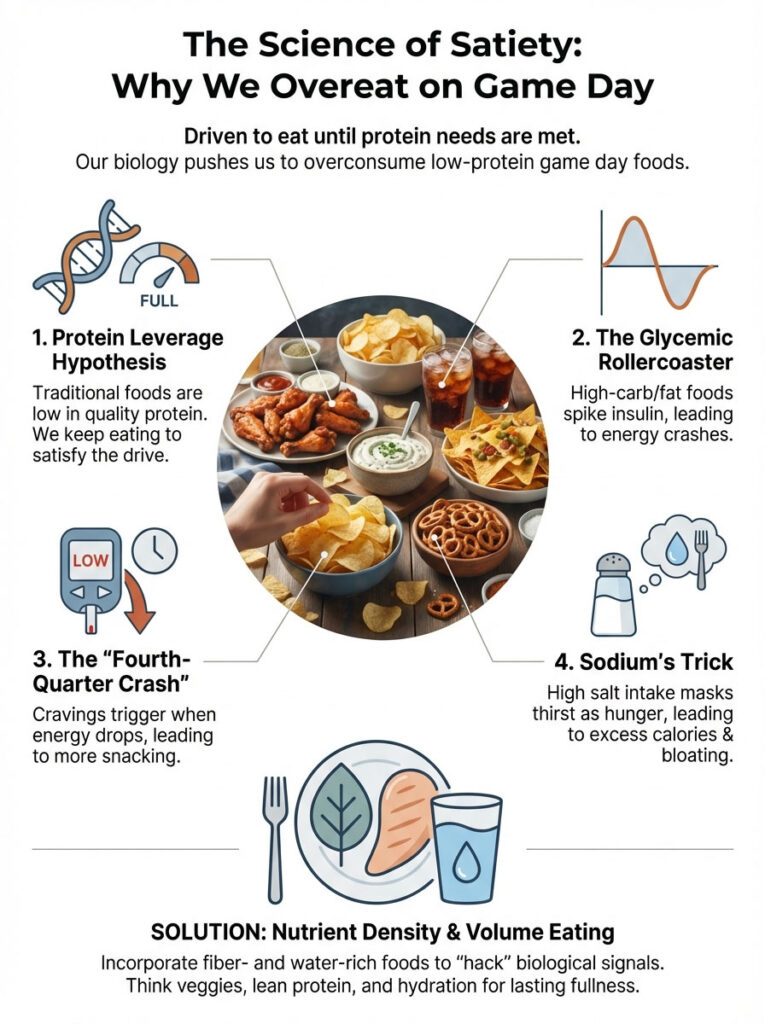
Traditional game day food is often high in fat and carbs. However, it is surprisingly low in quality protein relative to the calorie count. This causes you to keep eating in a subconscious search for amino acids. Your body is literally signaling for nutrients it is not getting.
Then there is the issue of the glycemic rollercoaster. Foods with a high glycemic load cause a rapid spike in insulin. Examples include pretzels, pizza dough, and sugary marinades. This hormone shuttles sugar out of your blood and into storage.
This leads to a sudden drop in blood sugar. This drop triggers the “fourth-quarter crash.” It makes you reach for another beer or cookie to get your energy back up. It is a vicious cycle that ruins your metabolism for days.
Sodium plays a massive role here as well. The American Heart Association (AHA) notes that high sodium intake triggers thirst. This thirst is frequently mistaken for hunger. When you eat salty chips, your body demands water.
At a party, you are likely reaching for a soda or beer instead of water. This compounds the calorie intake significantly. High sodium also causes immediate bloating. This makes you feel sluggish and uncomfortable.
The solution lies in nutrient density. We want foods that provide a high volume of food for fewer calories. This is a concept known as Volume Eating. We prioritize fiber and water-rich foods.
These foods physically stretch the stomach lining. This stretching sends “I’m full” signals to the brain much faster. By integrating healthy Super Bowl recipes that actually taste good, we hack these biological signals.
The Wing Revolution: Air-Frying and Chemistry
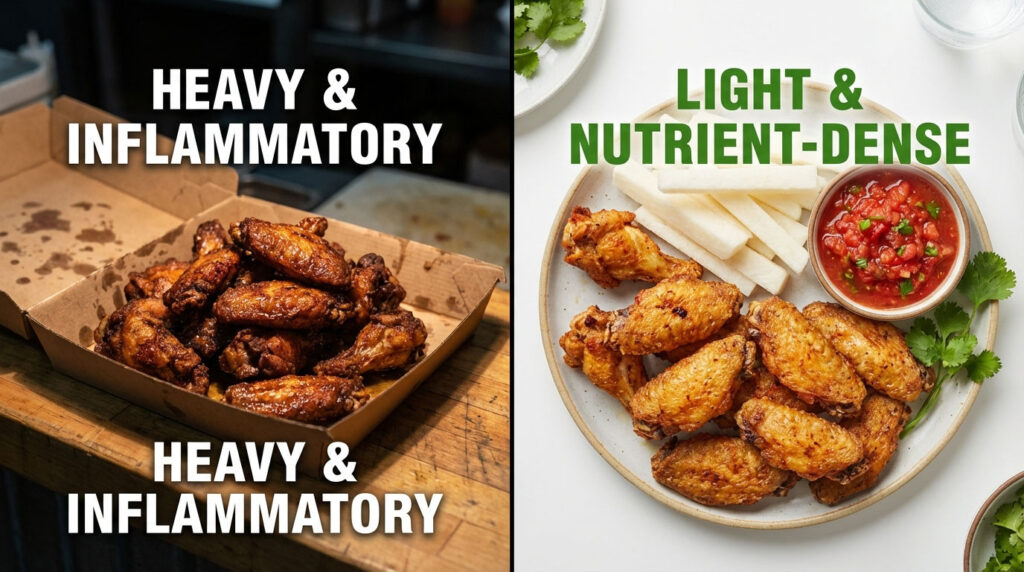
Wings are the undisputed king of football food. Traditional deep-fried wings are submerged in oxidized vegetable oils. These oils are highly inflammatory and calorically dense. However, the air fryer has completely changed the game.
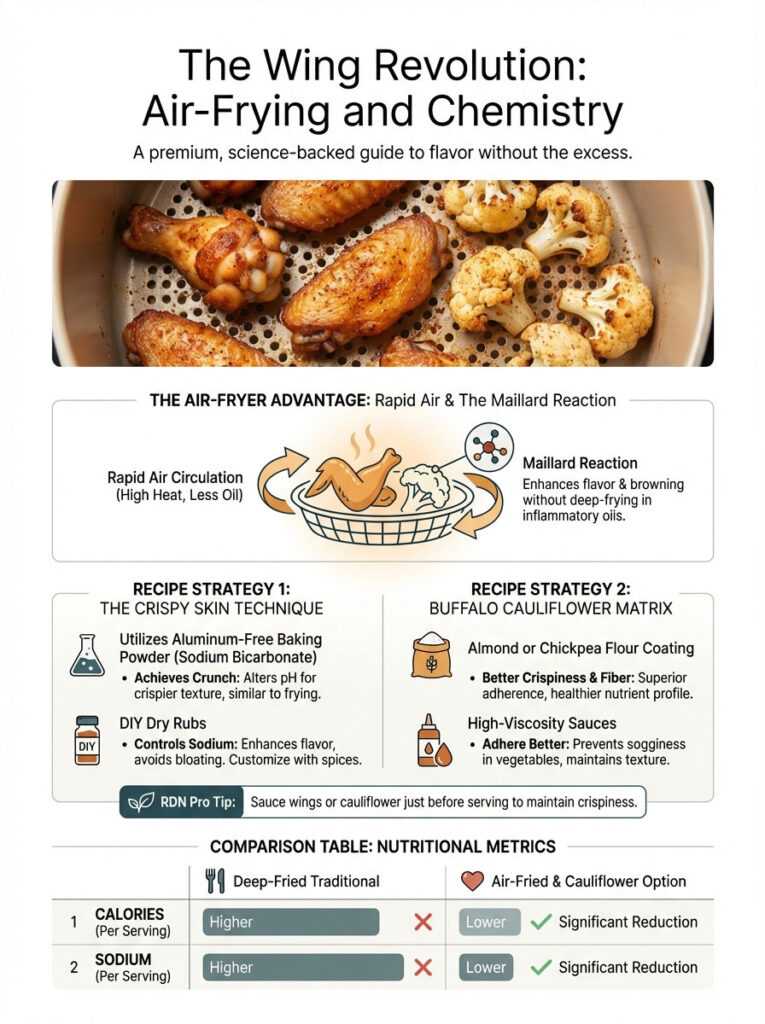
This device uses rapid air circulation to mimic the Maillard reaction. This is the chemical process that gives browned food its distinctive flavor. It achieves this without the need for a grease bath.
Recipe Strategy 1: The Crispy Skin Technique
If you want low-calorie recipes that mimic the crunch of a fryer, you need to alter the pH. Here is the secret weapon: aluminum-free baking powder. You must toss your wings in this powder before cooking.
The slightly alkaline powder breaks down the peptide bonds in the skin. This allows it to bubble and crisp up in the high heat of the air fryer. The result is a skin that shatters when you bite it.
Sodium control is also vital here. Pre-packaged wing seasonings are often 40% salt. Instead, create a DIY dry rub. Use smoked paprika, garlic powder, onion powder, and cayenne.
This gives you full control over the flavor profile. It keeps the sodium levels heart-healthy. You get all the flavor without the subsequent bloat.
Recipe Strategy 2: Buffalo Cauliflower Matrix
For the plant-forward crowd, healthy buffalo cauliflower is a must. The mistake most people make is using a batter that gets soggy. To fix this, use almond flour or chickpea flour.
These flours add fiber and crisp up better than refined white flour. They also add a small protein boost. When tossing in sauce, ensure the sauce has a high viscosity.
You want the sauce to cling to the cauliflower. You do not want it soaking into the vegetable and making it mushy. A little bit of ghee or coconut oil in the sauce helps it adhere.
RDN Pro Tip: Do not sauce your wings or cauliflower until right before serving. The acid in the hot sauce will eventually break down the crispy coating. Serve the sauce on the side or toss immediately before the platter hits the table.
Comparison: Traditional Deep-Fried Wings vs. RDN-Approved Swaps
| Nutritional Metric (Per Serving) | Traditional Deep-Fried Wings | Air-Fried Chicken Wings | Buffalo Cauliflower Bites |
|---|---|---|---|
| Calories | ~450 kcal | ~180 kcal | ~95 kcal |
| Saturated Fat | 14g (High Inflammatory) | 3g (Naturally Occurring) | <1g |
| Sodium | ~900mg | ~150mg (DIY Rub) | ~250mg |
| Protein | 24g | 22g | 4g (Add Greek Yogurt Dip) |
| Carbohydrates | 0g (breaded versions vary) | 0g | 12g (Fiber Rich) |
| Dietary Impact | High Caloric Density | High Satiety | High Volume |
The Dip Renovation: Probiotics and Protein
Dips are often the silent calorie assassins of the party. A standard onion dip made with sour cream is loaded with fat. The accompanying soup packet is often full of MSG and sodium. However, dips also present the best opportunity to sneak in nutrition.
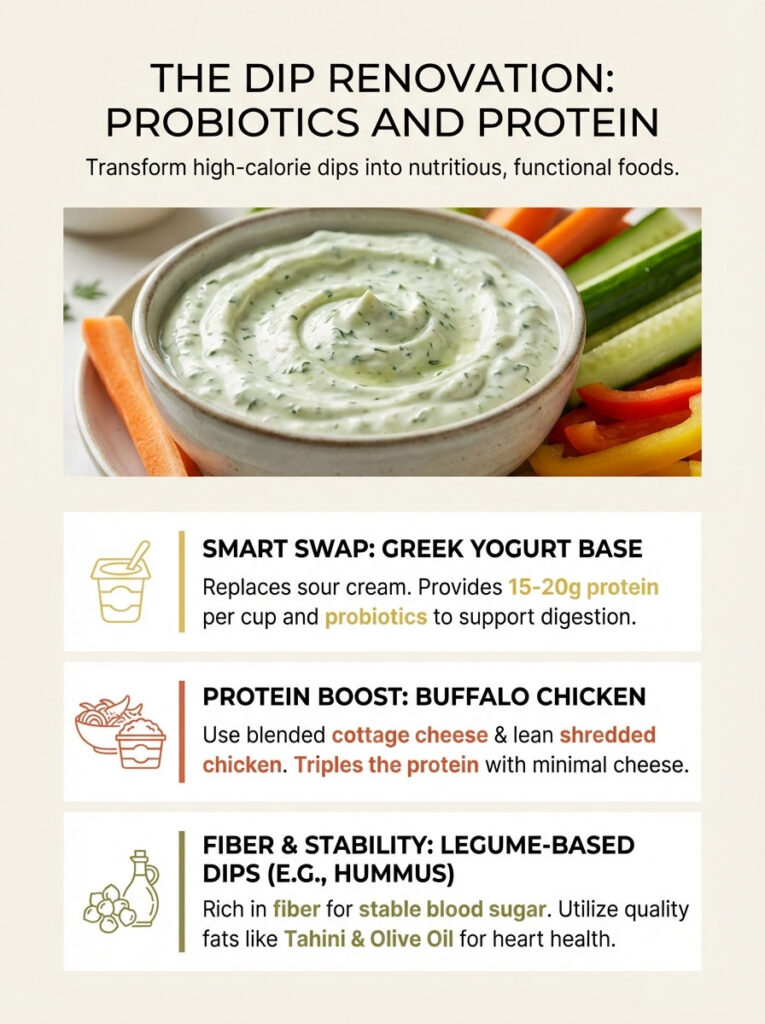
By focusing on Greek yogurt dip recipes, we can transform a “cheat meal” item into a functional food. We can turn a calorie bomb into a protein source. This is the essence of smart snacking.
The Greek Yogurt Swap
Non-fat (0%) Greek yogurt is a textural twin to sour cream. Yet, it carries a vastly different nutritional profile. One cup of Greek yogurt contains roughly 15 to 20 grams of protein.
Compare this to the negligible amount in sour cream. Furthermore, it contains live active cultures. These probiotics, like Lactobacillus, aid digestion.
This is essential when you are consuming a variety of party foods. The tanginess of the yogurt perfectly mimics the tang of sour cream. Most guests will not even notice the difference.
Recipe Highlight: High-Protein Buffalo Chicken Dip
Buffalo chicken dip is a fan favorite. The traditional recipe relies heavily on cream cheese and ranch dressing. To make this one of your healthy Super Bowl recipes that actually taste good, use a base of blended cottage cheese.
Blended cottage cheese becomes incredibly smooth and creamy. It loses its curds entirely when whipped. Mix this with lean shredded chicken breast and hot sauce.
Add a sprinkle of sharp cheddar for flavor. You get the same gooey, spicy satisfaction. But now, you have triple the protein content.
Legume Power: Hummus and Bean Dips
Do not overlook the power of legumes. Hummus and black bean dips are fiber-rich appetizers. They help stabilize blood sugar throughout the game.
The soluble fiber in chickpeas binds to cholesterol. It also slows down digestion. This keeps your guests fuller for longer periods.
When making hummus, use high-quality Tahini and Extra Virgin Olive Oil. These provide healthy monounsaturated fats. These fats signal satiety hormones in the brain.
The Main Event: Lean Protein Sliders and Tacos
While snacking is great, many hosts want to serve a substantial “main event.” The problem usually isn’t the meat. The problem is the bread. Brioche buns are calorically dense and offer little nutritional value.
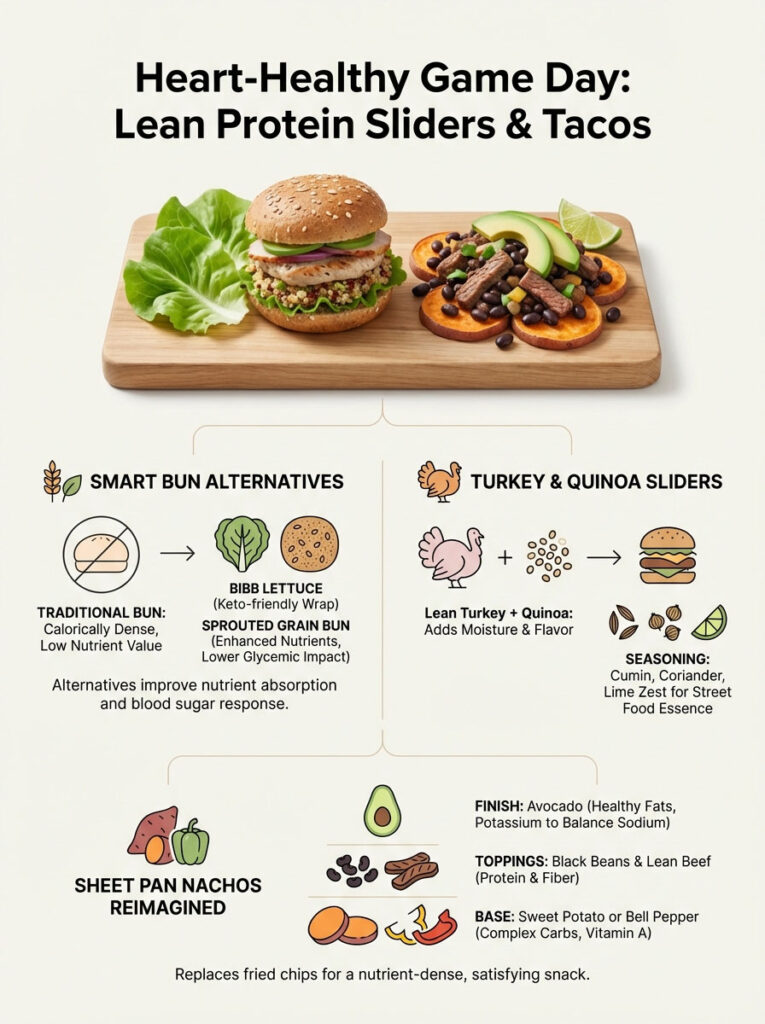
To create a heart-healthy Super Bowl menu plan, we need to move beyond the bun. We need to think about structural integrity and flavor delivery. We can satisfy the craving for a handheld meal without the refined carbs.
Strategy: The Lettuce Wrap vs. The Whole Grain
We have two strong options here. For those looking for keto-friendly game day food, Bibb lettuce is the gold standard. It has a structural integrity that iceberg lettuce lacks.
It also provides a satisfying crunch. For those who want bread, opt for sprouted grain buns. Sprouting increases the bioavailability of nutrients.
It also lowers the glycemic impact of the bread. This prevents that insulin spike we discussed earlier. It is a small swap with a big impact.
Recipe Highlight: Turkey & Quinoa Sliders
One of my favorite tricks for high-protein game day food is blending cooked quinoa into lean ground turkey. The quinoa extends the meat, making it more economical. But it also serves a culinary purpose.
Turkey is leaner than beef and can dry out easily. The quinoa holds moisture. This ensures a juicy burger every time.
Season this mixture with cumin, coriander, and lime zest. This mimics street food flavors. Top with fresh pico de gallo instead of sugary ketchup.
Recipe Highlight: Sheet Pan Nachos
Nachos are non-negotiable for many. Instead of a pile of fried corn chips, try using sweet potato rounds. You can also use bell pepper wedges as the base.
Sweet potatoes offer complex carbohydrates and Vitamin A. Load them up with black beans and lean beef. Do not forget plenty of avocado.
Avocado provides monounsaturated fats and potassium. Potassium helps counteract the sodium in other foods. This creates a balanced electrolyte profile.
The Crunch Factor: Vegetable Vehicles and Smart Carbs
The “crunch” is a sensory requirement for snacking. It relieves stress and provides mouthfeel satisfaction. The problem is that most crunchy foods are empty calories.
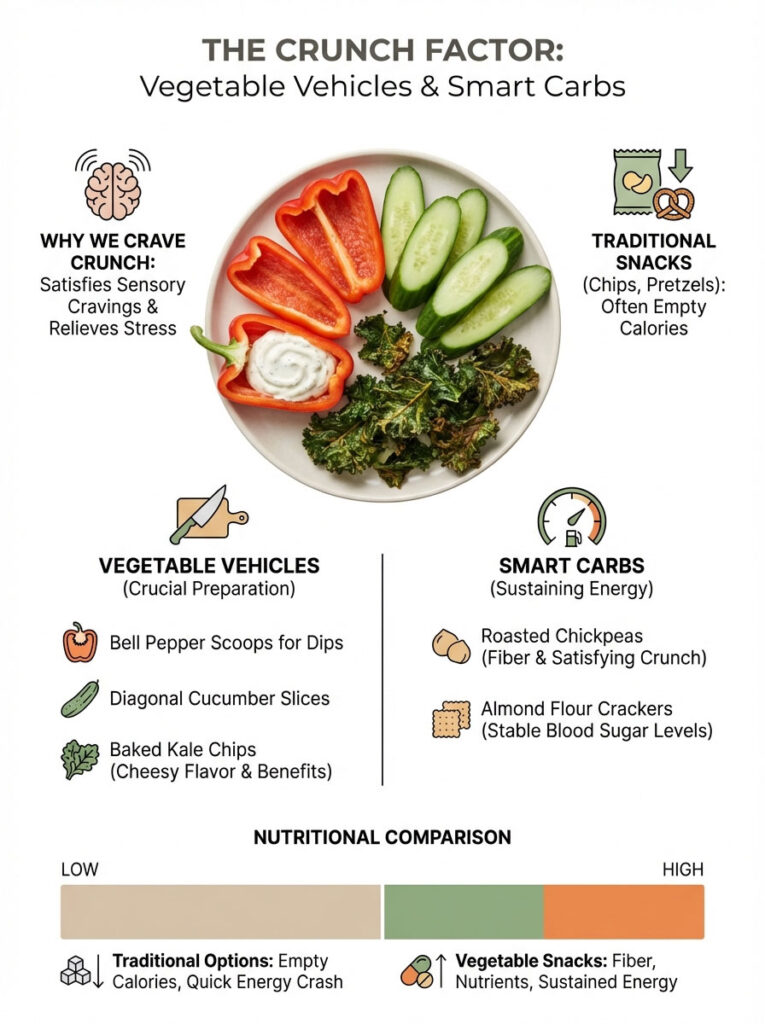
Chips, pretzels, and crackers offer little nutrition. We need to introduce gluten-free party snacks that satisfy this primal urge. We need crunch without the baggage.
The Psychology of Crunch and Veggie Butchers
Why do we crave chips? It is the auditory feedback. To replicate this with vegetables, the cut is everything.
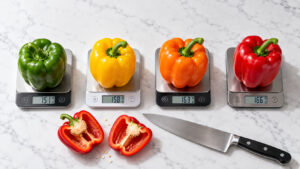
You cannot serve limp carrot sticks. You need to be a “vegetable butcher.” Cut bell peppers into broad “scoops” that can hold a heavy dip.
Slice cucumbers diagonally to maximize surface area. Jicama is an underutilized superstar here. Cut into sticks, it has the snap of an apple but a neutral flavor.
Gluten-Free Party Snacks
If you must have a chip-like vehicle, consider baking your own kale chips. When tossed with olive oil and nutritional yeast, they transform. They take on a cheesy, savory flavor that is surprisingly addictive.
Roasted chickpeas are another excellent option. Seasoned with curry powder or chili lime, they offer a crunch similar to corn nuts. But they come with a massive dose of fiber.
Almond flour crackers are also widely available now. They provide a healthy fat base rather than a refined starch base. This keeps blood sugar stable.
According to USDA FoodData Central, a serving of bell peppers provides over 100% of your daily Vitamin C. Corn chips provide zero. This is the difference between empty calories and functional nutrition.
Comparison: The Carbohydrate Swap Chart
| Traditional “Empty” Carb | Nutrient-Dense Swap | Nutritional Advantage | Culinary Application |
|---|---|---|---|
| Potato Chips | Baked Kale Chips | High Vitamin K, Low Calorie | Crunchy side dish |
| Tortilla Chips | Bell Pepper “Scoops” | High Vitamin C, Hydrating | Nachos or heavy dips |
| Hamburger Bun | Portobello Mushroom Cap | High Fiber, Umami Flavor | Burger sliders |
| Flour Crackers | Cucumber Rounds | Hydrating, Zero Glycemic Load | Salmon or cheese bites |
| French Fries | Jicama Sticks | Prebiotic Fiber (Inulin) | Dipping vehicle |
Pizza Reimagined: The Low-Carb Crust
Pizza is a staple of the Super Bowl diet. Delivery pizza is often greasy, salty, and loaded with processed meats. Making your own allows you to control the ingredients.
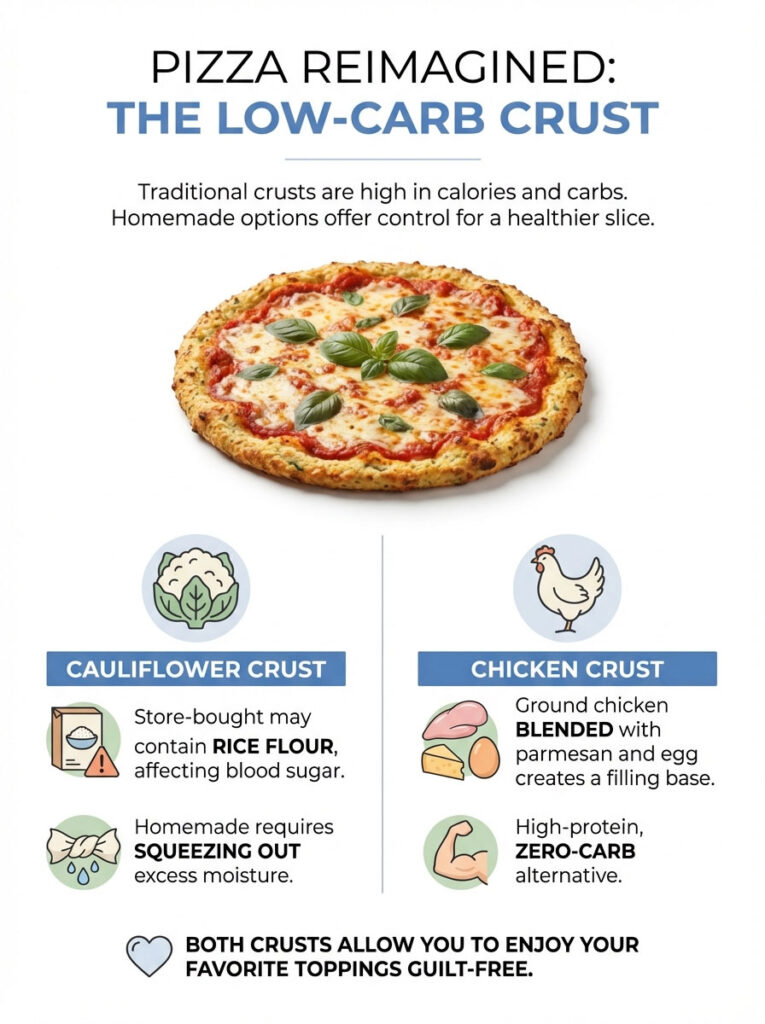
The crust is usually the biggest caloric offender. By swapping the base, we can turn pizza into a nutrient-dense meal. We can keep the cheese and toppings we love.
The Cauliflower Crust Phenomenon
Cauliflower crust has gone mainstream for a reason. It significantly lowers the carbohydrate count. However, store-bought versions often use rice flour as a binder.
This can still spike blood sugar. The best approach is a homemade crust using cauliflower rice, egg, and cheese. You must squeeze the water out of the cauliflower first.
This is the most critical step. If you skip it, you will eat a pizza casserole with a fork. Use a cheesecloth to wring out every drop of moisture.
The Chicken Crust Pizza
For the ultimate carnivore hack, try a “chicken crust.” This involves blending ground chicken with parmesan and egg. You press it flat and bake it until crisp.
Then you add your toppings and broil. The “crust” is entirely protein. It is incredibly filling and has zero carbohydrates.
This allows you to enjoy the toppings without the guilt. It is essentially a giant, flat chicken nugget acting as a pizza. It is a game-changer for keto dieters.
Sweet Treats: Dessert Without the Crash
By the fourth quarter, the craving for something sweet usually hits. This is often due to “sensory-specific satiety.” Your palate is tired of salt and wants sugar.
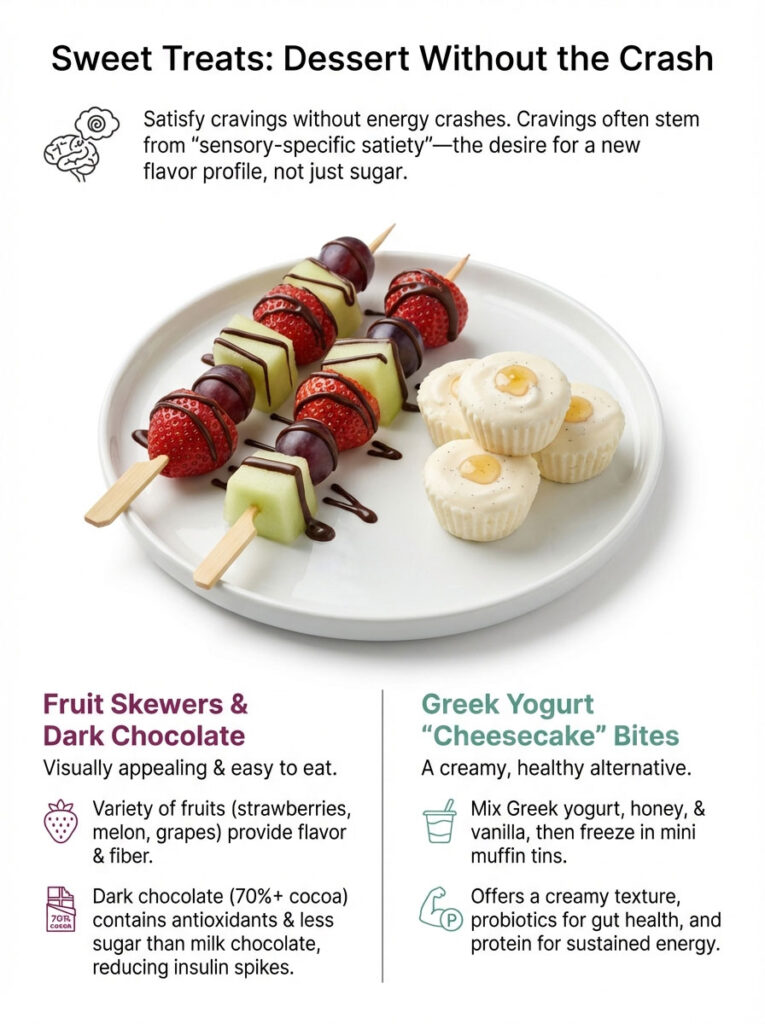
Instead of brownies or cookies, we can offer smarter options. We want to satisfy the sweet tooth without spiking insulin again. We want to end the night on a high note.
Fruit Skewers and Dark Chocolate
Fruit kebabs are visually appealing and easy to eat. Alternate strawberries, melon, and grapes. Drizzle them with a high-quality dark chocolate.
Dark chocolate (70% cocoa or higher) contains antioxidants. It also has less sugar than milk chocolate. The fiber in the fruit helps blunt the sugar absorption.
Greek Yogurt “Cheesecake” Bites
You can make bite-sized cheesecake treats using Greek yogurt. Mix the yogurt with a little honey and vanilla. Freeze them in mini muffin tins.
Top with a crushed almond crust. These provide the creamy texture of cheesecake. However, they offer a probiotic and protein boost.
They are refreshing and portion-controlled. You can pop one or two and feel satisfied. They are the perfect end to a heavy meal.
Hydration and The Anti-Inflammatory Bar
We cannot discuss a heart-healthy Super Bowl menu plan without addressing alcohol. Beer and sugary mixers are significant contributors to the day’s calorie count. More importantly, alcohol pauses fat metabolism.
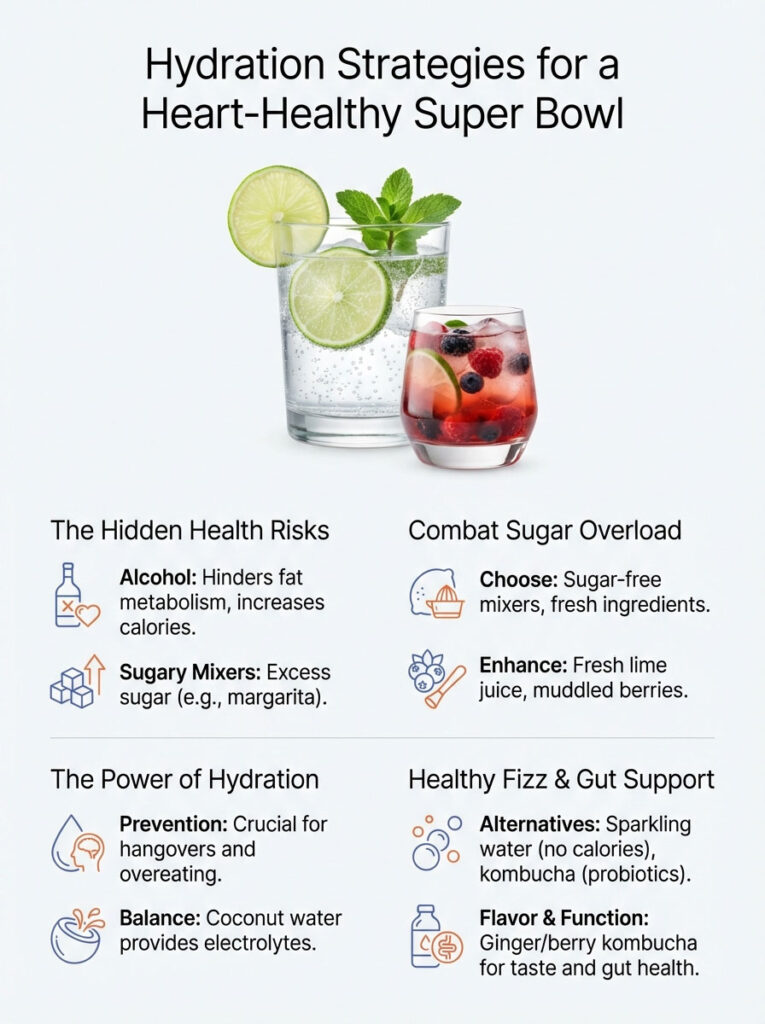
When alcohol is present, your body prioritizes metabolizing it. This means the wings and nachos you eat while drinking are more likely to be stored as fat. We need a smarter strategy for drinking.
The Hidden Sugar Trap
Margarita mixes and sodas are often laden with high-fructose corn syrup. A single margarita can contain as much sugar as a candy bar. This leads to a massive headache the next day.
To combat this, we turn to sugar-free cocktail mixers. Freshly squeezed lime juice is your best friend. Muddled berries and fresh herbs provide flavor without the syrup.
Strategy: The Mocktail and Skinny Cocktail
Hydration is your best defense against a hangover. It also helps prevent overeating. Try using coconut water splashes in your drinks.
The electrolytes in coconut water help maintain fluid balance. For a fizzy kick, use sparkling water. Kombucha cocktails are also gaining traction.
Using ginger or berry kombucha as a mixer adds effervescence. It also adds probiotics to support gut health. This is multitasking at its finest.
The Host’s Playbook: Food Safety and Prep Strategy
As an RDN, I must emphasize food safety. Nothing ruins a party faster than foodborne illness. The “Danger Zone” is the temperature range between 40°F and 140°F.
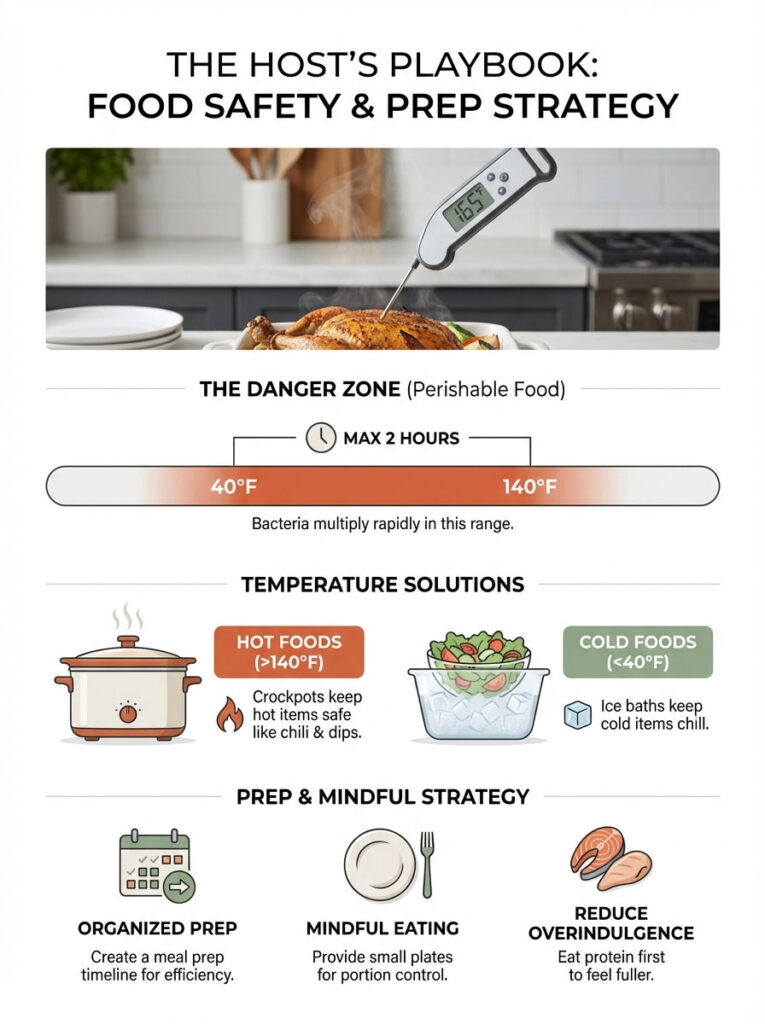
This is where bacteria multiply most rapidly. According to USDA guidelines, perishable food should never sit out in this zone for more than two hours. You need a game plan for food safety.
The Crockpot Strategy
Use slow cookers to your advantage. Keep turkey chili, meatballs, or warm dips in a crockpot. Set it to “warm” or “low” to ensure they stay above 140°F.
This keeps the food safe and palatable. Cold items require a different strategy. For your Greek yogurt dip recipes, nestle the serving bowl in ice.
Place the dip bowl inside a larger bowl filled with crushed ice. This keeps the temperature below 40°F. It also looks professional and inviting.
Meal Prep Timeline
To pull off a spread of healthy Super Bowl recipes that actually taste good without stress, you need a plan. Here is a schedule to keep you organized:
- 2 Days Before: Marinate your proteins. Acidic marinades need time to tenderize lean meats. Chop your vegetables and store them in water in the fridge to keep them crisp.
- 1 Day Before: Make your dips. Flavors like garlic and onion need to meld overnight for maximum impact. Prepare your turkey burger patties.
- Game Day: Air fry your wings and assemble your sliders. This ensures everything is fresh and hot. Set up your hydration station.
Mindful eating tips for guests are also helpful. Provide small plates. Research shows that people eat less when using smaller dishware.
The plate looks fuller, satisfying the eye. Encourage guests to eat protein first. This will trigger satiety signals sooner, preventing overindulgence in chips.
Summary & Key Takeaways
Hosting a Super Bowl party does not have to result in a caloric catastrophe. By implementing a heart-healthy Super Bowl menu plan, you can enjoy the game without the guilt. We have proven that healthy Super Bowl recipes that actually taste good are not only possible but superior.
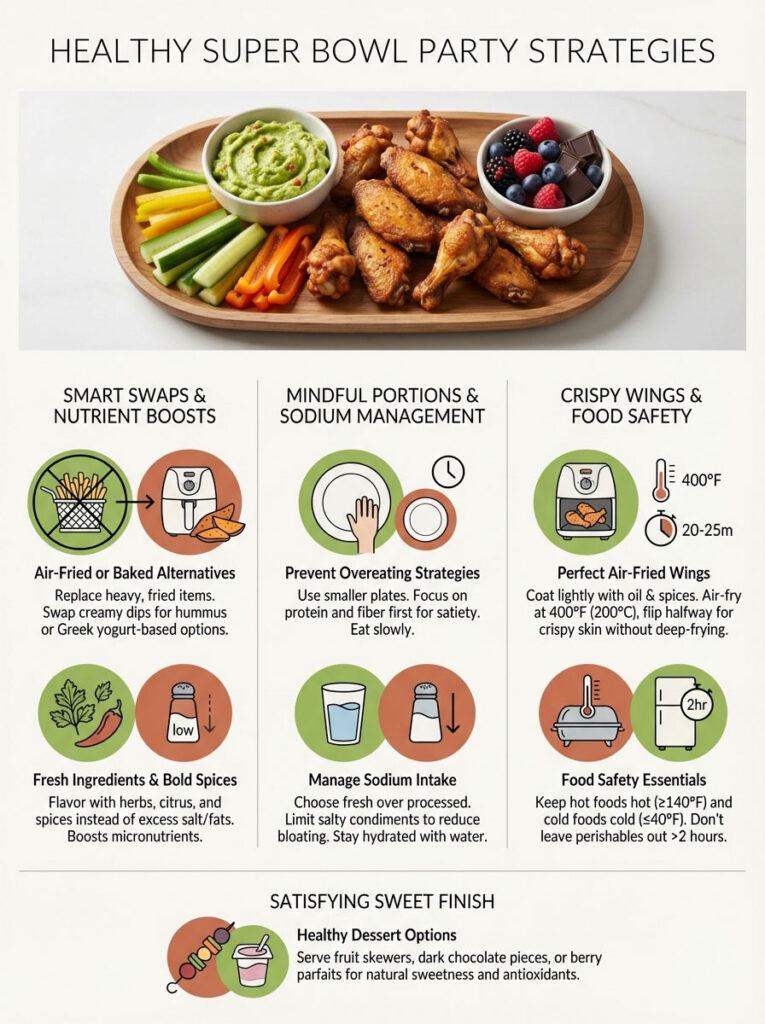
These recipes are often more flavorful than their processed counterparts. They use fresh ingredients and bold spices. They leave you feeling energized rather than lethargic.
Remember the core pillars of our strategy:
- Protein Prioritization: Use Greek yogurt and lean meats to keep satiety high. This stops the endless grazing.
- Vegetable Volume: Use veggies as vehicles for dips. This increases fiber intake and reduces empty carbs.
- Smart Swaps: Use the air fryer and natural seasonings. This reduces inflammation and sodium intake significantly.
I encourage you to try at least one of these swaps this year. Whether it is the healthy buffalo cauliflower or the air fryer appetizers, your body will thank you. Your guests will thank you for the extra energy in the fourth quarter.
Frequently Asked Questions
How can I get air-fried chicken wings to be as crispy as deep-fried versions?
To achieve a restaurant-quality crunch, toss your wings in aluminum-free baking powder before air-frying to raise the pH level and break down peptide bonds in the skin. This chemical reaction, combined with the rapid air circulation of the fryer, accelerates the Maillard reaction for a shattering texture without the use of inflammatory seed oils.
Why is it so easy to overeat traditional game day snacks?
Overeating often stems from the Protein Leverage Hypothesis, where the body continues to signal hunger until its biological amino acid requirements are met. Since most party foods are high in refined fats and carbohydrates but low in quality protein, your brain does not receive the necessary satiety signals, leading to mindless grazing throughout the game.
What is the best high-protein substitute for sour cream in Super Bowl dips?
Non-fat Greek yogurt is the ideal textural twin, offering a similar tang while providing 15 to 20 grams of protein per cup compared to the negligible amounts in sour cream. Additionally, it provides live active cultures like Lactobacillus that aid digestion during a day of varied food intake, helping to prevent gastrointestinal discomfort.
How do I make buffalo cauliflower bites that do not get mushy?
The key is using a high-viscosity sauce and a fiber-rich coating like almond or chickpea flour rather than a watery, refined-flour batter. For maximum structural integrity, wait to toss the cauliflower in the sauce until immediately before serving to prevent the acid in the hot sauce from breaking down the crispy exterior.
How can I prevent the common fourth-quarter energy crash during the game?
Focus on minimizing high-glycemic foods like white bread and sugary marinades that cause rapid insulin spikes and subsequent blood sugar drops. Prioritize complex carbohydrates and fiber-rich volume eating strategies to stabilize your metabolic response and keep your energy levels consistent until the trophy presentation.
What are the most nutrient-dense vegetable vehicles for heavy dips like guacamole?
Swap empty-calorie corn chips for “vegetable butcher” cuts such as broad bell pepper wedges, jicama sticks, or diagonal cucumber rounds. These options provide essential vitamins and hydrating minerals like potassium, which helps counteract the high sodium levels found in many traditional party snacks.
Is a cauliflower pizza crust actually healthier than a traditional crust?
A homemade cauliflower crust significantly reduces the glycemic load and carbohydrate count, provided you wring out all moisture with a cheesecloth before baking. Avoid many store-bought versions that use rice flour binders, or consider a chicken-based crust for a zero-carb, high-protein alternative that satisfies keto-friendly requirements.
How can I manage sodium intake to avoid post-game bloating and discomfort?
Replace pre-packaged, high-sodium seasoning packets with a DIY dry rub consisting of smoked paprika, garlic powder, and onion powder to control the salt content. Increasing your intake of potassium-rich foods like avocado or spinach can also help your body regulate fluid balance and mitigate the water retention caused by excess sodium.
How do I keep lean turkey sliders juicy without adding extra fat or oil?
Incorporate cooked quinoa into your ground turkey mixture to act as a moisture reservoir that prevents the lean protein from drying out during the cooking process. This technique not only improves the culinary texture but also increases the fiber content and nutritional density of the sliders without compromising on flavor.
What are the best practices for keeping Super Bowl food safe for guests?
Follow the USDA Danger Zone guidelines by ensuring perishable items do not sit at room temperature for more than two hours. Use slow cookers on a warm setting to keep hot dishes above 140°F and nestle cold yogurt-based dips in a larger bowl of ice to keep the temperature safely below 40°F.
Does drinking alcohol during the Super Bowl affect how my body processes food?
Alcohol consumption temporarily pauses fat metabolism because the liver prioritizes breaking down ethanol over other macronutrients. To minimize the metabolic impact, choose sugar-free mixers like sparkling water and fresh lime juice, and maintain a one-to-one ratio with water to help your body process the caloric load more efficiently.
What are some healthy dessert options that satisfy a late-game sweet tooth?
Address sensory-specific satiety by offering small portions of high-quality dark chocolate or frozen Greek yogurt cheesecake bites. These treats provide antioxidants and protein while satisfying the palate’s craving for sweetness without the massive insulin spike associated with traditional brownies or cookies.
Disclaimer
This article is for informational purposes only and does not constitute medical or nutritional advice. While these recipes focus on healthier alternatives, individual dietary needs vary. Always consult with a Registered Dietitian or qualified healthcare professional before making significant changes to your diet, especially if you have underlying health conditions like heart disease or diabetes.
References
- Academy of Nutrition and Dietetics – eatright.org – Provided statistics regarding the average caloric consumption during major sporting events.
- National Chicken Council – nationalchickencouncil.org – Source for annual chicken wing consumption data during the Super Bowl weekend.
- USDA FoodData Central – fdc.nal.usda.gov – Provided nutritional comparisons for raw vs. cooked vegetables and meats.
- American Heart Association – heart.org – Supporting data on sodium intake, thirst signals, and heart-healthy fat substitutions.
- USDA Food Safety and Inspection Service – fsis.usda.gov – Official guidelines on the “Danger Zone” temperatures and perishable food safety durations.
- Cell Metabolism Journal – cell.com – Research regarding the Protein Leverage Hypothesis and biological drivers of overeating.