What If Your Dinner Could Keep You Out of the Hospital?
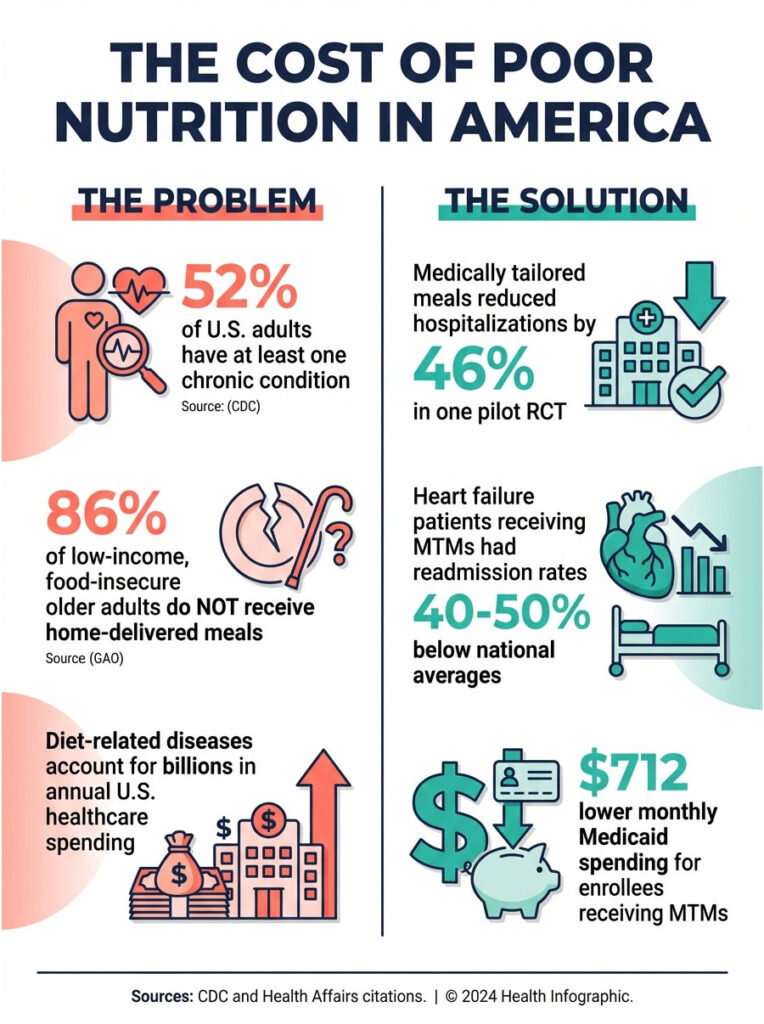
About 52% of American adults live with at least one chronic disease. And for millions of them, the single biggest daily challenge isn’t finding the right medication or getting to the doctor. It’s figuring out what to eat for dinner.
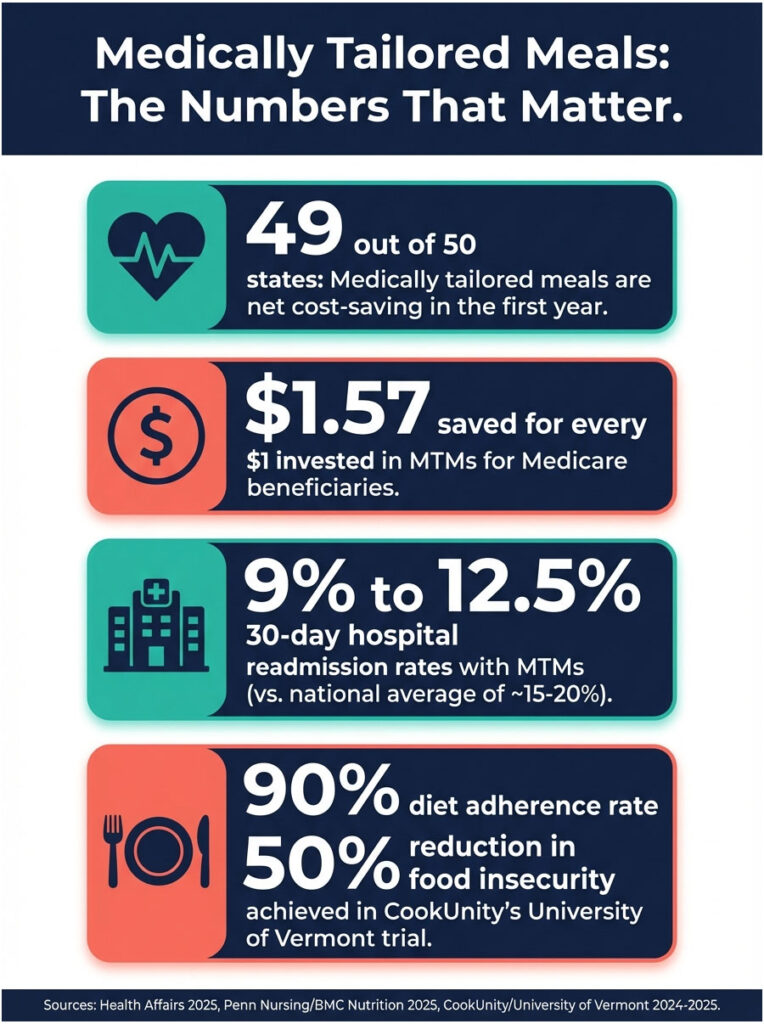
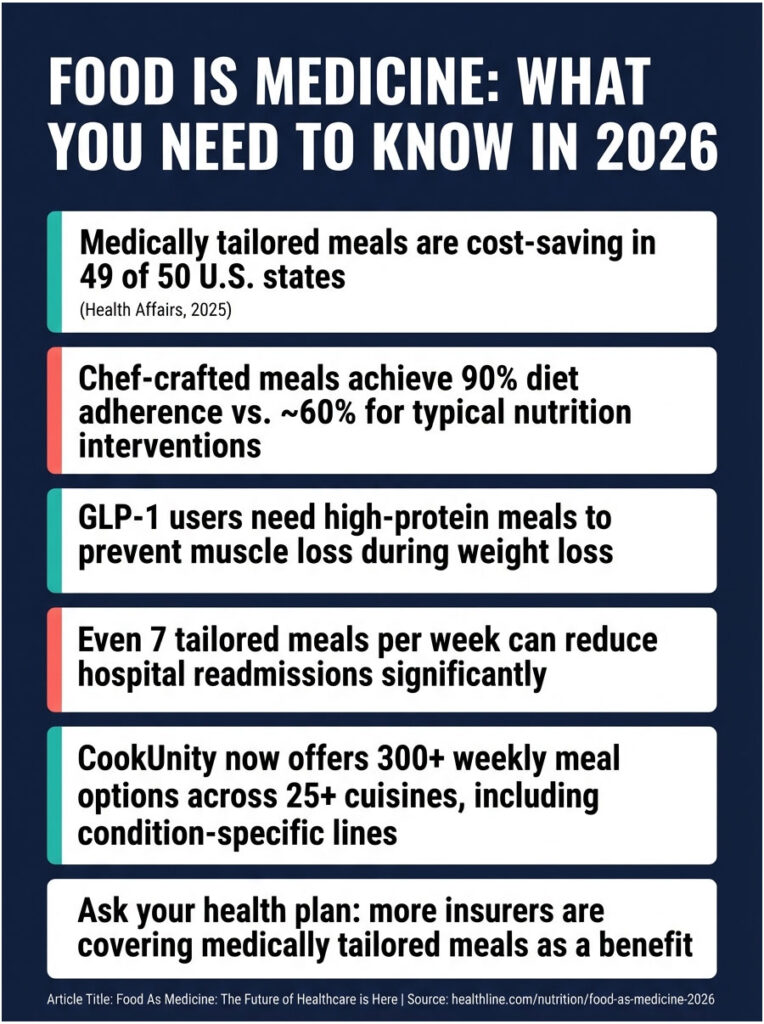
That might sound like a small thing. But a growing body of research says it’s not small at all. In fact, a 2025 study published in Health Affairs found that providing medically tailored meals to high-risk patients would be net cost-saving in 49 out of 50 U.S. states within the first year. The only exception was Alabama, where the intervention was cost-neutral.
The concept is simple: when sick people eat the right food, they stay out of the hospital. And now, the meal delivery industry is catching on.
The Rise of “Food Is Medicine” in Your Mailbox
The phrase “Food is Medicine” has bounced around public health circles for years. But until recently, it stayed mostly in the realm of nonprofits and Medicaid pilot programs. That’s changing fast.
CookUnity, a chef-driven meal delivery platform that has served over 50 million meals nationwide, launched a GLP-1 balanced meal collection in early 2025. It was the first chef-curated line specifically designed for the 24 million Americans projected to use GLP-1 medications (like Ozempic and Wegovy) by 2035. The meals are high in protein and fiber, and they’re designed with a registered dietitian to help prevent the muscle loss that can come with rapid weight loss on these drugs.
But the GLP-1 line is just one piece. CookUnity also expanded its medically tailored meals program through CookUnity Business, offering condition-specific meals for heart health, diabetes management, cancer recovery, and even eating disorder treatment (through a partnership with WithinHealth). In a University of Vermont research trial, CookUnity’s chef-crafted meals helped reduce household food insecurity by 50% among patients in substance-use recovery, achieved 90% adherence to prescribed diets, and earned a 92% patient satisfaction rating.
Those aren’t small numbers. For context, most nutrition interventions struggle to hit 60% adherence. When meals taste like they came from a real restaurant instead of a hospital cafeteria, people actually eat them. That’s the whole idea.
Why Taste Matters More Than You Think
Here’s the thing about healthy eating advice: most people already know what they should be eating. More vegetables. Less processed food. Lean proteins. Whole grains. It’s not a mystery.
The problem has never been knowledge. It’s been execution. Cooking a balanced meal from scratch on a Tuesday night after a 10-hour workday, with two kids asking for snacks, just doesn’t happen for a lot of families. So they order pizza. Or they heat up a frozen meal that’s loaded with sodium.
A separate study from Penn Nursing, published in BMC Nutrition in April 2025, highlighted why the format of healthy food matters so much. Researchers found that heart failure patients who received just seven medically tailored meals per week after hospital discharge had 30-day readmission rates of only 12.5%. Those who received 21 meals per week saw rates drop to 9%. Both figures were well below the national average.
“Our findings suggest that even a modest intervention of seven medically tailored meals per week can have a profound positive impact on the health and recovery of heart failure patients,” said Charlene Compher, PhD, RD, LDN, FASPEN, Professor of Nutrition Science at Penn Nursing. She led the research in collaboration with the Metropolitan Area Neighborhood Nutrition Alliance (MANNA).
The takeaway? You don’t need to overhaul every single meal. Even replacing one meal a day with something nutritionally tailored can move the needle.
What the Experts Are Saying
“When meals are both clinically informed and chef-crafted, they don’t just nourish the body. They help restore a healthy relationship with food,” said Bruno Didier, Head of B2B at CookUnity, in a company statement about the WithinHealth partnership.
An independent perspective matters too. Kristy Del Coro, MS, RDN, LDN, a culinary nutritionist with over 15 years of experience (and CookUnity’s registered dietitian), explained the philosophy behind their GLP-1 line: “While every recipe must meet CookUnity’s ingredient and nutrition standards, flavor is always the top priority, because healthy meals only succeed if people enjoy them.”
From a broader public health standpoint, the Bipartisan Policy Center has estimated that $1.57 is saved for every dollar invested in medically tailored meals for Medicare beneficiaries with chronic conditions. That’s a return that should make every insurance company pay attention.
How to Actually Use This Information Today
So what does this mean for someone scrolling through their phone right now, wondering what to have for dinner?
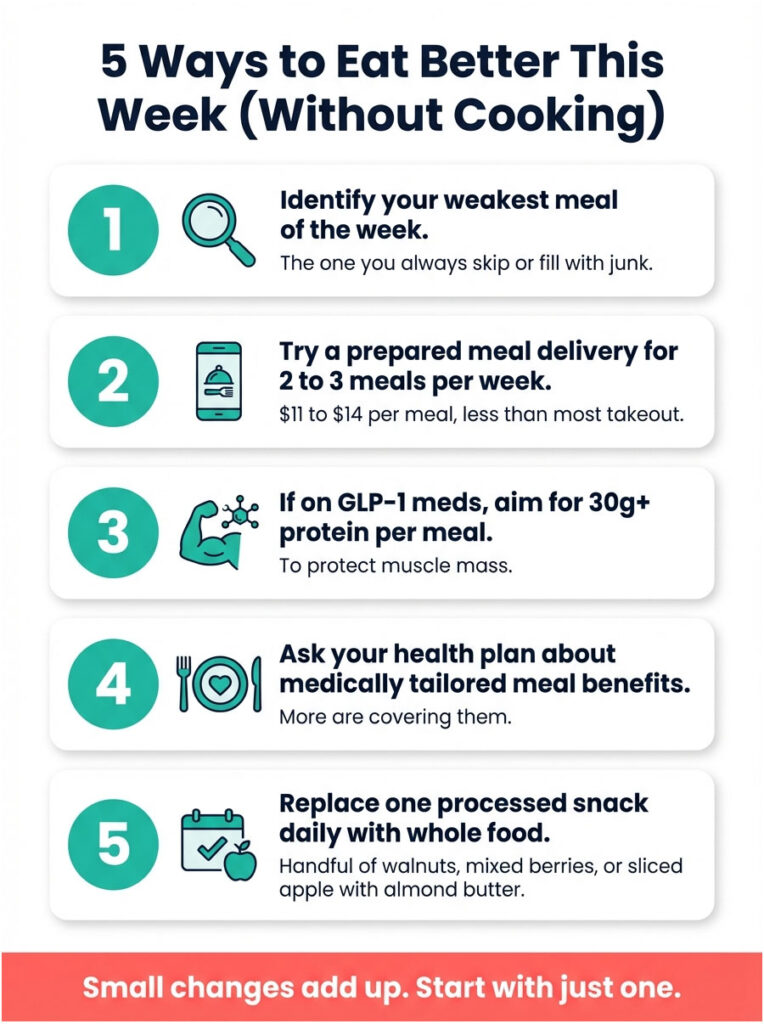
Start by being honest about your biggest barrier. If it’s time, a prepared meal delivery service might be worth the investment, at least a few nights a week. CookUnity charges between $11 and $13.50 per meal, which is less than most restaurant takeout orders. Their menu rotates weekly with over 300 options spanning everything from Mediterranean to Latin American to Asian cuisines, and you can filter by dietary need (keto, paleo, GLP-1, vegetarian, low-calorie, and more).
If you’re on a GLP-1 medication, talk to your doctor or dietitian about whether your current eating pattern is giving you enough protein. Muscle loss is a real concern with these drugs. Look for meals that deliver at least 30 grams of protein per serving, and prioritize fiber-rich sides. CookUnity’s GLP-1 collection was specifically built for this, but you can also assemble something similar at home: a palm-sized portion of grilled chicken or salmon, a cup of roasted broccoli or sweet potato, and a small handful of nuts.
For anyone managing a chronic condition like heart disease or diabetes, ask your health plan whether medically tailored meals are covered. More Medicaid and Medicare Advantage plans are starting to include them as a benefit. CookUnity Business works with health plans directly, and other organizations like MANNA and God’s Love We Deliver offer free medically tailored meals to qualifying patients in certain regions.
And if none of those apply to you, the simplest move is this: replace one or two of your weakest meals each week. You know the ones. The drive-through run you make when you’re too tired to think. The bag of chips that becomes dinner. Swapping those with something pre-made and nutritionally balanced doesn’t require perfection. It just requires a fridge.
The Fine Print: What This Research Doesn’t Prove
It would be irresponsible to pretend this is a clean, settled science. The Health Affairs modeling study used simulations, not a randomized controlled trial across all 50 states. The Penn Nursing study involved just 46 patients and was conducted at a single medical center. CookUnity’s own University of Vermont trial was small and specific to substance-use recovery settings.
Most of the strongest evidence for medically tailored meals comes from observational studies or pilot programs, not large-scale randomized controlled trials. The association between eating better and staying healthier is strong and consistent, but it’s hard to isolate exactly how much of the benefit comes from the food itself versus the support, routine, and social connection that delivery programs provide.
It’s also worth noting that CookUnity is a for-profit company, and its medically tailored meals program is part of its business strategy. That doesn’t invalidate the research it cites, but it’s a factor to keep in mind. Independent replication of these results would strengthen the case considerably.
The Bottom Line
The American healthcare system spends billions treating diseases that are, in many cases, closely tied to diet. The idea that better meals could reduce that burden isn’t wishful thinking anymore. It’s supported by real data, real programs, and real outcomes.
Whether you’re managing a chronic condition, taking a GLP-1 medication, or just trying to eat one fewer frozen pizza this week, the direction is clear: the food on your plate matters more than most people realize. And for the first time, it’s getting easier to get the right food delivered to your door without needing a culinary degree.
MEDICAL DISCLAIMER
This article is meant to keep you informed, not to replace a conversation with your doctor. Before making any changes to your diet, medication routine, or health plan, talk with a healthcare provider who knows your full medical history. If you’re currently taking GLP-1 medications or managing a chronic condition like heart disease or diabetes, personalized guidance from a registered dietitian can make a real difference. Everyone’s body responds differently, and what works well for one person may not be the right fit for someone else. If you’re experiencing symptoms of a medical emergency, call 911 or go to your nearest emergency room right away.
REFERENCES AND SOURCES
[1] Berkowitz, S.A. et al. “Estimated Impact of Medically Tailored Meals on Health Care Use and Expenditures in 50 US States.” Health Affairs, April 2025. https://doi.org/10.1377/hlthaff.2024.01307
[2] Compher, C. et al. “Medically Tailored Meals Improve Nutrition, Reduce Readmissions for Heart Failure Patients.” BMC Nutrition, April 2025. Via Penn Nursing: https://www.nursing.upenn.edu/live/news/3009-medically-tailored-meals-improve-nutrition-reduce
[3] CookUnity. “CookUnity Unveils Chef-Made GLP-1 Balanced Meal Collection.” BusinessWire, February 4, 2025. https://www.businesswire.com/news/home/20250204480793/en/CookUnity-Unveils-Chef-Made-GLP-1-Balanced-Meal-Collection
[4] CookUnity. “CookUnity Expands Medically Tailored and Chef Created Meals Program to Support Eating Disorder Treatment in Partnership with WithinHealth.” GlobeNewswire, October 16, 2025. https://markets.financialcontent.com/stocks/article/gnwcq-2025-10-16-cookunity-expands-medically-tailored-and-chef-created-meals-program-to-support-eating-disorder-treatment-in-partnership-with-withinhealth
[5] Macpherson, C., Frist, W.H., Gillen, E. “Medically Tailored Meals: A Case for Federal Policy Action.” Healthcare (Basel), 2025;13(22). https://pmc.ncbi.nlm.nih.gov/articles/PMC12652126/
[6] CDC. “Chronic Diseases in America.” Centers for Disease Control and Prevention. https://www.cdc.gov/chronic-disease/data-research/index.html
[7] Airbnb Newsroom. “Partnering with CookUnity to deliver award-winning, chef-prepared meals through Airbnb Services.” January 21, 2026. https://news.airbnb.com/partnering-with-cookunity-to-deliver-award-winning-chef-prepared-meals/
[8] Dobiecka, D.P. et al. “New Dietary Trends: Meal Kit Delivery Services as a Source of Nutrients: A Scoping Review.” Nutrients, 2025; 17(7):1154. https://doi.org/10.3390/nu17071154