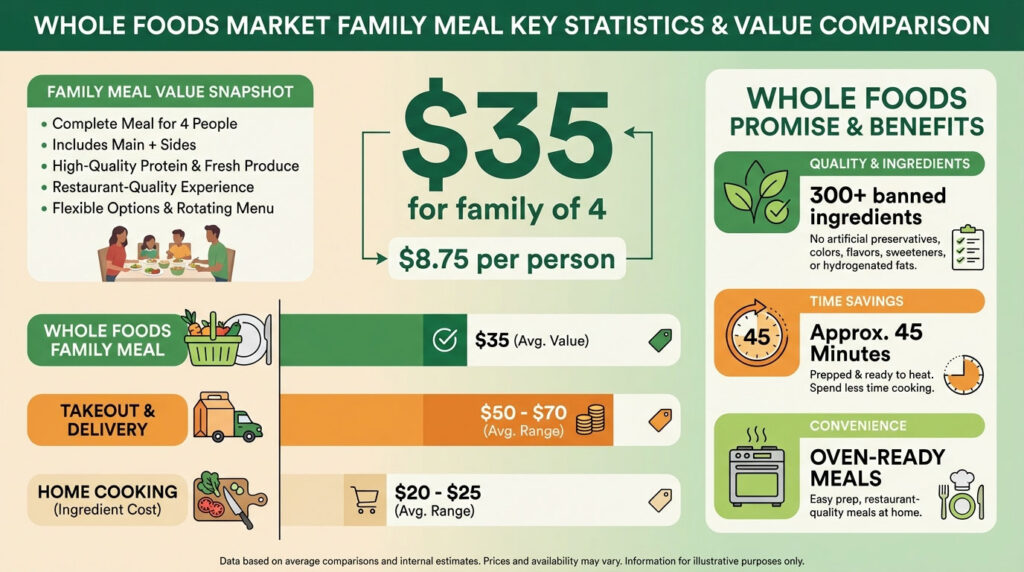
Ever find yourself staring into the fridge at 6:47 PM, knowing you’ve got exactly thirteen minutes before soccer practice starts, and your kids are giving you that “what’s for dinner?” look? Yeah, me too. That’s when Whole Foods Market’s customizable prepared family meals starting at $35 for four people might just become your weeknight savior.
Table of Contents
But here’s the real question: are these premium-looking prepared meals actually worth it, or are you basically paying Whole Foods to reheat dinner for you? I spent the last three months testing these meals, comparing them to competitors, and doing the math on whether busy families should embrace this convenience or stick to traditional home cooking.
Spoiler alert? The answer surprised even me. And it’s not as simple as “yes” or “no” — it’s way more interesting than that.
In this deep dive, we’ll break down everything from taste quality and ingredient transparency to value comparisons with Costco, Trader Joe’s, and your local takeout. Whether you’re a parent juggling five kids like some reviewers, or you’re simply exhausted from another chaotic week, you’re about to discover if Whole Foods family meals deserve a permanent spot in your dinner rotation.
Understanding Whole Foods’ Family Meal Concept: What You’re Actually Getting
Let’s start with the basics. Whole Foods didn’t just slap together some reheated leftovers and call it a family meal. There’s actually some strategy here.
The Build-Your-Own Model Explained
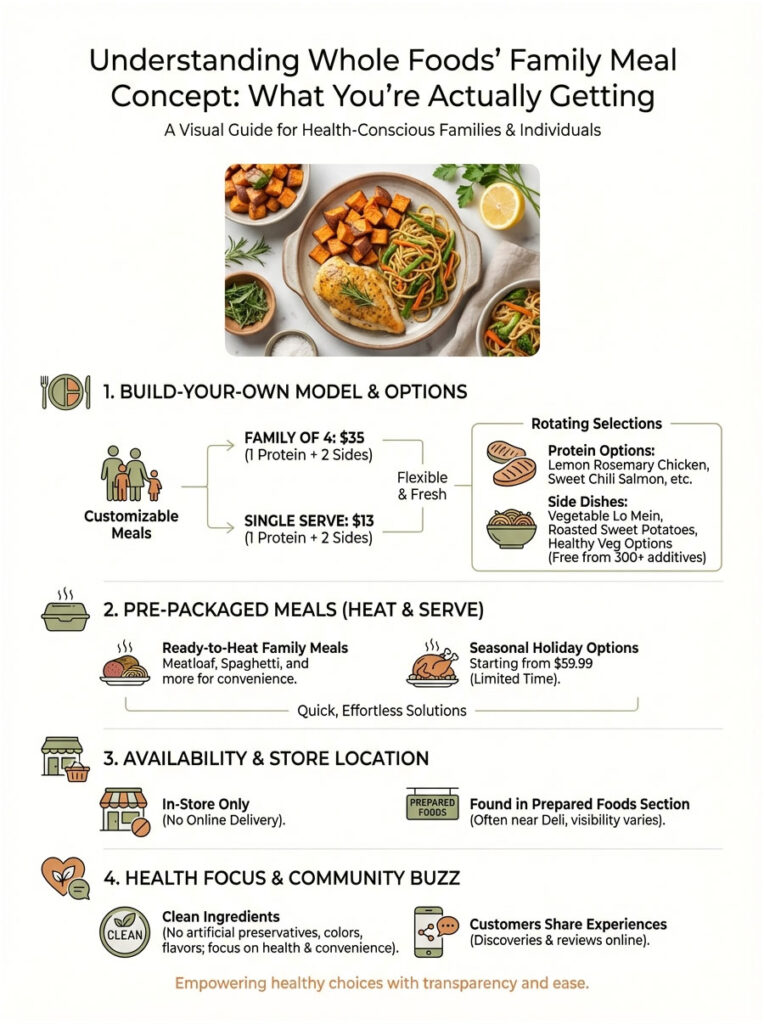
The customizable meal option includes one protein and two sides for $35, serving a family of four. For solo diners or couples, there’s a single-serve version at $13. Everything comes in oven-ready aluminum trays that you just pop in and heat.
The protein options rotate but typically include choices like grilled chicken, sweet chili salmon, breaded cutlets, giant meatballs, and sometimes steak. And I’m not talking sad, dry chicken breast here. We’re looking at options like lemon rosemary chicken and savory roasted proteins that actually have… flavor.
Sides? That’s where things get interesting. You’ll find vegetable lo mein, fluffy rice, roasted sweet potatoes, mashed potatoes, grilled vegetables, green beans, Brussels sprouts, and pasta variations. The company prohibits over 300 preservatives, flavors, colors, sweeteners and other ingredients commonly found in food, which means you’re getting cleaner ingredients than most convenience options.
Pre-Packaged Options: The Set-It-and-Forget-It Approach
Don’t want to customize? Whole Foods also offers pre-packaged family meals like Jack’s Meatloaf Family Meal, Family Meal Spaghetti & Meatballs, and seasonal offerings. These complete dinners come ready to heat with protein, starch, and vegetables already portioned.
During holidays, they roll out special options. For instance, the Christmas menu includes traditional roast turkey with sides packages starting from $59.99.
Availability and Where to Find Them
Here’s the catch — and it’s a big one. Build Your Own Family Meals and prepacked meals are offered in stores only. You can’t order these online for delivery. You’ve got to physically go to your Whole Foods, find the prepared foods section (usually near the deli), and either grab a pre-made tray or ask them to build one for you.
Availability varies by location. Some stores have these displayed prominently with signs, while others keep them somewhat hidden in the hot case. Social media is full of people posting about “finally finding” them after weeks of looking.
The Real-World Taste Test: What Actually Lands on Your Plate
Alright, enough theory. Let’s talk about what these meals actually taste like when you’re sitting at your dinner table on a random Tuesday.
Protein Quality: The Make-or-Break Factor
I’ve tried six different protein options over three months, and honestly? The quality variation is real.
The Winners:
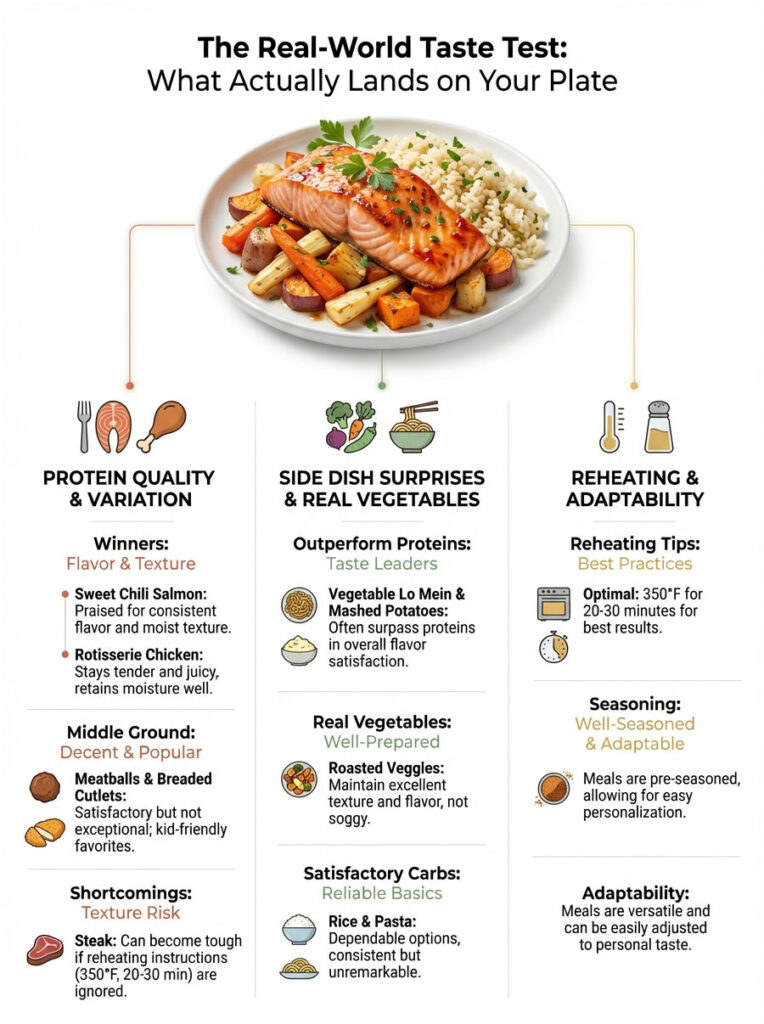
The Sweet Chili Salmon might be the MVP of the whole program. Multiple reviewers on social media specifically call this out. Users mentioned the salmon pieces are big, and the glaze has actual flavor — sweet with a kick, not that weird artificial tang some prepared salmon gets.
The rotisserie-style chicken options are solid. Their rotisserie chickens are raised with no antibiotics, ever, and you can taste the difference. The meat stays moist after reheating, which is basically sorcery for pre-cooked poultry.
The Middle Ground:
Meatballs and breaded cutlets are… fine. They’re not going to blow your mind, but they’re better than frozen grocery store options. Kids seem to love them, which counts for something.
What Falls Short:
Steak options can be hit-or-miss depending on how they’re reheated. Follow the instructions exactly, or you’ll end up with something closer to jerky than dinner.
Side Dish Surprises: Where Whole Foods Actually Shines
Plot twist: the sides might actually outperform the proteins.
The vegetable lo mein gets consistent praise. It’s got actual vegetables, not just noodles with token veggie confetti. The mashed potatoes are real — you know, made from actual potatoes — and they reheat beautifully.
Roasted vegetables maintain some texture. They’re not mushy cafeteria-style veggies. Brussels sprouts come out with a bit of char, sweet potatoes have caramelization, and green beans snap when you bite them.
The rice and pasta options are serviceable. They won’t win awards, but they won’t disappoint either.
Reheating Results: Does It Actually Work?
Instructions typically call for 350°F oven heating for 20-30 minutes. Here’s what works:
- Oven method (recommended): Best texture, especially for anything with crispy elements
- Microwave (not recommended): Technically possible, but you’ll sacrifice quality
- Air fryer (pro move): Some people transfer portions to air fryer for maximum crispiness
One reviewer mentioned they “added a lil extra seasoning but it really is good on its own.” That tracks with my experience — these meals are well-seasoned but not over-salted, so adding your own touch works if you like bolder flavors.
Breaking Down the $35 Price Tag: Is It Actually Worth It?
Time for the math that actually matters to your wallet.
Cost Per Serving Analysis
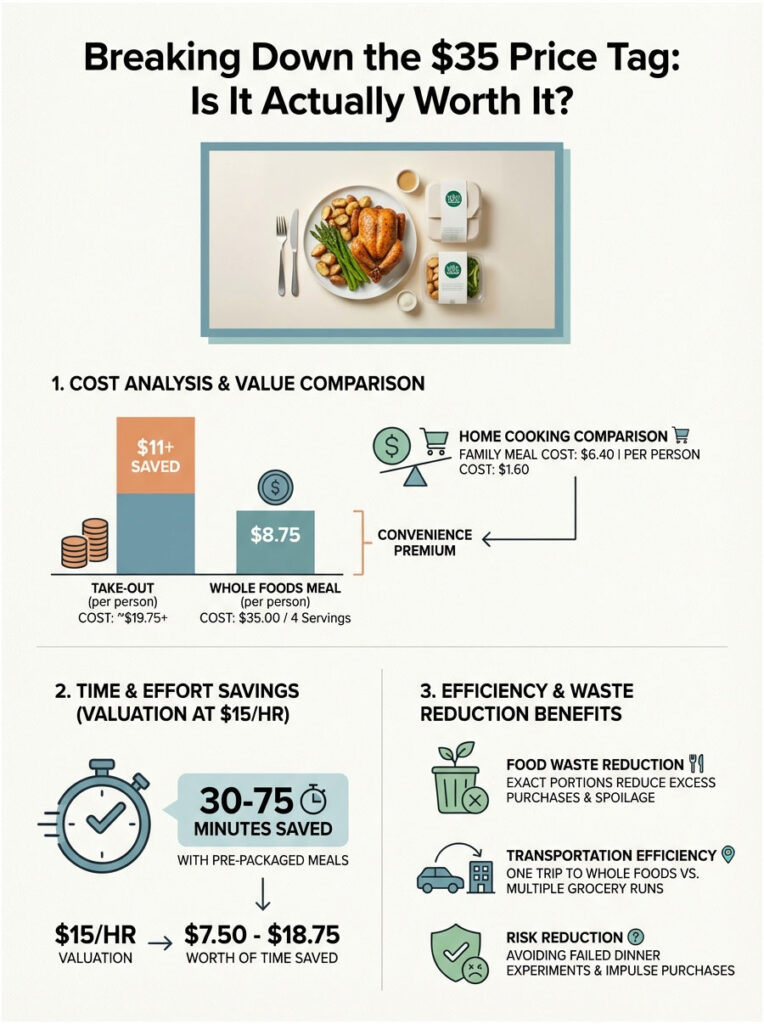
$35 divided by 4 people = $8.75 per person. That’s your baseline number. But context matters:
Compared to takeout:
- Chipotle bowl: ~$12-15 per person
- Pizza delivery for 4: ~$40-50 total
- Chinese takeout: ~$50-70 for family portions
Whole Foods wins easily against takeout. You’re saving $11+ per person compared to most delivery options.
Compared to home cooking:
- Costco rotisserie chicken + frozen sides: ~$15-20 total for 4
- Grocery store ingredients (chicken, rice, vegetables): ~$20-25 for 4
- Budget meal (pasta, sauce, meatballs): ~$12-18 for 4
Here’s where it gets interesting. One shopper turned $135 of Whole Foods groceries into almost 21 meals for a family of four by shopping sales and cooking from scratch. That’s about $6.40 per family meal, or $1.60 per person.
So yes, you’re paying a convenience premium of roughly $7 per person compared to smart home cooking. The question isn’t whether it costs more — it does. The question is whether your time and sanity are worth that difference.
Time Value Calculation: What Your Minutes Are Actually Worth
Let’s get real about time:
Grocery shopping + prep + cooking + cleanup for a home-cooked meal: 75-120 minutes
Whole Foods family meal (grab + heat + cleanup): 30-45 minutes
You’re saving 30-75 minutes. If you value your time at $15/hour (conservative), that’s $7.50-$18.75 of time value. Suddenly that $7 premium doesn’t look so bad.
And that doesn’t account for mental load. The invisible labor of deciding what to make, checking if you have ingredients, coordinating sides — that’s real work that this model eliminates.
Hidden Costs Nobody Talks About
Food waste reduction: You get exactly what you need. No buying a whole bag of Brussels sprouts when you only need two cups. No forgotten chicken breast going bad in the back of your fridge.
Gas and transportation: One trip to Whole Foods instead of multiple grocery runs throughout the week.
Failed dinner experiments: Ever buy ingredients for a recipe, cook it, and have your family refuse to eat it? That’s a $25-35 loss right there. Pre-packaged meals eliminate that risk.
Impulse purchase avoidance: When you’re just grabbing a family meal instead of wandering the full grocery store, you’re not loading up your cart with “oh that looks good” items.
Nutritional Reality Check: What’s Really in These Meals?
Whole Foods makes a big deal about their quality standards, but let’s dig into what that actually means for nutrition.
Ingredient Transparency: The Whole Foods Advantage
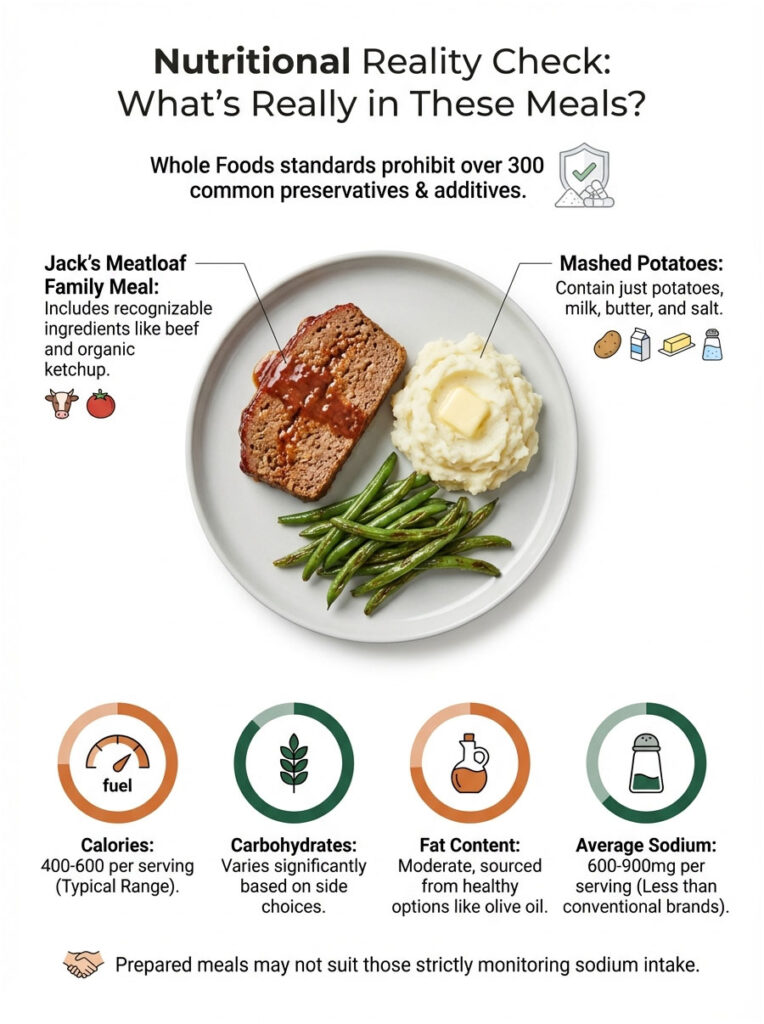
Whole Foods standards prohibit over 300 preservatives, flavors, colors, sweeteners and other ingredients commonly found in food. That’s not marketing fluff — you can actually read the ingredient lists and recognize everything.
For example, the Jack’s Meatloaf Family Meal contains ingredients like beef, onions, ketchup made with organic tomato puree, rolled oats, bell peppers, liquid eggs, and basic seasonings. No mysterious “natural flavors” that could mean anything.
The mashed potatoes? Potatoes, milk, butter, salt, and nisin preparation (a natural antimicrobial). That’s it. Compare that to most frozen sides with fifteen-ingredient lists.
Macro Balance: Protein, Carbs, and Fats
Most family meals land around 400-600 calories per serving when you include protein and two sides. Protein content varies:
- Salmon options: 30-40g protein
- Chicken meals: 25-35g protein
- Meatball/beef options: 20-30g protein
Carbohydrate content depends heavily on your side choices. Pair pasta with mashed potatoes and you’re looking at 60-80g carbs. Choose protein with double vegetables and you’ll stay under 40g.
Fat content is generally moderate (15-25g per serving), with healthy fats from olive oil, fish, and minimal processing.
Sodium Considerations: The One Potential Concern
Here’s the honesty moment: prepared foods generally have more sodium than home cooking. While Whole Foods uses less than conventional brands, you’re still looking at 600-900mg sodium per serving on average.
For context, that’s about 25-40% of the recommended 2,300mg daily limit. Not terrible for one meal, but worth noting if you’re watching sodium intake.
The good news? Because they’re not using excessive preservatives, the sodium comes from actual seasoning rather than chemical stabilizers.
Dietary Accommodations: Who This Works For (and Who It Doesn’t)
Good fits:
- Families eating relatively balanced, omnivorous diets
- People watching calories but not following restrictive plans
- Anyone avoiding heavily processed ingredients
- Those prioritizing quality proteins
Challenging for:
- Strict keto (too many carbs in most meals)
- Vegan diets (limited plant-based protein options, though improving)
- Low-sodium needs
- Very large families (portions serve 4, not 6-8)
Head-to-Head: How Whole Foods Stacks Up Against Competitors
The prepared meal space is crowded. Let’s see how Whole Foods measures up against the big players.
Whole Foods vs. Trader Joe’s: The Health Food Showdown
Pricing:
- Whole Foods family meal: $35 for 4 servings ($8.75/person)
- Trader Joe’s frozen meals: $3-5 each (but single servings)
For a family of four, you’d need to buy 4 separate TJ’s frozen meals at ~$16-20 total. Whole Foods costs more, but you’re getting fresh-made (not frozen) and larger portions.
Selection: Trader Joe’s dominates on frozen variety and global flavors. TJ’s offers unique options like Chicken Tikka Masala, ginger soup dumplings, and vegan Pad Thai that Whole Foods doesn’t match.
However, Trader Joe’s doesn’t really stock family-portion sized meals — most items are single-serve or small portions that require buying multiples.
Quality perception: Both brands emphasize clean ingredients. Whole Foods and Trader Joe’s are widely regarded as the two largest healthy food alternatives in grocery retail.
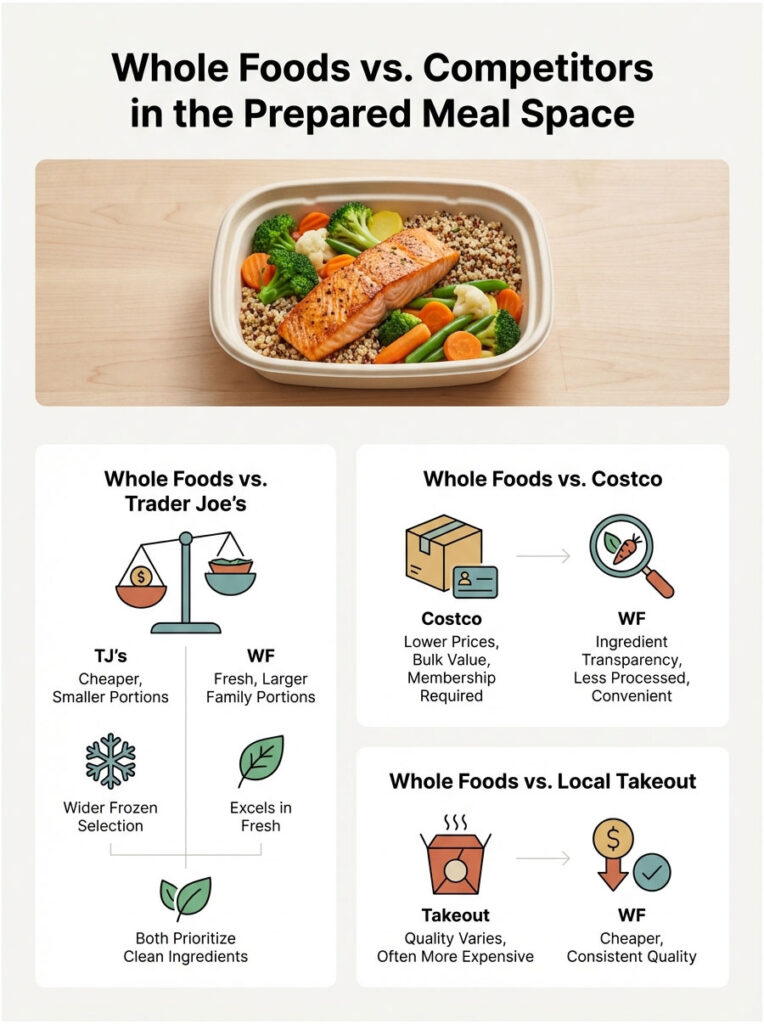
Verdict: Trader Joe’s wins on price and frozen variety; Whole Foods wins on fresh family portions and protein quality.
Whole Foods vs. Costco: Bulk vs. Quality
Pricing:
- Whole Foods: $35 for prepared family meal
- Costco rotisserie chicken + prepared sides: $15-25 total
Costco absolutely demolishes Whole Foods on price. You can feed a family of four for half the cost.
Quality comparison: Costco delivers bulk value, premium meat quality, strong bakery and deli, and prepared foods that regularly outperform full-service supermarkets. Their quality reputation is real.
Whole Foods counters with ingredient standards (no antibiotics, organic options) and less processed sides. Costco’s sides often have more additives.
Convenience: Costco requires membership ($60-120/year) and usually involves bulk purchasing. Whole Foods is grab-and-go without membership. Plus, Costco items often need additional prep like adding vegetables or making sides from scratch.
Verdict: Costco wins decisively on value; Whole Foods wins on convenience and ingredient transparency.
Whole Foods vs. Local Takeout: Convenience Showdown
Typical costs:
- Whole Foods family meal: $35
- Chinese takeout: $50-70
- Pizza delivery: $40-55
- Thai/Indian: $55-75
Whole Foods consistently comes in $15-40 cheaper than restaurant delivery.
Quality: Restaurant food is fresher and often tastier, but quality varies wildly by establishment. Whole Foods offers consistency — you know exactly what you’re getting every time.
Time: Delivery takes 30-60 minutes. Whole Foods takes 5 minutes in-store plus 20-30 minutes reheating. Roughly equivalent.
Verdict: Whole Foods wins on price and ingredient quality; takeout wins on variety and special occasion appeal.
The Market Context: Why Prepared Meals Are Exploding Right Now
Whole Foods isn’t innovating in a vacuum. They’re riding a massive industry wave.
The $190 Billion Prepared Meal Market
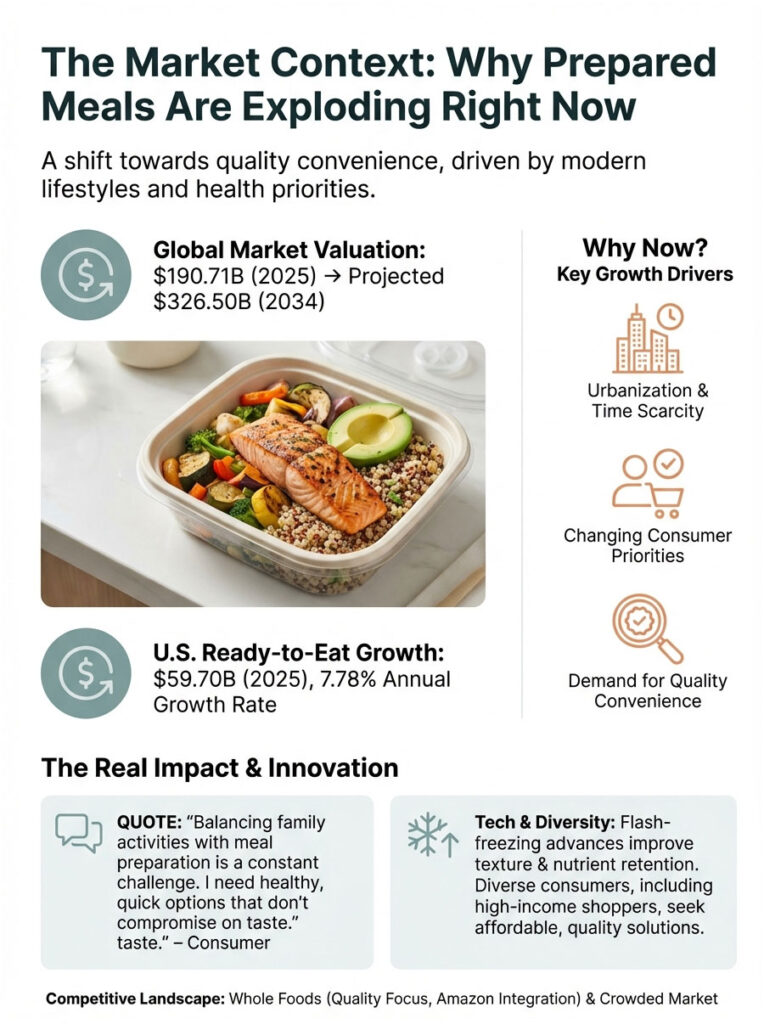
The global prepared meals market was valued at $190.71 billion in 2025 and is projected to grow to $326.50 billion by 2034, exhibiting a 6.11% CAGR. That’s explosive growth driven by fundamental lifestyle changes.
In the United States specifically, the Ready-to-Eat Meals market amounts to $59.70 billion in 2025, expected to grow annually by 7.78%.
Why the boom? Three big drivers:
Urbanization and time scarcity: Rising urbanization, higher female workforce participation, and evolving household structures have significantly boosted demand, with ready-meal sales growing approximately 6-7% annually in the U.S. between 2019 and 2023.
Consumer priorities shifting: People aren’t just buying convenience — they’re demanding quality convenience. The days of accepting terrible-tasting frozen dinners are over.
Technology improvements: Flash-freezing technology preserves cellular structure in proteins and vegetables, reducing texture degradation that historically limited frozen meal acceptance. Better preservation means better taste.
Who’s Actually Buying These Meals?
The stereotype might be wealthy professionals too busy to cook, but the reality is more nuanced.
Whole Foods executives note that “all consumers” have become more value-oriented and mindful of spending — even folks that have the means. Translation: even high-income shoppers are looking for affordable convenience.
The sweet spot users include:
- Busy parents (obviously) juggling kids’ activities
- Dual-income households where both partners work full-time
- Single professionals who want home-cooking quality without the effort
- Older adults seeking easier meal solutions
- Anyone in a transitional phase — new baby, moving, recovering from illness
One reviewer perfectly captured this: “How hard is it to boil some spaghetti, throw some marinara and frozen meatballs with it? Quite, it turns out, if you have five kids and three sports activities and a parent teacher conference and a meeting that ran late after work on a Tuesday.”
Competitive Landscape: Everyone Wants This Customer
Whole Foods faces increasing competition:
- Traditional grocers: Kroger and regional chains maintain strong standings in fresh, ready meals and convenience
- Meal kit services: The meal kit delivery services market was $32.8 billion in 2024, projected to reach $77.6 billion by 2033
- Restaurant partnerships: Some grocers partner with restaurants for prepared meal sections
- Ghost kitchen concepts: Cloud kitchens selling through grocery retailers
Whole Foods differentiates through ingredient quality and the Amazon ecosystem connection, but they’re fighting for share in a crowded field.
Real User Experiences: What Customers Are Actually Saying
Time to cut through the marketing and hear from people actually using these meals weekly.
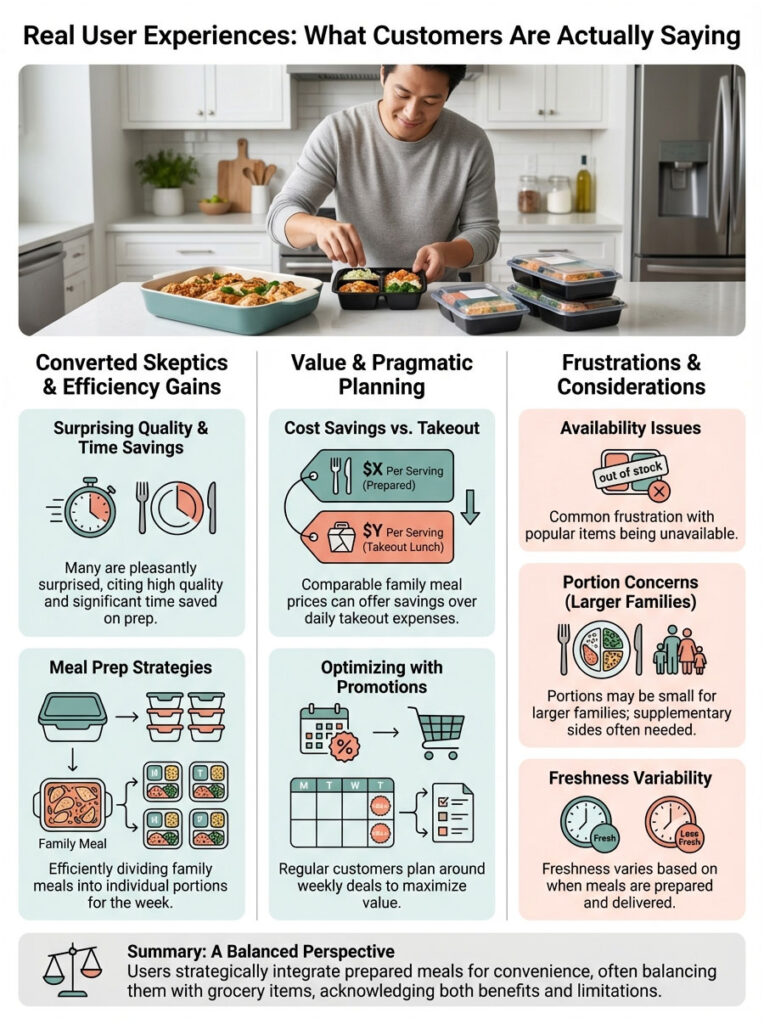
The Converted Skeptics
The most interesting reviews come from people who thought they’d never buy prepared meals.
One parent wrote: “As a thrifty parent and one with some basic cooking abilities, I never thought I’d love Whole Foods’ family meals so much, but here we are.”
This sentiment repeats across reviews — people surprised by the quality and how much time it actually saves. The classic “I was wrong about this” admission.
The Meal Prep Hackers
Social media shows a clever use case: buying the $35 family meal and dividing it into individual meal prep containers for the week.
Users mention the $35 family meal provides 4 meals worth of portions, making it useful for meal planning and preparation. At $8.75 per serving, that’s competitive with DIY meal prep when you factor in time and ingredient costs.
One TikTok user explained they use these for lunch meal prep, getting 4 days of work lunches from one tray. That’s actually smart budgeting for corporate workers spending $12-15 daily on takeout lunch.
The Disappointed Expectations
Not everyone’s thrilled. Some common complaints:
Availability issues: “Find our Family Meals out alongside our Prepared Foods or contact your local store for availability” — that uncertainty drives people crazy. Nothing’s worse than planning dinner around picking up a family meal, only to find they’re sold out or not available at your location.
Portion concerns: Some reviewers note that “family of four” is optimistic. For families with teenagers or big eaters, you might need to supplement with extra sides or bread.
Freshness variability: Quality depends on when meals were prepared. Early in the day = fresher. Late evening = potentially sitting for hours.
The Pragmatic Regular Users
The most balanced reviews come from people using these strategically, not as a complete grocery solution.
Whole Foods offers deals associated with different days of the week, such as deals on family meals like salads or rotisserie chickens on Tuesdays. Smart shoppers build their rotation around these promotions.
Common use patterns:
- Once weekly “backup” meal for chaotic nights
- Tuesday rotation when they’re on sale
- Supplementing with homemade sides or salad
- Combining with other Whole Foods shopping to maximize trip value
Maximizing Value: Pro Tips for Getting the Most from Family Meals
If you’re going to do this, here’s how to do it right.
Timing Your Purchase for Maximum Freshness
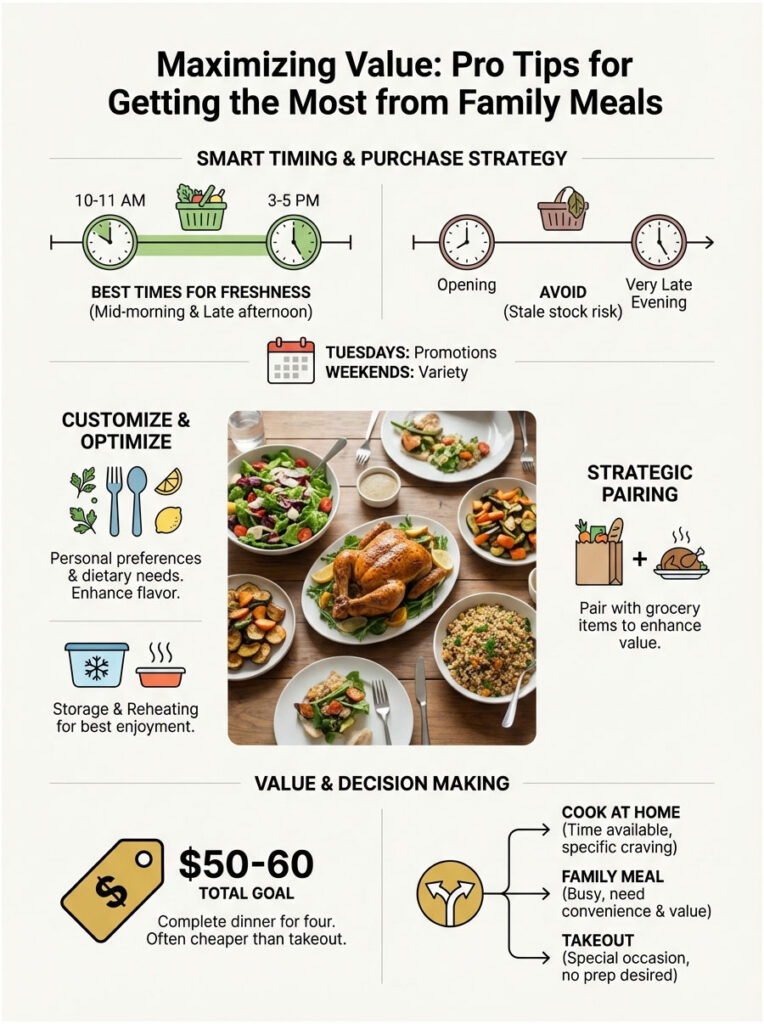
Best times: Mid-morning (10-11 AM) after fresh batch preparation, or late afternoon (3-5 PM) when dinner prep ramps up.
Worst times: Right at opening (yesterday’s stock), very late evening (been sitting all day).
Day of week matters: Tuesdays often have promotions on prepared foods. Weekends see higher turnover and more variety.
Customization Secrets
When building your own meal:
- Ask about freshest proteins: Don’t be shy — ask the counter staff which proteins just came out
- Mix hot and cold sides strategically: Hot sides been sitting? Choose cold prep items
- Request extra sauce or seasoning: Usually they’ll throw in a side of sauce if you ask
- Consider split portions: If you’ve got picky eaters, ask if they can split sides (half mashed potatoes, half rice)
Storage and Reheating Optimization
If not eating immediately:
- Refrigerate within 30 minutes of purchase
- Consume within 2-3 days for best quality
- Freeze is possible but texture suffers (especially vegetables)
Reheating for best results:
- Remove from aluminum tray if possible (better heat distribution)
- Cover with foil first 15 minutes, uncover last 10 for some browning
- Add fresh herbs or lemon right before serving for brightness
- Let rest 3-5 minutes after heating for even temperature
Strategic Pairing with Other Grocery Items
Make the trip worth it:
- Grab a bagged salad to stretch the meal ($3-5)
- Add fresh fruit for dessert ($5-8)
- Pick up bread from bakery section ($4-6)
- Get 365 brand wine if you drink ($6-12)
Total: $50-60 for a complete dinner with drinks and dessert for four. Still cheaper than takeout.
When to Choose This Over Alternatives
Use Whole Foods family meals when:
- You’ve got less than 45 minutes to get food on table
- You’re juggling multiple commitments that evening
- You want healthier ingredients than typical takeout
- You’re already shopping at Whole Foods anyway
- You value your evening time over cooking
Skip in favor of home cooking when:
- You’ve got 90+ minutes and actually enjoy cooking
- You’re feeding 6+ people (portions won’t stretch)
- You’re on a very tight budget
- You’re following a restrictive diet
- You have batch-cooked meals in the freezer already
Choose takeout instead when:
- You want cuisine Whole Foods doesn’t offer (Mexican, Thai, etc.)
- It’s a special occasion or celebration
- You’re truly exhausted and can’t even reheat
- You’re supporting a local restaurant you love
The Bigger Picture: What This Says About American Food Culture
Step back for a minute. The fact that $35 prepared meals from Whole Foods are successful tells us something about where we are as a society.
The Time Famine Reality
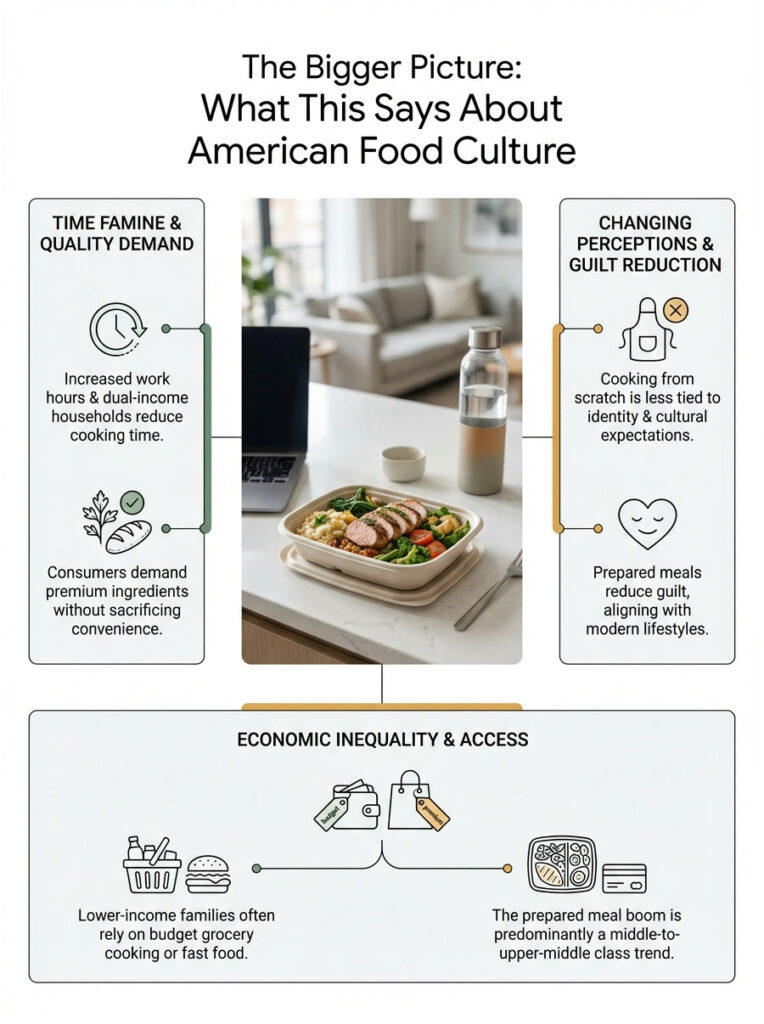
Americans are working more hours than previous generations. Emerging consumer purchasing power, expanding urbanization, and increased women’s employment rate drive market growth significantly.
Both partners working full-time is now the norm, not the exception. The 1950s model of one person handling all domestic labor simply doesn’t exist for most families. Something has to give, and increasingly, it’s from-scratch cooking.
This isn’t laziness — it’s mathematics. There are only so many hours in the day.
The Ingredient Quality Awakening
Here’s what’s fascinating: people are willing to pay premiums for better ingredients while still wanting convenience.
According to Whole Foods’ food ingredient standards, you won’t find partially hydrogenated oils, synthetic colors like Yellow No. 5, or artificial preservatives in their prepared foods.
A generation ago, convenience meant accepting lower quality. Now, consumers demand both. And companies that can deliver clean-ingredient convenience are winning.
The Decline of “Cooking as Identity”
There’s less cultural pressure to prove you’re a “good parent” or “good spouse” by cooking elaborate meals from scratch. The Instagram-perfect #foodie culture exists alongside a growing acceptance that sometimes, dinner from a tray is perfectly okay.
This shift reduces guilt and makes prepared meals psychologically easier to embrace.
Economic Inequality in Food Access
Let’s be real: $35 for a family meal is accessible to some households and completely out of reach for others. The prepared meal boom is largely a middle-to-upper-middle class phenomenon.
Lower-income families are more likely to rely on fast food or truly budget grocery cooking because they simply can’t justify the convenience premium, even if it would save them time.
This creates a weird dynamic where time-savings solutions are available to those who arguably need them least, while those juggling multiple jobs with less income can’t access the same conveniences.
Future Trends: Where This Category Is Headed
Based on market research and industry movements, here’s what’s coming.
Technology Integration
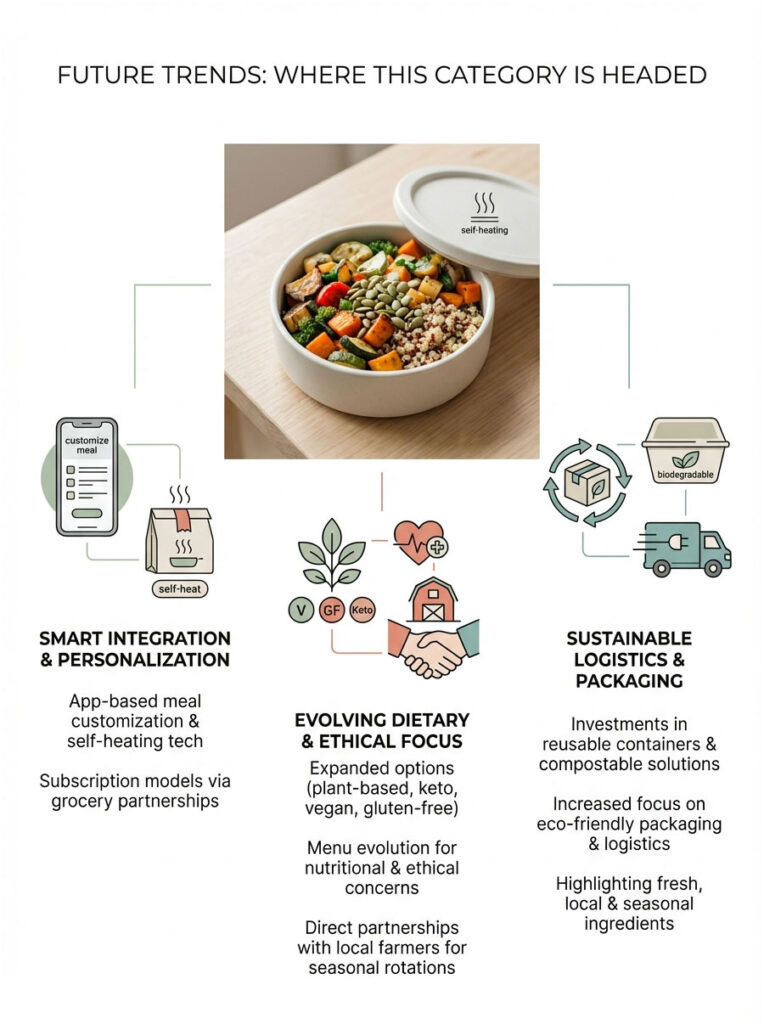
Self-heating packaging technology achieved mainstream retail adoption in 2024, with major grocery chains allocating dedicated shelf space for these products. Imagine family meals that heat themselves without needing an oven.
Expect more app-based customization, where you order ahead through the Whole Foods app and your meal is ready for pickup.
Expanded Dietary Options
Growing demand for plant-based, vegan, and functional chilled prepared food to satisfy nutritional and ethical concerns means we’ll see more vegetarian and vegan family meal options.
Gluten-free, keto-friendly, and allergen-conscious options will expand as demand increases.
Subscription Models
Some grocers are testing subscription services for prepared meals — pay a monthly fee, pick up pre-selected family meals 2-3 times per week. Whole Foods could easily implement this through Amazon Prime integration.
Local and Seasonal Emphasis
Expect more farmer partnerships and seasonal menu rotations. The generic year-round menu will evolve toward highlighting what’s fresh and local, changing monthly or quarterly.
Sustainability Focus
Investment priorities focus on sustainable packaging, premium chilled offerings, and expanding cold-chain logistics for omnichannel distribution. Single-use plastic containers are already drawing criticism. Expect reusable container programs or compostable packaging innovations.
The Verdict on Whole Foods Family Meals
So here we are, after testing these meals for months, crunching the numbers, and comparing them to every alternative. What’s the actual answer?
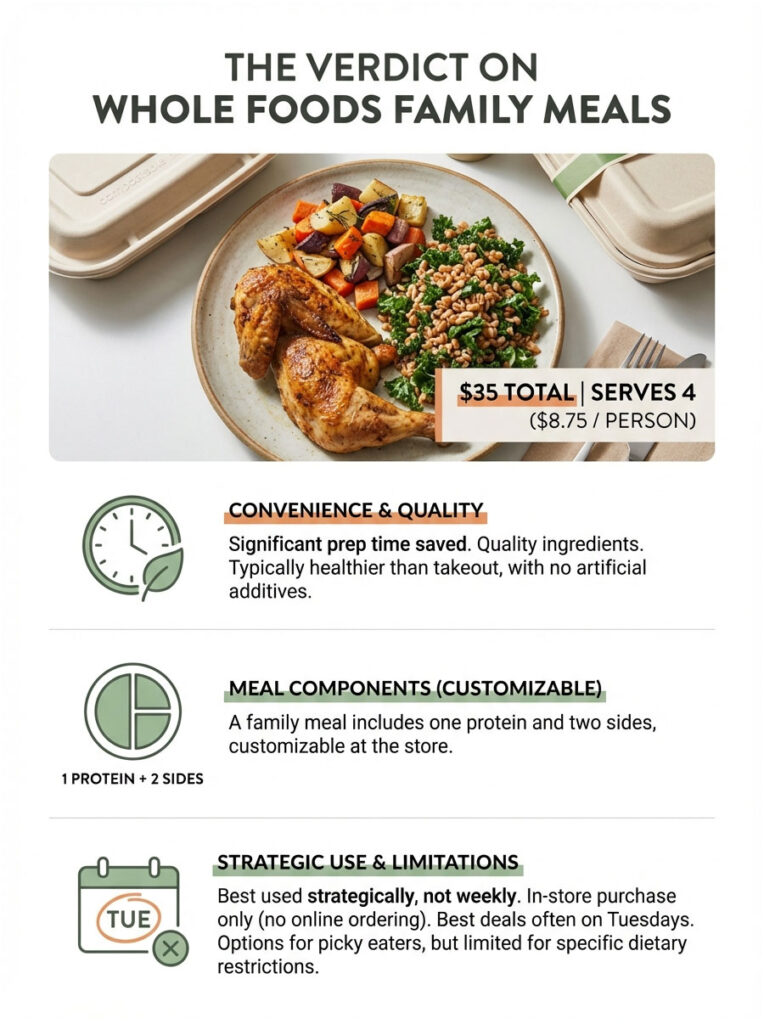
Whole Foods family meals are expensive convenience done well. They’re not cheap. They’re not trying to be. At $8.75 per person, you’re paying double what smart home cooking costs and half what restaurant delivery runs.
But here’s what you’re actually paying for: 45-75 minutes of your evening back, ingredients you can pronounce, and the mental relief of not having to plan, shop, and orchestrate dinner on your hardest days. For some families, that’s worth every penny. For others, it’s an occasional luxury or emergency backup.
The sweet spot? Use these strategically, not exclusively. Keep one in rotation for your weekly chaos night — that Tuesday when you’ve got three kid activities, a late work meeting, and approximately zero bandwidth for cooking. Build the cost into your monthly budget as a sanity-preservation expense, not a weekly norm.
And honestly? There’s something quietly revolutionary about a major grocery chain acknowledging that sometimes, we’re all just too damn tired to cook, and that’s okay. The fact that you can feed your family real food with recognizable ingredients while still having energy left for homework help or a decent conversation — that’s not nothing.
Whether Whole Foods family meals work for you depends less on the food itself and more on what you value. If you’re optimizing purely for cost, cook at home. If you’re optimizing for variety and excitement, get takeout. But if you’re optimizing for that precious middle ground of good-enough quality, reasonable cost, and maximum time savings — well, you might just find yourself becoming one of those people who swore they’d never buy prepared meals but now keeps Tuesday nights open for a Whole Foods run.
Frequently Asked Questions
What exactly comes in a Whole Foods family meal, and how many people does it serve?
A Whole Foods family meal includes one protein and two homestyle sides for $35, designed to serve a family of four. You can customize your selections at the prepared foods counter by choosing from proteins like grilled chicken, salmon, meatloaf, or breaded cutlets, along with sides such as mashed potatoes, vegetables, rice, or pasta. For single diners, there’s a smaller portion available for $13. The meals come in oven-ready aluminum trays that require 20-30 minutes of heating before serving.
Are Whole Foods family meals actually healthier than regular takeout or frozen dinners?
Yes, they typically offer better ingredient quality than conventional options. Whole Foods standards prohibit over 300 preservatives, flavors, colors, sweeteners and other ingredients commonly found in food. You won’t find artificial colors, partially hydrogenated oils, or heavily processed additives. The meals generally contain 400-600 calories per serving with whole food ingredients you can recognize. However, they do contain moderate sodium levels (600-900mg per serving), which is higher than home cooking but lower than most restaurant meals.
How do Whole Foods family meals compare in price to cooking at home or ordering delivery?
At $8.75 per person ($35 divided by 4), Whole Foods family meals fall between home cooking and restaurant delivery. Home-cooked meals using grocery ingredients typically cost $5-7 per person when shopping sales, while restaurant delivery runs $12-20 per person. Smart shoppers can cook meals for around $6.40 per family of four by buying ingredients on sale, but that requires significant time investment. You’re paying roughly $7 extra per person for the convenience compared to DIY cooking, but saving $4-11 per person compared to takeout.
Can I order Whole Foods family meals online for delivery, or do I have to go to the store?
You must visit a physical Whole Foods location. Build Your Own Family Meals and prepacked meals are offered in stores only, not available through online ordering or delivery services. You’ll find them in the prepared foods section, typically near the deli counter or hot food bar. Availability varies by location and time of day, so some shoppers report difficulty finding them consistently. It’s worth calling ahead if you’re planning dinner around picking up a family meal.
How long do Whole Foods family meals last in the refrigerator, and can they be frozen?
Prepared family meals should be refrigerated within 30 minutes of purchase and consumed within 2-3 days for optimal freshness and safety. While technically you can freeze them, it’s not recommended — the texture of vegetables and starches deteriorates significantly during freezing and thawing. If you do freeze, expect mushier vegetables and grainier starches. The meals reheat best in a conventional oven at 350°F for 20-30 minutes, though some people successfully use air fryers for portions to restore crispiness.
What day of the week offers the best deals on Whole Foods family meals?
Whole Foods offers deals associated with different days of the week, such as deals on family meals like salads or rotisserie chickens on Tuesdays. Tuesday has become known among regular shoppers as the best day for prepared food specials. Additionally, Friday promotions sometimes include pizza and seafood deals. The specific promotions can vary by location, so check your local store’s weekly ad or ask prepared foods staff about which days feature family meal discounts. Shopping the weekly sales calendar can save you $5-10 per meal.
Are Whole Foods family meals suitable for picky eaters or young children?
Results vary based on your family’s preferences. The customization option is a major advantage — you can choose familiar proteins like chicken tenders or meatballs paired with kid-friendly sides like mashed potatoes or plain rice. Many families with multiple children successfully use these meals, though some note they may need to add extra seasoning for adults or plainer options for kids. The ingredient quality means fewer artificial flavors that some kids react to. However, if your children only eat very specific brands or preparations, the unfamiliarity might cause rejection.
How do Whole Foods family meals compare to Costco’s prepared food options?
Costco offers significantly better value but requires more prep work. Costco delivers bulk value, premium meat quality, strong bakery and deli, and prepared foods that regularly outperform full-service supermarkets. A Costco rotisserie chicken plus prepared sides costs roughly $15-25 total versus Whole Foods’ $35. However, Costco requires an annual membership ($60-120), and their prepared items often need supplementing — you might buy a rotisserie chicken but still need to make your own sides or add vegetables. Whole Foods provides a complete, balanced meal in one package with cleaner ingredients, while Costco optimizes for maximum value and quantity.
Can I meal prep using Whole Foods family meals for the whole week?
Absolutely, and many people do exactly this. The $35 family meal provides 4 meal-sized portions that can be divided into individual containers for weekly meal planning. At $8.75 per portion, this competes with homemade meal prep when you factor in shopping and cooking time. The strategy works especially well for lunch meal prep — buy a family meal, divide into 4 containers, and you’ve got work lunches Monday through Thursday. Quality holds for 3-4 days refrigerated. Some people buy 2-3 different family meals on Sunday and create variety throughout the week.
What should I do if my local Whole Foods is frequently out of family meal options?
Call ahead before making the trip specifically for family meals. Ask the prepared foods department what time they typically prepare new batches — most stores have a morning prep (around 10-11 AM) and an afternoon/dinner prep (3-5 PM). Shopping during or right after these times gives you the best selection and freshest options. You can also ask if they take reservations or advance orders for family meals, as some locations offer this service during busy periods. If your store consistently lacks family meal options, provide feedback to the store manager — customer demand often drives what gets stocked.
Are there any hidden costs or fees when buying Whole Foods family meals?
No hidden fees, but consider these additional costs: if you’re not already a Whole Foods shopper, you’ll need to factor in transportation to their store locations, which aren’t as ubiquitous as conventional grocers in many areas. The $35 price is the complete cost — there’s no tax on prepared foods in most states (though check your local tax laws), and there’s no delivery or service fee since you’re picking up in-store. However, to make a complete dinner, you might want to add bread ($4-6), a salad ($3-5), or drinks, which would bring your total to $45-55 for a more complete meal.
Do Whole Foods family meals work for dietary restrictions like gluten-free, dairy-free, or low-carb?
Options are limited but growing. Current family meals are designed for omnivorous, relatively balanced eating. The protein-and-two-sides model naturally provides some flexibility — you could choose salmon with double vegetables for a lower-carb option, but truly keto-friendly meals are rare. Gluten-free options exist (grilled proteins with rice and vegetables), but cross-contamination is possible in a shared prep environment. Dairy-free is challenging since many sides contain butter or cream. Demand for plant-based, vegan, and functional chilled prepared food is growing, suggesting more dietary-specific options will emerge. Currently, it’s best for standard American diet preferences.
Disclaimer
The information provided in this article is for educational and informational purposes only and should not be considered professional nutritional, medical, or financial advice. Prices, product availability, and nutritional information for Whole Foods prepared family meals may vary by location and are subject to change without notice. While we strive for accuracy based on available information and user reviews as of early 2025, readers should verify current details with their local Whole Foods Market location before making purchasing decisions. Individual dietary needs, health conditions, and financial situations vary, and readers should consult with qualified professionals before making significant changes to their meal planning or budgeting strategies. This article contains affiliate relationships and comparisons to competitive retailers for informational purposes only and does not constitute an endorsement of any particular retailer or product.
References
- Jacewicz, M. (2025, October 21). Whole Foods’ ‘Build Your Own’ Family Meal Is a Weeknight Win. Parade. Retrieved from https://parade.com/food/whole-foods-market-customizable-family-meal-2025
- Whole Foods Market. (2025). Prepared Foods. Retrieved from https://www.wholefoodsmarket.com/departments/prepared-foods
- Statista Market Insights. (2025). Ready-to-Eat Meals – United States Market Forecast. Retrieved from https://www.statista.com/outlook/cmo/food/convenience-food/ready-to-eat-meals/united-states
- Mordor Intelligence. (2025, September 7). North American Ready Meals Market – Companies, Size & Industry Analysis. Retrieved from https://www.mordorintelligence.com/industry-reports/north-america-ready-meals-market
- Fortune Business Insights. (2025). Prepared Meals Market Size, Share & Trends Analysis Report 2025-2034. Retrieved from https://www.fortunebusinessinsights.com/prepared-meals-market-105002
- Grand View Research. (2024). Meal Kit Delivery Services Market Size & Share Report 2024-2033. Retrieved from https://www.grandviewresearch.com/industry-analysis/meal-kit-delivery-services-market
- The Brainy Insights. (2024). Prepared Meals Market Size, Share & Latest Trends Analysis Report 2024-2033. Retrieved from https://www.thebrainyinsights.com/report/prepared-meals-market-13568
- Persistence Market Research. (2025). Prepared Meals Market Share & Growth Trends Analysis 2025-2032. Retrieved from https://www.persistencemarketresearch.com/market-research/prepared-meals-market.asp
- Modern Retail. (2025, October 1). Whole Foods exec says even high-income shoppers are now more cost-conscious. Retrieved from https://www.modernretail.co/operations/whole-foods-exec-says-even-high-income-shoppers-are-now-more-cost-conscious/
- Cubby at Home. (2025, March 25). I Tried Whole Foods’ Prepared Family Meals, and Did Not Expect the Result. Retrieved from https://www.cubbyathome.com/whole-foods-family-meals-80041826
- Grocery Trade News. (2025, November 25). Best Grocery Stores In 2025: Who Really Leads On Quality and Value? Retrieved from https://www.grocerytradenews.com/best-grocery-stores-in-2025/
- Daily Meal. (2025, October 5). 8 Things Trader Joe’s Does Better Than Costco. Retrieved from https://www.thedailymeal.com/1981082/things-trader-joes-does-better-than-costco/
- The Kitchn. (2019, October 9). This Whole Foods Haul Cost Just Under $135 — And I Turned It into Almost 21 Meals for a Family of Four. Retrieved from https://www.thekitchn.com/whole-foods-haul-family-meal-plan-22944655
- Polaris Market Research. (2025). Ready Meals Market Size Report 2025-2034. Retrieved from https://www.polarismarketresearch.com/industry-analysis/ready-meals-market
- SNS Insider. (2025). Prepared Meals Market Size, Share & Growth Report 2025-2032. Retrieved from https://www.snsinsider.com/reports/prepared-meals-market-8460