
The primary difference between Motrin and ibuprofen is branding and price. Motrin is a proprietary brand name owned by Johnson & Johnson. Ibuprofen is the generic name for the active drug molecule. Chemically, they are identical. Both contain the same active ingredient and provide the same pain relief. The only real variations are in inactive ingredients (fillers, dyes, coatings), which affect cost and allergic tolerability but not clinical effectiveness.
Table of Contents
You’re standing in the pain relief aisle at your local pharmacy. In one hand, a box of Motrin IB at $14.99. In the other, store-brand ibuprofen at $4.99. You look back and forth between the packages, wondering if those extra ten dollars buy you faster relief, fewer side effects, or a better quality drug.
I see this scenario play out almost every day in my practice. Patients ask if the generic version is “watered down” or if the brand name is “cleaner.” They want to know if the difference between Motrin and ibuprofen justifies the price tag.
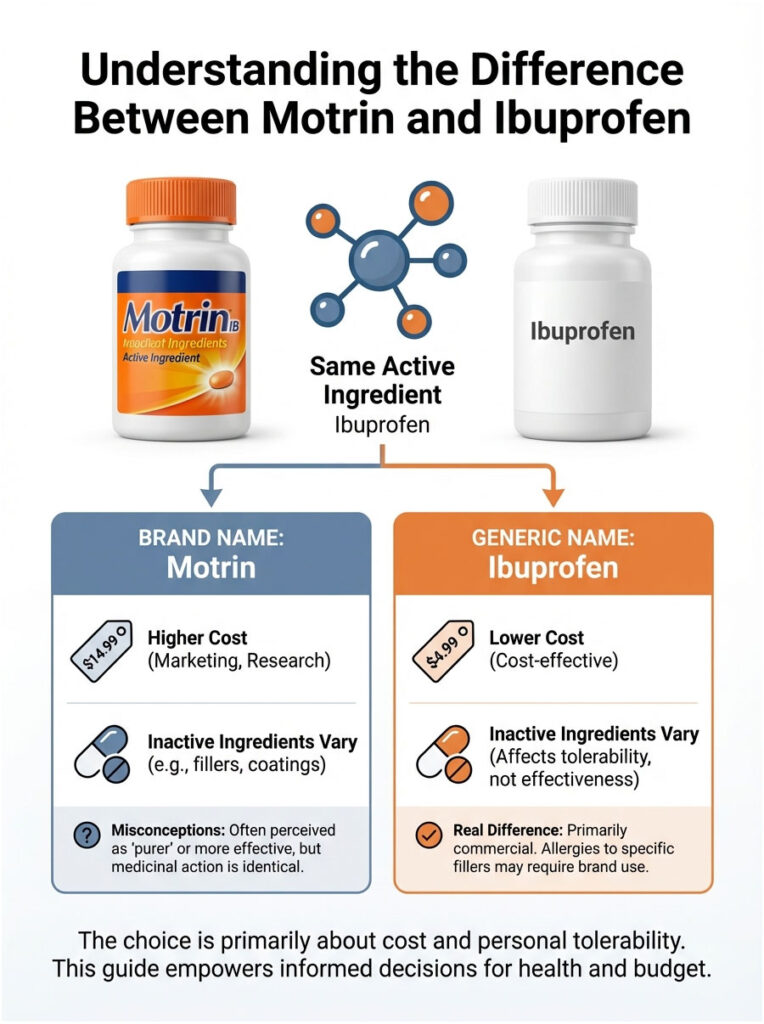
Here’s the reality: the distinction is almost entirely commercial, not medicinal. However, for a small percentage of people with specific allergies or sensitivities, the subtle manufacturing differences do matter. This guide will help you understand exactly what you’re swallowing so you can make the right choice for your body and your wallet.
Key Facts at a Glance
- Active Ingredient: Identical (Ibuprofen 200mg) in both formulations.
- Cost Difference: Brand-name Motrin can cost 300-400% more than generic equivalents.
- FDA Standard: Generics must meet a strict 80-125% bioequivalence confidence interval (actual variance is usually under 4%).
- Daily OTC Limit: 1,200mg for both (applies equally).
- Absorption Time: Standard tablets for both typically take 30-60 minutes to work.
- Global Usage: Ibuprofen appears on the WHO Model List of Essential Medicines.
The Pharmacology: How Both Drugs Work
To understand why these drugs are interchangeable, we need to look at the molecule itself. Whether the pill is stamped “Motrin” or a generic code, the chemical doing the work is identical.
The Active Molecule
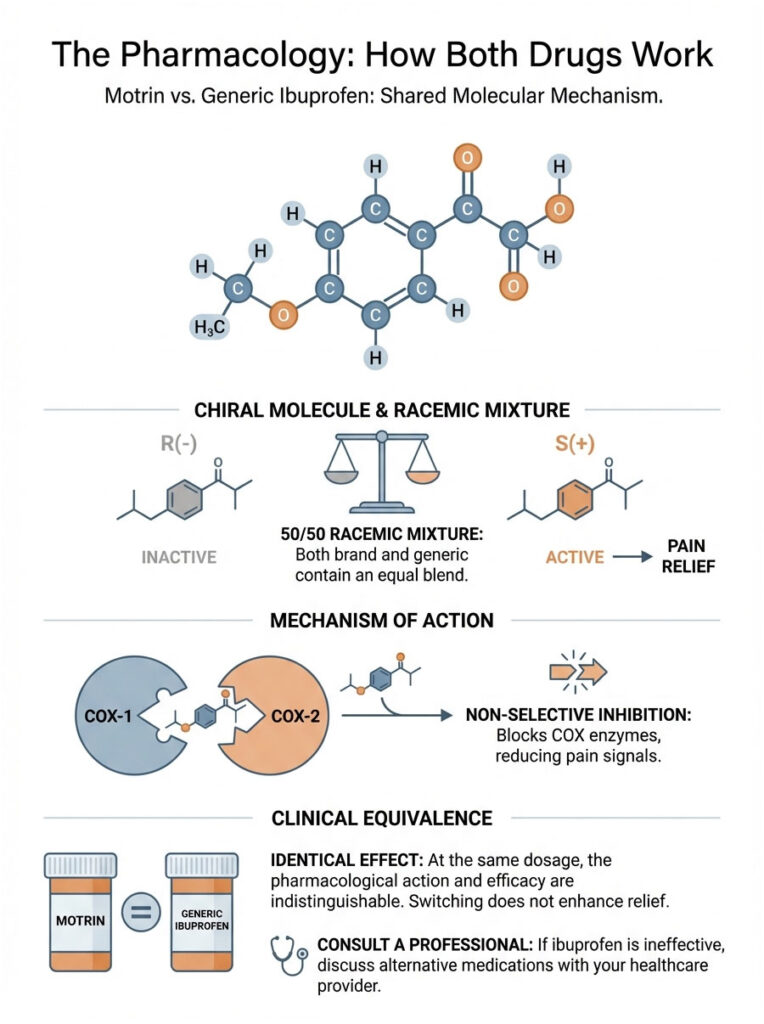
Ibuprofen is a nonsteroidal anti-inflammatory drug (NSAID), specifically a propionic acid derivative. Its molecular formula is C13H18O2. This structure doesn’t change based on the logo on the bottle.
Think of the active ingredient as the engine of a car. Whether you put that engine in a luxury chassis (Motrin) or a budget chassis (generic), the horsepower stays the same. The API in Motrin is not “purer” or “stronger” than the API in a generic manufactured by a reputable company like Perrigo or Dr. Reddy’s.
Chirality and Stereochemistry
Ibuprofen is a chiral molecule. It exists as two mirror-image forms: S(+)-ibuprofen and R(-)-ibuprofen. The S-enantiomer is the pharmacologically active part that stops pain. The R-enantiomer is largely inactive but gets converted by your body into the S-form over time.
Both Motrin and standard generic ibuprofen are sold as “racemic mixtures,” a 50/50 blend of both forms. There’s no difference in stereochemistry between the brand and the generic. You get the exact same ratio of active molecules in every tablet.
COX Inhibition: How Pain Relief Happens
Once the tablet dissolves and ibuprofen enters your bloodstream, your body can’t tell the difference between Motrin and generic ibuprofen. Both non-selectively inhibit Cyclooxygenase-1 (COX-1) and Cyclooxygenase-2 (COX-2) enzymes, which produce prostaglandins. Prostaglandins are the lipid compounds that signal pain, fever, and inflammation. By blocking the enzymes that create them, ibuprofen reduces the signal.
Because the molecule is identical, the degree of enzyme inhibition is indistinguishable between brand and generic at the same dosage.
Pharmacist Insight: If you take 400mg of Motrin and don’t get relief, switching to 400mg of generic ibuprofen won’t help either. The limitation is the drug molecule itself, not the brand. You may need a different class of medication entirely.
FDA Regulatory Standards: Can You Trust Generics?
Many patients worry that generics are allowed to be “mostly” the same but not “exactly” the same. This comes from a misunderstanding of FDA statistics.
What Bioequivalence Really Means
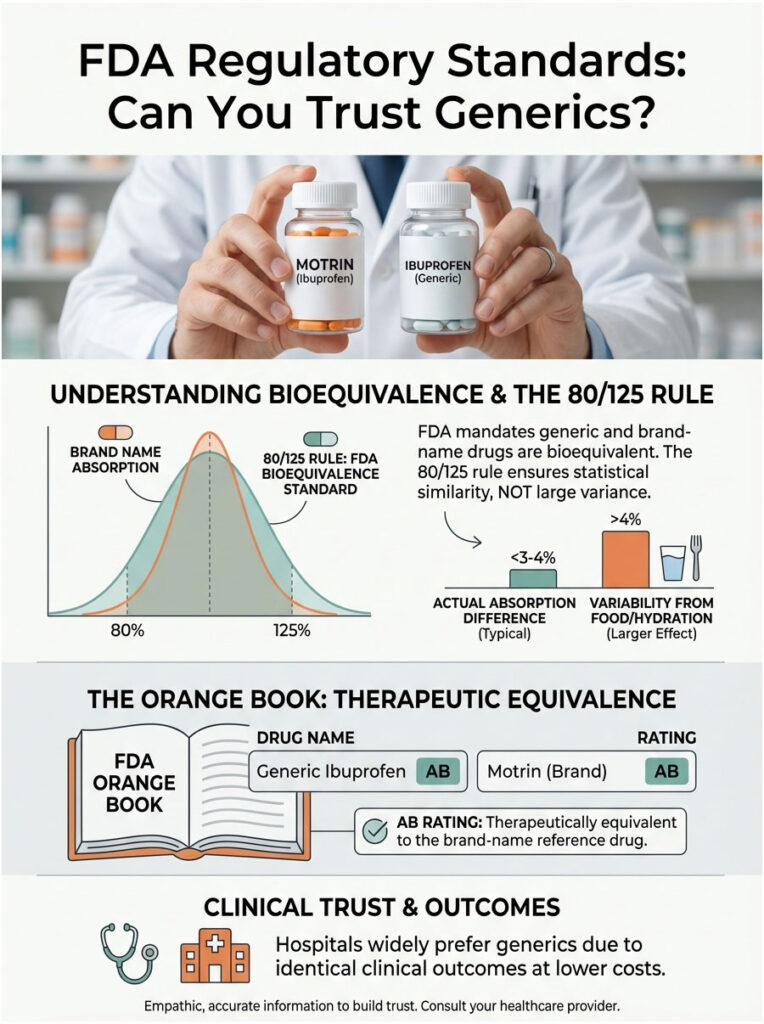
The FDA requires generic drugs to be bioequivalent to the brand name, meaning the generic must deliver the same amount of active ingredient into the bloodstream in the same timeframe.
You may have heard of the “80/125 rule.” This states that the 90% confidence interval for the generic-to-brand absorption ratio must fall between 80% and 125%. Critics claim this means a generic could be 20% weaker. In reality, this is a statistical parameter about study design, not the pill itself. The actual absorption difference between a brand-name NSAID and a generic is typically less than 3-4%. That’s clinically negligible. Your body processes the variation from food or hydration levels more significantly than the variance between these pills.
The FDA Orange Book
Pharmacists use a resource called the “Approved Drug Products with Therapeutic Equivalence Evaluations,” commonly known as the Orange Book. Generic ibuprofen carries an “AB” rating, meaning actual data has demonstrated therapeutic equivalence to Motrin.
This is why hospitals almost exclusively use generic ibuprofen. When a doctor writes an order for “Motrin,” the pharmacy automatically substitutes the generic because the therapeutic outcome is identical. Same clinical result, fraction of the price.
The Real Differences: Inactive Ingredients (Excipients)
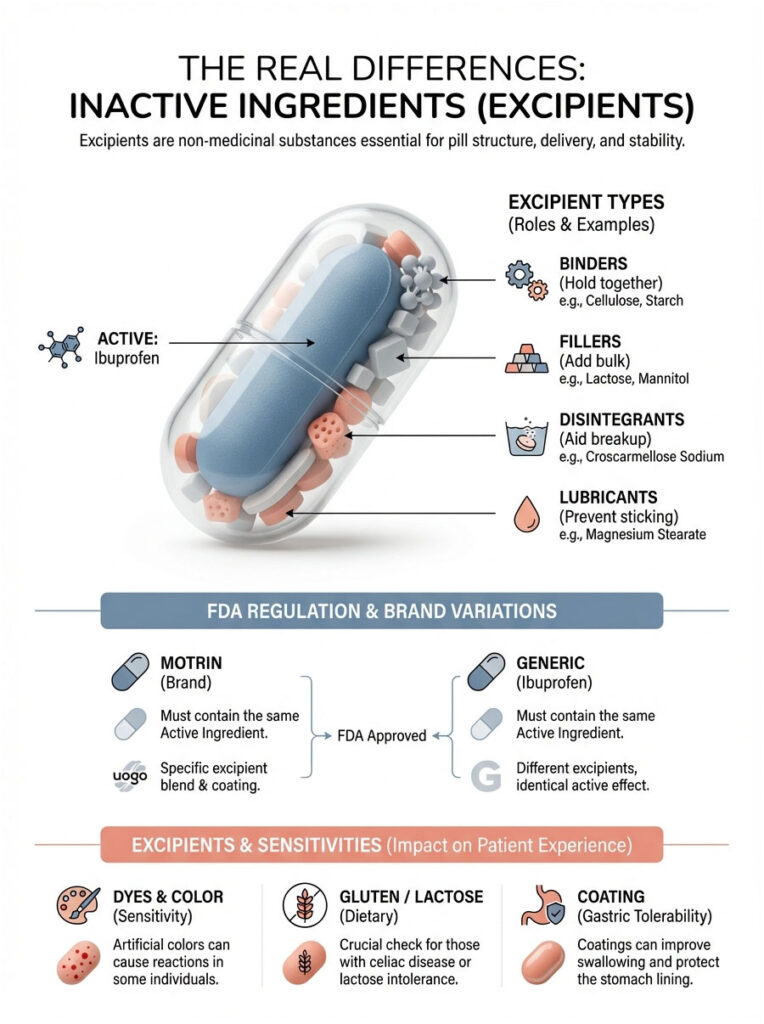
If the active ingredient is the same, what actually makes them different? The difference between Motrin and ibuprofen comes down to excipients, the inactive ingredients used to bind the pill, coat it, and give it color.
What Are Excipients?
Excipients include binders, fillers, disintegrants, and lubricants. The FDA does not require these to match the brand name. This is the only area where a legitimate difference exists.
For example, Motrin might use carnauba wax and corn starch, while a generic uses silicon dioxide and pregelatinized starch. For 99% of people, this doesn’t affect pain relief. But for a select few with hypersensitivities, it matters.
Impact on Tolerability and Allergies
Dyes: Motrin IB tablets are typically orange, using dyes like FD&C Yellow No. 6. Some generics are white and dye-free. If you have a sensitivity to food dyes, the generic might actually be the safer option.
Gluten and Lactose: The starch used as a binder is usually corn or potato. However, cross-contamination is a concern for those with Celiac disease. Motrin IB is often labeled gluten-free, but you should verify on the package. Generic manufacturers vary widely, so always read the inactive ingredients list.
Gastric Tolerability: The coating determines where the tablet dissolves. Some patients report that one brand upsets their stomach more than another. This is rarely due to the drug itself. It’s more often linked to how quickly the specific excipients allow the tablet to break down in stomach acid.
Head-to-Head Comparison: Motrin vs. Generic Ibuprofen
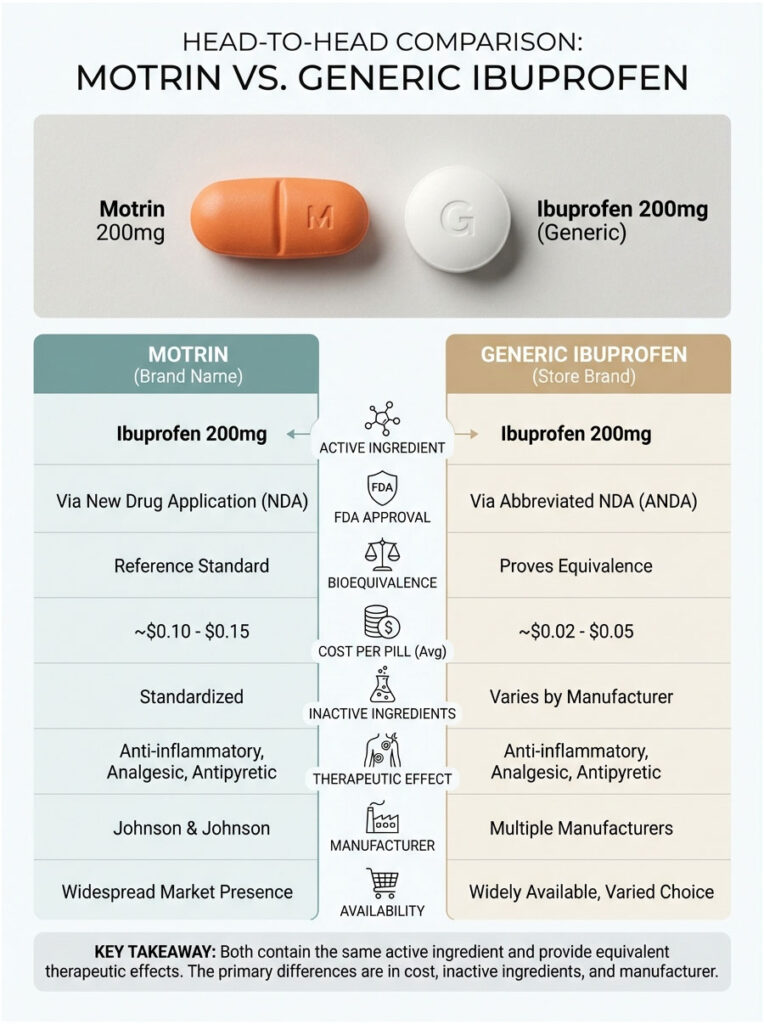
| Feature | Motrin IB (Brand) | Generic Ibuprofen |
| Active Ingredient | Ibuprofen 200mg | Ibuprofen 200mg |
| FDA Approval | New Drug Application (NDA) | Abbreviated NDA (ANDA) |
| Bioequivalence | The reference standard | Must prove equivalence to brand |
| Cost Per Pill (Avg) | $0.10 – $0.15 | $0.02 – $0.05 |
| Inactive Ingredients | Standardized (dyes, carnauba wax) | Varies by manufacturer (check label) |
| Therapeutic Effect | Anti-inflammatory, analgesic, antipyretic | Anti-inflammatory, analgesic, antipyretic |
| Manufacturer | Johnson & Johnson (single source) | Multiple (Perrigo, Dr. Reddy’s, etc.) |
Formulations and Absorption Speed: Tablets vs. Liquid-Gels
While standard tablets are interchangeable, the specific formulation you choose dictates how fast the drug works. This is where marketing often confuses patients. Motrin offers “Liquid-Gels,” but generics offer the exact same technology.
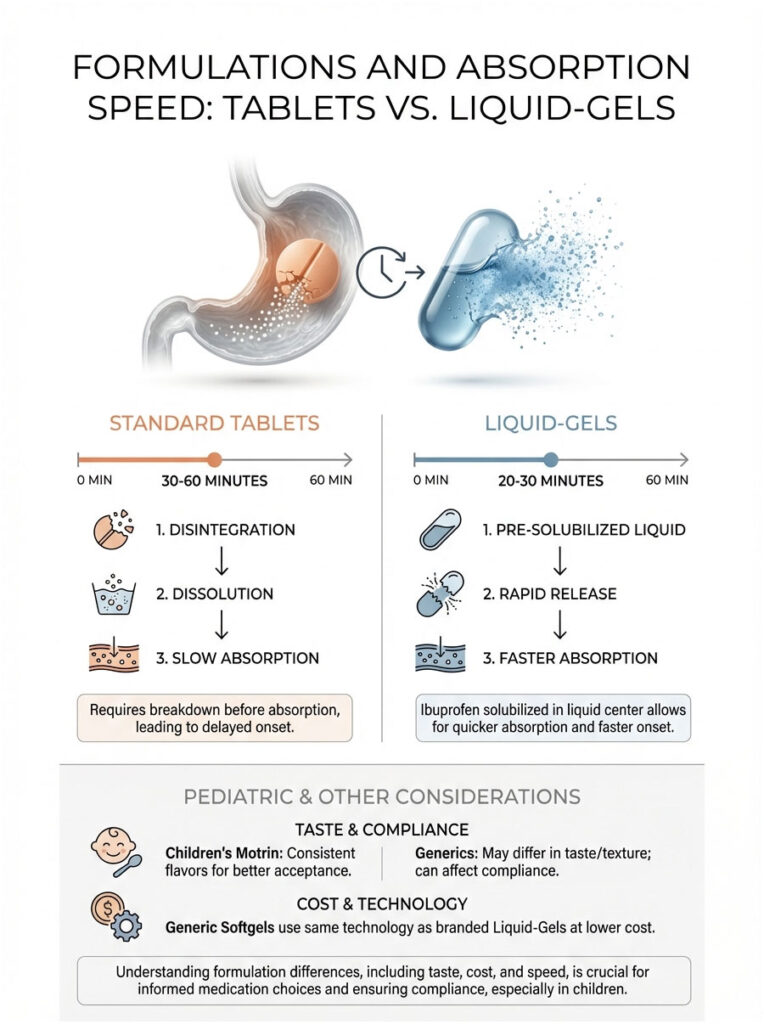
Standard Tablets vs. Liquid-Gels
Compressed Tablets: These are the standard pills. They must disintegrate into powder in the stomach, dissolve in gastric fluid, and then get absorbed. This usually takes 30 to 60 minutes.
Liquid-Gels (Solubilized Ibuprofen): The ibuprofen is already dissolved in a liquid center, often using potassium for stability. Your body skips the breakdown phase, reaching peak plasma levels significantly faster, often in 20 to 30 minutes. Generic softgels use the same technology at a lower price.
Pediatric Formulations: Taste Matters
When treating children, the difference often comes down to taste. Children’s Motrin has a very specific, consistent flavor (Berry, Bubblegum). Generic suspensions are bioequivalent but use different flavor agents. A child might refuse a generic because it feels “gritty” or tastes different. In pediatrics, the “best” medication is the one the child actually swallows. If the brand guarantees compliance, it may be worth the extra cost.
Formulation Speed Comparison
| Formulation | Active State | Onset of Action | Best For |
| Standard Tablet | Solid crystal | 30-60 minutes | General aches, maintenance |
| Liquid-Filled Capsule | Solubilized liquid | 20-40 minutes | Acute migraine, toothache |
| Chewable Tablet | Solid (crushed) | 30-45 minutes | Children, swallowing difficulty |
| Oral Suspension | Liquid suspension | 15-30 minutes | High fevers, pediatric use |
Safety Profile: The Same Risks Apply to Both
A dangerous misconception is that the brand name is safer. I’ve had patients tell me they take Motrin because “generics hurt their stomach.” This is physiologically unlikely. The safety profile is tied to the active ingredient, which is identical.
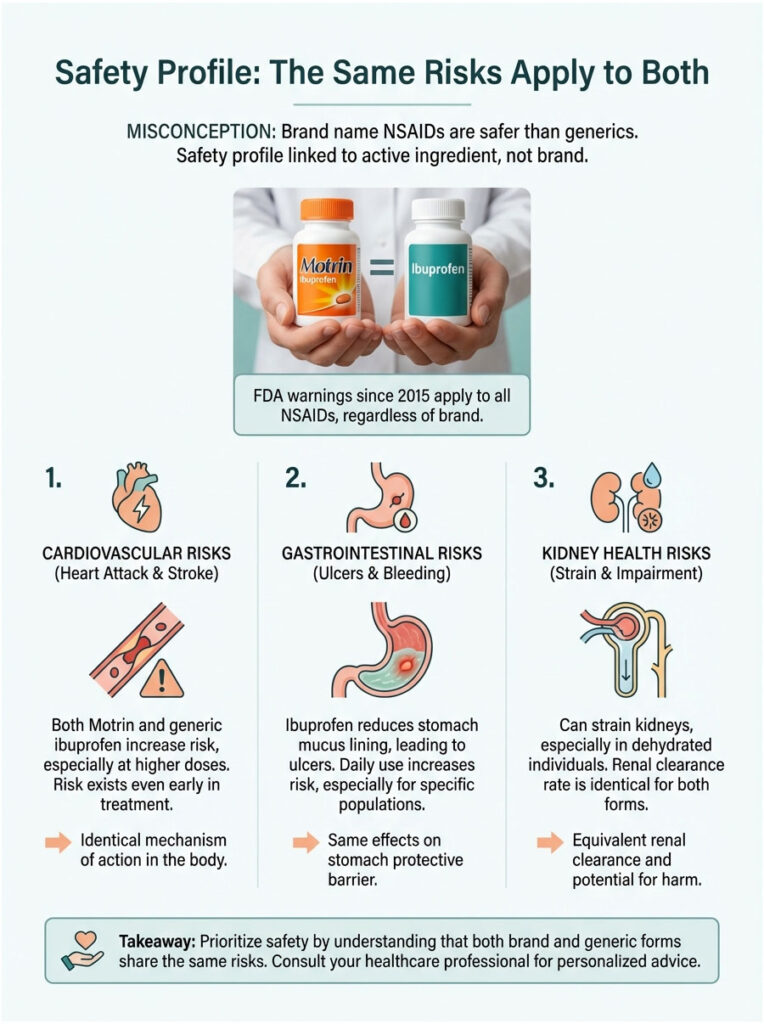
Cardiovascular Risks
Since 2015, the FDA has strengthened warning labels on all NSAIDs. Both Motrin and generic ibuprofen increase the risk of heart attack and stroke, even in the first few weeks of use. The risk goes up with higher doses and longer duration. Paying a premium for the brand does not reduce this risk.
Gastrointestinal Risks
Because ibuprofen inhibits COX-1, it reduces the protective mucus lining in the stomach. This happens regardless of the brand. Daily use puts you at risk for ulcers and bleeding, especially if you’re over 60, have a history of ulcers, or take blood thinners. Switching from generic to Motrin won’t solve stomach problems. You likely need to stop the NSAID or switch to acetaminophen.
Kidney Health
Ibuprofen constricts the blood vessel that feeds the kidney (the afferent arteriole), which can reduce blood flow and lead to strain or acute injury in dehydrated patients or those with existing kidney disease. The renal clearance is the same for both drugs. Always drink a full glass of water with every dose.
When to Use Ibuprofen: Common Clinical Scenarios
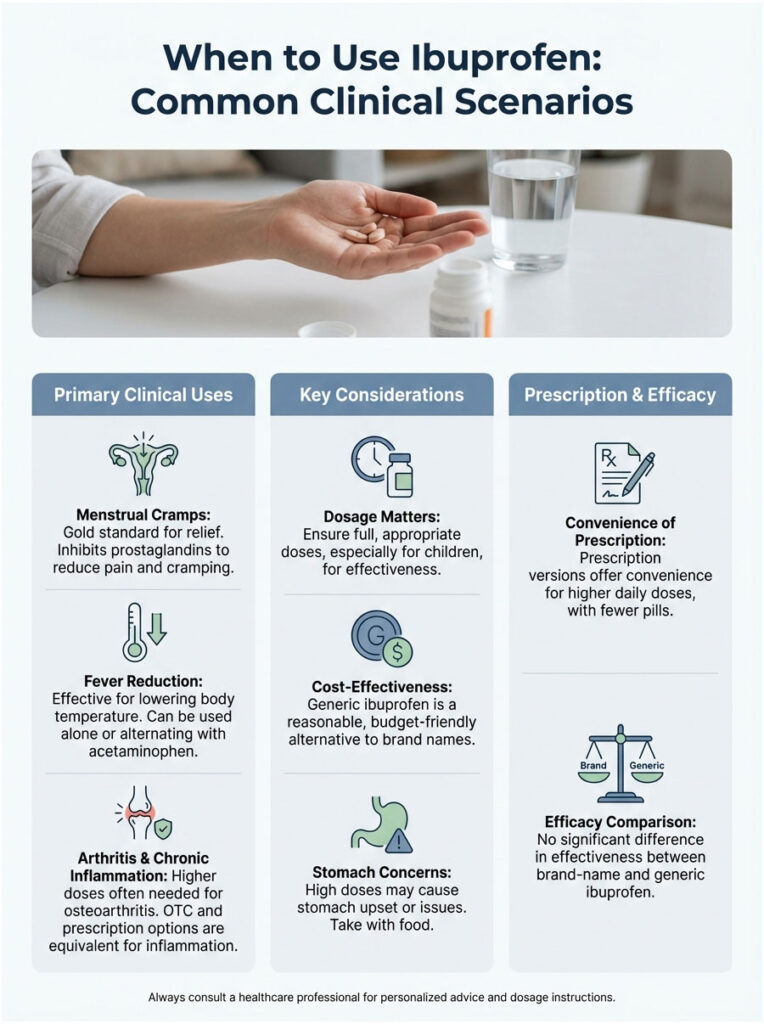
Menstrual Cramps
Ibuprofen is the gold standard for menstrual cramps because it inhibits the prostaglandins causing uterine contractions. Since the difference between Motrin and ibuprofen is non-existent regarding efficacy, generic ibuprofen is a perfectly adequate and cost-effective choice.
Fever Reduction
Ibuprofen is highly effective for fevers and can be alternated with acetaminophen every 4 to 6 hours. For adults, generic tablets work perfectly. For children, if a child spits out the generic because it tastes different, sticking with the brand may be necessary to ensure they get the full dose.
Arthritis and Chronic Inflammation
Patients with osteoarthritis often need higher doses for anti-inflammatory effect. “Prescription Motrin” is simply an 800mg tablet, exactly equivalent to four 200mg generic OTC tablets. However, taking that many pills can be tough on the stomach. Prescription versions offer convenience, but the chemical effect is the same.
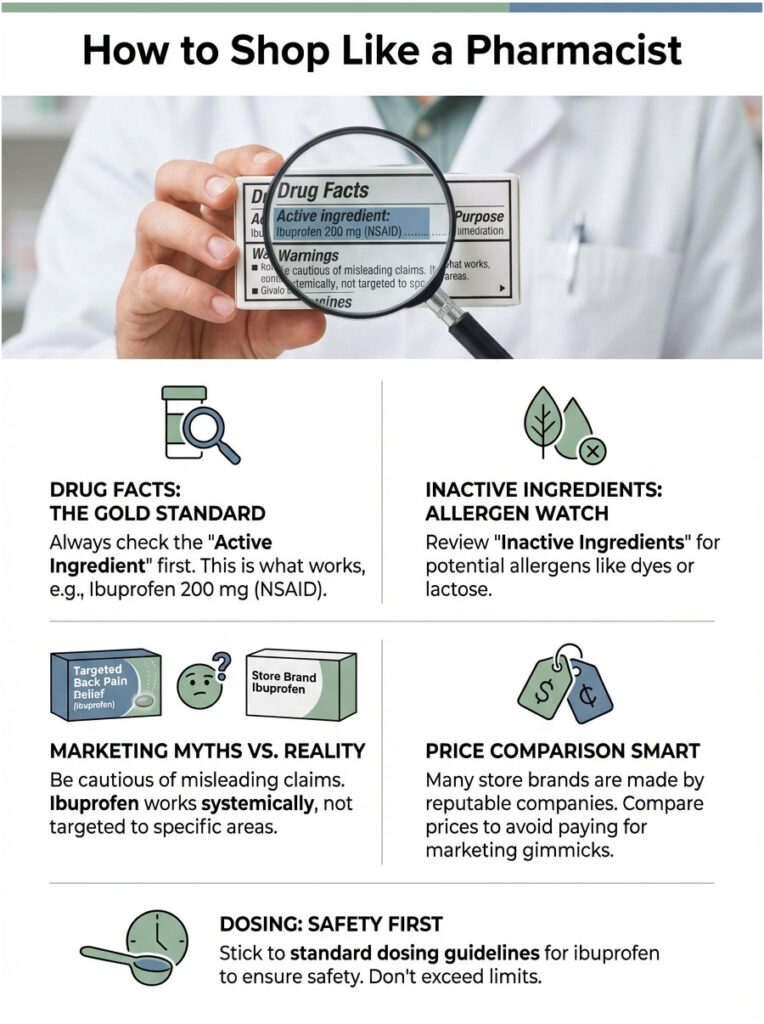
How to Shop Like a Pharmacist
Reading the Drug Facts Label
Ignore the front of the box. Flip it over. Look for “Active Ingredient: Ibuprofen 200 mg (NSAID).” If it says that, you’re getting the right drug. Next, check “Inactive Ingredients” for allergens like dyes or lactose. Many store brands (like Walmart’s Equate or CVS Health) are made by reputable pharmaceutical companies like Perrigo.
Avoiding Marketing Tricks
Watch out for packaging that says “Targeted Relief for Back Pain” or “Migraine Formula.” Ibuprofen enters systemic circulation. It goes everywhere blood flows. It doesn’t have GPS to find your back versus your knee. A “Back Pain” ibuprofen is the exact same pill as a “Headache” ibuprofen. Don’t pay extra for “targeted” marketing.
Dosing Guidelines to Remember
- OTC Limit: Do not exceed 1,200mg (6 tablets) in 24 hours unless directed by a doctor.
- Prescription Limit: Under medical supervision, the max dose is 3,200mg/day.
- The Ceiling Effect: NSAIDs have a ceiling effect. Taking more than the recommended dose doesn’t provide more relief. It only increases toxicity to your stomach and kidneys. If the max dose isn’t working, you need a different medication, not more of the same one.
Summary and Key Takeaways
The difference between Motrin and ibuprofen is a matter of marketing, not medicine. Motrin is the brand name that pioneered the drug; ibuprofen is the chemical name of the generic equivalent.
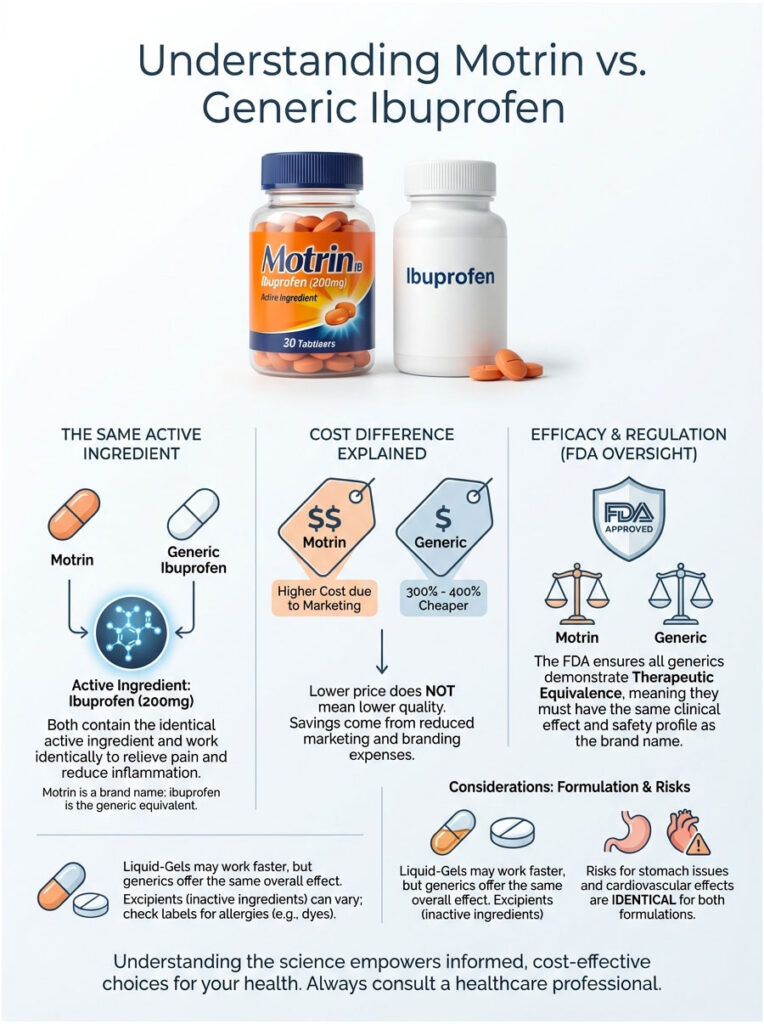
- They contain the exact same active pharmaceutical ingredient.
- They are bioequivalent and provide the same pain relief.
- Both carry the same risks for NSAID-induced gastropathy and cardiovascular events.
- Choose generic ibuprofen to save money. Choose Motrin if you prefer the specific taste (for children’s liquids) or have a known tolerance to its specific inactive ingredients.
For the vast majority of people, generic ibuprofen is the clinically logical and financially sound choice. It works just as hard as the brand name, leaving you with more money in your pocket.
Frequently Asked Questions
Is there a medical difference between Motrin and generic ibuprofen?
No, there is no clinical or medicinal difference between the two. Both contain the exact same active pharmaceutical ingredient (API), which is the ibuprofen molecule, and they work identically at the cellular level to block pain-signaling enzymes.
Why is brand-name Motrin significantly more expensive than store-brand ibuprofen?
The price discrepancy is driven by commercial factors such as marketing, brand recognition, and advertising budgets rather than the quality of the drug. Generic manufacturers can sell the same bioequivalent molecule for 300% to 400% less because they do not bear the initial drug development or promotional costs.
Does the FDA guarantee that generic ibuprofen works as well as Motrin?
Yes, the FDA requires all generic ibuprofen to demonstrate therapeutic equivalence through bioequivalence testing. This ensures the generic version delivers the same amount of the drug into the bloodstream at the same rate as the brand-name reference standard, with actual variances typically being less than 4%.
What are excipients and can they affect how I react to Motrin?
Excipients are inactive ingredients like binders, dyes, and coatings used to form the tablet. While they don’t change how ibuprofen stops pain, specific excipients like corn starch, lactose, or certain food dyes in Motrin or generics can cause issues for patients with severe allergies or sensitivities.
Do Motrin Liquid-Gels work faster than standard generic ibuprofen tablets?
Motrin Liquid-Gels contain solubilized ibuprofen, which skips the “disintegration” step in the stomach and can work in 20 to 30 minutes. However, generic liquid-filled softgels use the exact same technology and provide the same rapid onset of action as the brand-name version.
Is brand-name Motrin safer for my stomach than generic versions?
No, the risk of NSAID-induced gastropathy is identical for both. Because the active molecule is the same, both drugs inhibit the COX-1 enzyme responsible for protecting the stomach lining, meaning the risk for ulcers or irritation remains the same regardless of the brand.
Can I take generic ibuprofen if I am allergic to the dyes in Motrin IB?
Yes, many generic manufacturers produce white, dye-free ibuprofen tablets that are an excellent alternative for patients sensitive to FD&C Yellow No. 6 found in Motrin. Always check the “Inactive Ingredients” section on the drug facts label to verify the absence of specific dyes.
What is the maximum daily dose for over-the-counter ibuprofen?
The standard over-the-counter limit for both Motrin and generics is 1,200 mg per 24-hour period, which equals six 200 mg tablets. Exceeding this dose leads to a “ceiling effect” where you gain no additional pain relief but significantly increase your risk of kidney and stomach toxicity.
Should I buy Children’s Motrin or the store-brand suspension for my child?
While they are medically identical, pediatric compliance often depends on taste. If your child is highly sensitive to flavors, the specific berry or bubblegum profile of Children’s Motrin may ensure they actually swallow the full dose, which is the most important factor in reducing a fever.
Does Motrin have a different effect on heart health than generic ibuprofen?
No, all non-aspirin NSAIDs carry the same FDA black box warning regarding cardiovascular risks, including heart attack and stroke. These risks are inherent to the ibuprofen molecule’s effect on the body and are not reduced by paying more for a brand-name product.
How does renal clearance work for Motrin and generic ibuprofen?
Both medications are processed by the kidneys through a process called renal clearance. Because the drug molecule is identical, both can reduce blood flow to the kidneys; therefore, staying well-hydrated is essential for protecting your renal function regardless of which brand you choose.
Is “Migraine Formula” Motrin different from regular ibuprofen?
Generally, no. Most “migraine” or “back pain” versions of ibuprofen are simply 200 mg of the standard drug marketed for a specific use. Unless the label lists a second active ingredient like caffeine, you are paying a premium for targeted marketing on the same systemic medication.
Disclaimer
This article is for informational purposes only and does not constitute medical advice, diagnosis, or treatment. The chemical and regulatory information provided is based on standard pharmaceutical practices. Always consult with a qualified healthcare professional or pharmacist before starting any new medication, especially if you have pre-existing conditions like kidney disease, heart disease, or stomach ulcers.
References
- U.S. Food and Drug Administration (FDA) – Orange Book: Approved Drug Products – Provides data on the therapeutic equivalence (AB rating) of generic ibuprofen to Motrin.
- National Center for Biotechnology Information (NCBI) – PubChem Compound Summary – Detailed molecular profile and stereochemistry of the ibuprofen molecule.
- World Health Organization (WHO) – Model List of Essential Medicines – Lists ibuprofen as a core medicine for a basic health system.
- Cleveland Clinic – NSAIDs Overview – Clinical data on the mechanism of action (COX inhibition) and systemic risks.
- Journal of Clinical Pharmacology – “Bioequivalence of Generic and Brand-name NSAIDs” – Research study confirming the 3-4% actual variance in absorption rates between formulations.
- American College of Gastroenterology – NSAID-Induced Ulcer Guidelines – Information regarding the gastrointestinal risks associated with all ibuprofen brands.