Every week in my gastroenterology clinic, patients lean in and quietly ask the same question: “Doctor, does alcohol cause diarrhea after a night out?” After nearly two decades of clinical practice, I can tell you this is a real, well-documented medical issue, not something you’re imagining.
Table of Contents
The digestive fallout after drinking isn’t just a minor hangover symptom. Ethanol is a powerful chemical irritant that affects your entire gastrointestinal tract. When you drink, you change how your digestive system processes food, absorbs water, and manages waste.
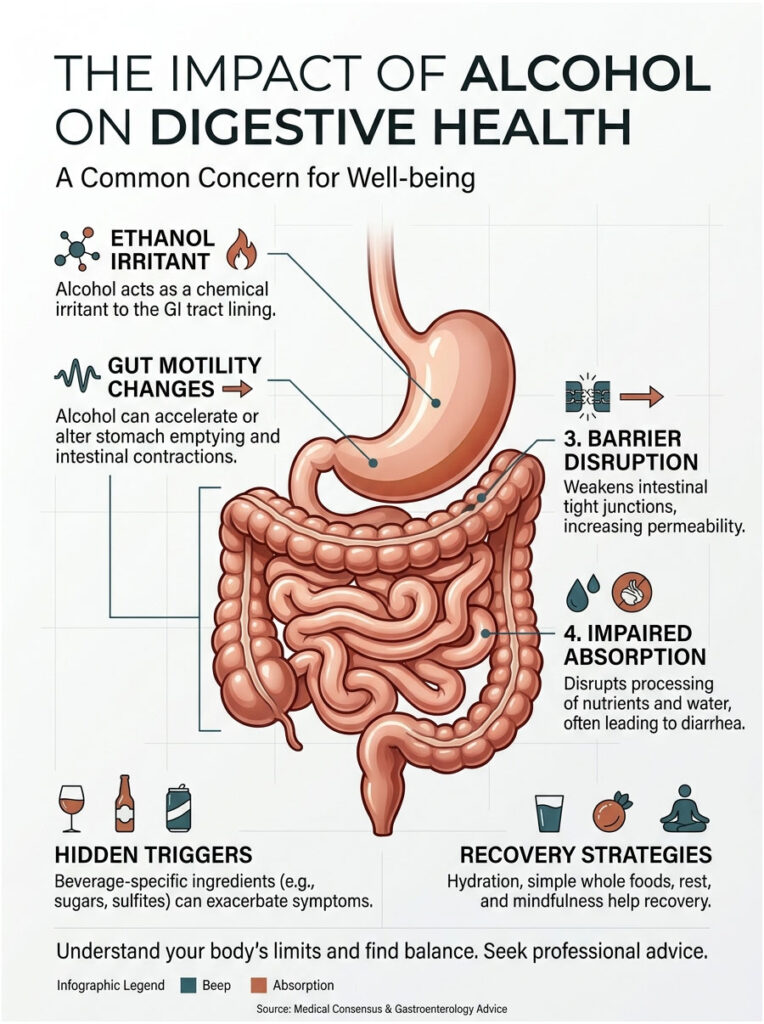
In this guide, I’ll walk you through exactly why alcohol causes diarrhea. We’ll cover the changes in gut motility, the breakdown of intestinal barriers, and the hidden triggers in your favorite drinks. Most importantly, I’ll share the recovery strategies I actually recommend to my own patients.
Quick Answer
Yes, alcohol causes diarrhea. It acts as a chemical irritant that speeds up gut motility, preventing your large intestine from absorbing water properly. The result is loose, urgent stools. Sugary mixers add to the problem by pulling extra fluid into your gut, while toxic byproducts of alcohol metabolism damage the delicate lining of your intestines.
Key Statistics on Alcohol and Gut Health
- Up to 70 percent of acute pancreatitis cases are linked to heavy alcohol misuse, according to the National Institute on Alcohol Abuse and Alcoholism.
- Regular drinkers are about three times more likely to experience chronic digestive issues than non-drinkers.
- Heavy drinking can shift the gut microbiome within 24 to 48 hours, reducing beneficial bacteria by more than 40 percent.
- Alcohol can speed up colon transit time by as much as 30 percent in healthy adults.
- Over 65 percent of people with Irritable Bowel Syndrome (IBS) say alcohol is a major trigger for symptom flare-ups.
- Binge drinking can nearly double intestinal permeability markers in the blood within just three hours.
How Alcohol Disrupts Your Digestive System
To understand why alcohol causes diarrhea, we need to look at what’s happening inside your body. Your digestive system is a finely tuned machine. When ethanol enters the picture, that coordination falls apart fast.
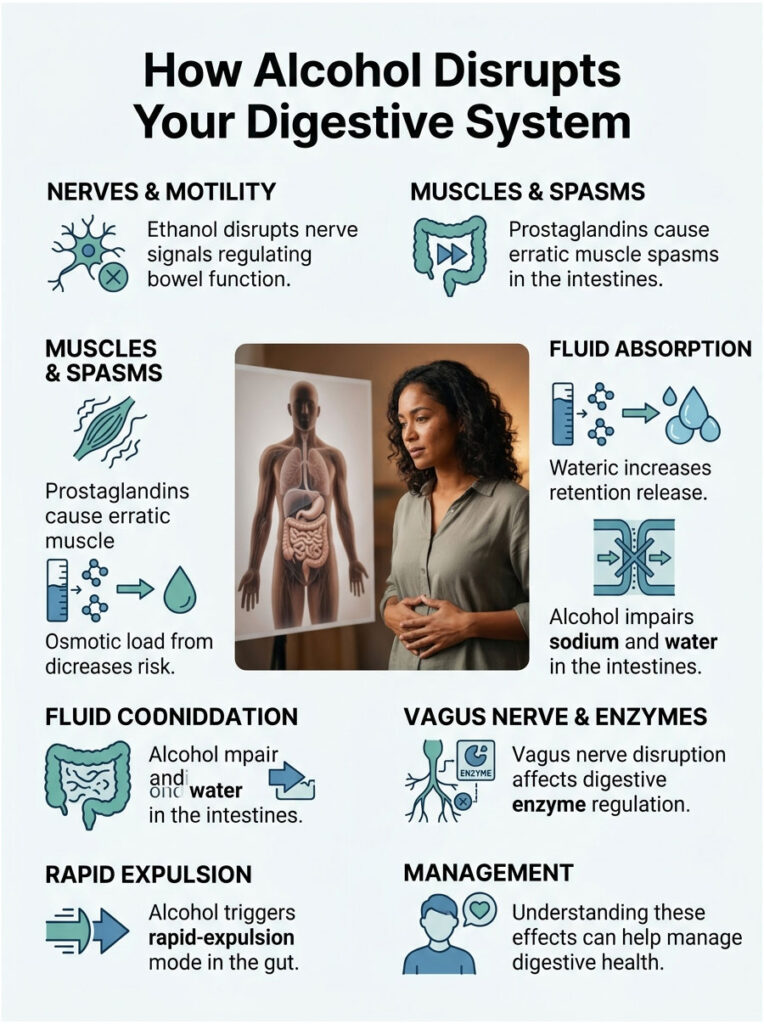
A lot of people assume that liquid in simply means liquid out. The reality is far more complex. Ethanol disrupts the nerve signals that control your bowels and changes the physical environment of your intestines.
Faster Gut Motility and Peristalsis
Your colon normally works at a steady, predictable pace. It absorbs water from digested food through gentle, wave-like muscle contractions called peristalsis. This slow rhythm gives your body time to pull water out, which is what creates a solid stool.
Ethanol acts as a strong stimulant for these intestinal muscles. When alcohol hits your gut, it pushes waste through the large intestine much faster than normal. With less time for water absorption, you end up with watery, urgent bowel movements. Simply put, alcohol overrides your gut’s natural braking system.
The Role of Prostaglandins
Prostaglandins are lipid compounds that control inflammation and smooth muscle contractions throughout your body. When you drink, alcohol triggers a sudden release of prostaglandins in the gut lining.
These chemical messengers hyper-stimulate the smooth muscle of your intestines, which is the main reason behind that doubling-over cramping after a night out. Instead of gentle, coordinated waves, your gut goes into erratic, forceful spasms.
Osmotic Load and Fluid Malabsorption
Osmotic diarrhea happens when unabsorbed substances pull water out of your body tissues into the gut. Alcohol can do this on its own, but mixers often make things much worse.
The high sugar content in juices, sodas, and syrups creates a heavy osmotic load. Your intestines can’t absorb that concentrated sugar quickly enough, so your body floods the bowels with water to dilute it. At the same time, ethanol impairs the cells responsible for absorbing sodium and water. The result is almost guaranteed diarrhea after sugary cocktails.
Vagus Nerve Disruption
The vagus nerve controls communication between your brain and your gut. Alcohol is a central nervous system depressant, which means it slows and confuses this nerve.
When the vagus nerve is impaired, your gut loses its ability to regulate digestive enzymes and stomach acid properly. The lower intestines default to rapid-expulsion mode, treating the alcohol like a poison the body wants to flush out quickly.
Expert Tip: To reduce your risk of osmotic diarrhea, skip regular sodas, energy drinks, and concentrated fruit juices as mixers. Plain soda water or fresh citrus juice puts far less stress on your gut.
How Alcohol Damages the Gut Barrier
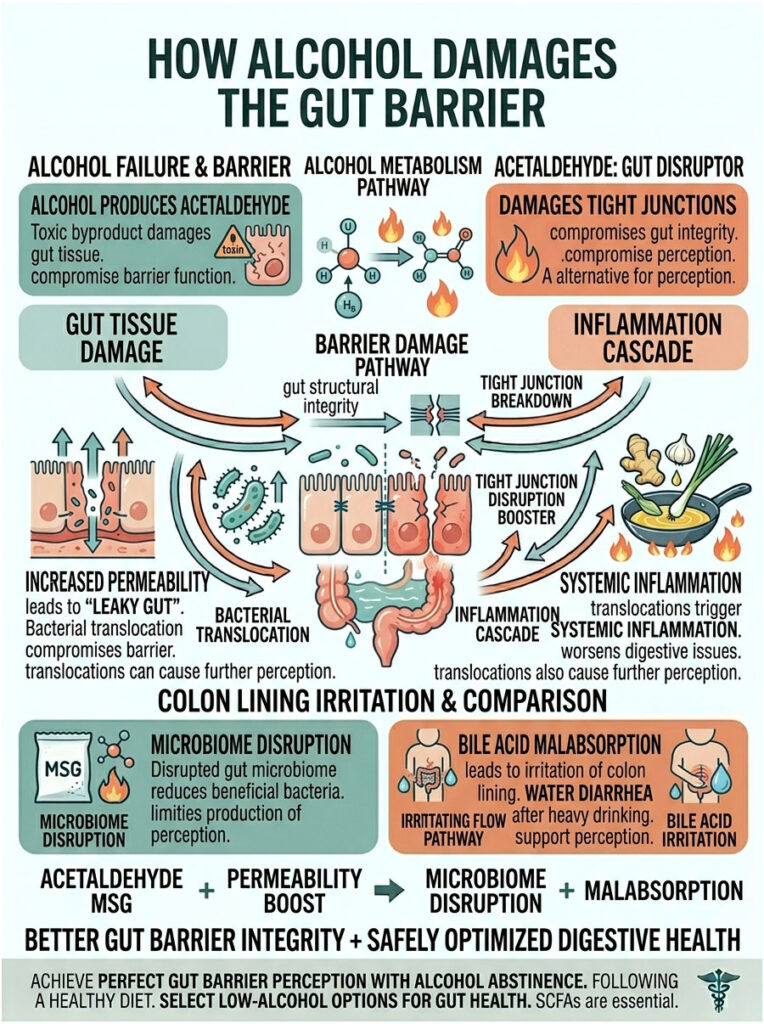
Beyond just speeding things up, alcohol causes real chemical damage at the cellular level. This is why digestive issues can sometimes linger for days after you’ve stopped drinking.
Acetaldehyde and Tight Junction Damage
When your liver processes alcohol, it produces a toxic byproduct called acetaldehyde. This chemical is up to 30 times more damaging to body tissues than alcohol itself.
Acetaldehyde attacks the tight junctions in your gut. These are tiny protein structures that hold your intestinal cells together, acting like mortar between bricks. As acetaldehyde breaks down this mortar, the gut lining loses its structural integrity.
Leaky Gut and Bacterial Translocation
When tight junctions fail, intestinal permeability increases. You may have heard this called “leaky gut.” With a damaged barrier, bacteria and toxins from the gut can leak into your bloodstream, a process called bacterial translocation.
Your immune system reacts strongly to defend the body, triggering systemic inflammation that further irritates your digestive tract. This inflammatory loop is why post-drinking diarrhea can feel so severe and last so long.
Disruption of Short-Chain Fatty Acids
Your gut microbiome is home to trillions of beneficial bacteria. These bacteria feed on dietary fiber and produce Short-Chain Fatty Acids (SCFAs), especially butyrate, which feeds your colon cells and keeps the gut lining healthy.
Heavy drinking acts like a broad-spectrum antibiotic on your microbiome. It kills off the good bacteria that produce these protective fatty acids. A depleted microbiome can’t regulate water absorption properly, setting the stage for diarrhea.
The Liver-Gut Axis and Bile Acids
Your liver produces bile acids that help break down dietary fats in the small intestine. Normally, these bile acids are reabsorbed near the end of the small intestine and recycled.
Alcohol disrupts this system. Because everything is moving too fast, bile acids skip the reabsorption phase and dump directly into the large intestine. Bile acids irritate the colon lining and trigger heavy water secretion, leading to the explosive, watery diarrhea many people experience after heavy drinking.
Beverage-Specific Triggers: Not All Alcohol Is Equal
Patients often tell me certain drinks bother them more than others, and they’re right. The ingredients, additives, and fermentation byproducts in your glass make a real difference.
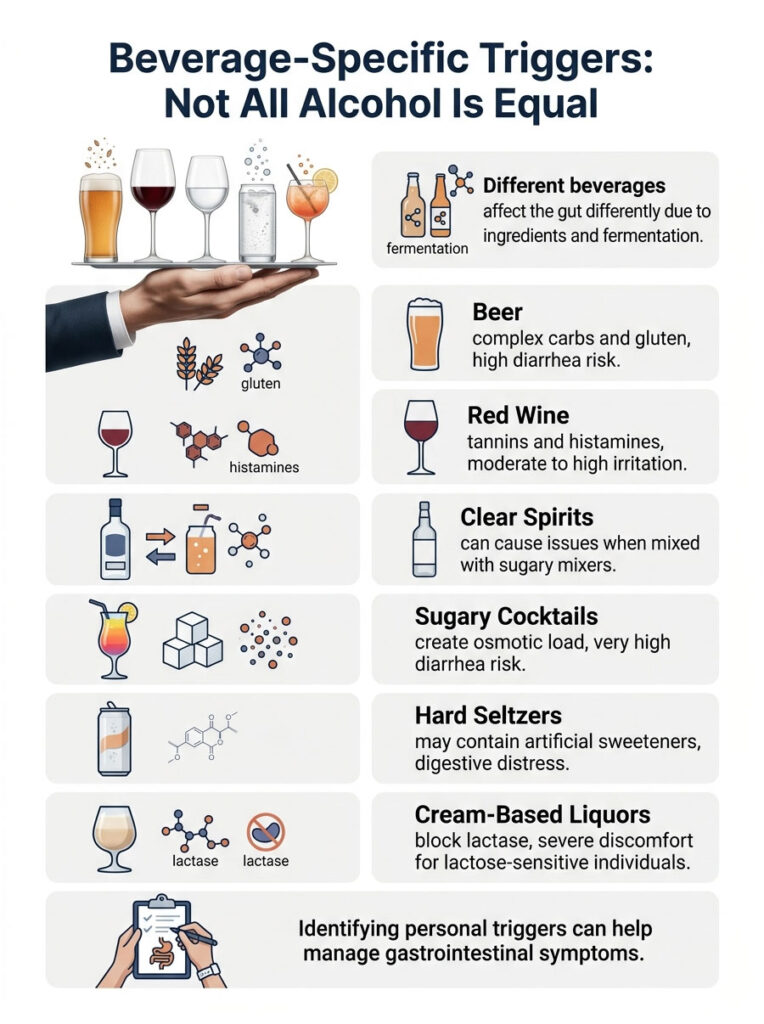
| Beverage Type | Primary GI Irritant | Diarrhea Risk | Why It Happens |
|---|---|---|---|
| Beer (Ales & Stouts) | Complex carbs, yeast, gluten | High | Ferments quickly in the gut, causing bloating and faster motility |
| Red Wine | Tannins, histamines, sulfites | Moderate to High | Triggers inflammatory and allergic responses in sensitive guts |
| Clear Spirits (Vodka, Gin) | Pure ethanol | Moderate | Speeds up peristalsis but lacks fermentable sugars |
| Sugary Cocktails | High-fructose corn syrup, dyes | Very High | Creates a major osmotic load |
| Hard Seltzers | Carbonation, artificial sweeteners | Moderate to High | Gas plus sugar alcohols cause fluid shifts |
| Cream-Based Liquors | Dairy, fats, sugar | Extreme | Alcohol blocks lactase, causing distress in lactose-sensitive people |
Beer and Fermentation Byproducts
Beer is essentially liquid bread. It contains complex carbohydrates, gluten, and live yeast. When these reach your large intestine, gut bacteria ferment them rapidly, producing gas, bloating, and cramping. The physical stretching of the bowel wall pushes waste out faster than normal.
For anyone with even mild gluten sensitivity, beer is especially rough. Gluten-induced inflammation combined with alcohol’s effects creates a particularly unpleasant morning after.
Wine, Tannins, and Histamines
Red wine is one of the most common triggers I hear about. While it doesn’t cause bloating like beer, it’s packed with tannins, sulfites, and histamines.
Many people lack the enzymes needed to break down histamines efficiently. When they drink red wine, the excess histamines trigger an allergic-style response in the gut, causing inflammation and rapid fluid secretion. Sulfites, used as preservatives, add another layer of irritation.
Liquor and Sugary Mixers
Clear spirits like vodka and gin are often considered the “safest” choice because they contain no sugar or yeast. The real problem usually lies in what you mix them with.
Margaritas, rum and cola, and fruit-flavored cocktails are loaded with high-fructose corn syrup. Your gut can’t process that much concentrated sugar at once, which creates strong osmotic diarrhea. If you want to stop diarrhea after drinking, switching to sparkling water with lime is one of the easiest fixes.
Hard Seltzers and Artificial Sweeteners
Hard seltzers are marketed as a healthier choice, but there’s a catch. Many contain artificial sweeteners or sugar alcohols like erythritol and xylitol. Your body can’t absorb these, so they travel to the colon, ferment, and pull in water, often causing explosive diarrhea. Add the heavy carbonation, and you have a drink almost designed to send you to the bathroom.
Cream Liqueurs and Dairy Mixers
White Russians, Mudslides, and Irish cream liqueurs combine alcohol with heavy dairy. Even if you’re not normally lactose intolerant, alcohol temporarily suppresses lactase, the enzyme that digests milk sugar. Undigested lactose then ferments in the colon, drawing in water and causing major distress.
Alcohol and Existing Digestive Conditions
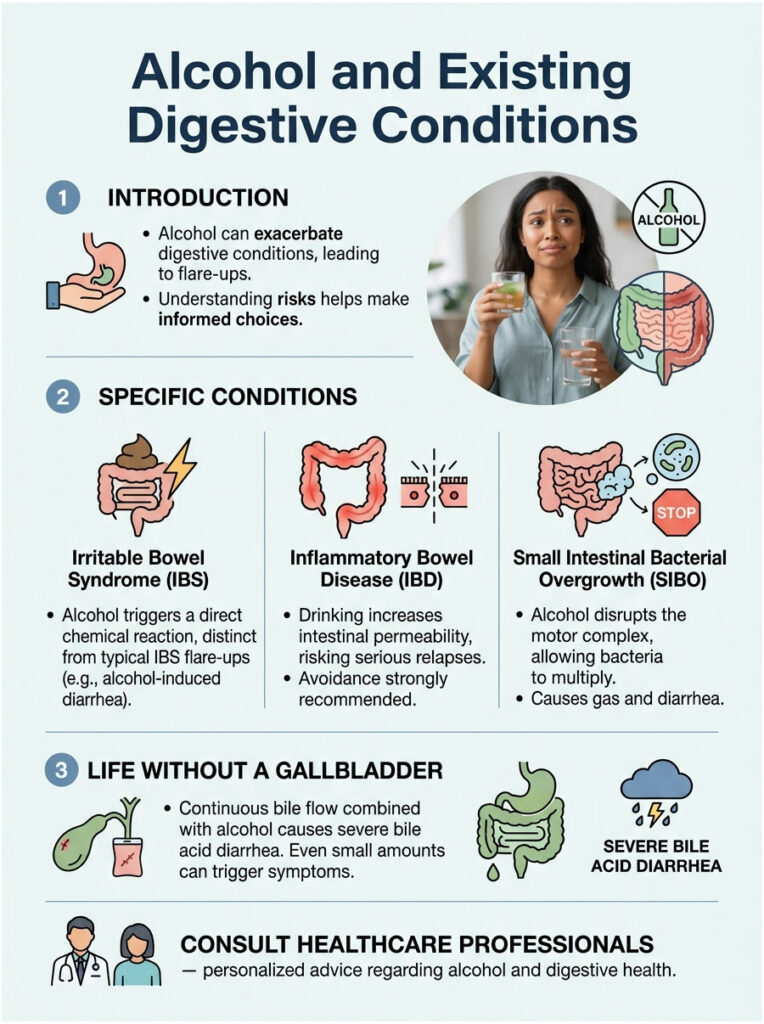
For people with pre-existing gut issues, drinking alcohol is like pouring fuel on a fire. The intense stress of alcohol-induced diarrhea can trigger flare-ups that last weeks or even months.
Irritable Bowel Syndrome (IBS)
Patients often ask me how to tell normal post-drinking diarrhea apart from an IBS flare. They feel similar because both involve hyper-motility and urgency. The difference is that alcohol diarrhea is a direct chemical reaction, while IBS is a functional disorder linked to gut hypersensitivity.
For someone with IBS-D, baseline motility is already too fast. Adding alcohol guarantees a strong reaction, and the prostaglandins released during drinking amplify the visceral pain IBS patients already deal with.
Inflammatory Bowel Disease (IBD)
For people with Crohn’s disease or ulcerative colitis, the stakes are much higher. Increased intestinal permeability after drinking can trigger a systemic immune response, and bacterial translocation is especially dangerous when your immune system is already attacking your own gut.
Clinical guidelines strongly recommend that people with active IBD limit or avoid alcohol entirely. The risk of triggering a serious relapse is simply too high.
Small Intestinal Bacterial Overgrowth (SIBO)
SIBO happens when bacteria from the large intestine migrate up into the small intestine. Alcohol paralyzes the migrating motor complex, the mechanism that normally clears bacteria out of the small intestine between meals. With that sweeping action stopped, bacteria multiply rapidly, ferment sugars from your drinks, and produce painful gas and diarrhea.
Life Without a Gallbladder
If you’ve had your gallbladder removed, your liver drips bile continuously into your small intestine instead of releasing it on demand. When you drink, the accelerated transit time mixes poorly with this constant bile flow. Bile acids flush into the colon unabsorbed, triggering severe bile acid diarrhea. Many post-cholecystectomy patients tell me even one beer sends them to the bathroom within 30 minutes.
Warning Signs and Clinical Red Flags
There’s an important difference between a hangover symptom and a medical emergency. Pay attention to the color, texture, and frequency of your stools, since they offer real clues about what’s happening inside.
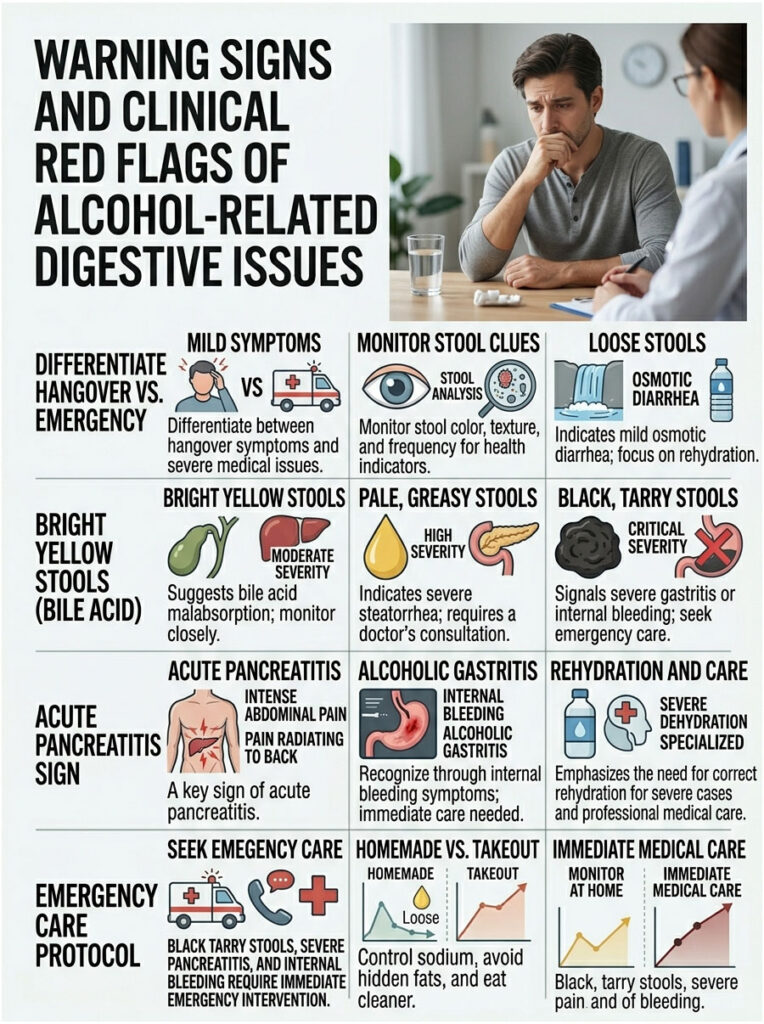
| Stool Type | Likely Cause | Severity | What to Do |
|---|---|---|---|
| Loose, watery (brown) | Osmotic diarrhea, fast motility | Mild | Rehydrate with electrolytes, eat binding foods |
| Bright yellow | Bile acid malabsorption | Moderate | Monitor closely; may signal liver or gallbladder stress |
| Pale, greasy, floating | Steatorrhea (fat malabsorption) | High | Suggests pancreatic issues; see a doctor |
| Black, tarry, or bloody | Gastritis or bleeding ulcer | Severe | Seek emergency care immediately |
Why Is My Poop Yellow After Drinking?
This is one of the most searched questions about post-drinking digestion, and the answer is in your liver and gallbladder. Your liver produces a yellowish-green fluid called bile that helps digest fats. Normally, bile is broken down and reabsorbed as waste moves through your intestines, turning your stool brown.
Because alcohol speeds everything up, the waste moves too fast for bile to be reabsorbed. The yellow bile passes straight through, resulting in bright yellow diarrhea.
Alcoholic Steatorrhea (Fatty Stools)
Pale, greasy, foul-smelling stool that floats is called steatorrhea. It happens when your body can’t digest fats properly. Alcohol is toxic to the pancreas, which produces lipase, the enzyme that breaks down fat. When pancreatic function is impaired, undigested fat passes straight through your colon. This is a major warning sign that your pancreas is struggling.
When to Suspect Acute Pancreatitis
If you have intense, stabbing pain in your upper abdomen that radiates through to your back, you may be dealing with acute pancreatitis. According to the NIAAA, alcohol misuse is a leading cause of this condition worldwide. It’s life-threatening and requires hospitalization. If you’re vomiting alongside severe back pain and diarrhea, get to an emergency room right away.
Alcoholic Gastritis and GI Bleeding
Black, tarry stools or bright red blood in the toilet point to internal bleeding, often from alcoholic gastritis. Alcohol strips away the protective mucus layer of the stomach, letting acid eat into the tissue and create bleeding ulcers. If you see blood, go to the emergency room immediately. This is not something to wait out at home.
How to Recover and Prevent It Next Time
Over-the-counter anti-diarrheal medications can help temporarily, but they don’t fix the underlying damage. Here’s the protocol I recommend to my own patients.
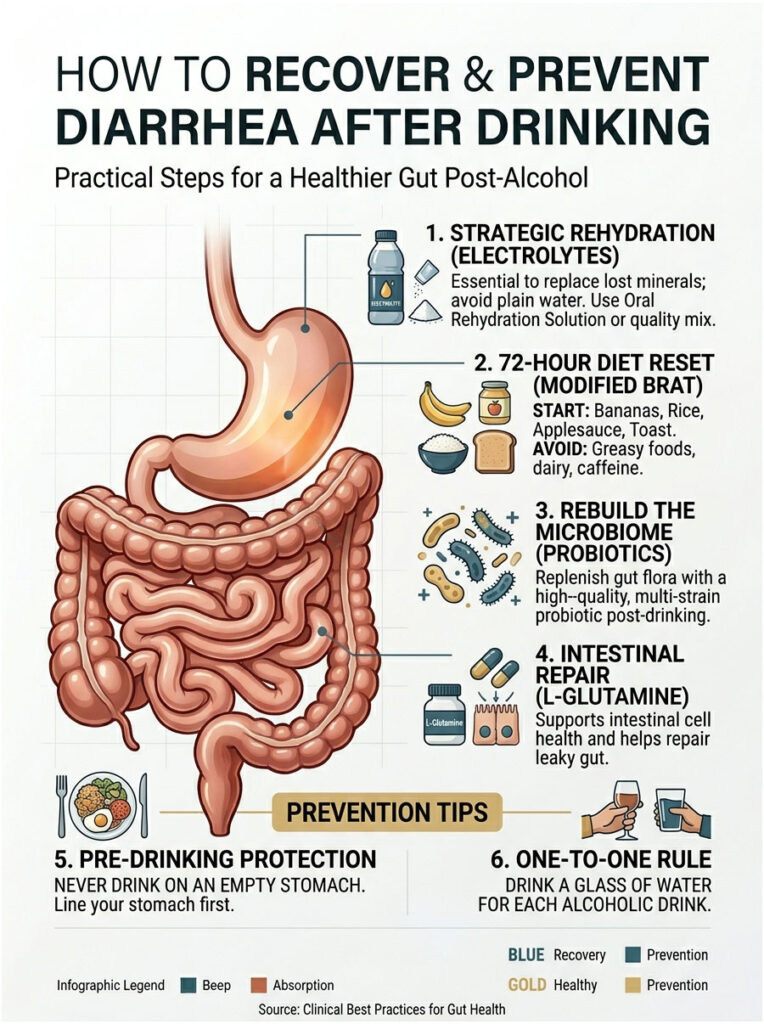
Strategic Rehydration with Electrolytes
The biggest mistake people make is rehydrating with plain water. Alcohol is a diuretic that flushes out water, sodium, potassium, and magnesium. Plain water doesn’t replace those minerals.
Use an oral rehydration solution or a quality electrolyte mix instead. The specific ratio of sodium and glucose helps pull water back into your dehydrated cells and gives your colon what it needs to start absorbing water from waste again.
A 72-Hour Diet Reset
Your gut lining is inflamed and sensitive right now, so don’t hit it with greasy food, dairy, or anything spicy. Stick to a modified BRAT diet for the first 24 to 48 hours: bananas, rice, applesauce, and toast. These foods are low in fiber and gentle on the gut, and plain white rice is especially good at absorbing excess fluid.
Skip coffee and energy drinks during recovery. Caffeine is a gut stimulant that will make things worse. Stick to bone broth, plain crackers, and boiled potatoes until your bowel movements normalize.
Probiotics and L-Glutamine
Since alcohol wipes out beneficial bacteria, you need to actively rebuild your microbiome. I recommend a high-quality, multi-strain probiotic for at least a week after a heavy drinking session. Look for strains like Lactobacillus rhamnosus and Bifidobacterium longum, which have been shown to reduce alcohol-related gut inflammation.
L-glutamine is also worth considering. This amino acid is the main fuel source for intestinal cells, and about five grams a day can help rebuild damaged tight junctions and seal up a leaky gut.
Pre-Drinking Protection
The best way to stop diarrhea after drinking is to prevent it before it starts. Never drink on an empty stomach. Eat a meal with lean protein and healthy fats first, like grilled salmon, eggs, or avocado, which slow gastric emptying so alcohol enters your intestines more gradually.
Follow the one-to-one rule: drink a full glass of water for every alcoholic drink. This dilutes the alcohol in your gut and reduces its irritant effect.
Final Thoughts
The evidence is clear: alcohol causes diarrhea through several overlapping biological mechanisms. It’s not random, it’s predictable. Ethanol speeds up gut motility, triggers inflammatory prostaglandins, and produces toxic byproducts that damage your intestinal lining and let bacteria leak into your bloodstream.
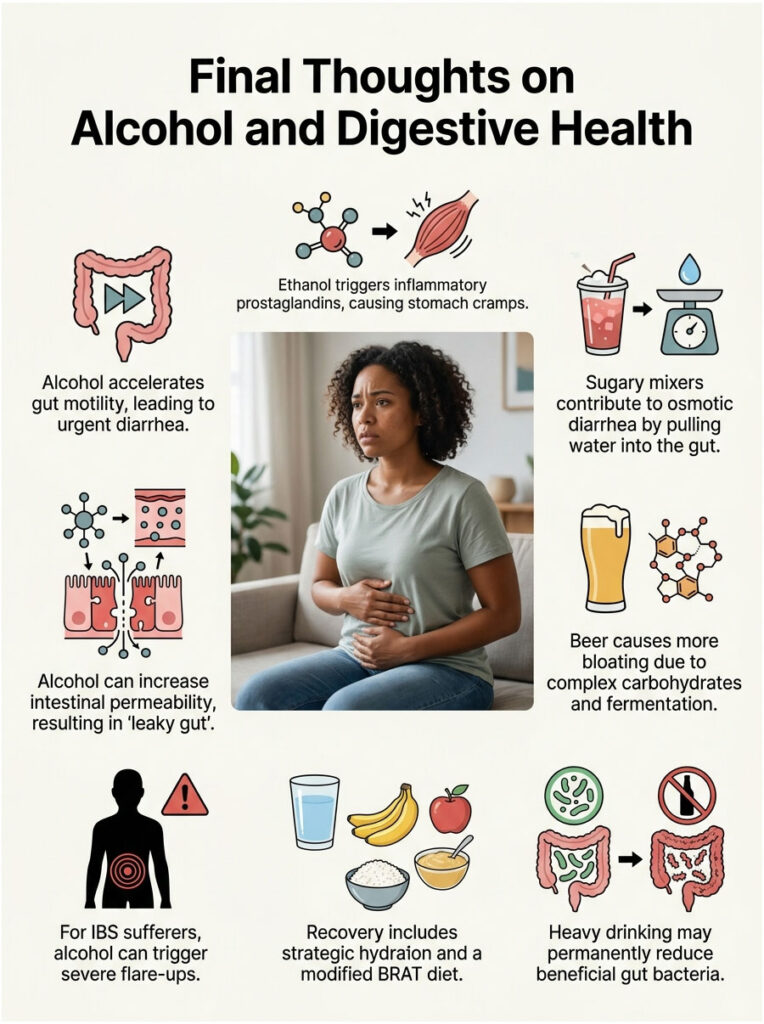
On top of that, sugary mixers and artificial sweeteners overload your gut, while alcohol starves your microbiome of the nutrients it needs. The result is an exhausted, inflamed digestive system that needs time to recover.
Your gut is remarkably resilient, but chronic post-drinking diarrhea is your body’s way of telling you it needs a break. Hydrate strategically, choose your drinks wisely, and support your microbiome with good nutrition. Your digestive system will thank you.
Frequently Asked Questions
Why does alcohol cause immediate diarrhea after drinking?
Alcohol acts as a chemical irritant that significantly accelerates gastrointestinal motility. By overstimulating the smooth muscles of the intestines, ethanol fast-tracks waste through the colon. This rapid transit time prevents the large intestine from properly absorbing water, resulting in loose, watery, and urgent stools.
What causes the intense stomach cramping associated with alcohol-induced diarrhea?
The primary culprit for post-drinking cramps is the release of prostaglandins. When you consume alcohol, the gut lining releases these lipid compounds, which hyper-stimulate intestinal contractions. This localized inflammation leads to the erratic, forceful spasms and painful doubling-over sensations often experienced the morning after.
Why is my poop bright yellow after a night of heavy drinking?
Yellow diarrhea is typically caused by bile acid malabsorption. Because alcohol accelerates gastrointestinal motility, bile—the yellowish-green fluid produced by the liver to digest fats—is rushed through the system too quickly to be reabsorbed. The presence of unabsorbed bile in the stool results in a bright yellow or neon appearance.
How do sugary mixers contribute to osmotic diarrhea?
Mixers high in sugar or high-fructose corn syrup create a high osmotic load in the intestines. This concentration of unabsorbed sugar pulls excess water out of your body tissues and into the gut lumen to dilute the mixture. This influx of fluid, combined with ethanol’s irritant effect, leads to explosive osmotic diarrhea.
Can alcohol cause a ‘leaky gut’ or increased intestinal permeability?
Yes. Alcohol metabolism produces acetaldehyde, a toxic byproduct that degrades the ‘tight junctions’ or protein structures that hold your intestinal cells together. When these junctions fail, it leads to increased intestinal permeability, allowing bacteria and toxins to leak into the bloodstream, a process known as bacterial translocation.
Why does beer cause more bloating and diarrhea than clear spirits?
Beer contains complex carbohydrates, gluten, and live yeast that undergo rapid fermentation in the large intestine. This process produces significant gas, leading to distension and bloating. Spirits like vodka are pure ethanol and lack these fermentable substrates, though they still stimulate motility via the central nervous system.
How does alcohol affect people with Irritable Bowel Syndrome (IBS)?
For those with IBS, especially the diarrhea-predominant type (IBS-D), alcohol acts as a potent trigger. It amplifies visceral hypersensitivity and further disrupts the brain-gut axis via the vagus nerve. Even small amounts of ethanol can cause a severe flare-up of symptoms due to the gut’s baseline sensitivity to chemical irritants.
What is alcoholic steatorrhea, and why is it a concern?
Alcoholic steatorrhea refers to pale, greasy, and foul-smelling stools that float in the toilet. This is a sign of severe fat malabsorption, often caused by alcohol’s toxic effect on the pancreas. When the pancreas fails to produce enough lipase (the enzyme that breaks down fat), undigested fats pass directly into the colon.
Why do dairy-based cocktails like White Russians cause such severe distress?
Ethanol temporarily suppresses the production of lactase, the enzyme required to digest lactose. When you combine alcohol with heavy cream or milk, the undigested lactose ferments in the colon and draws in water through osmosis, causing immediate and often explosive diarrhea, even in individuals who aren’t normally lactose intolerant.
What are the clinical ‘red flags’ that indicate a medical emergency after drinking?
You should seek immediate medical attention if you notice black, tarry, or bloody stools, which indicate gastrointestinal bleeding. Additionally, intense, stabbing upper abdominal pain that radiates to the back can be a sign of acute pancreatitis, a life-threatening inflammatory condition often triggered by alcohol misuse.
How can I stop diarrhea after drinking and restore my gut health?
The most effective recovery protocol involves strategic rehydration with oral rehydration solutions (ORS) to replace missing electrolytes like potassium and sodium. Following a modified BRAT diet (Bananas, Rice, Applesauce, Toast) provides binding fiber, while supplementing with L-glutamine can help repair damaged intestinal tight junctions.
Does alcohol consumption permanently damage the gut microbiome?
While the gut is resilient, heavy drinking can reduce beneficial bacteria by over 40 percent in as little as 48 hours. This depletion reduces Short-Chain Fatty Acids (SCFAs) like butyrate, which are essential for colon health. Using multi-strain probiotics containing Lactobacillus and Bifidobacterium can help restore microbial balance after alcohol exposure.
Disclaimer
This article is for informational purposes only and does not constitute medical advice. The physiological effects of alcohol vary by individual, and chronic symptoms may indicate underlying health conditions. Always consult a board-certified gastroenterologist or qualified healthcare professional before making significant changes to your diet or lifestyle, or if you are experiencing severe or persistent gastrointestinal distress.
References
- National Institute on Alcohol Abuse and Alcoholism (NIAAA) – Alcohol’s Effects on the GI Tract – Comprehensive data on how ethanol and acetaldehyde damage the intestinal barrier and pancreas.
- American College of Gastroenterology (ACG) – Clinical Guidelines – Authoritative medical standards for managing IBS, IBD, and alcohol-induced digestive inflammation.
- Journal of Clinical Medicine – “The Role of Prostaglandins in Ethanol-Induced Gastric Mucosal Injury” – Research study detailing the chemical triggers for gut contractions.
- American Gastroenterological Association (AGA) – Gut Microbiome Studies – Clinical insights into how alcohol alters short-chain fatty acid production and bacterial translocation.
- World Journal of Gastroenterology – “Bile Acid Malabsorption and Alcohol” – Statistical analysis of how accelerated transit time leads to yellow, watery stools.