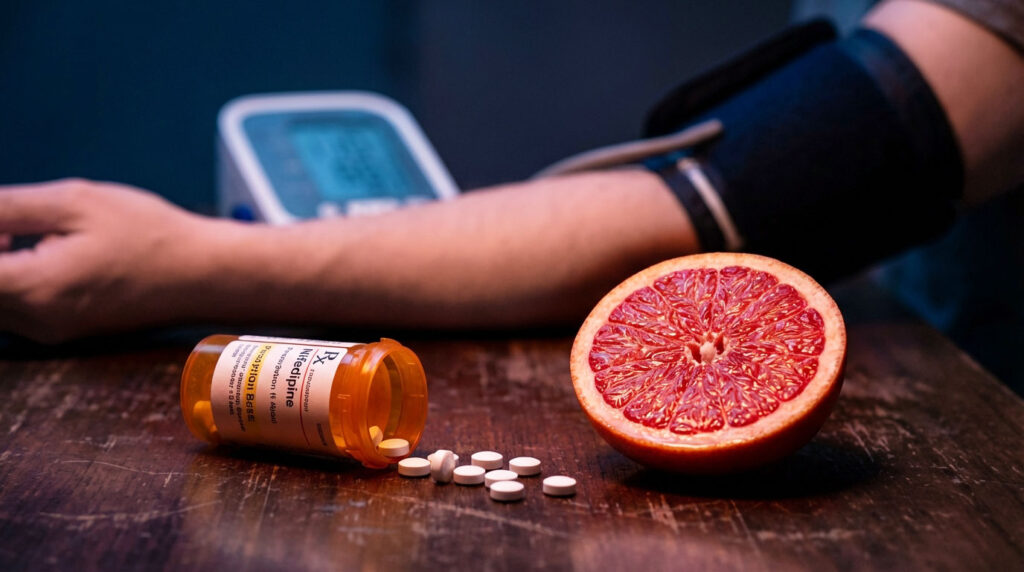
To lower high blood pressure effectively, you must eliminate foods high in sodium, saturated fats, and added sugars. The most dangerous offenders include deli meats rich in nitrates, canned soups with hidden sodium, frozen pizza, and licorice root which causes potassium loss. Patients taking hypertension medication must strictly avoid grapefruit and grapefruit juice, as they interfere with enzymes needed to metabolize drugs like Nifedipine. Instead, follow the DASH diet and limit daily sodium intake to under 2,300 mg.
Table of Contents
You might feel fine right now. That is the terrifying reality of hypertension. Nearly half of all adults in the United States, roughly 119.9 million people, are living with high blood pressure, yet the vast majority do not even realize the damage occurring inside their arteries until a crisis strikes. It is rightfully termed the “Silent Killer” because it operates in the background, slowly stiffening blood vessels, straining the heart muscle, and damaging the delicate filtration system of the kidneys without a single warning sign.
For many, the diagnosis comes as a shock during a routine checkup. The immediate response is often a prescription pad. Medication is a powerful and often necessary tool, but it is not a standalone cure. Your diet acts as either the strongest form of medicine or the slowest form of poison. Many patients assume that simply putting down the salt shaker at the dinner table is enough to solve the problem. The reality, however, is far more complex and pervasive.
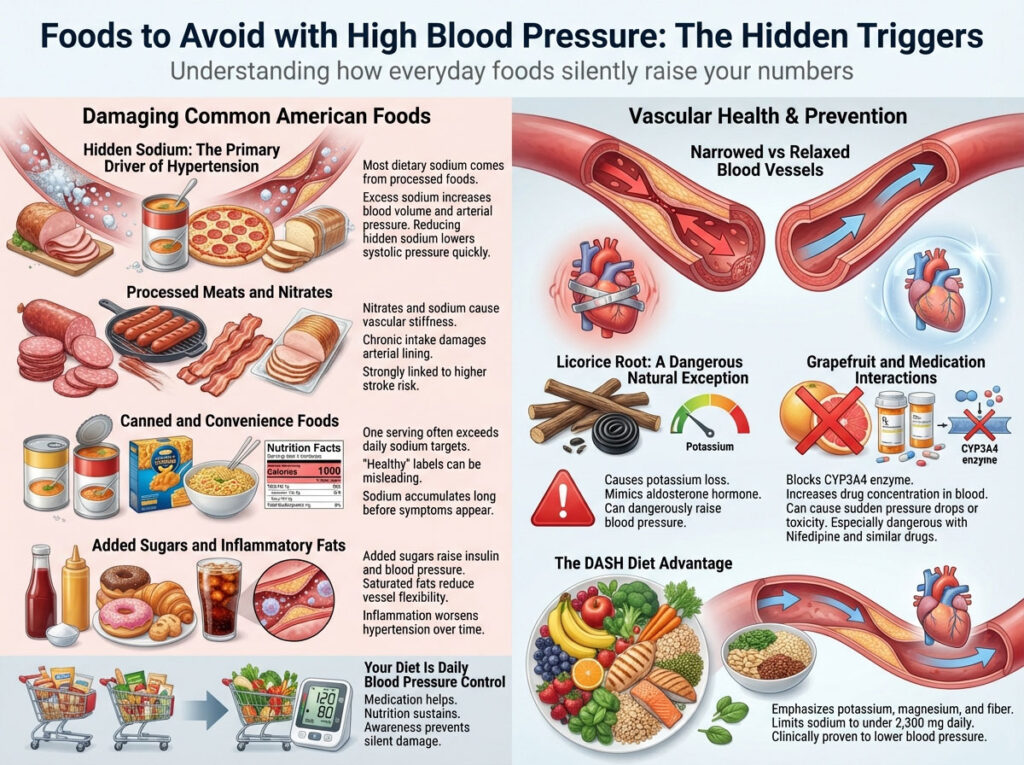
Over 70% of the sodium Americans consume comes from processed, pre-packaged, and restaurant foods before you ever take a bite. It is hidden in the bread you eat for toast, the dressing on your “healthy” salad, and the preservative solutions used in raw poultry. Furthermore, sodium is not the only enemy. New research highlights the role of added sugars and inflammatory fats in driving up systolic and diastolic numbers.
This comprehensive guide goes far beyond generic advice. We will break down the mechanics of foods to avoid with high blood pressure, specifically identifying the fruits to avoid with high blood pressure due to dangerous medication interactions. We will reveal the hidden inflammatory triggers in your pantry and provide actionable, realistic swaps. By understanding the chemistry of what you eat, you can take control of your cardiovascular health starting today.
Understanding How Food Triggers Hypertension Mechanisms
Before purging your kitchen, you must understand the “why” behind dietary restrictions. Hypertension is not just about fluid volume; it involves complex interactions between your kidneys, blood vessels, and hormones. When you understand the mechanism, sticking to the diet becomes a logical choice rather than a restrictive chore.
The Sodium and Osmosis Connection
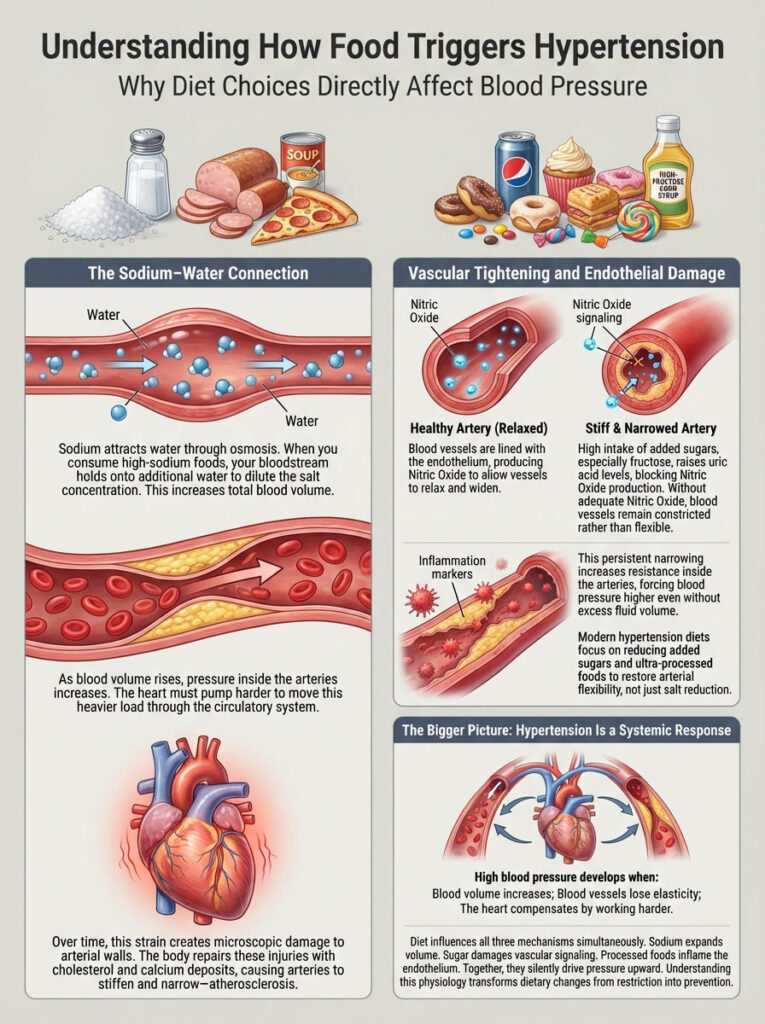
Sodium is an essential mineral for life, required for nerve impulses and muscle function. However, the modern American diet provides it in toxic excess. Sodium acts like a magnet for water. When you consume high-sodium foods, your body holds onto extra fluid to dilute the salt in your bloodstream.
This extra fluid significantly increases the volume of blood flowing through your blood vessels. Think of your circulatory system like a garden hose. If you turn the spigot all the way up, the pressure inside the hose increases drastically. This forces your heart to pump harder to move that heavy volume of blood. Over time, this extra force creates micro-tears in the arterial walls. The body repairs these tears with plaque, which hardens the arteries (atherosclerosis), making the space narrower and raising pressure even further.
Vasoconstriction and Endothelial Dysfunction
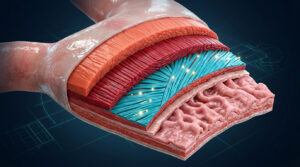
Certain foods do more than just add water weight. They chemically instruct your blood vessels to tighten, a process called vasoconstriction. Your blood vessels are lined with a delicate layer of cells called the endothelium. These cells release Nitric Oxide, a crucial molecule that signals the vessel to relax and widen.
New research indicates that high intake of added sugars, particularly fructose, spikes uric acid levels in the blood. High uric acid inhibits the production of Nitric Oxide. Without enough Nitric Oxide, your blood vessels remain stiff and constricted. This is why a high blood pressure diet focuses on reducing inflammation and sugar just as much as reducing salt. It is about restoring the flexibility of your vascular system.
The “Deadly 4”: Medication Interactions & Immediate Triggers
Some foods pose immediate, acute risks, especially if you are already on a treatment plan. These items can cause rapid spikes in pressure or dangerous interactions with prescriptions that can land you in the emergency room.
1. Grapefruit & Grapefruit Juice
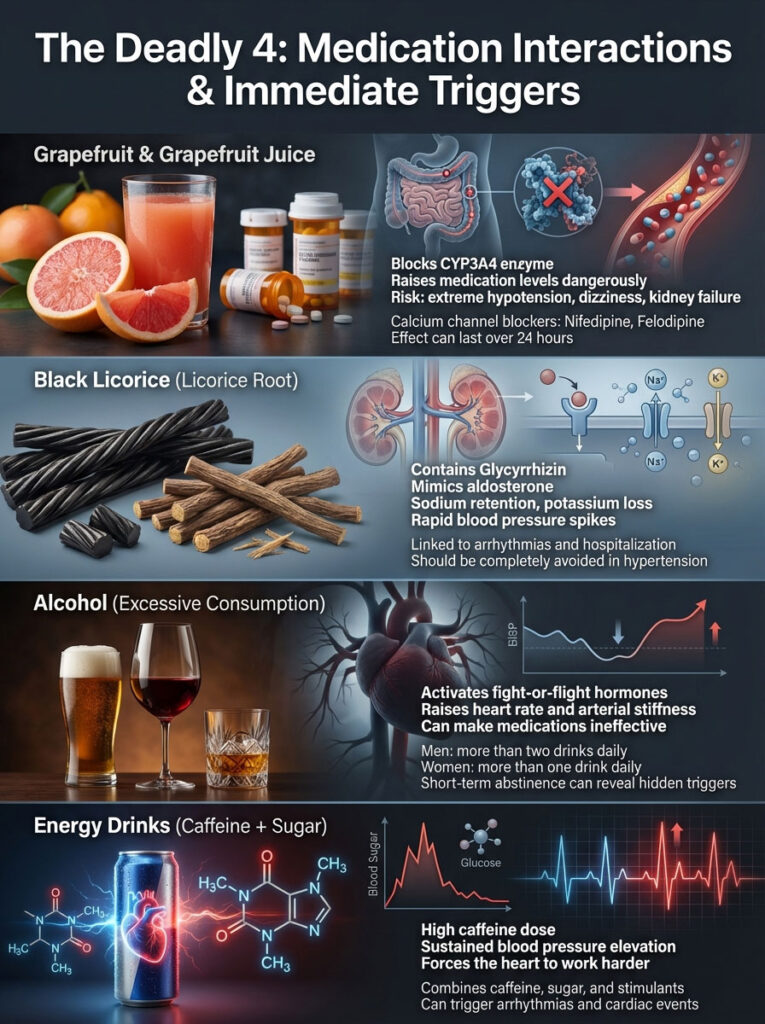
This is perhaps the most critical warning for patients on medication. While citrus is generally celebrated as a heart-healthy food group, grapefruit is a major exception for those on specific hypertension drugs. Grapefruit contains a group of compounds called furanocoumarins. These compounds have a unique ability to disable a vital enzyme in your gut known as CYP3A4.
This enzyme is responsible for metabolizing many medications before they enter your bloodstream. It acts as a gatekeeper, breaking down a significant portion of the drug so that you receive the correct dosage. When you drink grapefruit juice, the enzyme is blocked. This means the “gate” is left wide open, and more of the drug enters your blood than intended.
If you take Calcium Channel Blockers like Nifedipine (Procardia) or Felodipine (Plendil), a single glass of juice can increase the drug’s potency to dangerous levels. This essentially results in an accidental overdose, which can lead to extreme hypotension (dangerously low blood pressure), dizziness, fainting, or even renal failure. It is important to note that this effect can persist for over 24 hours, so simply taking your pill at a different time than you eat the fruit does not solve the problem. Seville oranges (often used in marmalade) and Tangelos can have a similar effect.
2. Licorice Root (Black Licorice)
We are not talking about red candy vines, which are usually just flavored with sugar and artificial fruit scents. We are referring to genuine black licorice flavored with licorice root extract. This root contains a compound called Glycyrrhizin. It is notoriously dangerous for hypertensive patients because it mimics the hormone aldosterone.
Aldosterone regulates the balance of water and salt in the body. When you consume Glycyrrhizin, it tricks your kidneys into aggressively retaining sodium while dumping potassium through urine. Potassium is the mineral that helps lower blood pressure, so losing it is a double blow to your system. This electrolyte imbalance, known as pseudohyperaldosteronism, causes rapid, severe spikes in blood pressure. The FDA has documented reports of healthy adults landing in the hospital with heart arrhythmias after eating just two ounces of black licorice daily for two weeks. If you suffer from hypertension, true licorice should be completely eliminated from your diet.
3. Alcohol (Excessive Consumption)
The relationship between alcohol and blood pressure is biphasic and often misunderstood. A single drink may slightly lower pressure initially due to vasodilation. However, regular or excessive consumption raises it significantly and keeps it elevated.
Alcohol activates the sympathetic nervous system, the “fight or flight” mechanism, releasing adrenaline and cortisol. These hormones constrict blood vessels and increase heart rate. Furthermore, alcohol robs the body of magnesium and calcium, electrolytes needed to regulate vascular tone. Chronic heavy drinking can render blood pressure medications ineffective, a condition known as “resistant hypertension.” For men, more than two drinks a day, and for women, more than one, significantly increases the risk of arterial stiffness. If you are struggling to control your numbers, abstaining from alcohol for 30 days is often one of the most effective diagnostic tests you can try.
4. Energy Drinks (Caffeine + Sugar)
A standard cup of coffee may cause a temporary blip in pressure that resolves within an hour. Energy drinks, however, are a different beast entirely. They combine massive doses of caffeine (often 200mg to 300mg per can) with sugar, artificial sweeteners, and stimulants like taurine or guarana.
This cocktail causes a more sustained increase in both systolic and diastolic pressure. The caffeine constricts blood vessels while the sugar spikes insulin, creating a high-stress environment for the cardiovascular system. For someone with uncontrolled hypertension, the added strain on the heart can be a direct trigger for a cardiac event or arrhythmia. The sheer volume of stimulants forces the heart to contract more forcefully, which is the last thing a hypertensive heart needs.
The “Salty Six”: Processed Foods High in Sodium
The American Heart Association and the CDC have identified specific food categories that contribute the most sodium to the American diet. These are not always the foods that taste the “saltiest,” which makes them dangerous invisible triggers.
5. Deli Meats & Cured Hams
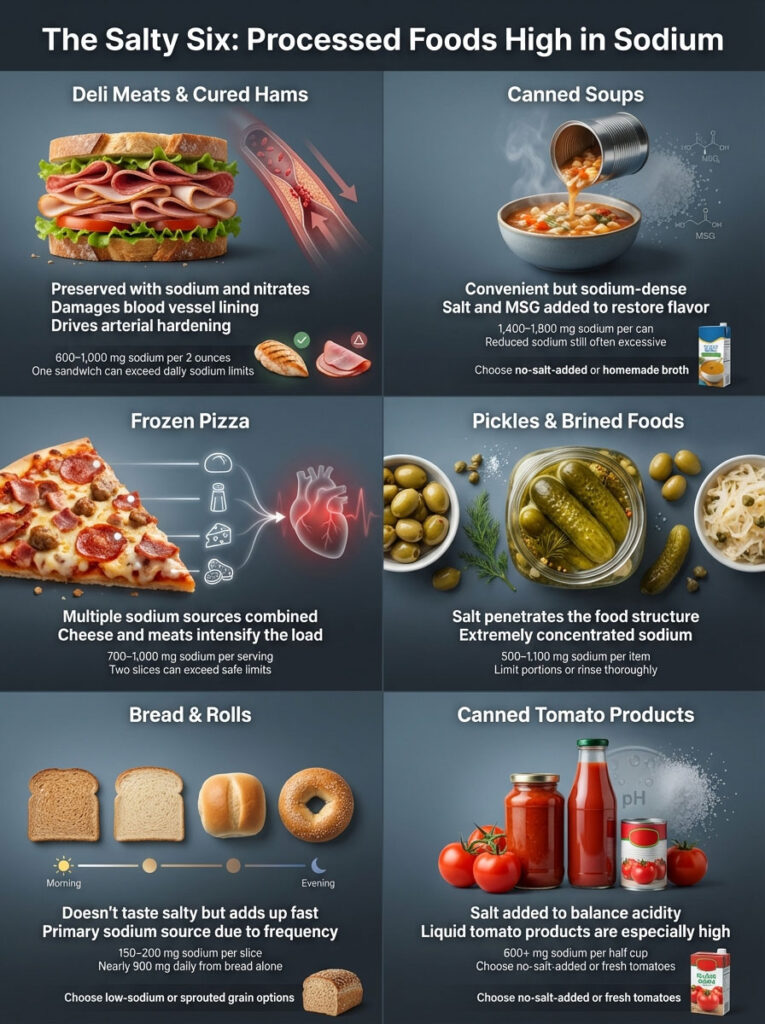
Your turkey sandwich might be the culprit behind your high readings. Deli meats, including ham, turkey, salami, bologna, and roast beef, are preserved with massive amounts of salt and Sodium Nitrates. These nitrates are used to preserve the pink color and prevent bacterial growth, particularly botulism.
However, nitrates can damage the endothelial lining of your blood vessels, leading to arterial hardening (arteriosclerosis). A single two-ounce serving of deli meat can easily contain 600 to 1,000 mg of sodium. Most sandwiches contain double that amount of meat. If you add a slice of cheese and two slices of bread, one sandwich can exceed your entire daily sodium allowance of 2,300 mg. This makes cured meat one of the absolute worst foods to avoid with high blood pressure. Even “low sodium” deli meats often contain significantly more salt than fresh roasted poultry.
6. Canned Soups
Canned soup is often marketed as a wholesome, convenient comfort food. In reality, it is a sodium bomb. The industrial canning process requires high heat to kill bacteria. This high heat can destroy the natural flavor and texture of vegetables and noodles. To compensate, manufacturers add significant amounts of salt and monosodium glutamate (MSG) to boost flavor.
A single can of “healthy” chicken noodle soup can contain between 1,400 mg and 1,800 mg of sodium. That is nearly your entire day’s limit in one bowl. Even varieties labeled “reduced sodium” can still harbor 600 mg to 800 mg per serving. Always read the label carefully. If the soup tastes bland without the salt, that is a sign of poor quality ingredients. The best swap is to make homemade vegetable broth where you control the seasoning, or look for soups explicitly labeled “No Salt Added” or containing less than 140mg per serving.
7. Frozen Pizza
Frozen pizza is the “trifecta” of hypertension triggers. It combines three high-sodium components into one convenient package. First, the dough is chemically leavened and requires salt to control yeast activity and structure. Second, the tomato sauce is often loaded with salt and sugar to mask the acidity of lower-quality tomatoes. Third, the cured cheese and processed meats (pepperoni, sausage) are sodium-dense by nature.
One serving, which is often just a fraction of the pizza (like 1/6th of a pie), can deliver 700 to 1,000 mg of sodium. The cheese used in frozen pizzas is often processed with sodium phosphate to help it melt evenly after being frozen, adding to the total load. Eating just two slices can push you into the danger zone for the day.
8. Pickles & Brined Foods
The preservation method for pickles is literally soaking a cucumber in a salt brine for weeks. It is impossible to wash this salt off because it has permeated the cellular structure of the vegetable. A single medium dill pickle can contain 500 to 1,100 mg of sodium.
This applies to other brined foods as well, such as olives, sauerkraut, and capers. While fermented foods like sauerkraut have gut-health benefits, the sodium content makes them risky for hypertensive patients unless they are rinsed thoroughly or eaten in tiny quantities. These items are essentially concentrated sodium delivery systems and should be strictly limited.
9. Bread & Rolls
This one surprises most people. Bread does not usually taste salty, but it is the number one source of sodium in the American diet simply because we eat so much of it throughout the day. Salt is a functional ingredient in baking; it tightens the gluten structure and controls the fermentation rate of yeast.
A single slice of standard white or whole wheat bread has roughly 150 to 200 mg of sodium. That sounds low, but consider the cumulative effect. Toast at breakfast (300 mg), a sandwich at lunch (400 mg), and a roll at dinner (200 mg) equals roughly 900 mg of sodium just from the bread, before adding any fillings or toppings. When following a high blood pressure diet, reducing bread intake or switching to low-sodium sprouted grain breads (like Ezekiel brand) is an easy win.
10. Canned Tomato Products
Pasta sauces, tomato juice, and tomato paste are notoriously salty. Tomatoes are naturally acidic. To balance that acidity and create a savory flavor profile without expensive herbs, manufacturers use salt. A half-cup of commercial marinara sauce can have over 600 mg of sodium.
Canned tomato juice is often even worse, acting like a saltwater solution. The best swap is to buy products labeled “No Salt Added” or to use fresh tomatoes. You can also buy Pomi brand chopped tomatoes, which are packaged in cartons and typically contain no added salt.
Comparison Table: The Dangerous Swap
Making the right choice can save your heart. Here is how to swap the worst foods to avoid with high blood pressure for DASH-friendly alternatives.
| Dangerous Food (High BP Risk) | Sodium/Risk Level | Heart-Healthy Swap (DASH Approved) | Benefit |
| Canned Chicken Noodle Soup | ~1,600 mg (Massive Sodium) | Homemade Veggie Broth | <140 mg Sodium |
| Deli Ham Sandwich | ~1,500 mg (Nitrates + Salt) | Roasted Chicken Breast | Nitrate-Free & Lean |
| Frozen Pepperoni Pizza | ~1,200 mg (Sat. Fat + Salt) | Whole Wheat Pita Pizza | Controlled Toppings |
| Grapefruit Juice | Drug Interaction Risk | Orange or Cranberry Juice | Safe with Meds |
| Soy Sauce (1 tbsp) | ~1,000 mg | Coconut Aminos | ~270 mg Sodium |
| Black Licorice | Glycyrrhizin Spike | Dark Chocolate (70%+) | Flavonoids (Vasodilation) |
| Bottled Ranch Dressing | ~400 mg per 2 tbsp | Olive Oil & Lemon Juice | Anti-inflammatory |
The Sugar & Fat Trap: Inflammation Triggers
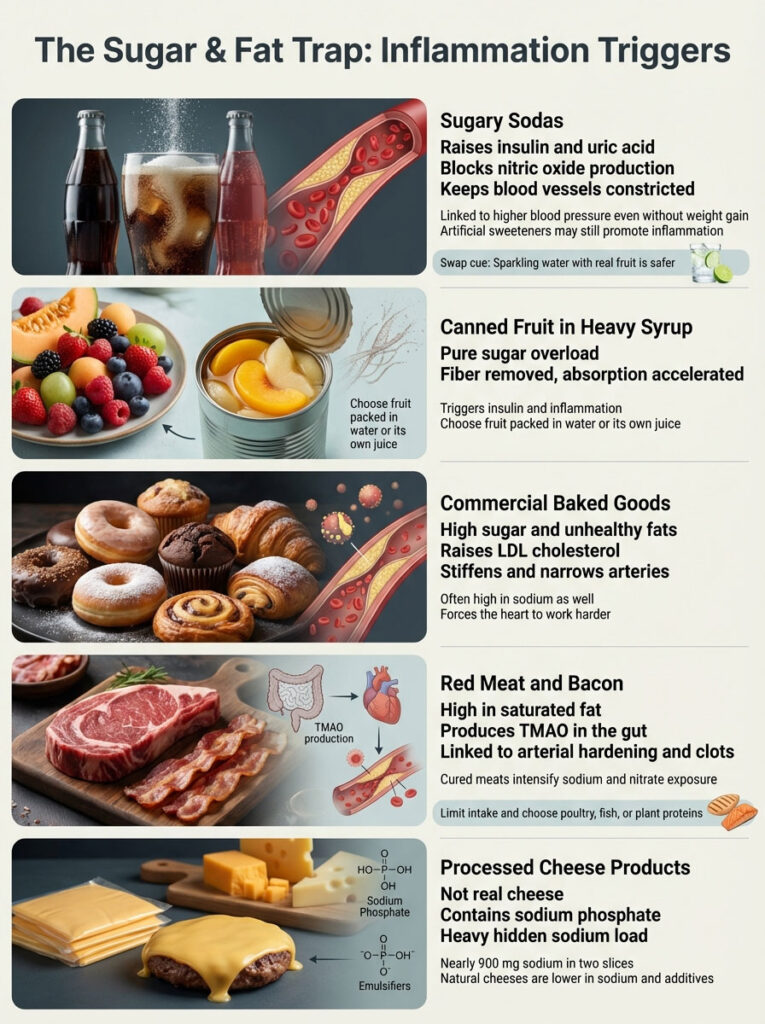
Salt gets all the attention, but sugar is increasingly recognized as a major hypertension driver. High sugar intake raises insulin levels. Insulin is a hormone that tells your kidneys to reabsorb sodium rather than excreting it. High insulin means high sodium retention, regardless of how much salt you eat.
11. Sugary Sodas
New studies suggest that added sugars, specifically high fructose corn syrup found in sodas, may increase blood pressure independently of weight gain. The mechanism involves uric acid. Breaking down fructose produces uric acid as a byproduct. High levels of uric acid in the blood inhibit the production of Nitric Oxide.
As we discussed earlier, Nitric Oxide is the “relax” signal for blood vessels. Without it, vessels stay constricted. Drinking just one sugary soda per day is linked to higher blood pressure numbers. Diet sodas are not a perfect fix either, as some artificial sweeteners may negatively impact gut bacteria which regulate inflammation. Sparkling water with a splash of real fruit juice is the safest hydration strategy.
12. Canned Fruit in Heavy Syrup
When we discuss fruits to avoid with high blood pressure, we must distinguish between fresh and processed. Fresh fruit is excellent and necessary. However, canned fruit swimming in “heavy syrup” is essentially fruit-flavored candy.
The syrup is pure sugar, which triggers the inflammation and insulin response mentioned above. The fruit itself has often been peeled, removing the beneficial fiber that helps regulate sugar absorption. Always choose fruit canned in water or its own juice. Better yet, stick to fresh berries and melons.
13. Commercial Baked Goods (Donuts/Pastries)
These items are a double threat to your cardiovascular system. They are loaded with sugar, but they also contain significant amounts of trans fats or saturated fats from palm oils and butter. These fats raise LDL (bad) cholesterol.
LDL cholesterol contributes to the buildup of plaque in the arteries. As plaque accumulates, arteries become stiffer and narrower. This forces the heart to pump harder to push blood through the smaller opening, raising blood pressure. Donuts, muffins, and croissants are often high in sodium as well (baking soda is sodium bicarbonate), making them a triple threat.
14. Red Meat (Steak/Bacon)
While protein is important for muscle maintenance, red meat is high in saturated fat. The breakdown of red meat in the gut also produces a compound called TMAO (Trimethylamine N-oxide). High levels of TMAO are strongly linked to heart disease, arterial hardening, and blood clots.
Bacon is particularly dangerous because it is both a red meat and a cured meat, meaning it is high in saturated fat, sodium, and nitrates. The DASH diet recommends limiting red meat consumption to once or twice a week and opting for lean poultry, fish, or plant-based proteins like beans and lentils instead.
15. Processed Cheese (American Slices)
Processed cheese products, such as American slices or cheese sprays, are not real cheese. They are technically “pasteurized process cheese food.” They are often less than 51% cheese curds, with the rest being fillers, oil, and emulsifiers.
One of the most common emulsifiers is sodium phosphate. This chemical makes the cheese melt perfectly without separating, but it adds a massive sodium load. Two slices of American cheese can contain nearly 900 mg of sodium. Natural cheeses like Swiss, fresh Mozzarella, or goat cheese are naturally lower in sodium and do not contain these additives.
The Sneaky Condiments & Hidden Triggers
You might cook a healthy piece of chicken or steamed vegetables but then ruin the nutritional profile with the sauce. Condiments are often the most overlooked source of sodium in a high blood pressure diet.
16. Soy Sauce & Tamari
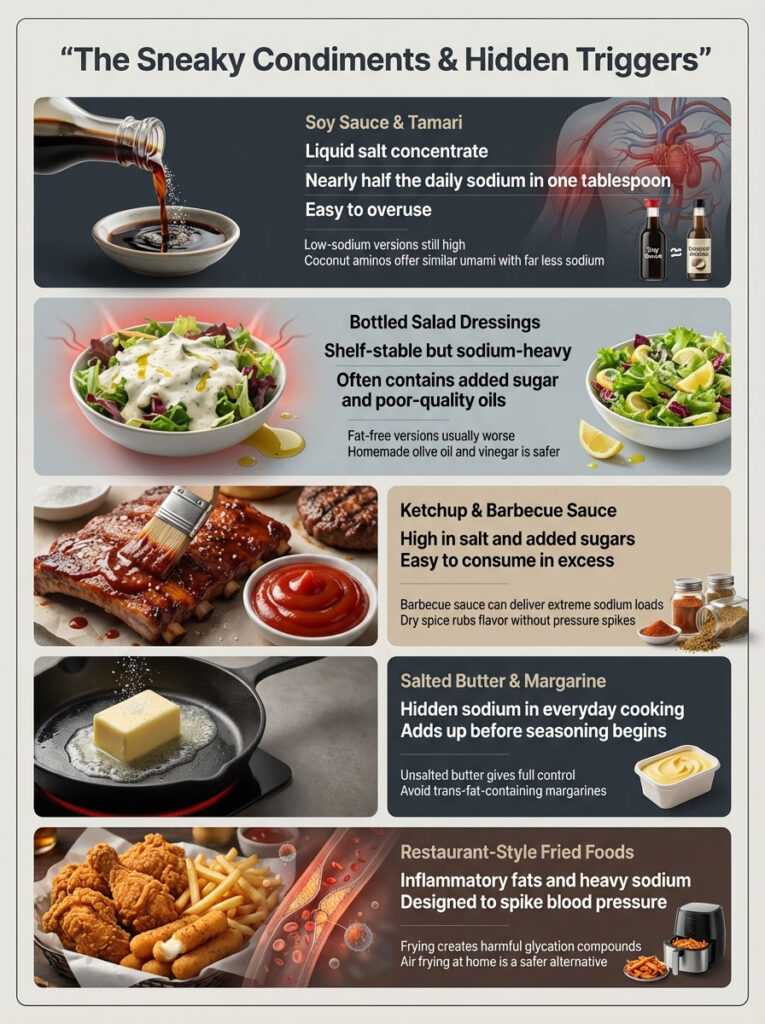
Soy sauce is essentially fermented liquid salt. One tablespoon contains roughly 1,000 mg of sodium. That is nearly half your daily recommended limit in one single spoon. It is very easy to use two or three tablespoons in a stir-fry or as a dipping sauce for sushi.
Even “low sodium” versions are still quite high, often containing 600 mg per tablespoon. Coconut aminos are a popular alternative made from coconut blossom nectar. They contain significantly less salt (around 270 mg) with a similar umami flavor profile.
17. Bottled Salad Dressings
Do not let the word “salad” fool you. Bottled dressings, especially creamy ones like Ranch, Caesar, and Blue Cheese, are loaded with sodium to keep them shelf-stable and flavorful. They also frequently contain added sugars and low-quality oils (soybean or canola) which can be pro-inflammatory.
Fat-free dressings are often the worst offenders, as manufacturers add extra sugar and salt to compensate for the lack of fat flavor. Making your own dressing with extra virgin olive oil, apple cider vinegar, and lemon juice is a safer, heart-healthy option that provides healthy fats without the sodium spike.
18. Ketchup & BBQ Sauce
These pantry staples are often high in both salt and High Fructose Corn Syrup. Barbecue sauce is particularly dangerous, with some popular brands containing 400 mg of sodium and 10 to 15 grams of sugar in just two tablespoons. Since BBQ sauce is usually slathered on meats in large quantities, the intake adds up fast.
Marinades penetrate the meat, so you end up consuming far more sodium than you realize. Dry rubs made from paprika, garlic powder, chili powder, and cumin are a much better way to flavor meat without spiking your blood pressure.
19. Salted Butter/Margarine
Cooking with salted butter adds hidden milligrams to every meal. A recipe might call for a stick of butter, and if you use salted, you are adding roughly 800 mg of sodium to the dish before you even reach for the salt shaker.
It is easy to lose track of how much sodium you are consuming this way. Switching to unsalted butter allows you to control the seasoning yourself. Margarine should generally be avoided if it contains trans fats (partially hydrogenated oils), which are devastating for heart health.
20. Fried Foods (Restaurant Style)
Fried foods combine everything you want to avoid: inflammatory saturated fats, trans fats, and massive amounts of sodium in the breading and seasoning. Fried chicken, mozzarella sticks, or french fries from a fast-food chain are practically designed to spike blood pressure.
The oil damages the lining of the blood vessels, causing inflammation, while the salt retains fluid. Furthermore, the high heat of frying creates Advanced Glycation End-products (AGEs), which are harmful compounds that contribute to oxidative stress and stiffening of the blood vessels. Air frying at home is a much safer alternative.
Practical Strategies: The DASH Diet & Prevention
Knowing what to avoid is half the battle. The other half is knowing what to eat to undo the damage. The gold standard for hypertension management is the DASH diet (Dietary Approaches to Stop Hypertension).
The Core Principles of DASH
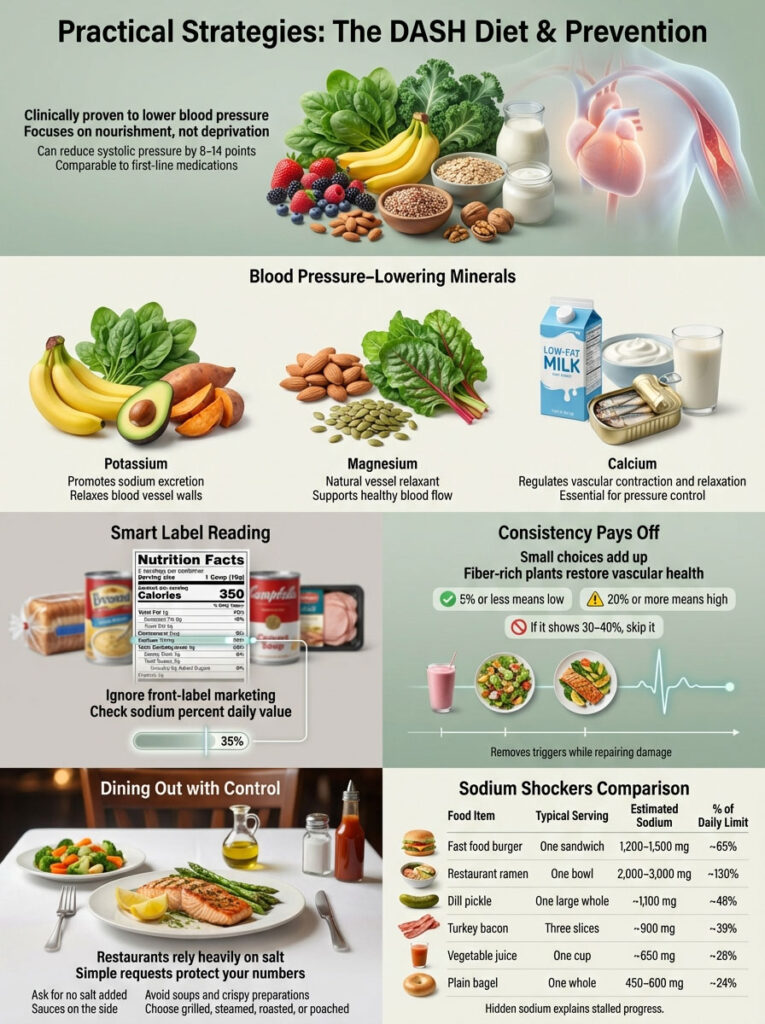
This eating plan is supported by decades of clinical research. It does not just restrict bad foods; it actively floods the body with nutrients that lower blood pressure physically. It emphasizes three critical minerals:
- Potassium: This is the anti-sodium. It helps your kidneys excrete sodium through urine and physically relaxes the tension in your blood vessel walls. Found in bananas, spinach, avocados, and sweet potatoes.
- Magnesium: Acts as a natural calcium channel blocker, helping blood vessels relax. Found in almonds, pumpkin seeds, and leafy greens.
- Calcium: Essential for vascular contraction and dilation controls. Found in low-fat dairy, sardines, and fortified plant milks.
Label Reading Strategy: The 5/20 Rule
When shopping, ignore the marketing claims on the front of the package. Turn it over to the Nutrition Facts label. Look at the Percent Daily Value (%DV) column for sodium.
- 5% DV or less is considered low. This is a green light.
- 20% DV or more is considered high. This is a red light.
- If a product has 30% or 40% of your daily sodium in one serving, put it back on the shelf.
Lower Blood Pressure Naturally
Consistency is key. Studies have shown that following the DASH diet can lower systolic blood pressure by 8 to 14 points, which is comparable to the effect of some first-line medications. By removing foods to avoid with high blood pressure and increasing fiber-rich vegetables, you improve heart health systematically.
Dining Out Safely
Restaurants are a minefield for hypertensive patients. Chefs love salt because it carries flavor. To dine out safely:
- Ask for “No Salt Added”: Request that your meat or fish be grilled without salt, so you can season it yourself at the table.
- Sauce on the Side: Always get dressings and sauces on the side. Dip your fork, do not pour.
- Skip the Soup: Restaurant soups are almost universally high in sodium.
- Avoid the “Crispy”: Words like crispy, battered, breaded, or au gratin usually indicate high salt and fat. Look for steamed, grilled, roasted, or poached.
Data Comparison: Sodium Shockers
To understand why your high blood pressure diet might be failing despite your best efforts, look at the hidden numbers in these common foods compared to your daily budget.
| Food Item | Serving Size | Estimated Sodium (mg) | % of Daily Limit (2,300mg) |
| Fast Food Burger | 1 Sandwich | 1,200 – 1,500 mg | 65% |
| Restaurant Ramen | 1 Bowl | 2,000 – 3,000 mg | 130% |
| Dill Pickle | 1 Large Whole | 1,100 mg | 48% |
| Turkey Bacon | 3 Slices | 900 mg | 39% |
| Vegetable Juice | 1 Cup (8oz) | 650 mg | 28% |
| Bagel (Plain) | 1 Whole | 450 – 600 mg | 24% |
Conclusion & Key Takeaways
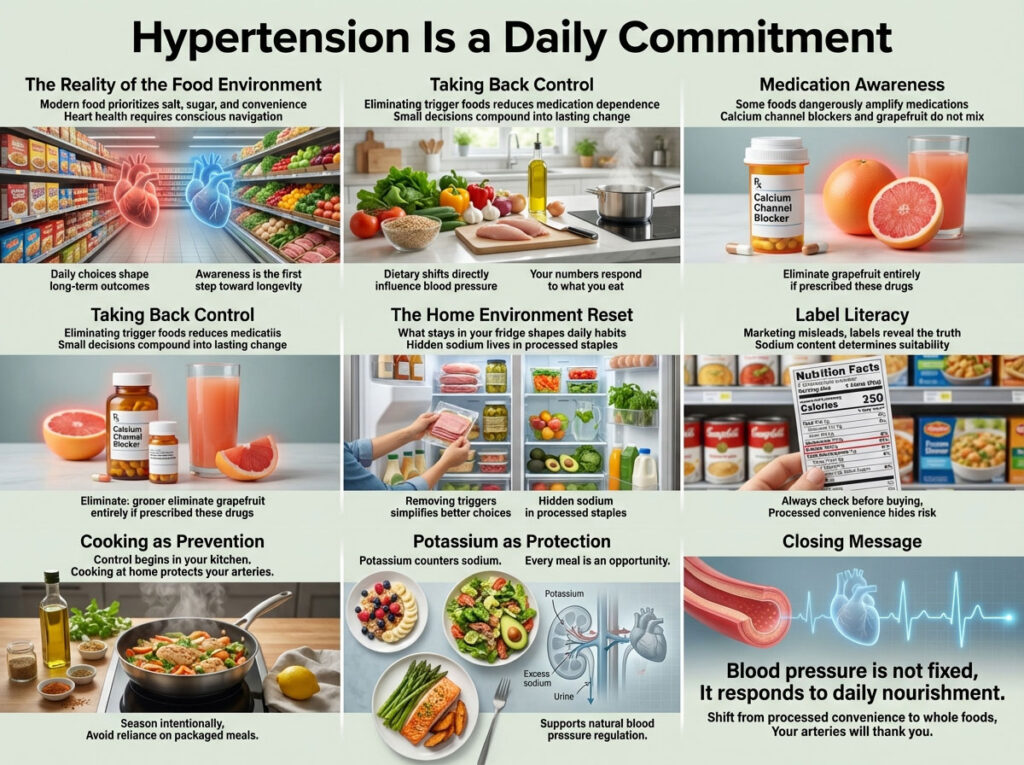
Managing hypertension is a daily commitment to yourself. The food environment in the United States is designed to sell salt, sugar, and convenience, not to protect your heart. It takes conscious effort to navigate this landscape. By identifying and eliminating these 20 dangerous foods, you take a massive step toward longevity and reduced reliance on medication.
Your Action Plan:
- Check your meds: If you take calcium channel blockers, eliminate grapefruit immediately.
- Audit your fridge: Throw out the high-sodium deli meats, pickles, and bottled dressings.
- Read the labels: Never buy a canned soup or frozen meal without checking the sodium content first.
- Cook at home: This is the only way to truly control what goes into your body.
- Increase Potassium: Add a serving of fruit or vegetable to every meal to help flush out sodium.
Your blood pressure is not a fixed number. It is a dynamic metric that responds to what you feed your body. Make the shift today from processed convenience to fresh, whole foods. Your arteries will thank you.
Frequently Asked Questions (FAQ)
What is the number one food to avoid with high blood pressure?
Deli meats and cured meats are consistently ranked as the worst offenders. They are excessively high in sodium, contain nitrates that harden arteries, and are often eaten in large quantities (sandwiches), making them a primary trigger for hypertension.
Why is grapefruit considered dangerous for hypertension patients?
Grapefruit contains compounds that block the CYP3A4 enzyme in the gut. This enzyme breaks down medication. If blocked, drugs like Nifedipine build up in the blood, leading to potential toxicity or dangerously low blood pressure.
Can I eat eggs if I have high blood pressure?
Yes. Eggs are naturally low in sodium. The risk comes from how they are prepared (salted butter) or what they are served with (bacon/sausage). Boiled or poached eggs are a heart-healthy choice rich in protein.
How quickly does cutting salt lower blood pressure?
You can see results surprisingly fast. Most patients see a measurable drop in blood pressure within 14 days of reducing sodium intake and adopting the DASH diet. This rapid response reinforces the power of dietary changes.
Is coffee bad for high blood pressure?
Caffeine causes a short-term blood pressure spike that lasts 30 to 60 minutes. However, moderate coffee consumption is generally safe for regular drinkers as the body adapts to the caffeine. Consult your doctor if you are sensitive to stimulants.
Are bananas good for high blood pressure?
Yes, bananas are excellent. They are rich in potassium, which helps your body flush out excess sodium through urine and relaxes tension in the blood vessel walls, directly counteracting the effects of salt.
Is cheese bad for high blood pressure?
It depends on the cheese. Processed cheeses (American slices, cheese spreads) are very high in sodium. Natural cheeses like Swiss, fresh Mozzarella, or feta (if rinsed) are naturally lower in sodium and can be eaten in moderation.
Does drinking water lower blood pressure?
Yes. Staying hydrated is crucial. Dehydration causes your body to release vasopressin, a hormone that constricts blood vessels and causes kidneys to retain water, raising pressure. Adequate water intake helps maintain optimal blood volume and viscosity.
What is the “Salty Six”?
The “Salty Six” is a list created by the American Heart Association identifying the top sources of sodium in the American diet: bread/rolls, pizza, sandwiches, cold cuts/cured meats, soups, and burritos/tacos.
Can stress raise blood pressure more than food?
Stress causes temporary, dramatic spikes in blood pressure (the fight or flight response). However, poor diet (high salt/sugar) causes chronic, long-term hypertension which is physically damaging to the arteries over years. Both need to be managed.
Are frozen vegetables okay to eat?
Yes, as long as they are “plain” frozen vegetables (e.g., just peas or broccoli). Avoid those with added sauces or seasoning blends, which are often hidden sources of sodium and sugar.
Which condiment is the safest for high blood pressure?
Vinegar-based hot sauces (check the label for sodium), mustard, and lemon juice are great low-sodium flavor boosters. Herbs and spices (garlic powder, oregano, cumin) are the best way to add flavor without salt.
Disclaimer: This article is for informational purposes only and does not constitute medical advice. Hypertension is a serious medical condition. Always consult with your cardiologist or general practitioner before making significant dietary changes or altering your medication routine.
References
- Centers for Disease Control and Prevention (CDC). “Sodium Intake and Health.”
- American Heart Association (AHA). “The Salty Six – Common Foods Loaded with Excess Sodium.”
- U.S. Food and Drug Administration (FDA). “Grapefruit Juice and Some Drugs Don’t Mix.”
- National Institutes of Health (NIH). “DASH Eating Plan.”
- FDA. “Black Licorice: Trick or Treat?”