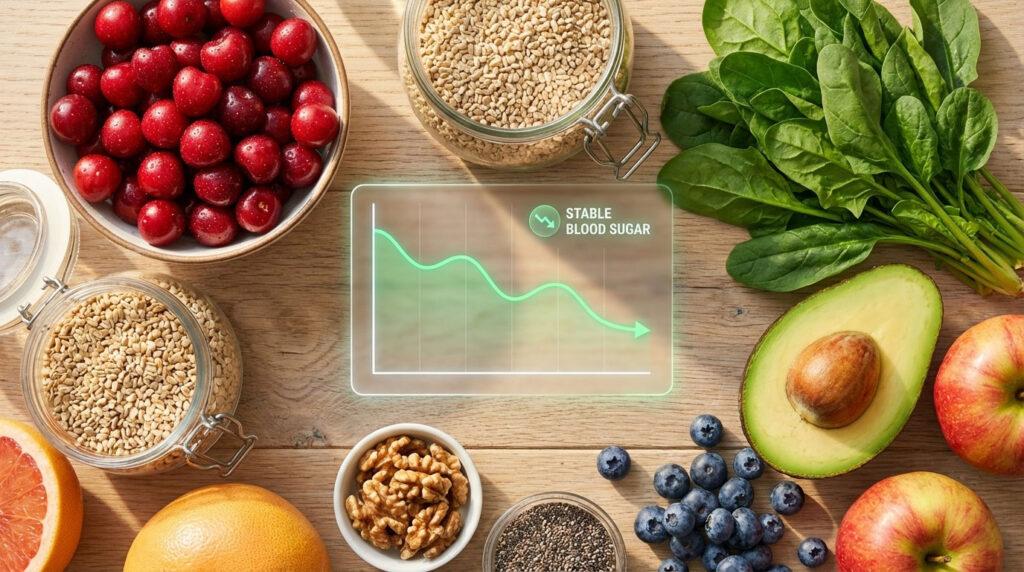
Low-glycemic foods are specific carbohydrates with a Glycemic Index (GI) of 55 or lower that digest slowly, preventing dangerous spikes in blood glucose. To effectively fight high blood sugar and manage insulin resistance, you must prioritize tart cherries (GI 20), leafy greens, legumes like lentils and chickpeas, and steel-cut oats. Pairing these nutrient-dense foods with healthy fats and proteins—a strategy clinically known as “clothing your carbs”—drastically reduces the glycemic load and is the cornerstone of reversing prediabetes and managing Type 2 Diabetes.
Table of Contents
The Silent Glucose Epidemic
You often feel the symptoms long before a doctor confirms the diagnosis. It starts with the mid-afternoon energy crash that coffee cannot fix. It manifests as a stubborn thirst that water does not quench, or the persistent weight around the midsection that refuses to budge despite your best efforts. You are not alone in this physiological struggle.
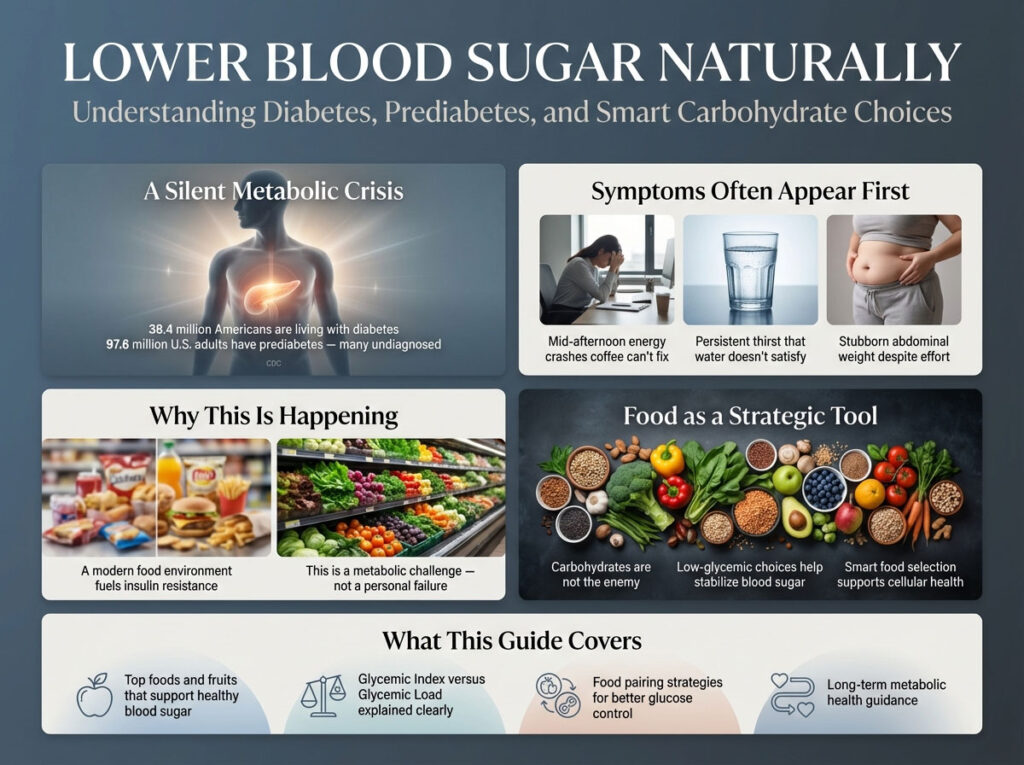
According to the latest data from the Centers for Disease Control and Prevention (CDC), approximately 38.4 million Americans are currently living with diabetes. Even more alarming is the silent majority: 97.6 million adults in the USA have prediabetes, and a significant portion remain undiagnosed. This is not merely a statistical anomaly; it is a metabolic crisis driven largely by our modern food environment.
The solution to regaining control does not always require aggressive pharmaceutical intervention or restrictive starvation diets. The most potent medicine available to you is found in the produce aisle and the pantry. Managing Type 2 Diabetes and reversing insulin resistance requires a fundamental shift in how you view carbohydrates. It is not about eliminating them entirely; it is about selecting low glycemic foods that nourish your cells without flooding your bloodstream with unmanageable levels of glucose.
This comprehensive guide serves as your definitive resource for the top 20 foods and fruits to lower blood sugar. We will dissect the science of the Glycemic Index versus Glycemic Load, explore the biochemistry of food pairing, and provide actionable strategies to help you master your metabolic health for the long term.
The Science of Glucose: Glycemic Index vs Glycemic Load
To navigate your diet effectively, you must understand the metrics that determine how food affects your biology. For decades, the Glycemic Index (GI) has been the standard, but relying on it alone offers an incomplete picture of blood glucose management.
How the Glycemic Index (GI) Measures Insulin Response
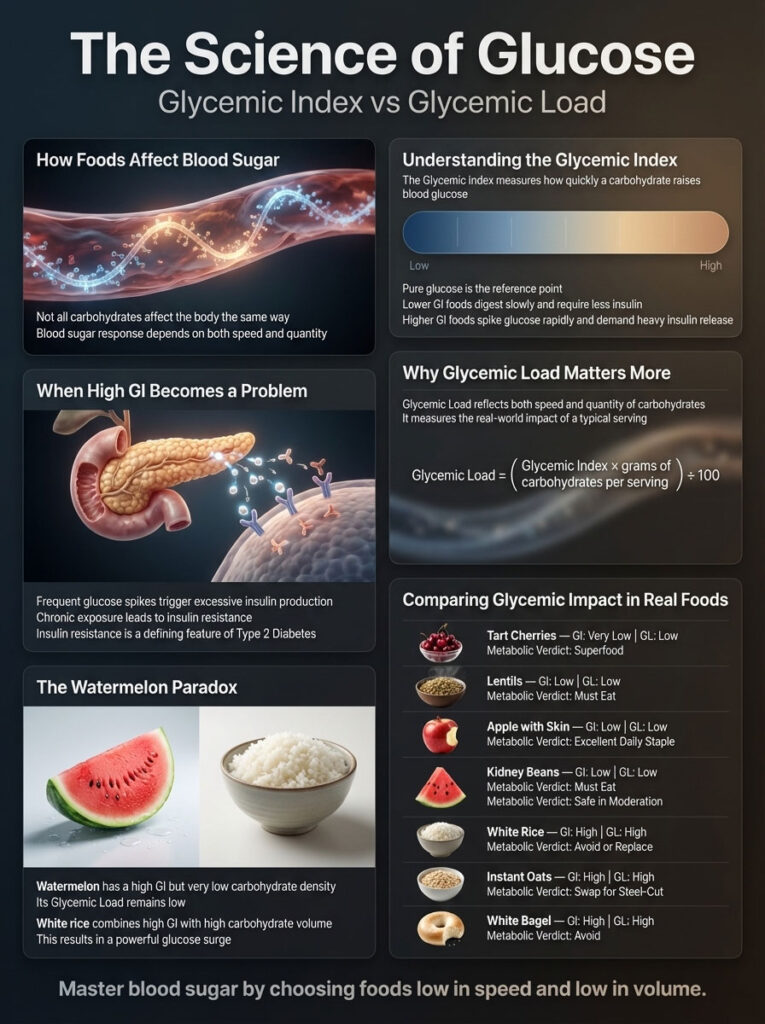
The Glycemic Index is a ranking system for carbohydrates on a scale from 0 to 100 based on the immediate impact on blood glucose levels after consumption. Pure glucose serves as the reference point at 100.
Low GI (0-55): These foods contain complex structures that digestive enzymes struggle to break down quickly. This results in a slow, steady release of glucose into the bloodstream, requiring only a gentle release of insulin.
Moderate GI (56-69): These foods cause a noticeable rise in energy and blood sugar but are not as volatile as high GI options.
High GI (70+): These foods—such as white bread, instant rice, and sugary beverages—are rapidly absorbed. They cause a sharp spike in glucose, forcing the pancreas to flood the system with insulin.
Repeated exposure to high GI foods leads to a condition called hyperinsulinemia. Over time, your cells become numb to the constant insulin signal, leading to insulin resistance, the hallmark of Type 2 Diabetes.
Why Glycemic Load (GL) is the Superior Metric
While GI tells you the speed of the sugar spike, it fails to account for the amount of carbohydrate in a typical serving. This is where Glycemic Load (GL) becomes the critical differentiator for a successful diabetes diet.
Glycemic Load = (GI x Grams of Carbs per Serving) / 100
Consider the watermelon paradox. Watermelon has a high GI of 72, which suggests it is dangerous for diabetics. However, watermelon is primarily water and fiber. A standard slice contains very few grams of actual carbohydrates. Therefore, its GL is very low (around 5).
Contrast this with white rice. It has a high GI and is dense in starch. A small bowl packs a massive carbohydrate punch, resulting in a high GL. To fight high blood sugar effectively, you must prioritize foods that keep both numbers low, ensuring you are not overwhelmed by speed or volume of sugar.
Comparison of Glycemic Impact on Blood Sugar
To visualize why specific food choices matter, we must look at how common items compare when analyzed by both metrics. This distinction helps separate “forbidden” foods from those that can be enjoyed in moderation.
| Food Item | Glycemic Index (GI) | Glycemic Load (GL) | Metabolic Verdict |
| Tart Cherries | 20 (Very Low) | 3 (Low) | Superfood |
| Lentils | 32 (Low) | 5 (Low) | Must Eat |
| Apple (w/ skin) | 36 (Low) | 6 (Low) | Excellent Daily Staple |
| Kidney Beans | 24 (Low) | 7 (Low) | Must Eat |
| Watermelon | 72 (High) | 5 (Low) | Safe in Moderation |
| White Rice | 73 (High) | 30 (High) | Avoid / Replace |
| Instant Oats | 83 (High) | 20 (High) | Swap for Steel-Cut |
| White Bagel | 72 (High) | 25 (High) | Avoid |
The Top 6 Low-Glycemic Fruits for Metabolic Health
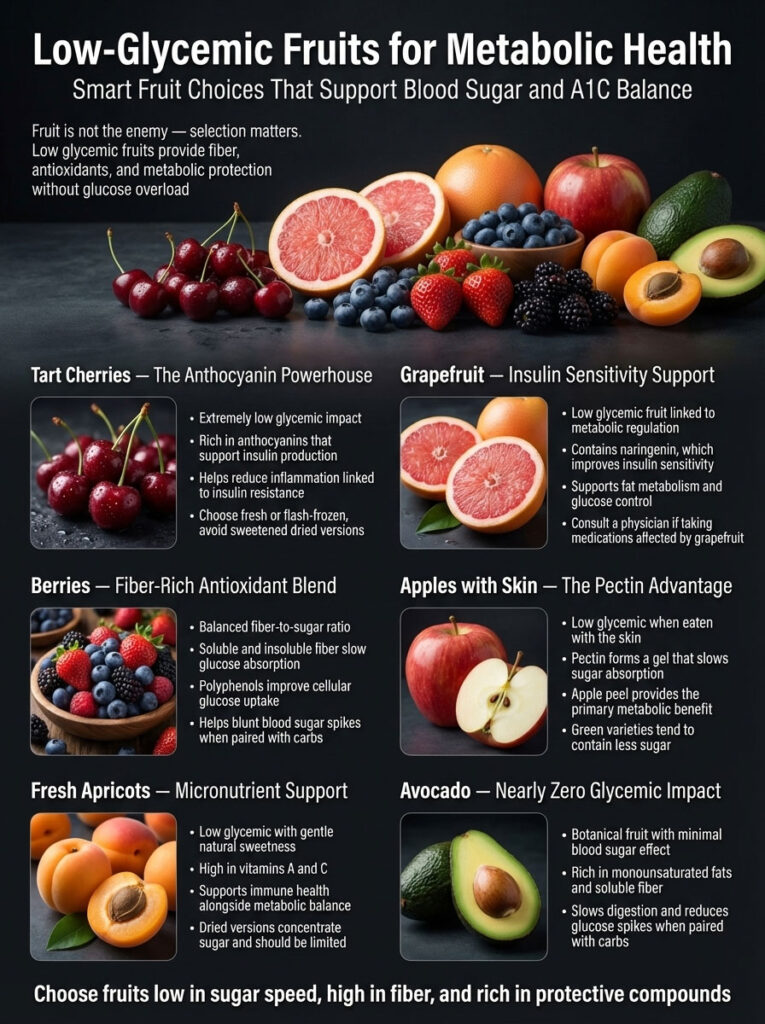
A pervasive myth in the diabetic community is that fruit is strictly off-limits due to fructose content. This misconception deprives many of essential nutrients. You simply need to choose fruits with a low glycemic profile, high fiber content, and potent antioxidants. These options satisfy cravings without wrecking your A1C.
Tart Cherries: The Anthocyanin Powerhouse
If there is a gold standard among low glycemic fruits, it is the tart cherry. With a GI score of just 20, it has one of the lowest impacts on blood sugar of any fruit in existence.
The Biological Mechanism:
Tart cherries are dense with anthocyanins, the pigments that give them their deep red hue. Research suggests that anthocyanins may actively increase insulin production in pancreatic cells. Furthermore, they help reduce systemic inflammation, which is a known driver of insulin resistance.
Buying and Eating Guide:
Opt for fresh cherries when in season or flash-frozen tart cherries year-round. Be vigilant with dried cherries; manufacturers often coat them in sunflower oil and added sugar, which skyrockets the glycemic load.
Grapefruit: The Insulin Sensitivity Booster
Grapefruit has a GI of 25 and has long been associated with weight loss and metabolic regulation.
The Biological Mechanism:
The power of grapefruit lies in a flavonoid called naringenin. Naringenin functions similarly to certain diabetes medications by improving the liver’s sensitivity to insulin. This helps the body burn fat rather than store it and prevents the liver from dumping excess glucose into the bloodstream during fasting states.
Critical Medical Disclaimer:
Grapefruit contains compounds that inhibit the CYP3A4 enzyme in the gut. This enzyme is responsible for metabolizing many drugs, including statins (cholesterol medication) and some blood pressure drugs. Always consult your physician before adding grapefruit to your regimen.
Berries: The Ultimate Fiber-Rich Antioxidant
Strawberries, blackberries, and blueberries generally fall around a GI of 40 and are arguably the most versatile fruit for a prediabetes diet.
The Biological Mechanism:
Berries have an incredible fiber-to-sugar ratio. The seeds in strawberries and blackberries provide insoluble fiber, while the flesh provides soluble fiber. This combination minimizes the postprandial glucose spike. Additionally, blueberries are rich in polyphenols that improve how cells uptake glucose.
Clinical Evidence:
Studies indicate that consuming a cup of berries alongside a high-carb food (like toast) can blunt the resulting insulin spike significantly compared to eating the toast alone.
Apples with Skin: The Pectin Source
An apple is a convenient, portable snack with a low GI range of 36 to 39, provided you eat it correctly.
The Biological Mechanism:
The metabolic magic of an apple is almost entirely in the peel. Apple skin is a primary source of pectin, a prebiotic soluble fiber. In the digestive tract, pectin absorbs water and turns into a viscous gel. This gel physically traps sugar molecules, slowing their absorption into the intestinal wall.
Preparation Warning:
Never peel your apples. Removing the skin removes the fiber buffer, effectively turning the fruit into a simple sugar that absorbs rapidly. Green apples (Granny Smith) tend to have slightly less sugar than red varieties (Fuji or Gala).
Fresh Apricots: The Vitamin A Density
Fresh apricots have a GI of 34 and are an underutilized fruit in the American diet.
The Biological Mechanism:
They offer a subtle sweetness paired with a solid fiber backbone. They are also rich in vitamins A and C, which support immune function—a critical consideration since diabetics are more prone to infections.
Fresh vs. Dried Caution:
Dried apricots are a common trap. While their GI is technically low (around 30), the water removal concentrates the sugar. It is very easy to overeat dried fruit, leading to a massive total glycemic load. Limit dried portions to three or four pieces maximum.
Avocado: The Zero-Glycemic Monounsaturated Fat
While botanically a fruit, the avocado is nutritionally a healthy fat source. With a GI of less than 1, it has virtually no impact on blood sugar.
The Biological Mechanism:
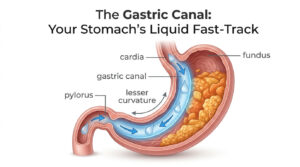
Avocados are rich in monounsaturated fats and soluble fiber. When added to a meal, the fat content slows gastric emptying (the rate at which food leaves the stomach). This means that if you eat avocado with a piece of bread, the bread will digest slower than if you ate it alone.
Low-Glycemic Vegetables & Legumes for Glucose Stabilization
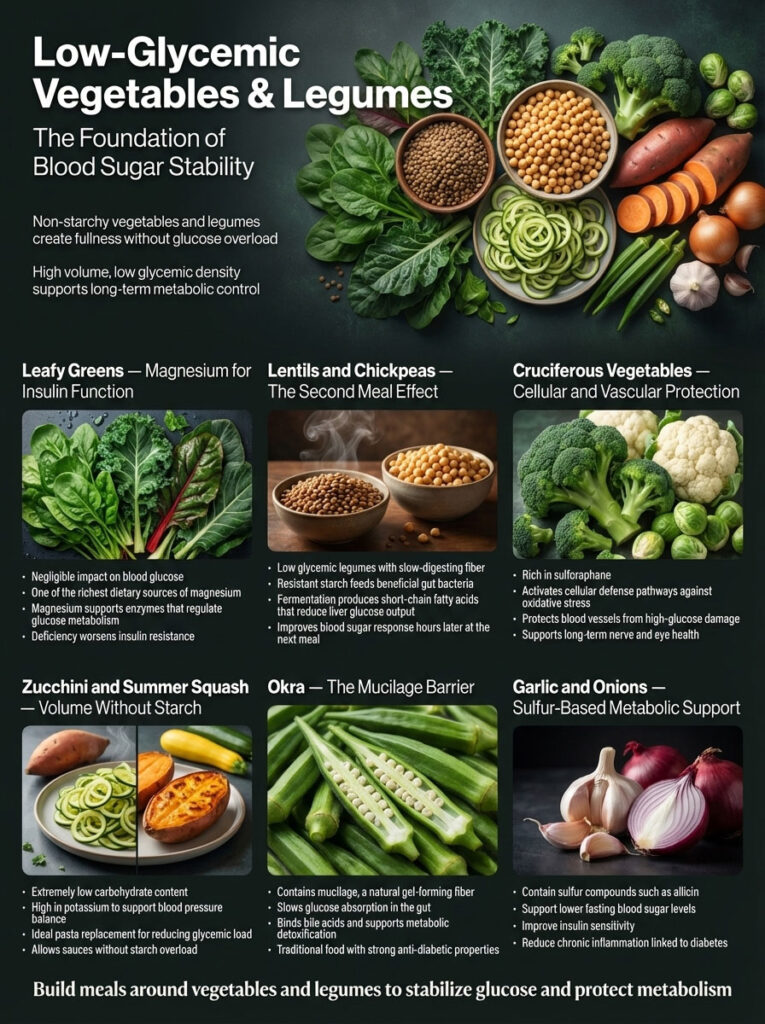
Non-starchy vegetables and legumes should form the bedrock of your nutritional strategy to fight high blood sugar. They provide the necessary volume to trigger satiety hormones without the caloric or carbohydrate density that leads to weight gain.
Leafy Greens: The Magnesium Source for Insulin
You can consume spinach, kale, collard greens, and Swiss chard in almost unlimited quantities. They have negligible impacts on blood glucose.
The Biological Mechanism:
Beyond being low-carb, leafy greens are one of the best dietary sources of magnesium. Magnesium is an essential cofactor for the enzymes that manage glucose metabolism. Clinical data shows that a significant percentage of people with Type 2 Diabetes are magnesium deficient, which worsens their insulin resistance.
Lentils & Chickpeas: The “Second Meal Effect” Phenomenon
Legumes are unique low glycemic foods that offer a profound metabolic benefit known to researchers as the “Second Meal Effect.”
The Biological Mechanism:
Lentils and chickpeas (GI 28-32) contain resistant starch and slow-digesting fibers. When bacteria in the large intestine ferment these fibers, they produce short-chain fatty acids like propionate. These fatty acids signal the liver to reduce glucose production.
Real-World Impact:
This means that eating lentils for lunch doesn’t just keep your blood sugar stable after lunch; it actually improves your glucose tolerance at dinner, hours later. This compounding effect makes legumes a mandatory inclusion for long-term control.
Cruciferous Vegetables: Sulforaphane and Vascular Health
Broccoli, cauliflower, and Brussels sprouts are more than just fiber; they are medicinal foods for the diabetic body.
The Biological Mechanism:
Broccoli is rich in sulforaphane, a sulfur-rich compound. Research has shown that sulforaphane activates Nrf2, a protein that protects cells from oxidative damage. Since high blood sugar damages blood vessels (leading to neuropathy and retinopathy), protecting vascular health is just as important as lowering the sugar itself.
Sweet Potatoes: The Importance of Cooking Method
Sweet potatoes are often recommended as a healthy alternative to white potatoes, but the method of preparation changes their chemical structure entirely.
The Biological Mechanism:
Boiling a sweet potato maintains its structure, keeping the GI relatively low (around 44). However, baking or roasting a sweet potato breaks down the starch granules, converting complex carbs into maltose (sugar). A baked sweet potato can have a GI as high as 94—higher than table sugar.
Actionable Advice:
Always boil or steam your sweet potatoes to keep them as low glycemic foods. Avoid high-heat roasting if your goal is strict glucose control.
Zucchini and Summer Squash: The Pasta Alternative
Zucchini has a very low carbohydrate count and is rich in potassium.
The Biological Mechanism:
Potassium helps counteract the effects of sodium on blood pressure. Hypertension often goes hand-in-hand with diabetes. Furthermore, using zucchini noodles (“zoodles”) acts as a volume replacement for high-GI pasta, allowing you to enjoy sauces without the massive starch load.
Okra: The Mucilage Trap
Okra is a staple in many traditional diets and has powerful anti-diabetic properties due to its texture.
The Biological Mechanism:
The “slime” inside okra is mucilage, a thick, gel-like substance. In the gut, this mucilage binds to cholesterol and bile acids, carrying toxins out of the body. More importantly, it creates a physical barrier that slows the absorption of glucose from the intestines into the bloodstream.
Garlic and Onions: The Sulfur Compounds
These alliums are foundational flavor enhancers that double as metabolic aids.
The Biological Mechanism:
Garlic and onions contain sulfur compounds (like allicin in garlic) that have been shown to lower fasting blood sugar levels and improve insulin sensitivity. They also reduce inflammation, which is a root cause of metabolic dysfunction.
Pantry Staples: Grains, Nuts & Seeds for Insulin Sensitivity
Replacing refined white grains with whole, intact alternatives is the first and most critical step in a prediabetes diet.
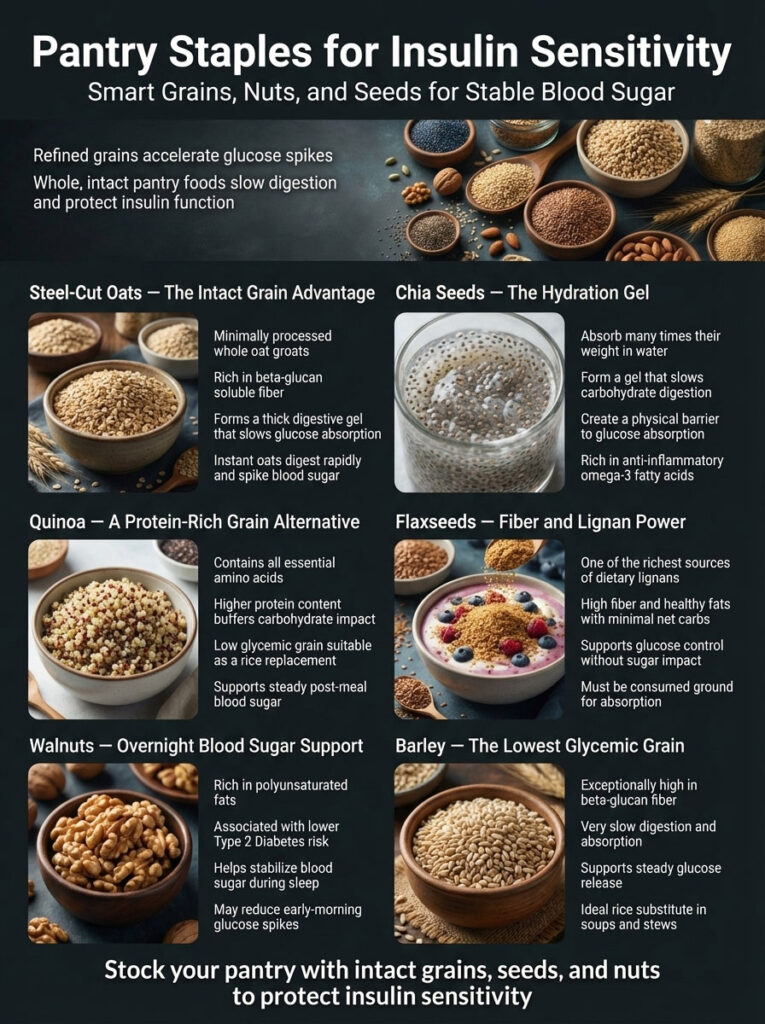
Steel-Cut Oats vs. Instant Oats
Oatmeal is often marketed as heart-healthy, but not all oats are created equal. Instant oats are pre-cooked, rolled thin, and often sugared, leading to a GI near 80.
The Biological Mechanism:
Steel-cut oats (GI 42-52) are the whole oat groat chopped into pieces. They are physically dense and take longer for digestive enzymes to penetrate. They are high in beta-glucan, a soluble fiber that forms a thick solution in the digestive tract, delaying gastric emptying and glucose absorption.
Chia Seeds: The Hydration Gel
Chia seeds are a functional food that every diabetic should have in their pantry.
The Biological Mechanism:
Chia seeds are hydrophilic; they can absorb up to 10-12 times their weight in water. When consumed, they expand in the stomach to form a gel. This gel creates a physical barrier that slows down the enzymatic breakdown of carbohydrates. They are also packed with ALA Omega-3 fatty acids, which fight inflammation.
Quinoa: The Complete Protein Grain
If you need a grain side dish to replace rice, quinoa is a superior option.
The Biological Mechanism:
Unlike most plant foods, quinoa is a complete protein, meaning it contains all nine essential amino acids. The higher protein content (8g per cup) helps buffer the carbohydrate absorption. It has a GI of 53, placing it safely in the low category.
Flaxseeds: The Lignan Source
Ground flaxseeds are incredible for hormone balance and blood sugar.
The Biological Mechanism:
Flaxseeds are the richest dietary source of lignans, which act as antioxidants. They are also almost entirely fiber and fat, with very few net carbs. Adding ground flax to smoothies or yogurt provides a fiber boost without affecting glucose. Note: You must eat them ground; whole flaxseeds pass through the body undigested.
Walnuts: The Bedtime Protector
Walnuts are unique among nuts for their high polyunsaturated fat content.
The Biological Mechanism:
Studies suggest that regular walnut consumption is associated with a lower risk of developing Type 2 Diabetes. Eating a handful of walnuts as a bedtime snack can help stabilize blood sugar overnight, preventing the “Dawn Phenomenon”—a spike in blood sugar that occurs in the early morning due to hormonal surges.
Barley: The Beta-Glucan Alternative
Barley contains even more beta-glucan than oats.
The Biological Mechanism:
Hulled barley (not pearled) requires a long cooking time and an equally long digestion time. It has a GI of roughly 28, making it the lowest glycemic grain available. It is an excellent substitute for rice in soups and stews.
The Art of “Clothing Your Carbs” and Food Sequencing
Eating the right low glycemic foods is only half the battle. The other half is how and when you eat them. This concept, often called “food sequencing” or “clothing your carbs,” relies on biochemistry to manipulate digestion.
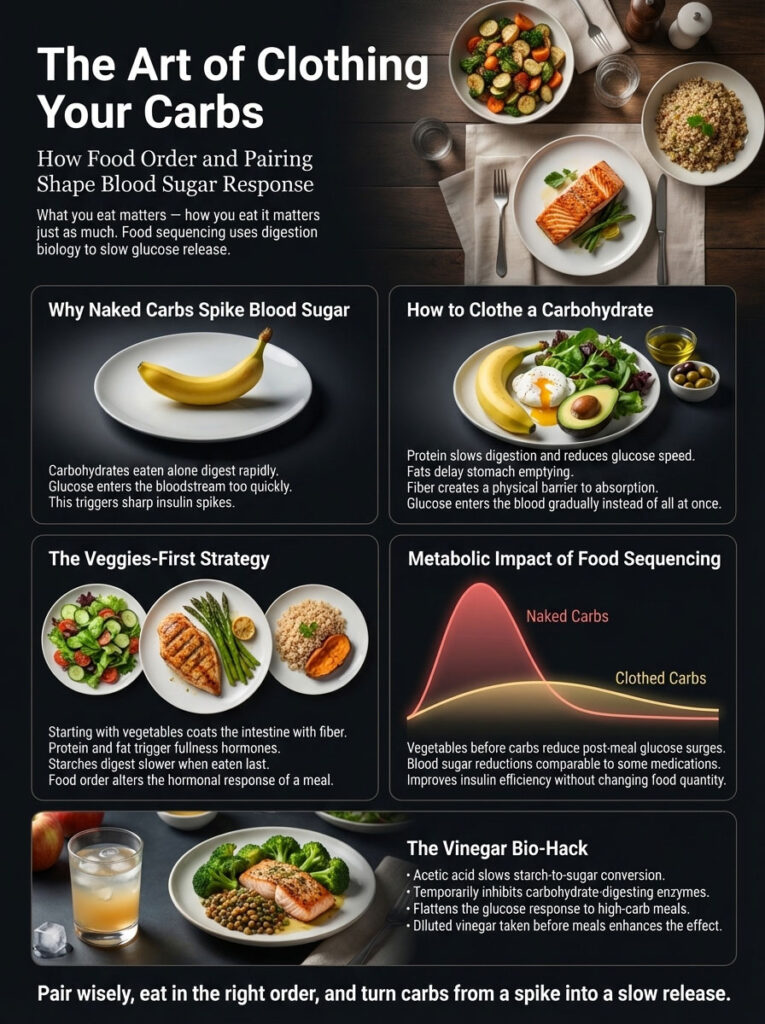
Why You Should Never Eat a “Naked” Carb
A “naked” carb is a carbohydrate eaten on its own—for example, a piece of toast or a banana on an empty stomach. Without other nutrients to interfere, the carbohydrate is broken down into glucose rapidly, shooting straight into the bloodstream.
To “clothe” a carb, you pair it with:
- Protein: (Eggs, Greek yogurt, chicken)
- Fat: (Avocado, nuts, olive oil)
- Fiber: (Vegetables, seeds)
These macronutrients require more effort and time for the stomach to digest. By mixing them with the carb, you slow down the entire digestive process. The glucose enters the bloodstream as a trickle rather than a flood.
The “Veggies First” Sequencing Strategy
The order in which you put food into your mouth changes the hormonal response of the meal.
The Protocol:
- Eat Fiber First: Start your meal with the non-starchy vegetables (salad, broccoli, green beans). This coats the small intestine with a fiber mesh.
- Eat Protein/Fat Second: Consume the meat, fish, or beans. This triggers satiety hormones (GLP-1) that tell the brain you are getting full.
- Eat Starches/Sugars Last: Save the rice, potato, or fruit for the end of the meal. By the time these hit the stomach, there is already a buffer of fiber and protein waiting.
Clinical Insight:
Research indicates that eating vegetables before carbohydrates can reduce post-meal blood sugar levels by up to 30%, an effect comparable to some diabetic medications.
The Vinegar Bio-Hack
Vinegar is a powerful metabolic tool disguised as a condiment.
The Mechanism:
Acetic acid, the active component in vinegar, temporarily inactivates alpha-amylase. Alpha-amylase is the enzyme in your saliva and gut that turns starch into sugar. By inhibiting this enzyme, the vinegar essentially prevents some of the starch you eat from turning into glucose.
The Protocol:
Mix 1 tablespoon of Apple Cider Vinegar in a tall glass of water and drink it 10 to 15 minutes before a high-carb meal. This simple habit can significantly flatten the glucose curve.
20 Low-Glycemic Foods & Fruits You Must Eat to Fight High Blood Sugar
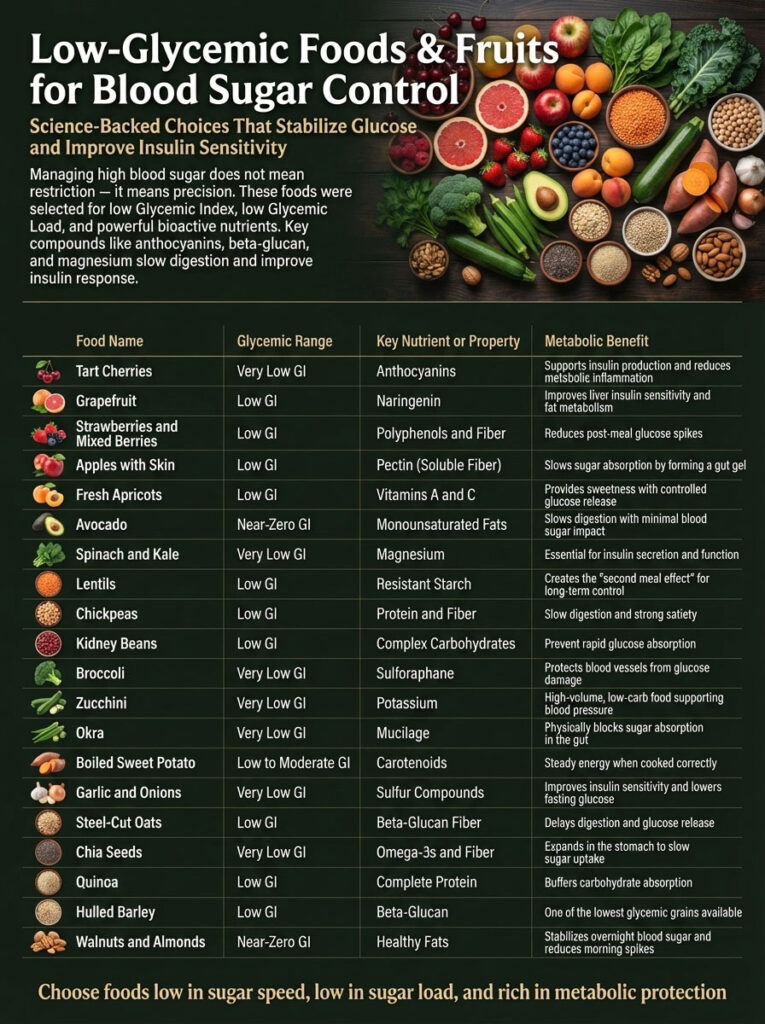
Navigating the grocery store with high blood sugar can feel restrictive. However, there is an abundance of powerful foods that actively support your metabolic health. The following list comprises the top 20 science-backed fruits, vegetables, legumes, and pantry staples designed to stabilize glucose levels. These items were selected not just for their low Glycemic Index (GI) but for their low Glycemic Load (GL) and specific bioactive compounds. Key nutrients like anthocyanins, beta-glucan, and magnesium help improve insulin sensitivity and slow digestion.
| Food Item | Est. GI Score | Key Nutrient / Property | Why It Fights High Blood Sugar |
| 1. Tart Cherries | 20 (Very Low) | Anthocyanins | Increases insulin production and reduces metabolic inflammation. |
| 2. Grapefruit | 25 (Low) | Naringenin | Improves the liver’s sensitivity to insulin and helps burn fat. |
| 3. Strawberries / Berries | 40 (Low) | Polyphenols & Fiber | Blocks digestive enzymes to reduce post-meal glucose spikes. |
| 4. Apples (w/ Skin) | 36 (Low) | Pectin (Soluble Fiber) | Forms a gel in the gut that physically traps sugar molecules. |
| 5. Fresh Apricots | 34 (Low) | Vitamins A & C | Provides sweetness without the spike. High fiber regulates absorption. |
| 6. Avocado | < 1 (Very Low) | Monounsaturated Fat | Slows gastric emptying. Virtually zero impact on blood glucose. |
| 7. Spinach & Kale | < 15 (Very Low) | Magnesium | Magnesium is essential for proper insulin secretion and action. |
| 8. Lentils | 32 (Low) | Resistant Starch | Creates the “Second Meal Effect” which lowers glucose at the next meal. |
| 9. Chickpeas (Garbanzo) | 28 (Low) | Protein & Fiber | High satiation prevents overeating. Digests very slowly. |
| 10. Kidney Beans | 24 (Low) | Complex Carbohydrates | Prevents rapid sugar absorption. Excellent plant-based protein source. |
| 11. Broccoli | < 15 (Very Low) | Sulforaphane | Protects blood vessels from sugar damage and oxidative stress. |
| 12. Zucchini | 15 (Very Low) | Potassium | Low-carb volume food. Potassium helps manage blood pressure. |
| 13. Okra | < 20 (Very Low) | Mucilage | The gel-like substance inside physically blocks sugar absorption in the gut. |
| 14. Sweet Potato (Boiled) | 44 (Low/Mod) | Carotenoids | Must be boiled. Provides steady energy without the crash of white potatoes. |
| 15. Garlic & Onions | 10 (Very Low) | Sulfur Compounds | Shown to lower fasting blood sugar and improve insulin sensitivity. |
| 16. Steel-Cut Oats | 42-52 (Low) | Beta-Glucan Fiber | Forms a thick viscous gel in the stomach that delays digestion. |
| 17. Chia Seeds | 1 (Very Low) | Omega-3s & Fiber | Expands in the stomach to curb appetite and slow sugar uptake. |
| 18. Quinoa | 53 (Low) | Complete Protein | Contains all amino acids. Protein buffer prevents sharp spikes. |
| 19. Barley (Hulled) | 28 (Low) | Beta-Glucan | One of the lowest GI grains. Excellent substitute for white rice. |
| 20. Walnuts & Almonds | 0 (Very Low) | Healthy Fats | Stabilizes blood sugar overnight. Prevents the “Dawn Phenomenon.” |
Practical “Eat This, Not That” Swaps for Daily Life
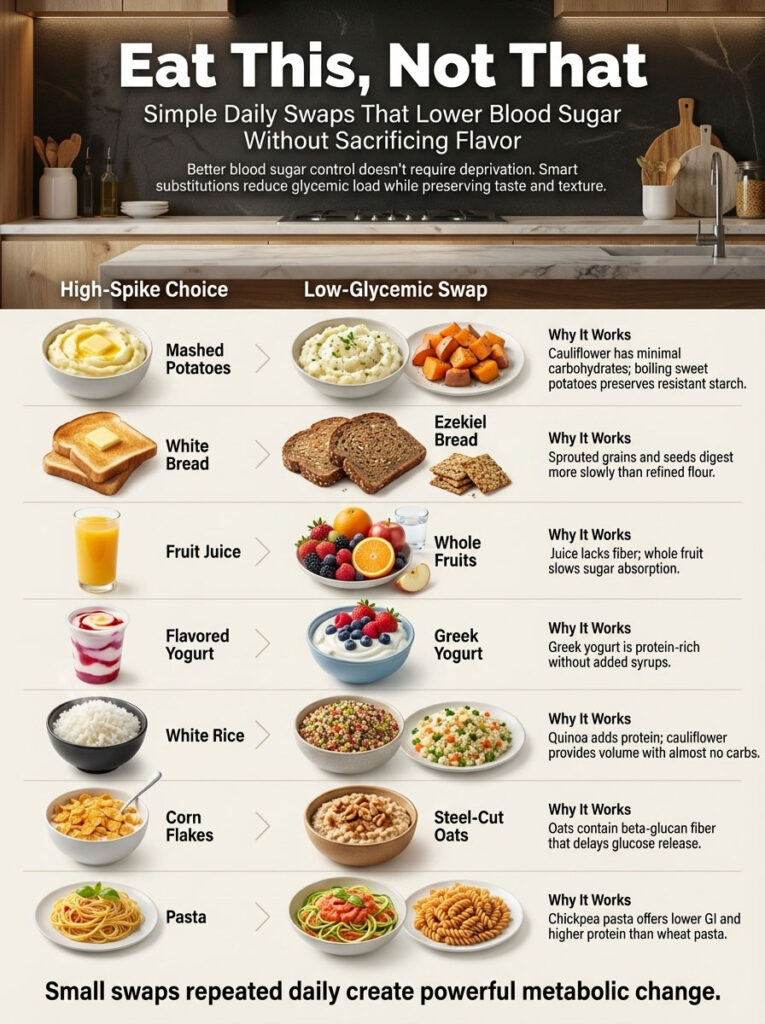
Implementing these changes does not mean you have to sacrifice flavor or texture. It requires smart substitutions that mimic the foods you love while drastically reducing the glycemic load.
| High-Spike Food (Avoid) | Low-Glycemic Swap (Eat) | Why It Works |
| Mashed Potatoes | Mashed Cauliflower or Boiled Sweet Potato | Cauliflower has a fraction of the carbs. Boiled sweet potato retains resistant starch. |
| White Bread Toast | Ezekiel Bread or Seed Crackers | Sprouted grains (Ezekiel) and seeds break down much slower than refined wheat flour. |
| Fruit Juice | Whole Fruit (e.g. Orange w/ pith) | Juice is liquid sugar with no fiber brake. Whole fruit provides the necessary fiber matrix. |
| Flavored Yogurt | Greek Yogurt + Fresh Berries | Commercial yogurt is packed with added syrup. Greek yogurt is high in protein. |
| White Rice | Quinoa or Cauliflower Rice | Quinoa offers more protein; cauliflower rice offers volume with near-zero carbs. |
| Corn Flakes | Steel-Cut Oats w/ Walnuts | Corn flakes are highly processed high-GI starch. Oats provide beta-glucan fiber. |
| Pasta | Zucchini Noodles or Chickpea Pasta | Chickpea pasta has a lower GI and higher protein content than wheat pasta. |
Advanced Strategies: Cooling Starches and Lifestyle Factors
Diet is the primary lever, but other factors influence how your body processes low glycemic foods.
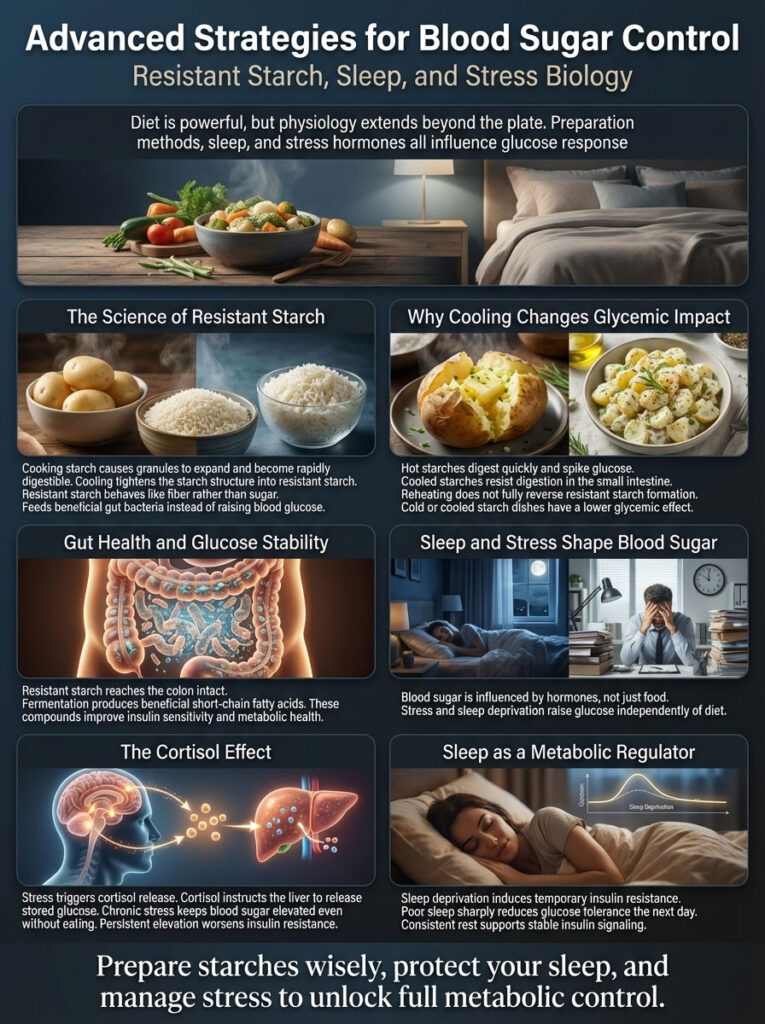
The Science of Resistant Starch (Cooling)
You can chemically alter the structure of high-starch foods like potatoes, rice, and pasta to make them healthier.
The Process:
When you cook a potato, the starch granules gelatinize (expand). If you eat it hot, it is highly digestible (High GI). However, if you cool that potato in the refrigerator for 12-24 hours, the starch molecules retrograde. They tighten up and become resistant starch.
The Benefit:
Resistant starch resists digestion in the small intestine. It travels to the colon where it feeds good bacteria, effectively acting like fiber. Reheating the potato does not reverse this process significantly. Therefore, potato salad (made with olive oil, not sugary dressing) has a lower glycemic impact than a hot baked potato.
Sleep and Stress: The Cortisol Connection
You can eat a perfect diet and still have high blood sugar if you are sleep-deprived or stressed.
The Mechanism:
Stress triggers the release of cortisol. Cortisol’s evolutionary job is to mobilize energy for a “fight or flight” response. It does this by telling the liver to dump stored glucose into the bloodstream. If you are chronically stressed, your body is constantly flooding your system with sugar, even if you haven’t eaten.
Actionable Tip:
Prioritize 7-9 hours of sleep. Sleep deprivation induces a temporary state of insulin resistance. A single night of poor sleep can reduce your ability to process glucose by 40% the next day.
Frequently Asked Questions on Blood Sugar Management
What foods bring blood sugar down quickly?
It is important to clarify that no food acts like insulin to lower blood sugar instantly. However, drinking water helps dilute the blood and flush excess glucose through urine. Consuming zero-carb proteins (like hard-boiled eggs) can satiate hunger without adding glucose. A brisk 15-minute walk is the most effective “rapid” non-medical way to lower levels as muscles use the glucose for energy.
Which fruit has the lowest glycemic index?
Tart cherries are widely considered the lowest with a GI score of 20. Grapefruit (25), dried apricots (30, if unsweetened), and pears (38) are also excellent. Avocados are technically fruits and have a GI near zero because they are primarily fat and fiber.
Is banana good for a diabetic patient?
Bananas are complex. A green (unripe) banana is high in resistant starch and has a lower GI. As it ripens and turns yellow/brown, that starch converts to simple sugar, and the GI rises significantly. If you eat a banana, choose one that is slightly green, eat only half, and always pair it with peanut butter or nuts to blunt the spike.
What is a good bedtime snack for high blood sugar?
A handful of almonds, a slice of cheese, or a hard-boiled egg are excellent choices. These provide protein and healthy fats without carbohydrates. This can help prevent the “Dawn Phenomenon,” where blood sugar spikes in the early morning hours due to the release of waking hormones like cortisol.
How do I start a low-glycemic diet?
Start by identifying the “white” foods in your diet (bread, rice, pasta, sugar) and swapping them for “brown” or whole versions. Trade white bread for dense, seeded whole grain bread. Trade white rice for quinoa or legumes. Eliminate liquid calories (soda, juice) immediately. Focus on adding one serving of low glycemic vegetables to every meal to increase fiber intake.
Can I reverse prediabetes just by eating low GI foods?
For many individuals, yes. The CDC and National Diabetes Prevention Program state that by adhering to a healthy diet, losing a modest amount of weight (5-7% of body weight), and increasing physical activity, prediabetes is reversible. A low-GI diet is the most effective nutritional strategy to achieve this.
What is the difference between Glycemic Index and Glycemic Load?
The Glycemic Index (GI) measures the speed at which a food raises blood sugar. The Glycemic Load (GL) measures the actual impact of a standard serving size. GL is often a better real-world indicator. For example, carrots have a high GI, but you would have to eat pounds of them to spike your sugar, so their GL is very low.
Are sweet potatoes safe for diabetics?
Yes, but preparation is key. Boiled sweet potatoes have a moderate GI and are safe in moderation (half a cup). Roasted or baked sweet potatoes have a high GI because the dry heat breaks down the starch into maltose, making it digest very quickly.
Does drinking water help lower blood sugar?
Yes. When your blood sugar is high, your body attempts to excrete the excess glucose through urine. This process requires water. Drinking plenty of water helps the kidneys flush out the sugar and prevents dehydration, which can cause blood sugar concentrations to rise even further.
Why does my blood sugar spike in the morning even if I didn’t eat?
This is known as the “Dawn Phenomenon.” In the early morning, your body releases hormones (growth hormone, cortisol, glucagon) to wake you up. These hormones trigger the liver to release stored glucose to give you energy. In diabetics, the body doesn’t produce enough insulin to counteract this release, leading to high morning readings.
Are eggs low glycemic?
Yes. Eggs have a GI of 0. They contain virtually no carbohydrates and are comprised of high-quality protein and healthy fats. They are an excellent staple for stabilizing blood glucose and keeping you full.
Is oatmeal good for insulin resistance?
Steel-cut oats are excellent because they contain beta-glucan fiber, which improves insulin response and gut health. However, instant oatmeal packets are highly processed, often contain added sugar, and digest too quickly, causing spikes. Stick to steel-cut or rolled oats.
Disclaimer
This article is for informational purposes only and does not constitute medical advice, diagnosis, or treatment. Always consult with a qualified healthcare professional, registered dietitian, or endocrinologist before making significant changes to your diet, exercise routine, or insulin regimen, especially if you are currently taking medication for diabetes or other metabolic conditions.
References:
- Centers for Disease Control and Prevention (CDC). “National Diabetes Statistics Report.”
- American Diabetes Association (ADA). “Glycemic Index and Diabetes.”
- National Institute of Diabetes and Digestive and Kidney Diseases (NIDDK). “Insulin Resistance & Prediabetes.”
- Journal of Nutrition. “Anthocyanins and Insulin Sensitivity.”
- Diabetes Care. “Vinegar Ingestion at Bedtime Moderates Waking Glucose Concentrations.”
- European Journal of Clinical Nutrition. “The Second Meal Effect of Legumes.”