You know that specific, dread-inducing feeling all too well. It often starts as a mild, gnawing discomfort in the center of your chest right after a delicious dinner. Within an hour, it escalates into a burning fire that travels up your throat, leaving a sour taste in your mouth and keeping you awake at 2 AM. If you are part of the estimated 20% of the US population currently managing Gastroesophageal Reflux Disease (GERD), relying solely on chalky antacids or daily proton pump inhibitors (PPIs) often feels like putting a small bandage on a gaping wound. Medication can suppress acid production, but it rarely fixes the underlying mechanical issues caused by the specific foods we consume daily.
Table of Contents
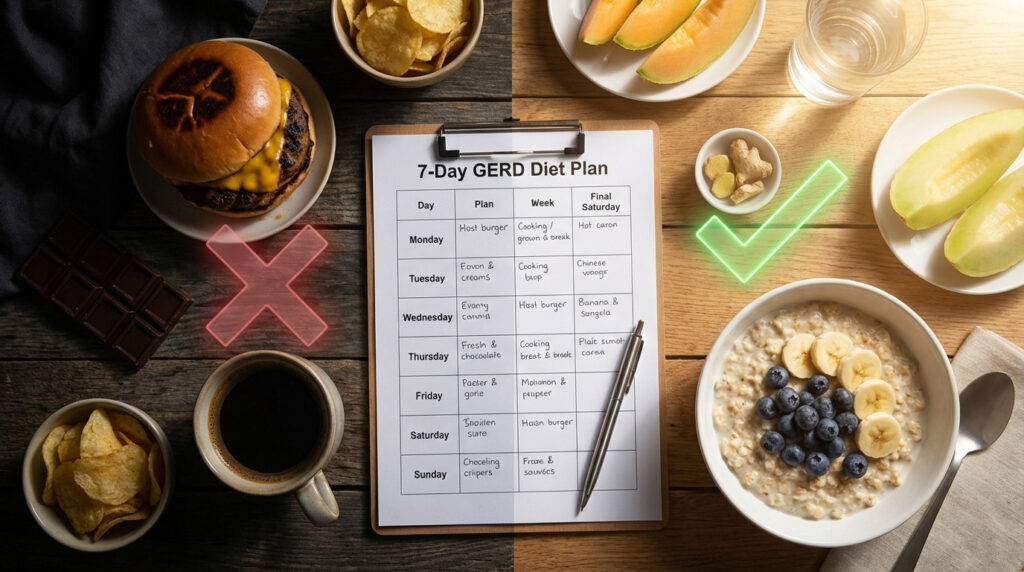
The reality is that your esophagus is sensitive, and the modern American diet is aggressive. This comprehensive 7-day GERD diet plan is not just about restriction or taking away the joy of eating. It is a strategic, science-backed approach to healing from the inside out. By meticulously focusing on easy acid reflux diet recipes that prioritize low-acid ingredients, alkaline vegetables, and high-fiber complex carbohydrates, you can actively reduce esophageal inflammation.
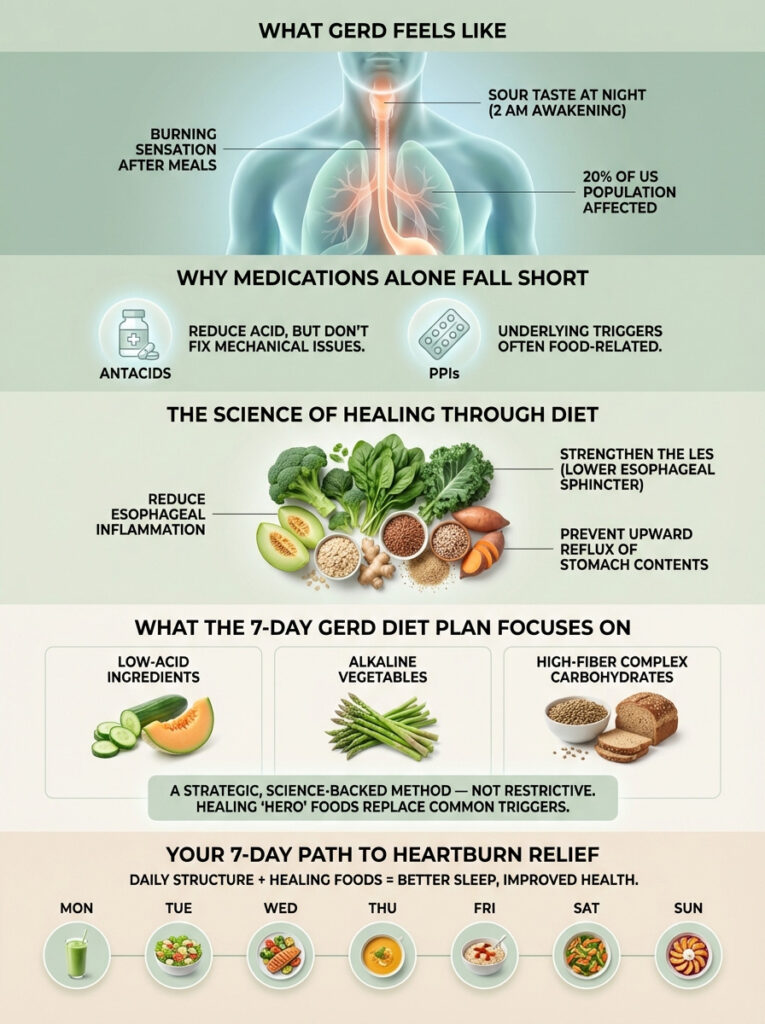
A structured, well-executed GERD diet plan helps strengthen the Lower Esophageal Sphincter (LES) and prevents stomach contents from rising, offering you the long-term heartburn relief you have been searching for. Over the next week, we will replace common triggers with healing “hero” foods, providing you with the deep science, the daily schedule, and the culinary tools you need to reclaim your sleep and your health.
Understanding the Mechanics of a GERD Diet Plan for Long-Term Healing
To truly master your digestion and stop the burn, you must first understand the anatomy behind the pain. GERD is fundamentally a mechanical issue involving the Lower Esophageal Sphincter (LES). This is a ring of muscle acting as a crucial valve between your esophagus and your stomach.
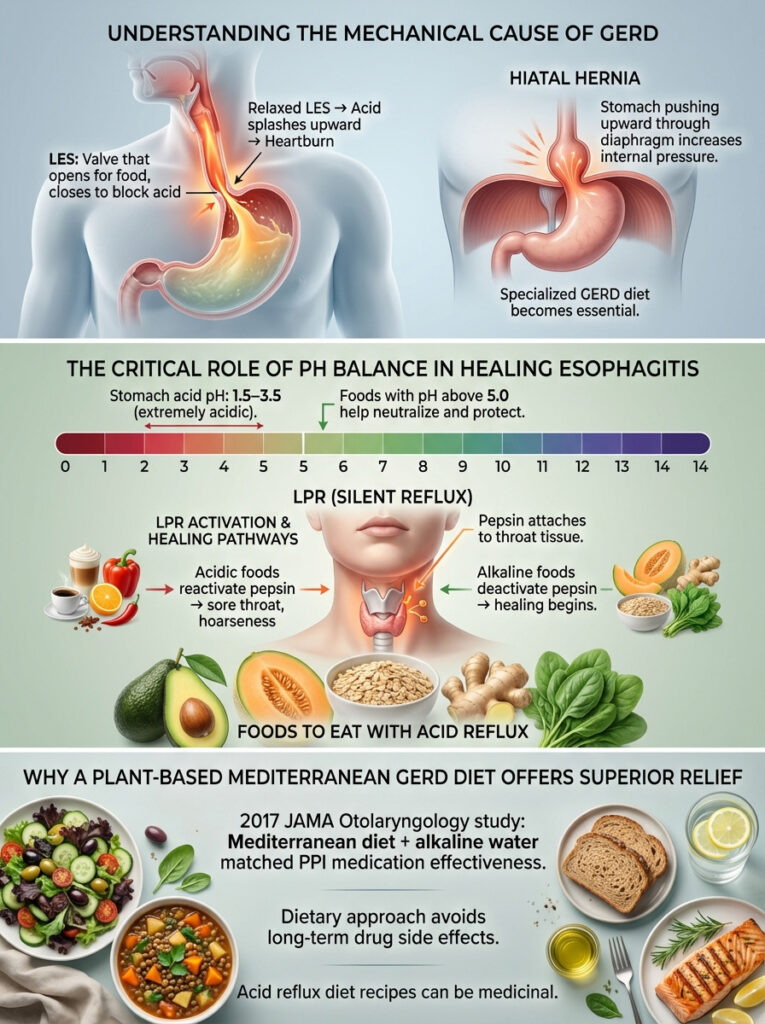
When your digestive system functions correctly, the LES opens to let food down and closes tightly to keep acid where it belongs. However, certain lifestyle choices and specific foods chemically relax this valve. When that happens, highly corrosive stomach acid splashes up into the delicate tissue of the esophagus. This causes the sensation we know as heartburn. Furthermore, for those with a Hiatal Hernia, where the stomach pushes up through the diaphragm, a specialized GERD diet plan becomes even more critical to manage internal pressure.
The Critical Role of pH Balance and Stomach Acid in Esophagitis
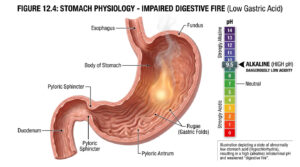
The stomach is biologically designed to handle high acidity to break down proteins. The throat and esophagus are not. A successful, healing GERD diet plan focuses heavily on pH balancing. The pH scale ranges from 0 to 14, where a lower number indicates higher acidity. Stomach acid typically sits between pH 1.5 and 3.5, which is strong enough to dissolve metal.
When you consume foods to eat with acid reflux that have a pH above 5.0, you help neutralize the stomach environment and protect the esophageal lining. This is particularly critical for those suffering from Laryngopharyngeal Reflux (LPR), often called “silent reflux.” In LPR, an enzyme called pepsin floats up with the acid and attaches to the throat tissue. Whenever you eat acidic foods, that pepsin activates and begins to digest your own cells, causing sore throats and hoarseness. Eating alkaline foods prevents this activation, allowing the tissue to finally heal.
Why a Plant-Based Mediterranean Approach Offers Superior Heartburn Relief
Recent medical insights suggest that what you eat can be just as powerful as the pills you take. A pivotal 2017 study published in JAMA Otolaryngology compared patients treated with standard PPI medication to those placed on a plant-based, Mediterranean-style diet combined with alkaline water.
The results were groundbreaking for the gastroenterology community. The group following the dietary approach saw a reduction in symptoms that was just as significant as the medication group, without the potential side effects of long-term drug use. This proves that acid reflux diet recipes rich in root vegetables, whole grains, and lean proteins are not just supportive; they are medicinal.
Identifying the Heroes and Villains: Best and Worst Foods for Acid Reflux
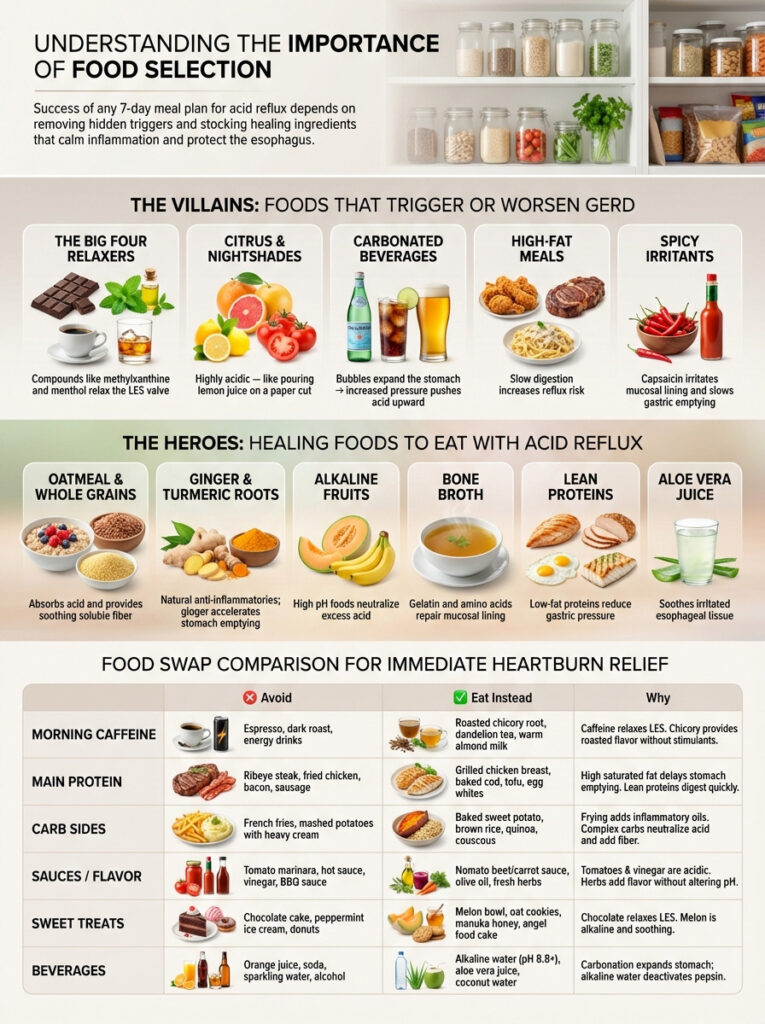
Before we dive into the daily meal plan, we must perform a complete audit of your pantry and refrigerator. The success of any 7-day meal plan for acid reflux depends entirely on eliminating the hidden triggers that keep your esophagus inflamed and stocking up on healing agents that coat and soothe the stomach lining.
The Villains: Common Trigger Foods to Avoid for GERD Relief
These foods are categorized as villains because they either increase stomach acidity or chemically relax the LES valve, keeping it open when it should be shut.
- The “Big Four” Relaxers: Chocolate, Peppermint, Caffeine, and Alcohol. These four substances contain compounds (like methylxanthine in chocolate and menthol in mint) that physically paralyze the LES valve muscle.
- Citrus and Nightshades: Oranges, grapefruits, lemons, and tomatoes are naturally highly acidic. For an esophagus that is already raw from reflux, these act like pouring lemon juice on a paper cut.
- Carbonated Beverages: The bubbles in sparkling water, soda, or beer expand the stomach rapidly. This increased gastric pressure forces the LES open physically, pushing acid up.
- High-Fat Meals: Fried foods, fatty cuts of steak, and heavy cream-based sauces take a long time to digest. The longer food sits in the stomach, the higher the risk of reflux occurring.
- Spicy Irritants: Capsaicin, the compound found in chili peppers and hot sauces, can slow down digestion and directly irritate the inflamed mucosal lining of the esophagus.
The Heroes: Healing Foods to Eat with Acid Reflux
These ingredients actively soothe inflammation, neutralize excess acid, and assist in rapid gastric emptying.
- Oatmeal and Whole Grains: Oatmeal is a fantastic absorber of stomach acid and provides soluble fiber to keep digestion moving smoothly. Brown rice and couscous are also excellent complex carbs.
- Ginger and Turmeric Roots: These are powerful natural anti-inflammatories. Ginger is also a known prokinetic, meaning it helps empty the stomach faster, reducing the window of time reflux can happen.
- Alkaline Fruits: Melons (cantaloupe, honeydew, watermelon) and bananas have a high pH. They work to neutralize acid on contact.
- Bone Broth: Rich in collagen, gelatin, and amino acids, bone broth helps repair the mucosal lining of the gut and esophagus.
- Lean Proteins: Chicken breast, turkey, egg whites, and wild-caught white fish provide essential nutrition without the saturated fat that triggers symptoms.
- Aloe Vera Juice: Just as aloe soothes a sunburn on your skin, food-grade aloe vera juice can soothe the burn inside your esophagus.
Detailed Food Swap Comparison for Immediate Heartburn Relief
Making the right choice at the grocery store is the battle half won. Use this detailed comparison table to find safe, delicious alternatives for your common cravings.
| Craving Category | ❌ Avoid (High Acid / Trigger) | ✅ Eat Instead (GERD Friendly) | Why This Swap Works for Your Digestion |
| Morning Caffeine | Espresso, Dark Roast Coffee, Energy Drinks | Roasted Chicory Root, Dandelion Tea, Warm Almond Milk | Caffeine relaxes the LES valve. Chicory offers a similar roasted flavor profile without the stimulant effect. |
| Main Protein | Ribeye Steak, Fried Chicken, Bacon, Sausage | Grilled Chicken Breast, Baked Cod, Tofu, Egg Whites | High saturated fats delay stomach emptying significantly. Lean proteins digest quickly to reduce gastric pressure. |
| Carb Sides | French Fries, Mashed Potatoes with Heavy Cream | Baked Sweet Potato, Brown Rice, Quinoa, Couscous | Frying adds inflammatory oils. Complex carbs like quinoa neutralize stomach acid naturally and provide fiber. |
| Sauces/Flavor | Tomato Marinara, Hot Sauce, Vinegar, BBQ Sauce | “Nomato” Sauce (Beet/Carrot base), Olive Oil, Fresh Herbs | Tomatoes and vinegar are highly acidic. Fresh herbs like basil and dill provide flavor without changing gastric pH. |
| Sweet Treats | Chocolate Cake, Peppermint Ice Cream, Donuts | Melon Bowl, Oat Cookies, Manuka Honey, Angel Food Cake | Chocolate contains methylxanthine which relaxes the LES. Melon is alkaline and soothing to the throat. |
| Beverages | Orange Juice, Soda, Sparkling Water, Alcohol | Alkaline Water (pH 8.8+), Aloe Vera Juice, Coconut Water | Carbonation expands the stomach volume. Alkaline water instantly denatures pepsin in the throat. |
Your Comprehensive 7-Day GERD Diet Plan for Relief and Healing
This schedule is strictly designed to minimize gastric pressure. We recommend eating five smaller meals throughout the day rather than three large ones to prevent stomach distension. Crucial Rule: Aim to finish your final meal at least three to four hours before bed to ensure digestion is complete before you lie down.
Day 1 Meal Plan: Resetting the Stomach Lining with Oatmeal and Lean Protein
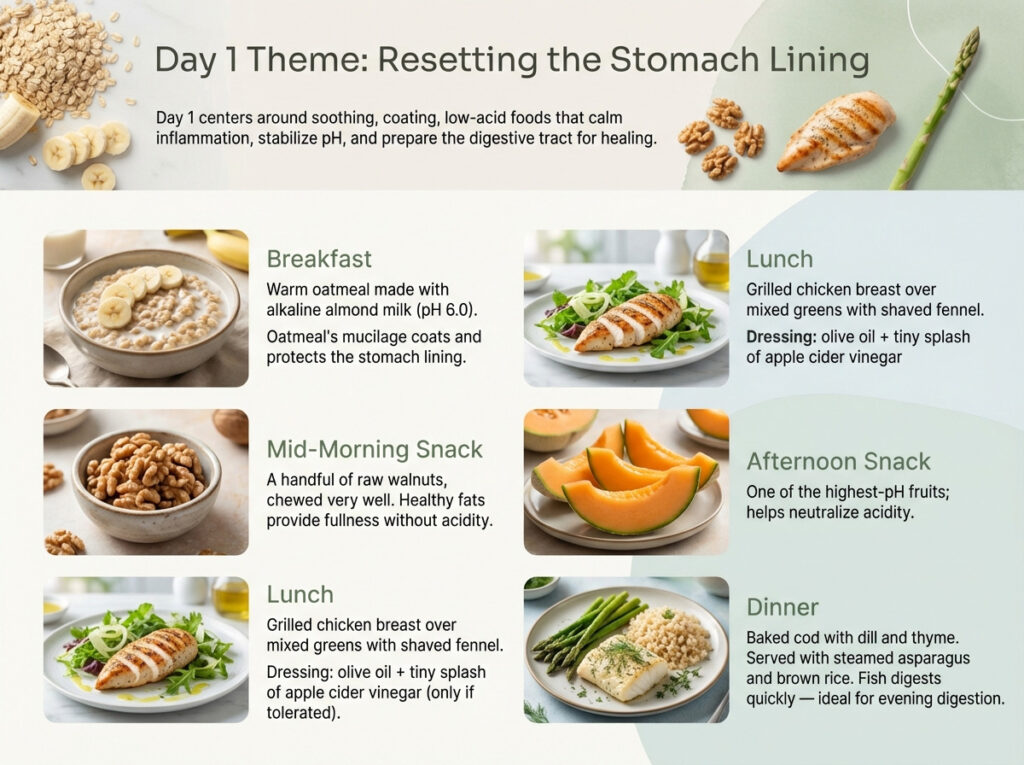
- Breakfast: Warm oatmeal made with alkaline almond milk (pH 6.0), topped with sliced banana. The mucilage in oatmeal coats the stomach.
- Mid-Morning Snack: A handful of raw walnuts (chewed very well). The healthy fats keep you full without the acidity.
- Lunch: Grilled chicken breast salad with mixed greens, shaved fennel, and a simple dressing of olive oil and a tiny splash of apple cider vinegar (only if tolerated).
- Afternoon Snack: Sliced cantaloupe. This melon is one of the highest pH fruits available.
- Dinner: Baked cod seasoned with dried dill and thyme, served with steamed asparagus and brown rice. Fish digests rapidly, making it perfect for the evening.
Day 2 Meal Plan: Introducing Healthy Fats and Alkaline Smoothies
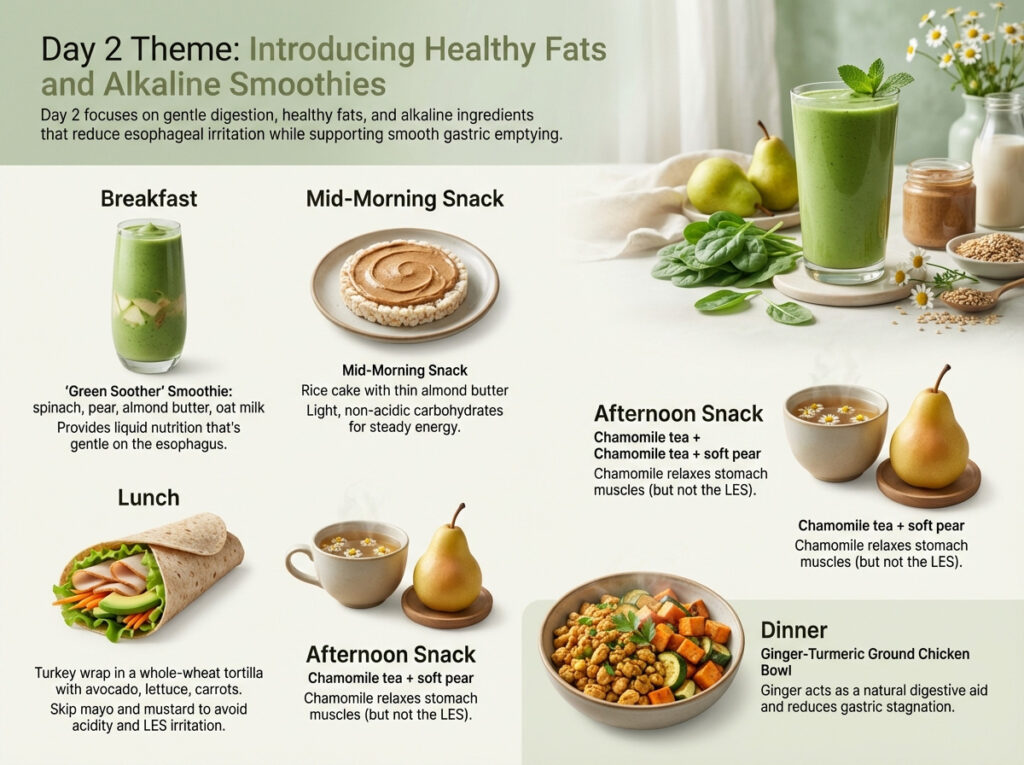
- Breakfast: “Green Soother” Smoothie (Spinach, pear, almond butter, and oat milk). This provides liquid nutrition that is easy on the esophagus.
- Mid-Morning Snack: Rice cake with a thin layer of almond butter.
- Lunch: Turkey wrap using a whole-wheat tortilla, avocado, lettuce, and shredded carrots. Skip the mayo and mustard.
- Afternoon Snack: Chamomile tea and a soft pear. Chamomile is a natural relaxant for the stomach muscles (but not the LES).
- Dinner: Ginger-Turmeric Ground Chicken Bowl with roasted sweet potatoes and zucchini. The ginger acts as a digestive aid.
Day 3 Meal Plan: The Anti-Inflammatory Focus for Esophagitis
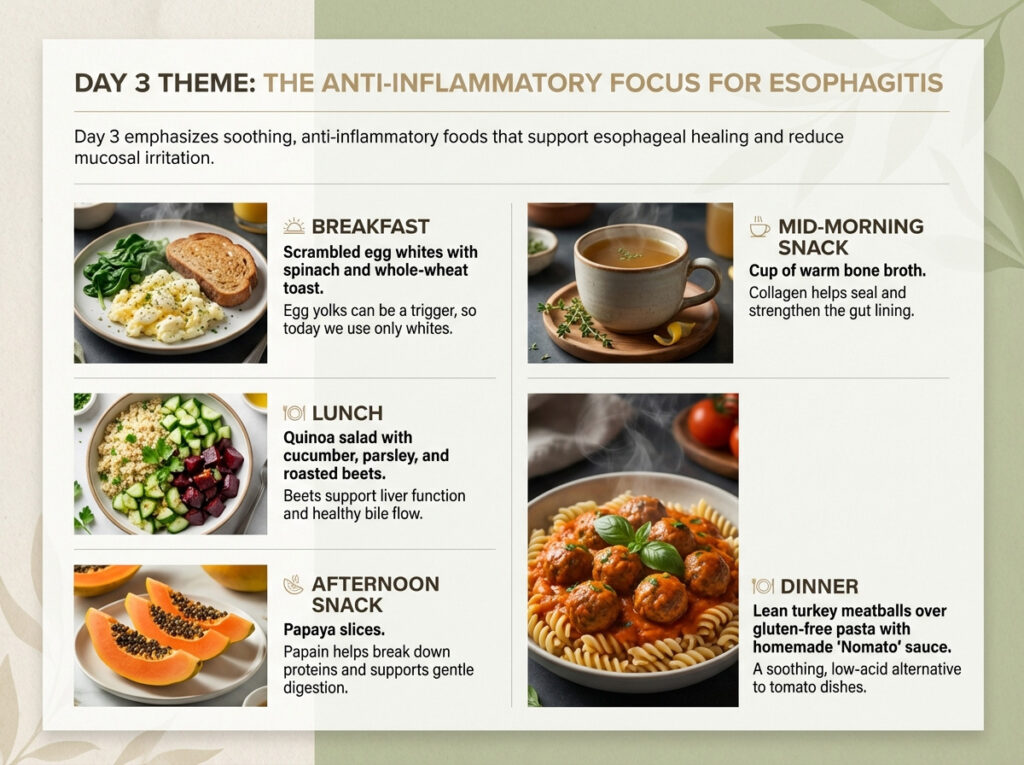
- Breakfast: Scrambled egg whites with spinach and whole-wheat toast. Egg yolks can be a trigger for some, so we stick to whites today.
- Mid-Morning Snack: Cup of warm bone broth. The collagen helps seal the gut lining.
- Lunch: Quinoa salad with cucumber, parsley, and roasted beets. Beets support liver function and bile flow.
- Afternoon Snack: Papaya slices. Papaya contains papain, a natural enzyme that helps break down proteins.
- Dinner: Lean turkey meatballs served over gluten-free pasta with a homemade “Nomato” sauce (carrot and beet base).
Day 4 Meal Plan: Alkaline Balance and Plant-Based Proteins
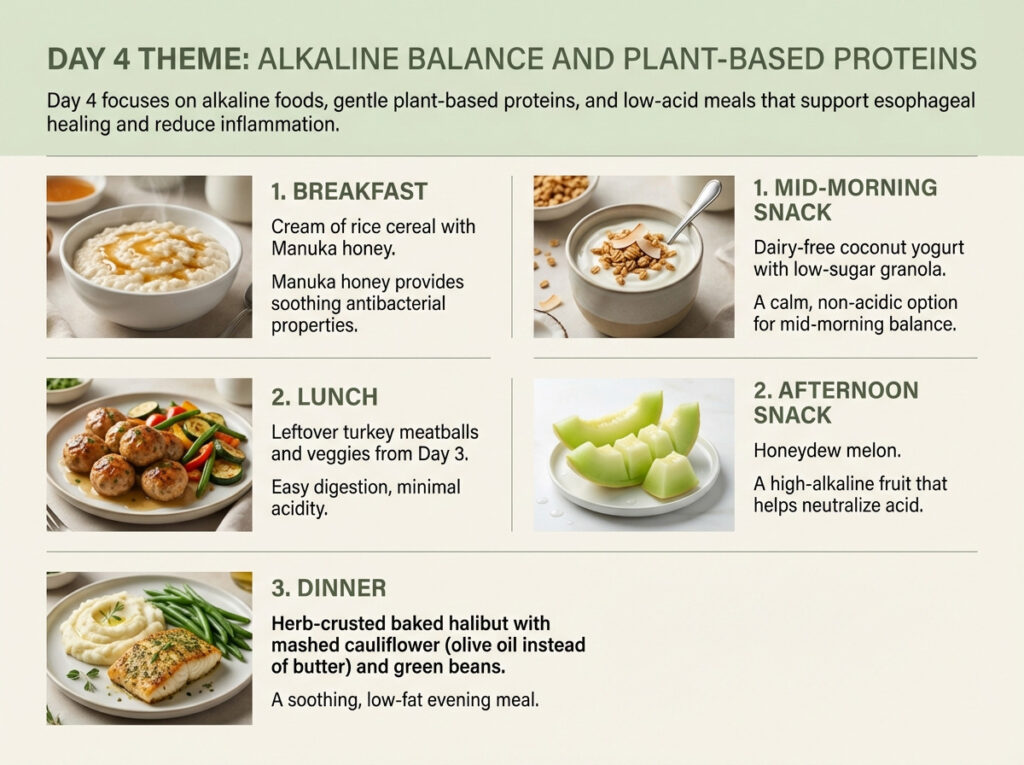
- Breakfast: Cream of rice cereal with a drizzle of Manuka honey. Manuka honey has unique antibacterial properties.
- Mid-Morning Snack: Dairy-free coconut yogurt with low-sugar granola.
- Lunch: Leftover turkey meatballs and veggies from the previous night.
- Afternoon Snack: Honeydew melon chunks. Another high-alkaline fruit choice.
- Dinner: Herb-crusted baked halibut with mashed cauliflower (use olive oil instead of butter) and green beans.
Day 5 Meal Plan: Gut Healing with Soluble Fiber
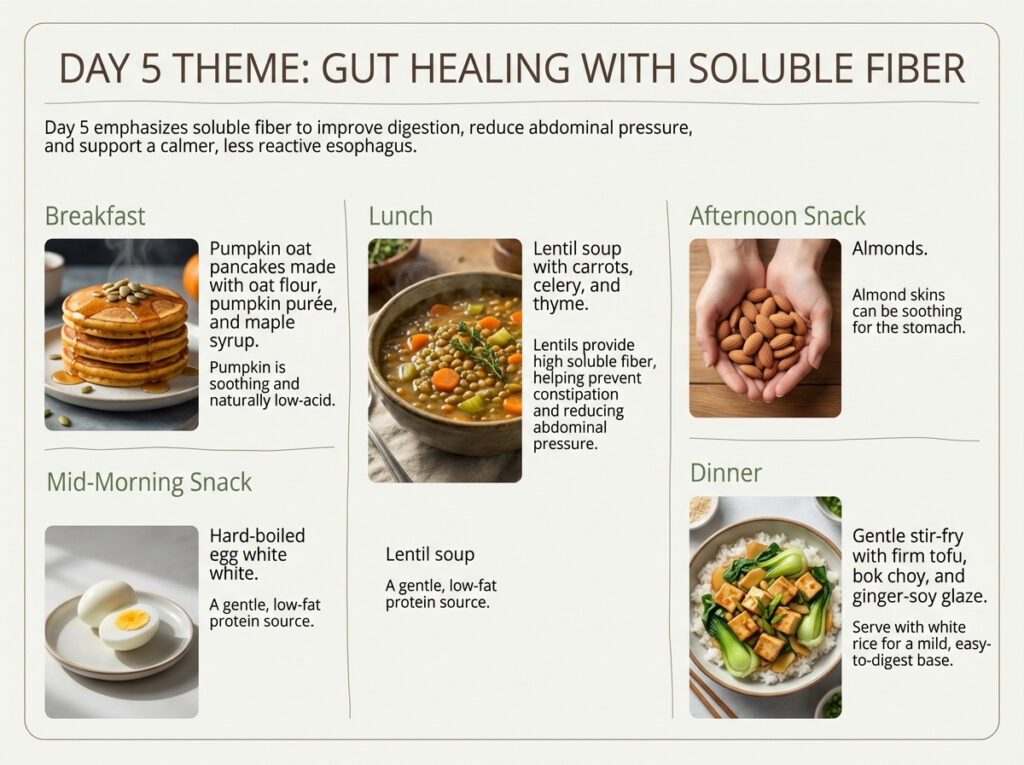
- Breakfast: Pumpkin oat pancakes (made with oat flour, pumpkin puree, and maple syrup). Pumpkin is soothing and low-acid.
- Mid-Morning Snack: Hard-boiled egg white.
- Lunch: Lentil soup with carrots, celery, and thyme. Lentils are high in fiber which prevents constipation, a factor that increases abdominal pressure.
- Afternoon Snack: Handful of almonds. Almond skins can be soothing for the stomach.
- Dinner: Gentle Stir-fry using firm tofu, bok choy, and a ginger-soy glaze (ensure soy sauce is low sodium/gluten-free). Serve with white rice.
Day 6 Meal Plan: The Light Digestion Day for Maximum Relief
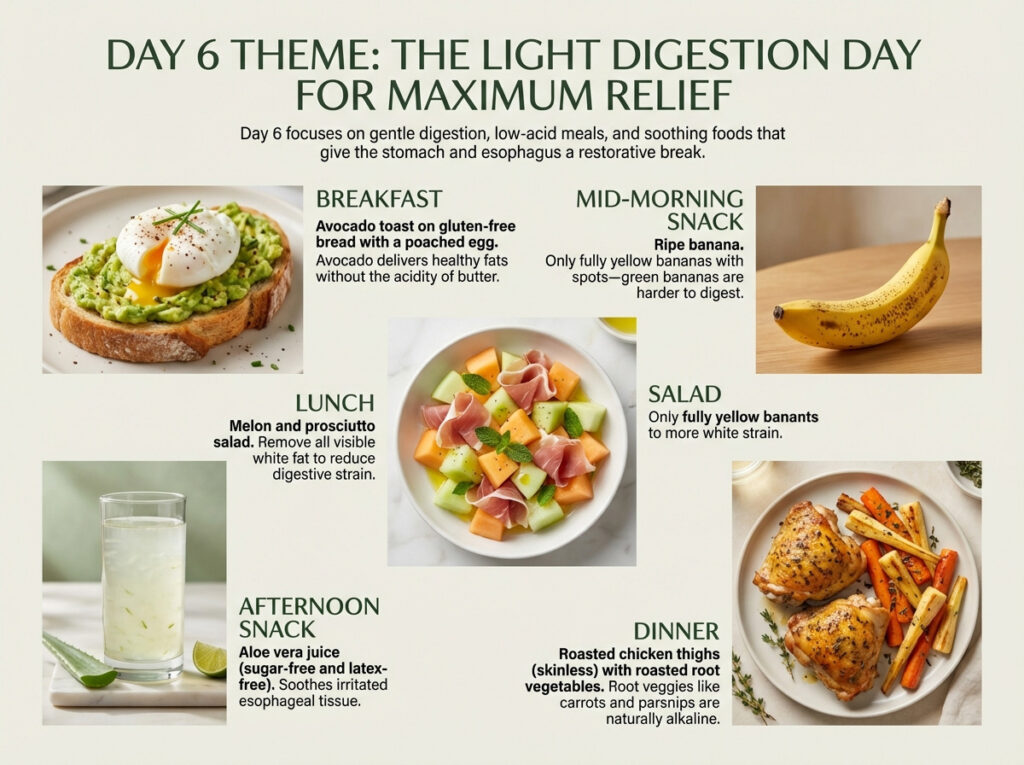
- Breakfast: Avocado toast on gluten-free bread with a poached egg. Avocado provides healthy fats without the acidity of butter.
- Mid-Morning Snack: Ripe Banana. Ensure it is yellow with spots; green bananas are hard to digest.
- Lunch: Melon and prosciutto salad (remove all visible white fat from the meat).
- Afternoon Snack: Aloe vera juice (ensure it is sugar-free and latex-free).
- Dinner: Roasted chicken thighs (skinless) with roasted root vegetables (carrots, parsnips). Root veggies are naturally alkaline.
Day 7 Meal Plan: Sunday Comfort Food without the Burn
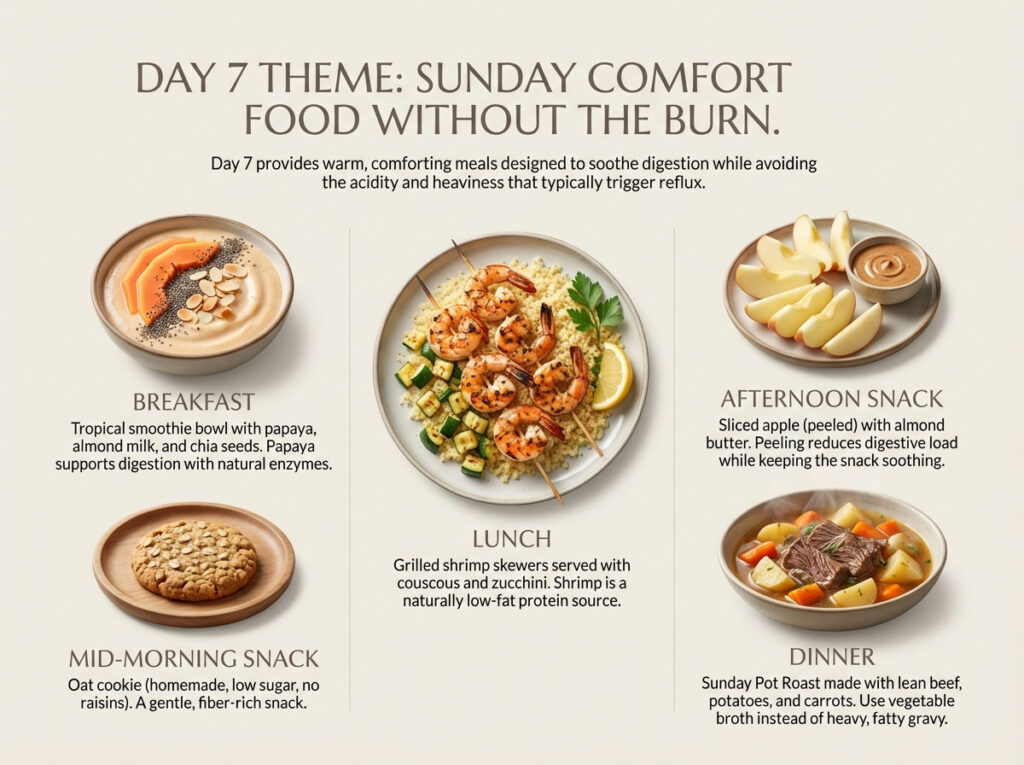
- Breakfast: Tropical Smoothie bowl with papaya, almond milk, and chia seeds.
- Mid-Morning Snack: Oat cookie (homemade, low sugar, no raisins).
- Lunch: Grilled shrimp skewers with couscous and zucchini. Shrimp is a very low-fat protein source.
- Afternoon Snack: Sliced apple (peeled to reduce digestive load) with almond butter.
- Dinner: “Sunday Pot Roast” using lean beef, potatoes, and carrots. Use vegetable broth for moisture instead of heavy, fatty gravy.
Easy Acid Reflux Diet Recipes for Every Meal of the Day
Implementing a GERD diet plan is infinitely easier when the food actually tastes good. Here are detailed, step-by-step recipes for some of the healing meals listed above.
Breakfast: Gut-Healing Ginger and Banana Oatmeal
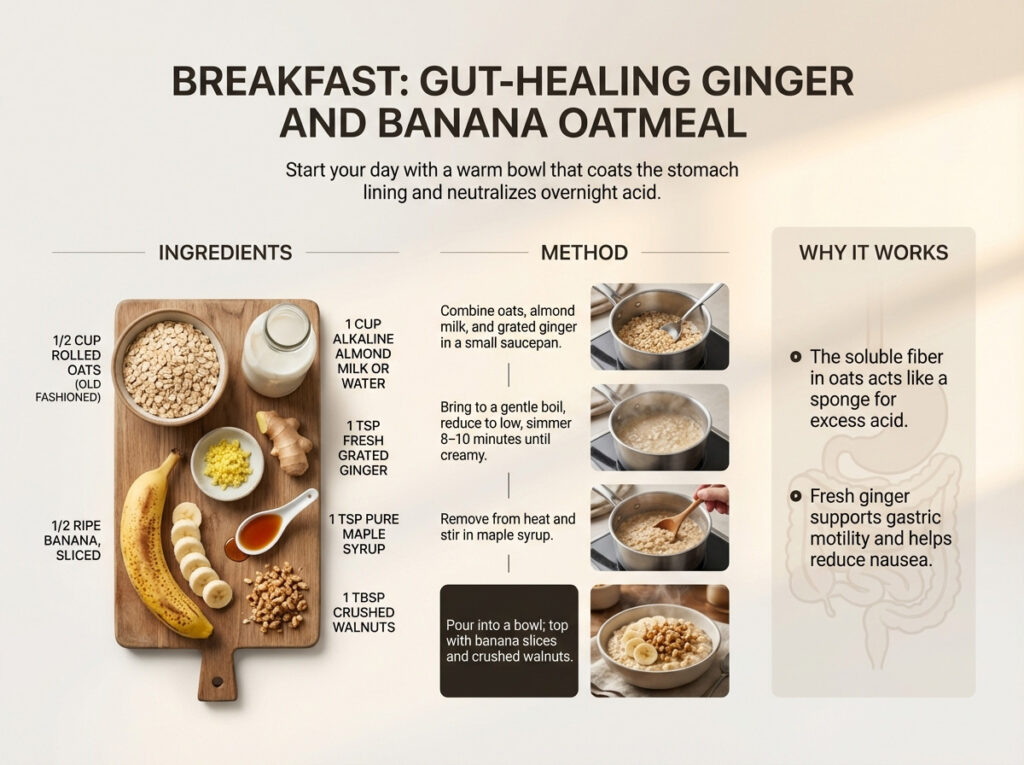
Start your day with a warm bowl that physically coats the stomach lining and neutralizes overnight acid.
- Ingredients:
- 1/2 cup rolled oats (old fashioned, not instant)
- 1 cup alkaline almond milk or water
- 1 tsp fresh grated ginger (essential for motility)
- 1/2 ripe banana, sliced
- 1 tsp pure maple syrup
- 1 tbsp crushed walnuts
- Method:
- Combine the rolled oats, almond milk, and grated ginger in a small saucepan.
- Bring to a gentle boil, then reduce heat to low and simmer for 8-10 minutes, stirring occasionally until creamy.
- Remove from heat and stir in the maple syrup.
- Pour into a bowl and top with the sliced banana and crushed walnuts.
- Why it works: The soluble fiber in oats acts as a sponge for acid, while the ginger prevents nausea and improves gastric motility.
Lunch: The “Nomato” Sauce (No Tomato Marinara)
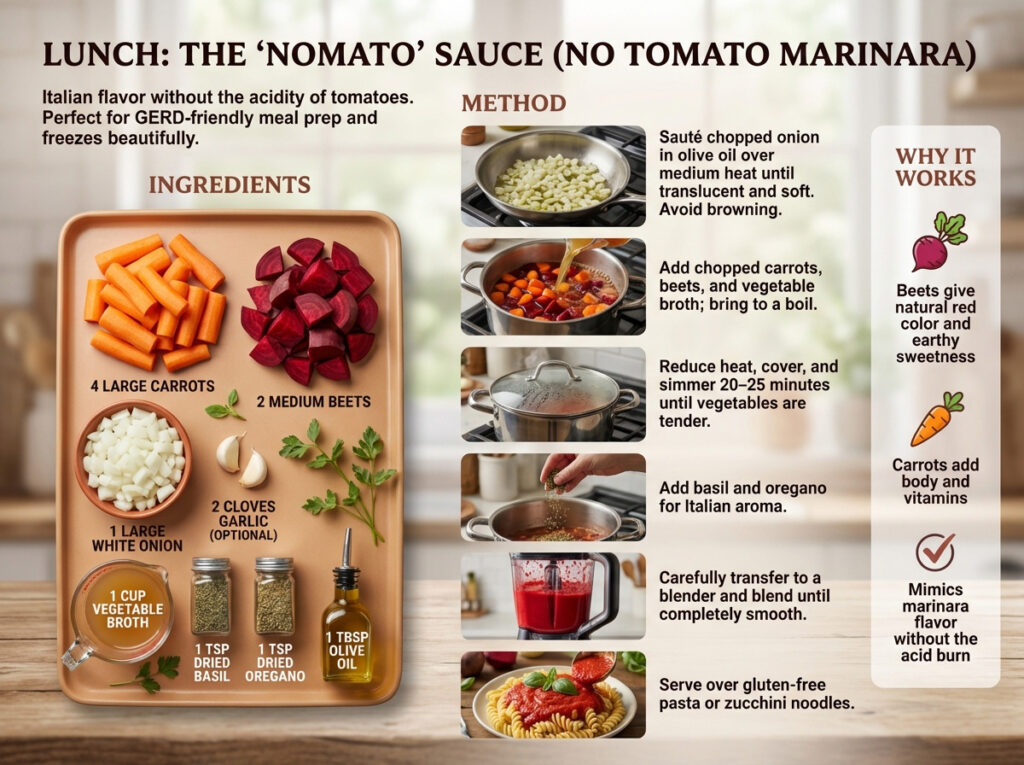
This recipe allows you to enjoy Italian flavors without the severe acidity of tomatoes. It freezes beautifully for meal prep.
- Ingredients:
- 4 large carrots, peeled and chopped
- 2 medium beets, peeled and chopped (provides the red color)
- 1 large white onion, chopped
- 2 cloves garlic (optional, only if tolerated)
- 1 cup vegetable broth
- 1 tsp dried basil
- 1 tsp dried oregano
- 1 tbsp olive oil
- Method:
- In a pot, sauté the onion in olive oil over medium heat until translucent and soft (do not brown or caramelize too much).
- Add the chopped carrots, beets, and vegetable broth. Bring to a boil.
- Reduce heat, cover, and simmer for 20-25 minutes until the vegetables are fork-tender.
- Add the basil and oregano.
- Transfer the mixture to a blender (carefully) and blend until completely smooth.
- Serve over gluten-free pasta or zucchini noodles.
- Why it works: Beets provide the earthy sweetness and color, while carrots provide body and vitamins, effectively mimicking tomato sauce without the burn.
Dinner: Turmeric Baked Chicken & Sweet Potatoes
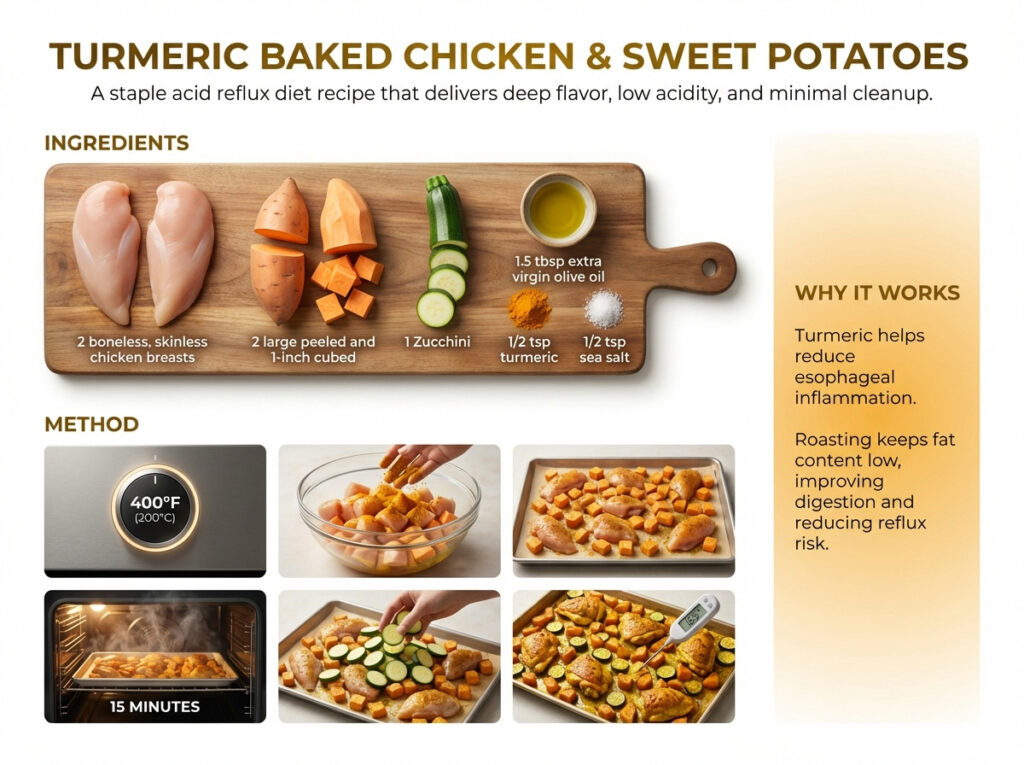
A staple acid reflux diet recipe for dinner that requires minimal cleanup.
- Ingredients:
- 2 boneless, skinless chicken breasts
- 2 large sweet potatoes, peeled and cubed into 1-inch pieces
- 1 zucchini, sliced into rounds
- 1.5 tbsp extra virgin olive oil
- 1 tsp turmeric powder
- 1/2 tsp ground cumin
- 1/2 tsp sea salt
- Method:
- Preheat your oven to 400°F (200°C).
- In a large bowl, toss the chicken breasts and sweet potato cubes with 1 tbsp olive oil, turmeric, cumin, and salt.
- Spread them out on a baking sheet lined with parchment paper.
- Bake for 15 minutes.
- Remove the pan, toss the zucchini rounds with the remaining oil, and add them to the baking sheet.
- Bake for another 10-15 minutes until the chicken is cooked through (165°F internal temp) and potatoes are tender.
- Why it works: Turmeric fights esophageal inflammation locally. Roasting avoids the need for excess frying oil, keeping the fat content low enough for safe digestion.
Dessert: Manuka Honey Roasted Pears
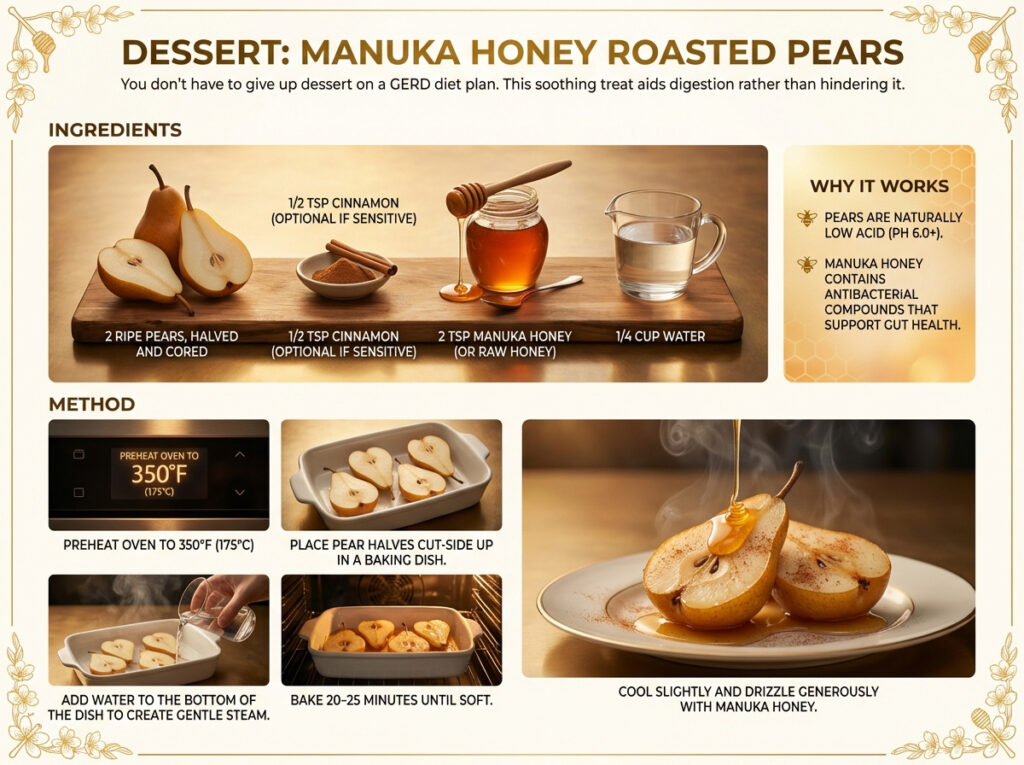
You do not have to give up dessert on a GERD diet plan. This treat aids digestion rather than hindering it.
- Ingredients:
- 2 ripe pears, halved and cored
- 1/2 tsp cinnamon (avoid if a specific trigger, but usually safe)
- 2 tsp Manuka honey (or raw honey)
- 1/4 cup water
- Method:
- Preheat oven to 350°F (175°C).
- Place pear halves cut-side up in a baking dish.
- Pour the water into the bottom of the dish to create steam.
- Bake for 20-25 minutes until the pears are soft.
- Remove from oven, let cool slightly, and drizzle generously with Manuka honey.
- Why it works: Pears are low acid (pH 6.0+) and Manuka honey has documented antibacterial properties that support overall gut health.
Nutritional Profile of Acid-Neutralizing Superfoods
Understanding the nutrient density of your GERD diet plan helps ensure you remain healthy while healing. We aren’t just avoiding acid; we are adding vital nutrients that repair tissue.
Table 2: Nutritional Deep Dive for Healing Ingredients
| Superfood | pH Level (Approx) | Key Nutrient for GERD | Benefit for Reflux Sufferers |
| Fennel | 6.9 (Neutral) | Anethole | Naturally relaxes stomach spasms and reduces bloating, preventing upward pressure. |
| Banana | 5.6 | Potassium | Potassium is an electrolyte that aids in mucus production, coating the esophageal lining. |
| Almonds | 6.0 | Magnesium | Magnesium is a natural antacid mineral that balances stomach chemistry and muscle function. |
| Ginger | 5.6 – 5.9 | Gingerol | Potent anti-inflammatory that speeds up gastric emptying, reducing the reflux window. |
| Bone Broth | 6.0 – 7.0 | Gelatin/Collagen | Helps repair the gut lining (leaky gut) and strengthen esophageal tissue integrity. |
| Papaya | 5.5 – 6.0 | Papain | A proteolytic enzyme that assists in breaking down proteins, taking the workload off the stomach acid. |
Critical Lifestyle Strategies to Maximize Your Acid Reflux Diet Results
Food is the primary medicine, but the way you live your life dictates how you digest that food. Combining this 7-day meal plan for acid reflux with specific, actionable lifestyle changes creates a comprehensive defense system against heartburn.
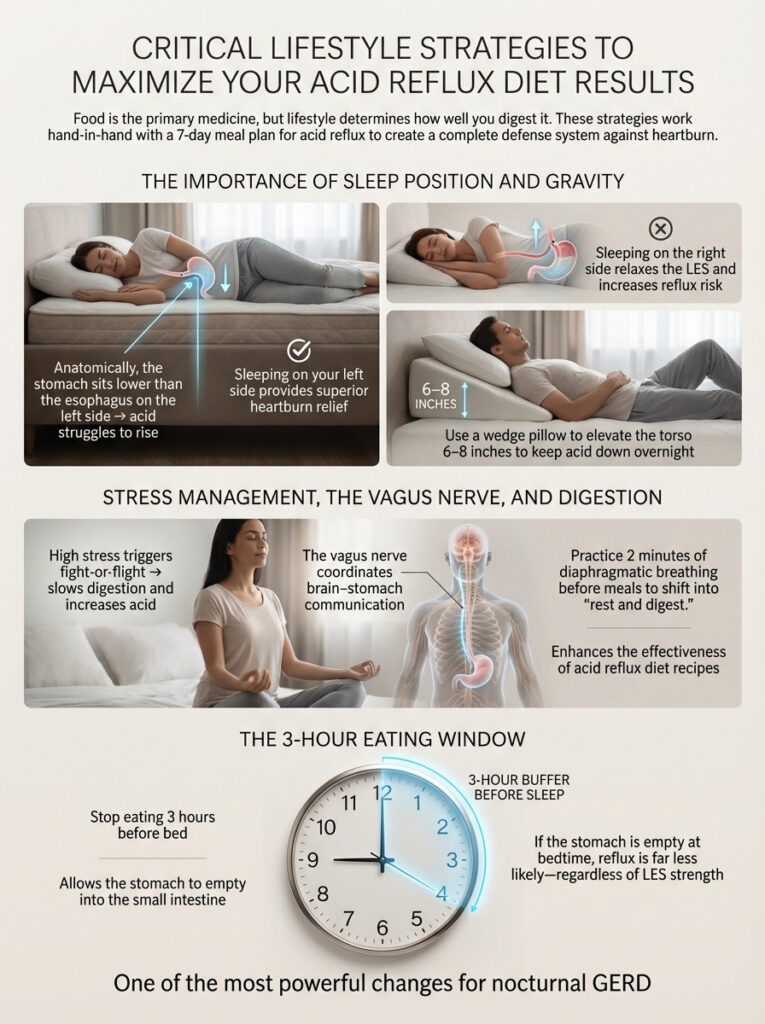
The Importance of Sleep Position and Gravity
Gravity is your best friend or your worst enemy when it comes to GERD. When you lie flat, gastric juices can easily flow back into the esophagus if the LES is weak. Studies consistently suggest that sleeping on your left side is superior for heartburn relief. Anatomically, the stomach is positioned lower than the esophagus when you are on your left side, making it physically difficult for acid to rise against gravity. Conversely, sleeping on your right side relaxes the LES. Using a wedge pillow to elevate your torso 6 to 8 inches is also highly recommended to keep acid down all night.
Stress Management, the Vagus Nerve, and Digestion
Your brain and stomach are intimately connected via the vagus nerve. High stress triggers the “fight or flight” response, which diverts blood flow away from the digestive system and toward your limbs. This slows down digestion and increases acid production. Incorporating deep, diaphragmatic breathing exercises for two minutes before meals can shift your body into “rest and digest” mode (parasympathetic state). This simple act improves the efficacy of your acid reflux diet recipes by ensuring your stomach is primed to process them.
The 3-Hour Eating Window
The American College of Gastroenterology guidelines emphasize meal timing as a non-negotiable rule. You must stop eating at least three hours before you plan to sleep. This window allows the stomach to empty its contents into the small intestine. If the stomach is empty when you lie down, there is nothing to reflux, regardless of how weak your LES might be. This is perhaps the single most effective lifestyle change for nocturnal GERD.
Navigating Restaurants on a GERD Diet Plan
Socializing shouldn’t stop just because you have reflux. Here is how to order safely at different types of restaurants.
Italian Restaurants
- Avoid: Creamy Alfredo sauces (high fat), Marinara (high acid), garlic bread, and wine.
- Order: Grilled chicken or fish with steamed vegetables. Ask for pasta with olive oil and herbs instead of red sauce. Minestrone soup is often safe if it’s not too tomato-heavy.
Asian / Stir-Fry Restaurants
- Avoid: Tempura (fried), spicy curries, sweet and sour sauce (acidic/sugary), and chili oil.
- Order: Steamed dumplings, Miso soup, or a stir-fry with lean protein and vegetables. Request “brown sauce on the side” or ask for the dish to be steamed with ginger and soy sauce only.
Mexican Restaurants
- Avoid: Salsa, heavy cheese dips, sour cream, fried tortilla chips, and margaritas (citrus + alcohol is a double trigger).
- Order: Chicken fajitas (skip the onions if they trigger you), soft corn tortillas, guacamole (avocado is great!), and rice.
Natural Supplements to Pair with Your GERD Diet Plan
While food is the foundation, certain natural supplements can accelerate healing. Always consult your doctor before starting these.
- Deglycyrrhizinated Licorice (DGL): Unlike regular licorice which can raise blood pressure, DGL stimulates the production of protective mucus in the stomach and esophagus. It is usually taken as a chewable tablet 20 minutes before meals.
- Slippery Elm: This herbal supplement turns into a gel-like substance when mixed with water. It coats the throat and stomach lining, soothing irritation from coughing or acid exposure.
- Probiotics: A healthy gut microbiome is essential for digestion. Lactobacillus and Bifidobacterium strains can help reduce gas and bloating, which in turn reduces upward pressure on the LES.
Case Studies and Clinical Evidence for Dietary Healing
To further validate the GERD diet plan, we look at clinical data. The Northwell Health study mentioned earlier is a cornerstone of modern dietary treatment for reflux. In this study, 62.6% of patients treated with a plant-based diet and alkaline water saw a clinically significant improvement in their Reflux Symptom Index (RSI). This is comparable to the 54.1% improvement seen in the group taking PPI medication.
Consider the case of “Sarah,” a 45-year-old marketing executive from Chicago. Sarah suffered from chronic throat clearing and a sensation of a lump in her throat, classic signs of Silent Reflux (LPR). Standard medications provided her with little relief. After switching to a strict low-acid diet (pH 5.0+) and eliminating carbonated water for 21 days, her symptoms reduced by 80%. Her success came from identifying “silent” triggers—specifically, her daily “healthy” smoothie which was packed with acidic citrus and berries. By switching to the “Green Soother” recipe included in this plan, she eliminated the acid source while keeping the nutrition.
Conclusion and Key Takeaways for Your Journey
Healing your digestion is a journey, not a sprint. This 7-day GERD diet plan is your roadmap to recovery. By strictly following this plan for one week, you allow your esophageal tissue a vital break from constant acid exposure. The goal is to reduce inflammation so that, eventually, you may be able to reintroduce a wider variety of foods without pain.
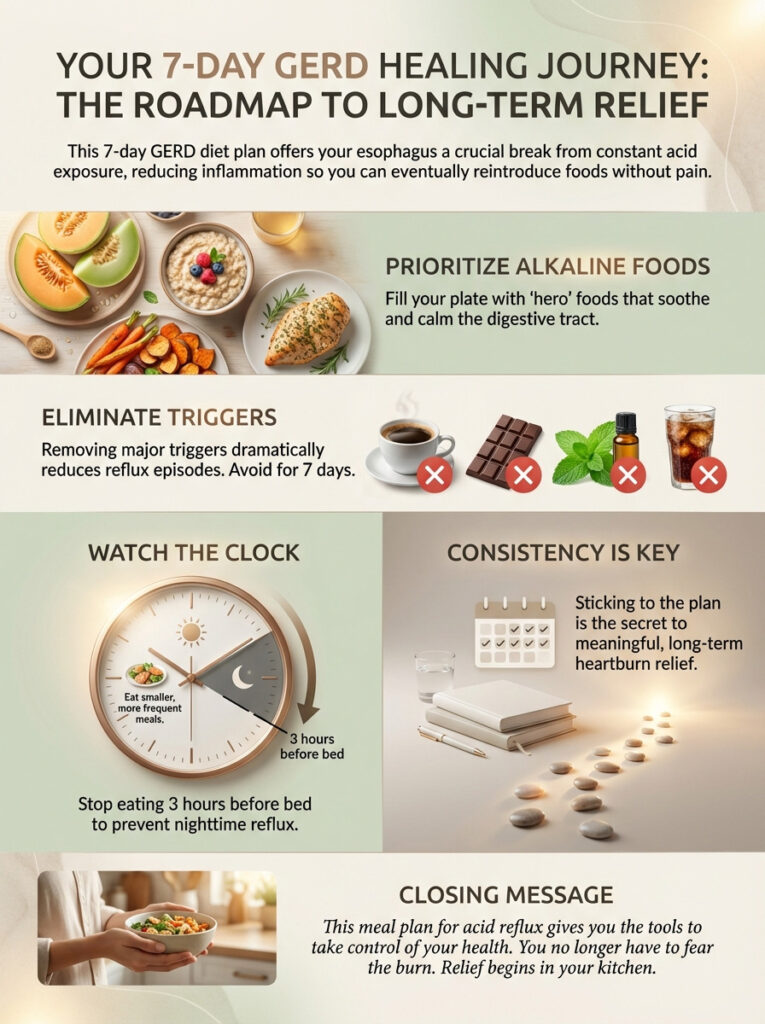
Remember the core principles of your new lifestyle:
- Prioritize Alkaline: Fill your plate with “hero” foods like melons, oatmeal, root vegetables, and lean poultry.
- Eliminate Triggers: Be ruthless about cutting out caffeine, chocolate, mint, and carbonation for at least 7 days.
- Watch the Clock: Eat smaller, more frequent meals and strictly stop eating three hours before bed.
- Consistency is Key: Sticking to the plan is the secret to long-term heartburn relief.
This meal plan for acid reflux gives you the tools to take control of your health. You no longer have to fear the burn or rely endlessly on medication. You have the recipe for relief right in your kitchen.
Frequently Asked Questions (FAQs) about GERD and Diet
What foods kill acid reflux instantly?
While no food is a magic switch, sipping alkaline water (pH 8.8 or higher) can denature pepsin in the throat instantly, providing rapid relief for LPR. A mixture of a half-teaspoon of baking soda in a glass of water acts as a natural antacid to neutralize stomach contents. Chewing non-mint gum (fruit flavor) also stimulates saliva production, which contains bicarbonate and helps wash acid back down into the stomach.
Is banana good for acid reflux?
Yes, for 95% of sufferers. Bananas are low-acid (pH 5.6) and rich in potassium, which helps coat the stomach lining and stimulate mucus production. However, ensure the banana is ripe. Green, unripe bananas contain resistant starch that can cause bloating and gas for some sensitive individuals, which might trigger reflux pressure.
Why is my acid reflux worse at night?
Nighttime reflux is usually caused by gravity and anatomy. When you lie down flat, the stomach’s contents can easily flow back up into the esophagus if the Lower Esophageal Sphincter (LES) is weak. Eating too close to bedtime (within 3 hours) or sleeping flat on your back exacerbates this issue significantly.
Can I drink coffee on a GERD diet plan?
Coffee is a major trigger for two reasons: caffeine relaxes the LES valve, and coffee oils are naturally acidic. If you absolutely must drink it, choose a low-acid, dark roast bean (cold brew is less acidic) and dilute it heavily with alkaline almond milk. Better alternatives for healing include roasted chicory root or dandelion tea.
What is the best breakfast for acid reflux sufferers?
Oatmeal is the gold standard for a GERD breakfast. It is a complex carbohydrate that absorbs stomach acid rather than creating it. Top it with alkaline fruits like melon or banana. Avoid high-fat pastries like croissants or donuts, and skip the acidic orange juice.
Are eggs bad for acid reflux?
Egg whites are excellent and safe because they are pure protein. However, egg yolks are high in fat, which can trigger symptoms in some people by delaying gastric emptying. If you notice discomfort, stick to egg whites and avoid frying eggs in butter; use a non-stick pan or poach them instead.
Does drinking water help heartburn?
Sipping water can help wash acid back down into the stomach and raise the pH of the esophagus. However, gulping large amounts of water during meals can increase stomach volume and pressure, potentially worsening reflux. It is best to sip water slowly between meals rather than chugging it with food.
What is the fastest way to cure GERD permanently?
There is no overnight “cure,” but long-term remission is entirely possible through lifestyle changes. Maintaining a healthy weight, following a GERD diet plan consistently, quitting smoking, and managing stress are the most effective ways to stop reflux permanently without lifelong medication.
Is milk good for acid reflux?
It depends on the type. Full-fat cow’s milk can relax the LES and delay stomach emptying due to the high fat content. Skim milk is better, but plant-based alternatives like almond milk (alkaline) or oat milk are the best choices for heartburn relief as they are generally lower in fat and non-acidic.
How long does it take for the esophagus to heal?
With strict adherence to an acid-free diet, the esophageal lining often begins to heal within 1 to 3 weeks. However, chronic damage or severe inflammation (erosive esophagitis) may take 8 to 12 weeks of consistent dietary management to fully resolve and regenerate healthy tissue.
Can I eat bread on a GERD diet?
Whole-grain or multi-grain breads are generally good as they contain fiber which aids digestion. White bread is highly processed and can sometimes contribute to inflammation. If you have a gluten sensitivity, choose gluten-free options, as gluten intolerance can often mimic or worsen GERD symptoms.
What is the difference between LPR and GERD?
GERD typically presents as heartburn or chest pain caused by acid in the lower esophagus. LPR (Laryngopharyngeal Reflux), or “Silent Reflux,” allows acid to travel all the way up to the throat and voice box. Symptoms include hoarseness, a lump in the throat (globus sensation), and chronic cough, often without the sensation of heartburn.
Disclaimer: The information provided in this article is for educational purposes only and does not constitute medical advice. Always consult with a gastroenterologist or healthcare provider before making significant changes to your diet or discontinuing prescribed medication.
References:
- Zalvan, C. H., et al. (2017). A Comparison of Alkaline Water and Mediterranean Diet vs Proton Pump Inhibition for Treatment of Laryngopharyngeal Reflux. JAMA Otolaryngology–Head & Neck Surgery.
- Katz, P. O., et al. (2022). ACG Clinical Guideline for the Diagnosis and Management of Gastroesophageal Reflux Disease. American College of Gastroenterology.
- Koufman, J. A. (2011). Low-Acid Diet for Recalcitrant Laryngopharyngeal Reflux: Therapeutic Benefits and Prevention of Complications. Annals of Otology, Rhinology & Laryngology.