Navigating dinner during a health crisis is overwhelming. When you are suffering from a flare-up of diverticulitis, the simple act of eating can feel like navigating a minefield. You know that nutrition is essential for healing, yet the fear of triggering agonizing abdominal pain often leads to skipped meals and dangerous weight loss. This fear is valid. The rules of healthy eating are effectively reversed during an infection of the sigmoid colon. While doctors and public health officials usually champion fiber, roughage, and whole grains, these very foods become irritants during an active attack.
Table of Contents
The solution is a strategic, temporary medical intervention known as the low fiber diet for diverticulitis. Often referred to as “gut rest,” this approach focuses on nourishing the body with calories and low fiber proteins while strictly limiting the volume of waste passing through the large intestine. The goal is simple but critical: minimize bowel contractions to allow inflamed diverticula to heal.
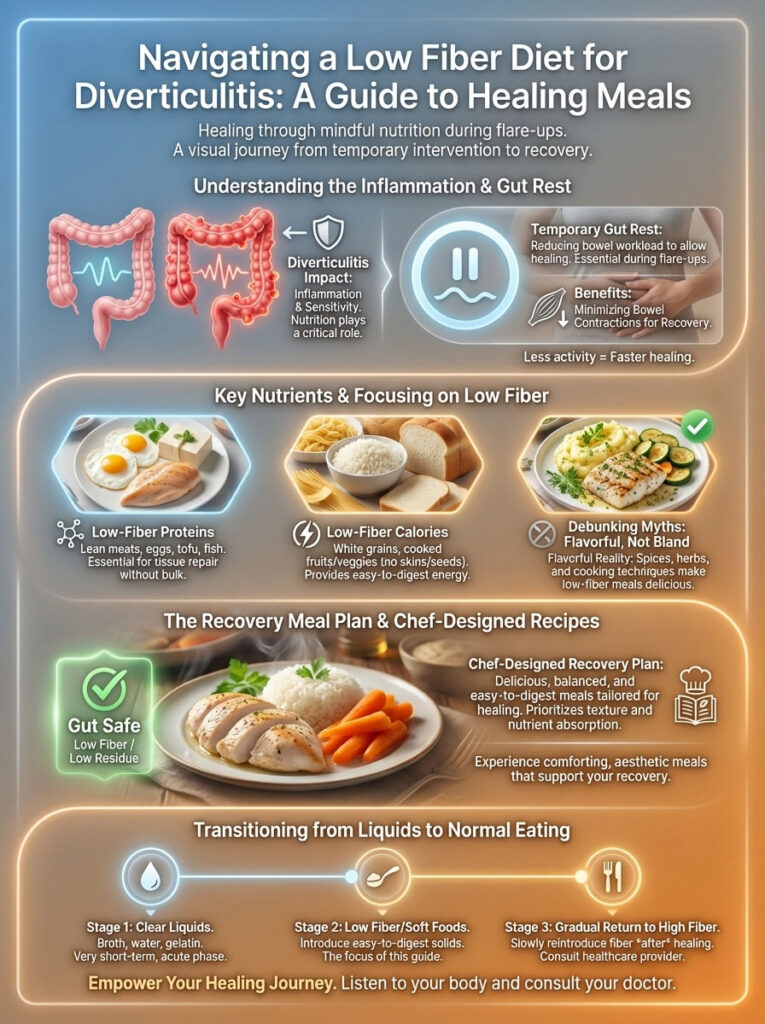
This comprehensive guide serves as your roadmap from the doctor’s office to the kitchen table. We will explore the physiological science behind low residue dinner recipes. We will debunk common myths about “bland” food. Most importantly, we will provide you with a concrete diverticulitis recovery meal plan featuring 7 complete, chef-designed recipes that prioritize digestion speed and nutrient absorption. These low fiber meals for diverticulitis are designed to bridge the gap between a liquid diet and your eventual return to normal eating.
Understanding the Physiology of the Low Fiber Diet for Diverticulitis Recovery
To adhere to this diet successfully, it helps to understand exactly what is happening inside your body. A flare-up is not merely an upset stomach. It is a localized infection or inflammation of the small pouches lining your intestinal wall. The National Institute of Diabetes and Digestive and Kidney Diseases (NIDDK) emphasizes that the mechanical action of digestion plays a major role in recovery.
The Mechanism of “Gut Rest” and Reducing Sigmoid Colon Irritation
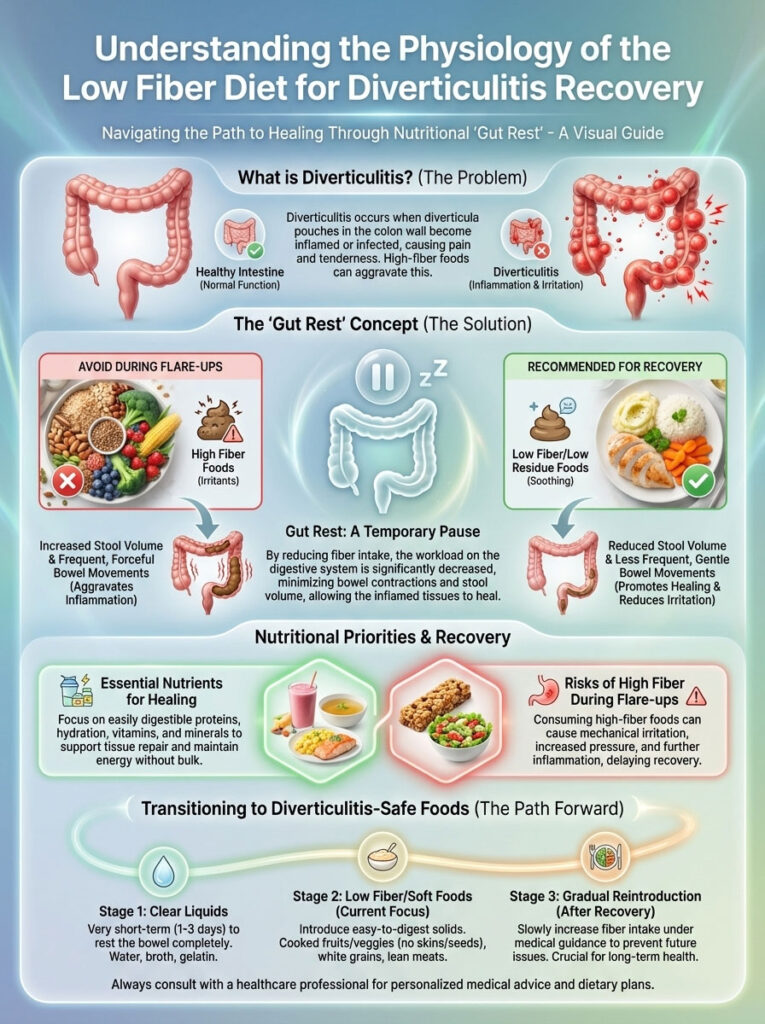
The concept of “gut rest” centers on residue. Residue is the undigested food matter, primarily fiber, that remains in the gastrointestinal tract after nutrients have been absorbed. In a healthy person, this bulk is beneficial because it stimulates the colon to contract and move waste forward. However, when you have diverticulitis, those contractions are the source of your pain.
By switching to low fiber meals for diverticulitis, you reduce the volume of stool by up to 70%. This drastic reduction means your bowel movements become smaller and less frequent. Consequently, the inflamed segments of your colon are not forced to stretch or contract violently. This physiological rest period allows antibiotics to work more effectively and reduces the risk of complications such as perforation or abscesses.
Distinguishing Between Diverticulosis Prevention and Diverticulitis Flare Up Diets
One of the most common sources of confusion for patients is the contradiction in dietary advice. You must distinguish between the two phases of the condition.
Diverticulosis (The Quiet Phase): This is the presence of pouches without infection. Management requires a high-fiber diet to keep the pouches clean and prevent pressure buildup.
Diverticulitis (The Active Phase): This is the infection of those pouches. Management requires a diverticulitis flare up diet characterized by low fiber (typically 10 to 15 grams per day maximum).
Continuing to eat whole grains, nuts, or seeds during an active flare-up is akin to rubbing sandpaper on a burn. It exacerbates the injury. The transition to diverticulitis safe foods must happen the moment symptoms appear.
Nutritional Priorities for a Diverticulitis Recovery Meal Plan
While fiber is restricted, other nutrients become more important. Your body is fighting an infection, which increases your metabolic rate and caloric needs. A successful diverticulitis recovery meal plan must prioritize:
- Protein Sparing: You must consume adequate low fiber proteins to prevent the body from breaking down muscle tissue for energy.
- Electrolytes and Hydration: Diarrhea and fever can deplete sodium and potassium.
- Micronutrient Density: Since you cannot eat colorful salads, you must find other sources of vitamins, such as cooked root vegetables and fortified refined grains.
The Safe Foods Framework: Identifying Low Fiber Proteins and Refined Grains
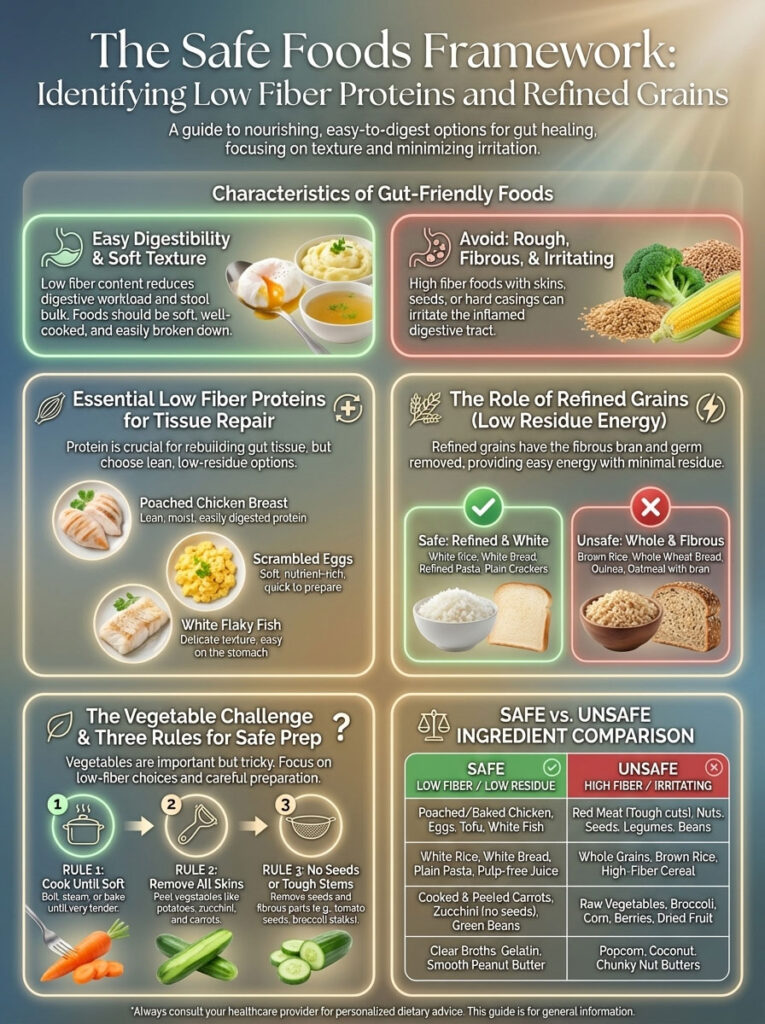
Before you begin cooking, you must master the art of ingredient selection. The definition of diverticulitis safe foods relies entirely on texture, digestibility, and fiber content. We are looking for foods that are enzymatically broken down in the stomach and small intestine, leaving very little to reach the colon.
Selecting the Best Low Fiber Proteins for Tissue Repair
Protein is the building block of tissue repair. However, the source of protein matters immensely. Red meats like beef steaks or pork chops contain high amounts of collagen and elastin (gristle). These tough connective tissues are difficult for the stomach to churn and can lead to increased colonic activity.
The best options for low fiber meals for diverticulitis include:
- Skinless Poultry: Chicken and turkey breast are ideal, provided the skin is removed. The skin contains fats that delay gastric emptying.
- White Fish: Species such as Cod, Tilapia, and Halibut possess short muscle fibers that flake apart easily. This “fork-tender” quality ensures rapid digestion.
- Eggs: The egg is the gold standard for digestive rest meals. It offers a complete amino acid profile with zero fiber.
Why Refined Grains Are Essential for Diverticulitis Safe Foods
In the wellness world, refined grains are often demonized. In the context of low residue dinner recipes, they are medicinal. When a grain is refined, the bran (outer shell) and germ (nutrient core) are removed. These parts contain the insoluble fiber that irritates the gut. What remains is the endosperm, which is almost entirely starch.
Starch from white rice, white pasta, and white bread is digested rapidly in the upper GI tract. It provides the glucose energy your body needs to fight infection without creating bulk in the lower bowel. Therefore, for this specific period, white bread is superior to whole wheat.
Navigating Vegetable Preparation and Texture Modification
Vegetables pose the biggest challenge. They are naturally fibrous. To include them in a low fiber diet for gut health, you must modify their texture through processing and heat.
The Three Rules of Vegetable Safety:
- Peeling: You must remove the skin from carrots, potatoes, cucumbers, and fruits. Skins are almost pure insoluble fiber.
- Seeding: Seeds from tomatoes, zucchini, or berries must be removed. While the “seeds cause diverticulitis” theory is debated medically, during an active flare-up, avoiding hard particles is a prudent safety measure.
- Cooking: Raw vegetables are strictly forbidden. You must cook vegetables until they are soft enough to be mashed with the back of a spoon.
Detailed Breakdown of Safe vs Unsafe Ingredients for Dinner
Use the following table to audit your pantry and ensure every ingredient aligns with low fiber meals for diverticulitis.
| Food Category | Safe (Low Fiber/Low Residue) | Unsafe (High Fiber/Irritant) |
| Grains & Starches | White jasmine rice, white pasta, cream of rice, sourdough (no seeds), saltines, white bread rolls, flour tortillas | Brown rice, wild rice, quinoa, whole wheat bread, barley, rye, bran cereals, granola, buckwheat |
| Proteins | Poached chicken breast, tender turkey, eggs, tofu, white fish, smooth nut butters, protein powder (whey/soy) | Fried meats, processed sausages, tough steak, legumes (beans/lentils/chickpeas), crunchy peanut butter |
| Vegetables | Canned green beans, peeled cooked carrots, skinless potato, beets (cooked soft), pureed spinach, acorn squash (peeled) | Broccoli, cauliflower, corn, raw salads, peppers, onions, celery strings, coleslaw, brussels sprouts |
| Fruits | Ripe bananas, cantaloupe, honeydew, canned peaches (peeled), applesauce, avocado (smooth) | Raspberries, blackberries, strawberries, dried fruits (raisins/dates/figs), pineapple, fruit skins |
| Dairy & Fats | Lactose-free milk, hard cheeses (cheddar/parmesan), smooth yogurt, cottage cheese, butter, olive oil | Yogurt with granola or fruit chunks, high-fat cream (if sensitive to fats), fried grease |
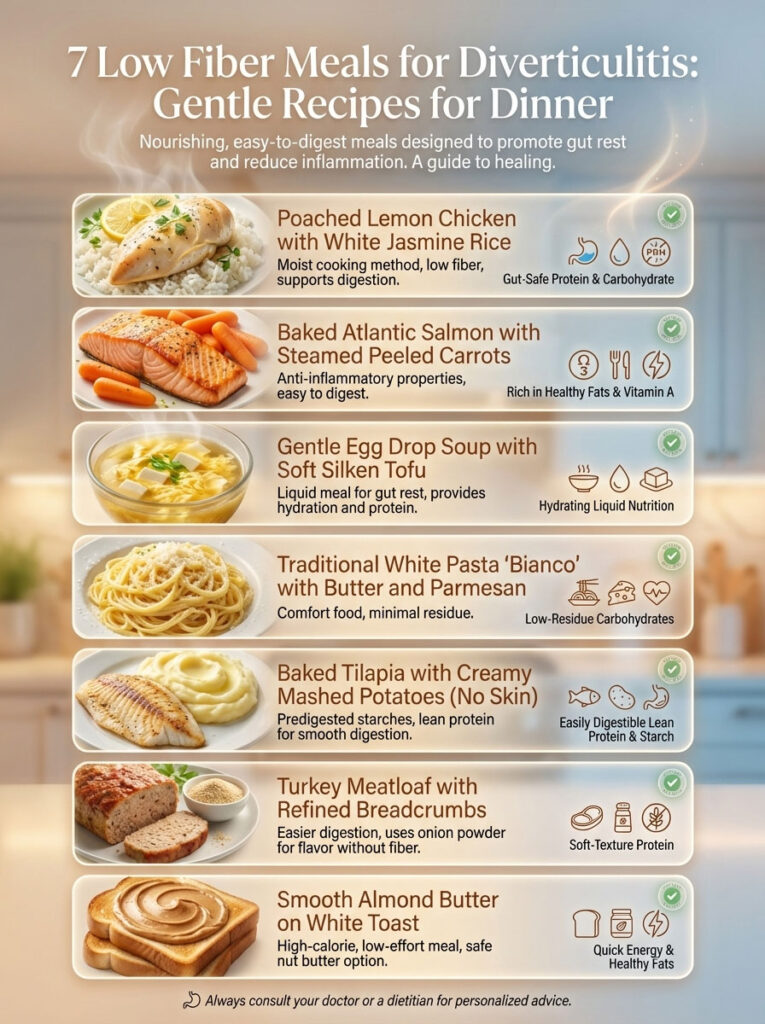
7 Low Fiber Meals for Diverticulitis: Gentle Recipes for Dinner
We have established the ground rules. Now we apply them. The following low residue dinner recipes are crafted to be soothing, nutritious, and safe. They avoid common triggers while providing the comfort needed during recovery.
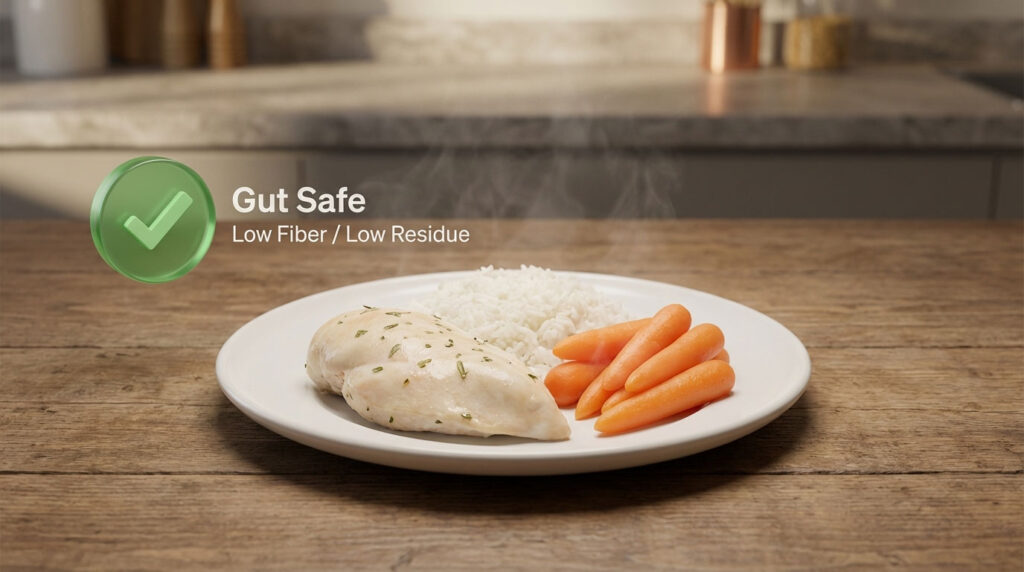
Recipe 1: Poached Lemon Chicken with White Jasmine Rice
Concept: This dish is the cornerstone of any diverticulitis recovery meal plan. Poaching is a technique that uses liquid to cook the protein, ensuring it remains moist without the need for heavy, hard-to-digest fats.
Ingredients:
- 1 boneless, skinless chicken breast (approx. 6 oz).
- 2 cups low-sodium chicken broth.
- 1 cup white jasmine rice.
- 1 tsp fresh lemon juice.
- Salt to taste.
Preparation Strategy:
Bring the chicken broth to a gentle simmer in a small saucepan. Slide the chicken breast into the liquid; it should be fully submerged. Cover the pan and reduce the heat to the lowest setting. Allow it to poach for 12 to 15 minutes. Meanwhile, cook the white rice according to package instructions until tender. Remove the chicken and slice it against the grain to shorten muscle fibers. Serve over the rice with a drizzle of the poaching liquid.
Why This Qualifies as a Low Fiber Meal:
This meal contains less than 1g of fiber. The white rice acts as a gentle binder, while the lean protein supports tissue repair without taxing the digestion.
Recipe 2: Baked Atlantic Salmon with Steamed Peeled Carrots
Concept: Inflammation is the enemy during a flare-up. Omega-3 fatty acids found in salmon are potent natural anti-inflammatories.
Ingredients:
- 6 oz Atlantic Salmon fillet (skin removed carefully).
- 2 large carrots, peeled twice to ensure no skin remains.
- 1 tsp olive oil.
- Dried dill weed.
Preparation Strategy:
Preheat your oven to 375°F. Peel the carrots and slice them into thin coins. Steam the carrots in a basket over boiling water for 15 to 20 minutes; they must be “fork-tender.” Place the salmon on parchment paper, rub with a tiny amount of oil and dill, and bake for 12 minutes. The fish should flake instantly when touched.
Why This Supports Sigmoid Colon Recovery:
Salmon is a soft protein that requires minimal stomach acid to digest. The carrots provide essential Vitamin A and beta-carotene without the insoluble fiber of the skin, adhering strictly to diverticulitis safe foods protocols.
Recipe 3: Gentle Egg Drop Soup with Soft Silken Tofu
Concept: On days when pain is elevated, chewing solid food can feel exhausting. A liquid-centric meal allows for maximum gut rest.
Ingredients:
- 3 cups clear chicken or bone broth.
- 2 large eggs, beaten until smooth.
- 1/2 cup soft silken tofu, cut into small cubes.
- 1 tsp soy sauce for flavor.
- 1 tsp cornstarch mixed with water (slurry).
Preparation Strategy:
Bring the broth to a boil and stir in the soy sauce. Add the cornstarch slurry to slightly thicken the texture, which helps suspend the egg. Reduce heat to a gentle swirl. Slowly pour the beaten eggs into the vortex to create soft, wispy ribbons. Gently slide in the tofu and warm for 2 minutes.
Why This is an Ideal Digestive Rest Meal:
Hydration is critical for low fiber diet for gut health. This soup provides fluids, electrolytes, and two sources of residue-free protein (eggs and tofu), making it one of the safest dinners available.
Recipe 4: Traditional White Pasta “Bianco” with Butter and Parmesan
Concept: Comfort food creates a positive psychological state, which aids digestion. We avoid tomato sauce due to acidity and seeds, opting for a “white” sauce.
Ingredients:
- 2 oz dry white pasta (penne or spaghetti, not whole wheat).
- 1 tbsp unsalted butter.
- 2 tbsp grated Parmesan cheese.
- Salt.
Preparation Strategy:
Boil salted water and cook the pasta. Unlike traditional Italian cooking, do not leave it “al dente.” Cook it until it is fully soft to ensure rapid breakdown in the stomach. Drain and immediately toss with butter and Parmesan while hot.
Why This Fits Bland Diet Recipes for Diverticulitis:
White flour pasta creates minimal colonic residue. The fat content is kept moderate (just enough for flavor), avoiding the cramping that high-fat heavy cream sauces might cause.
Recipe 5: Baked Tilapia with Creamy Mashed Potatoes (No Skin)
Concept: White fish and potatoes are a classic combination. The safety of this dish relies entirely on the processing of the potato.
Ingredients:
- 1 white fish fillet (Tilapia, Cod, or Flounder).
- 1 large Russet potato.
- 1 tbsp butter.
- 2 tbsp lactose-free milk or broth.
Preparation Strategy:
Peel the potato aggressively, removing the “eyes” and any skin fragments. Cube and boil until the potato is falling apart. Drain and mash thoroughly with butter and milk; whip it with a fork to remove any lumps. Bake the tilapia at 400°F for 10 minutes with salt.
Why This is a Top Low Residue Dinner Recipe:
Mashing the potato mechanically predigests the starches, saving your stomach the effort. Tilapia is one of the leanest low fiber proteins available, ensuring rapid gastric emptying.
Recipe 6: Turkey Meatloaf with Refined Breadcrumbs
Concept: Meatloaf is usually dangerous due to onions and celery chunks. We modify this classic by using onion powder and refined binders.
Ingredients:
- 1 lb lean ground turkey (93% lean).
- 1/2 cup white breadcrumbs (fine texture).
- 1 egg.
- 1/2 tsp onion powder (do not use raw onion).
- Salt and dried parsley.
Preparation Strategy:
Mix ingredients gently in a bowl. Do not overwork the meat, or it will become tough. Form into a loaf and bake at 350°F for 50 minutes until the internal temperature reaches 165°F.
Why This Works for Low Fiber Meals for Diverticulitis:
Ground meat is easier to digest than whole cuts because the muscle fibers have been mechanically shortened by the grinder. Using onion powder provides flavor without the fibrous strings of real onions.
Recipe 7: Smooth Almond Butter on White Toast
Concept: Fatigue is a common symptom of diverticulitis. Sometimes you need a meal that requires zero effort but still offers high-quality calories.
Ingredients:
- 2 slices premium white bread (sourdough is excellent).
- 2 tbsp creamy almond butter (absolutely no chunks).
- 1/2 ripe banana (optional).
Preparation Strategy:
Toast the bread to your liking. Spread the almond butter generously while the toast is warm. Top with very thin slices of ripe banana if tolerated.
Why This is Safe:
Nut butters are high in calories, which helps prevent weight loss during illness. By choosing “creamy,” you avoid the nut fragments that are dangerous for the sigmoid colon. This is a staple in many diverticulitis recovery meal plans.
Critical Cooking Techniques for Lowering Residue
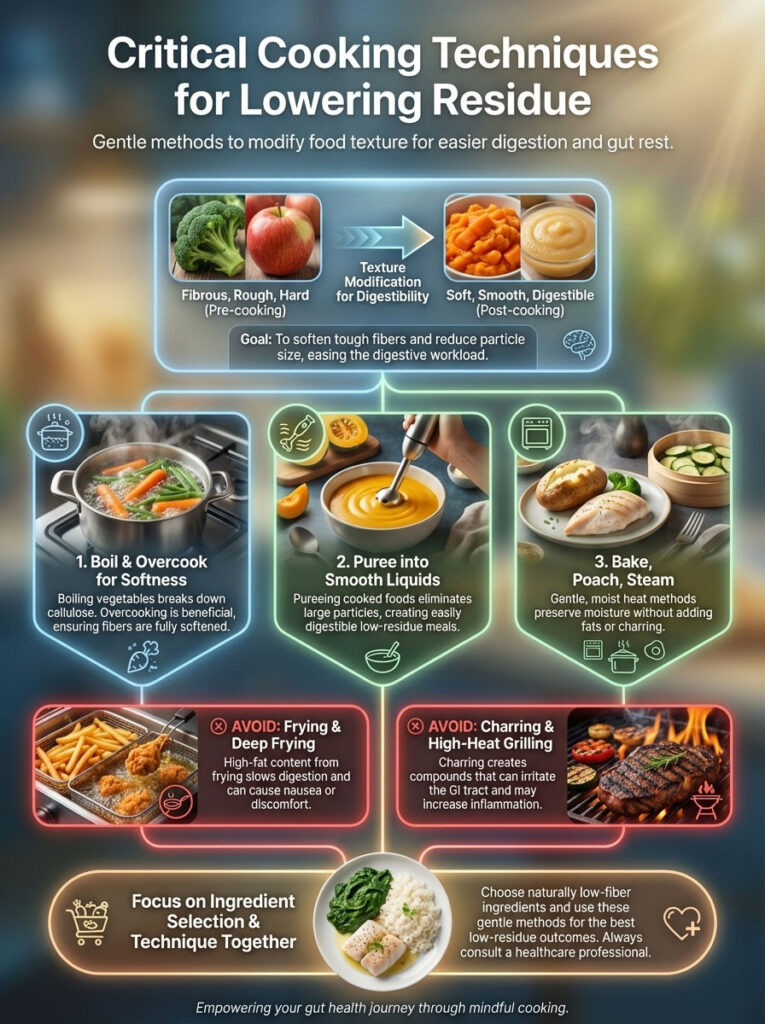
The ingredients you choose are only half the battle. To truly master low fiber meals for diverticulitis, you must employ specific cooking techniques that physically break down food structures before they even enter your mouth.
The Importance of Texture Modification and Pureeing
Texture dictates digestibility. A raw carrot and a boiled carrot have the same chemical composition, yet they behave entirely differently in the gut. Heat hydrolyzes starches and softens cellulose.
Blending: If you crave vegetables, consider soups. By pureeing cooked vegetables in a blender, you rupture the cell walls, effectively turning a fibrous vegetable into a low-residue liquid.
Overcooking: In culinary school, mushy vegetables are a failure. In diverticulitis safe foods cooking, they are a success. Do not be afraid to boil your green beans or potatoes longer than usual.
Cooking Methods to Avoid During a Flare-Up
Certain methods introduce irritants or make fats harder to digest.
Avoid Frying: Fried foods are soaked in heavy fats. Fat triggers the release of cholecystokinin, a hormone that can delay stomach emptying and cause nausea.
Avoid Charring/Grilling: The black char marks on grilled meat contain carbon compounds that can be irritating to a sensitive GI tract. Baking, poaching, and steaming are the safest methods for digestive rest meals.
Transitioning Out of the Flare-Up: The Step-Up Method
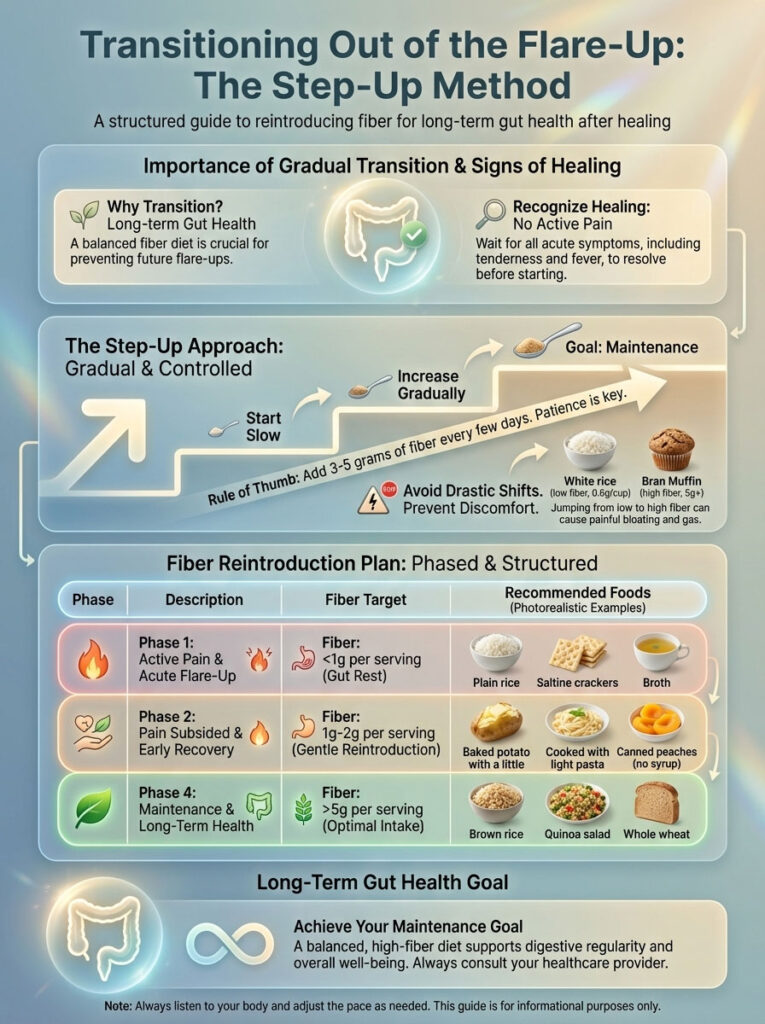
You will not remain on this diet forever. The low fiber diet for gut health is restrictive and lacks the long-term protective benefits of fiber. As your infection clears, you must reintroduce roughage carefully.
Recognizing Signs of Sigmoid Colon Healing
Before changing your diet, ensure you meet the clinical milestones of recovery:
- Pain Resolution: Abdominal tenderness has significantly decreased or vanished.
- Bowel Normalization: Diarrhea or constipation has resolved.
- No Systemic Symptoms: You have been free of fever for at least 48 hours.
The Step-Up Protocol for Fiber Reintroduction
Do not jump from white rice to a bran muffin in a single day. This will cause “rebound” gas, bloating, and potential pain. You must use a “Step-Up” approach, adding approximately 3 to 5 grams of fiber back into your diet every few days.
Use the table below to guide your transition from the acute phase back to maintenance.
| Phase | Condition Status | Recommended Carbohydrate | Fiber Content Estimate |
| Phase 1 | Active Pain / Flare-Up | White Rice, Saltines, Farina, White Bread | < 1g per serving |
| Phase 2 | Pain Subsided (24-48 hrs) | Peeled Potato, White Pasta, Cream of Wheat | 1g – 2g per serving |
| Phase 3 | Recovery (1 week post-pain) | Instant Oatmeal, Soft Cooked Peas, Sourdough | 3g – 4g per serving |
| Phase 4 | Maintenance / Prevention | Brown Rice, Whole Wheat, Quinoa, Beans | > 5g per serving |
This gradual increase allows your gut microbiome to adjust to the increased fiber load, preventing gas and distension.
Summary & Key Takeaways
Navigating a diverticulitis flare-up is physically and emotionally draining, but controlling your dinner plate is the single most effective tool you have for recovery at home. By strictly adhering to low fiber meals for diverticulitis, you provide your body with the “gut rest” it desperately needs to repair the sigmoid colon.

Remember the core principles of the recovery phase:
- Keep it White: Choose refined grains like white rice and white pasta over whole grains.
- Keep it Smooth: Avoid seeds, skins, nuts, and gristle.
- Keep it Tender: Prioritize low fiber proteins like fish and eggs, and cook vegetables until they are soft.
- Hydrate: Drink water constantly to help your system flush out toxins and maintain electrolyte balance.
These low residue dinner recipes are your temporary toolkit. They are safe, gentle, and designed to support healing. Once the pain is gone, you can slowly return to the high-fiber foods that protect you in the long run. But for tonight, be kind to your colon.
Frequently Asked Questions
Can I eat eggs during a diverticulitis flare-up?
Yes, eggs are one of the safest foods to eat during a diverticulitis attack. They are a complete protein source, contain zero fiber, and are soft and easily digested. Whether scrambled, poached, or hard-boiled, they are a staple of the low fiber diet for gut health.
Is coffee allowed on a low fiber diet?
Coffee is generally allowed in moderation because it is a liquid and leaves no residue. However, caffeine is a stimulant that increases bowel motility, which might cause cramping during a severe flare. It is best to limit intake and avoid high-fat creamers or excessive sugar.
Why can’t I eat whole grain bread right now?
Whole grain bread contains the bran and germ of the wheat kernel, which are sources of insoluble fiber. This fiber adds bulk to the stool and can mechanically scrape against the inflamed diverticula in the sigmoid colon, causing pain and delaying healing.
How long does the low fiber stage last?
Typically, a diverticulitis flare up diet lasts until symptoms improve significantly. This is usually a period of 2 to 4 weeks. Your doctor will advise you when to start reintroducing fiber based on your pain levels and blood work.
Are bananas low fiber?
Ripe bananas are considered a safe choice. While they contain some fiber, it is mostly soluble fiber, which turns into a soothing gel in the gut. They are often included in bland diet recipes for diverticulitis because they are easy to digest.
Can I eat yogurt?
Yes, yogurt is beneficial due to probiotics that support gut health. However, you must choose “smooth” yogurt. Avoid varieties with fruit chunks, seeds, granola, or added fiber. Greek yogurt is excellent for low fiber protein intake.
What vegetables are safest?
The safest vegetables are those that are canned or well-cooked and peeled. Examples include canned green beans, peeled and boiled carrots, baked skinless potatoes, and cooked beets. Always avoid raw vegetables like salads or coleslaw.
Is chicken soup good for diverticulitis?
Yes, chicken soup is very healing. Ensure that the broth is clear or low-fat. The chicken should be shredded finely, and any vegetables (like carrots) must be cooked until very soft. Do not include wild rice, barley, or celery strings.
Can I use spices in my recipes?
You should use mild herbs like parsley, dill, basil, and salt. Avoid spices that irritate the lining of the gut, such as red pepper flakes, chili powder, cayenne, and large amounts of garlic or onion.
How many grams of fiber is “low fiber”?
Medical standards for a low residue diet typically limit fiber intake to 10 to 15 grams per day. This is significantly lower than the recommended 25 to 30 grams for a healthy adult.
Should I avoid dairy?
Dairy does not contain fiber, so it is technically low residue. However, some people become temporarily lactose intolerant during a gut infection. It is safer to consume small amounts of hard cheese or lactose-free milk initially to see how your body reacts.
When should I go back to high fiber?
You should only transition back to a high fiber diet once you are completely symptom-free (no pain, no fever). This transition should be gradual over several weeks to avoid shocking your digestive system and causing gas.
Disclaimer
This article is for educational purposes only and does not constitute medical advice. Diverticulitis is a serious medical condition that can lead to complications such as perforation or abscesses. Always consult your Gastroenterologist or Primary Care Physician before making changes to your diet, especially during an active flare-up.
References
- National Institute of Diabetes and Digestive and Kidney Diseases (NIDDK). “Diet for Diverticulitis.”
- Mayo Clinic. “Diverticulitis Diet: What to Eat and What to Avoid.”
- Academy of Nutrition and Dietetics. “Low-Residue/Low-Fiber Diet Nutrition Therapy.”