Yes, cherries can be keto-friendly, but they require strict portion control. A standard cup contains 22g of net carbs, which is too high for most low-carb dieters. However, a “micro-dose” of five sweet cherries contains only 4.2g of net carbs. Due to their low Glycemic Index (22), they have a minimal impact on blood sugar compared to other fruits. To stay in ketosis, limit consumption to 5-6 cherries per day and always pair them with a fat source like cheese or nuts.
Table of Contents
Navigating the “Grey Area” of Fruit
Summer arrives. The farmers’ markets open. Suddenly, my clients face a difficult choice. They walk past the produce aisle and see mountains of deep red stone fruit. The question is always the same. Can I eat stone fruit without ruining my metabolic progress? The confusion surrounding fruit on a ketogenic diet is understandable. It is a common pain point.
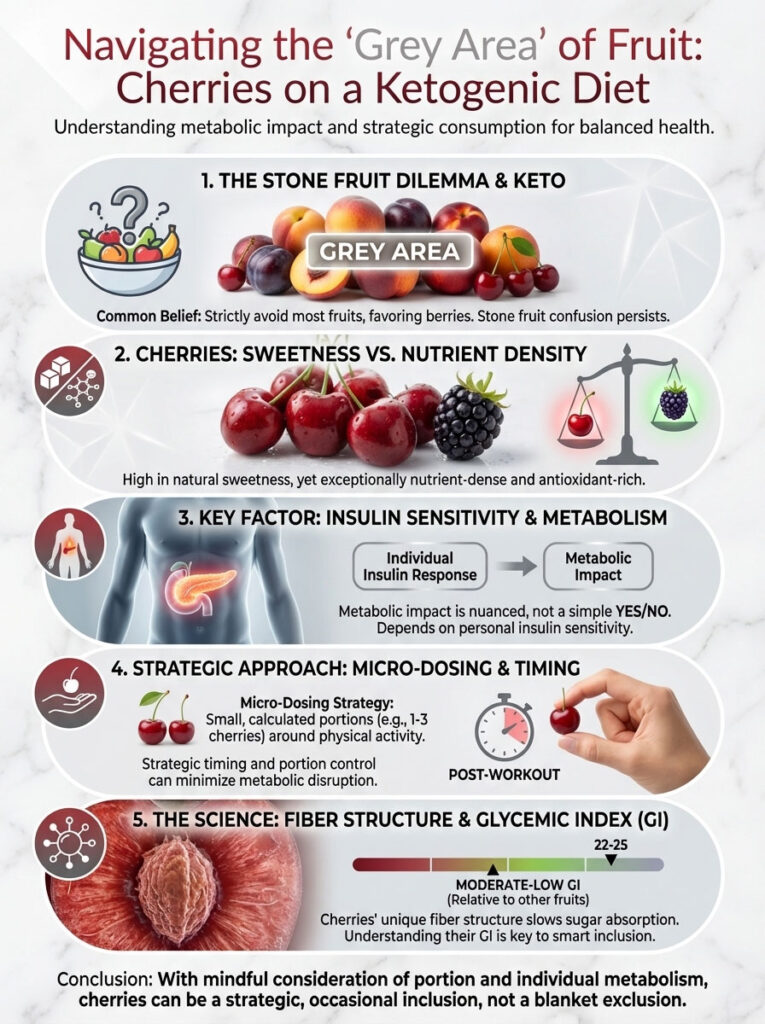
For years, standard low-carb advice has been rigid. Stick strictly to berries. Avoid everything else. Cherries often sit in a confusing grey area. They have intense sweetness. They have a rich texture. Many dieters assume they are off-limits due to their sugar content. This assumption is partially correct, but it lacks nuance.
Biochemistry is rarely black and white. As a Registered Dietitian focusing on metabolic health, I advise against a simple “yes or no” mentality. We must look at the metabolic impact of specific foods. The question “Are cherries keto” is not about whether the food is “allowed.” It is about whether the portion fits your carbohydrate threshold. It depends on your insulin sensitivity.
This article is not a pass to eat a bowl of fruit. It is a guide to metabolic management. We will explore strategic micro-dosing. We will examine how the fiber structure in cherries interacts with your physiology. By understanding the Glycemic Index (GI) and applying precise controls, you can include this nutrient-dense fruit in a well-formulated ketogenic diet.
Key Metabolic Statistics for Cherries
- Glycemic Index (GI): 22 (Very Low)
- Net Carbs (1 Cup): ~22g (High Risk)
- Net Carbs (5 Cherries): ~4.2g (Keto Safe)
- Fructose Content: Moderate to High
- Primary Benefit: Uric Acid Reduction & Sleep Support
- Insulin Impact: Low (with portion control)
The Biochemical Profile of Cherries
To understand if cherries fit your macros, we must analyze them at a molecular level. We cannot just look at the calorie count. We must look at the hormonal response. A standard serving of fruit for the average American is one cup. In the world of ketosis, a cup of cherries is a metabolic disaster.
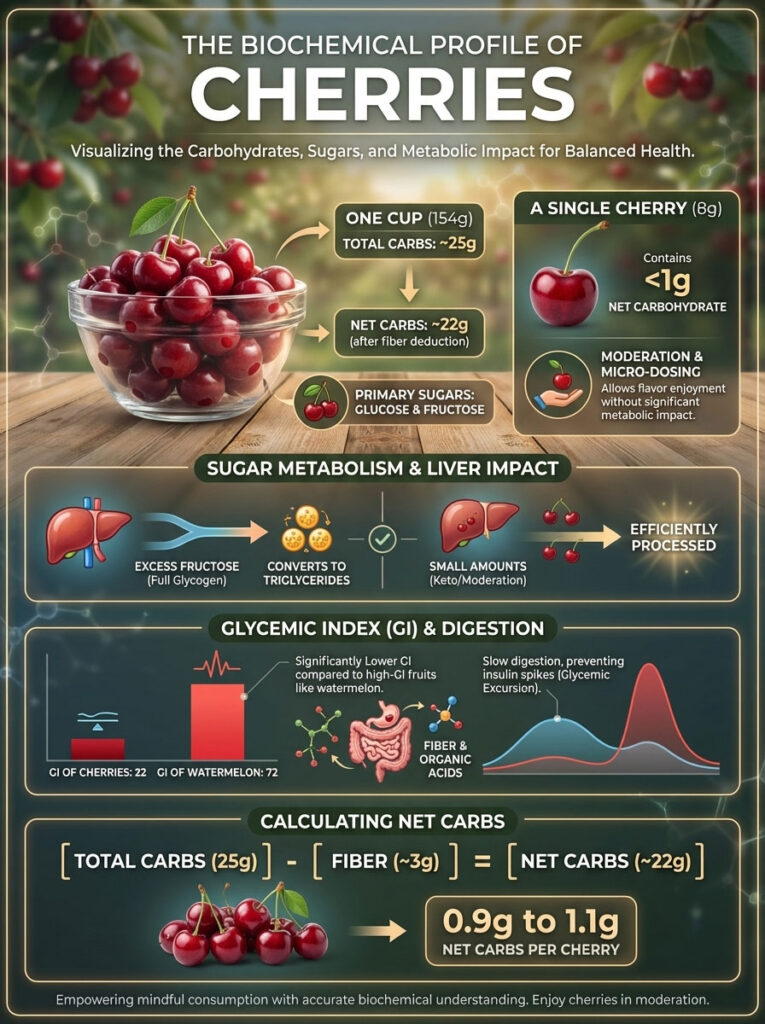
One cup (approximately 154g) of pitted sweet cherries contains roughly 25 grams of total carbohydrates. It contains about 3 grams of fiber. This leaves us with **22g net carbs**. This is the entire daily allowance for many strict keto dieters. Eating this amount would likely halt ketone production immediately.
However, we rarely eat foods in isolation. We rarely eat them in such large quantities when we are fat-adapted. When we break this down to a single cherry (about 8g), the profile changes. A single cherry contains less than 1g of net carbohydrate. This changes the math entirely.
The Fructose Factor
The primary sugar in cherries is a mix of glucose and fructose. The Fructose-to-Glucose Ratio is critical here. Glucose spikes blood sugar. Fructose does not spike blood sugar immediately. However, fructose must be processed by the liver. It refills liver glycogen.
Here is the catch:
If your liver glycogen is full, fructose is converted to triglycerides. This is fat creation. On keto, your liver glycogen is usually depleted. This means small amounts of fructose are processed efficiently. It does not immediately halt ketone production. It refills the tank slightly without spilling over into fat storage.
Glycemic Index (GI) vs. Glycemic Load (GL)
This is where the answer to “Are cherries keto” becomes favorable. We judge carbohydrates not just by weight. We judge them by how fast they enter the bloodstream. Cherries have a Glycemic Index (GI) of 22. To put that in perspective, watermelon has a GI of 72. Even though cherries are sweet, the sugar is bound tightly.
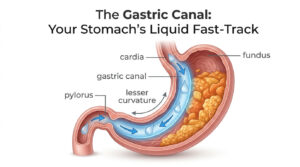
The sugar sits within a matrix of fiber and organic acids. This structure slows gastric emptying. The organic acids in the fruit lower the pH in the stomach. This further delays the digestion of carbohydrates. It prevents the sharp insulin spike. This is known as a “glycemic excursion.”
Preventing this spike preserves your fat-burning state. While the sugar content is higher than raspberries, the insulin response is often surprisingly low. This assumes the portion is small. This low insulin impact is why we consider cherries a functional food.
Net Carbs vs. Total Carbs
For the keto dieter, net carbs are the metric that matters most. Net carbs are calculated by subtracting fiber from total carbohydrates. In cherries, the skin provides significant insoluble fiber. This fiber is not digested. It passes through the gut. It feeds the microbiome.
When calculating net carbs in cherries, you are looking at roughly 0.9g to 1.1g per cherry. This depends on the size of the fruit. This mathematical reality allows for what I call “micro-dosing.” You can have the flavor without the metabolic cost.
Variety Matters: Bing, Rainier, or Montmorency?
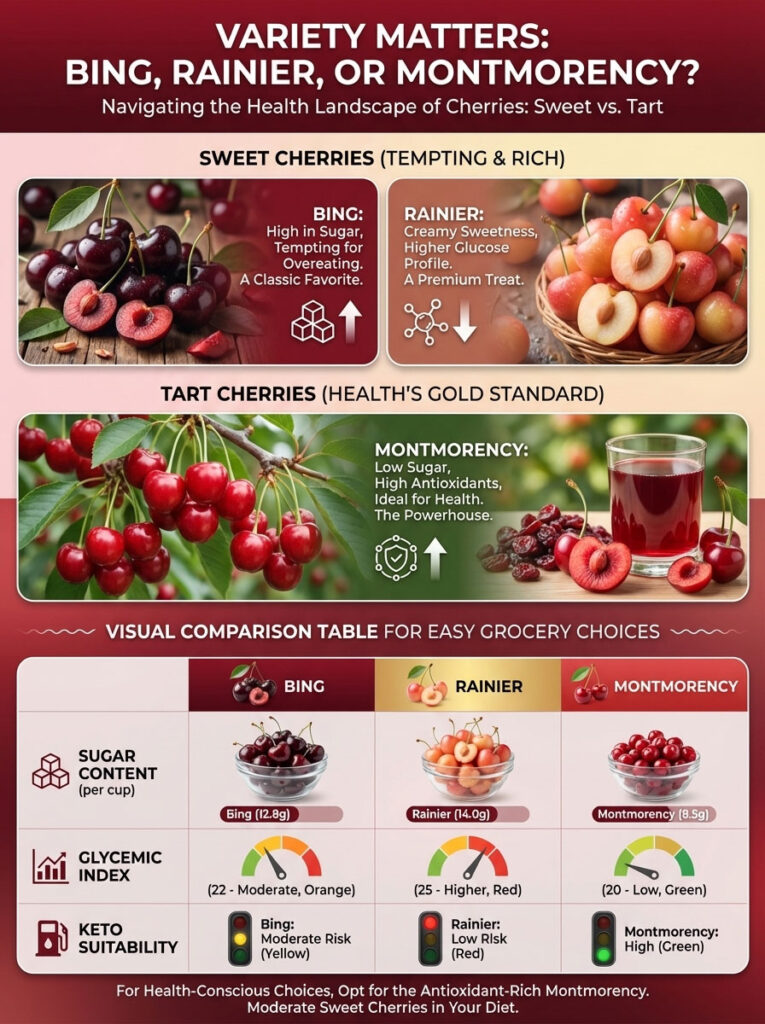
Not all cherries are created equal. Nature provides variety. However, agriculture has skewed this variety. In the supermarket, you will typically encounter three main types. Choosing the wrong one can double your sugar intake. You might not even realize it. We must distinguish between sweet cherries and tart cherries.
Sweet Cherries (Bing/Dark)
Bing cherries are the dark, heart-shaped fruits. Most people visualize these when they think of cherries. They are delicious. They are also dangerous for low-carb dieters. They have been bred for maximum sweetness. Farmers select for high sugar content because it sells better.
They are acceptable in very strict moderation. However, they have a higher sugar concentration than their tart cousins. If you are asking “Are cherries keto” while holding a bag of Bing cherries, be careful. The answer is “only if you can stop at five.” The temptation to overeat these is incredibly high.
Rainier Cherries
Rainier cherries are the yellow and red variety. They are beautiful fruits. They are often described as having a “creamy” sweetness. From a metabolic standpoint, Rainier cherries are the riskiest option. They typically have a higher glucose profile. They have higher overall sugar content than dark cherries.
I generally advise my clients to avoid Rainier cherries during the induction phase of keto. The temptation to overeat them is too high. The sugar density is significant. They are essentially nature’s candy. Save these for when you are metabolically flexible.
Montmorency (Tart) Cherries
These are the “Gold Standard” for metabolic health. Montmorency cherries are also known as sour or tart cherries. They are lower in sugar. They are higher in specific antioxidants like anthocyanins. They are rarely eaten fresh due to their sourness. You will often find them frozen or as a concentrate.
For someone prioritizing health span, these are the best choice. If you want inflammation reduction alongside ketosis, Montmorency tart cherries are superior. They provide the benefits without the massive sugar load.
Comparison Table: Cherry Variety Metabolic Profile
The following table breaks down the differences per 100g serving. Use this to make informed choices at the grocery store.
| Cherry Variety | Total Carbs (per 100g) | Net Carbs (per 100g) | Sugar (per 100g) | Glycemic Index (GI) | Keto Suitability Rating |
|---|---|---|---|---|---|
| Bing (Sweet) | 16.0g | 13.9g | 12.8g | 22 | Moderate (Strict Portion) |
| Rainier | 18.0g | 15.5g | 14.0g | 25 | Low (Risk of Spike) |
| Montmorency (Tart) | 12.2g | 10.6g | 8.5g | 20 | High (Best Option) |
| Morello (Sour) | 11.5g | 9.8g | 8.0g | 20 | High (Best Option) |
The “Rule of Five” Strategy: How to Eat Cherries on Keto
In my practice, I see a pattern. Total restriction often leads to binging. You tell yourself you cannot have cherries. Then you eat the whole bag. Instead of banning cherries, I implement the “Rule of Five.” This protocol is simple. You are permitted to eat exactly five cherries in a single sitting.
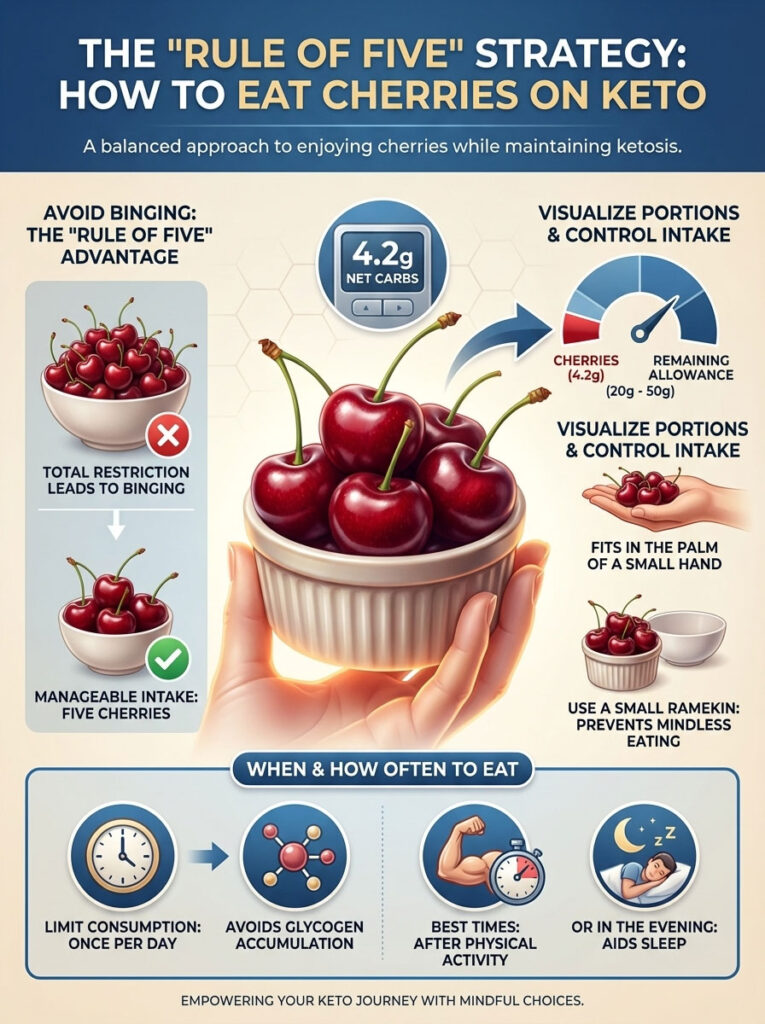
Why five? Because five average-sized sweet cherries contain approximately **4.2g of net carbs**. This is a safe number. It is a manageable number.
The Math of Ketosis
Most standard ketogenic protocols suggest a limit. You generally aim for 20g to 50g of net carbs per day. If you allocate 4.2g to cherries, you are safe. You still have roughly 16g to 45g remaining. This leaves room for vegetables. It leaves room for nuts. It accounts for incidental carbs in eggs or dairy.
This fits mathematically. It allows you to enjoy the flavor. It allows you to enjoy the texture. You do not have to displace the essential micronutrients found in leafy greens. You do not have to sacrifice your salad for fruit.
Visualizing Portions
It is vital to visualize this. A “clinical serving” of five cherries fits in the palm of a small hand. It is not a bowl. It is not a handful. It is a garnish. When you treat cherries as a garnish, the answer to “Are cherries keto” becomes a confident yes.
I recommend a physical barrier. Place five cherries in a small ramekin. Put the bag back in the refrigerator. Do this before you take your first bite. This prevents mindless eating. If the bag is on the counter, you will eat more than five.
Frequency and Timing
I recommend limiting this to once per day. Glycogen accumulation is a real phenomenon. Five cherries won’t fill your liver glycogen. However, eating five cherries every hour certainly will. Treat this as your daily “metabolic micro-dose.”
The best time to consume them is after physical activity. Your muscles are more receptive to glucose then. Alternatively, eat them in the evening. This leverages the natural melatonin content for sleep.
The “Blunting” Technique: Mitigating the Glucose Response
If you choose to consume cherries, follow this rule. Never eat them naked. I am referring to the “Blunting Technique.” This involves pairing carbohydrates with high-quality fats and proteins. This flattens the glucose curve.
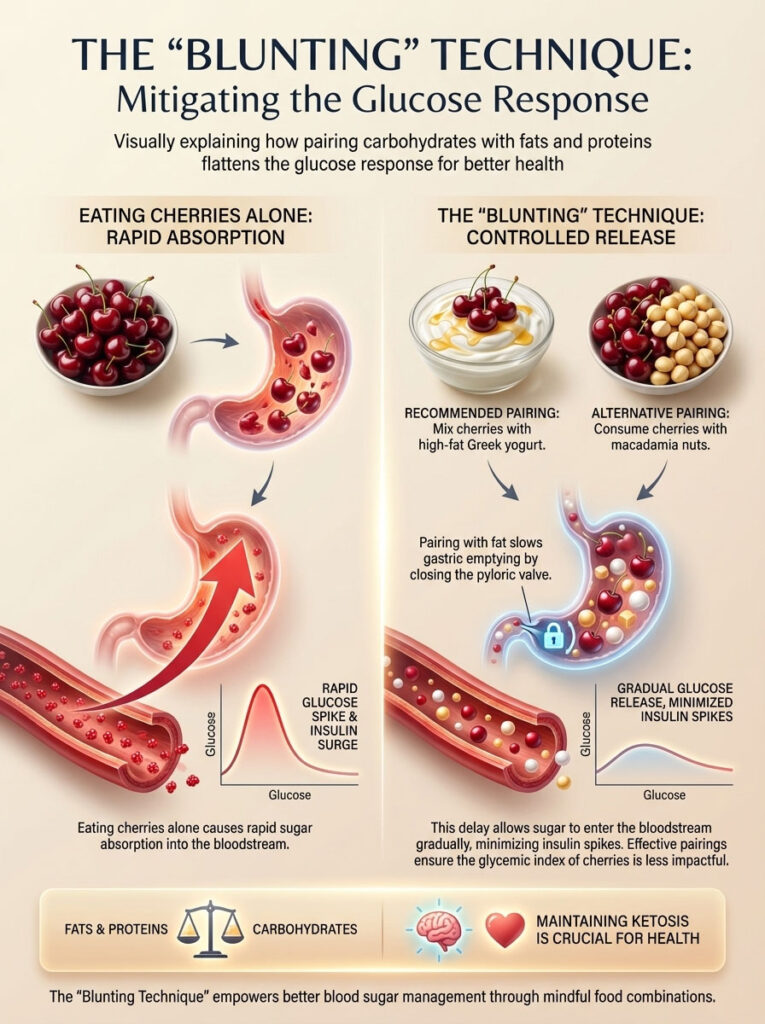
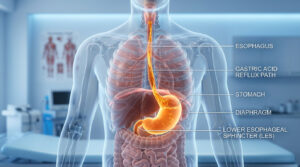
When you eat a cherry alone, digestion is fast. The simple sugars move to the small intestine quickly. They absorb rapidly. When you pair that cherry with fat, the pyloric valve closes. This is the gate between the stomach and intestine. It slows down gastric emptying.
This delay means the sugar enters the bloodstream as a trickle. It is not a flood. This is essential for maintaining a state of ketosis. By blunting the spike, you minimize insulin secretion.
Dietitian’s Pro Tip: The Perfect Pairing
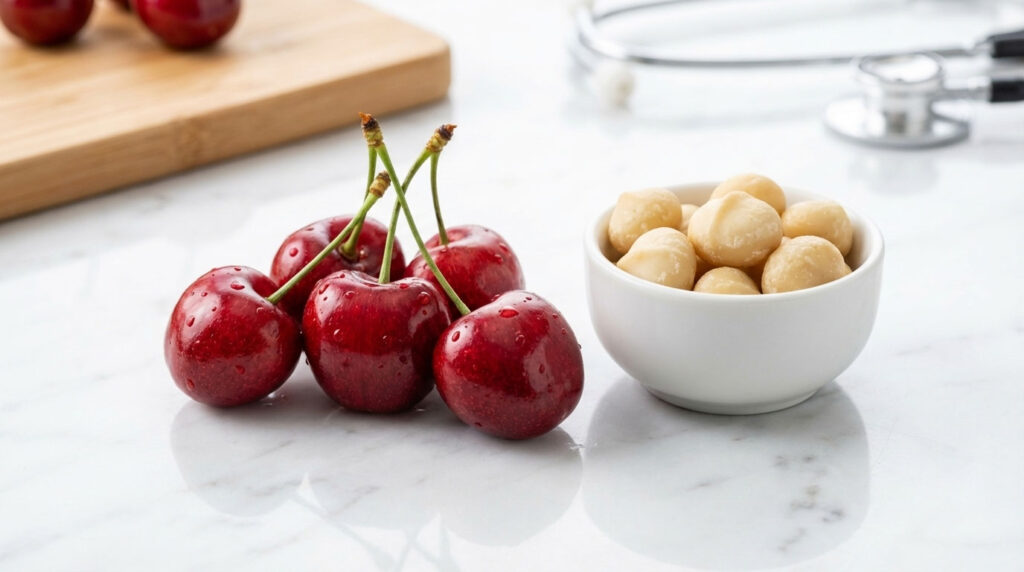
Never eat cherries on an empty stomach. Always combine them with a fat source. My favorite recommendation is to chop your five cherries and mix them into high-fat Greek yogurt. Alternatively, eat them alongside a serving of macadamia nuts.
Recommended Pairings
Here are the most effective pairings. These ensure the glycemic index of cherries remains irrelevant to your blood sugar:
- Cherries + Heavy Whipping Cream: The liquid fat coats the stomach lining. It provides immediate satiety.
- Cherries + Macadamia Nuts: These nuts are very high in fat. The fiber and fat provide a double-layer of protection.
- Cherries + Full-Fat Greek Yogurt: Brands like Two Good or Peak are best. The protein in yogurt stimulates glucagon. Glucagon opposes insulin.
- Cherries + Brie Cheese: This creates a savory-sweet dessert. The fat density lowers the overall glycemic load significantly.
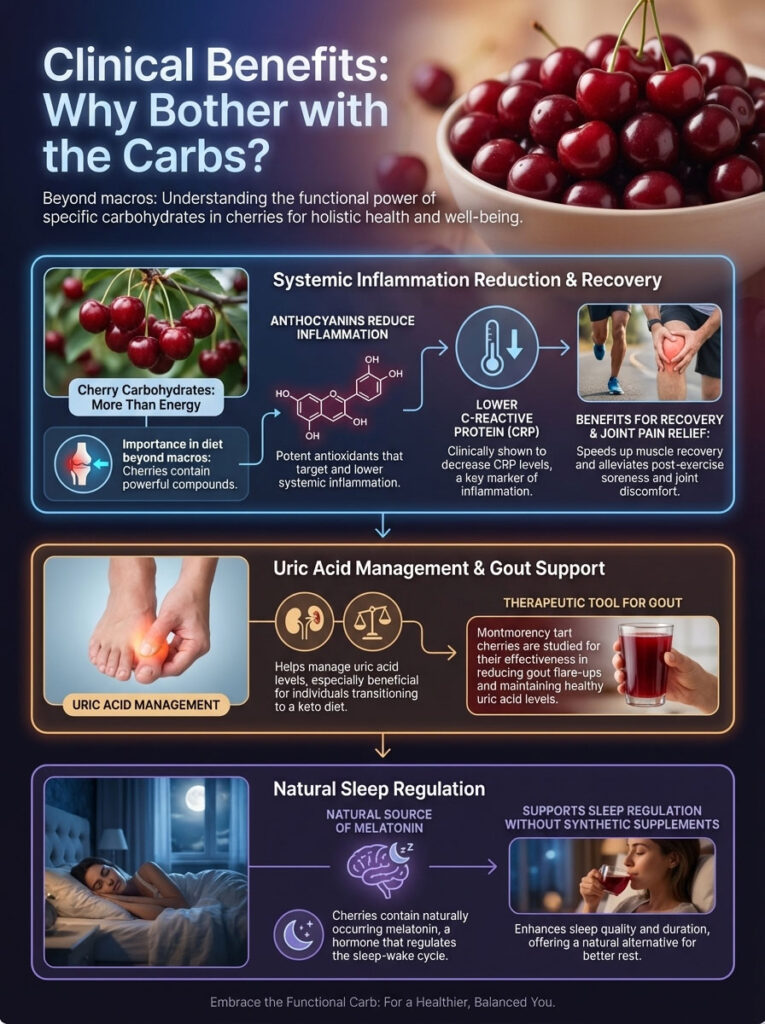
Clinical Benefits: Why Bother with the Carbs?
You might wonder why you should bother. Why spend your limited carb allowance on fruit? You could have more spinach instead. The answer lies in the unique phytochemicals cherries provide. We don’t just eat for macros. We eat for cellular signaling.
Anthocyanins and Inflammation
Cherries are rich in anthocyanins. These are the pigments that give them their deep red color. Research published in the Journal of Nutrition is promising. It suggests that these compounds can significantly reduce C-Reactive Protein (CRP). CRP is a key marker of systemic inflammation.
Many people adopt a keto diet to manage inflammation. Including a small amount of cherries can enhance this. It works synergistically with the diet. It aids in recovery from exercise. It may help reduce joint pain.
Uric Acid and Gout Management
A subset of people transitioning to keto experience issues. A meat-heavy diet may cause a temporary rise in uric acid. This can sometimes trigger gout flares. This happens in susceptible individuals. Cherries are unique in this regard.
They are one of the few foods clinically proven to lower uric acid levels. For clients with a history of gout, I often program Montmorency tart cherries. I use them as a therapeutic tool. In this context, the carbohydrates are a necessary vehicle for the medicine.
Melatonin and Sleep Support
The Keto Insomnia Connection is real. When you remove carbohydrates, serotonin production can dip. Cortisol may rise temporarily. This happens as the body adapts to using fat for fuel. This can disrupt sleep.
Tart cherries are a natural source of bioavailable melatonin. Eating your “Rule of Five” portion before bed helps. It may regulate your circadian rhythm. It does this without requiring synthetic supplements.
The Danger Zones: Forms of Cherries to Avoid
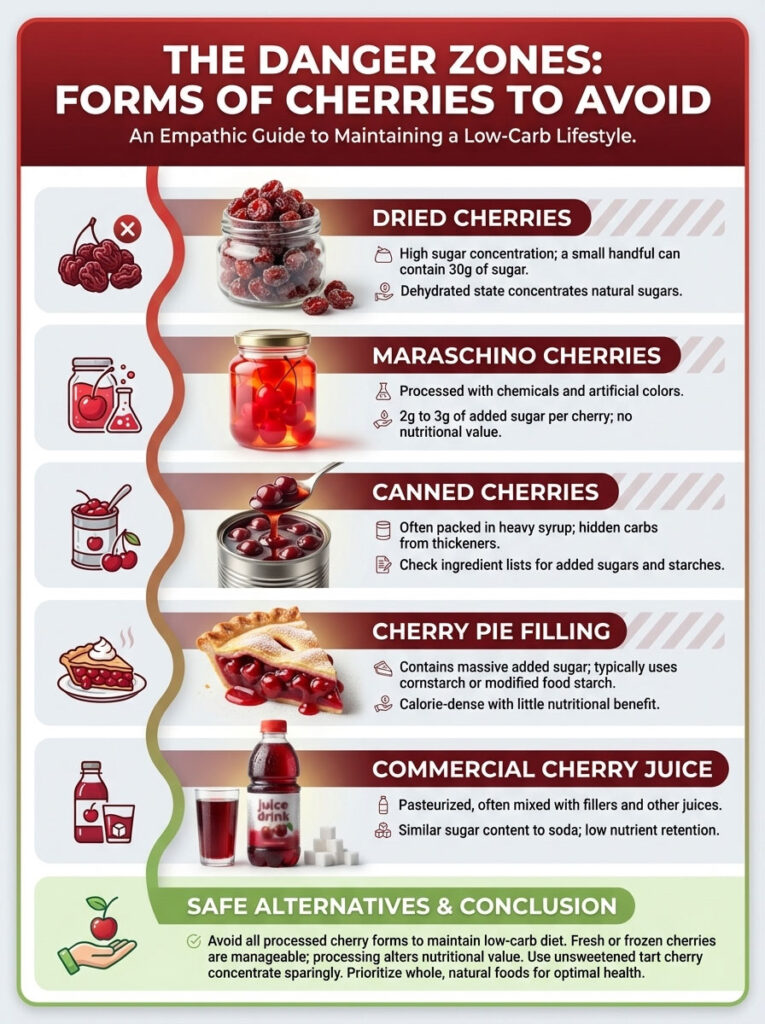
While fresh or frozen cherries can be managed, other forms are dangerous. They are metabolic poison for the keto dieter. Processing changes everything. It removes the fiber. It concentrates the sugar.
Dried Cherries
Dried cherries are essentially candy. The dehydration process removes water. It concentrates the sugar into a dense, sticky package. A small handful of dried cherries can contain 30g of sugar. It is nearly impossible to eat just one.
The volume is deceptive. You think you are eating less. The net carbs in cherries that are dried are simply too high. Avoid these completely. They will spike your blood sugar rapidly.
Maraschino Cherries
These should not even be classified as fruit. Maraschino cherries are bleached in calcium chloride. They are treated with sulfur dioxide. They are soaked in high-fructose corn syrup. They are dyed with Red #40.
A single maraschino cherry can contain 2g to 3g of pure added sugar. They trigger an immediate insulin response. They offer zero nutritional value. They are non-negotiable on a low-carb diet. Do not eat them.
Cherry Pie Filling and Canned Fruit
Canned cherries are almost always packed in syrup. Even “light” syrup contains massive amounts of added sugar. Furthermore, pie fillings use thickeners. They use cornstarch or modified food starch.
This adds hidden carbohydrates. These aren’t always obvious if you only look at the sugar line. You must check the ingredient list. If it comes in a can, leave it on the shelf.
Commercial Cherry Juice
There is a massive difference between raw concentrate and juice cocktails. Commercial juices are pasteurized. This kills the enzymes. They are often mixed with apple or grape juice fillers. A glass of commercial cherry juice has as much sugar as a soda.
If you use juice, use concentrate. It must be unsweetened tart cherry concentrate. Use it by the teaspoon, not the cup. Mix it with water or soda water.
Detailed Comparison: Cherries vs. Other Keto Fruits
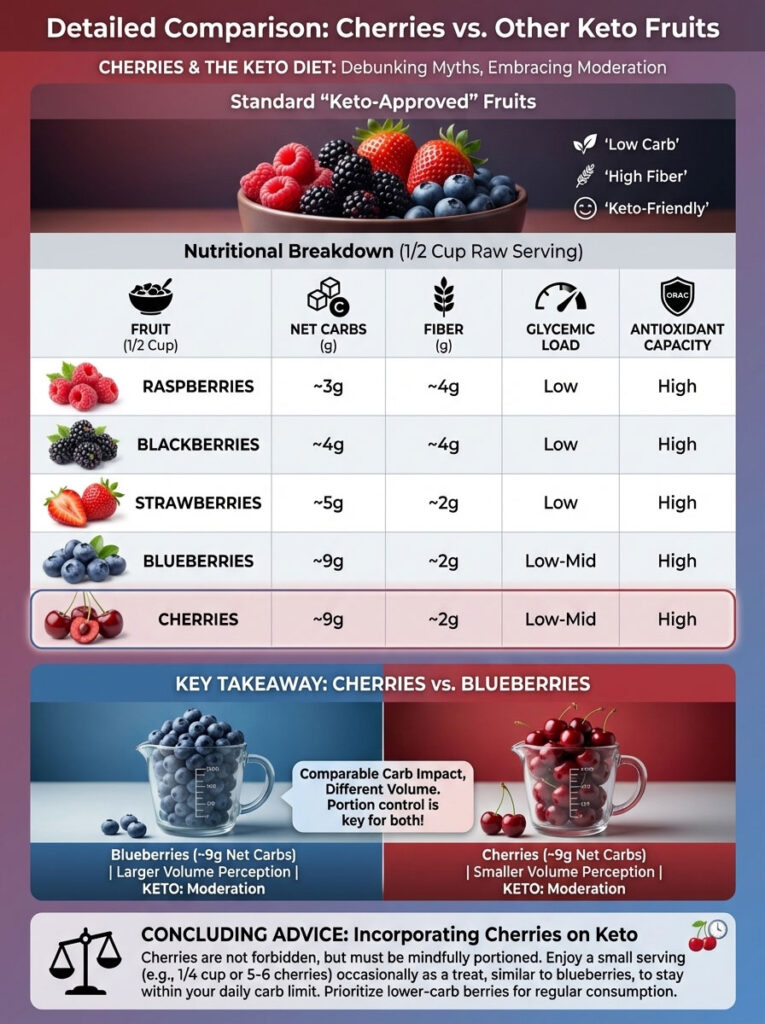
To truly answer “Are cherries keto,” we need context. We must compare them to the approved list of keto fruits. Berries are the standard. They have high fiber. They have low sugar. Cherries sit just outside this inner circle.
Comparison Table: Cherries vs. Common Keto Fruits
The table below compares a standard 1/2 cup raw serving. This shows you where cherries fit in the hierarchy.
| Fruit (1/2 Cup Raw) | Net Carbs (g) | Fiber (g) | Glycemic Load | Antioxidant Capacity (ORAC) | Keto Recommendation |
|---|---|---|---|---|---|
| Raspberries | 3.5g | 4.0g | 2 | Very High | Eat Freely |
| Blackberries | 3.1g | 3.8g | 2 | High | Eat Freely |
| Strawberries | 4.7g | 1.5g | 1 | Moderate | Moderate |
| Cherries (Sweet) | 8.5g | 1.5g | 3 | High | Strict Limit (“Rule of 5”) |
| Blueberries | 9.0g | 1.8g | 4 | Very High | Strict Limit |
As you can see, the keto fruit list favors raspberries. Cherries are actually comparable to blueberries. If you allow blueberries in your diet, you can technically allow cherries. The carb impact is similar. The main difference is volume. Half a cup of blueberries feels like more food than six cherries.
Keto-Friendly Cherry Recipes & Substitutions
Sometimes you crave the flavor. You do not want the baggage of the sugar. In these cases, we can use culinary tricks. We can hack the system to get the taste without the spike.
The “Cheat” Code: Extracts
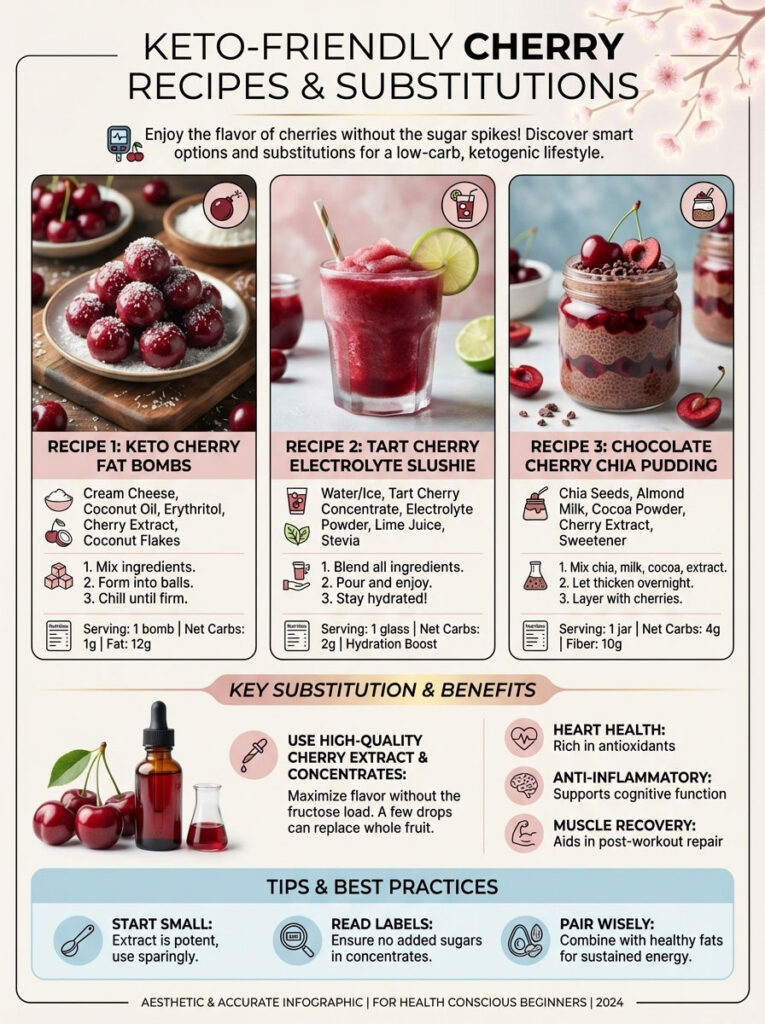
High-quality cherry extract is a game-changer. It provides the aromatic compounds. It lacks the fructose. Adding a few drops of natural cherry extract to a chocolate keto shake works wonders. It mimics the taste of a chocolate-covered cherry. It has zero glycemic impact.
Recipe Idea 1: Keto Cherry Fat Bombs
This recipe utilizes the “Blunting” technique perfectly. Soften 4 ounces of cream cheese. Mix with 2 tablespoons of coconut oil and sweetener. Finely chop 5 Montmorency tart cherries. Fold them into the mixture. Freeze in molds. You get the real fruit texture. It is spread across multiple servings.
Recipe Idea 2: Tart Cherry Electrolyte Slushie
Hydration is key on keto. Mix water, potassium chloride (NoSalt), and magnesium powder. Add 1 teaspoon of unsweetened tart cherry concentrate. Blend with ice. This provides the uric-acid lowering benefits. It provides electrolytes. It does not break your carb bank.
Recipe Idea 3: Chocolate Cherry Chia Pudding
Chia seeds are almost pure fiber. Mix chia seeds with almond milk. Add a tablespoon of cocoa powder. Stir in 3-4 chopped cherries. Let it sit overnight. The fiber in the chia seeds slows absorption. This makes it an excellent breakfast option.
Scientific Consensus & Expert Opinion
What does the broader scientific community say? We look to the literature. Studies in the American Journal of Clinical Nutrition are revealing. They show that whole fruit consumption is associated with better insulin sensitivity. This applies to temperate fruits like cherries and berries.
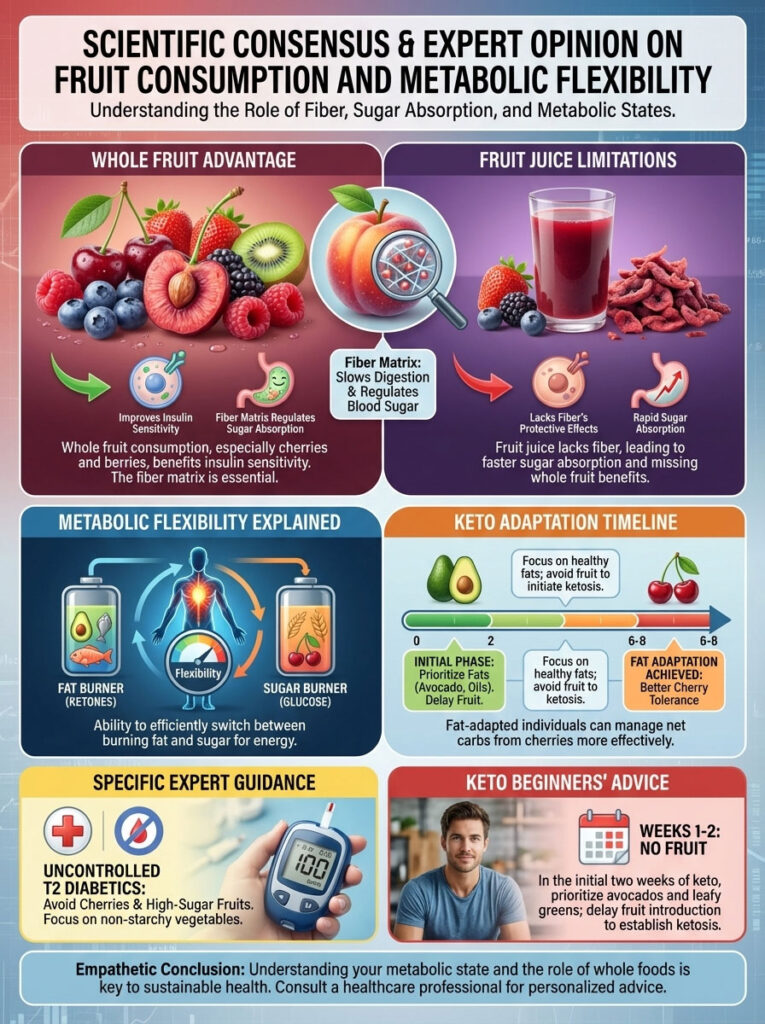
This benefit does not apply to fruit juice. The fiber matrix is the protective factor. It is the key differentiator. You need the skin and the pulp to modulate the sugar.
The Metabolic Flexibility Factor
There is a concept called “Metabolic Flexibility.” This is the goal of a well-executed keto diet. It means your body can switch fuels. It switches between burning fat and burning sugar efficiently. Once you are fully fat-adapted, things change.
Fat adaptation usually happens after 6-8 weeks of strict keto. Your muscles become more efficient at soaking up glucose. This means a fat-adapted individual can handle the net carbs in cherries. They handle them better than someone on day three of their diet.
Contraindications
Who should avoid cherries completely? There are exceptions. If you are a Type 2 Diabetic with uncontrolled glucose numbers, avoid them. If you wear a Continuous Glucose Monitor (CGM) and see spikes over 140 mg/dL, abstain.
Additionally, consider your timeline. If you are in the first two weeks of keto induction, avoid all fruit. Stick to avocados. This facilitates the enzymatic shift to ketosis. Do not introduce fructose until you are adapted.
Addressing Common Questions
In my clinic, clients often have specific fears. Let’s address them directly. One common question is: “Will one cherry kick me out of ketosis?” The answer is no. A single cherry has less than 1g of carbs. It is physiologically impossible for that amount to stop ketosis.
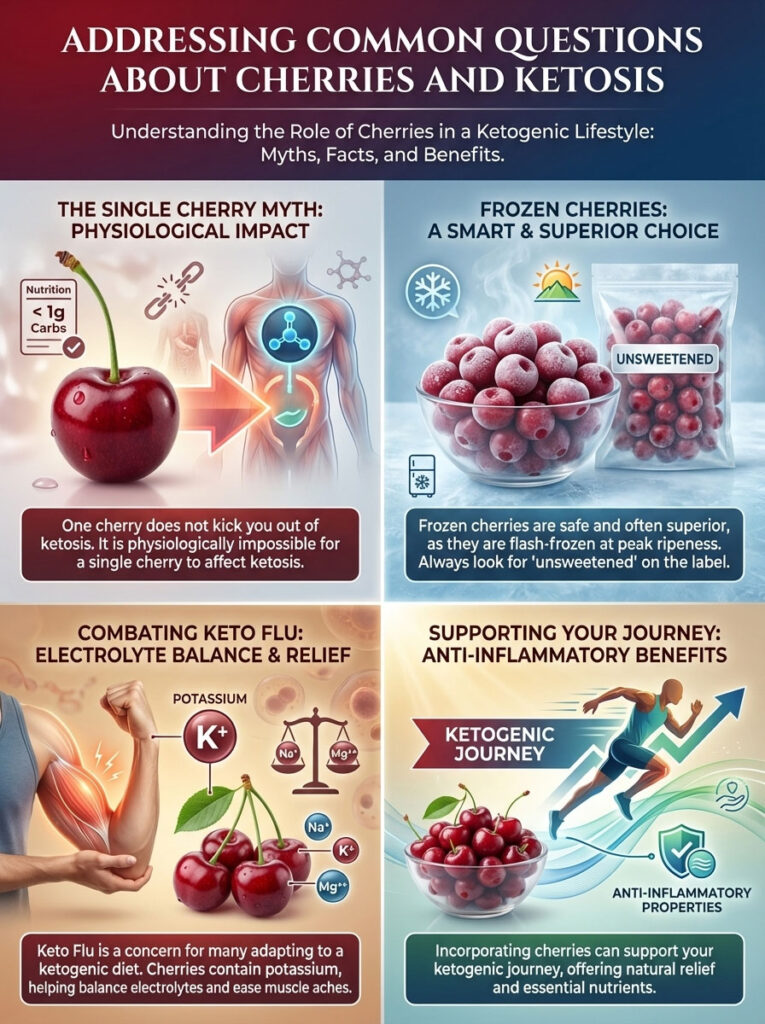
Another frequent concern is about frozen cherries. Are they safe? Yes, they are. In fact, they are often better. They are flash-frozen at peak ripeness. This preserves nutrients. Just ensure the bag says “unsweetened.”
Finally, people ask about “Keto Flu.” Can cherries help? Indirectly, yes. They contain potassium. This helps balance electrolytes. Their anti-inflammatory properties can also ease muscle aches. They are a useful tool during adaptation.
Summary & Key Takeaways
So, are cherries keto? The answer is a qualified yes. They are not a “free food” like steak or butter. They are a functional tool. They can be integrated into a low-carb lifestyle if you are careful.
To successfully include cherries in your diet, remember the protocol:
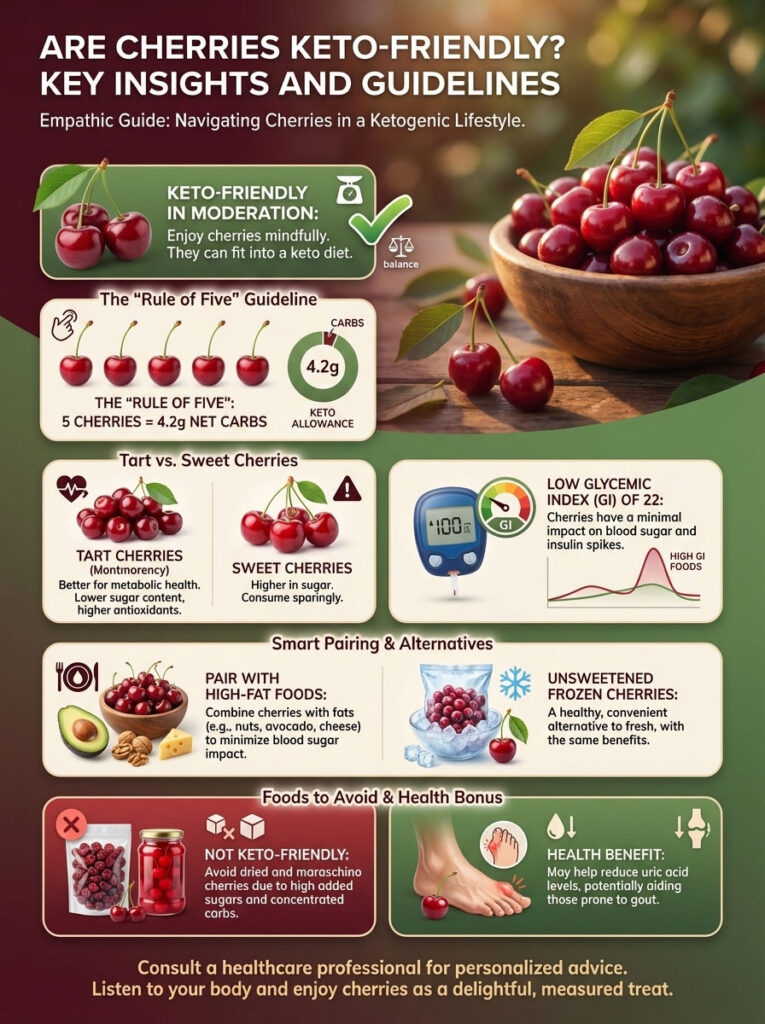
- Follow the Rule of Five: Limit yourself to 5 sweet cherries per day.
- Use the Blunting Technique: Always pair cherries with fat (cheese, nuts, cream).
- Choose Wisely: Opt for Montmorency tart cherries when possible for better metabolic effects.
- Avoid Processing: Say no to dried, canned, or candied cherries.
By respecting the biochemistry of your body, you can succeed. Understand the glycemic index of cherries. Apply strict portion control. You can enjoy this summer fruit without compromising your metabolic health.
Frequently Asked Questions
Are cherries keto-friendly for daily consumption?
Yes, cherries can be keto-friendly if you practice strict metabolic management. While a full cup contains 22g of net carbs, a “micro-dose” of five sweet cherries provides only 4.2g of net carbs, fitting within most daily carbohydrate thresholds. To maintain ketosis, it is essential to treat them as a garnish rather than a primary fruit source.
How many cherries can I eat on a keto diet without breaking ketosis?
I recommend the “Rule of Five” protocol for my clients. Consuming exactly five average-sized sweet cherries keeps your intake at approximately 4.2g of net carbs. This small amount is physiologically unlikely to halt ketone production, especially when paired with high-quality fats to blunt the insulin response.
Are tart cherries better than sweet cherries for low-carb dieters?
Montmorency (tart) cherries are the “gold standard” for metabolic health on a ketogenic diet. They have a lower sugar profile (8.5g per 100g) compared to Bing cherries and a lower Glycemic Index of 20. They also offer superior levels of anthocyanins, which help manage systemic inflammation and uric acid levels.
What is the Glycemic Index of cherries and why does it matter for keto?
Cherries have a remarkably low Glycemic Index (GI) of 22, which is significantly lower than most tropical fruits. This low GI means the natural sugars are bound in a fiber matrix that slows gastric emptying. This prevents a sharp “glycemic excursion” or insulin spike, helping you stay in a fat-burning state despite the fruit’s sweetness.
Can cherries help with keto-related insomnia or sleep issues?
Tart cherries are a rare natural source of bioavailable melatonin, which can help regulate circadian rhythms. Many dieters experience a dip in serotonin and sleep quality during keto-adaptation; consuming a small portion of cherries in the evening can leverage this melatonin to support better sleep architecture without requiring synthetic supplements.
How should I pair cherries to minimize their impact on blood sugar?
Always utilize the “Blunting Technique” by pairing cherries with high-fat proteins. Combining your cherries with Brie cheese, macadamia nuts, or full-fat Greek yogurt closes the pyloric valve and slows sugar absorption. This ensures that glucose enters the bloodstream as a trickle rather than a flood, minimizing the subsequent insulin secretion.
Are dried cherries or maraschino cherries allowed on a keto diet?
Absolutely not. Dried cherries are metabolic “sugar bombs” because the dehydration process concentrates the fructose and removes the hydrating volume. Maraschino cherries are even worse, as they are typically soaked in high-fructose corn syrup and dyes, providing zero nutritional value and an immediate insulin spike that will stall ketosis.
Can eating cherries help prevent gout flares on a high-protein diet?
Yes, cherries are clinically proven to lower uric acid levels in the blood. For individuals who experience elevated uric acid during their transition to a meat-heavy ketogenic diet, small portions of tart cherries can act as a therapeutic tool to reduce C-reactive protein (CRP) and mitigate the risk of gout flares.
How do cherries compare to blueberries and raspberries on a keto fruit list?
Cherries sit just outside the “inner circle” of keto fruits like raspberries and blackberries. While raspberries have only 3.5g of net carbs per half-cup, cherries are comparable to blueberries at approximately 8.5g per half-cup. The primary difference is volume; because cherries are denser, you must be more disciplined with your piece-count compared to loose berries.
When is the best time to eat cherries for the least metabolic impact?
The optimal timing for cherry consumption is either post-workout or in the evening. Post-exercise, your muscles are more insulin-sensitive and can “soak up” the small amount of glucose to refill muscle glycogen. In the evening, the natural melatonin content can be leveraged to support the body’s transition into sleep mode.
Are frozen cherries as healthy as fresh cherries for keto?
Unsweetened frozen cherries are an excellent keto option because they are flash-frozen at peak ripeness, preserving their antioxidant and anthocyanin content. They are often easier to portion-control than a large fresh bag. Just ensure the ingredient label confirms no added sugars or syrups were used during the freezing process.
What are the risks of eating Rainier cherries while in ketosis?
Rainier cherries are the riskiest variety for keto dieters because they have been bred for exceptionally high sugar content. They typically contain around 15.5g of net carbs per 100g, which is higher than dark sweet cherries. I generally advise clients to avoid Rainiers until they have achieved full metabolic flexibility and can handle higher glycemic loads.
Disclaimer
This article is for informational purposes only and does not constitute medical advice. The metabolic response to carbohydrates varies significantly between individuals based on insulin sensitivity and activity levels. Always consult a qualified healthcare professional or a Registered Dietitian before making significant changes to your diet, especially if you have Type 2 Diabetes or other metabolic conditions.
References
- American Journal of Clinical Nutrition – “Glycemic index and glycemic load of fruits and their association with diabetes risk.” – Provides data on the low GI of cherries.
- Journal of Nutrition – “Consumption of Bing Sweet Cherries Lowers Circulating Concentrations of Inflammation Markers in Healthy Men and Women.” – Supports the anti-inflammatory benefits of anthocyanins.
- Journal of the International Society of Sports Nutrition – “Efficacy of tart cherry juice in reducing muscle pain during running.” – Supports the recovery and anti-inflammatory claims.
- USDA FoodData Central – “Cherries, sweet, raw – Nutritional Profile.” – Source for the carbohydrate and fiber counts used in the math.
- European Journal of Nutrition – “Effect of tart cherry juice (Prunus cerasus) on melatonin levels and enhanced sleep quality.” – Supports the claims regarding sleep and circadian rhythms.
- Arthritis & Rheumatism Journal – “Cherry consumption and decreased risk of recurrent gout attacks.” – Provides clinical backing for the uric acid reduction mentions.