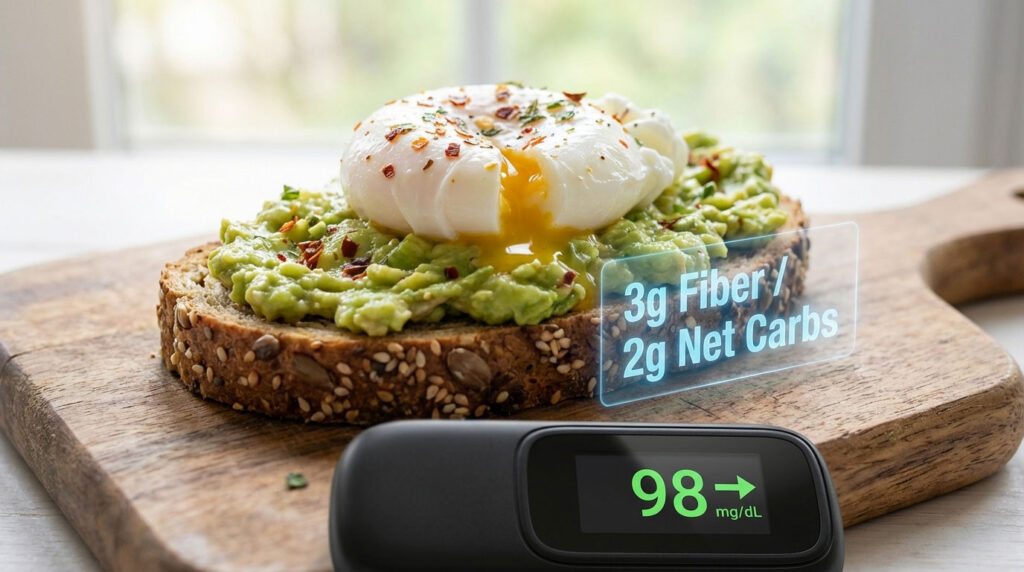
The best bread for diabetes is a loaf that prioritizes a low Glycemic Index (GI), high dietary fiber content, and minimal net carbohydrates to maintain stable insulin levels. To prevent dangerous glucose spikes, clinical nutritionists and experts recommend sprouted grain breads like Ezekiel 4:9, authentic sourdough varieties fermented for over 12 hours, and keto-friendly brands such as Carbonaut or Sola that utilize resistant starch technology. For optimal blood sugar management, individuals should aim for breads containing at least 3 grams of fiber and fewer than 15 grams of total carbohydrates per slice.
Table of Contents
Navigating the Bakery Aisle for Diabetes Management and Blood Sugar Control
For the 38 million Americans currently living with diabetes, the bakery aisle often represents a source of anxiety rather than culinary comfort. A diagnosis usually brings a swift and severe dietary eviction notice for baked goods, pasta, and traditional comfort foods.
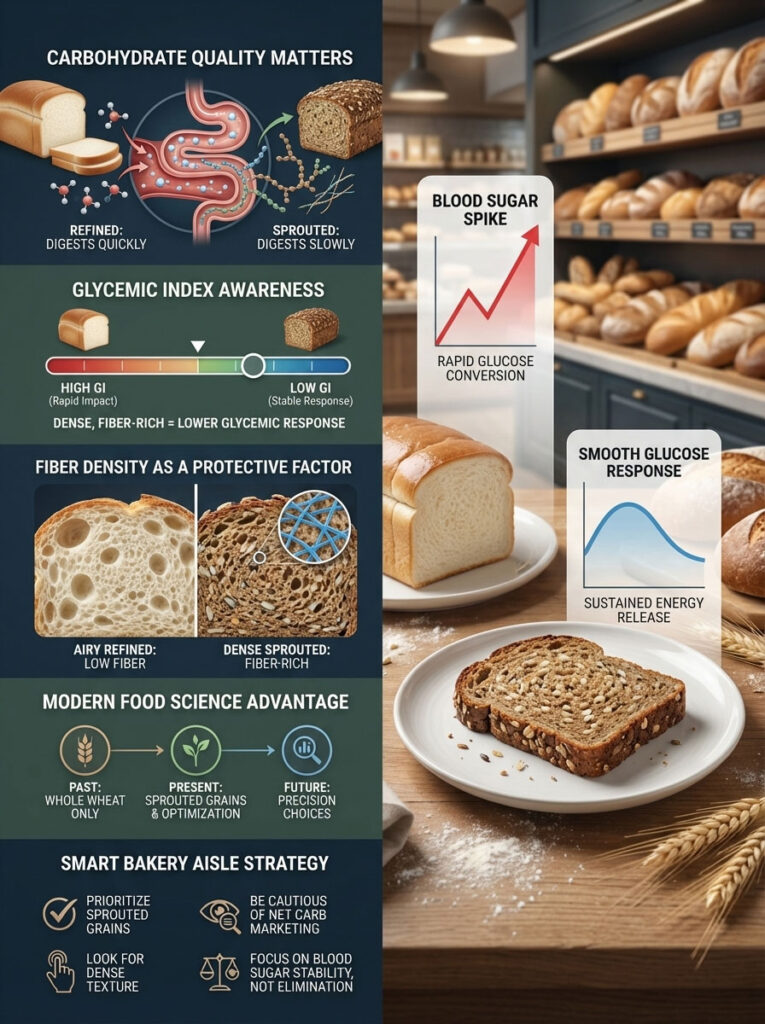
However, the complete elimination of bread is rarely sustainable or necessary for long-term health. The binary view that all bread is inherently harmful ignores the significant nuance of nutritional biochemistry and modern food science.
Not all carbohydrates behave the same way once they are digested. The metabolic impact of a slice of white sandwich bread is vastly different from that of a slice of dense, sprouted whole grain bread.
The modern grocery landscape has shifted dramatically in the last five years. We have moved past the era where “whole wheat” was the only recommended alternative to white bread. Today, advanced food science has given us tools to navigate the bakery aisle with precision. By understanding the Glycemic Index and prioritizing fiber density, you can reintroduce toast and sandwiches into your diet without compromising your health goals.
This comprehensive guide is not just a list of products. It serves as a strategic blueprint for maintaining blood sugar control while enjoying food. We will analyze the clinical data behind sprouted grains, dissect the “net carb” marketing claims, and provide a verified, data-driven list of the best bread for diabetics available in US supermarkets right now.
The Science Behind Low Glycemic Index Bread and Blood Sugar Control
Understanding Glycemic Index (GI) and Glycemic Load (GL) for Diabetics
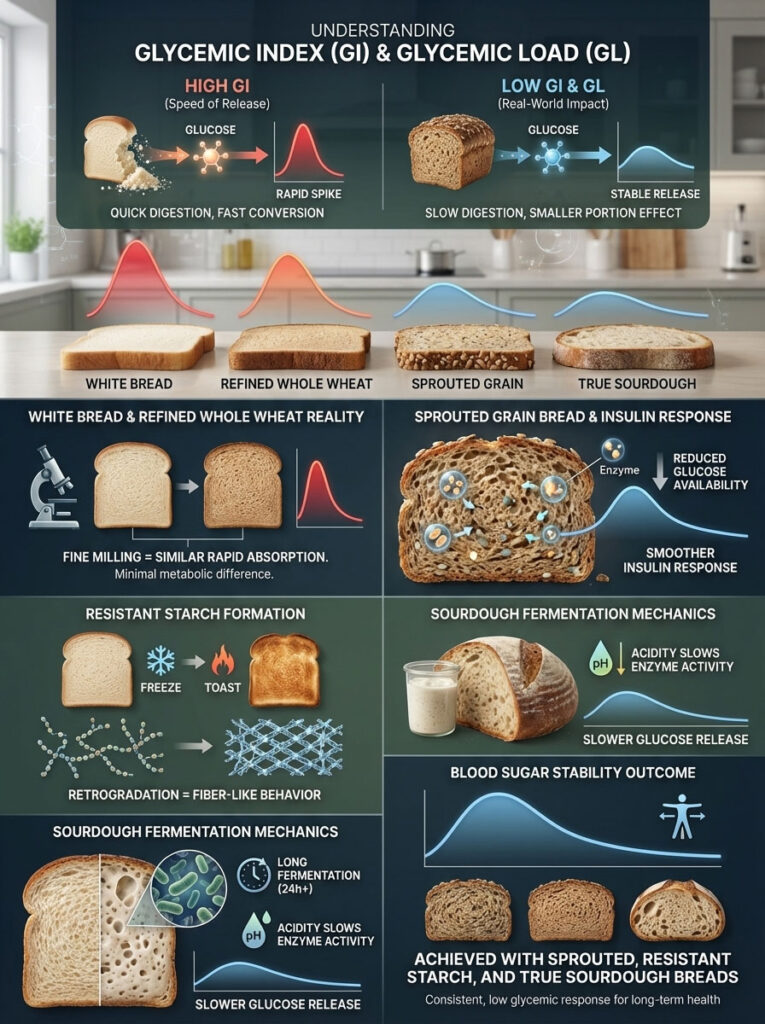
Understanding the difference between GI and Glycemic Load is vital for selecting the best bread for diabetics. The Glycemic Index measures how quickly a food raises blood sugar compared to pure glucose. White bread is the reference point for high-speed digestion, usually sitting at a high GI of 75. This rapid absorption forces the pancreas to release a surge of insulin, which can be damaging over time for those with insulin resistance.
Surprisingly, standard commercial whole wheat bread often has a GI of around 69. This is because the flour is milled so finely that the body digests it almost as rapidly as white flour. It offers little advantage for blood sugar control.
Glycemic Load, however, takes portion size into account. A low carb bread with a low GI and a small portion size imposes a very low Glycemic Load on the body. This is the sweet spot for diabetes management.
Clinical Data on Sprouted Grain Bread and Insulin Response
A study conducted at the University of Guelph provided a compelling insight into grain processing. Researchers found that sprouted grain bread significantly lowered the glucose response in overweight and obese subjects compared to 11-grain bread, sourdough, and white bread. The sprouting process activates enzymes in the grain that break down starch before it is even baked. This pre-digestion means there is less readily available starch for your body to convert into sugar.
The Role of Resistant Starch in Lowering Blood Glucose
One of the most powerful tools in a diabetic’s arsenal is resistant starch. This type of starch resists digestion in the small intestine and ferments in the large intestine. Because it is not broken down into glucose, it does not spike blood sugar.
You can actually increase the resistant starch content of your bread at home. Research published in Nutrition Journal and other clinical sources indicates that freezing bread and then toasting it can modify the starch structure. This process, known as retrogradation, turns digestible starch into resistant starch type 3. This functions more like fiber than a carbohydrate.
Sourdough Fermentation Mechanics and Glucose Absorption
Sourdough fermentation is another biological hack for lowering GI. Traditional sourdough uses wild yeast and Lactobacillus bacteria. During the long fermentation process, which often lasts 12 to 24 hours, these bacteria consume the sugars and starches in the dough. They also produce lactic acid, which lowers the pH of the bread.
This acidity inhibits the enzymes in your saliva and stomach that break down carbohydrates. The result is a slower rate of gastric emptying and a slower release of glucose into the bloodstream. This is why a true, long-ferment sourdough, not one flavored with vinegar, typically has a GI of 53 to 55. This makes it a viable option for many monitoring their glucose using a Continuous Glucose Monitor (CGM).
Essential Criteria for Choosing the Best Bread for Type 2 Diabetes
The “Minus-Fiber” Equation for Calculating Net Carbs
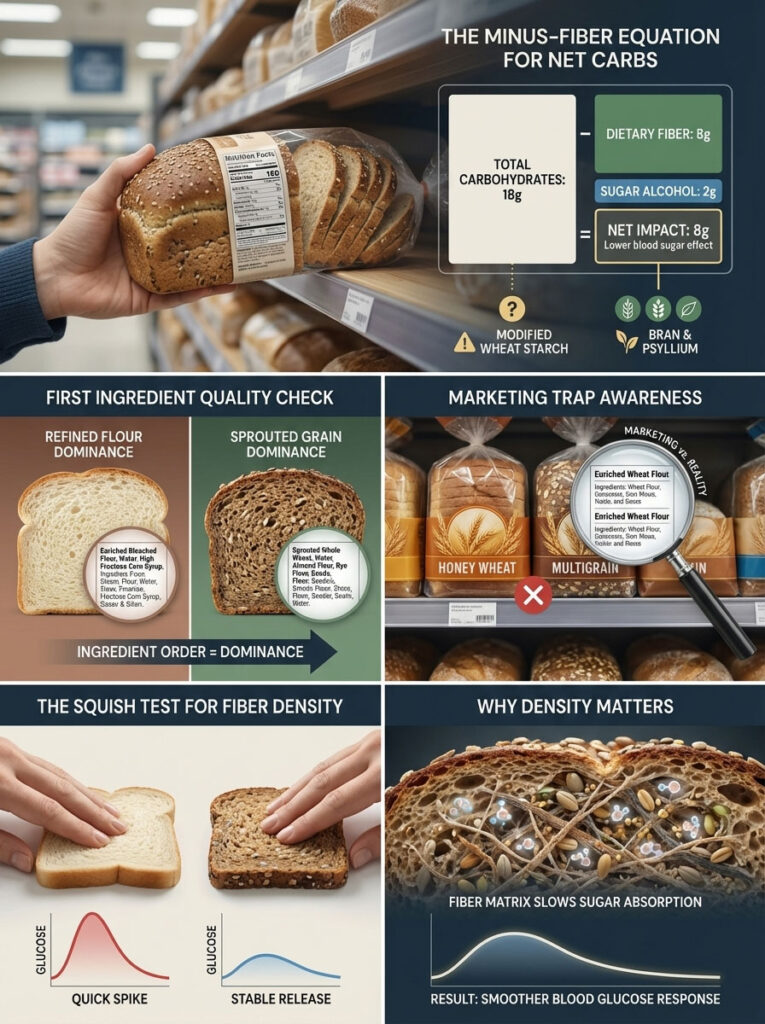
When shopping for low carb bread, you must look beyond the “Total Carbohydrate” line. You need to calculate Net Carbs. This is the amount of carbohydrate that will actually impact your blood sugar.
The Formula:
Total Carbohydrates – Dietary Fiber – Sugar Alcohols = Net Carbs.
For example, if a slice of bread has 12 grams of total carbs and 8 grams of fiber, the net carb count is only 4 grams. This makes it highly suitable for a keto bread lifestyle. However, be wary of ingredients like “modified wheat starch.” While technically fiber, some diabetics find that it can still affect their glucose levels differently than natural fibers like bran or psyllium.
Analyzing the “First Ingredient” for Quality Assurance
Turn the package over and look at the very first ingredient listed. Ingredients are listed by weight.
- Avoid: “Enriched Bleached Flour” or “Wheat Flour.” These are codes for refined grains that strip away the germ and bran.
- Look For: “Sprouted Whole Wheat,” “Almond Flour,” “Whole Rye Flour,” or “Water” (common in sourdough).
- The Trap: Many breads labeled “Honey Wheat” or “Multigrain” list enriched flour as the first ingredient. They are essentially white bread with a tan and a few seeds thrown in. They are rarely good whole grain bread for diabetics.
The “Squish Test” for Determining Fiber Density
This is a tactile test you can do in the store. Pick up the loaf gently.
- High GI Warning: If the bread is ultra-soft, airy, and can be squashed into a tiny ball, it is likely full of air and highly refined flour. Your body will digest this in minutes.
- Low GI Indicator: If the bread feels dense, heavy, and offers resistance, it likely contains coarse grains, seeds, and high fiber content. This density acts as a physical barrier to digestion, slowing down the absorption of sugar. Pumpernickel and sprouted grain bread usually pass the squish test with flying colors.
Top Rated Sprouted Grain Bread Options for Diabetic Meal Plans
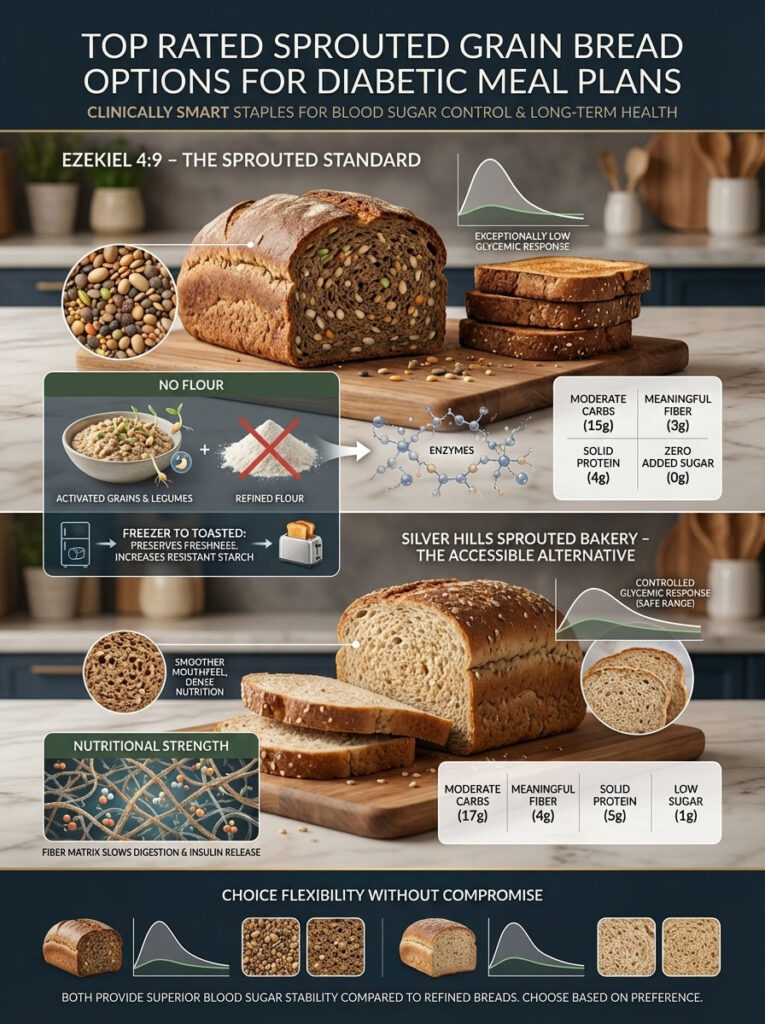
Ezekiel 4:9 by Food for Life: The Sprouted Standard
Ezekiel bread is frequently cited as the best bread for diabetics for good reason. It contains no flour. Instead, it uses a mash of living, sprouted grains including wheat, barley, beans, lentils, millet, and spelt.
- Why It Works: The sprouting process reduces the starch content and increases nutrient bioavailability. It has a GI of roughly 36, which is incredibly low.
- Nutritional Snapshot: One slice contains about 15g of Total Carbs, 3g of Fiber, and 4g of Protein. It has 0g of added sugar.
- Usage Tip: Because it contains no preservatives, it is sold in the freezer section. Keep it frozen and toast individual slices as needed to maintain freshness and increase resistant starch.
Silver Hills Sprouted Bakery: The Canadian Contender
Another excellent brand often found in Costco or health food stores is Silver Hills. Their “Little Big Bread” or “Squirrelly” loaves use sprouted wheat as the base.
- Key Benefit: They often have a softer texture than Ezekiel, which makes them more palatable for children or those transitioning from white bread.
- Nutritional Profile: High fiber content helps blunt the insulin response typically associated with sandwich bread.
Leading Low Carb and Keto Bread Brands for Blood Glucose Management
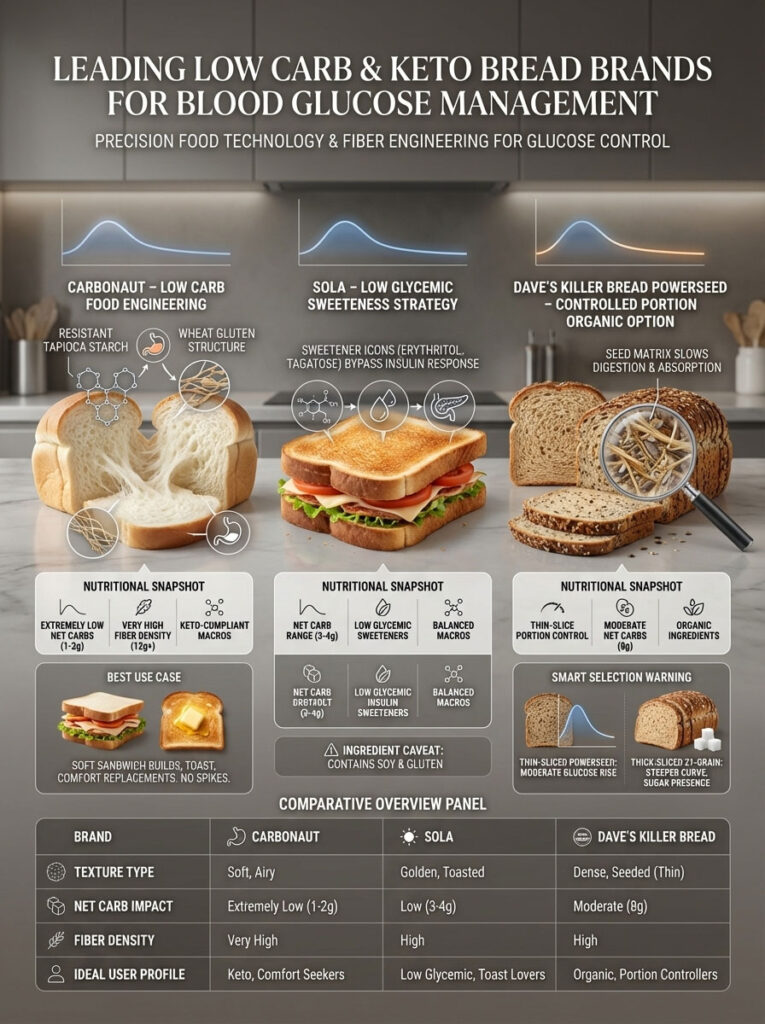
Carbonaut: The Low Carb Technological Breakthrough
Carbonaut has gained a cult following among those prioritizing blood sugar control. It is engineered to taste and feel like “normal” white bread but uses resistant tapioca starch and wheat gluten to slash the carb count.
- Why It Works: It provides the mouthfeel of soft sandwich bread without the spike.
- Nutritional Snapshot: The white variety boasts just 2g of Net Carbs per slice, with a massive 7g of fiber.
- Best For: People who miss the texture of soft white bread and want strict keto compliance.
Sola Brand: Low Glycemic Sweetness
Sola offers a range of flavors like Golden Wheat and Sweet Oat. They use sweeteners like erythritol and tagatose, which have minimal impact on insulin.
- Why It Works: Sola breads toast beautifully and hold up well in sandwiches.
- Nutritional Snapshot: Typically 2g to 3g of Net Carbs per slice.
- Caveat: Contains some soy and gluten, so it is not suitable for those with allergies to these ingredients.
Dave’s Killer Bread Powerseed: The Organic Choice
Dave’s Killer Bread is widely available, but you must choose the right version. The “Powerseed” loaf is sweetened only with fruit juice and contains a high density of seeds.
- Why It Works: The “Thin-Sliced” varieties are excellent for portion control. One slice is roughly 60 to 70 calories.
- Warning: The standard, thick-sliced “21 Whole Grains” loaf contains 5 grams of sugar and 22 grams of carbs per slice. This can be too high for strict Type 2 diabetes management. Always stick to the thin-sliced or Powerseed options.
Comparison Table of Best Low Carb Breads for Diabetes
Below is a detailed comparison to help you choose the right loaf for your specific dietary goals. This data helps differentiate between “marketing keto” and “medical keto” options.
| Brand / Product | Serving Size | Total Carbs (g) | Fiber (g) | Net Carbs (g) | Protein (g) | Key Ingredient | Estimated Price (USD) |
| Ezekiel 4:9 Sprouted | 1 Slice | 15g | 3g | 12g | 4g | Sprouted Wheat/Lentils | $6.99 |
| Carbonaut (White) | 1 Slice | 9g | 7g | 2g | 2g | Resistant Tapioca Starch | $8.49 |
| Dave’s Killer (Thin) | 1 Slice | 13g | 3g | 10g | 3g | Organic Whole Wheat | $5.99 |
| Sola Golden Wheat | 1 Slice | 9g | 7g | 2g | 4g | Arrowroot Flour/Tagatose | $7.49 |
| Base Culture (Keto) | 1 Slice | 8g | 4g | 4g | 4g | Almond Flour/Egg Whites | $9.99 |
| Arnold Keto Bread | 1 Slice | 11g | 8g | 3g | 4g | Modified Wheat Starch | $6.29 |
| Franz Keto | 1 Slice | 12g | 12g | 0g | 4g | Modified Wheat Starch | $6.99 |
Analyzing Ingredients: Almond Flour, Coconut Flour, and Resistant Starch
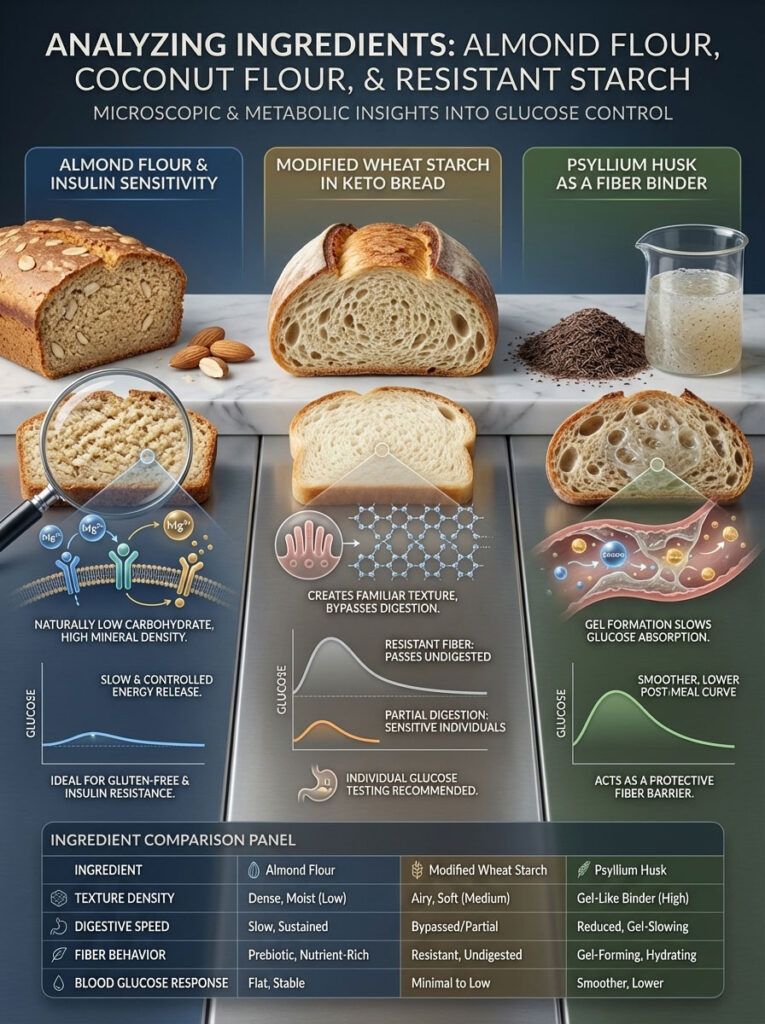
The Benefits of Almond Flour for Insulin Sensitivity
For those who need to avoid gluten entirely, almond flour bread is a superior choice. Almonds are naturally low in carbohydrates and high in magnesium, a mineral that many people with Type 2 diabetes are deficient in. Magnesium plays a crucial role in insulin regulation. Brands like Base Culture utilize almond flour to create a dense, nutrient-rich loaf that has almost zero impact on blood glucose.
Understanding Modified Wheat Starch in Keto Bread
Many commercial keto bread brands, including Franz and Arnold, rely on “Modified Wheat Starch.” This is wheat starch that has been chemically or enzymatically altered to become indigestible fiber.
- The Pro: It creates a fluffy texture that mimics white bread.
- The Con: Some individuals may experience bloating or gastrointestinal distress. Furthermore, some cheap versions of modified starch may still partially digest into glucose, so testing with a monitor is advised.
Psyllium Husk as a Critical Fiber Binder
Psyllium husk is often found in gluten-free and low carb bread recipes. It acts as a binder to hold the bread together without gluten. More importantly, psyllium is a soluble fiber. It forms a gel in the digestive tract that slows down the absorption of glucose and cholesterol. Consuming bread rich in psyllium husk can actively help lower your post-meal blood sugar numbers.
Where to Buy Diabetes-Friendly Bread at Major US Retailers
Knowing what to buy is one thing, but knowing where to find it simplifies your weekly grocery run. Here is a quick guide to navigating major US retailers for diabetes-friendly bread.
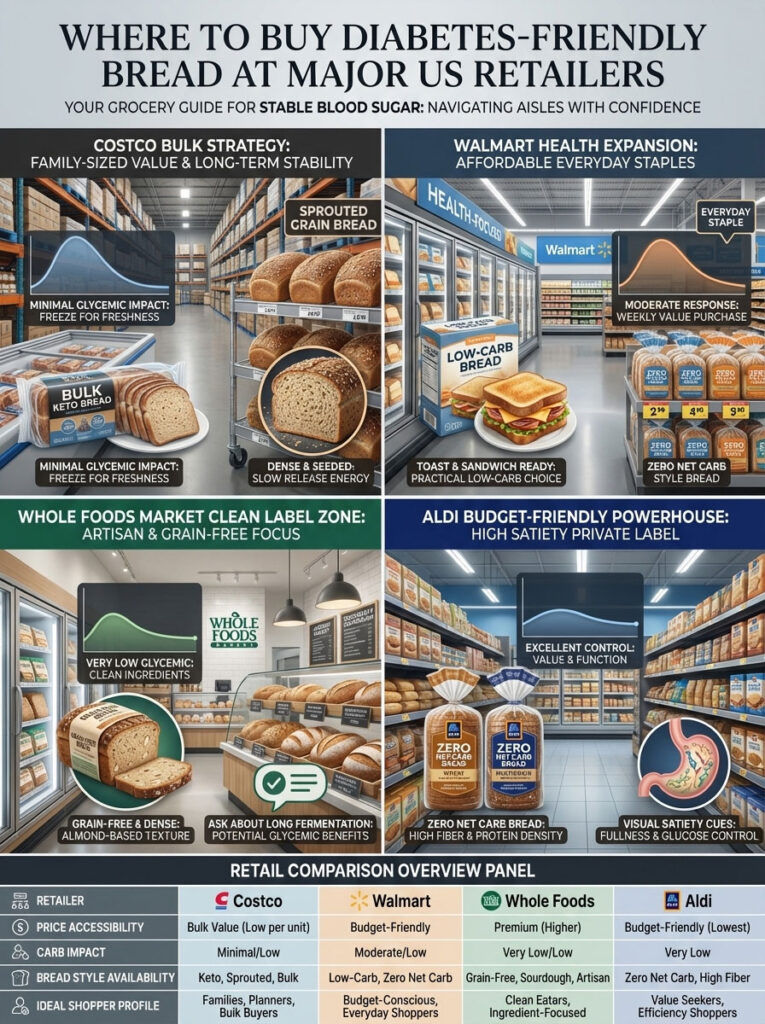
Costco Bulk Options for Diabetic Families
Costco is a goldmine for bulk buyers who want to save money on premium health foods.
- Top Pick: Two-packs of Franz Keto Bread. This is zero net carb bread that is highly cost-effective and freezes well.
- Alternative: Silver Hills Sprouted Bread. Similar to Ezekiel, this is a Canadian brand that uses sprouted grains and is often stocked in the bakery aisle.
Walmart and Their Expanding Health Section
Walmart has rapidly expanded its health food section and now carries many premium low-carb brands.
- Top Pick: Sola Brand bread is usually available in the frozen or bakery section.
- Budget Pick: Sam’s Choice Keto Friendly bread. It is significantly cheaper than premium brands and offers a decent nutritional profile.
- Everyday Staple: L’oven Fresh Zero Net Carb (often found at Aldi, but Walmart carries similar private labels) is a budget winner in the $3 to $4 range.
Whole Foods Market for Clean Label Breads
If you are looking for clean ingredients without preservatives, Whole Foods is the destination.
- Top Pick: Base Culture in the freezer section for grain-free, paleo needs.
- Fresh Bakery: Check their in-house bakery for “Seeduction” bread or genuine sourdough loaves. Always ask the baker if they use a long fermentation process to ensure the GI benefits are present.
Aldi for Budget-Conscious Low Carb Shoppers
Aldi is the budget king for low carb bread in the USA.
- Top Pick: L’oven Fresh Zero Net Carb bread. It comes in Wheat and Multigrain styles. It is high in wheat protein and fiber, making it very filling for the price point.
Comparison Table of Diabetic-Friendly Ingredients vs. Ingredients to Avoid
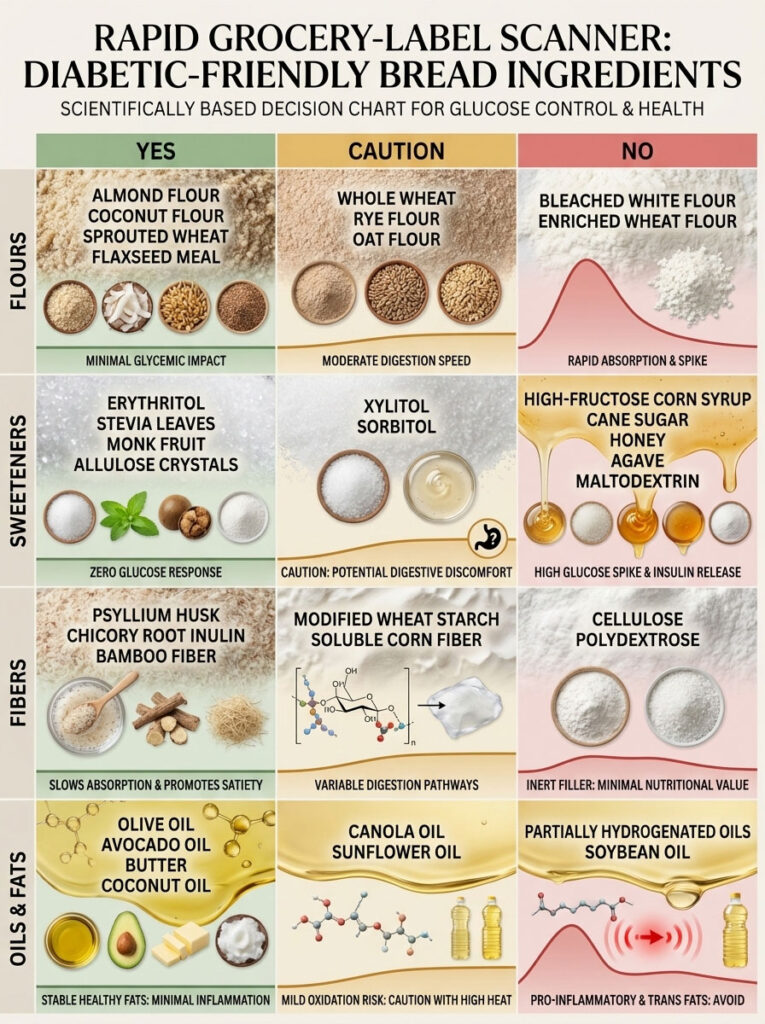
Use this reference table when scanning new products that may not be listed in our brand review. This “Yes/No” guide simplifies the label-reading process.
| Ingredient Category | Safe (Green Light) | Caution (Yellow Light) | Avoid (Red Light) |
| Flours | Almond Flour, Coconut Flour, Sprouted Wheat, Flaxseed Meal | Whole Wheat Flour, Rye Flour (unless 100%), Oat Flour | Bleached White Flour, Enriched Wheat Flour, Tapioca Starch (unless resistant) |
| Sweeteners | Erythritol, Stevia, Monk Fruit, Allulose | Xylitol (toxic to dogs), Sorbitol (digestive issues) | High Fructose Corn Syrup, Cane Sugar, Honey, Agave Nectar, Maltodextrin |
| Fibers | Psyllium Husk, Inulin (Chicory Root), Bamboo Fiber | Modified Wheat Starch (varies by brand), Soluble Corn Fiber | Cellulose (wood pulp filler), Polydextrose |
| Oils/Fats | Olive Oil, Avocado Oil, Butter, Coconut Oil | Canola Oil, Sunflower Oil | Partially Hydrogenated Oils, Soybean Oil |
Best Ways to Eat Bread and Maintain Low Blood Sugar Levels

The Importance of Food Pairing
What you put on the bread matters as much as the bread itself. Eating bread “naked” (by itself) will almost always result in a faster glucose rise.
- Fat and Protein Buffering: Adding healthy fats (avocado, olive oil) or protein (turkey, egg, nut butter) slows down gastric emptying. This lowers the effective GI of the entire meal.
- Instance: Two slices of sprouted grain bread with smashed avocado and a poached egg will likely cause a significantly lower blood sugar spike than the same bread with strawberry jam.
Utilizing Bread Substitutes for Variety
Sometimes the best bread for diabetics is not bread at all.
- Lettuce Wraps: The ultimate zero-carb option for burgers.
- Egg White Wraps: Brands like Egglife make wraps from egg whites that have zero carbs and pure protein.
- Cheese Wraps: Baked cheese circles (like Folios) can act as a taco shell or sandwich wrap.
The Freezer Trick for Resistant Starch
As mentioned in the science section, freezing your bread is a tactical move. Buy your Ezekiel 4:9 or low carb bread in bulk, freeze it immediately, and toast it directly from frozen. This ensures you are maximizing the resistant starch content and minimizing the glycemic impact of every slice.
Real World Case Studies: Continuous Glucose Monitor (CGM) Experiments

The White Bread vs. Keto Bread Challenge
With the rise of Continuous Glucose Monitors (CGM), many diabetics and biohackers are conducting their own N=1 experiments. A common test involves eating two slices of standard white bread and monitoring the glucose curve over two hours. This typically results in a sharp spike, often rising 40 to 80 mg/dL above baseline within the first hour.
When the same individuals repeat the test the following day with a high-fiber keto bread like Carbonaut or Franz, the results are drastically different. The glucose curve often resembles a gentle hill rather than a mountain peak, sometimes rising only 5 to 15 mg/dL. This real-world data reinforces the value of resistant starch and high fiber in blunting the glycemic response.
Clinical Research on Resistant Starch Type 4
A study published in Frontiers in Nutrition in 2024 examined the impact of resistant starch type 4 (often found in high-fiber breads) on patients with Type 2 diabetes. The results showed that replacing rapidly digestible starch with resistant starch significantly lowered postprandial (post-meal) glucose and insulin levels. This confirms that the molecular structure of the starch is just as important as the quantity of carbohydrates consumed.
Summary & Key Takeaways for Diabetic Bread Selection
Navigating a diabetes diagnosis does not mean the end of enjoying a sandwich. It requires a shift in strategy and label literacy. The best bread for diabetes is defined by its ability to digest slowly and keep insulin levels stable.
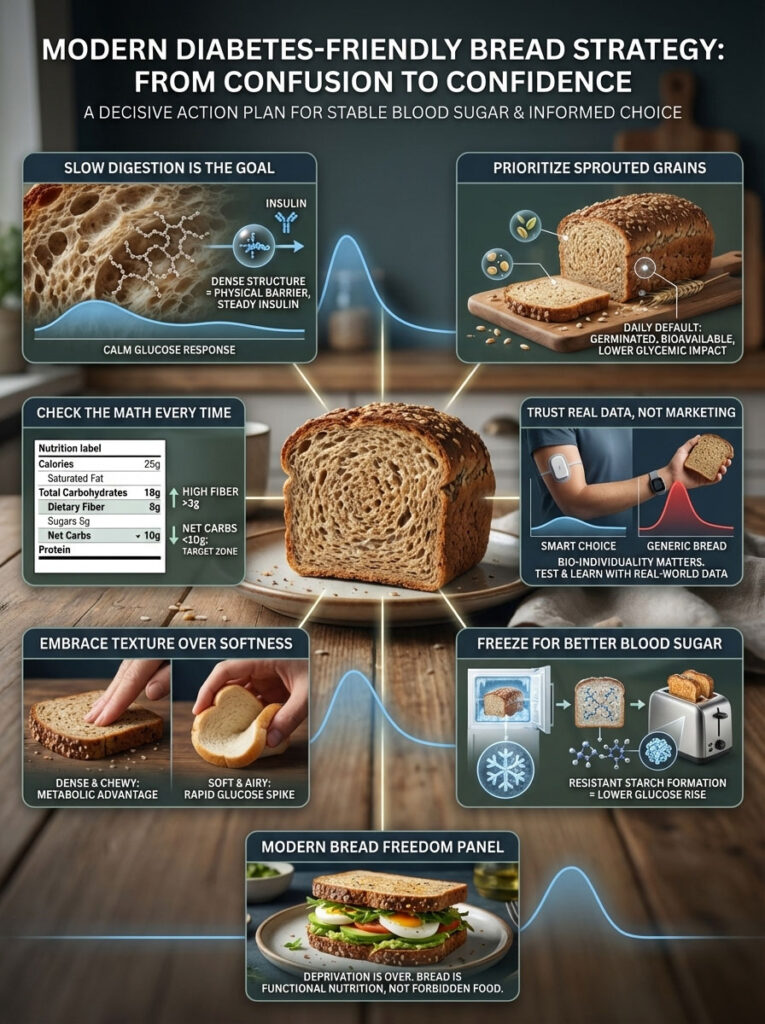
Here is your final action plan:
- Prioritize Sprouted Grains: Make Ezekiel 4:9 or similar sprouted grain bread your daily standard if you tolerate gluten, due to its superior nutrient profile and low GI.
- Check the Math: Always calculate Net Carbs. Aim for breads with high fiber (over 3g) and low net carbs (under 10g).
- Trust Your Meter: Use your glucose monitor to test how different brands affect your unique body. Bio-individuality plays a massive role in diet.
- Embrace Texture: Choose dense, seeded, or chewy sourdough breads over soft, fluffy white imitations to ensure slower digestion.
- Freeze It: Keep your bread in the freezer to preserve freshness and boost resistant starch levels.
By choosing brands like Carbonaut, Sola, or Dave’s Killer Bread (Thin-Sliced), you can maintain excellent blood sugar control without feeling deprived. The days of eating dry rice cakes are over. The new era of high-fiber, low-glycemic baking is here to stay.
Frequently Asked Questions (FAQs) About Bread and Diabetes
Can a person with Type 2 diabetes eat bread every day?
Yes, a person with Type 2 diabetes can eat bread daily, provided they choose the right type. It is crucial to select low carb bread or high-fiber options like sprouted grain bread. Portion control is key. Sticking to one or two slices per meal and pairing them with protein and healthy fats helps mitigate blood sugar spikes.
Does toasting bread lower its sugar content?
Toasting bread does not remove sugar, but the process of freezing and then toasting bread changes the molecular structure of the starch. It converts digestible starch into resistant starch. This means your body absorbs fewer calories and less glucose from the bread, resulting in a lower glycemic response compared to fresh, soft bread.
What is the best bread for diabetics at Walmart?
Walmart offers several excellent options. Sola Brand is a top-tier choice for those seeking a taste close to traditional bread with low glycemic impact. Additionally, their private label or the nearby availability of L’oven Fresh Zero Net Carb bread provides budget-friendly, high-fiber choices that are safe for blood sugar control.
Is sourdough bread actually low carb?
Sourdough is generally not “low carb” in terms of total grams, but it is “low glycemic.” The sourdough fermentation process breaks down starches and degrades phytates, making the carbohydrates absorb more slowly. This often makes it a safer choice than standard whole wheat, even if the total carb count looks similar on the label.
Why does whole wheat bread spike my blood sugar?
Many commercial “whole wheat” breads are made with flour that is pulverized into a fine powder. This fine texture allows digestive enzymes to break it down into glucose rapidly. Unless the bread is 100% stone-ground or contains whole intact kernels, it can spike blood sugar almost as fast as white bread.
Are wraps better than bread for diabetics?
Often, yes. Low-carb tortillas (such as Mission Carb Balance or Ole Xtreme Wellness) are engineered to be very high in fiber. Two small low-carb tortillas often have fewer net carbs and a lower glycemic impact than two slices of standard bread. However, always check the label for serving size and fiber content.
What is the “15-gram rule” for bread?
The 15-gram rule refers to the ADA’s guideline that one carbohydrate serving equals 15 grams. For many diabetics, meal plans are built around a specific number of servings (e.g., 3 servings or 45g per meal). Finding a bread with 15g or less per slice allows it to fit easily into this math without “spending” all your carb allowance on one item.
Is rye bread safe for diabetics?
Yes, but the type of rye matters. Traditional German Pumpernickel or 100% whole grain rye is excellent. It is dense, acidic, and high in fiber. Avoid “deli style” light rye, which is often just white flour colored with molasses or cocoa powder and has a high glycemic index.
Do “Keto” breads taste like real bread?
The technology behind keto bread has improved largely. Brands like Carbonaut and Arnold use ingredients like wheat protein isolate and resistant starch to create a texture that is remarkably similar to white bread. While they may be slightly chewier or drier than standard loaves, they toast well and work perfectly for sandwiches.
Can I trust the “Net Carb” count on labels?
Generally, yes, FDA regulations on labeling are strict regarding total composition. However, individual bodies react differently to certain fibers like modified wheat starch or soluble corn fiber. It is always recommended to test your blood sugar 1-2 hours after trying a new low-net-carb product to ensure it doesn’t cause an unexpected spike.
Is Dave’s Killer Bread good for diabetes?
Dave’s Killer Bread is a high-quality product, but diabetics should be selective. The Thin-Sliced varieties (like 21 Whole Grains Thin-Sliced) are good because they keep the carb count around 13g. The standard, thick slices are often too large and sugar-heavy (5g sugar) for strict management. The Powerseed variety is the best choice as it is lower in sugar.
What can I use instead of bread crumbs?
For breading chicken or binding meatloaf, traditional bread crumbs are high-carb. Excellent low-carb substitutes include crushed pork rinds (zero carb), almond flour, or ground golden flaxseed. These provide the necessary texture without adding to the glycemic load of the meal.
Disclaimer
The information provided in this article is for educational purposes only and does not constitute medical advice. Dietary needs vary by individual. Always consult with your healthcare provider or a Certified Diabetes Care and Education Specialist (CDCES) before making significant changes to your diet or insulin regimen.
References
- American Diabetes Association. (2024). Standards of Medical Care in Diabetes—2024.
- Mofidi, A., et al. (2012). “The acute impact of ingestion of sourdough and whole-grain breads on blood glucose, insulin, and incretins in overweight and obese men.” Journal of Nutrition and Metabolism.
- Burton, P., & Lightowler, H. J. (2008). “The impact of freezing and toasting on the glycemic response of white bread.” European Journal of Clinical Nutrition.
- Jenkins, D. J., et al. (2002). “Glycemic index: overview of implications in health and disease.” American Journal of Clinical Nutrition.