What is the best sugar-free coffee creamer for diabetics?
The best sugar-free coffee creamer for diabetics must prioritize non-nutritive sweeteners with a zero glycemic index. You should look specifically for products sweetened with monk fruit, stevia, erythritol, or allulose. Clinical recommendations favor liquid formulations over powders. This helps you avoid anti-caking agents and hidden corn syrup solids. Top expert-verified choices include NutPods (unsweetened) for a clean label and Prymal for flavor without the glucose spike.
Table of Contents
The Morning Glucose Dilemma
You wake up and check your Continuous Glucose Monitor (CGM). You see a respectable fasting number. Maybe it is 110 mg/dL. You have not eaten a single bite of toast or oatmeal yet. You simply walk to the kitchen and pour a cup of coffee. You add your favorite “sugar-free” powder and sit down to read the news.
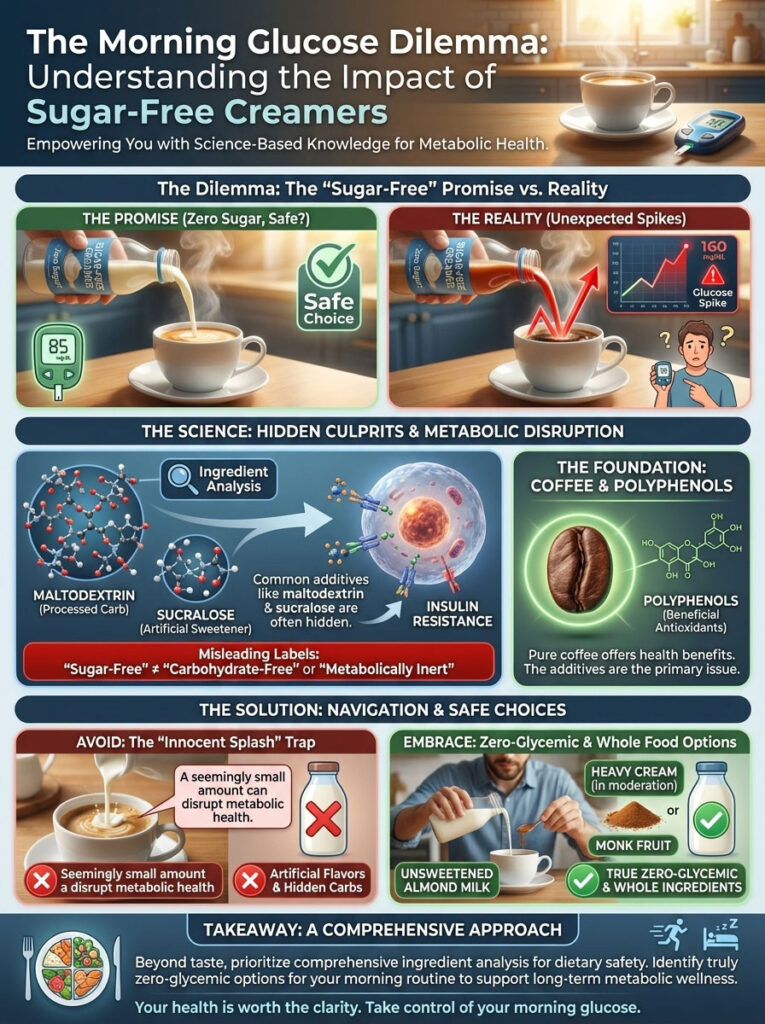
Thirty minutes later, your CGM alarm goes off. You are trending up past 160 mg/dL. You feel cheated. You didn’t eat sugar. So why is your body reacting as if you ate a donut? Finding the best sugar-free coffee creamer for diabetics is not just about calorie counting. It is a critical component of metabolic management.
For many of my patients, that innocent splash of cream is the “trojan horse” of their diet. It carries additives, bulking agents, and inflammatory oils. These ingredients drive insulin resistance right at the start of the day. Coffee itself is rarely the enemy. In fact, coffee contains polyphenols that can be beneficial. The problem lies in the false marketing labels that confuse “sugar-free” with “carbohydrate-free.”
This comprehensive guide moves beyond simple taste tests. We will analyze the metabolic impact of coffee creamers. We will dissect ingredients like maltodextrin and sucralose. By the end, you will be able to identify the safest, zero-glycemic options for optimal diabetes management.
Key Statistics: Diabetes & Morning Glucose
- 50% of Diabetics experience the “Dawn Phenomenon,” a natural rise in blood sugar between 4 a.m. and 8 a.m.
- Maltodextrin, a common additive in sugar-free creamers, has a Glycemic Index (GI) of 110. This is higher than table sugar (GI 65).
- The global sugar-free food market is projected to reach $66 billion by 2030. However, labeling regulations remain loose.
- Type 2 Diabetics who consume trans fats (often found in hydrogenated oils in creamers) have higher markers of systemic inflammation.
- Switching to a zero-carb fat source in coffee can improve Time in Range (TIR) by preventing the first spike of the day.
The Physiology of Coffee and Blood Sugar
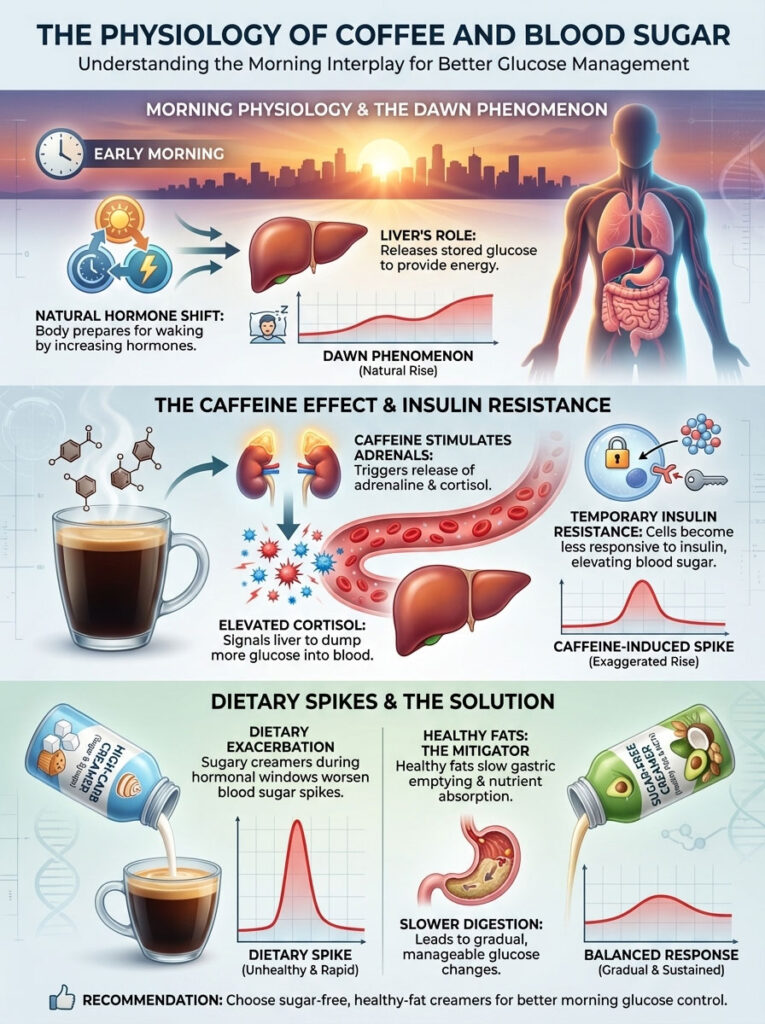
To understand why we need a specific diabetic coffee creamer, we must first understand the biological environment of the morning body. When you wake up, your body is priming itself for action. This involves a complex interplay of hormones. These hormones can make blood sugar management tricky even before you take that first sip.
Caffeine and Insulin Sensitivity: The Biological Interaction
Caffeine is a potent stimulant. It works by blocking adenosine receptors in the brain. This keeps you alert. However, this process also stimulates the adrenal glands to release adrenaline (epinephrine) and cortisol. These are known as “fight or flight” hormones.
When cortisol levels rise, your liver gets a signal. It releases stored glucose (glycogen) into the bloodstream to provide energy for the perceived threat. Simultaneously, cortisol can temporarily decrease insulin sensitivity. This means that for a few hours after drinking strong coffee, your cells might be more resistant to insulin. This applies to both the insulin your pancreas produces and the insulin you inject.
If you pair this temporary insulin resistance with a creamer containing hidden carbs, you create the perfect storm. The result is often a stubborn glucose spike that is hard to bring down.
The Dawn Phenomenon vs. Your Creamer
Many patients confuse a dietary spike with the Dawn Phenomenon. The Dawn Phenomenon is a physiological surge of hormones. These include growth hormone, cortisol, and glucagon. This surge occurs in the early morning hours to wake you up. It triggers the liver to dump glucose.
Distinguishing Hormonal Spikes from Dietary Spikes
If your blood sugar rises from 100 to 120 mg/dL while you are still in bed, that is the Dawn Phenomenon. However, imagine you are stable at 110 mg/dL. You drink your coffee. Then you shoot up to 180 mg/dL. That is a dietary spike. Choosing the wrong creamer during this hormonal window exacerbates the issue.
Your body is already struggling to clear glucose due to morning hormones. Adding high-glycemic fillers from a powdered creamer is like throwing gasoline on a fire. You need a fuel source that does not require an insulin response.
The Role of Fat in Blunting the Spike
This is where the composition of your sugar-free coffee creamer becomes vital. Fat plays a protective role. Healthy fats do not stimulate insulin significantly. Examples include Medium Chain Triglycerides (MCTs), coconut oil, or grass-fed dairy fat.
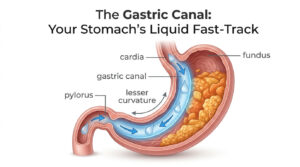
More importantly, fat slows down gastric emptying. It acts as a buffer. If there is a small amount of carbohydrate in your breakfast, the presence of fat slows its absorption. This leads to a gentle rolling hill on your CGM rather than a sharp mountain peak.
Decoding the Label: What “Sugar-Free” Actually Means
Navigating the grocery aisle requires a cynical eye. The FDA regulations allow for specific labeling loopholes that manufacturers exploit. Understanding these definitions is the first step in finding the best sugar-free coffee creamer for diabetics.
The FDA Definitions vs. Metabolic Reality
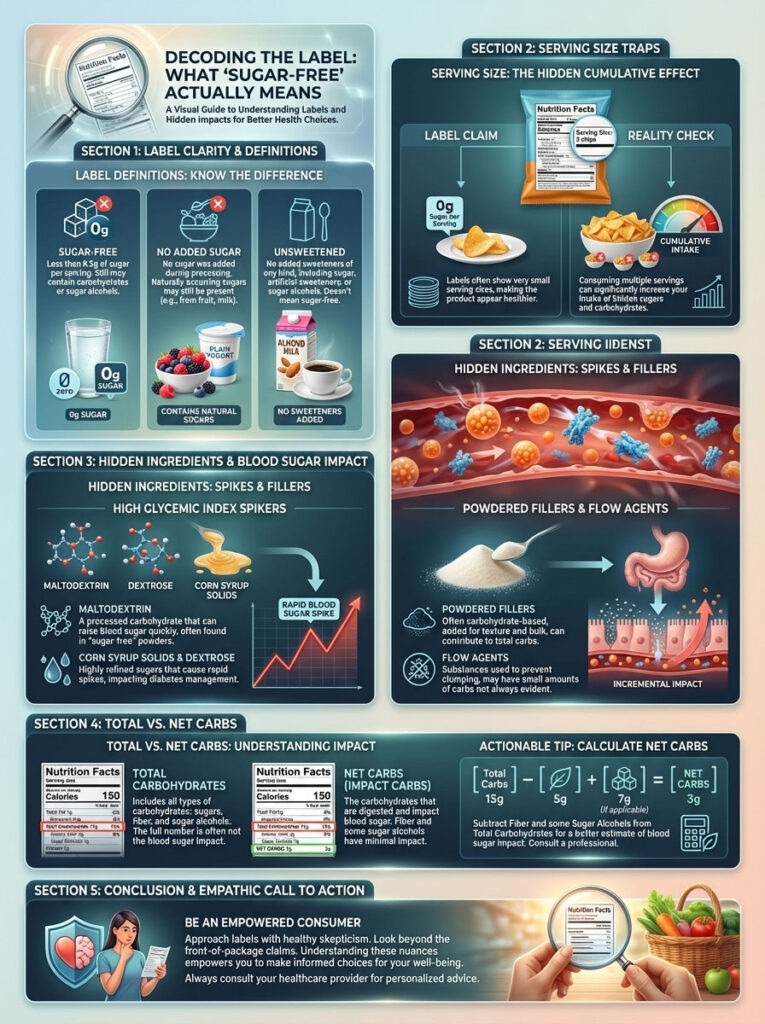
There is a distinct difference between “Sugar-Free,” “No Added Sugar,” and “Unsweetened.” Confusion here leads to poor glycemic control.
- Sugar-Free: Contains less than 0.5 grams of sugar per serving. However, it can still contain carbohydrates from other sources like thickeners or starches.
- No Added Sugar: No sugar was added during processing. But the ingredients (like oat milk or dairy) may naturally contain high amounts of sugar.
- Unsweetened: No sweeteners (artificial or natural) have been added. This is usually the safest category for strict blood sugar control.
Expert Insight: The Serving Size Trap
Manufacturers list serving sizes as 1 tablespoon (15ml). Most coffee drinkers pour 3 to 4 tablespoons. If a product has 0.4g of sugar (labeled as 0g) and you use 4 servings, you have just consumed nearly 2 grams of sugar. This accumulation matters for Type 1 diabetics and those on strict Keto regimens.
The Hidden Glycemic Villains
Why do some sugar-free coffee creamers still spike blood sugar? The answer usually lies in the powder base or the texturizing agents.
Maltodextrin: The Silent Spiker
Maltodextrin is a white powder made from corn, rice, potato starch, or wheat. It is highly processed. Even though it is not classified as a “sugar” on the nutrition label, it behaves worse than sugar in your body.
Maltodextrin has a Glycemic Index (GI) ranging from 105 to 110. Table sugar is only 65. This means maltodextrin enters your bloodstream and spikes your insulin faster than if you had spooned actual sugar into your cup. It is often the first or second ingredient in powdered “diabetic-friendly” creamers.
Corn Syrup Solids and Dextrose
You will often see “Corn Syrup Solids” on labels. This is essentially dried corn syrup. Manufacturers use it to add body and creaminess to non-dairy powders. Dextrose is chemically identical to glucose. If you see these ingredients, put the bottle back. They are incompatible with tight diabetes management.
Powdered Fillers and Flow Agents
To keep powders from clumping, companies add anti-caking agents like sodium aluminosilicate. While these don’t directly spike blood sugar, they displace nutrient density. You are paying for chemicals rather than cream. These agents can also cause digestive inflammation in sensitive individuals.
Understanding Net Carbs vs. Total Carbs
For a coffee creamer for type 2 diabetes, you must look at Total Carbohydrates. However, you can calculate “Net Carbs” to estimate the impact on blood sugar.
Formula: Total Carbohydrates – Fiber – (Specific) Sugar Alcohols = Net Carbs.
Actionable Tip: Be skeptical. You can subtract Erythritol completely. However, if the product uses Maltitol, only subtract half the sugar alcohol grams. Maltitol is partially absorbed and affects blood glucose.
Sweetener Science: A CDCES Perspective
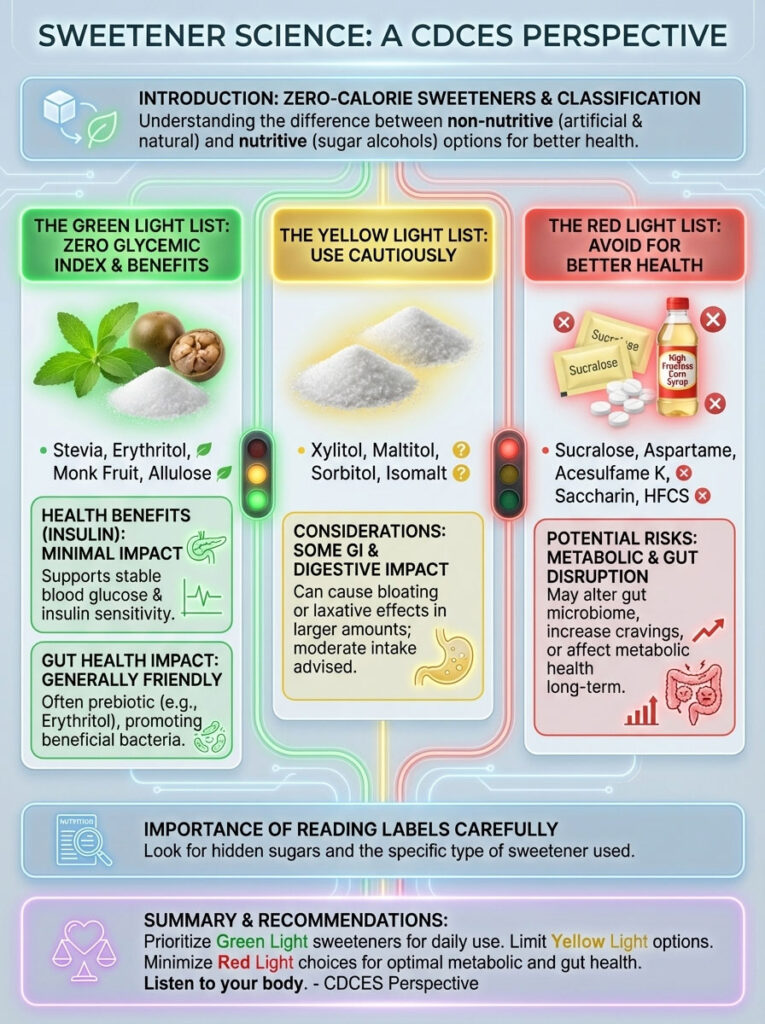
Not all zero-calorie sweeteners are created equal. As a Certified Diabetes Care and Education Specialist (CDCES), I categorize them based on their impact on insulin and gut health.
The Green Light List: Glycemic Index of Zero
These are the gold standards for a sugar-free coffee creamer. They provide sweetness without the metabolic penalty.
- Stevia: Derived from the leaves of the Stevia rebaudiana plant. It is 200-300 times sweeter than sugar. It has zero calories and zero impact on insulin. The downside is a bitter, licorice-like aftertaste in cheaper blends. Look for “Reb M” stevia for a cleaner taste.
- Monk Fruit (Luo Han Guo): A small melon from Southeast Asia. The sweetness comes from mogrosides. These compounds are antioxidants. It has the cleanest taste profile and zero glycemic impact.
- Erythritol: A sugar alcohol found naturally in fruits. Unlike other polyols, erythritol is absorbed into the bloodstream from the small intestine. It is then excreted unchanged in urine. It does not cause the gastric distress common with other sugar alcohols unless consumed in massive quantities.
- Allulose: A “rare sugar” found in figs and raisins. It has the texture and browning properties of sugar but is not metabolized for energy. Some studies suggest it may even help lower blood glucose.
The Yellow and Red Light List
Proceed with caution when you see these ingredients on the label.
- Sucralose (Splenda): This is chlorinated sugar. While it doesn’t spike glucose immediately for everyone, recent research suggests it may alter the gut microbiome. It may also reduce insulin sensitivity over time. It is acceptable for transition but not for long-term gut health.
- Aspartame & Saccharin: These are becoming obsolete in functional nutrition. Safety concerns and poor taste profiles make them less desirable.
- Maltitol & Sorbitol: These sugar alcohols are notorious for causing bloating, gas, and diarrhea. Furthermore, Maltitol has a GI of 35-52. This means it does raise blood sugar. Avoid creamers sweetened with these.
Detailed Expert-Recommended Creamer Reviews
Based on ingredient analysis and glucose monitoring, here are the top contenders for the best sugar-free coffee creamer for diabetics. We have categorized them by use case.
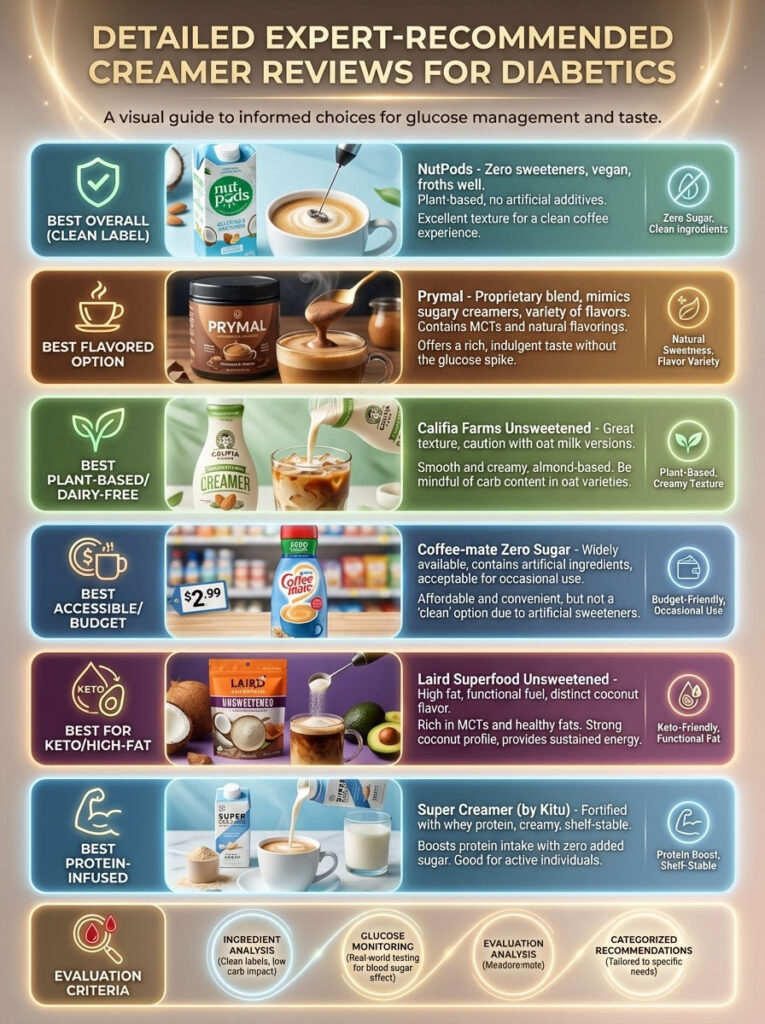
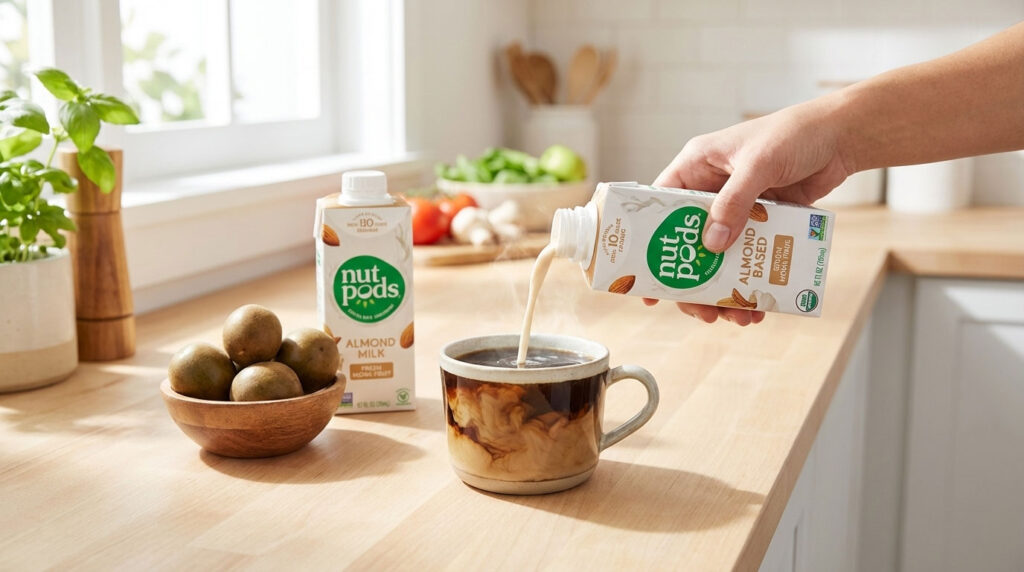
Best Overall (Clean Label): NutPods
NutPods is frequently the top recommendation among dietitians and metabolic experts. It uses a base of almond milk and coconut cream. The “original” and “unsweetened” flavored lines contain no sweeteners whatsoever. The creaminess comes from the high-quality fat content.
Why it wins: With zero sweeteners, you have total control. The Glycemic Load is zero. It is free from carrageenan and soy. For patients who want flavor (like French Vanilla) without the sweet taste, this is the perfect solution. It froths reasonably well for lattes, though not as stiff as dairy.
Best Flavored Option: Prymal
Prymal was developed specifically for people who miss the thick, sweet taste of traditional coffee creamers. It is a powder. But unlike generic brands, it uses a proprietary “Kata” blend of fats (Coconut Oil, MCT Oil) and sweeteners (Erythritol, Stevia).
Why it wins: It mimics the mouthfeel of sugary creamers perfectly. The inclusion of MCT oil powder provides a quick source of ketones for brain energy. It dissolves well and comes in a massive variety of flavors like Cacao Mocha and Salted Caramel. It does not contain maltodextrin.
Best Plant-Based/Dairy-Free: Califia Farms Unsweetened
Califia Farms offers excellent almond-based creamers. Their “Better Half” line (Coconut and Almond blend) is particularly good for texture. It mimics the consistency of traditional half-and-half.
Warning: Be careful with their Oat Milk creamers. Oat milk is essentially liquefied grain. During processing, enzymes break down oat starch into maltose (a sugar). Even “unsweetened” oat creamers can be higher in carbs and cause a sharper spike than almond or coconut bases.
Best Accessible/Budget: Coffee-mate Zero Sugar (With Caveats)
This is the most widely available diabetic coffee creamer. You can find it at any gas station or grocery store. It is convenient and familiar.
The Reality: It uses soybean oil and canola oil for texture. It uses sucralose for sweetness. It contains artificial flavors and preservatives. Is it the healthiest? No. The vegetable oils can be inflammatory. However, strictly speaking of blood sugar, it will not cause a spike. It is an acceptable “B-grade” option for occasional use or when you are traveling.
Best for Keto/High-Fat: Laird Superfood Unsweetened
Created by big-wave surfer Laird Hamilton, this powdered creamer focuses on functional fuel. It utilizes coconut milk powder, Aquamin (calcium from marine algae), and organic extra virgin coconut oil.
Why it wins: It is excellent for those utilizing ketone bodies for energy. The high fat content keeps you satiated. This prevents mid-morning snacking. It also contains functional mushroom extracts in some blends for cognitive support. Note that it has a distinct coconut flavor.
Best Protein-Infused: Super Creamer (by Kitu)
If you struggle to get enough protein at breakfast, this is a strong contender. It is fortified with whey protein isolate and uses MCT oil for fat. It is sweetened with monk fruit.
Why it wins: The addition of protein helps further blunt any glucose response from your coffee. It is very creamy and comes in liquid form. It is shelf-stable until opened, making it great for office drawers.
Comparative Analysis: Nutrient Density & Glycemic Impact
The following table compares top commercial options against natural alternatives. This will help you choose the best sugar-free coffee creamer for diabetics based on your specific needs.
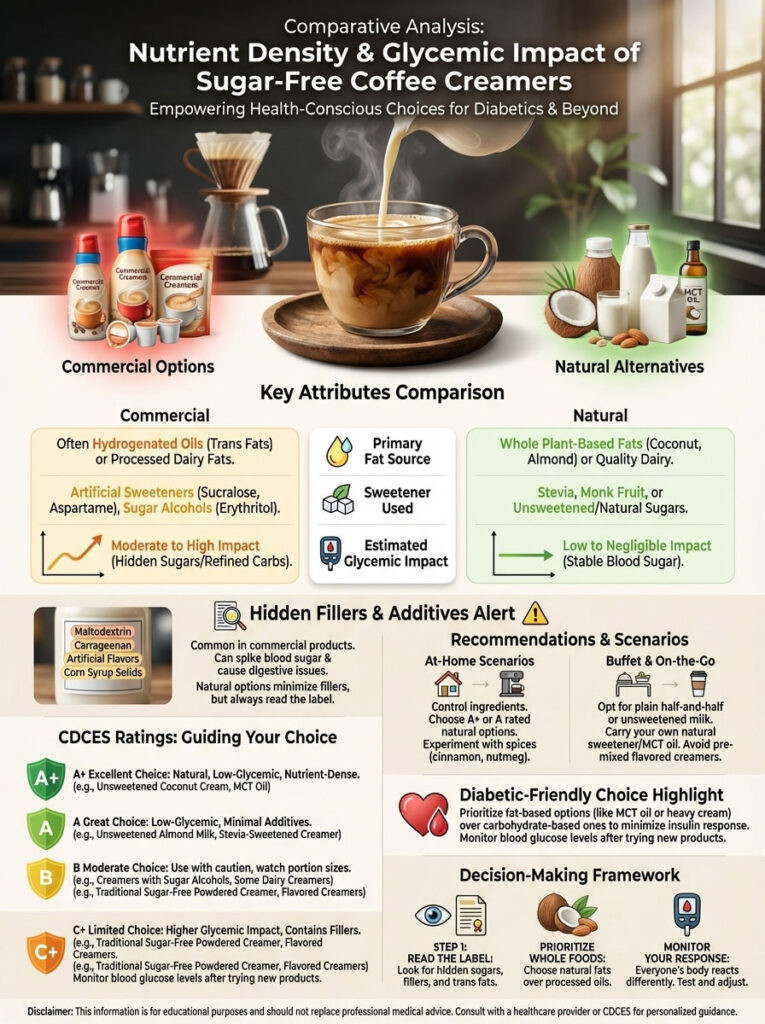
| Brand / Type | Primary Fat Source | Sweetener Used | Est. Glycemic Impact | Hidden Fillers? | CDCES Rating |
|---|---|---|---|---|---|
| NutPods | Almond & Coconut | None | Zero | No | A+ |
| Prymal | Coconut/MCT | Erythritol & Stevia | Zero | No | A |
| Heavy Whipping Cream | Dairy Fat | None | Near Zero | No | A- |
| Super Creamer | MCT & Milk Protein | Monk Fruit | Zero | No | A |
| Coffee-mate Zero Sugar | Soybean/Canola Oil | Sucralose & Acesulfame K | Low | Yes (Gels/Gums) | C+ |
| Traditional Powder | Hydrogenated Oils | Corn Syrup Solids | High | Yes (Maltodextrin) | F |
| Oat Milk Creamer | Rapeseed Oil | None/Cane Sugar | Moderate | Yes (Starches) | B- |
Understanding this hierarchy allows you to make better choices. If you are at home, reach for the “A” grade options. If you are stuck at a hotel breakfast buffet, you might have to settle for the “C” grade option or stick to black coffee.
Natural Alternatives: The “Whole Food” Approach
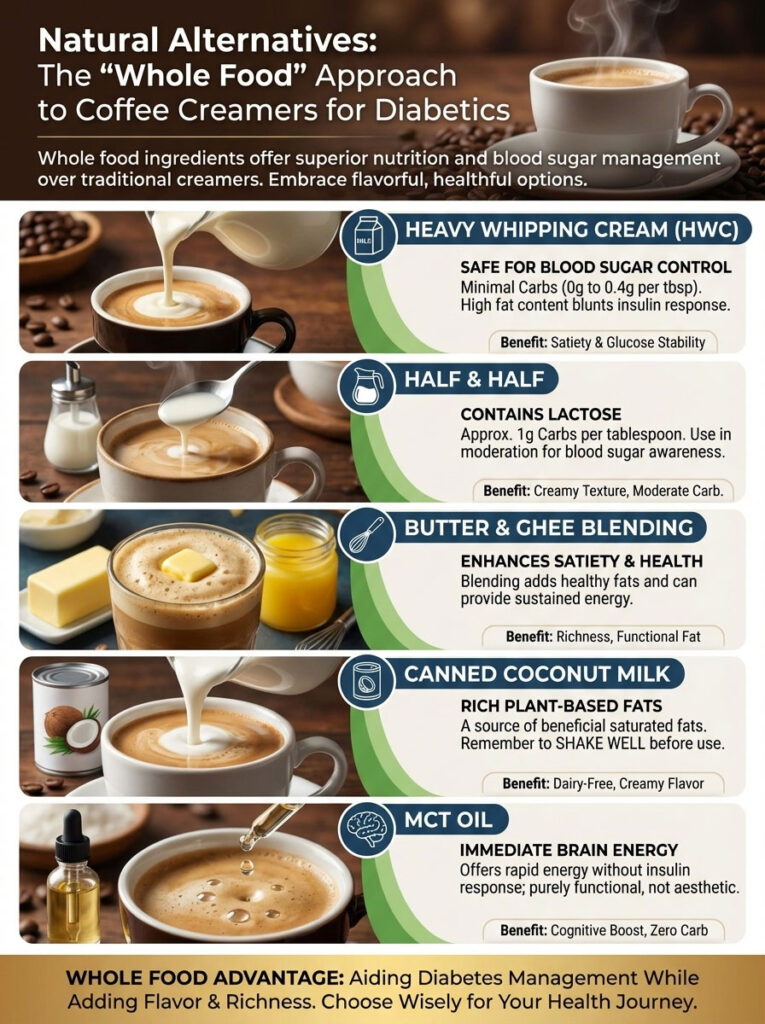
Sometimes the best sugar-free coffee creamer for diabetics isn’t a “creamer” at all. Often, a whole food ingredient provides better nutrition and satiety.
Is Dairy Safe for Diabetics?
Dairy is often debated. However, for blood sugar control, high-fat dairy is generally safe. The fat content slows absorption.
Heavy Whipping Cream vs. Half & Half
Heavy Whipping Cream (HWC) is almost pure fat. It contains roughly 0g to 0.4g of carbs per tablespoon. Half & Half is equal parts whole milk and cream. This means it contains lactose (milk sugar). Half & Half has about 1g of carbs per tablespoon.
For strict control, HWC is superior. Note that dairy proteins (whey and casein) can stimulate a small insulin response in some people. But the fat in HWC usually blunts this effectively.
Butter and Ghee (Bulletproof Style)
Blending unsalted grass-fed butter or Ghee into coffee creates a latte-like foam. This provides butyrate. Butyrate is a short-chain fatty acid beneficial for gut health. The high fat content triggers satiety hormones like CCK. This helps you feel full until lunch.
Plant-Based Whole Fats
If you are avoiding dairy, nature provides excellent alternatives that are naturally low in sugar.
Canned Coconut Milk
Do not confuse this with the carton coconut milk in the dairy aisle. Carton milk is mostly water. Canned coconut milk (full fat) is thick and rich. It is an excellent source of plant-based saturated fats. Shake the can well before using. It adds a tropical richness to coffee.
MCT Oil
MCT (Medium-Chain Triglyceride) oil is derived from coconuts. It bypasses normal fat digestion. It goes straight to the liver to be converted into ketones. This provides immediate energy for the brain without requiring insulin. It is a powerful tool for a coffee creamer for type 2 diabetes management. However, it does not provide “whiteness” to the coffee. It is purely functional fuel.
The Coffee Shop Survival Guide
Controlling your coffee at home is easy. But what happens when you are on the go? Coffee shops are minefields for diabetics. Here is how to navigate them.

The “Sugar-Free” Syrup Trap
Most major chains offer “sugar-free” vanilla or hazelnut syrup. These are typically sweetened with sucralose. They are liquid, so they usually do not contain maltodextrin. They are generally safe for a blood sugar perspective. However, verify that they are using the syrup pump and not a powder.
Powdered mixes (like sugar-free mocha or frappuccino bases) almost always contain maltodextrin and thickeners. Avoid these entirely.
Ordering Strategy
Here is your safe ordering script:
- The Base: Americano or Drip Coffee.
- The Cream: Ask for “Heavy Cream” (not half and half). If they don’t have it, ask for a splash of almond milk.
- The Sweetener: Carry your own liquid stevia or monk fruit drops. If you must use theirs, stick to the sugar-free syrup (max 2 pumps) or a packet of stevia.
- Avoid: Oat milk (high carb) and Soy milk (often sweetened vanilla versions).
DIY Creamer Recipes
Making your own creamer ensures you know exactly what is in your cup. It is often cheaper and healthier than store-bought versions.

Recipe 1: The “Better Than Store-Bought” Vanilla
- 1 cup Unsweetened Almond Milk (or Macadamia Milk)
- 1/2 cup Canned Coconut Milk (Full Fat)
- 1 tsp Vanilla Extract
- 2 tbsp Powdered Erythritol or 10 drops Liquid Stevia
- Pinch of Sea Salt
Instructions: Blend all ingredients until smooth. Store in a mason jar in the fridge for up to 7 days. Shake before use.
Recipe 2: The Cinnamon Roll Creamer
- 1 cup Heavy Whipping Cream
- 1 tsp Ground Cinnamon
- 1/2 tsp Vanilla Extract
- 1 tbsp MCT Oil
- Sweetener of choice to taste
Instructions: Warm the cream slightly to dissolve the cinnamon and sweetener. Whisk in the MCT oil. Let cool and refrigerate.
Health Considerations Beyond Blood Sugar
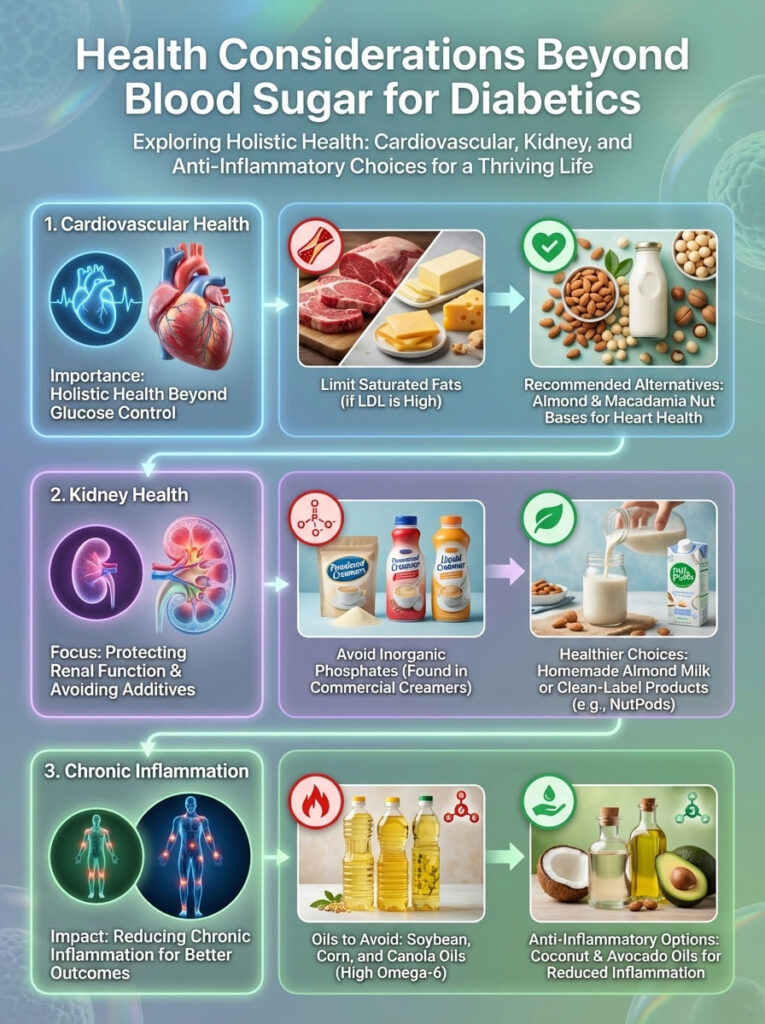
While glucose control is the primary goal, we cannot ignore the rest of the body. Diabetes often comes with other health considerations.
Cardiovascular Health and Saturated Fats
There is an ongoing debate regarding LDL cholesterol and saturated fats. The American Diabetes Association (ADA) standards generally recommend limiting saturated fat intake for diabetics with existing Cardiovascular Disease (CVD).
If your LDL is high, you may want to limit Heavy Cream and Coconut Oil. These are high in saturated fats. Instead, opt for almond or macadamia nut bases. These are rich in monounsaturated fats, which are heart-healthy.
Kidney Health and Phosphates
Many commercial creamers, even sugar-free ones, contain inorganic phosphate additives. Look for “dipotassium phosphate” on the label. These are used to prevent the coffee acid from curdling the creamer.
For diabetics with early-stage Chronic Kidney Disease (CKD), processing these inorganic phosphates can be difficult. If you have kidney concerns, stick to homemade almond milk or clean labels like NutPods that use simpler ingredients.
Inflammation and Vegetable Oils
Chronic inflammation is a driver of diabetes complications. Soybean, corn, and canola oils are found in generic sugar-free coffee creamers. These oils are high in Omega-6 fatty acids. An imbalance of Omega-6 to Omega-3 can promote systemic inflammation. Choosing creamers with coconut or avocado oil is a better anti-inflammatory strategy.
Practical Strategies for Testing and Implementation
How do you know if a diabetic coffee creamer is working for your body? You must test. Every individual reacts differently to sugar alcohols and caffeine.
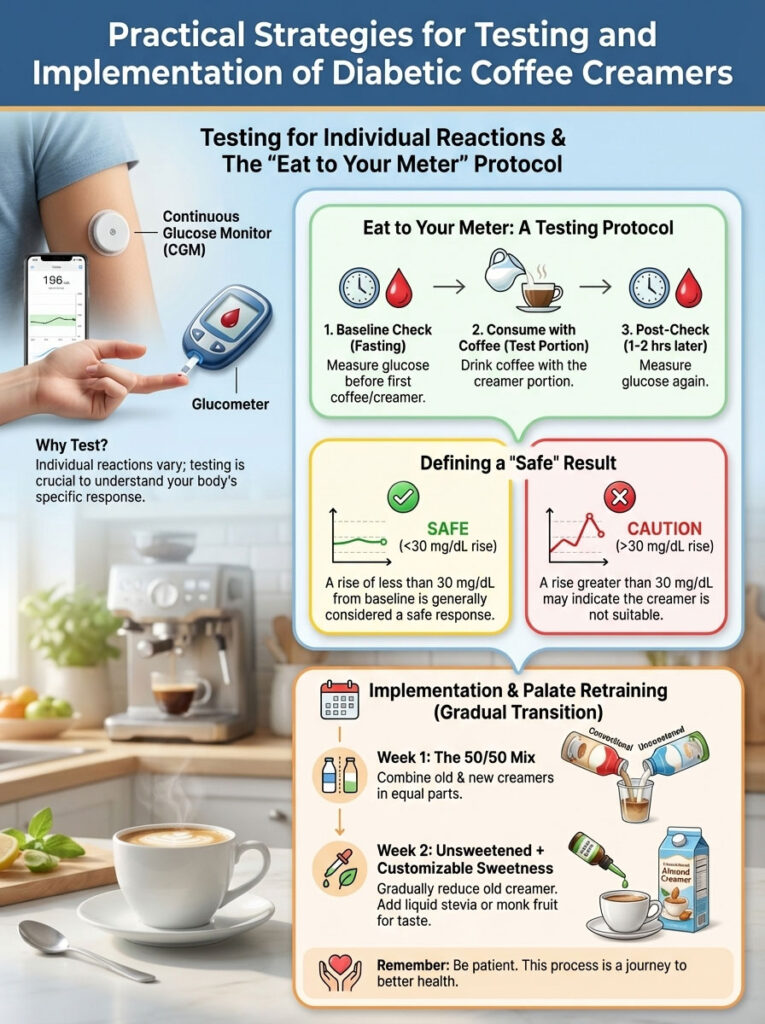
How to Test Your Creamer with a CGM or Glucometer
Follow this “Eat to Your Meter” protocol to validate your choice:
- Fasting Test: Test your blood sugar immediately upon waking. Record the number.
- Consume: Drink your coffee with the new creamer. Do not eat any food. This isolates the variable.
- Test +30 mins: This captures the rapid spike from simple sugars or maltodextrin.
- Test +60 mins: This captures the peak absorption.
- Test +90 mins: This shows how quickly you recover.
The Verdict: A “safe” result is a rise of less than 30 mg/dL from your baseline. If you spike more than that, the creamer (or the caffeine response) is too strong for your current insulin sensitivity.
Transitioning Your Palate
If you are used to hyper-sweetened conventional creamers, switching to unsweetened almond milk will taste like water. You need to retrain your taste buds.
Transition slowly. Start by mixing your old creamer 50/50 with a new, cleaner option. Gradually reduce the old creamer over two weeks. You can also add drops of liquid stevia or monk fruit to unsweetened creamers. This allows you to customize the sweetness level without the chemical aftertaste.
Summary Comparison: Liquid vs. Powder vs. DIY
To help you decide on the form factor, here is a hierarchy of choices based on function and diabetes management.
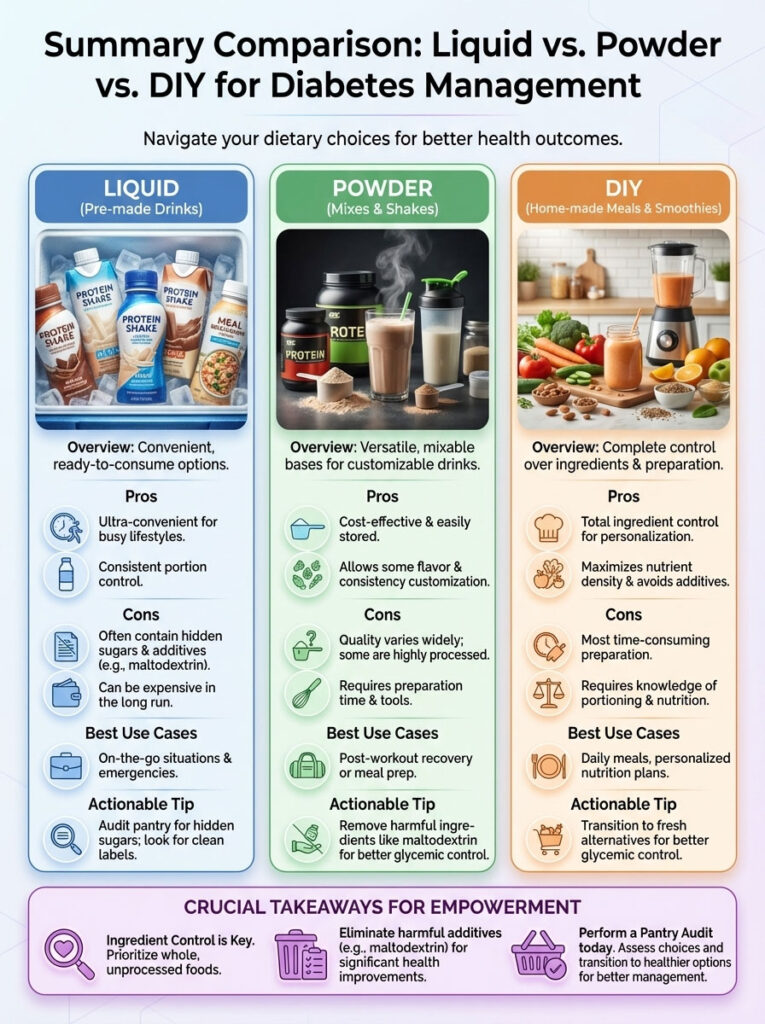
| Form Factor | Pros for Diabetics | Cons for Diabetics | Best For… |
|---|---|---|---|
| Liquid (Refrigerated) | Less processing; fewer flow agents; fresher ingredients. | Shorter shelf life; requires cooler. | Daily home use; strict glycemic control. |
| Liquid (Shelf-Stable) | Convenient; widely available. | Often contains preservatives or processed oils. | Office use; travel. |
| Powdered (Commercial) | Cheap; long shelf life. | High risk of maltodextrin/corn syrup; trans fats. | Avoid if possible. |
| Powdered (Keto/Specialty) | MCT inclusion; collagen benefits. | Expensive; can clump without mixing tools. | Travel; functional nutrition boost. |
| DIY (Cream + Drops) | Total control over ingredients; cheapest option. | Requires preparation; not portable. | The “Clean Eating” purist. |
Using this table, you can audit your current pantry. If you are using a commercial powder, consider switching to a shelf-stable liquid immediately. The removal of maltodextrin alone can lower your morning average glucose.
Conclusion & Key Takeaways
Finding the best sugar-free coffee creamer for diabetics is a journey. It requires reading labels and understanding your own biology. We have established a clear hierarchy. Whole foods (cream/coconut) and Specialty Keto Creamers (Prymal/Laird) sit at the top. Clean commercial liquids (NutPods) follow closely. At the bottom, we find the generic powdered creamers laden with maltodextrin and corn syrup solids.
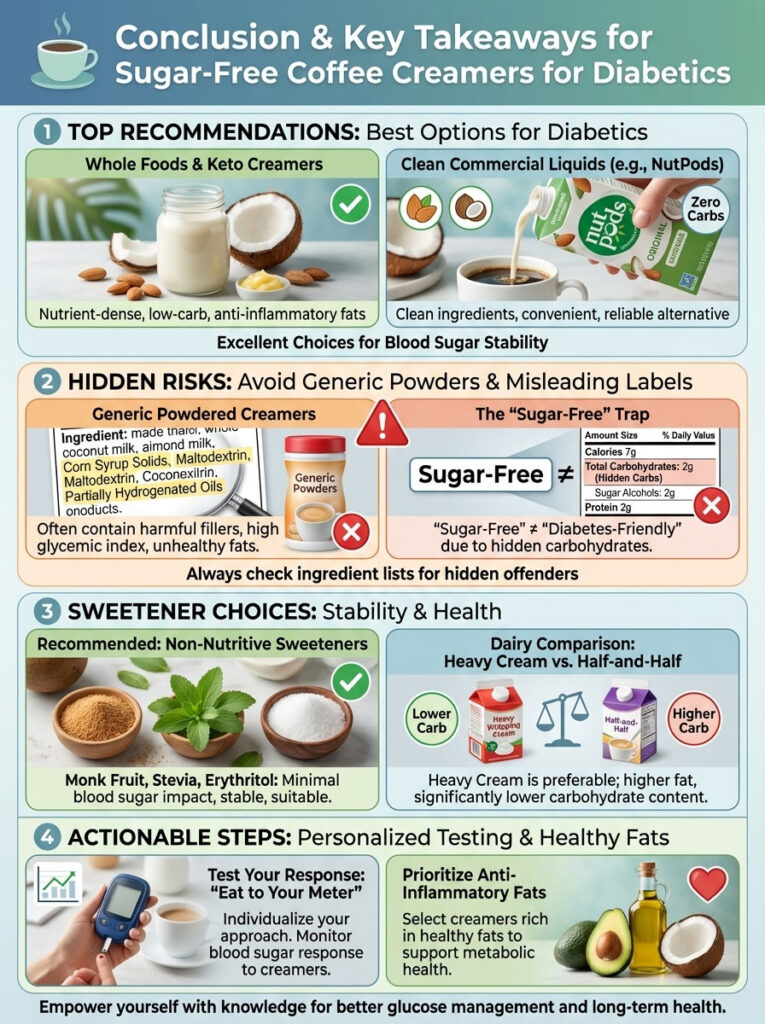
Remember, “Sugar-Free” does not guarantee “Diabetes-Friendly.” A product can be legally sugar-free yet still devastate your postprandial glucose levels. This happens due to hidden starches and fillers. Small changes in your morning routine can lead to significantly better Time in Range (TIR) throughout the day.
If you start your morning stable, you are more likely to stay stable. You avoid the roller coaster of corrections and crashes. Your coffee should be a moment of peace, not a source of metabolic stress.
Frequently Asked Questions
Why does my blood sugar spike after using a sugar-free powdered creamer?
Many powdered creamers utilize maltodextrin as a bulking agent, which has a glycemic index of 110—significantly higher than table sugar. Even though the label reads sugar-free, these hidden carbohydrates cause rapid glucose excursions that are easily detected on a continuous glucose monitor (CGM).
Which sweeteners are safest for maintaining a stable glycemic response in coffee?
For optimal metabolic health, prioritize non-nutritive sweeteners like monk fruit, stevia, erythritol, or allulose. These options have a zero glycemic index and do not stimulate a significant insulin response, making them the gold standard for both Type 1 and Type 2 diabetics.
Is heavy whipping cream a better choice for diabetics than half-and-half?
Yes, heavy whipping cream is superior because it consists almost entirely of fat with negligible carbohydrates, usually under 0.5g per tablespoon. Half-and-half contains a higher concentration of lactose, a natural milk sugar that can contribute to your total carbohydrate count and potentially trigger a glucose spike.
Does caffeine itself cause blood sugar levels to rise in the morning?
Caffeine can stimulate the release of adrenaline and cortisol, hormones that signal the liver to release stored glucose for energy. This hormonal interaction can temporarily decrease insulin sensitivity, which is why pairing coffee with a zero-carb, high-fat creamer is essential to avoid compounding the rise.
Why should diabetics be cautious of oat milk creamers even if they are unsweetened?
Oat milk is essentially a liquid grain that contains maltose, a high-glycemic sugar produced during the enzymatic breakdown of oat starches. Even unsweetened versions can cause a sharper glucose spike compared to almond, coconut, or macadamia-based alternatives which are naturally lower in starch.
What is the difference between sugar-free and unsweetened labels on coffee creamers?
Sugar-free indicates the product has less than 0.5g of sugar per serving but may still contain high-glycemic fillers like corn syrup solids. Unsweetened typically means no sweeteners—natural or artificial—have been added, making it the safest category for patients seeking strict glycemic control.
Can sugar alcohols like maltitol and sorbitol affect my glucose readings?
Unlike erythritol, which has zero glycemic impact, maltitol has a glycemic index between 35 and 52 and is partially absorbed by the body. If your creamer contains maltitol, you must account for its impact by only subtracting half of the sugar alcohol grams when calculating net carbohydrates.
How can I accurately test if a specific creamer is safe for my diabetes management?
I recommend the \”Eat to Your Meter\” protocol: test your glucose immediately before drinking your coffee and then at 30, 60, and 90-minute intervals. A rise of less than 30 mg/dL from your baseline suggests the creamer is compatible with your current insulin sensitivity and metabolic goals.
Are the vegetable oils in commercial sugar-free creamers harmful to diabetics?
While oils like soybean or canola won’t directly spike glucose, they are high in Omega-6 fatty acids which can promote systemic inflammation and worsen insulin resistance. For better long-term outcomes, choose creamers that utilize anti-inflammatory fats like MCT oil, coconut cream, or grass-fed butter.
What is the Dawn Phenomenon and how does it interact with my morning coffee?
The Dawn Phenomenon is a natural hormonal surge that raises blood sugar in the early morning to prepare the body for waking. Adding a creamer with hidden starches during this window can exacerbate this rise, leading to a stubborn glucose peak that is difficult to bring back into range.
Is Coffee-mate Zero Sugar safe for a diabetic diet?
From a strictly glycemic standpoint, Coffee-mate Zero Sugar is acceptable because it uses sucralose and generally won’t cause an immediate spike. However, due to its use of hydrogenated oils and artificial preservatives, I classify it as a \”B-grade\” option suitable for travel rather than daily use.
Why is NutPods often recommended as the best creamer for diabetics?
NutPods is a top clinical recommendation because it features a clean label with a base of almond and coconut cream and zero added sweeteners. It provides the mouthfeel of traditional dairy without the risk of hidden carbohydrates, helping patients maximize their Time in Range (TIR) throughout the morning.
Disclaimer
This article is for informational purposes only and does not constitute medical advice. Blood sugar responses to caffeine and sweeteners can vary significantly between individuals. Always consult a qualified healthcare professional or a Certified Diabetes Care and Education Specialist (CDCES) before making significant changes to your diet or diabetes management plan.
References
- American Diabetes Association (ADA) – diabetes.org – Standards of Medical Care in Diabetes regarding non-nutritive sweeteners and glycemic impact.
- U.S. Food and Drug Administration (FDA) – fda.gov – Guidelines on “Sugar-Free” and “No Added Sugar” labeling requirements and food additive safety.
- Journal of Food Science – Wiley Online Library – Research on the Glycemic Index of Maltodextrin and its metabolic effects compared to glucose.
- Cleveland Clinic – clevelandclinic.org – Clinical insights into the “Dawn Phenomenon” and hormonal impacts on morning blood glucose levels.
- Nutrients Journal – MDPI – Study on the effects of Stevia and Monk Fruit mogrosides on postprandial insulin and glucose responses.
- Journal of Clinical Medicine – ncbi.nlm.nih.gov – Analysis of Medium-Chain Triglycerides (MCTs) and their role in satiety and metabolic health for Type 2 Diabetics.