I see the look of confusion on my patients’ faces almost every day. You are standing in the dairy aisle, paralyzed by a wall of options. One tub claims to be “Keto,” another screams “Low-Fat,” and a third promises gut health. For someone managing blood sugar, this isn’t just shopping; it’s a minefield. Finding the best yogurt for diabetics is critical because, when chosen correctly, yogurt is a metabolic powerhouse. However, when chosen poorly, it is a sugar bomb that can derail your numbers for hours.
Table of Contents
Here is the reality regarding fermented dairy. It is not just a snack; it is a tool. We call this the “Dairy Matrix.” This refers to the unique interaction between high-quality protein, calcium, and probiotics that supports glycemic control. In fact, the FDA released a Qualified Health Claim in March 2024 stating that eating yogurt regularly may reduce the risk of Type 2 Diabetes. But does this apply to the swirl of soft serve at the mall? Patients often ask, is frozen yogurt safe, or is it just ice cream in disguise? In this comprehensive guide, we will break down the biochemistry, rank the top brands, and give you the definitive answer on frozen treats.
Quick Answer: What is the Best Choice?
The best yogurt for diabetics is plain, unsweetened Greek or Icelandic (Skyr) yogurt. These strained varieties contain double the protein and half the carbohydrates of regular yogurt. This unique profile minimizes blood sugar spikes. As for the question is frozen yogurt safe? Generally, no. Commercial frozen yogurt is often loaded with sugar (30g+ per cup) to replace fat. You should stick to plain Greek yogurt or keto-friendly frozen pints for safety.
Key Statistics & Data Points
- 18% Risk Reduction: A Harvard study published in BMC Medicine found a significant reduction in Type 2 Diabetes risk with daily yogurt consumption.
- 60g Carbohydrates: The amount of carbs in a medium commercial frozen yogurt. This is equivalent to eating 4 slices of white bread.
- 2 Cups Per Week: The specific amount recommended by the FDA’s 2024 Qualified Health Claim to see potential health benefits.
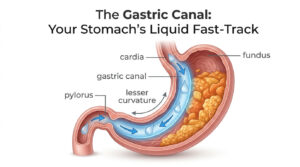
- 15-20 Minutes: The delay in gastric emptying caused by the casein protein in Greek yogurt. This helps flatten glucose curves.
- <10g Total Carbs: The “Golden Rule” threshold for selecting a diabetes-friendly yogurt brand.
- 24 Hours: The fermentation time required to reduce lactose content significantly in homemade yogurt.
The Science: How Fermented Dairy Impacts Blood Glucose
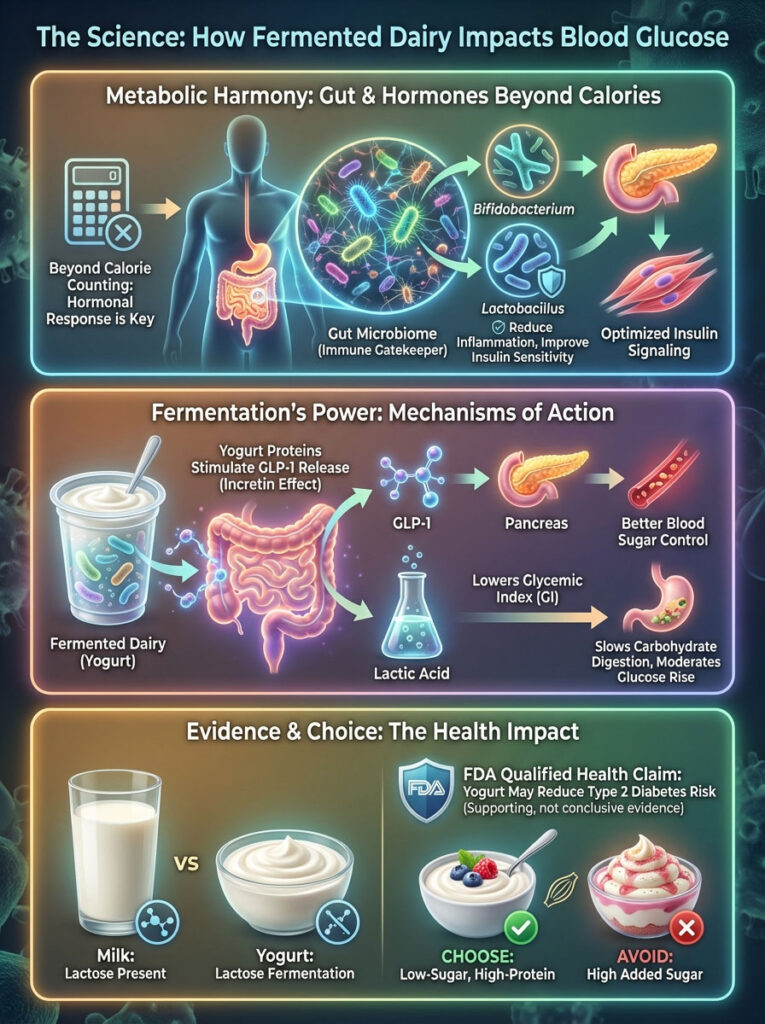
To understand why we recommend specific products, we have to look at what happens inside your body after you eat. It is not just about calories. It is about the hormonal response. The best yogurt for diabetics works on three specific biological pathways to aid your metabolism.
Beyond Calcium: The Biochemistry of Yogurt and Insulin
Most people think of yogurt as a source of calcium. While calcium is vital, the real magic for a diabetic lies in the bacterial cultures. Strains like Lactobacillus and Bifidobacterium do more than help you digest food. They work to reduce systemic inflammation. Chronic inflammation impairs how your insulin receptors work. This leads to insulin resistance. By improving the gut environment, probiotics become a legitimate therapeutic angle for insulin sensitivity.
Here is why this matters. Your gut lining is the gatekeeper of your immune system. When the gut microbiome is imbalanced, toxins leak into the bloodstream. This triggers an immune response that blocks insulin signals. Regular consumption of live cultures helps seal this barrier. It allows your insulin to work more effectively. This is why we insist on “live and active cultures” on the label.
The Incretin Effect and GLP-1
Second, and perhaps most important for immediate blood sugar control, is the protein effect. Yogurt contains both casein and whey protein. When these amino acids hit your small intestine, they stimulate the secretion of a hormone called Glucagon-Like Peptide-1 (GLP-1). You might recognize “GLP-1” from modern diabetes drugs like Ozempic or Wegovy. However, your body produces it naturally too.
We call this the “incretin effect.” This hormone slows down how fast your stomach empties. It also tells your pancreas to release insulin at just the right time. This prevents those sharp postprandial glucose spikes. Greek yogurt is particularly high in amino acids that trigger this release. Eating a cup of Greek yogurt is essentially a natural way to boost your body’s own GLP-1 production.
Lactic Acid and the Glycemic Index
Finally, we look at the Glycemic Index (GI). Plain yogurt has a very low GI. It typically sits between 14 and 20. This is largely due to lactic acid produced during fermentation. Bacteria consume the lactose (milk sugar) and convert it into lactic acid. This acid creates the tart taste you might notice.
Biologically, lactic acid slows down carbohydrate digestion. It inhibits the enzymes that break down starch. This means the natural milk sugars enter your bloodstream as a trickle rather than a flood. This is why yogurt is safer than milk. Milk contains lactose that hasn’t been fermented. Yogurt contains lactose that has been partially digested by bacteria and buffered by acid.
FDA Qualified Health Claim: What It Means for You
In March 2024, the FDA allowed a qualified health claim regarding yogurt and Type 2 Diabetes. This is a major development in nutrition science. The claim specifically notes that consuming at least 2 cups (3 servings) of yogurt per week may reduce the risk of developing the disease.
However, as a CDCES, I have to add a massive caveat. The FDA did not distinguish between plain and sweetened yogurt in their broad language. Eating two cups of sugar-laden yogurt will likely negate these benefits. We must apply this science only to low-sugar, high-protein options. The benefit comes from the fermentation and the protein matrix. It does not come from the added cane sugar found in fruit-flavored varieties.
Yogurt Varieties: Greek, Skyr, and Regular
Not all cultured dairy is created equal. The manufacturing process drastically changes the carbohydrate count. This determines if a product is the best yogurt for diabetics or just a creamy dessert.
Greek Yogurt vs. Regular Yogurt: The Straining Difference
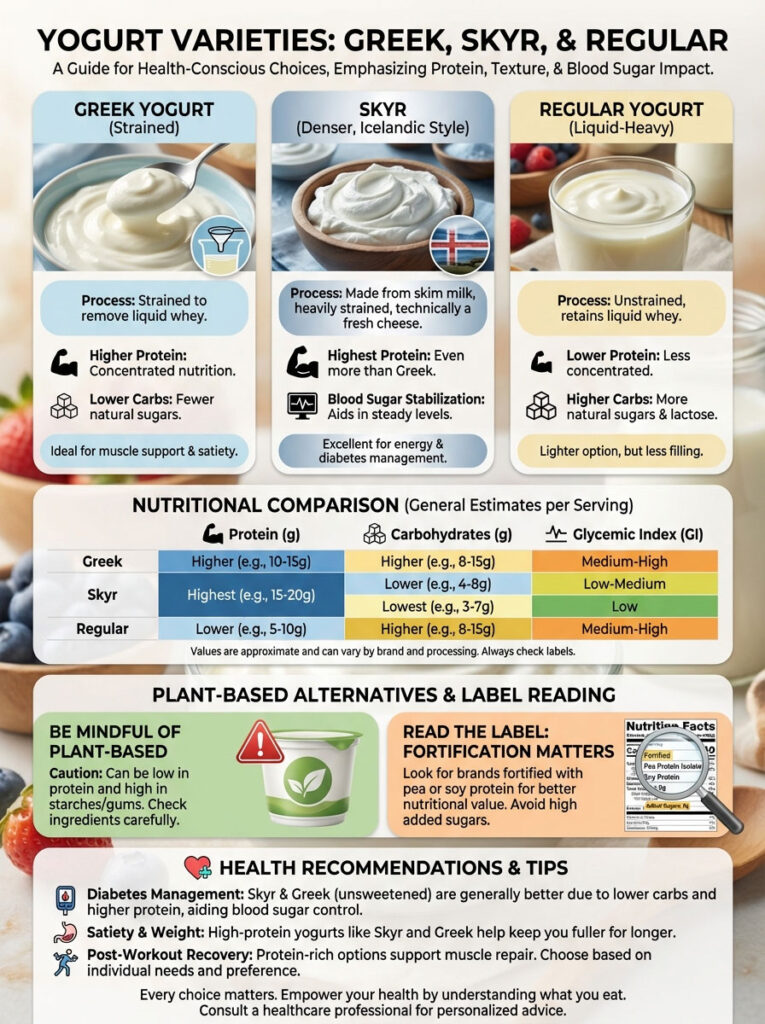
Regular yogurt is simply milk fermented with bacteria. It is a liquid-heavy product. Greek yogurt goes a step further. It is strained to remove the liquid whey. This process removes a significant amount of lactose (milk sugar). In my practice, I explain it this way. You are concentrating the protein and washing away the carbs.
Because of this, Greek yogurt typically has twice the protein and half the carbohydrates of unstrained varieties. This high protein content promotes satiety. It keeps you full longer. This prevents the “snack attacks” that often lead to high blood sugar later in the day. The texture is thicker and creamier, which also helps with psychological satisfaction.
Skyr (Icelandic Yogurt): The Protein Heavyweight
If Greek yogurt is the king, Skyr is the emperor. Skyr is technically a cultured cheese product that eats like a yogurt. It originated in Iceland over a thousand years ago. It requires nearly four times the amount of milk to make a single cup compared to regular yogurt. This results in an incredibly dense product.
Skyr boasts even higher protein counts than Greek varieties. It often contains 20 grams or more per serving. For my patients who struggle with the “Dawn Phenomenon” (high blood sugar in the morning), I recommend Skyr. A small bowl before bed provides a steady release of amino acids. This can help stabilize overnight glucose levels due to the slow-digesting casein protein.
Plant-Based Yogurts: Are They Safe?
This is where things get tricky. Many patients assume “plant-based” automatically equals “healthy.” That is a dangerous assumption in the diabetes world. Many almond, oat, and coconut yogurts are very low in protein. They often contain less than 1 gram per serving. To make them look like yogurt, manufacturers use thickeners.
They rely on tapioca starch, potato starch, or gums to achieve a creamy texture. These starches can convert rapidly to glucose in your system. If you are vegan or lactose intolerant, you need a strategy. The solution is to look for plant-based yogurts fortified with pea or soy protein. You want them to mimic the nutrient profile of dairy. Brands like Siggi’s Plant-Based or Kite Hill Protein are better choices than standard coconut yogurts.
| Yogurt Type (Plain) | Protein (per cup) | Carbs (per cup) | Glycemic Index | Best For |
|---|---|---|---|---|
| Regular Yogurt | 8-9g | 12-14g | Low (14-20) | Calcium intake; those without strict carb limits. |
| Greek Yogurt | 18-20g | 6-8g | Very Low (<15) | Best Overall for blood sugar management. |
| Skyr (Icelandic) | 20-22g | 5-7g | Very Low (<15) | High protein needs; Bedtime snacks. |
| Coconut Yogurt | <1g | 10-15g | Medium | Not recommended unless protein fortified. |
The Core Question: Is Frozen Yogurt Safe?
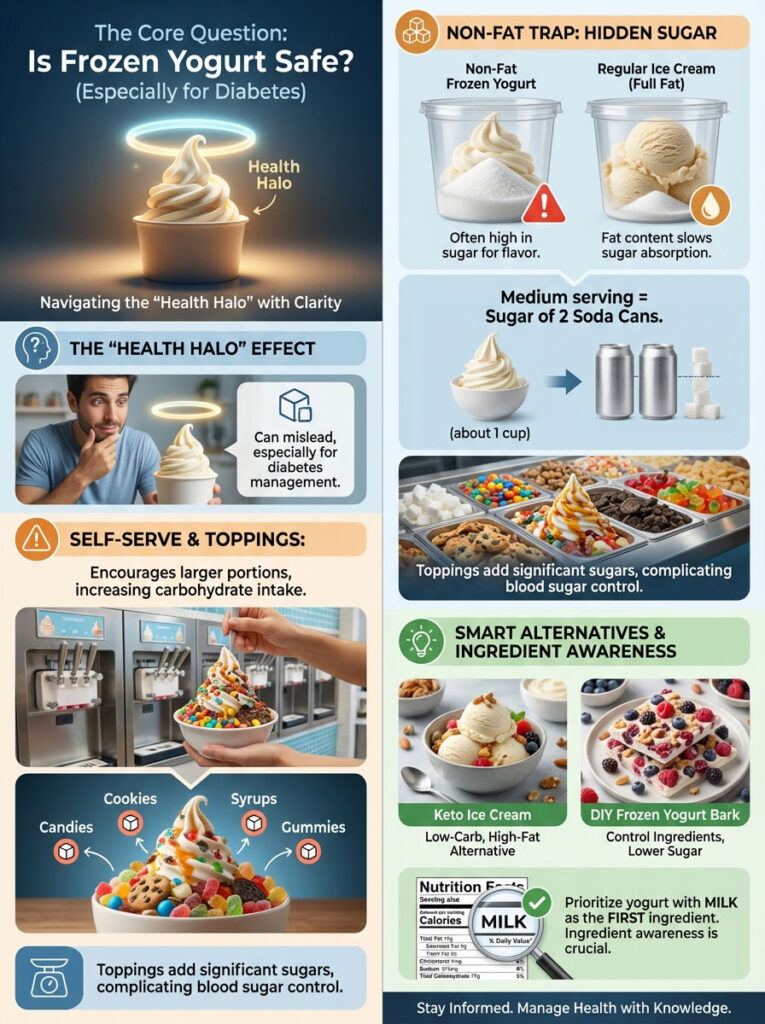
Now we tackle the secondary question that comes up every summer. Is frozen yogurt safe for people with diabetes? The marketing around “Froyo” shops like TCBY, Menchie’s, or Pinkberry has created a “Health Halo.” This can be incredibly deceptive for someone tracking glucose.
The “Health Halo” of Frozen Yogurt (Froyo)
We see “Non-Fat” and assume it is good for us. But in food science, fat provides flavor and mouthfeel. When manufacturers remove the fat, they have a problem. The product tastes like icy water. To fix this, they almost always add sugar. A lot of it.
A medium cup of commercial frozen yogurt can easily contain 60 grams of carbohydrates. That is the same as drinking two cans of soda. For a Type 1 diabetic, that requires a significant bolus of insulin. For a Type 2 diabetic, that is enough to cause a massive glycemic excursion (spike). The self-serve model makes this worse. It is very difficult to eyeball a half-cup serving. That is before we even add the toppings.
Analyzing the Ingredients: Sugar vs. Fat
The trade-off is rarely in your favor. Regular ice cream has more fat. Fat actually slows down the absorption of sugar. Non-fat frozen yogurt lacks this “brake.” This means the sugar hits your bloodstream faster and harder. When you ask, is frozen yogurt safe, the answer depends on the ingredients.
If the first ingredient is milk and the second is sugar or corn syrup, it is not a health food. It is a dessert. It should be treated exactly like cake or candy. Do not be fooled by the presence of “live cultures” in frozen treats. The sugar content far outweighs the benefit of the probiotics in this context.
The Psychology of the Self-Serve Bar
There is a behavioral aspect to this as well. When you walk into a frozen yogurt shop, you are handed a massive cup. Humans have a tendency to fill the space provided. A “small” serving in these shops is often 8 to 10 ounces. A standard serving of dairy is 4 ounces. You are likely eating a double or triple portion without realizing it.
Then comes the toppings bar. While fresh fruit is an option, it is often sitting in syrup. The other options are crushed candy bars, cookie dough, and syrups. A “healthy” trip to the froyo shop can easily turn into a 100-gram carbohydrate event. This is a disaster for blood sugar control.
Diabetic-Friendly Frozen Alternatives
You don’t have to give up cold treats. The market has shifted. “Keto” ice cream pints from brands like Rebel or Killer Creamery are excellent alternatives. They use heavy cream and erythritol (a sugar alcohol) to keep carbs extremely low. They are high in fat, which keeps you satisfied with a smaller portion.
Another strategy is DIY Frozen Yogurt Bark. You take the best yogurt for diabetics (plain Greek) and spread it on a baking sheet. Top it with berries and crushed walnuts. Freeze it for three hours. Break it into shards. This gives you the frozen texture and the creamy mouthfeel without the added sugar spike.
| Frozen Treat (1 Cup) | Total Carbs | Added Sugar | Protein | Glycemic Impact |
|---|---|---|---|---|
| Commercial Froyo | 45g – 60g | 35g+ | 4g | High Spike |
| Premium Ice Cream | 30g – 40g | 25g+ | 5g | Moderate/High |
| Keto Ice Cream (Pint) | 10g – 15g (Net) | 0g | 8g | Minimal |
| DIY Greek Yogurt Bark | 8g | 0g | 20g | Very Low |
Navigating the Aisle: How to Read Labels Like a Pro
To identify the best yogurt for diabetics, you need to ignore the front of the package. The marketing team writes the front. The lawyers and food scientists write the back. Turn the container around. The Nutrition Facts panel tells the real story.
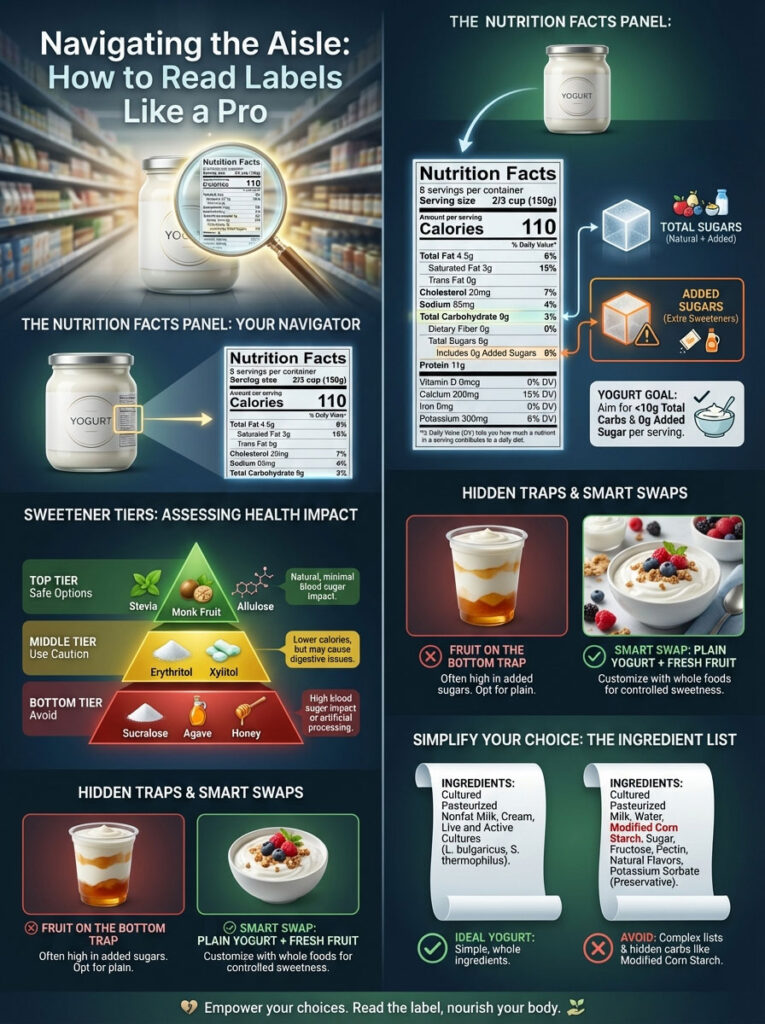
The “Total Sugars” vs. “Added Sugars” Distinction
This is a common point of confusion. You pick up a plain yogurt, see “5g Total Sugar,” and panic. Don’t. Milk naturally contains lactose. Lactose is a sugar. However, this naturally occurring sugar is wrapped in protein and fat. It does not spike blood sugar the same way sucrose does.
Your goal is to look at the line below it: “Added Sugars.” This number should ideally be 0g. This line tells you how much cane sugar, corn syrup, or honey the manufacturer dumped into the vat. A clinical rule of thumb I give my patients is simple. Look for <10g total carbs and 0g added sugar per serving.
Sweeteners: The Good, The Bad, and The Bloating
If you cannot tolerate the sour taste of plain yogurt, you need safe sweeteners. We categorize them into three tiers based on glycemic impact and gut health.
Top Tier (Safe): Stevia, Monk Fruit, and Allulose. Allulose in yogurt is particularly exciting. It tastes exactly like sugar but is excreted by the kidneys without impacting insulin or blood glucose. It browns like sugar and freezes like sugar. It is the gold standard for modern diabetic-friendly sweets.
Middle Tier (Caution): Erythritol and Xylitol. These generally do not raise blood sugar. However, they are sugar alcohols. In large amounts, they can cause gas, bloating, and diarrhea. If you have IBS along with diabetes, be very careful with these.
Bottom Tier (Avoid): Sucralose, Agave, and Honey. Sucralose may negatively alter the gut microbiome. Honey is biologically just sugar to a diabetic body. It raises blood sugar just as fast as table sugar. Do not fall for the “natural” marketing trap.
The “Fruit on the Bottom” Trap
A visualized layer of fruit on the bottom is essentially a layer of jam. It is fruit boiled in sugar syrup. Even if the label says “real fruit,” the glycemic load is high. The processing destroys the fiber structure of the fruit. This makes the sugar absorb faster.
The actionable tip here is simple. Buy plain yogurt and mash fresh raspberries or blackberries into it yourself. You get the fiber. You get the flavor. You avoid the high-fructose corn syrup often found in the fruit prep layer.
Thickeners and Hidden Carbs
Scan the ingredient list for “Modified Corn Starch” or “Tapioca Starch.” Brands use these to make low-fat yogurt feel creamy. These are refined carbohydrates. They digest very quickly. A high-quality yogurt should only have two ingredients: Milk and Cultures. Maybe some cream. If the ingredient list looks like a chemistry experiment, put it back.
Top Brand Recommendations (CDCES Approved)
Based on nutritional profiles and patient feedback, these are the current market leaders when searching for the best yogurt for diabetics. I have vetted these for metabolic impact.
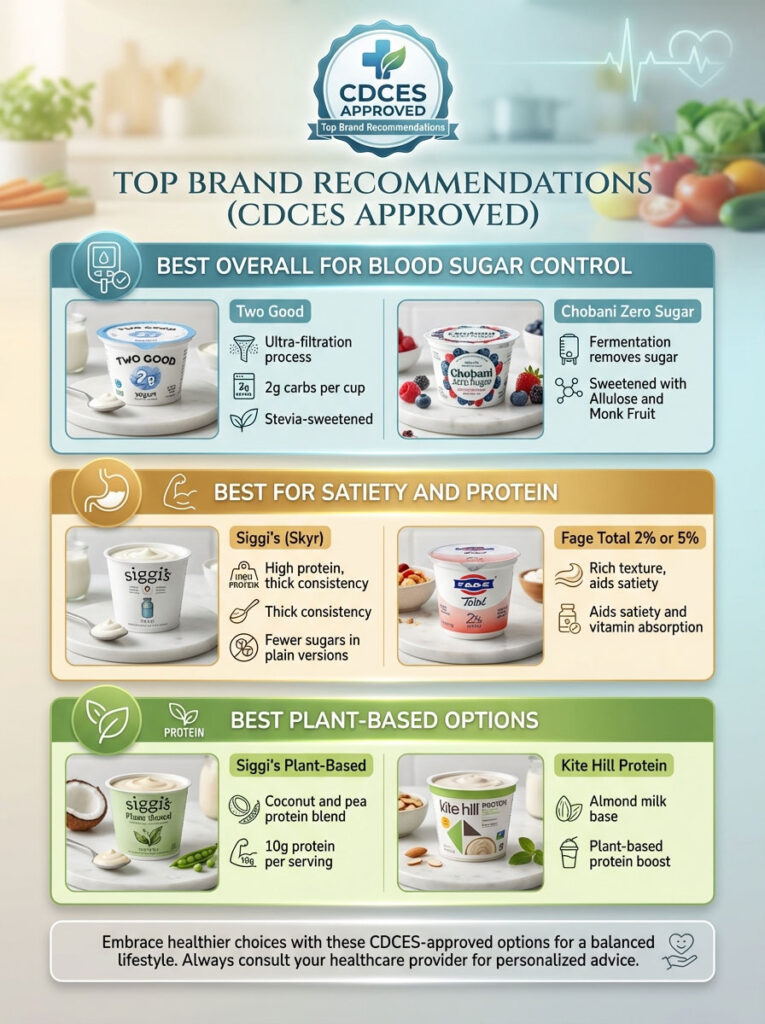
Best Overall for Blood Sugar Control
Two Good: This brand uses a unique ultra-filtration process. They take the milk and filter it slowly to remove almost all the sugar. It leaves only 2g of total carbs per cup. It is widely available and has a decent texture. It is sweetened with a touch of stevia, which some find noticeable, but the macro profile is unbeatable.
Chobani Zero Sugar: This is distinct from their regular line. They use fermentation to consume the sugar. Then they sweeten it with Allulose and Monk Fruit. It is lactose-free and extremely diabetes-friendly. The use of Allulose means no bitter aftertaste, which is a huge plus for many patients.
Best for Satiety and Protein
Siggi’s (Skyr): Siggi’s follows a “simple ingredients” philosophy. Their plain varieties are incredibly thick and high in protein. It is an acquired taste due to the tartness. However, nutritionally, it is superior. If you buy the flavored versions, note that they use real cane sugar, but much less of it than competitors. Stick to the plain or the “Lower Sugar” line.
Fage Total 2% or 5%: Fage is the classic Greek yogurt. I recommend the 2% or 5% over the 0% because the fat helps with satiety and vitamin absorption. It is incredibly rich. It feels like an indulgence. This makes it easier to stick to your meal plan.
Best Plant-Based Options
Siggi’s Plant-Based: They use a blend of coconut, macadamia, and pea protein. This ensures you get 10g of protein per serving. This is rare for non-dairy options. It has a high fat content, which is great for blunting glucose spikes.
Kite Hill Protein: Make sure it says “Protein” on the label. Their standard almond yogurt is low in protein. The fortified version uses soy protein isolate and almond milk to create a balanced profile. It is the closest thing to Greek yogurt texturally in the plant-based aisle.
Advanced Strategies: Full-Fat vs. Non-Fat & Timing
We need to update our thinking on fat. For decades, we were told to eat non-fat dairy. Modern metabolic research suggests this might have been wrong for diabetics.
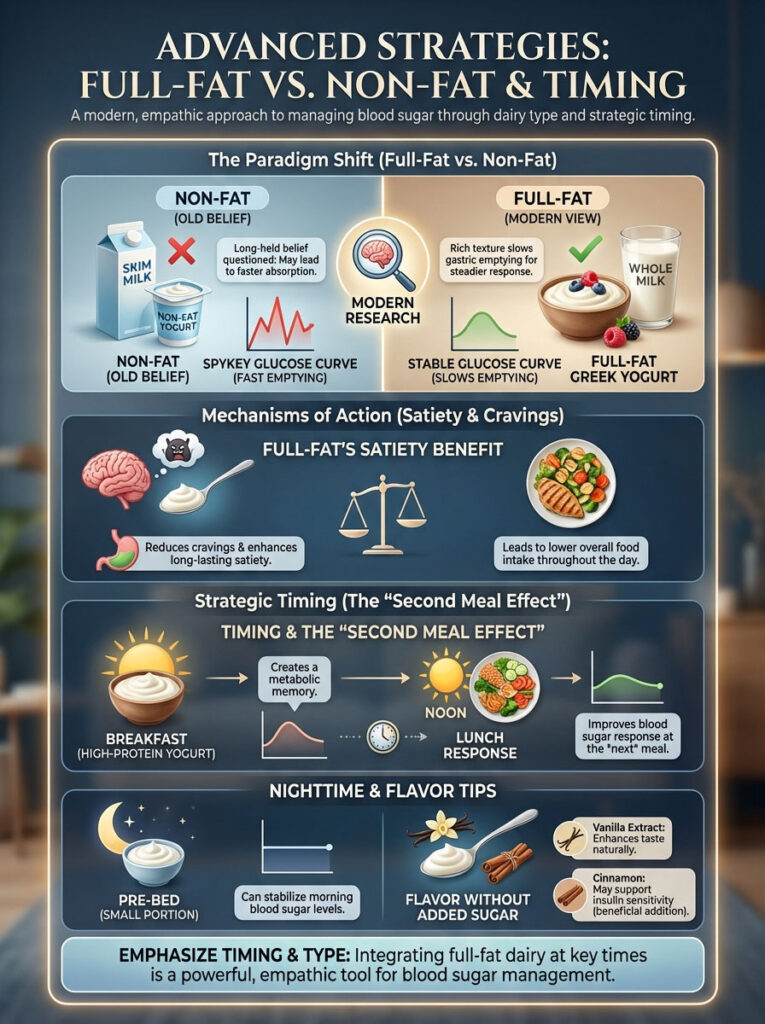
The Resurgence of Full-Fat Dairy
Fat delays gastric emptying. When you eat full-fat yogurt, the fat content slows down the absorption of whatever carbohydrates are present. This leads to a flatter, more stable glucose curve compared to non-fat varieties. Furthermore, removing fat often leaves the yogurt tasting thin and acidic.
This leads people to add sugar or buy sweetened versions. I often recommend 2% or whole milk yogurt for patients who struggle with hypoglycemia or intense cravings. The satiety factor is significantly higher. You eat less overall because you feel satisfied sooner.
Timing Your Intake
Breakfast: Eating a high-protein yogurt breakfast creates a “Second Meal Effect.” This means your blood sugar response to lunch might actually be better because of the protein you ate at breakfast. The amino acids remain in your system, helping to moderate the insulin response to your next meal.
Bedtime Snack: If you wake up with high blood sugar, your liver might be dumping glucose overnight. This happens because it thinks you are starving. A small portion of Greek yogurt (rich in slow-digesting casein) before bed can signal the liver to relax. This can stabilize morning numbers significantly.
Pro Tip: The Texture Hack
Find plain Greek yogurt too sour? Don’t reach for the sugar. Stir in a few drops of liquid vanilla extract and a sprinkle of cinnamon. Cinnamon has been shown in some studies to support insulin sensitivity. The vanilla adds the perception of sweetness without the glucose spike. It tricks your brain into thinking you are eating a dessert.
Recipes: Making Yogurt Work for You
Sometimes the best way to ensure safety is to make it yourself. Here are two ways to enjoy yogurt without the fear of hidden sugars.

Recipe 1: The “Safe” Frozen Yogurt Bark
This is the answer to “is frozen yogurt safe?” Yes, if you make this.
- Base: 2 cups of Plain Fage 5% Greek Yogurt.
- Sweetener: 2 tablespoons of liquid Allulose or Monk Fruit.
- Flavor: 1 teaspoon vanilla extract.
- Toppings: 1/2 cup crushed walnuts, 1/4 cup hemp seeds, 1/2 cup sliced strawberries.
Instructions: Mix the yogurt, sweetener, and vanilla in a bowl. Spread it evenly on a baking sheet lined with parchment paper. Sprinkle the toppings over the wet yogurt. Freeze for 3-4 hours. Break into bark pieces. Store in a freezer bag. Eat one or two pieces when a craving strikes.
Recipe 2: Savory Yogurt Dip
Yogurt doesn’t have to be sweet. In the Middle East, yogurt is often savory. This is excellent for dipping vegetables.
- Base: 1 cup Plain Greek Yogurt.
- Mix-ins: 1 tablespoon lemon juice, 1 tablespoon chopped dill, 1 clove minced garlic, pinch of salt.
- Fat: Drizzle of olive oil on top.
Instructions: Mix everything together. Use it as a dip for cucumbers, bell peppers, or celery. The fiber from the veggies combined with the protein from the yogurt makes this a perfect zero-spike snack.
Summary & Key Takeaways
Navigating the dairy aisle doesn’t have to be a gamble. The best yogurt for diabetics is one that prioritizes protein over sugar. Plain Greek yogurt and Skyr remain the gold standards due to their straining processes that naturally lower carbohydrates. The relationship between Greek yogurt and blood sugar is positive. It offers a way to improve satiety and possibly insulin sensitivity through probiotics.
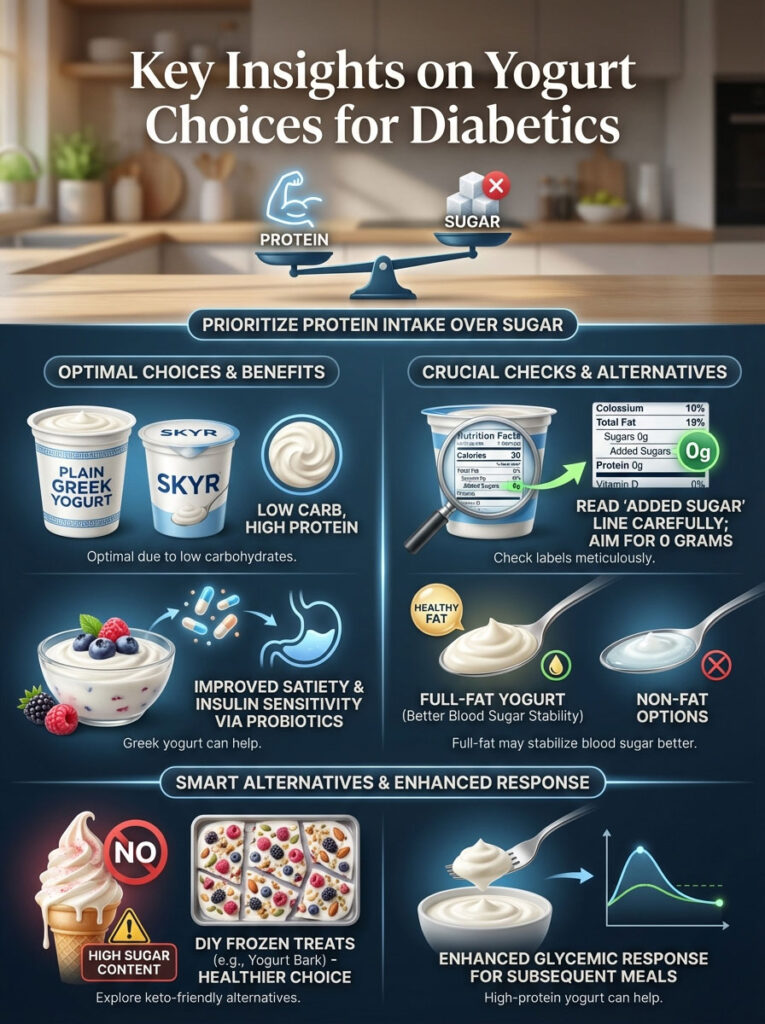
Regarding the question, is frozen yogurt safe? The answer is generally no. Not if you buy it from a commercial shop where sugar is the primary texture agent. However, with the rise of keto-friendly pints and simple home recipes, you can still enjoy frozen treats without the spike. Remember, yogurt is more than food; it is a metabolic tool.
Choose wisely. Read the “Added Sugar” line. Ignore the front of the package. Let the dairy matrix work for you. By switching from sugary fruit-bottomed yogurts to plain, high-protein varieties, you are making a small change that yields massive results for your long-term health.
Frequently Asked Questions
Why is Greek yogurt considered superior to regular yogurt for blood sugar management?
Greek yogurt undergoes an intensive straining process that removes liquid whey, which significantly reduces the lactose or milk sugar content. This results in a product with double the protein and nearly half the carbohydrates of regular yogurt, leading to a much lower glycemic response and improved satiety for those managing insulin resistance.
Does the FDA qualified health claim mean all yogurts reduce diabetes risk?
While the 2024 FDA claim states that eating at least two cups of yogurt weekly may reduce Type 2 Diabetes risk, it does not distinguish between plain and sweetened varieties. To reap these metabolic benefits, you must select low-sugar, high-protein options to avoid the inflammatory effects of added sugars that could negate the “Dairy Matrix” benefits.
Why is commercial frozen yogurt often a poor choice for those with diabetes?
Most commercial “froyo” is marketed as low-fat, but manufacturers replace that fat with high amounts of sugar—often 30 to 60 grams per serving—to maintain a creamy texture. Without fat to slow digestion, these refined sugars cause a rapid glycemic excursion that can be difficult to manage with standard medication or insulin boluses.
How do the probiotics in yogurt specifically help with insulin sensitivity?
Specific strains like Lactobacillus and Bifidobacterium help strengthen the gut barrier and reduce systemic inflammation, which is a primary driver of insulin resistance. By optimizing the gut microbiome, these live cultures help your insulin receptors function more effectively, aiding long-term glycemic control and metabolic health.
Is Skyr or Icelandic yogurt better for diabetics than Greek yogurt?
Skyr is even denser than Greek yogurt, often containing over 20 grams of protein per serving because it requires four times the milk to produce. Its high concentration of slow-digesting casein protein makes it an excellent tool for stabilizing blood sugar, particularly as a bedtime snack to combat the morning dawn phenomenon.
What is the “Golden Rule” when reading yogurt nutrition labels for diabetes?
As a CDCES, I advise patients to prioritize the “Added Sugars” line and aim for 0 grams, while keeping the total carbohydrate count under 10 grams per serving. Always check the ingredient list for hidden thickeners like modified corn starch or tapioca starch, which can cause unexpected spikes in postprandial glucose levels.
Can yogurt naturally stimulate GLP-1 production in the body?
Yes, the high-quality amino acids in yogurt stimulate the secretion of Glucagon-Like Peptide-1 (GLP-1) in the small intestine. This “incretin effect” slows gastric emptying and prompts the pancreas to release insulin at the appropriate time, mimicking the physiological mechanism of popular diabetes medications.
Are plant-based yogurts a safe alternative for diabetics?
Many plant-based options are high in starches and low in protein, which can lead to poor glycemic control. If you opt for non-dairy, ensure it is fortified with pea or soy protein and contains no added sugars to match the beneficial nutrient profile and GLP-1 triggering potential of traditional Greek yogurt.
Why is full-fat yogurt sometimes better than non-fat for blood sugar stability?
Dietary fat acts as a biological “brake,” slowing down the absorption of carbohydrates and creating a flatter glucose curve. Choosing a 2% or 5% fat yogurt often increases satiety and prevents the overconsumption of calories or the addition of sweeteners often found in thin, non-fat varieties.
How does the “Second Meal Effect” work with yogurt consumption?
Eating a high-protein yogurt for breakfast can improve your body’s glycemic response to your next meal at lunch. The amino acids and fermentation products remain active in your system, helping to moderate insulin levels and prevent sharp glucose spikes throughout the remainder of the day.
Is Allulose a safe sweetener choice for diabetic-friendly yogurt?
Allulose is an ideal sweetener because it provides the taste and texture of sugar without being metabolized as a carbohydrate. It does not raise blood glucose or insulin levels, making it the gold standard for brands like Chobani Zero Sugar that cater specifically to the diabetic community.
How can I safely enjoy a frozen treat without the sugar spike of commercial froyo?
I recommend making a DIY “Yogurt Bark” using plain Greek yogurt, allulose or stevia, and fiber-rich toppings like berries and walnuts. Alternatively, look for keto-certified frozen pints that use sugar alcohols and high fat content to keep the net carbohydrate count minimal and safe for your glucose targets.
Disclaimer
This article is for informational purposes only and does not constitute medical advice. Diabetes management is highly individual; always consult a qualified healthcare professional or a Certified Diabetes Care and Education Specialist (CDCES) before making significant changes to your diet or medication regimen.
References
- U.S. Food and Drug Administration (FDA) – March 2024 Announcement – Qualified Health Claim on the relationship between yogurt consumption and a reduced risk of Type 2 Diabetes.
- Harvard T.H. Chan School of Public Health – BMC Medicine – Research study identifying an 18% lower risk of Type 2 Diabetes with daily yogurt intake.
- American Diabetes Association (ADA) – Standards of Care in Diabetes – Guidelines on protein-to-carbohydrate ratios and the importance of low-glycemic foods.
- Journal of Dairy Science – “The Dairy Matrix” – Research into how the structural components of dairy affect metabolic health and insulin response.
- National Institutes of Health (NIH) – PubMed Central – Clinical reviews on the impact of Lactobacillus and Bifidobacterium on systemic inflammation and insulin resistance.
- University of Sydney – Glycemic Index Search Tool – Data confirming the low GI (14-20) of plain, unsweetened yogurt varieties.