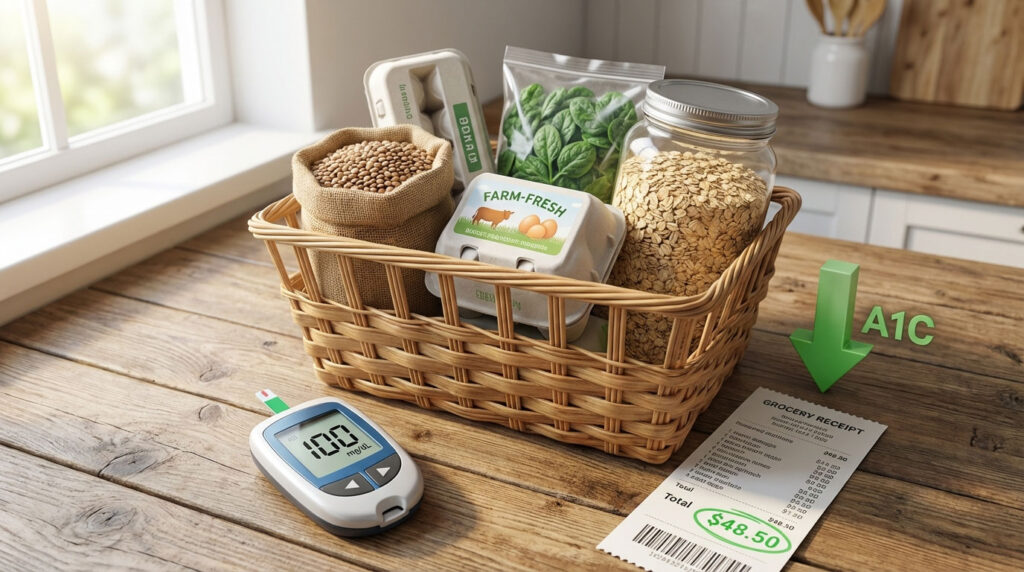
Walking down the grocery store aisle these days feels less like a routine chore and more like a high-stakes financial negotiation. You pick up a carton of eggs, glance at the skyrocketing price, and hesitate. You look at the fresh berries recommended by your endocrinologist, see the premium price tag, and wonder if managing your health is a luxury you simply cannot afford right now. The anxiety is palpable. You are stuck between the rising cost of living and the non-negotiable need to manage your blood sugar levels to prevent long-term complications.
Table of Contents
But here is the truth that the sixty-billion-dollar diet industry rarely tells you: the most effective foods for metabolic health are often the cheapest foods in the store. You do not need organic almond flour, imported superfoods, expensive protein bars, or “diabetic-friendly” shakes to reclaim your health. In fact, those processed items are often less effective than the humble staples found on the bottom shelves.
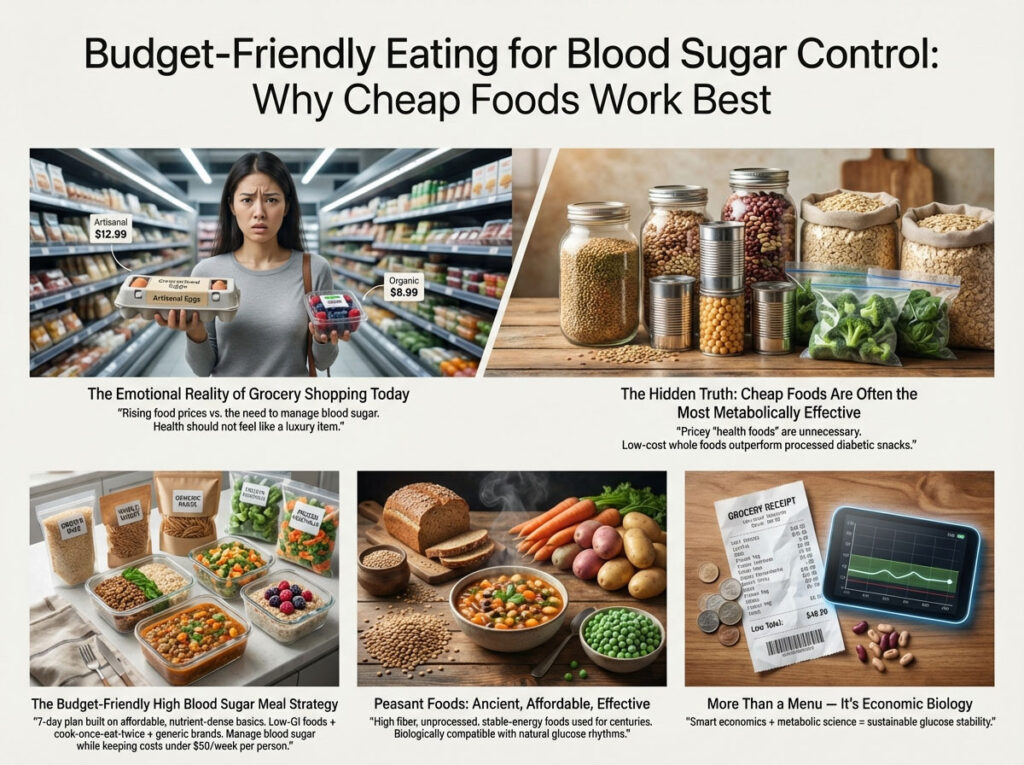
A budget-friendly 7 day meal plan for high blood sugar utilizes affordable, nutrient-dense staples like dried lentils, canned beans, bulk oats, and frozen vegetables. By prioritizing low-glycemic index (GI) foods, practicing “cook once, eat twice” meal prepping, and choosing generic brands, this plan lowers A1C levels naturally while keeping grocery costs under $50 a week per person.
This comprehensive guide is not just a menu; it is an economic strategy for your biology. We will strip away the marketing fluff and focus on the “peasant foods” that have sustained human health for centuries. These cheap foods to lower blood sugar work because they are rich in fiber, unprocessed, and biologically compatible with your body’s need for stability.
The Economics of A1C Control: Why Cheap Foods Lower Blood Sugar Best
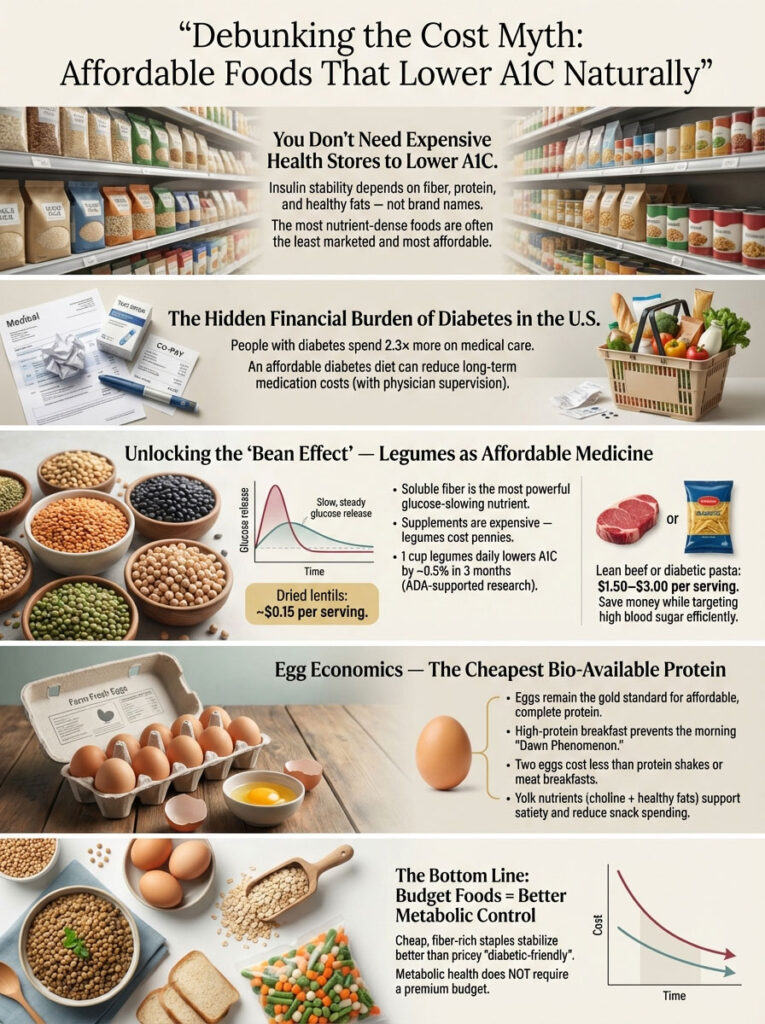
There is a pervasive myth in the United States that you must shop at high-end health food stores like Whole Foods to lower A1C naturally. This is demonstrably false. The nutritional biochemistry required to stabilize insulin does not care about the brand name on the package. It cares about macronutrients: fiber, protein, and healthy fats. Interestingly, the foods highest in these nutrients are often the least marketed and the most affordable.
The Hidden Financial Burden of Diabetes Management in the USA
Managing diabetes or pre-diabetes is expensive. Between co-pays, test strips, and medication, the average American with diabetes spends 2.3 times more on medical care than those without. This makes the grocery budget even tighter. However, investing in an affordable diabetes diet is the single best way to reduce those medical costs. By lowering your A1C through diet, you may reduce the need for increased medication dosages over time (always under doctor supervision), effectively paying yourself back.
Unlocking the “Bean Effect”: How Legumes Act as Affordable Medicine
Soluble fiber is the single most important nutrient for slowing down glucose absorption. If you try to buy soluble fiber in the form of supplements (like Metamucil) or fortified “low-carb” bars, it is incredibly expensive. If you buy it in the form of legumes, it costs pennies.
Research supports what nutritionists call the “Bean Effect.” A study cited by the Archives of Internal Medicine and the American Diabetes Association (ADA) indicates that consuming one cup of legumes daily can lower A1C levels by 0.5% over three months. This improvement is comparable to the effect of some starting doses of diabetic medication.
- The Cost: A serving of dried lentils costs approximately $0.15.
- The Comparison: A serving of lean beef or specialized diabetic pasta can cost upwards of $1.50 to $3.00.
- The Result: You save significant money while aggressively targeting high blood sugar.
Egg Economics: The Cheapest Bio-Available Protein for Insulin Stability
Despite recent price fluctuations due to inflation and supply chain issues, eggs remain the gold standard for cheap, bio-available protein. Eating a high-protein breakfast is crucial for preventing the “Dawn Phenomenon,” where blood sugar spikes in the morning due to a surge in cortisol and growth hormone.
Two eggs cost a fraction of the price of a whey protein shake or a meat-heavy breakfast, yet they provide the perfect amino acid profile and satiety needed to prevent snacking later in the day. The yolk contains choline and healthy fats that keep you full, preventing the urge to buy expensive convenience snacks at the gas station or vending machine.
Strategic Shopping Rules for an Affordable Diabetes Diet Under $50
To execute this budget-friendly 7 day meal plan for high blood sugar, you need to fundamentally change how you navigate the supermarket. We follow strict rules to keep the bill low and the nutrition high.
Mastering the Bulk Bin Advantage to Slash Grocery Bills
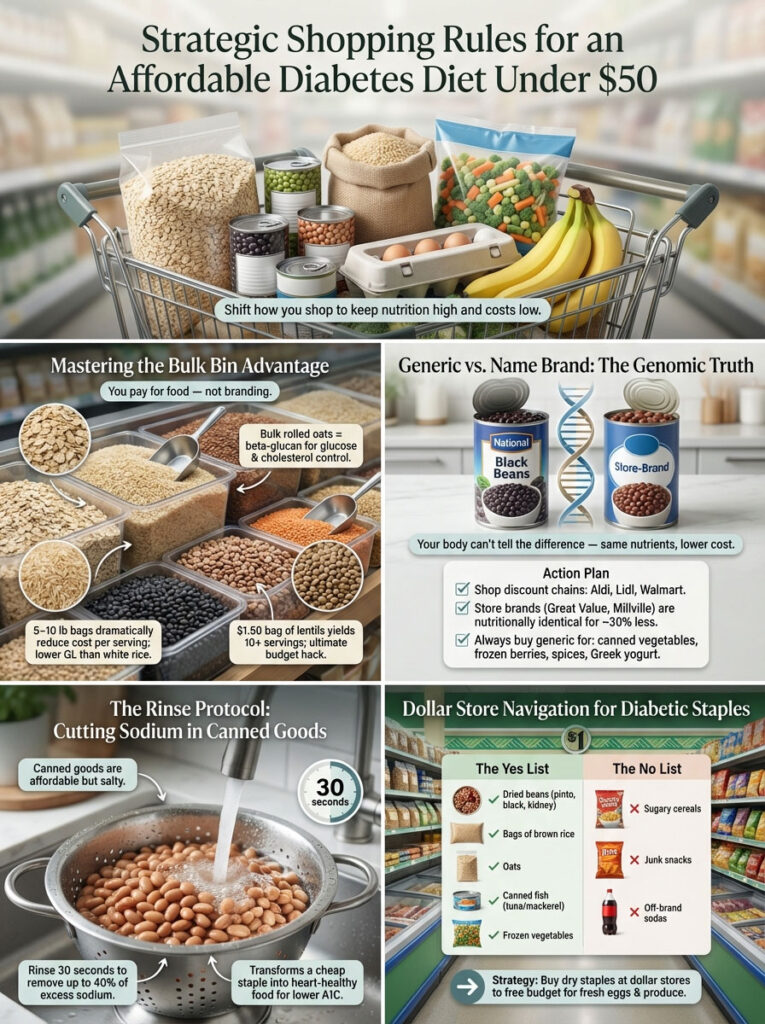
The unit price is your best friend. When you buy a canister of oatmeal, you are paying for the cardboard cylinder, the graphic design, and the branding. When you buy oats from the bulk bin, you are paying only for the oats.
- Oats: Bulk rolled oats are essential for their beta-glucan content, which lowers cholesterol and glucose.
- Brown Rice: Buying a 5lb or 10lb bag drops the price per serving significantly compared to small 1lb bags. Brown rice has a lower glycemic load than white rice due to the bran layer.
- Dried Beans: Canned beans are cheap, but dried beans are the ultimate budget hack. A $1.50 bag of dried lentils yields over 10 servings of high-quality food.
Generic vs. Name Brand: The Genomic Truth of Store Brands
Your body cannot tell the difference between a name-brand can of tomatoes and the store-brand version. In many cases, they are produced in the exact same factory and simply labeled differently at the end of the assembly line.
- Action Plan: Shop at discount grocers like Aldi, Lidl, or Walmart. Their private-label brands (e.g., Great Value, Millville) offer the same nutritional profile for 30% less cost.
- Staples: Canned vegetables, frozen berries, spices, and Greek yogurt should always be generic. The nutritional label is what matters, not the logo.
The Rinse Protocol: Reducing Sodium in Canned Goods for Heart Health
Canned beans and vegetables are convenient and affordable, but they often come swimming in high-sodium liquid to preserve texture and shelf life. High sodium is a risk factor for hypertension, which frequently accompanies Type 2 diabetes.
- The Fix: Pour your canned beans into a colander and rinse them thoroughly under cold running water for 30 seconds.
- The Result: This simple action removes up to 40% of the excess sodium, transforming a cheap convenience food into a heart-healthy staple suitable for a lower A1C diet plan.
Navigating Dollar Stores for Healthy Diabetic Staples
You might be surprised to learn that dollar stores (like Dollar Tree or Dollar General) can be sources of healthy food if you know what to look for.
- The Yes List: Dried beans (pinto, black, kidney), bags of brown rice, oats, canned fish (tuna/mackerel), and frozen vegetables (if they have a freezer section).
- The No List: Avoid the “center aisle” junk food, sugary cereals, and off-brand sodas.
- Strategy: Use dollar stores for the dry staples to free up budget for fresh eggs and produce at the grocery store.
Comparative Analysis of Budget Staples vs. Premium Diabetic Products
To visualize why we choose certain foods, let’s compare typical “Budget Staples” against premium products often marketed to diabetics. This comparison highlights how an affordable diabetes diet is often superior in nutritional value.
| Food Item | Cost Per Serving (Est.) | Glycemic Load | Verdict |
| Dried Lentils | $0.15 | Low (5) | Winner. The most cost-effective tool to lower A1C naturally. Contains high fiber and protein. |
| Keto/Low-Carb Bread | $0.65+ | Low (3) | Expensive. Good for convenience, but processed and not necessary for a budget plan. |
| Bulk Rolled Oats | $0.10 | Low-Medium (9) | Winner. Cheapest breakfast. High beta-glucan fiber content forms a gel that blocks sugar absorption. |
| Low-Carb Cereal | $1.25+ | Low (4) | Expensive. Often contains sugar alcohols which can cause bloating and digestive distress. |
| Frozen Mixed Berries | $0.40 | Low (3) | Winner. Cheaper than fresh, retains antioxidants, and available year-round without spoilage risk. |
| Fresh Raspberries | $1.00+ | Low (3) | Risky. Spoil quickly and price spikes significantly when out of season. |
| Hard Boiled Eggs | $0.25 | Zero (0) | Winner. Perfect protein. Stabilizes insulin for hours without impacting blood sugar. |
| Diabetic Protein Bar | $2.50+ | Low (5) | Expensive. Highly processed ingredients. 10x the cost of an egg for similar satiety. |
Comprehensive Budget-Friendly 7 Day Meal Plan for High Blood Sugar
This meal plan relies on the “Cook Once, Eat Twice” logic. We cook large batches of dinner to serve as lunch the next day. This saves fuel (gas/electric), time, and ensures you always have a safe, low glycemic index meal ready, preventing the temptation of fast food.
Note on Portion Control: This plan focuses on food quality. Adjust portion sizes based on your specific calorie needs and medical advice.
Monday: The Lentil Launch (Batch Prep Day)
We start the week by cooking a massive pot of legumes, the cheapest way to ensure fiber intake all week.
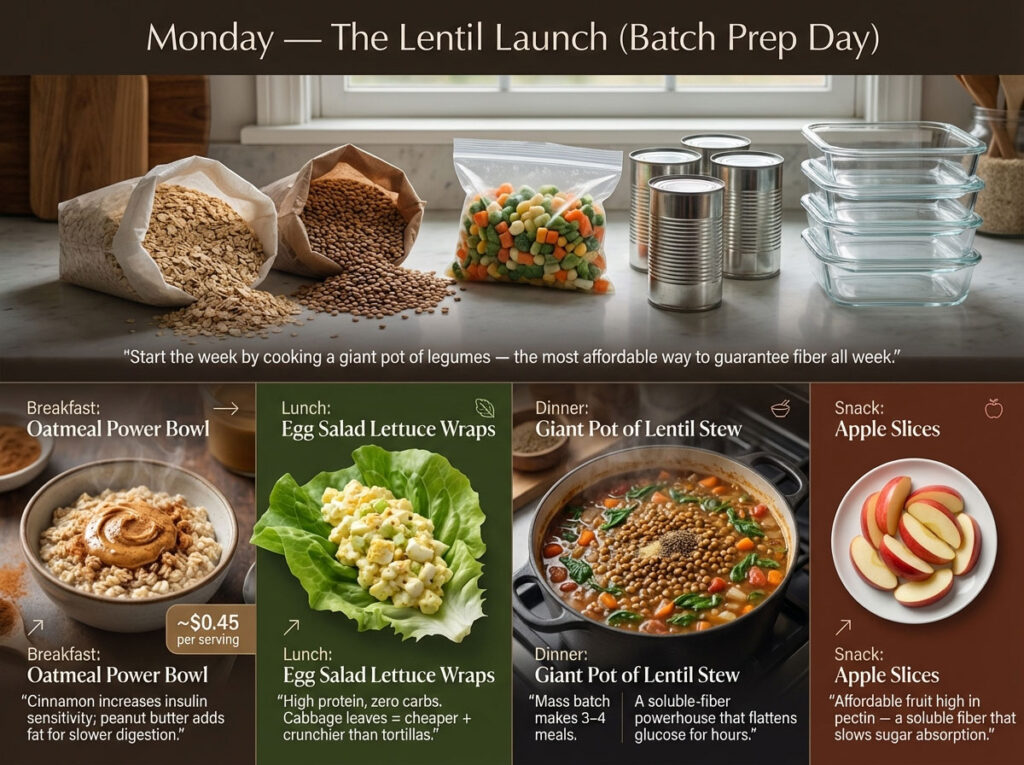
- Breakfast: Oatmeal Power Bowl
- The Meal: 1/2 cup rolled oats (bulk) cooked with water. Stir in 1 tbsp natural peanut butter and a generous sprinkle of cinnamon.
- Why It Works: Cinnamon helps sensitize cells to insulin. Peanut butter adds fat to slow digestion.
- Cost: Approx $0.45 per serving.
- Lunch: Egg Salad Lettuce Wraps
- The Meal: 2 hard-boiled eggs mashed with mustard, a little mayo, and diced celery. Served inside large romaine lettuce leaves or cabbage leaves.
- Why It Works: High protein, zero carbs. Cabbage leaves are cheaper and crunchier than tortillas.
- Dinner: Giant Pot of Lentil Stew
- The Meal: Simmer dried lentils, canned diced tomatoes (generic), frozen spinach, chopped carrots, and onions in vegetable broth (made from scraps, see below) or water. Season with cumin and garlic powder. Make enough for 3-4 meals.
- Why It Works: A soluble fiber bomb that blunts blood sugar for hours.
- Snack: Apple slices. Apples are affordable and high in pectin.
Tuesday: Leftover Logic and Nutrient Anchoring
Utilizing leftovers lowers the cost per meal significantly while the flavors improve.
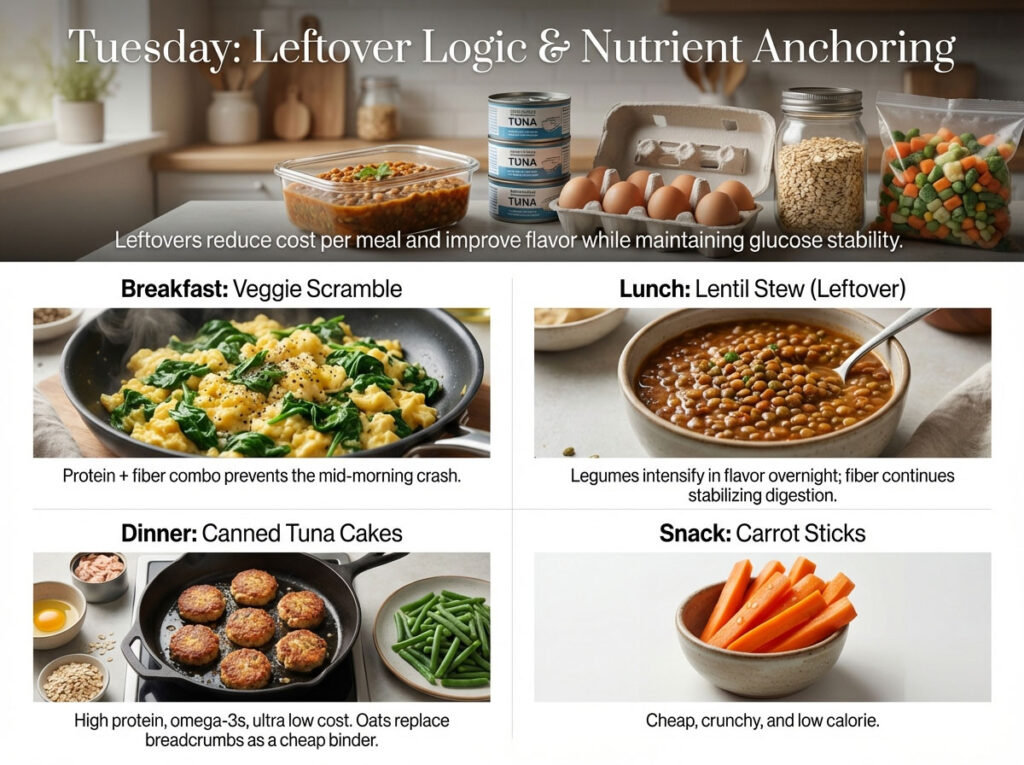
- Breakfast: Veggie Scramble
- The Meal: 2 eggs scrambled with frozen spinach (thawed and squeezed dry).
- Why It Works: The protein and fiber start the day with stable blood sugar levels, preventing the mid-morning crash.
- Lunch: Lentil Stew (Leftover)
- The Meal: Reheat a bowl of yesterday’s stew.
- Why It Works: Legumes often taste better the next day. The fiber continues to work on your digestive system.
- Dinner: Canned Tuna Cakes
- The Meal: Drain 2 cans of tuna. Mix with 1 egg and 1/4 cup oats (acts as a cheap binder instead of breadcrumbs). Form into patties and pan-fry in a little oil until crispy. Serve with steamed frozen green beans.
- Why It Works: High protein, omega-3s, and very low cost.
- Snack: Carrot sticks. Cheap, crunchy, and low calorie.
Wednesday: The Freezer Raid
Using frozen assets to keep fresh produce costs down.
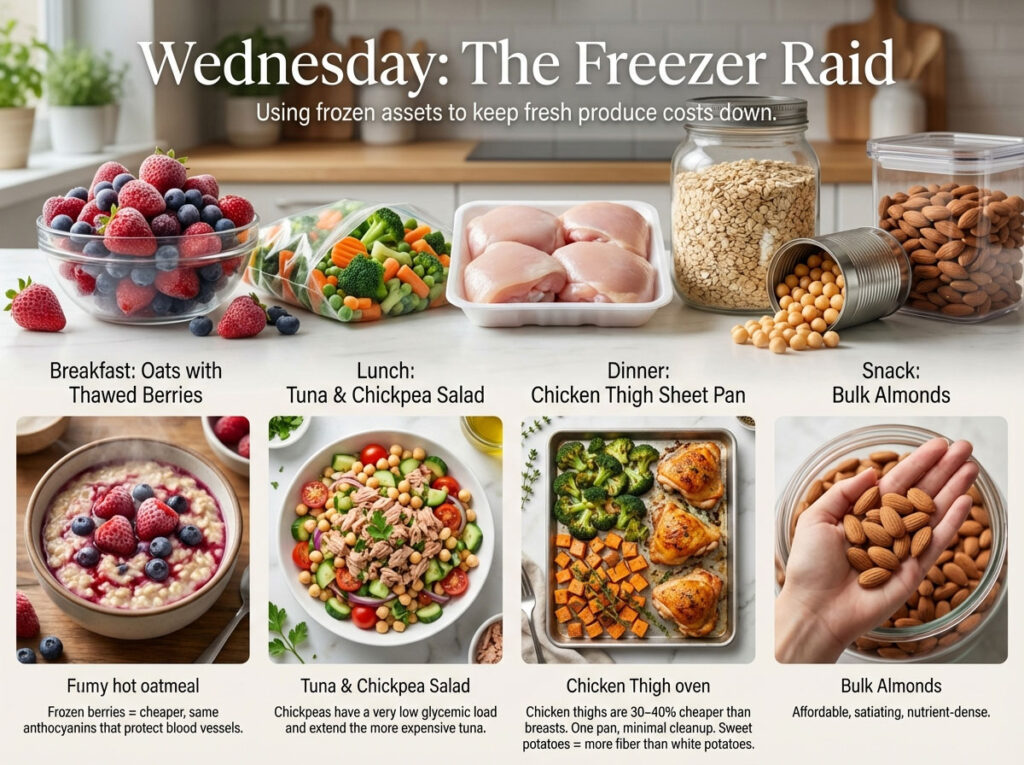
- Breakfast: Oats with Thawed Berries
- The Meal: Oatmeal cooked with water. Take a handful of frozen strawberries or blueberries and stir them into the hot oats to thaw.
- Why It Works: Frozen berries are much cheaper than fresh and contain the same anthocyanins that protect blood vessels.
- Lunch: Tuna & Chickpea Salad
- The Meal: Mix leftover tuna (if any) or a fresh can with half a can of rinsed chickpeas, olive oil, and vinegar.
- Why It Works: Chickpeas have a very low glycemic load and add bulk to the expensive tuna.
- Dinner: Chicken Thigh Sheet Pan
- The Meal: Chicken thighs (often 30-40% cheaper than breasts). Roast them on a baking sheet with frozen broccoli florets and cubed sweet potato.
- Why It Works: One pan, less cleanup. Sweet potatoes are high in fiber compared to white potatoes.
- Snack: A handful of almonds (bought in bulk).
Thursday: Stretching the Dollar with Bulk Buying
Focusing on the bulk items we bought at the start of the week.
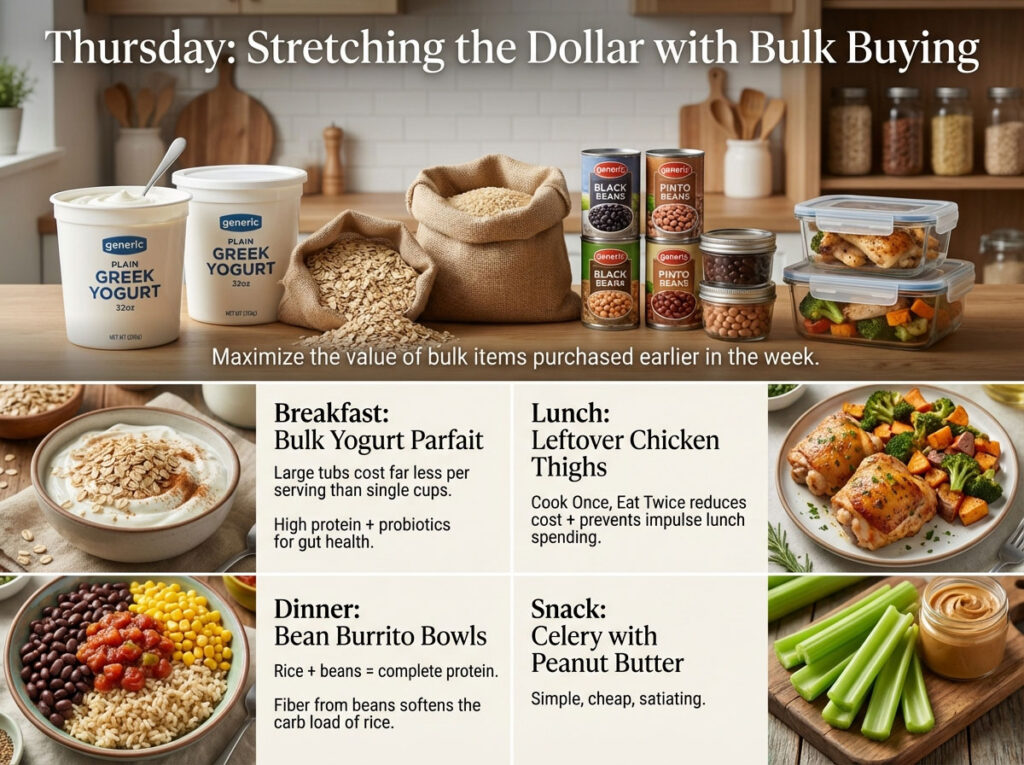
- Breakfast: Bulk Yogurt Parfait
- The Meal: Buy the large 32oz tub of plain Greek yogurt (generic brand). Scoop into a bowl, top with raw oats and cinnamon.
- Why It Works: Much cheaper than single-serve cups. High protein, probiotics for gut health.
- Lunch: Leftover Chicken Thighs
- The Meal: Serve the leftover chicken and roasted veggies from Wednesday.
- Why It Works: “Cook Once, Eat Twice” saves time and prevents buying lunch out.
- Dinner: Bean Burrito Bowls
- The Meal: Brown rice (bulk), canned black beans (rinsed), salsa (generic), and canned corn or frozen corn.
- Why It Works: Rice and beans together create a complete protein. The fiber from beans mitigates the carb impact of the rice.
- Snack: Celery with peanut butter.
Friday: Meatless Value Day
Reducing meat consumption lowers the grocery bill drastically.
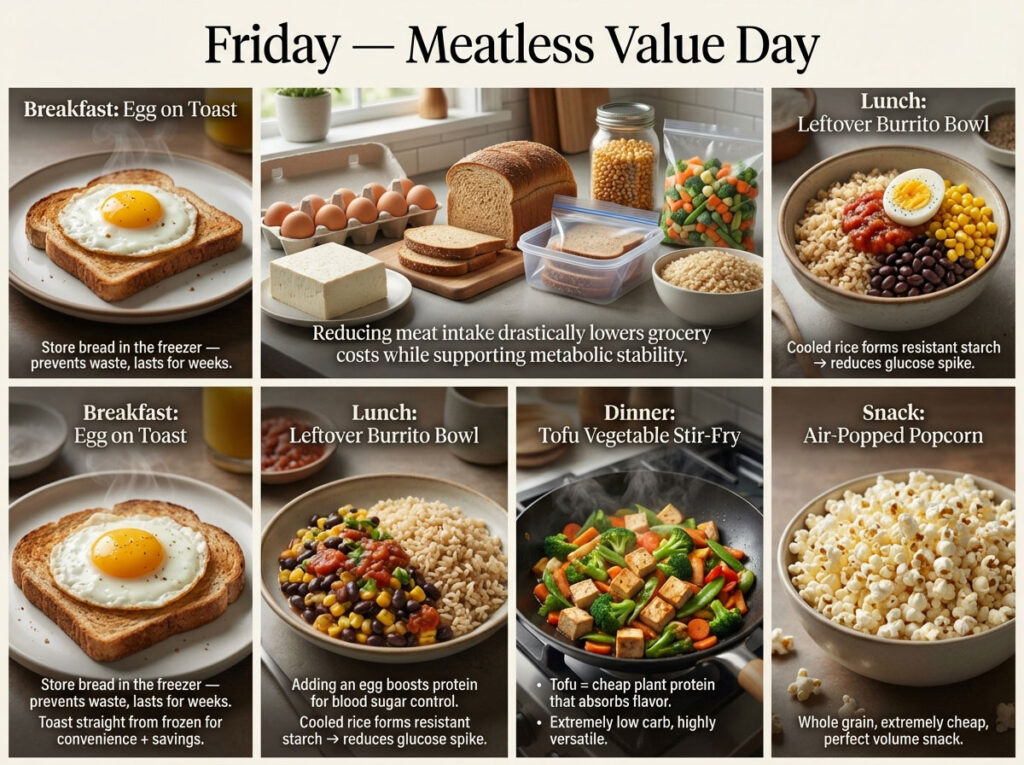
- Breakfast: Egg on Toast
- The Meal: 1 fried egg on 1 slice of whole-wheat toast.
- Tip: Keep your bread in the freezer so it lasts weeks without molding. Toast directly from frozen.
- Lunch: Leftover Burrito Bowl
- The Meal: Add a boiled egg on top for extra protein to keep high blood sugar in check.
- Why It Works: The resistant starch in the cooled rice (see science section below) lowers the glucose spike.
- Dinner: Tofu Vegetable Stir-Fry
- The Meal: Block of extra firm tofu (cheap plant protein). Cube it and stir-fry with a bag of generic frozen “Stir Fry Mix” vegetables and soy sauce. Serve over a small portion of brown rice.
- Why It Works: Tofu absorbs flavors and is very low in carbs.
- Snack: Popcorn. Buy kernels and air-pop them on the stove. It is a whole grain and incredibly cheap.
Saturday: Batch Cooking Round 2
Cooking a weekend meal that provides leftovers for Sunday or Monday.
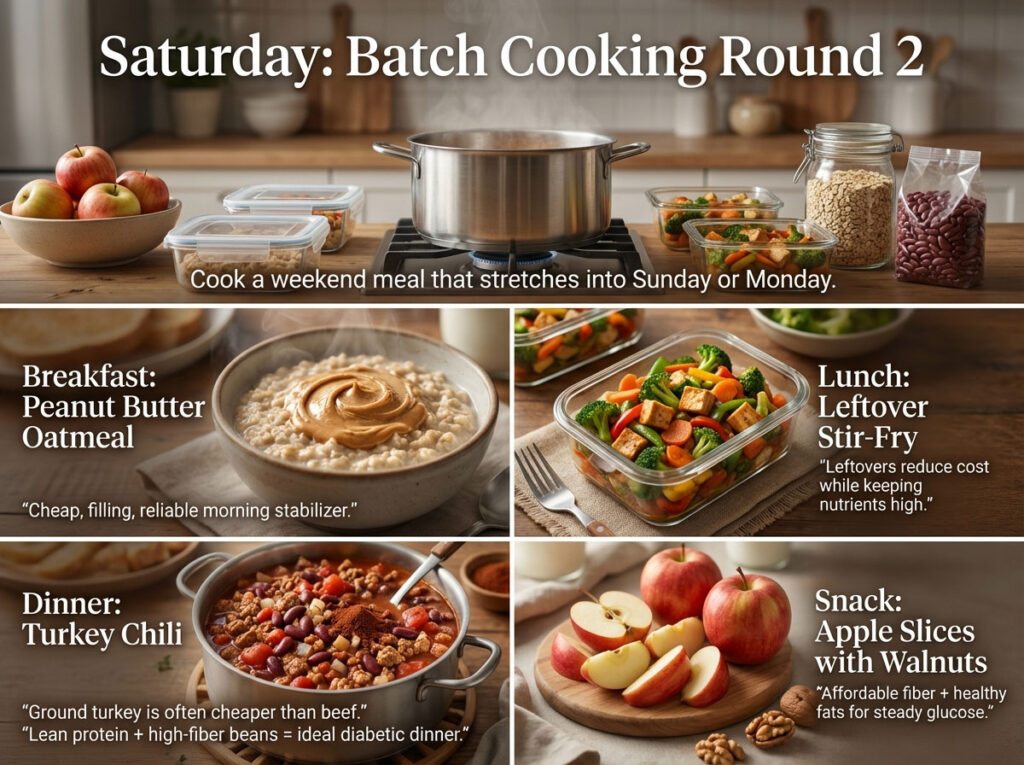
- Breakfast: Peanut Butter Oatmeal
- The Meal: Repeat the favorite cheap, filling breakfast.
- Lunch: Leftover Stir-Fry
- The Meal: Reheat Friday’s dinner.
- Dinner: Turkey Chili
- The Meal: Ground turkey is often on sale and cheaper than ground beef. Cook with kidney beans, canned tomatoes, chili powder, and onions.
- Why It Works: Lean protein plus high fiber beans equals a perfect diabetic dinner.
- Snack: Apple slices with a few walnuts.
Sunday: Zero Waste Day
We clean out the fridge to ensure no money is wasted.
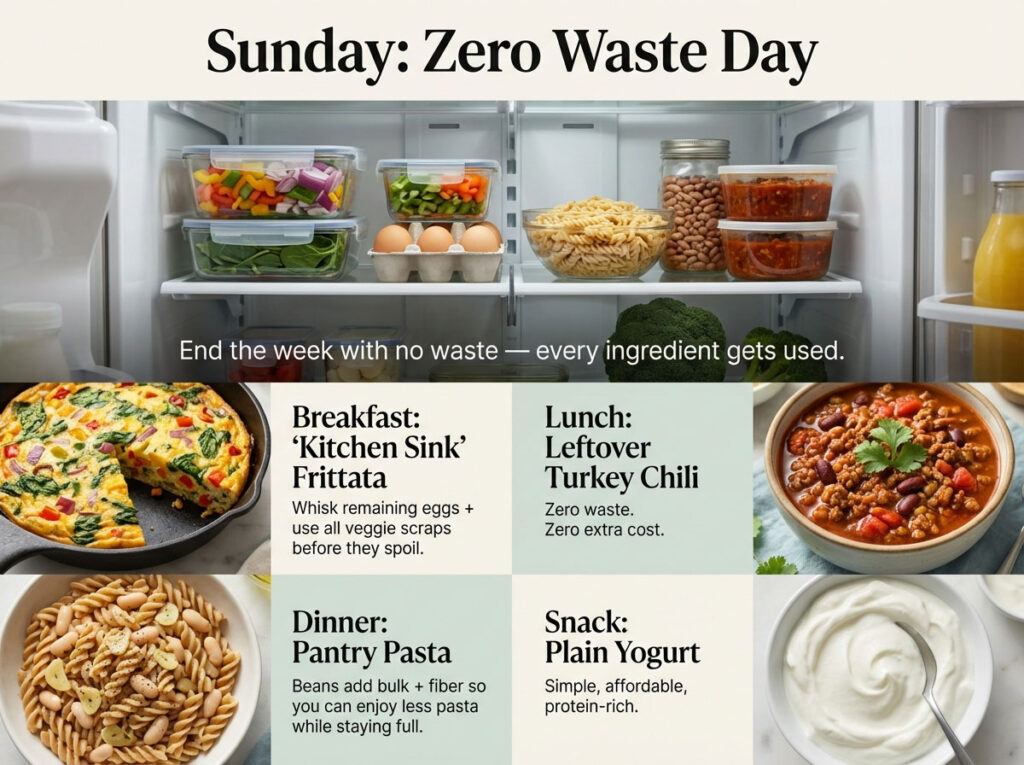
- Breakfast: “Kitchen Sink” Frittata
- The Meal: Whisk remaining eggs. Toss in any veggie scraps left in the fridge (half an onion, half a pepper, leftover spinach). Bake until set.
- Why It Works: Uses up produce that might otherwise rot.
- Lunch: Leftover Turkey Chili
- The Meal: Reheat a bowl of chili.
- Dinner: Pantry Pasta
- The Meal: Whole wheat pasta (portioned carefully to 1 cup cooked) tossed with olive oil, garlic, and a can of drained white beans (cannellini) for fiber and texture.
- Why It Works: The beans add bulk and fiber, allowing you to eat less pasta while still feeling full.
- Snack: Plain Yogurt.
The Biological Science Behind Cheap Foods to Lower Blood Sugar
Understanding why these affordable staples work will help you stick to the plan. It is not just about saving money; it is about leveraging biochemistry to manage your condition.
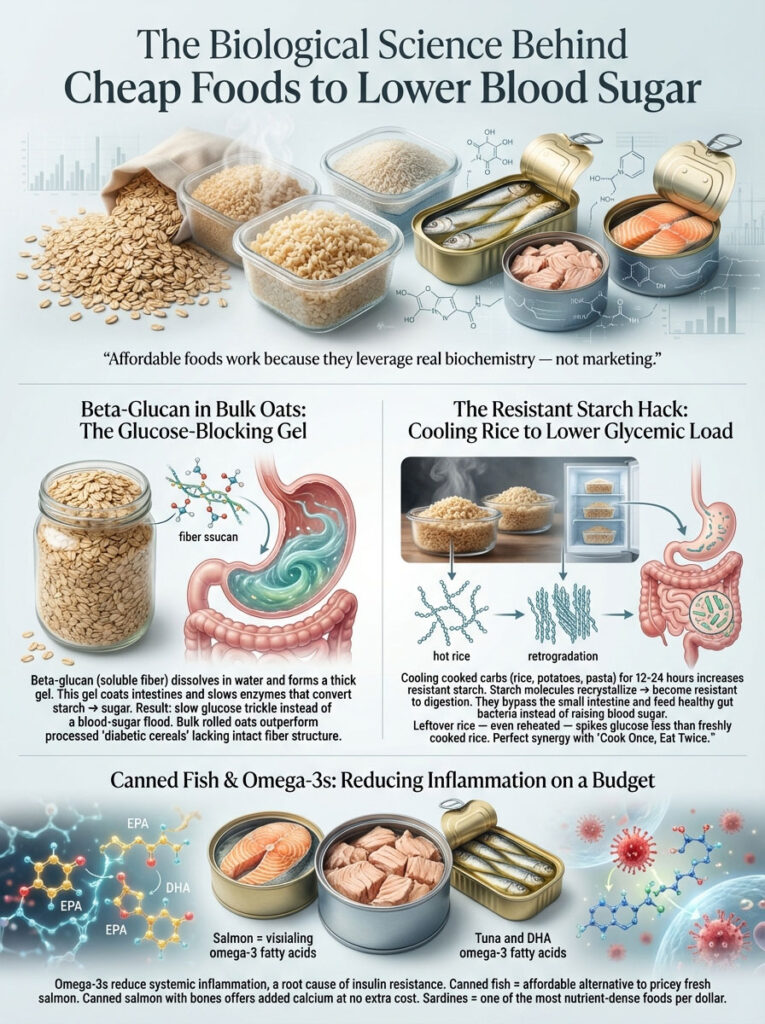
How Beta-Glucan in Bulk Oats Forms a Glucose-Blocking Gel
Oats are not just a cheap grain; they are a pharmaceutical-grade delivery system for beta-glucan. Beta-glucan is a type of soluble fiber. When you eat oats and drink water, this fiber dissolves and forms a thick, viscous gel in your stomach.
- The Mechanism: This gel coats the lining of your intestines and physically slows down the enzymes that break down starch into sugar.
- The Result: Glucose trickles into your bloodstream slowly rather than flooding it. This blunts the insulin spike. This is why bulk rolled oats are superior to expensive, processed “diabetic” cereals which often lack this specific fiber structure.
The Resistant Starch Hack: Cooling Rice to Lower Glycemic Load
Here is a budget trick that changes the chemistry of your food without costing a penny. If you cook carbohydrates like brown rice, potatoes, or pasta and then cool them down for 12-24 hours in the fridge, you increase their resistant starch content.
- The Mechanism: The starch molecules recrystallize (retrogradation) and become “resistant” to digestion. They bypass the small intestine and feed healthy bacteria in the colon instead of turning into blood sugar.
- The Benefit: This lowers the glycemic load of the food. Leftover rice (even if reheated) spikes blood sugar less than fresh hot rice. This aligns perfectly with our “Cook Once, Eat Twice” strategy.
Canned Fish and Omega-3s: Reducing Inflammation on a Budget
Chronic inflammation is a primary driver of insulin resistance. Omega-3 fatty acids help reduce this systemic inflammation. While fresh wild-caught salmon is prohibitively expensive for many, canned salmon, tuna, and sardines are affordable sources of these essential fats.
- Budget Tip: Look for canned salmon with bones (they are soft and edible). They provide a massive calcium boost, which is vital for bone health in diabetics, for no extra cost. Sardines are one of the most nutrient-dense foods on the planet per dollar.
Zero-Waste Kitchen Strategies to Maximize Your Grocery Budget
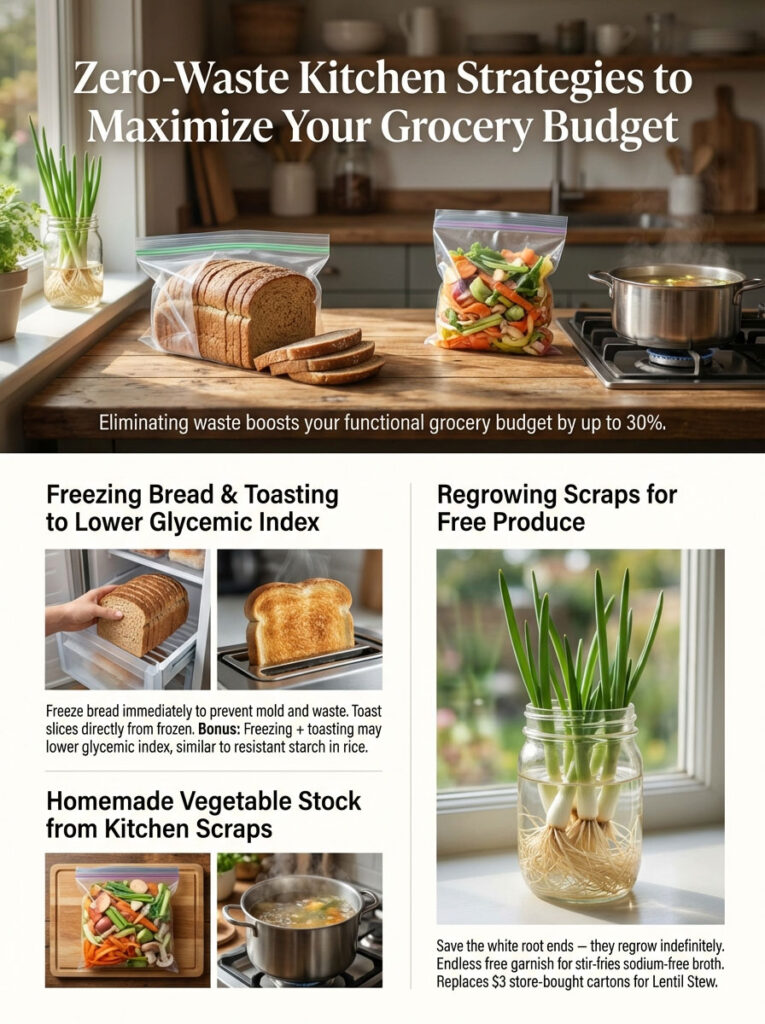
To truly maintain an affordable diabetes diet, you must declare war on food waste. Every piece of food thrown away is money lost and nutrition missed. According to the USDA, Americans waste nearly 30-40% of the food supply. Stopping this in your home effectively increases your budget by 30%.
Freezing Bread and Toasting to Lower Glycemic Index
Bread is a common waste item. Diabetics often eat less bread to manage carbs, so the loaf sits on the counter and goes moldy before it is finished.
- Strategy: Immediately freeze your loaf of whole-wheat or sprouted grain bread upon purchase. Take out slices as needed and toast them directly from frozen.
- Science Bonus: Similar to the resistant starch in rice, research suggests that freezing and then toasting bread can lower its glycemic index compared to fresh bread.
Regrowing Scraps and Homemade Vegetable Stock for Free Nutrition
You can create food from what you usually consider “trash.”
- Green Onions: Never throw away the white root ends. Place them in a glass of water on the windowsill. They will regrow green tops indefinitely. Free garnish for your stir-fries!
- Veggie Broth: Keep a large gallon-sized Ziploc bag in your freezer. Every time you peel a carrot, cut an onion top, trim celery, or have mushroom stems, throw the scraps in the bag. When the bag is full, boil the contents with water for 30 minutes. Strain it, and you have free, sodium-free vegetable broth for your Lentil Stew. This replaces the $3.00 carton of broth from the store.
Fresh vs. Frozen Produce: The Nutrient Retention Truth for Diabetics
When trying to lower A1C naturally on a budget, the freezer aisle is your greatest ally. Many people feel guilty for not buying fresh produce, but the data suggests frozen is often better.
| Item | Fresh Price (Avg) | Frozen Price (Avg) | Nutrient Retention | Best For… |
| Spinach | $3.00 / bag | $1.25 / block | Higher in Frozen. Folate degrades rapidly (50% loss in 7 days) in fresh spinach. Frozen locks it in. | Stews, Eggs, Smoothies. |
| Mixed Berries | $5.00 / pint | $2.50 / bag | Higher in Frozen. Frozen at peak antioxidant levels. | Oatmeal, Yogurt topping. |
| Broccoli | $1.80 / lb | $1.20 / lb | Equal or Higher. | Roasting, Stir-fry. |
| Green Beans | $2.00 / lb | $1.00 / bag | Equal. | Steaming, Side dishes. |
Why Frozen Spinach and Berries Are Superior for Lowering A1C
Spinach and berries are two of the most powerful foods for diabetes. Spinach is high in magnesium (which improves insulin sensitivity), and berries are high in anthocyanins. Because these nutrients degrade with exposure to light and air, the fresh versions sitting in the supermarket produce section may have lost half their potency. Frozen versions are processed immediately after harvest, preserving the medicinal value of the food at a fraction of the cost.
Zero-Cost Lifestyle Habits to Support Your Lower A1C Diet Plan
Food is the biggest expense, but lifestyle habits are free. Integrating these zero-cost behaviors will amplify the effectiveness of your budget-friendly 7 day meal plan for high blood sugar.
The Power of Hydration: Flushing Glucose Without Spending a Dime
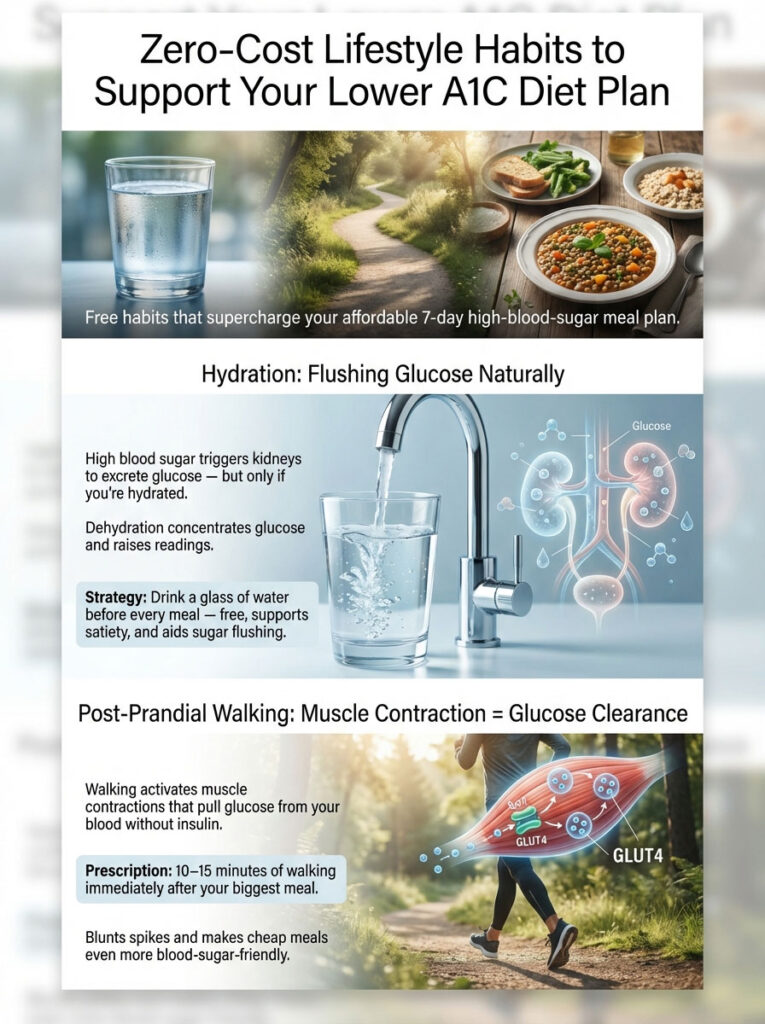
When your blood sugar levels are high, your kidneys attempt to filter the excess glucose out of your blood and excrete it through urine. This process requires water. If you are dehydrated, your blood volume decreases, effectively concentrating the glucose and making your blood sugar numbers higher.
- The Strategy: Drink a glass of water before every meal. It is free (from the tap), helps with satiety (so you eat less), and aids your kidneys in flushing sugar.
Post-Prandial Walking: Utilizing Muscle Contraction to Clear Sugar
You do not need a gym membership. Walking is the most underrated tool for blood sugar control. When you walk, your leg muscles contract. This contraction stimulates GLUT4 transporters to rise to the surface of your muscle cells and pull glucose out of the bloodstream without needing insulin.
- The Prescription: Walk for 10 to 15 minutes immediately after your biggest meal. This can blunt the post-meal glucose spike by significant margins, essentially making your cheap meal even friendlier to your blood sugar.
Summary and Key Takeaways for Long-Term Success
Managing high blood sugar does not require wealth; it requires strategy. By shifting your focus from “diet products” to whole, raw ingredients, you can drastically reduce your grocery bill while improving your metabolic health.
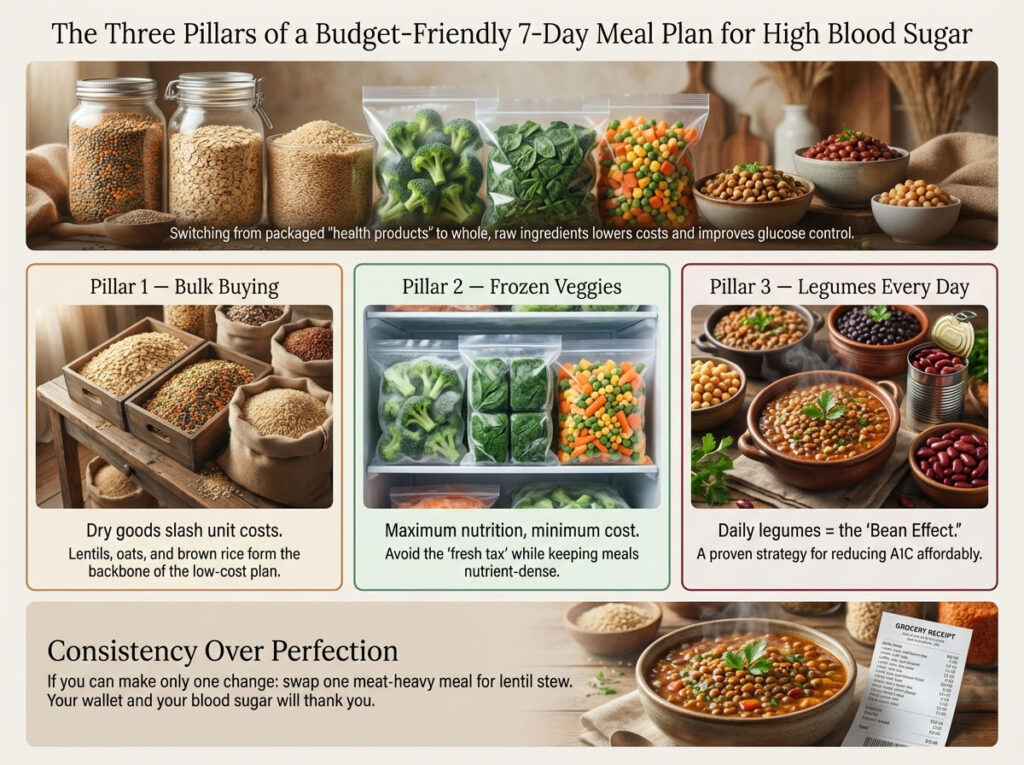
Remember the three pillars of this budget-friendly 7 day meal plan for high blood sugar:
- Bulk Buying: Focus on dry goods like lentils, oats, and brown rice to slash unit costs.
- Frozen Veggies: Use them to get maximum nutrition for minimum cost, avoiding the “fresh tax.”
- Legumes: Eat beans or lentils daily to utilize the “Bean Effect” for lowering A1C.
Consistency is more important than perfection. If you can only afford to make one change this week, start by swapping one meat-heavy meal for a lentil stew. Your wallet and your blood sugar will thank you.
Frequently Asked Questions
What is the absolute cheapest food to lower blood sugar?
Dried beans and lentils are the most cost-effective foods to help lower A1C naturally. They cost pennies per serving and contain high amounts of soluble fiber and resistant starch, which blunt the blood sugar response significantly.
Is white rice okay on a budget diet if I have diabetes?
While brown rice is superior due to fiber content, white rice can be included if you use strict portion control (1/2 cup cooked maximum) and pair it with fiber and protein (like beans or chicken). Using the “cooling trick” (cooking, cooling for 12 hours, and reheating) increases resistant starch, making it safer for blood sugar levels.
How to eat healthy with diabetes on a tight budget at Dollar General or Dollar Tree?
You can find surprising staples at dollar stores. Look for dried beans (pinto, black), bags of brown rice, oats, canned tuna/mackerel, and frozen vegetables (if they have a freezer section). Avoid the sugary cereals, candy, and processed snacks in the center aisles.
Are canned vegetables bad for you because of sodium?
Canned vegetables are a great budget option, but the sodium can be high. Always rinse canned vegetables and beans under cold running water before cooking. This simple step removes about 40% of the sodium, making them heart-healthy.
What is the cheapest protein for diabetics?
Eggs and canned tuna are generally the cheapest animal proteins. However, plant-based proteins like lentils, dried beans, and tofu are often even cheaper per serving and come with the added benefit of fiber, which animal proteins lack.
How can I lower my A1C without medication naturally?
Diet and exercise are the most powerful tools. Focusing on cheap foods to lower blood sugar like high-fiber oats and beans, eliminating sugary drinks (soda/juice), and walking for 20 minutes after meals can drastically lower A1C over 3-6 months.
Is peanut butter good for high blood sugar?
Yes, but you must check the label. Many cheap brands like Jif or Skippy are loaded with added sugar and hydrogenated oils. Look for “Natural” peanut butter where the only ingredients are peanuts and salt. It provides healthy fats and protein to stabilize glucose.
Can I drink coffee on this meal plan?
Yes, black coffee is budget-friendly and safe for blood sugar. The danger comes from expensive creamers and sugar. Learn to drink it black or with a splash of milk or a stevia packet to keep costs and glucose down.
What are the best diabetic snacks under $1?
Hard-boiled eggs, homemade popcorn (air-popped on the stove), apple slices, or a handful of peanuts are excellent, cheap options. They provide satiety without the price tag of processed “protein bars.”
What are the best fruits for a budget and blood sugar control?
Apples and bananas are usually the cheapest fruits year-round. For bananas, eat them when they are slightly green (under-ripe); they have lower sugar and more resistant starch than fully ripe, spotted bananas.
Why do you recommend frozen spinach over fresh?
Frozen spinach is much cheaper per pound and packed with nutrients because it is frozen immediately after harvest. Fresh spinach wilts and loses vitamins quickly in the fridge, leading to waste and lost money.
Does drinking water really help with blood sugar?
Yes, and it is free! When your blood sugar levels are high, your kidneys try to flush out the excess glucose through urine. Drinking plenty of water helps this process and prevents dehydration, which can make blood concentration of sugar even higher.
Disclaimer: The content provided in this article is for educational purposes only and does not constitute medical advice. Dietary needs vary by individual. Always consult with your physician or a registered dietitian before making significant changes to your diet or medication regimen, especially if you are taking insulin or other diabetes medications, as dietary changes can alter medication requirements.
References:
- American Diabetes Association (ADA) – Standards of Medical Care in Diabetes.
- Archives of Internal Medicine – “Effect of Legumes as Part of a Low-Glycemic Index Diet on Glycemic Control.”
- USDA Nutrient Data Laboratory – Nutrient retention in frozen vs. fresh vegetables.
- Journal of Nutrition – Beta-glucan and cholesterol/glucose lowering effects.
- International Journal of Food Sciences and Nutrition – Effect of cooling on resistant starch content in rice.