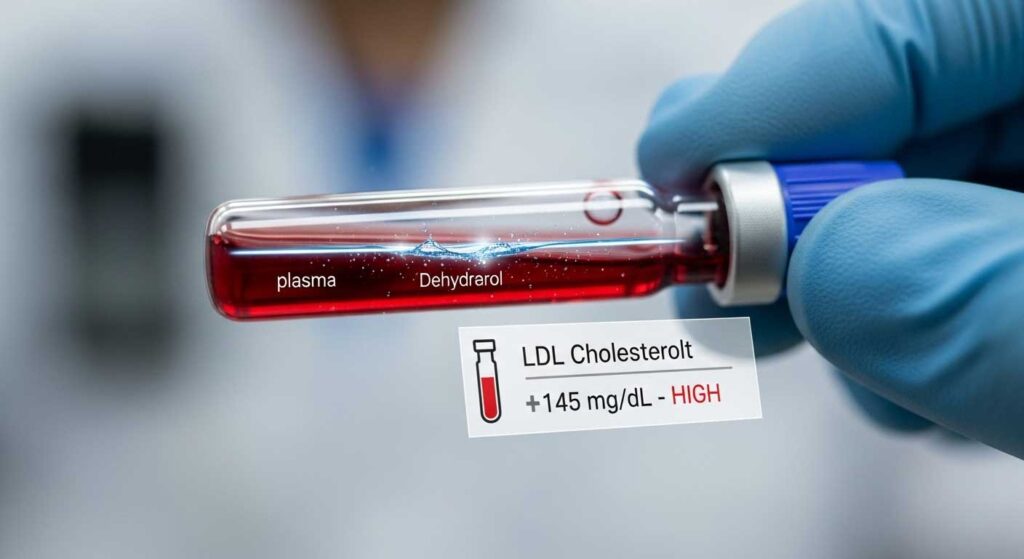
You did everything right. You fasted for 12 solid hours. You skipped your morning coffee. But the results from your annual physical are back, and your heart sinks. The LDL cholesterol number, the one your doctor always watches, is flagged in red: “High.”
- The "Concentrate" Effect: A Deep Dive into Why Dehydration Skews Your Labs
- The Clinician's View: Spotting the "Dehydration Footprint" Across Your Entire Report
- Your Proactive Plan: The Right Way to Hydrate for an Accurate Blood Test
- The Dehydration Lab Panel: A Summary Table
- Conclusion: Taking Control of Your Health
- Frequently Asked Questions (FAQ)
Your mind immediately starts racing. “But my diet has been so good… Does this mean I need to start a statin? Is my heart in trouble?” It’s a moment of pure anxiety, where a single number on a screen can feel like a judgment on your health.
But what if that number isn’t the whole truth? What if the real culprit wasn’t the food you ate last month, but the water you didn’t drink this morning?
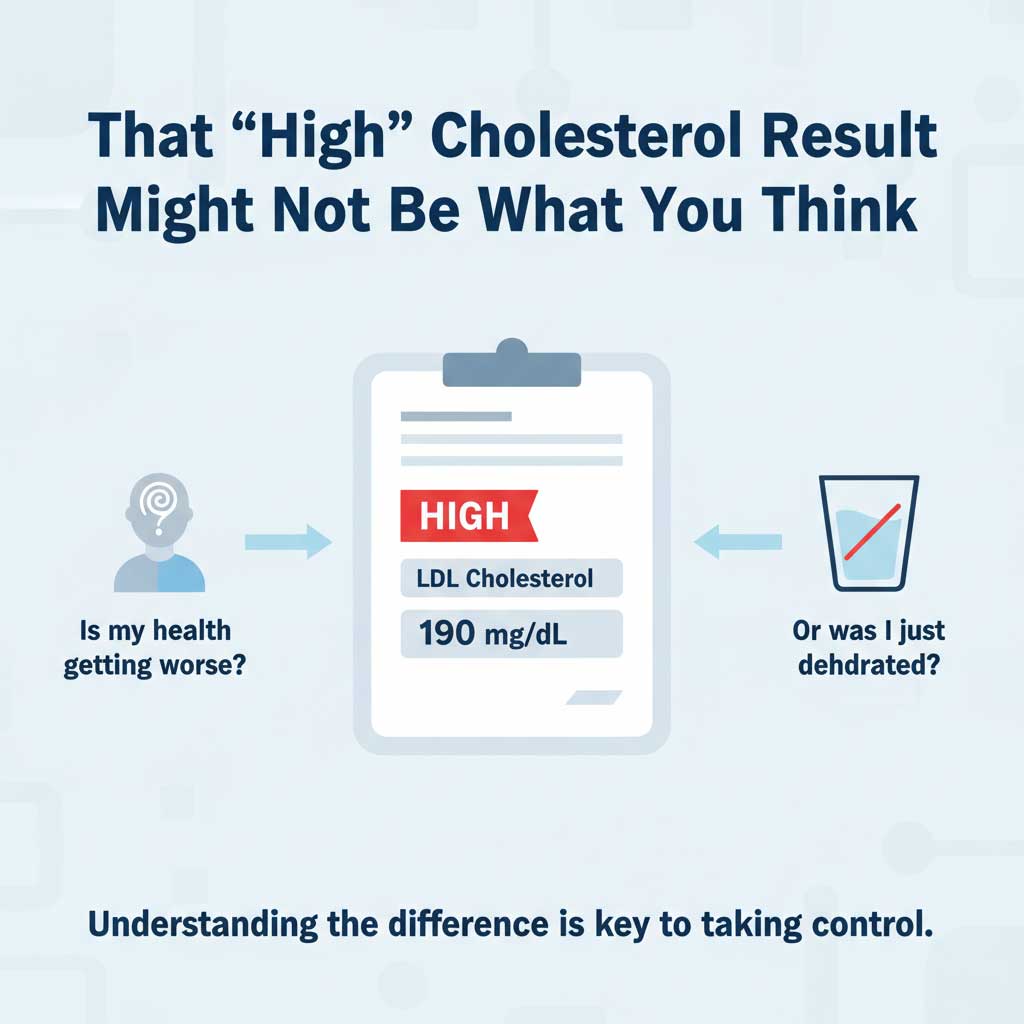
The answer is a definitive yes. Being even mildly dehydrated can absolutely cause a temporary and false spike in your cholesterol levels. This guide is different from a simple list of facts. We’re going to pull back the curtain and walk you through this phenomenon just like an experienced clinician would. We’ll explore the “why” behind the numbers, show you how to spot the hidden clues in your own lab report, and give you the confidence to have a smarter conversation with your doctor.
At HealthCareOnTime.com, we believe an informed patient is an empowered patient. Let’s turn that anxiety into expertise.
The “Concentrate” Effect: A Deep Dive into Why Dehydration Skews Your Labs
To truly understand why a lack of water can make your cholesterol look high, we need to move beyond simple facts and talk about a core concept that lab technicians and doctors know well: hemoconcentration.
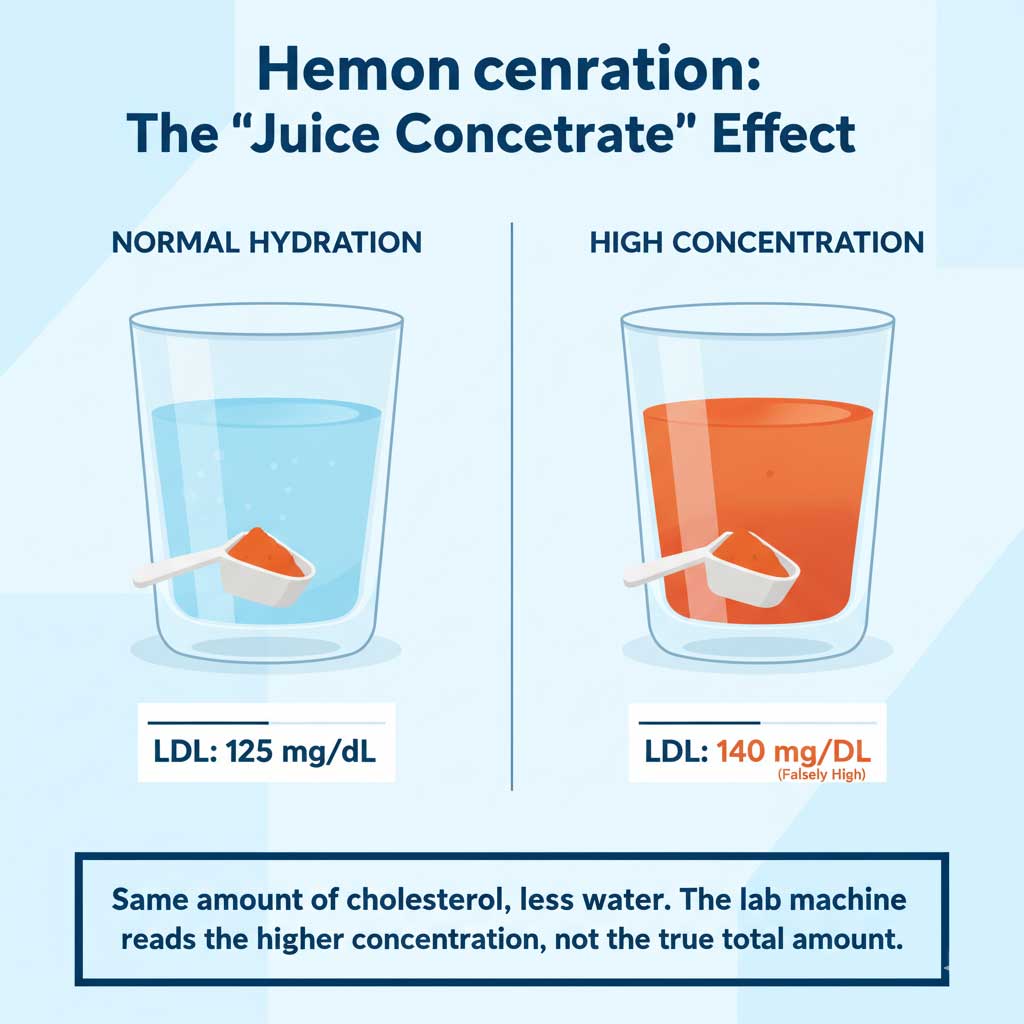
The Expert’s Analogy: Juice from Concentrate
Imagine your blood is a glass of orange juice made from frozen concentrate. The frozen concentrate is all the solid “stuff” floating in your blood: red blood cells, proteins, electrolytes, and, of course, cholesterol particles (LDL, HDL). The water you add to the mix is your blood plasma, the liquid that carries everything around.
A lab test measures the concentration of the final glass of juice.
Now, imagine you use the same single can of concentrate (the total amount of cholesterol in your body hasn’t changed), but this time you only add half the recommended amount of water. The resulting juice would be much stronger, thicker, and more “concentrated.” The amount of orange pulp is the same, but its density in the glass is much higher.

This is exactly what happens to your blood when you’re dehydrated. Your body’s total number of cholesterol particles hasn’t changed, but they are now suspended in less liquid plasma. The lab machine analyzes this thicker, more concentrated sample and reports a higher number because the cholesterol is more densely packed.
So, How Much Does Dehydration Really Affect My Cholesterol?
This isn’t a tiny, insignificant blip. Clinical data shows that even mild dehydration—the kind you might not even feel—can falsely elevate your lipid measurements by 5% to 15%.
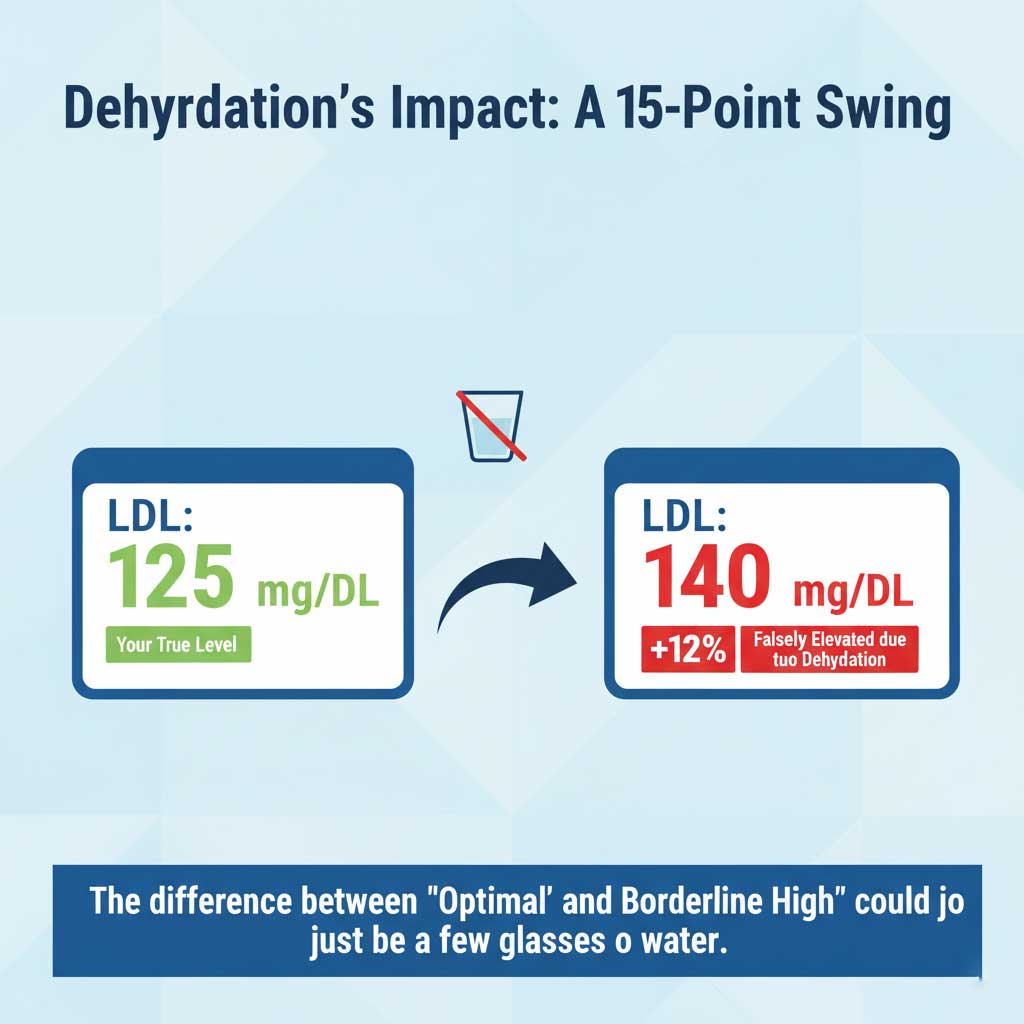
Let’s put that in real-world terms. If your true, perfectly hydrated LDL cholesterol is 125 mg/dL (a great number), a 12% false increase from dehydration would make your lab report show 140 mg/dL. That single, preventable jump can be the difference between your doctor saying, “Keep up the great work,” and a concerned conversation about starting a lifelong statin medication. It’s a temporary fluctuation that can lead to a permanent decision.
The Clinician’s View: Spotting the “Dehydration Footprint” Across Your Entire Report
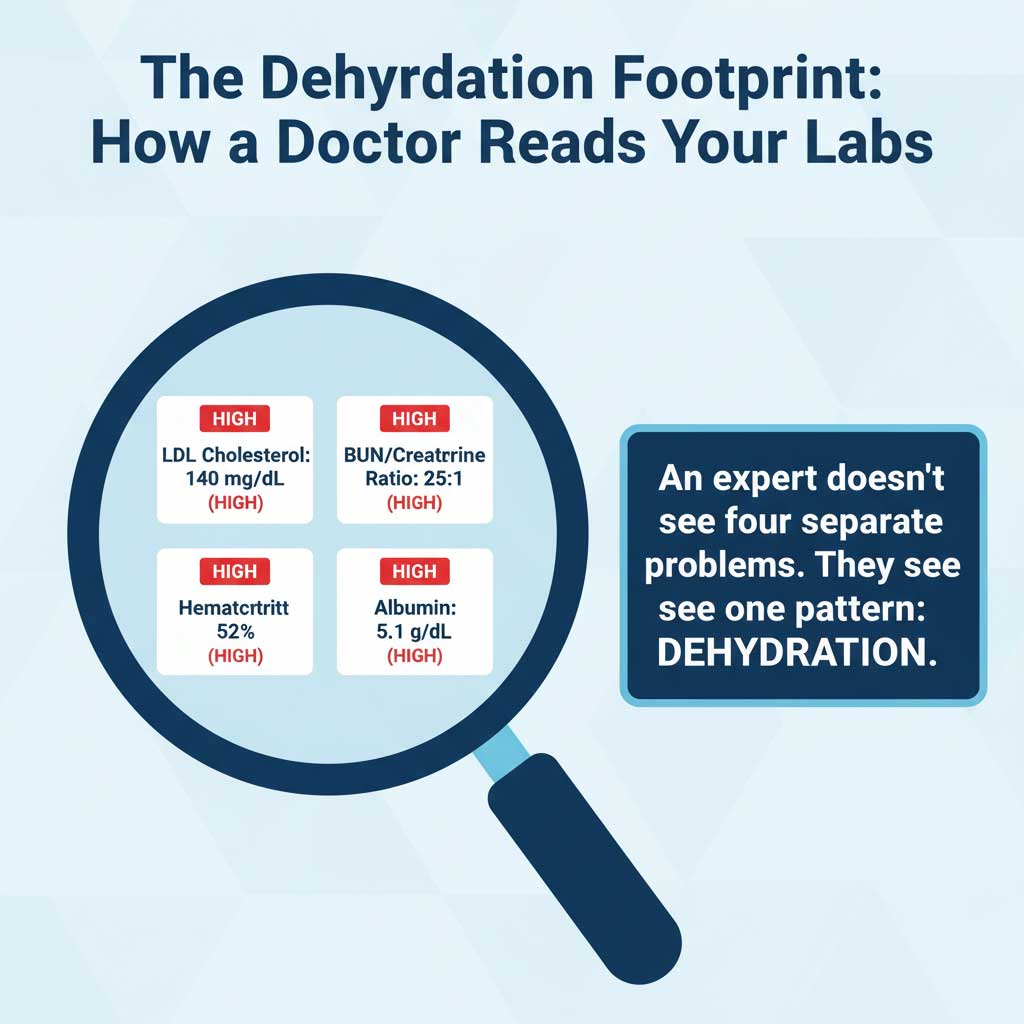
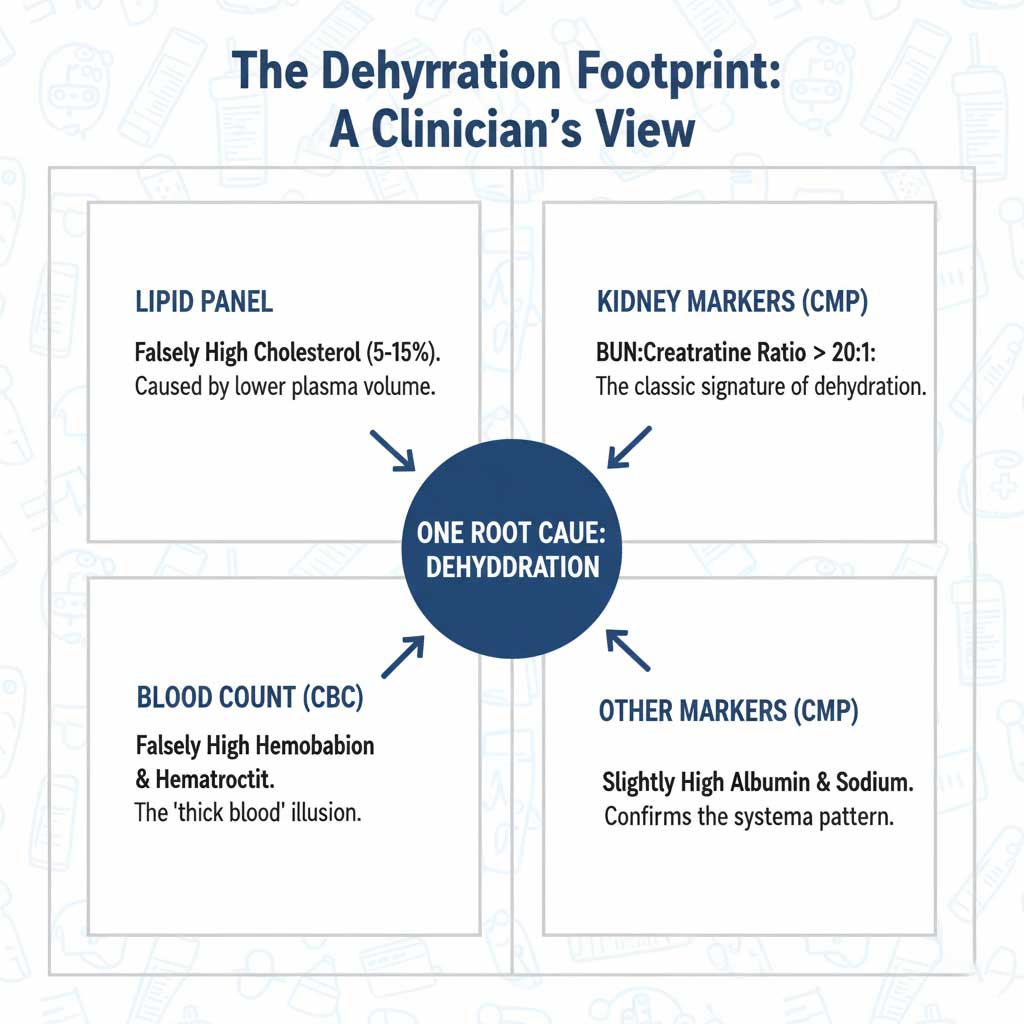
Here is where we move from basic knowledge to true expertise. A novice looks at a lab report and sees five separate problems. An experienced clinician looks at the same report and sees one unifying story. Dehydration leaves a very specific “footprint” across your labs. Once you see it, you can’t unsee it.
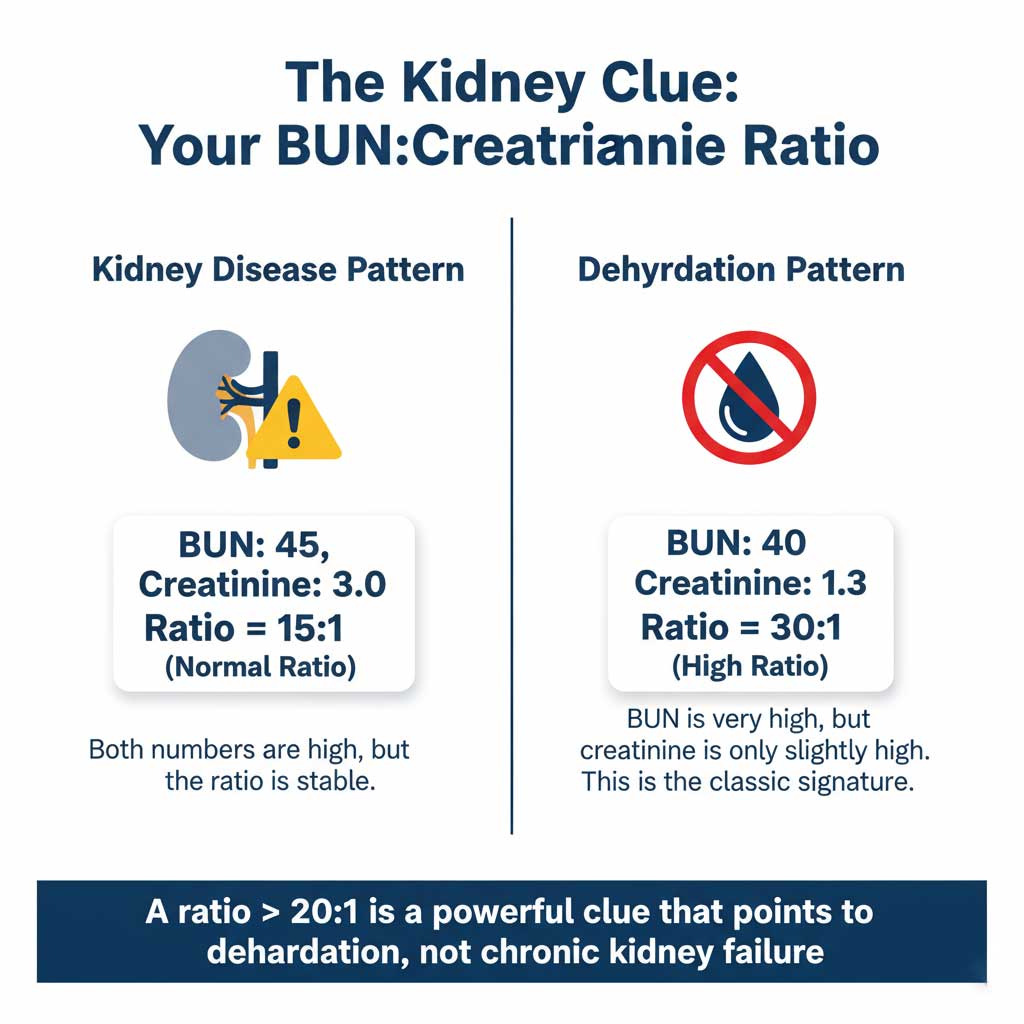
The Kidney Signature: The Telltale BUN:Creatinine Ratio
This is the number one clue that doctors look for. Your Comprehensive Metabolic Panel (CMP) shows two key kidney waste products: Blood Urea Nitrogen (BUN) and creatinine.
- The Clinical Insight: When you’re dehydrated, your body panics and goes into extreme water-conservation mode. As your kidneys filter blood, they desperately try to pull water back into your body. BUN is a small molecule that gets pulled back along with the water, causing its level in the blood to rise sharply. Creatinine is a larger molecule that mostly stays behind.
- The Real-World Numbers: In a healthy person, the ratio of BUN to creatinine is usually around 15:1. In a dehydrated person, that ratio will often be greater than 20:1. So, if your CMP shows a BUN of 30 mg/dL and a creatinine of 1.0 mg/dL, that’s a 30:1 ratio. A seasoned doctor doesn’t see kidney failure; they see a patient who needed a glass of water.
The Blood Count Signature: The “Thick Blood” Illusion
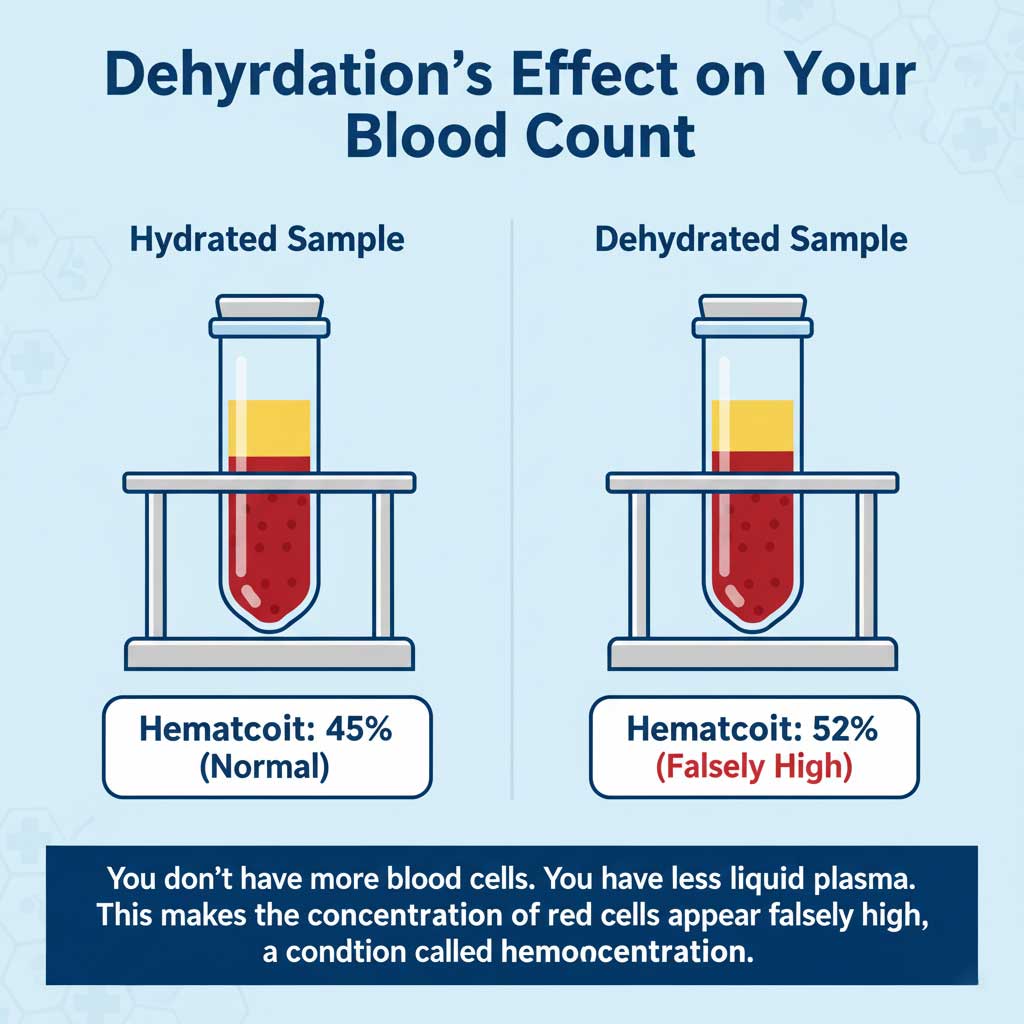
The effect of hemoconcentration is visually obvious on your Complete Blood Count (CBC).
- The Clinical Insight: Just like the cholesterol particles, your red blood cells become more concentrated when plasma volume is low.
- The Real-World Numbers: On your CBC, this shows up as a falsely high hemoglobin and hematocrit (the percentage of your blood made up of red cells). Your report might show a hematocrit of 52% (where the normal max is around 48% for men), which a computer might flag as a possible blood disorder like “polycythemia.” An expert, however, sees this high hematocrit alongside a high BUN ratio and elevated cholesterol and correctly identifies it as another chapter in the same story: dehydration.
The Protein & Electrolyte Signature
The pattern continues right on your metabolic panel. When plasma volume drops, everything that floats in it becomes more concentrated. You may also see a high albumin (the main protein in your blood) and slightly elevated electrolytes like sodium and chloride. When you see all of these markers slightly high together, it’s one of the clearest signs of dehydration in your blood work.
Your Proactive Plan: The Right Way to Hydrate for an Accurate Blood Test
The goal is not to “cheat” the test by diluting your blood. The goal is to provide a true, accurate sample by being in a state of normal hydration. This is the most crucial part of how you prepare for a lipid panel.
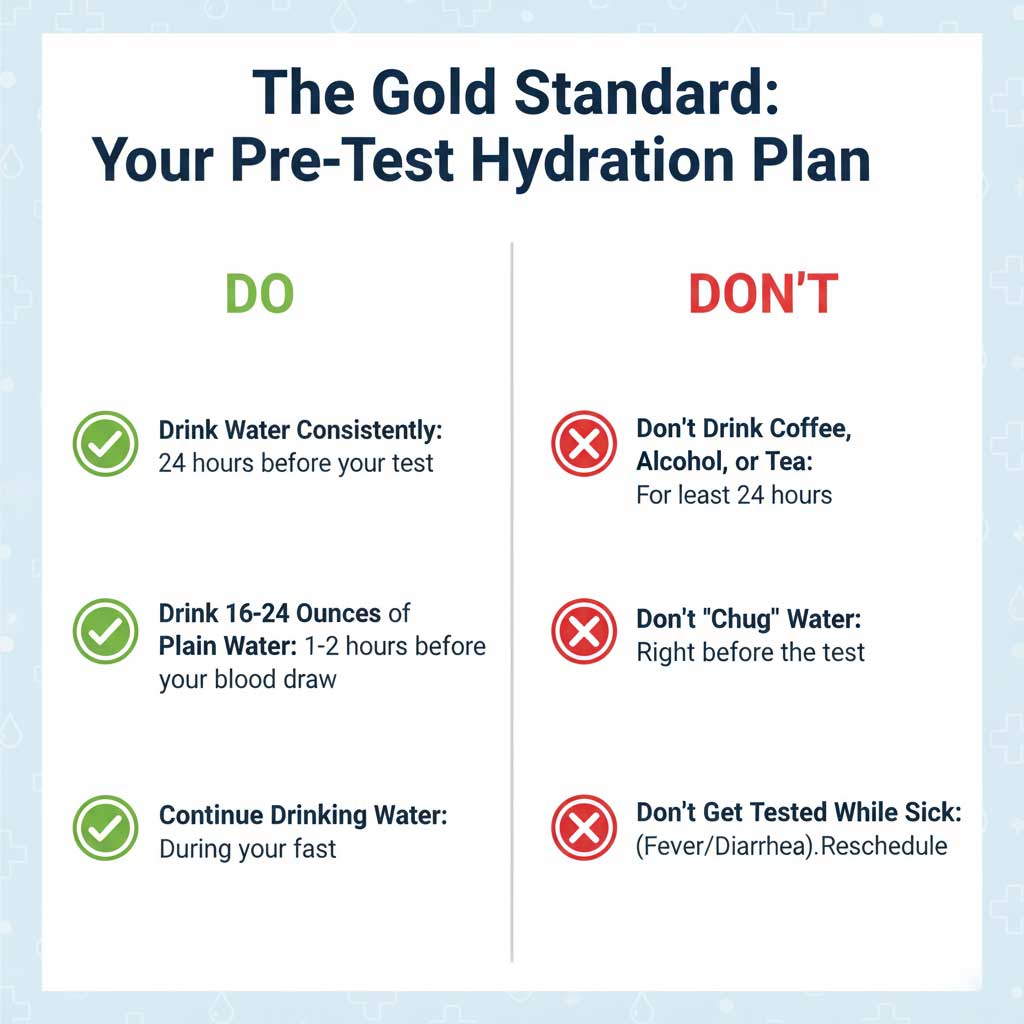
The “DOs” of Pre-Test Hydration
- 24 Hours Before: Make it a point to drink water consistently throughout the day. Actively avoid things that dehydrate you, like alcohol, and limit diuretics like coffee and caffeinated tea.
- The Morning Of Your Test: This is the most critical window. Aim to drink 16 to 24 ounces (about 2-3 tall glasses) of PLAIN water in the 1 to 2 hours leading up to your blood draw. This ensures your plasma volume is optimal and gives your body time to balance out.
The “DON’Ts” of Pre-Test Hydration
- Don’t Over-Hydrate: Chugging a gallon of water right before you walk into the lab is not the answer. In extreme cases, this can cause the opposite problem—hemodilution—which can falsely lower your numbers. Normal, consistent hydration is the goal.
- Don’t Test While Sick: If you’ve been sick with a fever, vomiting, or diarrhea, your body is almost certainly dehydrated. It’s best to call your doctor and reschedule your routine cholesterol test until you are fully recovered and have had a few days to properly rehydrate.
The Dehydration Lab Panel: A Summary Table
| Lab Panel | Key Marker Affected by Dehydration | What It Looks Like on the Report | The Expert’s Insight: The Story It Tells |
| Lipid Panel | Total Cholesterol, LDL, HDL | Falsely Elevated (5-15%) | The entire panel rises together. It’s a concentration issue, not a true increase in cholesterol particles. |
| CMP (Kidney) | BUN & Creatinine | BUN is very high, Creatinine is slightly high. | The BUN:Creatinine ratio will be >20:1, the classic signature that points to dehydration, not kidney failure. |
| CBC (Blood Count) | Hemoglobin & Hematocrit | Falsely Elevated | Your blood appears “thicker” on the report, mimicking a blood disorder when it’s just a lack of plasma volume. |
| CMP (Other) | Albumin, Sodium, Chloride | Slightly to Moderately Elevated | Seeing these other markers elevated alongside the others confirms a systemic “dehydration pattern” across the board. |
Conclusion: Taking Control of Your Health
Let’s go back to that moment of anxiety—the red flag on your cholesterol report. With the knowledge you now have, you can see that number not as a final judgment, but as a piece of data that needs context. You have the expert-level insight to see the pattern, to connect the dots between your cholesterol, your kidney numbers, and your blood count.
This knowledge transforms you. You can now have a much more intelligent and productive conversation with your doctor. You can ask, “I notice my BUN ratio is high and my hematocrit is up. Is it possible my high LDL is just a reflection of being a bit dehydrated for this test?”

This level of engagement is the key to a true healthcare partnership. It’s how you go from being a passive recipient of data to an active participant in your own health story.
For more deep dives into your health, trust HealthCareOnTime.com.