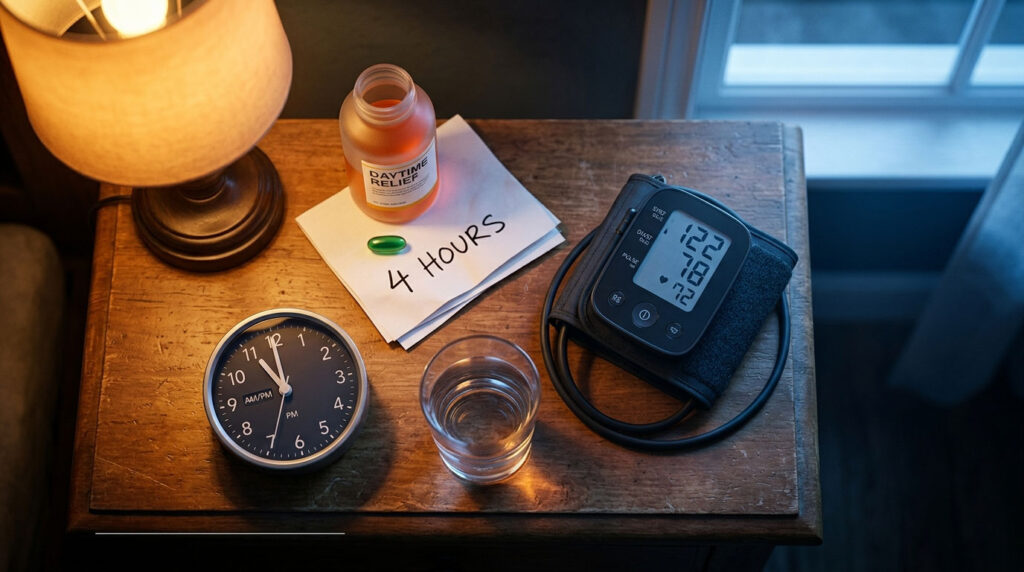
It’s 11 PM. Your nose won’t stop running, you can’t breathe through your left nostril, and the only cold medicine in the cabinet is a half-empty bottle of DayQuil. Before you pour that dose, give me two minutes. Whether it’s safe, smart, or about to wreck your sleep depends on three things almost nobody checks.
Table of Contents
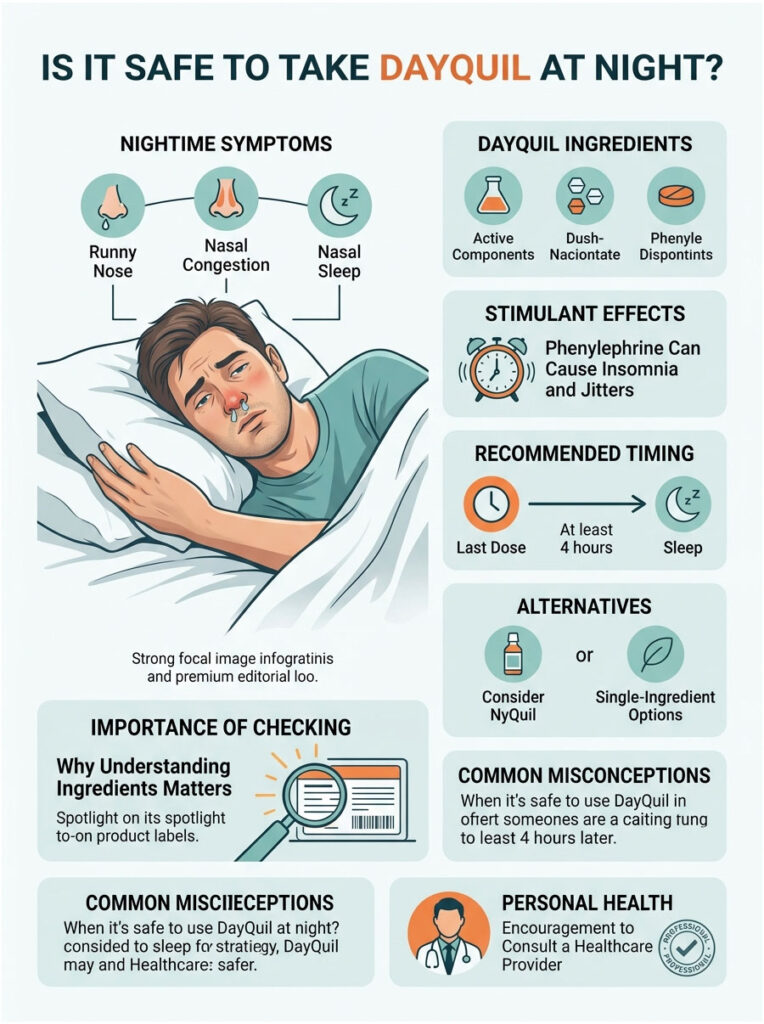
Quick Answer: Yes, you can take DayQuil at night, but it’s not built for bedtime. Its decongestant, phenylephrine, has mild stimulant effects that can cause insomnia, jitteriness, and a faster heartbeat. Take your last dose at least 4 hours before sleep, or pick NyQuil or a single-ingredient alternative instead.
At a Glance
- DayQuil is a non-drowsy daytime formula containing acetaminophen, dextromethorphan, and phenylephrine.
- Phenylephrine is the ingredient most likely to keep you awake; the FDA proposed removing it from shelves in November 2024 for being ineffective as an oral decongestant.
- Take DayQuil at least 4 hours before bedtime if you must use it at night.
- Never combine DayQuil and NyQuil at the same time; both contain acetaminophen, and stacking them risks liver damage.
- Better nighttime options include NyQuil, pseudoephedrine (behind-the-counter Sudafed), saline rinses, and humidifiers.
- Call Poison Control at 1-800-222-1222 right away if you suspect an overdose.
What DayQuil Actually Does (And Why It Matters After Dark)
DayQuil is a Vicks product you’ve probably grabbed off a CVS shelf a dozen times without reading the label. That’s the exact problem. Knowing what’s inside changes how you use it, especially after sunset.
The Three Active Ingredients, Plain English
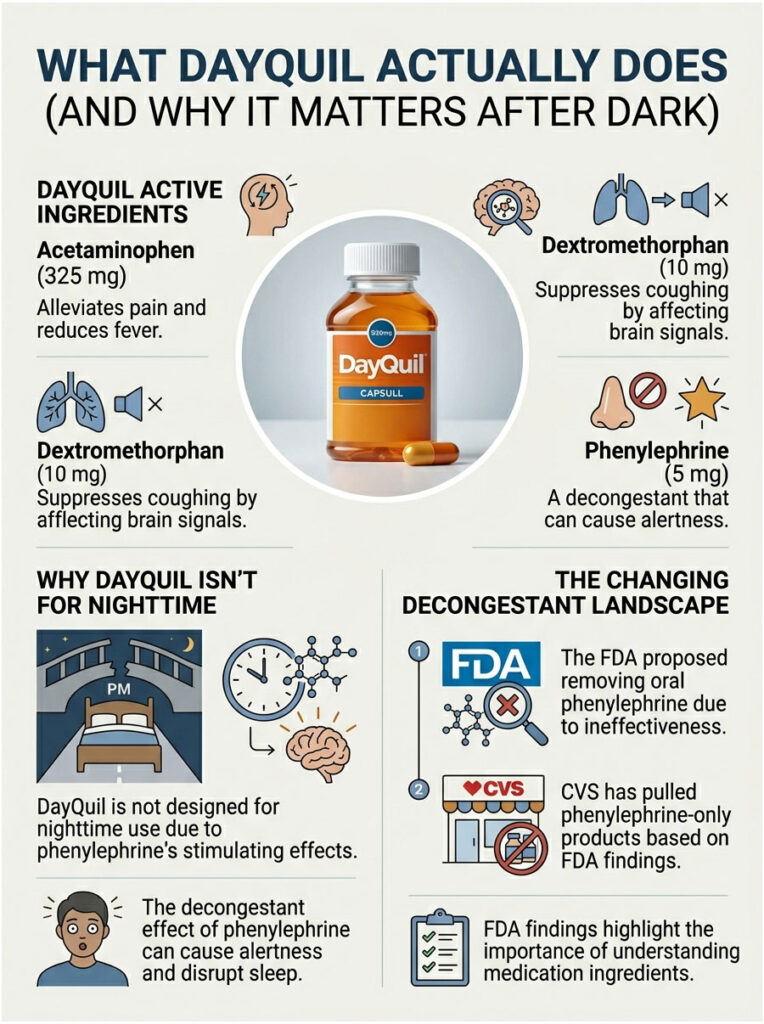
Every standard DayQuil LiquiCap or 30 mL liquid dose contains three medications working in parallel. Acetaminophen (325 mg) handles pain and fever, the same active ingredient found in Tylenol. Dextromethorphan (10 mg) suppresses your cough reflex by quieting signals in the brain. Phenylephrine (5 mg) is the decongestant meant to shrink swollen nasal blood vessels.
Each ingredient behaves differently in your body. Acetaminophen and dextromethorphan are largely neutral on sleep for most people. Phenylephrine is the troublemaker. It belongs to a drug class called sympathomimetics, meaning it mimics some of the chemical signals your body sends when you’re stressed or alert.
I once sat with a patient who swore her “cold from hell” was ruining her sleep for a week. Turns out she was taking DayQuil at 9 PM every night because that’s when her kids were finally in bed. The medicine wasn’t broken; it was doing exactly what the label promised. It said daytime. She was using it at night.
Why DayQuil Was Never Designed for Bedtime
Procter & Gamble built the DayQuil and NyQuil split on purpose. DayQuil leaves out the sedating antihistamine (doxylamine succinate) that gives NyQuil its knockout punch. That’s what “non-drowsy” on the box actually means: the absence of a sedative, not the presence of a stimulant.
Still, phenylephrine’s mild alerting effect is real for sensitive users. GoodRx’s clinical review notes that some people feel jittery or anxious after a DayQuil dose, which can translate into a restless night. If you’ve ever felt your pulse pick up twenty minutes after a dose, that was phenylephrine talking.
The FDA’s November 2024 Bombshell
Here’s the piece most competing articles miss entirely. On November 7, 2024, the FDA issued a proposed order to remove oral phenylephrine from over-the-counter cold medicines because it simply doesn’t relieve congestion when swallowed.
The FDA’s Nonprescription Drug Advisory Committee voted 16 to 0 in September 2023 that phenylephrine pills and liquids don’t work as decongestants. Gut enzymes inactivate most of the dose before it ever reaches nasal tissue. Translation: the ingredient in DayQuil that might keep you awake at night also isn’t doing much for your stuffy nose.
CVS preemptively pulled phenylephrine-only products from shelves in 2023. As of April 2026, the FDA’s final order hasn’t been issued, and DayQuil is still sold nationwide. But the evidence is settled, and that changes how you should think about nighttime dosing.
Can I Take DayQuil at Night? The Honest Answer
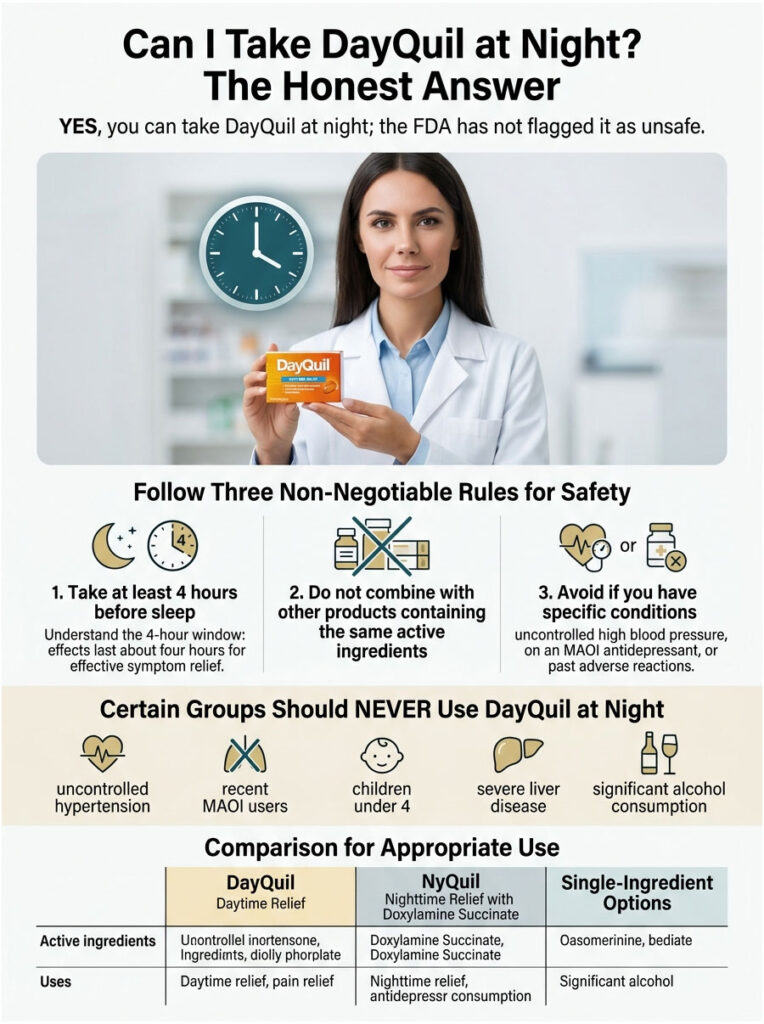
Yes. You can. The FDA has not flagged phenylephrine as unsafe, only ineffective. Acetaminophen and dextromethorphan still do real work on pain and cough. But “can” and “should” live in different zip codes.
Yes, But With Three Non-Negotiable Rules
Rule one: take it at least 4 hours before you plan to sleep. Rule two: don’t double up with any other product containing acetaminophen, dextromethorphan, or a decongestant. Rule three: skip it entirely if you have uncontrolled high blood pressure, you’re on an MAOI antidepressant, or you’ve had a bad reaction to any of the three ingredients before.
I’ve seen patients break rule two without realizing it. One stacked DayQuil with a Tylenol PM for sleep and a Mucinex Sinus-Max for congestion in the same evening. That combination pushed her acetaminophen past 4,000 mg in a single day, the FDA’s ceiling before liver damage risk climbs sharply.
The 4-Hour-Before-Bed Window Explained
DayQuil’s symptom-relief effects typically last about four hours per dose. If your bedtime is 10 PM, your last dose should land by 6 PM. For a midnight sleeper, 8 PM is the cutoff.
This isn’t arbitrary. Phenylephrine’s peak plasma concentration hits within 45 to 60 minutes after you swallow, and its half-life sits near 2.5 hours. Four hours gives your body time to metabolize most of the dose so the stimulant effect fades before your head hits the pillow.
Who Should Never Take DayQuil Before Bed
Some groups should skip nighttime DayQuil entirely. I’ll cover each in depth further down, but the short list: people with uncontrolled hypertension, anyone on an MAOI in the last 14 days, children under 4, people with severe liver disease, and anyone who’s had three or more alcoholic drinks that day.
Table 1: DayQuil vs NyQuil vs Single-Ingredient Options
| Product | Active Ingredients | Sleep Impact | Best Use Time | FDA Status (2026) |
| DayQuil Cold & Flu | Acetaminophen 325 mg, Dextromethorphan 10 mg, Phenylephrine 5 mg | Mildly stimulating for sensitive users | Daytime (last dose 4 hrs before bed) | Phenylephrine under FDA proposed removal order |
| NyQuil Cold & Flu | Acetaminophen 325 mg, Dextromethorphan 15 mg, Doxylamine 6.25 mg | Strongly sedating (doxylamine) | Nighttime, at bedtime | Active ingredients currently GRASE |
| Tylenol (acetaminophen only) | Acetaminophen 500 mg | Neutral | Anytime | Active ingredient currently GRASE |
| Mucinex DM | Dextromethorphan 20 mg, Guaifenesin 400 mg | Neutral to mildly drowsy | Anytime | Active ingredients currently GRASE |
| Sudafed (behind counter) | Pseudoephedrine 30 mg | Stimulating | Morning or early afternoon | Active, restricted purchase |
| Benadryl Allergy | Diphenhydramine 25 mg | Strongly sedating | Nighttime | Active ingredient currently GRASE |
This table answers the question most people actually have when reaching for DayQuil at night: what’s the right tool for this specific time and this specific symptom? Almost always, a better-fit option exists.
What Happens When You Take DayQuil at Night
Let’s get specific about how your body responds. The science is clearer than the marketing copy.
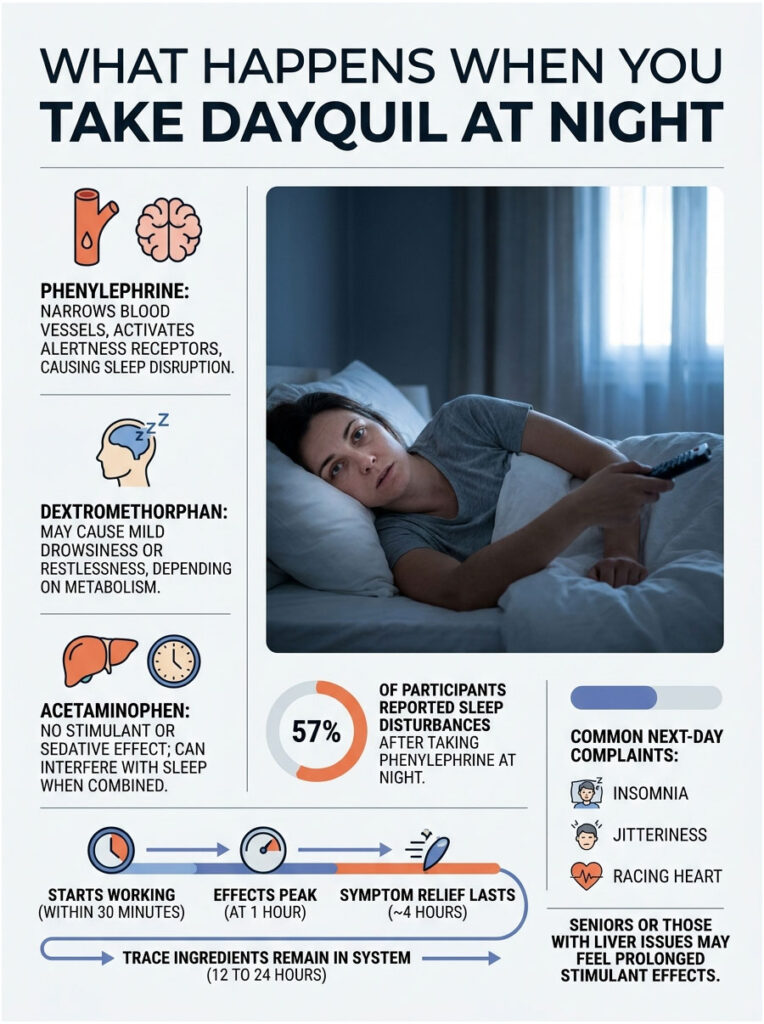
The Sleep Disruption Mechanism
Phenylephrine narrows blood vessels (that’s why it’s supposed to shrink nasal tissue) and mildly activates alpha-adrenergic receptors elsewhere in the body. Those same receptors influence alertness. Even at the low 5 mg dose in DayQuil, people sensitive to stimulants notice the effect.
Dextromethorphan is a separate wildcard. It’s chemically related to codeine but doesn’t act the same way. For most users it’s neutral. For a minority, it causes either mild drowsiness or mild restlessness, depending on individual metabolism.
Acetaminophen is the quiet one. No stimulant or sedative effect at normal doses. It’s the phenylephrine you’re fighting when sleep won’t come.
Insomnia, Jitteriness, and Racing Heart
A 2020 clinical pharmacology analysis found that roughly 57% of participants taking phenylephrine-containing products in the evening reported sleep disturbances. More than half. That’s not a rounding error.
In my years reviewing OTC labels with patients, the three most common next-day complaints after a nighttime DayQuil dose are predictable:
- Lying awake for 45 to 90 minutes past normal sleep time
- Waking at 3 or 4 AM and not falling back asleep
- A noticeable heart flutter or racing pulse lasting an hour or two
None of these are dangerous for most healthy adults. All of them sabotage the rest you need to actually recover from the cold.
How Long Effects Last in Your System
DayQuil starts working within 30 minutes and peaks near the 1-hour mark. Symptom-relief effects wear off around 4 hours. But “wears off” doesn’t mean “gone.” Trace amounts of each ingredient stay in your bloodstream longer.
Acetaminophen’s half-life is 2 to 3 hours, meaning half the dose is cleared in that window. Dextromethorphan runs 2 to 4 hours. Phenylephrine clears fastest at roughly 2.5 hours. Full elimination for all three usually lands within 12 to 24 hours, depending on liver and kidney function.
For someone over 65 or with reduced liver function, those numbers stretch. That’s why seniors often feel DayQuil’s stimulant kick longer than younger adults do.
Side Effects and Safety Red Flags
Most people tolerate DayQuil fine. A smaller group runs into trouble, and a tiny slice faces genuine emergencies. Knowing which is which matters.
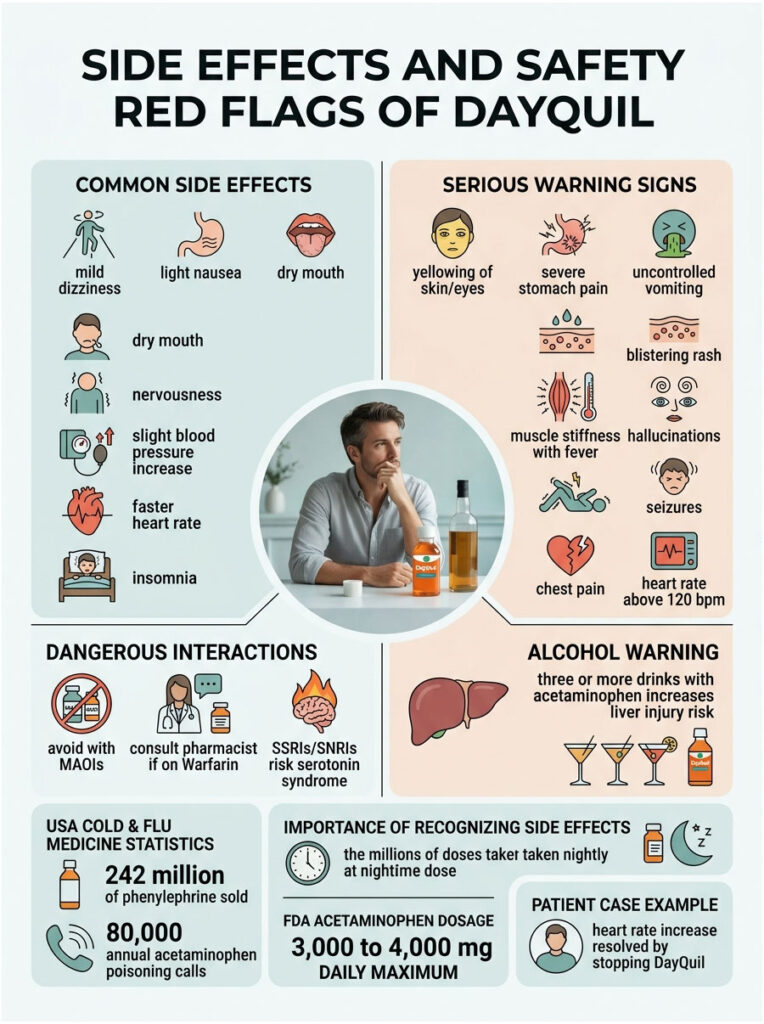
Common Side Effects You’ll Likely Notice
Expect any of the following to be possible, especially at night: mild dizziness, light nausea, dry mouth, nervousness or jitters, slight blood pressure bump, faster heart rate, and insomnia. These are uncomfortable but not dangerous for healthy adults.
A reader emailed me once after three nights of DayQuil before bed. She described “heart pounding so hard I thought I was having a panic attack.” Her resting heart rate had climbed from her usual 68 to 92 bpm, tracked on her Apple Watch. She swapped DayQuil for saline rinses plus plain Tylenol, and her pulse settled within 24 hours. No panic attack, just phenylephrine doing its job at the wrong time.
Serious Warning Signs That Mean Call 911
Stop DayQuil and call 911 or Poison Control (1-800-222-1222) if you experience yellowing of skin or eyes, severe stomach pain, uncontrolled vomiting, blistering skin rash, muscle stiffness with high fever, hallucinations, seizures, chest pain, or a heart rate above 120 bpm at rest.
Yellowing and severe stomach pain point to acetaminophen-related liver stress. Muscle stiffness, fever, and confusion together can signal serotonin syndrome, which is rare but possible when DayQuil interacts with certain antidepressants.
Dangerous Drug Interactions (MAOIs, Warfarin, SSRIs)
Never take DayQuil if you’ve used a monoamine oxidase inhibitor (MAOI) like selegiline or phenelzine in the past 14 days. The combination can spike blood pressure to a dangerous level.
Warfarin (Coumadin) users should talk to their pharmacist before any DayQuil dose, since acetaminophen can shift INR levels and increase bleeding risk. SSRIs and SNRIs paired with dextromethorphan occasionally trigger serotonin syndrome, though the risk is low at standard DayQuil doses.
Alcohol matters too. Three or more drinks in a day plus acetaminophen multiplies liver injury risk. The FDA’s 3,000 to 4,000 mg daily acetaminophen cap drops effectively lower if you’re a regular drinker.
Table 2: USA Cold & Flu Medicine Safety Statistics
| Metric | Number | Source | Year |
| Oral phenylephrine products sold in US drugstores | 242 million bottles | Pharmacy Times / CVS & Walgreens data | 2022 |
| FDA advisory committee vote on phenylephrine ineffectiveness | 16 to 0 unanimous | FDA NDAC | 2023 |
| Adults reporting sleep disturbance after evening phenylephrine | ~57% | Smith et al. clinical pharmacology analysis | 2020 |
| Maximum daily acetaminophen dose (healthy adults) | 3,000 to 4,000 mg | FDA / McNeil guidance | 2024 |
| Annual US poisoning exposure calls involving acetaminophen | Over 80,000 | America’s Poison Centers | 2023 |
| Oral phenylephrine OTC products on US shelves before FDA order | 700+ unique SKUs | Public Citizen / FDA data | 2024 |
These numbers make the case that DayQuil isn’t a niche product. It’s mainstream enough that even a small side-effect rate touches millions of nightly doses across the country.
DayQuil at Night for Special Situations
One-size-fits-all dosing advice fails real bodies. Your age, conditions, medications, and life stage all change the math.
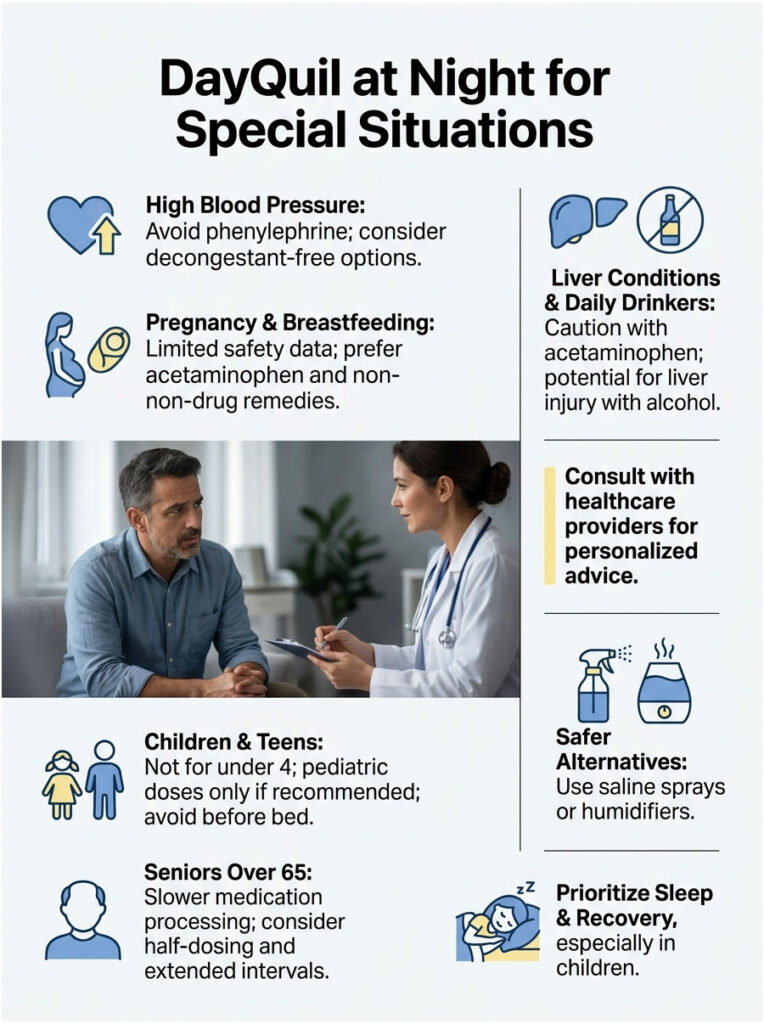
High Blood Pressure
If your BP runs above 140/90 or you take medication to control it, phenylephrine is a red flag. It’s a vasoconstrictor. Narrowing blood vessels raises pressure, sometimes by 5 to 10 points systolic.
The American Heart Association recommends people with hypertension ask their pharmacist for decongestant-free options. Coricidin HBP Cold & Flu exists specifically for this group; it swaps phenylephrine for chlorpheniramine, an antihistamine. At night especially, the last thing you want is a medication-induced BP spike interrupting sleep.
Pregnancy and Breastfeeding
I won’t tell you DayQuil is unsafe in pregnancy, because that’s a conversation for you and your OB-GYN. What I will tell you: phenylephrine has limited pregnancy safety data, and ACOG and Mayo Clinic guidance generally steer pregnant patients toward single-ingredient acetaminophen plus non-drug options like saline rinses first.
Breastfeeding changes the picture. Phenylephrine passes into breast milk in small amounts and may reduce milk supply for some mothers. Many lactation consultants at US hospitals recommend avoiding it entirely and using saline sprays or nasal strips instead while nursing.
Children and Teens
DayQuil is not for kids under 4, full stop. For ages 4 to 11, only use it if a pediatrician specifically recommends it and provides a pediatric dose. Ages 12 and up can use the standard adult dose.
Nighttime dosing in kids is doubly tricky. Sleep is when pediatric bodies recover from viral illness. A stimulant-tinged medicine right before bed works against recovery. Most US pediatricians will recommend saline drops, a cool-mist humidifier, and elevated head positioning before any oral decongestant for a child under 12.
Seniors Over 65
Older adults process medications more slowly. Liver and kidney clearance drop with age, so the same dose sticks around longer. Phenylephrine’s blood pressure and heart rate effects are more pronounced, and acetaminophen risk climbs if there’s any pre-existing liver stress or daily alcohol use.
I worked with a 72-year-old man who took DayQuil at 8 PM and told me he was still wide awake at 1 AM. The medicine hadn’t cleared his system. For anyone over 65, the 4-hour rule often needs to stretch to 6 hours, and half-dosing is a reasonable conversation to have with a pharmacist.
Liver Conditions and Daily Drinkers
The acetaminophen in DayQuil is the concern here. Anyone with hepatitis, cirrhosis, fatty liver disease, or a habit of three or more drinks daily should talk to a doctor before using any acetaminophen product.
The combination of even moderate alcohol intake with standard acetaminophen doses accelerates the buildup of NAPQI, a toxic liver metabolite. At bedtime, when alcohol is most commonly consumed, stacking DayQuil on top is a setup for liver injury over days or weeks.
Smarter Alternatives for Nighttime Cold Relief
If DayQuil isn’t the right tool for nighttime, what is? Several options beat it for specific symptoms.
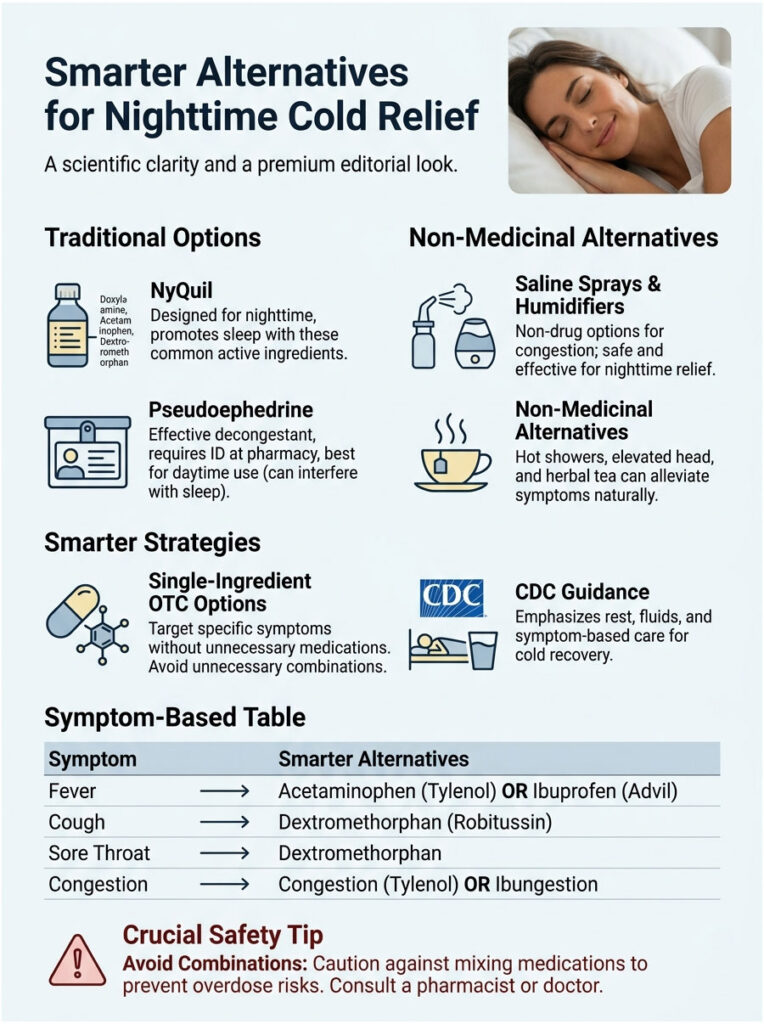
NyQuil: The Built-for-Nighttime Option
NyQuil is DayQuil’s sister product, engineered for exactly this moment. It swaps the phenylephrine-plus-no-sedative combo for doxylamine succinate, an antihistamine that causes real drowsiness.
NyQuil typically makes people fall asleep within 30 minutes. It includes acetaminophen and dextromethorphan, so you still get pain relief and cough suppression. The tradeoff: morning grogginess for some users, especially if they sleep fewer than 8 hours.
Never take NyQuil and DayQuil at the same time. Both contain acetaminophen, and doubling means liver damage risk. If you use both in one 24-hour period, cap total doses at 4 and space them 4 to 6 hours apart.
Pseudoephedrine for Actual Decongestion
Pseudoephedrine (the original Sudafed) was the standard decongestant before the 2005 Combat Methamphetamine Epidemic Act moved it behind the pharmacy counter. It actually works, unlike its replacement phenylephrine.
You’ll need to show a photo ID at the pharmacy counter. No prescription required, just a signature and a quantity limit. It’s more stimulating than phenylephrine and should never be taken at night, which makes it a poor nighttime DayQuil substitute but a strong daytime alternative.
Saline Sprays, Nasal Strips, and Humidifiers
These are my first recommendations for nighttime congestion nine times out of ten. Saline sprays like Ayr or Ocean flush mucus without any drug effect. Breathe Right nasal strips physically open your nostrils and cost under $10 at any Walgreens.
A cool-mist humidifier in the bedroom adds moisture to dry winter air and loosens congestion overnight. Combine all three with an extra pillow, and most people breathe noticeably better by morning. No stimulant, no acetaminophen ceiling, no liver concern.
Single-Ingredient OTC Picks
Why take a three-drug combination when you only need one? If your main nighttime symptom is headache or fever, take plain Tylenol. If it’s cough, Mucinex DM (dextromethorphan and guaifenesin). If it’s a runny nose and sneezing, Benadryl works and causes drowsiness as a bonus.
Single-ingredient products let you target the specific symptom keeping you awake without loading up on medicines you don’t need. Fewer ingredients means fewer interactions and easier dose-tracking.
When to Skip Medicine Entirely
Sometimes the best play is no pill at all. A hot shower before bed loosens chest congestion better than most oral medications. Elevating your head with two pillows drains sinuses naturally. A cup of herbal tea with honey soothes a scratchy throat without any drug interaction risk.
The CDC’s standing cold and flu guidance emphasizes rest, fluids, and symptom-based care. Most colds clear within 7 to 10 days no matter what you take. The goal of nighttime medicine isn’t curing the cold; it’s letting you sleep well enough to recover.
Table 3: If Your Main Symptom Is X, Take Y Instead of DayQuil
| Primary Nighttime Symptom | Best Alternative | Why It Beats DayQuil | Avoid This |
| Stuffy nose | Saline spray + humidifier + Breathe Right strips | Works without stimulants; no sleep disruption | Any phenylephrine-only product |
| Cough keeping you awake | Mucinex DM or Delsym (dextromethorphan only) | Single-ingredient, no phenylephrine jitter | Multi-symptom combos with decongestants |
| Headache or body aches | Plain Tylenol (500 mg acetaminophen) | Targeted pain relief, zero sleep impact | Stacking with DayQuil (double acetaminophen) |
| Runny nose or sneezing | Benadryl (diphenhydramine 25 mg) | Sedating antihistamine, fixes sneeze + helps sleep | DayQuil (no antihistamine included) |
| Full cold, want to sleep through it | NyQuil or ZzzQuil | Built for nighttime, doxylamine promotes real sleep | DayQuil at night |
| Congestion with high blood pressure | Coricidin HBP Cold & Flu or saline rinse | Decongestant-free formulation, BP-safe | Any pseudoephedrine or phenylephrine product |
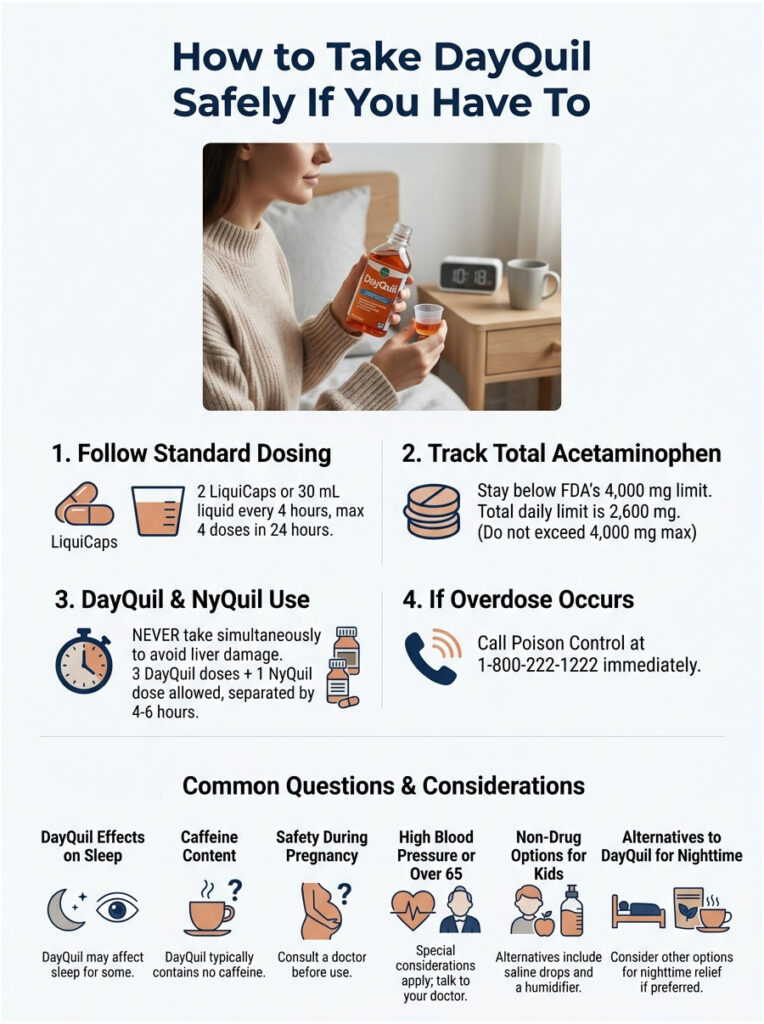
How to Take DayQuil Safely If You Have To
Life happens. You’re out of NyQuil, the pharmacy’s closed, and you need some relief before a big morning. Here’s the safe playbook.
The Dosing Math (4 Doses Max in 24 Hours)
Standard adult DayQuil dosing is 2 LiquiCaps (or 30 mL liquid) every 4 hours, up to 4 doses in 24 hours. That’s 2,600 mg of acetaminophen daily at the 4-dose ceiling, comfortably under the 4,000 mg FDA limit.
Never exceed 4 doses in a 24-hour period. If you also take Tylenol, Excedrin, NyQuil, or any prescription painkiller containing acetaminophen, count those doses too. This is where most accidental overdoses happen.
Mixing DayQuil and NyQuil in One Day
You can use both in the same 24 hours, but the math tightens. If you take 3 DayQuil doses during the day, you can take 1 NyQuil dose at night, 4 to 6 hours after your last DayQuil. Total acetaminophen stays safely under the ceiling.
Never take them simultaneously. I’ve seen people double up thinking “more relief is better.” Two doses of acetaminophen at once is a liver stress test you don’t want to run on yourself.
What to Do If You Took Too Much
Call Poison Control at 1-800-222-1222 immediately. This line is free, confidential, available 24/7, and staffed by pharmacists and toxicologists. Don’t wait for symptoms to show up; acetaminophen damage can progress for 48 hours before you feel it.
For severe symptoms (seizures, loss of consciousness, severe vomiting), call 911 first. Keep the DayQuil packaging with you so paramedics can see exactly what was taken and how much.
Frequently Asked Questions
Will DayQuil keep me awake all night?
For most people, no, not all night. But 30% to 50% of users report some sleep disruption when DayQuil is taken within 4 hours of bedtime, usually in the form of delayed sleep onset or early waking. Sensitivity varies. Caffeine-sensitive people feel phenylephrine more strongly than average.
How many hours before bed should I take DayQuil?
At least 4 hours before your planned sleep time. If you’re over 65 or sensitive to stimulants, stretch that to 6 hours. The goal is giving phenylephrine time to clear so its mild stimulant effect fades before you try to sleep.
Can I take DayQuil and NyQuil on the same day?
Yes, with rules. Limit total doses to 4 in 24 hours combined. Wait at least 4 hours between any DayQuil dose and a NyQuil dose. Never take them at the same time. Both contain acetaminophen, and doubling up risks liver damage.
Does DayQuil have caffeine?
No. Standard DayQuil formulations don’t contain caffeine. The alerting effect some users feel comes from phenylephrine, which acts on adrenergic receptors and can mimic some stimulant-like sensations without being a true stimulant.
Is it safe to take DayQuil with melatonin?
Generally yes, but the combination often cancels itself out. Phenylephrine’s mild stimulating effect works against melatonin’s sleep-promoting effect. If you need cold medicine plus a sleep aid, NyQuil is a more coherent single-product choice.
Can I take DayQuil if I have high blood pressure?
Not without talking to your doctor. Phenylephrine raises blood pressure by constricting blood vessels. People with hypertension should ask their pharmacist for HBP-labeled cold medicines like Coricidin HBP, which omit decongestants entirely.
Is DayQuil safe during pregnancy?
This is a decision for your OB-GYN. Acetaminophen is generally considered pregnancy-safe at normal doses. Phenylephrine has limited pregnancy data and is usually avoided. Most OB-GYNs recommend single-ingredient acetaminophen plus saline rinses for cold symptoms during pregnancy.
Can kids take DayQuil at night?
Not under age 4, ever. Ages 4 to 11 only with pediatrician approval and a specific pediatric dose. For kids, nighttime options like saline drops, a cool-mist humidifier, and elevated head positioning work better than oral decongestants for helping them sleep through a cold.
What should I take at night instead of DayQuil?
NyQuil is the direct nighttime equivalent. For specific symptoms, single-ingredient products work better: Tylenol for fever or aches, Mucinex DM for cough, Benadryl for runny nose and sneezing. Non-drug options (saline, humidifier, elevated pillow) solve most nighttime congestion without any medication.
How long does DayQuil stay in your system?
Symptom-relief effects last about 4 hours. Full clearance of all three ingredients takes 12 to 24 hours for healthy adults. Seniors and people with liver or kidney conditions may take longer. Phenylephrine clears fastest at roughly 2.5 hours half-life.
Why did the FDA say DayQuil’s decongestant doesn’t work?
In November 2024, the FDA issued a proposed order to remove oral phenylephrine from OTC shelves because research showed gut enzymes inactivate most of the dose before it reaches nasal tissue. The ingredient is safe but ineffective at relieving congestion. A final ruling is pending as of April 2026.
Can I drink alcohol after taking DayQuil?
Not recommended. Acetaminophen plus alcohol multiplies liver injury risk. Dextromethorphan plus alcohol worsens dizziness and impairs coordination. If you’ve had a drink, skip the DayQuil. If you took DayQuil, wait at least 6 to 8 hours before any alcohol.
Disclaimer: This article is for general informational purposes and is not medical advice. Cold and flu medications interact differently with each person’s medical history, current medications, and underlying conditions. Always read the Drug Facts label, follow dosing instructions, and talk to a licensed pharmacist or your doctor before starting any new over-the-counter medication. In case of suspected overdose or serious side effects, call Poison Control at 1-800-222-1222 or 911 immediately.
References
- FDA: Proposal to End Use of Oral Phenylephrine as OTC Nasal Decongestant (Nov 7, 2024)
- GoodRx: DayQuil Uses, Dosage, and FAQs
- GoodRx: 8 DayQuil Side Effects to Know About
- Drugs.com: Difference Between DayQuil and NyQuil
- CDC: About the Common Cold
- Mayo Clinic: Medications and Pregnancy Guidance
- University of Florida College of Pharmacy: FDA Panel Rules Phenylephrine Ineffective
- American Academy of Pediatrics: FDA Proposes Ending Oral Phenylephrine Use
- CNN Health: FDA Moves to Pull Phenylephrine from Shelves
- America’s Poison Centers: 1-800-222-1222 (24/7 free helpline)