
Yes, you can take ibuprofen with DayQuil. These medications use different biological pathways. DayQuil relies on acetaminophen (processed by the liver), while ibuprofen is an NSAID (processed by the kidneys). Safety depends on strict adherence to the 4,000mg daily acetaminophen limit and ensuring you don’t have underlying kidney disease or hypertension. For best results, pharmacists recommend a “staggered” dosing schedule rather than taking them at the same time.
Table of Contents
You’re lying in bed, shivering under three blankets with a burning forehead. The viral infection has triggered your body’s aggressive immune response, resulting in systemic inflammation, fever, and relentless aches. You took a dose of DayQuil two hours ago, but the relief is already fading. The question hits you: can I take ibuprofen with DayQuil to break this fever?
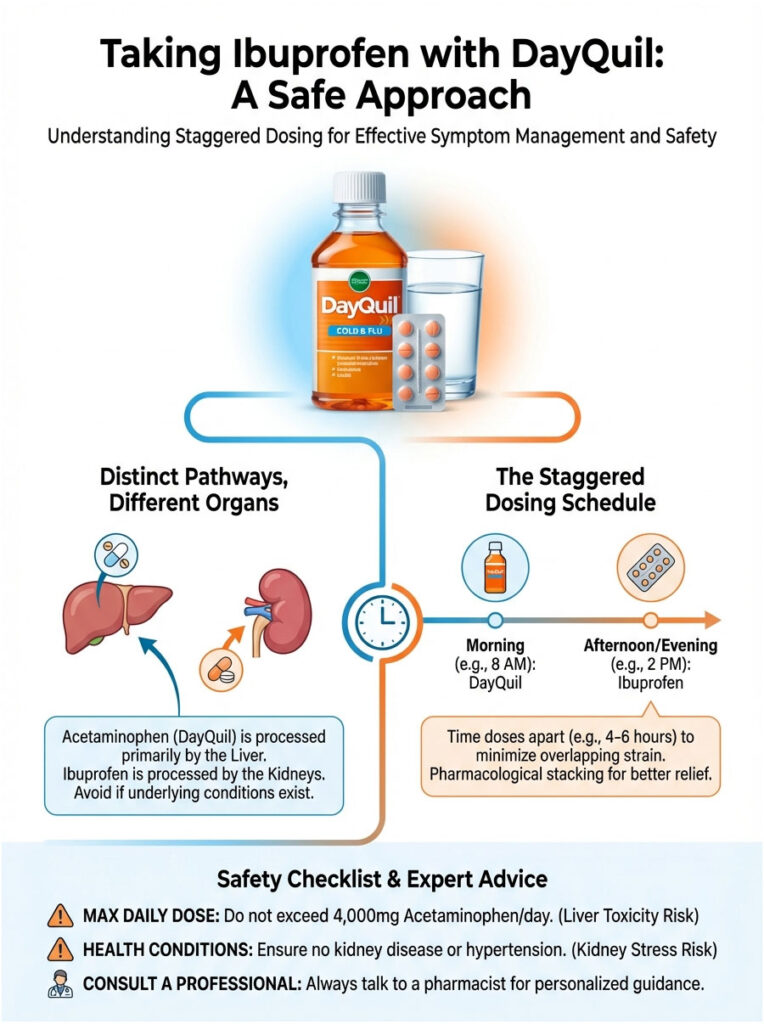
The short answer, rooted in pharmacokinetics, is yes. But doing it safely requires a disciplined approach. You need to avoid placing undue stress on your body’s filtration systems. This concept is known in clinical practice as “pharmacological stacking,” where you layer medications with different mechanisms of action for a synergistic effect that single-drug therapy can’t match.
Tossing back pills without a strategy is dangerous. This guide covers the drug interactions, dosage limits, organ risks like liver toxicity and kidney stress, and the exact timing required to manage your symptoms safely.
Key Safety Thresholds to Know
- 4,000mg: Absolute maximum daily acetaminophen limit (found in DayQuil) for healthy adults.
- 3,200mg: Maximum prescription daily limit for ibuprofen (OTC limit is typically 1,200mg).
- 20-30 minutes: Approximate onset time for both medications.
- 4-6 hours: Typical duration of action for standard doses.
- 3 hours: Ideal stagger time between DayQuil and ibuprofen for continuous relief.
What’s Actually in These Medications?
To understand why the DayQuil and ibuprofen combination is generally safe, we need to look at the molecular level. Drug interactions typically occur when two medications compete for the same receptor site or the same metabolic enzyme. In this case, these two drugs run on parallel tracks. They don’t compete.

What’s in DayQuil?
DayQuil isn’t a single drug. It’s a combination product formulated to treat multiple symptoms at once. The standard formulation contains three active ingredients:
- Acetaminophen (Paracetamol): An analgesic and antipyretic that relieves pain and reduces fever. It works centrally in the brain by inhibiting prostaglandin synthesis in the CNS. Crucially, it has almost no anti-inflammatory effect on peripheral tissue.
- Dextromethorphan HBr: A cough suppressant that acts on the cough center in the brain’s medulla oblongata.
- Phenylephrine HCl: A vasoconstrictor that shrinks swollen blood vessels in the nasal passages, relieving congestion.
How Ibuprofen Works Differently
Ibuprofen is a Non-Steroidal Anti-Inflammatory Drug (NSAID). Unlike acetaminophen, it works peripherally at the site of pain. It non-selectively inhibits Cyclooxygenase enzymes (COX-1 and COX-2), stopping the production of prostaglandins that cause inflammation, swelling, and pain signals throughout the body.
Pharmacist’s Insight: We recommend adding ibuprofen because DayQuil lacks anti-inflammatory properties. If your throat is swollen or your joints are inflamed from the flu, DayQuil masks the pain signal. Ibuprofen actually reduces the swelling causing the pain.
Drug Comparison: DayQuil vs. Ibuprofen
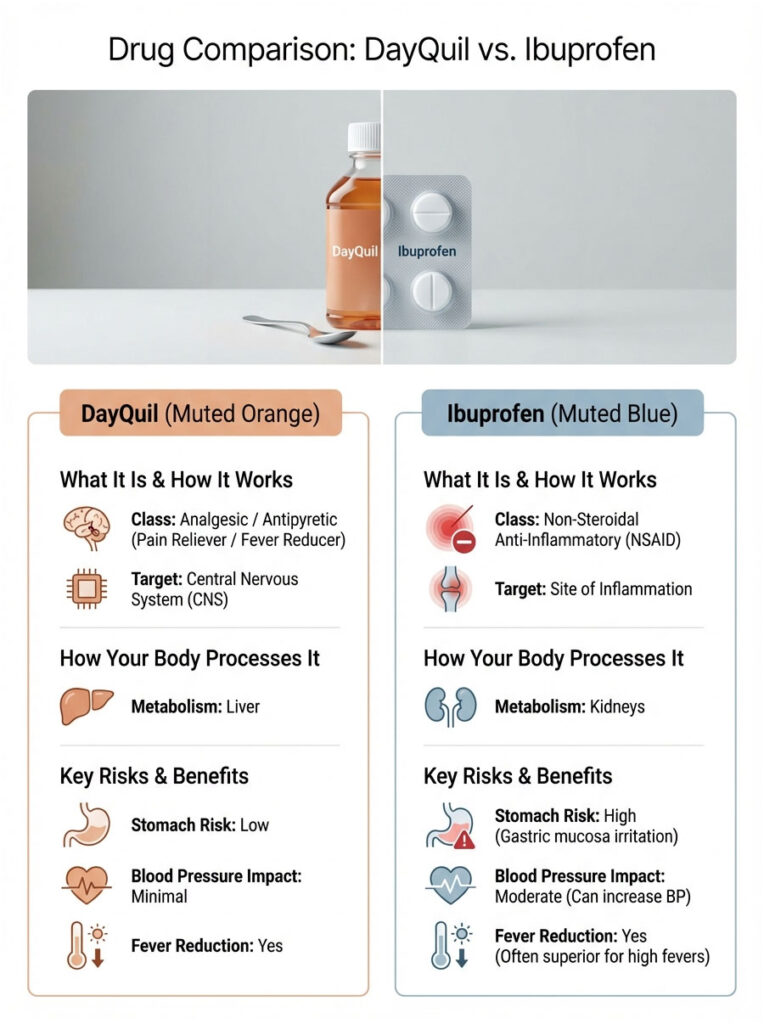
| Feature | DayQuil (Acetaminophen) | Ibuprofen (NSAID) |
| Drug Class | Analgesic / Antipyretic | Non-Steroidal Anti-Inflammatory |
| Primary Target | Central Nervous System (Brain) | Site of Inflammation (Tissue) |
| Metabolism | Liver (Hepatic) | Kidneys (Renal) |
| Stomach Risk | Low | High (Gastric mucosa irritation) |
| Blood Pressure Impact | Minimal | Moderate (can increase BP) |
| Fever Reduction | Yes | Yes (often superior for high fevers) |
The 4,000mg Rule: Protecting Your Liver
The single biggest risk when managing a severe cold isn’t the mixture of ibuprofen and DayQuil. It’s accidental acetaminophen overdose. The FDA has set the ceiling at 4,000mg per 24 hours for healthy adults. For those with liver compromise or heavy alcohol use, that limit drops to 2,000mg or less.
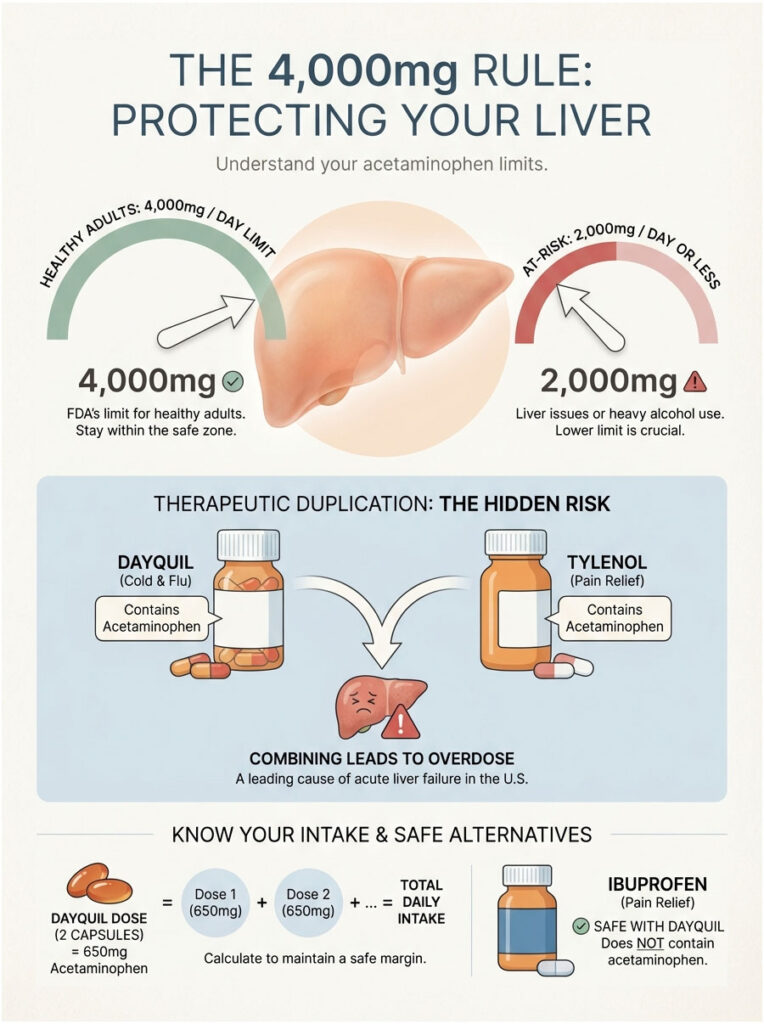
Here’s where patients get into trouble: they take DayQuil (which contains acetaminophen), then take Tylenol (which is pure acetaminophen), thinking they’re different drugs. This is called “therapeutic duplication,” and it’s the leading cause of acute liver failure in the United States.
Can I take ibuprofen with DayQuil safely? Yes. Ibuprofen does not contain acetaminophen. It doesn’t count toward that 4,000mg limit. By using ibuprofen for breakthrough pain, you spare your liver the stress of additional acetaminophen.
Calculating the Hidden Dose
Standard DayQuil Liquicaps contain 325mg of acetaminophen per capsule. A standard dose is two capsules. Do the math to stay safe:
- One dose of DayQuil: 650mg acetaminophen
- Max doses per day: 4 doses (every 6 hours)
- Total daily acetaminophen: 2,600mg
That leaves a buffer of 1,400mg before the toxic limit. But staying well below that ceiling is always preferred.
The Staggering Protocol: How to Alternate Safely
You can take both pills at the exact same moment, but clinical experience suggests this is inefficient. If you take both at 8:00 AM, both wear off around 12:00 PM, leaving you with a gap in relief. Fever and pain return aggressively during this “breakthrough” period.
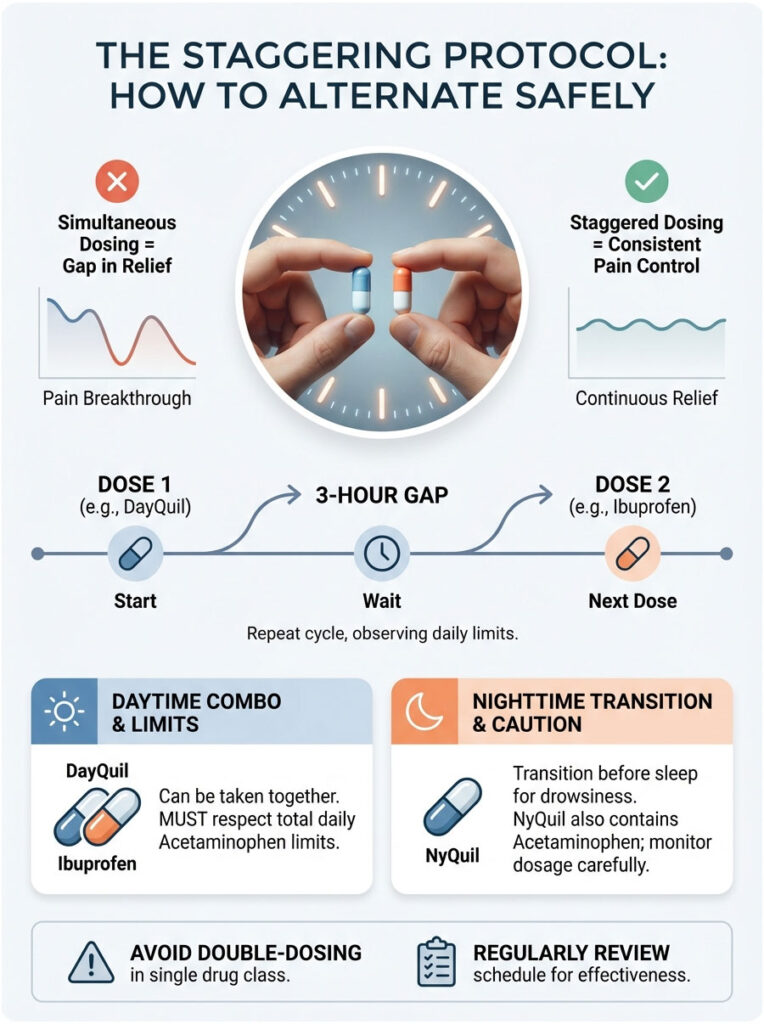
Staggering doses ensures that as one medication’s blood concentration begins to dip, the other is reaching its peak. This keeps your pain control consistent.
The 3-Hour Gap Schedule
For a healthy adult needing aggressive symptom control:
- 8:00 AM: Take a full dose of DayQuil. This treats congestion, cough, and fever.
- 11:00 AM: Take 200-400mg ibuprofen with food. This treats inflammation and body aches.
- 2:00 PM: Take a full dose of DayQuil.
- 5:00 PM: Take 200-400mg ibuprofen with food.
This schedule ensures you never double-dose on a single drug class. When DayQuil begins to fade, ibuprofen is working at full capacity.
Bedtime Transition
As you approach sleep, you may switch from DayQuil to NyQuil. NyQuil contains Doxylamine Succinate, an antihistamine that causes drowsiness. The same rules apply: you can take ibuprofen with NyQuil. Just respect the acetaminophen limits, since NyQuil also contains acetaminophen.
Stomach and Kidney Risks to Watch For
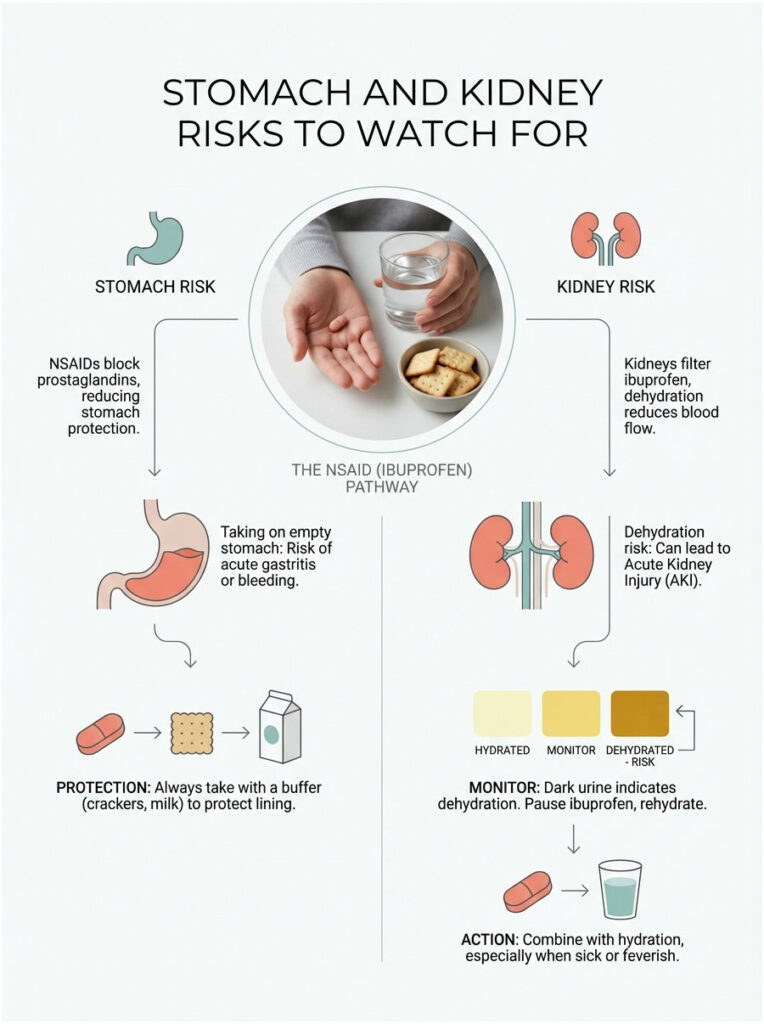
NSAID-Induced Stomach Irritation
Ibuprofen blocks prostaglandins, but one of prostaglandins’ jobs is maintaining the protective mucus lining of your stomach. When you block them to stop pain, you also strip away your stomach’s shield against acid. Taking ibuprofen on an empty stomach while sick can lead to acute gastritis or even bleeding.
The rule: Never take ibuprofen without a buffer. Even a few crackers or a glass of milk can protect the gastric lining from direct irritation.
Kidney Stress and Dehydration
Your kidneys filter ibuprofen. When you have a fever, you’re likely dehydrated. Dehydration reduces blood volume. Ibuprofen constricts the blood vessels leading into the kidneys (afferent arterioles). Low blood volume plus constricted vessels can lead to Acute Kidney Injury (AKI).
While DayQuil is processed by the liver, adding ibuprofen demands that you hydrate aggressively. If your urine is dark, pause the ibuprofen and rehydrate before resuming.
DayQuil Product Variations: Standard vs. Severe vs. High BP
The pharmacy aisle can be confusing. You might see “DayQuil Cold & Flu” next to “DayQuil Severe.” Does this change the answer to “can I take ibuprofen with DayQuil“? Generally, no. “DayQuil Severe” adds Guaifenesin, an expectorant that thins mucus. Guaifenesin has no interaction with ibuprofen.
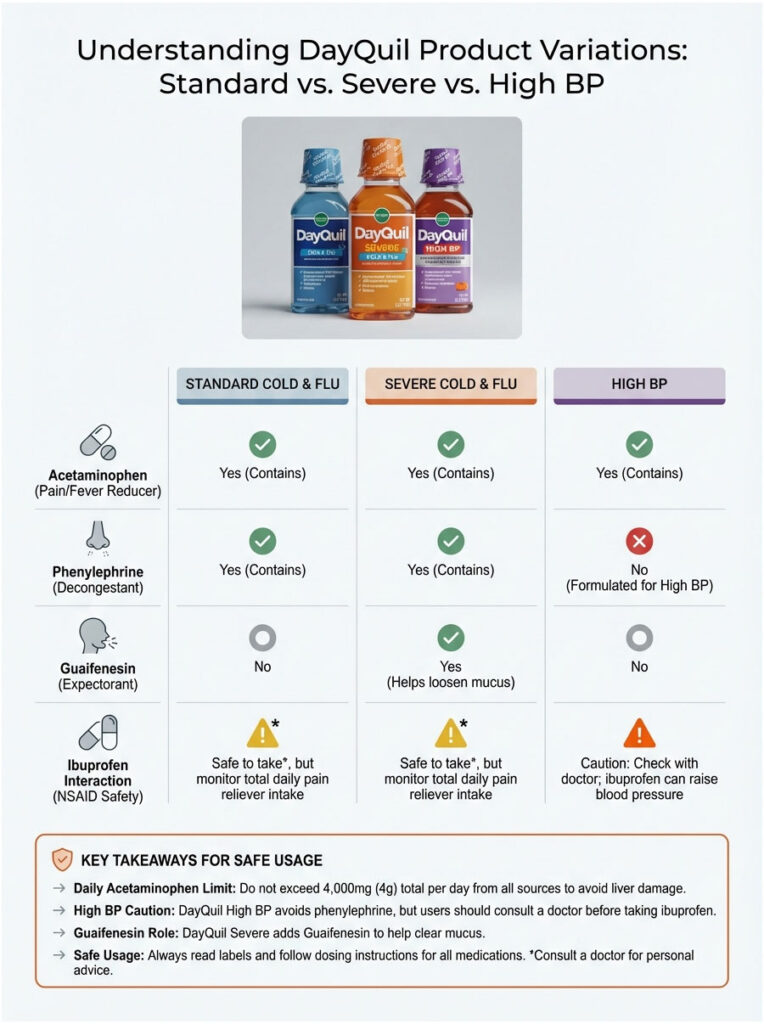
| Product | Acetaminophen? | Phenylephrine? | Safe with Ibuprofen? | Notes |
| DayQuil Cold & Flu | Yes (325mg/cap) | Yes | Yes | Watch daily acetaminophen limit |
| DayQuil Severe | Yes (325mg/cap) | Yes | Yes | Contains Guaifenesin (mucus thinner) |
| DayQuil High BP | Yes | No | Caution | Ibuprofen may still raise BP |
Who Should Not Take This Combination
While healthy adults can manage this combination safely, specific groups need extreme caution. For the following populations, the answer to “can I take ibuprofen with DayQuil” changes to “no” or “ask your doctor first.”
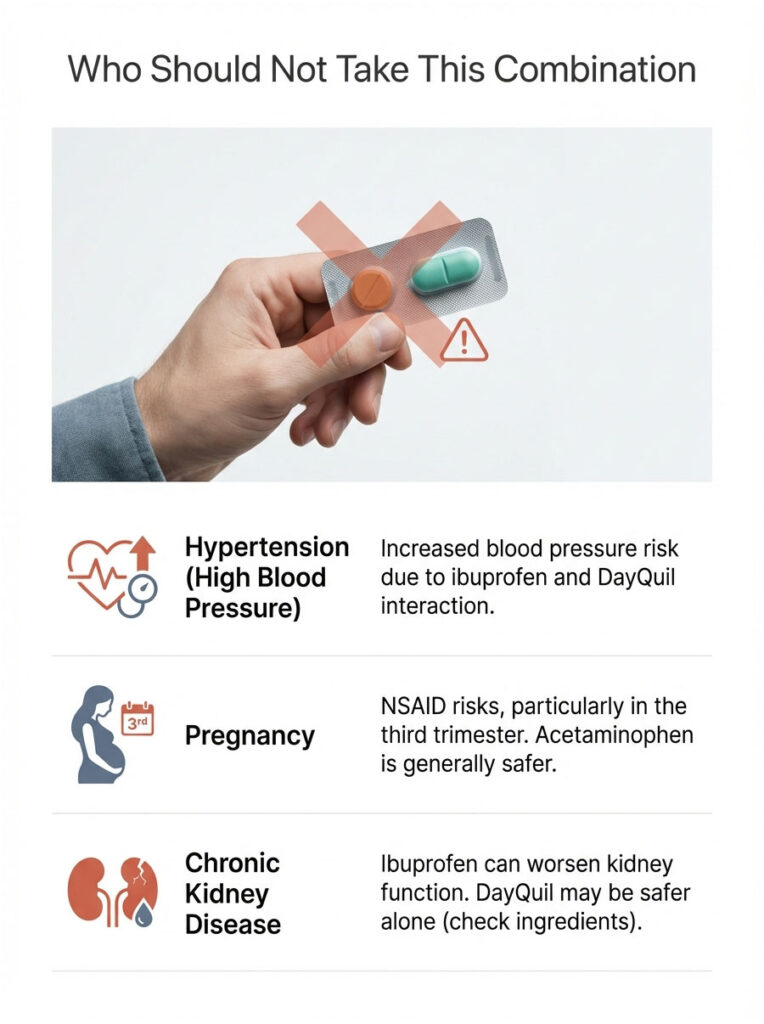
Hypertension (High Blood Pressure)
This is a critical interaction often overlooked. DayQuil contains Phenylephrine, a decongestant that tightens blood vessels and raises blood pressure. Ibuprofen causes the kidneys to retain sodium and water, which also raises blood pressure. Combining a vasoconstrictor with an NSAID can cause a significant BP spike, potentially negating the effects of blood pressure medication.
Pregnancy
NSAID risks are severe during pregnancy, especially in the third trimester. They can cause premature closure of the ductus arteriosus, a vital heart vessel in the fetus. DayQuil is also generally avoided or used cautiously. Pregnant patients should rely on plain acetaminophen (Tylenol) and saline sprays unless directed otherwise by their OB-GYN.
Chronic Kidney Disease
If you have any stage of kidney disease, ibuprofen is typically contraindicated. The added stress on renal filtration can accelerate kidney damage. Stick to DayQuil alone and ensure the acetaminophen is safe for your specific condition.
Warning Signs: When to Stop and Call a Doctor
Even with correct dosing, adverse events can occur. Stop taking both medications and seek medical attention if you experience:

- Signs of GI Bleeding: Black, tarry stools or vomit that looks like coffee grounds.
- Signs of Liver Toxicity: Yellowing of the skin or eyes (jaundice), dark urine, or pain in the upper right abdomen.
- Allergic Reaction: Skin rashes, blisters, or difficulty breathing.
- Cardiovascular Symptoms: Chest pain, shortness of breath, or slurred speech (seek emergency care immediately).
Summary and Key Takeaways
So, can I take ibuprofen with DayQuil? Yes. It’s a scientifically sound strategy for managing severe viral symptoms. These drugs target different pathways in the body. But that “yes” comes with responsibility.
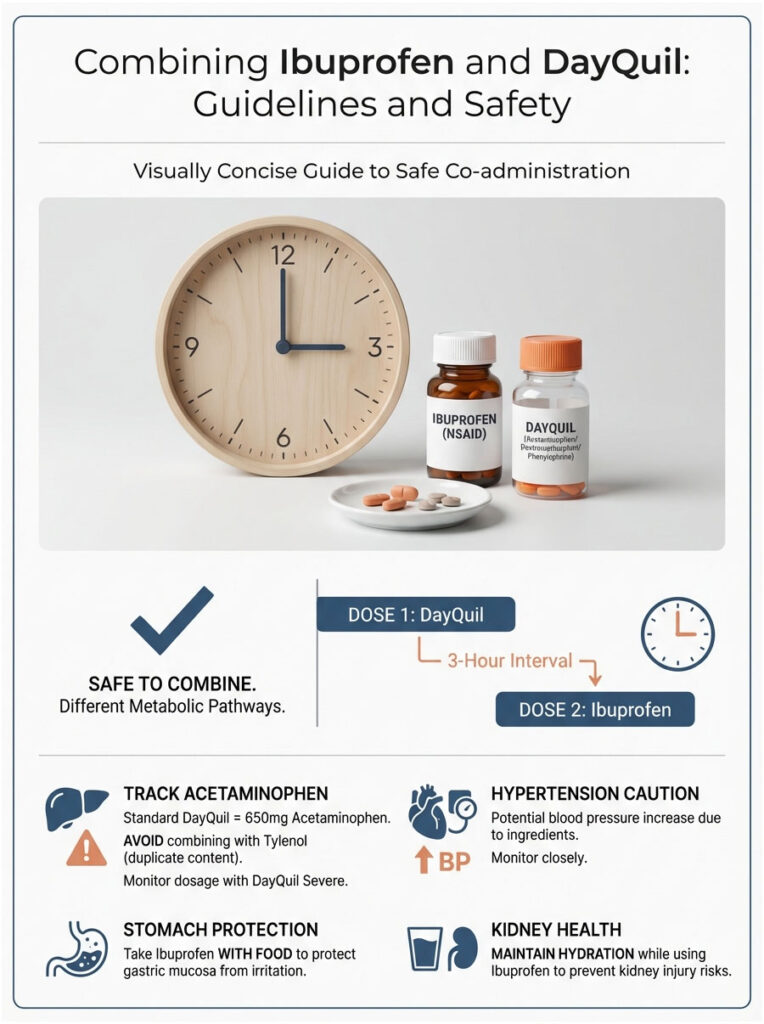
The golden rules:
- Keep total daily acetaminophen under 4,000mg to prevent liver toxicity.
- Always take ibuprofen with food to protect your stomach lining.
- Stay hydrated to support kidney function.
- Use an alternating schedule (3-hour gap) to maximize relief without overlapping peak concentrations.
- Never combine DayQuil with Tylenol, as both contain acetaminophen.
Follow this guidance and you can navigate your recovery safely. If symptoms worsen or persist beyond a few days, consult your healthcare provider.
Frequently Asked Questions
Is it safe to take Ibuprofen and DayQuil at the same time?
Yes, it is clinically safe to combine these medications because they utilize different metabolic pathways and mechanisms of action. DayQuil contains acetaminophen, which is processed by the liver, while Ibuprofen is an NSAID processed primarily by the kidneys, allowing for effective pharmacological stacking without direct drug-to-drug interference.
What is the recommended staggered dosing schedule for DayQuil and Ibuprofen?
To maintain consistent plasma concentrations and avoid breakthrough symptoms, medical professionals recommend a three-hour staggered approach. For example, if you take your DayQuil dose at 8:00 AM, you should wait until 11:00 AM to take your Ibuprofen, ensuring that as one medication’s efficacy begins to wane, the other is reaching its peak effect.
How much acetaminophen is in a standard dose of DayQuil?
A standard adult dose of DayQuil Liquicaps (two capsules) typically contains 650mg of acetaminophen. It is vital to track this toward your 4,000mg absolute daily limit to prevent accidental hepatotoxicity, especially if you are taking other multi-symptom cold relievers or analgesics.
Why is it better to add Ibuprofen to DayQuil instead of taking Tylenol?
Adding Tylenol to DayQuil creates a risk of therapeutic duplication because both products contain acetaminophen, which can quickly lead to liver strain. Ibuprofen provides a synergistic effect by adding anti-inflammatory properties that DayQuil lacks, targeting peripheral tissue inflammation without increasing your acetaminophen load.
Can I take Ibuprofen with DayQuil Severe formulations?
Yes, DayQuil Severe is compatible with Ibuprofen as it primarily adds guaifenesin, an expectorant, to the standard formula. Guaifenesin does not have a known negative interaction with NSAIDs, though you must still adhere to the standard dosage limits for the acetaminophen component.
What are the risks of mixing DayQuil and Ibuprofen if I have high blood pressure?
Patients with hypertension should exercise extreme caution as DayQuil contains phenylephrine, a vasoconstrictor, and Ibuprofen can cause sodium retention. Combining these two can lead to a significant additive increase in blood pressure, potentially causing cardiovascular strain or interfering with antihypertensive medications.
How does Ibuprofen affect the gastric mucosa when I am sick?
Ibuprofen inhibits prostaglandins that protect the gastric mucosa, or stomach lining, from digestive acids. When your system is already stressed by a viral infection, taking Ibuprofen on an empty stomach significantly increases the risk of acute gastritis or GI irritation, so always consume it with a small amount of food.
Is there a risk to the kidneys when taking Ibuprofen for flu symptoms?
The risk to renal clearance increases if you are dehydrated from a fever, as Ibuprofen constricts the afferent arterioles leading to the kidneys. To prevent Acute Kidney Injury (AKI), it is imperative to maintain aggressive hydration while using NSAIDs to ensure the kidneys have adequate blood volume for filtration.
Can I follow the same Ibuprofen stacking rules with NyQuil at night?
Yes, the same pharmacological principles apply to NyQuil, which also contains acetaminophen. While NyQuil includes the sedating antihistamine doxylamine succinate, it does not interact with Ibuprofen; however, you must ensure your total 24-hour acetaminophen intake remains under the 4,000mg safety threshold.
What are the warning signs of hepatotoxicity from taking too much DayQuil?
Early signs of acetaminophen-induced hepatotoxicity include jaundice (yellowing of the skin or eyes), dark tea-colored urine, and persistent pain in the upper right quadrant of the abdomen. If you experience these symptoms or extreme nausea after taking DayQuil, seek emergency medical evaluation immediately.
Can pregnant women take the combination of DayQuil and Ibuprofen?
Pregnant women, particularly those in the third trimester, should avoid Ibuprofen due to the risk of premature closure of the fetal ductus arteriosus. DayQuil usage should also be strictly cleared by an OBGYN, as multi-symptom cold medications are generally discouraged during pregnancy in favor of single-ingredient options like plain acetaminophen.
How many doses of DayQuil and Ibuprofen can I take in 24 hours?
For a healthy adult, you can typically take four doses of DayQuil (spaced six hours apart) and up to 1,200mg of over-the-counter Ibuprofen. Following the 3-hour staggered protocol ensures you stay within safe limits for both hepatic and renal metabolism while providing 24-hour symptom coverage.
Disclaimer
This article is for informational purposes only and does not constitute medical advice. The interactions described are based on general clinical guidelines for healthy adults. Always consult a qualified healthcare professional, doctor, or pharmacist before combining medications, especially if you have underlying health conditions, are pregnant, or are taking other prescription drugs.
References
- U.S. Food and Drug Administration (FDA) – fda.gov – Official safety thresholds for Acetaminophen and NSAID labeling requirements.
- Mayo Clinic – mayoclinic.org – Clinical guidelines on the use of NSAIDs and their impact on renal health and blood pressure.
- National Institutes of Health (NIH) / LiverTox – ncbi.nlm.nih.gov – Comprehensive data on Acetaminophen-induced hepatotoxicity and safe dosage ceilings.
- American Journal of Health-System Pharmacy – academic.oup.com/ajhp – Research on the efficacy of alternating acetaminophen and ibuprofen for fever management.
- Cleveland Clinic – clevelandclinic.org – Expert insights on the differences between central analgesics and peripheral anti-inflammatories.