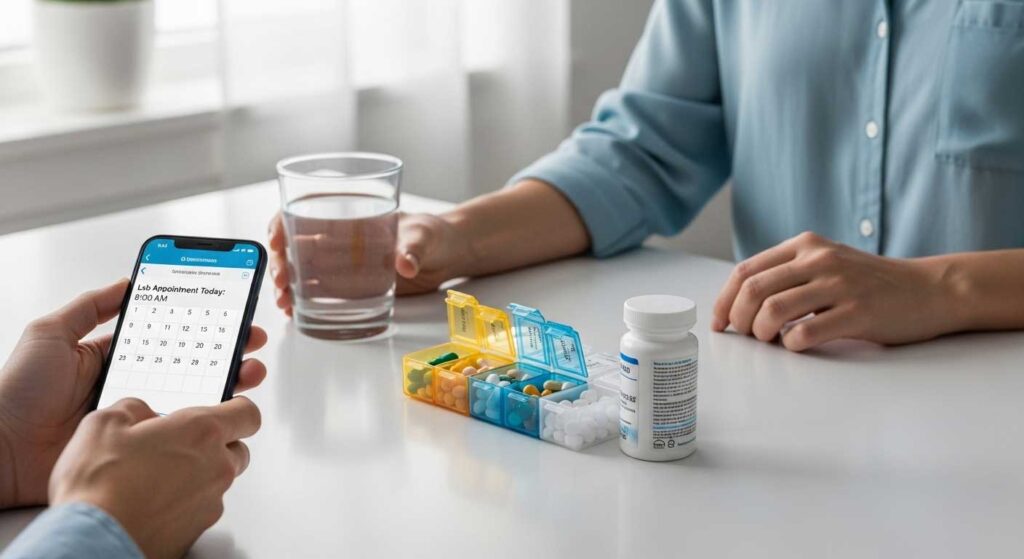
The alarm goes off for your early morning lab appointment. You’re dutifully fasting as instructed—no coffee, no breakfast, just a few sips of water. But as you reach for your daily medications in the bathroom cabinet, you hesitate. Does “fasting” mean no pills, too? The question, “Can I take my medicine before a fasting blood test?” is one of the most common, critical, and anxiety-inducing questions patients have.
Let’s clear up the confusion with the single most important rule right away.
The Golden Rule: Continue to take all of your prescribed medications as scheduled UNLESS your doctor has specifically instructed you to stop. For most essential medications that manage chronic conditions, stopping them—even for a day—is more dangerous than any potential, minor effect they might have on your lab results.
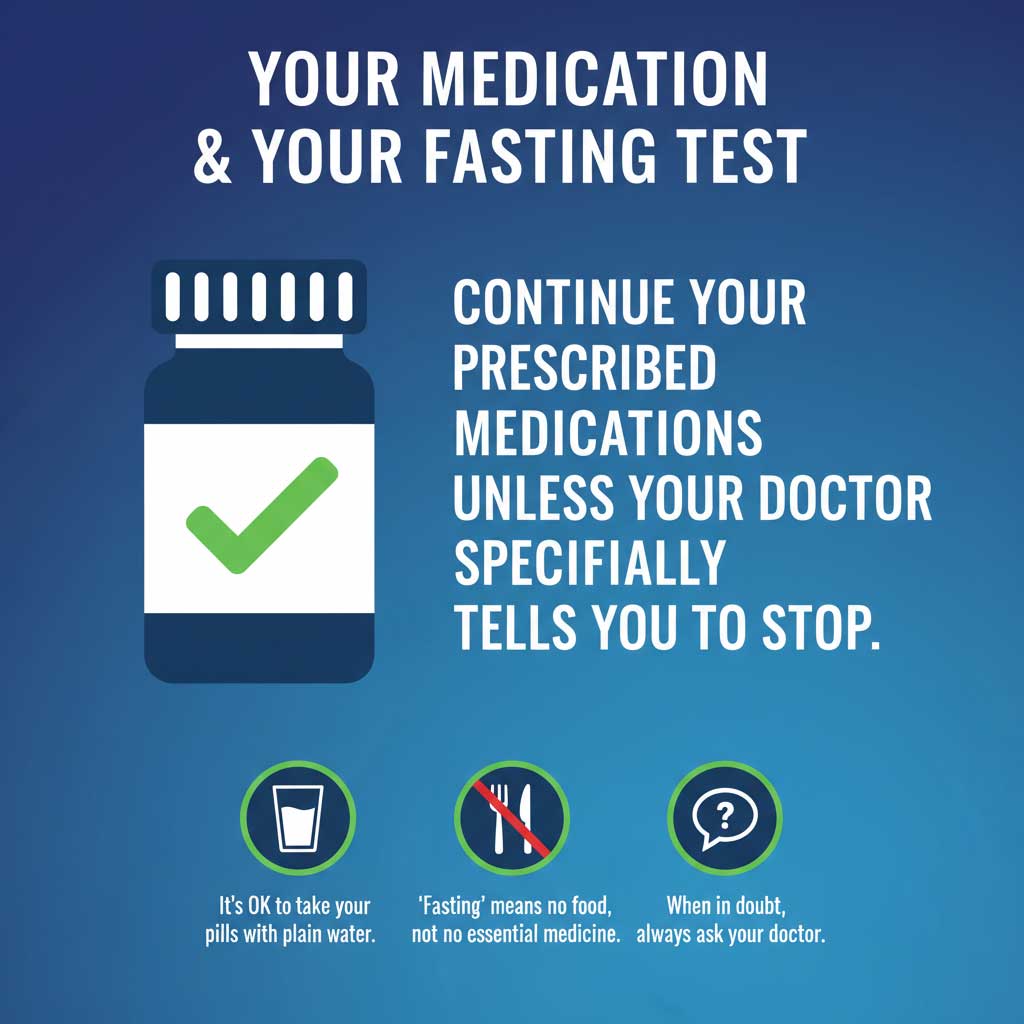
“Fasting” for a blood test refers to abstaining from food and calorie-containing drinks. It does not mean you should stop your essential medications. In fact, taking medication with water while fasting is perfectly acceptable and encouraged to maintain your treatment regimen.
However, the full answer is more nuanced. Some medications, and especially certain supplements, can directly interfere with specific tests and require careful planning. This comprehensive guide will provide a definitive, easy-to-follow framework. We will categorize common medications into a “traffic light” system, explain the science behind the rules, and provide a practical checklist to ensure you are perfectly prepared for your next blood draw.
The “Medication Traffic Light”: A Simple Guide to Your Pills
Navigating the rules for every single pill can be overwhelming. To make it simple, we’ve organized common medications and supplements into a “traffic light” system. This will help you understand which medications you should continue without worry, which ones you need to ask your doctor about, and which ones you should almost always pause before having your blood drawn.
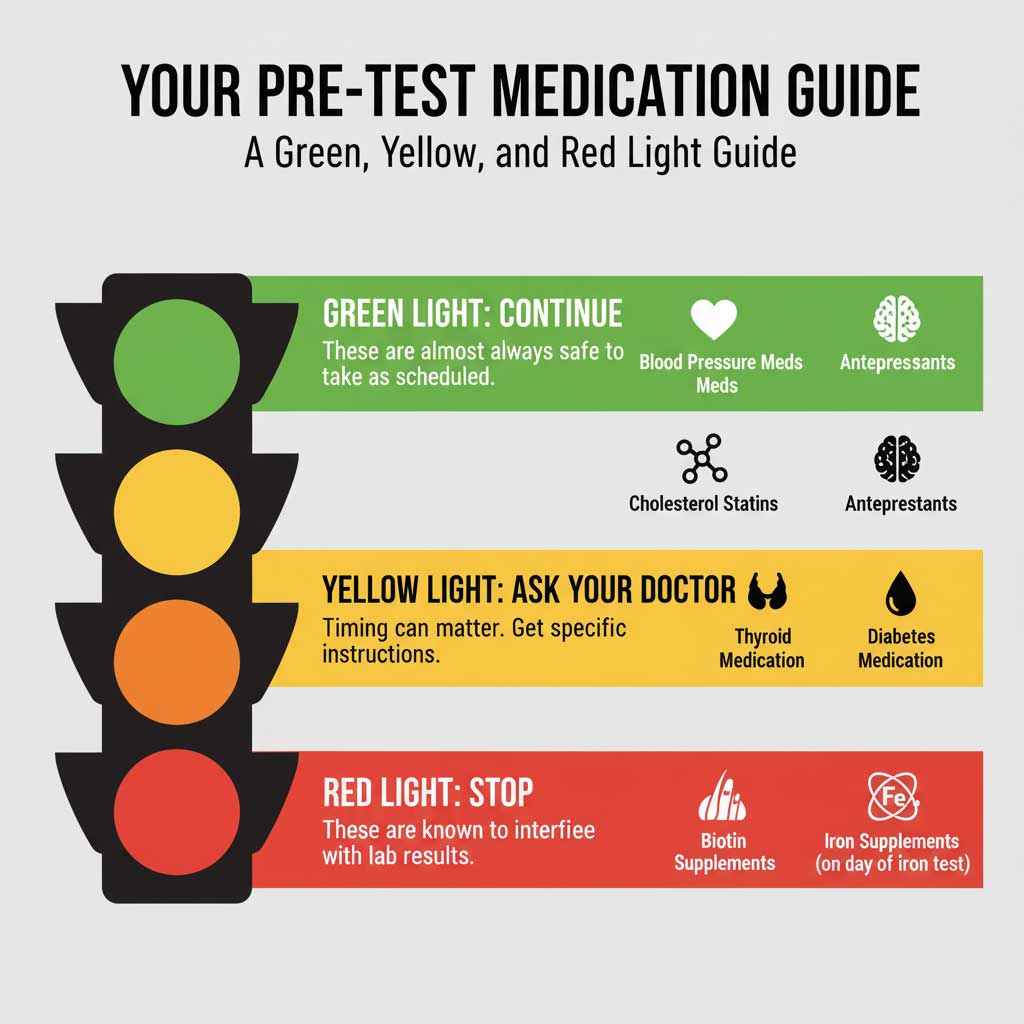
Green Light: Medications You Should Almost Always Continue Taking
These are medications where the benefit of taking them on schedule far outweighs any potential impact on your lab results. For these, the answer to “Can I take pills while fasting for blood work?” is a confident “yes.”
Blood Pressure Medications
This is one of the most common questions. It is vital that you continue to take your prescribed blood pressure medicine before fasting. Medications like lisinopril (an ACE inhibitor), metoprolol (a beta-blocker), or amlodipine (a calcium channel blocker) are essential for keeping your cardiovascular system stable. Stopping them could cause your blood pressure to rise. They do not significantly affect the results of common fasting tests like cholesterol or glucose, and doctors interpret kidney and electrolyte panels with the knowledge that you are on these medications.

Statins and Cholesterol Medication
Another frequent query is, “Can I take my statin before a lipid panel?” Yes, you should. Medications like atorvastatin (Lipitor) or rosuvastatin (Crestor) work over the long term. The purpose of your fasting lipid panel is to see how well the medication is working to control your cholesterol. Skipping a dose won’t help and taking it won’t hurt the accuracy of the test.
Antidepressants & Anxiety Medications
It is critical to maintain stable levels of medications for mental health, such as Zoloft, Prozac, or Lexapro. These medications do not interfere with common metabolic tests, and you should continue to take them as prescribed to support your well-being.
Birth Control Pills
Hormonal contraceptives will not affect the results of common fasting tests like a glucose panel, lipid panel, or a complete blood count. You should continue to take them on your normal schedule.
Yellow Light: Ask Your Doctor for Specific Instructions
These medications can directly influence the very tests you are taking, or their timing is a matter of medical debate. For these, a quick call to your doctor’s office is a necessary part of your preparation.
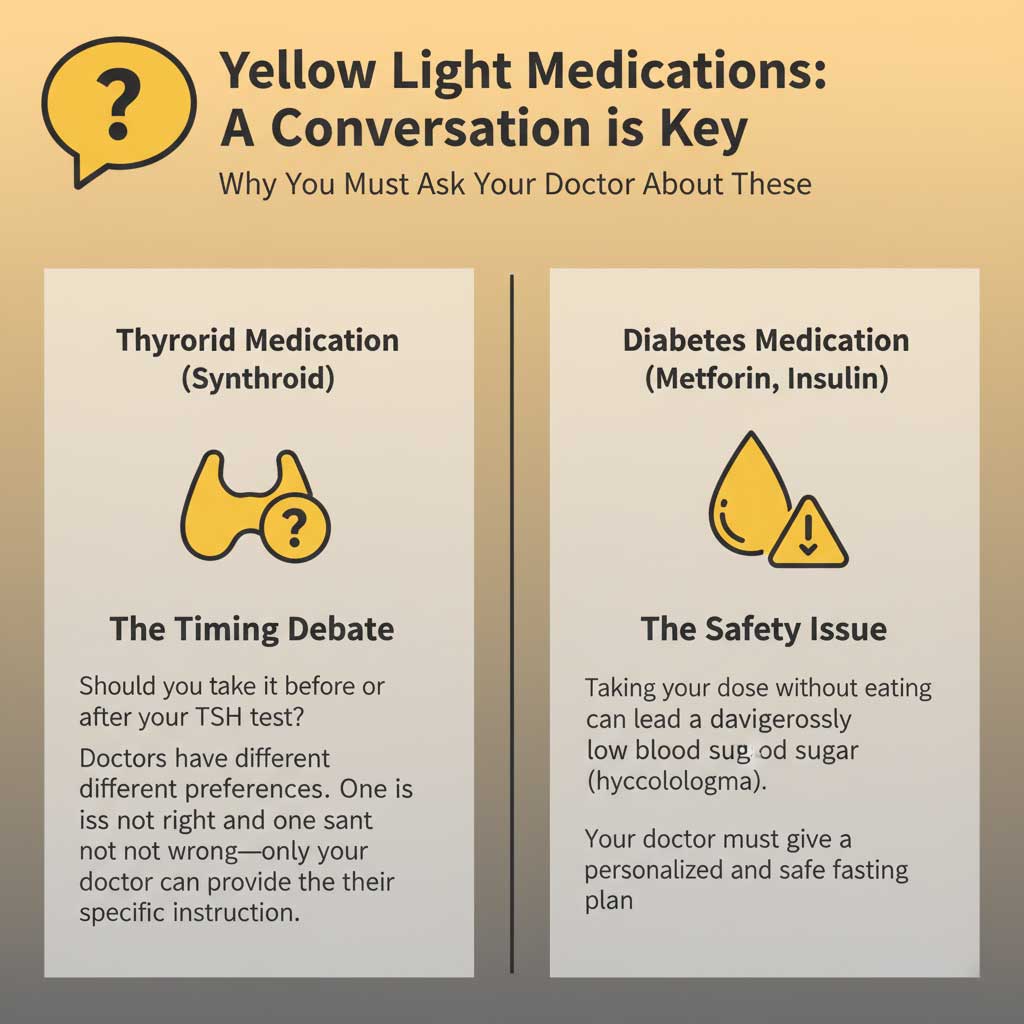
Thyroid Medication (Levothyroxine, Synthroid)
This is perhaps the most debated topic when it comes to medication before fasting blood test. If you are having your thyroid levels checked, what should you do about your daily thyroid medicine before fasting labs? There are two valid schools of thought among doctors:
- The “Take It” Camp: This approach prioritizes consistency. If you always take your pill in the morning, your lab results will consistently reflect your medicated state, which is exactly what the doctor is managing.
- The “Hold It” Camp: This approach argues for waiting until after your blood draw to take your Synthroid before TSH blood test. Taking the pill causes a temporary peak in T4 levels in the blood a few hours later. By waiting, the doctor sees your “trough” level—the lowest point your hormone levels reach before your next dose. This can provide a clearer picture of your underlying TSH and whether your dose is truly lasting a full 24 hours.
The Verdict: Because both approaches have merit, you must ask your doctor which one they prefer for your specific situation.
Diabetes Medications (Metformin, Insulin)
This is a critical safety issue. The instructions for your medication before fasting blood test for diabetes are non-negotiable and must come from your doctor. Since you are fasting and not consuming carbohydrates, taking your usual dose of insulin or certain other diabetes medications (like sulfonylureas) could cause hypoglycemia—dangerously low blood sugar.
Your doctor will give you precise instructions, which might include taking half your usual dose of long-acting insulin, skipping your rapid-acting insulin entirely, or holding your metformin before fasting glucose test until you eat your post-test meal. Never make this decision on your own.
Red Light: Medications and Supplements to Stop Before Your Test
This category includes items that are known to directly and significantly interfere with lab test results. These are the primary answers to the question of what medications to stop before blood test.
Biotin (Vitamin B7)
Biotin is the number one offender when it comes to vitamins that interfere with blood tests. It can cause dangerously inaccurate results and requires a specific plan to avoid it.
Iron Supplements
If you are having your iron levels, ferritin, or a full iron panel tested, you should not take your iron supplement on the morning of the test. The supplement will cause a temporary, artificial spike in your blood iron levels, which does not reflect your body’s true iron stores. This will make it impossible for your doctor to accurately assess if you are anemic or have an iron overload.
The Ultimate Guide to Vitamins & Supplements Before a Blood Test
Supplements are a major source of inaccurate lab results precisely because patients often don’t think of them as “medicine.” However, many of these products can have powerful effects on your body’s chemistry and the lab’s testing technology. These are the most important supplements to avoid before blood test.
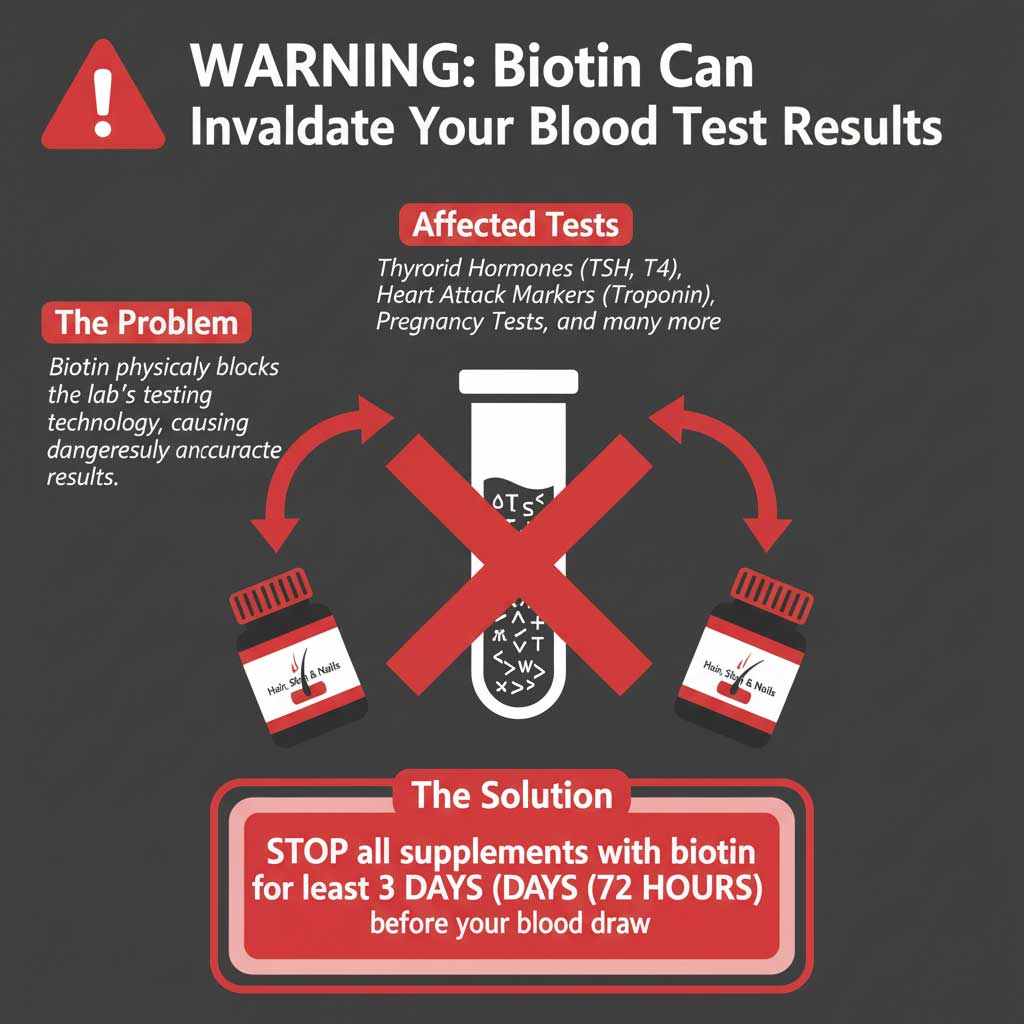
The Biotin Warning: A Deep Dive into Vitamin B7
Biotin interference is a serious and widespread issue in laboratory medicine. If you take a multivitamin or any supplement marketed for “Hair, Skin, and Nails,” you must pay close attention.
Why Is Biotin Such a Problem?
It’s not that biotin changes your body’s actual hormone levels. The problem is that it directly interferes with the lab testing technology itself. Many modern, highly sensitive lab tests use a method that relies on a “Biotin-Streptavidin bond” to measure the substance in your blood. Think of it like a specific type of molecular Velcro that the test uses to grab onto the hormone it’s trying to measure.
If your blood is flooded with excess biotin from high-dose supplements, it gums up the testing machinery’s “Velcro.” This prevents the test from working correctly, leading to wildly inaccurate results. This is why biotin and thyroid test accuracy is such a major concern.
Which Tests Are Affected?
Biotin interference can cause falsely low or falsely high results on a wide range of crucial tests, including:
- Thyroid Hormones: It can cause a falsely low TSH and falsely high T4/T3, a pattern that could be misdiagnosed as hyperthyroidism (an overactive thyroid).
- Reproductive Hormones: hCG (pregnancy tests), testosterone, estradiol, progesterone, and LH/FSH.
- Cardiac Tests: Troponin, a key blood test used in the emergency room to diagnose a heart attack. A falsely low result could be catastrophic.
- Other Hormones: Cortisol, parathyroid hormone (PTH), and more.
The Solution: How Long to Stop Biotin Before a Blood Test?
The consensus from the American Association for Clinical Chemistry (AACC) and other laboratory experts is clear: you should stop taking any supplements containing high-dose biotin for at least 3 days (72 hours) before your blood draw. This ensures it has fully cleared from your system and will not interfere with your results.
Your Pre-Test Action Plan: A Step-by-Step Checklist
Feeling overwhelmed? Don’t be. You can eliminate all confusion and ensure you are perfectly prepared for your test by following this simple, four-step action plan.
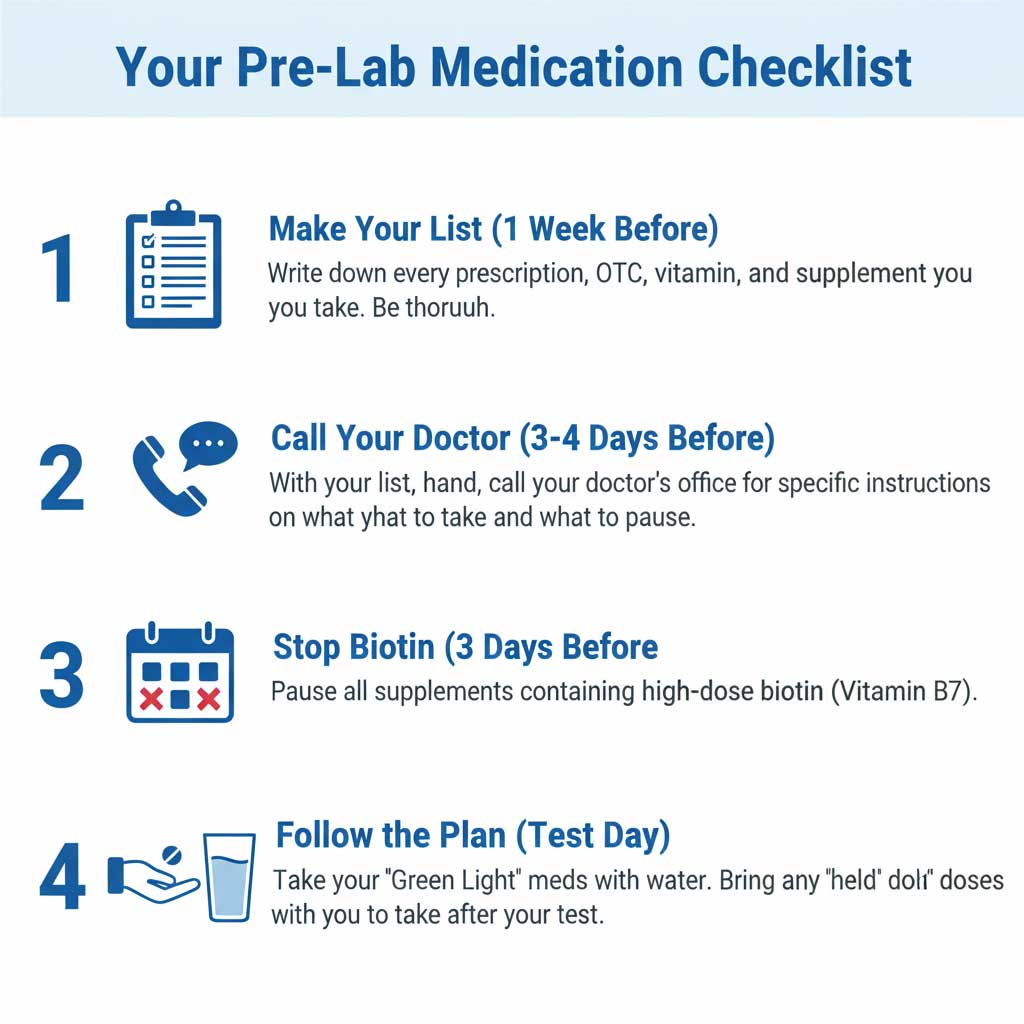
- One Week Before: Make a Comprehensive List.
Sit down and write down every single thing you take on a daily or regular basis. This includes all prescriptions, over-the-counter medications (like pain relievers or allergy pills), all vitamins, all supplements, and any herbal remedies. Be thorough! - 3-4 Days Before: Call Your Doctor’s Office.
With your complete list in hand, call your doctor’s office. The nurse or medical assistant is usually the best person to handle this. Ask them the direct question: “Can I take my medicine before a fasting blood test?” and go through your list with them. They will provide specific instructions for any “Yellow Light” medications and confirm which ones to continue. - 3 Days Before: Stop Your Biotin.
Based on your doctor’s advice and standard laboratory guidelines, stop taking your multivitamin or any other supplement that contains biotin. This is the most important proactive step you can take. - The Morning Of: Follow the Plan.
On the day of your test, follow your instructions precisely. Take your “Green Light” medications with a small glass of plain water. If you were instructed to hold a “Yellow Light” medication before fasting blood test, bring that dose with you to your appointment.
Solving the “Medication with Food” Dilemma
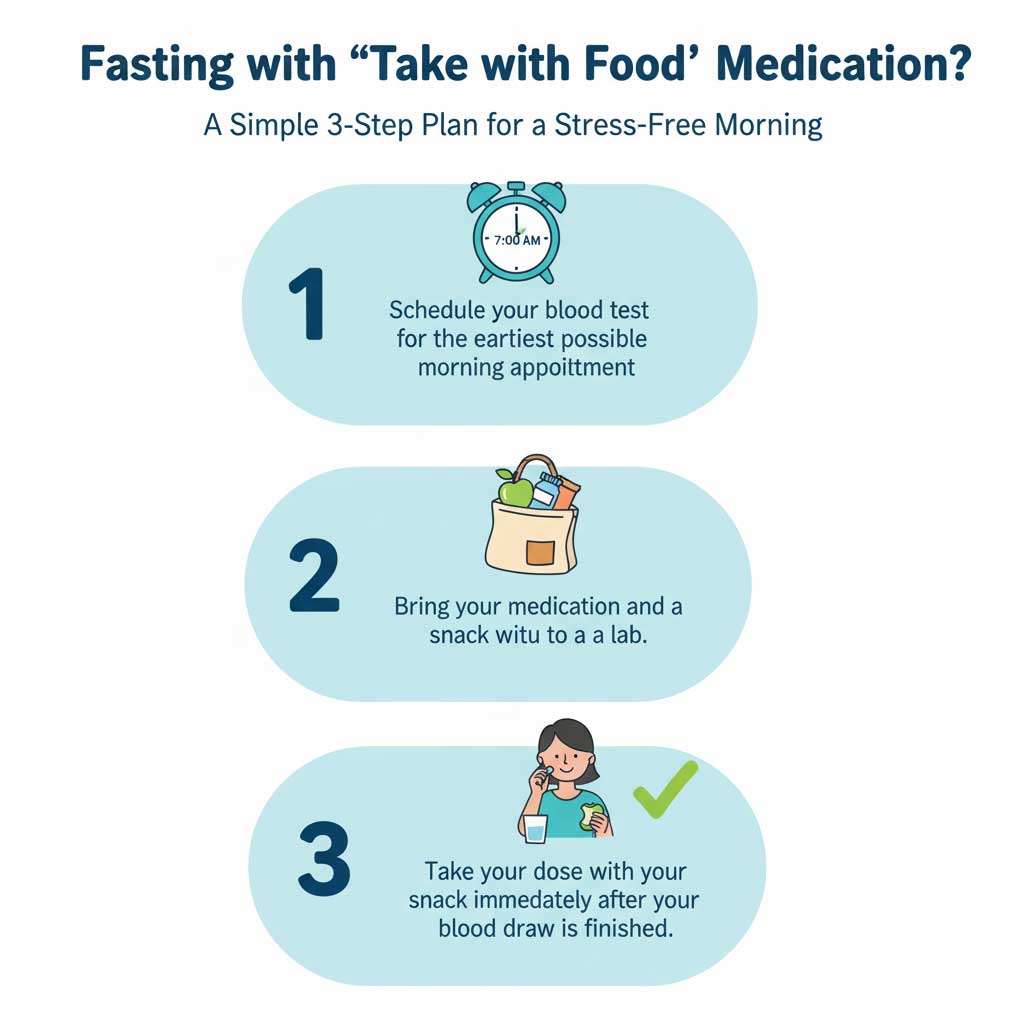
What if you have a medication with food but fasting for labs? This is a common and solvable problem.
- The Solution: Schedule your blood test for the earliest possible time in the morning. This minimizes the time you have to go without food. Bring your medication and a small, healthy snack (like a granola bar or a piece of fruit) with you. The moment your blood draw is complete, you can take your medication with your snack.
Get the Tests You Need, On Your Schedule
Keeping track of your health shouldn’t be limited to a single appointment each year. For individuals managing chronic conditions like thyroid disease or diabetes, or for those who want to proactively monitor their wellness, regular, convenient testing is key. HealthCareOnTime.com puts you in control of your health data.
Proactive Health Monitoring Made Simple
We believe that access to laboratory testing should be simple, transparent, and on your schedule.
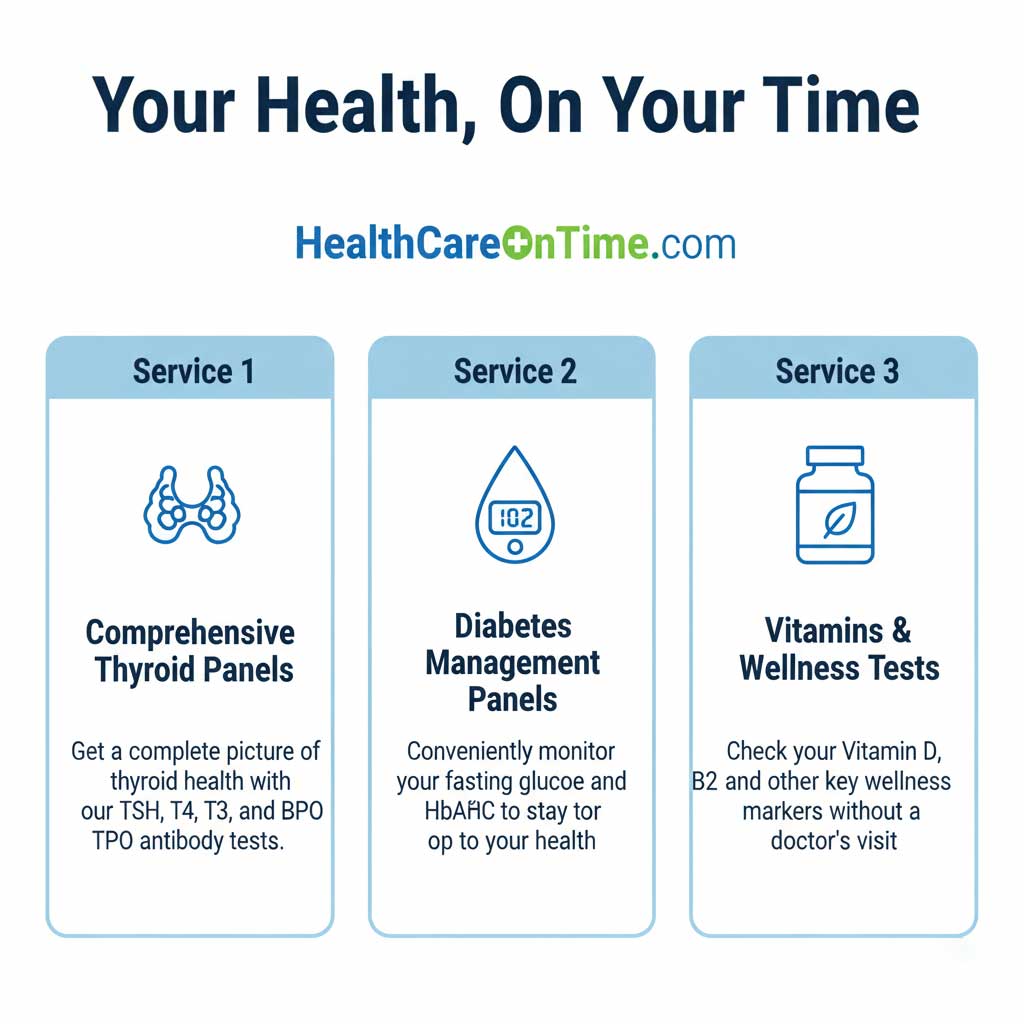
Comprehensive Thyroid Panel
Are you managing a thyroid condition? Our comprehensive panel includes TSH, Free T4, Free T3, and TPO antibodies, giving you and your doctor the complete picture you need to optimize your treatment. It’s the perfect way to track your levels between doctor’s visits, taking the guesswork out of the thyroid medicine before fasting labs question.
Diabetes Management Panel
Easily and conveniently monitor your fasting glucose and HbA1c on your own schedule. Get the data you and your doctor need to effectively manage your diabetes and make informed decisions about your treatment plan.
Vitamins & Wellness Panels
Curious about your Vitamin D or B12 levels? Concerned about potential deficiencies? We offer a wide range of wellness tests that allow you to take a proactive and informed role in your own health journey.
Conclusion: The Golden Rule of Communication
So, let’s return to our original, pressing question: Can I take pills while fasting for blood work? The answer, for most essential prescribed medications, is a reassuring “yes.” The real key is to understand which specific medications and, most importantly, which supplements (like biotin) require special instructions and careful planning.
The ultimate takeaway and the true Golden Rule is proactive communication. Your healthcare team cannot provide you with accurate care if they don’t have accurate data. A simple phone call to your doctor’s office a few days before your test, armed with a complete list of your medications and supplements, can eliminate all confusion, prevent the need for a re-draw, and ensure your blood test results are a true and reliable reflection of your health. Taking charge of your preparation is taking charge of your health.