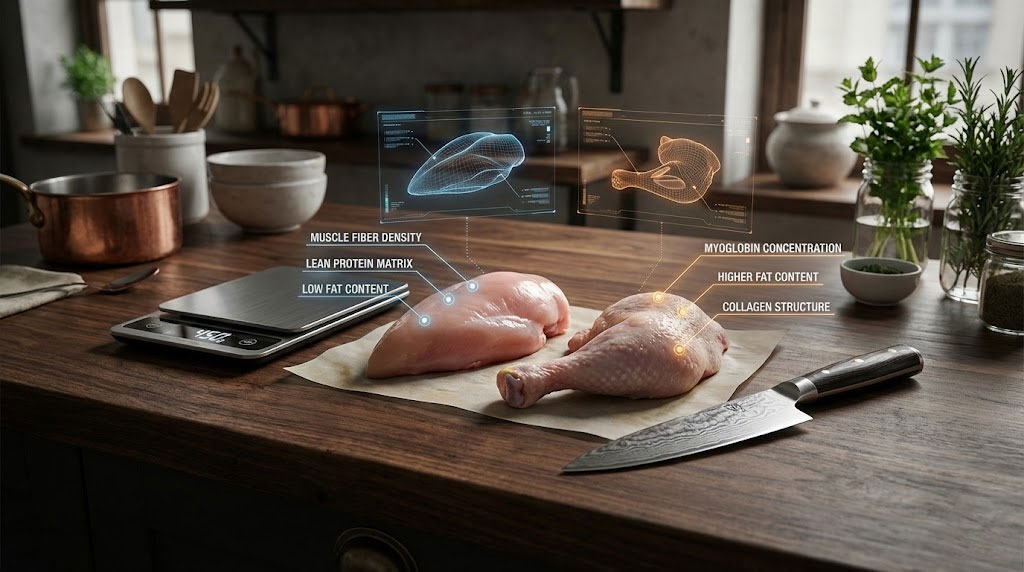
A standard 3.5 oz (100g) serving of cooked, skinless chicken breast contains 165 calories and 31g of protein, making it the most calorie-efficient cut for muscle building. In contrast, the same portion of roasted skinless chicken thigh contains 179 calories and 24.8g of protein, offering higher fat content which promotes satiety. Chicken skin significantly alters the nutritional profile, adding approximately 80 to 100 calories per serving due to its high fat density. For accurate tracking, always weigh chicken cooked as it loses about 25% of its water weight during the heating process. (Source: USDA FoodData Central)
Table of Contents
Most shoppers stand in the poultry aisle staring at the price difference between boneless skinless breasts and bone-in thighs, wondering if the nutritional trade-off is worth the savings. We treat chicken as the default protein source in the United States, yet most people are guessing when it comes to the actual macros on their plate.
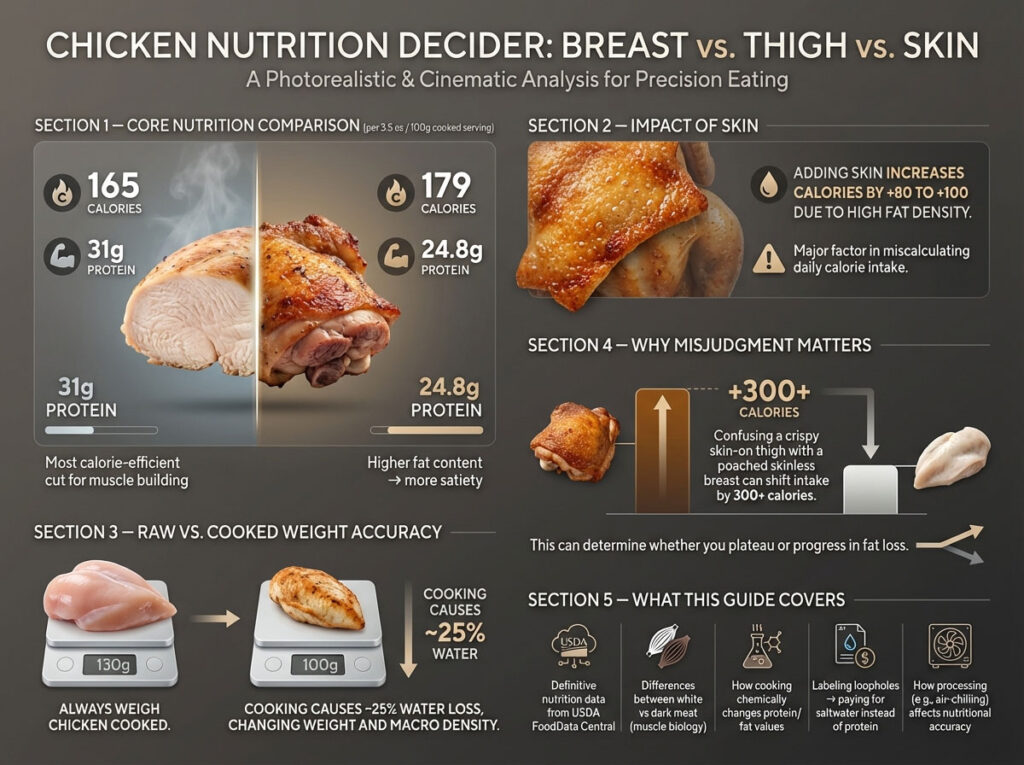
Misjudging the nutritional difference between a crispy skin-on thigh and a poached skinless breast can swing your daily intake by over 300 calories. That margin of error is often the difference between hitting a fat-loss plateau and seeing consistent progress.
This guide provides a definitive breakdown of chicken nutrition facts based on the standard data from USDA FoodData Central. We will analyze every cut, the impact of the skin, the “raw vs. cooked” weighing debate, and how processing methods like air-chilling affect the protein you actually get for your dollar.
We will also go beyond the basic numbers. We will explore the “why” behind the data, including the muscle biology that makes dark meat different from white meat, the chemical changes that occur during cooking, and the labeling loopholes that might mean you are paying for saltwater instead of protein.
The Core Breakdown: Macros by Cut
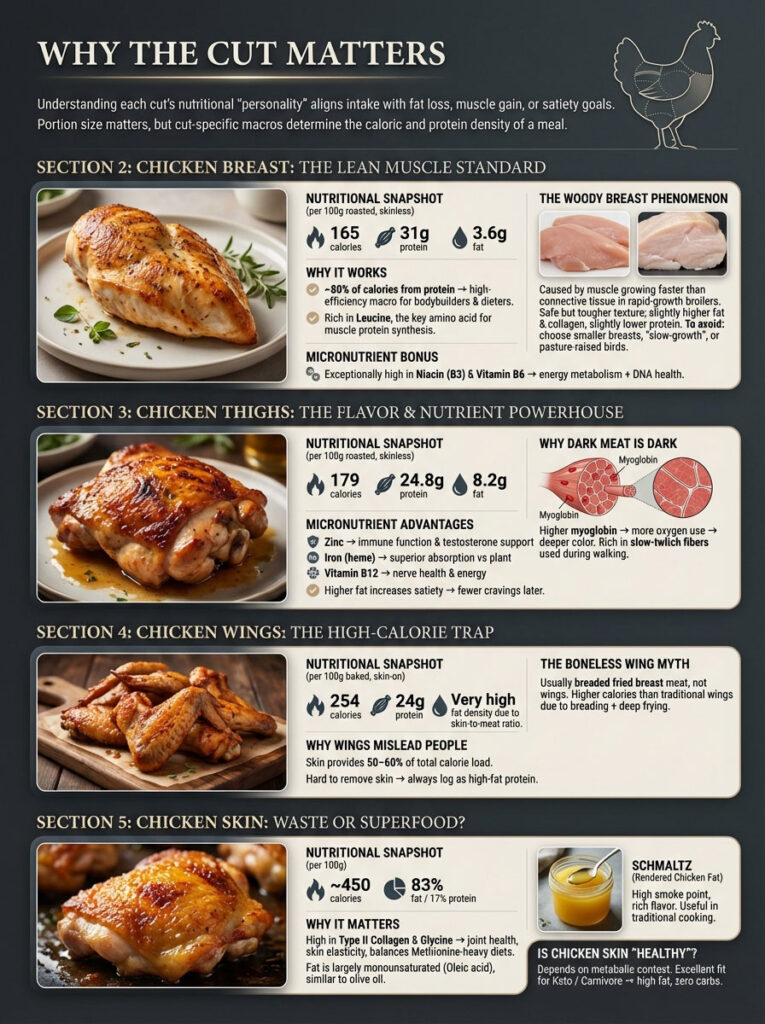
Understanding the nutritional “personality” of each part of the bird is crucial for aligning your diet with your goals. Whether you are tracking chicken calories for a deficit or calculating chicken protein for muscle synthesis, the cut matters just as much as the portion size.
Chicken Breast: The Lean Muscle Standard
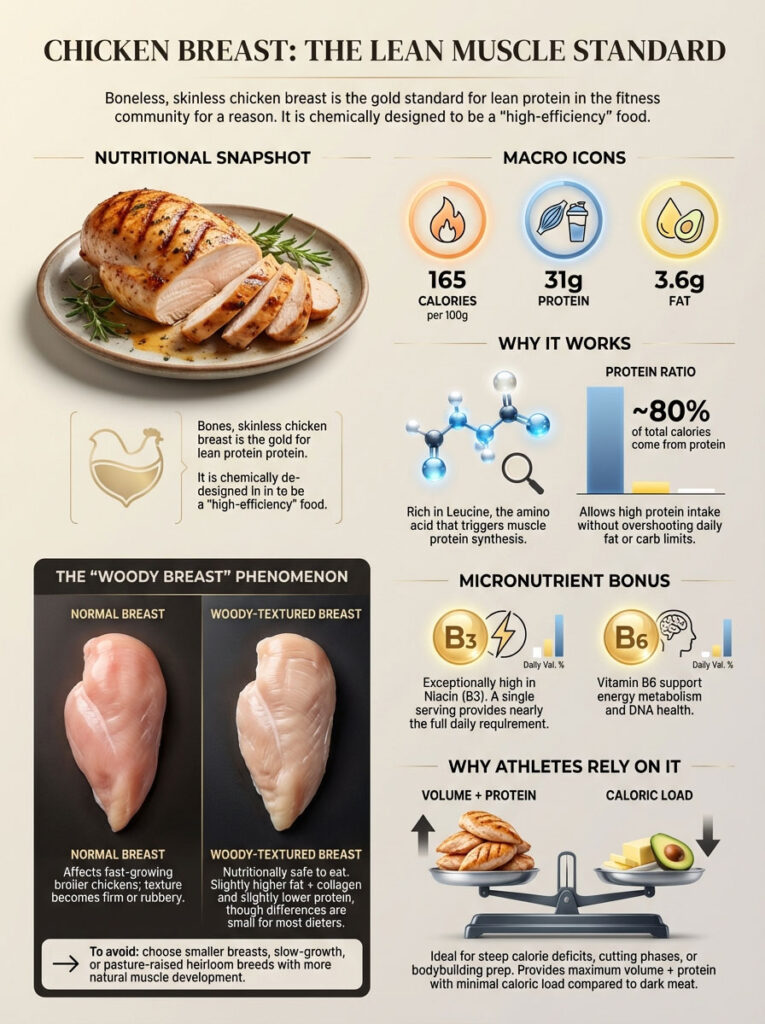
Boneless, skinless chicken breast is the gold standard for lean protein in the fitness community for a reason. It is chemically designed to be a “high-efficiency” food.
Nutritional Snapshot:
A 100g serving of roasted, skinless chicken breast delivers 165 calories and 31g of protein. It contains only 3.6g of fat.
Why It Works:
With roughly 80% of its calories coming directly from protein, chicken breast allows you to hit high protein targets without exhausting your daily fat or carbohydrate limits. It is also rich in Leucine, an essential branched-chain amino acid that triggers muscle protein synthesis.
The “Woody Breast” Phenomenon:
In recent years, consumers have noticed a change in the texture of some large chicken breasts, often described as “woody” or rubbery. This condition, known as “woody breast,” affects the muscle fibers of rapidly growing broilers. While nutritionally safe to eat, the texture can be unappealing. This phenomenon occurs because the muscle grows faster than the supportive connective tissue can keep up, leading to hardening. From a nutritional standpoint, woody breast meat has slightly higher fat and collagen content and slightly lower protein than unaffected meat, though the difference is negligible for most dieters. To avoid this, many chefs recommend buying smaller breasts or choosing “slow-growth” or pasture-raised heirloom breeds where muscle development is more natural.
Micronutrient Bonus:
Breast meat is exceptionally high in Niacin (Vitamin B3) and Vitamin B6. A single serving provides nearly your entire daily requirement of Niacin, which is vital for converting food into usable energy and maintaining healthy DNA.
If you are in a steep calorie deficit or preparing for a bodybuilding show, the chicken breast nutrition profile is unmatched. It provides volume and protein without the caloric density of darker cuts.
Chicken Thighs: The Flavor & Nutrient Powerhouse
There has been a massive shift in consumer preference toward dark meat in recent years. This is partly due to economics—thighs are often cheaper—but also because the fat content provides flavor and satiety that breast meat lacks.
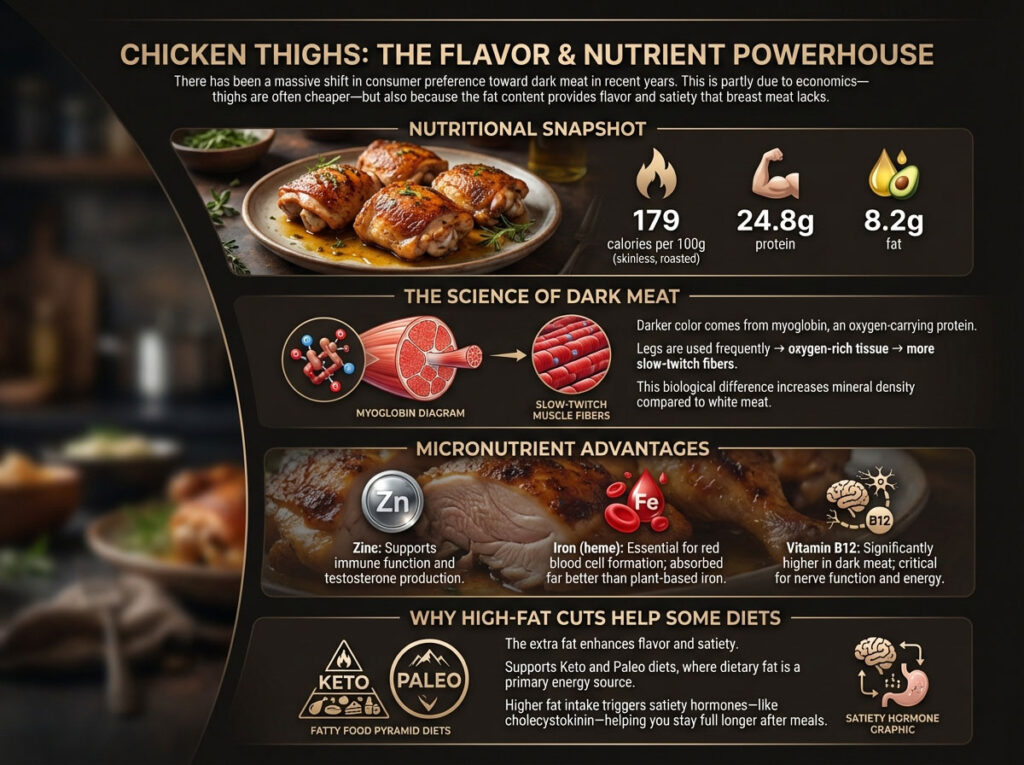
Nutritional Snapshot:
The nutritional value in chicken thighs delivers 179 calories per 100g (skinless, roasted), with 24.8g of protein and 8.2g of fat
The Science of Dark Meat:
The darker color of thigh meat comes from myoglobin, an oxygen-carrying protein found in muscles that are used frequently by the animal. Because chickens use their legs to walk, this muscle tissue is oxygen-rich and contains more slow-twitch muscle fibers.
This biology means chicken thigh nutrition offers higher levels of minerals compared to white meat.
- Zinc: Crucial for immune function and testosterone production.
- Iron: Essential for red blood cell formation and preventing fatigue. The iron in chicken is heme-iron, which is absorbed significantly better by the human body than plant-based non-heme iron.
- Vitamin B12: Dark meat contains significantly more B12 than breast meat, supporting nerve function.
For those on Keto or Paleo diets, the extra fat is a feature rather than a bug. It triggers satiety hormones like cholecystokinin, helping you feel fuller for longer after a meal. This satiety factor can prevent snacking later in the day, potentially offsetting the slightly higher calorie count of the meal itself.
Chicken Wings: The Calorie Trap
Wings are the most deceptive cut on the bird. They are rarely eaten plain and are almost always consumed with the skin on. Structurally, a wing has a very high skin-to-meat ratio, which drastically increases the caloric load.
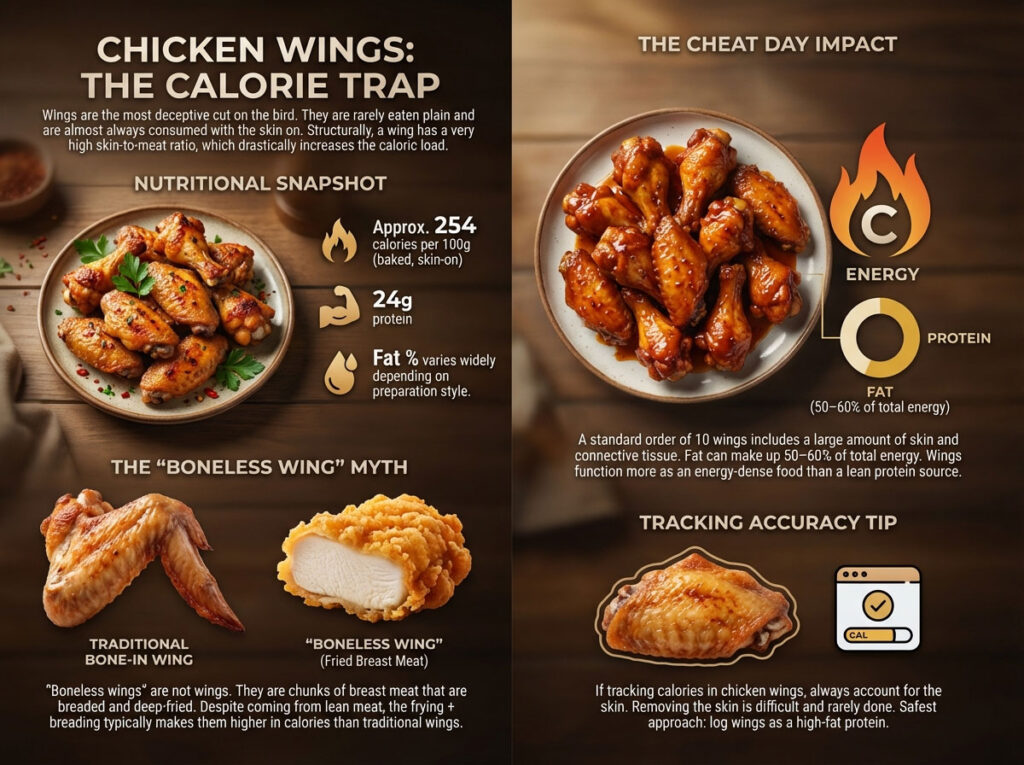
Nutritional Snapshot:
Chicken wing nutrition varies wildly by preparation, but a standard 100g serving of baked, skin-on wings contains roughly 254 calories and 24g of protein.
The “Boneless Wing” Myth:
It is important to clarify a common menu item. “Boneless wings” are almost never wings. They are typically chunks of breast meat that have been breaded and fried. While this might suggest they are leaner, the heavy breading and deep-frying process usually elevates their calorie count above that of a traditional bone-in wing.
The Cheat Day Impact:
If you consume a standard order of 10 wings, you are not just eating meat. You are consuming a significant amount of skin and connective tissue. The fat content in wings can comprise nearly 50% to 60% of the total energy density.
While delicious, wings are functionally an energy source rather than a lean protein source. If you are tracking calories in chicken wings, you must account for the skin. Removing the skin from a wing is difficult and rarely done, so it is safer to log them as a high-fat protein.
Chicken Skin: Waste or Superfood?
For decades, health guidelines told us to strip the skin and throw it away. However, the rise of the Carnivore Diet and nose-to-tail eating has recontextualized chicken skin as a valuable source of nutrients.
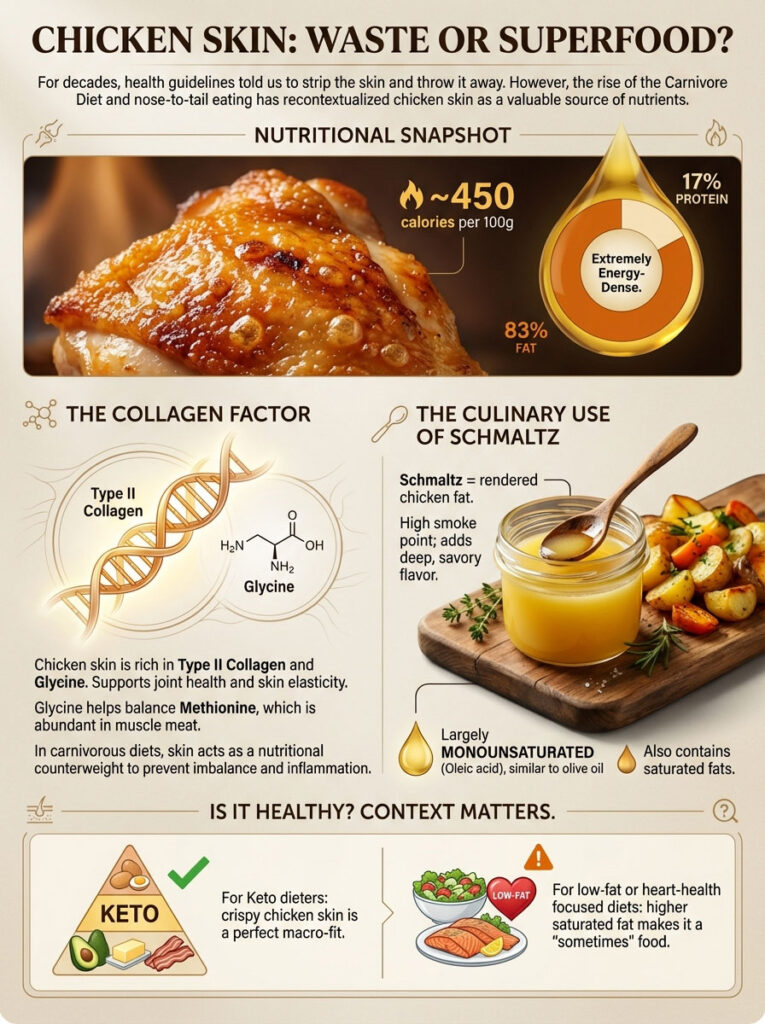
Nutritional Snapshot:
Chicken skin alone is extremely energy-dense. Chicken skin calories hover around 450 calories per 100g, with the composition being approximately 83% fat and 17% protein.
The Collagen Factor:
The skin is not just fat. It is a rich source of Type II Collagen and Glycine, amino acids that support joint health and skin elasticity. Glycine is particularly important for balancing Methionine, an amino acid found in high concentrations in muscle meat. A diet high in muscle meat but low in Glycine (connective tissue/skin) can potentially lead to inflammatory issues, making the skin a balancing agent in carnivorous diets.
The Culinary Use of Schmaltz:
Rendered chicken fat, known as schmaltz, is a staple in traditional cooking. It has a high smoke point and adds deep savory flavor to roasted vegetables. Nutritional analysis shows that the fat in chicken skin is largely monounsaturated (Oleic acid), similar to the fat profile of olive oil, though it does contain saturated fats as well.
Is it healthy? That depends on your metabolic context.
For a Ketogenic dieter, crispy chicken skin is a perfect macro-fit.
For someone on a low-fat heart-health protocol, the saturated fat content makes it a “sometimes” food.
Beyond Macros: Essential Vitamins & Minerals
While protein gets the glory, chicken is a micronutrient density star. It is not just “fuel”; it provides the co-factors your body needs to actually use that fuel.
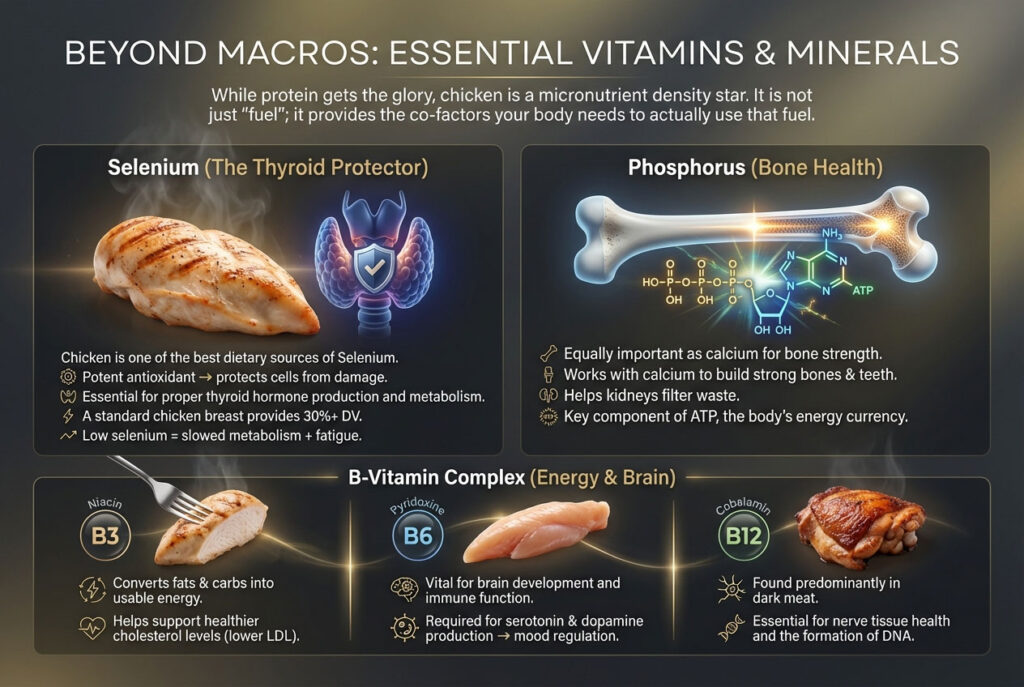
1. Selenium (The Thyroid Protector)
Chicken is one of the best dietary sources of Selenium. This mineral is a potent antioxidant that protects cells from damage and is critical for proper thyroid function and metabolism. A standard chicken breast can provide over 30% of your daily value. Without adequate selenium, the thyroid cannot produce hormones effectively, which can lead to a slowed metabolism and fatigue.
2. Phosphorus (Bone Health)
We often think of calcium for bones, but Phosphorus is equally important. Chicken provides a substantial amount of Phosphorus, which works with Calcium to build strong bones and teeth, and helps filter waste in the kidneys. It is also a key component of ATP (Adenosine Triphosphate), the molecule your body uses for energy.
3. B-Vitamin Complex (Energy & Brain)
Poultry is a powerhouse for B-vitamins, specifically:
- Niacin (B3): As mentioned, helps convert fats and carbs into energy. It also plays a role in lowering LDL cholesterol.
- Pyridoxine (B6): Vital for brain development and immune function. B6 is necessary for creating neurotransmitters like serotonin and dopamine, meaning your chicken dinner indirectly supports your mood regulation.
- Cobalamin (B12): Found predominantly in the dark meat, essential for nerve tissue health and the formation of DNA.
The Complete Micronutrient Breakdown
While most guides stop at calories and protein, understanding the micronutrient density helps you choose the right cut for your specific health needs. The table below compares the essential vitamins and minerals found in Breast vs. Thigh meat.
Micronutrient Profile per 100g (Cooked)
| Nutrient | Skinless Breast | Skinless Thigh | Skinless Wings | Primary Health Benefit |
| Selenium | 27.6 mcg (50% DV) | 20.0 mcg (36% DV) | 25.4 mcg (46% DV) | Thyroid function & Antioxidant defense |
| Niacin (B3) | 13.7 mg (85% DV) | 6.4 mg (40% DV) | 7.4 mg (46% DV) | Energy metabolism & DNA repair |
| Vitamin B6 | 0.6 mg (35% DV) | 0.35 mg (20% DV) | 0.35 mg (20% DV) | Brain health & Neurotransmitter synthesis |
| Vitamin B12 | 0.34 mcg (14% DV) | 0.60 mcg (25% DV) | 0.37 mcg (15% DV) | Nerve function & Red blood cell formation |
| Zinc | 1.0 mg (9% DV) | 2.5 mg (23% DV) | 1.8 mg (16% DV) | Immune system support & Testosterone |
| Iron | 1.0 mg (6% DV) | 1.3 mg (7% DV) | 1.1 mg (6% DV) | Oxygen transport in blood (Heme Iron) |
| Choline | 85 mg | 70 mg | 88 mg | Cellular structure & Liver function |
| Potassium | 256 mg | 240 mg | 212 mg | Fluid balance & Muscle contractions |
| Magnesium | 29 mg | 23 mg | 22 mg | Muscle relaxation & Enzyme function |
Note: “DV” refers to Daily Value based on a standard 2,000 calorie diet. Data sourced from USDA FoodData Central.
Amino Acid Profile: The Building Blocks
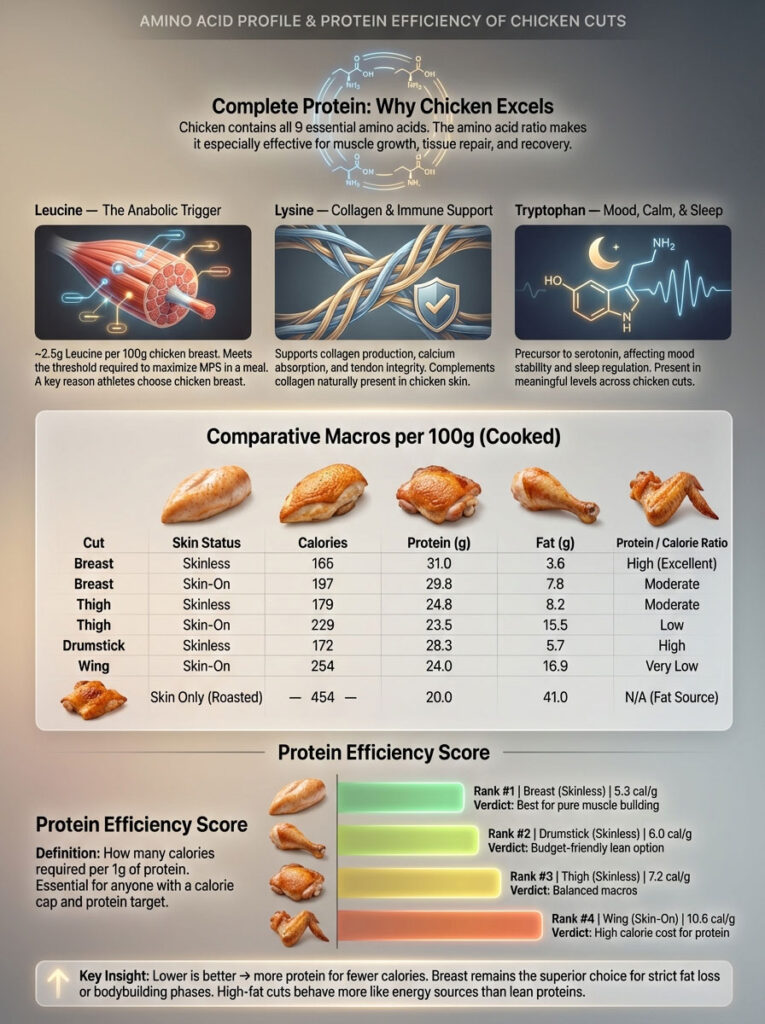
Chicken is considered a “complete protein,” meaning it contains all nine essential amino acids that the human body cannot produce on its own. However, the ratio of these amino acids is what makes chicken particularly potent for fitness and recovery.
Leucine: The Anabolic Trigger
Chicken breast is incredibly rich in Leucine. This amino acid acts as the “key” that turns on the ignition for muscle protein synthesis (MPS). A 100g serving of chicken breast contains approximately 2.5g of Leucine, which is generally considered the threshold amount required to maximize MPS in a single meal. This is why bodybuilders favor chicken over other protein sources that might be lower in Leucine, such as certain plant-based proteins.
Lysine: Immune & Structural Support
Chicken is also a top source of Lysine, which plays a major role in calcium absorption and the formation of collagen. While chicken skin provides collagen directly, the Lysine in the meat helps your body synthesize its own collagen, essential for recovering from injuries and maintaining healthy tendons.
Tryptophan: More Than Just Sleep
We often associate Tryptophan with the post-Thanksgiving nap, but it is present in significant amounts in chicken as well. Tryptophan is a precursor to Serotonin, the “feel-good” neurotransmitter. Adequate intake helps regulate mood and sleep cycles.
Master Comparison of Chicken Calories, Protein and Fat
To help you visualize the trade-offs, we have compiled these values using the standard USDA FoodData Central database for cooked, roasted poultry.
Comparative Macros Per 100g (Cooked)
| Cut (Cooked) | Skin Status | Calories | Protein (g) | Fat (g) | Protein/Calorie Ratio |
| Breast | Skinless | 165 | 31.0 | 3.6 | High (Excellent) |
| Breast | Skin-On | 197 | 29.8 | 7.8 | Moderate |
| Thigh | Skinless | 179 | 24.8 | 8.2 | Moderate |
| Thigh | Skin-On | 229 | 23.5 | 15.5 | Low |
| Drumstick | Skinless | 172 | 28.3 | 5.7 | High |
| Wing | Skin-On | 254 | 24.0 | 16.9 | Very Low |
| Skin Only | Roasted | 454 | 20.0 | 41.0 | N/A (Fat Source) |
Protein Efficiency Score
This table ranks cuts based on how “expensive” the protein is in terms of your daily calorie budget. This metric is vital for dieters who have a “calorie cap” but a “protein floor” to hit.
| Rank | Cut | Calories per 1g Protein | Verdict |
| #1 | Breast (Skinless) | 5.3 calories | Best for pure muscle building |
| #2 | Drumstick (Skinless) | 6.0 calories | Budget-friendly lean option |
| #3 | Thigh (Skinless) | 7.2 calories | Balanced macros |
| #4 | Wing (Skin-On) | 10.6 calories | High calorie cost for protein |
The Raw vs. Cooked Tracking Dilemma
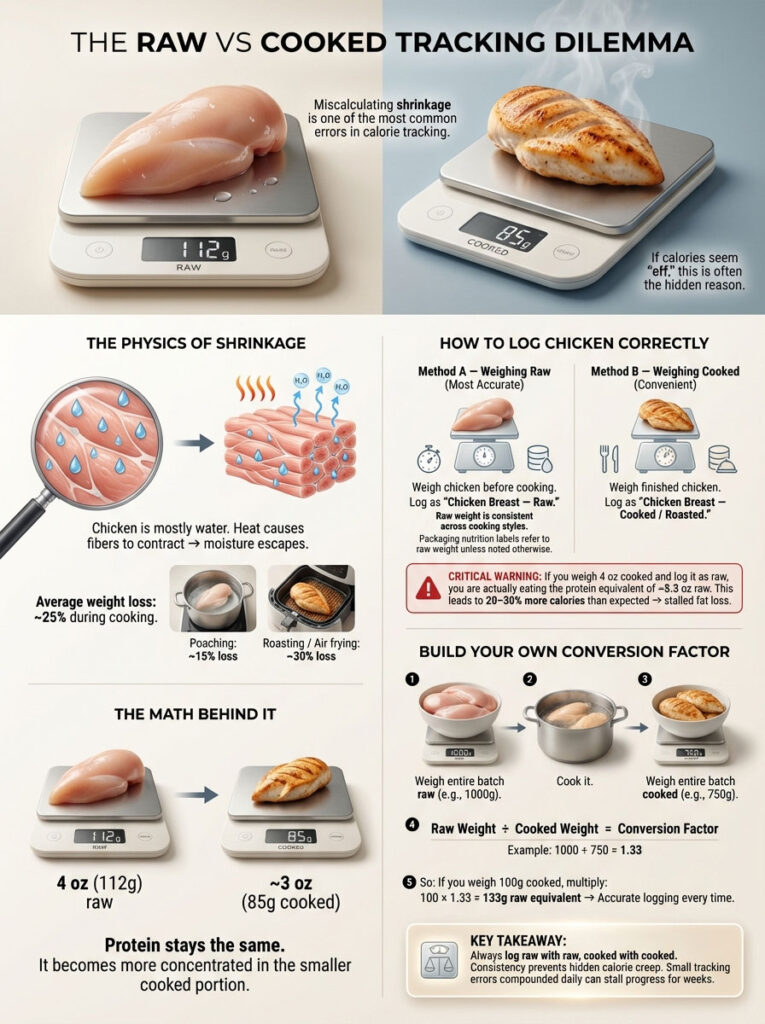
One of the most common errors in nutrition tracking involves the “shrinkage factor.” If you have ever logged chicken calories into an app and wondered why you aren’t losing weight, this might be the culprit.
The Physics of Shrinkage
Muscle tissue is largely water. When you apply heat to chicken, water evaporates and muscle fibers contract, squeezing out moisture.
On average, chicken loses about 25% of its weight during the cooking process. This percentage can vary depending on the method. Poaching might result in a 15% loss, while air-frying or roasting until very dry could result in a 30% loss.
The Math:
If you buy 4 oz (112g) of raw chicken breast, it will weigh approximately 3 oz (85g) after grilling.
However, the protein count does not change. The protein that was in the raw 4 oz piece is now concentrated into the cooked 3 oz piece.
How to Log Correctly
You must match your logging method to the state of the chicken when you weigh it. Mixing these up is a primary cause of stalled diet progress.
Method A: Weighing Raw (Most Accurate)
Place the raw chicken on the scale.
Log the entry as “Chicken Breast – Raw.”
This is preferred because cooking times vary. A dry, overcooked breast loses more water than a juicy one, but the raw input is constant. Nutritional labels on packaging always refer to the raw state unless specified otherwise.
Method B: Weighing Cooked (Convenient)
Place the cooked meat on the scale.
Log the entry as “Chicken Breast – Cooked / Roasted.”
Critical Warning: Do not weigh 4 oz of cooked chicken and log it as “Raw.”
If you do this, you are actually eating the protein equivalent of 5.3 oz of raw chicken. Over time, this error can lead to eating 20% to 30% more calories than you think you are.
Establishing Your Own Conversion Factor
If you batch cook for the week, you can calculate your own exact conversion factor.
- Weigh the entire batch raw (e.g., 1000g).
- Cook the batch.
- Weigh the entire batch cooked (e.g., 750g).
- Divide Raw Weight by Cooked Weight (1000 / 750 = 1.33).
- Now, whenever you weigh a cooked portion, multiply it by 1.33 to get the raw weight for accurate logging.
Quality & Sourcing: Air-Chilled vs. Water-Chilled
When analyzing chicken nutrition facts, we often ignore the processing method. However, the way the bird is cooled after slaughter directly impacts the value and nutrition you receive.
The Water-Chilled Standard
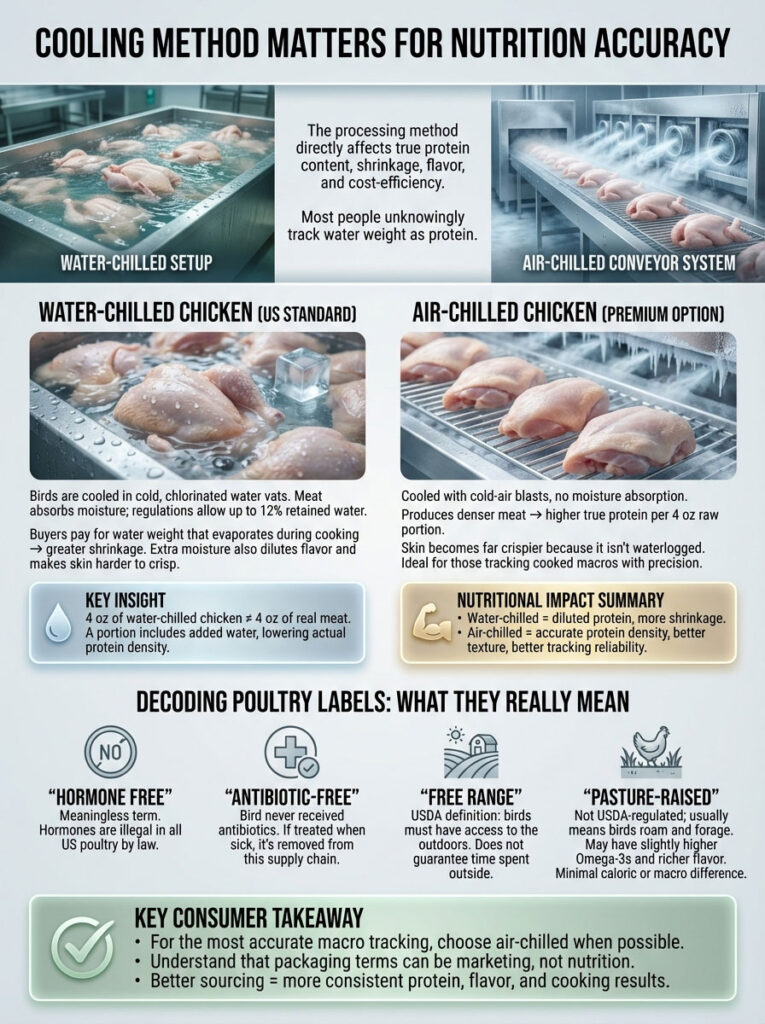
Most conventional chicken in the US is “water-chilled.” The birds are submerged in large vats of cold, chlorinated water to lower their temperature.
During this process, the meat absorbs water. Regulations allow up to 12% of the package weight to be “retained water.”
This means you are paying for water, and when you cook it, that water steams out, shrinking the bird significantly. This absorbed water can also dilute the flavor of the meat.
The Air-Chilled Advantage
Air-chilled chicken is cooled using blasts of cold air. The bird does not absorb extra moisture.
Nutritional Impact:
Air-chilled chicken is denser. A 4 oz raw serving of air-chilled chicken contains more actual meat protein than 4 oz of water-chilled chicken because the latter is diluted by water weight.
Additionally, the skin on air-chilled birds crisps significantly better because it is not waterlogged. For those seeking the best cooked chicken macros, paying the premium for air-chilled ensures you aren’t tracking water as protein.
Decoding the Labels: What Matters?
The US poultry market is flooded with marketing terms. Here is what they actually mean for your nutrition:
- “Hormone Free”: This is meaningless. Federal regulations prohibit the use of added hormones in all poultry in the US. Every chicken is hormone-free by law.
- “Antibiotic-Free”: This means the bird was never administered antibiotics. If a bird gets sick and requires medicine, it is treated but removed from the “antibiotic-free” supply chain.
- “Free Range”: This USDA term means the birds have “access” to the outdoors. It does not guarantee they actually spent time on a pasture; it just means a door was open.
- “Pasture-Raised”: This is not a USDA-regulated term, but generally implies the birds forage on grass. This can lead to slightly higher Omega-3 levels and a more distinct flavor profile, but the caloric difference is minimal.
Economic Context: Smart Shopping Strategies
Market fluctuations often change the way we shop for protein. Historically, boneless skinless chicken breast commands a high premium due to its demand. However, there are consistent opportunities in the market for budget-conscious shoppers who know where to look.
Inflation-Proofing Your Macros
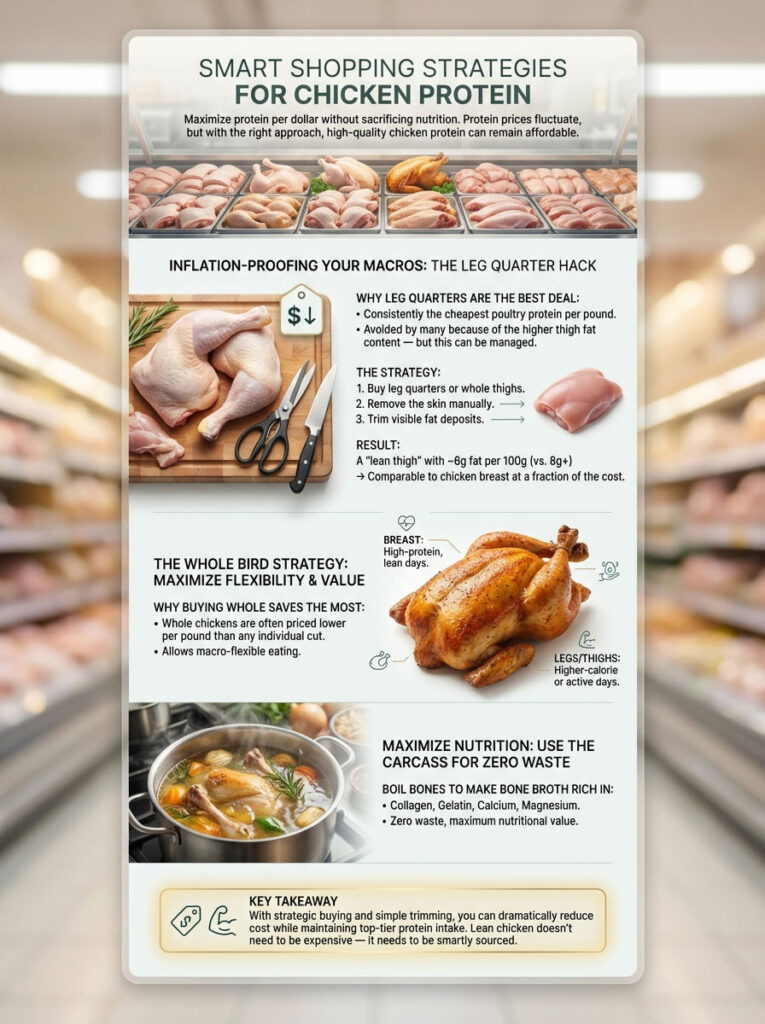
Leg quarters (the thigh and drumstick attached) are consistently the cheapest source of poultry protein per pound.
Many fitness enthusiasts avoid them because when they ask how many calories in chicken thigh, they see the higher fat content and assume it cannot fit a lean diet.
The Strategy:
Buy the cheaper leg quarters or whole thighs.
Remove the skin yourself.
Trim the visible fat deposits.
By doing this manual labor, you create a “lean thigh” that mimics the nutritional profile of a breast (approx. 6g fat per 100g instead of 8g+) but at a fraction of the price.
The Whole Bird Strategy
Buying a whole chicken is often the most economical choice.
- Roast Whole: Eat the breast for your high-protein days and the legs for your active/high-calorie days.
- Save the Carcass: Boil the bones to make stock. Chicken bone broth is rich in collagen, gelatin, and minerals (calcium, magnesium). This squeezes every ounce of nutritional value out of your purchase.
This approach makes chicken protein affordable without sacrificing your macro goals. It requires more prep time but saves significant money on the weekly grocery bill.
Dietary Applications: Customizing Chicken for Your Goals
Chicken is a versatile tool, but how you use it should depend on your specific metabolic goals. Here is how to optimize chicken consumption for the three most common dietary protocols.
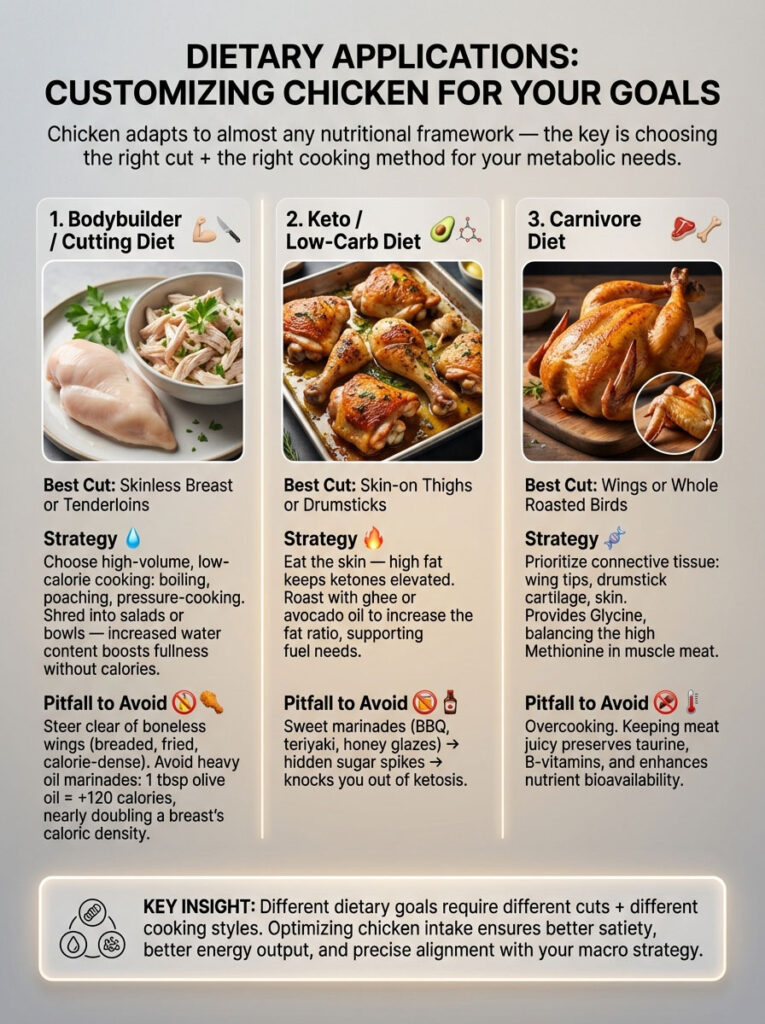
1. The Bodybuilder / Cutting Diet
For this group, volume and protein density are paramount. The goal is to maximize satiety per calorie.
- Best Cut: Skinless Breast or Tenderloins.
- Strategy: Utilize “high volume” cooking methods like boiling or poaching, then shredding the meat into salads. The water content keeps the volume high.
- Pitfall to Avoid: Avoid “Boneless Wings” or excessive oil marinades. A single tablespoon of olive oil adds 120 calories, nearly doubling the caloric density of a small breast portion.
2. The Keto / Low-Carb Diet
For this group, fat is fuel. Lean protein can sometimes be detrimental if it pushes protein intake too high relative to fat, potentially stimulating gluconeogenesis (though this is debated).
- Best Cut: Skin-on Thighs or Drumsticks.
- Strategy: Eat the skin. It provides the necessary fats to keep ketones elevated. Roasting with ghee or avocado oil increases the fat profile further.
- Pitfall to Avoid: Sweet marinades. Many BBQ sauces or teriyaki glazes commonly used on wings are loaded with sugar, which will kick you out of ketosis immediately.
3. The Carnivore Diet
For this group, the focus is on nutrient density and bioavailability.
- Best Cut: Wings or Whole Roasted Birds.
- Strategy: Focus on connective tissues. The cartilage on the ends of drumsticks and wings provides Glycine, which is essential for balancing the Methionine found in the muscle meat.
- Pitfall to Avoid: Overcooking. Keeping the meat juicy preserves the small amount of natural taurine and B-vitamins that can degrade with excessive heat.
Cooking Methods & Nutritional Impact
You can buy the leanest skinless chicken breast, but your cooking method can transform it into a calorie bomb. The way you apply heat changes the chemical structure and caloric density of the meal.
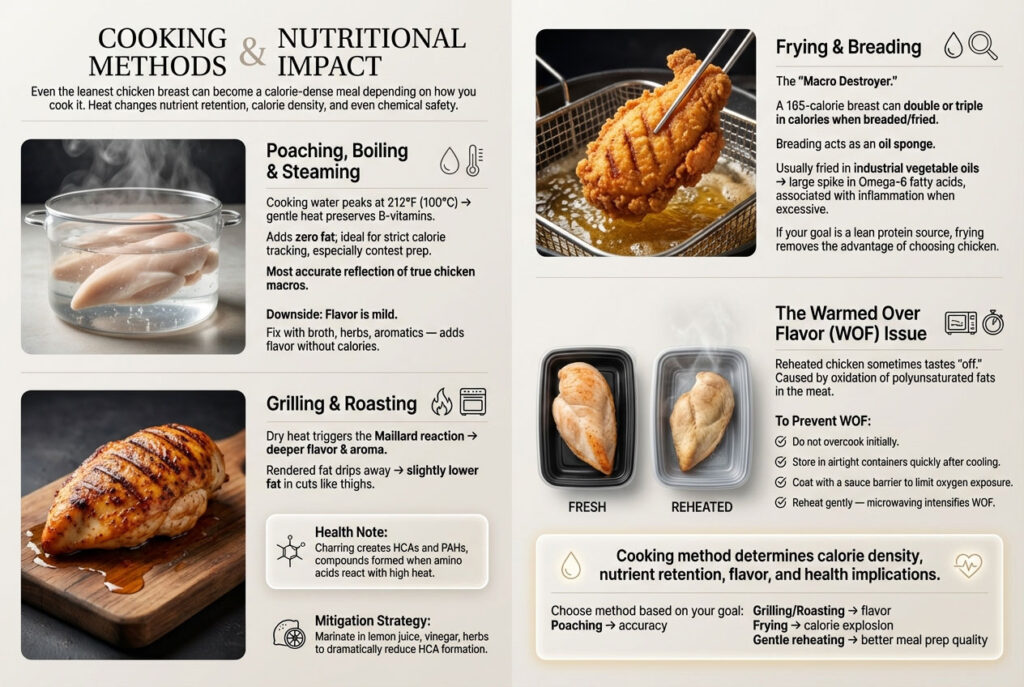
Poaching, Boiling & Steaming
These are the purest methods.
Cooking in water reaches a maximum temperature of 212°F (100°C).
This gentle heat preserves the most heat-sensitive vitamins (like B-complex vitamins).
Crucially, it adds zero fat.
If you are strictly tracking calories in chicken breast for a contest prep, this is the most accurate method.
Downside: Flavor can be bland. Using broth instead of water or adding herbs can mitigate this without adding calories.
Grilling & Roasting
Dry heat methods are excellent for flavor due to the Maillard reaction—the chemical browning process that creates complex flavors.
When you roast a bird, some fat renders out of the meat and drips away. This can slightly lower the fat content of fatty cuts like thighs.
Health Note: Be wary of charring. Blackened portions contain heterocyclic amines (HCAs) and polycyclic aromatic hydrocarbons (PAHs), which are compounds formed when creatine and amino acids react with high heat.
Mitigation: Marinating chicken in an acid (lemon juice, vinegar) and herbs before grilling has been shown to significantly reduce HCA formation.
Frying & Breading
This is the “Macro Destroyer.”
Taking a 165-calorie breast and breading/frying it can easily double or triple the calorie count.
The breading acts as a sponge for the oil.
Furthermore, most frying is done in vegetable oils (soybean, canola), which drastically increases the Omega-6 fatty acids content of the meal. While essential in small amounts, an excess of Omega-6 is linked to inflammation.
If your goal is a lean protein source, frying negates the benefit of choosing chicken.
The “Warmed Over Flavor” Phenomenon
Have you ever noticed that reheated chicken tastes “off”? This is called Warmed Over Flavor (WOF), caused by the oxidation of polyunsaturated fatty acids in the muscle.
To prevent this in meal prep:
- Do not overcook the chicken initially.
- Store it in airtight containers immediately after cooling.
- Covering the chicken in a sauce helps create a barrier against oxygen.
- Reheat gently; microwaving often exacerbates the off-flavor.
Summary & Key Takeaways
Navigating chicken nutrition facts does not have to be complicated. By focusing on the cut and the preparation, you can manipulate this protein source to fit any diet.
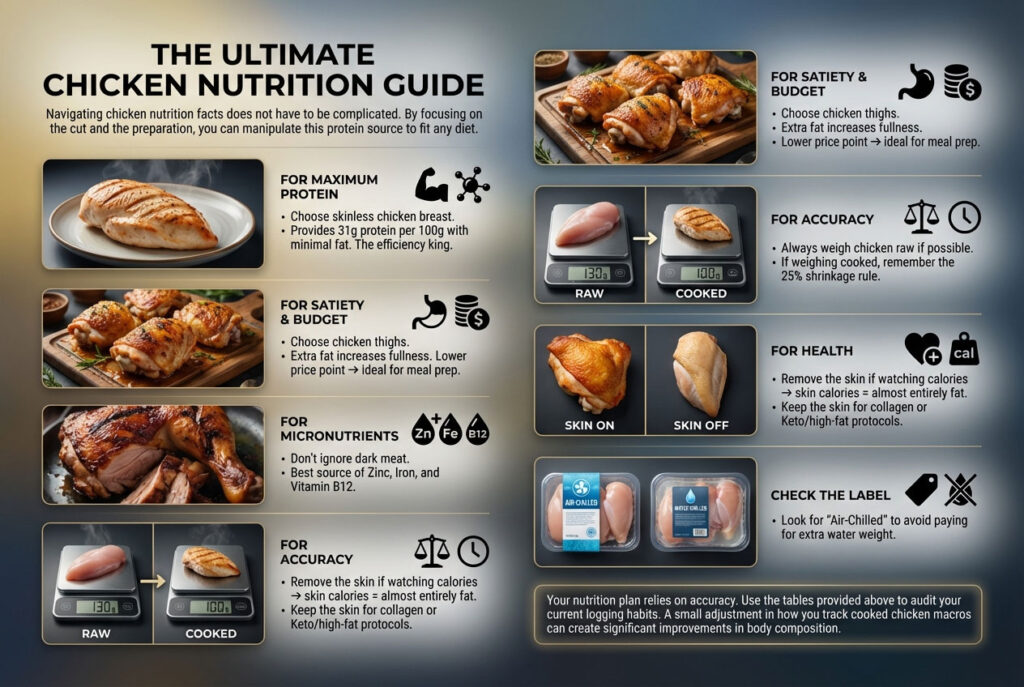
- For Maximum Protein: Choose skinless chicken breast. It offers 31g of protein per 100g with minimal fat. It is the efficiency king.
- For Satiety & Budget: Choose chicken thighs. The extra fat keeps you full, and the lower price point helps with meal prep costs.
- For Micronutrients: Do not ignore the dark meat. It is your best source of Zinc, Iron, and B12.
- For Accuracy: Always weigh your chicken raw if possible. If you weigh it cooked, remember the 25% shrinkage rule.
- For Health: Remove the skin if you are watching calories, as chicken skin calories are almost entirely fat. Conversely, keep the skin if you need collagen or are on a high-fat Keto protocol.
- Check the Label: Look for “Air-Chilled” to ensure you aren’t paying for added water weight.
Your nutrition plan relies on accuracy. Use the tables provided above to audit your current logging habits. A small adjustment in how you track cooked chicken macros can yield significant results in your body composition goals.
Frequently Asked Questions (FAQ)
How many calories in 100g chicken breast vs thigh?
A 100g serving of cooked, skinless chicken breast contains 165 calories, whereas the same amount of cooked, skinless chicken thigh contains 179 calories. The thigh has more fat, which accounts for the caloric difference. While the calorie gap seems small per 100g, it scales up with larger portions.
Is chicken skin healthy for Keto?
Yes, for a Keto diet. Chicken skin is high in fat (approx. 83% of calories) and contains collagen, making it an excellent way to boost fat intake while keeping carbohydrates at zero. The fat provides the necessary energy substrate for ketosis.
How much protein is in a single chicken wing?
One average-sized chicken wing (skin-on, baked) provides between 6 to 9 grams of protein. To get 30g of protein, you would need to eat about 4 to 5 wings. However, doing so would also result in a very high fat intake compared to eating breast meat.
Does removing chicken skin significantly reduce calories?
Yes. Removing the skin from a chicken breast or thigh can save between 50 to 80 calories per serving. The skin is the most calorie-dense part of the bird. For a standard chicken breast, the skin contributes practically zero carbohydrates but nearly half the total fat content of the piece.
What is the difference between air-chilled and water-chilled chicken?
Air-chilled chicken is cooled with cold air, while water-chilled is submerged in water. Air-chilled chicken retains less water weight, meaning you get more meat per pound and a better texture. Water-chilled chicken often releases a lot of liquid in the pan, preventing a good sear.
Why is chicken thigh cheaper than breast?
In the US market, there is a higher demand for white meat (breast) due to its perception as a “lean” health food. This leaves a surplus of dark meat (legs/thighs), driving the price down. Interestingly, in many Asian and Latin American markets, dark meat is preferred for its flavor, and the price gap is narrower.
Is dark meat healthier than white meat?
“Healthier” depends on your goals. Dark meat is richer in Zinc, Iron, and Vitamin B12 compared to white meat. However, it is also higher in calories and saturated fat. If you are anemic or an endurance athlete, the iron in dark meat is beneficial. If you are strictly managing cholesterol or calories, white meat may be the better choice.
How much weight does chicken lose when cooked?
Chicken typically loses about 25% of its weight during cooking due to water evaporation. A 4 oz raw breast will weigh roughly 3 oz after cooking. This loss can increase if the chicken was “enhanced” or plumped with saline solution before purchase.
Can I eat chicken skin on a carnivore diet?
Yes. Chicken skin is widely accepted on the Carnivore Diet as an animal-based source of fat and glycine, which helps balance the methionine found in muscle meat. Some carnivore dieters even make “chicken skin chips” as a zero-carb snack.
What is the best chicken cut for weight loss?
The boneless, skinless chicken breast is the best cut for weight loss because it has the highest protein-to-calorie ratio, keeping you full for fewer calories. Tenderloins are also an excellent option, as they are essentially part of the breast.
How much protein is in 4 oz of cooked chicken breast?
A 4 oz (approx. 113g) serving of cooked chicken breast provides about 35 grams of protein. This is a standard serving size for many meal plans and is roughly the size of a standard deck of playing cards or the palm of your hand.
Does frying chicken destroy protein?
Frying does not “destroy” the protein, but the high heat can slightly denature it, making it tougher. The bigger issue is that frying adds a massive amount of calories from oil and breading, negating the “lean” benefits of the chicken. The nutritional damage comes from the addition of unhealthy fats, not the loss of protein.
Is it safe to wash chicken before cooking?
No. Health agencies like the USDA advise against washing raw chicken. Washing does not kill bacteria; instead, the splashing water spreads pathogens like Salmonella and Campylobacter onto your sink, countertops, and nearby utensils, increasing the risk of cross-contamination. Cooking the chicken to an internal temperature of 165°F is the only way to kill bacteria.
What does “Retained Water” mean on the label?
If a label says “Up to 15% Retained Water,” it means the chicken was cooled in water or injected with a broth solution. You are effectively paying chicken prices for salt water. Always look for the lowest percentage possible, or choose air-chilled chicken which usually has less than 1% retained water.
How long can cooked chicken stay in the fridge?
Cooked chicken is safe to eat for 3 to 4 days if stored properly in the refrigerator. After this point, the risk of bacterial growth increases, and the flavor quality (due to fat oxidation) degrades significantly. For longer storage, freeze cooked chicken for up to 3 months.
Disclaimer: The nutritional data provided in this article is based on standard USDA references. Specific caloric values can vary based on the specific bird, feed, and exact cooking times. Always consult a medical professional or registered dietitian before making drastic changes to your diet.
References:
- U.S. Department of Agriculture (USDA), FoodData Central.
- National Chicken Council, “Nutritive Value of Chicken.”
- Journal of Agricultural and Food Chemistry, studies on Heterocyclic Amines (HCAs) in cooked meats.
- American Journal of Clinical Nutrition, studies on protein satiety and thermogenesis.
- USDA Food Safety and Inspection Service, guidelines on poultry labeling and safety.