If there’s one question I hear almost weekly in my clinic, it’s this: do bananas help with diarrhea? As a registered dietitian who works closely with gastroenterology patients, my answer is a confident yes. Bananas remain one of the most reliable natural foods for calming an upset gut and supporting recovery.
Table of Contents
When your digestive system is struggling, you need food that is gentle, nourishing, and easy to absorb. Bananas check every box. They deliver pectin, restore lost electrolytes, and supply resistant starch that helps your gut heal from the inside out.
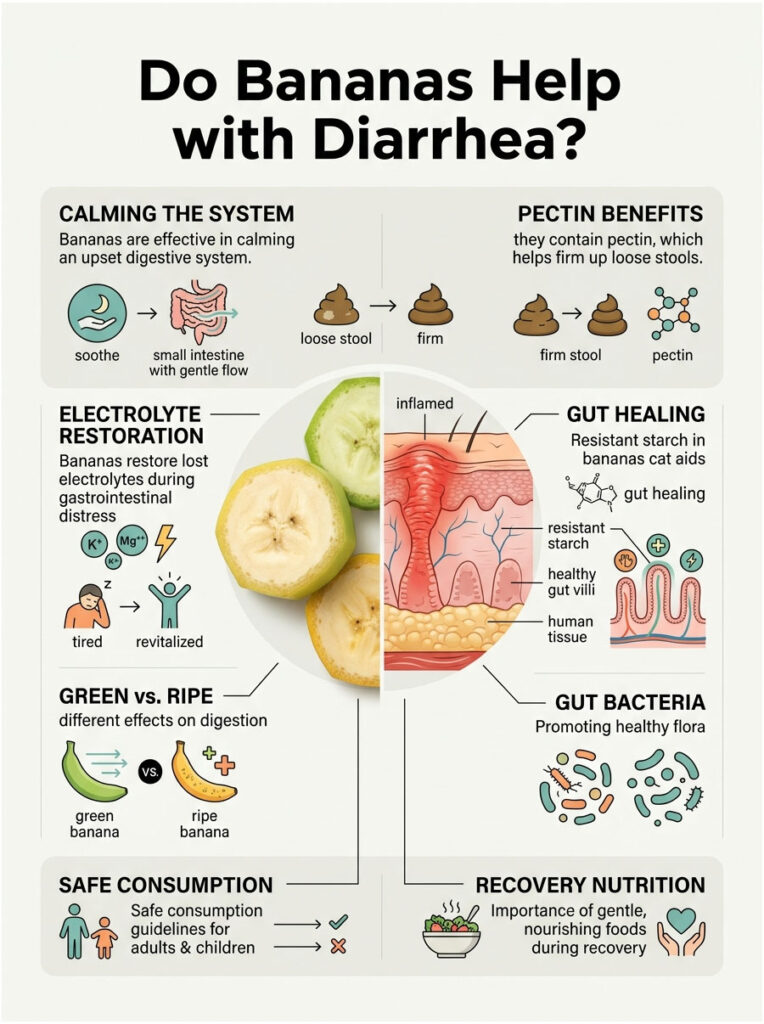
In this guide, I’ll walk you through exactly how bananas firm up loose stools, the surprising difference between green and ripe bananas, how they interact with your gut bacteria, and the safe way to use them for both adults and children. Let’s get into the real science.
Quick Answer
Yes, bananas genuinely help with diarrhea. They’re packed with pectin, a soluble fiber that soaks up excess water in the intestines and helps form firmer stools. They also restore potassium, which your body loses quickly during repeated bowel movements. Green bananas work best for stopping active diarrhea thanks to their resistant starch, while ripe yellow bananas are easier to digest and great for the recovery phase.
Key Facts About Bananas and Gut Recovery
- A medium banana contains roughly 422 mg of potassium.
- Pectin can absorb several times its weight in water inside the digestive tract.
- Clinical trials suggest green banana flakes can cut pediatric diarrhea duration by up to 50 percent.
- Ripe bananas digest in about 30 to 45 minutes, giving you fast energy.
- Severe diarrhea can drain up to 10 percent of the body’s potassium stores in a single day.
- One medium banana provides around 105 easily absorbed calories.
- Bananas are about 75 percent water despite their solid feel.
Why Bananas Are a Clinical Staple for Diarrhea Relief
To understand why bananas work, it helps to look at what’s actually happening inside your body during diarrhea. Bananas aren’t just a comforting snack. They’re a functional food that physically changes the environment of your gut.
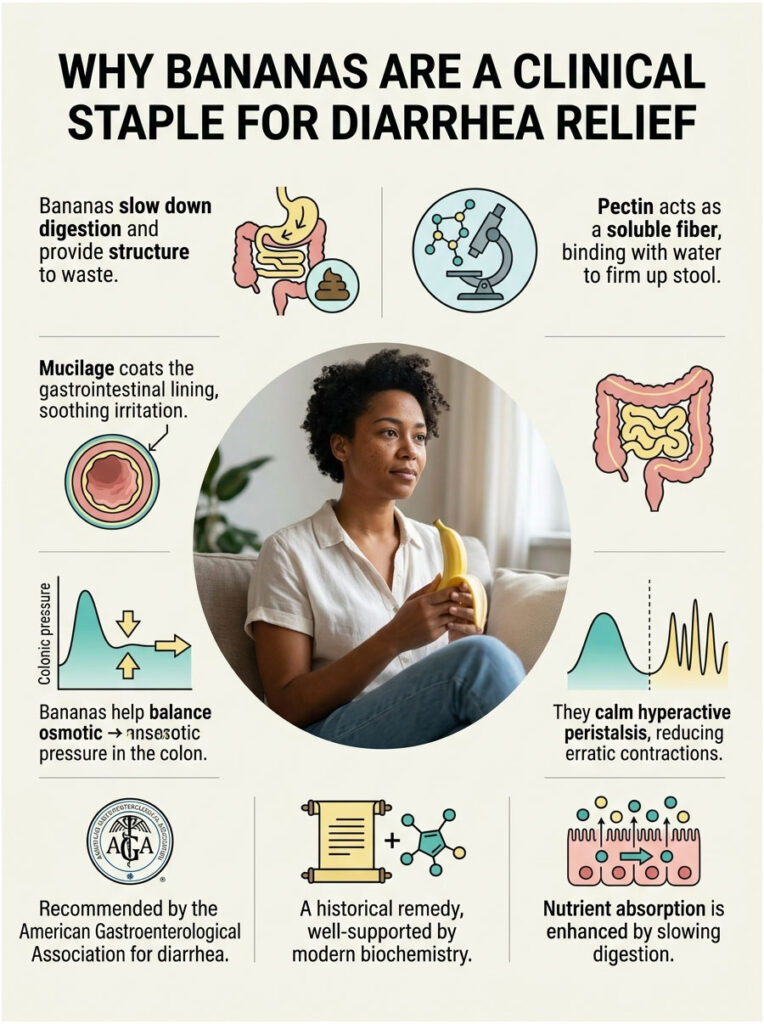
When you have loose stools, your colon isn’t absorbing water properly. Waste moves through too fast, and your body can’t pull out nutrients in time. Bananas slow this rushed process and give the digestive waste some structure to hold onto.
Doctors have leaned on this fruit for generations, long before the biochemistry was fully understood. Today, we know precisely why it works, and it comes down to specific fibers and plant compounds working in harmony.
Pectin: The Sponge Inside Your Gut
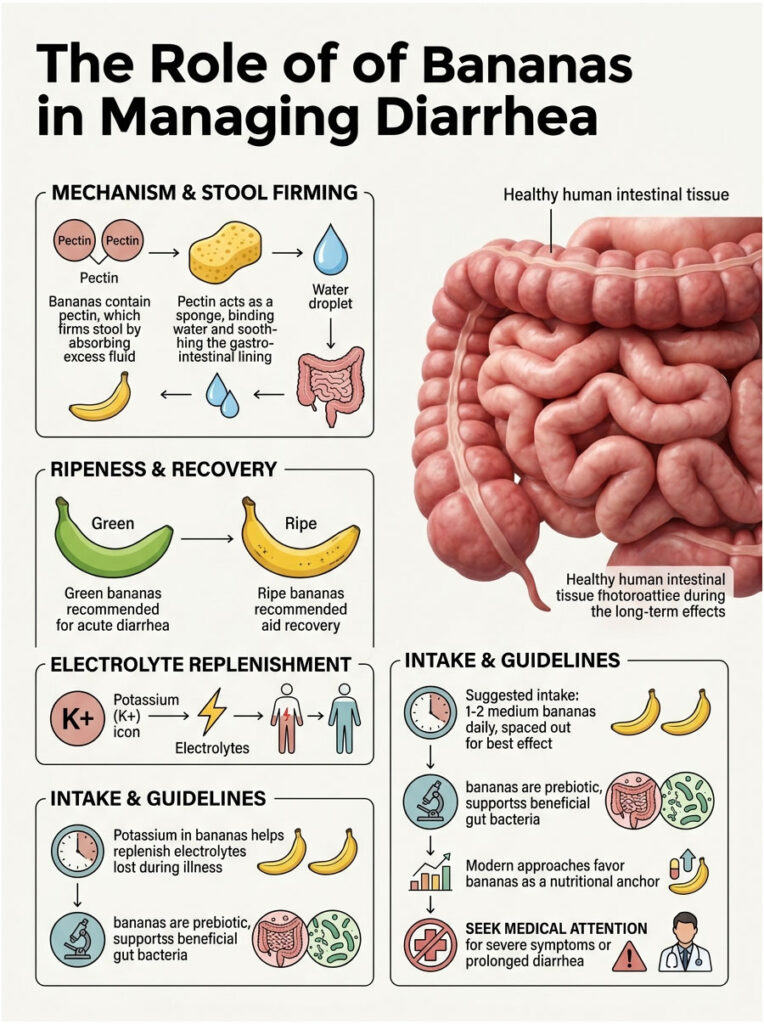
Pectin is a complex carbohydrate found in abundance in bananas, and it acts as a powerful soluble fiber. In nutrition science, pectin is classified as a hydrocolloid, which means it has a unique ability to bind with water.
Once you eat a banana, the pectin moves through your digestive system intact. Inside your intestines, it behaves like a microscopic sponge, soaking up excess fluid and turning watery waste into a firmer, gel-like consistency.
This is why the American Gastroenterological Association supports soluble fiber during acute bouts of diarrhea. Insoluble fiber speeds digestion up, which is the last thing you want right now. Soluble fiber, like the pectin in bananas, slows things down.
Mucilage and Gentle Intestinal Soothing
Diarrhea irritates the delicate lining of your colon, and constant trips to the bathroom only make that inflammation worse. So is a banana good for an irritated stomach? Absolutely.
Bananas contain mucilage, a thick and slippery substance that some plants naturally produce. When you eat a banana, the mucilage forms a soothing coating along your gastrointestinal lining. It acts as a soft buffer between sensitive tissues and harsh stomach acid, which often takes the edge off cramping.
Calming Osmotic Pressure and Hyperactive Peristalsis
Your colon depends on a careful balance of water and electrolytes. Diarrhea throws this balance off completely, increasing osmotic pressure and pulling more water into the bowel. Bananas help reverse this.
Their carbohydrate structure helps lower that osmotic pressure, slowing the rush of water into the colon. They also calm peristalsis, the wave-like muscle contractions that move food along your digestive tract. During a stomach bug, these contractions become erratic and overactive. The thicker, gel-like mash from a digested banana slows them down, giving the intestines time to actually do their job.
The Nutritional Power Behind Every Banana
Stopping symptoms is only half the job. Your body also needs to replace what it has lost. Diarrhea drains fluids and key minerals, and a smart recovery diet has to address those losses fast.
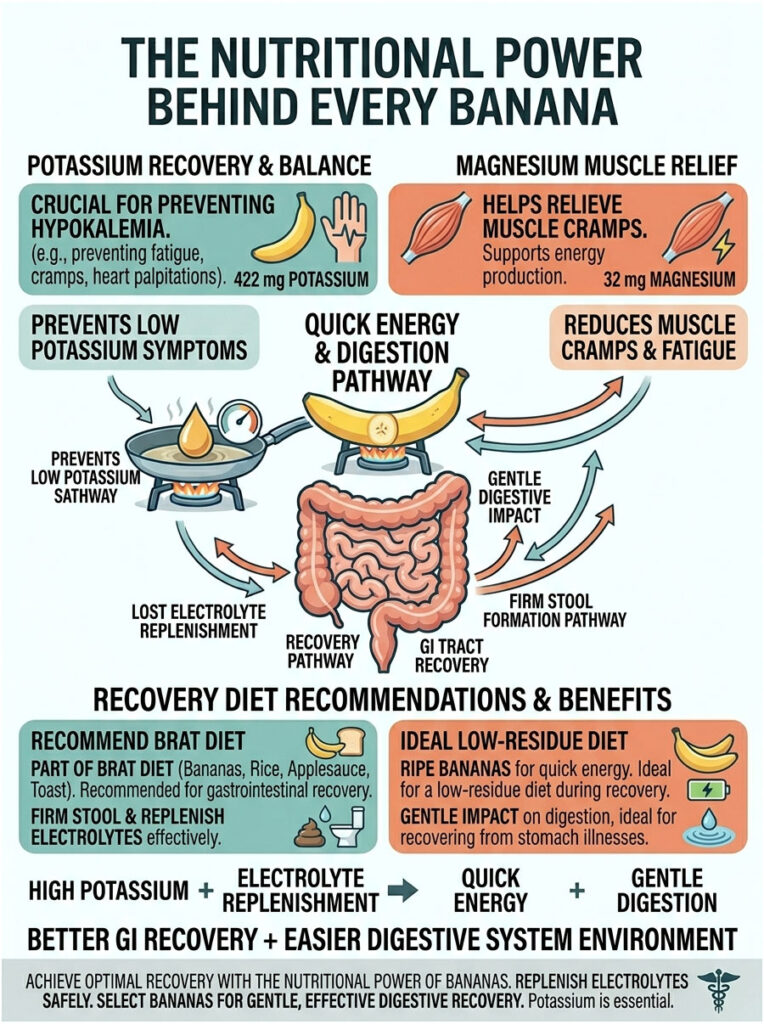
Bananas are uniquely suited for this. They offer the exact nutrients your body craves during recovery, which is why simply drinking water isn’t enough. You need real electrolytes, and bananas deliver.
Potassium: Preventing Hypokalemia
When you lose fluids quickly, you also lose sodium, magnesium, and potassium. Potassium is essential for regulating your heartbeat, nerve signaling, and muscle function.
If your potassium drops too low, you can develop hypokalemia. Symptoms include severe fatigue, muscle cramps, and even heart palpitations. This is exactly why doctors stress potassium-rich foods during stomach bug recovery.
A medium banana offers about 422 mg of highly bioavailable potassium, making it one of the best foods to restore cellular balance. It works hand in hand with Oral Rehydration Salts to stabilize your body during recovery.
Expert Tip: Always pair bananas with enough fluids. While bananas supply potassium, your body still needs water and a bit of sodium to fully activate the sodium-potassium pump at the cellular level. A banana plus a quality rehydration drink is the ideal combination.
Magnesium for Cramp Relief
Potassium gets most of the attention, but magnesium matters just as much. A banana provides around 32 mg of magnesium, which helps relax tense muscles. During severe diarrhea, intestinal muscles often cramp painfully, and magnesium acts as a natural antispasmodic.
Magnesium also fuels cellular energy production. Your body is exhausted when fighting a gut infection, and magnesium helps your cells make the ATP needed for healing.
Quick, Gentle Energy on a Low-Residue Diet
When your digestion is struggling, heavy meals are the worst thing you can eat. This is where the low-residue diet comes in. Gastroenterologists often recommend foods that leave very little waste behind in the colon, and bananas fit this perfectly.
The simple carbohydrates in ripe bananas absorb quickly through the small intestine, giving you a fast energy lift to fight off the lethargy that often comes with stomach illness. They’re a key part of any gentle gastroenteritis recovery plan for adults.
Comparison Table: BRAT Diet Staples
| Food | Primary Fiber Type | Potassium (per serving) | Function During Diarrhea | Clinical Value |
|---|---|---|---|---|
| Banana (medium) | Soluble (pectin) | ~422 mg | Firms stool, replenishes electrolytes | High |
| White rice (1 cup) | Low fiber | ~55 mg | Adds bulk, low irritation | Medium |
| Applesauce (1 cup) | Soluble (pectin) | ~184 mg | Firms stool, supplies simple sugars | Medium |
| White toast (1 slice) | Low fiber | ~30 mg | Absorbs excess gastric acid | Low |
How Your Body Actually Processes a Banana During Illness
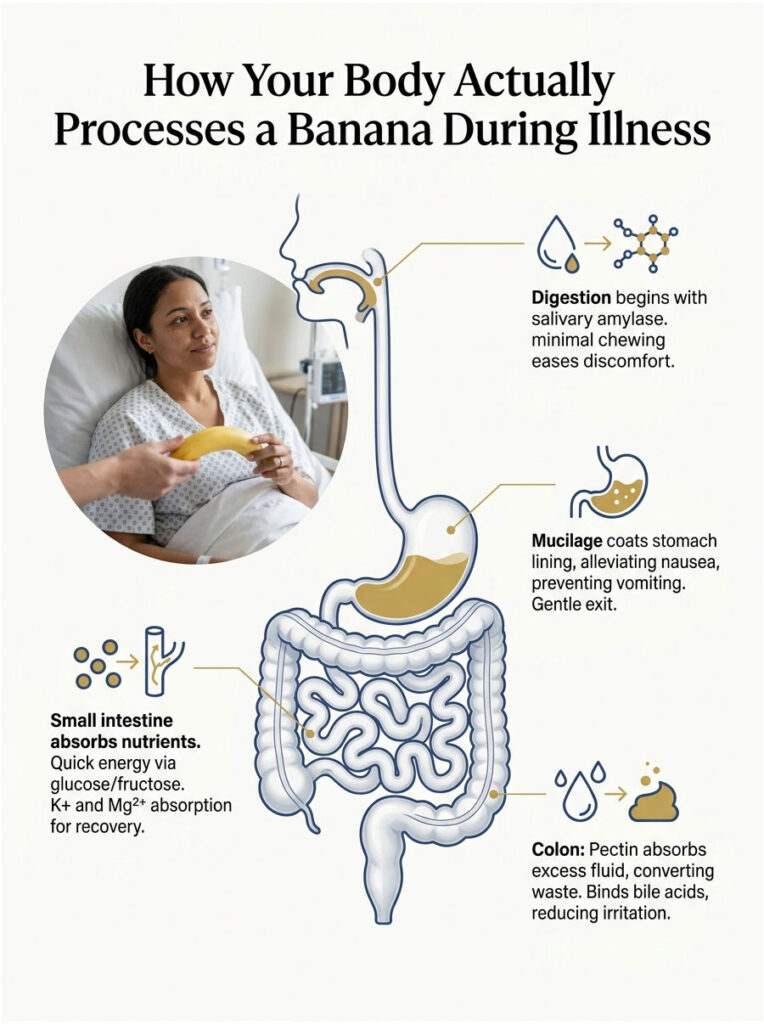
Digestion is a complex chain of events. When you’re healthy, it runs predictably. When you’re sick, the whole system falls apart. Let’s walk through how a banana moves through a sick body.
In the Mouth and Stomach
Digestion starts the moment you bite. Salivary amylase begins breaking down the carbohydrates right away. Bananas are naturally soft, so they need very little chewing, which is a relief when you feel weak and queasy.
Once swallowed, the mashed banana enters the stomach, where its mucilage coats the lining and buffers excess acid. This often eases nausea and prevents that urge to vomit. Bananas leave the stomach gently, without triggering the dumping reaction that fatty or sugary foods can cause.
Inside the Small Intestine
The small intestine handles most nutrient absorption, but during diarrhea the intestinal villi become inflamed and flat, struggling to grab nutrients. Luckily, bananas come pre-loaded with simple, easy-to-absorb sugars that pass through quickly.
Glucose and fructose move directly into the bloodstream, while potassium and magnesium are actively pulled into your cells. That’s why you often feel a small surge of energy soon after eating a banana while sick.
Inside the Colon
Whatever’s left of the banana finally reaches the colon, where the real action happens. The colon’s job is to pull water out of waste. Diarrhea blocks this process completely.
Pectin steps in here. As soluble fiber, it absorbs the extra fluid and forms a thick gel that traps water. This shifts the waste from liquid to semi-solid. The same gel also binds irritating bile acids, which are often responsible for that burning feeling during severe diarrhea.
Green vs. Ripe Bananas: Which One Should You Eat?
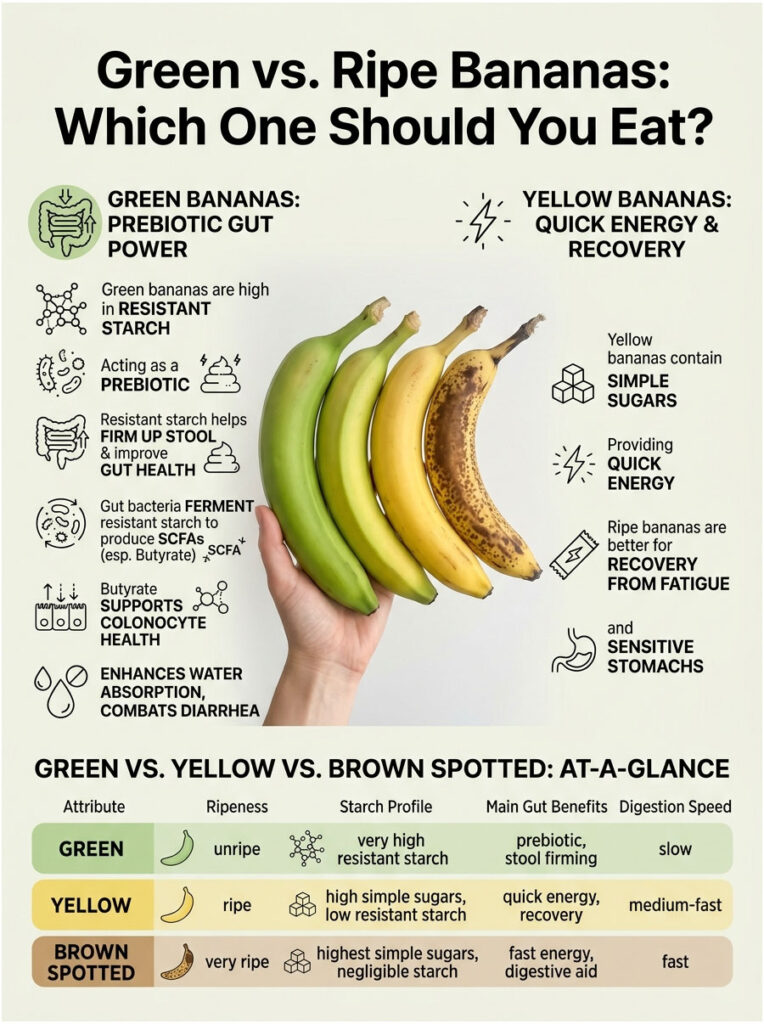
Not every banana works the same way. The ripeness of the fruit completely changes its chemistry, and using the wrong type is one of the most common reasons people don’t see results.
Green Bananas and Resistant Starch
Green bananas are seriously underrated. They contain high levels of resistant starch, a special type of starch that resists digestion in the small intestine.
Instead of breaking down into sugar, this starch travels intact to the colon, where it acts as a powerful prebiotic. If you’re wondering how to firm up stool fast, green bananas are your best option.
Short-Chain Fatty Acids and Butyrate
When gut bacteria ferment the resistant starch from green bananas, they produce short-chain fatty acids (SCFAs). The most important one is butyrate, and it’s a complete game-changer.
Butyrate is the main fuel for colonocytes, the cells that line your colon. When colonocytes get butyrate, they reabsorb water and sodium more efficiently, which actively slows down fluid loss and stops diarrhea at its source.
Yellow Bananas for Easy Energy
As bananas ripen, the resistant starch turns into simple sugars and the pectin softens. Yellow bananas don’t pack the same stool-firming power, but they shine in a different way.
Ripe bananas are perfect for someone who needs quick, easy energy on a sensitive stomach. During the recovery phase, when you’re trying to bounce back from fatigue, yellow bananas are usually the better pick.
Comparison Table: Banana Ripeness and Gut Effects
| Ripeness | Starch Profile | Main Gut Benefit | Best For | Digestion Speed |
|---|---|---|---|---|
| Green (unripe) | High resistant starch | SCFA production, water absorption | Active diarrhea | Slower |
| Yellow (ripe) | High simple sugars | Easy digestion, quick energy | Recovery phase, nausea | Faster |
| Brown spotted | Maximum sugar, low pectin | Antioxidants, fast calories | Returning to normal diet | Fastest |
Bananas and the Gut Microbiome
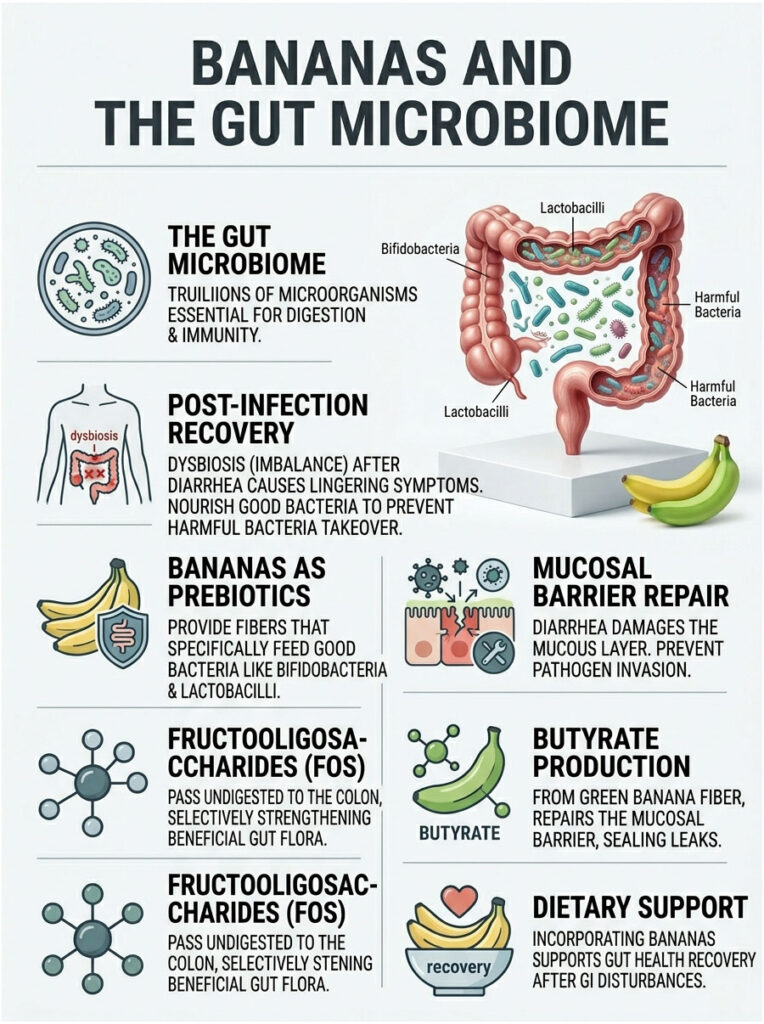
Modern gastroenterology pays close attention to the gut microbiome. Your large intestine is home to trillions of microorganisms that help with digestion and immune function. Diarrhea is essentially a flash flood that washes away many of these helpful bacteria.
Dysbiosis After Infection
Doctors call an unbalanced microbiome “dysbiosis,” and severe diarrhea almost always causes it. Even after the loose stools stop, your gut flora can stay off balance for weeks. This is why some people deal with lingering bloating or mild cramps long after the illness ends.
If you don’t actively feed the surviving good bacteria, opportunistic bad bacteria can take over and sometimes lead to post-infectious irritable bowel syndrome.
Bananas as a Premier Prebiotic
Probiotics are the live bacteria in foods like yogurt. Prebiotics are the fibers that feed those bacteria, and bananas are one of the best natural prebiotics available.
The fructooligosaccharides in bananas pass undigested into the colon, where they feed beneficial Bifidobacteria and Lactobacilli. Pathogenic bacteria generally can’t use these fibers, so eating bananas selectively strengthens the good guys.
Repairing the Mucosal Barrier
Your gut has a thin mucus layer that protects your bloodstream from bacteria. Diarrhea-causing pathogens often damage this barrier. Butyrate, produced from green banana fiber, signals colon cells to repair this protective lining and seal up tiny leaks before they become bigger problems.
How to Use Bananas the Right Way
Knowing a food works isn’t enough. You also have to use it properly, and timing and dosage make all the difference.
Adult Dosage Guidelines
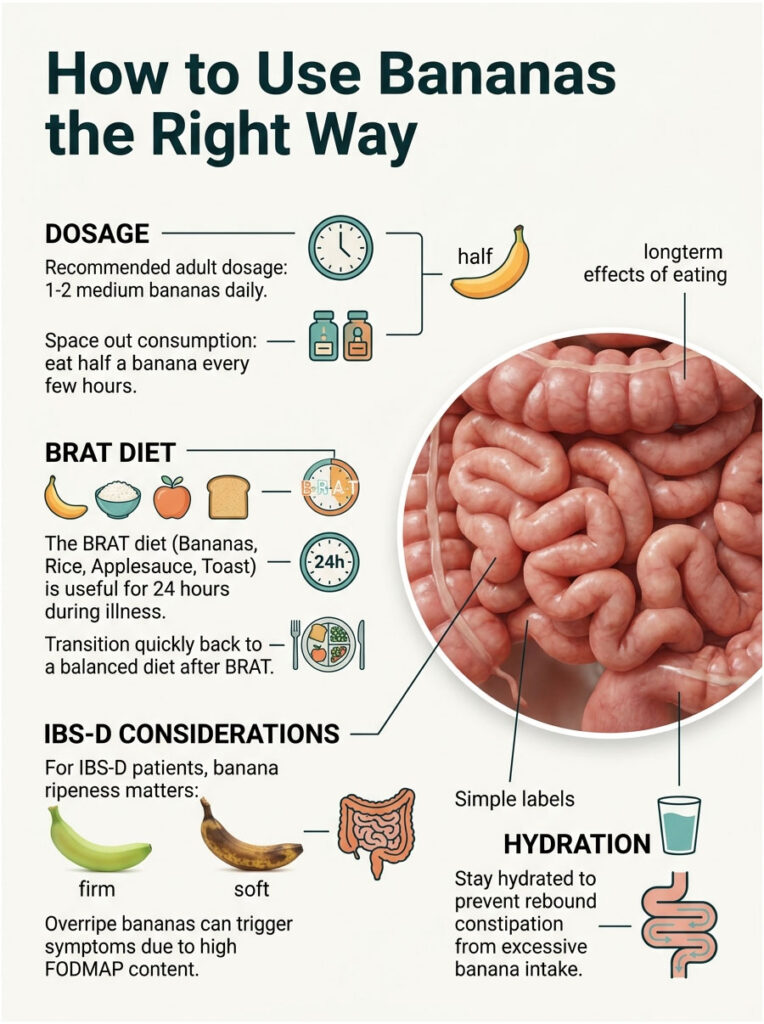
More isn’t always better. Eating too many bananas can actually cause rebound constipation, especially if you’re not drinking enough fluids. For most adults, one to two medium bananas per day is the sweet spot during the acute phase. Space them out, eating half a banana every few hours, and chew slowly.
The Modern Take on the BRAT Diet
The BRAT diet (Bananas, Rice, Applesauce, Toast) was the standard for decades, and it still helps during the first 24 hours of illness. But modern guidance has evolved. The Academy of Nutrition and Dietetics warns that staying on BRAT too long can actually delay healing because it lacks protein, fat, and overall calories. Use bananas as an anchor, then transition back to a normal balanced diet quickly.
Notes for IBS-D Patients
If you have Diarrhea-predominant IBS, the rules shift slightly. FODMAPs are carbohydrates that can trigger flare-ups in sensitive people, and banana ripeness directly affects FODMAP content. Firm, slightly green bananas are low-FODMAP and safe. Overripe bananas become high-FODMAP and may worsen symptoms, so stick to firmer fruit.
Best Foods to Pair With Bananas
Bananas work well alone, but they work even better with the right partners.
Oatmeal for Soluble Fiber Stacking
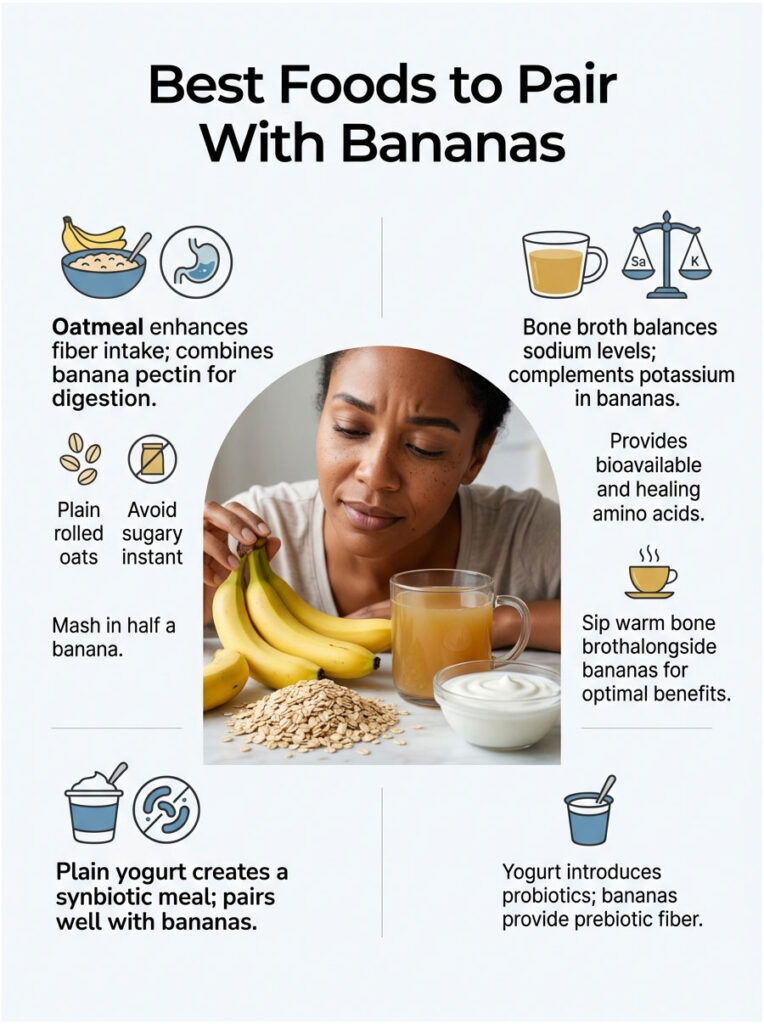
Oatmeal is another excellent source of soluble fiber. The beta-glucan in oats teams up with banana pectin to create an even thicker digestive gel. Stick with plain rolled oats, never sugary instant packets, and cook them in water or bone broth before mashing in half a banana.
Bone Broth for Sodium Balance
Bananas are rich in potassium but low in sodium. Bone broth fills that gap perfectly with bioavailable sodium and amino acids like glutamine, which actively heals the intestinal lining. Sip a warm cup alongside your banana for the best effect.
Plain Yogurt for Probiotics
Once the watery phase has passed, pair your banana with plain unsweetened yogurt to create a synbiotic meal. The yogurt brings probiotics, and the banana provides the prebiotic fiber to feed them. If dairy bothers you after a stomach bug, a coconut or almond yogurt with active cultures works just as well.
Safe Banana Use for Babies and Toddlers
Children dehydrate much faster than adults, so pediatric care needs extra precision. Bananas are widely considered safe and effective for little ones, but they should be used carefully.
Following WHO and UNICEF Guidance
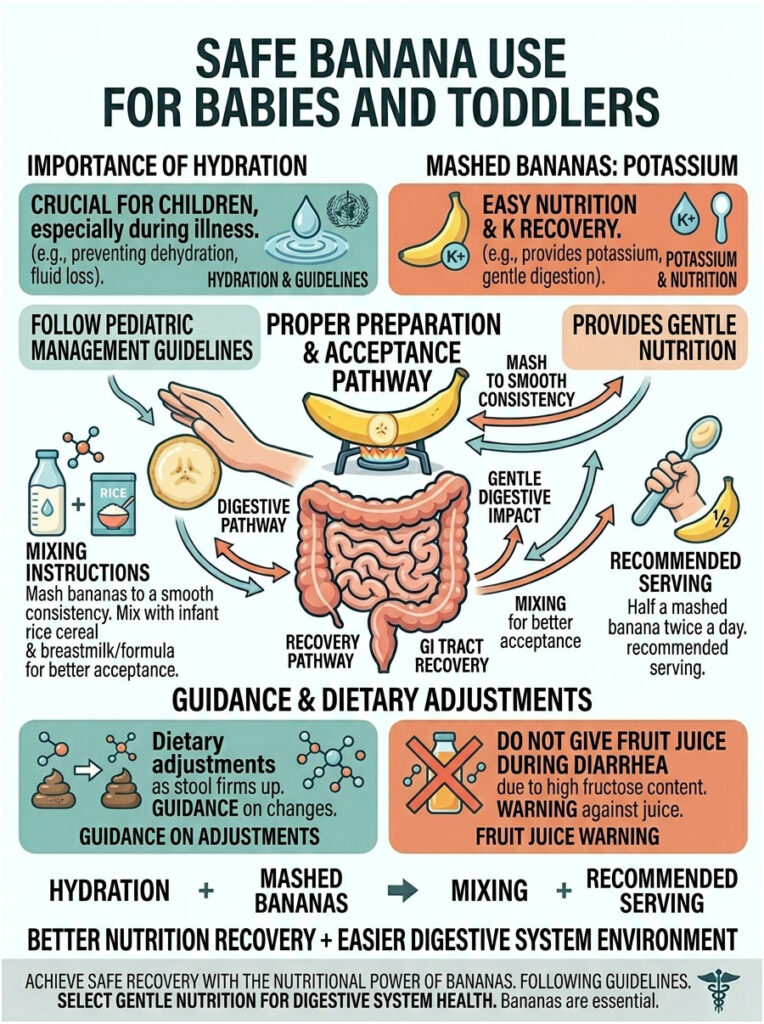
The World Health Organization and UNICEF set the global standards for treating pediatric diarrhea. Their main recommendation is fluid replacement using Oral Rehydration Solutions, paired with the early reintroduction of solid food. Mashed bananas fit perfectly into this approach because they offer potassium and easy nutrition without overwhelming a small digestive system.
Clinical Note: The World Health Organization recommends including potassium-rich foods like mashed bananas during pediatric stomach flu to replace electrolytes lost in watery stools.
Preparing Bananas for Little Ones
Never hand a sick toddler a whole firm banana. Mash it well with a fork until it’s smooth and pudding-like. If your child resists plain banana, mix it with a small amount of infant rice cereal and breastmilk or formula for a familiar texture.
Watching the Output
Half a mashed banana twice a day is usually plenty for a young child. As stool starts to firm up, slowly bring back the rest of their normal diet. And please avoid fruit juice during diarrhea. The high fructose pulls more water into the colon and makes things worse.
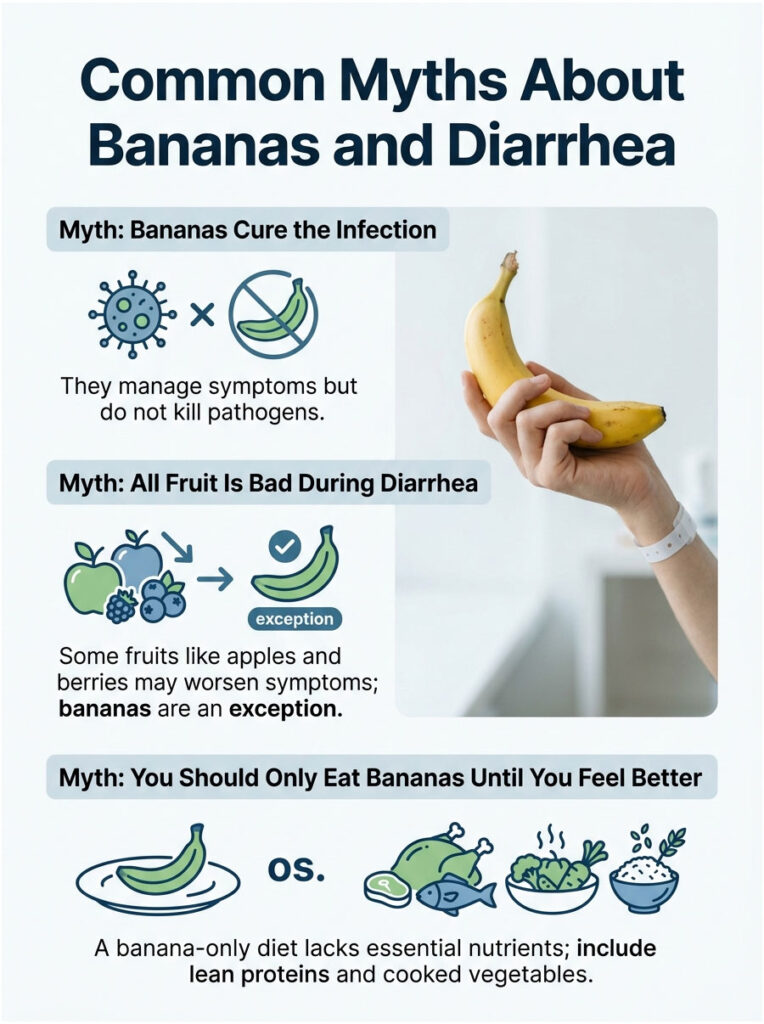
Common Myths About Bananas and Diarrhea
Myth: Bananas Cure the Infection
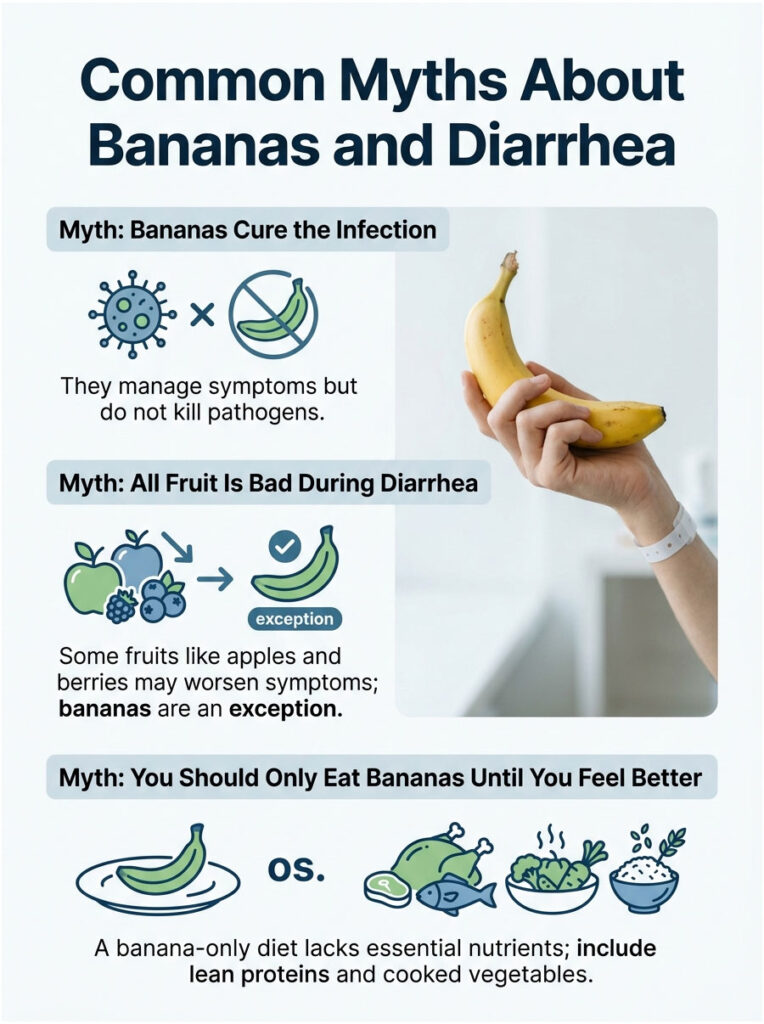
Bananas don’t have antibacterial or antiviral properties. If you have norovirus or salmonella, the banana won’t kill it. It only manages symptoms while your immune system handles the actual fight.
Myth: All Fruit Is Bad During Diarrhea
People often lump all fruits together, but that’s an oversimplification. Apples with skin, grapes, and berries can worsen diarrhea because of insoluble fiber and excess fructose. Bananas are the clear exception thanks to their pectin and low water content.
Myth: You Should Only Eat Bananas Until You Feel Better
This is a leftover from the strict BRAT days, and it can actually backfire. Living on bananas for days starves your body of protein and fat, which it desperately needs to repair the gut lining. Use bananas as a bridge, not a destination, and bring back lean chicken, eggs, and cooked carrots within 48 hours.
What the Research Actually Says
We don’t rely on guesswork in clinical nutrition. Real studies back up the benefits of bananas during diarrhea.
Pediatric Research on Resistant Starch
Findings published in the Journal of Pediatrics looked at green banana supplementation in children with acute watery diarrhea. The results were striking. Kids who received green banana flakes recovered nearly twice as fast as those in the control group, and researchers attributed the benefit directly to resistant starch and its role in producing short-chain fatty acids.
Adult IBS-D Studies
Research has also explored chronic conditions. Adults with IBS-D who ate one firm banana daily reported less urgency and more consistent stools. This shows bananas aren’t just for the stomach flu. They can also help manage long-term gut conditions naturally.
Real-World Clinical Use
In my own practice, when a patient is recovering from severe food poisoning, the first solid food I introduce after the vomiting stops is always a firm, slightly green banana. Within 24 hours, most patients report fewer trips to the bathroom and much less cramping.
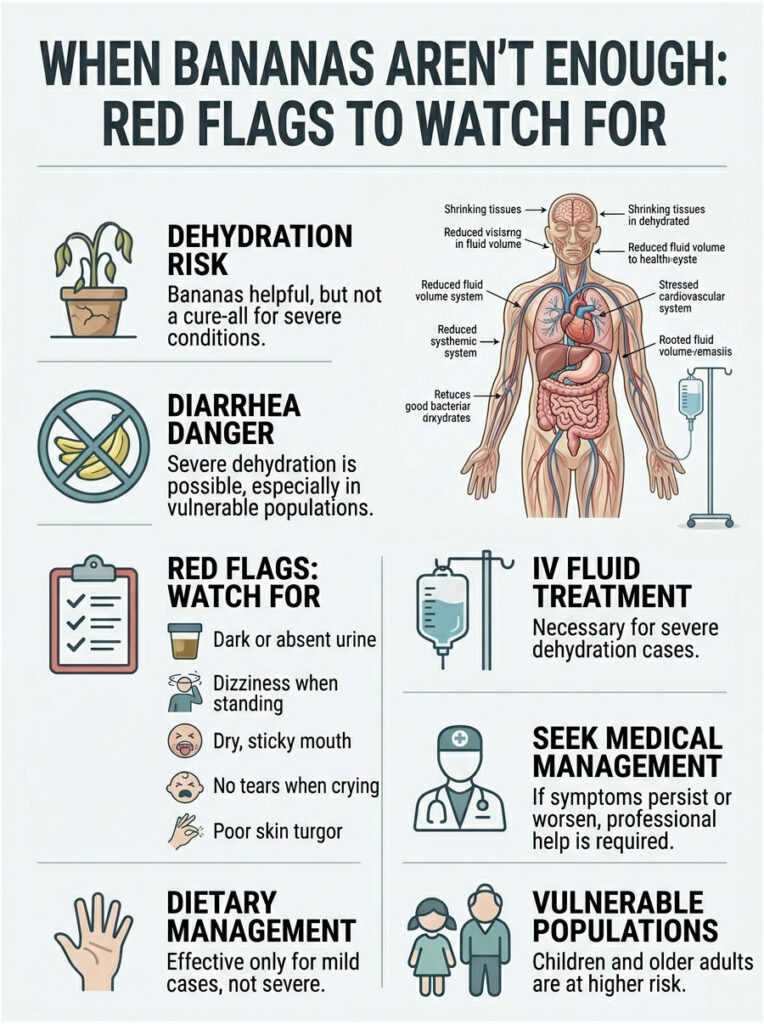
When Bananas Aren’t Enough: Red Flags to Watch For
Bananas are powerful, but they’re not magical. Diarrhea can sometimes turn into a medical emergency, especially in children and older adults.
Signs of Severe Dehydration
Watch for dark or absent urine, dizziness when standing, dry sticky mouth, no tears when crying, and poor skin turgor (when pinched skin doesn’t snap back). At this point, a banana isn’t enough. IV fluids may be necessary.
When to Call a Doctor
According to the Centers for Disease Control and Prevention, you should seek medical care if you have:
- A fever over 102°F
- Blood or black mucus in your stool
- Severe localized abdominal pain
- Diarrhea lasting more than 48 hours in adults or 24 hours in children
Dietary management only works for mild, self-limiting cases.
Final Thoughts
So, do bananas help with diarrhea? The science, the data, and years of clinical experience all point to a clear yes. Bananas are a genuine, effective, natural tool for managing gastrointestinal distress at almost any age.
Their pectin physically firms the stool, their mucilage soothes the gastric lining, and their potassium replaces the electrolytes you lose during illness. Just remember the maturity rule. Green bananas are best for stopping active diarrhea, while ripe yellow bananas help with easy digestion and quick energy during recovery.
Pair them with fluids like bone broth or ORS, watch for warning signs, and use them as a bridge back to your normal diet rather than a long-term plan. Used correctly, bananas can meaningfully shorten your recovery time and help your gut bounce back. Next time someone asks you whether bananas really help with diarrhea, you’ll know exactly why the answer is yes, and you’ll have the science to back it up.
Frequently Asked Questions
Do bananas really help stop diarrhea?
Yes, as a registered dietitian, I frequently recommend bananas because they contain pectin, a soluble fiber that acts as a hydrocolloid. Pectin absorbs excess fluid in the intestines, transforming liquid waste into a firm, gel-like consistency, while the fruit’s natural mucilage soothes the inflamed gastrointestinal lining.
Should I eat green or ripe bananas for an upset stomach?
For acute diarrhea, green (unripe) bananas are clinically superior because they are high in resistant starch. This starch ferments in the colon to produce short-chain fatty acids like butyrate, which stimulates the reabsorption of water and sodium. Ripe yellow bananas are better for the recovery phase when you need easily digestible energy.
How many bananas should I eat a day to firm up my stool?
In clinical practice, I suggest adults consume one to two medium bananas per day during the acute phase of illness. It is best to space these out, eating half a banana every few hours. Consuming excessive amounts without adequate hydration can occasionally lead to rebound constipation.
Why is the potassium in bananas important during a stomach bug?
Severe diarrhea can deplete up to 10 percent of your body’s total potassium stores in a single day. A medium banana provides approximately 422 milligrams of potassium, a vital electrolyte that prevents hypokalemia and helps regulate heart rhythm, nerve signals, and muscle contractions during fluid loss.
What is the role of pectin in managing loose stools?
Pectin is a complex carbohydrate that functions as a microscopic sponge. When it enters the colon, it binds with excess water and irritating bile acids, increasing the viscosity of the stool. This slowing of peristalsis (muscle contractions) provides physical relief from bathroom urgency and abdominal cramping.
Are bananas considered a prebiotic for gut health recovery?
Absolutely. Bananas contain fructooligosaccharides, which are prebiotic fibers that selectively feed beneficial gut bacteria like Bifidobacteria. This helps restore the microbiome after it has been depleted by a gastrointestinal infection, preventing post-infectious dysbiosis.
Is the BRAT diet still the gold standard for diarrhea treatment?
While the BRAT diet (Bananas, Rice, Applesauce, Toast) is effective for the first 24 hours of acute illness, modern gastroenterology suggests it is too restrictive for long-term use. We now use bananas as a nutritional anchor while encouraging a quicker transition back to a balanced, low-residue diet to support intestinal tissue repair.
Can I give mashed bananas to a baby with diarrhea?
Yes, mashed bananas are a safe and highly recommended pediatric intervention. They align with WHO and UNICEF rehydration guidelines by replacing lost potassium. I recommend mashing the banana to a smooth, pudding-like consistency to ensure it is easily assimilated by the infant’s sensitive digestive system.
Are bananas safe for patients with IBS-D?
For those with Diarrhea-predominant Irritable Bowel Syndrome, ripeness is the deciding factor. Firm, slightly green bananas are Low-FODMAP and generally safe. However, overripe bananas are High-FODMAP due to increased oligofructans, which can trigger bloating and worsening symptoms in sensitive individuals.
What are the best synergistic foods to pair with bananas for relief?
To maximize recovery, I recommend ‘soluble fiber stacking’ by pairing bananas with plain oatmeal. Additionally, consuming bananas alongside bone broth provides the necessary sodium to activate the sodium-potassium pump at the cellular level, which is essential for effective rehydration.
Do bananas help with the stomach cramps associated with diarrhea?
Yes, bananas provide approximately 32 milligrams of magnesium, which acts as a natural antispasmodic for the smooth muscles of the digestive tract. Combined with the soothing effects of mucilage, this helps reduce the intensity of painful abdominal spasms during a gastrointestinal crisis.
When should I stop using dietary remedies like bananas and see a doctor?
You should seek immediate medical attention if you experience ‘red flag’ symptoms: a fever over 102°F, blood or black mucus in the stool, signs of severe dehydration (such as lack of urination or extreme dizziness), or if the diarrhea persists for more than 48 hours for adults or 24 hours for children.
Disclaimer
This article is for informational purposes only and does not constitute medical advice. Diarrhea can lead to severe dehydration, which is a medical emergency. Always consult a qualified healthcare professional or gastroenterologist before making health decisions, especially regarding infants, the elderly, or those with chronic conditions.
References
- The Journal of Pediatrics – “Green Banana Diet in the Treatment of Diarrhea” – Clinical trials showing a 50% reduction in pediatric diarrhea duration using green banana starch.
- World Health Organization (WHO) – “Diarrhoeal disease: Fact Sheet” – Global guidelines on using potassium-rich foods and oral rehydration salts for recovery.
- American Gastroenterological Association (AGA) – “Patient’s Guide to Managing Acute Diarrhea” – Clinical support for the use of soluble fiber (pectin) in stool firming.
- Academy of Nutrition and Dietetics – “The Evolution of the BRAT Diet” – Professional standards on transitioning from restrictive diets to balanced gastrointestinal recovery.
- National Institute of Diabetes and Digestive and Kidney Diseases (NIDDK) – “Eating, Diet, & Nutrition for Diarrhea” – Official data on low-residue foods and electrolyte replenishment.
- Centers for Disease Control and Prevention (CDC) – “Preventing Dehydration in Children” – Guidance on monitoring output and when to seek emergency medical intervention.