Gaining quality size is often dismissed as a simple task of “eating more,” yet for the ectomorph or the metabolically adapted athlete, it is a complex physiological equation. It is not merely a test of willpower; it is a battle against homeostasis. As a Registered Dietitian Nutritionist specializing in sports performance, I see clients daily who are frustrated by the scale refusing to budge despite their best efforts.
Table of Contents
The solution lies in a calculated, clinical approach to nutrition. This comprehensive guide provides a High Protein 7-Day Meal Plan for Weight Gain designed to manipulate nitrogen balance and stimulate hypertrophy without excessive fat accumulation.
The Clinical Strategy
To gain lean tissue rather than fat, you must prioritize a strategic caloric surplus of 10–20% above maintenance. This plan leverages the Leucine Threshold (2.5g+ per meal) to trigger muscle protein synthesis and utilizes nutrient timing to align intake with your circadian and training rhythms. Consistency in hitting your macro targets is the primary driver of success. You cannot simply guess your intake; you must engineer it.
This is not about “dirty bulking” with fast food or sugary mass gainers. That approach leads to systemic inflammation, insulin resistance, and visceral fat storage. Instead, we focus on hormonal optimization, gut health, and nutrient density. By following this High Protein 7-Day Meal Plan for Weight Gain, you are systematically fueling the biological machinery required to build new contractile tissue.
Key Statistics for Hypertrophy
- Protein Requirement: 1.6g to 2.2g per kg of body weight is the ISSN standard for muscle gain.
- Surplus Sweet Spot: 300–500 calories above maintenance per day minimizes fat gain.
- Leucine Trigger: 2.5g to 3.0g of Leucine is required to maximally stimulate mTOR (muscle growth pathway).
- Sleep Factor: 70% of Growth Hormone is released during slow-wave sleep.
- Consistency: It takes roughly 2,500 to 2,800 excess calories to synthesize 1 pound of lean muscle tissue.
- Hydration Impact: A 2% drop in hydration can reduce strength output by up to 10%.
The Physiology of Hypertrophy: Why Protein is the Driver
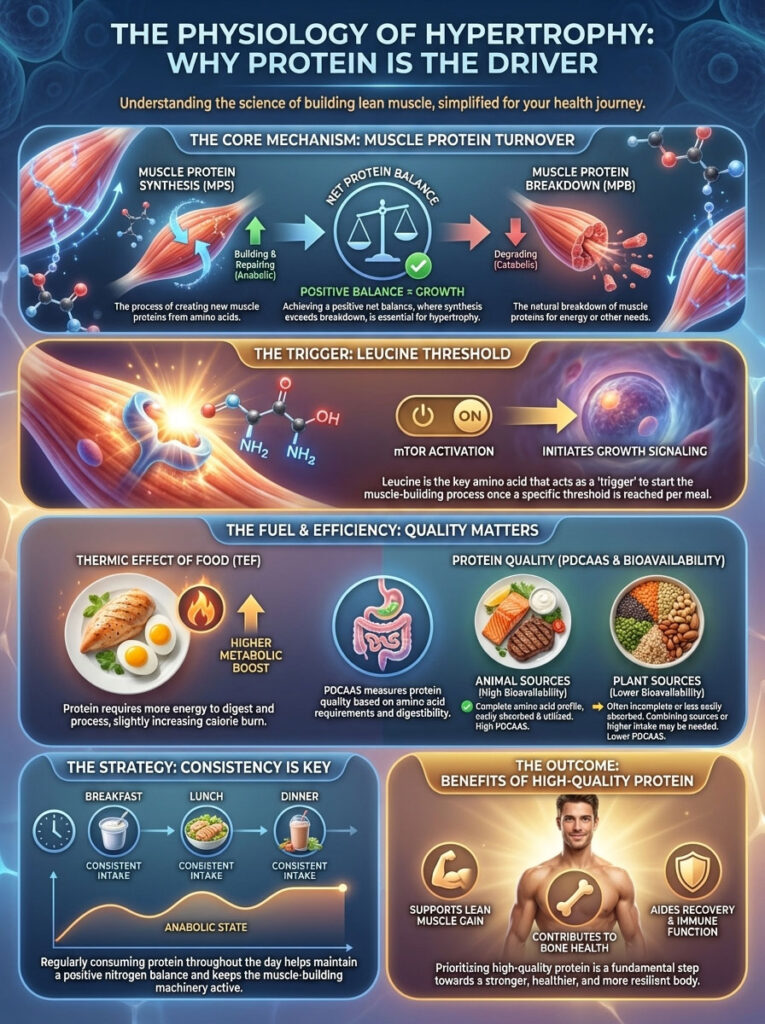
To understand why this High Protein 7-Day Meal Plan for Weight Gain works, we must first look at the cellular mechanisms of growth. Your body is in a constant state of turnover known as protein turnover. This involves two competing processes: Muscle Protein Synthesis (MPS) and Muscle Protein Breakdown (MPB).
Net Protein Balance and Turnover
Hypertrophy, or muscle growth, only occurs when MPS exceeds MPB over a sustained period. This is referred to as a positive Net Protein Balance. Most hardgainers spend too much time in a catabolic (breakdown) state because they go too long without eating. They also often fail to consume adequate amino acids to repair the damage caused by training. Expert insight tells us that simply eating calories is not enough; the quality of those calories dictates whether they become muscle or adipose tissue.
The Leucine Threshold and mTOR
Not all proteins are created equal in the eyes of a muscle cell. The primary driver of MPS is an essential amino acid called Leucine. Research indicates that there is a “Leucine Threshold” that must be met to flip the genetic switch for growth. For most adults, this requires 2.5g to 3.0g of Leucine in a single feeding. Eating 10g of protein here and there will not trigger this response effectively. This plan is designed so that every main meal hits this threshold. This ensures you are in an anabolic state multiple times per day.
The Thermic Effect of Food (TEF)
Protein has a high Thermic Effect of Food. This means your body expends significant energy just to digest and assimilate it. While this might sound counterintuitive for weight gain, it is beneficial for composition. It ensures that the weight you gain is quality mass rather than just fluid or fat. The energy cost of protein digestion prevents the rapid storage of energy as body fat. This metabolic inefficiency of protein is a tool we use to keep you lean while you grow.
Bioavailability and PDCAAS
We also consider the Protein Digestibility Corrected Amino Acid Score (PDCAAS). Animal sources like whey, eggs, and beef have high bioavailability scores. This means your body absorbs almost all of what you eat. Plant sources often require combining (like rice and beans) to achieve a complete amino acid profile. This guide prioritizes high-bioavailability sources to ensure your kidneys and liver are not overstressed processing waste products from poor-quality proteins.
Calculating Your Numbers: The CSSD Blueprint
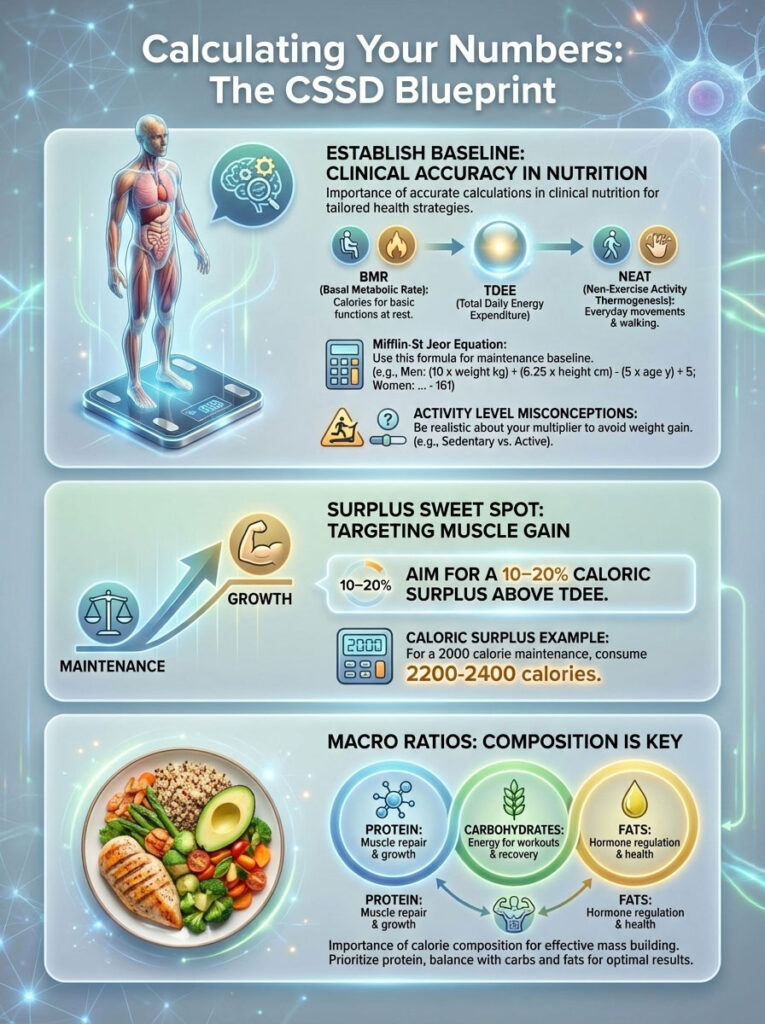
Before you buy a single grocery item, you need to establish your baseline. Guesswork is the enemy of progress in clinical nutrition. As a CSSD, I use specific formulas to determine a client’s needs accurately.
Establishing Maintenance (TDEE)
Your Total Daily Energy Expenditure (TDEE) is the sum of your Basal Metabolic Rate (BMR) plus your activity level. It also includes Non-Exercise Activity Thermogenesis (NEAT). NEAT includes fidgeting, walking to the car, and typing. For hardgainers, NEAT is often surprisingly high and burns off potential gains. To find your baseline, use the Mifflin-St Jeor Equation. Once you have this number, you know exactly what is required to maintain your current weight.
Expert Insight: Many people overestimate their activity level significantly. If you have a desk job but lift weights for an hour, your activity factor is likely “Lightly Active,” not “Very Active.” Overestimating this leads to fat gain. Be conservative with your multiplier.
The Surplus Sweet Spot
A common mistake is the “seefood” diet—eating everything in sight. A 1000-calorie surplus usually results in a 50/50 split of muscle to fat, or worse. We aim for a Caloric Surplus of 10–20% above TDEE. For a 2000 calorie maintenance, this means eating 2200 to 2400 calories. This conservative increase signals the body to build tissue without overwhelming the adipose cells.
Macro Ratios for Mass
The composition of your calories matters as much as the total volume. Here is how we break it down:
- Protein: We target 1.6g to 2.2g per kg of body weight. For a 180lb (81kg) male, this is roughly 180g of protein daily. This supports Muscle Protein Synthesis effectively.
- Carbohydrates: These are protein-sparing. By keeping glycogen stores full, your body does not need to break down amino acids for energy. We prioritize complex sources like oats, rice, and potatoes.
- Fats: Essential for steroid hormone production. Testosterone is derived from cholesterol; therefore, dietary fat should never drop below 20% of total calories. We focus on monounsaturated fats.
Comparison: Strategic Nutrition vs. The “Dirty Bulk”
Context is vital when choosing a nutrition strategy. Many influencers promote eating fast food to hit calorie goals quickly. This is metabolically disastrous for the long-term athlete. A “dirty bulk” spikes insulin levels chronically. This leads to systemic inflammation and reduced insulin sensitivity over time.
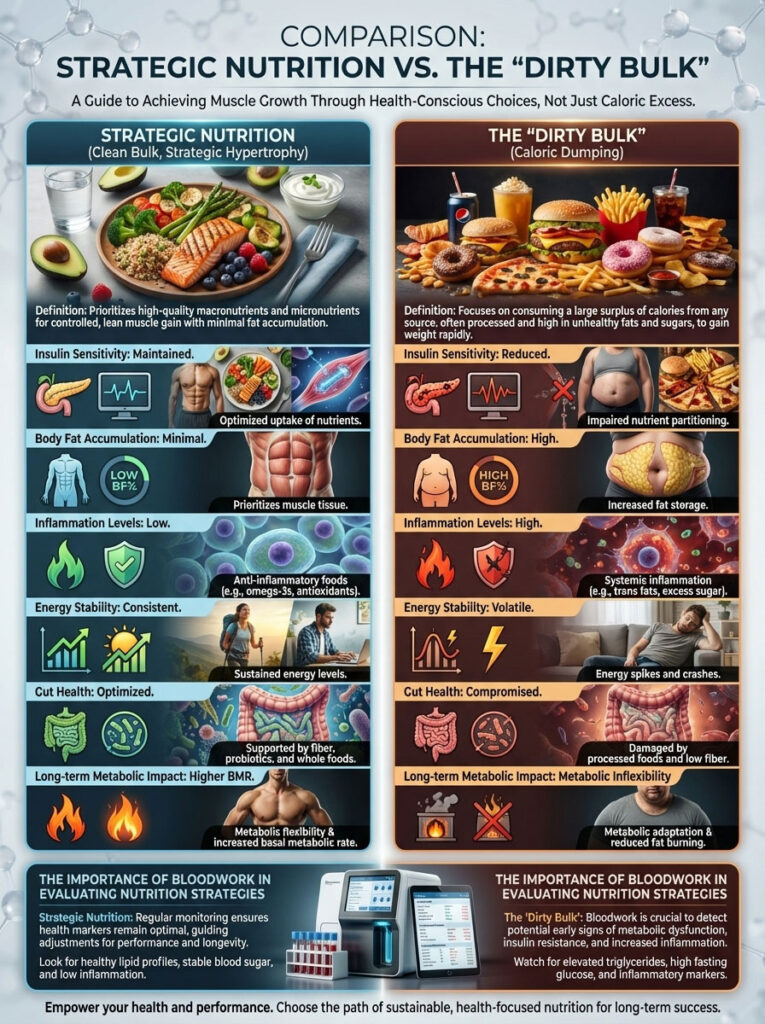
When insulin sensitivity drops, your muscle cells become resistant to nutrient uptake. Consequently, the body shuttles calories into fat cells instead of muscle tissue. Below is a comparison of how a strategic approach differs from caloric dumping:
| Metric | Clean Bulk (Strategic Hypertrophy) | Dirty Bulk (Caloric Dumping) |
|---|---|---|
| Insulin Sensitivity | Maintained or Improved | Significantly Reduced |
| Body Fat Accumulation | Minimal / Controlled | High / Rapid |
| Inflammation Levels | Low (Anti-inflammatory foods) | High (Systemic inflammation) |
| Energy Stability | Consistent / Sustained | Volatile (Highs and Crashes) |
| Gut Health | Optimized (Fiber & Probiotics) | Compromised (Bloating/Distress) |
| Long-term Metabolic Impact | Higher BMR (More Muscle) | Metabolic Inflexibility |
The Clean Bulk vs Dirty Bulk debate is usually settled by bloodwork. Patients on dirty bulks often show elevated triglycerides and fasting glucose. Our goal is Lean Body Mass accrual, not just weight on the scale.
The High Protein 7-Day Meal Plan for Weight Gain
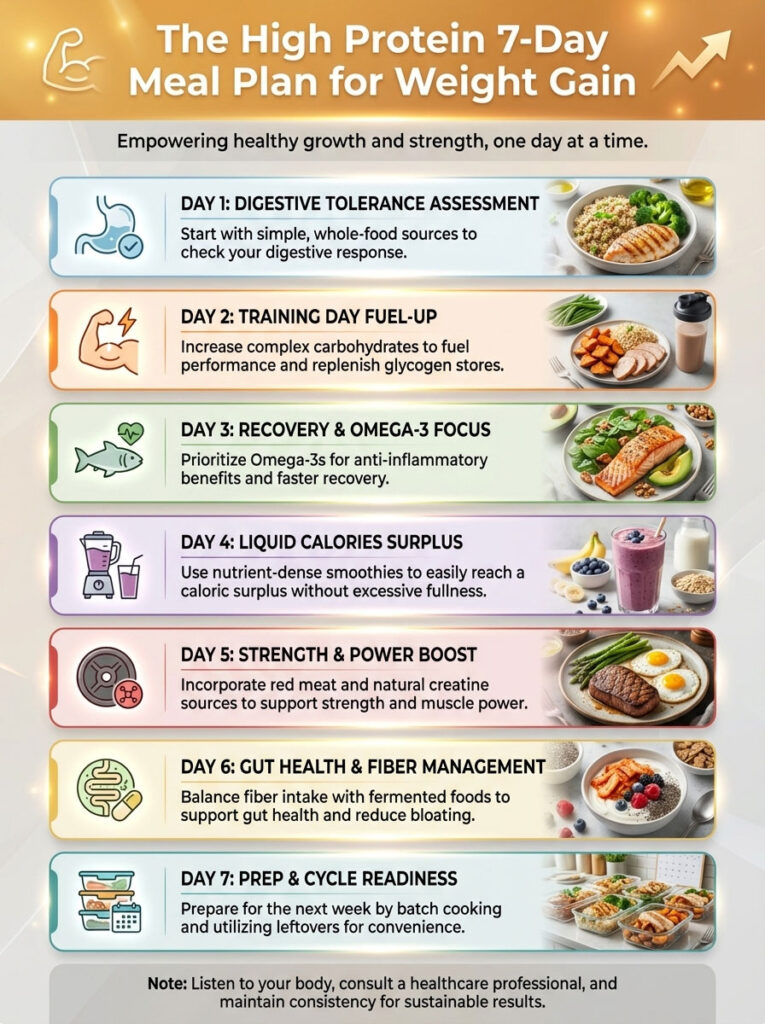
This meal plan is designed to provide sustained amino acid delivery. Each day is structured to optimize digestion and training performance. Remember to adjust portion sizes based on your specific TDEE calculation.
Day 1: The Baseline & Assessment
We start with highly bioavailable foods to assess digestive tolerance. This day focuses on simple, whole-food sources.
- Breakfast: 3 whole eggs, 1 cup egg whites, 1 cup oatmeal with berries. Why: Whole eggs provide choline for the nervous system; oats provide beta-glucan for heart health.
- Lunch: 6oz Grilled Chicken Breast, 1 cup Quinoa, 1 tbsp Olive Oil. Why: Quinoa is a complete plant protein; olive oil adds density without volume.
- Dinner: 6oz Grass-fed Beef (90% lean), 1 large Sweet Potato, Steamed Broccoli. Why: Beef is rich in heme iron and natural creatine; sweet potato is easy on the gut.
- Snacks: Greek Yogurt (1 cup) with almonds. Why: Casein protein in yogurt digests slowly.
Day 2: Training Day High-Carb Push
On training days, we increase carbohydrates to fuel Hypertrophy Nutrition protocols. Glycogen replenishment is the priority here.
- Breakfast: Protein Pancakes (1 cup oats, 1 scoop Whey Isolate, 4 egg whites blended). Why: Fast absorption for morning energy.
- Post-Workout: Liquid Nutrition: 1 scoop Whey Isolate + 1 large Banana (or Dextrose powder). Why: Immediate glycogen replenishment blunts cortisol.
- Lunch: Turkey Wrap with whole wheat tortilla, avocado, and spinach. Why: Nitrate-rich spinach improves blood flow.
- Dinner: 8oz White Fish (Cod/Tilapia) with 1.5 cups Jasmine Rice. Why: White fish is very low fat, allowing for faster carb absorption post-training.
Day 3: Anti-Inflammatory & Recovery
Mid-week often brings soreness and systemic inflammation. We focus on Omega-3 fatty acids to combat this.
- Breakfast: Tofu Scramble with nutritional yeast and turmeric. Why: Turmeric reduces inflammation; soy provides diversity in amino acid profile.
- Lunch: 6oz Salmon fillet, Wild Rice, Asparagus. Why: High Omega-3 content in salmon improves anabolic signaling.
- Dinner: Turkey Meatloaf made with oats (not breadcrumbs), Mashed Potatoes. Why: Comfort food modified for macros.
- Snack: Cottage Cheese before bed. Why: High Casein content prevents muscle breakdown during sleep.
Day 4: High Calorie Density (Mid-Week Push)
Appetite fatigue sets in here. We use liquid calories to maintain the Caloric Surplus without feeling overly full.
- The “Mass Shake”: 1.5 cups Whole Milk, 1 cup Oats, 2 tbsp Peanut Butter, 1 scoop Whey, Frozen Berries. Why: Drinking 800 calories is easier than eating them.
- Lunch: Ground Beef (85% lean) Pasta with Marinara. Why: Ground meat requires less chewing, aiding intake volume.
- Dinner: Chicken Thighs (skinless) with Roasted Root Vegetables. Why: Thighs have slightly more fat/calories than breasts.
- Snack: Trail mix with walnuts and dried fruit. Why: Energy-dense fats and fast carbs.
Day 5: Red Meat & Creatine Loading
Preparing for heavy weekend sessions with natural creatine sources. This day is about power and strength fuel.
- Breakfast: Steak and Eggs (4oz steak, 2 eggs), Toast. Why: Slower digestion keeps satiety high through the morning.
- Lunch: Bison Burger (no bun or whole wheat bun), Sweet Potato Fries. Why: Bison is leaner than beef but nutrient-dense.
- Dinner: Steak Stir-fry with bell peppers and 1.5 cups White Rice. Why: High protein paired with fast-acting carbs.
- Snack: Apple slices with almond butter. Why: Fiber and healthy fats.
Day 6: Gut Health & Fiber Management
To prevent bloating, we modulate fiber intake. We introduce fermented foods to aid the microbiome.
- Breakfast: Smoothie Bowl with Spinach, Whey, Pineapple. Why: Pineapple contains bromelain, an enzyme that aids protein digestion.
- Lunch: Chicken Bone Broth Soup with shredded chicken and noodles. Why: Bone broth contains collagen and glycine for gut lining repair.
- Dinner: Pork Tenderloin with apple sauce and green beans. Why: Pork is an excellent source of Thiamine (Vitamin B1).
- Snack: Fermented foods like Kimchi or a probiotic yogurt drink. Why: Boosts gut flora diversity.
Day 7: Preparation & Batch Cooking
Utilizing leftovers and prepping for the next High Protein 7-Day Meal Plan for Weight Gain cycle. This ensures next week starts strong.
- Breakfast: Omelet with leftover veggies and cheese. Why: Reduces food waste and provides high biological value protein.
- Lunch: “Kitchen Sink” Salad with Chicken, Hard-boiled eggs, seeds, and vinaigrette. Why: Micronutrient density from varied vegetables.
- Dinner: Sunday Roast: Whole Roasted Chicken, Potatoes, Carrots. Why: High yield for meal prep; save the carcass for broth.
- Snack: Hard-boiled eggs and avocado toast. Why: Balanced macro profile.
Critical Food Sources: Quality Matters
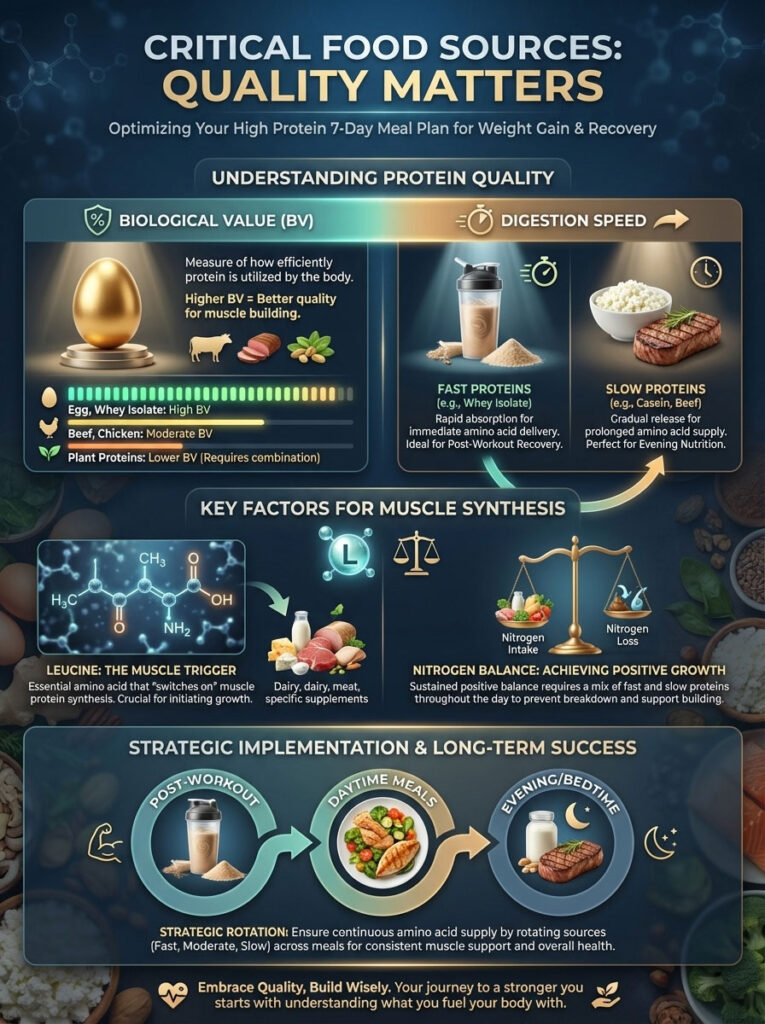
Understanding the quality of protein is essential for a High Protein 7-Day Meal Plan for Weight Gain. We measure this through Biological Value (BV) and digestion speed. A mix of fast and slow proteins keeps Nitrogen Balance positive throughout the day.
| Protein Source | Biological Value (BV) | Leucine Content (per 100g) | Digestion Speed |
|---|---|---|---|
| Whey Isolate | 104 | ~10-11g | Very Fast (30-60 min) |
| Whole Egg | 100 | ~8.5g | Medium |
| Beef (Lean) | 80 | ~8g | Slow |
| Chicken Breast | 79 | ~7.5g | Medium |
| Casein | 77 | ~9g | Very Slow (up to 7 hours) |
| Soy Isolate | 74 | ~8g | Medium |
| Black Beans | ~50 | ~6g | Slow (High Fiber) |
From this data, we see why Whey is ideal for Post-workout nutrition. Conversely, Beef or Casein is better for evening meals. This strategic rotation ensures amino acids are trickling into the bloodstream 24/7.
Advanced Strategies for the “Hardgainer”
For some, the High Protein 7-Day Meal Plan for Weight Gain is still difficult to execute. This is often due to low appetite or a hyperactive metabolism. Here are clinical strategies to overcome these barriers.
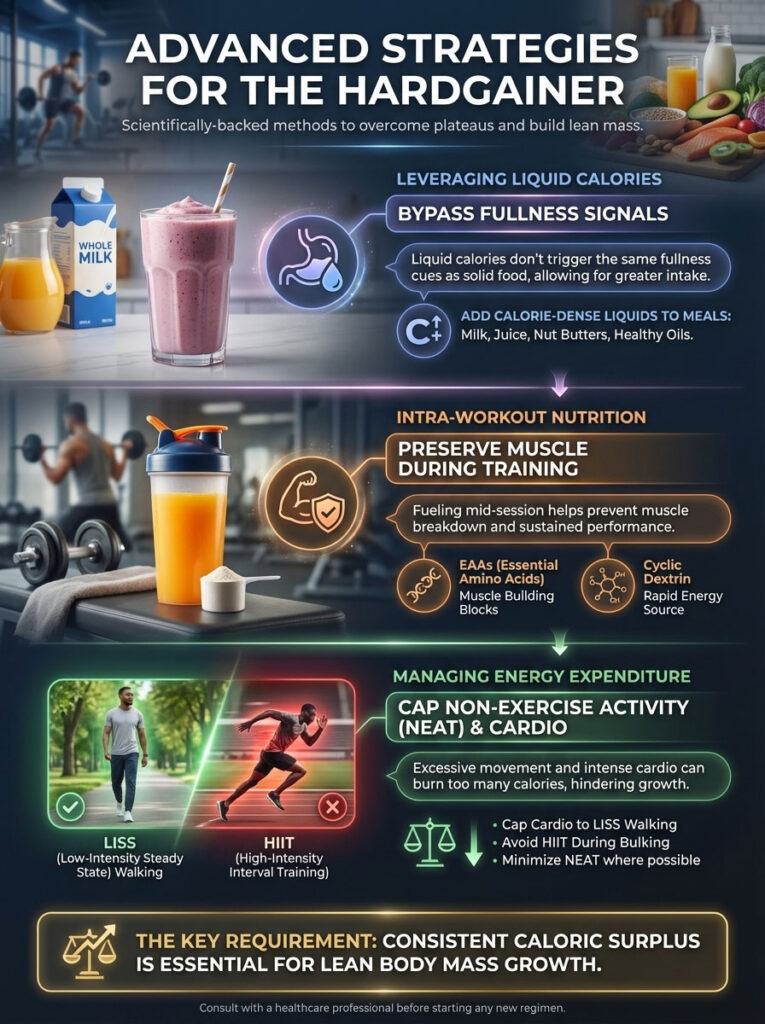
Liquid Calories
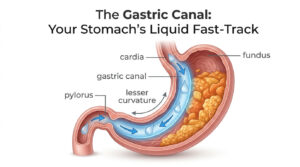
The stomach has stretch receptors that signal fullness. Liquids bypass these receptors more efficiently than solids. If you are struggling to finish meals, do not force more solid food. Add a glass of milk, oat milk, or fruit juice to the meal. This can easily add 200–300 calories without significant satiety.
Intra-Workout Nutrition
Training causes muscle breakdown. To blunt this catabolic response, consider consuming Essential Amino Acids (EAAs) or Cyclic Dextrin (a high-performance carbohydrate) during your workout. This supplies energy to the working muscle immediately. It prevents the body from tapping into its own stores, effectively lowering the barrier for the Caloric Surplus needed later in the day.
Managing NEAT
If the scale is not moving, look at your movement outside the gym. Hardgainers often fidget, pace, or stand excessively. While we want to be healthy, excessive cardio or movement burns the calories intended for Lean Body Mass growth. We advise hardgainers to cap cardio at low-intensity steady state (LISS) walking for recovery. Avoid high-intensity interval training (HIIT) during a bulk phase.
Supplementation: An Evidence-Based Review
Supplements are the tip of the pyramid, not the base. However, in the context of Hypertrophy Nutrition, certain compounds have robust clinical backing. They can act as force multipliers for your diet.
The “Must-Haves”
- Creatine Monohydrate: It is the most researched supplement in sports nutrition. It aids in ATP regeneration, allowing for more volume in training. It also draws water into the muscle cell, creating a more anabolic environment. Take 5g daily.
- Whey Protein Isolate: Essential for convenience and timing. Hitting 200g of protein from chicken alone is difficult and expensive. Whey offers a quick, high-leucine option that is easy on the stomach.
The “Nice-to-Haves”
- Beta-Alanine: This amino acid buffers acid in the muscle tissue. It potentially extends endurance during high-rep sets, allowing you to push closer to failure.
- Casein Protein: As discussed, excellent for pre-sleep to maintain Nitrogen Balance overnight. It forms a gel in the stomach and releases amino acids slowly.
- Multivitamin: Eating the same foods often leads to micronutrient gaps. A high-quality multivitamin acts as an insurance policy for your metabolism.
What to Avoid: Steer clear of generic “Mass Gainers” found in drugstores. They are often loaded with maltodextrin, a cheap sugar that causes massive blood sugar spikes and subsequent crashes. You are better off making the homemade “Mass Shake” listed in Day 4.
Troubleshooting Common Issues
Even with a perfect High Protein 7-Day Meal Plan for Weight Gain, issues arise. Here is how we handle them clinically.
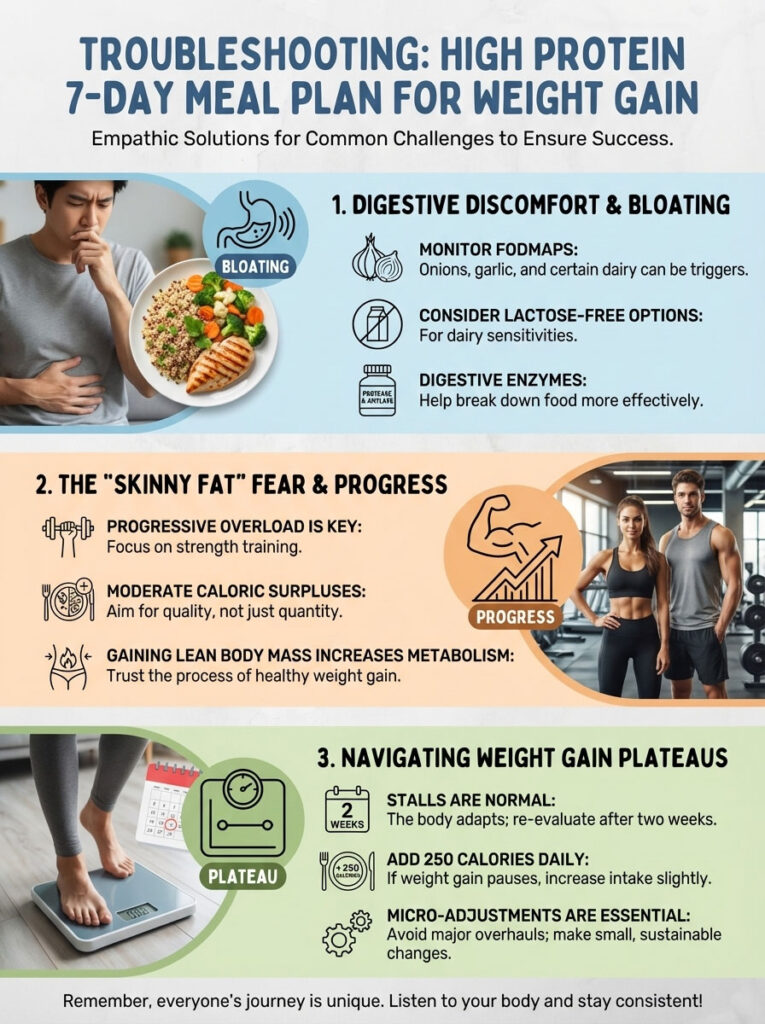
GI Distress and Bloating
Rapidly increasing food intake can shock the gut. If you experience bloating, look at FODMAPs (fermentable carbohydrates). Onions, garlic, and certain dairy products can be triggers. Try switching to lactose-free milk or using digestive enzymes containing protease and amylase. This assists your body in breaking down the increased load.
The “Skinny Fat” Fear
Many clients fear gaining a belly. Understand that if you are training with sufficient intensity (progressive overload) and keeping the surplus moderate (10–20%), the majority of weight gain will be lean tissue. Lean Body Mass is metabolically active; the more you have, the more calories you burn at rest. Trust the process and the math.
Plateaus
The body adapts. As you gain weight, your BMR increases. A 2500 calorie diet that caused weight gain at 160lbs might be maintenance calories at 170lbs. If the scale stops moving for two weeks, add 250 calories (roughly one snack) to your daily total. Do not overhaul the entire plan; micro-adjustments are key.
Kitchen Setup and Meal Prep Logic
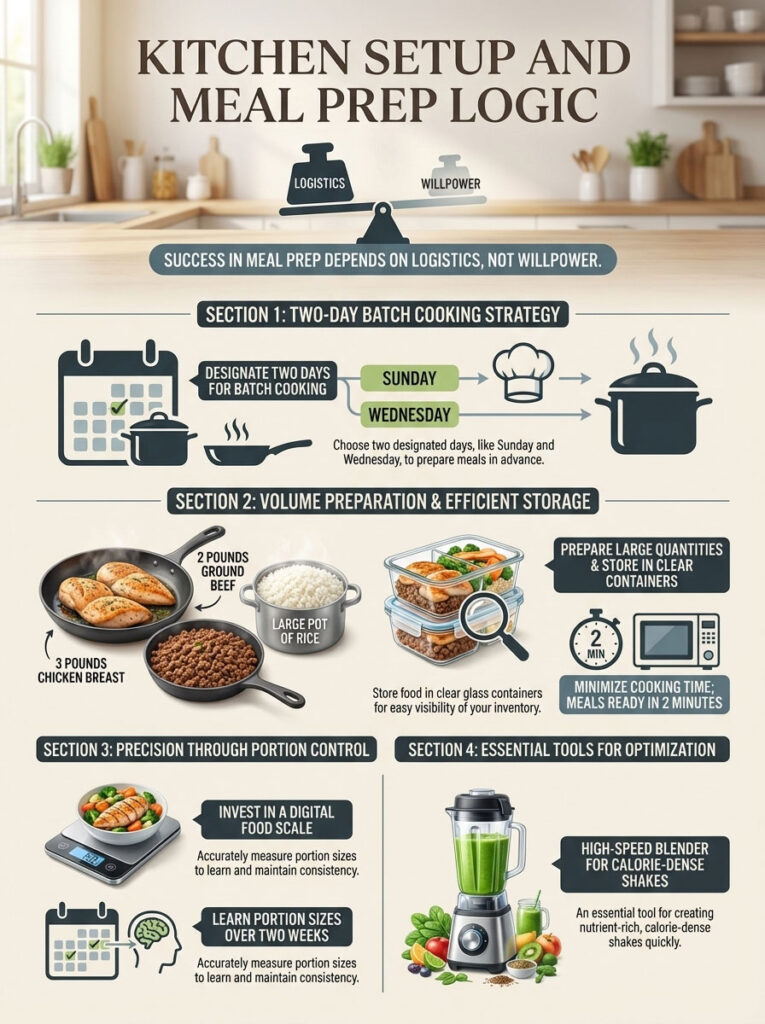
Success in this plan is rarely about willpower; it is about logistics. If the food is ready, you will eat it. If you have to cook from scratch three times a day, you will likely fail. Here is how to set up your kitchen for mass gain.
Batch Cooking Basics
Pick two days a week, typically Sunday and Wednesday, to do the heavy lifting. Cook 3 pounds of chicken breast, 2 pounds of ground beef, and a large pot of rice at once. Store these in clear glass containers so you can see your inventory. When you are tired after work, the barrier to a healthy meal is just 2 minutes in the microwave.
Essential Tools
Invest in a digital food scale. “One chicken breast” can vary from 4oz to 10oz. This variance is the difference between a surplus and maintenance. Weighing your food for just two weeks will teach you what portion sizes actually look like. Additionally, a high-speed blender is non-negotiable for making calorie-dense shakes.
Overcoming Physiological Barriers
Beyond the kitchen, your body may fight this process. Here are some advanced physiological considerations.
Lactose Intolerance
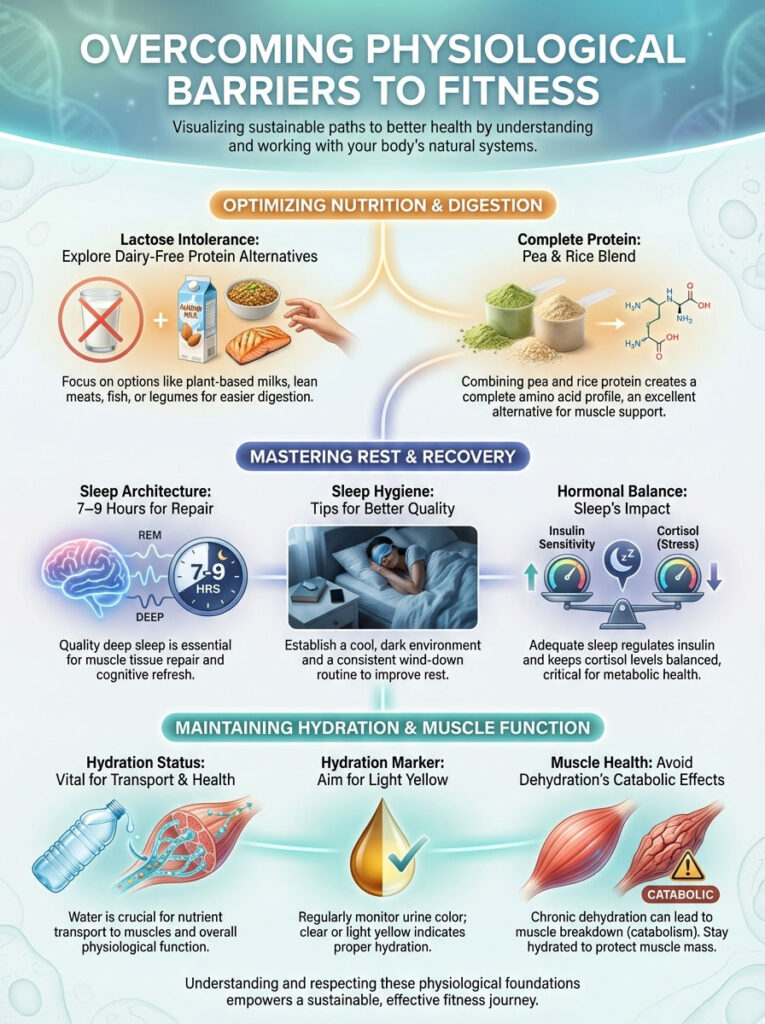
If you cannot tolerate dairy, you can still follow this plan. Swap whey for a pea and rice protein blend to ensure a complete amino acid profile. Use almond or oat milk instead of cow’s milk. However, be aware that plant milks often have lower protein content, so you may need to supplement elsewhere.
Sleep Architecture
Sleep is when the actual growth occurs. Without 7–9 hours of quality sleep, your insulin sensitivity drops, and cortisol rises. This hormonal environment compromises muscle repair. Prioritize sleep hygiene as much as you prioritize your gym sessions.
Hydration Status
Muscle tissue is roughly 75% water. Hydration is essential for cell volumization and transporting nutrients to muscle cells. A dehydrated muscle is a catabolic muscle. Aim for clear or light yellow urine throughout the day as a marker of adequate hydration.
Summary & Key Takeaways
Building a physique is a marathon, not a sprint. This High Protein 7-Day Meal Plan for Weight Gain provides the structural framework, but your consistency is the variable that matters most. We have covered the importance of Muscle Protein Synthesis, the dangers of dirty bulking, and the critical role of the Leucine Threshold.
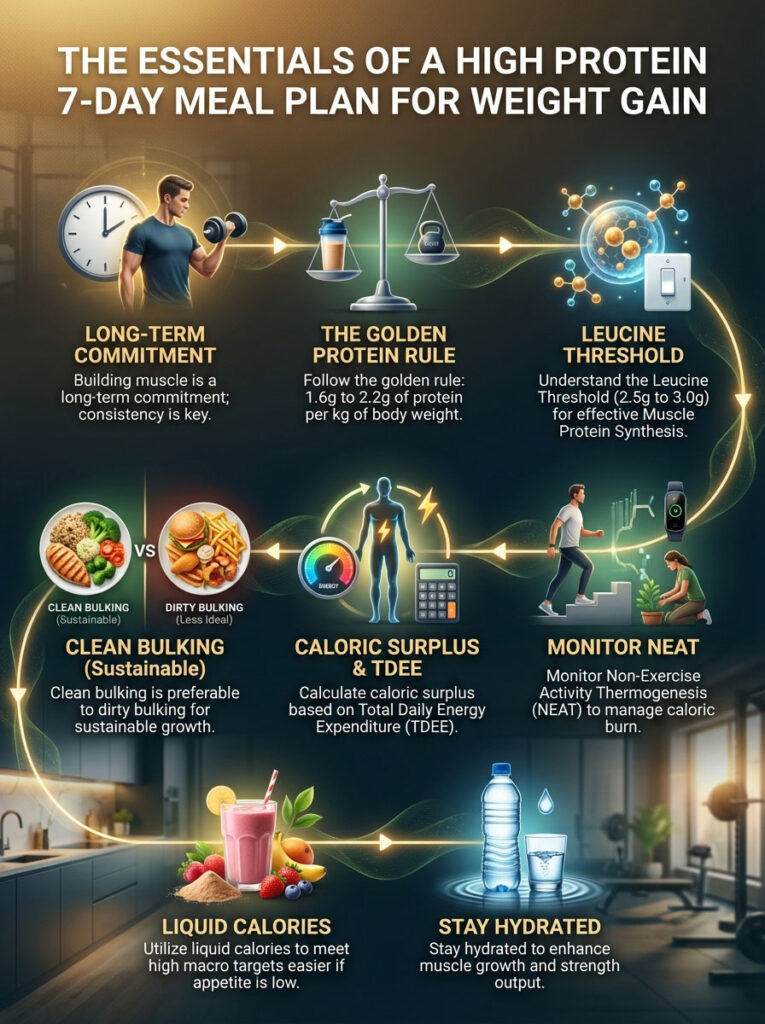
Remember the golden rule: 1.6g to 2.2g of protein per kg of body weight. Prioritize sleep, as this is when the actual growth occurs. Track your data, listen to your biofeedback, and treat your nutrition with the same discipline as your training. By adhering to these clinical principles, you turn the complex physiology of weight gain into a predictable, manageable process.
Frequently Asked Questions
What is the ‘Leucine Threshold’ and why does it matter for weight gain?
The Leucine Threshold is the specific amount of the essential amino acid leucine (typically 2.5g to 3.0g) required to activate the mTOR pathway, which is the primary genetic switch for Muscle Protein Synthesis (MPS). To gain lean mass effectively, each meal in your plan must reach this threshold to ensure your body remains in an anabolic state rather than a catabolic one.
How much protein do I actually need to build muscle according to clinical standards?
As a CSSD, I follow the International Society of Sports Nutrition (ISSN) standards, which recommend a daily intake of 1.6g to 2.2g of protein per kilogram of body weight for hypertrophy. For a 180lb male, this equates to roughly 180g of protein per day to maintain a positive nitrogen balance and support tissue repair.
Why is a ‘clean bulk’ superior to a ‘dirty bulk’ for long-term hypertrophy?
A dirty bulk, characterized by high-calorie junk food, often leads to systemic inflammation and reduced insulin sensitivity. This makes your muscle cells resistant to nutrient uptake, causing the body to store excess calories as visceral fat. A strategic clean bulk maintains metabolic flexibility and ensures the majority of weight gain is lean body mass.
How do I calculate my caloric surplus without gaining excessive body fat?
You should first determine your Total Daily Energy Expenditure (TDEE) using the Mifflin-St Jeor equation. Once your maintenance level is established, target a ‘surplus sweet spot’ of 10–20% above maintenance (roughly 300–500 extra calories). This conservative increase provides the energy needed for muscle synthesis while minimizing adipose tissue accumulation.
What role does NEAT play in the struggles of a ‘hardgainer’?
Non-Exercise Activity Thermogenesis (NEAT) includes all the calories burned through fidgeting, pacing, and daily movement. Hardgainers often have a hyperactive NEAT response, which can unintentionally burn off the caloric surplus required for growth. Monitoring and occasionally limiting excessive non-essential movement is key to keeping the scale moving upward.
Can liquid calories really help if I have a low appetite during a bulk?
Yes, liquid nutrition is a clinical tool used to bypass the stomach’s stretch receptors, which signal fullness to the brain. By incorporating homemade mass shakes containing whey, oats, and healthy fats, you can consume 800+ calories in liquid form that the body processes faster than solid food, making it easier to hit high-volume macro targets.
Is it necessary to take Casein protein before bed for weight gain?
While not strictly mandatory, Casein is highly beneficial because it is a slow-digesting protein that releases amino acids into the bloodstream for up to seven hours. This sustained delivery helps prevent muscle protein breakdown (MPB) during the overnight fast, keeping your net protein balance positive while you sleep.
How does hydration status impact my strength and muscle growth?
Muscle tissue is approximately 75% water. Research shows that even a 2% drop in hydration can reduce strength output by up to 10% and impair cell volumization. A hydrated muscle is a more anabolic muscle, as water is essential for transporting the nutrients required for the biological machinery of hypertrophy.
What is the significance of the PDCAAS score in food selection?
The Protein Digestibility Corrected Amino Acid Score (PDCAAS) measures the quality of a protein based on its amino acid profile and our ability to digest it. High-scoring sources like whey, eggs, and beef have superior bioavailability, ensuring that the protein you eat is actually absorbed and utilized for building contractile tissue rather than being wasted.
Should I avoid carbohydrates while trying to gain lean mass?
No, carbohydrates are ‘protein-sparing.’ By maintaining high muscle glycogen stores through complex carbs like oats and sweet potatoes, you prevent the body from oxidizing amino acids for energy. This allows the protein you consume to be used exclusively for its primary purpose: structural repair and hypertrophy.
What supplements are clinically backed to support a high-protein weight gain plan?
The most researched supplements are Creatine Monohydrate (5g daily) for ATP regeneration and cell volumization, and Whey Protein Isolate for its high leucine content and rapid absorption. Casein is also recommended for overnight recovery, while generic ‘mass gainers’ should be avoided due to their high sugar and maltodextrin content.
How should I adjust my meal plan if I hit a weight-gain plateau?
As your lean body mass increases, your Basal Metabolic Rate (BMR) also rises. If your weight remains stagnant for two weeks, you must make a micro-adjustment by adding approximately 250 calories to your daily total. This incremental approach ensures continued growth without overwhelming your digestive system or causing rapid fat gain.
Disclaimer
This article is for informational and educational purposes only and does not constitute medical advice or a formal nutritional prescription. The caloric and macronutrient needs for weight gain vary significantly based on individual metabolism, health status, and activity levels. Always consult with a physician or a Registered Dietitian Nutritionist (RDN) before beginning a high-protein diet or a significant caloric surplus, especially if you have pre-existing kidney, liver, or metabolic conditions.
References
- International Society of Sports Nutrition (ISSN) – jissn.biomedcentral.com – Position stand on protein and exercise, detailing the 1.6g to 2.2g/kg requirement for hypertrophy.
- Journal of the International Society of Sports Nutrition – “The Leucine Threshold and Muscle Protein Synthesis” – Research study on the 2.5g+ leucine requirement to trigger mTOR pathways.
- National Institutes of Health (NIH) – PubMed Central – Clinical data on the Thermic Effect of Food (TEF) and the metabolic inefficiency of protein.
- Academy of Nutrition and Dietetics – eatright.org – Guidelines for healthy weight gain and the role of nutrient-dense whole foods in clinical nutrition.
- The Mifflin-St Jeor Equation Study – American Journal of Clinical Nutrition – The gold standard formula for calculating Basal Metabolic Rate (BMR) and TDEE.
- Journal of Applied Physiology – “Muscle Protein Turnover and Net Protein Balance” – Analysis of the competing processes of synthesis (MPS) and breakdown (MPB).