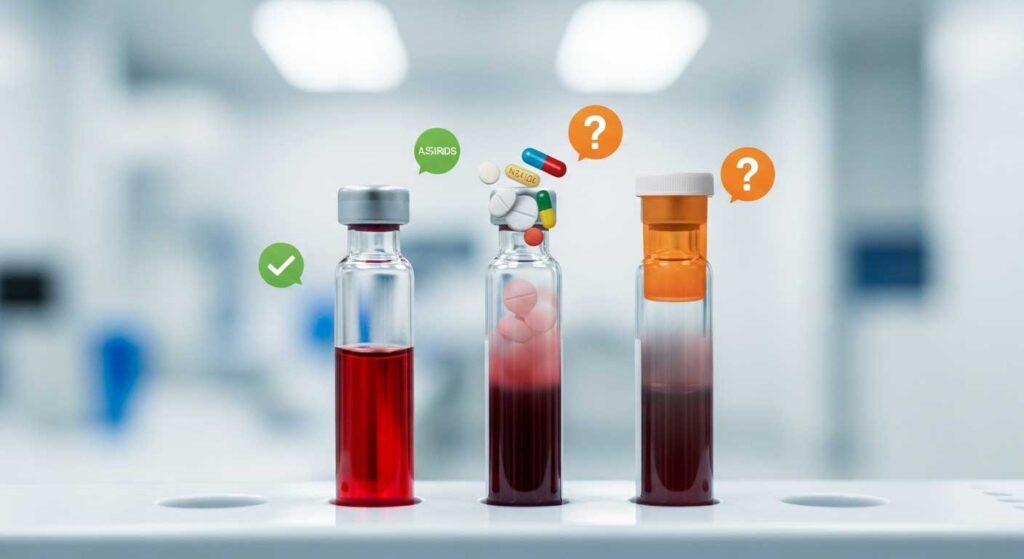
You’ve done your part. You fasted as instructed, showed up for your lab appointment on time, and now you’re waiting for the results of your annual blood work. It’s a familiar routine for millions of Americans, often accompanied by a hint of anxiety. But what if the results that come back aren’t telling the whole story? What if something as simple as the pain reliever you took for a headache or the antacid you use for heartburn could be silently skewing the numbers, leading to inaccurate diagnoses, unnecessary stress, and a cascade of follow-up tests?
- The Golden Rule: Why Full Disclosure Before Your Blood Draw is Non-Negotiable
- Deep Dive: Aspirin (Salicylates) and its Impact on Blood Test Results
- Deep Dive: Naproxen, Ibuprofen, and the NSAID Effect on Your Labs
- Deep Dive: How Antacids Can Unbalance Your Internal Chemistry
- At-a-Glance Summary: Medication Interference with Blood Tests
- Your Pre-Test Checklist: 4 Steps for Accurate Blood Work Results
- Conclusion: Taking Ownership of Your Health Data for an Accurate Diagnosis
- Frequently Asked Questions (FAQ)
This is a far more common scenario than people realize. Seemingly harmless over-the-counter (OTC) medications can significantly interfere with how your blood tests are read. This guide will serve as your definitive resource for understanding how three of the most common culprits—Aspirin, Naproxen (and other NSAIDs), and Antacids—can impact your lab results.
Medication Blood Test Checker
Enter the name of your medication below to check if it's safe before blood tests.
* None of this is medical advice; users must follow their doctor/lab instructions.

To help you stay informed and proactive, this comprehensive guide is provided by HealthCareOnTime.com, your partner in managing health effectively. Our goal is to empower you with the knowledge to ensure your health report is as accurate as possible. Before we dive in, let’s start with the single most crucial piece of advice: Always inform your healthcare provider and the phlebotomist of every medication you are taking—prescription, OTC, vitamins, and supplements—before your blood is drawn. Understanding how medications affect blood tests is the first step toward becoming a more informed patient.
The Golden Rule: Why Full Disclosure Before Your Blood Draw is Non-Negotiable
Think of your blood work as a complex and sensitive snapshot of your body’s internal chemistry at a single moment in time. For your doctor to interpret that snapshot correctly, they need to know all the variables and inputs. Not disclosing a medication is like a mechanic trying to diagnose an engine noise without knowing you just filled the tank with a different type of fuel—the diagnosis will likely be off.

When you fail to mention an OTC drug, you risk your doctor misinterpreting key health indicators. A temporary spike in a kidney function marker could be mistaken for chronic kidney disease. A low red blood cell count might trigger an extensive workup for a serious condition when it’s actually a side effect of your pain reliever. Incorrectly adjusted thyroid medication can leave you feeling tired and unwell.
This is why full disclosure is the golden rule of any lab visit. It’s the simplest way to ensure you know how to prepare for a blood draw and get the most accurate results, saving you time, money, and unnecessary worry.
Deep Dive: Aspirin (Salicylates) and its Impact on Blood Test Results
Aspirin is one of the most widely used medications in the world, trusted for everything from headache relief to heart attack prevention. But its powerful effects on the body’s chemistry also mean it can have a significant impact on your lab work. Understanding the connection between aspirin and blood test results is crucial for anyone who uses it regularly.

The Science of Aspirin: More Than a Pain Reliever
Aspirin, a type of salicylate, works in a unique way compared to many other pain relievers. Its primary mechanism is to permanently inhibit an enzyme called COX-1 within your platelets. Platelets are the tiny blood cells responsible for forming clots to stop bleeding. By disabling this enzyme, aspirin essentially makes platelets less “sticky” for their entire 7-10 day lifespan.

This is a critical piece of real data that explains its effectiveness in preventing heart attacks and strokes, but also why it interferes with certain tests. This effect differs based on the dose: a low-dose “baby aspirin” is typically 81mg and used for cardiac protection, while higher doses are used for pain and inflammation.
Key Blood Tests Aspirin Can Alter
Platelet Function Tests
This is the most direct and predictable interference. Tests like the Platelet Function Assay (PFA-100/200) are specifically designed to measure how well platelets form a clot.
- Instance and Data: Imagine a 65-year-old patient scheduled for knee replacement surgery. As part of their pre-op workup, the doctor orders a PFA to assess their bleeding risk. The patient takes a daily low-dose aspirin for their heart. The test result comes back showing an abnormally long “closure time,” indicating their blood is slow to clot. Because of this, the surgeon will mandate they stop taking aspirin before blood work and the procedure, typically for at least 7 days, to allow the body to generate a fresh supply of fully functional platelets.
Complete Blood Count (CBC) & Iron Panel
While aspirin doesn’t directly change your red or white blood cells, its long-term use can lead to a serious issue: chronic, low-level gastrointestinal (GI) bleeding. This bleeding is often invisible to the naked eye but can lead to iron deficiency anemia over time.
- Instance and Data: A patient complains of persistent fatigue. Their doctor orders a Complete Blood Count (CBC), which reveals a low Hemoglobin of 11.5 g/dL (normal is >13.5 for men, >12 for women) and a low Mean Corpuscular Volume (MCV) of 78 fL (indicating small red blood cells). These numbers are classic signs of iron deficiency anemia. A follow-up iron panel confirms a very low ferritin level. One of the first questions the doctor will ask is, “Do you take aspirin or other NSAIDs regularly?”
Uric Acid Levels (Gout Monitoring)
Aspirin has a strange, dual effect on uric acid, the substance that causes gout when it crystallizes in the joints. This can be very confusing for patients being monitored for the condition.
- Real Data:
- Low-dose aspirin (<325mg per day) can compete with uric acid for excretion by the kidneys. This can actually increase the level of uric acid in the blood, potentially triggering a gout attack.
- High anti-inflammatory doses (>2 grams per day), which are used for conditions like rheumatoid arthritis, have the opposite effect. They increase the amount of uric acid a person excretes, lowering blood levels and potentially masking a gout diagnosis.

A Crucial Clarification: Aspirin and PT/INR
It is a common and important point of confusion: does aspirin affect routine clotting tests? For standard coagulation panels like the Prothrombin Time (PT) or International Normalized Ratio (INR), the answer is no. These tests measure the function of the vitamin K-dependent clotting cascade, a pathway that aspirin does not touch. This is a vital distinction from prescription blood thinners like Warfarin (Coumadin), which are specifically monitored using the PT/INR test.
Deep Dive: Naproxen, Ibuprofen, and the NSAID Effect on Your Labs
Nonsteroidal anti-inflammatory drugs (NSAIDs) are a cornerstone of pain relief in the United States. Medications like Naproxen (Aleve) and Ibuprofen (Advil, Motrin) are in nearly every medicine cabinet. However, their potent effects can cause significant Naproxen blood test interference, particularly on tests related to kidney and electrolyte health.
The Power of NSAIDs: How They Work
Like aspirin, NSAIDs work by blocking COX enzymes. However, their inhibition is reversible. They reduce prostaglandins throughout the body—compounds that, among other things, protect the stomach lining and are crucial for maintaining healthy blood flow to the kidneys. This mechanism is the key to understanding both their benefits and their risks to your lab results.
The Comprehensive Metabolic Panel (CMP): Where NSAIDs Show Their Impact
The Comprehensive Metabolic Panel (CMP) is a routine blood test that gives a broad overview of your kidney function, liver function, and electrolyte and fluid balance. This is the panel most likely to be affected by NSAID use.
Kidney Function (Creatinine & BUN)
This is the most critical interaction to be aware of. By reducing blood flow to the kidneys, NSAIDs can impair their ability to filter waste from the blood.
- Instance and Data: An older adult, who is slightly dehydrated on a hot day, has been taking naproxen twice daily for arthritis pain. They go for a routine lab draw. Their creatinine level, which was a healthy 1.0 mg/dL a year ago, has jumped to 1.7 mg/dL, and their Blood Urea Nitrogen (BUN) is also elevated. This sudden spike is a form of Acute Kidney Injury (AKI) and is directly linked to the NSAID. If the doctor wasn’t aware the patient was taking naproxen, this could be misinterpreted as a new diagnosis of chronic kidney disease, causing significant alarm. This common scenario directly answers the question, Can ibuprofen affect kidney function test?

Electrolytes (Potassium & Sodium)
NSAIDs can also affect the hormones that regulate salt and water balance in the kidneys.
- Instance and Data: A patient with high blood pressure is prescribed an ACE inhibitor. They also take daily ibuprofen for chronic back pain. This combination puts them at a heightened risk for Hyperkalemia (high potassium). A routine CMP reveals their potassium level has risen to 5.3 mEq/L (the safe upper limit is around 5.0 mEq/L), a dangerous level that can affect heart rhythm.
Liver Function (AST & ALT)
Though less common, NSAIDs can sometimes cause stress on the liver, leading to a mild elevation in liver enzymes like AST and ALT on a CMP.
Beyond the CMP: Other Tests at Risk
Inflammatory Markers (ESR & CRP)
For patients with autoimmune diseases like rheumatoid arthritis or lupus, doctors use blood tests for C-Reactive Protein (CRP) and Erythrocyte Sedimentation Rate (ESR) to monitor disease activity. Since NSAIDs work by reducing inflammation, taking them before a blood draw can produce false positive lab results medication effects.
- Instance and Data: A patient with rheumatoid arthritis tells her doctor her joints are incredibly painful and stiff. However, her CRP blood test comes back surprisingly low. Confused, the doctor asks about her medication use. The patient reveals she took two naproxen pills that morning to manage the pain just to get to the appointment. The NSAID artificially suppressed the inflammation marker, giving a completely misleading picture of her disease activity.
Special Interaction: Lithium Levels
For patients taking lithium for bipolar disorder, this is a critical interaction. NSAIDs can reduce the kidneys’ ability to clear lithium from the body by up to 30%, leading to a rapid buildup and potentially toxic blood levels.
Deep Dive: How Antacids Can Unbalance Your Internal Chemistry
Antacids are another OTC staple, used by millions to combat heartburn and acid reflux. While they provide relief, long-term and high-dose use can have profound, unintended consequences on your internal chemistry. The connection between antacids and lab results is one of the most underappreciated areas of medication interference.
The Antacid Family: From Tums to Prilosec
It’s important to understand that not all antacids are the same. They fall into a few main categories:
- Simple Neutralizers: These include products like Tums and Rolaids (calcium carbonate), which work by directly neutralizing stomach acid.
- H2 Blockers: Medications like famotidine (Pepcid) work by reducing acid production.
- Proton Pump Inhibitors (PPIs): This powerful class includes omeprazole (Prilosec) and esomeprazole (Nexium). They work by shutting down the acid-producing pumps in the stomach.
While all can interfere with lab tests, the most significant and long-lasting effects are seen with the chronic use of PPIs.
The Domino Effect of Reduced Stomach Acid on Blood Tests
Stomach acid is not the enemy; it’s a crucial component of healthy digestion and nutrient absorption. When you drastically reduce it for long periods, it creates a domino effect that shows up clearly in your blood work.
Nutritional Deficiencies
- Vitamin B12: This is a major and well-documented consequence. Your body needs stomach acid to separate Vitamin B12 from the protein in your food.
- Instance and Data: The link between PPI and B12 deficiency is strong. A patient on omeprazole for several years for GERD may develop symptoms of fatigue and tingling in their hands and feet. Their CBC could show anemia with an unusually high MCV (>100 fL), a hallmark of B12 or folate deficiency anemia. A direct test would confirm very low Vitamin B12 levels.

- Magnesium: The FDA has issued a safety warning about the risk of hypomagnesemia (critically low magnesium) with long-term PPI use. Low magnesium is dangerous and can cause muscle spasms, seizures, and life-threatening cardiac arrhythmias.
- Iron: Like B12, iron absorption is highly dependent on an acidic environment. Chronic antacid use can easily lead to iron deficiency anemia, which would be reflected by a low hemoglobin and low ferritin on an iron panel.
Mineral Imbalances from Antacids Themselves
- Instance and Data: A person who chews Tums (calcium carbonate) throughout the day for heartburn can develop Hypercalcemia (high blood calcium). This would be flagged as an abnormally high calcium level on their CMP and can contribute to kidney stones and other health issues over time.
Thyroid Function Panel (TSH)
This is one of the most common and highly searched medication interactions. It is not a direct chemical interference but rather a problem of absorption.

- Instance and Data: A patient with hypothyroidism has been stable on the same dose of levothyroxine (Synthroid) for years, with her TSH level consistently around a healthy 2.5 mIU/L. Suddenly, her TSH test jumps to 6.0 mIU/L, suggesting her thyroid is now underactive. A careful medication review reveals she recently started taking a daily calcium supplement for her bones at the same time as her thyroid pill in the morning. Calcium and other ingredients in antacids bind to the thyroid hormone in the gut, preventing it from being absorbed. This is a classic antacids and thyroid test TSH interaction. The simple solution is to separate the thyroid medication from the antacid or supplement by at least 4 hours.
At-a-Glance Summary: Medication Interference with Blood Tests
To make this information easy to reference, here is a summary table of the key interactions.
| Medication Class | Common Examples (USA Brands) | Key Blood Tests Affected | How Results Are Altered & Why | Actionable Advice & Clinical Context |
| Aspirin (Salicylates) | Bayer, Ecotrin | Platelet Function (PFA), CBC, Uric Acid | PFA shows prolonged clotting. CBC may show anemia from GI bleeding. Uric acid levels can be raised or lowered depending on the dose. | Stop 7-10 days before surgery. Long-term use can hide stomach bleeding. Discuss with your doctor if you have gout. |
| NSAIDs | Aleve, Advil, Motrin | CMP (Kidney Function), Inflammatory Markers | Raises Creatinine, BUN, and Potassium by reducing kidney blood flow. Falsely lowers inflammation markers like CRP and ESR. | This is critical for kidney health. Can cause temporary but sharp spikes in kidney labs (AKI) and mask autoimmune disease activity. |
| Antacids (PPIs) | Prilosec, Nexium | Vitamin B12, Magnesium, Iron Panel, CBC | Severely reduces nutrient absorption by lowering stomach acid, leading to major deficiencies and anemia with a high MCV. | This is a long-term use issue. Can lead to significant nutritional problems, including nerve issues from B12 deficiency. |
| Antacids (Simple) | Tums, Rolaids | Calcium (on CMP), TSH (Thyroid Test) | Overuse can falsely elevate blood calcium. Antacids block absorption of thyroid medication, leading to an inaccurate, high TSH reading. | Timing is crucial. Avoid overuse of calcium-based antacids. Separate thyroid medication and antacids by at least 4 hours. |
Your Pre-Test Checklist: 4 Steps for Accurate Blood Work Results
Navigating your health can feel complex, but ensuring accurate lab results can be straightforward if you follow a few simple steps.
- Create a Master List: Before your appointment, write down everything you take. This includes prescription drugs, all OTC medications (even if you only take them occasionally), vitamins, and herbal supplements.
- Talk to Your Doctor: Review your list with your doctor during the visit when they order the labs. Ask specifically, “Is there anything on this list I should stop taking before my blood test?”
- Inform the Lab: When you arrive for your blood draw, give your list to the phlebotomist. They are a crucial part of your healthcare team and can flag potential issues.
- Follow All Instructions: If your test requires fasting, adhere to the instructions strictly. This means no food or drink (except water), no coffee, and no gum.

To make this even easier, use a health management tool from HealthCareOnTime.com to keep your medication list updated and accessible right on your phone.
Conclusion: Taking Ownership of Your Health Data for an Accurate Diagnosis
The journey through the complexities of your health can feel daunting, but knowledge is the ultimate tool for empowerment. We have explored the deep biochemical impact of common medications: how a daily aspirin can fundamentally alter your body’s clotting response, how NSAIDs can paint a dangerously misleading picture of your kidney health, and how even simple antacids can trigger a cascade of nutritional deficiencies that show up clearly in your blood work.

Understanding these interactions is more than just trivia; it is a critical component of your health literacy. Your blood test results are the raw data from which your doctor builds a diagnostic picture. Providing them with clean, uncorrupted data is essential for an accurate outcome. This article is designed not to create fear, but to foster expertise in your own health management.
The most powerful step you can take is to transform from a passive patient into an active, informed partner in your healthcare. The simple act of disclosing every medication you take is an act of taking ownership. It demonstrates a commitment to accuracy and provides your medical team with the clear context they need to provide the best possible care. This is the foundation of trustworthy and effective medicine.
For more tools and resources to help you manage your health journey with confidence, visit HealthCareOnTime.com.