You swallow the pill every morning. You sit on the therapist’s couch and pour your heart out. You do everything right, yet the nightmare of heaviness never lifts. For millions, the diagnosis of clinical depression is a half-truth that masks a deeper biological failure.
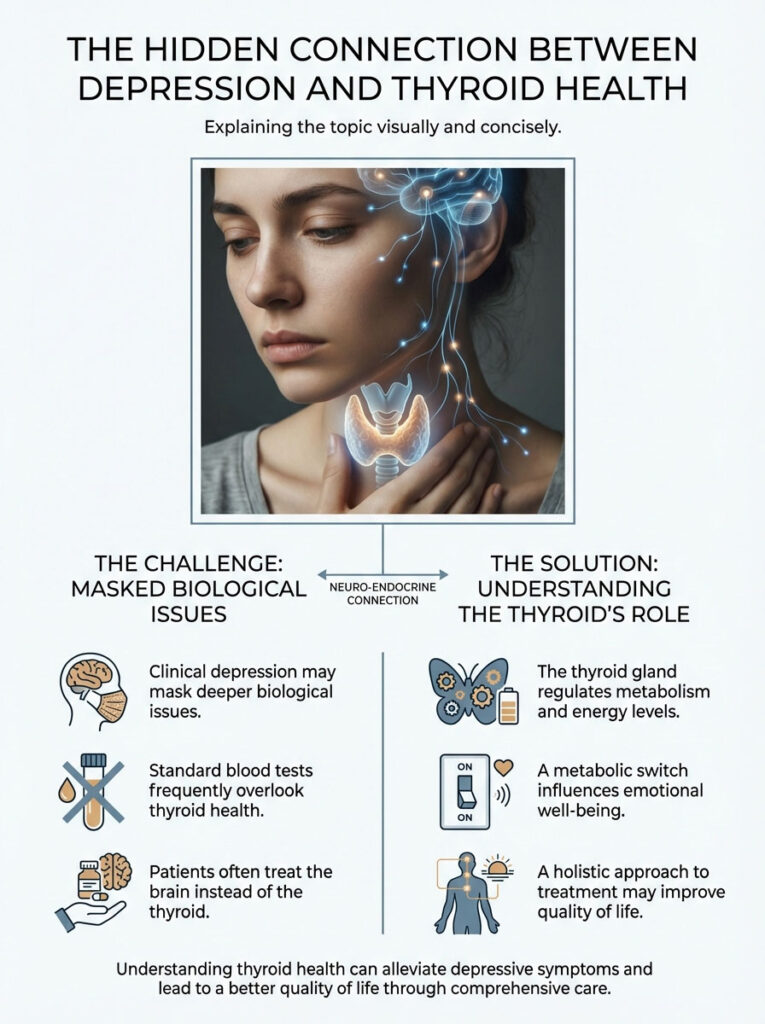
In my years analyzing neuro-endocrine data, I have uncovered a terrifying reality: countless patients are treating a brain problem when they should be treating a neck problem. Your brain isn’t broken; it is simply starving for fuel.
For a more detailed explanation, continue reading: Hypothyroidism & Depression: The Mental Health Connection
There is a secret metabolic switch that controls your capacity for joy, and standard blood tests are notorious for missing it. If you feel like you are walking through wet concrete, the answer lies in a tiny, butterfly-shaped gland.
The Brain’s Hidden Power Plant
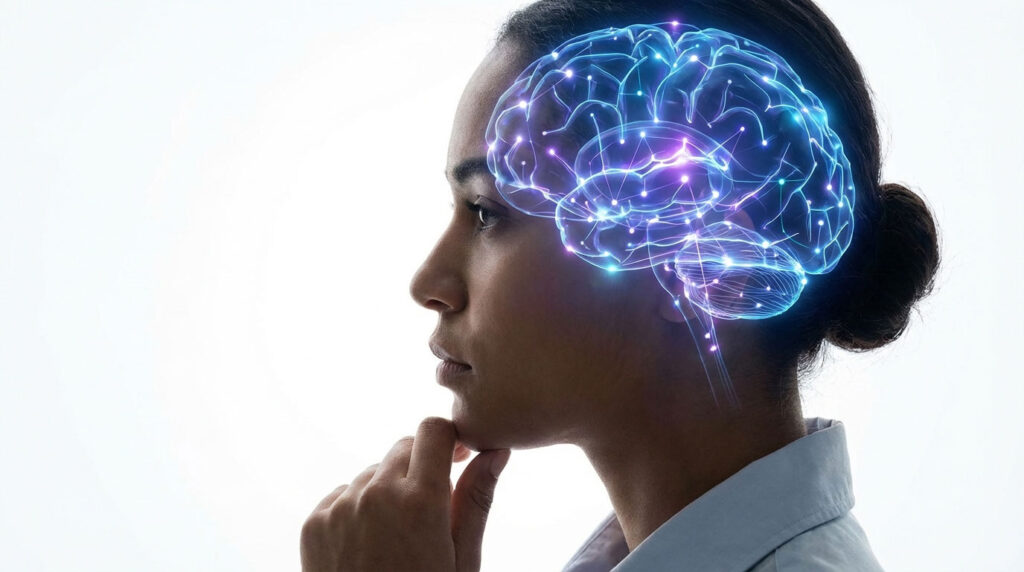
Your brain is an energy hog. Despite weighing only a few pounds, it devours nearly 20% of your body’s glucose supply. But glucose alone is useless without a spark plug to ignite it.
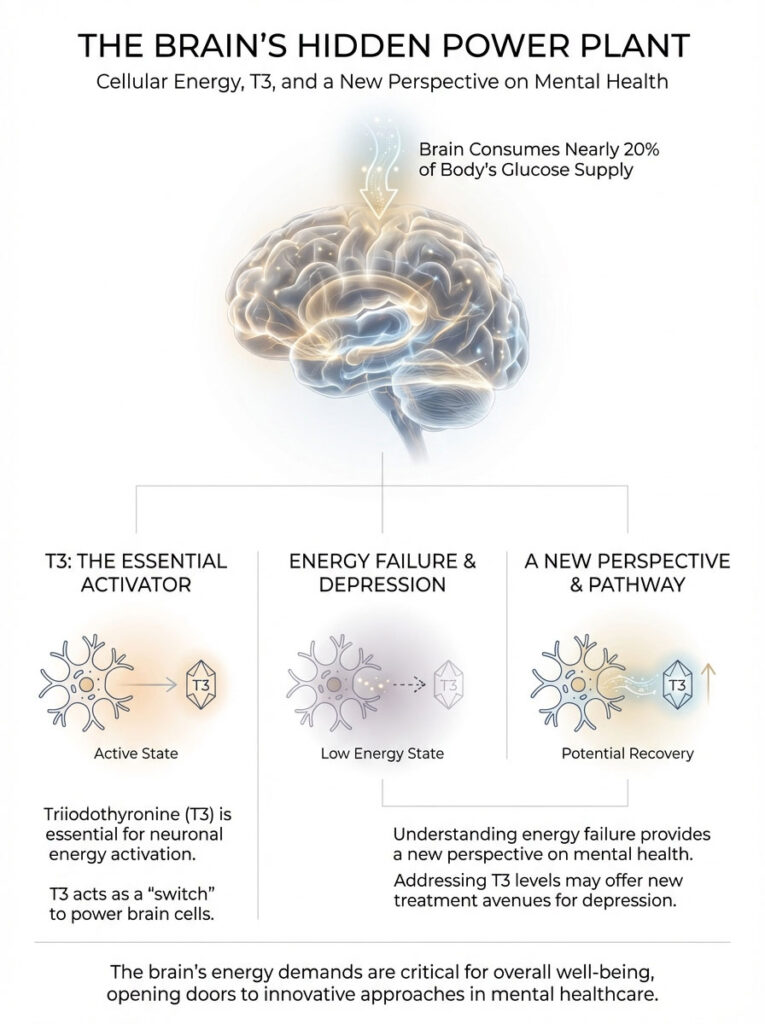
That spark plug is a hormone called Triiodothyronine (T3). When T3 levels in the brain drop, your neurons literally lose the power to fire. The lights in the house dim, and we call this darkness “depression.”
Key Takeaway: Depression is often a symptom of cellular energy failure, not just a chemical imbalance.
The “Normal” Lab Result Trap
- The Statistical Lie: Reference ranges include sick people, skewing the “normal” average.
- The Conversion Gap: You can have a healthy thyroid but a starving brain.
- The TSH Fallacy: This pituitary signal does not measure actual brain hormone levels.
Why Your Antidepressant Might Be Failing
I have seen this pattern repeat endlessly. A patient takes an SSRI to boost serotonin, but they feel no difference. Here is the bizarre reason why.
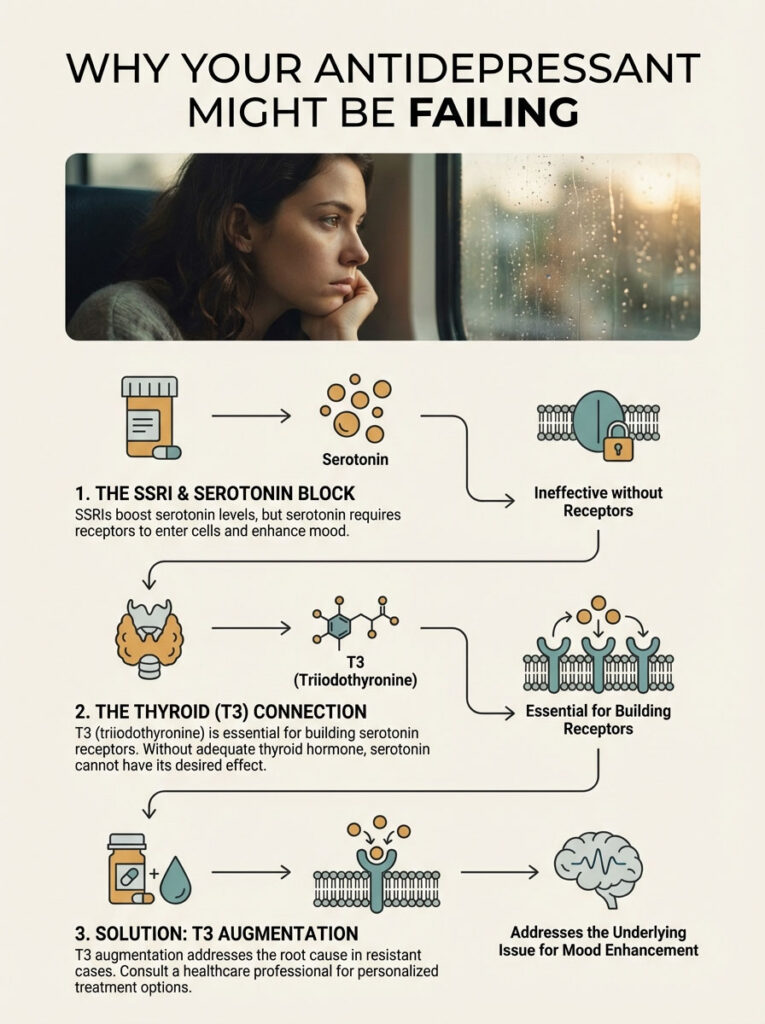
Serotonin needs a receptor—a door—to enter the cell and improve your mood. Research confirms that T3 is the carpenter that builds these doors. Without adequate thyroid hormone, you can flood the brain with serotonin, but the doors remain locked.
This is why T3 augmentation is often the “magic bullet” for resistant cases. We aren’t just adding more fuel; we are finally fixing the engine.
The “Brain on Fire” Phenomenon
Anxiety often gets misdiagnosed as a purely psychological issue. In reality, it can be a physical storm caused by Hashimoto’s thyroiditis. When your immune system attacks the thyroid, it releases inflammatory cytokines.
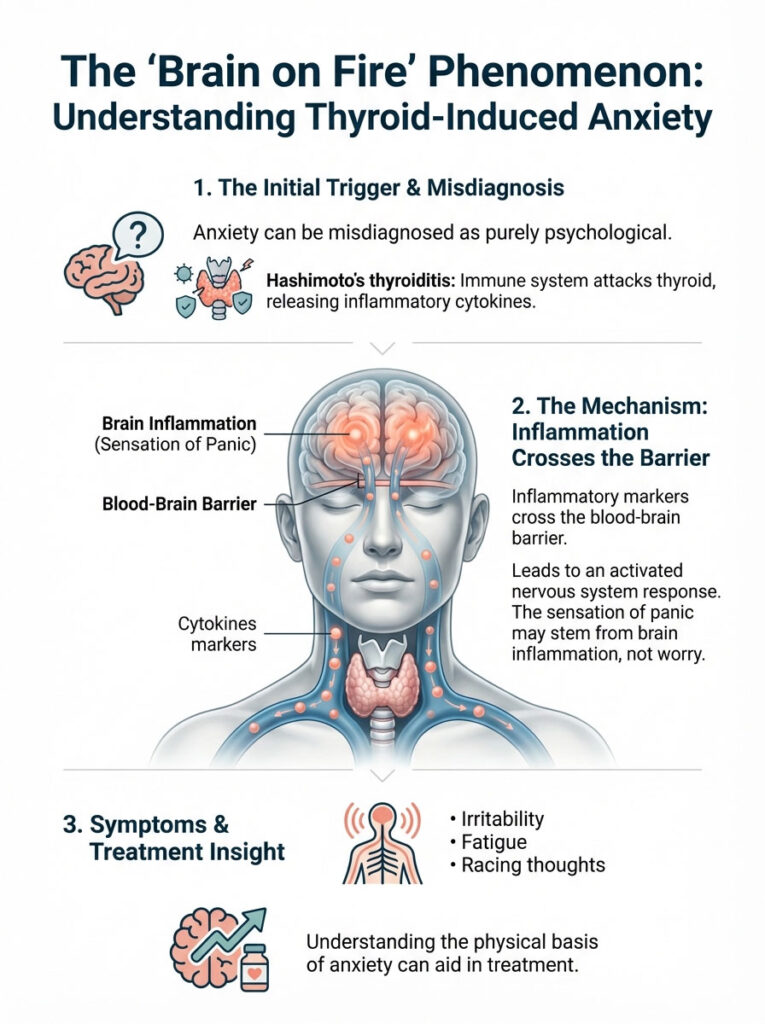
These inflammatory markers cross the blood-brain barrier. They set off a dangerous alarm in your nervous system. You feel panic, not because you are worried, but because your brain is inflamed.
Symptoms of Thyroid-Induced Anxiety
- Sudden heart palpitations at rest.
- A feeling of internal vibration or tremors.
- Racing thoughts that feel disconnected from reality.
The Genetic Secret Code: DIO2
Some people are genetically destined to struggle with standard treatment. I discovered that a specific gene mutation, known as DIO2, cripples the enzyme responsible for activating thyroid hormones in the brain.
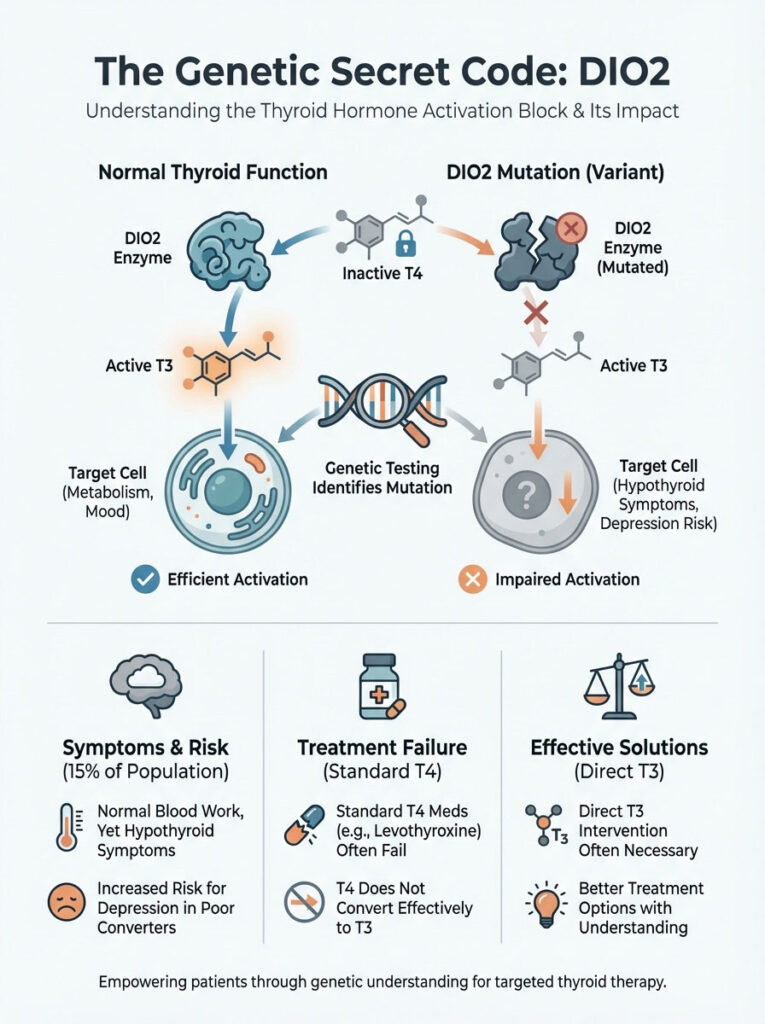
If you have this mutation, you might have perfect blood work but a hypothyroid brain. These individuals rarely respond to T4-only medication (Levothyroxine). They require direct T3 intervention to feel human again.
Social Fact: Roughly 15% of the population carries a genetic variation that makes them poor converters of thyroid hormones, putting them at higher risk for depression.
Comparison: Which Treatment Fits Your Brain?
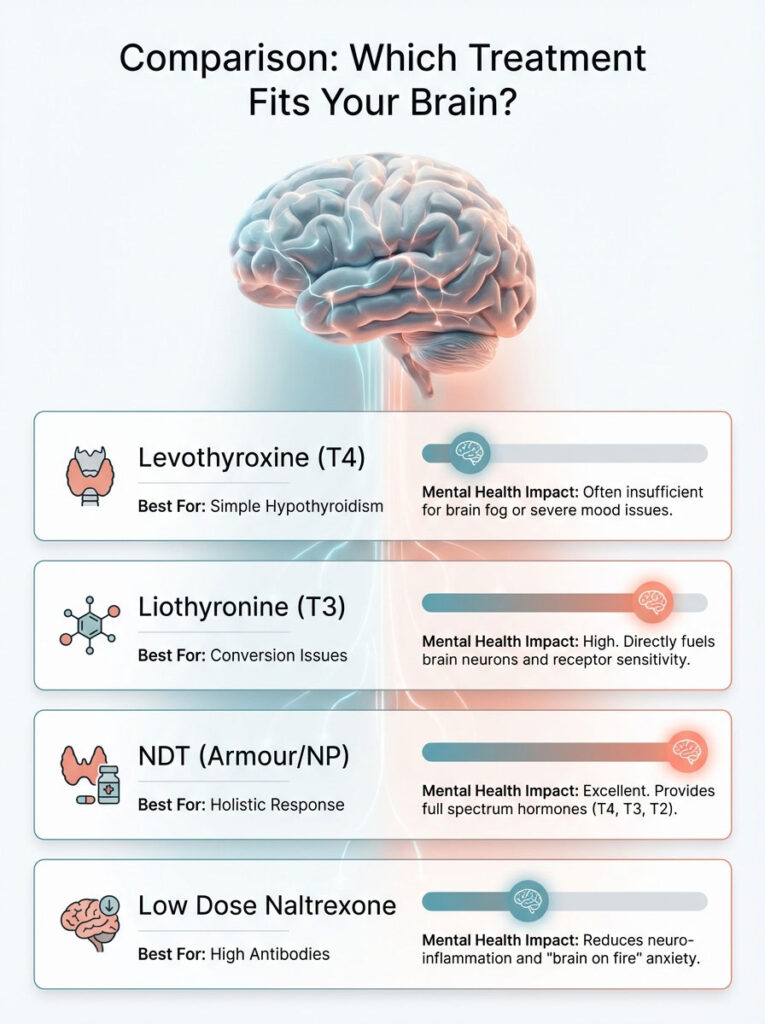
| Treatment Type | Best For | Mental Health Impact |
|---|---|---|
| Levothyroxine (T4) | Simple Hypothyroidism | Often insufficient for brain fog or severe mood issues. |
| Liothyronine (T3) | Conversion Issues | High. Directly fuels brain neurons and receptor sensitivity. |
| NDT (Armour/NP) | Holistic Response | Excellent. Provides full spectrum hormones (T4, T3, T2). |
| Low Dose Naltrexone | High Antibodies | Reduces neuro-inflammation and “brain on fire” anxiety. |
The Gut-Brain Connection You Can’t Ignore
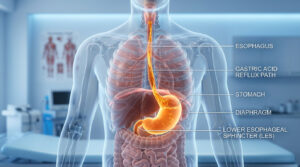
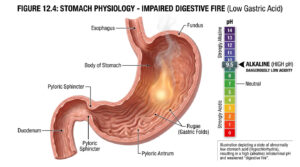
You cannot fix your head without fixing your stomach. A massive 20% of your thyroid hormone conversion happens in your gut. If your microbiome is a mess, your brain pays the price.
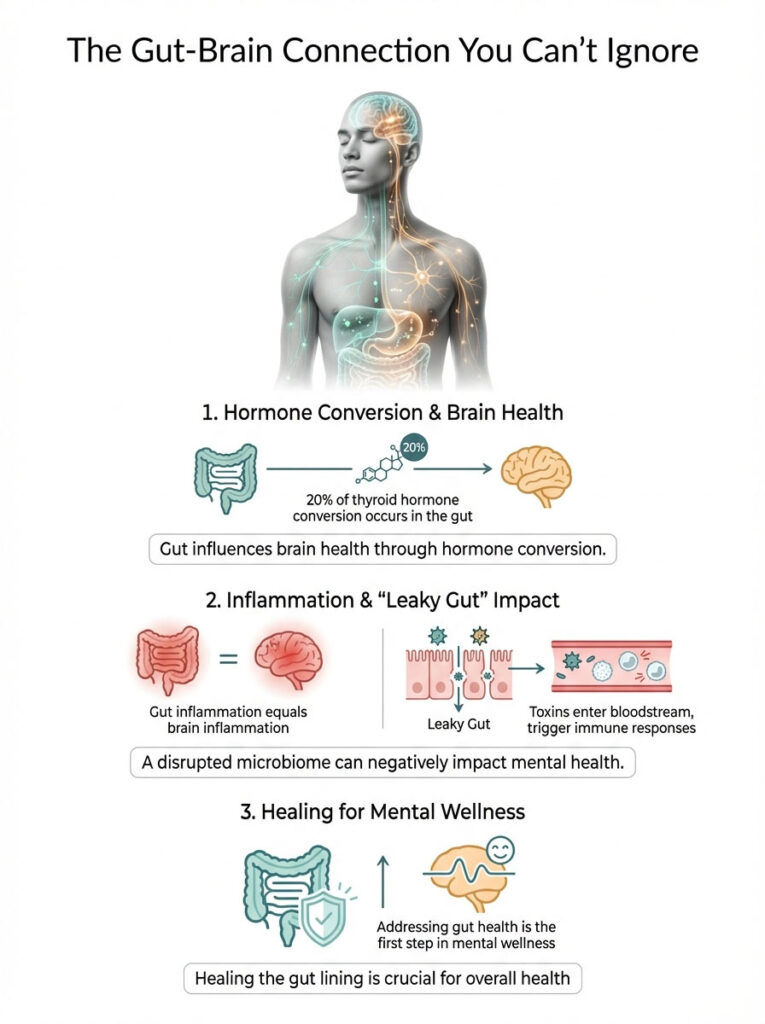
I always tell patients that inflammation in the gut equals inflammation in the brain. This “leaky gut” allows toxins to breach the bloodstream, triggering the immune system to attack your own tissues. Healing the gut lining is an essential first step.
Critical Nutrients for Mental Stability
Medication is not the only tool in the box. Your biochemistry requires specific minerals to manufacture joy.
The “Big Four” for Thyroid Mood
- Selenium: The bodyguard that lowers antibody attacks.
- Zinc: Crucial for dopamine production and smell/taste.
- Iron (Ferritin): The transport truck for oxygen and hormones.
- Vitamin D: The master regulator of your immune system.
Key Takeaway: If your Ferritin is under 50, your hair falls out. If it’s under 30, your brain shuts down.
How to Advocate for Your Mind
Do not accept “normal” as an answer when you feel terrible. Standard care focuses on keeping you alive; functional care focuses on keeping you vibrant. You must demand the right data.
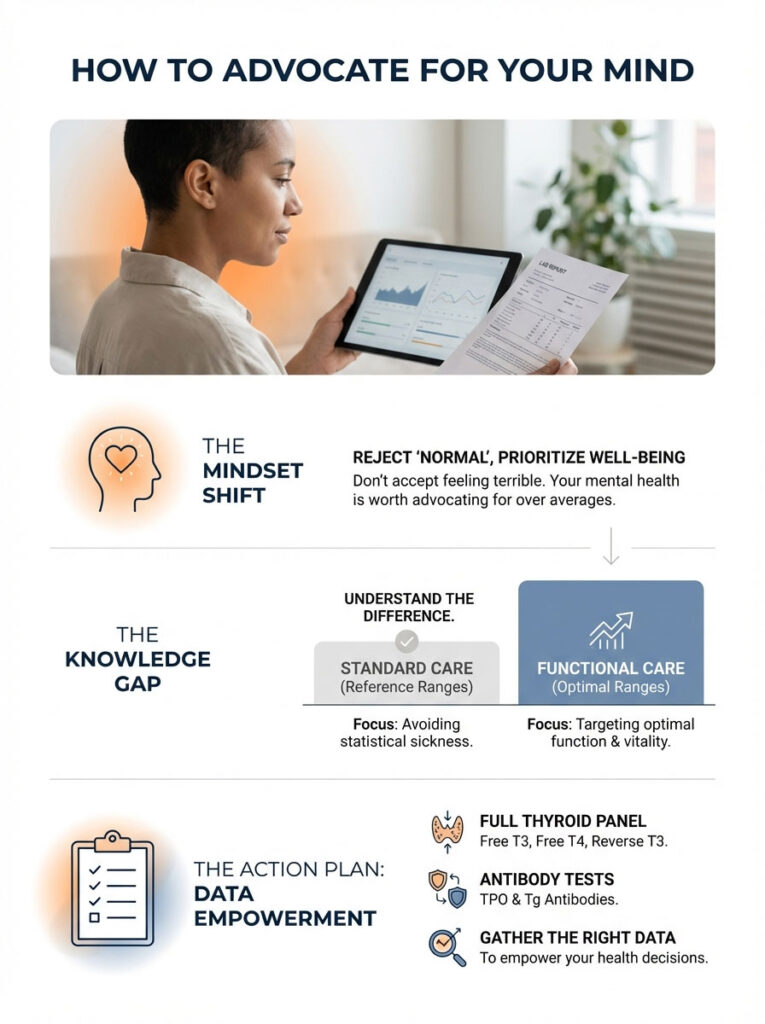
Request a full panel: Free T3, Free T4, Reverse T3, and both TPO and Tg antibodies. Look for optimal ranges, not just reference ranges. Your mental health is worth more than a statistical average.