Imagine waking up and feeling like gravity has suddenly doubled. Your limbs feel heavy, soaked, and unresponsive, as if you are trying to move through quicksand. You explain this bone-crushing fatigue to your doctor, only to hear the phrase that drives patients to despair: “Your labs look normal.”
For years, I believed my agony was a neurological firing error, a permanent state of suffering labeled as fibromyalgia. I was given antidepressants and told to manage my stress. But deep down, I knew my body was failing mechanically, not just mentally.
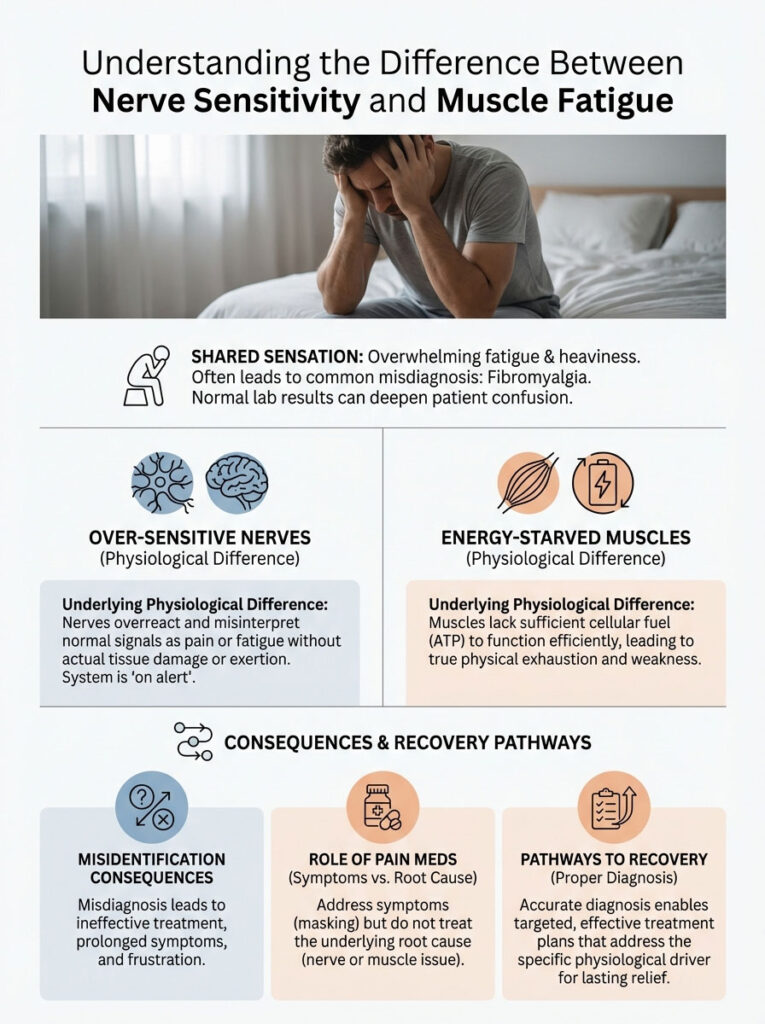
There is a massive, secret physiological difference between nerves that are over-sensitive and muscles that are starving for energy. Distinguishing between these two conditions is the vital key to unlocking your recovery. If you miss this clue, no amount of pain medication will ever fix the problem.
Want practical takeaways? Read the full breakdown: Hypothyroidism Joint Pain or Fibromyalgia? How to Tell
The “Wet Wetsuit” Phenomenon
Most people think of inflammation as a hot, red swollen ankle. But hypothyroid pain is far more insidious. It is a structural change in your very cells. When your thyroid is underactive, your body fails to break down a sticky substance called mucin.
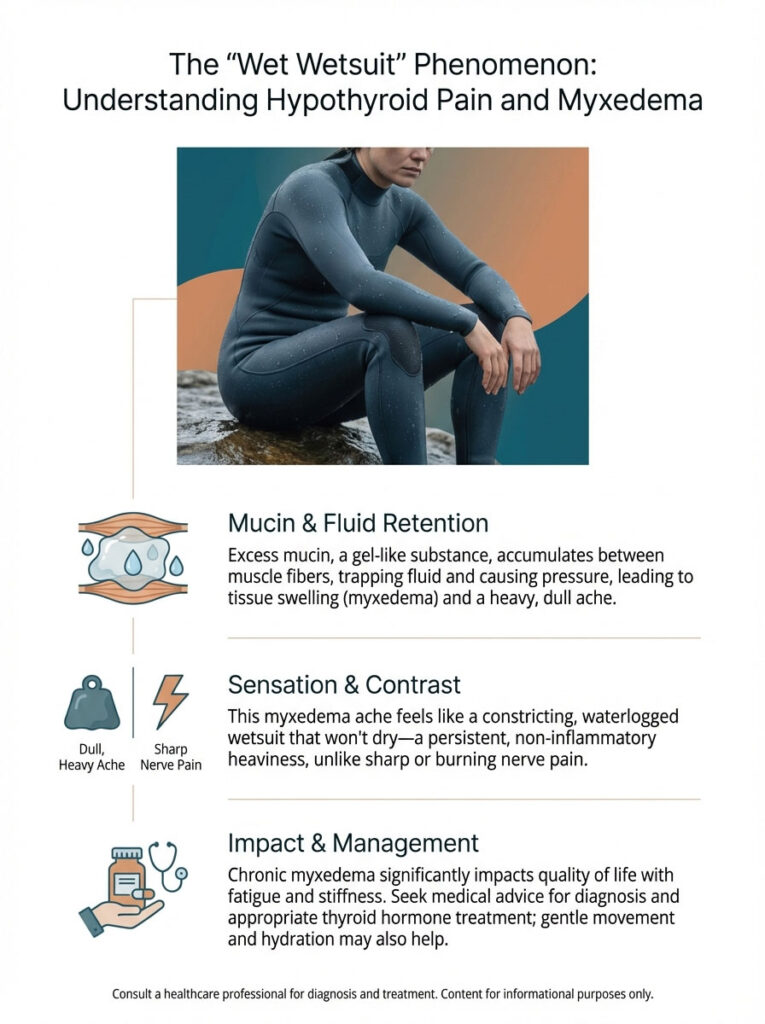
This mucin acts like a biological sponge. It loves water. As it builds up between your muscle fibers, it pulls fluid in and holds it there. I describe this sensation as wearing a wet wetsuit 24 hours a day.
Why It Feels Heavy
- Fluid Retention: Your muscles are literally waterlogged.
- Compression: The swelling presses on small capillaries.
- Stiffness: The gel-like substance restricts sliding movement.
This is not just “pain.” It is myxedema. It creates a boggy, deep ache that feels like it is coming from your marrow. Unlike the sharp, electric zing of nerve pain, this feels like you are carrying dead weight.
The Hardware vs. Software Problem
To treat your pain, you must identify the source. Are you dealing with broken hardware or glitching software? This distinction changed my entire approach to healing.
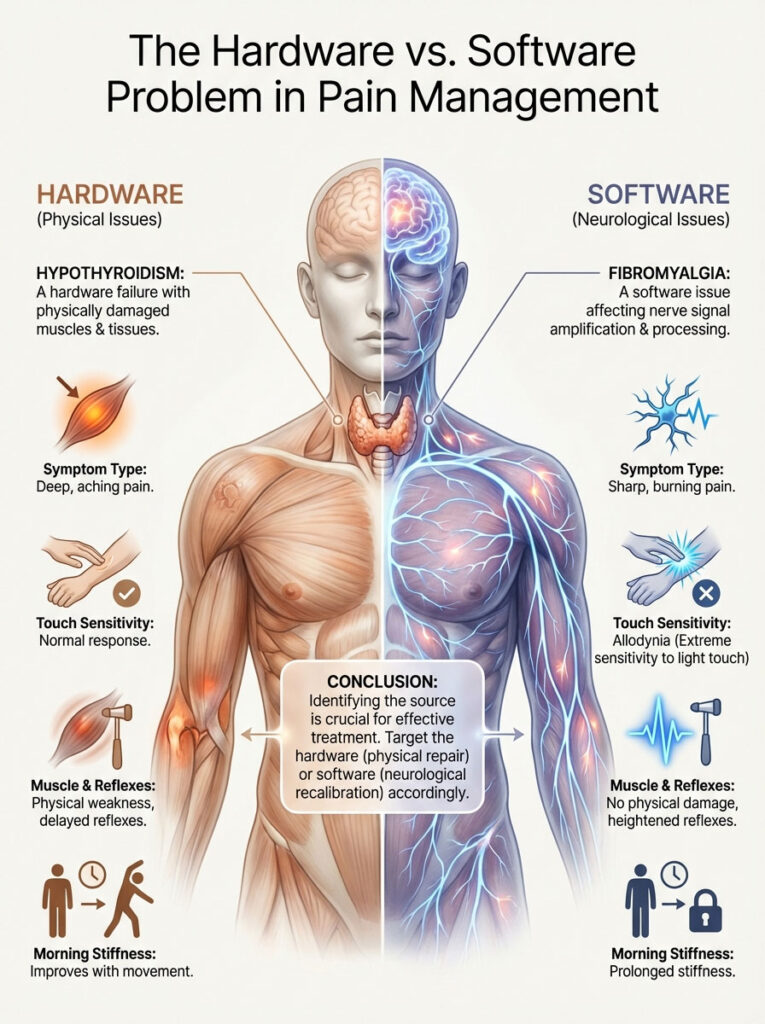
Fibromyalgia is a software issue. Your nerves are the wires, and your brain is the central processor. In this condition, the volume knob on your pain receptor is turned up to eleven. A gentle breeze can feel like a blowtorch because the signal is being amplified incorrectly.
Hypothyroidism is a hardware failure. Your muscles (the hardware) are physically clogged and out of fuel. The signal is correct—your tissue is actually damaged—but the root cause is a lack of metabolic spark.
Symptom Comparison Guide
| Feature | Hypothyroidism (Hardware) | Fibromyalgia (Software) |
|---|---|---|
| Pain Type | Deep, aching, heavy, boggy | Sharp, burning, electrical |
| Touch Sensitivity | Normal response to light touch | Allodynia (light touch hurts) |
| Weakness | Objective muscle failure | Pain-limited effort |
| Reflexes | Delayed relaxation | Normal or hyperactive |
| Morning Stiffness | Improves with movement | Persists for hours |
The “Squat Test” You Can Do at Home
One of the most shocking ways to tell the difference is to test your proximal strength. These are the large muscles closest to your core, like your thighs and shoulders. Hypothyroid myopathy specifically targets these fibers.
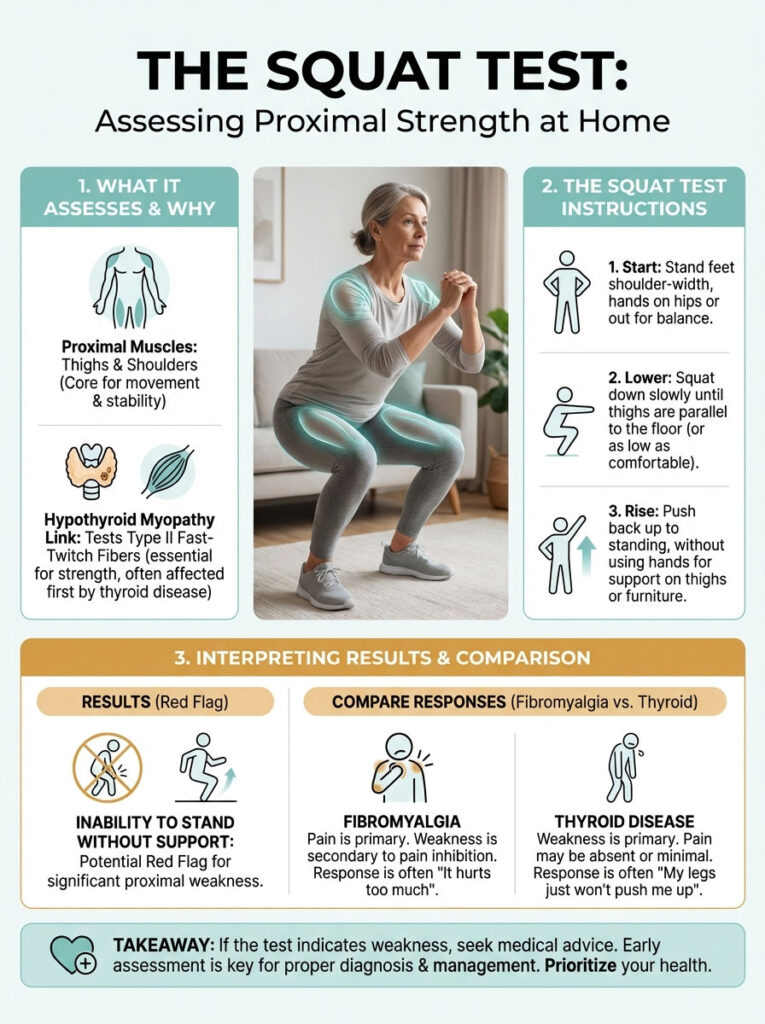
Try this simple experiment. Squat down to the floor. Now, try to stand up without using your hands for support. If you physically cannot do it—if your legs simply refuse to fire—that is a metabolic red flag.
I failed this test miserably. In fibromyalgia, you might grimace from the pain, but your muscles usually still have the power to lift you. In thyroid disease, the fuel tank is empty. The Type II fast-twitch fibers have atrophied, leaving you stranded.
The Bilateral Warning Sign
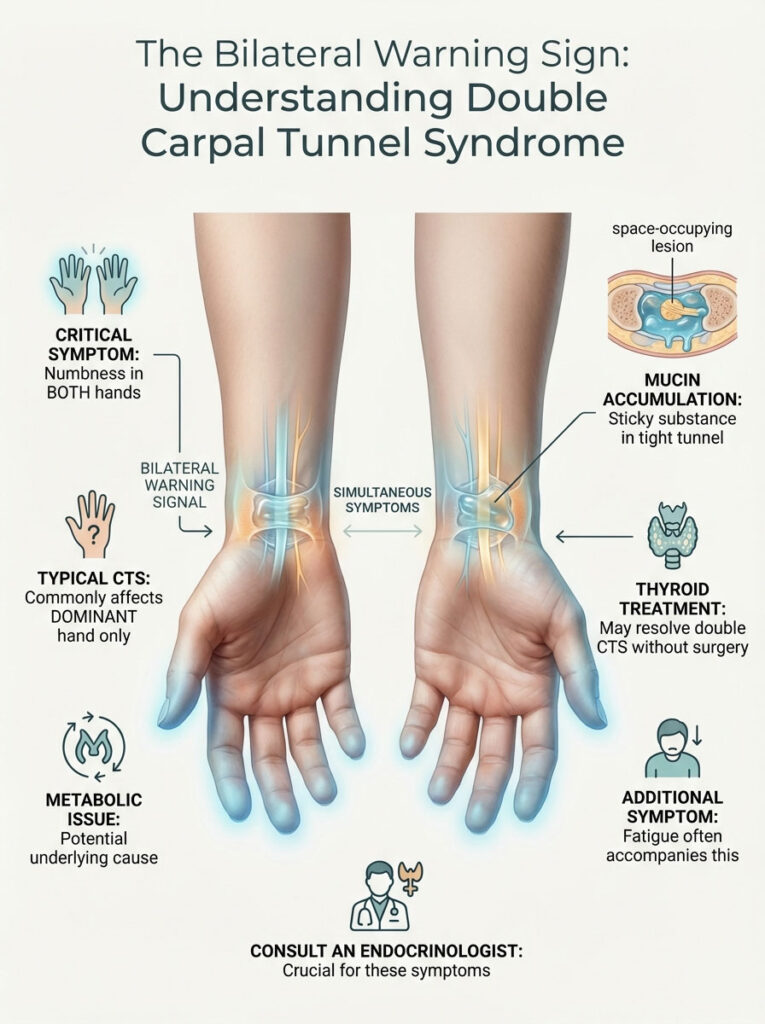
If there is one symptom that should make you sprint to an endocrinologist, it is this: numbness in both hands.
Carpal tunnel syndrome is common for typists or carpenters. It usually hits the dominant hand. But when you develop carpal tunnel in the left and right hand simultaneously, it is rarely an injury.
Why This Happens
Remember that sticky mucin? It doesn’t just sit in your thighs. It accumulates in the tight tunnel of your wrist. It compresses the median nerve from the inside out. This is a “space-occupying lesion” made of metabolic sludge.
Did you know? Treating the thyroid often cures this “double carpal tunnel” completely without surgery. If you have this symptom plus fatigue, stop treating the wrists and start treating the gland.
The Reflex Reveal
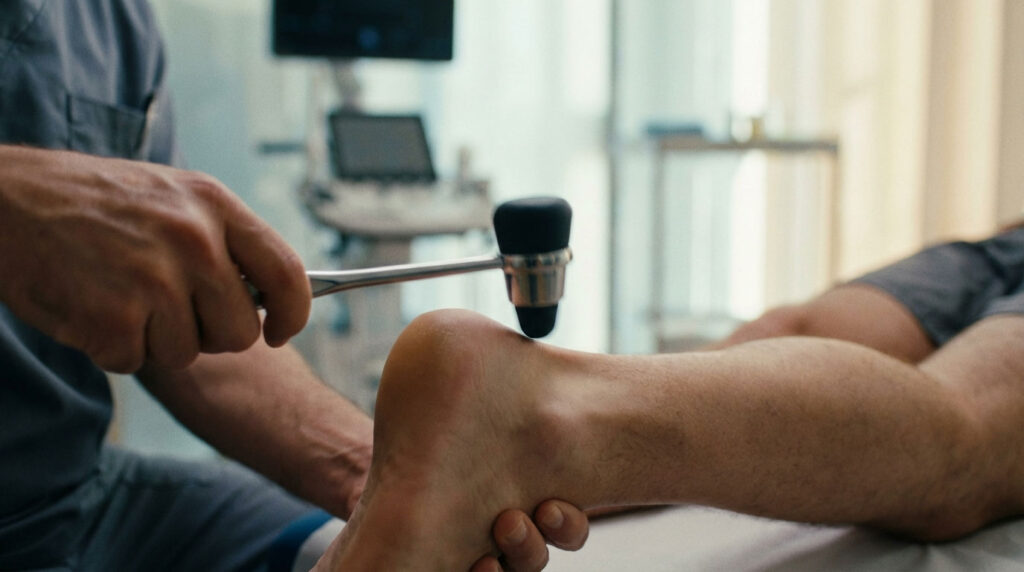
Your doctor can perform a ten-second test that reveals more than a generic blood panel. Ask for the Achilles Reflex Test. In a healthy person, when the tendon is tapped, the foot kicks out and snaps back instantly.
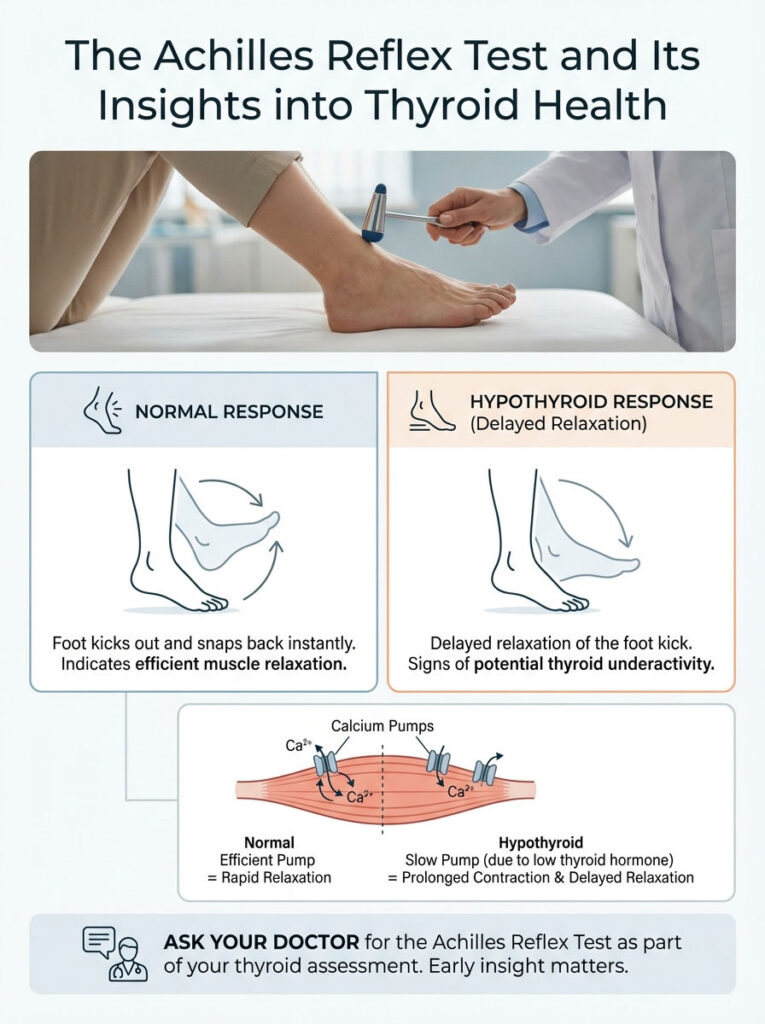
In a hypothyroid patient, the kick happens, but the return is in slow motion. We call this “delayed relaxation.” It happens because the calcium pumps in your muscles don’t have enough energy to reset the fiber. It is a bizarre sight to behold, and it is almost exclusive to low thyroid function.
Why Your Labs Are Lying
The standard TSH test is a pituitary marker, not a muscle marker. Your brain might be shouting “I’m fine!” while your thigh muscles are starving for T3 hormone. This disconnect is why millions suffer in silence.
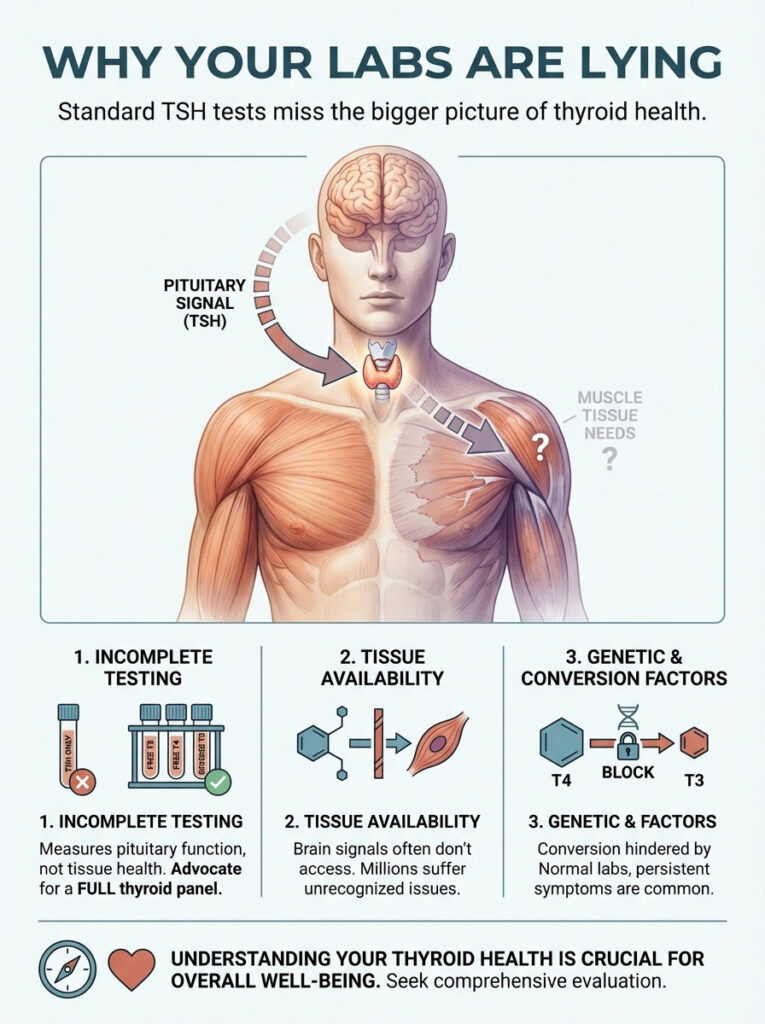
You must advocate for a full panel. This includes Free T3, Free T4, and Reverse T3. You need to see what is actually available for your tissues to use. If you have a genetic issue converting T4 to T3, standard medication might leave you with perfect labs but persistent pain.
The Path to Relief
If your issue is the “hardware” (thyroid), you need to clear the sludge. This often requires optimizing T3 levels, not just T4. It takes time for that mucin to dissolve—think months, not days. Be patient with your body.
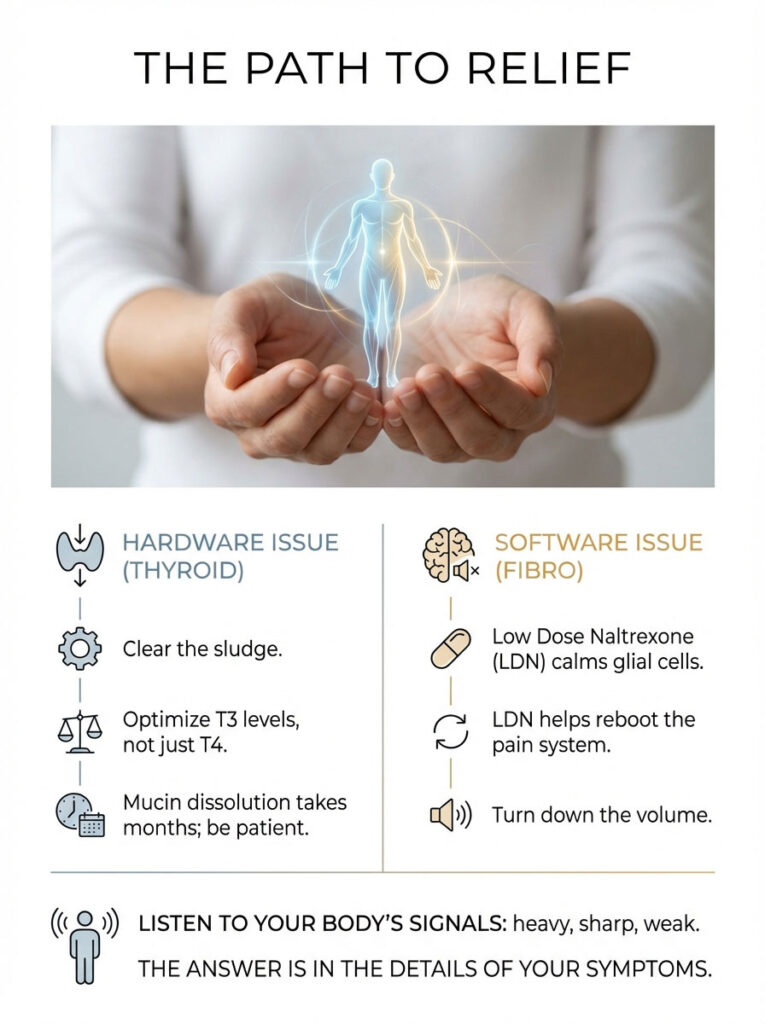
If your issue is the “software” (fibro), you need to turn down the volume. Drugs like Low Dose Naltrexone (LDN) are showing incredible promise here. They help calm the glial cells in the brain, effectively rebooting the pain system.
Don’t let anyone tell you this is just how life is now. Listen to the signals your body is sending. Is it heavy? Is it sharp? Is it weak? The answer is hiding in the details.