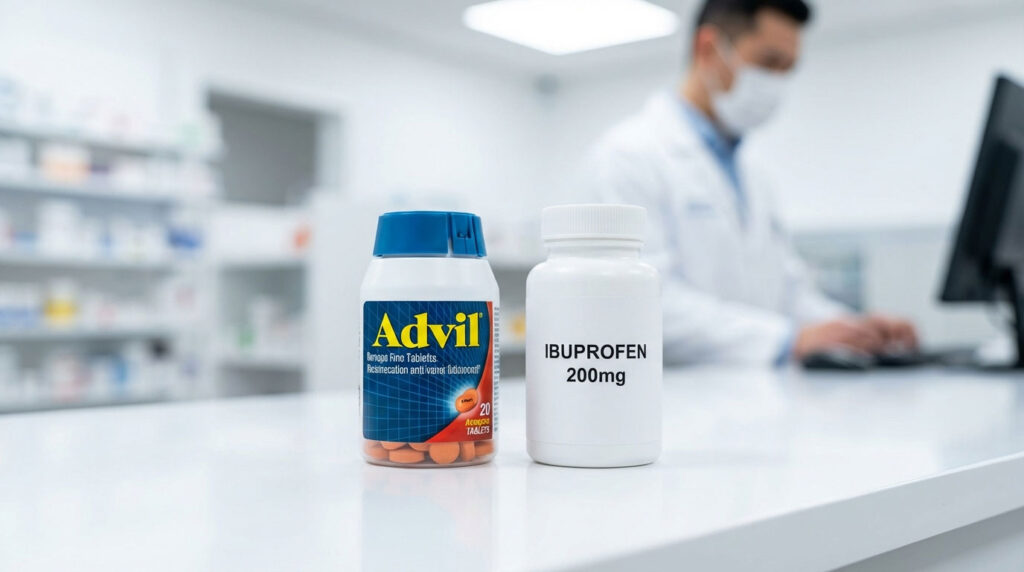
You’re standing in the pain relief aisle at your local pharmacy, surrounded by colorful boxes. On your left, a bright yellow box of Advil sits at $14.99. On your right, a generic store-brand bottle goes for $3.99. Both claim to treat headaches, fever, and muscle pain. You flip them over, squint at the tiny labels, and the hesitation kicks in.
Table of Contents
Is the cheaper option actually safe? Is the brand name more potent or faster acting? Is Advil the same as ibuprofen, or are you compromising your health to save ten dollars? As a clinical pharmacist, I help patients sort through this exact dilemma every single day.
Quick Answer: Yes, Advil and ibuprofen are therapeutically equivalent. Advil is simply the brand name for the generic drug ibuprofen. Both contain the exact same active ingredient in the same dosage (usually 200mg). They block the same enzymes to reduce pain and inflammation. The primary differences are in inactive ingredients (fillers, dyes, coatings) and manufacturing cost.
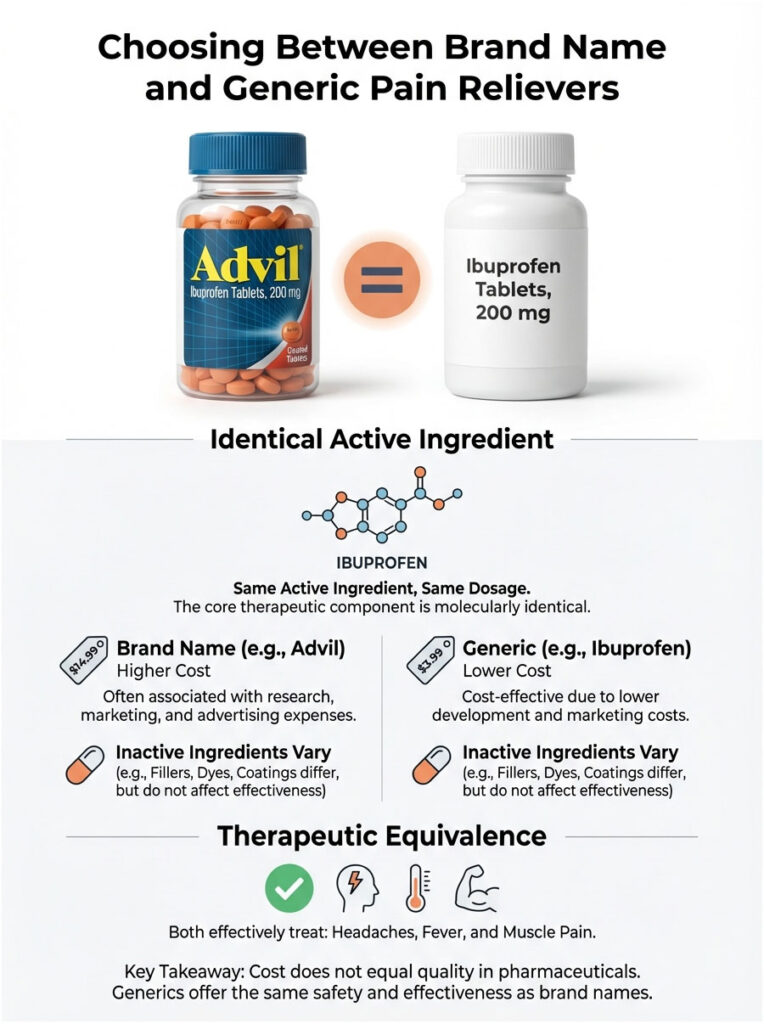
Patients often worry that “generic” means “lower quality” or “knock-off.” That’s simply not the case in the pharmaceutical industry. While the medicine inside is molecularly identical, the real differences are in formulation, manufacturing technologies, and the inactive excipients that hold the pill together. This guide breaks down the chemistry, the economics, and the medical reality of your pain relief options.
Key Facts About Advil and Ibuprofen
- Active Ingredient: Both use ibuprofen (a propionic acid derivative).
- Standard Dosage: 200mg per tablet (OTC standard).
- Price Difference: Generics are typically 60-70% cheaper than brand names.
- Bioequivalence: Generics must demonstrate an 80-125% statistical absorption match to the brand.
- FDA Standards: Both must follow the same Good Manufacturing Practices (GMP).
- Market Share: Generics account for nearly 90% of prescriptions filled in the US.
Understanding the Molecule: What Is Ibuprofen?
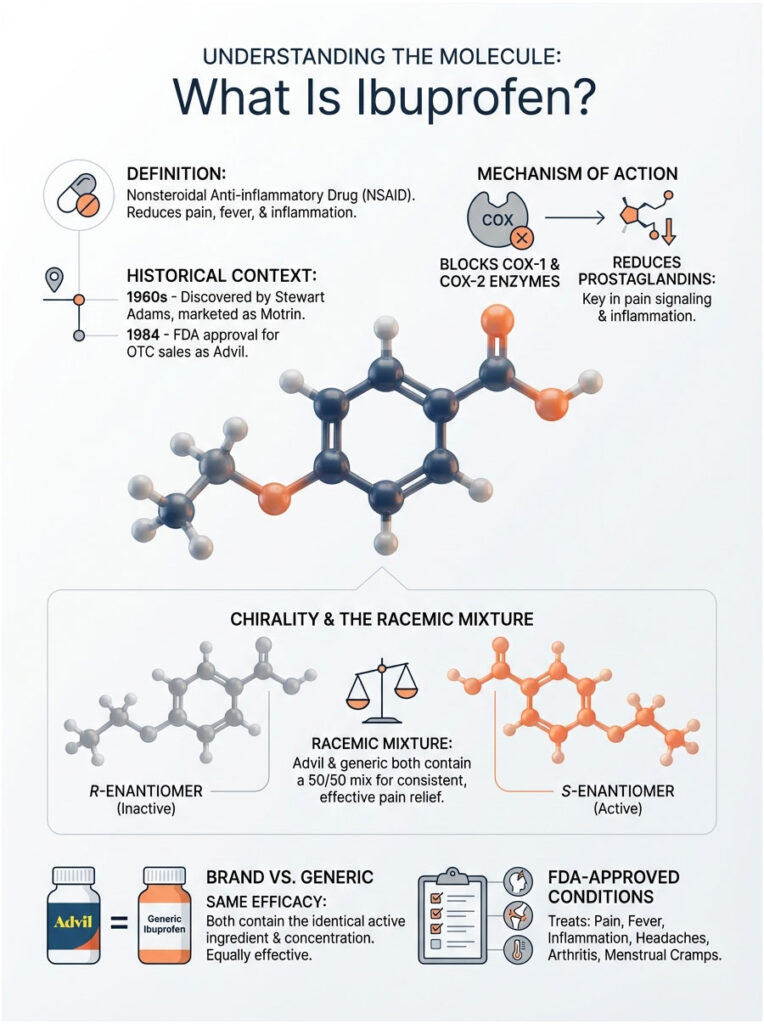
To truly understand the Advil vs ibuprofen debate, we need to look at the molecule itself. Ibuprofen is a Nonsteroidal Anti-inflammatory Drug (NSAID). It was discovered in the 1960s by Stewart Adams at Boots UK and initially marketed as the prescription drug Motrin. The FDA approved it for over-the-counter sales in 1984 under the brand name Advil.
How Ibuprofen Relieves Pain
Whether you swallow a brand-name capsule or a generic tablet, the chemical reaction in your body is identical. Ibuprofen works by blocking enzymes called Cyclooxygenase (COX), specifically COX-1 and COX-2.
When your body is injured or fighting infection, it produces compounds called prostaglandins. These chemical messengers tell your brain “we’re in pain” and trigger inflammation and fever. Ibuprofen stops COX enzymes from producing prostaglandins. By lowering those levels, the pain signal gets muted and the fever breaks.
Both Advil and generic ibuprofen block these enzymes with the same efficiency. The molecule doesn’t know if it came from a premium bottle or a discount bin. Once it enters your bloodstream, it does the exact same job.
Chirality: The Mirror Image Molecule
There’s a deeper level of chemistry here. Ibuprofen is a “chiral” molecule, meaning it exists in two mirror-image forms, much like your left and right hands. These are called the R-enantiomer and the S-enantiomer.
Only the S-enantiomer is pharmacologically active at stopping pain. The R-enantiomer is largely inactive. Both Advil and generic ibuprofen contain a “racemic mixture,” a 50/50 blend of both forms. Your body has an enzyme that slowly converts the inactive R form into the active S form. Since both the brand and generic use this same mixture, the rate of drug activation stays constant.
What Both Versions Treat
Since the mechanism is identical, the FDA approves both for the same conditions:
- Headaches and migraines: Reducing vascular inflammation in the cranial vessels.
- Menstrual cramps: Relieving pain caused by prostaglandin release in the uterus.
- Arthritis: Managing chronic joint inflammation and stiffness in osteoarthritis and rheumatoid arthritis.
- Fever reduction: Lowering temperature during colds, flu, or viral infections.
- Dental pain: Managing post-operative swelling after extractions or root canals.
- Soft tissue injuries: Treating sprains, strains, and tendonitis.
Brand Name vs. Generic: What the FDA Actually Requires
If the medicine is the same, why do they look different? Why is one red and the other white? The answer lies in the strict regulations set by the FDA.
The Bioequivalence Standard
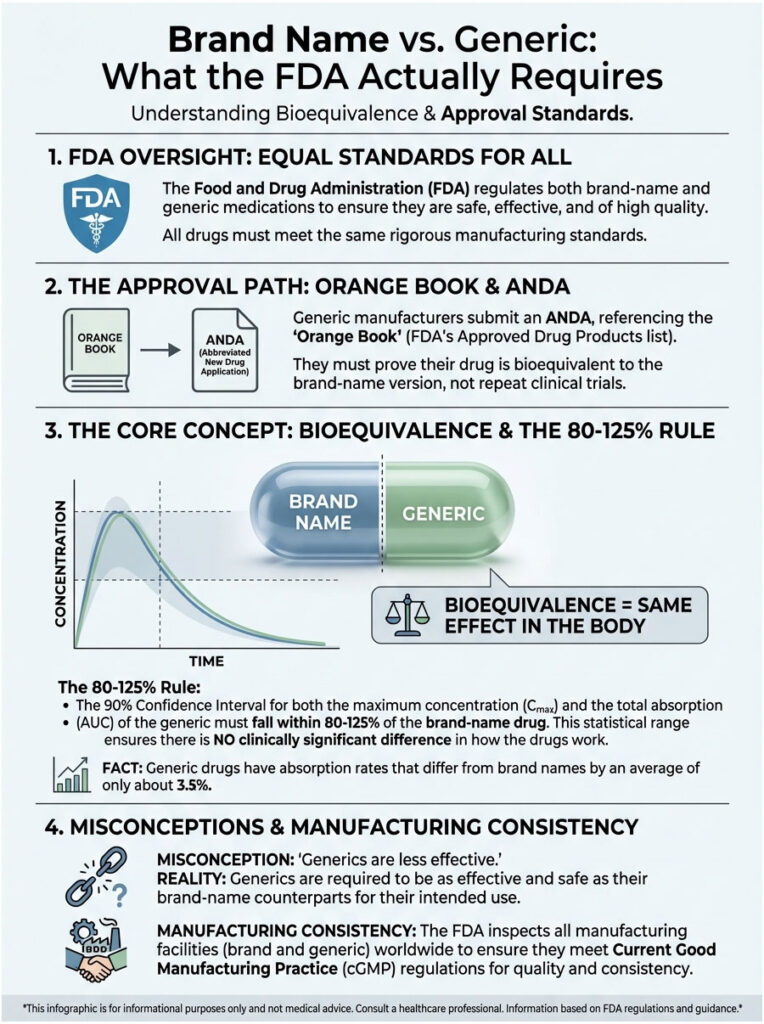
The FDA maintains a publication pharmacists call the “Orange Book” (officially titled “Approved Drug Products with Therapeutic Equivalence Evaluations”). For a generic ibuprofen to be sold, it must prove bioequivalence to the Reference Listed Drug (usually Advil or Motrin). This means the generic must deliver the same amount of active ingredient into the bloodstream in roughly the same timeframe.
Generic manufacturers submit an Abbreviated New Drug Application (ANDA) to prove this match.
Pharmacist’s Insight – The 80-125% Rule: There’s a common myth that generics are only “80% as effective” as the brand. This comes from a misunderstanding of statistics. The FDA requires the 90% confidence interval of a drug’s absorption rate to fall between 80% and 125% of the brand. In practice, most generics fall within 3-4% of the brand name. They aren’t weaker; the statistical window simply ensures consistent manufacturing across millions of pills.
Active vs. Inactive Ingredients: Where the Real Differences Are
This is where the Advil vs ibuprofen comparison gets technical. The active ingredient (200mg of ibuprofen) is non-negotiable. But the inactive ingredients, called excipients, are where manufacturers set themselves apart. These don’t treat pain, but they’re essential for the pill’s structure.
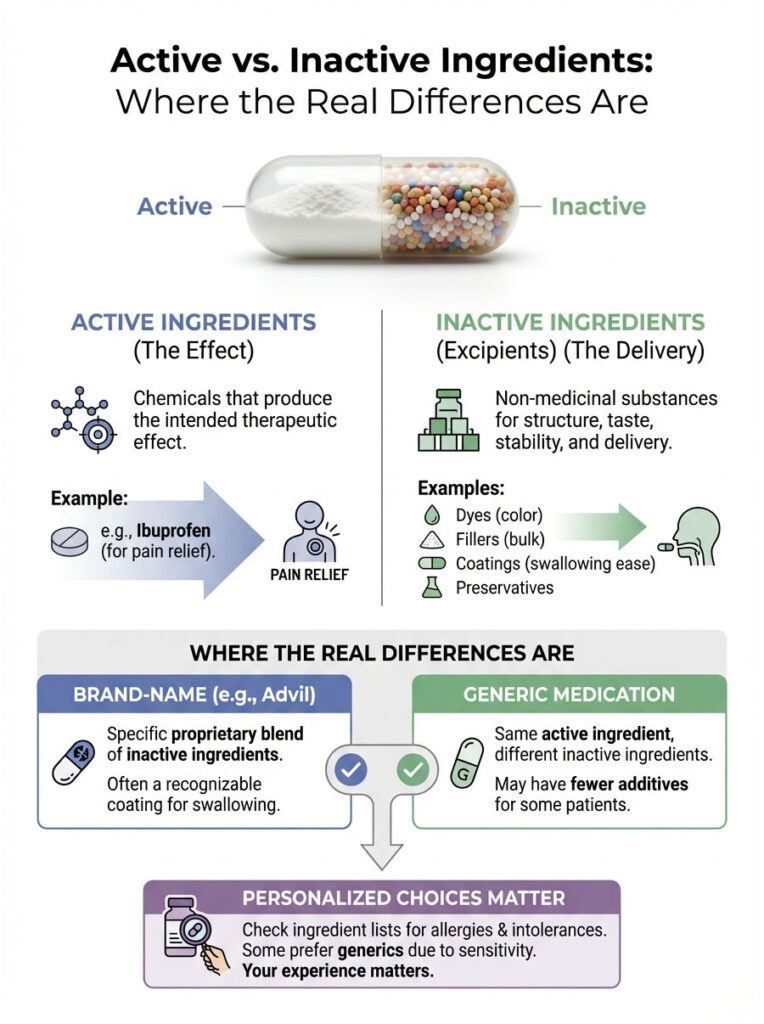
- Binders: Hold the powder together in a solid pill shape.
- Disintegrants: Help the pill break apart in stomach acid so absorption can begin.
- Coatings: Make the pill easier to swallow, protect from humidity, and mask bitter taste.
- Colorants: Provide brand recognition (like Advil’s signature reddish-brown color).
- Preservatives: Keep the medication stable on the shelf for years.
Why this matters: If you have a specific allergy to a dye (like Red 40) or intolerance to gluten or lactose (sometimes used as fillers), you need to check the inactive ingredients list. Some patients actually tolerate the generic better than the brand because it lacks a dye they’re sensitive to. Others find Advil’s sugar coating makes it easier to swallow.
Full Comparison: Advil vs. Generic Ibuprofen
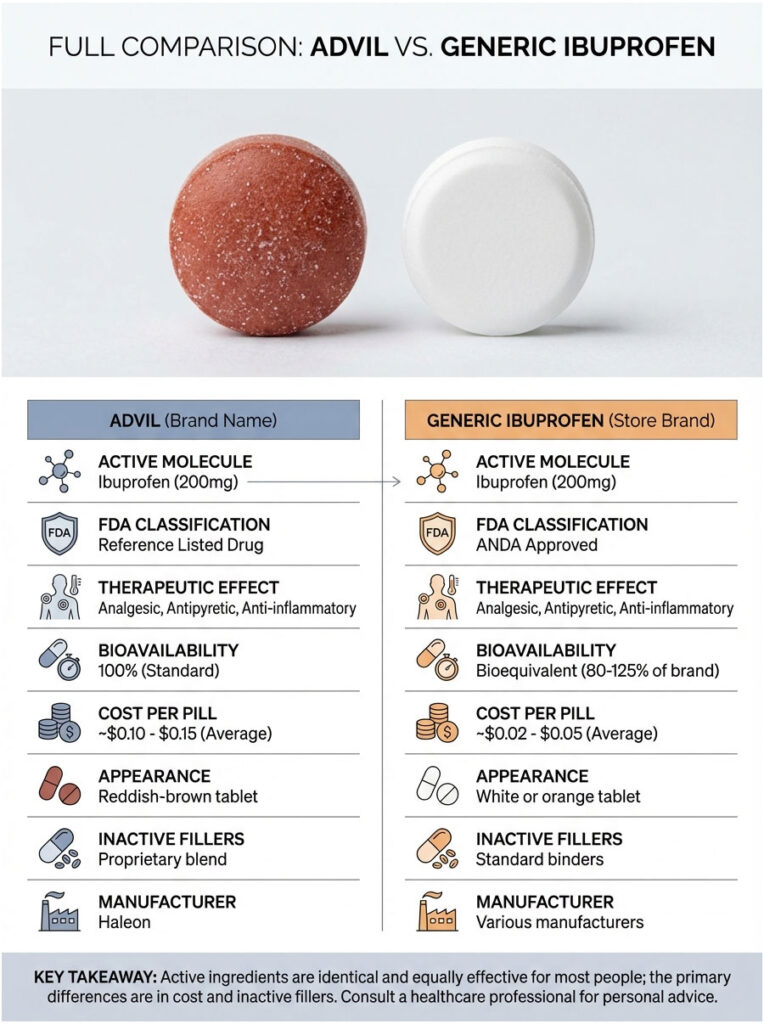
| Feature | Advil (Brand Name) | Generic Ibuprofen |
| Active Molecule | Ibuprofen (200mg) | Ibuprofen (200mg) |
| FDA Classification | Reference Listed Drug (RLD) | ANDA Approved |
| Therapeutic Effect | Analgesic, antipyretic, anti-inflammatory | Analgesic, antipyretic, anti-inflammatory |
| Bioavailability | 100% (baseline standard) | Bioequivalent (80-125% of brand) |
| Cost Per Pill (Avg) | $0.10 – $0.15 | $0.02 – $0.05 |
| Appearance | Reddish-brown round tablet | White or orange tablet (varies) |
| Inactive Fillers | Proprietary blend (sugar-coated) | Standard binders (starch, cellulose) |
| Manufacturer | Haleon (formerly GSK/Pfizer) | Various (Perrigo, Dr. Reddy’s, etc.) |
Tablets, Liqui-Gels, and Caplets: Does Formulation Matter?
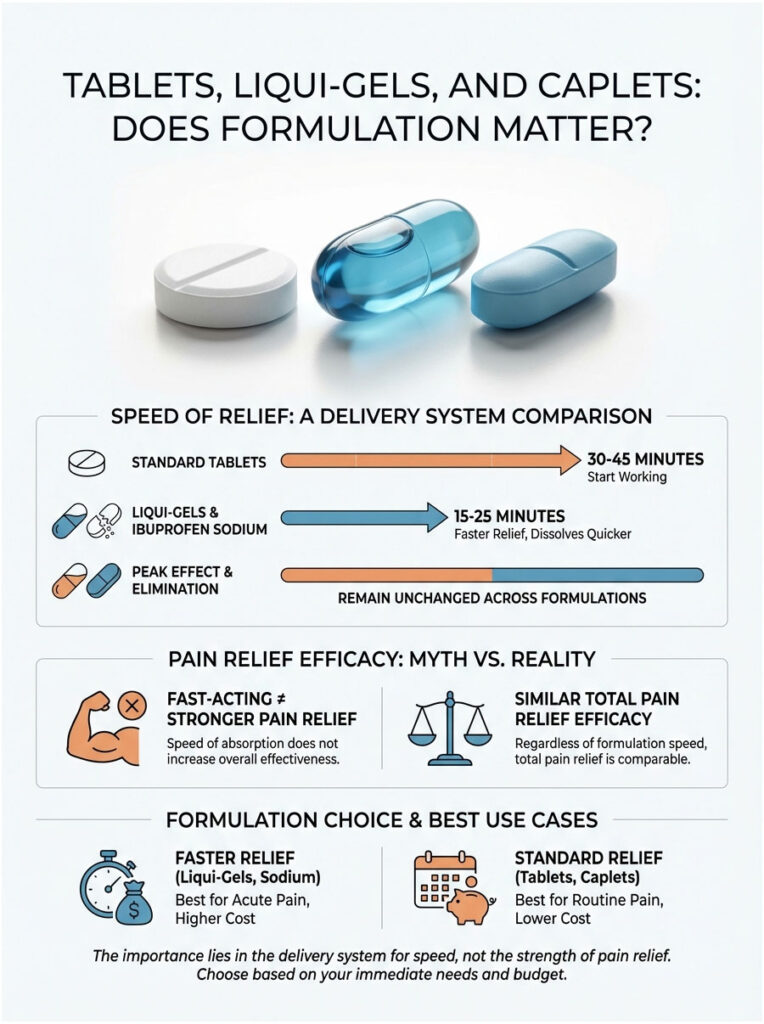
The standard Advil vs ibuprofen debate usually focuses on the hard tablet. But the brand dominates the market through specialized formulations. This is one area where paying extra might change your experience, not because the drug is different, but because the delivery system modifies absorption speed.
Why Delivery System Matters
When you take a standard tablet, your stomach acid first dissolves the outer coating, then breaks down the compressed powder, and only then can the small intestine absorb ibuprofen into the blood. This takes 30 to 45 minutes before you feel any relief.
Liqui-Gels: In these capsules, ibuprofen is already dissolved in a liquid center (often using potassium salt). Your body skips the breakdown phase entirely, leading to faster relief, usually within 15 to 25 minutes. Generic softgel versions do the same thing for less money.
Ibuprofen Sodium: Some newer formulations use ibuprofen sodium instead of standard ibuprofen acid. The sodium salt dissolves faster in the stomach’s water-based environment, giving absorption speed comparable to Liqui-Gels in tablet form. Many generic manufacturers now produce these as well.
Does “Fast Acting” Mean “Stronger”?
No. A fast-acting formulation reaches your system sooner, but the total amount of pain relief is the same. You aren’t getting more drug; you’re just getting it faster. The peak effect is identical, and the drug leaves your body at the same rate.
Formulation Speed Comparison
| Formulation | Onset of Action | Best For | Cost |
| Standard Tablet (200mg) | 30-45 minutes | General aches, fever | Low |
| Liqui-Gel / Softgel | 15-25 minutes | Migraines, acute dental pain | High |
| Film-Coated Caplet | 30-40 minutes | Trouble swallowing chalky pills | Medium |
| Chewable (Junior) | 20-30 minutes | Children, swallowing difficulty | High |
Safety and Side Effects: Is Advil Gentler on the Stomach?
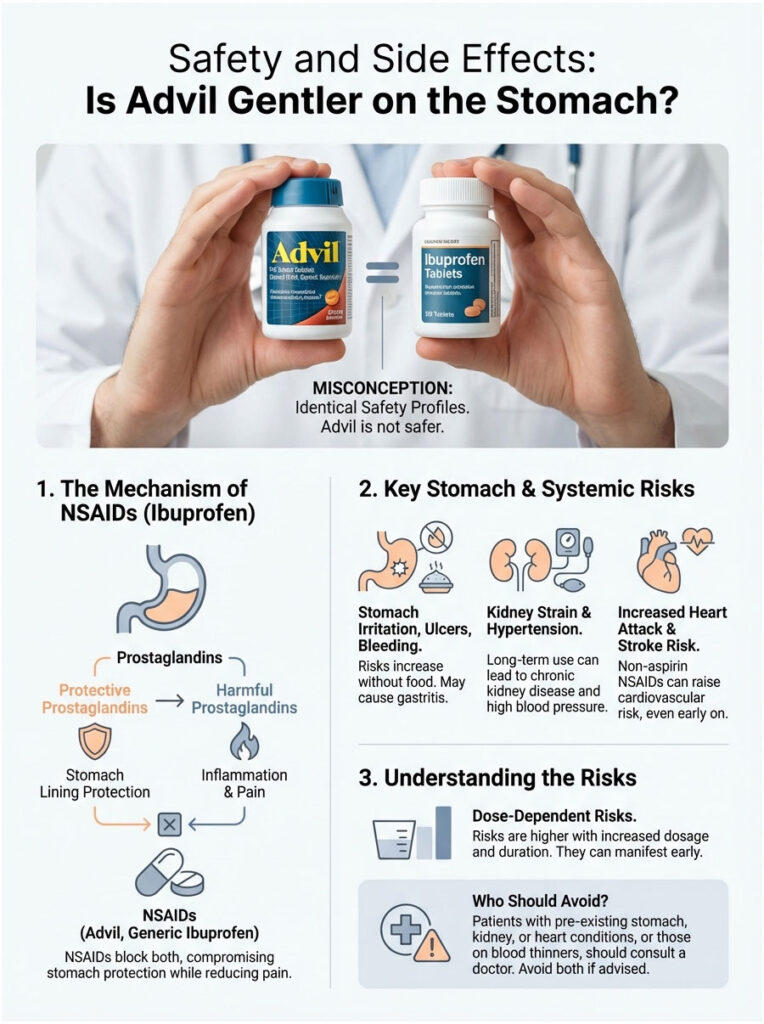
One dangerous assumption patients make is thinking that because Advil is a “premium” brand, it must be gentler on the stomach or safer overall. This is false. The safety profile is identical because the active chemical causes the side effects, not the brand label.
Gastrointestinal Risks
Both medications block prostaglandins, including the “good” prostaglandins in your stomach that produce a protective mucus layer. Taking ibuprofen (brand or generic) thins this layer, exposing the stomach lining to acid. This can cause gastritis, ulcers, or bleeding. The expensive bottle doesn’t protect your stomach any better than the cheap one. Always take ibuprofen with food.
Kidney and Cardiovascular Risks
Prostaglandins also help keep kidney blood vessels open for adequate blood flow. NSAIDs constrict these vessels. Long-term use of either Advil or generic ibuprofen can strain the kidneys, leading to fluid retention, high blood pressure, or in severe cases, chronic kidney disease. This risk is dose-dependent.
The FDA has also warned that non-aspirin NSAIDs increase the chance of heart attack or stroke. This risk can show up as early as the first weeks of use and applies equally to brand and generic versions.
Who Should Avoid Both Versions
- Patients on anticoagulants: If you take Warfarin or Eliquis, ibuprofen increases bleeding risk.
- History of GI bleeds: Once you’ve had an ulcer, NSAIDs are usually off-limits.
- Pregnant women (3rd trimester): NSAIDs can cause premature closure of the ductus arteriosus in the fetus.
- Heart failure patients: Fluid retention from kidney stress can worsen symptoms.
- Daily aspirin users: Ibuprofen can interfere with aspirin’s anti-platelet heart-protective effect.
Why Is Advil So Much More Expensive?
If the science and safety are the same, why the price gap? A bottle of 100 Advil tablets costs around $15 while the store brand runs about $4. The answer is economics, marketing, and psychology, not medicine.
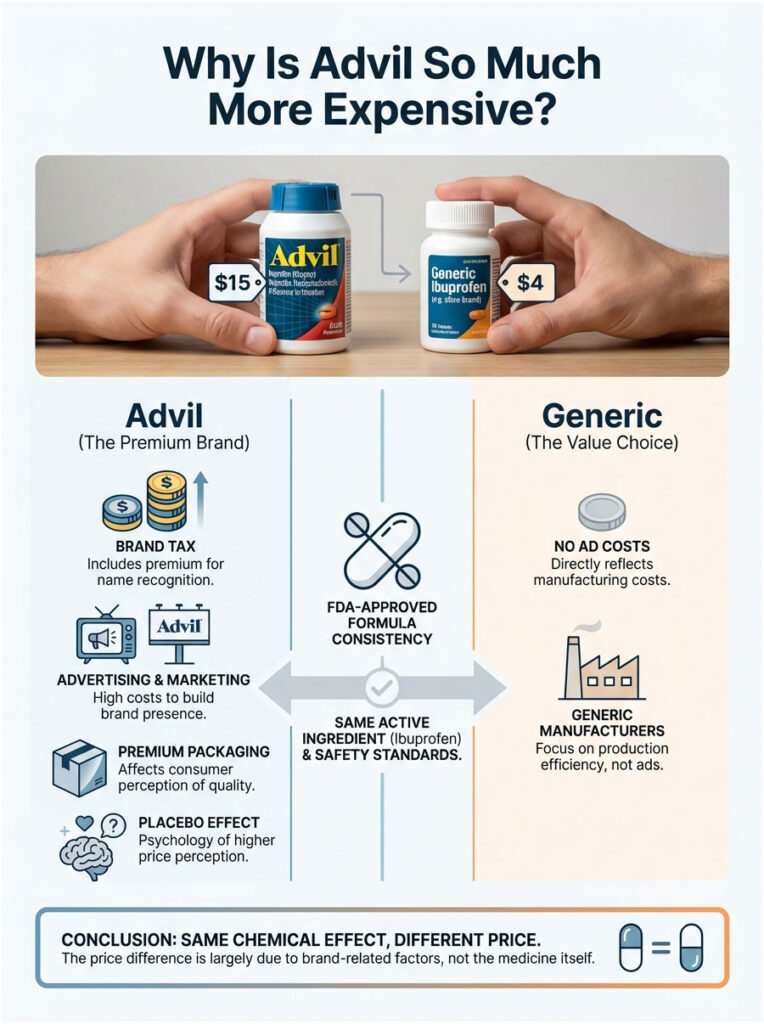
You’re paying the “Brand Tax.” Advil (owned by Haleon) spends millions annually on advertising, premium packaging, and prime shelf placement at eye level. Generic manufacturers like Perrigo, Apotex, or Dr. Reddy’s don’t advertise. They don’t run Super Bowl commercials. They simply manufacture the chemical per the FDA formula and sell it to pharmacies, passing savings directly to you.
The Placebo Effect of Price
Psychology plays a real role in how we perceive pain relief. Studies have shown that patients sometimes perceive expensive medication as more effective simply because it costs more. If you believe the red Advil pill works better because you paid more, your brain might actually dampen the pain signals slightly more. But chemically? They’re doing the exact same work.
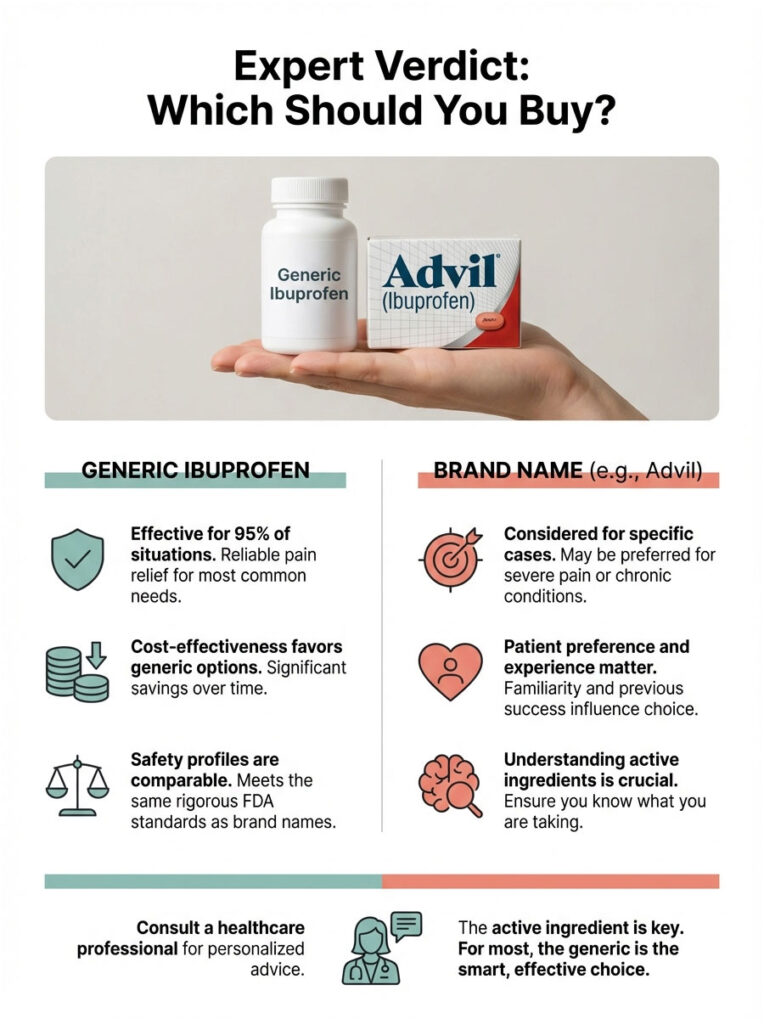
Expert Verdict: Which Should You Buy?
As a pharmacist, my advice is practical. I look at the clinical data, the safety profile, and the bank account.
When to Buy Generic Ibuprofen
For about 95% of situations, the generic is the smart choice:
- Daily use: If you treat arthritis or chronic back pain daily, the cost savings over a year are massive.
- Home first aid: For the occasional headache or fever, the generic works perfectly with the same shelf life.
- Budget-conscious: There’s absolutely no medical reason to pay extra. The outcome is the same.
- Dye sensitivity: If you’re allergic to Red 40, plain white generic tablets are often the safer option.
When to Consider Brand Name (Advil)
- Specific formulations: If you want “Advil Dual Action” (ibuprofen + acetaminophen) and no generic version is available locally.
- Swallowability: Advil invests heavily in sugar coatings. If you have a child or elderly parent who struggles with chalky generic tablets, the coating may help.
- Personal comfort: If you simply trust the brand and it reduces your stress, the peace of mind has value. Stress can worsen pain.
Are Generic Drugs Made in Low-Quality Factories?
A common fear is that generics come from unregulated overseas factories. While many are manufactured in India and China, the oversight is stricter than most people realize.
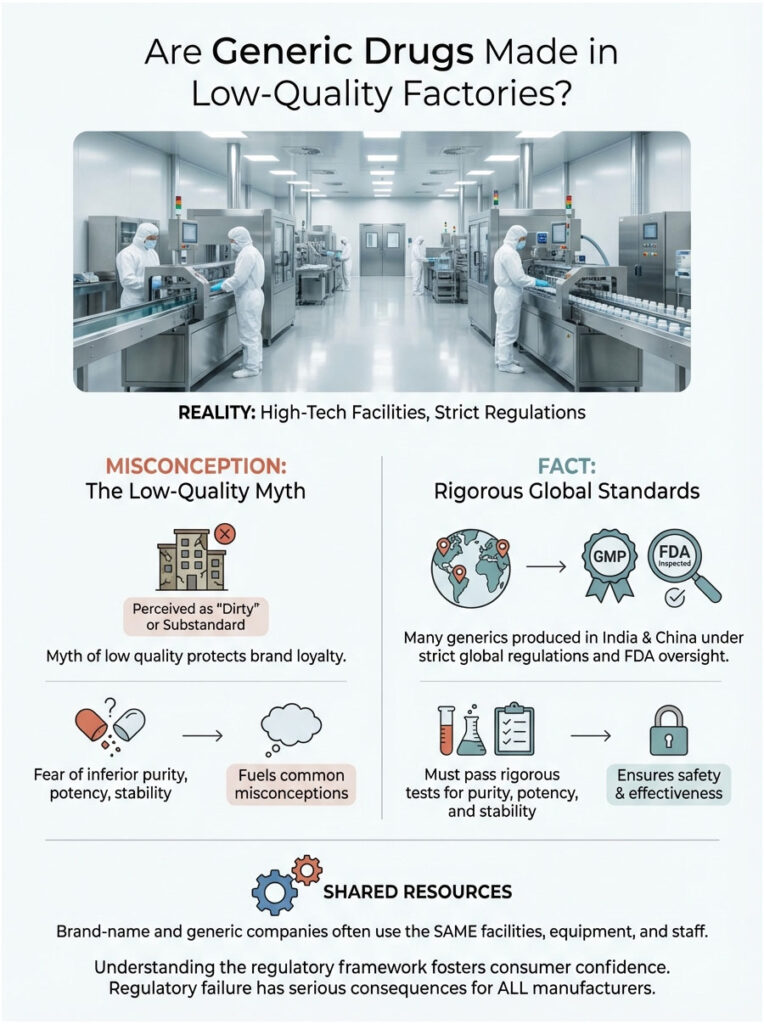
The FDA inspects foreign facilities that make drugs for the US market. These facilities must follow the same GMP standards as domestic factories. If a generic manufacturer fails testing for purity, potency, or stability, the FDA issues warnings and can ban their products from the US.
Furthermore, brand-name companies often outsource their own manufacturing to the same facilities that make generics. It’s not uncommon for a factory to run a batch of brand-name pills on Monday and store-brand pills on Tuesday, using the same equipment and staff. The idea that generics are “dirty” is largely a myth designed to protect brand loyalty.
Summary and Key Takeaways
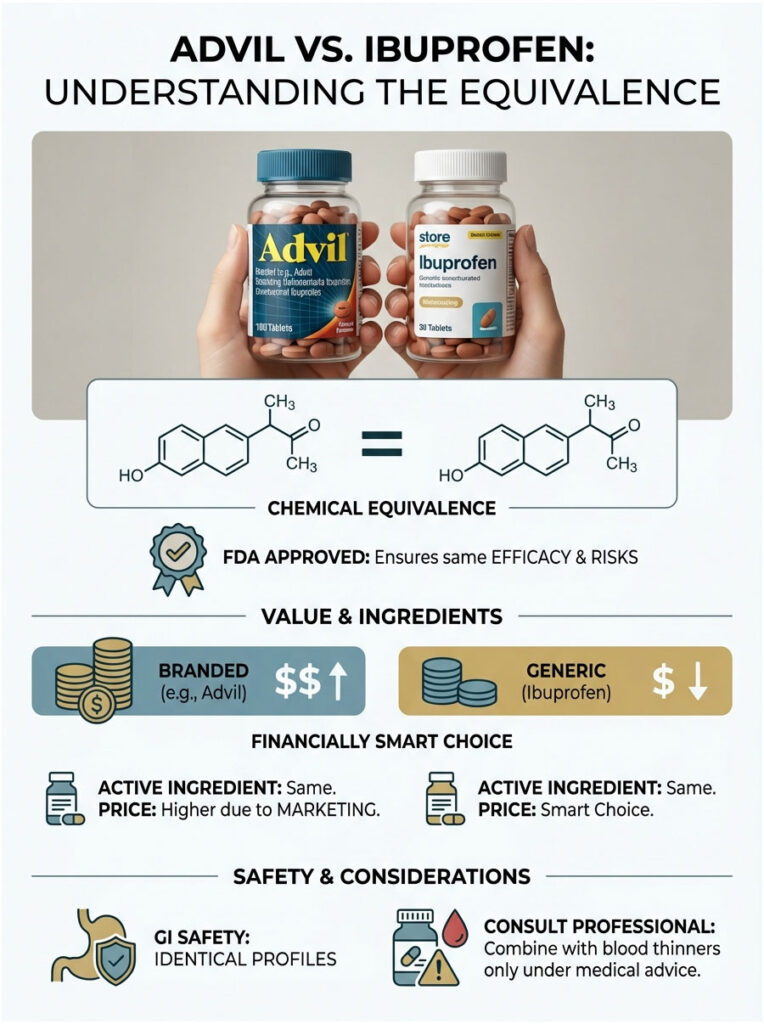
To settle the Advil vs ibuprofen debate once and for all: they are chemically, therapeutically, and biologically equivalent. The FDA ensures that the generic version delivers the same pain relief, reduces the same fever, and carries the same risks as the brand name. You’re not compromising your health by choosing the store brand; you’re making a financially smart decision.
The Bottom Line:
- Advil and generic ibuprofen contain the same drug (ibuprofen 200mg).
- Generic manufacturers are held to the same strict FDA GMP standards as brand manufacturers.
- Liqui-Gels absorb faster than tablets due to solubility, but they are not stronger overall.
- Always check the “Drug Facts” label. If the active ingredient is “Ibuprofen 200mg,” you’re getting the same relief.
- Consult your doctor if you have heart, kidney, or stomach issues before taking either version.
Next time you’re in the pharmacy aisle, feel confident reaching for the store brand. Your headache won’t know the difference, but your wallet certainly will. Is Advil the same as ibuprofen? Yes, and knowing that is the first step to smarter healthcare decisions.
Frequently Asked Questions
Is Advil exactly the same as generic ibuprofen?
Yes, they are therapeutically equivalent because both contain the same active pharmaceutical ingredient in the same dosage. While the inactive excipients like binders and coatings may vary, the core molecule performs the exact same pharmacological function in the body.
Why is there such a significant price difference between Advil and store-brand ibuprofen?
The price gap is primarily driven by marketing, branding, and advertising costs rather than the cost of the medicine itself. Generic manufacturers do not bear the initial research and development costs or the massive “brand tax” associated with national television commercials and prime shelf placement.
Are generic ibuprofen tablets less potent or effective than the brand name?
No, generic ibuprofen must demonstrate bioequivalence to the brand-name version to receive FDA approval. This means the generic must deliver the same amount of active drug into the bloodstream at a nearly identical rate, ensuring the therapeutic effect is indistinguishable.
What are inactive ingredients and can they affect my reaction to the medication?
Inactive ingredients, or excipients, are substances like corn starch, lactose, or dyes used to stabilize and shape the pill. While they don’t treat pain, some patients may have sensitivities to specific dyes like Red 40 or fillers like gluten, making it important to check the “Drug Facts” label if you have known allergies.
Do Advil Liqui-Gels provide faster pain relief than standard generic ibuprofen tablets?
Liqui-Gels generally have a faster onset of action because the ibuprofen is already solubilized, allowing it to bypass the disintegration phase in the stomach. However, generic “softgels” utilize the same technology and provide the same rapid absorption as the brand-name version at a lower price point.
Is it safer for my stomach to take brand-name Advil instead of a generic version?
The gastrointestinal safety profile is identical for both because the active ibuprofen molecule is what causes stomach irritation by inhibiting protective prostaglandins. Regardless of the brand, you should always take NSAIDs with food to minimize the risk of gastritis or peptic ulcers.
What does the FDA bioequivalence range of 80-125% actually mean for patients?
This is a statistical measurement requiring that the 90% confidence interval of the generic’s absorption falls within this window compared to the brand. In reality, most generic medications vary by less than 4%, meaning there is no clinical difference in how your body processes the drug.
Can I take generic ibuprofen if I am currently prescribed blood thinners like Eliquis or Warfarin?
As a clinical pharmacist, I advise extreme caution; both brand and generic ibuprofen increase the risk of major bleeding when combined with anticoagulants. Ibuprofen can irritate the GI lining and interfere with platelet function, significantly compounding the effects of blood thinners.
Are generic drugs manufactured in facilities with lower quality standards?
Generic manufacturers must adhere to the same strict Good Manufacturing Practices (GMP) enforced by the FDA as brand-name companies. In many cases, the exact same facility produces both the brand-name drug and the store-brand equivalent on the same production lines.
What is the difference between standard ibuprofen and ibuprofen sodium found in some Advil products?
Ibuprofen sodium is a salt formulation designed to dissolve more quickly in the stomach’s aqueous environment than standard ibuprofen acid. While this can lead to faster absorption, many generic manufacturers now produce their own fast-acting sodium versions that offer the same benefit.
Does taking ibuprofen interfere with the heart-protective benefits of daily low-dose aspirin?
Yes, ibuprofen can block the site where aspirin binds to the COX-1 enzyme in platelets, potentially neutralizing aspirin’s ability to prevent blood clots. If you take daily aspirin for heart health, you should consult your provider about the proper timing for taking any ibuprofen product.
Why does Advil have a sweet coating while some generic tablets feel chalky?
Advil uses a proprietary sugar or film coating to mask the naturally bitter taste of ibuprofen and make the tablet easier to swallow. While some generics may omit this to reduce costs, resulting in a “chalky” texture, the underlying therapeutic efficacy remains unchanged.
Disclaimer
This article is for informational purposes only and does not constitute medical advice, diagnosis, or treatment. While Advil and ibuprofen are therapeutically equivalent for most, individual health conditions vary. Always consult a qualified healthcare professional or pharmacist before starting any new medication, especially if you have underlying heart, kidney, or gastrointestinal issues.
References
- U.S. Food and Drug Administration (FDA) – The Orange Book – Official database for therapeutic equivalence evaluations and bioequivalence standards.
- National Center for Biotechnology Information (NCBI) – PubChem Ibuprofen Profile – Comprehensive chemical data on the ibuprofen molecule and its enantiomers.
- Journal of Clinical Pharmacology – “Bioequivalence of Generic Drugs” – Research study detailing the 80-125% statistical window for generic drug absorption.
- Harvard Health Publishing – Generic Drugs: Quality and Safety – Expert insight into the manufacturing and efficacy of generic vs. brand medications.
- Arthritis Foundation – NSAID Drug Guide – Clinical overview of the risks and benefits of ibuprofen for chronic inflammatory conditions.
- World Health Organization (WHO) – Model List of Essential Medicines – Documentation supporting ibuprofen as a core medicine for basic healthcare systems.