Nearly half of American adults (roughly 120 million people) have high blood pressure, according to the CDC. Most of them don’t have it under control. And while medication is part of the solution, a growing body of research points to something you can pick up at any grocery store for about two dollars a pound: beets.
That deep crimson root vegetable sitting quietly in the produce aisle? It’s one of the most nutrient-dense foods available, and a 2025 University of Exeter study just gave scientists another reason to take it seriously.
A 2025 Study Found Beetroot Juice Lowered Blood Pressure in Older Adults
Researchers at the University of Exeter published a study in the journal Free Radical Biology and Medicine that tracked 75 participants across two age groups. Thirty-nine were under 30. Thirty-six were in their 60s and 70s. Each group spent two weeks drinking concentrated beetroot juice shots twice daily, followed by two weeks on a nitrate-stripped placebo, with a washout period between phases.
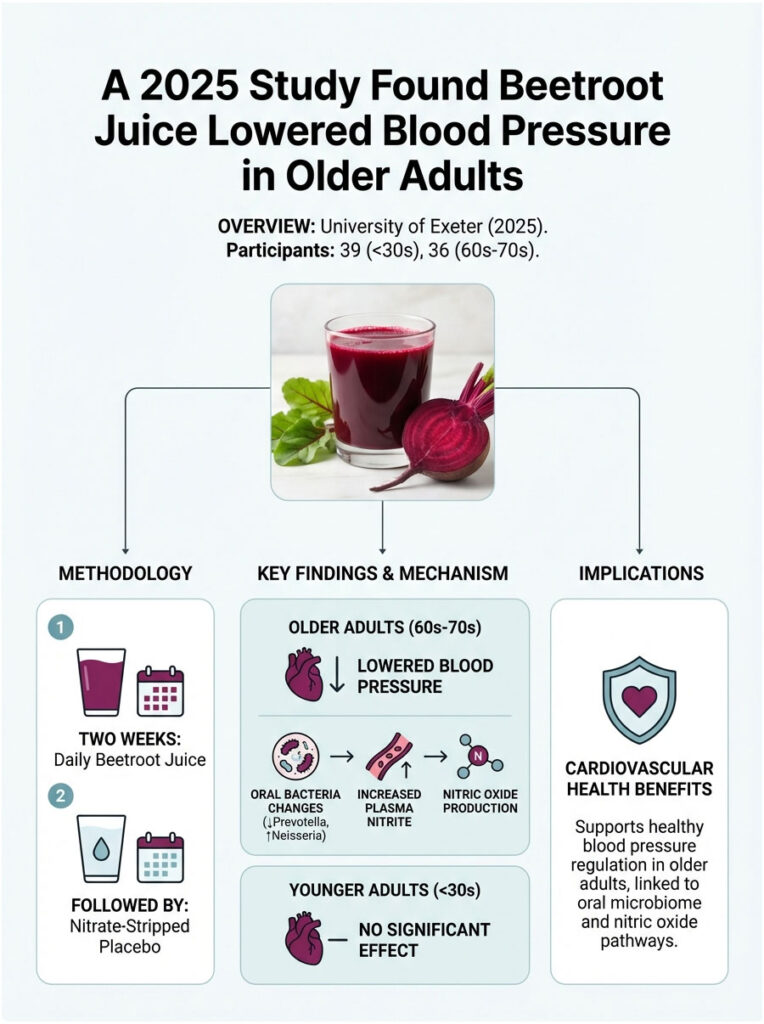
The results? Older adults who drank the beetroot juice saw a measurable drop in blood pressure. The younger group didn’t show the same effect. But here’s where it gets interesting: the blood pressure benefit appears to be connected to changes in the bacteria living in the mouth.
Specifically, older adults who drank the beet juice had fewer Prevotella bacteria (linked to inflammation) and more Neisseria bacteria (linked to better nitrate conversion). Their plasma nitrite levels went up, which feeds the body’s production of nitric oxide, a molecule that relaxes blood vessels.
Why the Nutritional Value of Beets Matters for Americans
High blood pressure costs the U.S. healthcare system roughly $131 billion a year. It contributed to more than 664,000 deaths in 2023 alone. And three out of four Americans with the condition don’t have it under control. That’s a staggering gap between what we know and what we’re doing about it.
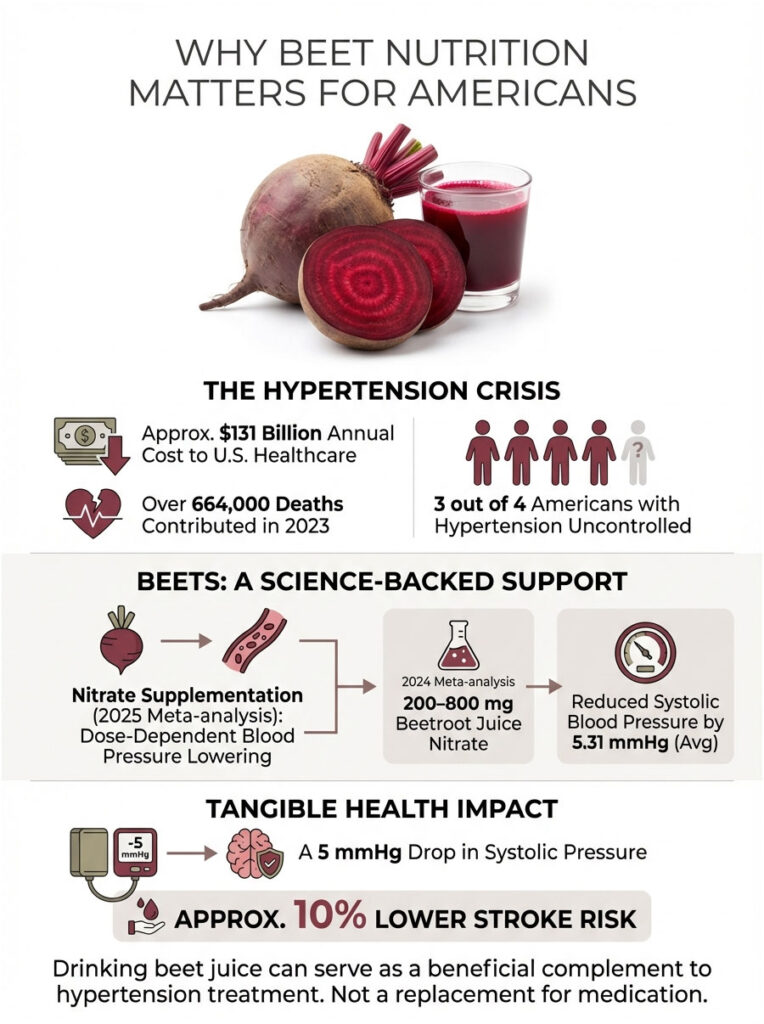
Beets won’t replace your blood pressure medication. But the data supporting beet nutrition as a complement to treatment keeps piling up. A 2025 meta-analysis of 75 randomized controlled trials found that nitrate supplementation (the kind found in beets) lowered both systolic and diastolic blood pressure in a dose-dependent way. The more nitrate people consumed, the bigger the drop.
And a separate 2024 meta-analysis of 11 trials, published in Nutrition, Metabolism and Cardiovascular Diseases, found that 200 to 800 mg per day of beetroot juice nitrate reduced systolic blood pressure by an average of 5.31 mmHg in people with hypertension. That’s a clinically meaningful number.
To put it in perspective: a 5 mmHg drop in systolic blood pressure can reduce stroke risk by roughly 10 percent. That’s from drinking beet juice.
What Nutrition Experts Are Saying About Beets
“We know that a nitrate-rich diet has health benefits, and older people produce less of their own nitric oxide as they age,” said Professor Anni Vanhatalo of the University of Exeter, the study’s lead author. “Encouraging older adults to consume more nitrate-rich vegetables could have significant long-term health benefits.”
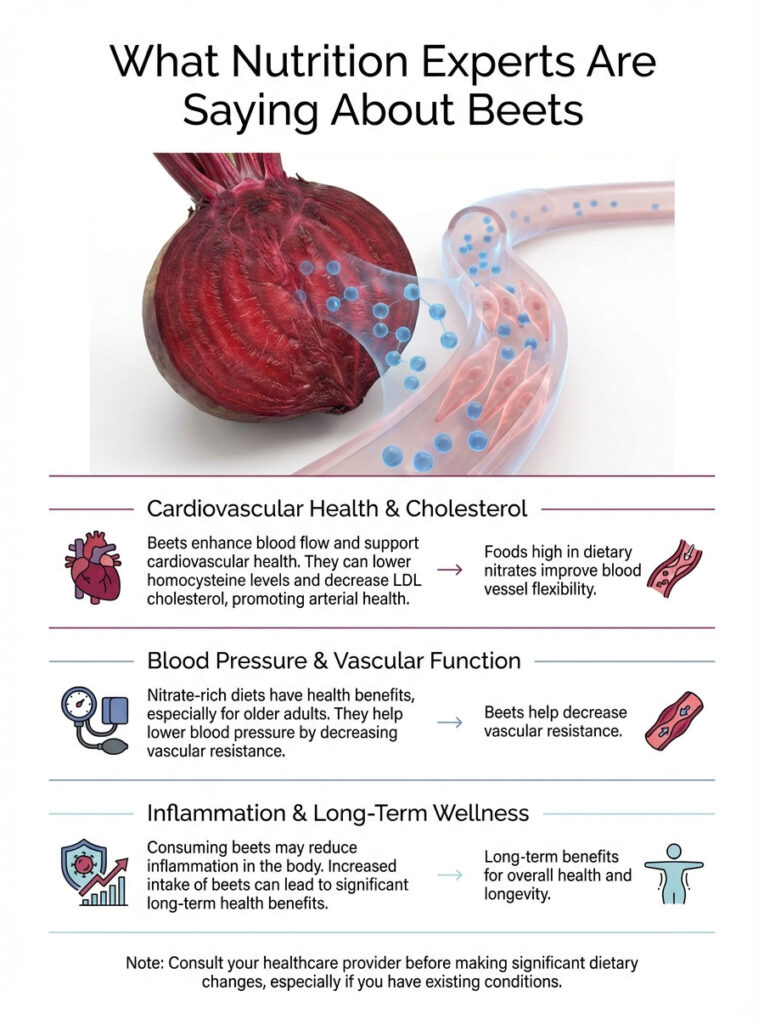
Sarah Thomsen Ferreira, a registered dietitian at Cleveland Clinic (who was not involved in the Exeter study), has described beets as “unique for their cardiovascular and heart health benefits.” She’s pointed to the combination of compounds in beets that enhance blood flow, support arterial health, lower homocysteine levels, and reduce LDL cholesterol.
Dr. Marc Siegel, a Fox News senior medical analyst, has noted that “foods high in dietary nitrates such as leafy greens, beets, and lettuce can help lower blood pressure” by improving blood vessel flexibility, decreasing resistance, and lowering inflammation.
What’s Actually in a Cup of Beets: The Full Nutrition Breakdown
Here’s the thing about the nutritional value of beets: it’s not just one or two standout nutrients. It’s the whole package. A single cup of raw beets (about 136 grams) delivers a lot of nutrition for very few calories.
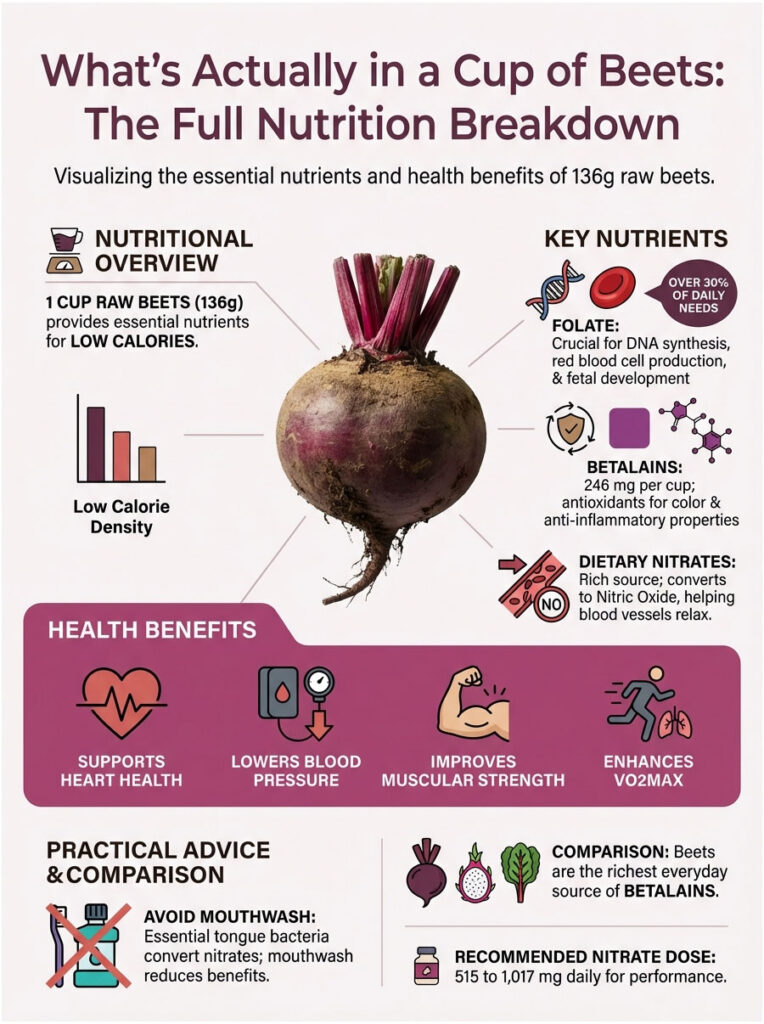
Per 1 cup raw beets (136g), from USDA FoodData Central:
- Calories: 58
- Protein: 2.2g
- Carbohydrates: 13g (mostly natural sugars and fiber)
- Fiber: 3.8g (about 14% of daily value)
- Folate (Vitamin B9): 148 mcg (37% of daily value)
- Manganese: 0.4mg (about 16% of daily value)
- Potassium: 442mg (about 9% of daily value)
- Vitamin C: 6.7mg
- Iron: 1.1mg
That folate number is a big deal. Folate is essential for DNA synthesis, red blood cell production, and fetal development during pregnancy. It also helps keep homocysteine levels in check, which is important for heart health. A lot of Americans fall short on folate. One cup of beets gets you more than a third of the way there.
Betalains: The Antioxidants That Give Beets Their Color
The deep red-purple color of beets comes from pigments called betalains (specifically betanin and betacyanin). These aren’t just for show. Betalains are potent antioxidants that have shown anti-inflammatory properties in lab studies. Cell studies indicate that betalains can bind to LDL cholesterol and inhibit its oxidation, a process linked to plaque buildup in arteries.
One cup of beets delivers roughly 246 mg of betalains. You won’t find that concentration in many other foods. Dragon fruit and Swiss chard contain some, but beets are the richest everyday source by a wide margin.
Dietary Nitrates: The Compound Behind the Blood Pressure Benefits
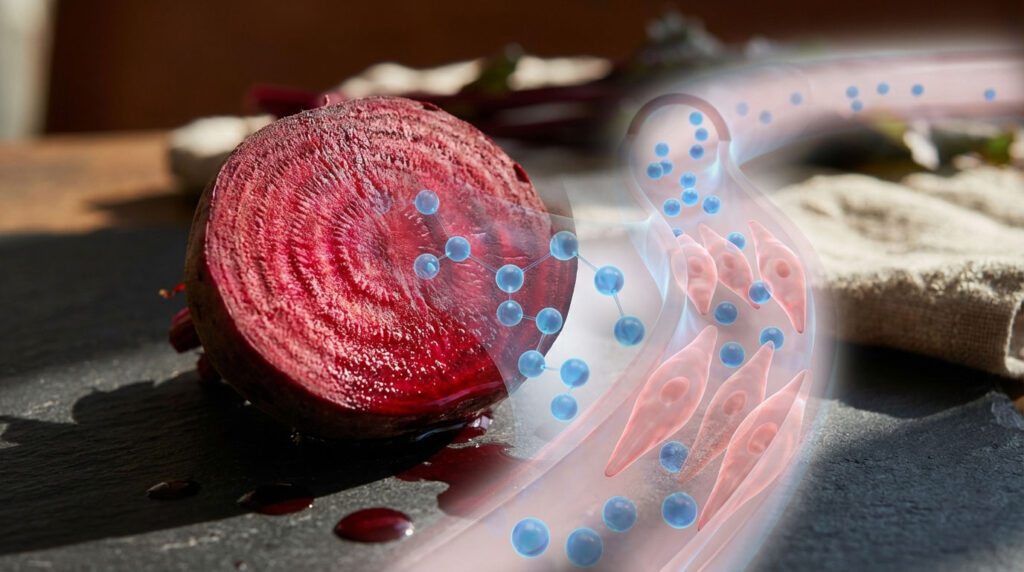
Beets are one of the richest food sources of inorganic nitrate. After you eat them, bacteria on the back of your tongue convert that nitrate into nitrite. Your stomach then converts some of that nitrite into nitric oxide, the signaling molecule that tells blood vessels to relax and widen.
This is the same pathway that makes beet juice popular among endurance athletes. A 2025 umbrella review of 15 meta-analyses found that beetroot juice supplementation can improve muscular strength and increase VO2max (a key measure of cardiovascular fitness) in healthy non-athletes. The recommended dose for performance benefits was 515 to 1,017 mg of nitrate per day.
One practical note: avoid using antibacterial mouthwash right before or after eating beets. Those tongue bacteria are essential for the nitrate-to-nitrite conversion. Kill them off and you lose much of the benefit.
How to Get More Beets Into Your Diet (Without Hating It)
Let’s be honest. Beets have a reputation. Some people love the earthy sweetness; others think they taste like dirt. But there are easy ways to work them in, even if you’re not a fan of eating them straight.
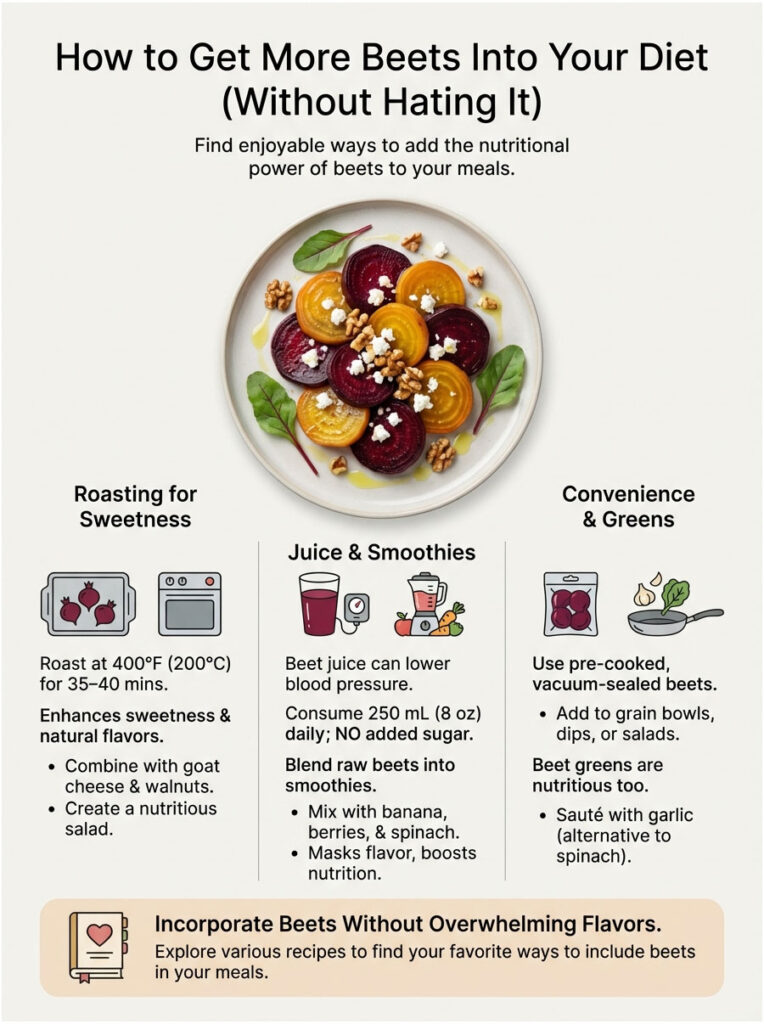
Roasting brings out their natural sweetness and tones down the earthiness. Cut a few medium beets into wedges, toss them with a tablespoon of olive oil and a pinch of salt, and roast at 400 degrees Fahrenheit for about 35 to 40 minutes. They caramelize beautifully. Toss them into a salad with goat cheese and walnuts, and you’ve got a weeknight side dish that happens to be loaded with folate and potassium.
If cooking isn’t your thing, try store-bought beet juice. Most of the blood pressure studies used about 250 mL (roughly 8 ounces) per day. Look for products with no added sugar. You can also blend raw beets into smoothies with banana, berries, and a handful of spinach. The fruit covers the earthy flavor almost completely.
Pre-cooked vacuum-sealed beets (sold at most supermarkets like Trader Joe’s and Whole Foods) are another shortcut. Dice them into grain bowls, add them to hummus for a striking magenta dip, or simply eat them cold with a squeeze of lemon. And don’t throw away the greens. Beet greens are packed with vitamin A, calcium, magnesium, and even more potassium than the root itself. Saute them with garlic the way you’d cook spinach.
What the Research Doesn’t Tell Us (Yet)
It’s worth being honest about what we don’t know. Most of the blood pressure studies used concentrated beetroot juice, not whole beets. That’s a distinction that matters because juice delivers a more concentrated dose of nitrates than eating a beet in a salad. There’s less data on whether whole beets produce the same magnitude of effect.
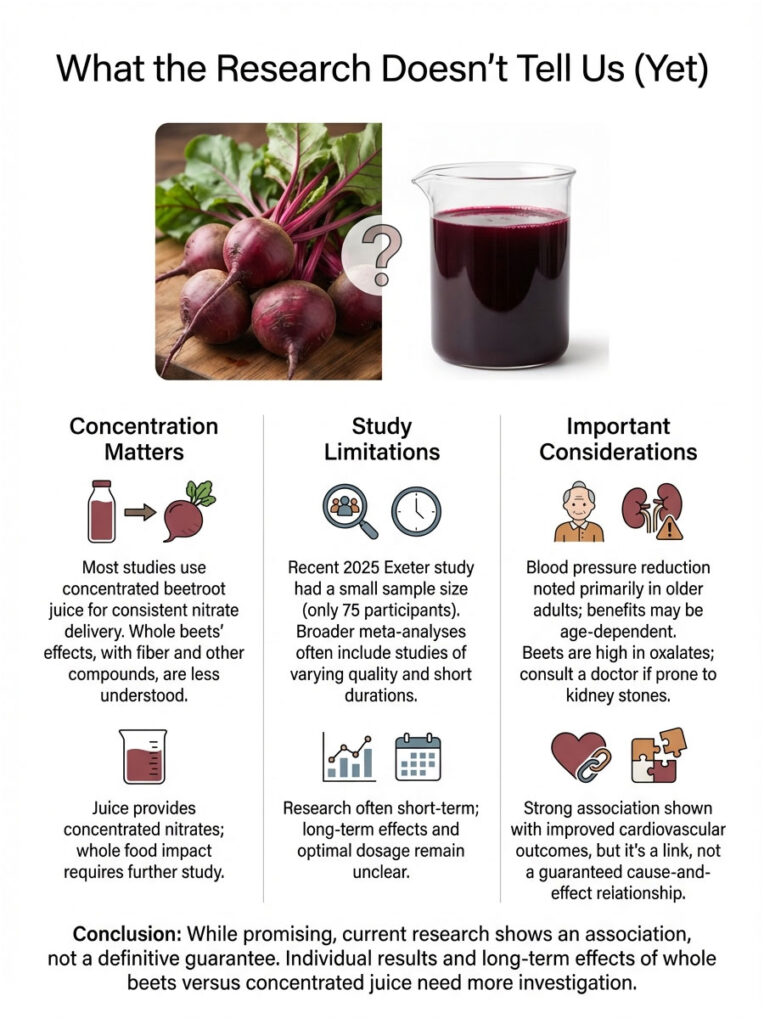
The 2025 Exeter study, while compelling, had a relatively small sample size (75 total participants). And the blood pressure drop was observed in older adults but not younger ones, which means the benefits may be age-dependent. Most of the broader meta-analyses also rely on studies of varying quality, and many are short-term (a few days to a few weeks).
Also, beets are relatively high in oxalates. If you have a history of calcium oxalate kidney stones, talk to your doctor before adding large amounts of beets or beet juice to your routine. For most healthy adults, oxalates aren’t an issue at normal dietary intake levels.
The association between beet consumption and better cardiovascular outcomes is strong and growing, but it’s still largely associational. Researchers are careful to say this shows a link, not a guaranteed cause-and-effect relationship.
The Bottom Line on Beet Nutrition
Beets are one of the most underappreciated vegetables in the American diet. For 58 calories a cup, you get a significant dose of folate, potassium, fiber, betalain antioxidants, and dietary nitrates with legitimate clinical data behind them. A 2025 study adds to a growing body of evidence that beetroot juice can lower blood pressure in older adults, likely by reshaping the oral microbiome in ways that boost nitric oxide production.
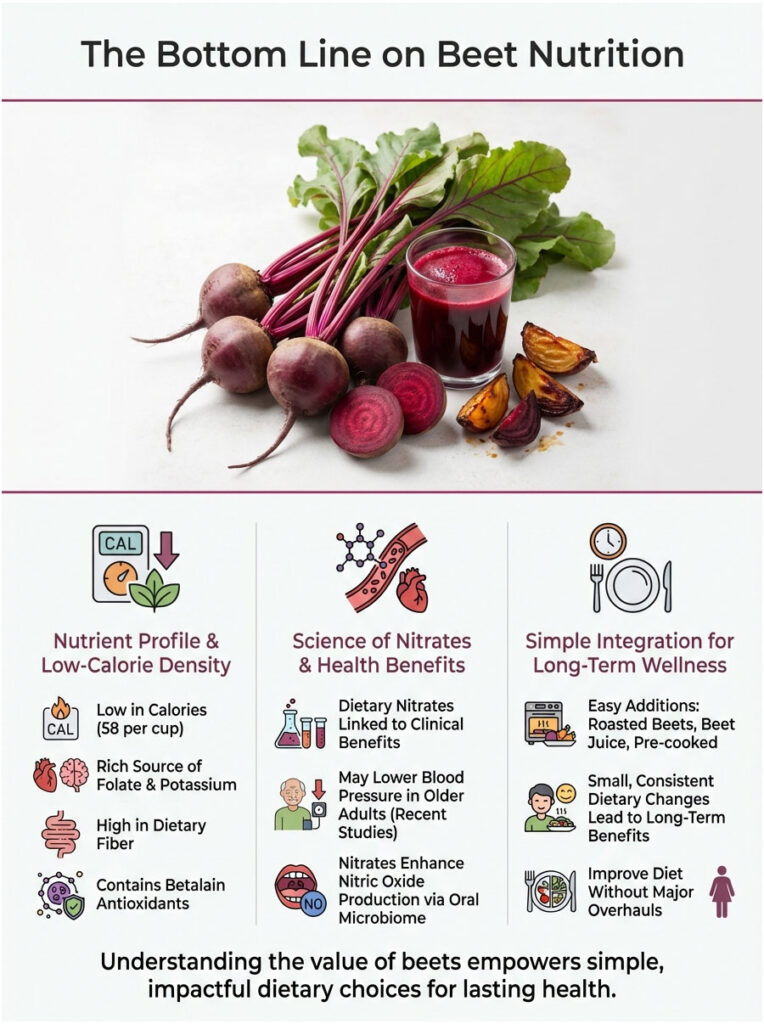
You don’t need to overhaul your entire diet. A few roasted beet wedges at dinner, a glass of beet juice a few times a week, or some pre-cooked beets tossed into a grain bowl can make a real difference over time. Simple changes, consistent over weeks, are how good nutrition actually works.
A Quick Note Before You Change Anything
This article is meant to inform, not to replace advice from your doctor. Before you make any changes to your diet, especially if you’re on blood pressure medication or have kidney issues, it’s a good idea to check with a healthcare provider who knows your history. Everyone’s body responds differently, and what works well for one person might not be the right fit for someone else. If you’re experiencing symptoms of high blood pressure or any other health concern, please seek medical attention.
REFERENCES AND SOURCES
[1] Vanhatalo, A., L’Heureux, J.E., et al. “Ageing modifies the oral microbiome, nitric oxide bioavailability and vascular responses to dietary nitrate supplementation.” Free Radical Biology and Medicine, 2025; 238: 682-696. https://www.sciencedirect.com/science/article/pii/S0891584925005969
[2] Centers for Disease Control and Prevention. “High Blood Pressure Facts.” Updated January 28, 2025. https://www.cdc.gov/high-blood-pressure/data-research/facts-stats/index.html
[3] Groenendijk, R., Elings-Kager, S., et al. “Effects of beetroot juice on blood pressure in hypertension according to European Society of Hypertension Guidelines: A systematic review and meta-analysis.” Nutrition, Metabolism and Cardiovascular Diseases, 2024. https://doi.org/10.1016/j.numecd.2024.06.011
[4] USDA FoodData Central. “Beets, raw.” FDC ID: 169145. https://fdc.nal.usda.gov/food-details/169145/nutrients
[5] Poon, E.T., et al. “Dietary Nitrate Supplementation and Exercise Performance: An Umbrella Review of 20 Published Systematic Reviews with Meta-analyses.” Sports Medicine, 2025; 55(5): 1213-1231. https://doi.org/10.1007/s40279-025-02194-6
[6] Cleveland Clinic. “5 Health Benefits of Beets.” Health Essentials. https://health.clevelandclinic.org/the-health-benefits-of-beets
[7] Nutrients (MDPI). “Beetroot Juice Supplementation as a Healthy Aging Strategy Through Improving Physical Performance and Cognitive Functions: A Systematic Review.” December 2025. https://www.mdpi.com/2072-6643/17/24/3954