You are doing everything “right.” You are meticulously tracking every meal, you are waking up early to hit the gym, and you are going to bed feeling that familiar, gnawing hunger that usually signals progress. You step on the scale, expecting a reward for your discipline. But the number hasn’t moved. Or, in a cruel twist of fate, it has actually gone up.
Table of Contents
This specific moment the stall is where 90% of dieters quit. It feels like a betrayal. It feels like your body is broken, or that the laws of physics somehow don’t apply to you. You are searching for answers because the math simply isn’t adding up. If you are in a calorie deficit but not losing weight, the frustration can be overwhelming.
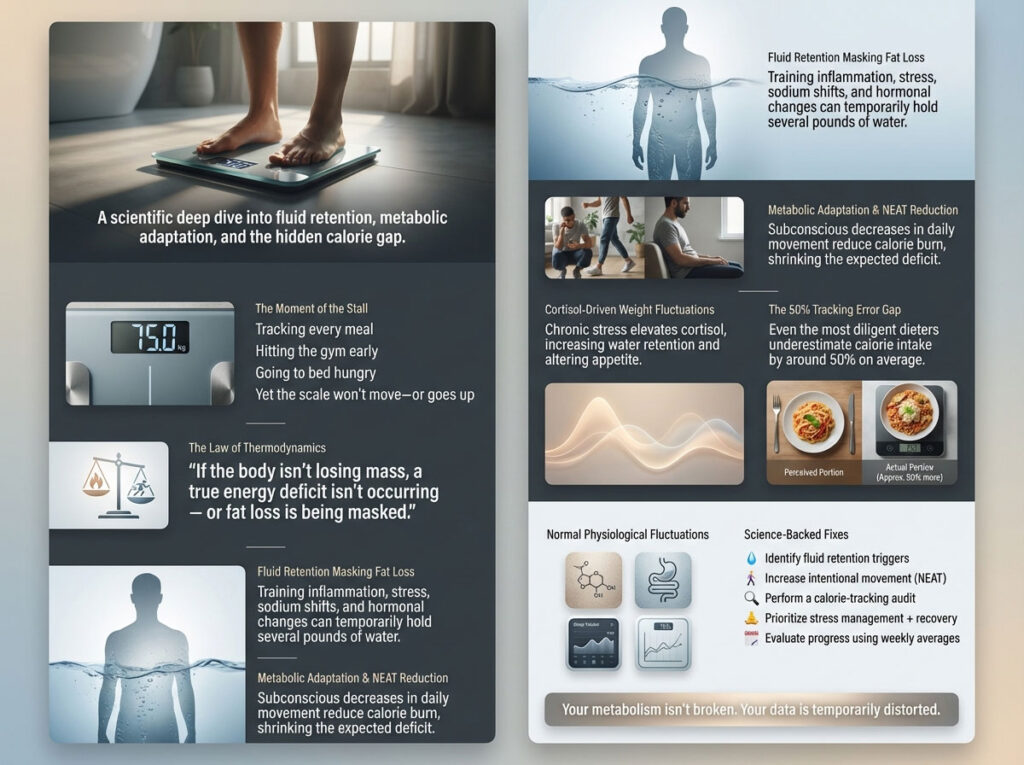
However, rest assured that your metabolism is not broken. The law of thermodynamics is absolute: energy cannot be created or destroyed. If you are not losing body tissue, you are not in a deficit, or the loss is being masked. The reality is often a complex interplay of fluid retention masking fat loss, subconscious metabolic adaptation, and the statistical probability of underestimating calorie intake.
This comprehensive guide serves as an industry-level deep dive into the physiology of weight loss resistance. We will move beyond surface-level advice and explore the specific mechanisms of cortisol weight gain, the NEAT variance, and the 50% tracking error gap that plagues even the most diligent dieters. Here are the 7 hidden reasons why your weight loss has stalled and the exact, science-backed protocols to fix them.
Core Concept: Understanding Calorie Deficit Biology and TDEE Accuracy
To troubleshoot a broken car, you must first understand how the engine works. To fix a weight loss plateau, you must understand the components of your metabolism. “Calories In vs. Calories Out” (CICO) is the fundamental rule, but the “Calories Out” side of the equation is far more dynamic than a simple calculator can predict.
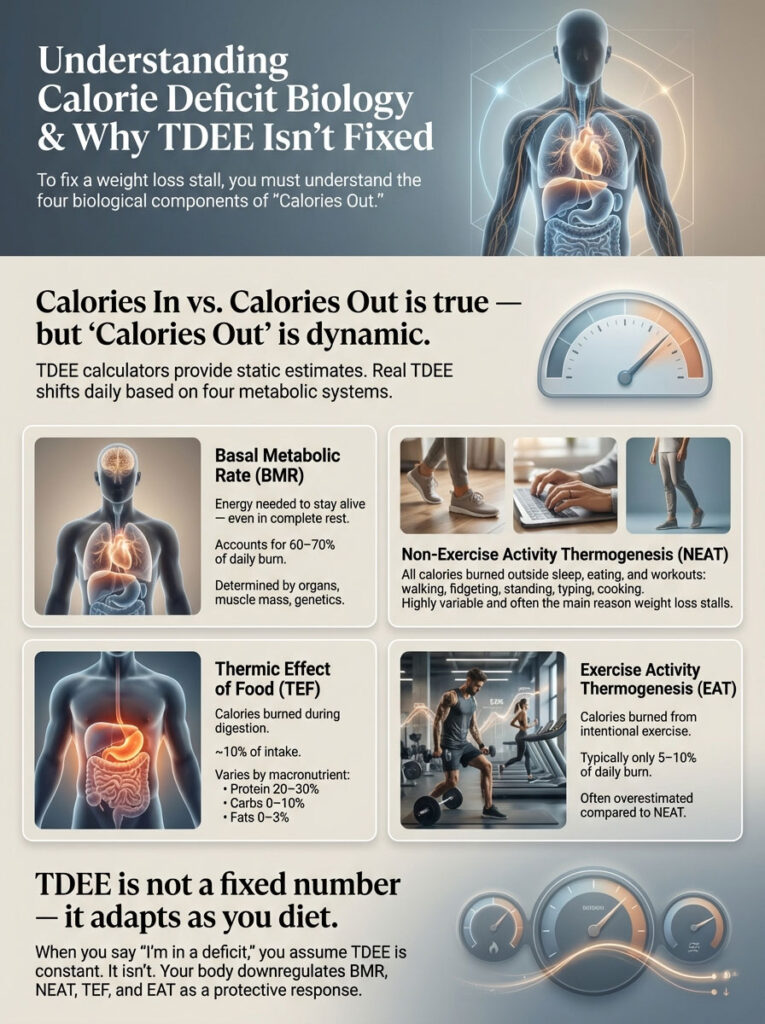
When you use a TDEE calculator (Total Daily Energy Expenditure), you are getting a static estimate. In reality, your daily burn is a fluctuating sum of four distinct biological buckets.
1. Basal Metabolic Rate (BMR)
This is the energy cost of keeping you alive. Even if you laid in bed in a coma for 24 hours, you would burn calories pumping blood, inflating lungs, and regenerating cells. BMR accounts for roughly 60-70% of your total daily burn. It is determined by your organ size, muscle mass, and genetics.
2. Non-Exercise Activity Thermogenesis (NEAT)
This is the most overlooked variable in the entire equation. NEAT covers every calorie burned outside of sleeping, eating, and dedicated exercise. This includes walking to the mailbox, fidgeting at your desk, typing, cooking, and standing. As we will explore later, NEAT can fluctuate wildly and is often the primary cause of a stall.
3. Thermic Effect of Food (TEF)
Digestion is an energy-intensive process. Your body must burn calories to extract calories. Generally, TEF accounts for about 10% of your total intake. However, this varies by macronutrient. Protein has a high TEF (20-30%), meaning you burn a significant portion of the protein calories just to digest them. Fats and refined carbohydrates have a low TEF (0-3%).
4. Exercise Activity Thermogenesis (EAT)
This is your gym session or your run. Surprisingly, for most people, this accounts for only 5-10% of total daily burn. A common mistake is overestimating the impact of EAT while ignoring the massive decline in NEAT.
When you say, “I am in a deficit,” you are assuming that your TDEE number is fixed. It is not. As you diet, your body fights back by downregulating these outputs.
Reason 1: Underestimating Calories and The “Tracking Trap” Error
The first place we must look is the input. It is uncomfortable to admit, but human error is the single most significant factor in unexplained weight loss stalls.
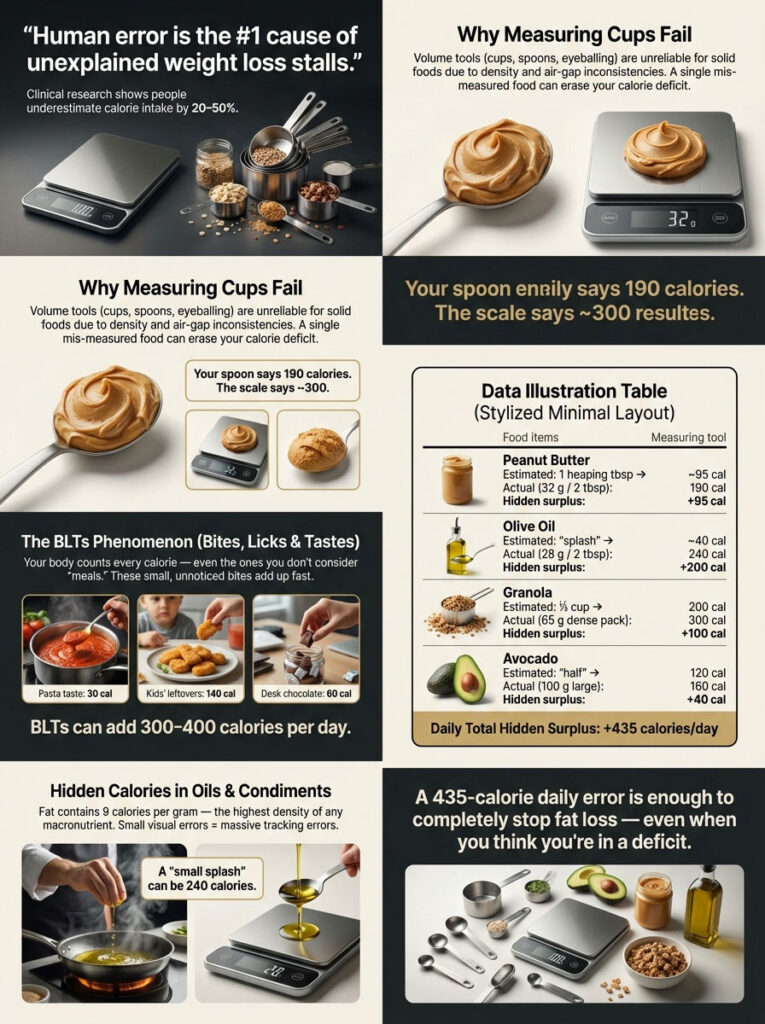
Clinical studies on self-reported dietary intake are damning. Research published in the New England Journal of Medicine and other metabolic journals consistently shows that individuals trying to lose weight underestimate their daily intake by 20% to 50%. This isn’t necessarily about “cheating” or lying; it is about the lack of precision in our modern food environment.
Why Measuring Cups Fail: The Volume vs. Food Scale Accuracy Gap
If you are using measuring cups, tablespoons, or visual estimation (“eyeballing it”), you are likely eating at maintenance. Volume measurements are notoriously inaccurate for solid foods because of air gaps and density differences.
Consider peanut butter. The nutrition label states that one serving is 2 tablespoons (32 grams) for 190 calories. If you use a spoon from your drawer and scoop out a “generous” dollop, you can easily load 50 grams onto that spoon. You believe you are eating 190 calories, but you are actually consuming nearly 300. If you do this with peanut butter, oatmeal, and rice throughout the day, you can easily accidentally consume 500+ untracked calories.
The “Bites, Licks, and Tastes” (BLTs) Phenomenon
We often view calories as “meals.” If it wasn’t on a plate, it didn’t count. However, your body is a continuous biological accountant. It logs everything.
- The Chef’s Tax: Tasting the pasta to check for doneness (30 calories).
- The Parent’s Tax: Finishing the last three chicken nuggets your child left behind (140 calories).
- The Office Tax: A single chocolate from the receptionist’s desk (60 calories).
These seemingly innocent moments are known as BLTs (Bites, Licks, and Tastes). They can easily accumulate to 300-400 calories per day, completely erasing the deficit you created during your actual meals.
Hidden Calories in Oils and Condiments
Fat is the most energy-dense macronutrient, containing 9 calories per gram (compared to 4 calories per gram for protein and carbs). This means that small errors in tracking fats lead to massive calorie surpluses.
A “splash” of olive oil in a pan is the most dangerous cooking habit for fat loss. A visually small splash can be 2 tablespoons, which is 240 calories. If you track it as “1 teaspoon” (40 calories), you have missed 200 calories in a single second. This is why many people are eating less not losing weight—they are eating less volume but high density.
Instance of Data:
To illustrate this, look at the comparison below. This data highlights how “healthy” foods become the enemy of fat loss when not weighed on a digital scale.
| Food Item | The “Estimated” Log (Volume) | Actual Calories (Logged) | The Reality (Weighed in Grams) | Actual Calories (Consumed) | The Hidden Surplus |
| Peanut Butter | 1 Tbsp (heaping spoon) | ~95 cal | 32g (2 flat tbsp) | 190 cal | +95 cal |
| Olive Oil | “Splash” in pan | ~40 cal | 28g (2 tbsp) | 240 cal | +200 cal |
| Granola | 1/2 Cup | 200 cal | 65g (Dense pack) | 300 cal | +100 cal |
| Avocado | “Half” an avocado | 120 cal | 100g (Large) | 160 cal | +40 cal |
| Daily Error Total | — | 455 cal | — | 890 cal | +435 cal/day |
As you can see, a daily error of 435 calories is enough to completely stop fat loss for an average-sized woman or man, turning a deficit into maintenance.
Reason 2: Cortisol Weight Gain and Fluid Retention Masking Fat Loss
If you are 100% certain your tracking is accurate (you are weighing grams), and the scale still isn’t moving, you are likely dealing with the biological trickery of water retention.
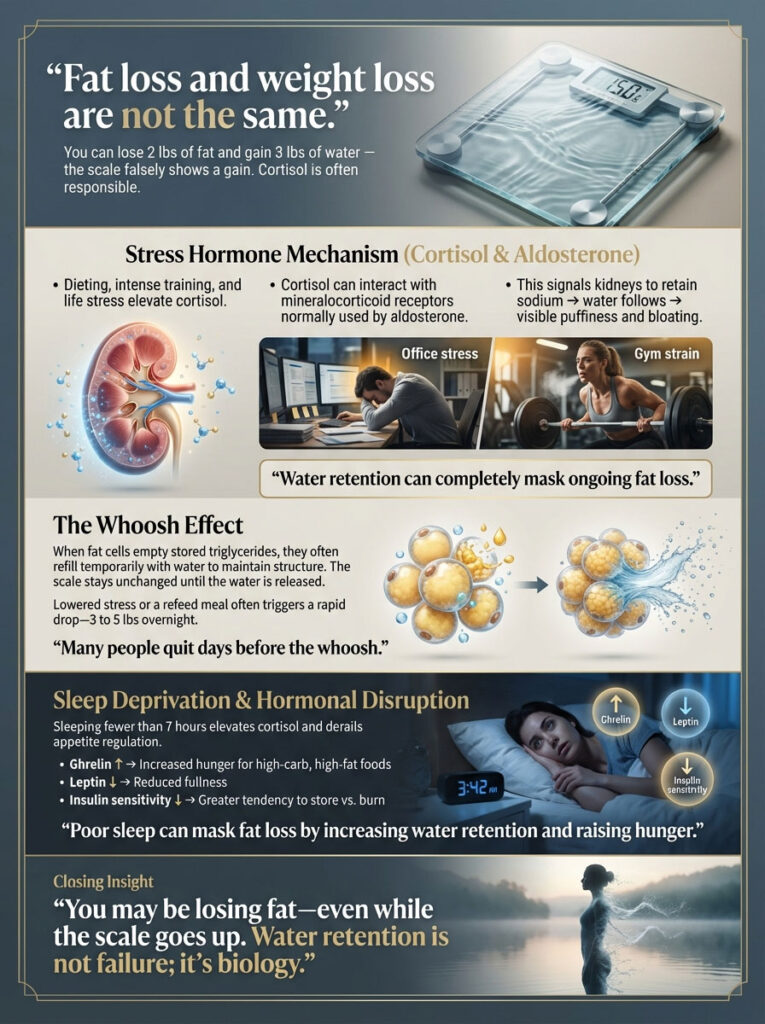
It is crucial to differentiate between “weight loss” and “fat loss.” They are not the same. You can lose 2 lbs of fat tissue while simultaneously gaining 3 lbs of water. The scale will show a 1 lb gain, leading you to believe your diet has failed. This is often driven by cortisol.
The Stress Hormone Connection (Cortisol and Aldosterone)
Dieting is a stressor. It signals a famine state to the body. High-intensity exercise (HIIT, heavy lifting) is a stressor. Psychological stress (work, relationships, finances) adds to the load.
When your total stress bucket overflows, your body chronically elevates cortisol. Cortisol has a unique relationship with the kidneys. It can cross-react with mineralocorticoid receptors, which are usually managed by a hormone called aldosterone. Aldosterone’s job is to manage the sodium-potassium balance.
When cortisol hijacks this system, it signals the kidneys to hold onto sodium. Where sodium goes, water follows. This results in significant subcutaneous water retention. You might feel “puffy,” bloated, or soft, even though you are strictly adhering to your diet. This is the primary mechanism behind cortisol weight gain belly complaints—it is often visceral inflammation and water, not just fat.
The “Whoosh Effect” Phenomenon Explained
This concept is widely discussed in bodybuilding and physiology circles. When a fat cell (adipocyte) releases stored triglycerides for energy, it temporarily loses volume. To maintain structural integrity and cellular pressure, the body often draws water into the cell to replace the lost fat.
Essentially, the fat leaves, but water takes its place. The scale stays the same. The cell is still “full,” but the content has changed from fuel to water.
Eventually, usually triggered by a drop in stress (cortisol) or a “refeed” meal, the body recognizes it no longer needs to hold this water. The cells release the fluid, and you experience a “Whoosh”—a sudden drop of 3 to 5 pounds overnight.
Many people quit their diet during the water-holding phase, mistakenly believing they are not losing weight in a calorie deficit, mere days before the whoosh would have occurred.
Sleep Deprivation and Ghrelin Spikes
Sleep is the most potent fat-burning tool you have. If you are sleeping less than 7 hours a night, you are chemically sabotaging your deficit.
Sleep deprivation triggers a dual-hormonal failure:
- Ghrelin Increases: This is the hunger hormone. It screams at you to eat high-carb, high-fat foods.
- Leptin Decreases: This is the satiety hormone. You feel less full even after eating.
- Insulin Sensitivity Drops: Your body becomes worse at managing blood sugar, promoting storage over burning.
If you are grinding at the gym but sleeping 5 hours a night, your cortisol will remain high, and your water retention will mask any fat loss progress you manage to make.
Reason 3: Metabolic Adaptation and The Starvation Mode Myth
There is a pervasive fear in the diet community of “starving” the metabolism. We need to distinguish between the starvation mode myth and the reality of metabolic adaptation.
Why “Starvation Mode” is a Misnomer
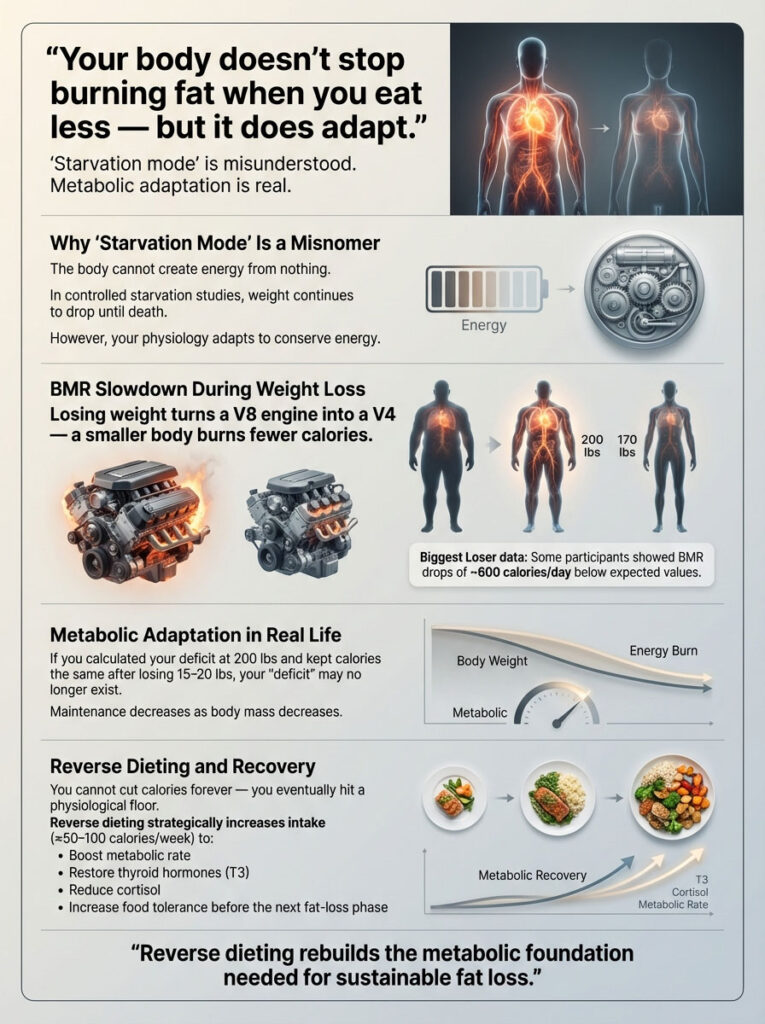
The idea that if you eat too little, your body will stop burning fat entirely and start gaining weight from air is false. In controlled starvation studies (and tragic historical famines), people continue to lose weight until they die. The body cannot generate energy from nothing.
However, the body is an adaptive machine designed for survival. It does not want to lose its energy reserves (fat). Therefore, it adapts to lower energy intake by reducing energy output.
BMR Slowdown During Weight Loss
As you lose weight, you become a smaller engine. A V8 engine burns more fuel than a V4 engine.
- At 200 lbs, your body requires significant energy to pump blood through your veins and move your mass against gravity.
- At 170 lbs, you simply require less energy to exist.
Research from the famous NIH “Biggest Loser” study showed that contestants who lost massive amounts of weight rapidly experienced a dramatic drop in BMR—sometimes up to 600 calories per day lower than expected for their new size.
If you calculated your deficit at the start of your journey and haven’t adjusted it after losing 15-20 lbs, you are likely no longer in a deficit. Your maintenance calories have dropped to match your intake. This is metabolic adaptation symptoms in action.
Reverse Dieting Strategies
To combat severe metabolic downregulation, you cannot simply keep cutting calories forever. Eventually, you hit a “floor” where eating less is malnourished and unsustainable.
This is where Reverse Dieting comes in. It involves slowly increasing calories (e.g., +50-100 per week) to train the metabolism to handle more food without gaining fat. This restores thyroid function (T3 production) and lowers cortisol, priming the body for a future fat loss phase.
Reason 4: Non-Exercise Activity Thermogenesis (NEAT) Decline
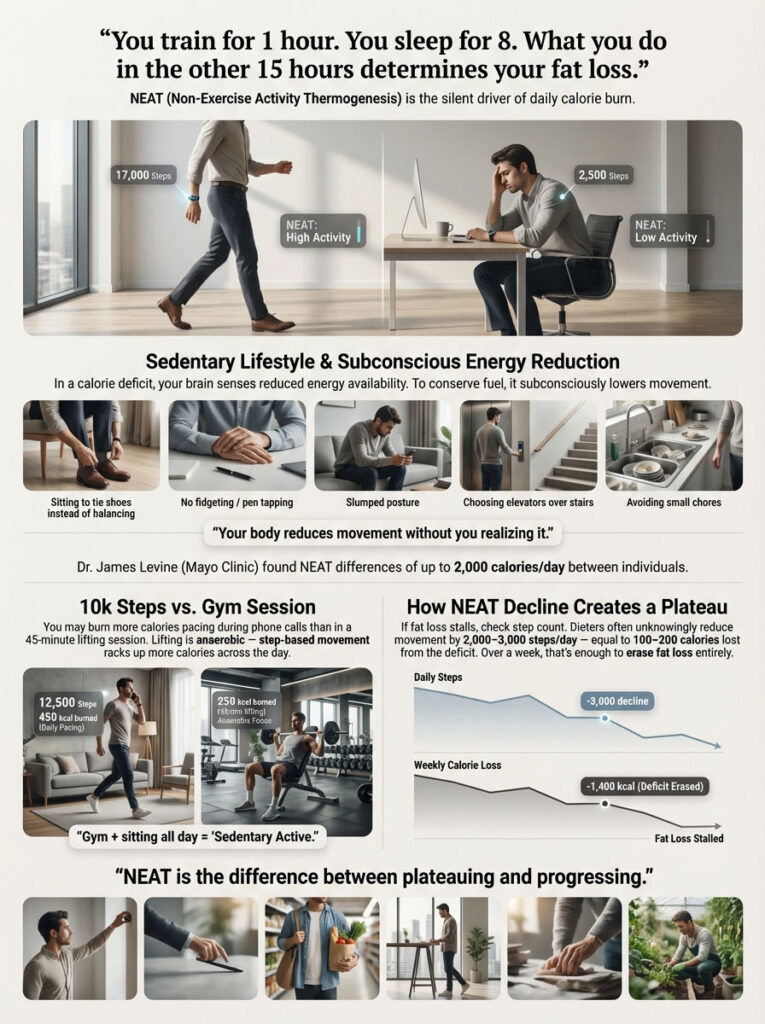
You hit the gym for one hour. You sleep for eight hours. What are you doing for the other 15 hours?
NEAT (Non-Exercise Activity Thermogenesis) is the variable that separates those who stay lean effortlessly from those who struggle. It encompasses all the micro-movements of your day.
Sedentary Lifestyle Impact on Calorie Deficit
When you enter a steep calorie deficit, your brain senses a lack of energy availability. In a prehistoric context, this meant food was scarce. To ensure survival, your brain subconsciously commands your body to move less.
- You sit down to put your shoes on instead of balancing on one leg.
- You stop fidgeting or tapping your pen.
- Your posture slumps (requiring less muscle engagement).
- You take the elevator instead of one flight of stairs.
- You procrastinate on household chores like vacuuming.
Dr. James Levine’s research at the Mayo Clinic demonstrated that NEAT variance can be up to 2,000 calories a day between individuals.
10k Steps vs. Gym Session
Here is a shocking realization for many: You can burn more calories pacing around your office while on the phone than you do in a 45-minute weightlifting session.
Lifting weights is anaerobic; it burns glycogen but doesn’t have a massive caloric cost per minute compared to sustained movement over 12 hours. If you go to the gym but then sit in a chair for 10 hours, you are classified as “Sedentary Active.”
If your diet has stayed the same, but your weight loss plateau has hit, check your step count. You likely subconsciously reduced your movement by 2,000-3,000 steps a day, which equals 100-200 calories. Over a week, that negates a significant portion of your deficit.
Reason 5: Body Recomposition and Losing Inches Not Weight
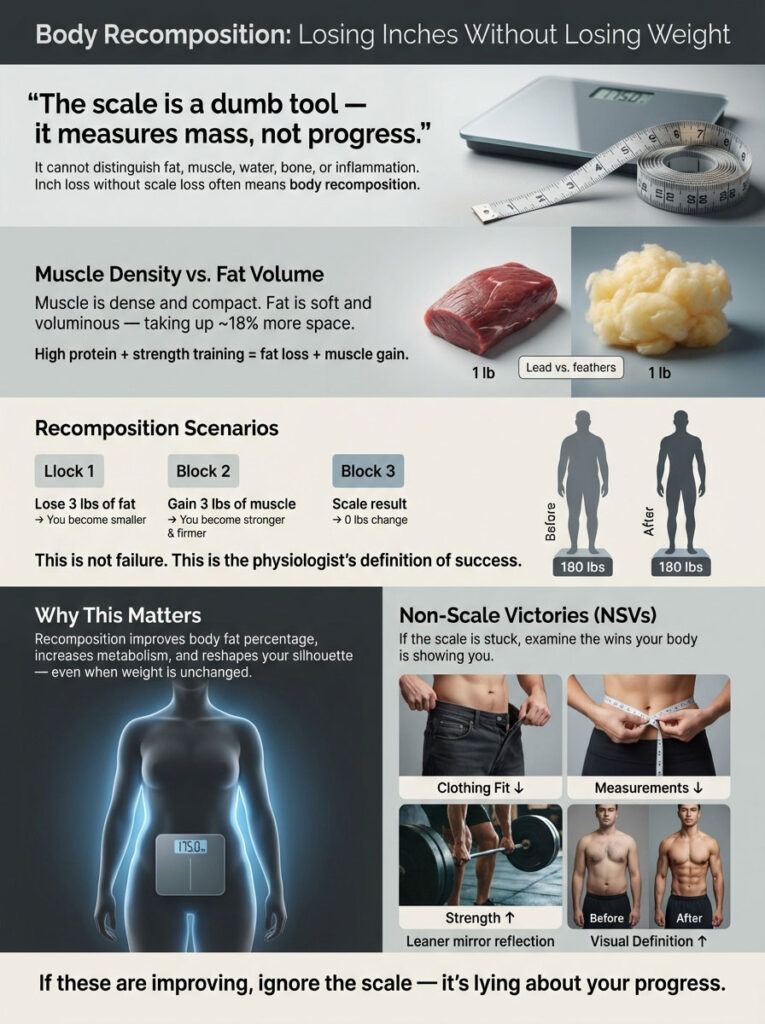
The scale is a dumb tool. It measures the gravitational pull of your total mass—fat, muscle, bone, water, organs, and undigested food. It cannot distinguish between “good” weight and “bad” weight.
If you are losing inches but not weight, you are likely experiencing Body Recomposition.
Muscle Density vs. Fat Volume
Muscle is denser than fat. Think of it like lead vs. feathers. A pound of muscle is compact, firm, and takes up very little space. A pound of fat is fluffy, voluminous, and takes up roughly 18% more space than muscle.
If you are eating high protein and strength training, you are signaling your body to build (or retain) muscle while burning fat.
- Scenario: You lose 3 lbs of body fat (Result: You are smaller).
- Scenario: You gain 3 lbs of muscle (Result: You are stronger/firmer).
- Scale Result: 0 lbs lost.
To the uneducated dieter, this looks like failure. To the physiologist, this is the ultimate success. You have improved your body fat percentage and metabolic rate.
Non-Scale Victories (NSVs)
If the scale is stuck, you must look for Non-Scale Victories.
- Clothing Fit: Do your pants feel looser in the waist?
- Measurements: Is your waist circumference dropping?
- Strength: Are you lifting heavier weights or running faster?
- Aesthetics: Do you look leaner in the mirror or in progress photos?
If the answer to these is “Yes,” ignore the scale. It is lying to you about your progress.
Reason 6: The Weekend Binge Cycle and Weekly Calorie Average
Many people live in a cycle of strict deprivation and chaotic indulgence. They are “perfect” during the workweek and “relaxed” on the weekend.
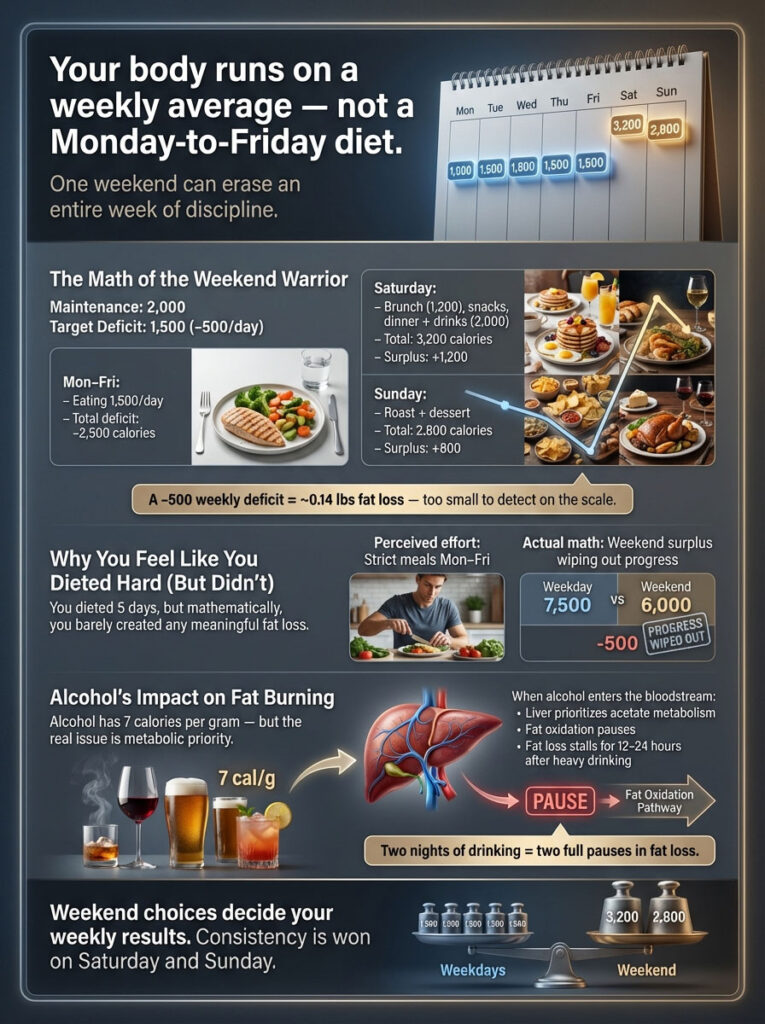
The Math of the “Weekend Warrior”
Your body does not reset at midnight. It does not run on a 24-hour cycle; it runs on a continuous cumulative average.
Let’s calculate how a weekend destroys a week:
- Maintenance: 2,000 calories.
- Target Deficit: 1,500 calories (-500/day).
- Monday – Friday: You stick to 1,500. Total Deficit accumulated: 2,500 calories. (Great job!).
- Saturday: You go to brunch (1,200 cals), have snacks, then dinner and drinks (2,000 cals). Total: 3,200 calories (+1,200 surplus).
- Sunday: Sunday roast and dessert. Total: 2,800 calories (+800 surplus).
The Net Result:
- Deficit (Mon-Fri): -2,500
- Surplus (Sat-Sun): +2,000
- Total Weekly Deficit: -500 calories.
A 500-calorie total weekly deficit equals roughly 0.14 lbs of fat loss. This is undetectable on a bathroom scale due to water fluctuations. You felt like you dieted for 5 days, but mathematically, you barely dieted at all.
Alcohol Impact on Fat Oxidation
Alcohol is a unique macronutrient (7 calories per gram). More importantly, it is treated as a toxin. When alcohol is present in the bloodstream, your liver prioritizes metabolizing the acetate from the alcohol over everything else.
Fat oxidation (fat burning) pauses while alcohol is in your system. If you drink heavily on Friday and Saturday, you are pressing the “pause” button on fat loss for 12-24 hours each time.
Reason 7: Medical Conditions Causing Weight Loss Resistance
If you have ruthlessly audited your tracking (using a scale), managed your stress, kept your NEAT high, and eliminated weekend binges—and you still cannot lose weight after 6-8 weeks—it is time to investigate your biology.
While “medical conditions” are often used as an excuse, for a percentage of the population, they are a legitimate barrier.
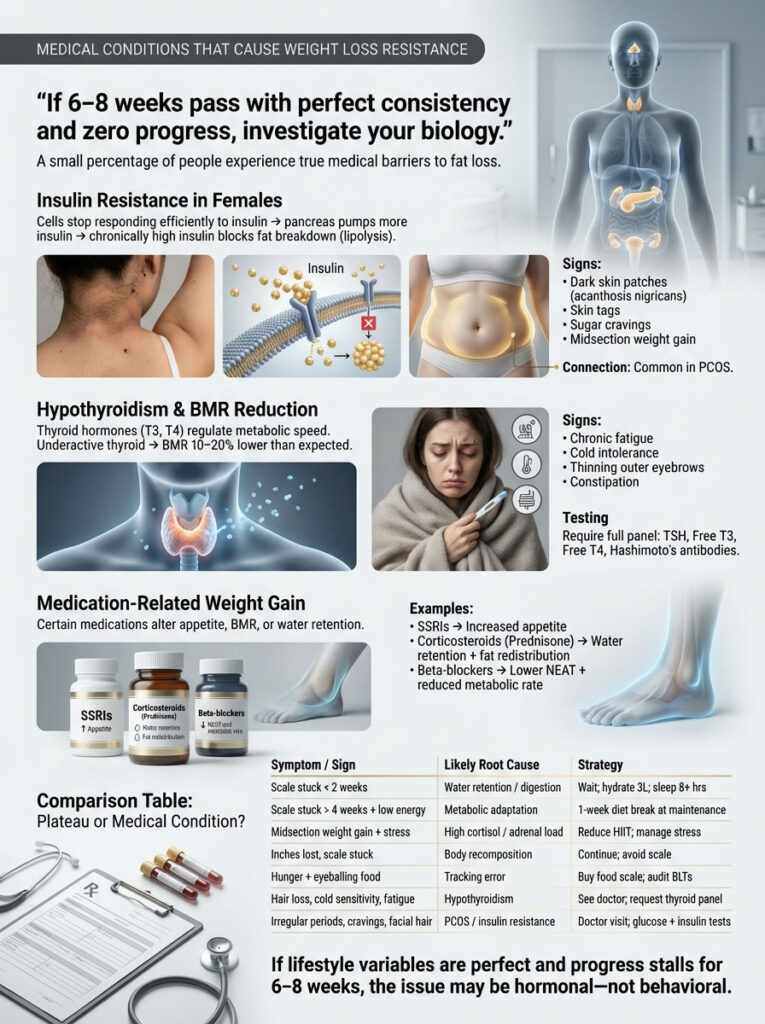
Insulin Resistance Symptoms in Females
Insulin resistance is a state where your cells stop responding efficiently to insulin. The pancreas pumps out more and more insulin to compensate.
- The Mechanism: Insulin is a storage hormone. When insulin levels are chronically elevated (Hyperinsulinemia), lipolysis (the breaking down of fat) is chemically inhibited. Your body stays in “storage mode.”
- Signs: Dark patches of skin (acanthosis nigricans), skin tags, intense sugar cravings, and weight accumulation specifically around the midsection.
- Connection: This is heavily linked to PCOS (Polycystic Ovary Syndrome).
Hypothyroidism and BMR
Your thyroid is the master thermostat of your metabolism. It produces T3 and T4 hormones that dictate how fast your cells create energy.
- The Condition: In Hypothyroidism (underactive thyroid), your thermostat is turned down. Your BMR might be 10-20% lower than a healthy person of your size.
- Signs: Chronic fatigue, sensitivity to cold, hair loss (outer eyebrows thinning), and constipation.
- Testing: TSH alone is not enough. You need a full panel (Free T3, Free T4, Hashimoto’s antibodies).
Medication Side Effects
Certain medications are notorious for causing weight gain, either by increasing appetite or causing water retention.
- Antidepressants (SSRIs): Can increase appetite.
- Corticosteroids (Prednisone): Causes massive water retention and fat redistribution.
- Beta-Blockers: Can slightly lower BMR and reduce NEAT by making you feel sluggish.
Comparison Table: Is It a Plateau or Medical Issue?
Use this table to help verify if your issue requires a doctor or a lifestyle adjustment.
| Symptom / Sign | Likely Root Cause | The Strategy |
| Scale stuck < 2 weeks | Water Retention / Digestion | Wait it out. Drink 3L of water. Sleep 8+ hours. |
| Scale stuck > 4 weeks + Low Energy | Metabolic Adaptation | Take a 1-week Diet Break at maintenance calories. |
| Weight gain in midsection + High Stress | High Cortisol / Adrenal | Reduce HIIT cardio. Prioritize stress management. |
| Losing inches, scale stuck | Body Recomposition | Keep going! Throw away the scale. |
| No weight loss + Hunger + “Eyeballing” food | Tracking Error | Buy a food scale immediately. Audit BLTs. |
| Hair loss, cold sensitivity, fatigue | Thyroid / Hypothyroidism | See a Doctor (Request TSH/T3/T4 panel). |
| Irregular periods, facial hair, cravings | PCOS / Insulin Resistance | See a Doctor (Request Glucose/Insulin panel). |
How to Fix It: The Plateau-Busting Protocol
You now understand the “Why.” Here is the “How.” If you are stuck, do not blindly cut more calories. That often leads to bingeing. Follow this systematic 4-step protocol to restart fat loss.
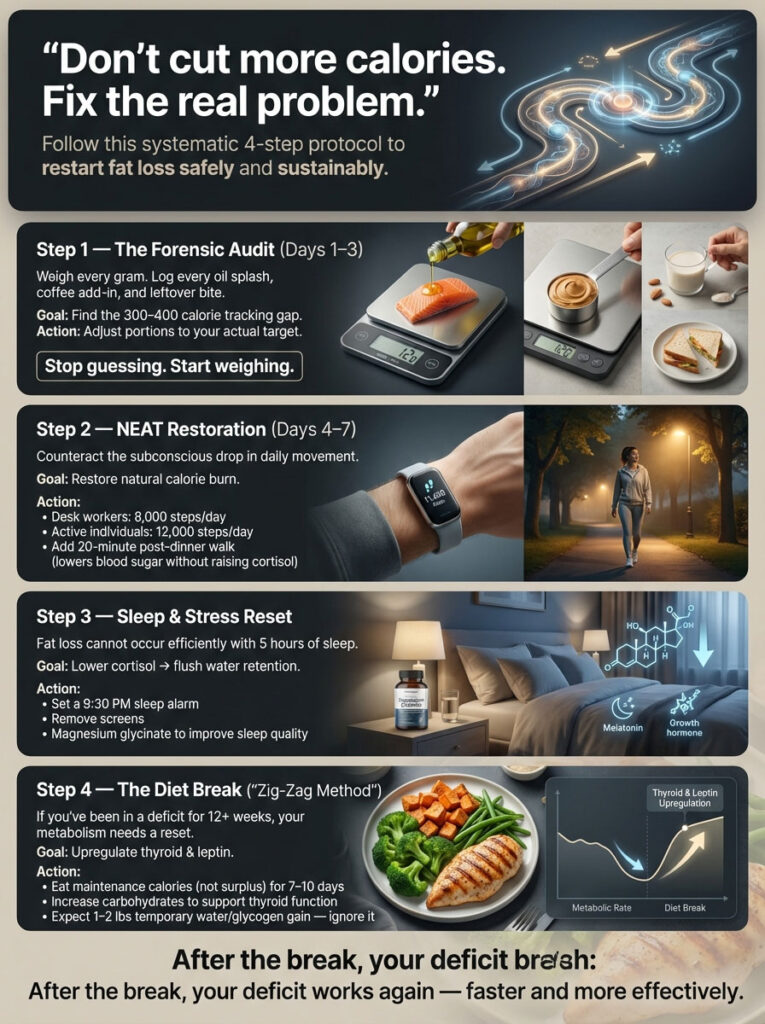
Step 1: The Forensic Audit (Days 1-3)
Stop guessing. For three days, weigh every single gram of food you consume. Track the oil. Track the milk in your coffee. Track the bites of your kid’s sandwich.
- Goal: Identify the “Tracking Gap.” You will likely find you are eating 300-400 calories more than you thought.
- Action: Adjust portions to match your actual target.
Step 2: The NEAT Restoration (Days 4-7)
You cannot control your BMR, but you can control your steps.
- Goal: Counteract the subconscious urge to be sedentary.
- Action: Set a non-negotiable step target. If you work a desk job, aim for 8,000 steps. If you are active, aim for 12,000. Add a 20-minute walk after dinner. This lowers blood sugar and burns calories without spiking cortisol.
Step 3: The Sleep & Stress Reset
If you are sleeping 5 hours, no diet will work effectively.
- Goal: Drop cortisol to flush water weight.
- Action: Set a “sleep alarm” for 9:30 PM. No screens. Magnesium supplementation (Glycinate) can help lower cortisol and improve sleep quality.
Step 4: The Diet Break (The “Zig-Zag” Method)
If you have been dieting for 12+ weeks and are truly stuck, you need a break.
- Goal: Upregulate thyroid and leptin levels.
- Action: Eat at your maintenance calories (not a surplus) for 7 to 10 days. Increase carbohydrates specifically, as they stimulate thyroid function better than fats. You might gain 1-2 lbs of water weight (glycogen) initially—ignore it. When you return to the deficit after the break, your body will be more responsive.
Summary & Key Takeaways
The journey of weight loss is rarely a straight line. It is a jagged curve of drops, stalls, and fluctuations. If you are not losing weight in a calorie deficit, do not despair.
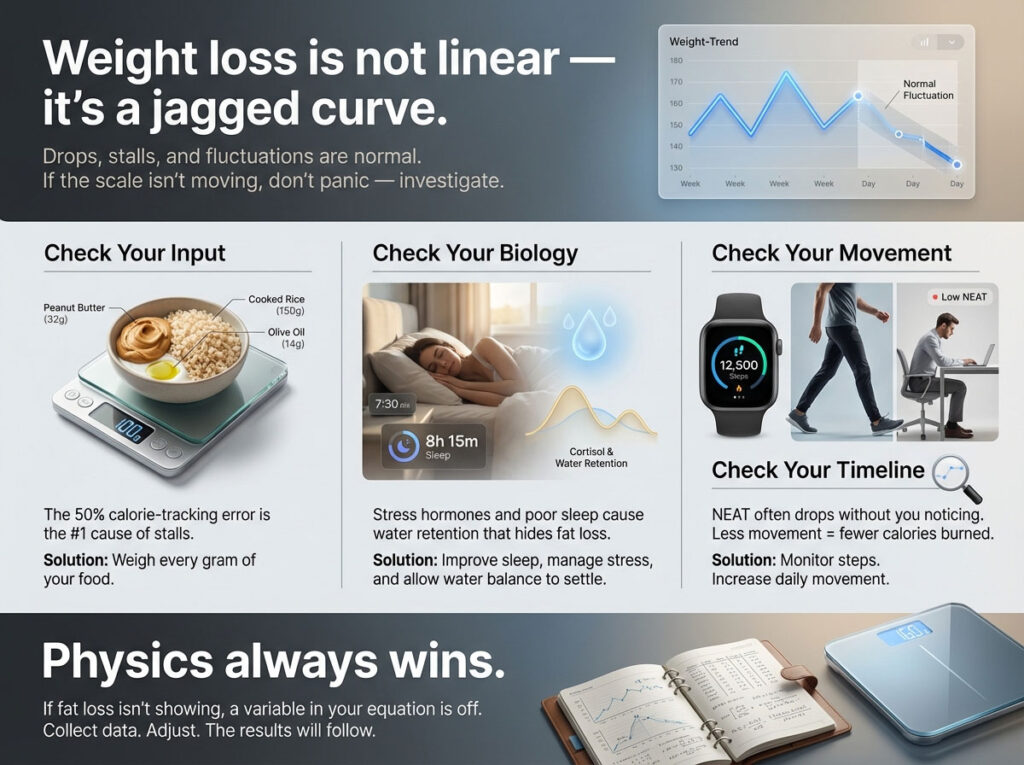
- Check your input: The 50% error gap is the most common culprit. Weigh your food.
- Check your biology: Stress and sleep deprivation cause fluid retention that masks fat loss.
- Check your movement: Your NEAT may have plummeted, reducing your output.
- Check your timeline: If it has been less than 2 weeks, it is likely noise, not a stall.
Physics always wins. If the scale is stuck, one of the variables in your equation is off. Be a scientist about your body. Gather data, adjust the variables, and the results will follow.
Frequently Asked Questions (FAQ)
Why am I not losing weight on 1200 calories a day?
If you are genuinely eating 1200 calories (verified by a food scale) and not losing weight, you may have severely downregulated your NEAT (daily movement), or you are retaining significant water. In rarer cases, medical issues like hypothyroidism may lower your maintenance to near 1200, though this is uncommon without other symptoms.
How long does it take to see weight loss in a deficit?
Fat loss is a slow process. A healthy rate is 0.5% to 1% of body weight per week. However, due to water fluctuation, you should look for a downward trend over 14 to 21 days. Do not judge your progress by a single day’s weight.
Is it water retention or fat gain?
Fat gain happens slowly. It requires an excess of 3,500 calories to gain 1 lb of fat. If the scale jumps up 3 lbs overnight, it is biologically impossible for that to be fat. It is water retention caused by sodium, carbs, stress, or inflammation.
How do I fix a damaged metabolism?
You cannot “break” your metabolism, but you can slow it down. The fix is Reverse Dieting. Slowly increase your daily calories by 50-100 every week while strength training. This trains your body to burn more energy and restores hormone levels.
Can eating too little stop weight loss?
Indirectly, yes. Eating too little can trigger a “binge-restrict” cycle. It also increases cortisol (causing water retention) and crushes your energy levels, causing your NEAT to drop. You end up burning less because you are moving less.
What is the “Whoosh Effect”?
The Whoosh Effect is the sudden loss of several pounds of water weight after a stall. It occurs when fat cells release the water they were holding onto after emptying their triglyceride content.
Does lack of sleep stop fat loss?
Yes. Sleep deprivation disrupts the hormones that control hunger (Ghrelin) and fullness (Leptin). It also raises cortisol, which encourages muscle breakdown and visceral fat storage.
Why am I losing inches but not weight?
This is Body Recomposition. You are losing fat and gaining muscle simultaneously. Since muscle is denser than fat, you become physically smaller (losing inches) even if the scale reading remains constant.
Best blood tests for weight loss resistance?
Request a comprehensive panel including TSH, Free T3, Free T4, Reverse T3, TPO Antibodies (Hashimoto’s), Fasting Insulin, HbA1c, and a Cortisol test.
How accurate are calorie trackers like MyFitnessPal?
They are only as accurate as the user. Generic entries like “medium apple” or “slice of pizza” can be off by 30-50%. To be accurate, you must weigh food in grams and use “verified” entries in the app database.
What are the signs of insulin resistance in females?
Common signs include a waist measurement over 35 inches, skin tags, dark patches on the neck or armpits (Acanthosis Nigricans), fatigue after meals, and intense cravings for sugar/carbs.
How to break a weight loss plateau fast?
The fastest way is usually to lower stress, not calories. Focus on sleep and hydration for 3 days to flush water. If that fails, increase daily steps by 2,000. If you are still stuck, perform a meticulous food audit using a digital scale.
Disclaimer: The content provided in this article is for educational and informational purposes only. It does not constitute medical advice, diagnosis, or treatment. Always consult with a qualified healthcare provider, physician, or registered dietitian before making any changes to your diet, exercise, or medication regimen, especially if you have underlying health conditions.
References:
- Lichtman, S. W., et al. (1992). Discrepancy between self-reported and actual caloric intake and exercise in obese subjects. New England Journal of Medicine.
- Pontzer, H. (2021). Burn: New Research Blows the Lid Off How We Really Burn Calories, Lose Weight, and Stay Healthy.
- Levine, J. A. (2002). Non-exercise activity thermogenesis (NEAT). Best Practice & Research Clinical Endocrinology & Metabolism.
- Hall, K. D., et al. (2011). Quantification of the effect of energy imbalance on bodyweight. The Lancet.
- Fothergill, E., et al. (2016). Persistent metabolic adaptation 6 years after “The Biggest Loser” competition. Obesity.