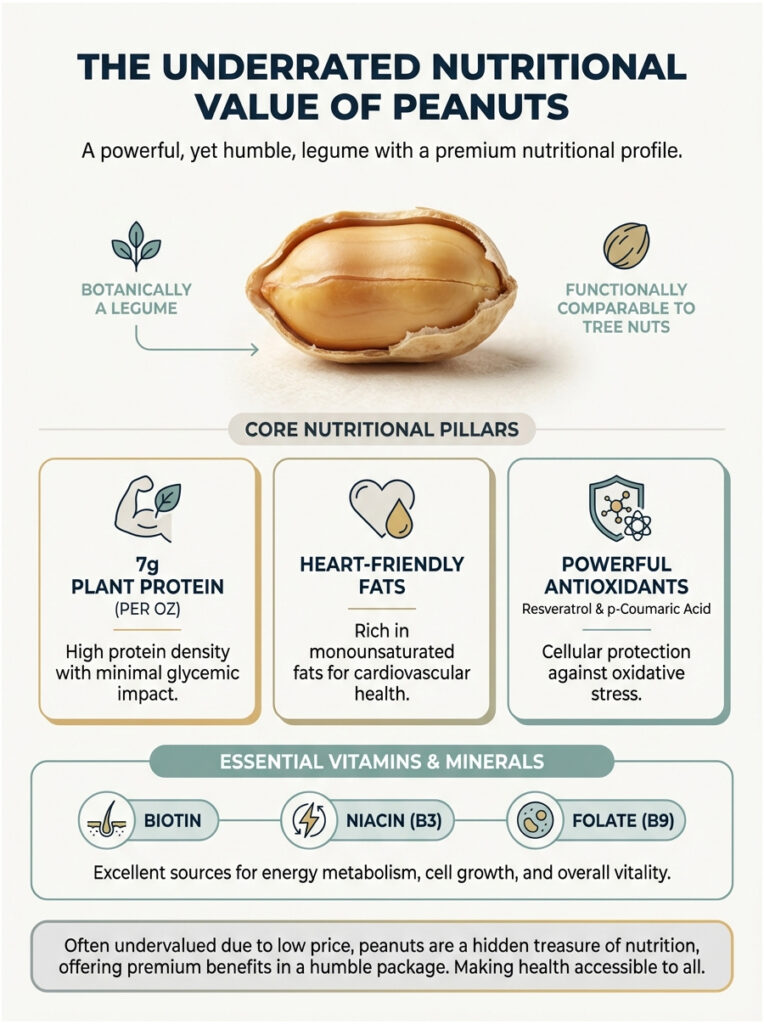
Quick Answer: Yes. The nutritional value of peanuts is seriously underrated. Ounce for ounce, they compete with expensive tree nuts across nearly every clinical measure. A single one-ounce serving delivers 7g of plant protein, heart-friendly monounsaturated fats, and a distinctive antioxidant lineup that includes resveratrol and p-coumaric acid. They also happen to be one of nature’s richest sources of Biotin, Niacin, and Folate, offering real metabolic and cardiovascular benefits for a fraction of what you would spend on almonds or walnuts.
Table of Contents
Let’s be honest. Most of us think of peanuts as cheap bar snacks or the other half of a PB&J. But here’s what many people don’t realize: peanuts aren’t actually nuts at all. Botanically, Arachis hypogaea is a legume that grows underground in pods. When you look at the biochemistry, though, the nutritional value of peanuts lines up almost perfectly with tree nuts, and in some areas, it actually surpasses them.
For years, almonds and walnuts have dominated the health food conversation. But the science tells a different story. Peanuts offer a complex mix of bioactive compounds, plant sterols, and essential amino acids that function as powerful metabolic regulators.
The idea that peanuts are nutritionally inferior usually comes down to their low price and widespread availability. We naturally undervalue what’s easy to get. But when you look at the data from a clinical nutrition perspective, peanuts deliver a rare combination of high protein density, minimal glycemic impact, and specific antioxidants that combat cellular aging. This article digs into the evidence, cuts through the marketing noise, and explains what peanuts actually do inside your body.
Key Nutritional Facts Per 1 oz Serving
- Protein: 7.3g (more protein per ounce than almonds or walnuts)
- Niacin (Vitamin B3): ~20% of Daily Value (essential for DNA repair)
- Manganese: ~24% of Daily Value (supports bone health)
- Biotin: Over 85% of Daily Value (one of the richest natural sources available)
- Glycemic Index: 14 (very low blood sugar impact)
- Arginine: Highest concentration of any nut or seed
- Resveratrol: Levels comparable to red wine, especially in boiled varieties
The Macronutrient Breakdown: What Really Matters
To truly appreciate the nutritional value of peanuts, you need to go beyond simple calorie counting. The real story is how these macronutrients interact with your body to signal fullness, build tissue, and regulate energy.
Protein Quality: Amino Acids and Muscle Building
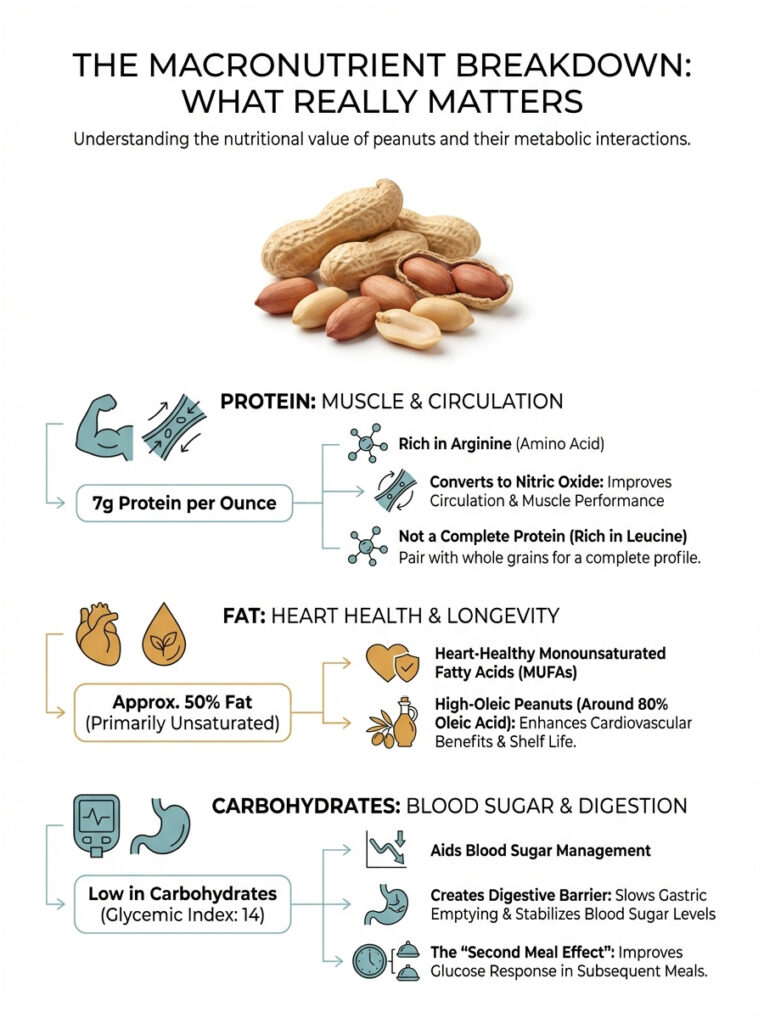
With roughly 7 grams of protein per ounce, peanuts are a denser protein source than most tree nuts. But the real value lies in the amino acid profile, not just the total grams. Peanuts are particularly rich in Arginine, an amino acid that directly converts to nitric oxide (NO) in the body. Nitric oxide relaxes blood vessel walls, improves circulation, and lowers blood pressure.
If you exercise regularly or deal with high blood pressure, this matters a lot. Better vasodilation means improved blood flow and enhanced muscle performance during resistance training. Peanuts aren’t a complete protein on their own since they’re lower in methionine. However, they’re rich in leucine, which is the primary trigger for muscle protein synthesis. Pair them with whole grains like wheat bread or oats, and you get a complete amino acid profile that rivals animal protein.
Worth noting: The Arginine content in peanuts (about 0.9g per serving) is nearly double that of walnuts, making them a top choice for vascular health.
Fat Composition: Why Peanut Fat Is Actually Good for You
Peanuts are about 50% fat by weight, which sounds alarming until you look at the breakdown. Most of that fat is unsaturated, with a strong emphasis on monounsaturated fatty acids (MUFAs). Specifically, peanuts are loaded with oleic acid, the same heart-healthy fat that gives olive oil its reputation.
There’s also an important agricultural development worth knowing about: high-oleic peanuts. Standard peanuts contain around 50-55% oleic acid. High-oleic varieties, developed through traditional breeding rather than genetic modification, push that number to roughly 80%. This does two things. It extends shelf life by resisting oxidation, and it amplifies cardiovascular benefits. Research shows that MUFA-rich diets can improve insulin sensitivity and lower LDL cholesterol without touching beneficial HDL levels.
Carbohydrates and Fiber: Built-In Blood Sugar Control
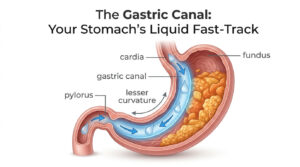
Peanuts are naturally low in carbohydrates, but their blood sugar impact goes well beyond that. With a Glycemic Index of just 14 and a very low Glycemic Load, peanuts are one of the friendliest foods for blood sugar management. The combination of healthy fats, protein, and about 2.4g of fiber per ounce creates a physical barrier in your digestive tract that slows gastric emptying.
What this means in practice: peanuts don’t just avoid spiking blood sugar. They actively help stabilize it when you eat them alongside other foods. This is known as the “Second Meal Effect,” where eating peanuts at one meal improves glucose response at your next meal. That’s exactly why peanuts show up so often in diabetic diet plans.
Micronutrient Density: The Nutrients Most People Are Missing
Macronutrients get the headlines, but micronutrients do the behind-the-scenes work. Peanuts are surprisingly packed with B-complex vitamins and essential minerals that many Americans don’t get enough of. These nutrients serve as cofactors for thousands of enzymatic reactions throughout the body.
B-Vitamin Content: A Natural Powerhouse
Most people get their B-vitamins from supplements or fortified drinks. Peanuts offer a better, whole-food alternative.
- Biotin (Vitamin B7): Peanuts are one of the best plant-based sources of biotin available. This nutrient is essential for breaking down fats and carbohydrates, and it’s the vitamin most closely linked to hair, skin, and nail health. A quarter-cup of peanuts covers over 85% of your daily requirement.
- Niacin (Vitamin B3): One serving provides nearly 20% of your daily niacin needs. Niacin is a precursor to NAD+ (Nicotinamide Adenine Dinucleotide), a coenzyme present in every living cell. NAD+ plays a central role in energy metabolism and DNA repair. Getting enough niacin is associated with lower risks of neurodegenerative conditions and healthier cholesterol levels.
- Folate (Vitamin B9): Critical for cell division and DNA synthesis. While most people hear about folate in the context of pregnancy and neural tube defects, it’s equally important for maintaining healthy red blood cells and preventing anemia in everyone.
- Thiamin (Vitamin B1): Needed for converting carbohydrates into usable energy and supporting proper nerve function. Heat can break down thiamin, so raw peanuts are the best source for this particular nutrient.
Essential Minerals for Metabolic Health
Peanuts are a strong source of Magnesium, a mineral involved in over 300 biochemical reactions. Magnesium deficiency is extremely common in the U.S. and is linked to muscle cramps, fatigue, and insulin resistance. The magnesium in peanuts is highly bioavailable, meaning your body can actually use it effectively.
Peanuts also supply meaningful amounts of Copper and Manganese. Copper is essential for the function of superoxide dismutase (SOD), one of the body’s most powerful internal antioxidant enzymes. Manganese supports bone formation and helps metabolize amino acids and cholesterol. Without adequate intake of these trace minerals, metabolic processes start to break down.
Bioactive Compounds: What Makes Peanuts Truly Special
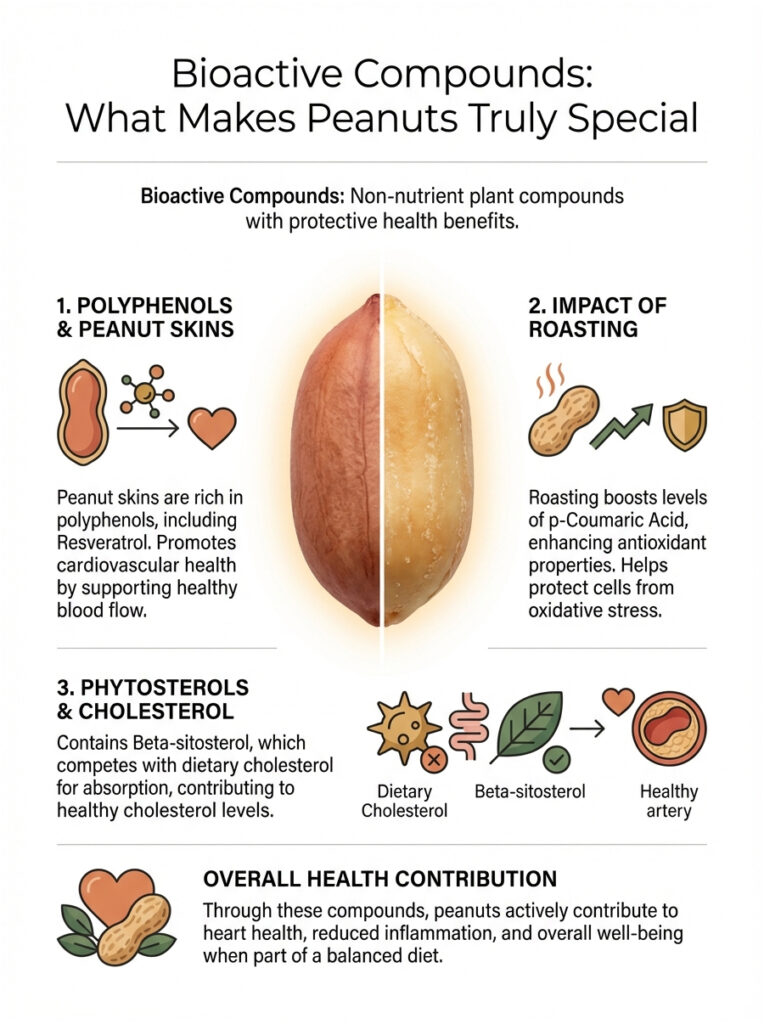
Modern nutrition research looks well beyond vitamins and minerals. Bioactive compounds, chemicals in plants that produce measurable biological effects in the body, are where things get really interesting. The nutritional value of peanuts gets a significant boost from these compounds, many of which concentrate in the thin skin around the kernel.
Polyphenols and Antioxidant Power
Peanut skins are rich in polyphenols. The standout is Resveratrol, the compound that made red wine famous for heart health. Ounce for ounce, boiled peanuts can actually contain higher concentrations of resveratrol than red wine or grape juice. Resveratrol activates sirtuins, a family of proteins that regulate cellular health and aging.
Then there’s p-coumaric acid. Here’s what’s fascinating: unlike many vitamins that break down with heat, p-coumaric acid levels actually go up when peanuts are roasted. This polyphenol works as an antioxidant, neutralizing free radicals that drive oxidative stress and inflammation. Processing doesn’t always mean nutrient loss. In this case, it creates a net gain.
Phytosterols and Cholesterol Reduction
Peanuts contain significant amounts of phytosterols, particularly beta-sitosterol. These plant sterols are structurally similar to cholesterol, and that similarity is the key. Because beta-sitosterol mimics cholesterol, it competes for absorption in your digestive tract. When you eat peanuts, the beta-sitosterol effectively blocks some dietary cholesterol from entering your bloodstream, naturally lowering LDL levels.
Peanuts and Weight Management: The Calorie Paradox Explained
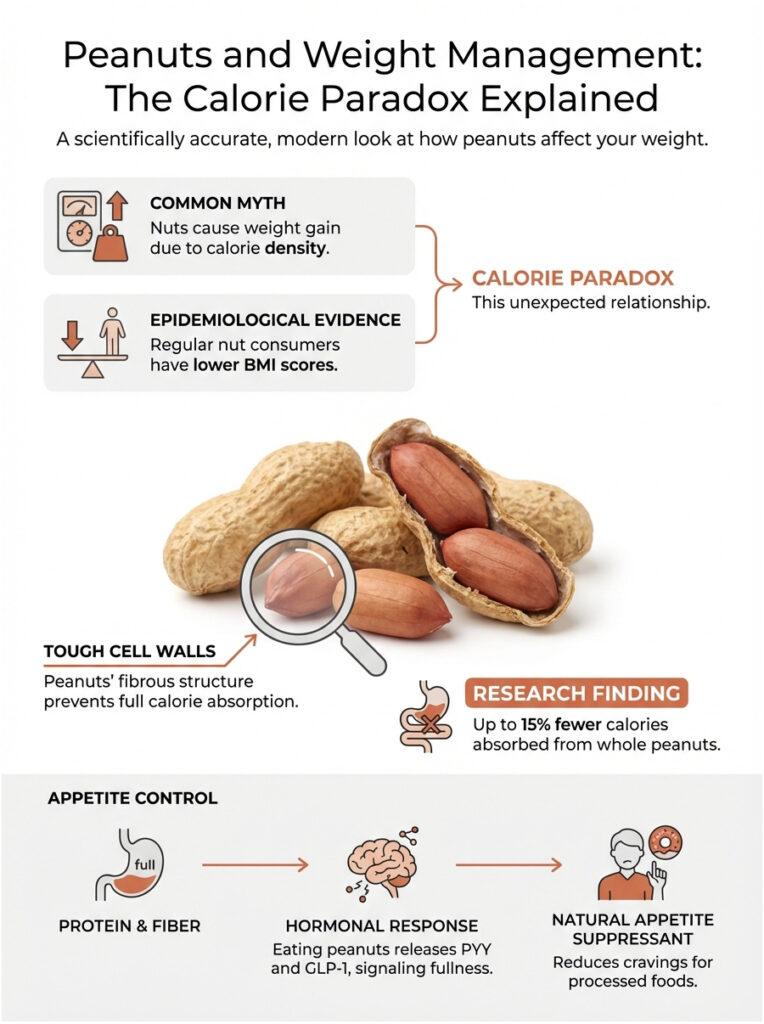
One of the most stubborn myths about nuts is that they cause weight gain because they’re calorie-dense. The epidemiological evidence tells the opposite story: people who eat nuts regularly tend to have lower BMI scores. This is often called the “Calorie Paradox.”
Why You Don’t Absorb All the Calories
Peanut cell walls are tough and fibrous. When you chew them, you don’t break down every cell. A portion of the fat stays locked inside the fiber matrix and passes through your system unabsorbed. Research suggests we may absorb up to 15% fewer calories from whole peanuts than the nutrition label indicates.
How Peanuts Control Appetite
The high protein and fiber content triggers satiety, but peanuts go further than that. Eating peanuts stimulates the release of peptide YY (PYY) and GLP-1, hormones that tell your brain you’re full. By reducing appetite and cutting the urge to snack on processed foods later, peanuts function as a natural appetite suppressant.
Peanuts vs. Almonds, Walnuts, and Cashews: How They Compare
You’ve probably stood in the grocery aisle wondering whether that $15 bag of almonds is really worth four times the price of peanuts. Here’s what the data shows.
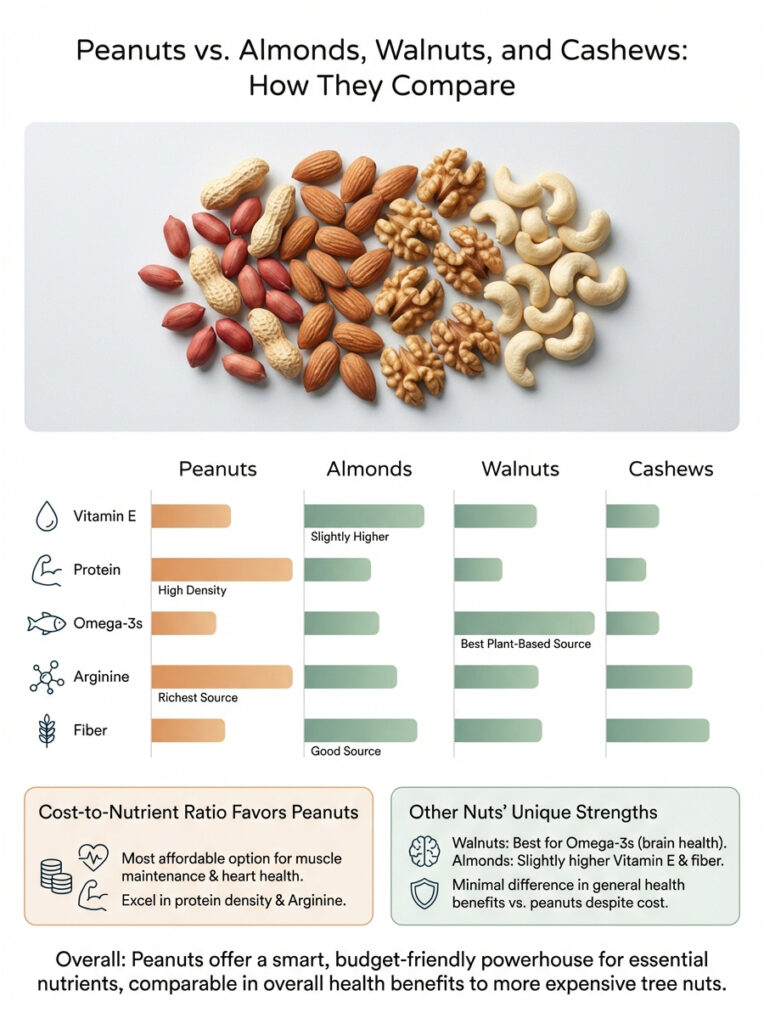
Almonds have a slight edge in Vitamin E and fiber. Walnuts are the clear leader for plant-based Omega-3s (ALA). But peanuts win on protein density and Arginine content. The nutritional value of peanuts, measured by cost-to-nutrient ratio, is simply unmatched.
| Nutrient | Peanuts (Dry Roasted) | Almonds (Dry Roasted) | Walnuts (Raw) | Cashews (Dry Roasted) |
| Calories | 164 kcal | 169 kcal | 185 kcal | 163 kcal |
| Protein | 7.3 g | 6.0 g | 4.3 g | 4.3 g |
| Arginine | ~0.9 g | ~0.7 g | ~0.4 g | ~0.4 g |
| Monounsaturated Fat | 7.0 g | 9.5 g | 2.5 g | 7.7 g |
| Polyunsaturated Fat | 4.4 g | 3.4 g | 13.4 g | 2.2 g |
| Fiber | 2.4 g | 3.3 g | 1.9 g | 0.9 g |
| Cost Efficiency | High | Moderate | Low | Moderate |
If your primary goals are muscle maintenance or affordable heart health, peanuts are the clear winner. If you specifically need more Omega-3s, reach for walnuts. But for everyday general health, the gap between peanuts and almonds is tiny compared to the price difference.
Raw, Roasted, or Boiled: Which Preparation Is Healthiest?
How you prepare peanuts changes which nutrients you absorb. Unlike some foods that are best eaten raw, peanuts actually benefit from certain cooking methods.
What Heat Does to Peanut Nutrition
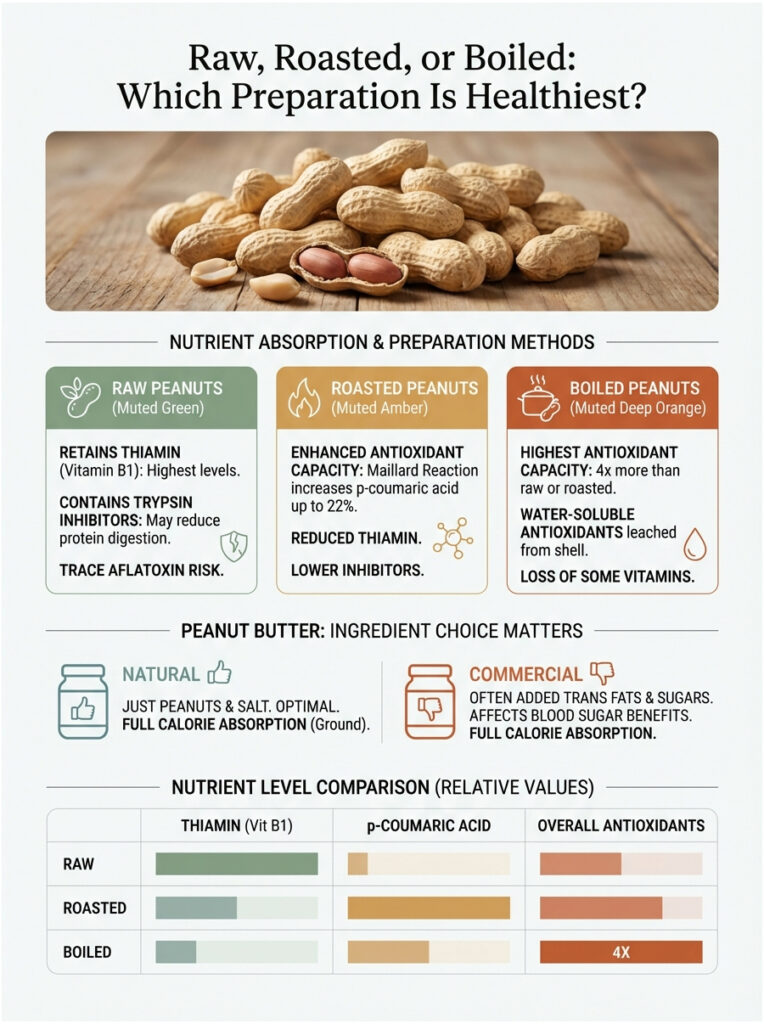
Raw peanuts retain the most Thiamin (Vitamin B1), which is heat-sensitive. But raw peanuts also contain trypsin inhibitors that can reduce protein digestion, along with trace amounts of aflatoxin (though strict U.S. monitoring keeps this to a minimum).
Roasting triggers the Maillard Reaction. This browning process does more than create that distinctive roasted flavor. It actually increases the peanut’s antioxidant capacity. Studies show roasting can boost p-coumaric acid levels by up to 22%. So roasted peanuts may be the better choice if your goal is antioxidant protection, even though they sacrifice a bit of Vitamin B1.
Boiled Peanuts: A Nutritional Sleeper Hit
Boiled peanuts are easy to dismiss as a Southern roadside snack, but they’re nutritionally exceptional. When raw peanuts are boiled in the shell, water-soluble antioxidants like isoflavones and resveratrol leach from the shell into the kernel. The result? Boiled peanuts have roughly four times the antioxidant capacity of raw or roasted peanuts. They essentially soak in their own nutrient-rich skins, creating an antioxidant profile closer to berries than to traditional nuts.
Is Peanut Butter Just as Healthy?
It can be, but only if you choose the right kind. Look for “Natural” peanut butter where the ingredient list reads: Peanuts, Salt. That’s it. Many commercial brands add hydrogenated oils (which are trans fats) to prevent separation, plus sugar for taste. The added sugar increases the Glycemic Load and undermines the blood sugar benefits of the peanut itself. Also worth knowing: grinding peanuts into butter breaks down all the cell walls, so you absorb 100% of the calories, unlike whole peanuts where some fat passes through undigested.
Nutrient Comparison by Preparation Method
| Compound | Raw Peanuts | Roasted Peanuts | Boiled Peanuts |
| Vitamin E | High Stability | Slight Reduction | Moderate Reduction |
| Thiamin (B1) | High | Significant Loss | Significant Loss |
| P-Coumaric Acid | Moderate | Highest | High |
| Isoflavones | Low | Low | Highest |
| Digestibility | Moderate | High | High |
Addressing Safety Concerns and Common Myths
No honest discussion of the nutritional value of peanuts can skip the controversies: mold contamination, lectins, and allergies. These topics tend to get sensationalized, so let’s stick to what the evidence actually says.
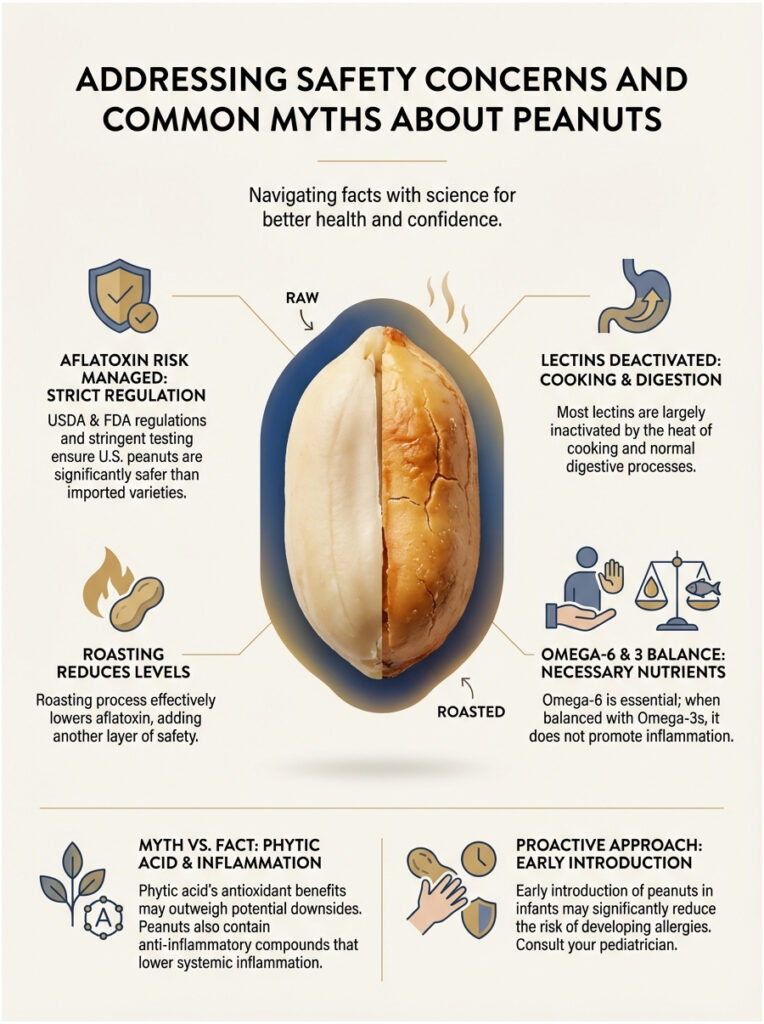
Aflatoxin: How Real Is the Risk?
Aflatoxins are toxins produced by the mold Aspergillus flavus, which can grow on peanuts stored in warm, humid conditions. Long-term exposure is linked to liver damage. However, the concern is often overblown when it comes to U.S. peanuts. The USDA and FDA enforce strict testing, capping aflatoxin at 20 parts per billion for all peanuts sold domestically. U.S.-grown peanuts are statistically far safer than imported bulk varieties. Roasting also helps break down a portion of any residual aflatoxin.
Lectins and Phytic Acid: Should You Worry?
You may have seen claims, often from Paleo diet advocates, that legumes are “toxic” because of lectins and phytic acid. The clinical context tells a more balanced story. Lectins in peanuts are largely deactivated by heat through roasting or boiling, as well as by normal digestion. Phytic acid can bind to some minerals, yes, but it also acts as an antioxidant and has demonstrated anti-cancer properties in research. For anyone eating a balanced diet, the overall benefits of peanuts far outweigh the theoretical downsides of anti-nutrients.
The Omega-6 Debate
Some wellness influencers warn against peanuts because of their Omega-6 (Linoleic Acid) content, claiming it promotes inflammation. While peanuts do contain more Omega-6 than Omega-3, your body needs both. The inflammation theory only holds up when Omega-3s and antioxidants are absent from the diet. Because peanuts are packed with anti-inflammatory compounds like arginine, magnesium, and polyphenols, large-scale studies consistently show that peanut consumption actually lowers systemic inflammation, measured by C-reactive protein levels, rather than increasing it.
Peanut Allergies: What You Need to Know
Peanut allergies are serious, IgE-mediated reactions that can cause anaphylaxis. If you have a diagnosed allergy, the nutritional benefits are irrelevant, and strict avoidance is essential. That said, recent research like the LEAP study has shown that introducing peanut products to infants early, under medical supervision, can significantly reduce the risk of developing allergies later. This has shifted the paradigm from blanket avoidance to carefully controlled early exposure.
How to Eat Peanuts for Maximum Nutritional Benefit
Getting the most out of the nutritional value of peanuts comes down to timing, pairing, and portion awareness. A few simple strategies can make a real difference.
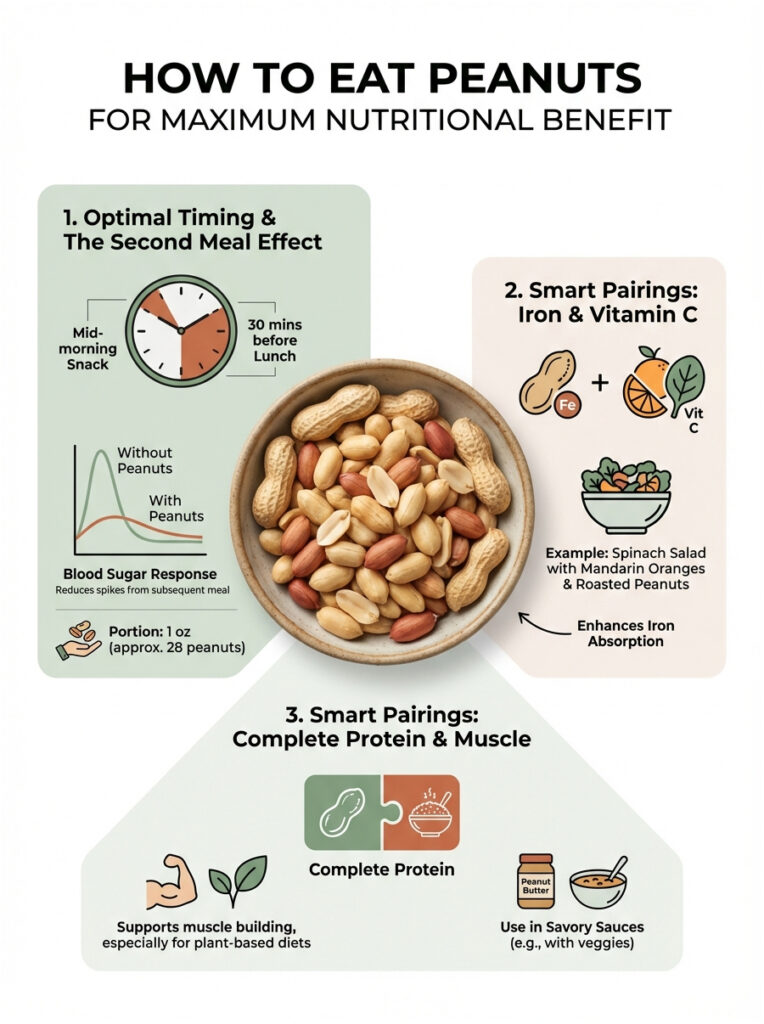
Best Time to Eat Peanuts
Clinical research backs up the Second Meal Effect. Eating a serving of peanuts (about one handful) as a mid-morning snack or roughly 30 minutes before lunch can noticeably reduce the blood sugar spike from that lunch. The fat and protein slow gastric emptying, leading to better glycemic control throughout the day. Keep portions in check, though. Peanuts are calorie-dense, so stick to about one ounce (roughly 28 peanuts) per serving.
Smart Food Pairings
Peanuts contain non-heme iron, which your body absorbs better when paired with Vitamin C. A spinach salad with mandarin oranges and roasted peanuts is a textbook example of nutrient synergy. Using peanut butter in savory sauces, like Satay, naturally encourages vegetable consumption, further boosting the overall dietary profile. Combining peanuts with whole grains like oats or brown rice creates a complete protein, which is especially valuable for plant-based muscle building.
The Bottom Line on Peanut Nutrition
The nutritional value of peanuts is robust, versatile, and backed by real clinical evidence. Far from being a “junk food” nut, peanuts are a nutrient-dense legume that delivers the lipid profile of olive oil, the protein density of lean meat, and the antioxidant capacity of some fruits. They’re rich in bioactive compounds like resveratrol and phytosterols that actively work against cholesterol buildup and cellular aging.
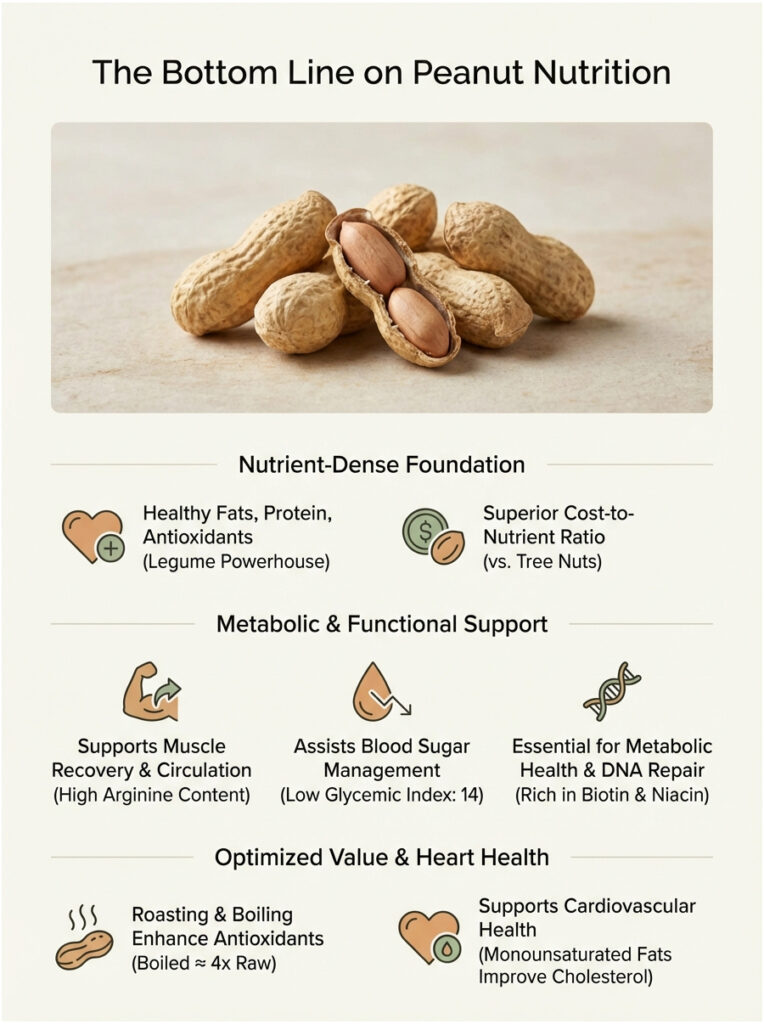
For most people, swapping processed carb-heavy snacks for a handful of dry-roasted or boiled peanuts is one of the simplest, most cost-effective dietary changes you can make. Better heart health, easier weight management, and higher nutrient intake, all from a food that costs a few dollars per bag. By any practical definition, peanuts are a superfood hiding in a shell.
Frequently Asked Questions
How does the nutritional value of peanuts compare to expensive tree nuts like almonds?
Peanuts offer a superior cost-to-nutrient ratio, providing higher protein density and significantly more Arginine than most tree nuts. While almonds contain slightly more Vitamin E, peanuts rival them in heart-healthy monounsaturated fats and essential B-vitamins at a fraction of the market price.
Why are peanuts considered a high-protein plant-based food for athletes?
With over 7 grams of protein per ounce, peanuts are a dense source of amino acids, particularly Arginine, which acts as a precursor to nitric oxide for improved vasodilation and circulation. When paired with whole grains to create a complete protein profile, they effectively support muscle protein synthesis and recovery.
Can consuming peanuts help with blood sugar management and glycemic control?
Yes, peanuts have a very low Glycemic Index of 14, and their combination of fiber, protein, and healthy fats slows gastric emptying. This creates a “Second Meal Effect” that helps stabilize blood glucose levels not just during consumption, but also during the subsequent meal.
What are the specific health benefits of the Biotin and Niacin found in peanuts?
Peanuts are one of the richest natural sources of Biotin, providing over 85% of the daily value to support metabolic reactions and skin health. The high Niacin content is critical for DNA repair and energy metabolism, serving as a precursor to the vital coenzyme NAD+.
Do roasted peanuts lose their antioxidant properties compared to raw peanuts?
Surprisingly, roasting actually increases the bioavailability of certain antioxidants like p-coumaric acid by up to 22%. While some heat-sensitive vitamins like Thiamin may decrease, the overall oxidative defense capacity of the peanut is often enhanced through thermal processing.
Why are boiled peanuts sometimes called a Southern superfood by nutritionists?
Boiling peanuts in their shells allows water-soluble antioxidants, such as isoflavones and resveratrol, to leach from the shell into the kernel. This process results in boiled peanuts having nearly four times the antioxidant concentration of raw or dry-roasted varieties.
How do the monounsaturated fats in peanuts impact cardiovascular health?
Peanuts are rich in oleic acid, the same heart-healthy lipid found in olive oil that helps lower LDL cholesterol while maintaining beneficial HDL levels. High-oleic peanut varieties are particularly effective at improving insulin sensitivity and maintaining healthy vascular function.
Is there a significant risk of aflatoxin exposure when eating peanuts in the United States?
The risk is minimal due to stringent USDA and FDA monitoring that limits aflatoxin to 20 parts per billion in the US food supply. Additionally, the roasting process helps further degrade potential fungal toxins, making commercially available peanuts very safe for regular consumption.
Do peanuts contain the same heart-healthy resveratrol found in red wine?
Yes, peanuts are a potent source of resveratrol, a bioactive polyphenol that activates sirtuins to regulate cellular health and aging. Ounce for ounce, boiled peanuts can contain resveratrol levels that rival or even exceed those found in red wine or grape juice.
Can eating peanuts assist with weight loss despite their high calorie density?
Peanuts promote weight management through high satiety signaling via hormones like PYY and GLP-1, which reduce the desire to overeat. Furthermore, due to the “Calorie Paradox,” the fibrous cell walls prevent the body from absorbing up to 15% of the total fat content.
Is natural peanut butter as nutritious as eating whole peanuts?
Natural peanut butter preserves the heart-healthy lipid profile and micronutrients of the nut, provided it contains no added sugars or hydrogenated oils. However, because the cell walls are fully broken down in butter form, you will absorb more of the total calories compared to eating whole peanuts.
Are the anti-nutrients like lectins and phytic acid in peanuts a health concern?
For the general population, these compounds are not a concern as thermal processing via roasting or boiling largely deactivates lectins. Phytic acid actually provides antioxidant benefits, and the overall nutrient density of the peanut matrix far outweighs any theoretical risk from anti-nutrients.
Disclaimer
This article is for informational purposes only and does not constitute medical advice. The nutritional value of peanuts can be life-threatening for individuals with IgE-mediated allergies. Always consult a qualified healthcare professional or Registered Dietitian before making significant changes to your diet, especially if you have underlying medical conditions.
References
- USDA FoodData Central – https://fdc.nal.usda.gov/ – Provided primary raw data for the macronutrient and micronutrient profiles of Arachis hypogaea.
- The LEAP Study (Learning Early About Peanut Allergy) – New England Journal of Medicine – Clinical evidence regarding the early introduction of peanuts and allergy prevention.
- Journal of Food Science and Technology – “Functional properties of peanuts” – Detailed analysis of p-coumaric acid and antioxidant changes during roasting.
- American Journal of Clinical Nutrition – “Nut consumption and body weight” – Research supporting the ‘Calorie Paradox’ and energy bioavailability in whole nuts.
- International Journal of Epidemiology – “Nut consumption and mortality” – Statistical data linking peanut intake to reduced cardiovascular and neurodegenerative disease risk.
- Harvard T.H. Chan School of Public Health – Nutrition Source – Expert insight into the lipid profiles of monounsaturated fats and their impact on insulin sensitivity.