
It is 2 AM and you are watching your child sleep, paralyzed by the glow of your smartphone. You have spent the last hour doom-scrolling through medical forums, convinced that their recent nap schedule is a sign of a terrifying hormonal collapse.
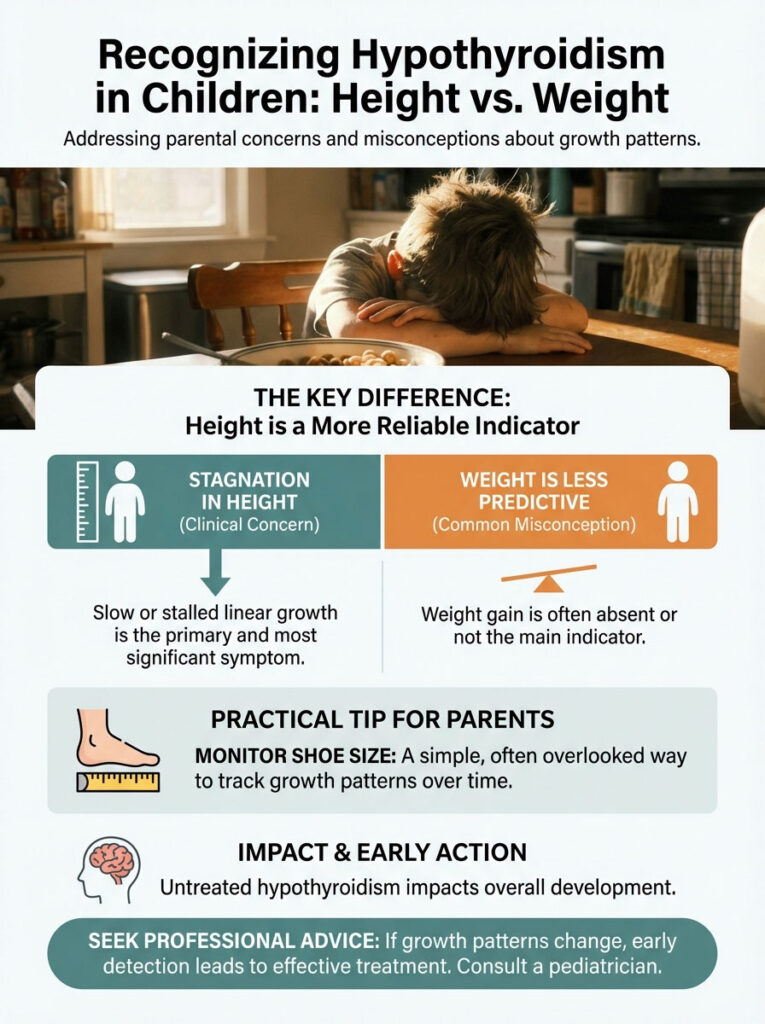
I see this panic in my office every single week. Parents rush in clutching printouts about dry skin and fatigue, terrified their child has a broken metabolism. But here is the shocking truth I tell them: the symptoms you are looking for are usually wrong.
Hypothyroidism in children is a silent thief, but it does not steal energy first—it steals height. While you worry about a few extra pounds, the real clinical red flag is a child who has stopped buying new shoes. Keep reading to discover the specific growth pattern that signals a medical emergency.
The “Silent” Growth Arrest
Most people assume a sluggish thyroid slows down metabolism immediately. In adults, that is true. But in children, I have found the biology works differently. The body is smart; when thyroid hormone runs low, it prioritizes keeping the brain alive over growing taller.
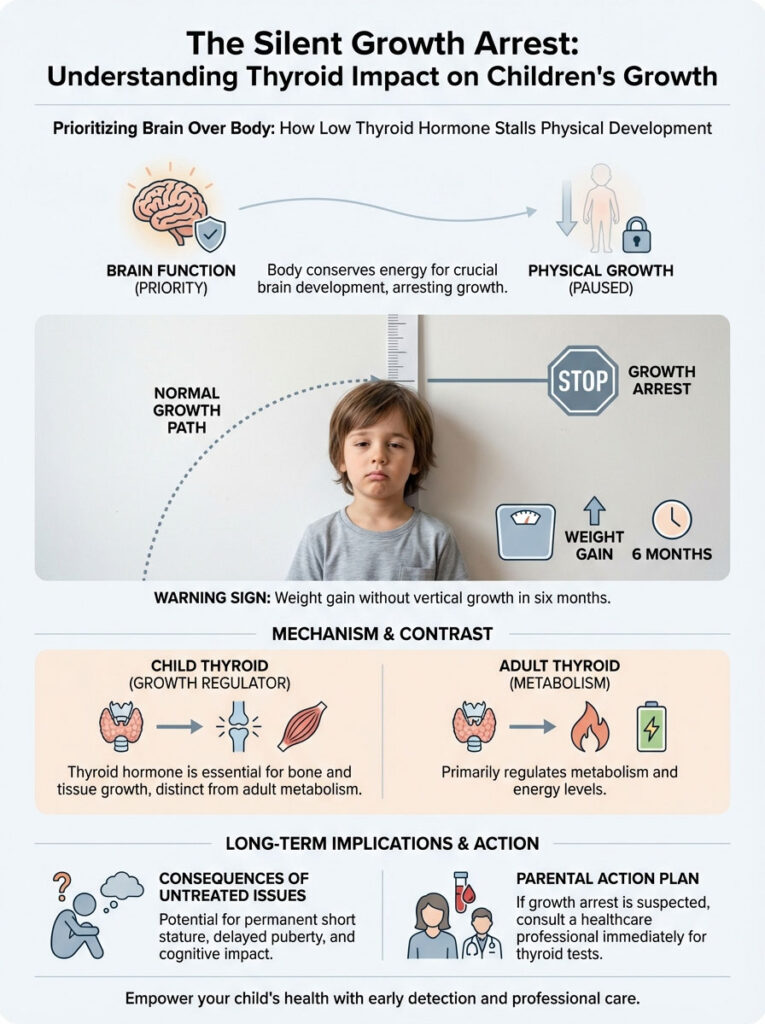
We call this growth arrest. If your child has gained weight but has not grown vertically in six months, I consider that a major alarm bell.
The Clinical Difference
- Constitutional Delay: The child is short but grows at a steady pace.
- Thyroid Failure: The child grows normally, then suddenly flatlines.
- Nutritional Deficit: The child loses weight and stops growing simultaneously.
Understanding the “Thermostat” Failure
To understand why this happens, you must visualize the HPT axis. I explain it to families as a simple heating system. The pituitary gland is the thermostat, and the thyroid is the furnace.
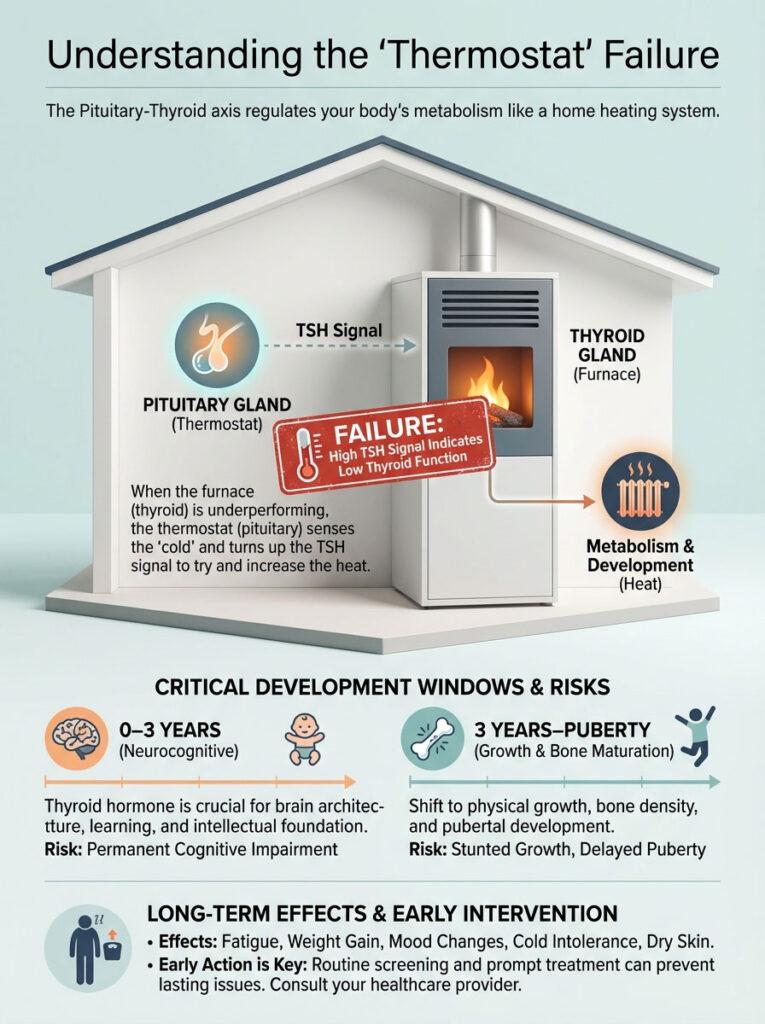
When the furnace breaks, the house gets cold. The thermostat (pituitary) screams for heat by pumping out TSH. This is why a high TSH number actually means low thyroid function.
Critical Development Windows
| Age Range | Thyroid’s Primary Job | The Danger of Failure |
|---|---|---|
| 0-3 Years | Brain Development | Permanent cognitive damage |
| 3-12 Years | Bone Maturation | Stunted height & delayed puberty |
| Teens | Sexual Maturation | Infertility & metabolic crash |
The Bone Age Revelation
One of the most essential tools in my diagnostic arsenal is the bone age study. This is a simple X-ray of the left hand.
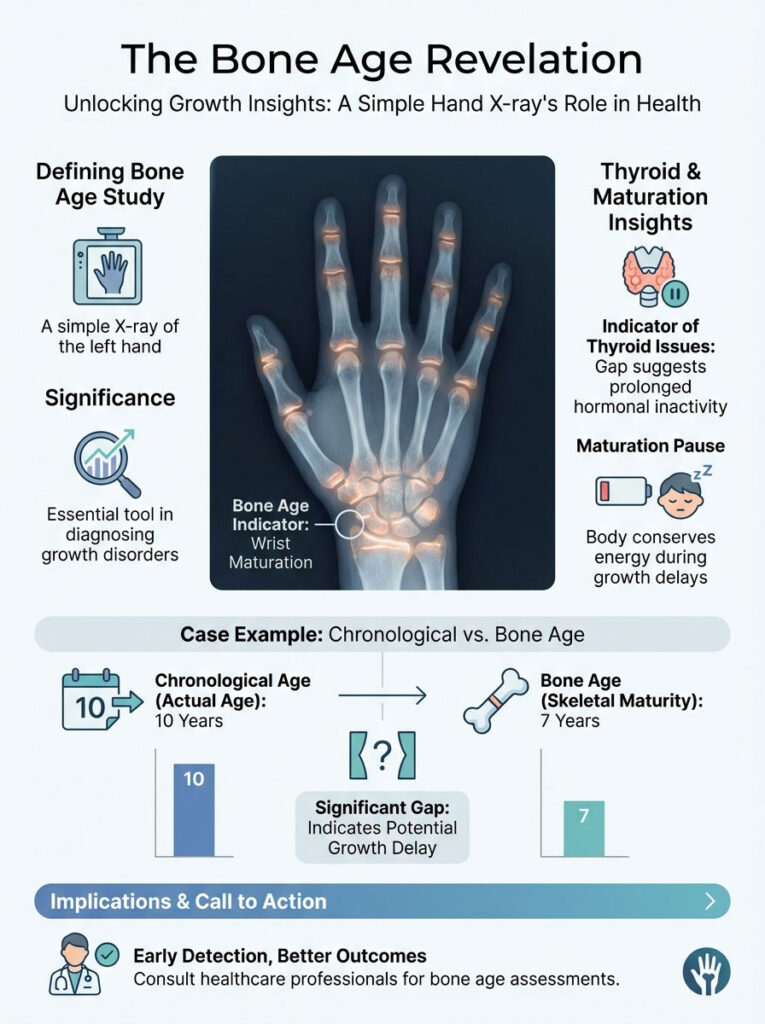
If I see a 10-year-old child with the wrist bones of a 7-year-old, I know the thyroid has been offline for a long time. This gap between chronological age and bone age is the smoking gun. It tells me the body has hit the “pause” button on maturation to save energy.
Why Adult Symptoms Are a Trap
I cannot stress this enough: do not apply adult symptoms to your second-grader. An adult with Hashimoto’s might be exhausted and freezing cold. A child might just be moody.

The “Social Jetlag” Myth
I often see teenagers who sleep until noon on Saturdays. Parents fear it is a thyroid coma. Usually, it is just a shifted circadian rhythm.
True lethargy looks different.
- Falling asleep during a favorite video game.
- Napping at the dinner table.
- Zero interest in playing with friends.
The Medication Maintenance Nightmare
Treating this condition is simple in theory but bizarre in practice. We use Levothyroxine, which is bio-identical to the natural hormone. However, I warn parents that this pill is a diva.
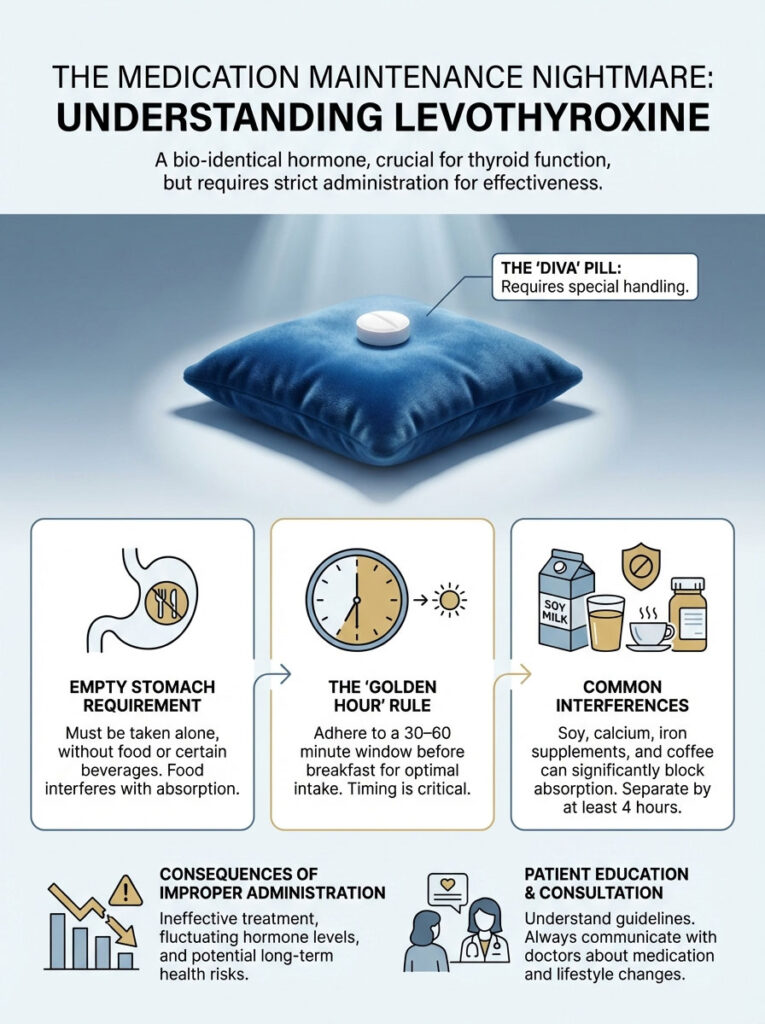
It demands an empty stomach. If you give this medication with a side of soy milk or a calcium-fortified orange juice, you might as well flush it down the toilet. The minerals bind to the hormone and block it completely.
My “Golden Hour” Rule
- Wait 60 minutes after the pill before eating.
- Wait 4 hours before giving iron or calcium supplements.
- Never switch brands without a blood test, as potency varies wildly.
The Iodine Mistake
Finally, I need to address a dangerous trend. I see well-meaning parents loading their kids up with iodine supplements to “boost” the thyroid.
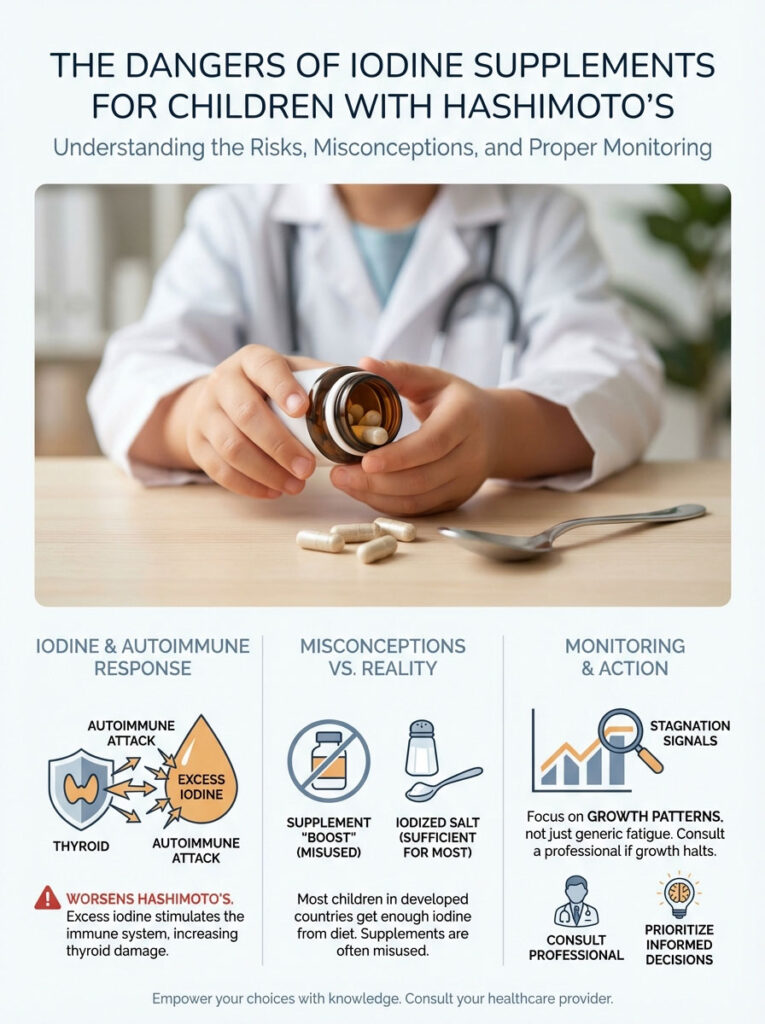
If your child has Hashimoto’s (an autoimmune attack), iodine is like throwing gasoline on a fire. It stimulates the immune system to attack the gland even harder. Unless you are living in a developing nation without iodized salt, your child likely has plenty of iodine.
The takeaway is clear: Ignore the generic fatigue lists. Watch the growth chart. If the line goes flat, make the call.