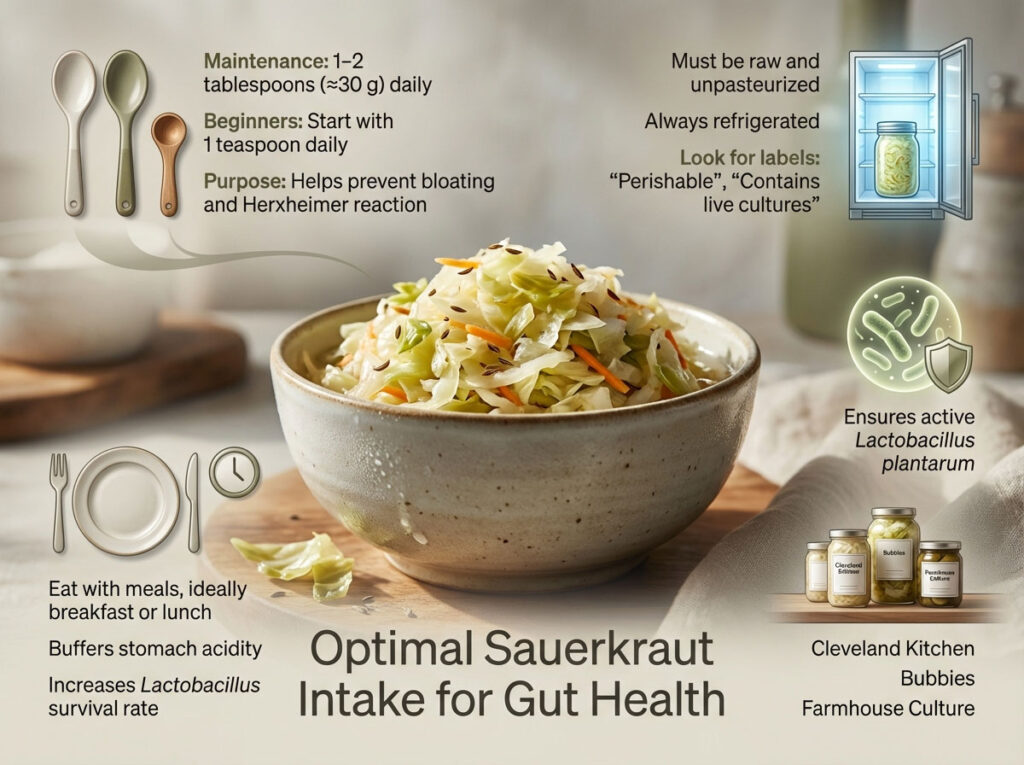
Quick Summary: To maximize sauerkraut for gut health, clinical nutrition experts recommend a daily maintenance dose of 1 to 2 tablespoons (approx. 30g) of raw, unpasteurized sauerkraut. New users should strictly follow a titration protocol, starting with 1 teaspoon daily, to prevent severe bloating or the Herxheimer reaction.
Table of Contents
The best time to eat sauerkraut is during meals (breakfast or lunch) to buffer stomach acidity and increase bacterial survival rates. Consumers must purchase refrigerated brands labeled “perishable” or “contains live cultures” (e.g., Cleveland Kitchen, Bubbies, Farmhouse Culture) to ensure the presence of active Lactobacillus plantarum and avoid dead, pasteurized products.
The Paradox of Modern Probiotics: Why the Cabbage Beats the Capsule
In the United States, the wellness industry has successfully convinced millions of consumers that gut health can only be found in a plastic bottle costing $50 a month. We have been trained to view probiotics as pharmaceutical interventions rather than dietary staples. However, standing quietly in the refrigerated produce section of your local grocery store is a jar of fermented cabbage that—ounce for ounce—is vastly superior to almost any capsule on the market.
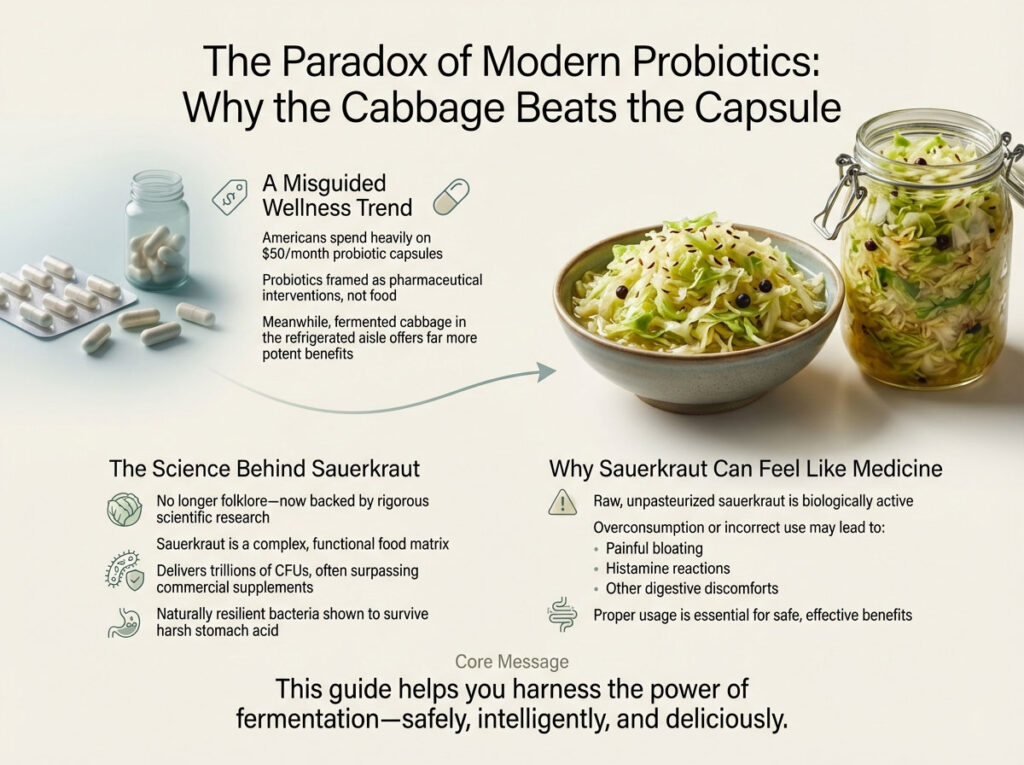
The discussion surrounding sauerkraut for gut health has moved from the realm of old-world folklore into rigorous scientific inquiry. We are not merely discussing a salty condiment for bratwursts. We are analyzing a complex, functional food matrix that delivers trillions of Colony Forming Units (CFUs) of bacteria capable of surviving the harsh hydrochloric acid of the human stomach.
But this potency comes with a warning label. Because raw sauerkraut is biologically active, it behaves more like a medicine than a food. Misusing it—eating too much, too soon, or buying the wrong kind—can lead to significant digestive distress, including painful bloating and histamine reactions. This comprehensive guide serves as your definitive protocol for harnessing the power of fermentation safely, effectively, and deliciously.
The Science Behind Sauerkraut for Gut Health and Microbiome Restoration
To truly understand why sauerkraut for gut health is so effective, we must look beyond the label of “superfood” and understand the mechanism of lacto-fermentation. Unlike vinegar pickling, which acts as a sterilization technique, true fermentation is a process of cultivation.

Understanding Lacto-Fermentation and Live Probiotic Cultures
When fresh cabbage is shredded and massaged with salt, the cellular walls break down, releasing water that creates a natural brine. When submerged in this oxygen-free (anaerobic) environment, spoilage bacteria and molds cannot survive. However, Lactic Acid Bacteria (LAB)—specifically strains like Leuconostoc mesenteroides—begin to thrive.
These bacteria consume the natural sugars (glucose and fructose) found in the vegetable and convert them into lactic acid. This acid is what gives sauerkraut its distinctive sour tang. More importantly, this acidic environment (typically reaching a pH of around 3.5) preserves the cabbage and creates a breeding ground for distinct probiotics.
This process does three critical things for gut microbiome diversity:
- Pre-Digestion: The bacteria break down tough fibrous structures and anti-nutrients, making the vitamins and minerals in the cabbage exponentially more bioavailable than in raw cabbage.
- Enzyme Production: The fermentation process generates a host of digestive enzymes that assist the pancreas in breaking down fats and proteins consumed in the same meal.
- Bacterial Proliferation: It turns a sterile vegetable into a thriving ecosystem of beneficial flora.
Lactobacillus Plantarum Benefits for Leaky Gut and Intestinal Barrier Function
While many strains exist in wild fermentation, Lactobacillus plantarum is the superstar of the sauerkraut for gut health narrative. Unlike the fragile bacteria often found in yogurt (like L. bulgaricus, which often dies in the stomach), L. plantarum is exceptionally robust.
Research indicates that Lactobacillus plantarum benefits extend deep into the gastrointestinal tract. This strain has a unique ability to survive the transit through the highly acidic human stomach and adhere to the mucosal lining of the colon. Once established, it plays a vital role in maintaining the integrity of the intestinal barrier.
For individuals suffering from intestinal permeability—often referred to as “Leaky Gut”—this is crucial. L. plantarum stimulates the production of mucin and strengthens the “tight junctions” between intestinal cells. By fortifying this barrier, sauerkraut for gut health protocols help prevent lipopolysaccharides (LPS) and undigested food particles from “leaking” into the bloodstream, thereby reducing systemic inflammation and immune reactivity.
Comparing Sauerkraut vs Probiotic Pills Efficacy and CFU Counts
The numbers tell the most compelling story when analyzing sauerkraut vs probiotic pills efficacy. A high-end, physician-grade probiotic supplement might boast a count of 50 billion to 100 billion CFUs per capsule. This is considered a therapeutic dose.
However, laboratory analyses of raw sauerkraut have shown that a single 4-to-6-ounce serving can contain upwards of 10 trillion CFUs. That is not a typo. To match the probiotic density of a small bowl of unpasteurized sauerkraut, you might have to consume an entire bottle of standard probiotic capsules in one sitting.
Furthermore, bacteria in sauerkraut are protected by a “food matrix.” They are encased in the fiber and nutrients of the cabbage, which acts as a buffer against stomach acid and provides immediate fuel (prebiotics) for the bacteria once they reach the intestines. Freeze-dried bacteria in pills often lack this protective vehicle and starve or dissolve before doing their job.
Choosing the Best Sauerkraut for Gut Health: Raw vs Pasteurized Brands
The most critical failure point for most consumers is the point of purchase. If you buy the wrong type of product, your sauerkraut for gut health journey ends before it begins.
How to Identify Unpasteurized Sauerkraut Brands in the USA
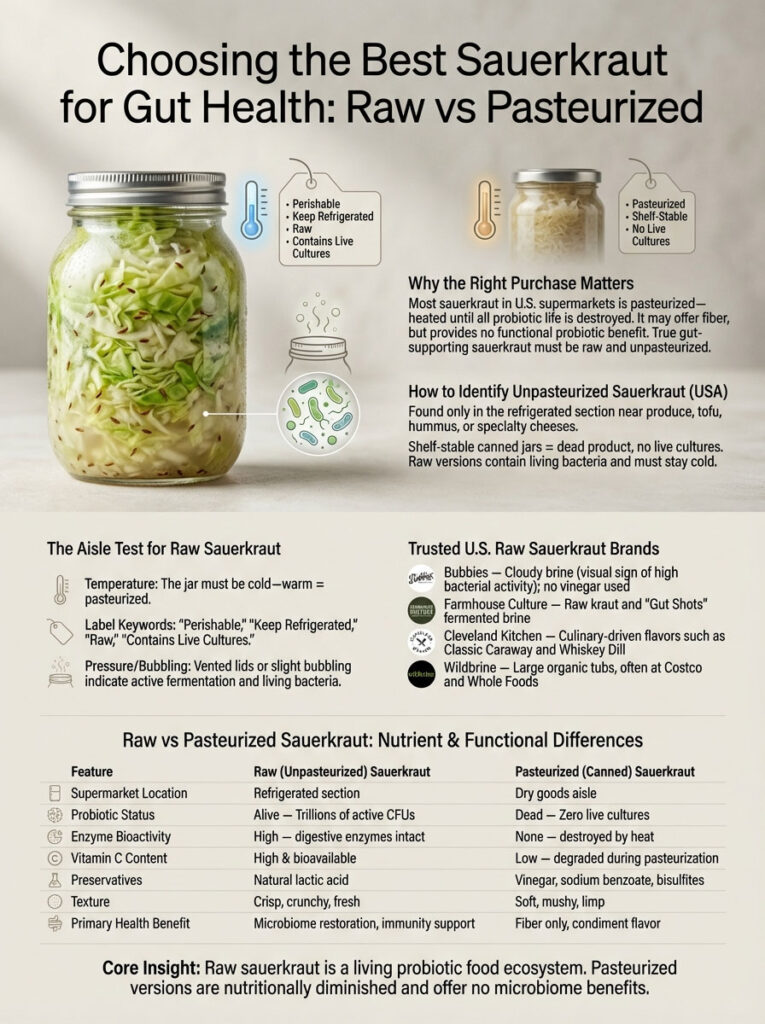
The majority of sauerkraut sold in American supermarkets is dead. It has been pasteurized—heated to high temperatures to kill bacteria—so that it can sit on a shelf in a can or jar for years without spoiling. While this product still provides fiber, it is functionally useless as a probiotic intervention.
To find unpasteurized sauerkraut brands, you must ignore the center aisles of the grocery store. You need to locate the refrigerated section, typically found near the produce, tofu, hummus, or specialty cheeses.
The “Aisle Test” for Farmhouse Culture, Bubbies, and Wildbrine
When you pick up a jar, apply these three checks:
- Temperature: Is the jar cold? If it is warm or room temperature, put it back.
- The Label: Look for specific keywords: “Perishable,” “Keep Refrigerated,” “Raw,” or “Contains Live Cultures.”
- The Pressure: Many raw brands use special vented lids or warn that the product may “bubble” or leak. This is a positive sign—it means the bacteria are alive and producing gas.
Leading USA Brands to Trust:
- Bubbies: Famous for their cloudy brine. The cloudiness is visible evidence of high bacterial counts. Note: Bubbies creates a traditional fermented pickle and kraut without vinegar.
- Farmhouse Culture: A pioneer in the space, offering “Gut Shots” (the brine only) and bagged kraut in flavors like Ginger Beet or Garlic Dill.
- Cleveland Kitchen: Known for their culinary approach, they offer “Classic Caraway” and “Whiskey Dill” in pouches and jars, making them accessible to foodies.
- Wildbrine: Offers large tubs of organic, raw kraut often found at Costco or Whole Foods.
Detailed Comparison of Raw vs Pasteurized Sauerkraut Nutrient Profiles
To fully understand why the “Aisle Test” matters, examine the structural differences between these two products.
| Feature | Raw (Unpasteurized) Sauerkraut | Pasteurized (Canned) Sauerkraut |
| Supermarket Location | Refrigerated Section (Produce/Dairy) | Dry Goods Aisle (Near canned beans) |
| Probiotic Status | Alive (Trillions of Active CFUs) | Dead (Zero Live Cultures) |
| Enzyme Bioactivity | High (Contains functional digestive enzymes) | None (Destroyed by heat treatment) |
| Vitamin C Content | High (Preserved and bioavailable) | Low (Degraded by pasteurization heat) |
| Preservatives Used | Natural Lactic Acid (from fermentation) | Vinegar, Sodium Benzoate, Bisulfites |
| Texture & Crunch | Crunchy, crisp, fresh texture | Soft, mushy, limp texture |
| Primary Health Benefit | Gut Microbiome Restoration, Immunity | Dietary Fiber, Condiment Flavor |
The Optimal Daily Sauerkraut Dosage Protocol to Prevent Bloating
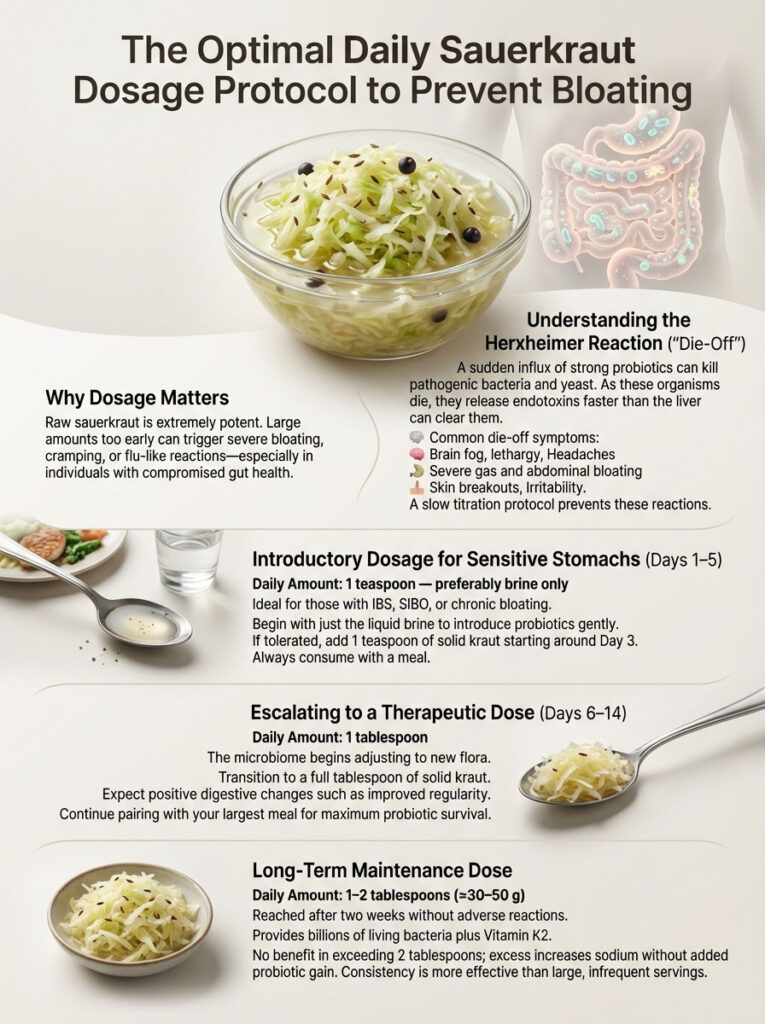
Because raw sauerkraut is so potent, “more is better” is a dangerous philosophy. If you have a compromised gut and you consume a large bowl of sauerkraut on day one, you will likely experience severe distension, cramping, and even flu-like symptoms.
Understanding the Herxheimer Reaction and Die-Off Symptoms
The Herxheimer reaction, commonly known as “die-off,” occurs when a sudden influx of potent probiotics kills off pathogenic bacteria and yeast (like Candida) in the gut. As these bad pathogens die, they release endotoxins into the system faster than the liver can clear them.
Symptoms of a die-off reaction from sauerkraut side effects can include:
- Brain fog and lethargy.
- Headaches.
- Severe gas and bloating.
- Skin breakouts.
- Irritability.
To avoid this, you must follow a strict titration protocol.
Phase 1: The Introductory Dosage for Sensitive Stomachs (Days 1–5)
Daily Dose: 1 Teaspoon (or Brine Only)
For the first five days, treat the sauerkraut like a potent concentrate. If you have a history of IBS, SIBO, or severe bloating, do not eat the cabbage fiber yet. Instead, pour a single teaspoon of the juice (brine) onto a spoon and swallow it with a meal.
This introduces the Lactobacillus plantarum and other strains to your microbiome without the added burden of digesting the fibrous cabbage. If you tolerate the brine well (no gas, no pain), you may eat one teaspoon of the solid vegetable starting on Day 3.
Phase 2: Escalating to a Therapeutic Dose (Days 6–14)
Daily Dose: 1 Tablespoon
By the second week, your microbiome should begin to adapt to the new flora. You can now increase your intake to a full tablespoon of the solid kraut daily.
During this phase, pay attention to your bowel movements. You may notice increased regularity or softer stools. This is a sign that the sauerkraut for gut health protocol is working to remodel your gut ecology. Continue to consume this with your largest meal of the day.
Phase 3: Long-Term Maintenance Dose and Sodium Considerations
Daily Dose: 1 to 2 Tablespoons (Approx. 30g–50g)
Once you have passed the two-week mark without adverse symptoms, you have reached the maintenance phase. How much sauerkraut to eat daily settles at roughly 1 to 2 tablespoons.
There is rarely a need to exceed this amount. Two tablespoons provide billions of bacteria and a significant dose of Vitamin K2. Going beyond 2 tablespoons significantly increases your sodium intake without providing exponentially better probiotic results. Consistency over time is the key; a small daily dose is far superior to sporadic binge-eating.
Best Time to Eat Sauerkraut for Maximum Probiotic Survival
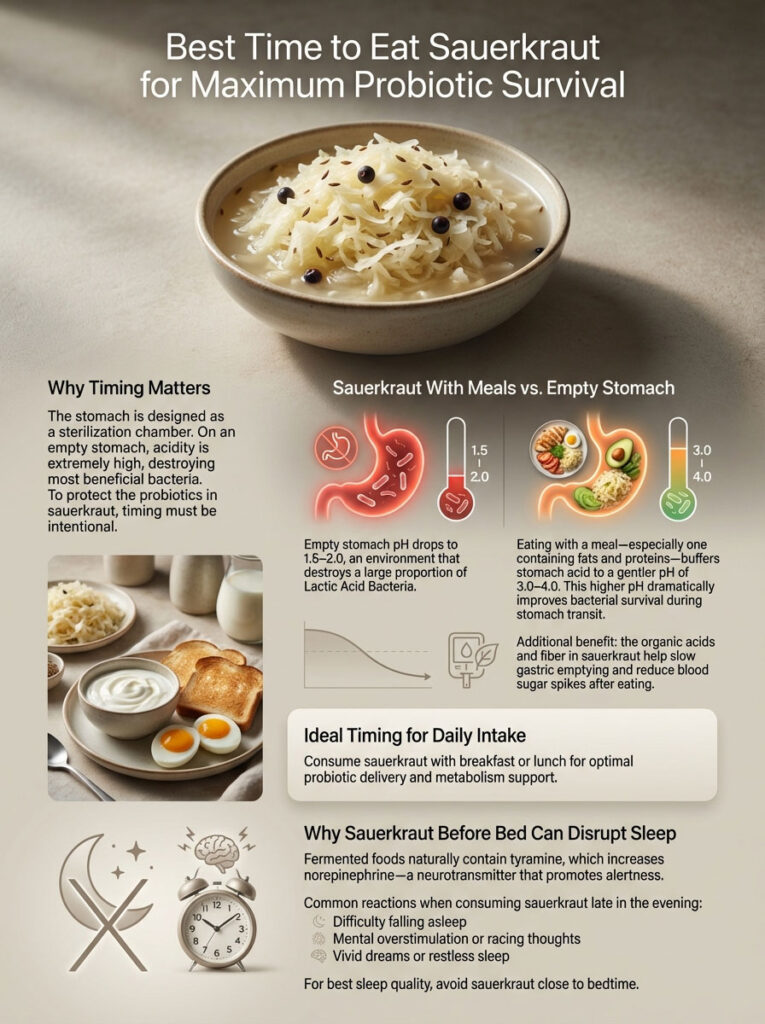
The timing of consumption is almost as important as the quality of the product. The human stomach is designed to be a sterilization chamber; its low pH (high acidity) is meant to kill bacteria on food. We need to bypass this defense mechanism to get the benefits of sauerkraut to the colon.
Eating Sauerkraut With Meals vs Empty Stomach Optimization
The best time to eat sauerkraut is unequivocally with a meal that contains fats and proteins.
When your stomach is empty, its pH can drop to around 1.5–2.0. This is incredibly acidic and can destroy a large percentage of the beneficial bacteria before they ever leave the stomach. However, when you eat a meal, the food buffers the acid, raising the pH to a range of 3.0–4.0. This is a much more hospitable environment for Lactic Acid Bacteria, ensuring a higher survival rate during transit.
Additionally, consuming sauerkraut for gut health with a meal provides a secondary benefit: blood sugar regulation. The organic acids and fiber in the sauerkraut can help slow gastric emptying, blunting the glucose spike from the carbohydrates in your meal.
Why Consuming Fermented Foods Before Bed May Disrupt Sleep
While some sources suggest taking probiotics at night, sauerkraut is an exception. Fermented and aged foods are naturally high in tyramine, an amino acid that influences the release of norepinephrine—a brain chemical that promotes alertness and arousal.
For sensitive individuals, eating a tyramine-rich food like sauerkraut right before bed can lead to:
- Difficulty falling asleep.
- Racing thoughts.
- Vivid dreams or restlessness.
To ensure optimal sleep hygiene, aim to consume your daily dose with breakfast or lunch.
Managing Sauerkraut Side Effects: Histamine Intolerance, SIBO, and Sodium
Despite its “superfood” status, sauerkraut is not compatible with every biology. There are specific contraindications where sauerkraut side effects can outweigh the benefits.
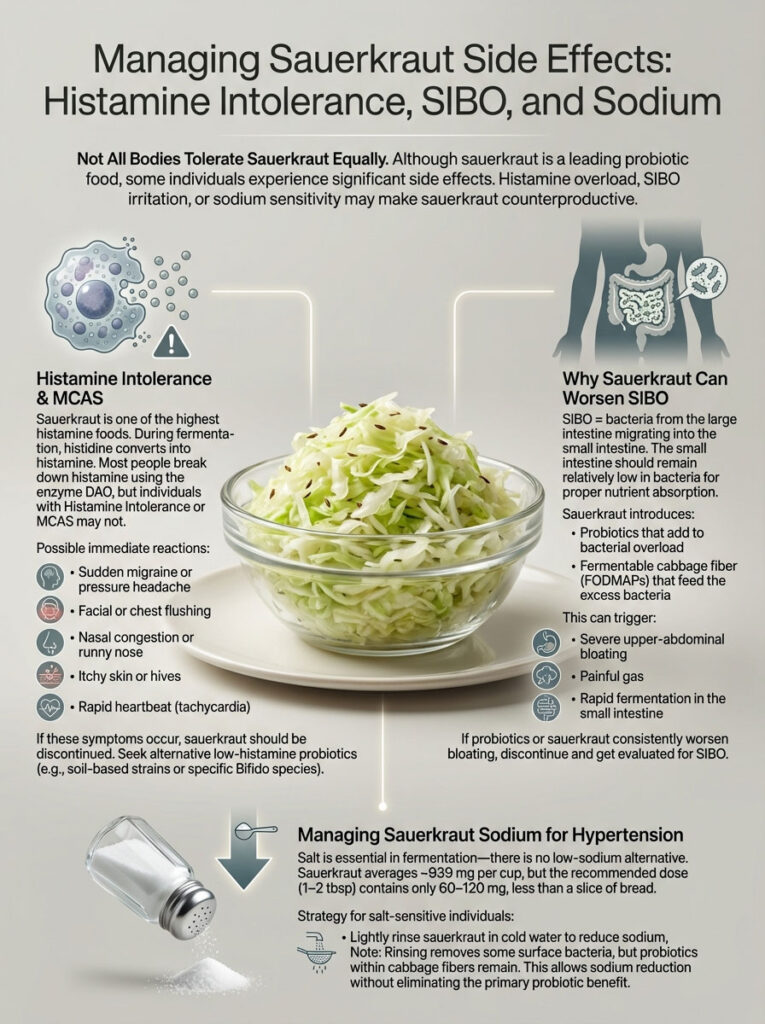
Identifying Histamine Intolerance and Mast Cell Activation Syndrome (MCAS)
Sauerkraut is one of the highest histamine foods available. The fermentation process converts the amino acid histidine into histamine.
For the general population, the enzyme diamine oxidase (DAO) in the gut breaks down dietary histamine effortlessly. However, individuals with Histamine Intolerance (HIT) or Mast Cell Activation Syndrome (MCAS) often have a deficiency in DAO.
If you eat sauerkraut and experience “immediate” symptoms, such as:
- A sudden migraine or pressure headache.
- Flushing of the face or chest.
- Nasal congestion or runny nose.
- Itchy skin or hives.
- A rapid heartbeat (tachycardia).
You likely have a histamine issue. In this scenario, sauerkraut for gut health is counterproductive. You should discontinue use and consult a practitioner about low-histamine probiotics (typically soil-based organisms or specific Bifido strains).
Why Sauerkraut Worsens Small Intestinal Bacterial Overgrowth (SIBO)
SIBO occurs when bacteria that belong in the large intestine migrate up into the small intestine. The small intestine is meant to be relatively sterile for nutrient absorption.
If you have SIBO, your small intestine is already overcrowded with bacteria. Throwing sauerkraut probiotics and fermentable cabbage fiber (FODMAPs) into this environment is like adding fuel to a wildfire. The bacteria in the small intestine will ferment the cabbage rapidly, causing extreme, painful bloating and gas trapped in the upper abdomen.
If probiotics consistently make your bloating worse, stop the sauerkraut and get tested for SIBO.
Strategies to Mitigate Sauerkraut Sodium Content for Hypertension
Salt is non-negotiable in fermentation; it keeps the cabbage crunchy and safe from rot. Consequently, sauerkraut sodium content is high—roughly 939mg per cup.
However, because the recommended dose is only 1 to 2 tablespoons, the actual sodium load is manageable (approx. 60mg to 120mg). This is less than a slice of bread.
- Strategy: If you are on a strict DASH diet or have severe hypertension, rinse the sauerkraut in cold water before eating.
- Trade-off: Rinsing will wash away some of the surface bacteria and electrolytes, but the bacteria embedded in the cabbage fibers will remain, allowing you to get the probiotic benefit with reduced sodium.
Comparative Analysis of Fermented Foods and Gut Health Interventions
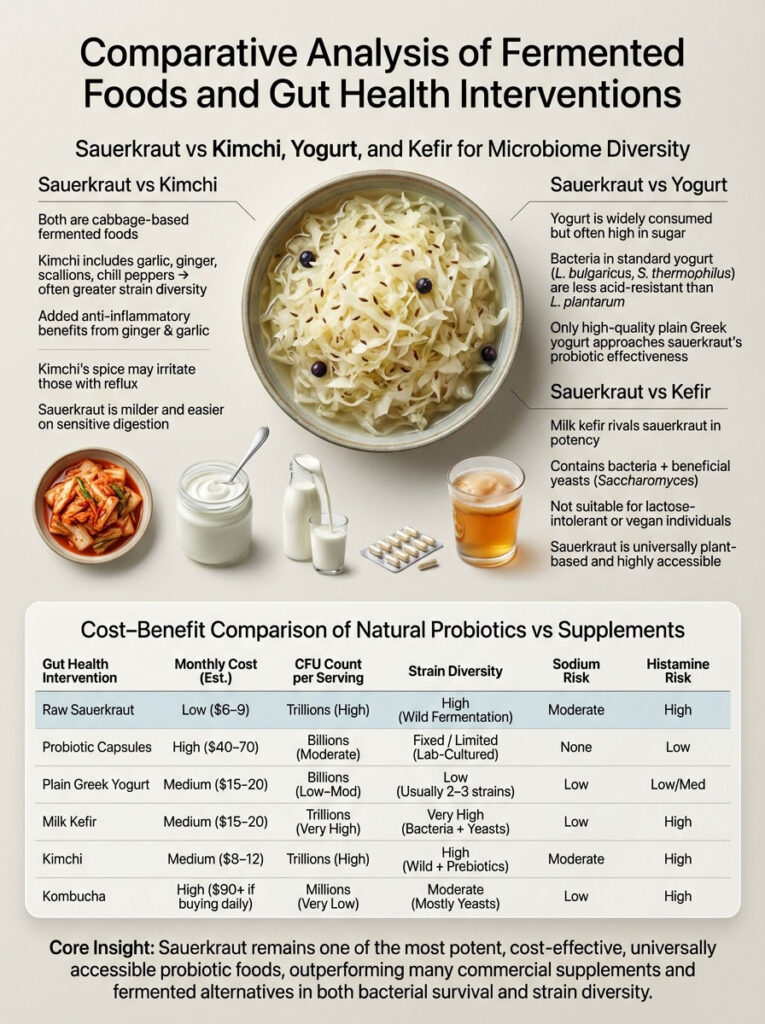
How does sauerkraut stack up against other popular gut health tools?
Sauerkraut vs Kimchi, Yogurt, and Kefir for Microbiome Diversity
- Sauerkraut vs Kimchi: Both are cabbage-based, but Kimchi (Korean) typically includes garlic, ginger, scallions, and chili peppers. Kimchi often boasts a slightly wider diversity of bacterial strains and the added anti-inflammatory benefits of ginger and garlic. However, it is spicier and may irritate those with reflux.
- Sauerkraut vs Yogurt: Yogurt is the most popular probiotic, but it is often laden with sugar. Furthermore, standard yogurt bacteria (L. bulgaricus and S. thermophilus) are not as acid-resistant as the L. plantarum in sauerkraut. You would need to eat high-quality Greek yogurt to approach the benefits of raw kraut.
- Sauerkraut vs Kefir: Milk kefir is arguably the only fermented food that rivals sauerkraut in potency. It contains both bacteria and beneficial yeasts (Saccharomyces). However, kefir is dairy-based, making it unsuitable for lactose-intolerant or vegan individuals, whereas sauerkraut is universally plant-based.
Cost-Benefit Analysis of Natural Probiotics vs Supplements (Table 2)
| Gut Health Intervention | Monthly Cost (Est.) | CFU Count per Serving | Strain Diversity | Sodium Risk | Histamine Risk |
| Raw Sauerkraut | Low ( 6–6–6– 9) | Trillions (High) | High (Wild Fermentation) | Moderate | High |
| Probiotic Capsules | High ( 40–40–40– 70) | Billions (Moderate) | Fixed/Limited (Lab Cultured) | None | Low |
| Plain Greek Yogurt | Medium ( 15–15–15– 20) | Billions (Low/Mod) | Low (Usually 2–3 strains) | Low | Low/Med |
| Milk Kefir | Medium ( 15–15–15– 20) | Trillions (Very High) | Very High (Bacteria + Yeast) | Low | High |
| Kimchi | Medium ( 8–8–8– 12) | Trillions (High) | High (Wild + Prebiotics) | Moderate | High |
| Kombucha | High ($90+ if buying daily) | Millions (Very Low) | Moderate (Mostly Yeasts) | Low | High |
Practical Serving Recommendations: How to Eat Sauerkraut If You Hate the Taste
For many Americans, the barrier to entry is not price or science—it is the taste. The strong, sour, funky profile of fermented cabbage can be off-putting. If you hate the taste, you do not need to suffer through eating it plain.
The Smoothie Mask Technique for Hiding Fermented Flavors
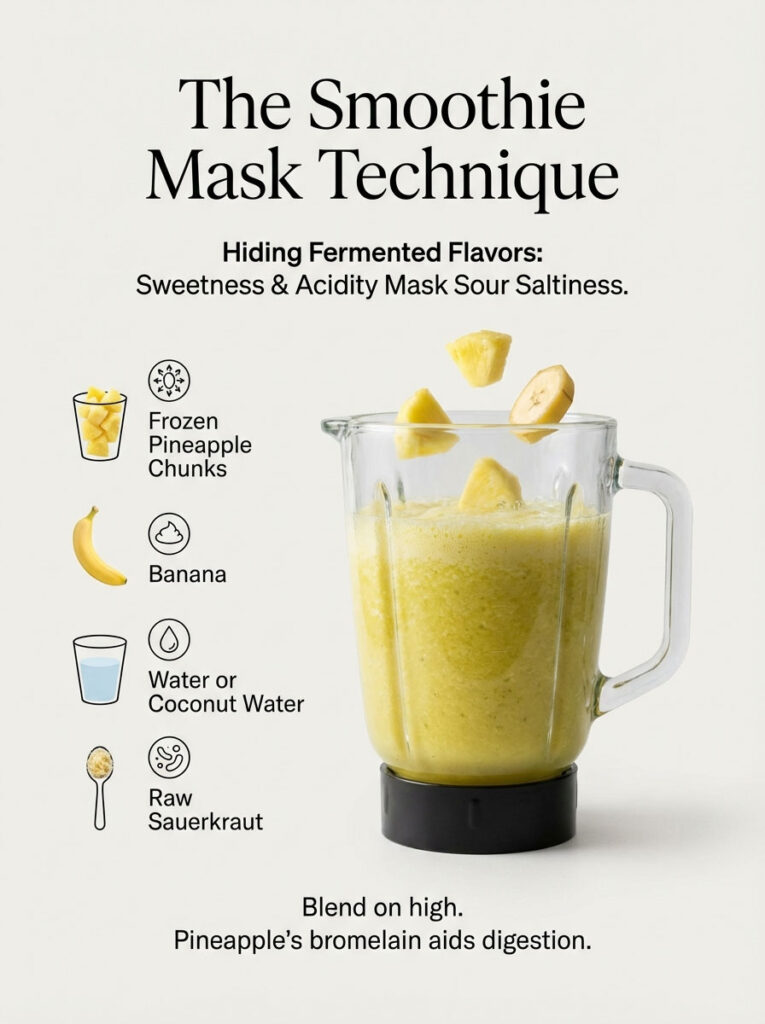
This is the ultimate “stealth mode” for consuming sauerkraut for gut health.
The Logic: You need strong sweetness and acidity to mask the sour saltiness.
The Recipe:
- 1 cup Frozen Pineapple chunks (Essential—the acidity matches the kraut).
- 1/2 Banana (for creaminess).
- 1 cup Water or Coconut Water.
- 1 Tablespoon Raw Sauerkraut.
- Blend on high.
The pineapple contains bromelain, a proteolytic enzyme that aids digestion, complementing the sauerkraut. You will physically not taste the cabbage.
The Fat Buffer Strategy: Pairing with Guacamole and Tuna Salad
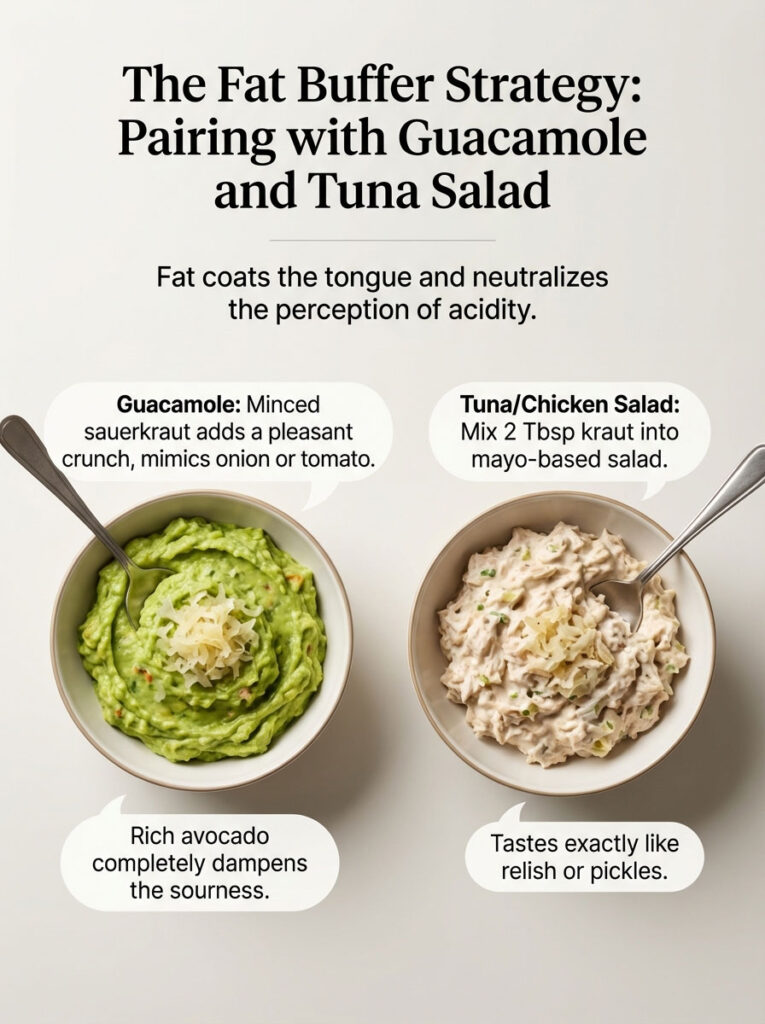
Fat coats the tongue and neutralizes the perception of acidity. This makes high-fat dips the perfect vehicle for hiding sauerkraut.
- Guacamole: Minced sauerkraut adds a pleasant crunch to guacamole that mimics onion or tomato. The rich avocado completely dampens the sourness.
- Tuna/Chicken Salad: Mix 2 tablespoons of kraut into a mayo-based salad. It tastes exactly like relish or pickles.
Does Cooking Sauerkraut Kill the Good Bacteria? (Temperature Rules)

A common question is whether you can add sauerkraut to warm dishes. The answer requires nuance.
- Cooking (Boiling/Baking): YES, this kills the bacteria. If you boil sauerkraut in a soup or bake it with a roast (Reuben style), you destroy the probiotics. It is still tasty, but it is dead.
- The “Warm-Over” Method: You can eat it warm. The bacteria begin to die rapidly around 115°F (46°C). To eat it safely with hot food, serve your soup or stew into a bowl and let it sit for 2–3 minutes until it is “eating temperature.” Then, stir in the cold sauerkraut. The residual heat will warm the kraut without scorching the bacteria.
Advanced Nutritional Benefits Beyond Digestion
While we focus on the gut, the systemic effects of unpasteurized sauerkraut ripple across the entire body.
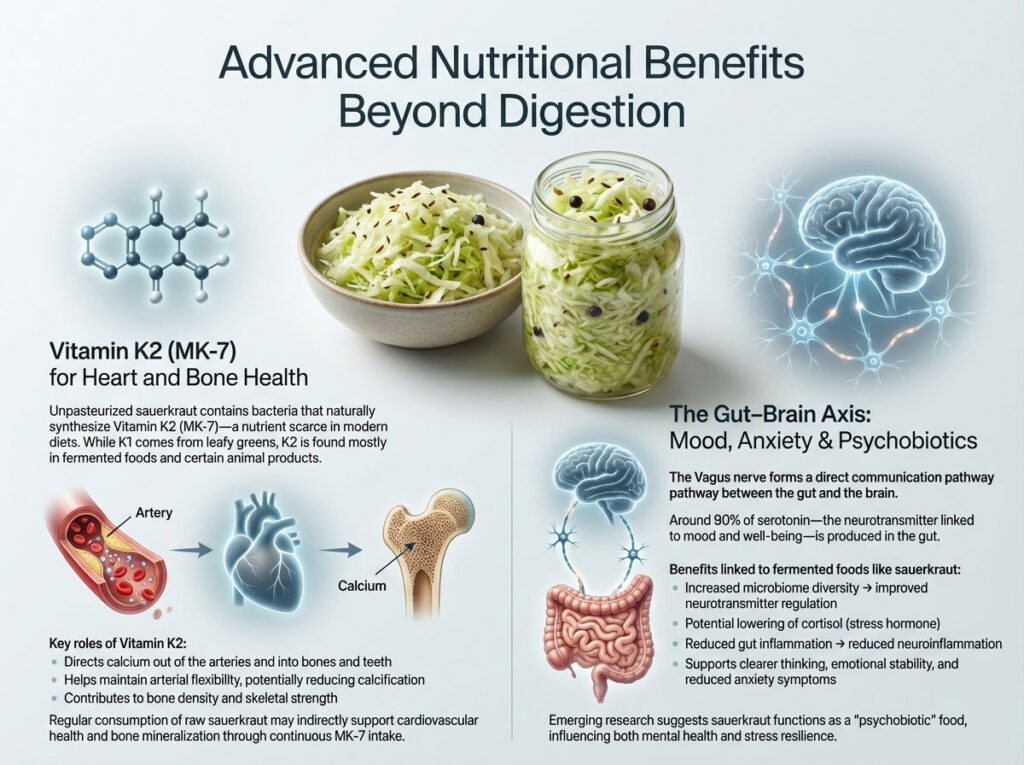
Vitamin K2 (MK-7) Roles in Heart and Bone Health
One of the most elusive nutrients in the modern diet is Vitamin K2. While K1 is found in leafy greens, K2 is mostly found in organ meats and fermented foods. Fermentation bacteria synthesize Vitamin K2 (specifically the MK-7 variant).
Vitamin K2 is the “traffic cop” for Calcium. It activates proteins that pull calcium out of soft tissues (like your arteries) and deposits it into hard tissues (like your bones and teeth). Regular consumption of sauerkraut for gut health may inadvertently support arterial flexibility and bone density.
The Gut-Brain Axis: How Fermented Foods Influence Mood and Anxiety
The Vagus nerve connects your gut directly to your brain. Roughly 90% of the body’s serotonin (the “feel-good” neurotransmitter) is produced in the gut.
Emerging research into the “Psychobiotic” effect suggests that improving gut microbiome diversity with fermented foods like sauerkraut can lower cortisol levels and improve symptoms of anxiety. By reducing inflammation in the gut, you reduce neuroinflammation in the brain, leading to clearer thinking and better mood stability.
Frequently Asked Questions About Sauerkraut Consumption
Does cooking sauerkraut kill the good bacteria?
Yes. Heating sauerkraut above 115°F (46°C) destroys the live probiotic cultures. To retain the benefits of sauerkraut, do not cook it. Add it to warm dishes only after they have been removed from the heat source, or eat it cold as a side dish.
Can eating too much sauerkraut cause bloating?
Yes. Because it is rich in fiber and trillions of bacteria, consuming large amounts suddenly can cause rapid fermentation in the gut. This leads to gas production and bloating. Experts recommend starting with just 1 teaspoon daily to let your body adjust.
Does sauerkraut help with acid reflux?
It depends on the individual. For those with low stomach acid (hypochlorhydria), the acidity of sauerkraut can improve digestion and reduce reflux. However, for those with sensitive esophagi, it may trigger heartburn. Test with a small sip of brine first.
How long does an open jar of raw sauerkraut last?
Raw, unpasteurized sauerkraut is a preserved food. Once opened, it can last 4 to 6 months in the refrigerator, provided the cabbage stays submerged in the brine. Always use a clean fork to prevent introducing bad bacteria.
Is store-bought sauerkraut good for gut health?
Only if it is found in the refrigerator section and labeled “raw.” Shelf-stable, canned sauerkraut has been pasteurized, meaning the beneficial bacteria have been killed by heat.
Can I eat sauerkraut on an empty stomach?
You can, but it is better to eat it with a meal. Food raises the pH of the stomach, creating a less acidic environment. This helps more Lactobacillus plantarum bacteria survive the journey to the intestines.
Is sauerkraut good for weight loss?
Yes. It is low in calories (approx. 27 per cup) and high in fiber, which increases satiety. Additionally, a diverse microbiome is linked to improved metabolic health and blood sugar control.
What is the difference between kimchi and sauerkraut?
Both are fermented cabbage. Sauerkraut uses salt and cabbage (European tradition). Kimchi (Korean tradition) adds spices like ginger, garlic, chili powder, and other veggies. Kimchi is spicier and has a slightly different bacterial profile.
Can toddlers or children eat sauerkraut?
Yes, in very small amounts. It is an excellent way to introduce probiotics. Start with a tiny sip of brine or a teaspoon of finely chopped kraut mixed into their food. Watch for skin reactions related to histamine.
Why do I get a headache after eating sauerkraut?
This is a classic sign of histamine intolerance. Fermented foods are high in histamine/tyramine. If you lack the DAO enzyme to break it down, it can cause vascular headaches or migraines.
Can I freeze sauerkraut?
Technically yes, but it is not recommended. Freezing creates ice crystals that rupture the cell walls of the cabbage, turning it mushy when thawed. It may also reduce the viability of some bacterial strains.
Does sauerkraut contain dairy?
No. The term “lacto-fermentation” refers to Lactobacillus bacteria and lactic acid, not lactose (milk sugar). Traditional sauerkraut is naturally vegan and dairy-free.
Disclaimer: The content provided in this article is for educational and informational purposes only. It is not intended as a substitute for professional medical advice, diagnosis, or treatment. Always seek the advice of your physician or qualified health provider with any questions you may have regarding a medical condition, specifically SIBO, Histamine Intolerance, or hypertension, before making significant dietary changes.
References:
- Dimidi, E., et al. (2019). “Fermented Foods: Definitions and Characteristics, Impact on the Gut Microbiota and Effects on Gastrointestinal Health and Disease.” Nutrients.
- Marco, M. L., et al. (2017). “Health benefits of fermented foods: microbiota and beyond.” Current Opinion in Biotechnology.
- Nielsen, E. S., et al. (2018). “Lactobacillus plantarum and its probiotic potential.” Frontiers in Microbiology.