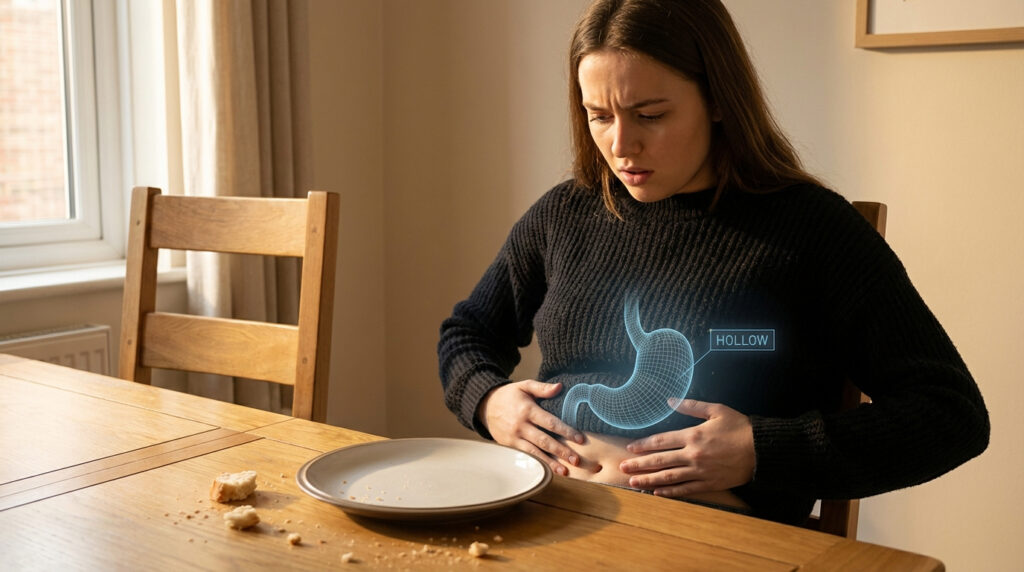
You just finished a substantial meal. You put down your fork, feeling physically satisfied, perhaps even unbuttoning your pants slightly to accommodate the fullness. Yet, twenty minutes later, a confusing and frustrating sensation takes over. There is a distinct pit in your stomach. It feels hollow, gnawing, or completely vacant.
You might ask yourself, “Why does my stomach feel empty after eating?” or start to worry that you have a bottomless appetite.
Table of Contents
This is a specific physiological signal, not a lack of willpower. For many people, this sensation is not true hunger. It is a crossed wire between your gut and your brain. The cause usually stems from the macronutrient composition of your meal, specifically a lack of protein and fiber, or how your body manages blood sugar. In other cases, a persistent stomach feels hollow sensation can indicate underlying medical issues like functional dyspepsia, reactive hypoglycemia, or nerve sensitivity.
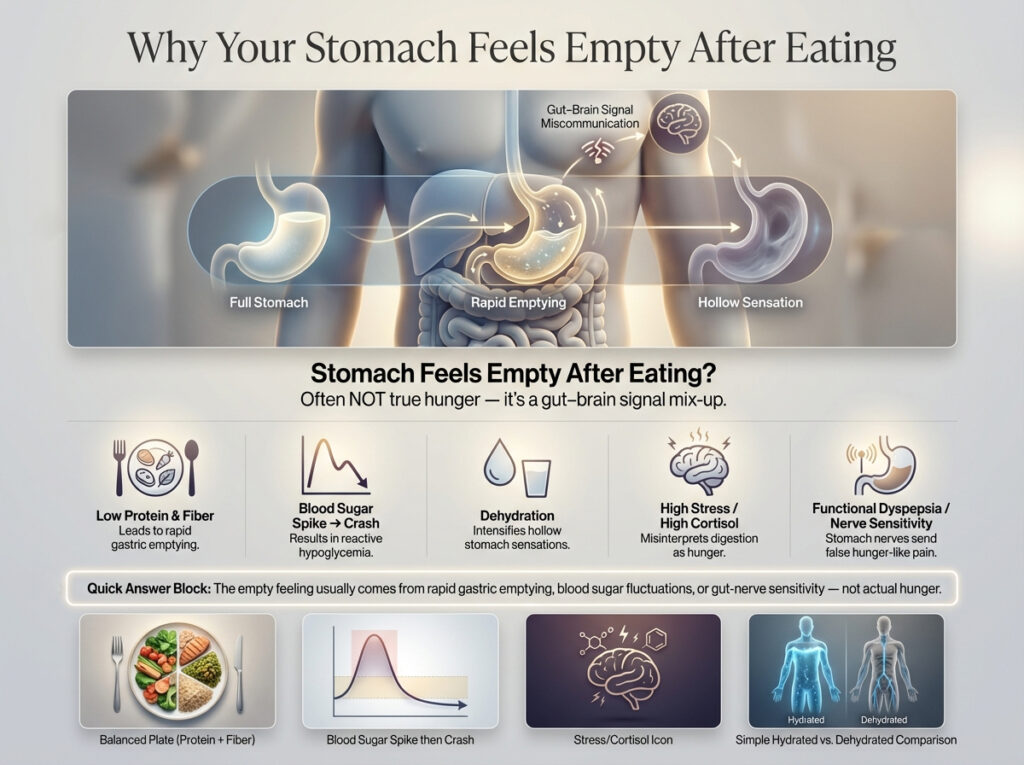
Quick Answer:
If your stomach feels empty after eating, it is frequently caused by rapid gastric emptying due to a lack of fiber and protein. This leads to blood sugar spikes and subsequent crashes, known as reactive hypoglycemia. Other common causes include dehydration, high stress levels spiking cortisol, or functional dyspepsia, where stomach nerves misinterpret digestion as hunger pains.
This comprehensive guide explores the specific biological mechanisms behind why you are still hungry and provides clinical insights to help you fix it.
The Physiology of Hunger: Why Your Stomach Feels Empty
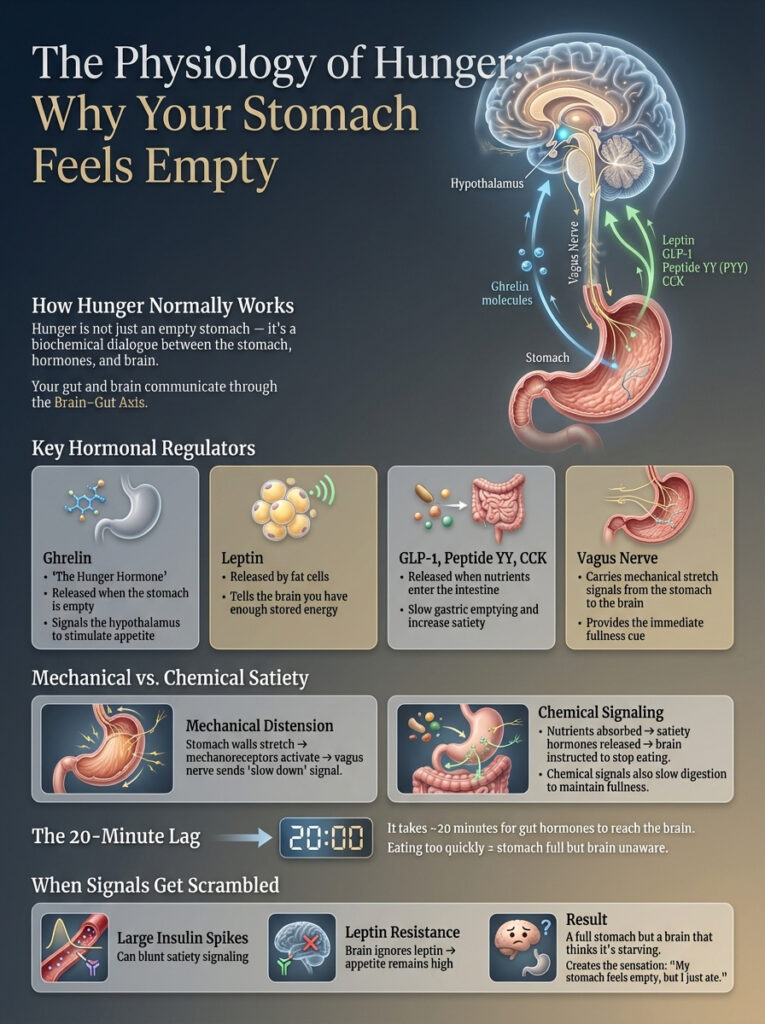
To truly understand why you feel hungry after eating, you must first understand how your body is supposed to signal fullness. Digestion is a complex negotiation between your stomach, your hormones, and your brain. It is not as simple as the stomach being full or empty; it is a biochemical cascade involving the Brain-Gut Axis.
How Ghrelin, Leptin, and the Vagus Nerve Regulate Satiety
When your stomach is empty, it releases ghrelin, often called the “hunger hormone.” This peptide travels through the bloodstream to the hypothalamus in your brain to stimulate appetite. It essentially shouts at your brain to find food.
Once you eat, a complex counter-process begins:
- Mechanical Distension and Vagal Stimulation: As food enters the stomach, the gastric walls stretch. This physical expansion stimulates mechanoreceptors which send a signal via the vagus nerve to the brain stem. This is the immediate volume signal that tells you to slow down.
- Chemical Signaling and Nutrient Absorption: As nutrients move from the stomach into the small intestine, specific cells in the gut lining detect calories and macronutrients. They release satiety hormones like Leptin (stored in fat cells), GLP-1 (glucagon-like peptide-1), Peptide YY, and Cholecystokinin (CCK).
These hormones perform two critical functions: they tell your brain to stop eating, and they physically slow down the movement of food to keep you fuller for longer.
The 20-Minute Lag: Why You Are Still Hungry After Eating
There is a catch to this system. It takes approximately 20 minutes for these chemical signals to travel from the gut to the brain. If you eat too quickly, your stomach may be physically full, but your brain has not received the memo yet.
Furthermore, modern diets can hijack this system. If your meal causes a massive insulin spike, or if you have developed leptin resistance due to chronic inflammation, these signals get scrambled. You are left with a full belly but a brain that screams it is starving. This creates that confusing state where your stomach feels empty but I just ate.
According to the National Institute of Diabetes and Digestive and Kidney Diseases (NIDDK), disruptions in this signaling pathway are a primary driver of polyphagia (excessive hunger) and metabolic disorders. When the communication line breaks, you feel empty regardless of caloric intake.
7 Surprising Reasons Your Stomach Feels Empty After Eating
If you frequently feel a hollow sensation shortly after meals, it is rarely random. It is usually traceable to one of these seven physiological or dietary triggers.
1. Low Fiber and Protein Intake Leading to Rapid Gastric Emptying
The most common reason for feeling hungry after eating is the composition of the meal itself. Not all calories are created equal when it comes to satiety and digestion speed.
The Mechanism:
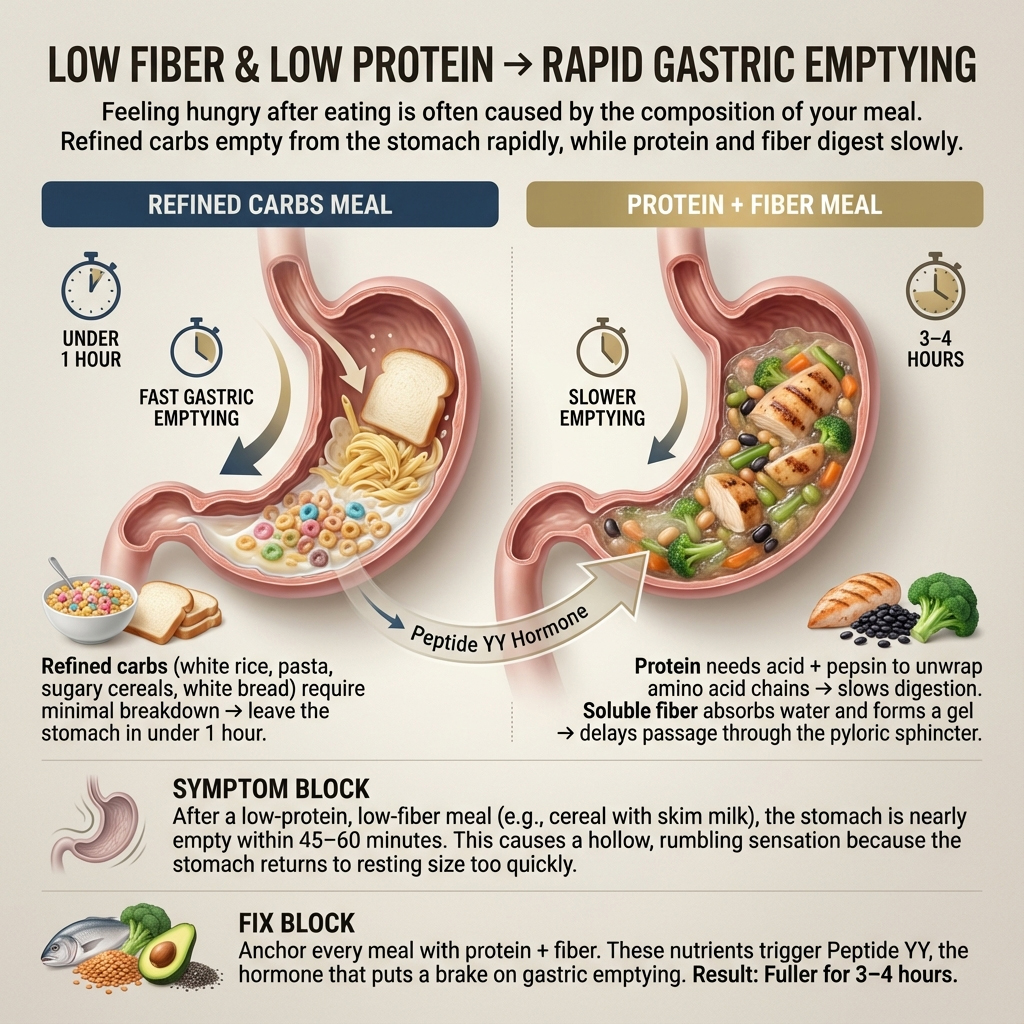
Gastric emptying is the speed at which food leaves your stomach and enters the small intestine. Refined carbohydrates, such as white rice, pasta, sugary cereals, and white bread, have a very fast gastric emptying rate. They require very little mechanical breakdown or acid production. They can sometimes leave the stomach in under an hour.
In contrast, protein and fiber are complex structures. Protein requires the enzyme pepsin and significant stomach acid to unravel its amino acid chains. Soluble fiber absorbs water and turns into a gel-like substance. This slows down the passage of food through the pyloric sphincter.
The Symptom:
If you eat a bowl of cereal with skim milk, your stomach is physically empty within 45 to 60 minutes. The stomach feels empty after eating because it literally is. You may feel a rumble or a hollow ache because the organ has contracted back to its resting size far too quickly.
The Fix:
You must anchor every meal with protein and fiber. These nutrients stimulate Peptide YY, the hormone that acts as a “brake” on gastric emptying, keeping you fuller for 3 to 4 hours. A meal without a dense protein source is essentially a fast-pass ticket to hunger.
2. Reactive Hypoglycemia: The Blood Sugar Crash Symptom
This is a biological rollercoaster that affects millions of people, often without them knowing it. It is not limited to diabetics; it can happen to anyone with a high-carb diet.
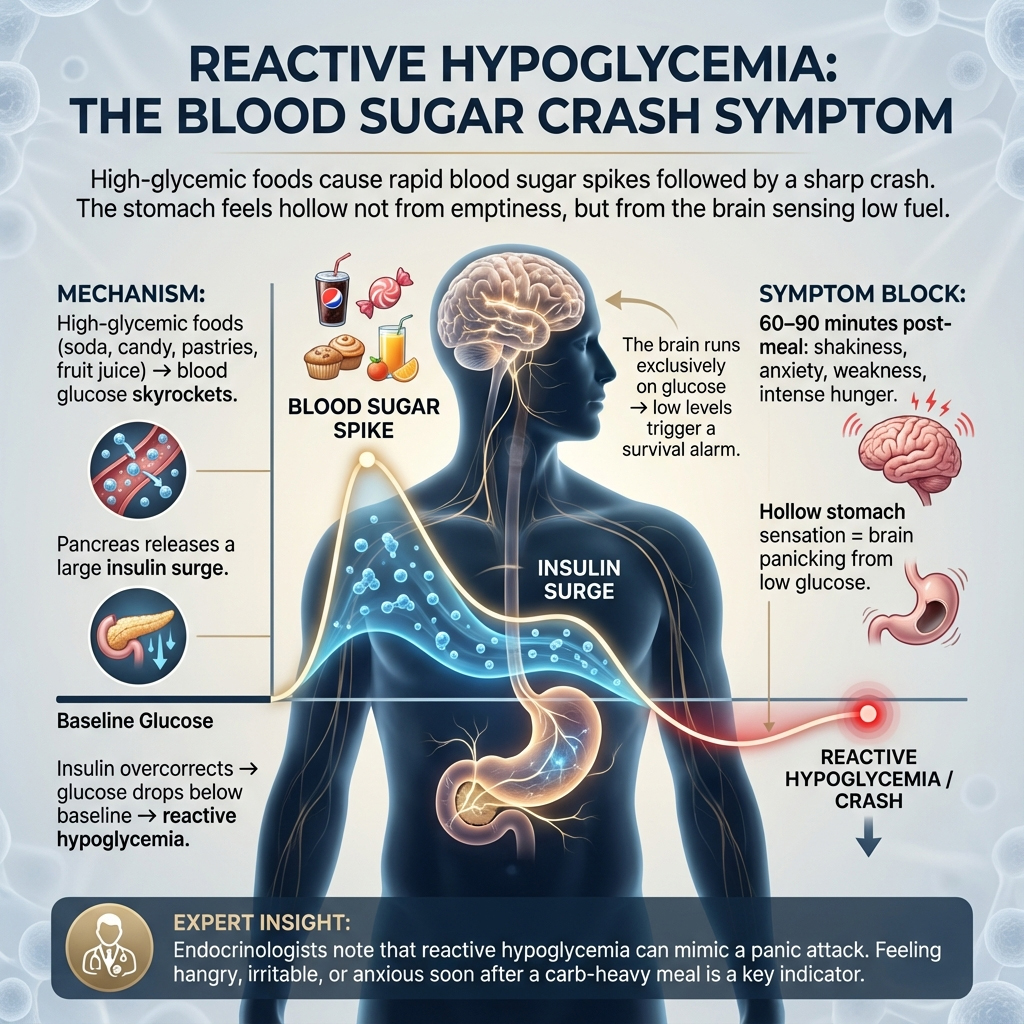
The Mechanism:
When you consume high glycemic foods (soda, candy, pastries, or even excessive amounts of fruit juice), your blood glucose levels skyrocket. In response, your pancreas floods your system with insulin to manage the sugar and push it into your cells.
Often, the insulin response is too aggressive for the amount of sugar actually present. The insulin clears the glucose so rapidly that your blood sugar drops below baseline levels. This state is called reactive hypoglycemia or postprandial hypoglycemia.
The Symptom:
You feel shaky, anxious, weak, and intensely hungry roughly 60 to 90 minutes after the meal. Your stomach feels hollow not because it needs volume, but because your brain is panicking about the lack of fuel in the blood. The brain runs exclusively on glucose; when levels drop, it triggers a survival alarm that feels like a gnawing pit in your stomach.
Expert Insight:
Endocrinologists note that reactive hypoglycemia symptoms often mimic a panic attack. If you feel “hangry” or irritable shortly after a carb-heavy meal, this is the likely culprit.
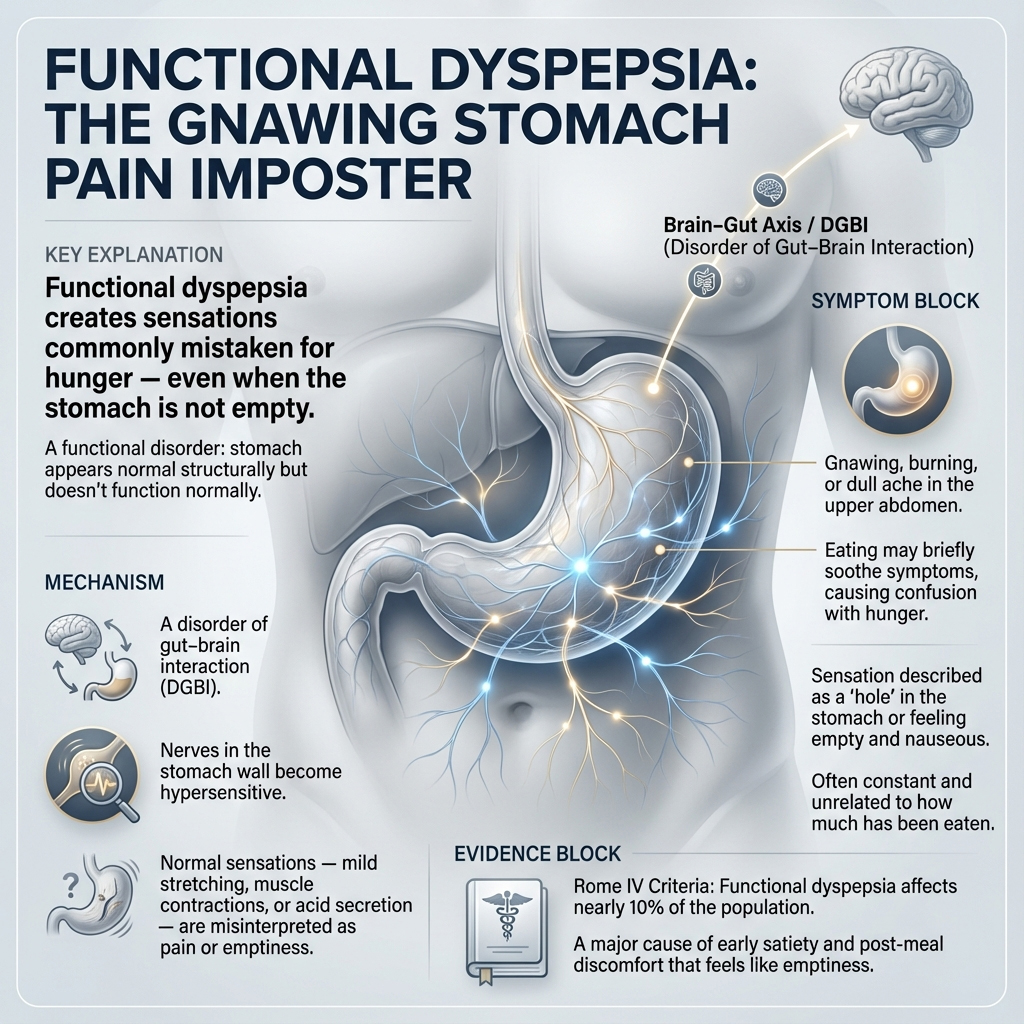
3. Functional Dyspepsia: The Gnawing Stomach Pain Imposter
Functional dyspepsia is a medical condition that creates a sensation often mistaken for hunger. It is a “functional” disorder, meaning the structure of the stomach looks normal on tests like endoscopies, but it does not function correctly.
The Mechanism:
This is a disorder of gut-brain interaction (DGBI). The nerves in the stomach wall are hypersensitive. They interpret normal physiological sensations—like acid secretion, mild stretching, or muscle contractions—as pain or discomfort.
The Symptom:
Patients describe a “gnawing,” burning, or dull ache in the upper abdomen (epigastric area). Because eating sometimes temporarily neutralizes stomach acid or changes the pressure in the stomach, people mistake this pain for hunger.
You might say your stomach feels empty and nauseous, or that you have a “hole” in your stomach that food cannot fill. The sensation is often constant and does not strictly correlate with how much you have eaten.
The Evidence:
According to the Rome IV Criteria for diagnosing gastrointestinal disorders, functional dyspepsia affects nearly 10% of the population. It is a leading cause of early satiety (feeling full after a few bites) mixed with post-meal discomfort that feels like emptiness.
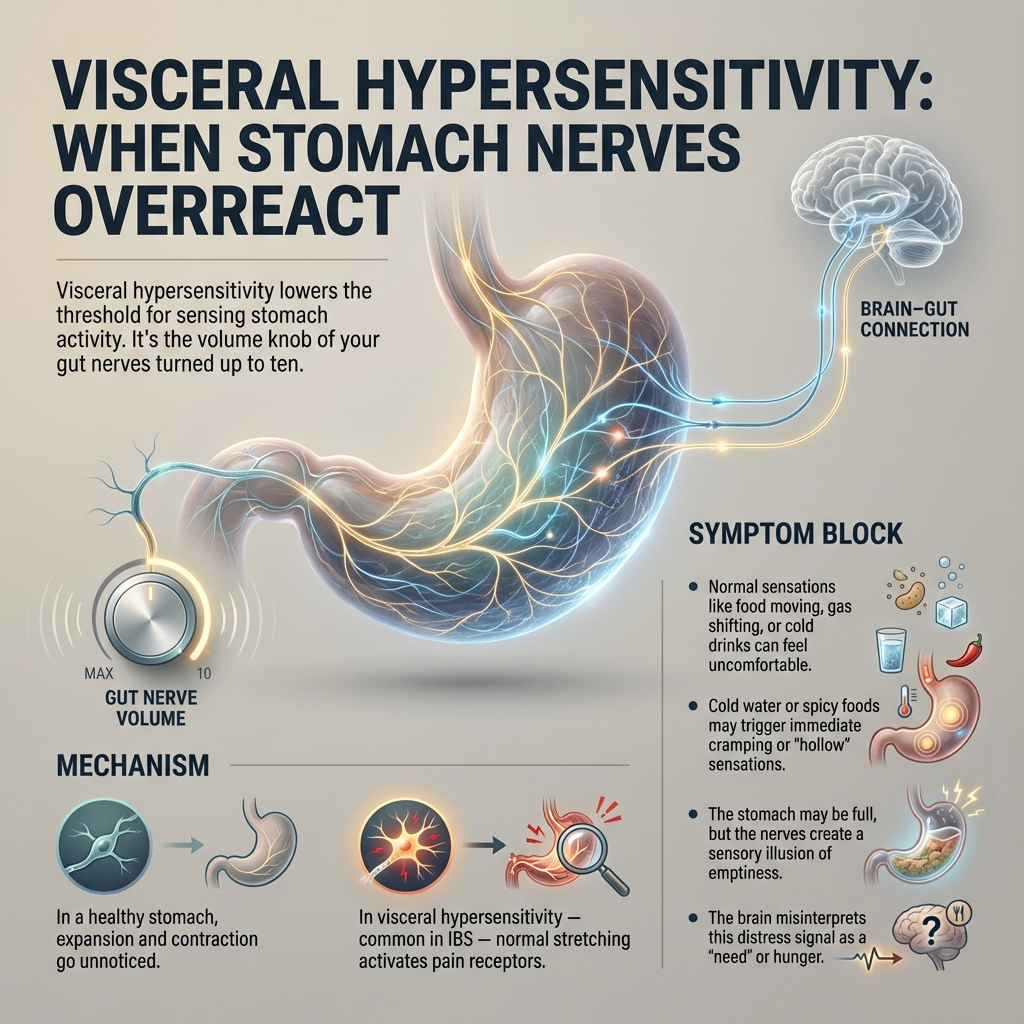
4. Visceral Hypersensitivity and Sensitive Stomach Nerves
Similar to dyspepsia, visceral hypersensitivity means your threshold for sensing stomach activity is lower than normal. This is the volume knob of your gut nerves being turned up to ten.
The Mechanism:
In a healthy person, the stomach expands and contracts without you feeling it unless it is extremely distended. In someone with visceral hypersensitivity, which is common in Irritable Bowel Syndrome (IBS) sufferers, the stretching triggers pain receptors.
The Symptom:
You might interpret the feeling of food moving, gas bubbles shifting, or cold liquid entering the stomach as a “hollow” or cramping sensation. Cold water or spicy foods can trigger this immediately, leading to a feeling that your stomach feels empty after eating. It is a sensory illusion; the stomach is full, but the nerves are reporting a distressing signal that the brain interprets as a “need.”
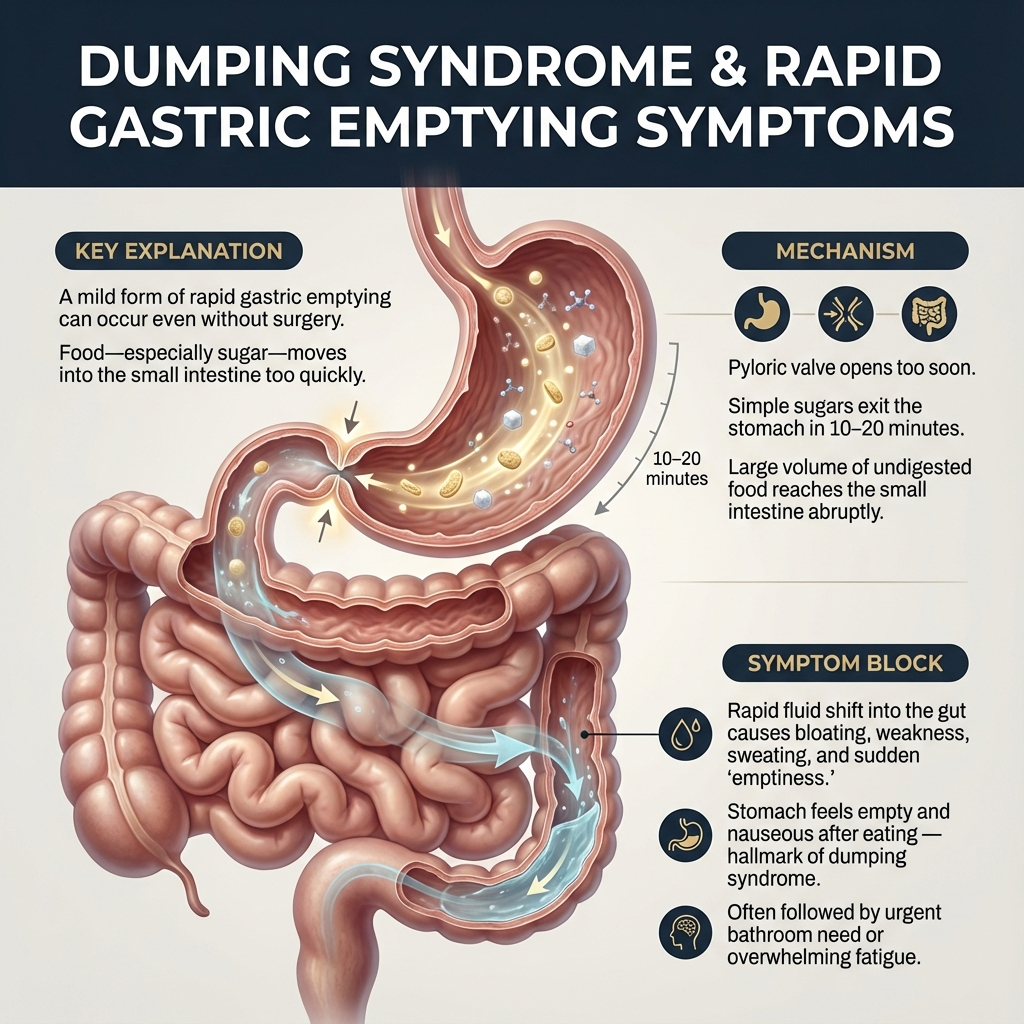
5. Dumping Syndrome and Rapid Gastric Emptying Symptoms
While often associated with gastric bypass surgery, a mild form of rapid emptying can occur in others, particularly those with certain anatomical variations or autonomic nerve issues.
The Mechanism:
Food, particularly simple sugar, moves from the stomach into the small intestine too quickly—sometimes in as little as 10 to 20 minutes. This happens because the pyloric valve at the bottom of the stomach opens too soon.
The Symptom:
When a large amount of undigested food hits the small intestine, it draws fluid out of the bloodstream to help dilute the sugar. This causes a sudden fluid shift in the gut. You may feel bloated, then suddenly weak, sweaty, and “empty” as the stomach clears prematurely.
Stomach feels empty and nauseous after eating is the hallmark description of dumping syndrome. It is often followed by an urgent need to use the bathroom or a desire to lie down due to fatigue.
6. Dehydration and Thirst Masquerading as Hunger Pangs
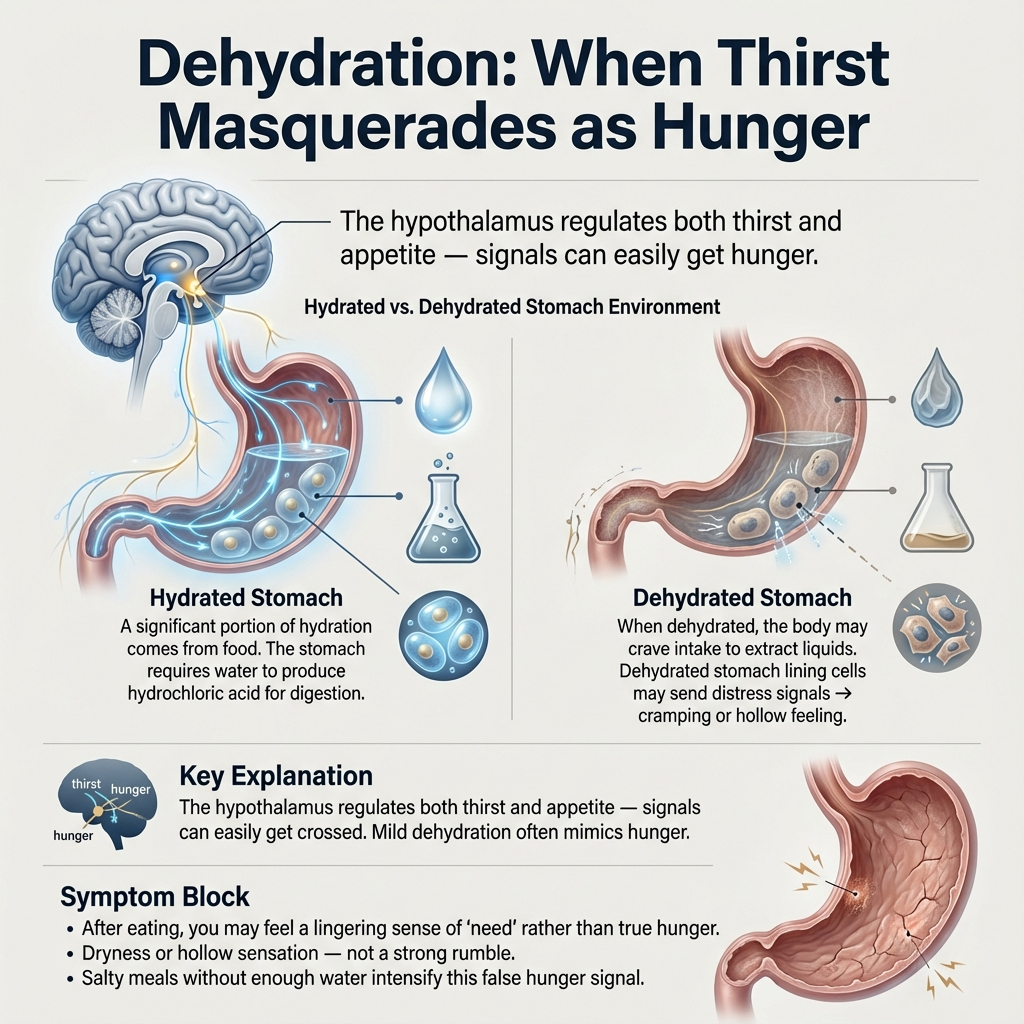
The hypothalamus in the brain regulates both appetite and thirst. These signals can easily get crossed, leading to confusion.
The Mechanism:
We get a significant amount of hydration from food. If you are mildly dehydrated, your body may crave consumption to extract liquids. Furthermore, the stomach requires water to produce the hydrochloric acid necessary for digestion.
The Symptom:
You finish a meal but feel a lingering, vague sense of “need.” It isn’t a rumble; it is a dryness or emptiness. If you ate a salty meal without drinking enough water, this false hunger signal intensifies. The cells in your stomach lining may also send distress signals if they are dehydrated, which manifests as a cramping or hollow feeling.
7. Stress-Induced Cortisol Spikes and Emotional Eating
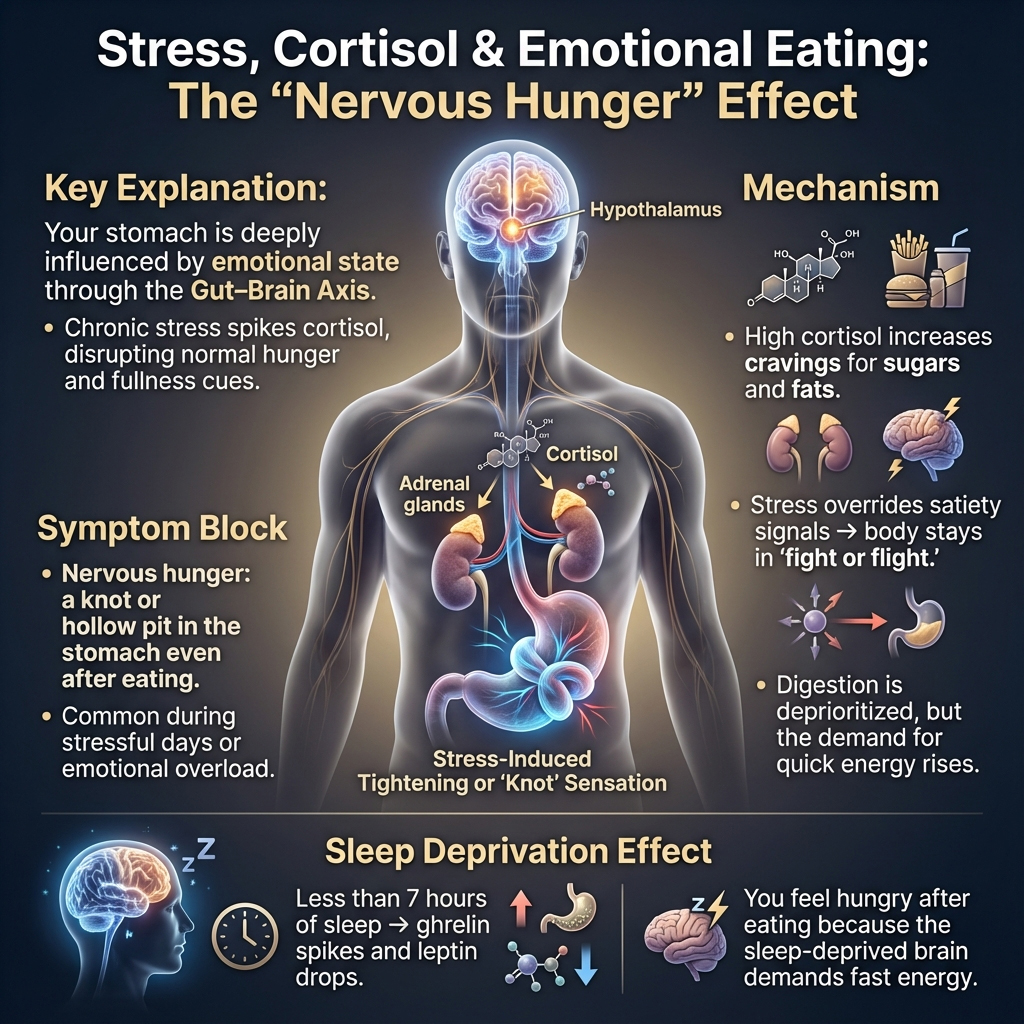
Your stomach does not exist in a vacuum. It is heavily influenced by your emotional state via the Gut-Brain Axis.
The Mechanism:
Chronic stress elevates cortisol, the primary stress hormone. High cortisol levels trigger cravings for high-energy foods (sugars and fats) and can override normal satiety signals. It keeps your body in a “fight or flight” mode, where digestion is deprioritized, but the demand for quick energy is high.
The Symptom:
This is often described as “nervous hunger.” You might feel a knot or a hollow pit in your stomach during a stressful workday, even right after lunch.
Additionally, lack of sleep (less than 7 hours) causes ghrelin to spike and leptin to plummet. You are chemically programmed to be hungry after eating because your sleep-deprived brain is demanding quick energy to keep you awake.
Gut Microbiome Influence on Satiety and Hunger Hormones
Recent research has unveiled another layer to the satiety puzzle: your gut bacteria. The trillions of bacteria living in your large intestine play a crucial role in how full you feel.
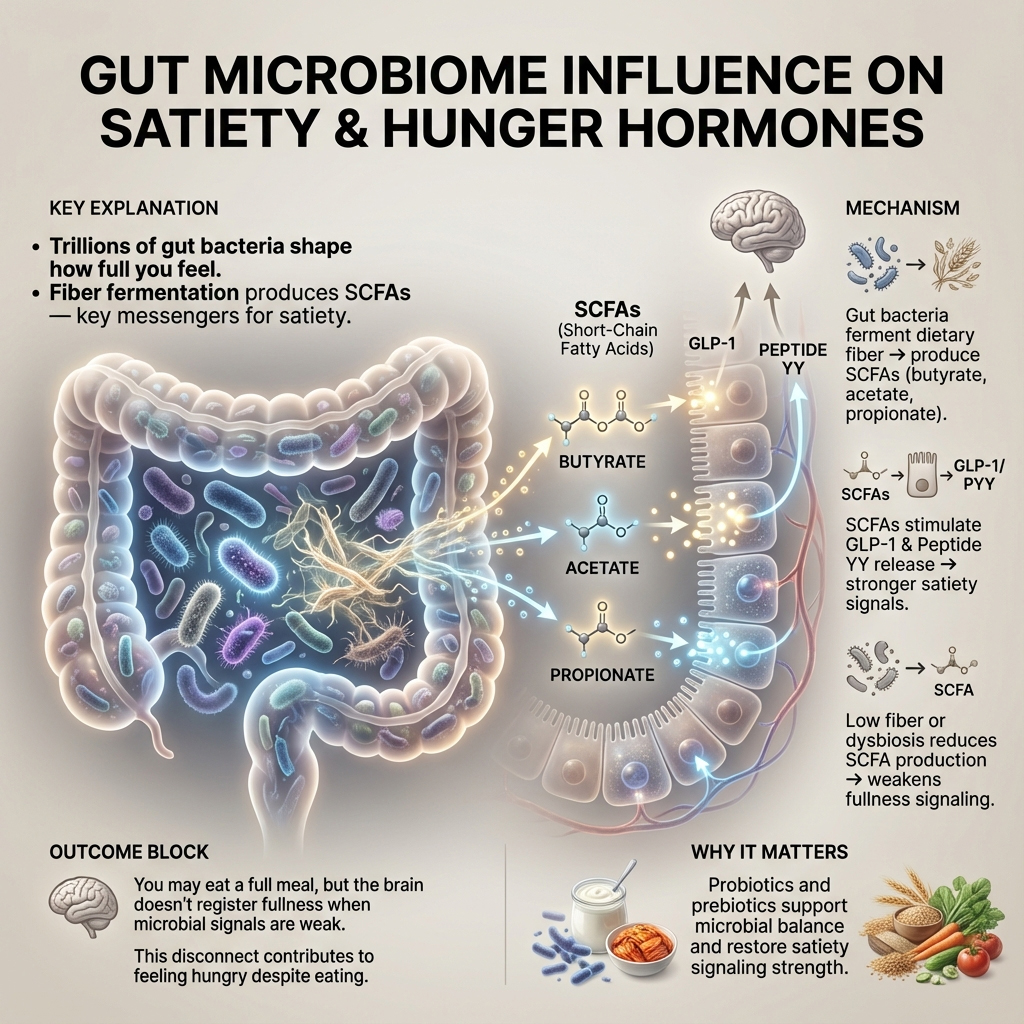
When you eat fiber, these bacteria ferment it and produce Short-Chain Fatty Acids (SCFAs) like butyrate, acetate, and propionate. These SCFAs are powerful signaling molecules. They stimulate the release of GLP-1 and Peptide YY from the colonic cells.
If your diet is low in fiber, or if you have dysbiosis (an imbalance of gut bacteria), your production of SCFAs drops. This means you lose a significant satiety signal. You might eat a full meal, but without the microbial signal boosting the hormonal signal, your brain remains unconvinced that you are full. This is why probiotics and prebiotics are often discussed in weight management; they help restore the signaling power of the gut.
Distinguishing True Physical Hunger vs. False Hunger Signals
Distinguishing between a physiological need for calories and a deceptive signal is the first step to fixing the issue. You need to become a detective of your own sensations.
The Apple Test Strategy for Hunger Verification
A simple, effective way to test your hunger is the “Apple Test.” If you feel hungry after eating, ask yourself: “Would I eat a whole raw apple right now?”
- Yes: You are physically hungry. You likely didn’t eat enough calories or nutrients. Your body is asking for fuel.
- No: You just want a specific taste, texture, or comfort. You are craving a cookie, but not an apple. This is false hunger, emotional hunger, or a craving driven by dopamine rather than ghrelin.
Comparison of Physical Hunger vs. Functional Dyspepsia
Understanding the nuances between these sensations can help you identify if you are dealing with functional dyspepsia or true appetite.
| Feature | True Physical Hunger | “False” Hunger / Dyspepsia / Cravings |
| Onset | Gradual (builds over several hours) | Sudden (hits immediately after eating) |
| Sensation | Rumbling, low energy, “empty” growl | Gnawing, burning, “hollow” pit, nausea |
| Location | Stomach and lower abdomen | Throat, mouth (cravings), or upper gut |
| Satisfied By | Any food (vegetables, proteins) | Only specific textures/sugars; or nothing helps |
| Timing | 3-5 hours after last meal | 30-60 mins after eating |
| Emotional State | Neutral | Anxious, stressed, bored, or frantic |
| Physical Signs | Lightheadedness after many hours | Shaking or sweating immediately post-meal |
Medical Conditions That Mimic Hunger and Empty Stomach Sensations
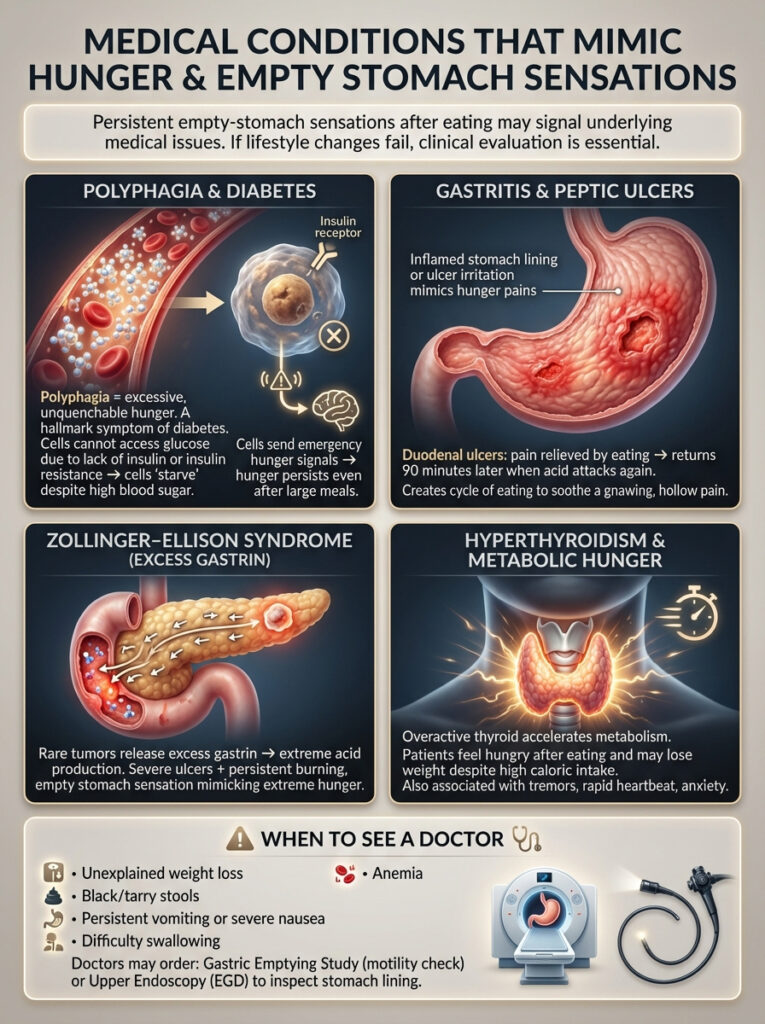
While diet is usually the culprit, persistent symptoms where your stomach feels empty after eating can signal a medical condition requiring a doctor. It is vital to rule these out if lifestyle changes do not resolve the issue.
Polyphagia and Diabetes Symptoms
Polyphagia is the medical term for excessive, unquenchable hunger. It is one of the “Three Ps” of diabetes (along with polydipsia/thirst and polyuria/urination).
If you have type 1 or type 2 diabetes, your body struggles to transport glucose from the blood into the cells due to a lack of insulin or insulin resistance. As a result, your cells are literally starving even though your blood is full of sugar. The cells send emergency signals to the brain to eat more, causing you to feel hungry after eating a massive meal. This cycle continues until blood sugar is managed.
Gastritis, Peptic Ulcers, and Hunger Pains
Inflammation of the stomach lining (gastritis) or sores in the lining (ulcers) can confuse the brain. The stomach lining has limited ways to communicate distress. Often, the pain from acid irritation mimics hunger pangs.
In the case of a duodenal ulcer (an ulcer in the upper part of the small intestine), the pain is famously relieved by eating. Food buffers the acid, temporarily soothing the sore. However, once the food moves on (about 90 minutes later), the acid attacks the ulcer again, causing a “gnawing” pain that the patient interprets as intense hunger. This creates a cycle where you eat to stop the “hollow” pain, only for it to return once the stomach empties.
Zollinger-Ellison Syndrome and Excess Acid
This is a rare condition where tumors in the pancreas or duodenum secrete large amounts of gastrin, a hormone that causes extreme stomach acid production. The excess acid can lead to severe ulcers and a persistent burning, empty sensation in the stomach that mimics ravenous hunger.
Hyperthyroidism and Metabolic Hunger
An overactive thyroid gland sends your metabolism into overdrive. You burn calories faster than you can consume them. Patients often report they are always hungry after eating and lose weight despite a high caloric intake. Other symptoms include tremors, rapid heartbeat, and anxiety.
When to See a Doctor for Stomach Symptoms
You should seek medical attention if your stomach feels empty sensation is accompanied by specific red flags:
- Unexplained weight loss (losing weight without trying).
- Black or tarry stools (a sign of oxidized blood from the upper GI tract).
- Persistent vomiting or severe nausea.
- Difficulty swallowing (dysphagia).
- Anemia (low iron).
A gastroenterologist may perform a Gastric Emptying Study to check for motility issues like gastroparesis or dumping syndrome, or an Upper Endoscopy (EGD) to visually inspect the stomach lining for gastritis or ulcers.
Actionable Dietary Fixes to Stop Feeling Empty After Meals
If you want to stop the stomach feels hollow sensation, you need to adjust both your plate and your habits. This requires a strategic approach to nutrition and behavior.
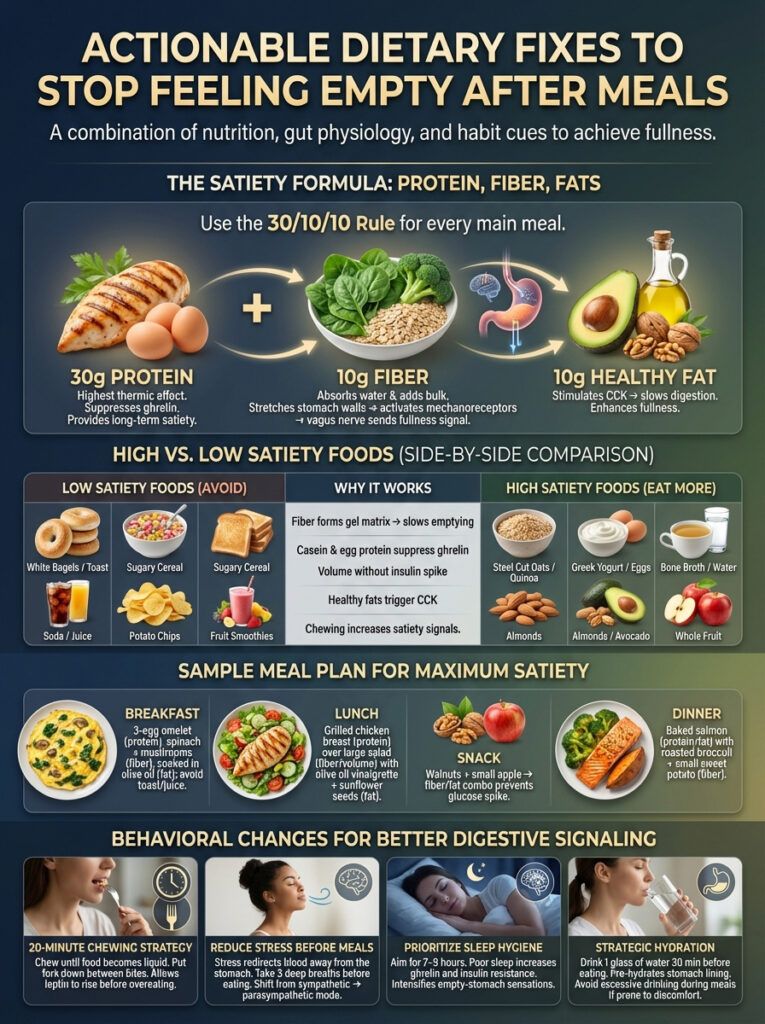
The Satiety Formula: Protein, Fiber, and Fats
To prevent rapid gastric emptying and blood sugar crashes, you must engineer your meals to digest slowly. Follow the “30/10/10 Rule” for main meals:
- 30g of Protein: Protein has the highest thermic effect of food and suppresses ghrelin more effectively than any other macronutrient. It triggers long-term satiety.
- 10g of Fiber: Fiber absorbs water and adds bulk. It physically stretches the stomach walls, triggering the mechanoreceptors that tell the vagus nerve you are full.
- 10g of Healthy Fat: Fat stimulates the release of Cholecystokinin (CCK), a potent satiety hormone that slows down the gut.
Detailed Comparison of Satiety Impact:
| Low Satiety Foods (Avoid) | High Satiety Foods (Eat More) | Why It Works |
| White Bagels / Toast | Steel Cut Oats / Quinoa | Fiber creates a gel matrix that slows emptying. |
| Sugary Cereal | Greek Yogurt / Eggs | Casein and egg protein suppress ghrelin. |
| Soda / Juice | Bone Broth / Water | High volume liquid stretches stomach without insulin spike. |
| Potato Chips | Almonds / Avocado | Fats trigger CCK hormone release to signal fullness. |
| Fruit Smoothies | Whole Fruit | Chewing releases more satiety signals than drinking. |
Sample Meal Plan for Maximum Satiety
If you struggle with the empty stomach feeling, try this day of eating to reset your hunger hormones.
- Breakfast: Omelet with 3 eggs (protein), spinach and mushrooms (fiber), cooked in olive oil (fat). Avoid toast or juice.
- Lunch: Grilled chicken breast (protein) over a large salad with mixed greens, cucumbers, peppers (fiber/volume), and an olive oil vinaigrette with sunflower seeds (fat).
- Snack: A handful of walnuts and a small apple. The fiber/fat combo prevents a glucose spike.
- Dinner: Baked Salmon (protein/fat) with roasted broccoli and a small portion of sweet potato (fiber).
Behavioral Changes for Better Digestive Signaling
1. The 20-Minute Chewing Strategy
You must give your hormones time to work. Digestion begins in the mouth (the cephalic phase). Enzymes in your saliva start breaking down food, and the act of chewing signals the stomach to prepare. Chew your food thoroughly until it is liquid. Put your fork down between bites. This allows leptin levels to rise before you overeat.
2. Reduce Stress Before Meals
If you eat while stressed, your body shunts blood away from the stomach to the muscles. This “fight or flight” state inhibits proper digestion. Take three deep breaths before your first bite to switch your autonomic nervous system from sympathetic (stress) to parasympathetic (rest and digest).
3. Prioritize Sleep Hygiene
Aim for 7 to 9 hours of sleep. One night of poor sleep increases ghrelin and insulin resistance the next day. This makes you feel stomach feels empty symptoms more intensely and drives cravings for sugar.
4. Strategic Hydration
Drink a full glass of water 30 minutes before your meal. This pre-hydrates the stomach lining. Avoid drinking massive amounts during the meal if you suffer from acid reflux, as this can add too much volume and pressure.
Clinical Case Studies: Resolving Chronic Empty Stomach Sensations
Case Study: The “Healthy” Smoothie Mistake
The Scenario:
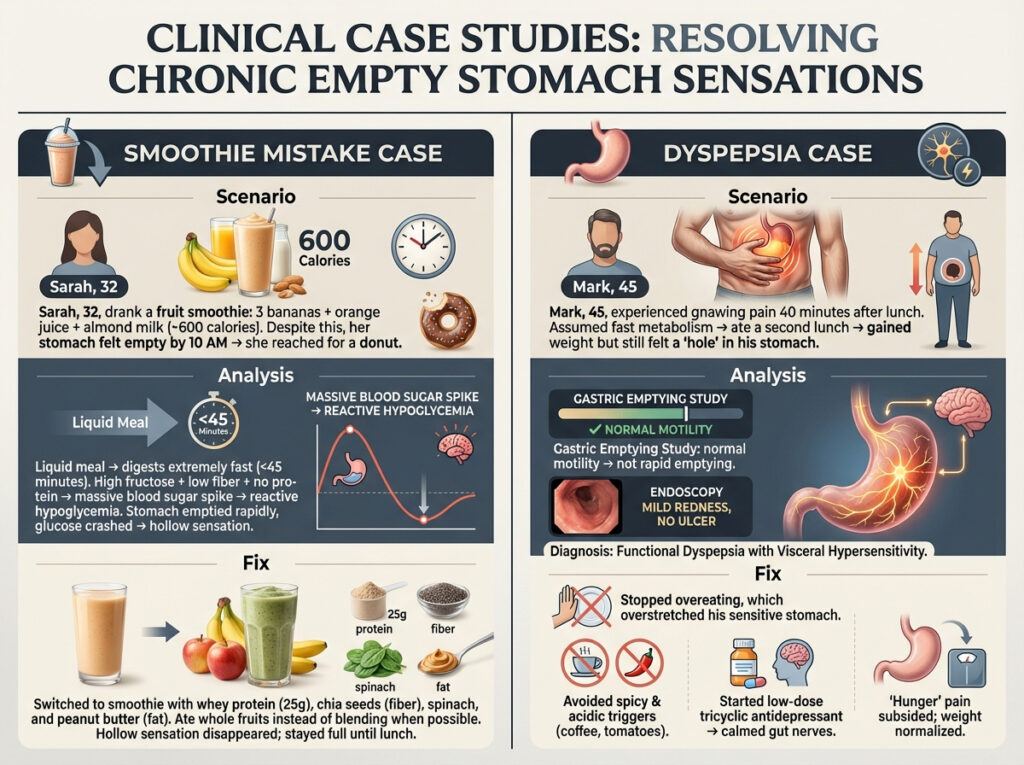
Sarah, a 32-year-old marketing manager, started her day with a “healthy” fruit smoothie containing three bananas, orange juice, and almond milk. Despite consuming nearly 600 calories, she complained that her stomach feels empty after eating by 10:00 AM, leading her to grab a donut.
The Analysis:
Her meal was liquid (which digests faster than solids) and extremely high in fructose (sugar) with almost no fiber or protein. This caused a massive blood sugar spike followed by reactive hypoglycemia. Her body processed the liquid meal in under 45 minutes, leaving her stomach empty and her blood sugar crashing.
The Fix:
She switched to a smoothie with whey protein powder (25g protein), a tablespoon of chia seeds (fiber), spinach, and peanut butter (fat). She also switched to eating the fruit whole rather than blending it when possible. The hollow sensation disappeared, and she stayed full until lunch.
Clinical Instance: The Undiagnosed Dyspepsia Patient
The Scenario:
Mark, a 45-year-old teacher, reported a “gnawing” pain 40 minutes after lunch every day. He assumed he had a fast metabolism and would eat a second lunch to “feed the beast.” He was gaining weight rapidly but still felt the “hole” in his stomach.
The Analysis:
Mark visited a gastroenterologist. A Gastric Emptying Study showed normal motility, ruling out rapid emptying. However, an endoscopy revealed mild redness but no ulcer. Based on his symptoms of epigastric pain and burning, his doctor diagnosed functional dyspepsia with visceral hypersensitivity.
The Fix:
Instead of eating more food, which was worsening the issue by over-distending his sensitive stomach, Mark was treated with dietary changes. He avoided spicy and acidic triggers (coffee, tomatoes) and started a low-dose tricyclic antidepressant, which is often used to calm sensitive gut nerves. The “hunger” pain subsided without extra calories, and he was able to lose the excess weight.
Summary and Key Takeaways: Managing Post-Meal Hunger
Before we answer common questions, here is a consolidated checklist to help you manage the sensation of an empty stomach.
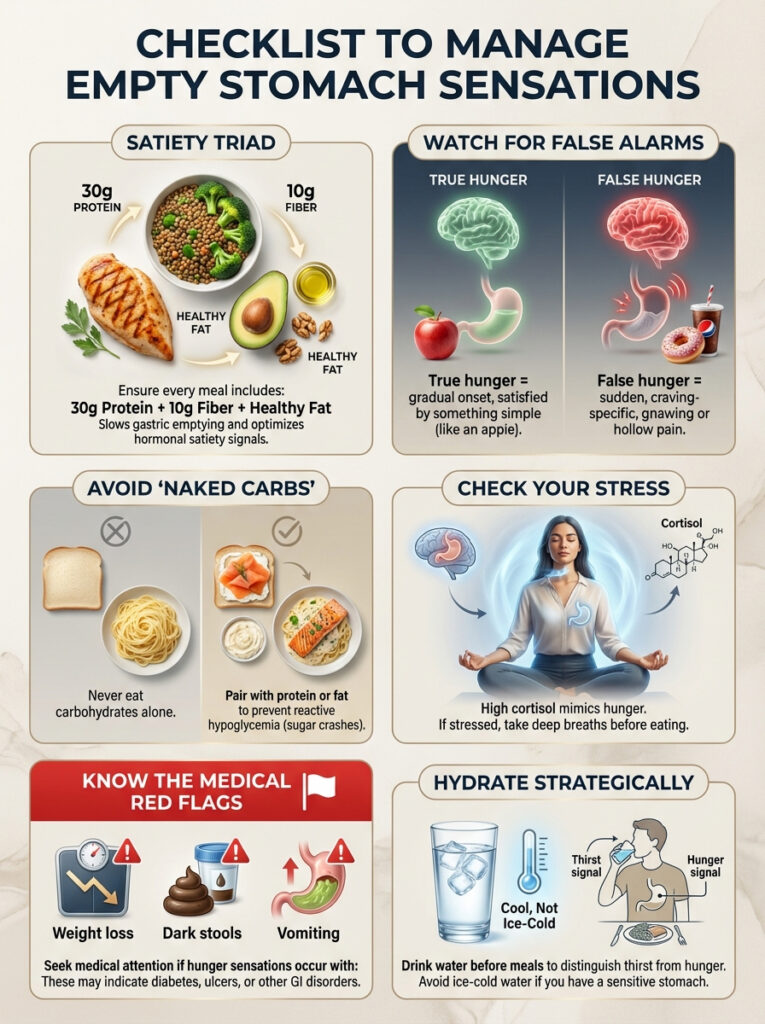
- Prioritize the “Satiety Triad”: Ensure every meal contains Protein (30g), Fiber (10g), and Healthy Fat. This combination physically slows gastric emptying and optimizes hormonal signaling.
- Watch for False Alarms: Differentiate between true hunger (gradual onset, satisfied by an apple) and false hunger (sudden onset, craving-specific, gnawing pain).
- Avoid “Naked Carbs”: Never eat carbohydrates alone. Always pair them with protein or fat to prevent reactive hypoglycemia (sugar crashes) which mimic hunger.
- Check Your Stress: High cortisol mimics hunger. If you are stressed, try deep breathing rather than eating.
- Know the Medical Red Flags: If your hunger is paired with weight loss, dark stools, or vomiting, seek immediate medical attention to rule out diabetes, ulcers, or other gastrointestinal disorders.
- Hydrate Strategically: Drink water before meals to distinguish thirst from hunger, but avoid ice-cold water if you have a sensitive stomach.
Frequently Asked Questions (FAQ)
Why does my stomach growl right after eating?
Stomach growling, known medically as borborygmi, after eating is usually the sound of peristalsis; the muscles contracting to mix food with acid and enzymes. However, if it is loud and accompanied by a hollow feeling, it may be due to hyperactive bowel sounds caused by consuming high amounts of sugar (which ferments) or swallowing air (aerophagia) while eating too fast.
Can anxiety make your stomach feel empty?
Yes. Anxiety triggers the release of cortisol and adrenaline. These hormones can cause muscle tension in the gut and divert blood flow, creating a sensation of a “knot” or “emptiness” often described as nervous hunger. This can happen even if you have just eaten a full meal because the brain is prioritizing survival over digestion.
Why am I hungry 1 hour after eating a large meal?
This is a classic sign of reactive hypoglycemia. If your meal was heavy in simple carbohydrates (pasta, bread, dessert), your blood sugar likely spiked and then crashed rapidly. This crash triggers emergency hunger signals in the brain, making you feel weak, shaky, and hollow despite the recent calories.
What is the difference between hunger pangs and gastritis?
Hunger pangs typically resolve once you eat. Gastritis (inflammation of the stomach lining) often causes a burning or gnawing pain that can actually get worse or change in nature after eating, especially if the food was spicy, acidic, or fatty. If eating hurts or feels uncomfortable, it is likely gastritis, not hunger.
Does drinking water help if my stomach feels empty after eating?
If the feeling is caused by mild dehydration, drinking water will help satisfy the signal. However, if you have visceral hypersensitivity, drinking ice-cold water might trigger cramping or a hollow sensation due to the temperature shock. It is best to sip room-temperature water or herbal tea (like ginger or chamomile) to soothe the gut.
Can gastroparesis make you feel hungry?
Gastroparesis (delayed gastric emptying) typically causes early fullness, bloating, and nausea. However, the erratic blood sugar levels associated with it can lead to moments where the stomach feels empty and nauseous. The nausea can sometimes be mistaken for a “sick” hunger, and the lack of nutrient absorption can make the body crave energy.
Is it normal to feel empty after a bowel movement?
Yes. A large bowel movement changes the intra-abdominal pressure. This sudden release of physical pressure can be interpreted by your sensory nerves as a temporary “empty” or hollow feeling. This is purely mechanical and should pass within a few minutes as the organs settle.
Why does my stomach feel empty when I lay down?
This can be a symptom of acid reflux (GERD) or a hiatal hernia. When you lie down, gravity no longer keeps acid in the stomach. It can creep up the esophagus, causing a burning sensation near the top of the stomach (the epigastrium) that mimics hunger pangs or a “gnawing” void. Propping your head up with pillows can help.
What should I eat to stay full longer?
Focus on high-volume, low-calorie foods combined with protein. Foods like broccoli, spinach, and cauliflower take up significant space in the stomach (stimulating mechanoreceptors) while lean chicken, fish, or tofu (protein) suppresses ghrelin long-term. This combination targets both the physical and chemical satiety pathways.
Does lack of sleep cause constant hunger?
Absolutely. Sleep deprivation disrupts your hunger hormones. It causes ghrelin (hunger) to increase and leptin (fullness) to decrease. You will feel physically hungry and specifically crave high-carb, high-fat foods even after eating a normal amount of calories.
When should I worry about constant hunger?
You should seek medical attention if your constant hunger is accompanied by unexplained weight loss, excessive thirst and urination (classic signs of diabetes), severe abdominal pain, or blood in your stool. These are not normal symptoms of a large appetite.
Can ulcers make your stomach feel hollow?
Yes. Peptic ulcers, specifically duodenal ulcers, often cause a gnawing pain when the stomach is empty or roughly 90 minutes to 3 hours after eating. Patients often describe this as a painful “hollowness” that feels like extreme hunger. This is often called “hunger pain” even though it is caused by tissue damage.
Disclaimer
The content provided in this article is for informational purposes only and is not intended as medical advice, diagnosis, or treatment. Always seek the advice of your physician or other qualified health provider with any questions you may have regarding a medical condition. Never disregard professional medical advice or delay in seeking it because of something you have read here.
References
- National Institute of Diabetes and Digestive and Kidney Diseases (NIDDK): “Your Digestive System & How it Works”
- Mayo Clinic: “Functional Dyspepsia Symptoms and Causes”
- American Journal of Clinical Nutrition: “The effects of protein and fiber on satiety and glucose control”
- Rome Foundation: “Rome IV Criteria for Functional Gastrointestinal Disorders”
- Journal of Clinical Endocrinology & Metabolism: “Ghrelin and Leptin metabolic interaction”