You are standing in the produce aisle, frozen in a state of panic. Your hand hovers over a bundle of fresh kale, but a voice in your head screams that it might as well be poison. This is the daily nightmare for millions managing thyroid conditions.
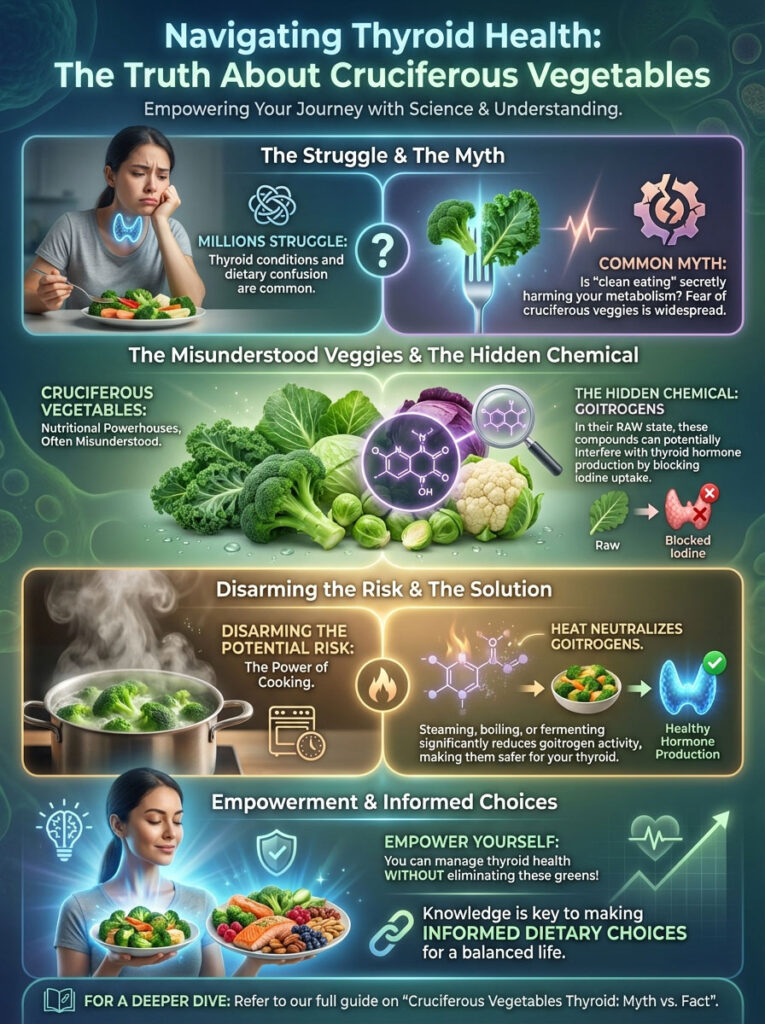
We have been told that to heal our hormones, we must eat clean. Yet, contradictory advice floods our feeds, claiming the very vegetables that fight cancer are destroying our metabolism. It feels like a cruel trap: stay fat and tired, or eat healthy and accidentally shut down your thyroid gland.
Here is the truth that changed my entire approach to nutrition: You do not need to banish these greens to the compost bin. There is a hidden chemical switch inside these plants that you can control. Stick with me, and I will show you exactly how to disarm the danger while keeping the benefits.
Want to go deeper on this topic? Read the full guide here. Cruciferous Vegetables Thyroid: Myth vs. Fact (Broccoli Safety)
The “Binary Weapon” in Your Crisper Drawer
Most people misunderstand what makes these vegetables risky. It isn’t the vegetable itself that hurts you; it is a chemical reaction.
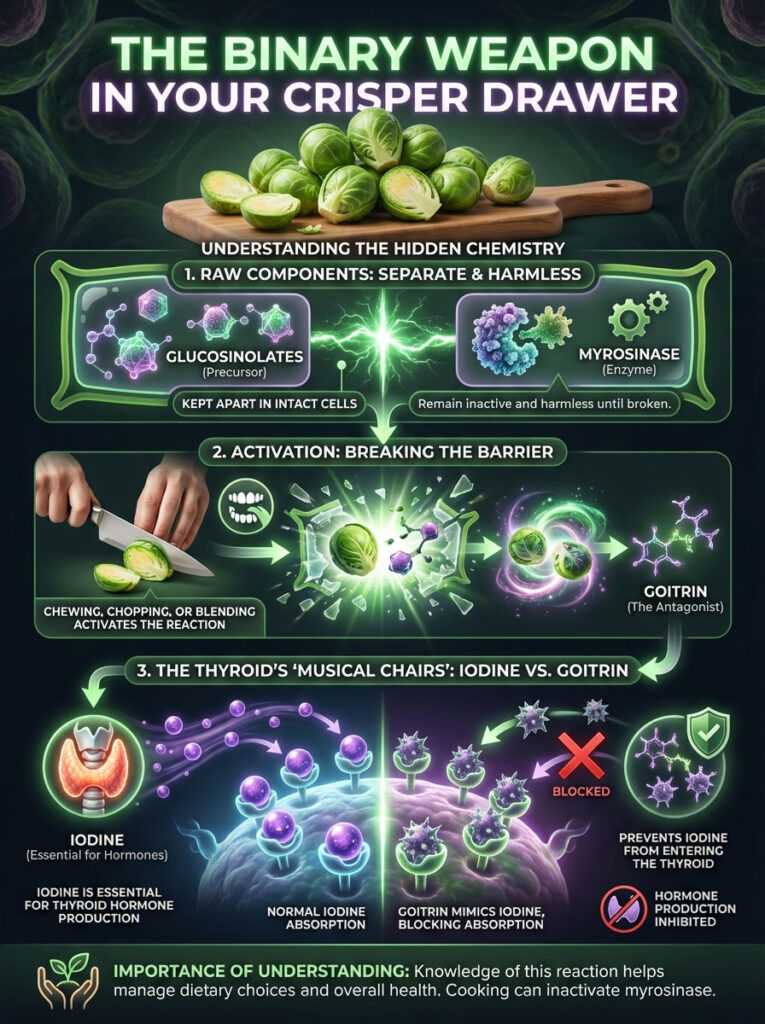
Think of a raw Brussels sprout like a two-part epoxy glue or a binary weapon. Inside the plant cells, there are two components kept in separate chambers. In one chamber, you have glucosinolates (harmless on their own). In the other, an enzyme called myrosinase.
As long as the vegetable sits whole in your fridge, it is biologically inert. But the moment you chew, chop, or blend that vegetable, you break the walls between the chambers. The ingredients mix, and the weapon activates.
This reaction creates a compound called goitrin. This is the dangerous agent that can block your thyroid from absorbing iodine. Plants evolved this brilliant defense to stop bugs from eating them, but for us, it creates a dietary minefield.
The “Musical Chairs” of Thyroid Function
To understand the damage, visualize a game of musical chairs.
Your thyroid has a specific door—the Sodium-Iodide Symporter—designed to let iodine in. Iodine is the fuel your gland needs to run. Goitrin is a bully that looks suspiciously like iodine.
When goitrin floods your system, it rushes to that door and blocks it. It steals the chair. If iodine cannot enter the building, your hormone factory shuts down.
The Heat Fix: Your Kill Switch
Here is the good news I share with every terrified client: You have a kill switch for this weapon.
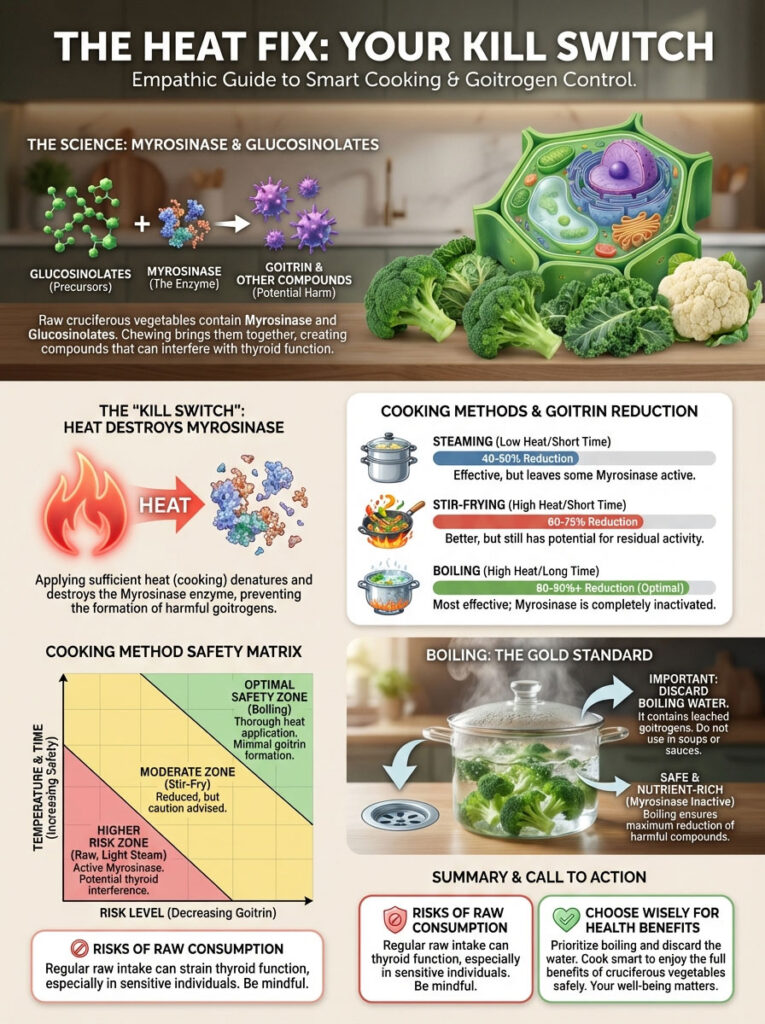
The enzyme myrosinase is incredibly fragile. It cannot survive heat. When you apply thermal energy, the enzyme’s protein structure unravels—like an egg white turning solid in a frying pan.
Once the enzyme is destroyed, it cannot convert the harmless glucosinolates into the thyroid-blocking goitrin. The reaction is stopped dead in its tracks. I found that cooking technique matters more than the vegetable type.
Cooking Method Safety Matrix
| Method | Effectiveness | Nutrient Retention | Verdict |
|---|---|---|---|
| Boiling | 90% Reduction | Low (Vitamins lost) | Safest for severe cases |
| Steaming | 60-70% Reduction | High | Best Balance |
| Roasting | High Reduction | Moderate | Flavor Winner |
| Raw | 0% Reduction | Maximum | High Risk |
Boiling is the ultimate neutralizer. Because the bad compounds are water-soluble, they leach out into the pot. Just make sure you dump that water down the sink—it is now a toxic soup of anti-nutrients.
The 40-Minute “Chop and Wait” Secret
This is the genius hack that allows you to have your cake and eat it too.
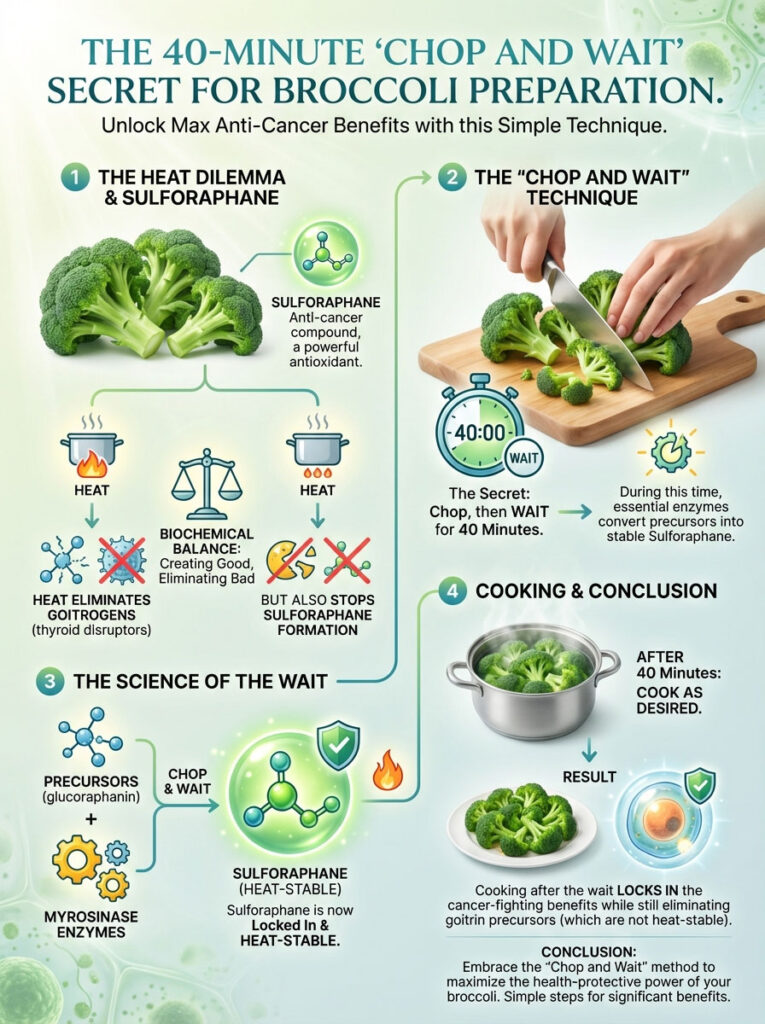
We have a dilemma. We want sulforaphane (the amazing anti-cancer compound in broccoli), but we hate goitrogens. Heat kills the goitrogens, but it also stops the formation of sulforaphane.
I use a technique called “Chop and Wait.”
- Slice your broccoli or kale while it is raw.
- Let it sit on the counter for exactly 40 minutes.
- Cook it.
Why does this work? During those 40 minutes, the enzyme is alive and converting compounds. It creates the good stuff (sulforaphane) and the bad stuff.
However, sulforaphane is heat-stable. Goitrin precursors are not. When you finally cook it, you lock in the cancer-fighting benefits but destroy the thyroid-harming potential. It is a biochemical magic trick.
The Iodine Shield
The fear of veggies is largely a hangover from history.
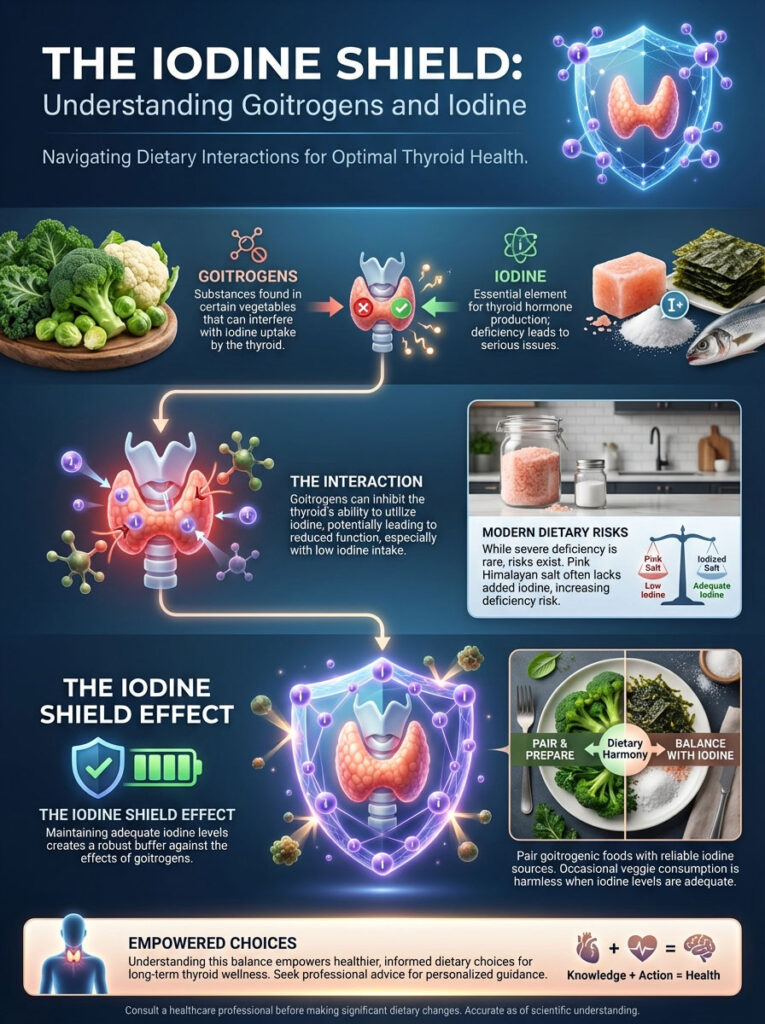
Goitrogens are only truly terrifying if your body is starving for iodine. Think of it as a competition. If you have plenty of iodine circulating in your blood, the goitrogens get outnumbered. They lose the game of musical chairs.
In modern diets, severe iodine deficiency is rare, but it happens. If you use fancy pink Himalayan salt (which usually lacks added iodine), you might be at risk.
My essential rule: Always pair your cruciferous side dish with an iodine source.
- Eating roasted cauliflower? Serve it with shrimp (high iodine).
- Having sautéed kale? Sprinkle some dulse flakes (seaweed) on top.
By keeping your iodine tank full, you create a safety buffer that makes the occasional veggie slip-up irrelevant.
The Green Smoothie Trap
This is where I see people make the most devastating mistake.
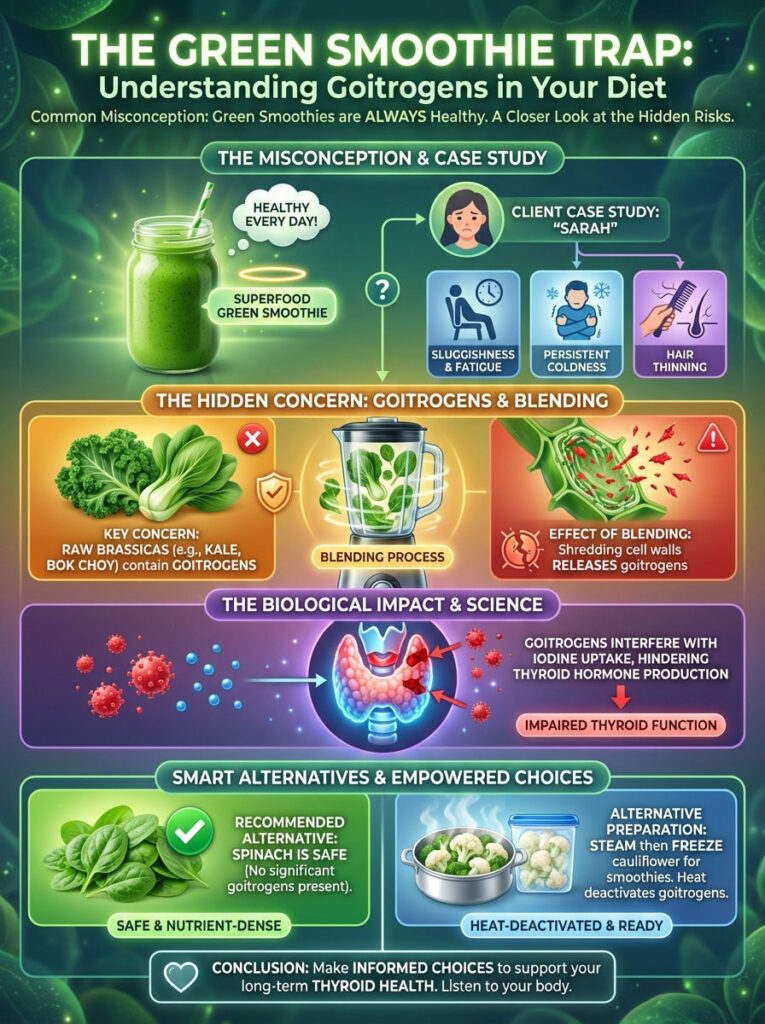
I once had a client who drank a “Superfood Green Smoothie” every morning. She felt sluggish, cold, and her hair was thinning. She thought she was being healthy. In reality, she was drinking a concentrated cocktail of thyroid blockers.
Blending raw kale or bok choy shreds the cell walls instantly, maximizing the chemical reaction we discussed earlier. You are essentially drinking a liquid goitrogen bomb.
Stop putting raw brassicas in your blender.
If you must have a green smoothie, use spinach. Spinach is not in the brassica family. It does not contain goitrogens. It is safe. Alternatively, steam your cauliflower, freeze it, and then blend it. It adds creaminess without the metabolic slowdown.
Supplements: The Danger of Concentration
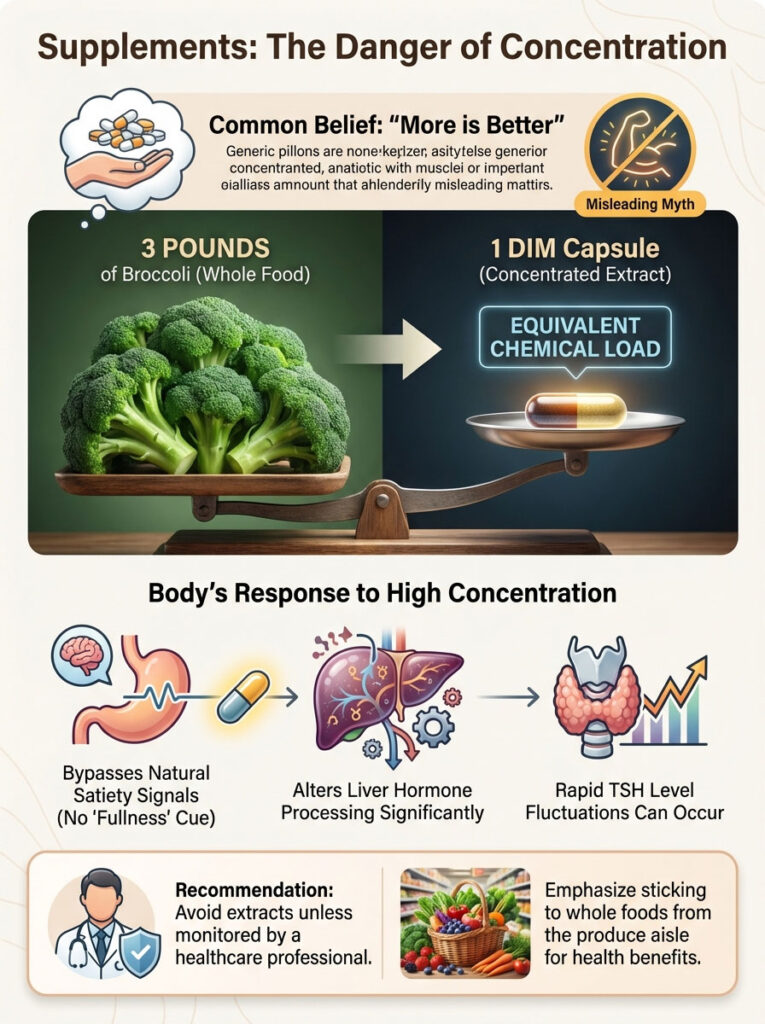
In our quest for health, we often assume “more is better.” This leads people to buy supplements like DIM (Diindolylmethane).
Be incredibly careful here.
A capsule delivers the chemical load of three pounds of broccoli in a single second. This bypasses your body’s natural satiety signals. While a side of roasted sprouts is fine, a concentrated extract can aggressively shift how your liver processes hormones.
I have seen this cause rapid fluctuations in TSH levels. Unless a doctor is monitoring you specifically, leave the extracts on the shelf and stick to the produce aisle.
The Verdict
Can you eat broccoli? Absolutely.
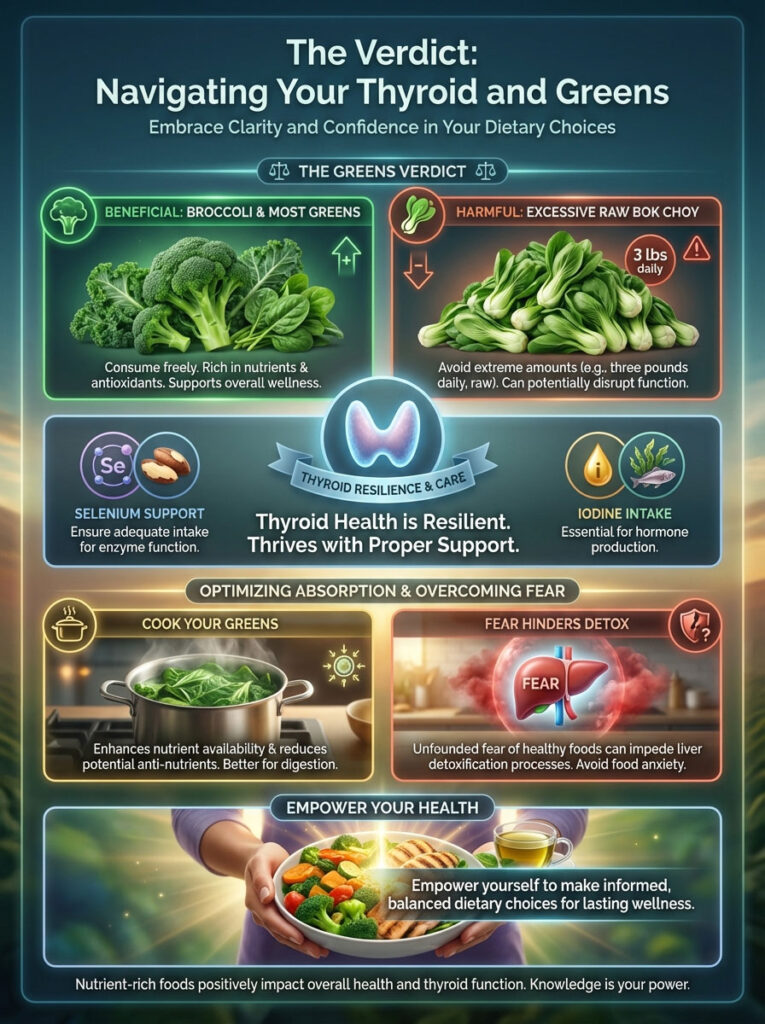
Should you eat three pounds of raw bok choy daily? Definitively not.
Your thyroid is resilient, not fragile. It just needs you to follow the rules of chemistry. Cook your greens, ensure you are getting selenium and iodine, and stop fearing the very foods that help your liver detoxify.
Take back control of your plate. Your body will thank you for the nutrients, and your thyroid will remain safe.